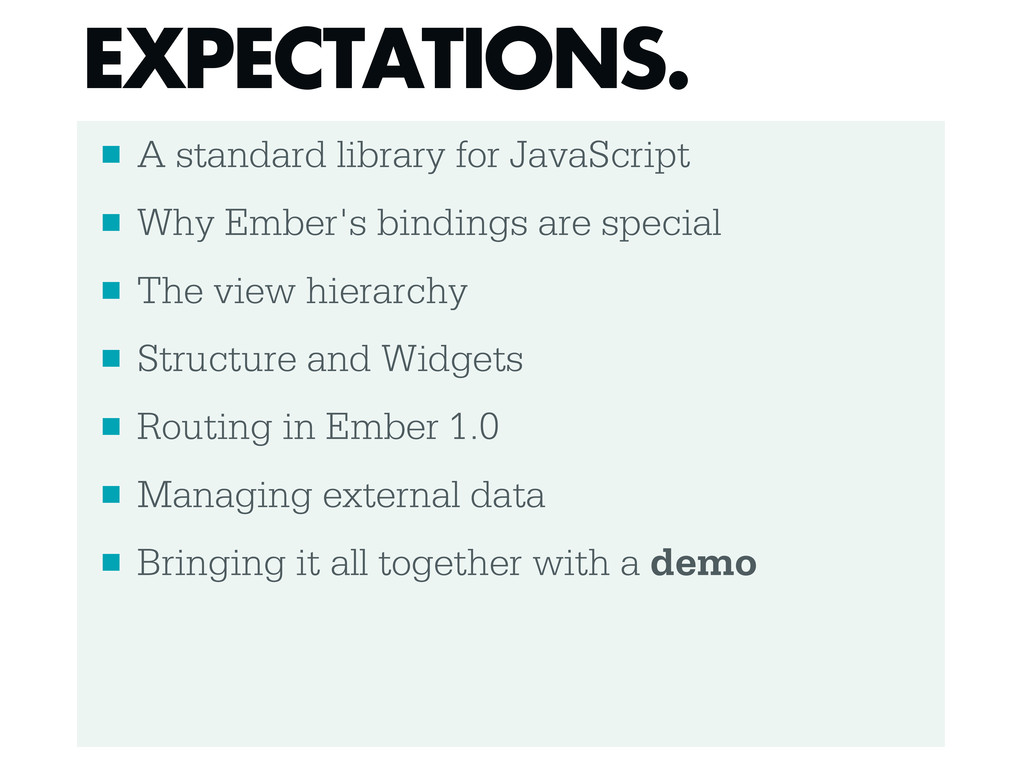
are special ▪ The view hierarchy ▪ Structure and Widgets ▪ Routing in Ember 1.0 ▪ Managing external data ▪ Bringing it all together with a demo EXPECTATIONS.
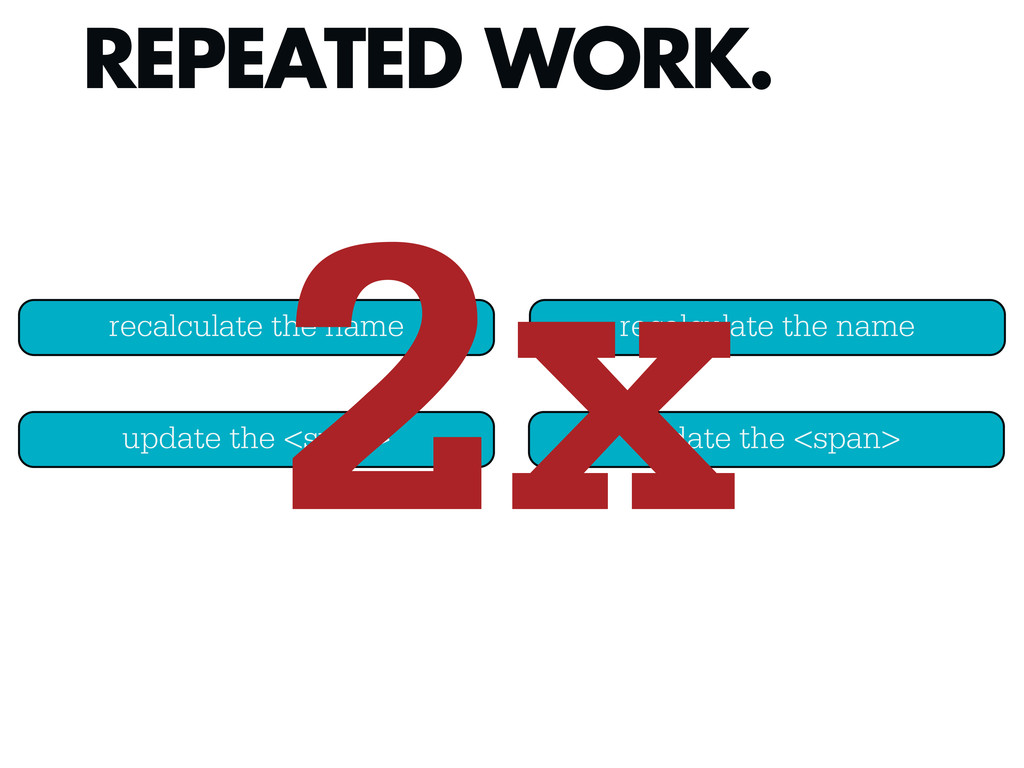
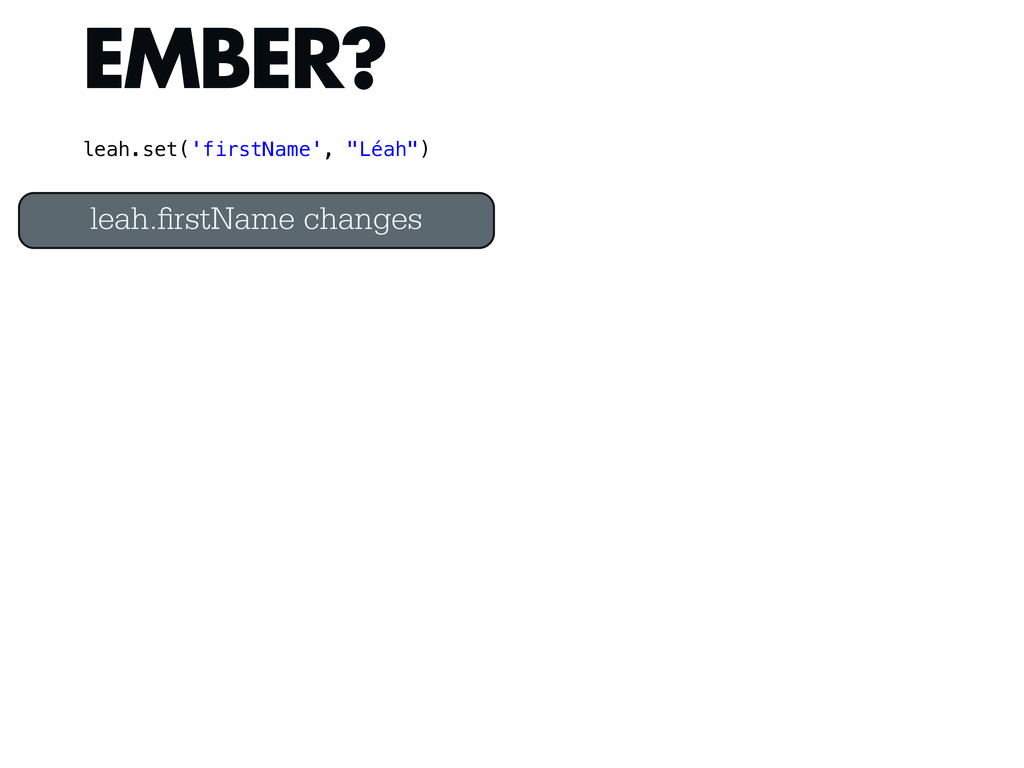
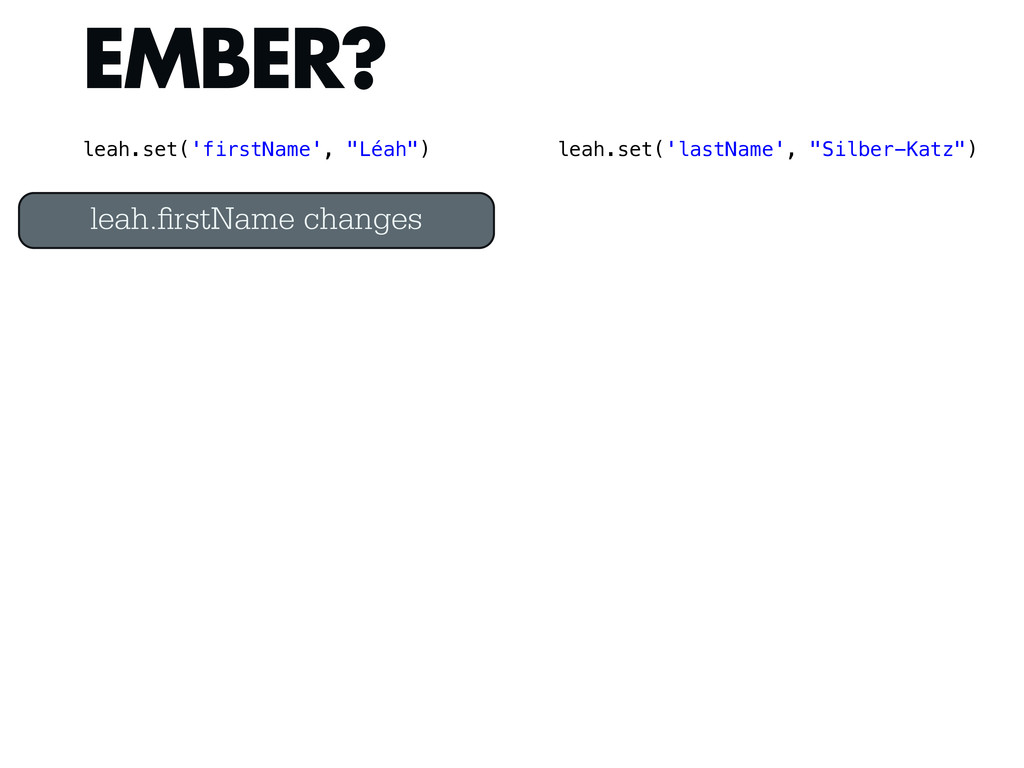
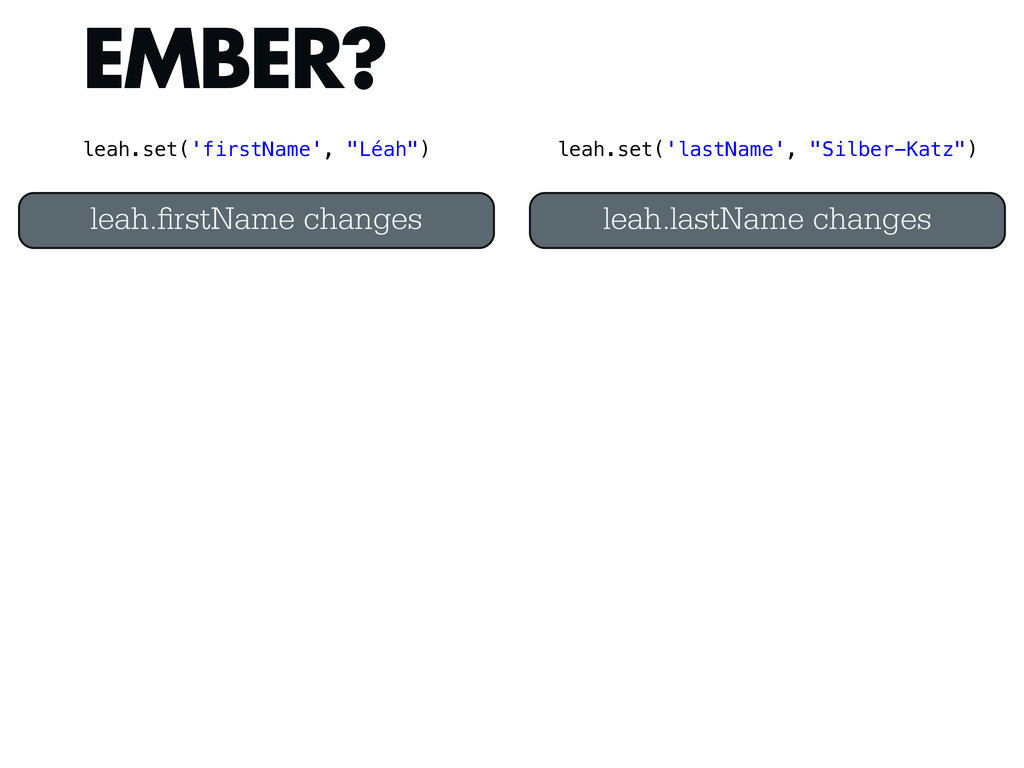
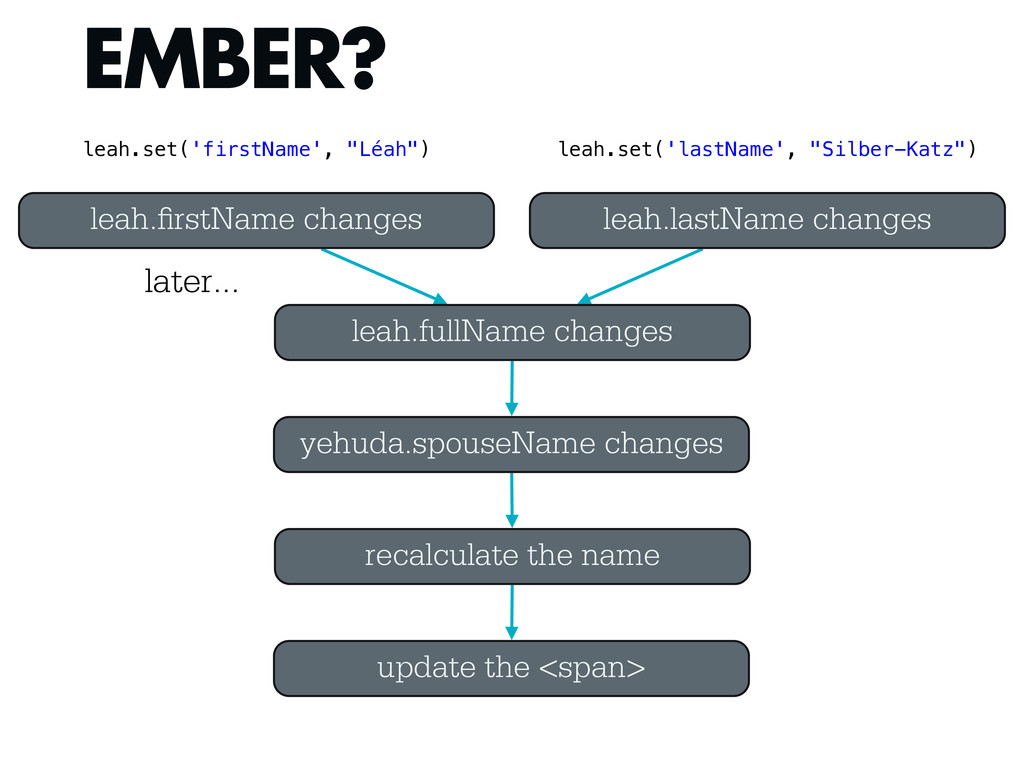
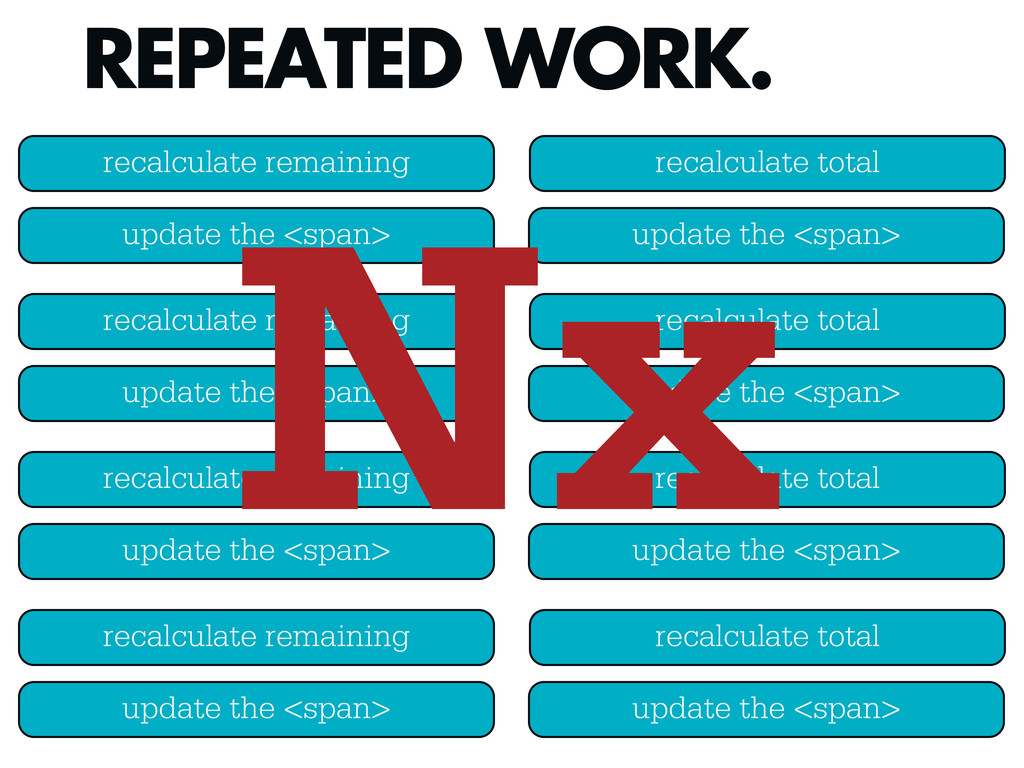
the <span> recalculate remaining update the <span> recalculate total update the <span> recalculate remaining update the <span> recalculate total update the <span> recalculate remaining update the <span> recalculate total update the <span> Nx
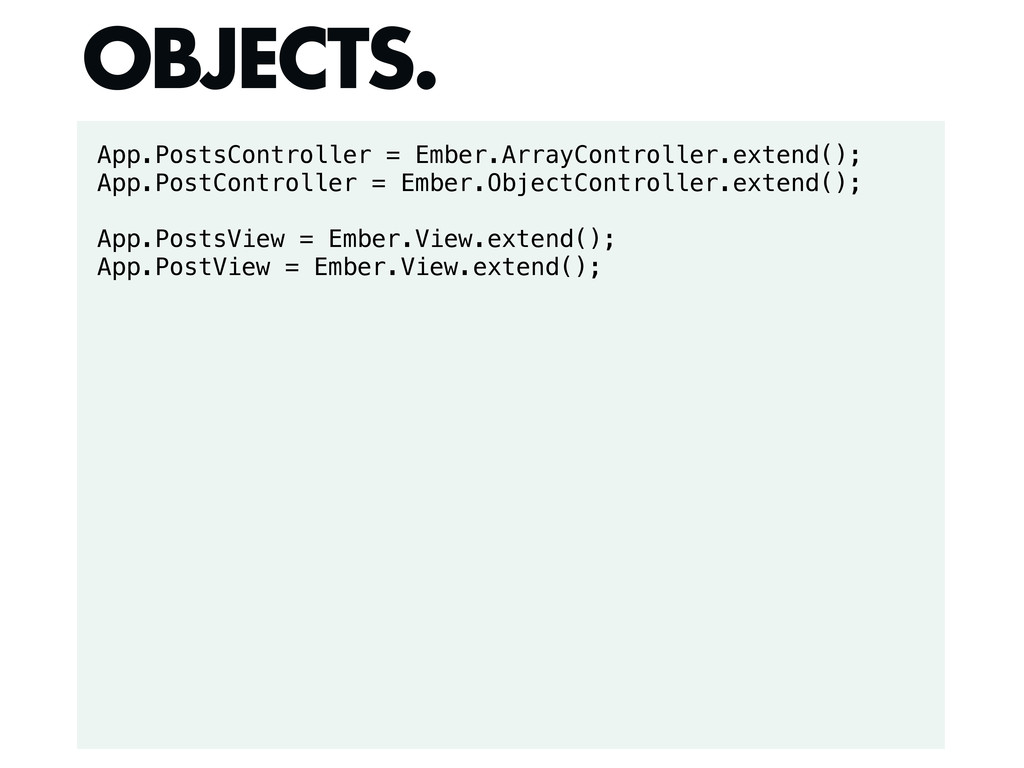
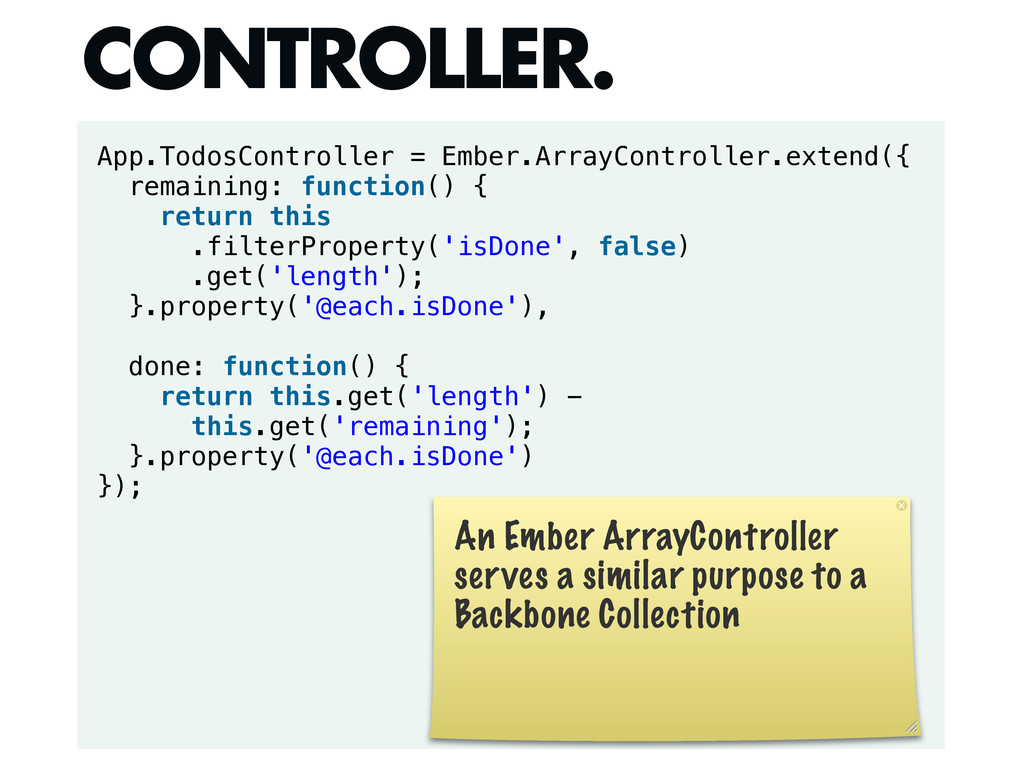
.get('length'); }.property('@each.isDone'), done: function() { return this.get('length') - this.get('remaining'); }.property('@each.isDone') }); CONTROLLER. An Ember ArrayController serves a similar purpose to a Backbone Collection
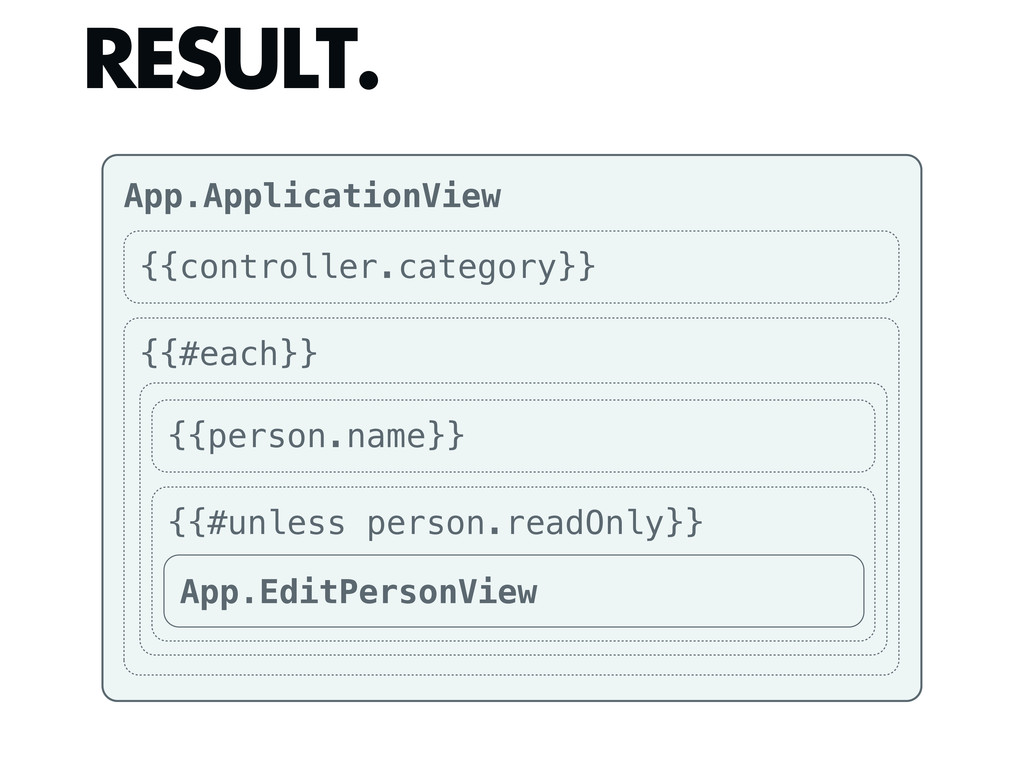
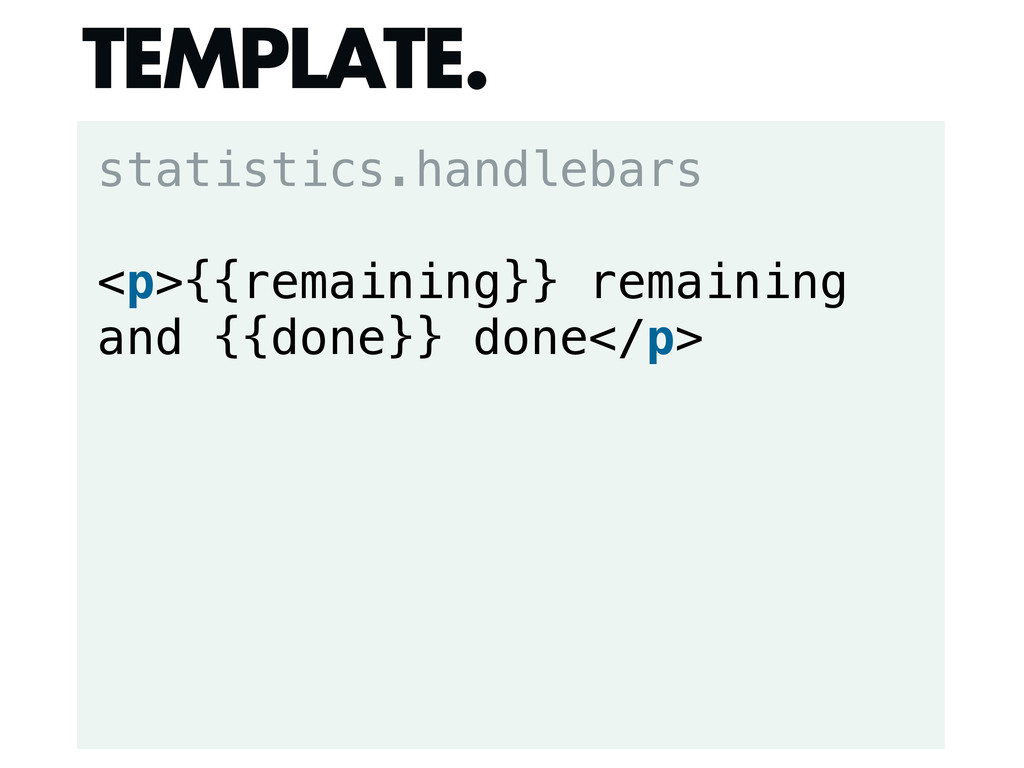
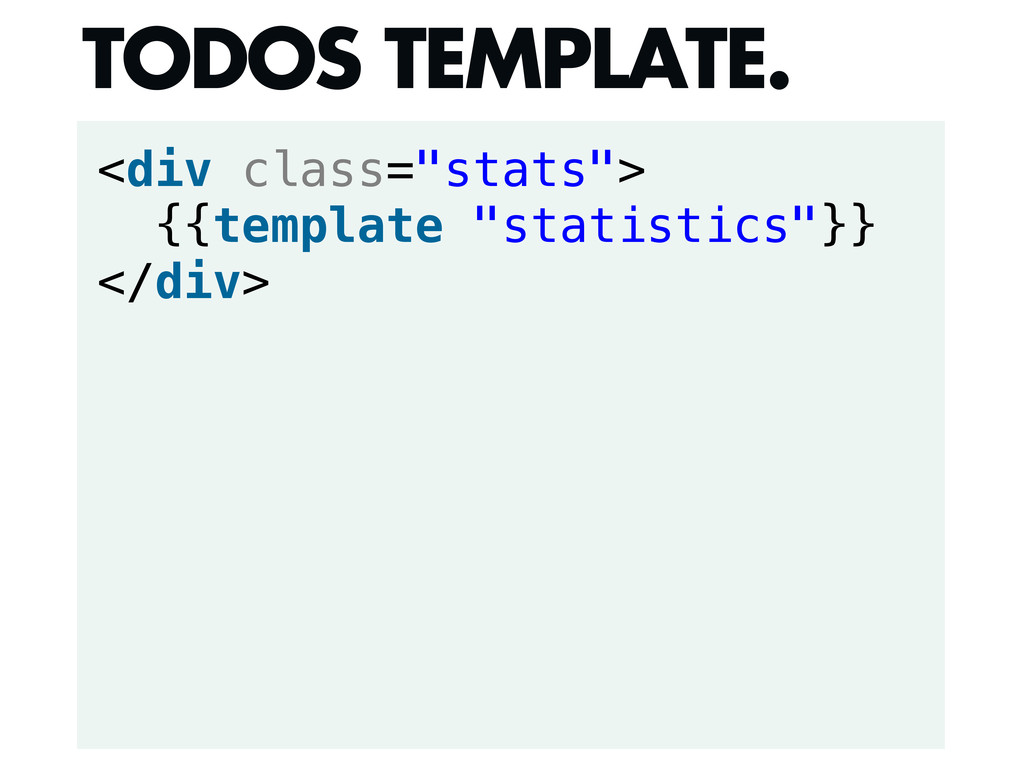
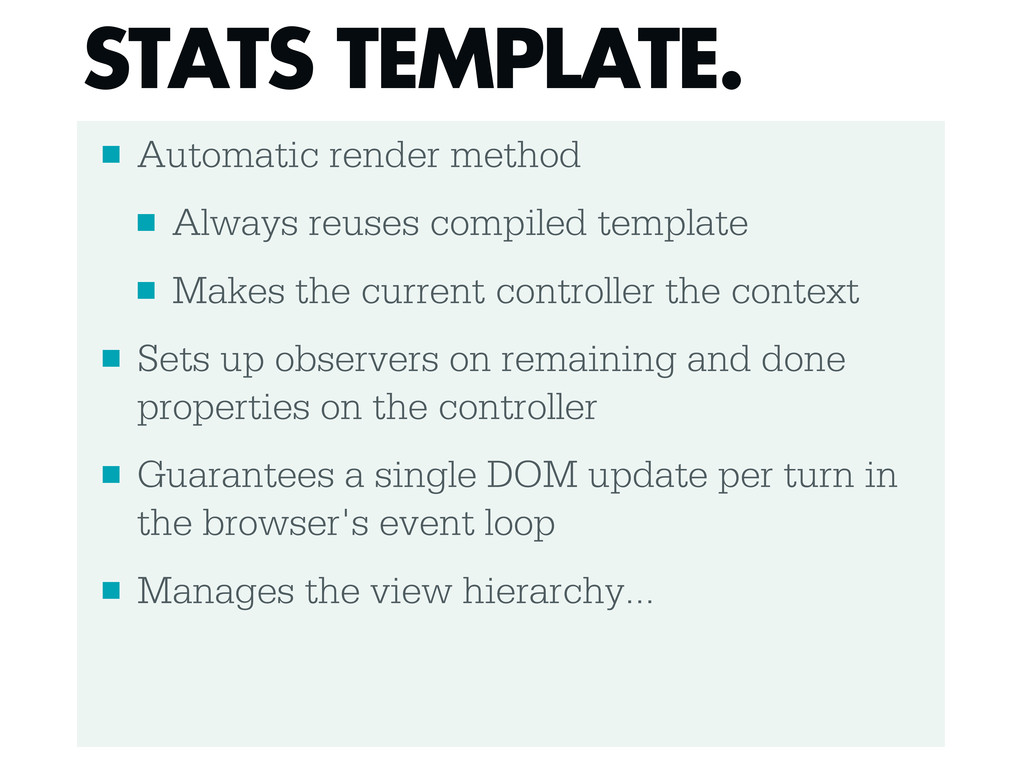
Makes the current controller the context ▪ Sets up observers on remaining and done properties on the controller ▪ Guarantees a single DOM update per turn in the browser's event loop ▪ Manages the view hierarchy... STATS TEMPLATE.
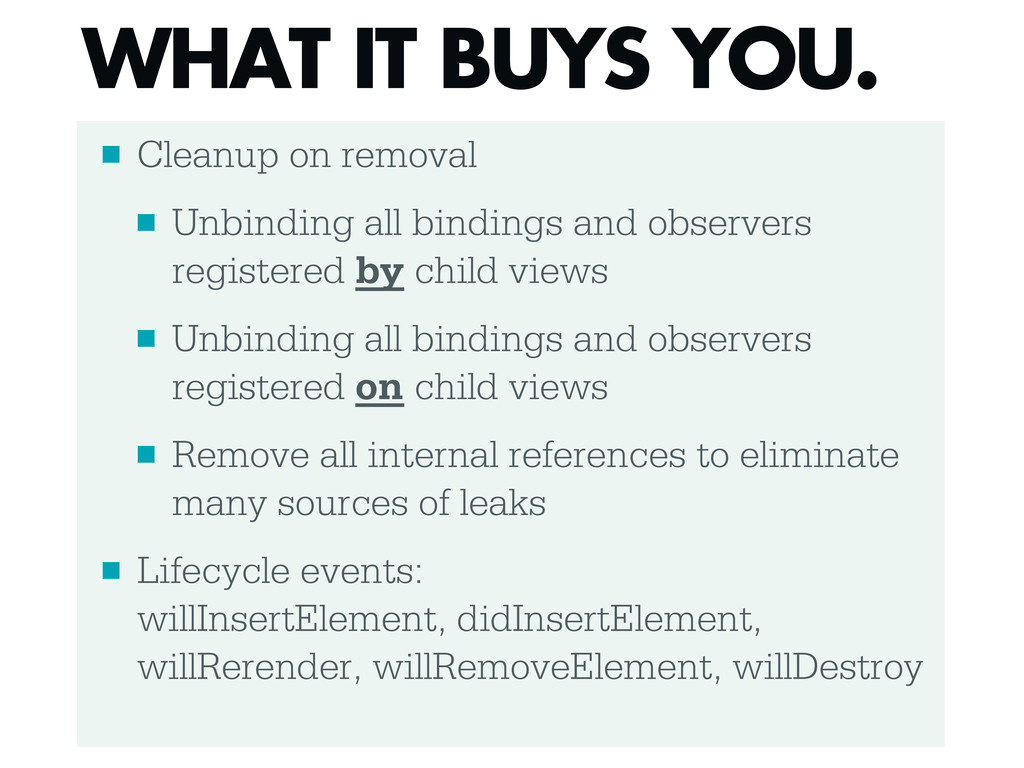
registered by child views ▪ Unbinding all bindings and observers registered on child views ▪ Remove all internal references to eliminate many sources of leaks ▪ Lifecycle events: willInsertElement, didInsertElement, willRerender, willRemoveElement, willDestroy WHAT IT BUYS YOU.
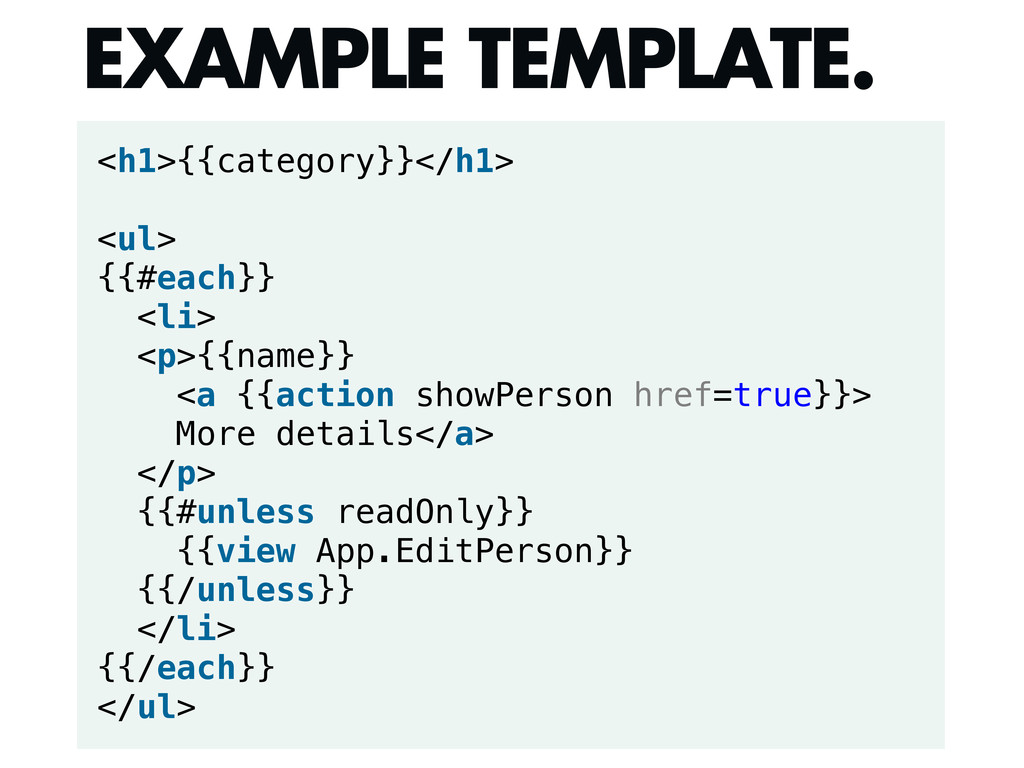
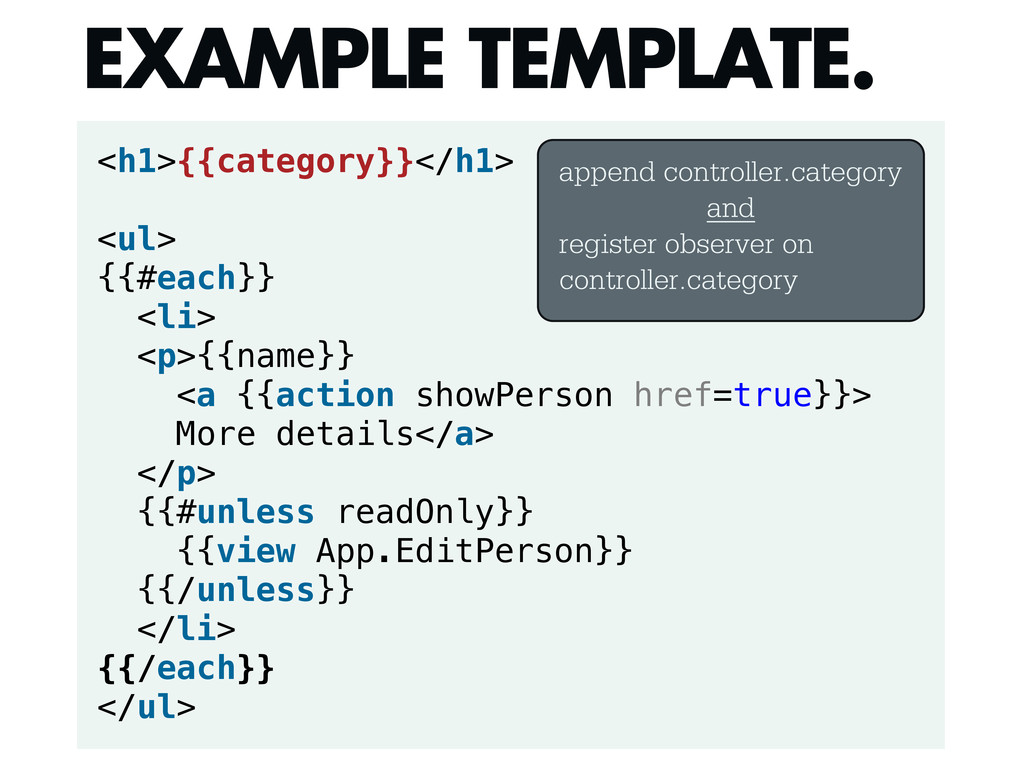
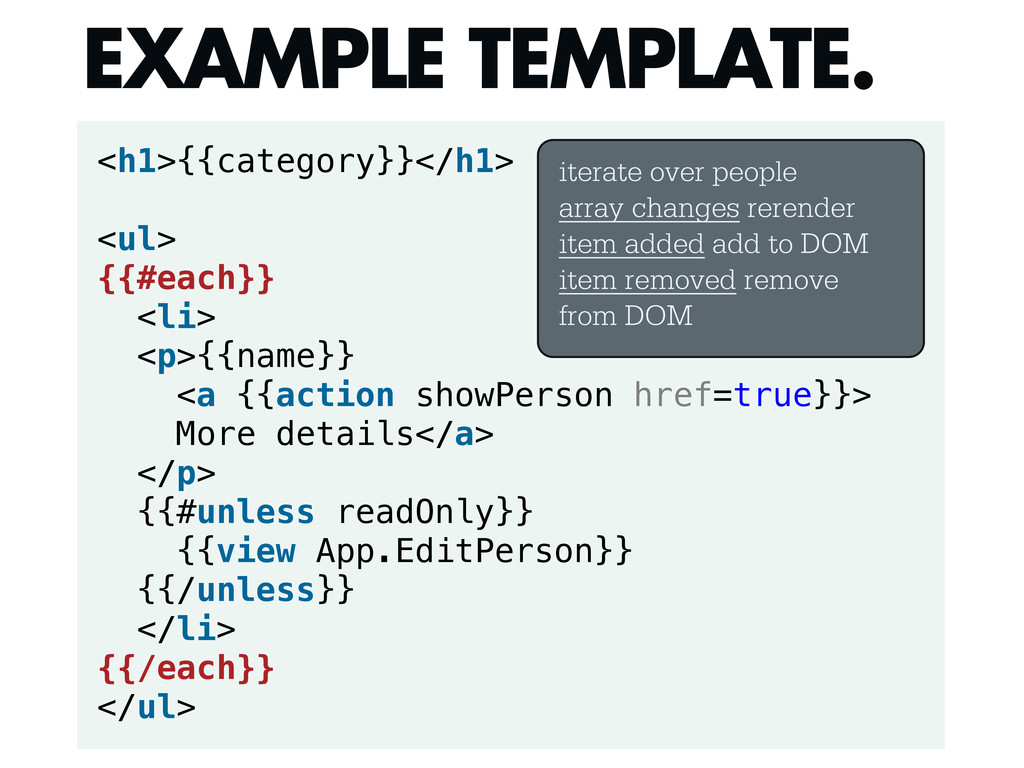
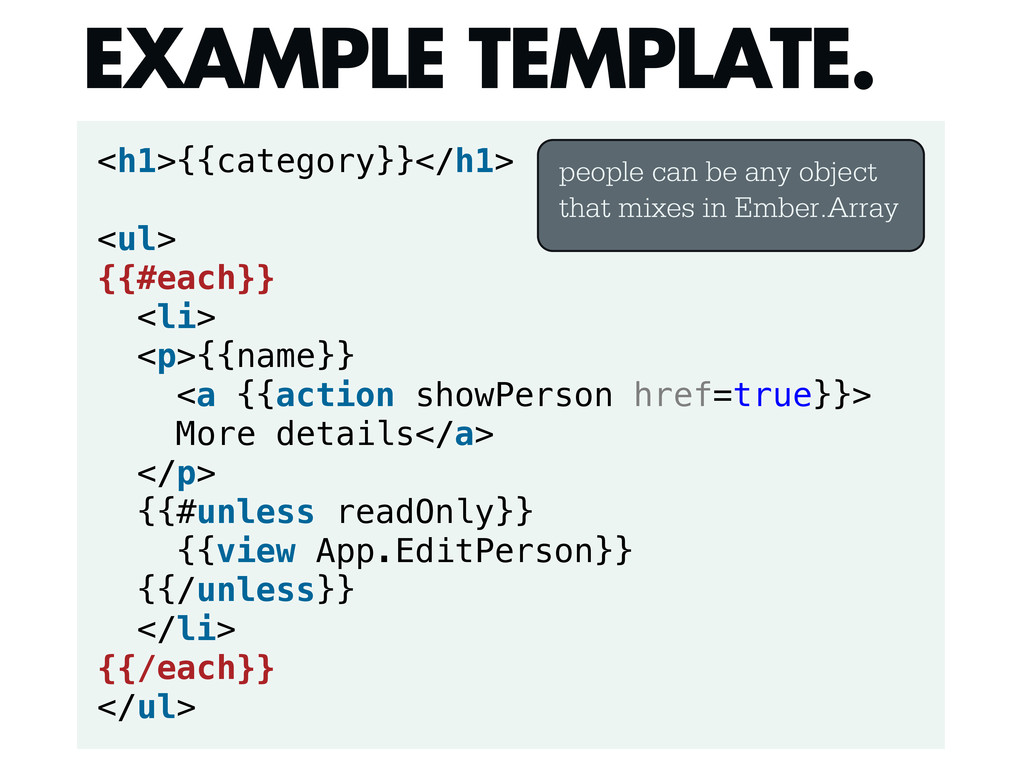
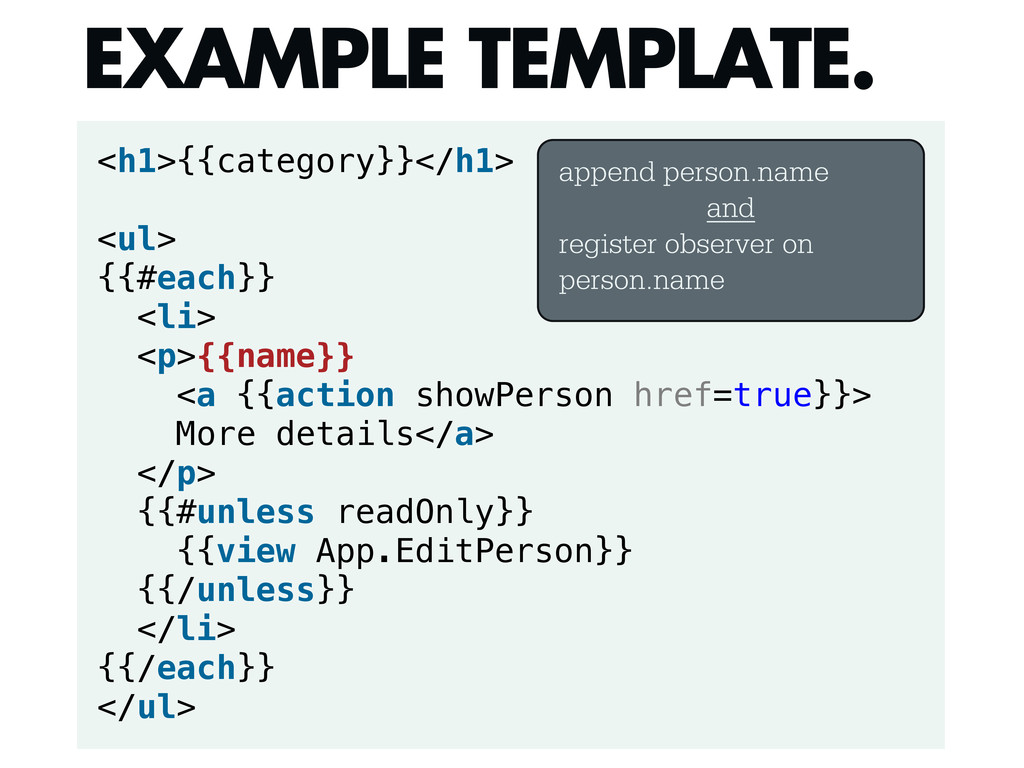
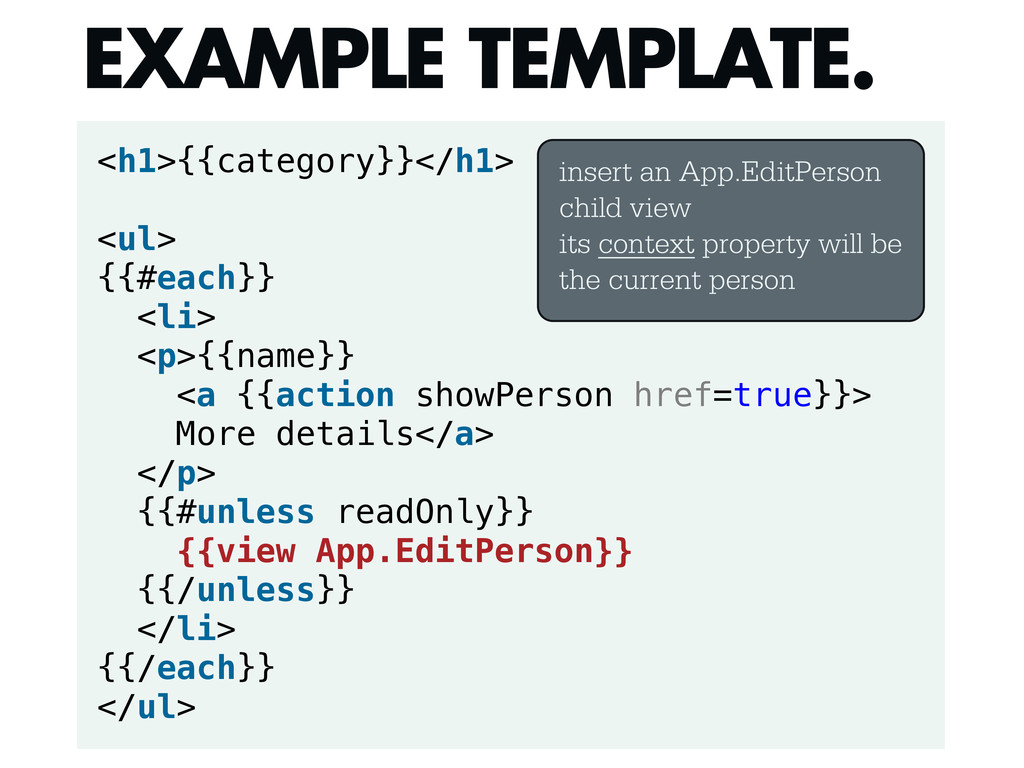
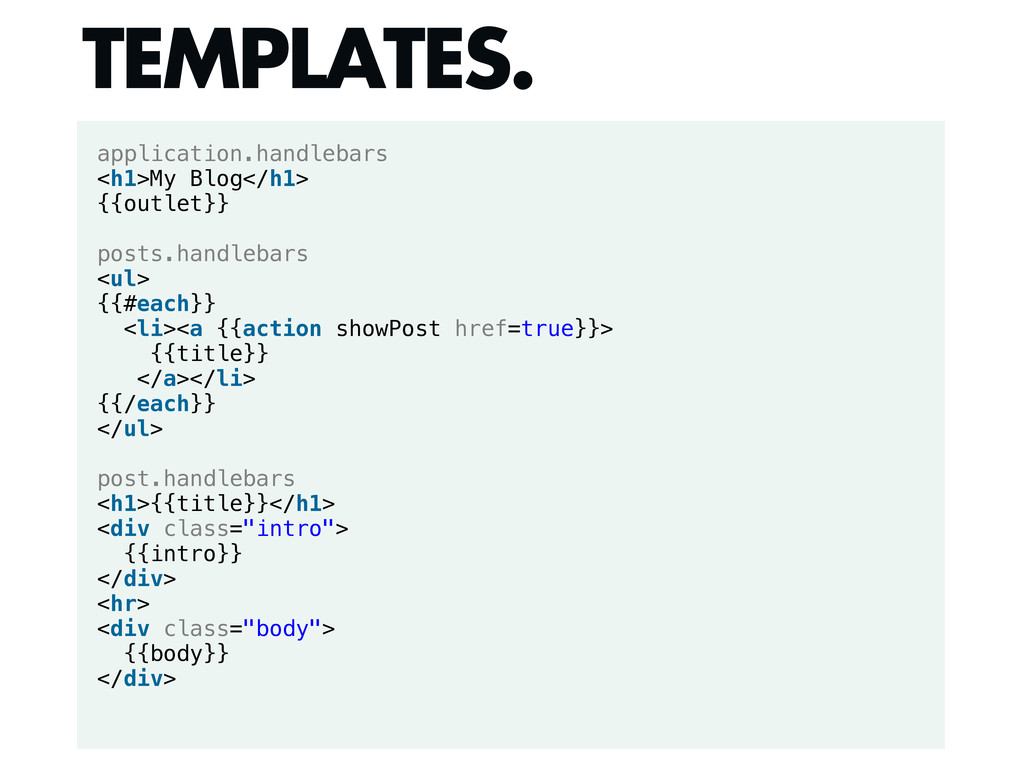
details</a> </p> {{#unless readOnly}} {{view App.EditPerson}} {{/unless}} </li> {{/each}} </ul> EXAMPLE TEMPLATE. iterate over people array changes rerender item added add to DOM item removed remove from DOM
details</a> </p> {{#unless readOnly}} {{view App.EditPerson}} {{/unless}} </li> {{/each}} </ul> EXAMPLE TEMPLATE. people can be any object that mixes in Ember.Array
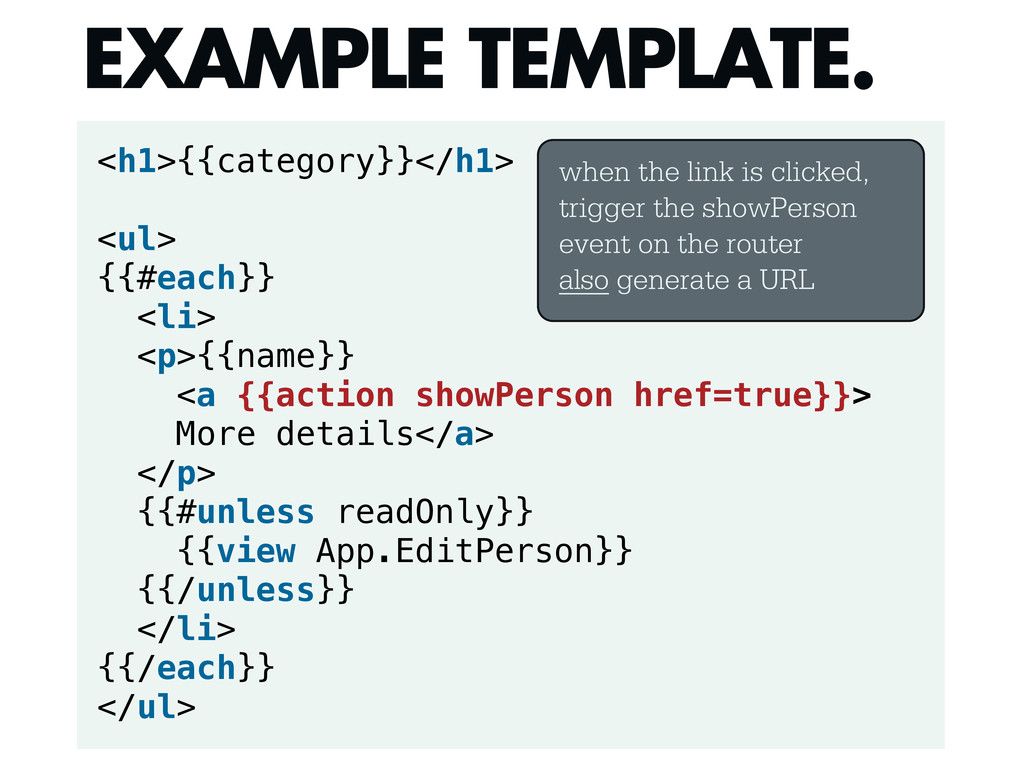
details</a> </p> {{#unless readOnly}} {{view App.EditPerson}} {{/unless}} </li> {{/each}} </ul> EXAMPLE TEMPLATE. when the link is clicked, trigger the showPerson event on the router also generate a URL
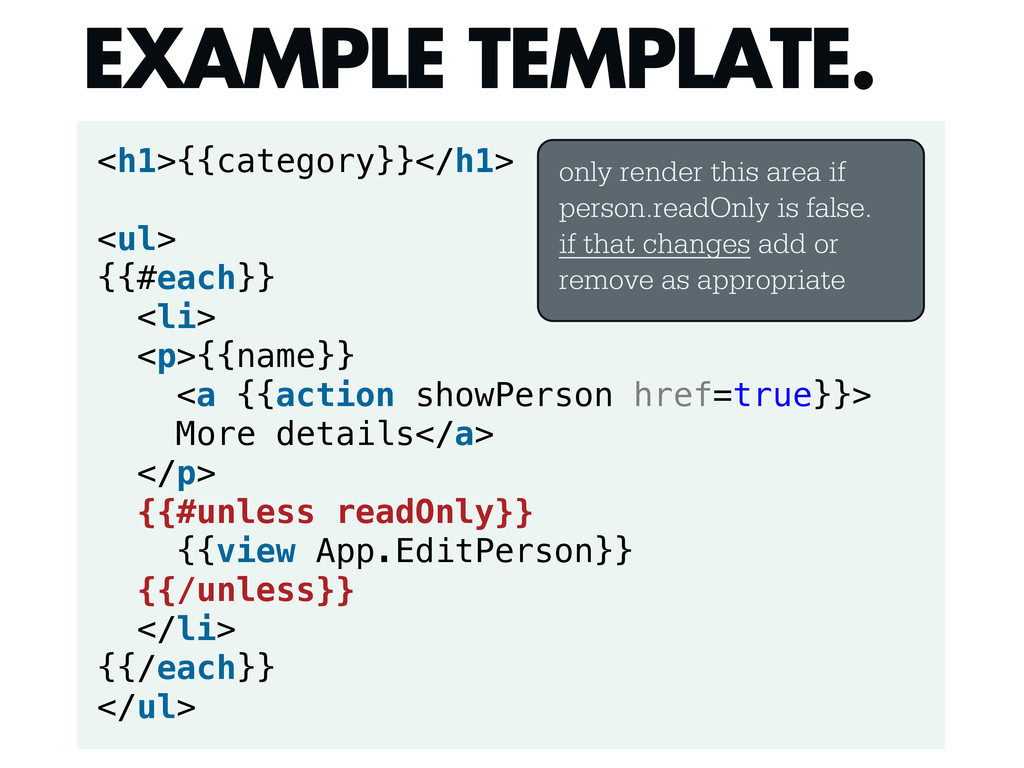
details</a> </p> {{#unless readOnly}} {{view App.EditPerson}} {{/unless}} </li> {{/each}} </ul> EXAMPLE TEMPLATE. only render this area if person.readOnly is false. if that changes add or remove as appropriate
details</a> </p> {{#unless readOnly}} {{view App.EditPerson}} {{/unless}} </li> {{/each}} </ul> EXAMPLE TEMPLATE. insert an App.EditPerson child view its context property will be the current person
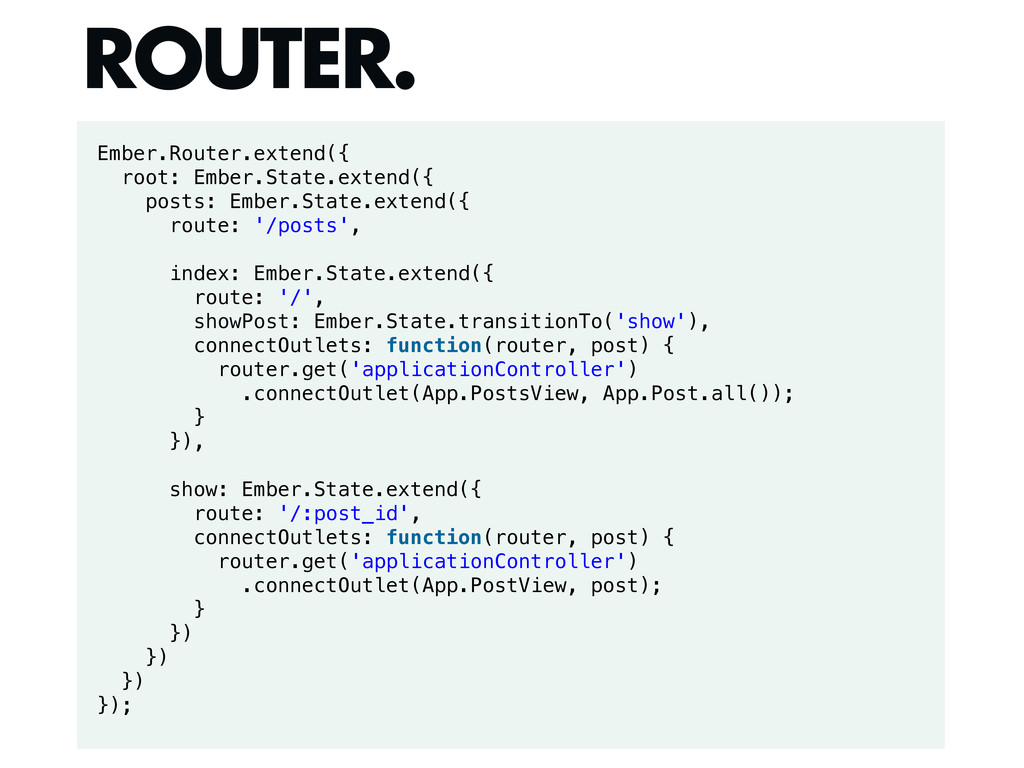
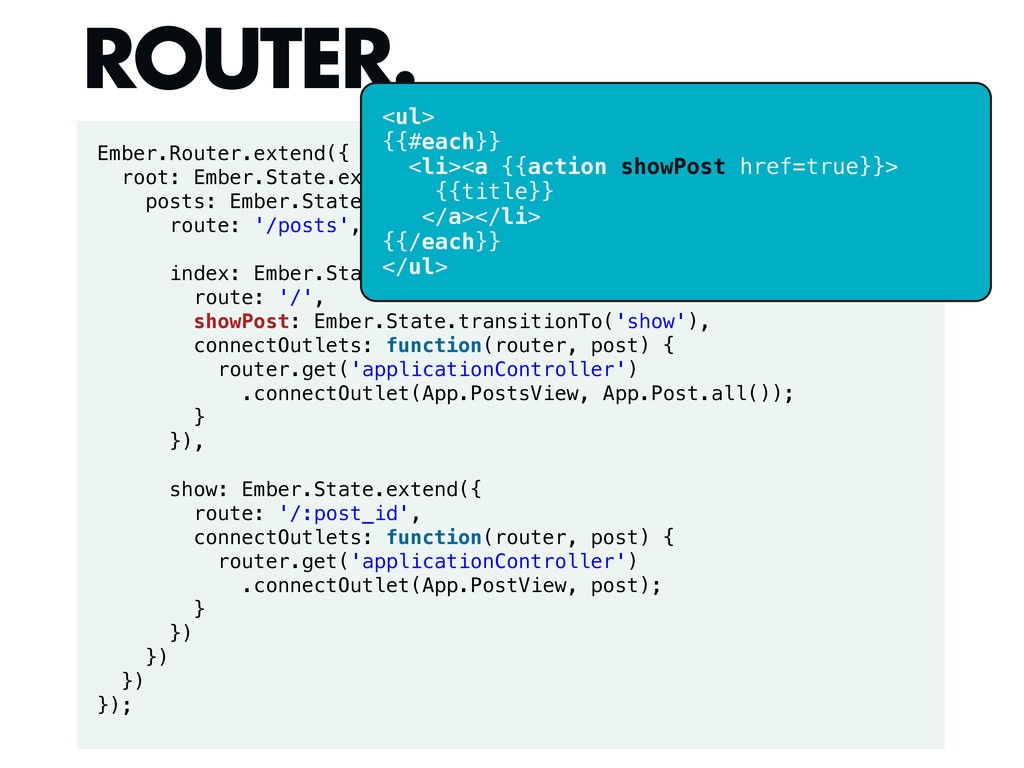
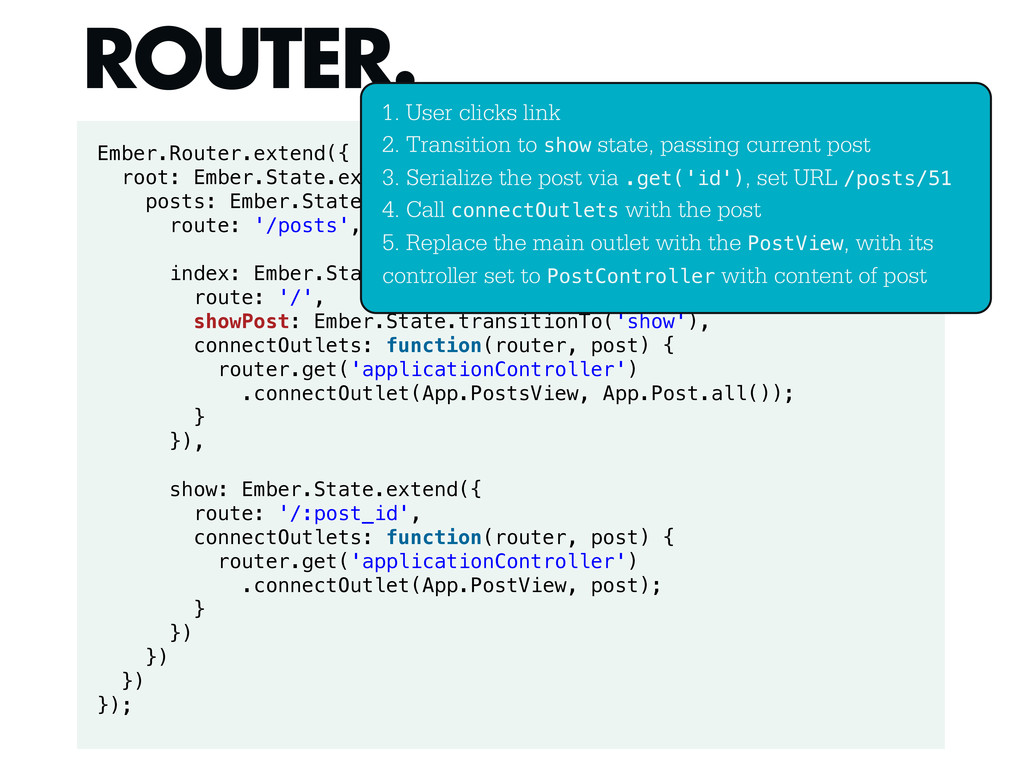
'/', showPost: Ember.State.transitionTo('show'), connectOutlets: function(router, post) { router.get('applicationController') .connectOutlet(App.PostsView, App.Post.all()); } }), show: Ember.State.extend({ route: '/:post_id', connectOutlets: function(router, post) { router.get('applicationController') .connectOutlet(App.PostView, post); } }) }) }) }); ROUTER. 1. User clicks link 2. Transition to show state, passing current post 3. Serialize the post via .get('id'), set URL /posts/51 4. Call connectOutlets with the post 5. Replace the main outlet with the PostView, with its controller set to PostController with content of post
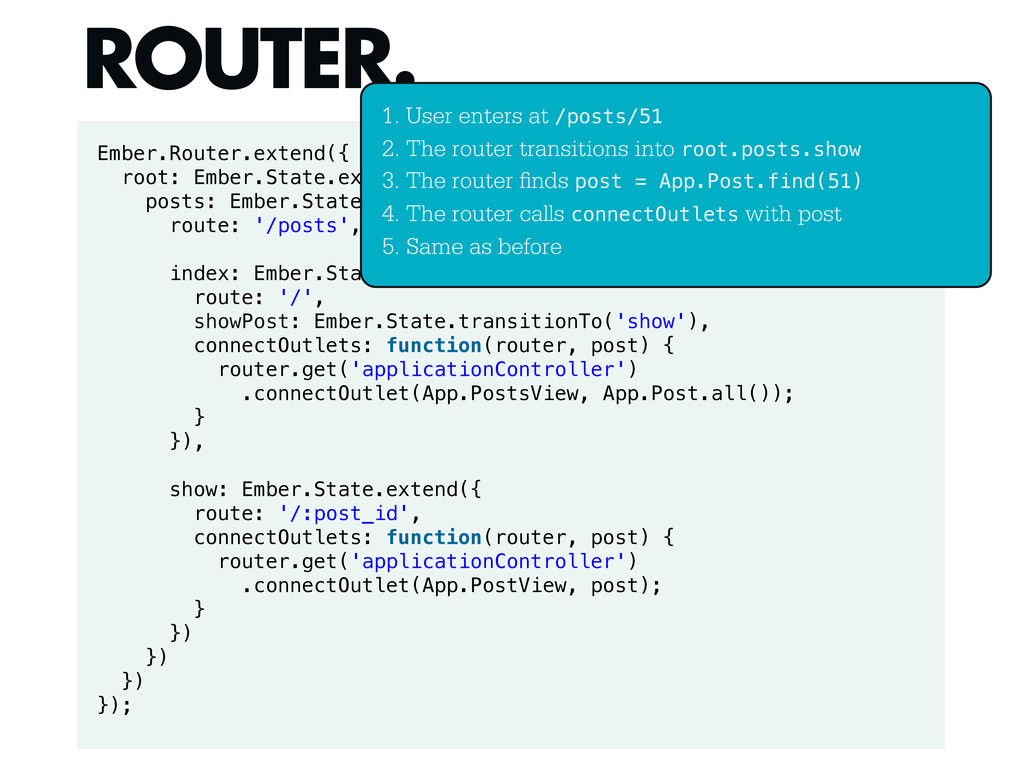
'/', showPost: Ember.State.transitionTo('show'), connectOutlets: function(router, post) { router.get('applicationController') .connectOutlet(App.PostsView, App.Post.all()); } }), show: Ember.State.extend({ route: '/:post_id', connectOutlets: function(router, post) { router.get('applicationController') .connectOutlet(App.PostView, post); } }) }) }) }); ROUTER. 1. User enters at /posts/51 2. The router transitions into root.posts.show 3. The router nds post = App.Post.find(51) 4. The router calls connectOutlets with post 5. Same as before


 wycats
 sansantech
 ks91
ks91
 kitagawaz
 ishiirikie
 dtunkelang
 oracle4engineer
 mkdev10
 chack411
 tsho
tsho
 vivion
 toshimaru
 slsops
 62gerente
 sarafernandez
 jdejongh
 erikaheidi
 khoart
 irinanazarova
 reverentgeek
 bkeepers
 ipullrank
 badams
 andyhume
 jeffersonlam







![Support.CompositeView = function(options) { this.children = _([]); Backbone.View.apply(this, [options]); };](https://files.speakerdeck.com/presentations/4fc7aedd26bdea017a011ea7/slide_49.jpg)