Webinar for the "Liberal Political Economy in the Asia Pacific" Forum sponsored by LSE Hayek Program, King's College London Centre for the Study of Society and Governance, and the Templeton World Charity Foundation.
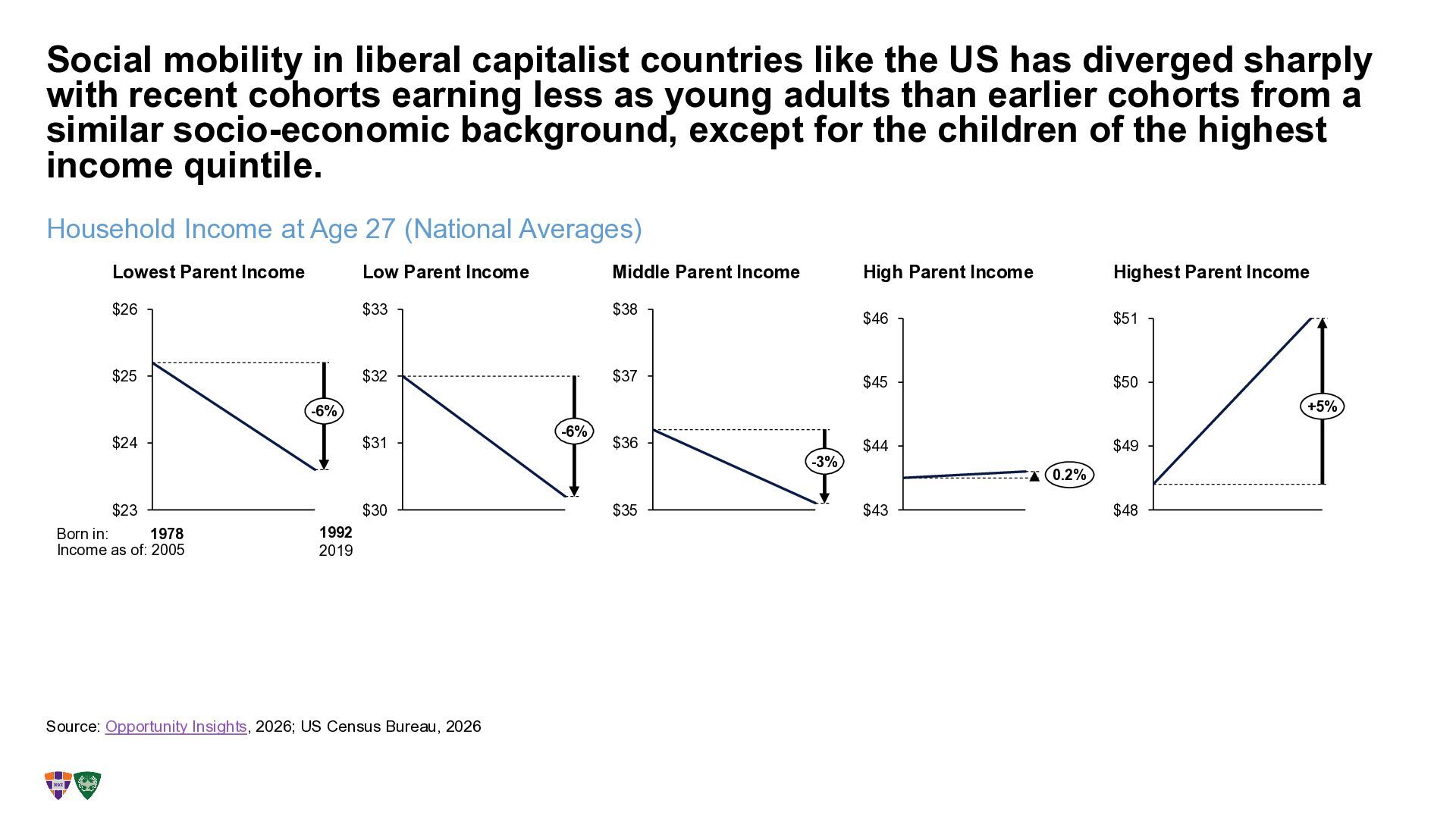
liberal capitalist countries like the US has diverged sharply with recent cohorts earning less as young adults than earlier cohorts from a similar socio-economic background, except for the children of the highest income quintile. $23 $24 $25 $26 -6% Income as of: 2005 Born in: 1978 2019 $30 $31 $32 $33 -6% $35 $36 $37 $38 -3% $43 $44 $45 $46 0.2% $48 $49 $50 $51 +5% Lowest Parent Income Low Parent Income Middle Parent Income High Parent Income Highest Parent Income 1992 Source: Opportunity Insights, 2026; US Census Bureau, 2026
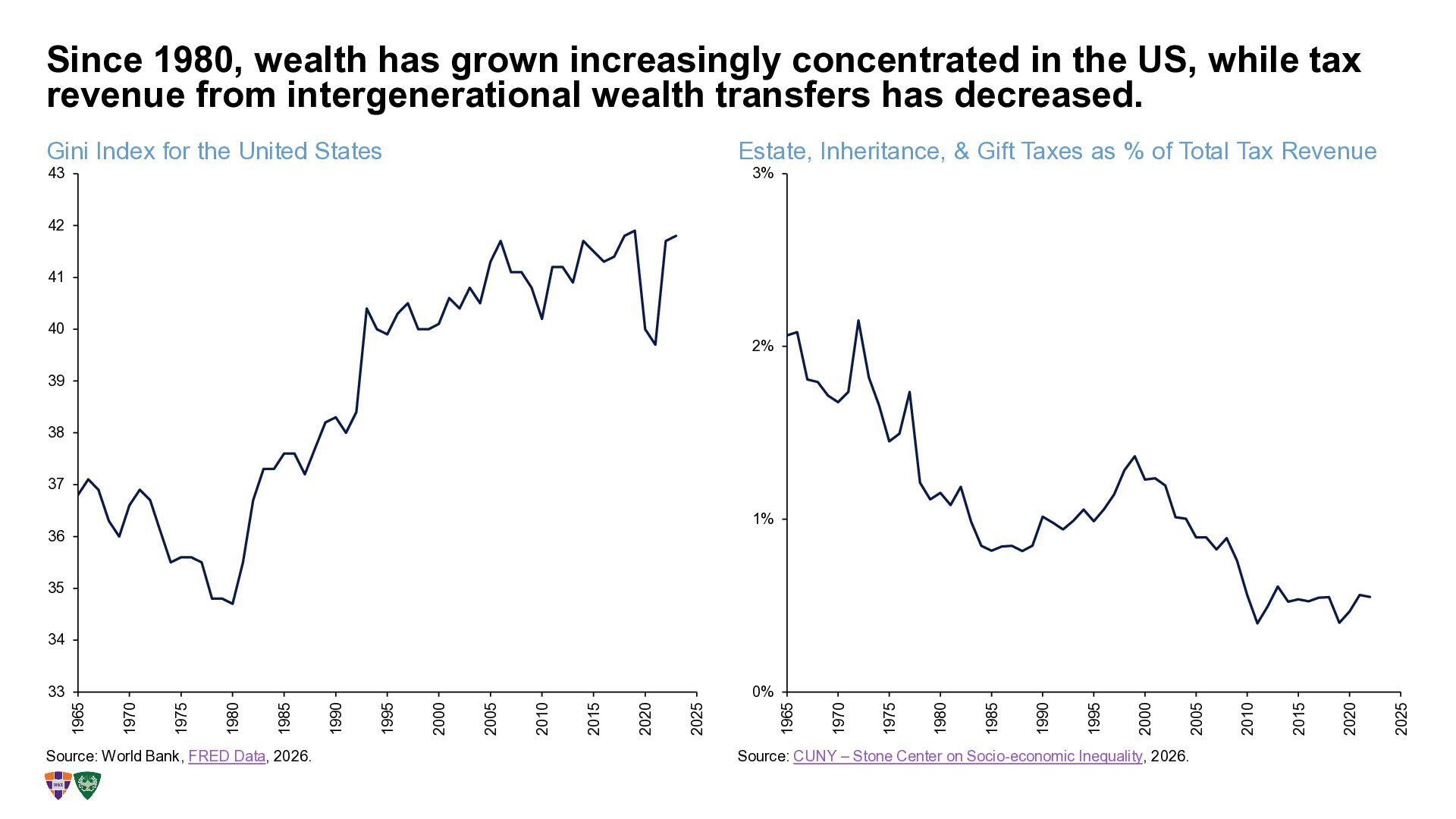
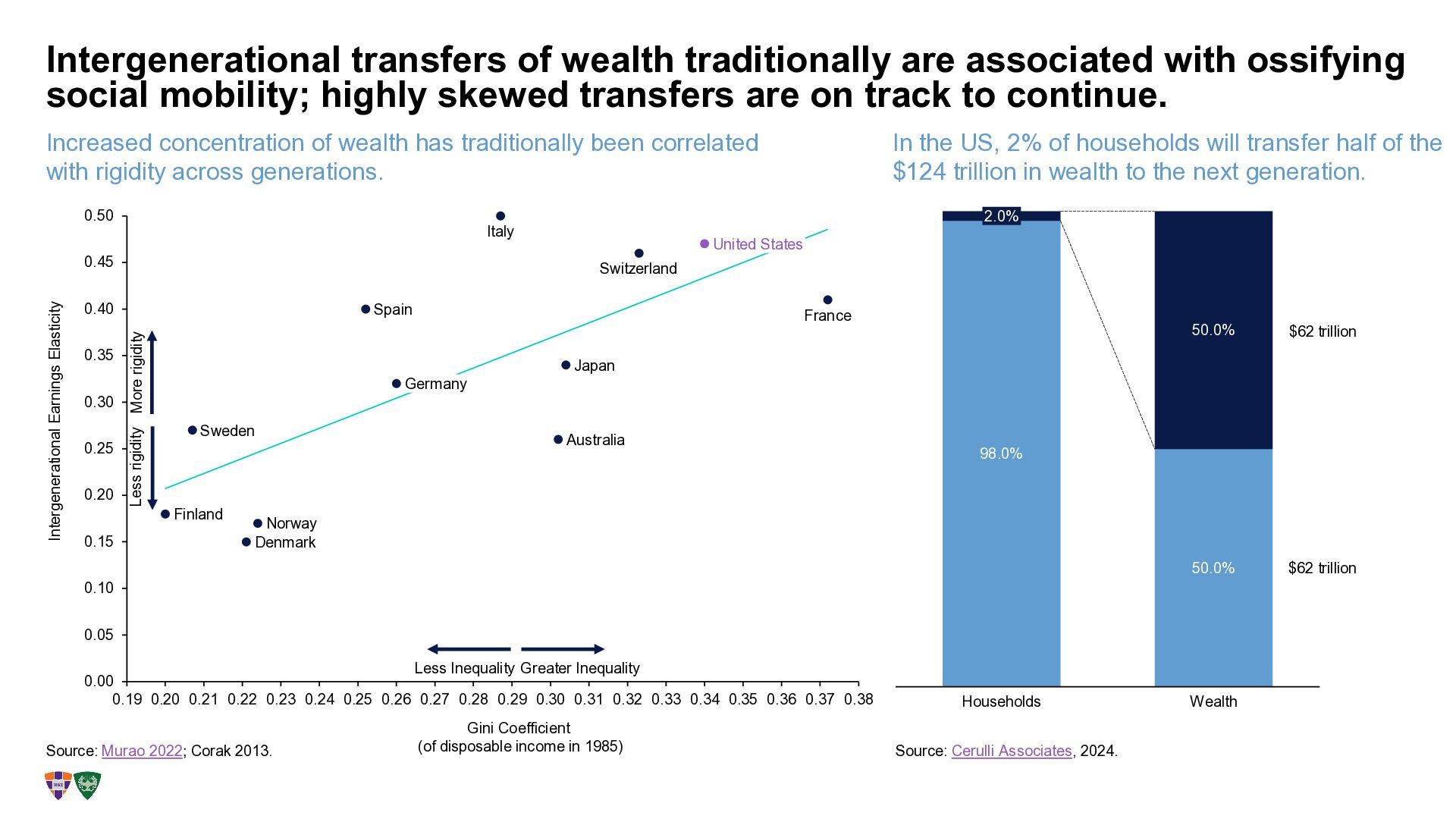
the $124 trillion in wealth to the next generation. Intergenerational transfers of wealth traditionally are associated with ossifying social mobility; highly skewed transfers are on track to continue. 98.0% 50.0% 50.0% 2.0% Households Wealth $62 trillion $62 trillion Source: Cerulli Associates, 2024. 0.00 0.05 0.10 0.15 0.20 0.25 0.30 0.35 0.40 0.45 0.50 0.19 0.20 0.21 0.22 0.23 0.24 0.25 0.26 0.27 0.28 0.29 0.30 0.31 0.32 0.33 0.34 0.35 0.36 0.37 0.38 Australia Switzerland Germany Denmark Spain Finland France Italy Japan Norway Sweden United States Gini Coefficient (of disposable income in 1985) Intergenerational Earnings Elasticity Increased concentration of wealth has traditionally been correlated with rigidity across generations. More rigidity Less rigidity Greater Inequality Less Inequality Source: Murao 2022; Corak 2013.
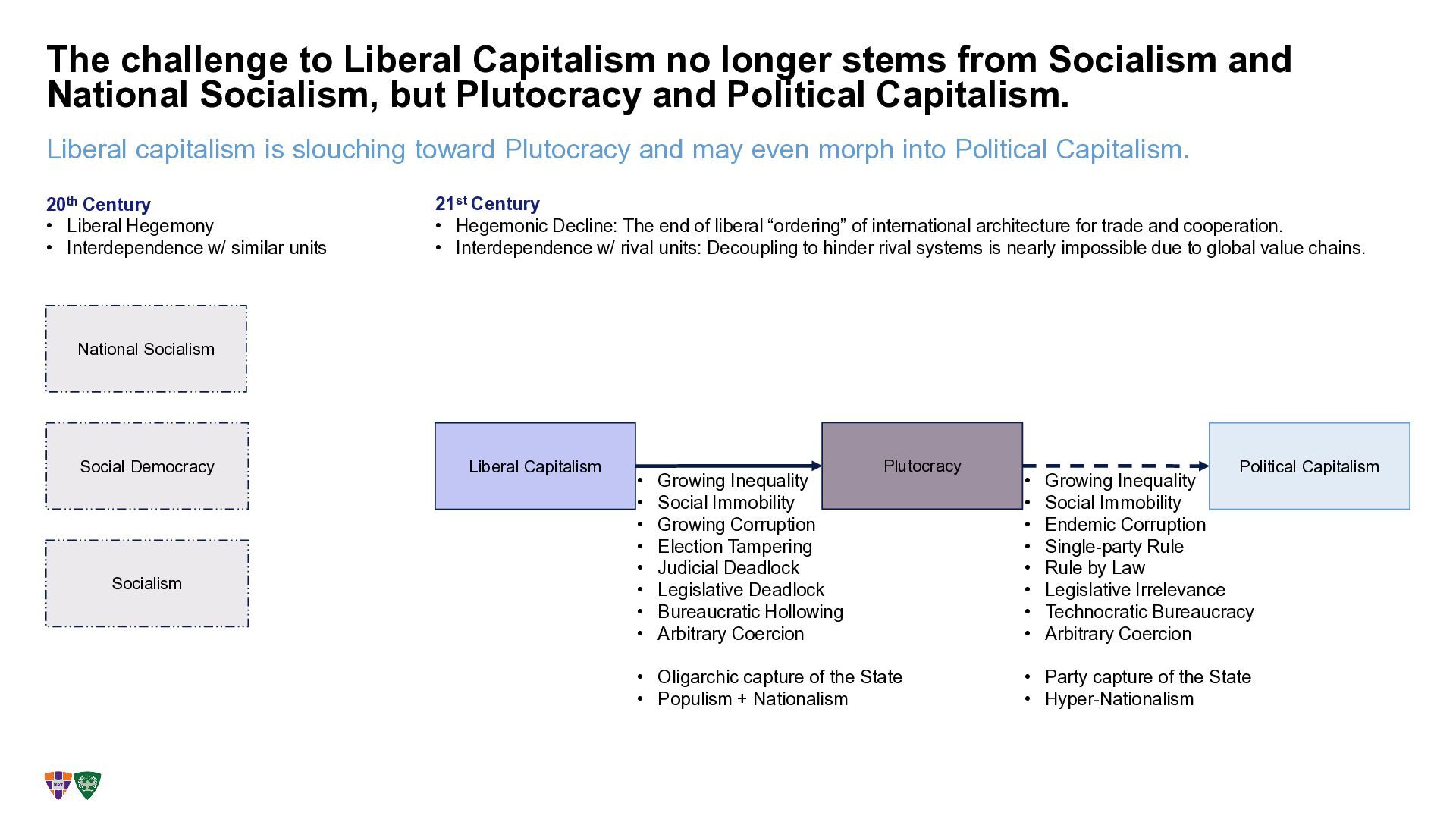
into Political Capitalism. The challenge to Liberal Capitalism no longer stems from Socialism and National Socialism, but Plutocracy and Political Capitalism. Political Capitalism Liberal Capitalism Plutocracy • Growing Inequality • Social Immobility • Growing Corruption • Election Tampering • Judicial Deadlock • Legislative Deadlock • Bureaucratic Hollowing • Arbitrary Coercion • Oligarchic capture of the State • Populism + Nationalism • Growing Inequality • Social Immobility • Endemic Corruption • Single-party Rule • Rule by Law • Legislative Irrelevance • Technocratic Bureaucracy • Arbitrary Coercion • Party capture of the State • Hyper-Nationalism National Socialism Socialism Social Democracy 20th Century 21st Century • Hegemonic Decline: The end of liberal “ordering” of international architecture for trade and cooperation. • Interdependence w/ rival units: Decoupling to hinder rival systems is nearly impossible due to global value chains. • Liberal Hegemony • Interdependence w/ similar units
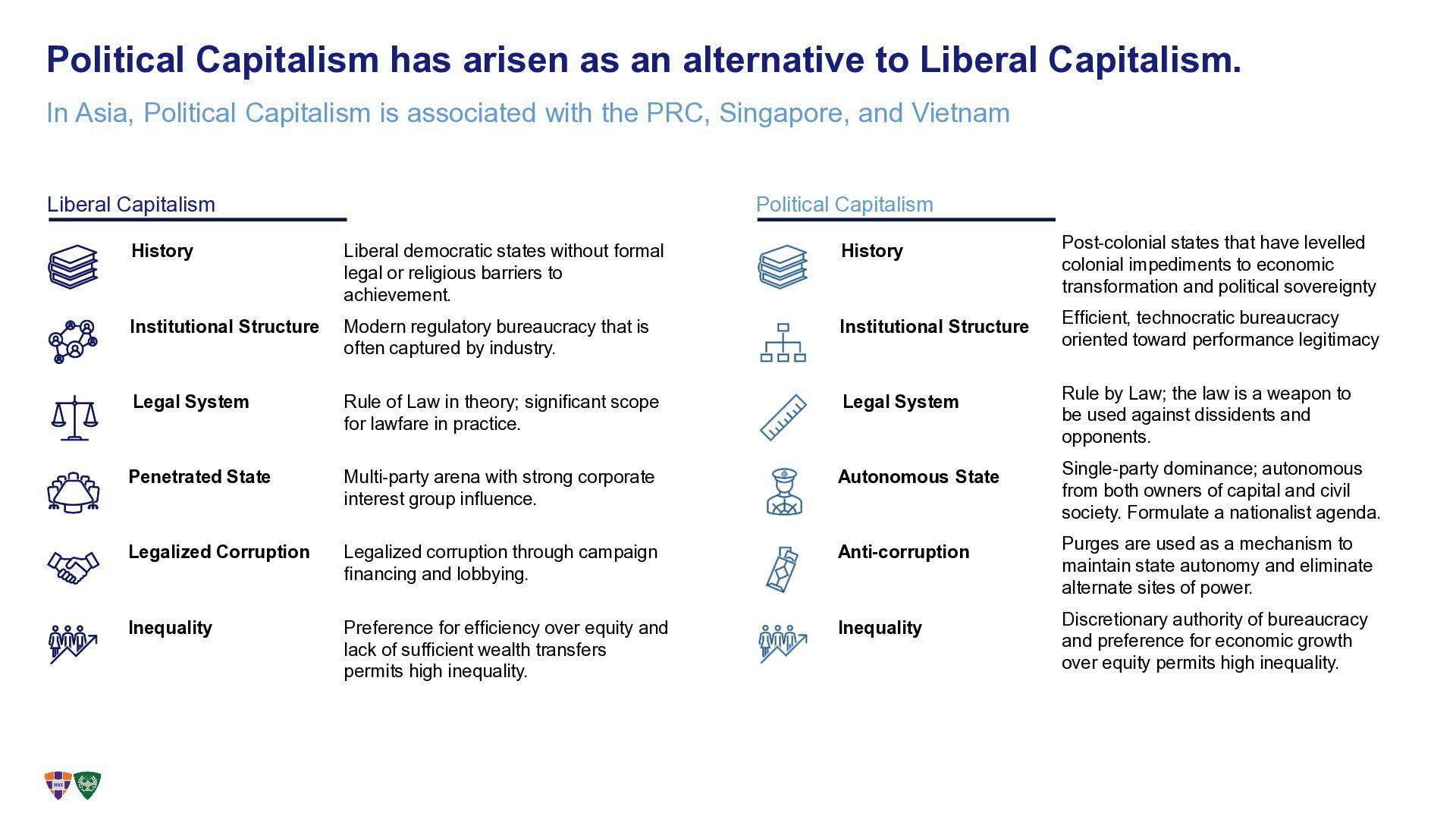
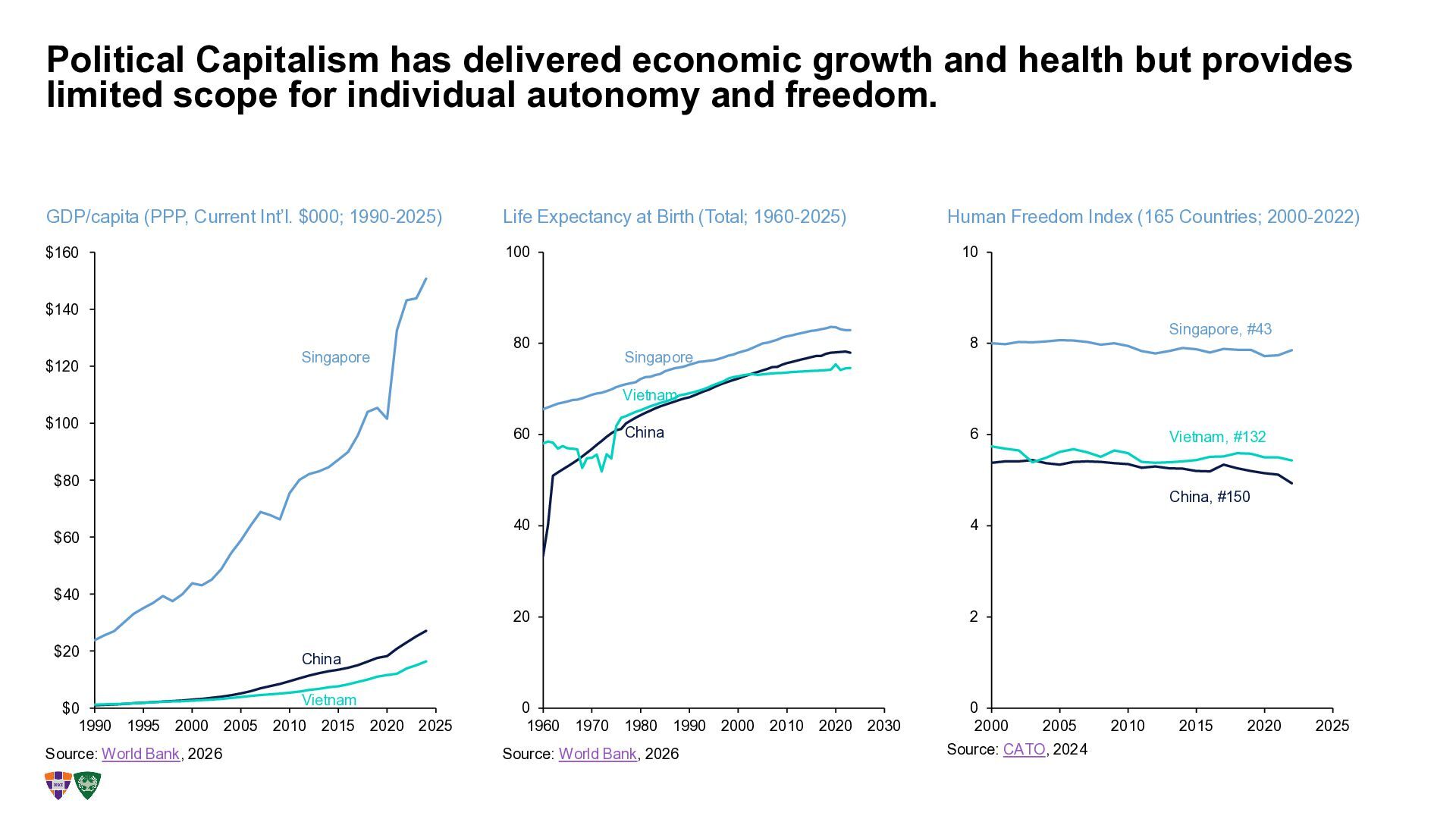
and Vietnam Political Capitalism has arisen as an alternative to Liberal Capitalism. Institutional Structure Legal System Penetrated State History Modern regulatory bureaucracy that is often captured by industry. Rule of Law in theory; significant scope for lawfare in practice. Multi-party arena with strong corporate interest group influence. Liberal democratic states without formal legal or religious barriers to achievement. Legalized Corruption Legalized corruption through campaign financing and lobbying. Inequality Preference for efficiency over equity and lack of sufficient wealth transfers permits high inequality. Institutional Structure Legal System Autonomous State History Efficient, technocratic bureaucracy oriented toward performance legitimacy Rule by Law; the law is a weapon to be used against dissidents and opponents. Single-party dominance; autonomous from both owners of capital and civil society. Formulate a nationalist agenda. Post-colonial states that have levelled colonial impediments to economic transformation and political sovereignty Anti-corruption Purges are used as a mechanism to maintain state autonomy and eliminate alternate sites of power. Inequality Discretionary authority of bureaucracy and preference for economic growth over equity permits high inequality. Liberal Capitalism Political Capitalism
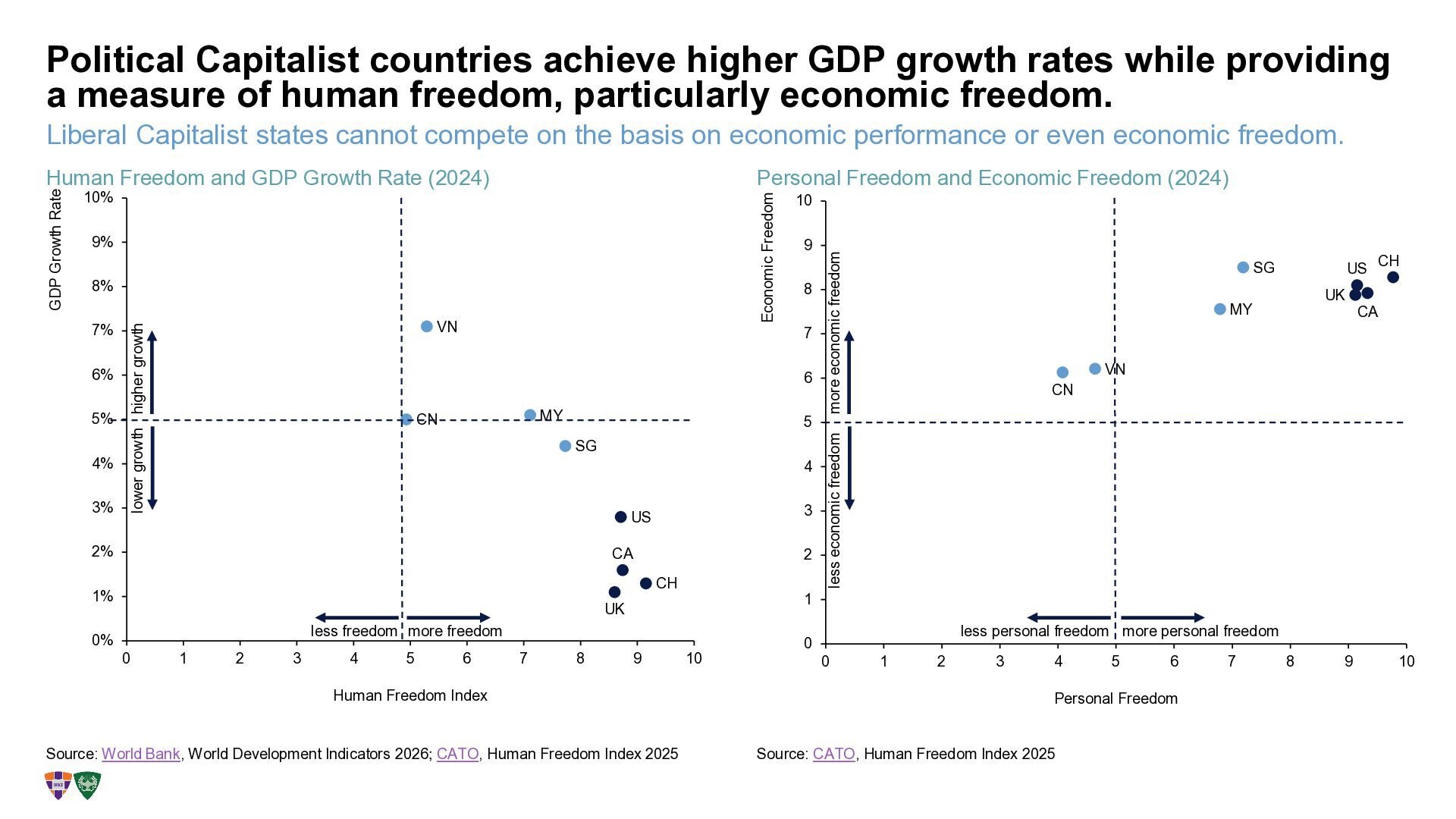
achieve higher GDP growth rates while providing a measure of human freedom, particularly economic freedom. 0% 1% 2% 3% 4% 5% 6% 7% 8% 9% 10% 0 1 2 3 4 5 6 7 8 9 10 Human Freedom Index GDP Growth Rate US UK CA CH CN VN SG MY more freedom less freedom lower growth higher growth 0 1 2 3 4 5 6 7 8 9 10 0 1 2 3 4 5 6 7 8 9 10 Personal Freedom Economic Freedom CH CA US UK SG MY VN CN Personal Freedom and Economic Freedom (2024) Source: World Bank, World Development Indicators 2026; CATO, Human Freedom Index 2025 Source: CATO, Human Freedom Index 2025 Liberal Capitalist states cannot compete on the basis on economic performance or even economic freedom. more personal freedom less personal freedom less economic freedom more economic freedom
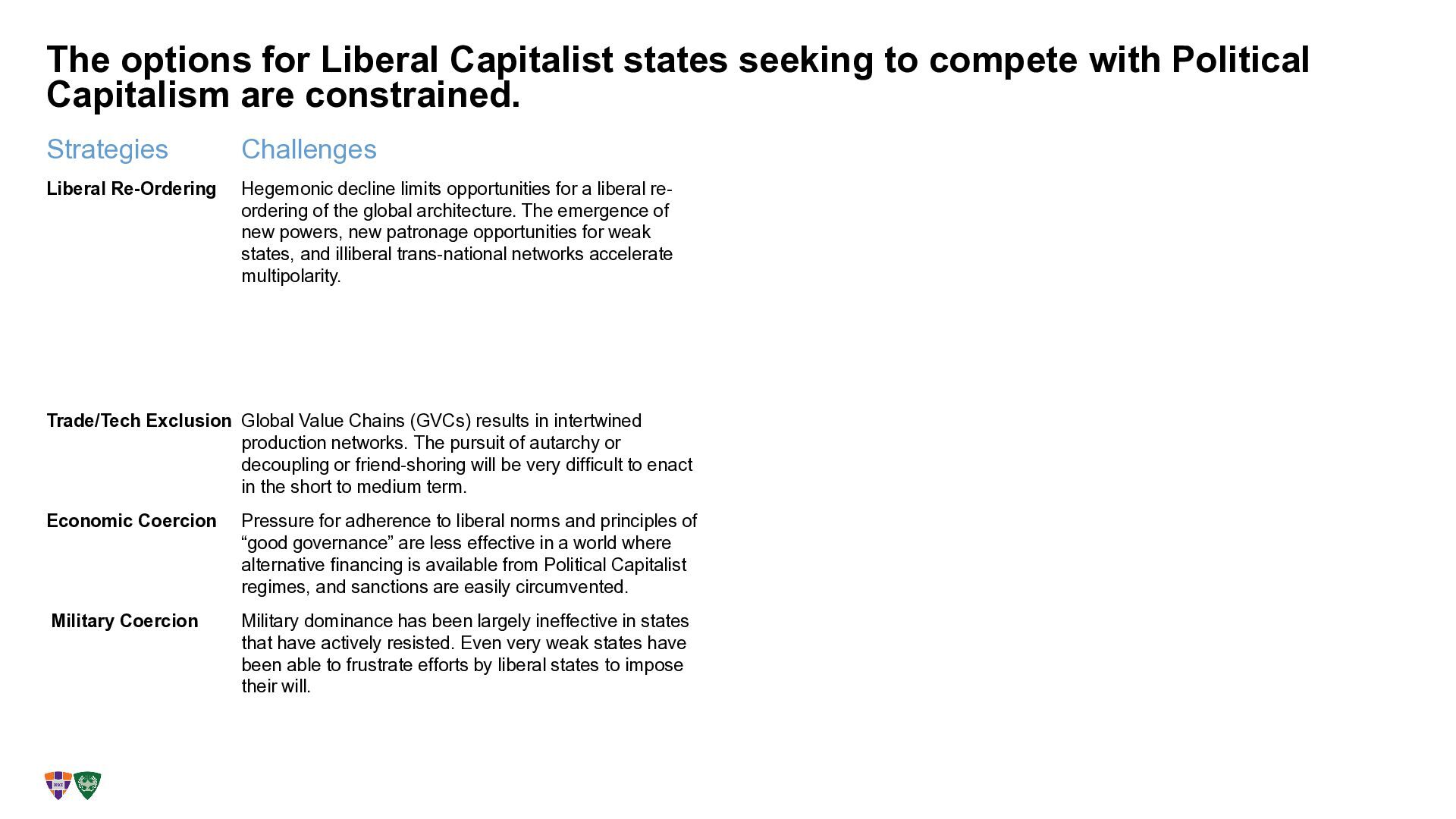
with Political Capitalism are constrained. Global Value Chains (GVCs) results in intertwined production networks. The pursuit of autarchy or decoupling or friend-shoring will be very difficult to enact in the short to medium term. Hegemonic decline limits opportunities for a liberal re- ordering of the global architecture. The emergence of new powers, new patronage opportunities for weak states, and illiberal trans-national networks accelerate multipolarity. Pressure for adherence to liberal norms and principles of “good governance” are less effective in a world where alternative financing is available from Political Capitalist regimes, and sanctions are easily circumvented. Challenges Trade/Tech Exclusion Liberal Re-Ordering Economic Coercion Military Coercion Military dominance has been largely ineffective in states that have actively resisted. Even very weak states have been able to frustrate efforts by liberal states to impose their will.
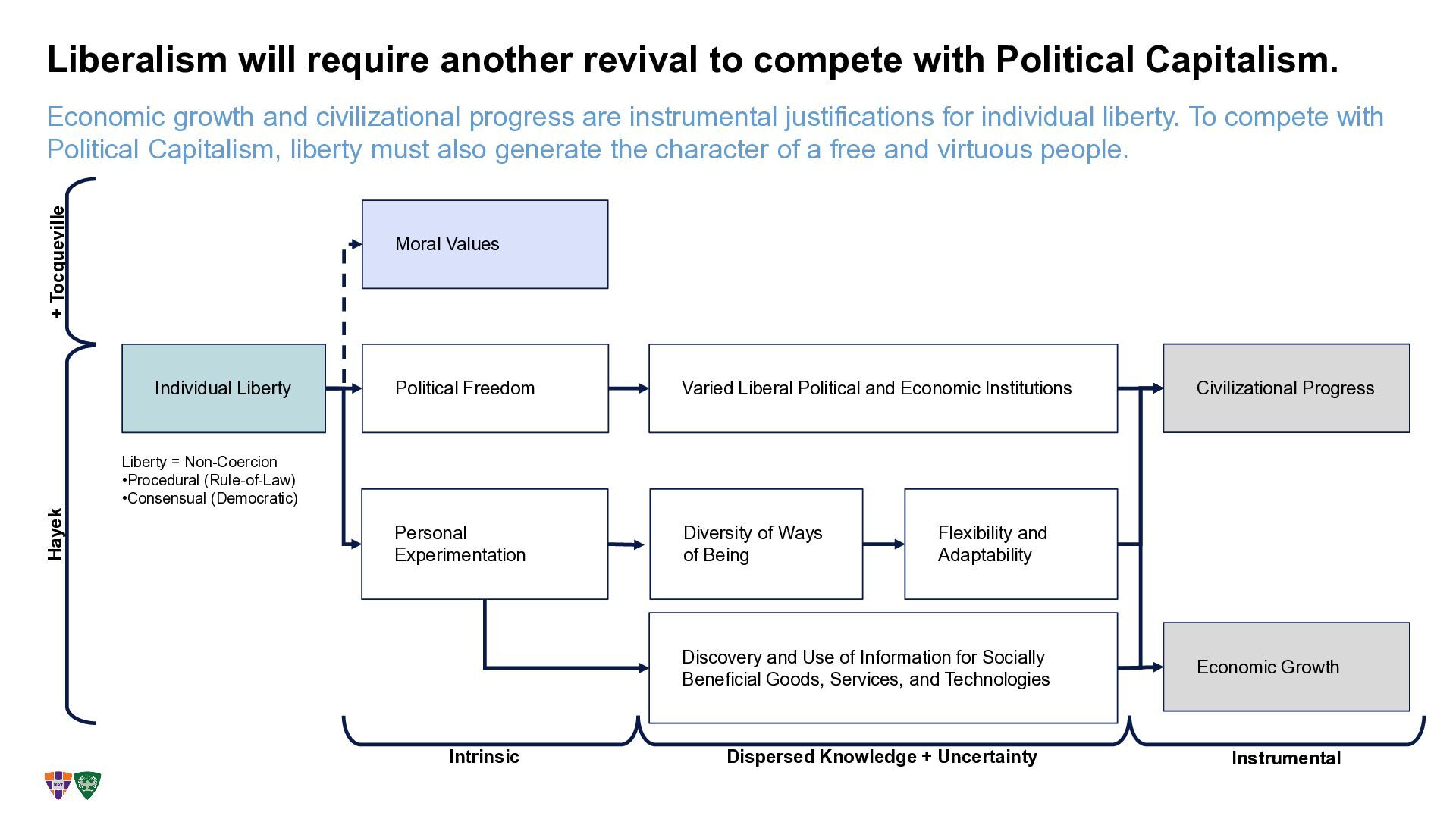
liberty. To compete with Political Capitalism, liberty must also generate the character of a free and virtuous people. Liberalism will require another revival to compete with Political Capitalism. Individual Liberty Political Freedom Personal Experimentation Civilizational Progress Discovery and Use of Information for Socially Beneficial Goods, Services, and Technologies Flexibility and Adaptability Varied Liberal Political and Economic Institutions Moral Values Diversity of Ways of Being Economic Growth Hayek + Tocqueville Liberty = Non-Coercion •Procedural (Rule-of-Law) •Consensual (Democratic) Dispersed Knowledge + Uncertainty Intrinsic Instrumental


 vyadav
 pawan_pharm
 rashwhitman
 ishii_mit
 cbtlibrary
 2720japanoke
 juanmartin2026
 yasslab
 kentaroy47
 bvr7352
 frievea
 malarkey
 asonas
 codingconduct
 sabderemane
 raygrieselhuber
 dugsong
 colly
colly
 sarafernandez
 bermonpainter
 axbom
axbom
 aleyda
 jdejongh