Λεωνίδας Μηλώσης - Optimize – optimize – optimize: Caring for performance of your WordPress plugin or website
Why performance is important and how a WordPress developer can identify and implement quick wins to optimize it. Learn how you can use object cache to improve performance and how to let AI help you with making code faster.
Yoast with more than a decade of experience in the WordPress ecosystem. I am passionate about backend performance and grateful that I can work on products that reach millions of users world-wide. Plugin developer at Yoast
your website visitors to have a good experience." - The Mozilla Foundation - Why? - Good UX https://developer.mozilla.org/en-US/docs/Learn_web_development/Extensions/Performance/why_web_performance
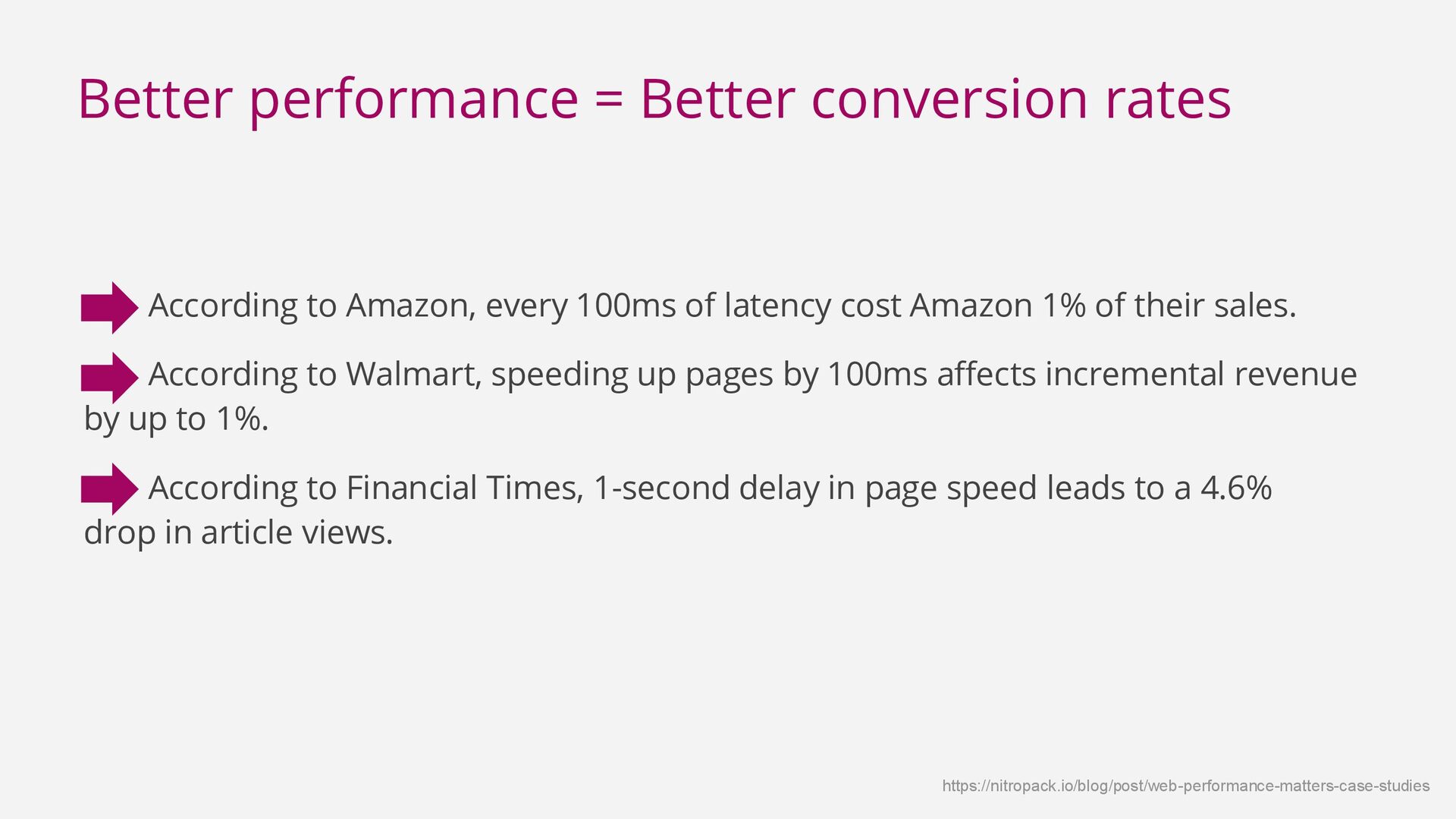
of their sales. According to Walmart, speeding up pages by 100ms affects incremental revenue by up to 1%. According to Financial Times, 1-second delay in page speed leads to a 4.6% drop in article views. Better performance = Better conversion rates https://nitropack.io/blog/post/web-performance-matters-case-studies
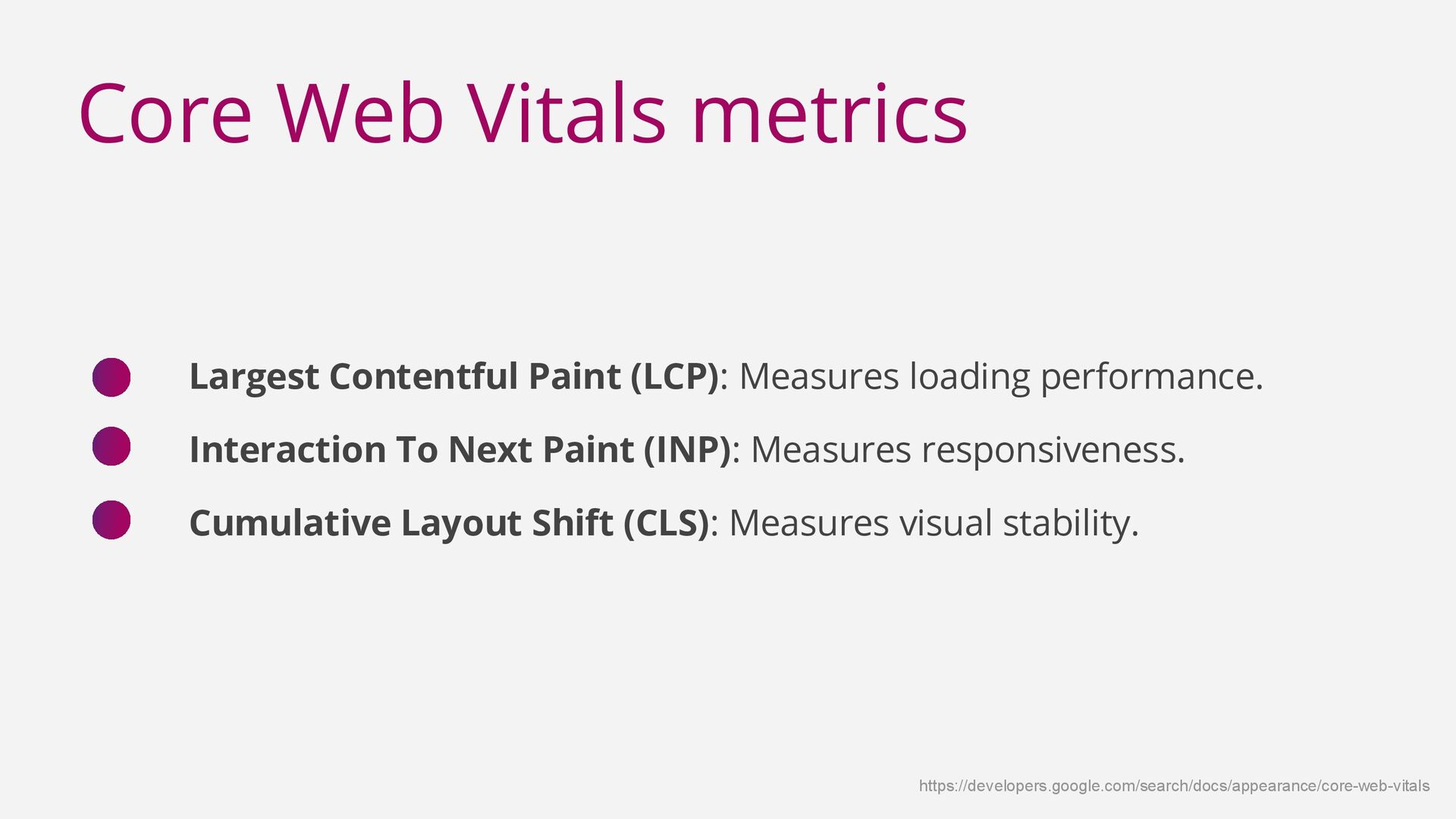
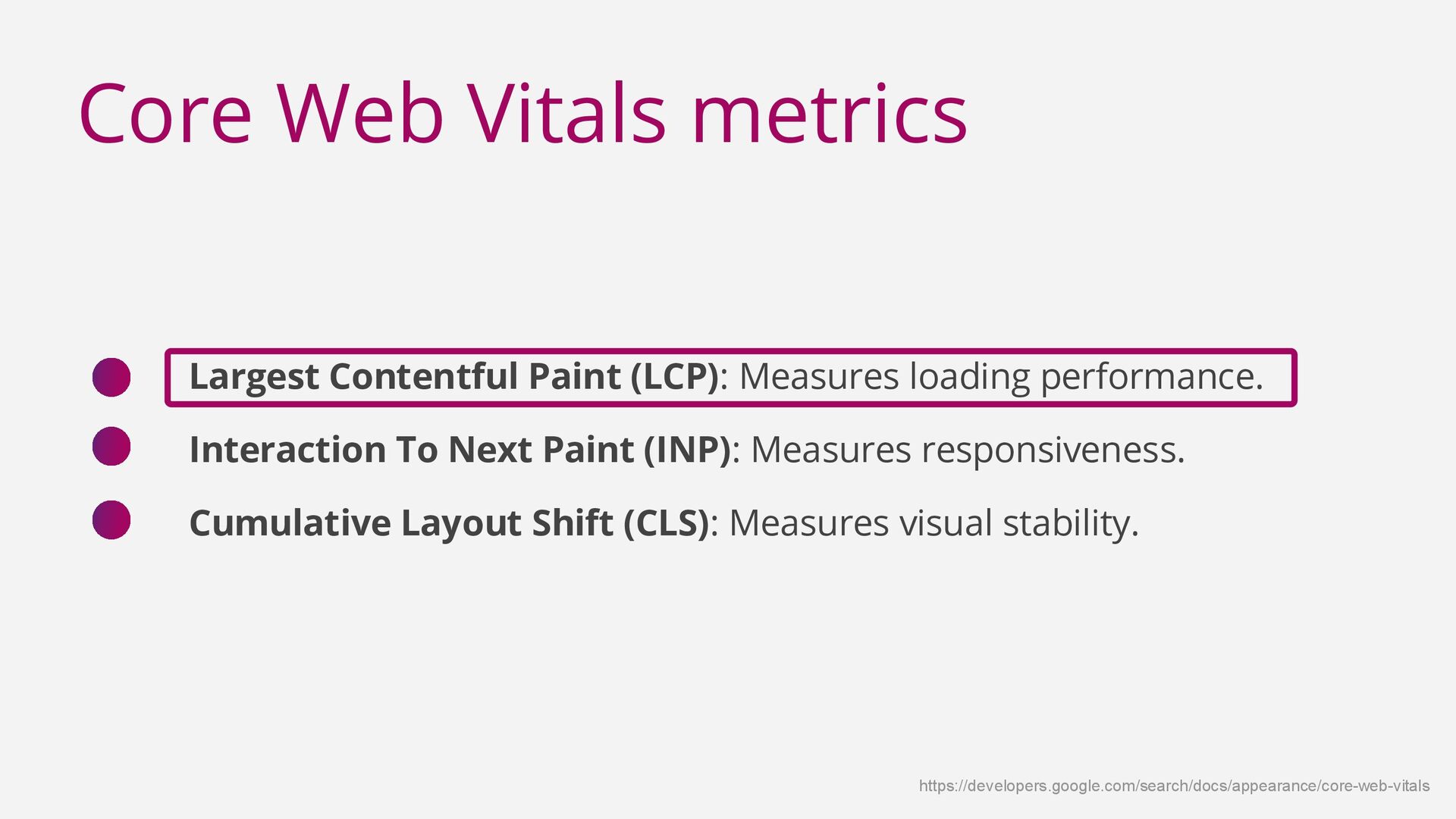
for success with Search and to ensure a great user experience generally. This, along with other page experience aspects, aligns with what our core ranking systems seek to reward." Good UX = Better SEO https://developers.google.com/search/docs/appearance/core-web-vitals
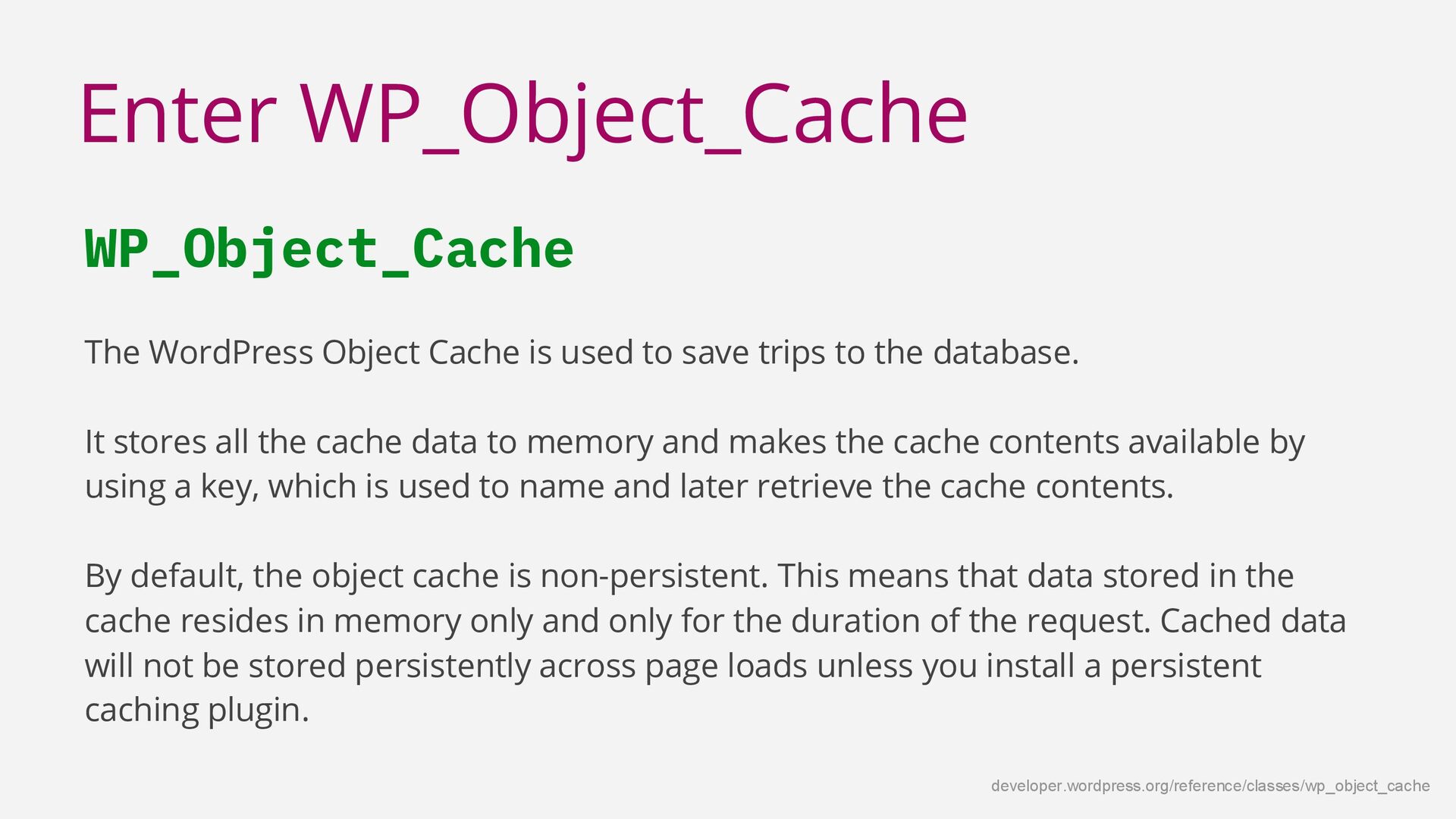
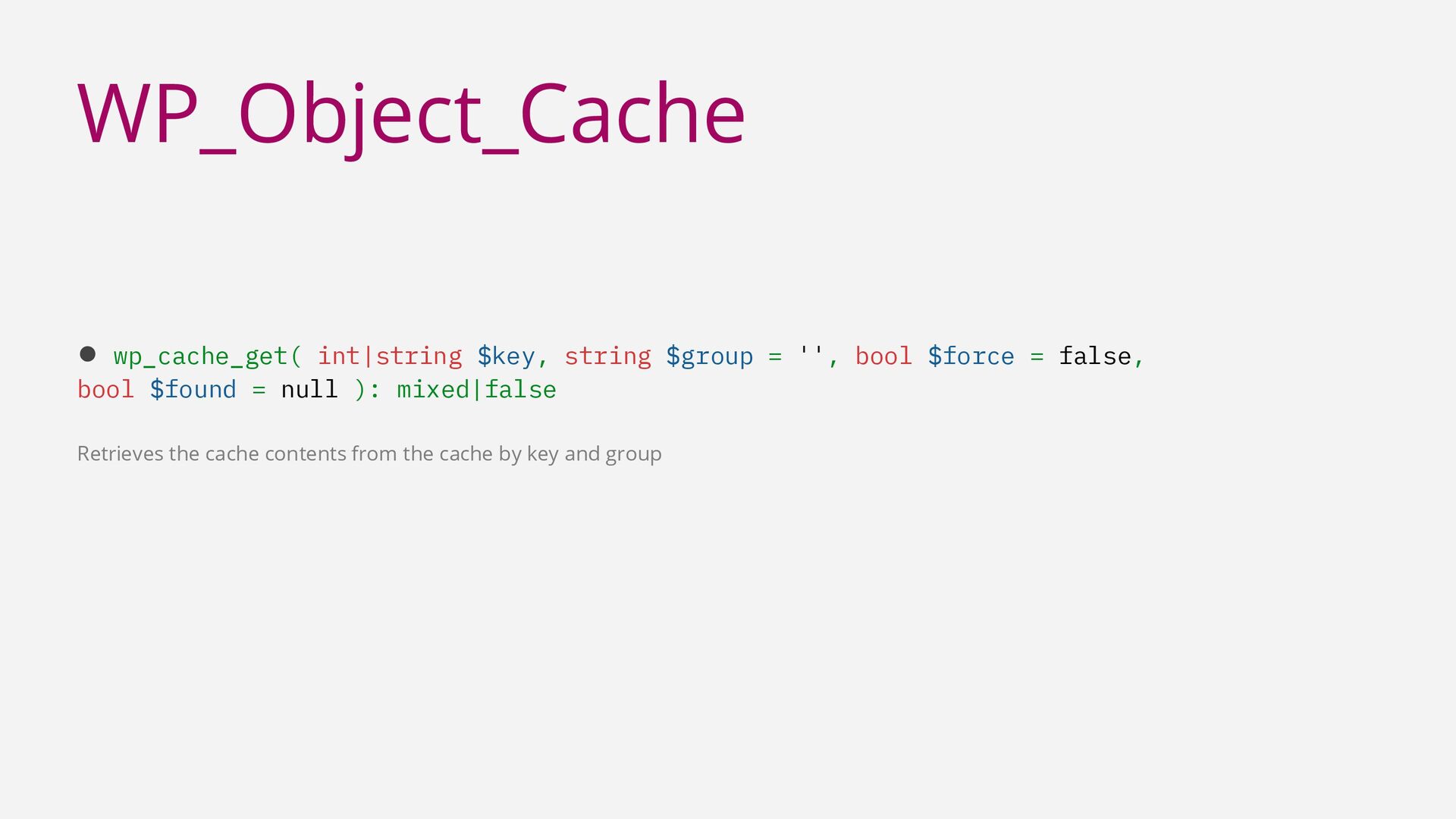
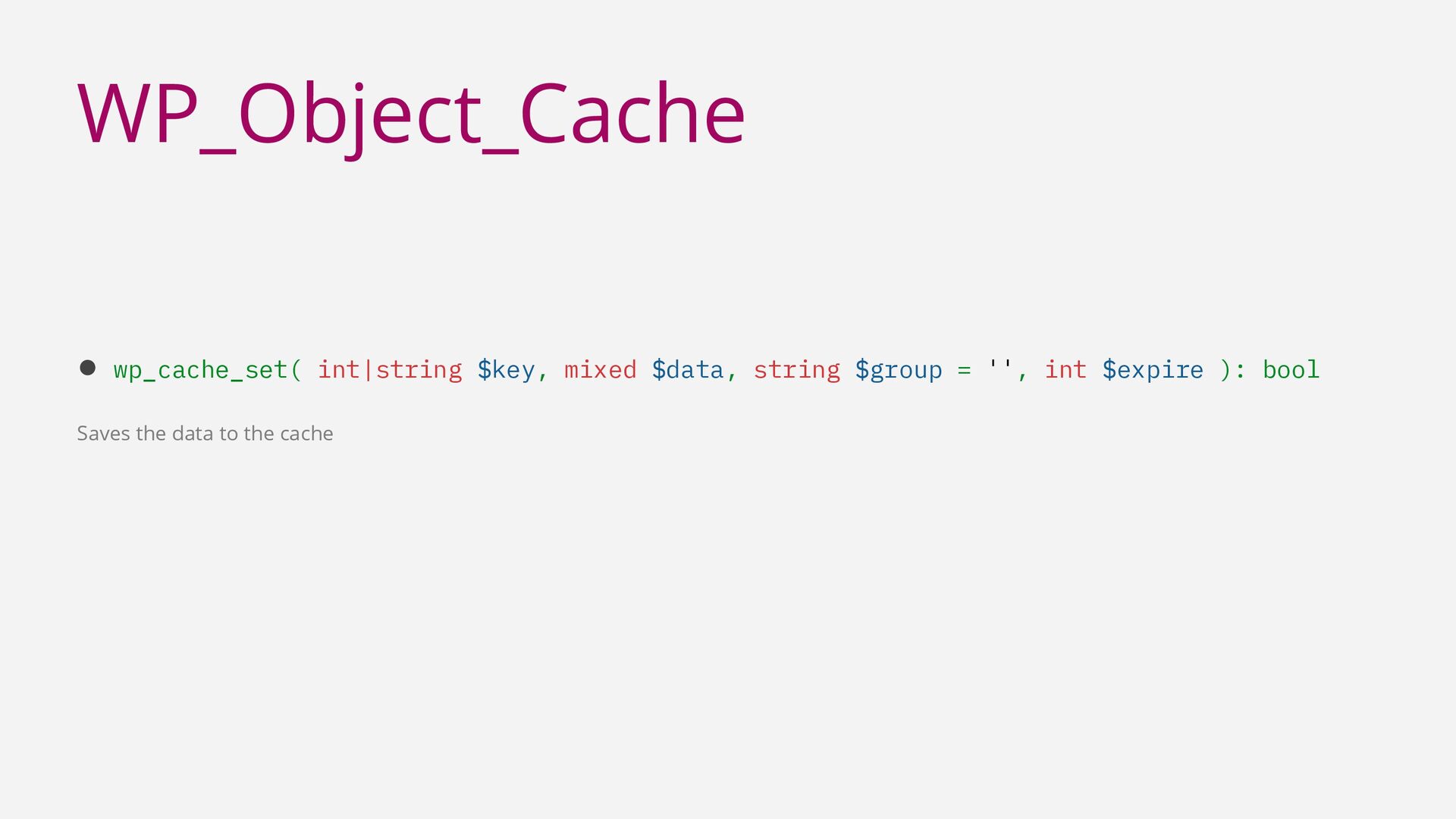
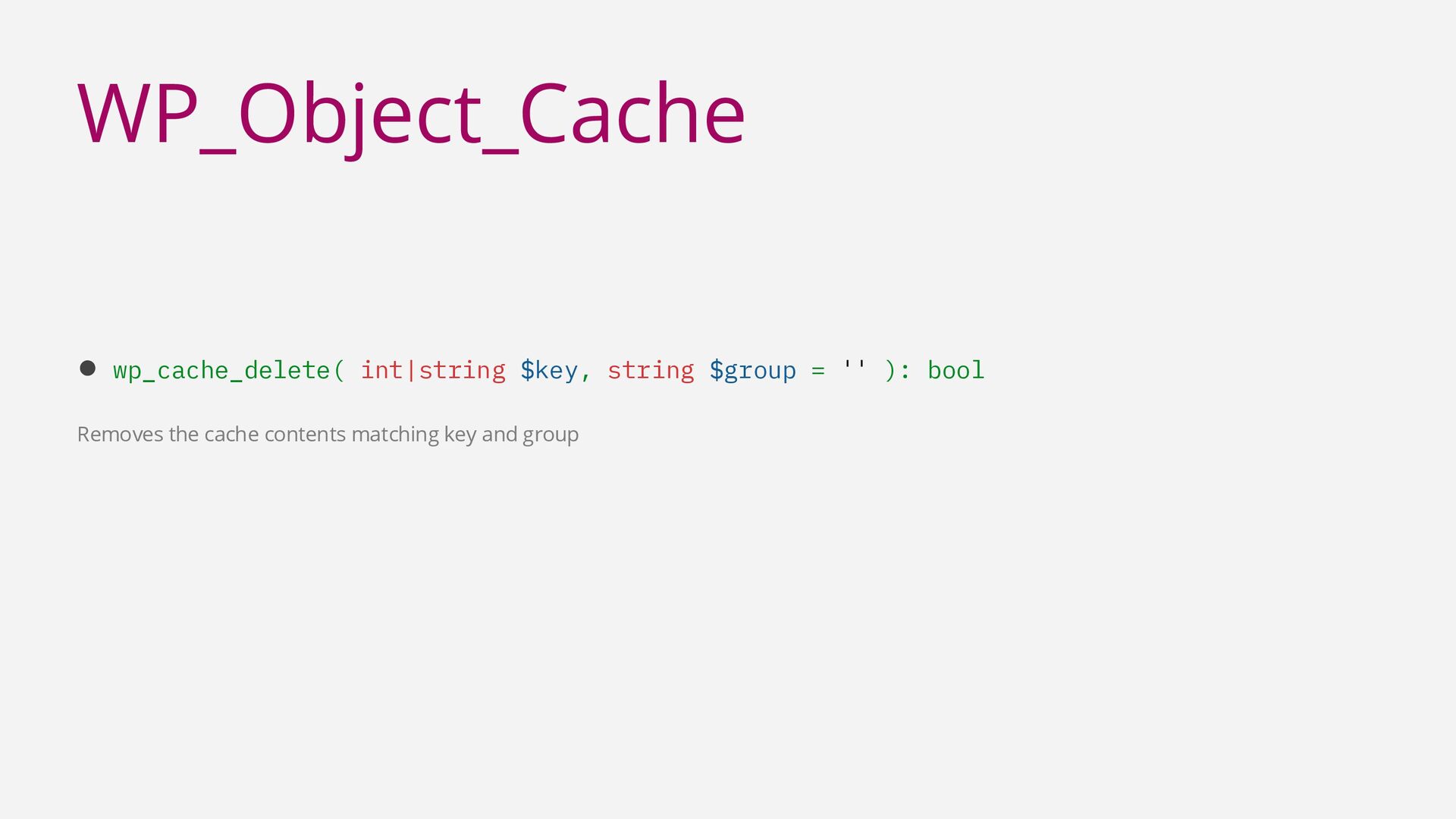
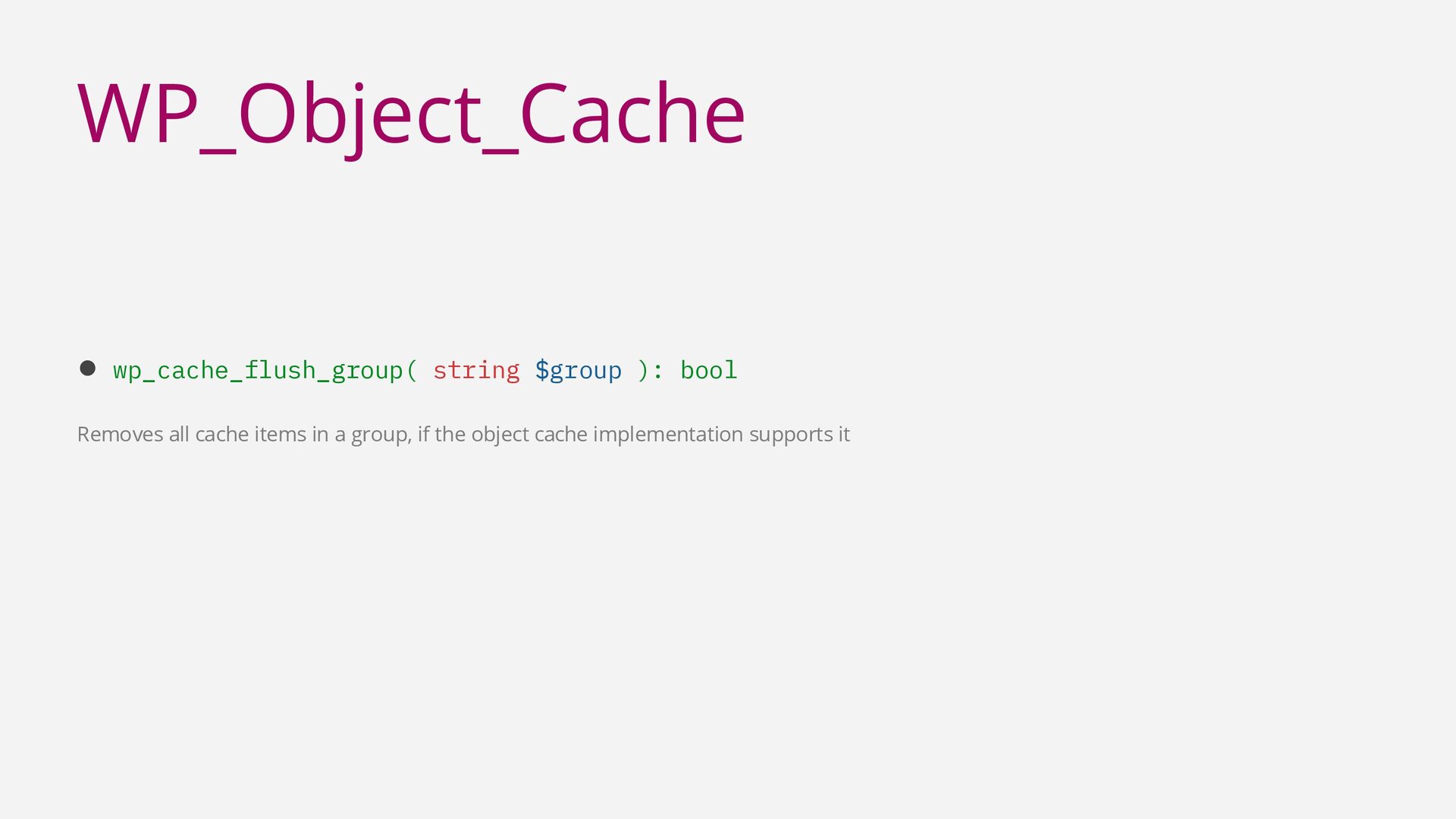
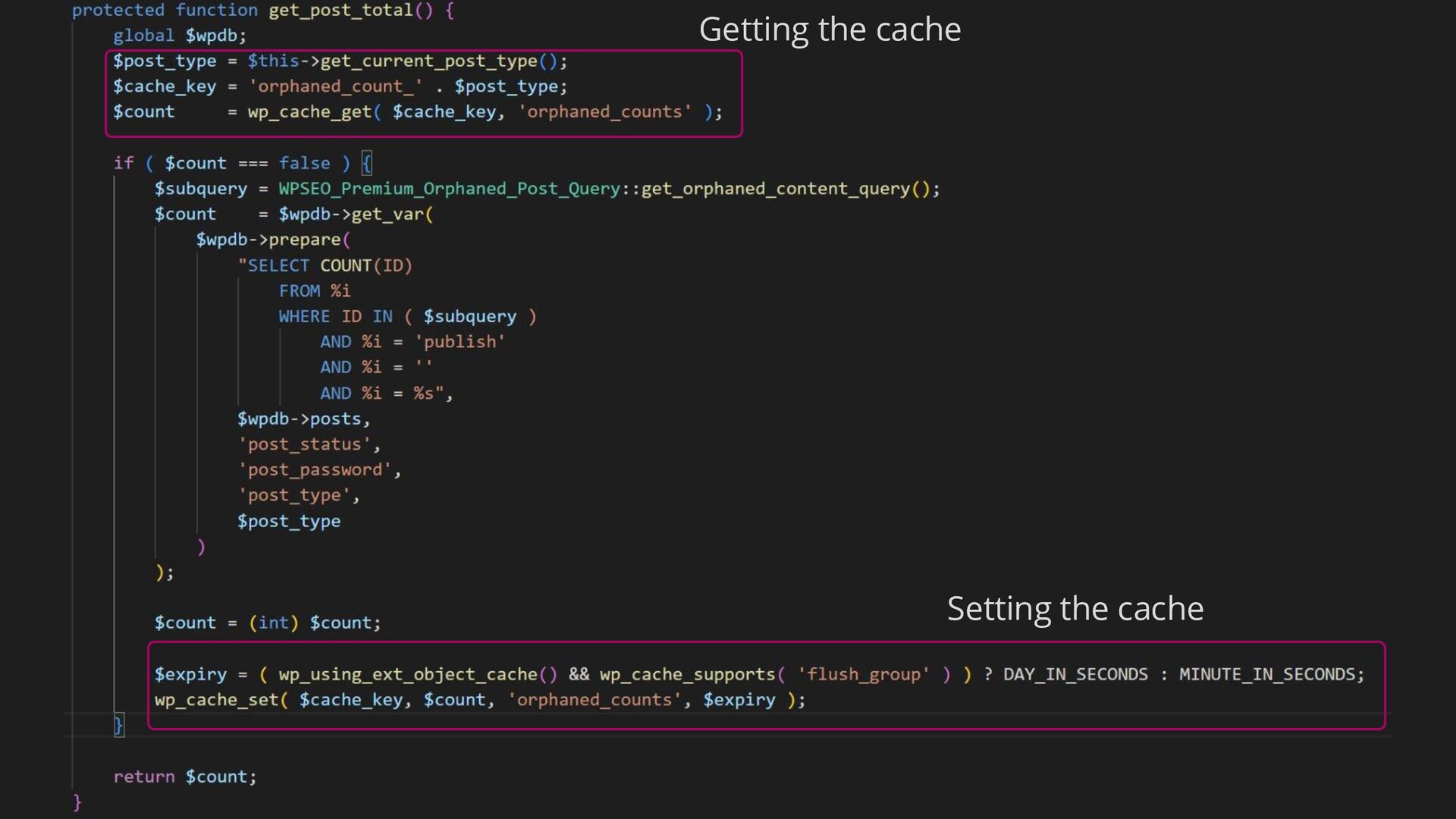
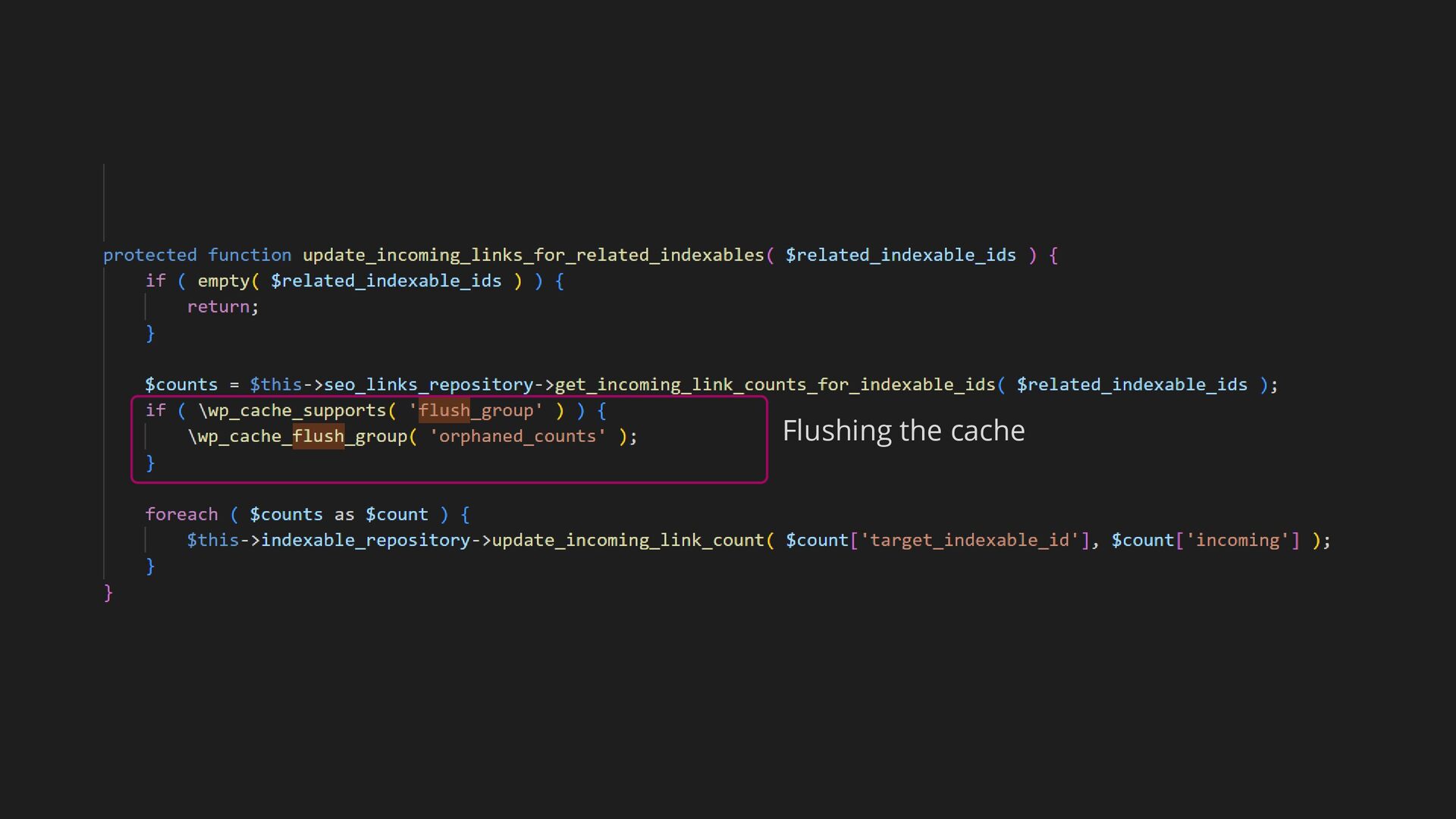
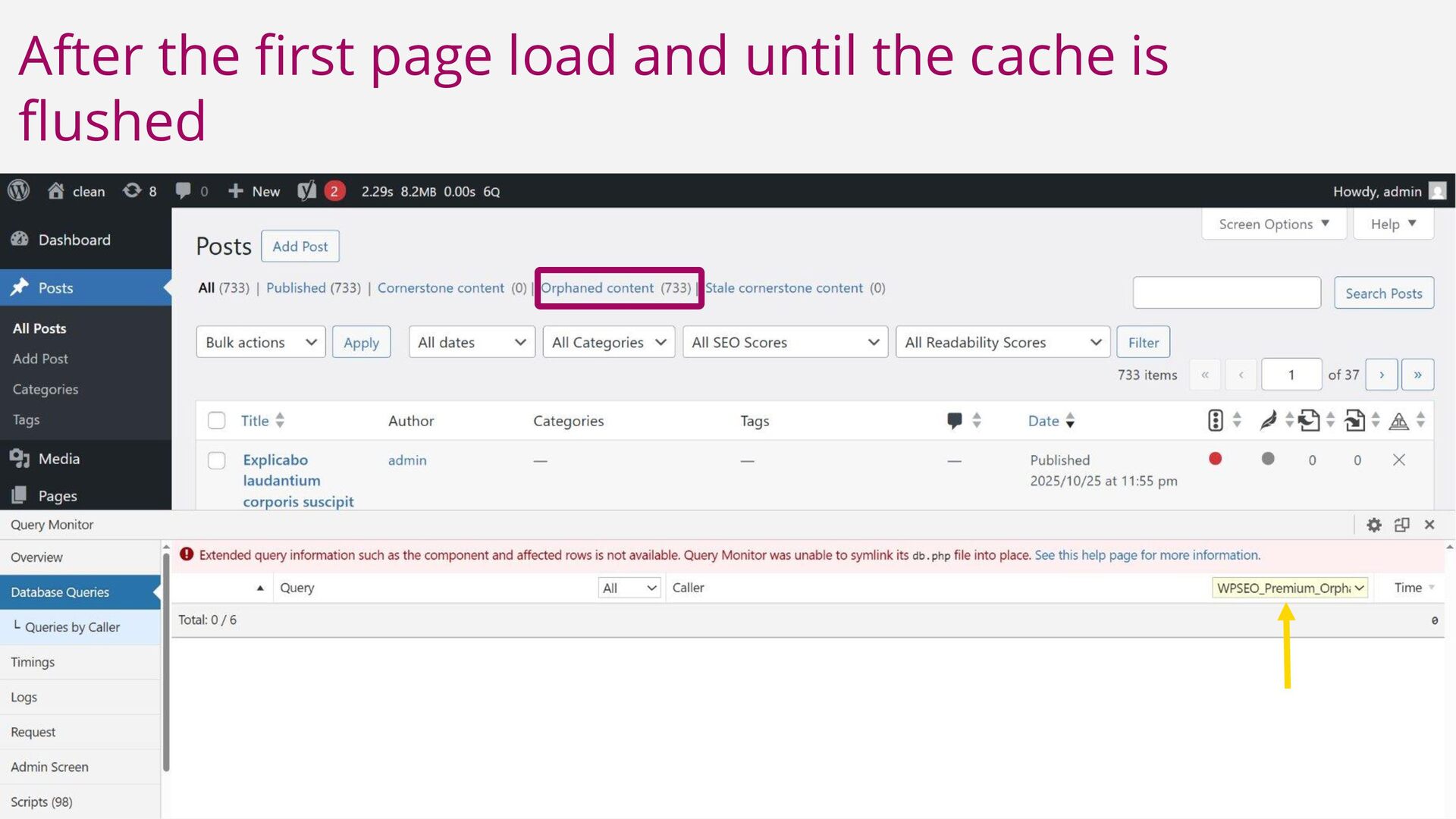
to save trips to the database. It stores all the cache data to memory and makes the cache contents available by using a key, which is used to name and later retrieve the cache contents. By default, the object cache is non-persistent. This means that data stored in the cache resides in memory only and only for the duration of the request. Cached data will not be stored persistently across page loads unless you install a persistent caching plugin.
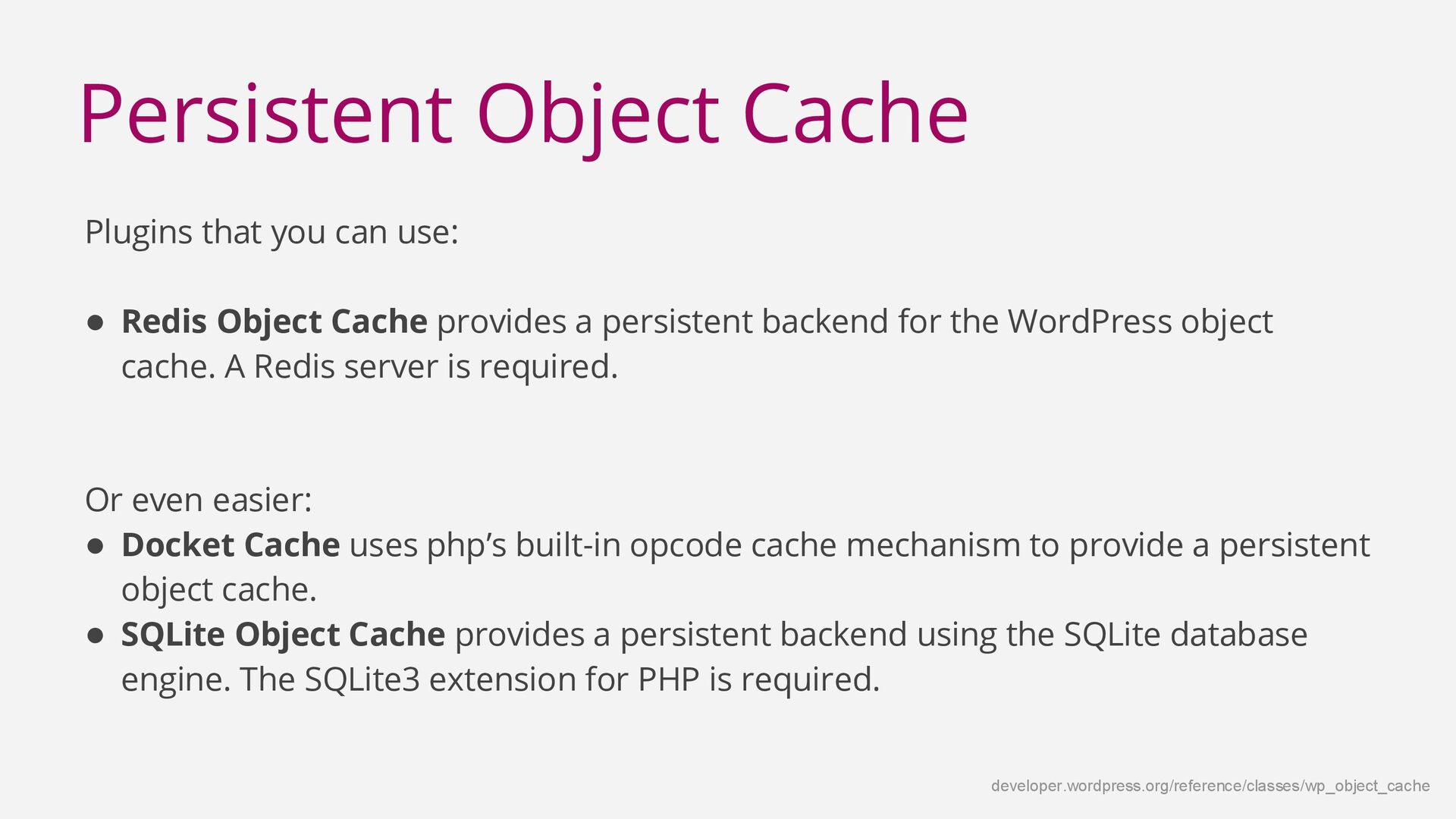
Redis Object Cache provides a persistent backend for the WordPress object cache. A Redis server is required. Or even easier: • Docket Cache uses php’s built-in opcode cache mechanism to provide a persistent object cache. • SQLite Object Cache provides a persistent backend using the SQLite database engine. The SQLite3 extension for PHP is required.
computationally expensive (it's on large tables, or it's a nested query, etc.) When it's clear when to invalidate the cache, to avoid serving stale data


 wpgr
wpgr
 cogakira
 occhi
occhi
 satoshi7
 rfdnxbro
.png) jmdc_presentation
jmdc_presentation
 kenichiodo
 onk
onk
 kaminashi
 mikanichinose
 persolserverworks
 kizawa2020
 kakakakakku
 jonoalderson
 wayneb77
 joshbly
 lfama
lfama
 trishagee
 aleyda
 cassininazir
 mraible
 greggifford
 baasie
 akashhashmi