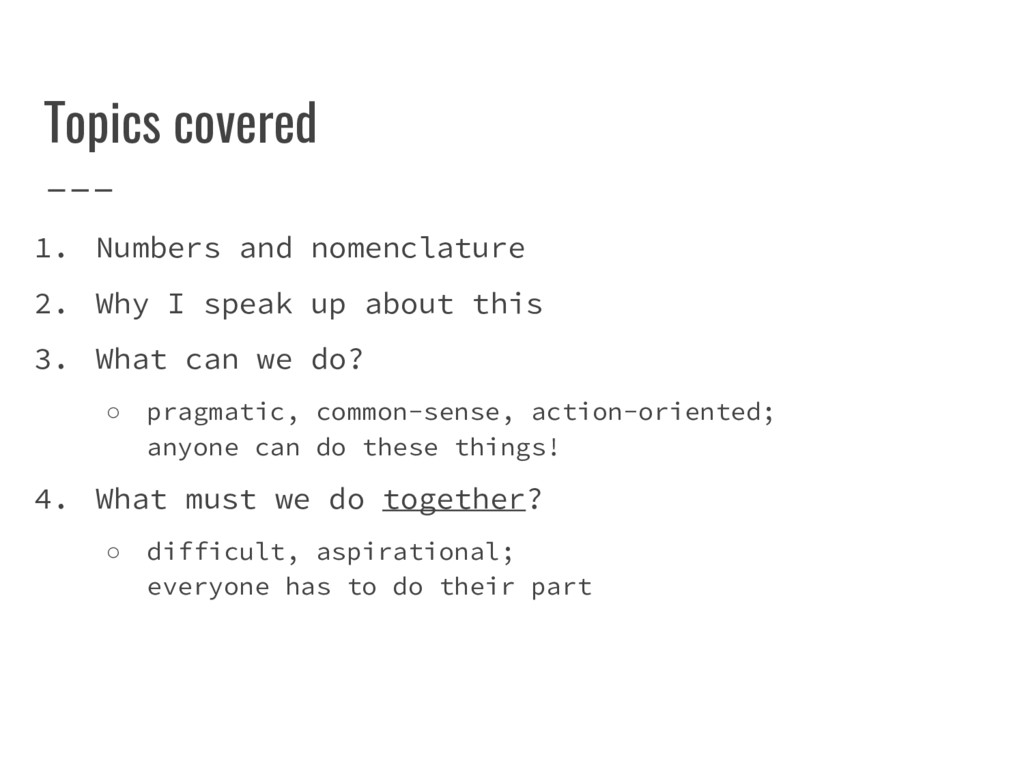
up about this 3. What can we do? ◦ pragmatic, common-sense, action-oriented; anyone can do these things! 4. What must we do together? ◦ difficult, aspirational; everyone has to do their part
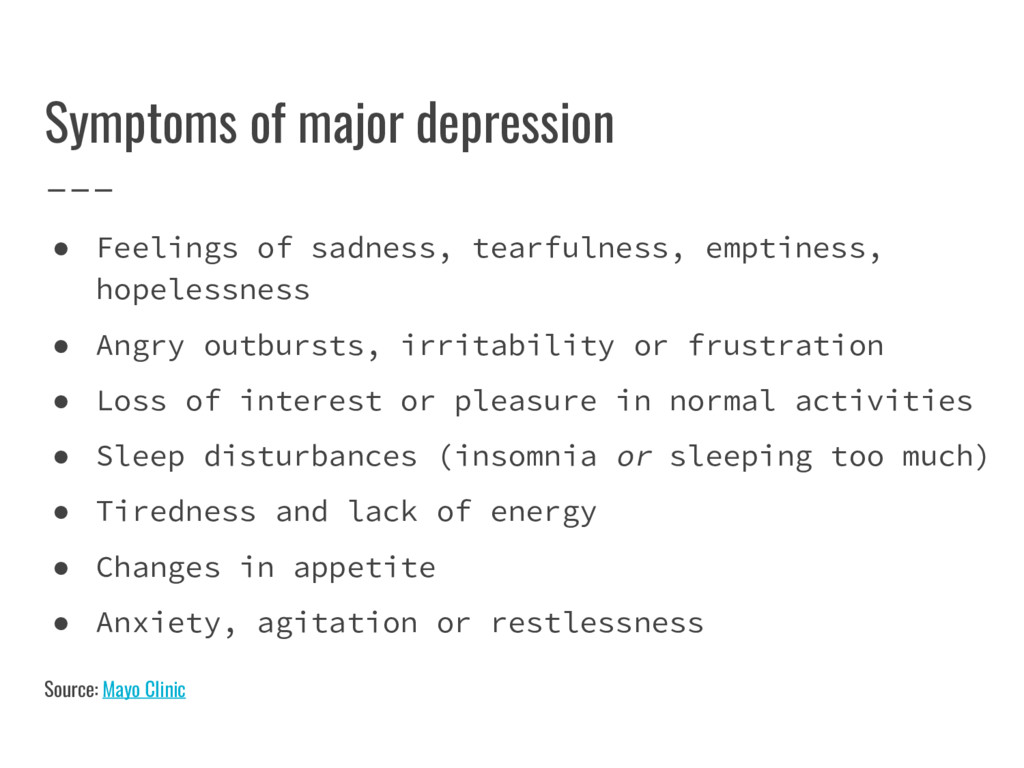
hopelessness • Angry outbursts, irritability or frustration • Loss of interest or pleasure in normal activities • Sleep disturbances (insomnia or sleeping too much) • Tiredness and lack of energy • Changes in appetite • Anxiety, agitation or restlessness Source: Mayo Clinic
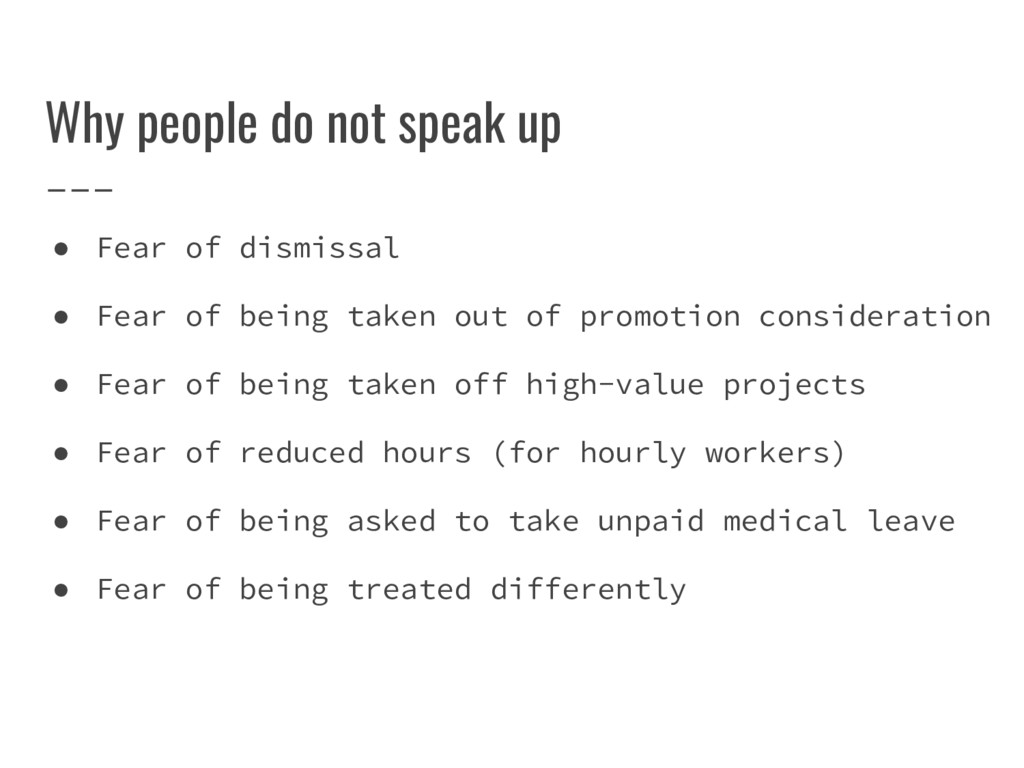
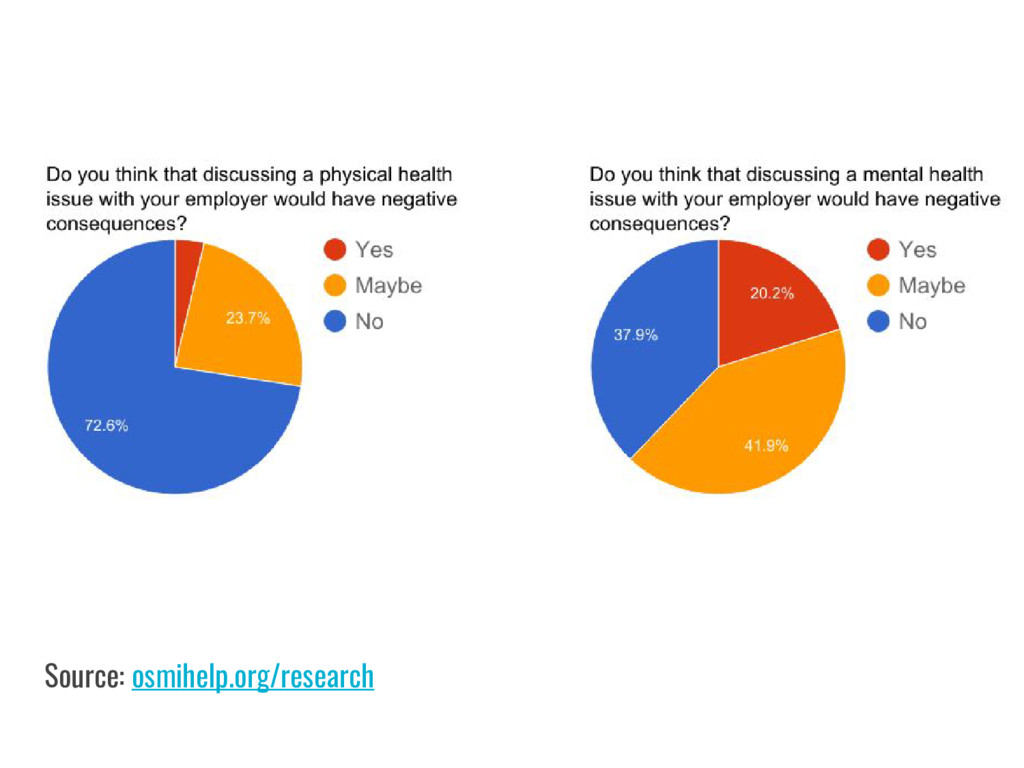
• Fear of being taken out of promotion consideration • Fear of being taken off high-value projects • Fear of reduced hours (for hourly workers) • Fear of being asked to take unpaid medical leave • Fear of being treated differently
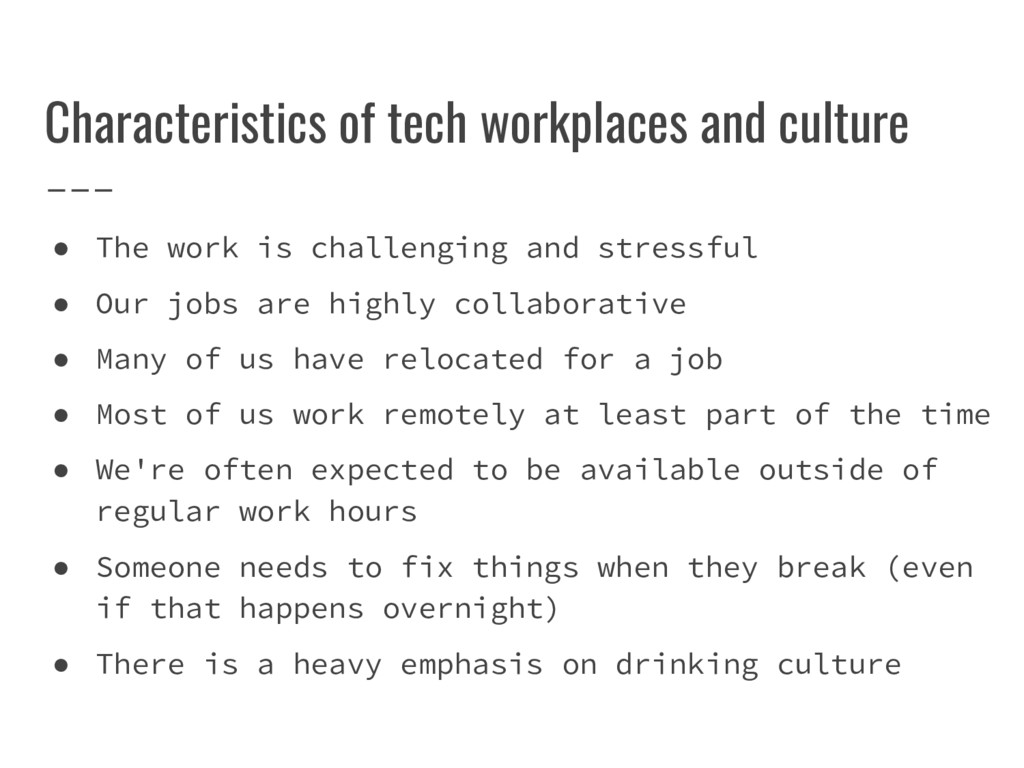
challenging and stressful • Our jobs are highly collaborative • Many of us have relocated for a job • Most of us work remotely at least part of the time • We're often expected to be available outside of regular work hours • Someone needs to fix things when they break (even if that happens overnight) • There is a heavy emphasis on drinking culture
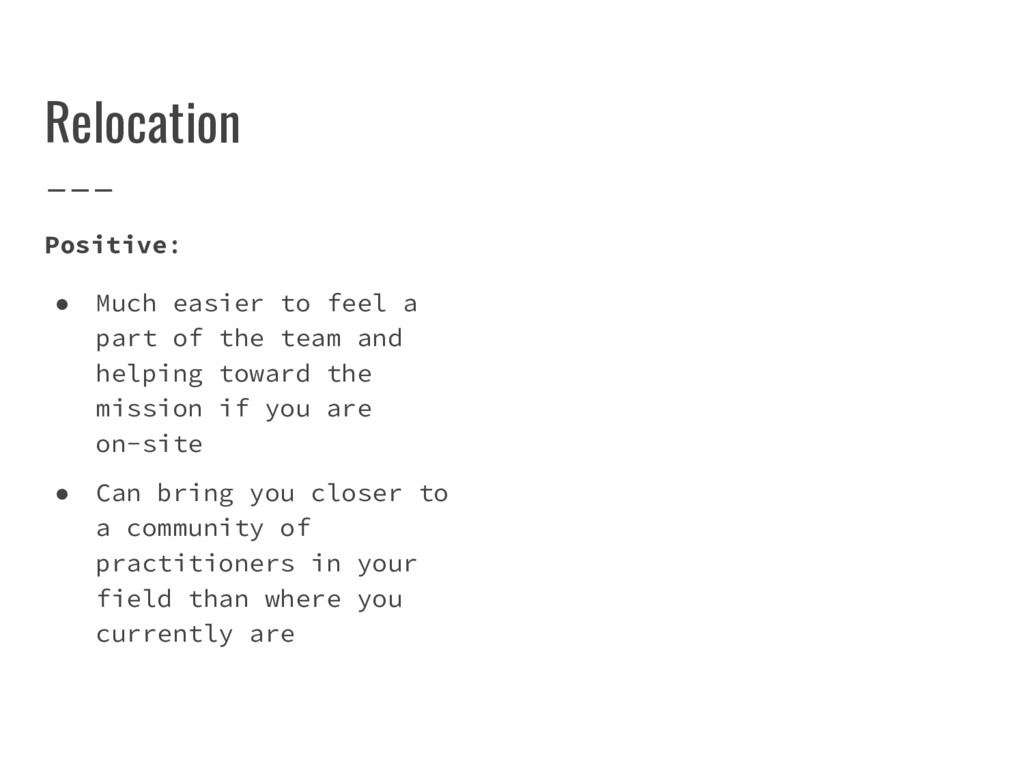
the team and helping toward the mission if you are on-site • Can bring you closer to a community of practitioners in your field than where you currently are
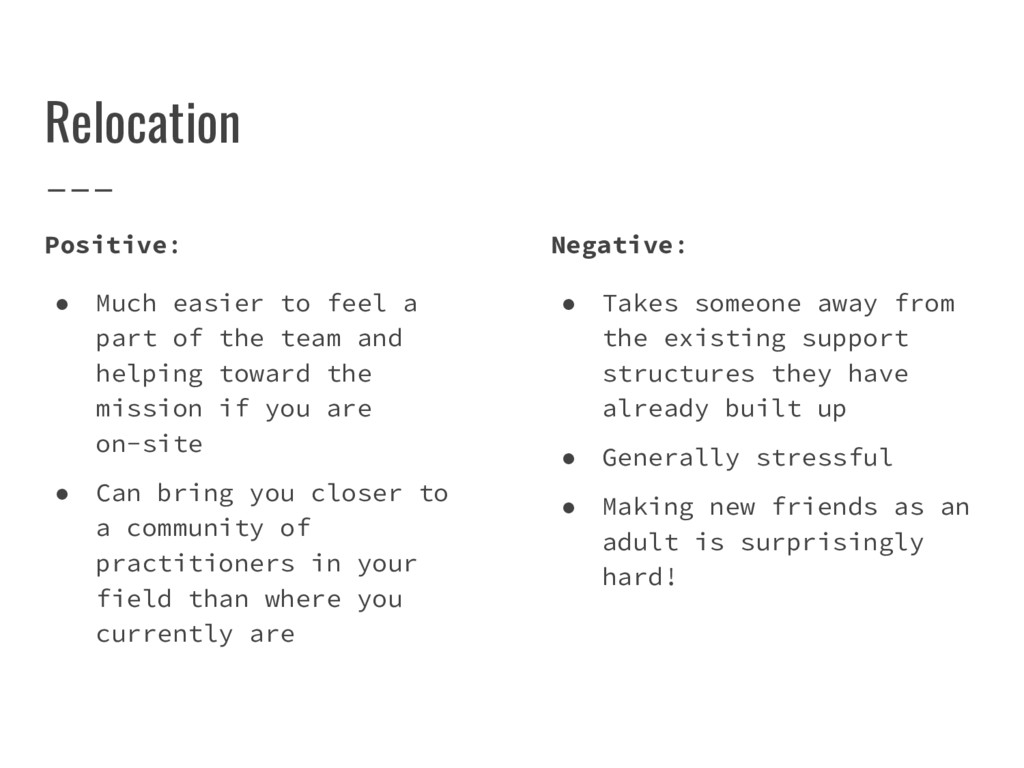
the team and helping toward the mission if you are on-site • Can bring you closer to a community of practitioners in your field than where you currently are Negative: • Takes someone away from the existing support structures they have already built up • Generally stressful • Making new friends as an adult is surprisingly hard!
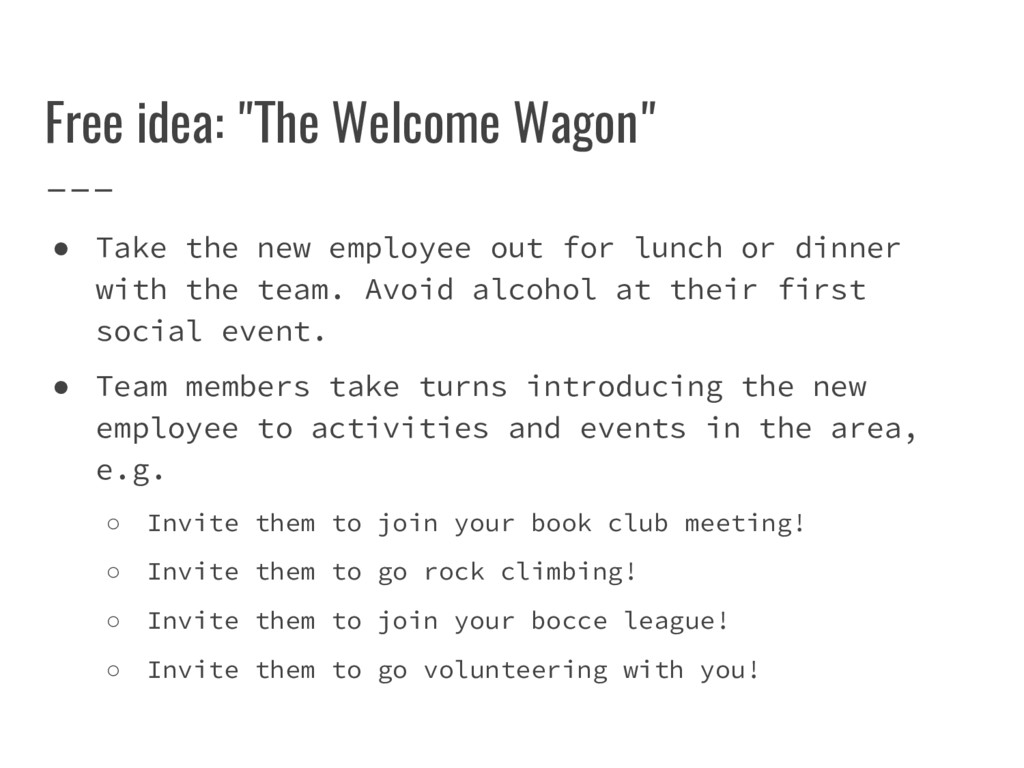
best way to succeed in tech is to relocate to Silicon Valley; become more accepting of alternative choices • If you are a manager, take another look at your hiring practices and see whether remote employment is an option • Create a "Welcome Wagon" for new colleagues who have had to relocate to join your company
out for lunch or dinner with the team. Avoid alcohol at their first social event. • Team members take turns introducing the new employee to activities and events in the area, e.g. ◦ Invite them to join your book club meeting! ◦ Invite them to go rock climbing! ◦ Invite them to join your bocce league! ◦ Invite them to go volunteering with you!
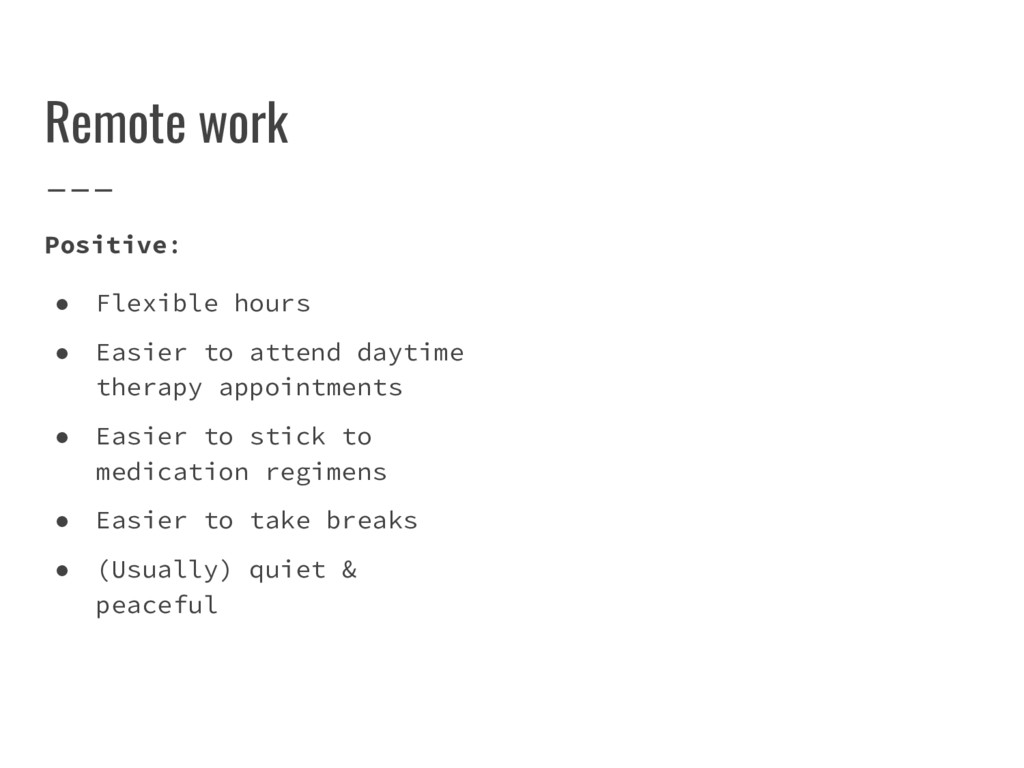
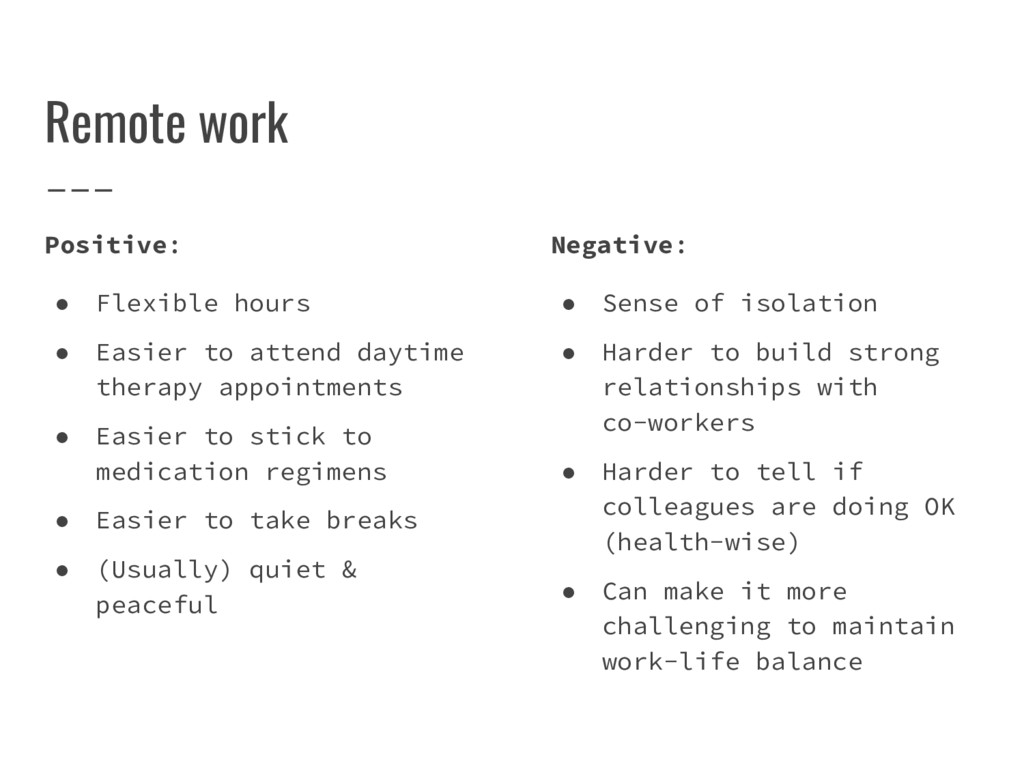
daytime therapy appointments • Easier to stick to medication regimens • Easier to take breaks • (Usually) quiet & peaceful Negative: • Sense of isolation • Harder to build strong relationships with co-workers • Harder to tell if colleagues are doing OK (health-wise) • Can make it more challenging to maintain work-life balance
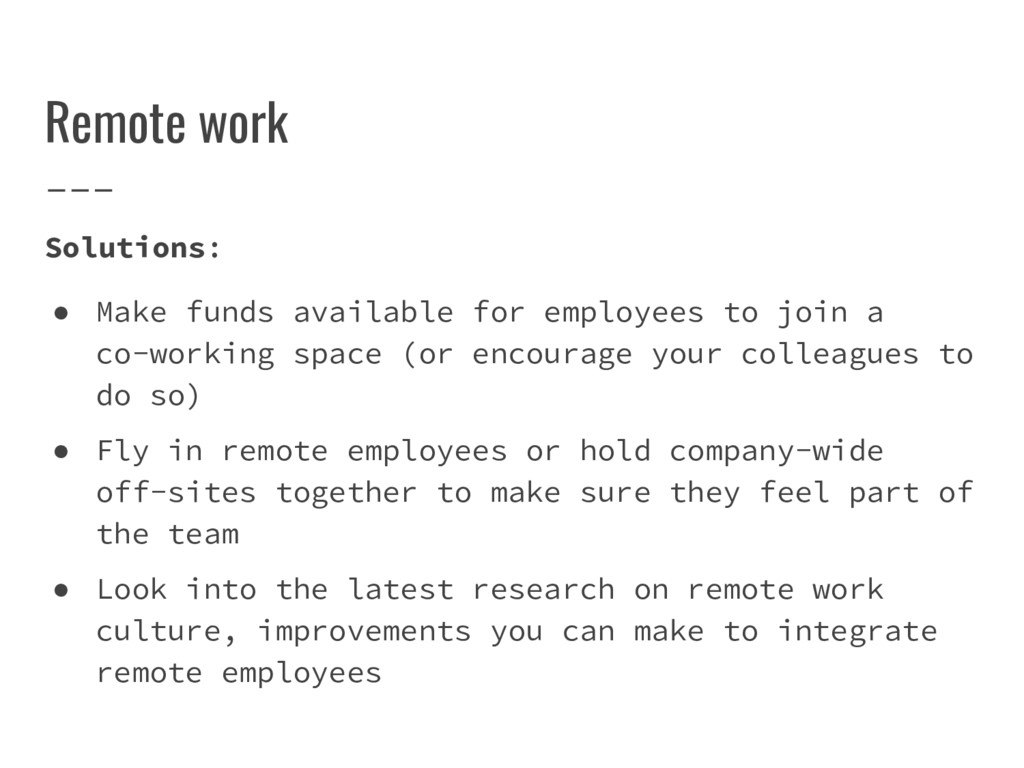
join a co-working space (or encourage your colleagues to do so) • Fly in remote employees or hold company-wide off-sites together to make sure they feel part of the team • Look into the latest research on remote work culture, improvements you can make to integrate remote employees
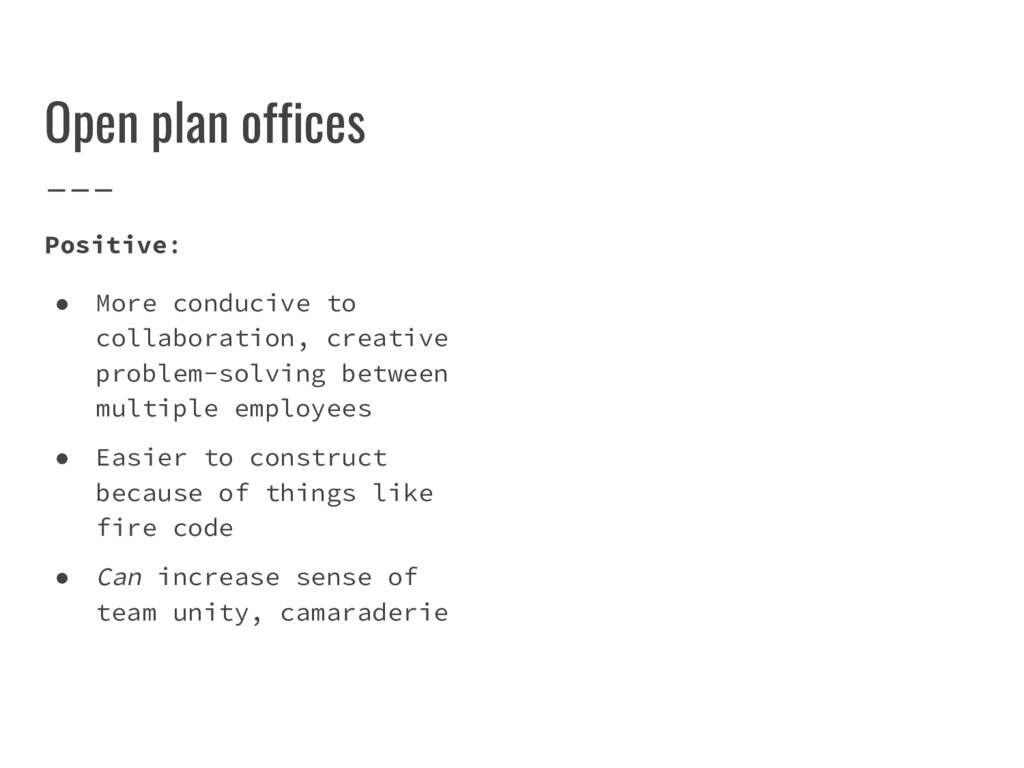
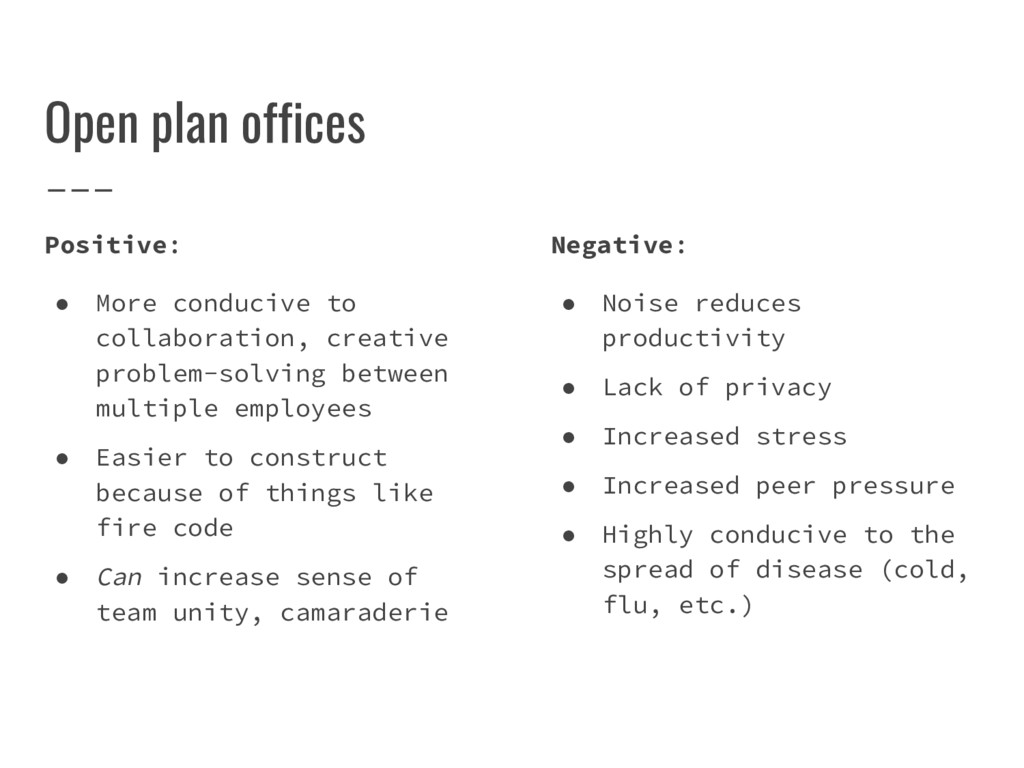
problem-solving between multiple employees • Easier to construct because of things like fire code • Can increase sense of team unity, camaraderie Negative: • Noise reduces productivity • Lack of privacy • Increased stress • Increased peer pressure • Highly conducive to the spread of disease (cold, flu, etc.)
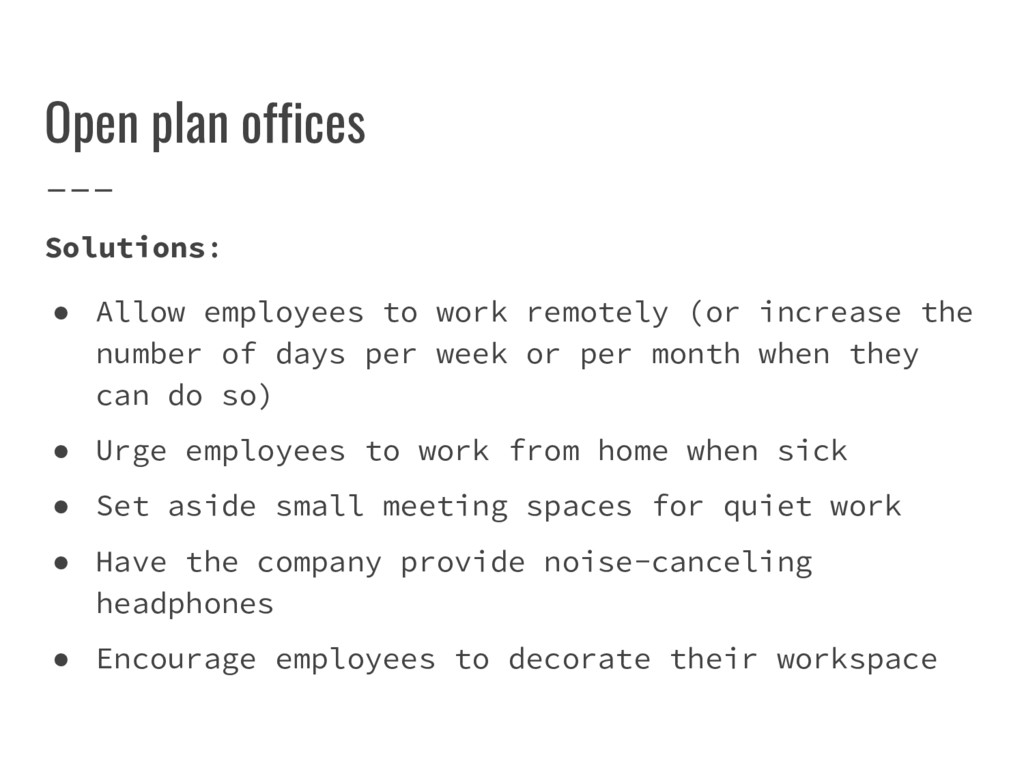
(or increase the number of days per week or per month when they can do so) • Urge employees to work from home when sick • Set aside small meeting spaces for quiet work • Have the company provide noise-canceling headphones • Encourage employees to decorate their workspace
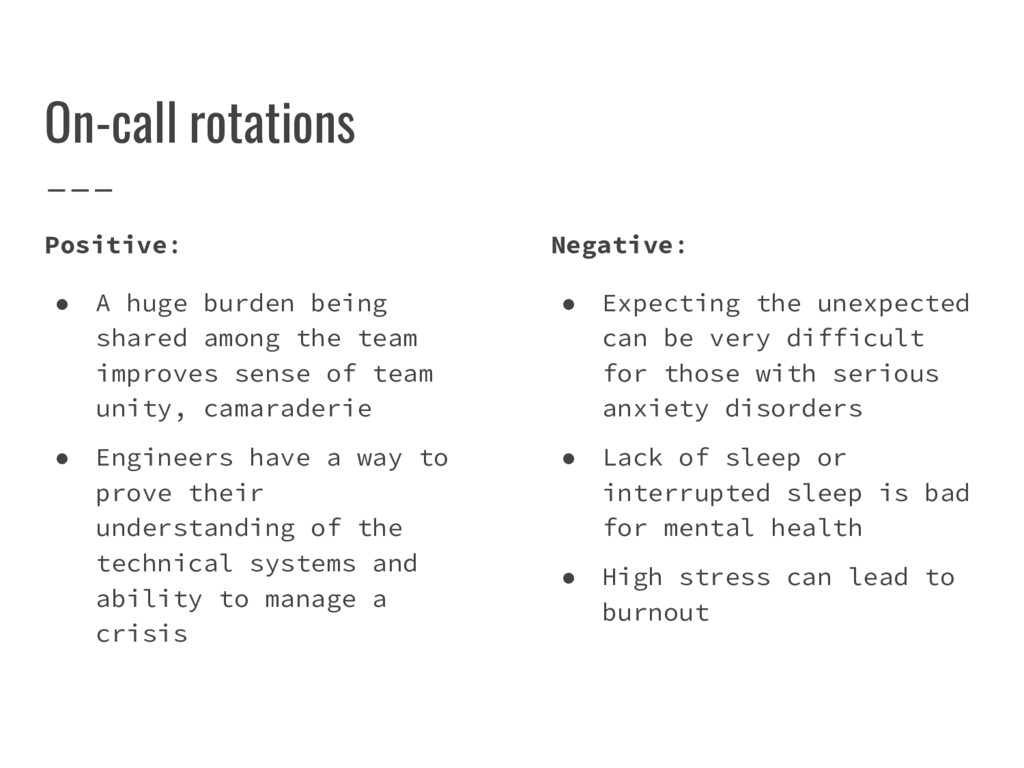
the team improves sense of team unity, camaraderie • Engineers have a way to prove their understanding of the technical systems and ability to manage a crisis
the team improves sense of team unity, camaraderie • Engineers have a way to prove their understanding of the technical systems and ability to manage a crisis Negative: • Expecting the unexpected can be very difficult for those with serious anxiety disorders • Lack of sleep or interrupted sleep is bad for mental health • High stress can lead to burnout
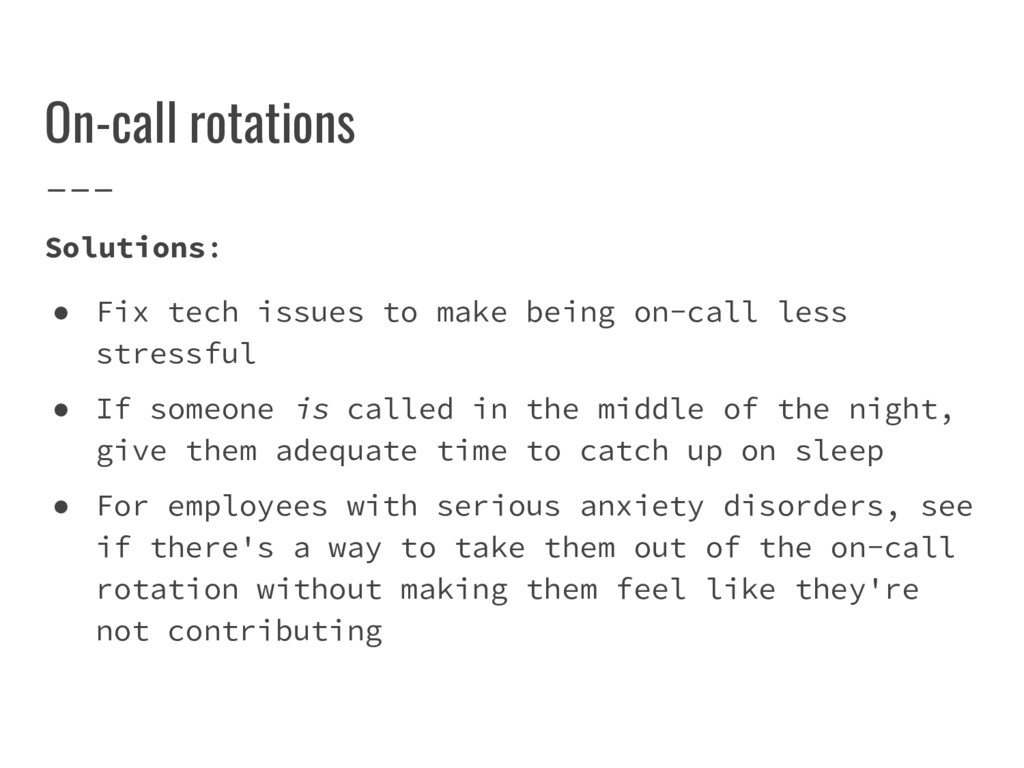
on-call less stressful • If someone is called in the middle of the night, give them adequate time to catch up on sleep • For employees with serious anxiety disorders, see if there's a way to take them out of the on-call rotation without making them feel like they're not contributing
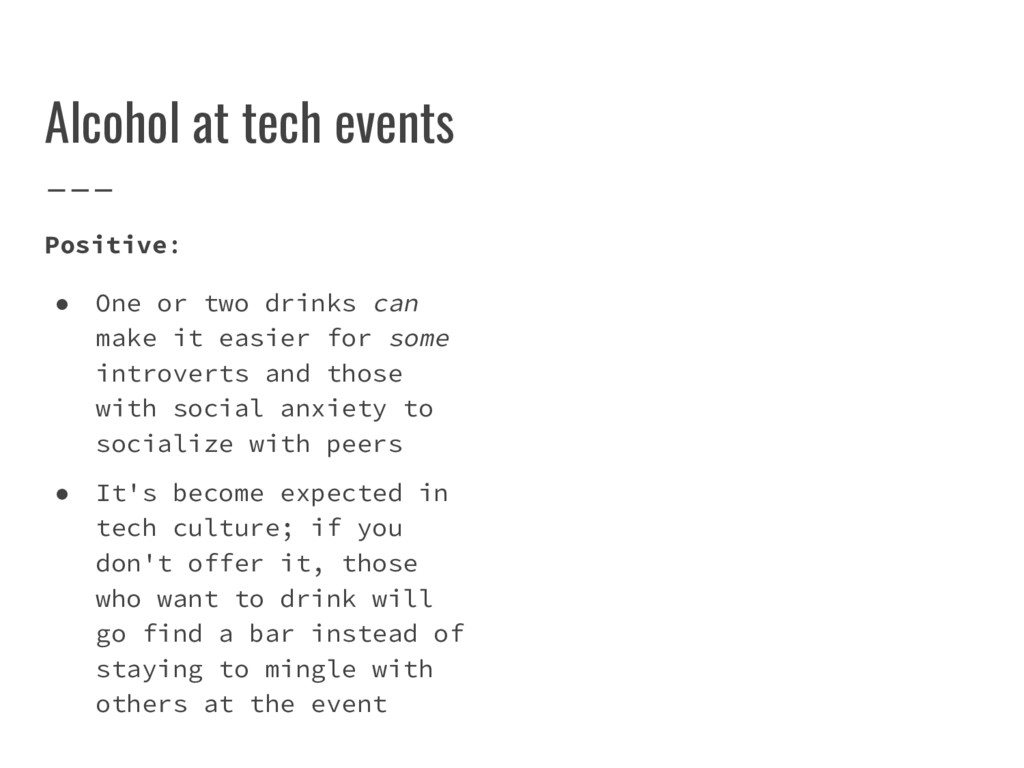
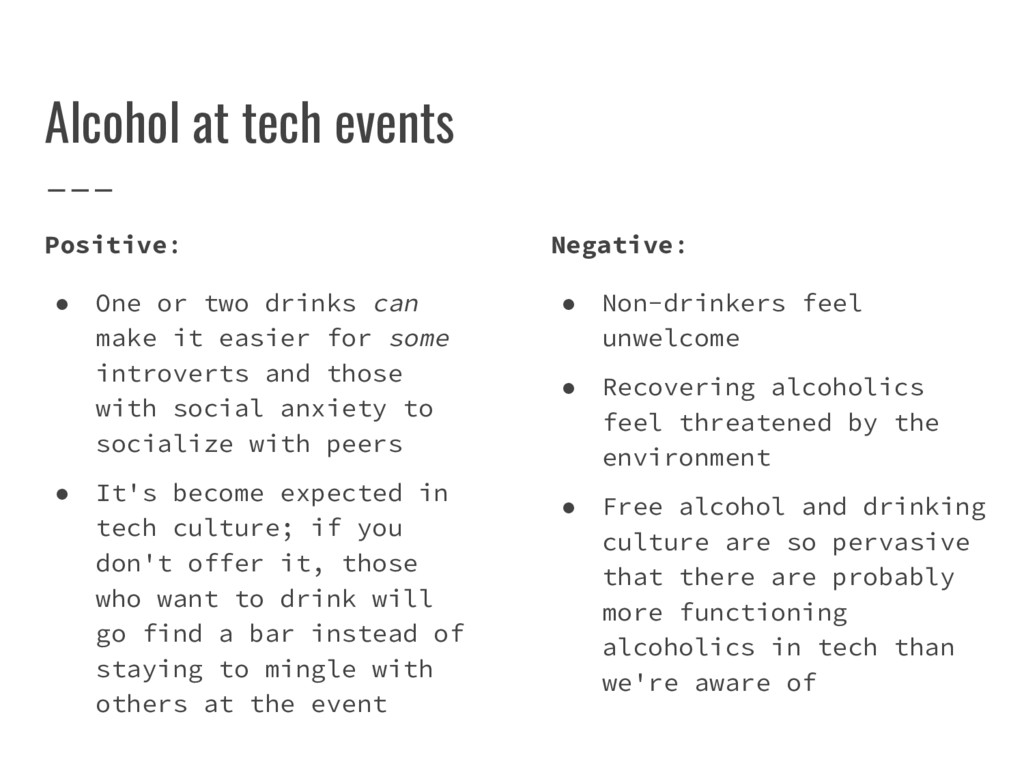
can make it easier for some introverts and those with social anxiety to socialize with peers • It's become expected in tech culture; if you don't offer it, those who want to drink will go find a bar instead of staying to mingle with others at the event
can make it easier for some introverts and those with social anxiety to socialize with peers • It's become expected in tech culture; if you don't offer it, those who want to drink will go find a bar instead of staying to mingle with others at the event Negative: • Non-drinkers feel unwelcome • Recovering alcoholics feel threatened by the environment • Free alcohol and drinking culture are so pervasive that there are probably more functioning alcoholics in tech than we're aware of
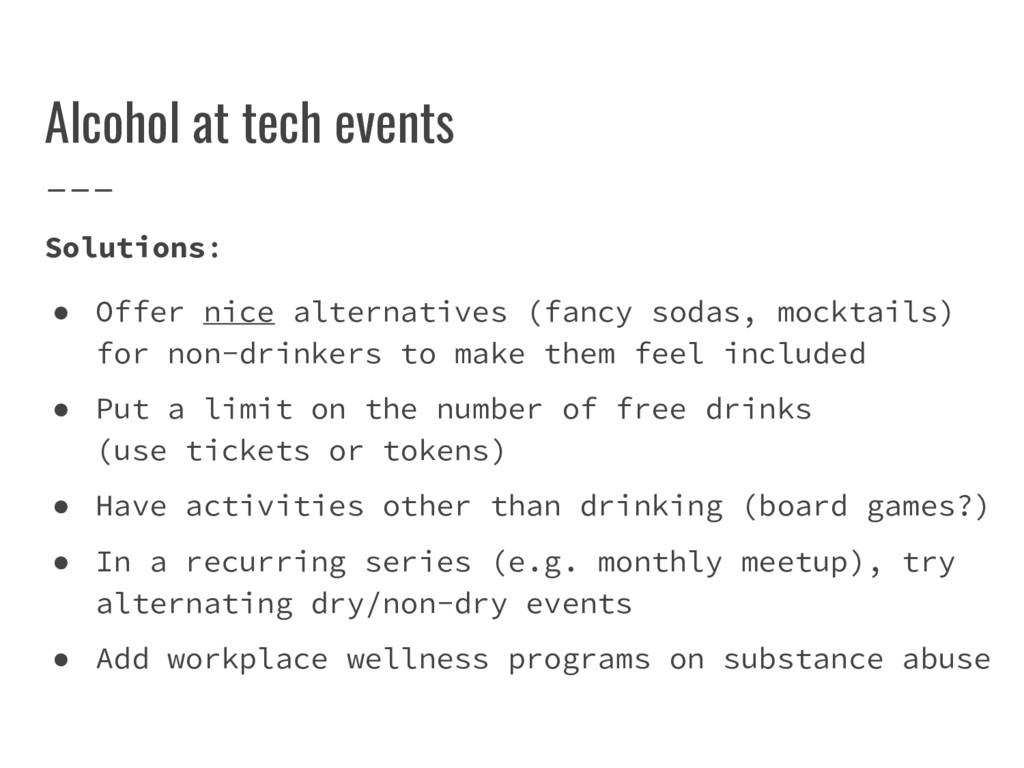
sodas, mocktails) for non-drinkers to make them feel included • Put a limit on the number of free drinks (use tickets or tokens) • Have activities other than drinking (board games?) • In a recurring series (e.g. monthly meetup), try alternating dry/non-dry events • Add workplace wellness programs on substance abuse
office on time • Take regular vacations • Don't send or answer e-mails at 2am if possible • Be receptive to feedback on your own performance • Be a good listener • Be open to talking about your own health and mental health
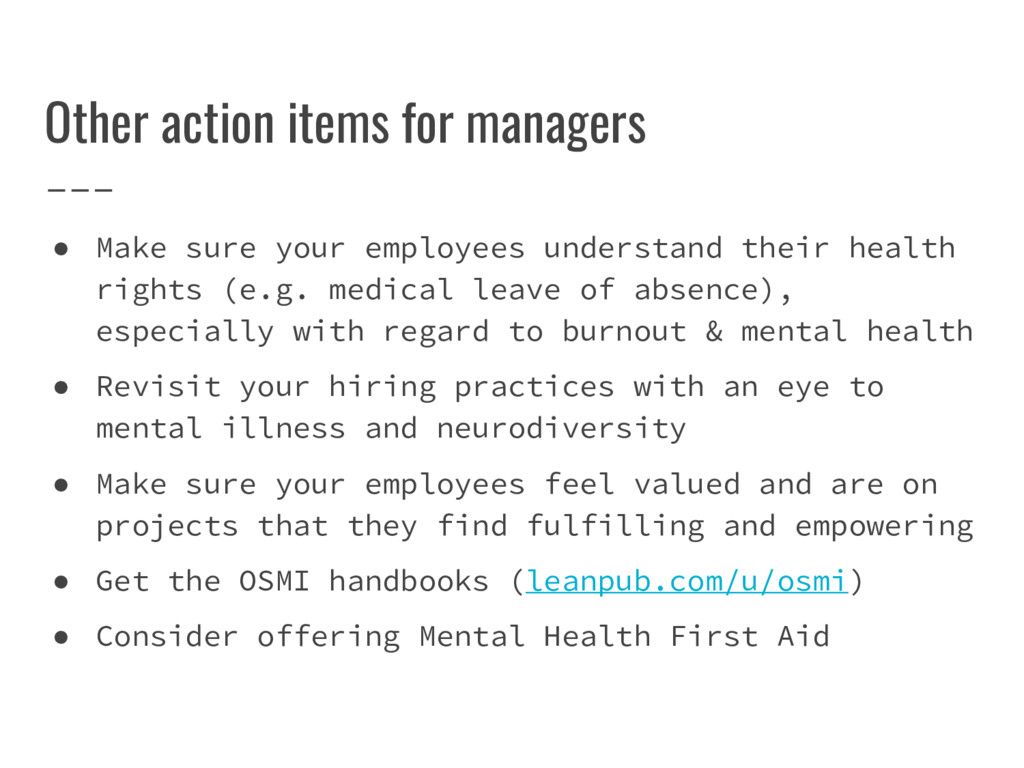
understand their health rights (e.g. medical leave of absence), especially with regard to burnout & mental health • Revisit your hiring practices with an eye to mental illness and neurodiversity • Make sure your employees feel valued and are on projects that they find fulfilling and empowering • Get the OSMI handbooks (leanpub.com/u/osmi) • Consider offering Mental Health First Aid
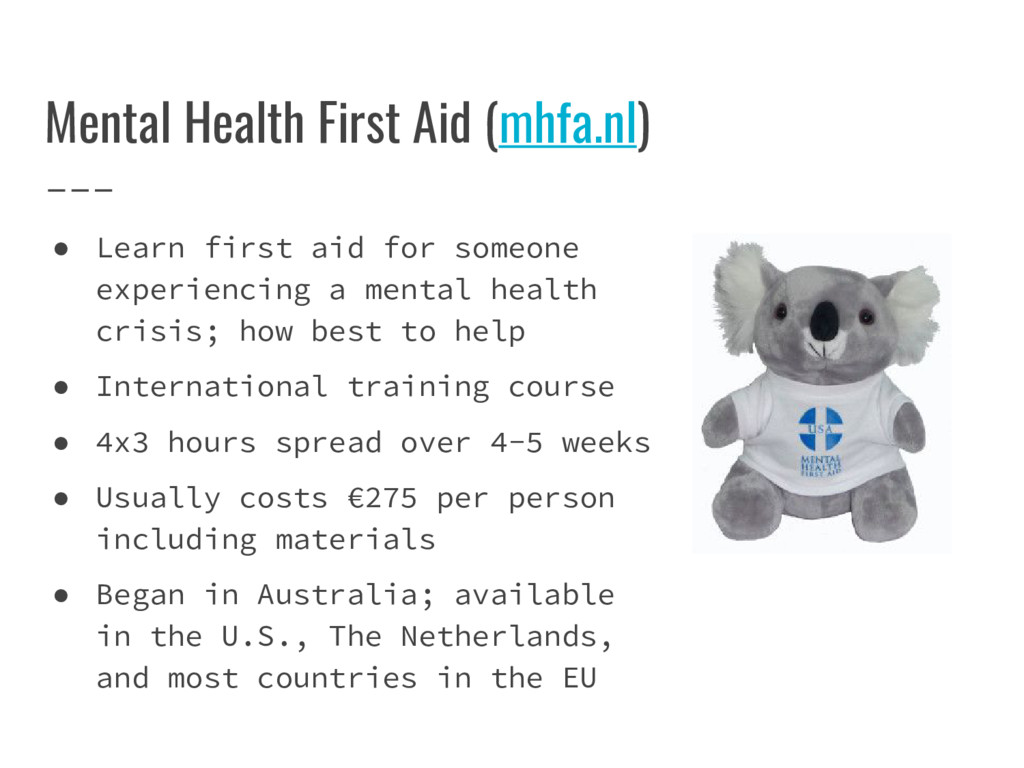
someone experiencing a mental health crisis; how best to help • International training course • 4x3 hours spread over 4-5 weeks • Usually costs €275 per person including materials • Began in Australia; available in the U.S., The Netherlands, and most countries in the EU
microaggressions can lead to depression, exacerbate eating disorders, and cause or worsen other mental illnesses • Even in tech, women are still judged by their appearance • People from marginalized groups feel they have to over-perform (to counteract the "lowering the bar" myth), which leads to increased stress and a greater likelihood of burnout
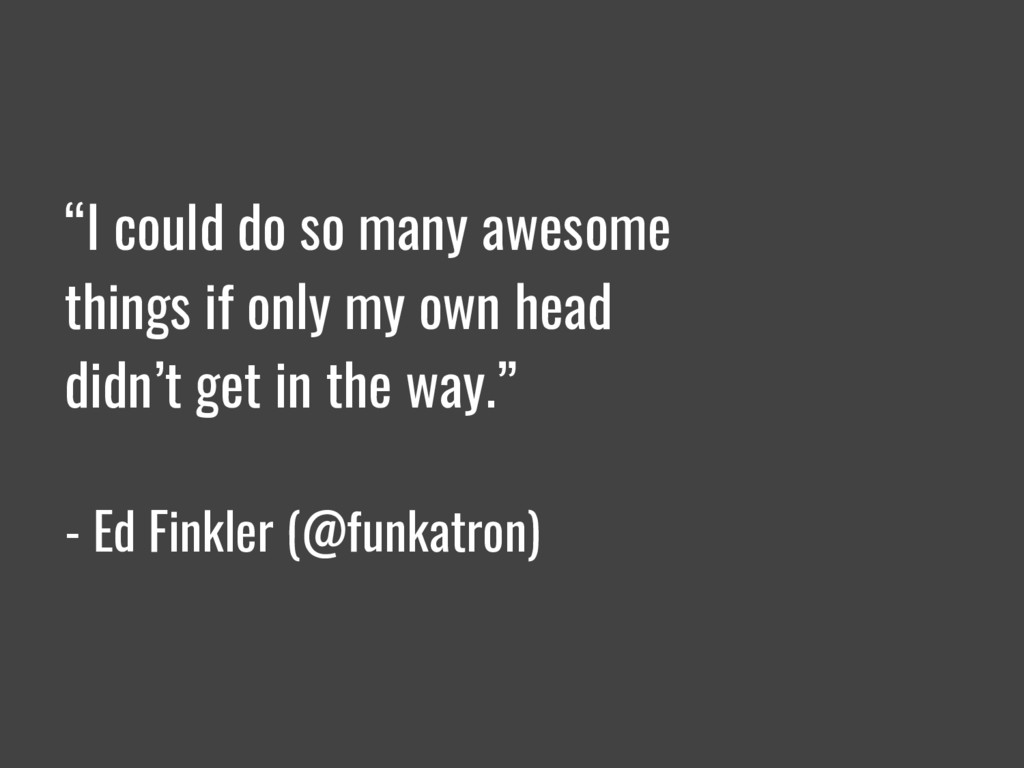
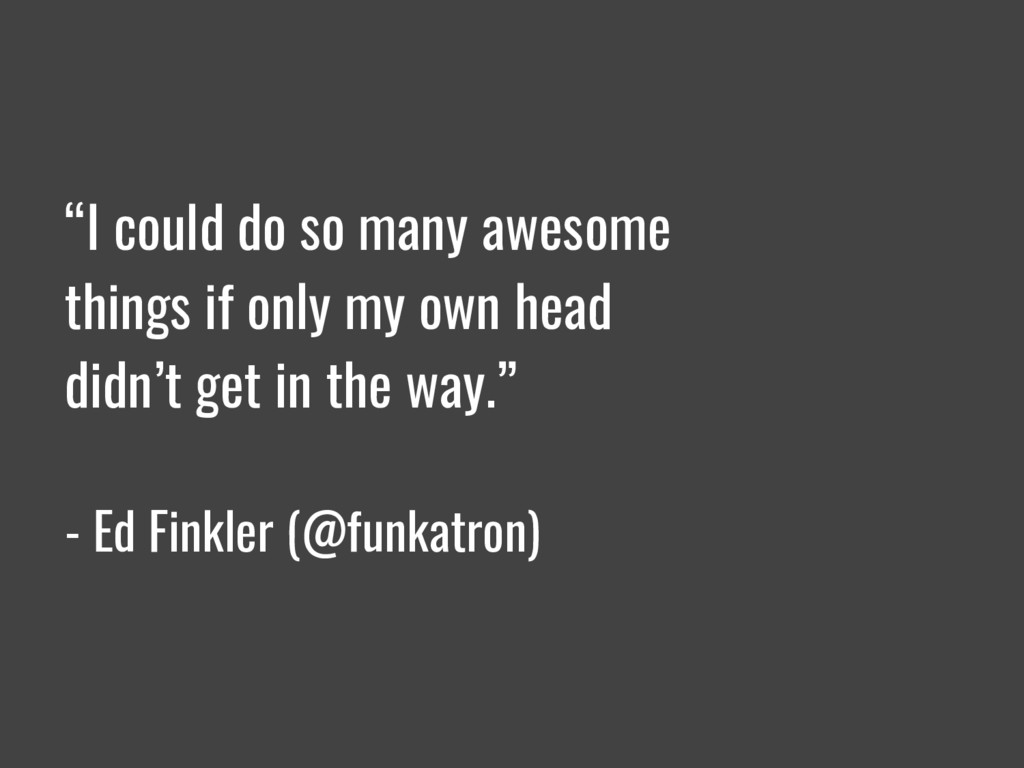
the result of natural variations of the human genome • "People with differences do not need to be cured; they need help and accommodation instead." • Some of our greatest inventions are attributed to people with atypical neurology • "Mental illness gives me superpowers." - Ed Finkler • hbr.org/2017/05/neurodiversity-as-a-competitive- advantage
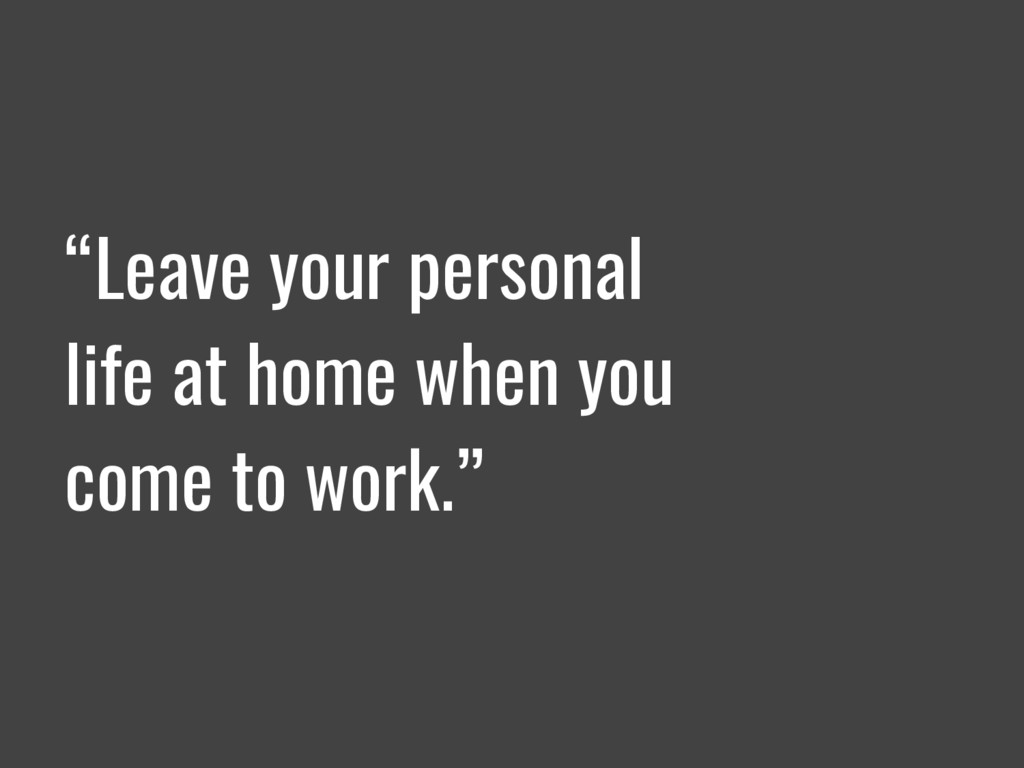
the best developers I know are always coding on the weekends and during holidays." • The need to always be available by phone/e-mail • The peer pressure caused by social media • The belief that you must be in Silicon Valley to truly succeed as a software engineer • The stigma against talking about our feelings • The idea that engineers don't have empathy
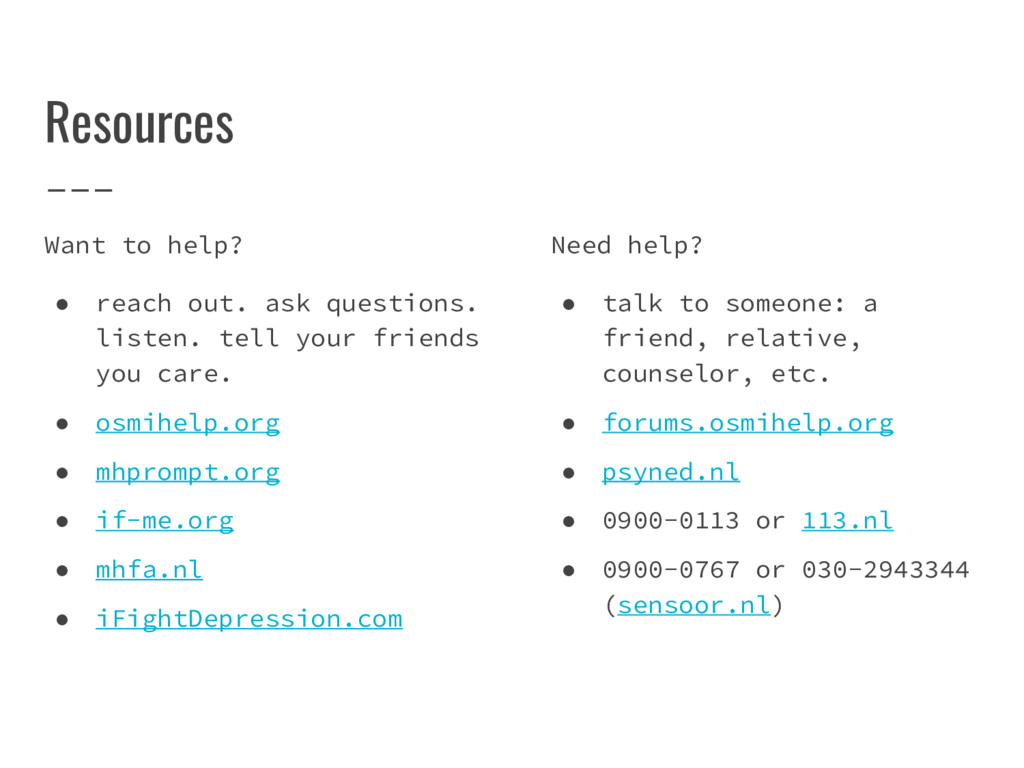
tell your friends you care. • osmihelp.org • mhprompt.org • if-me.org • mhfa.nl • iFightDepression.com Need help? • talk to someone: a friend, relative, counselor, etc. • forums.osmihelp.org • psyned.nl • 0900-0113 or 113.nl • 0900-0767 or 030-2943344 (sensoor.nl)


 xiehan
 bgpat
bgpat
 shogo4131
 oracle4engineer
 mananyuki
 ymiya55
 fespinoza
 cogakira
 kakakakakku
 munakata
 mot_techtalk
 chack411
 sansantech
 kevinliebholz
 yeseniaperezcruz
 katarinadahlin
 techseoconnect
 reverentgeek
 portentint
 aleyda
 lauravandoore
 ammeep
 orderedlist
 frankvandijk
 lara
lara

















![Questions? Thoughts? Comments? [email protected] @xiehan osmihelp.org/donate dedicated to Ni Mu](https://files.speakerdeck.com/presentations/e2a8c64d2a674220940d14eb3fcf2e9e/slide_69.jpg)