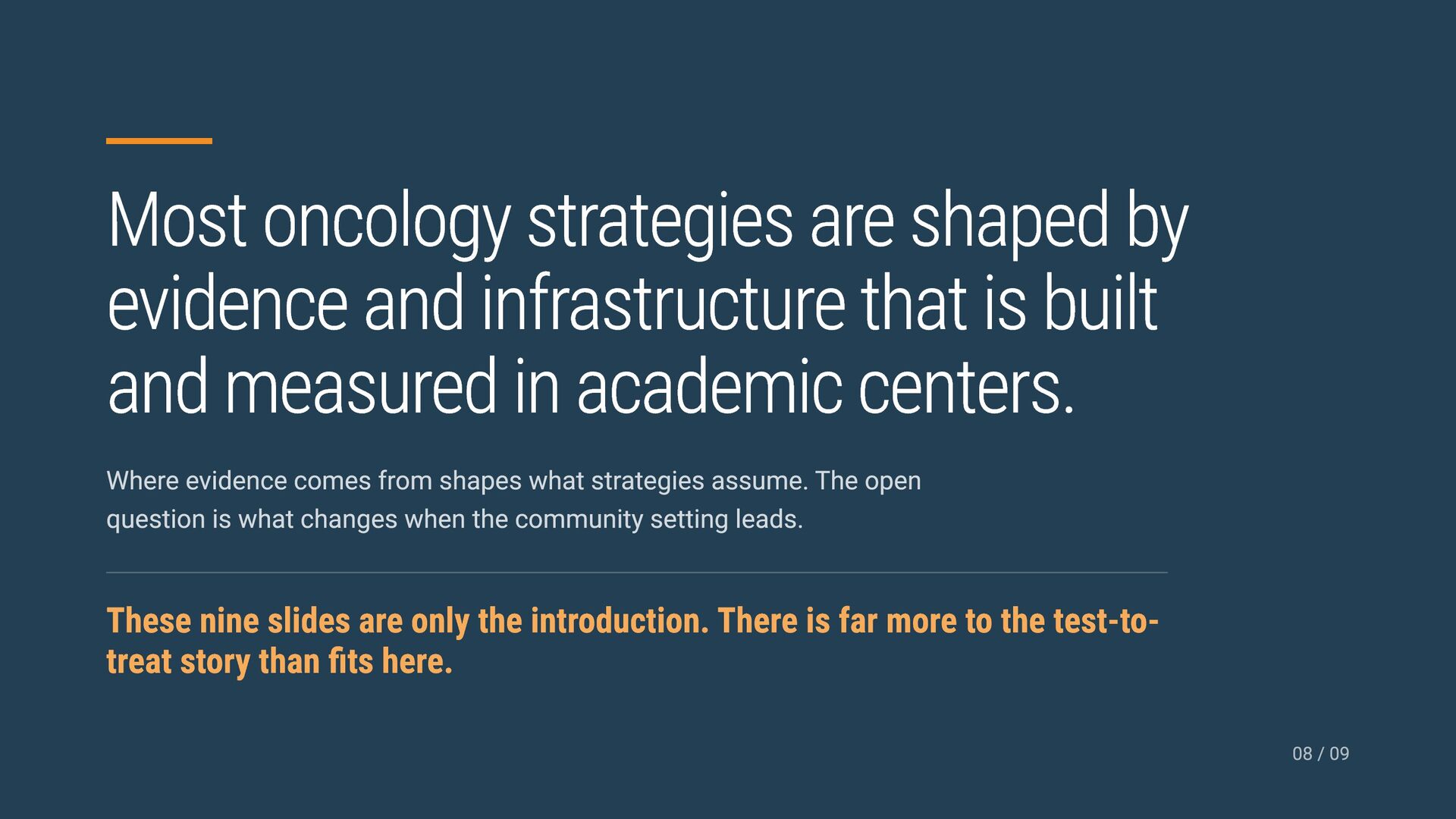
Most oncology strategies are shaped by evidence and infrastructure that is built and measured in academic centers. Yet most patients are treated in community oncology settings, where biopsy timing, tissue adequacy, turnaround time for molecular results, payer utilization management and social determinants of health (SDOH) can determine whether precision medicine is delivered consistently.
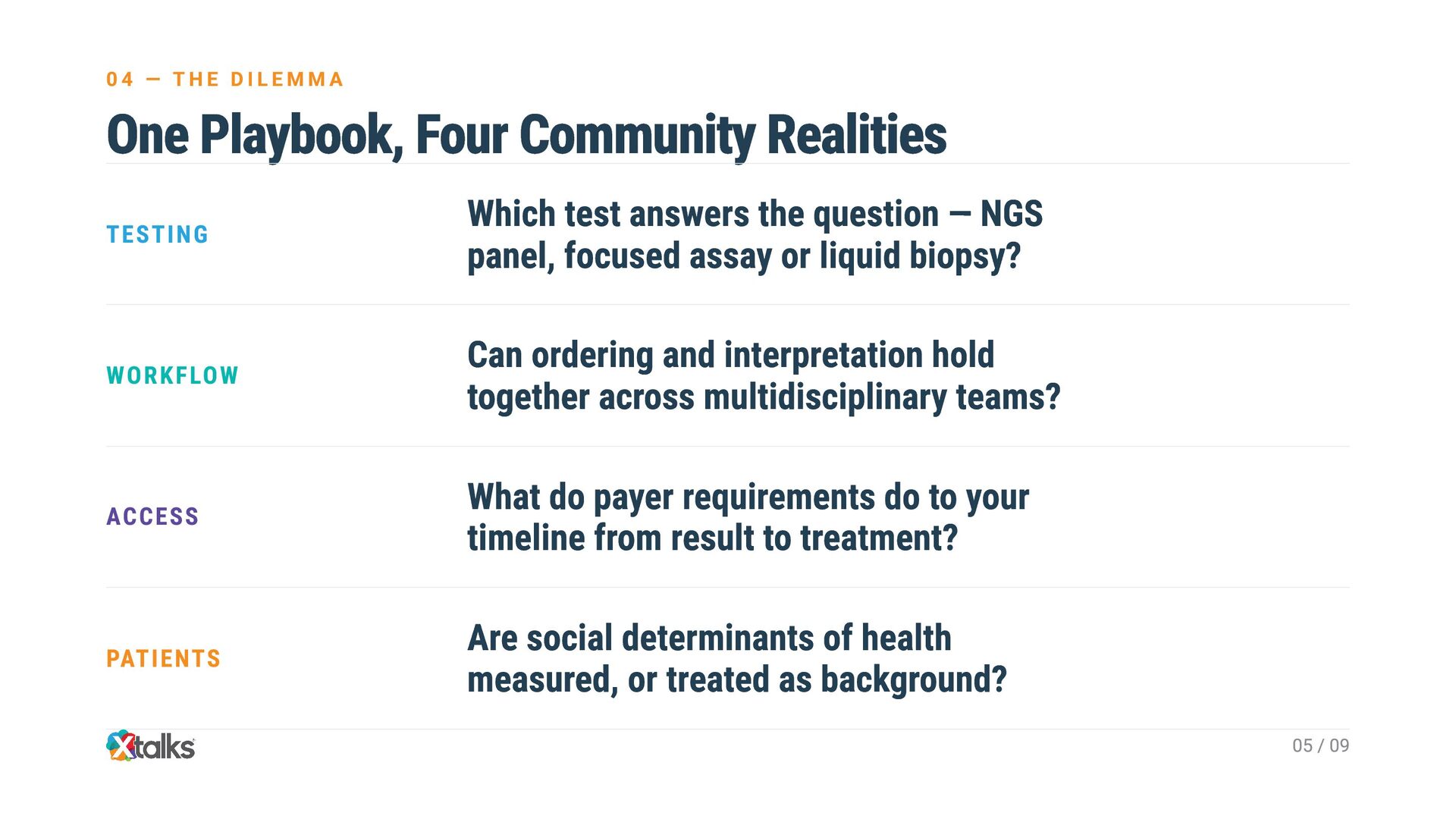
This nine-slide deck asks the readiness questions every life sciences team working in oncology should be able to answer. Does your evidence plan reflect how community oncology actually works? Which test answers the clinical question — NGS panel, focused assay or liquid biopsy? Can ordering and interpretation hold together across multidisciplinary teams? What do payer requirements do to your timeline from result to treatment? And are social determinants of health measured, or treated as background?
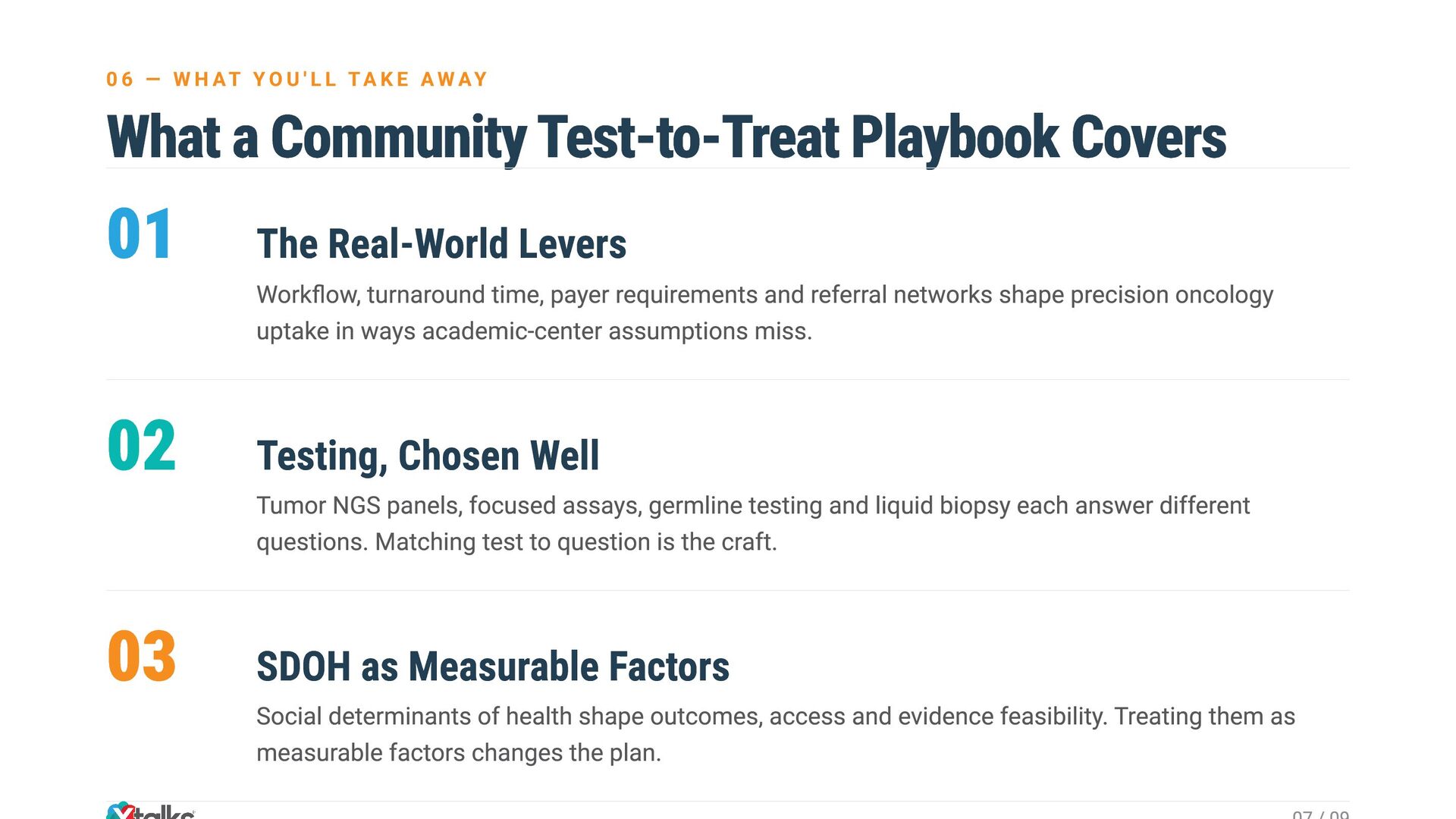
It closes with three ideas from a community test-to-treat playbook: the real-world levers of precision oncology uptake, testing chosen well and SDOH as measurable factors.
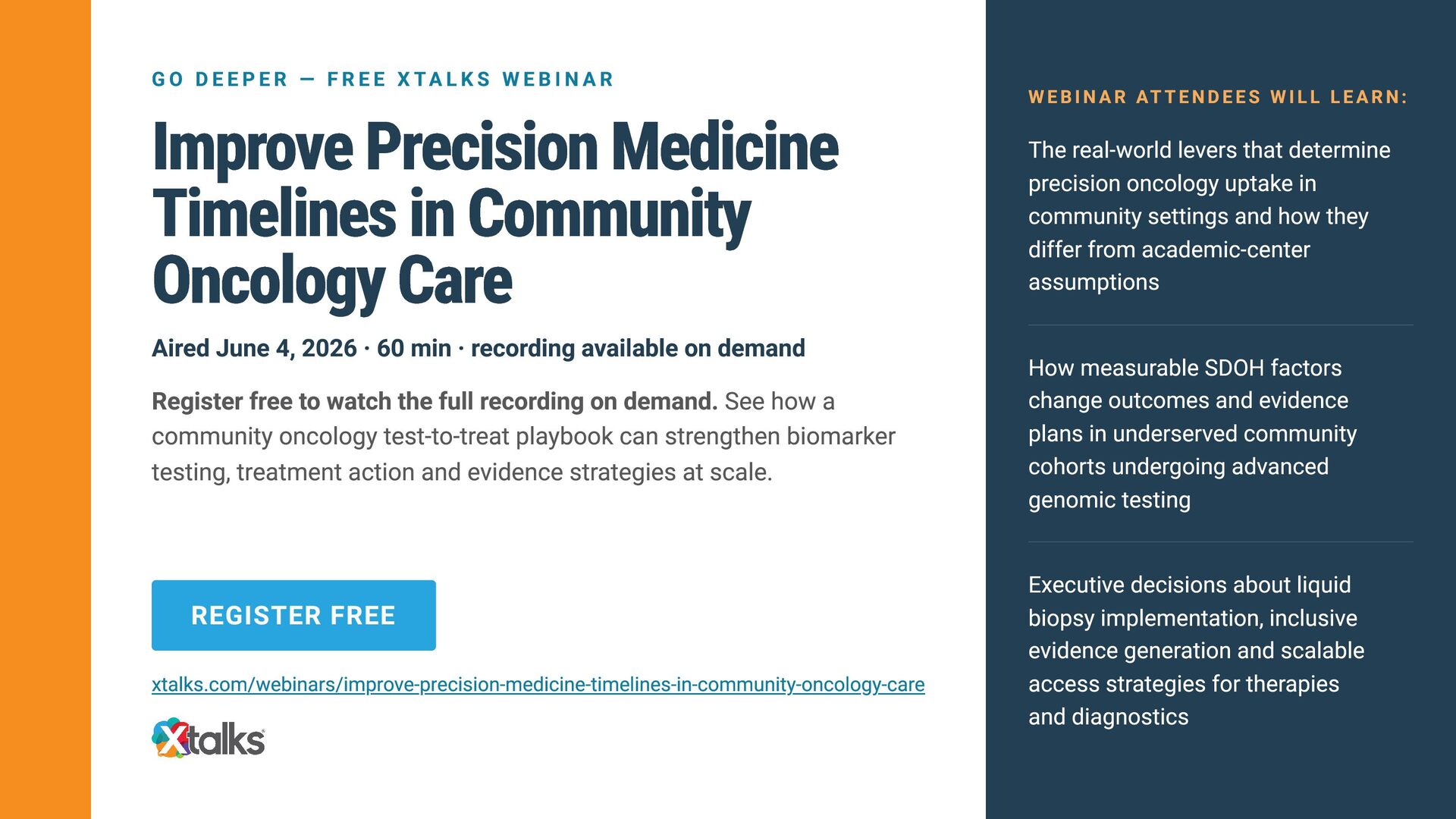
There is far more to the test-to-treat story than fits in nine slides. Go deeper in the free Xtalks webinar "Improve Precision Medicine Timelines in Community Oncology Care," which aired June 4, 2026 — the full 60-minute recording is available on demand with free registration. Webinar attendees will learn the real-world levers that determine precision oncology uptake in community settings, how measurable SDOH factors change outcomes and evidence plans in underserved community cohorts undergoing advanced genomic testing and executive decisions about liquid biopsy implementation, inclusive evidence generation and scalable access strategies for therapies and diagnostics.
Register free to watch the recording on demand:
https://xtalks.com/webinars/improve-precision-medicine-timelines-in-community-oncology-care/?utm_source=slideshare&utm_medium=promodeck


 xtalks
 hf149
 ianozsvald
 lychee1223
 hayataka88
 nagano
 yu4u
 konakalab
 estie
 brainpadpr
 ykiyota
 sshimizu2006
 raygrieselhuber
 codingconduct
 katarinadahlin
 stephenakadiri
 tamaranovitovic
 lcolladotor
 axbom
 trallard
 bkeepers
 keavy
 marcelosomers