study countries Part Three: Tracking Early Reaction to the 2025 Kampala Declaration Eng. Dr. Dorothy Okello Dean, School of Engineering, Makerere University Member, Malabo Montpellier Panel
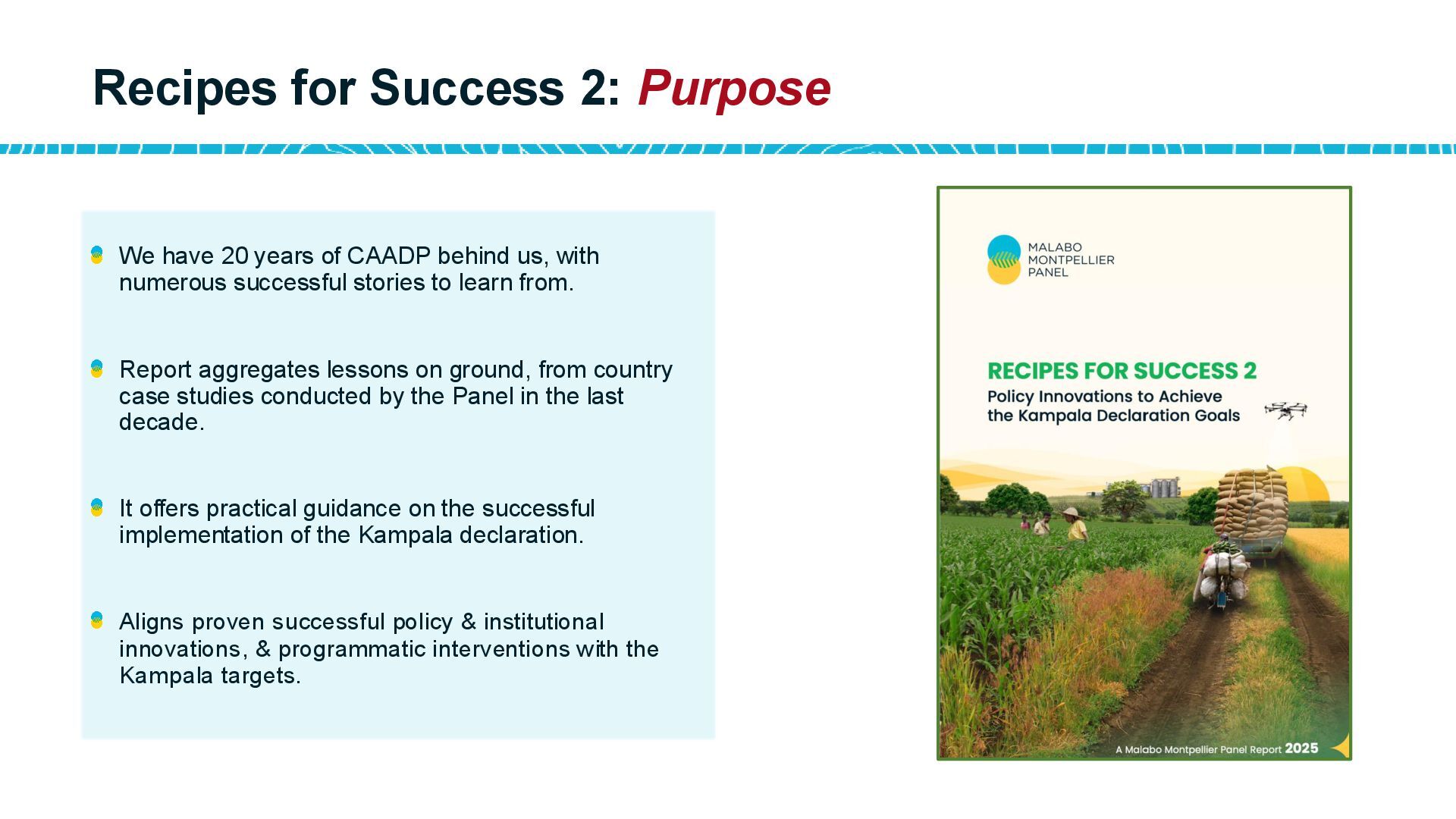
CAADP behind us, with numerous successful stories to learn from. Report aggregates lessons on ground, from country case studies conducted by the Panel in the last decade. It offers practical guidance on the successful implementation of the Kampala declaration. Aligns proven successful policy & institutional innovations, & programmatic interventions with the Kampala targets.
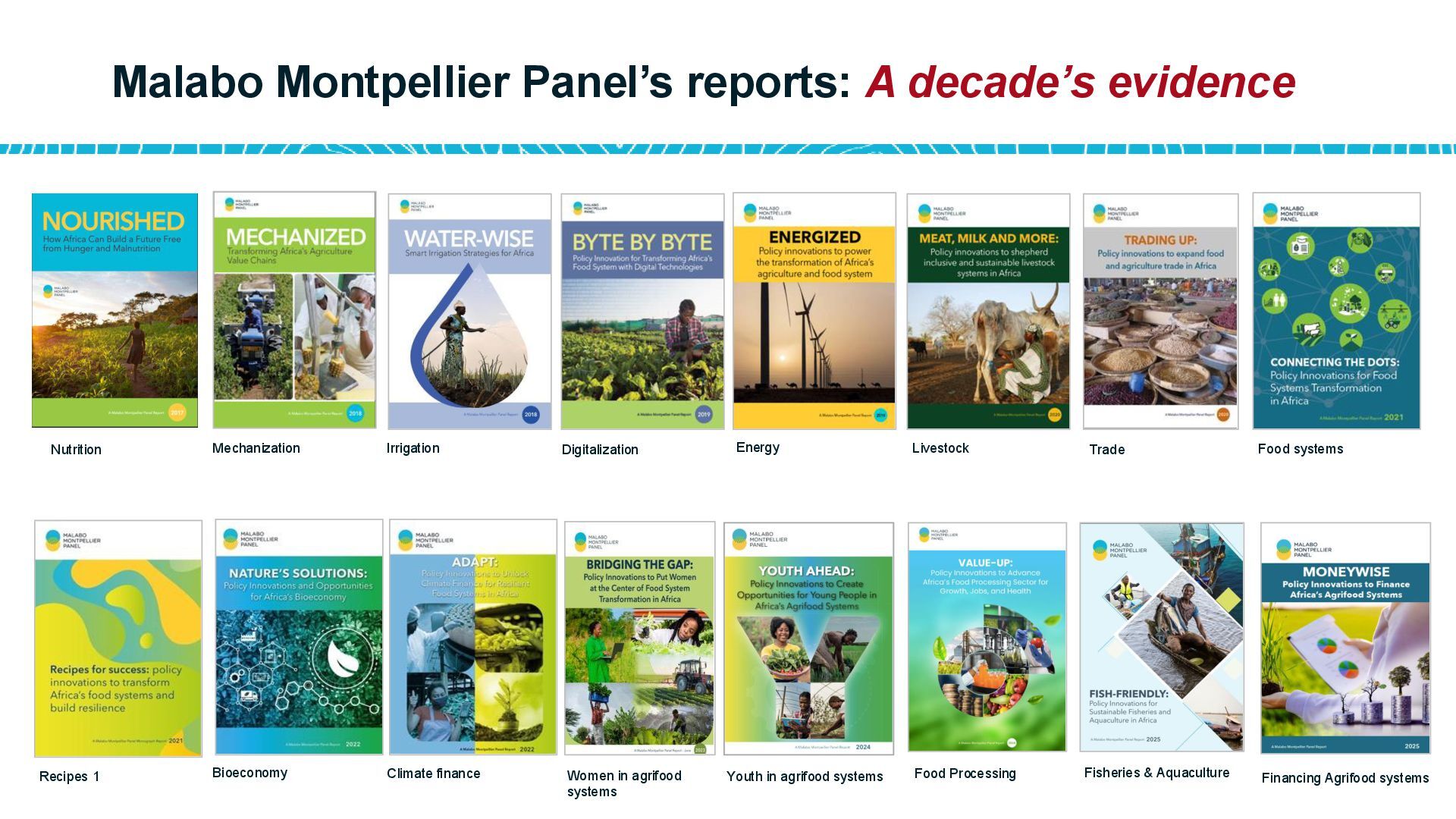
Digitalization Energy Livestock Trade Food systems Recipes 1 Bioeconomy Climate finance Women in agrifood systems Youth in agrifood systems Food Processing Fisheries & Aquaculture Financing Agrifood systems
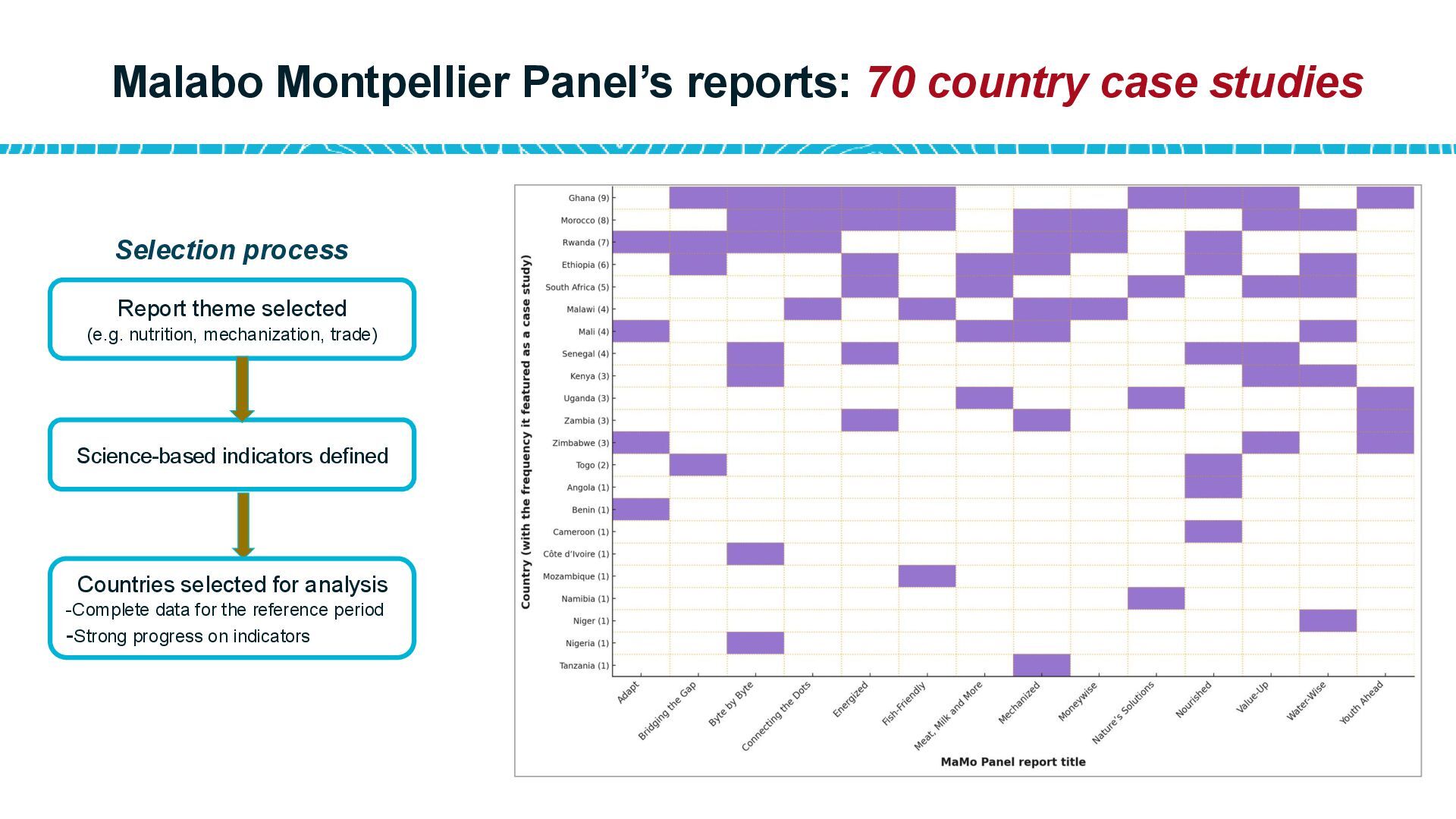
selected (e.g. nutrition, mechanization, trade) Science-based indicators defined Countries selected for analysis -Complete data for the reference period -Strong progress on indicators Selection process
study countries Part Three: Tracking Early Reaction to the 2025 Kampala Declaration Eng. Dr. Dorothy Okello Dean, School of Engineering, Makerere University Member, Malabo Montpellier Panel
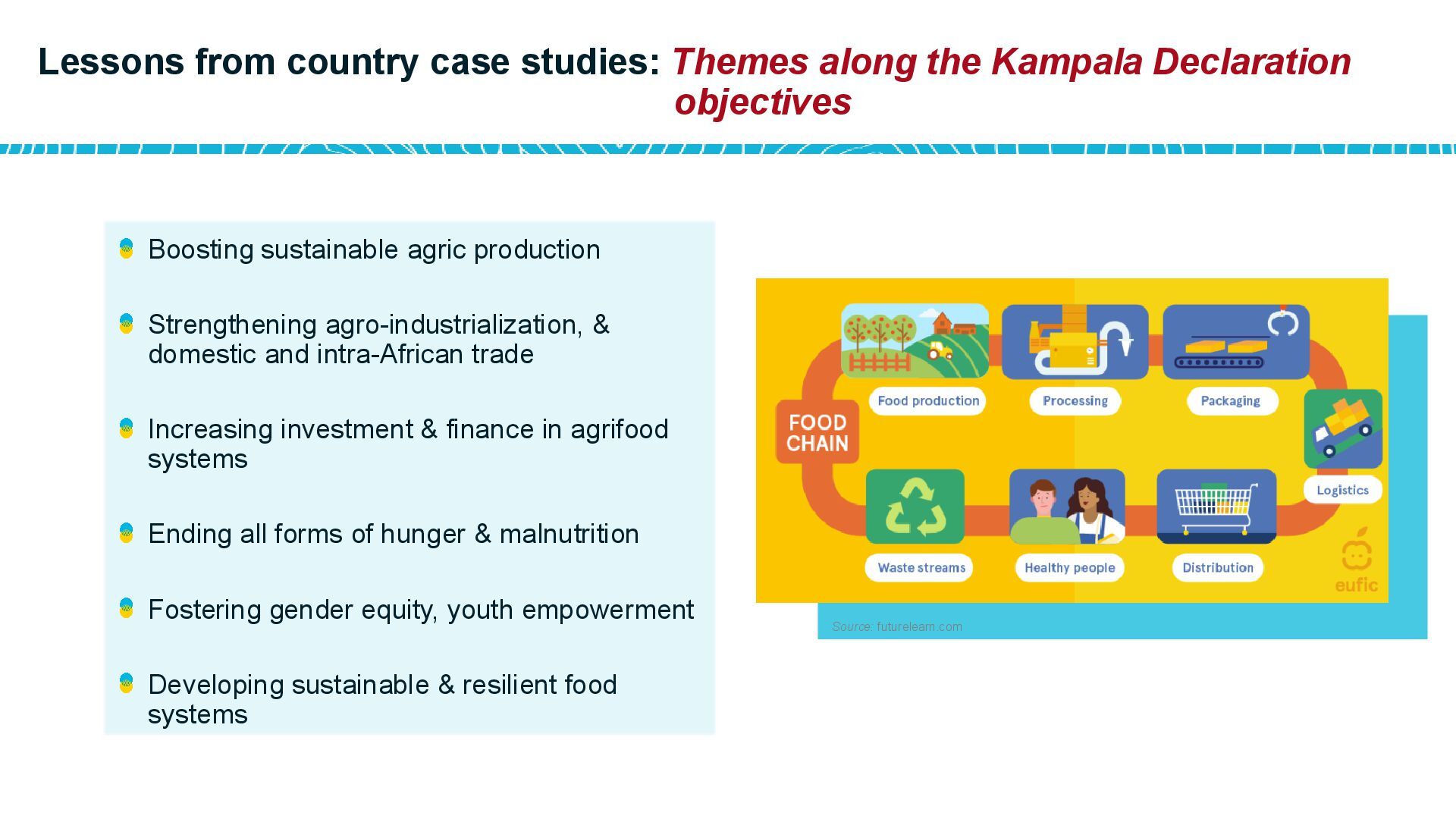
objectives Boosting sustainable agric production Strengthening agro-industrialization, & domestic and intra-African trade Increasing investment & finance in agrifood systems Ending all forms of hunger & malnutrition Fostering gender equity, youth empowerment Developing sustainable & resilient food systems Source: futurelearn.com
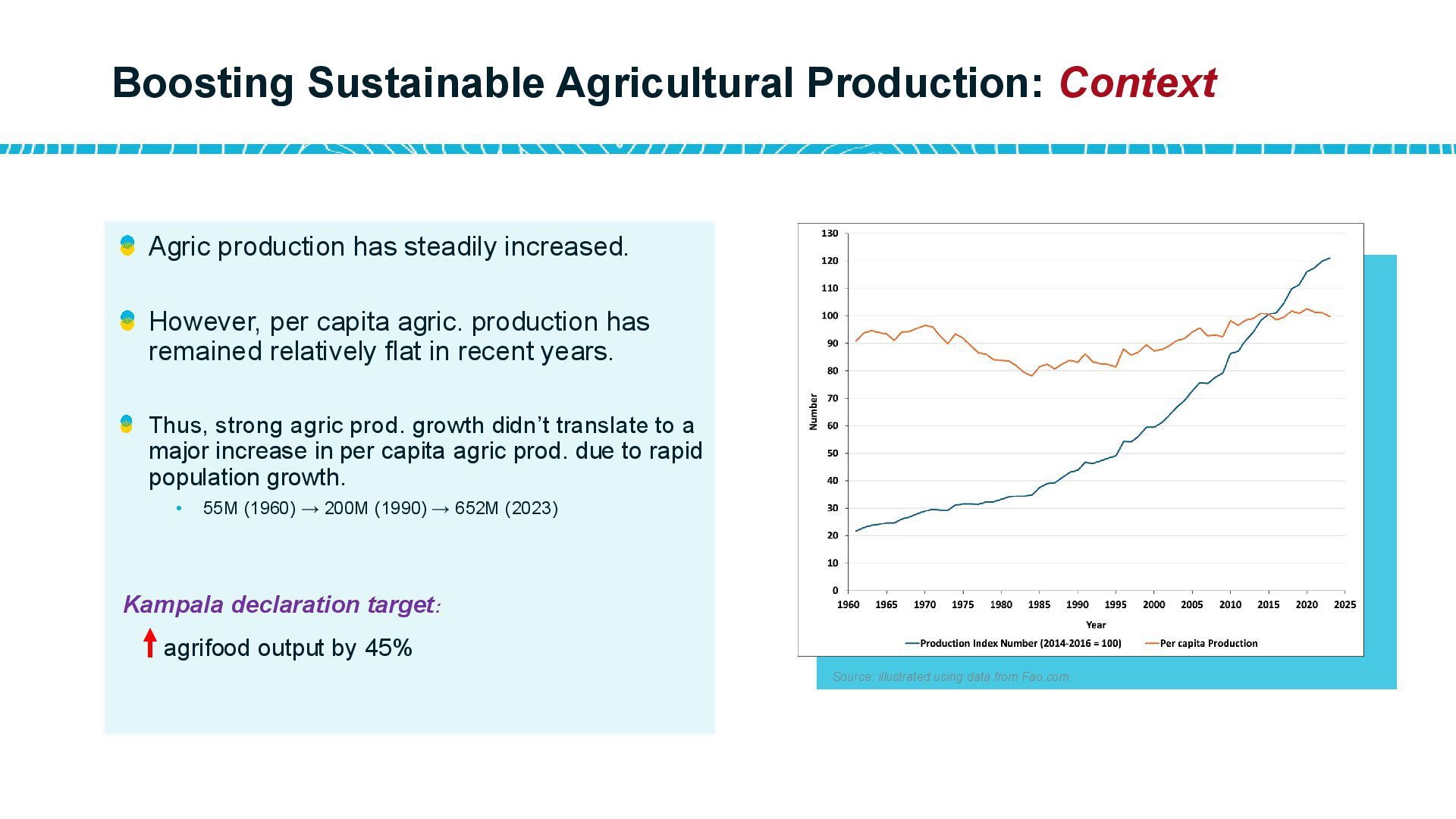
However, per capita agric. production has remained relatively flat in recent years. Thus, strong agric prod. growth didn’t translate to a major increase in per capita agric prod. due to rapid population growth. • 55M (1960) → 200M (1990) → 652M (2023) Kampala declaration target: agrifood output by 45% Source: illustrated using data from Fao.com
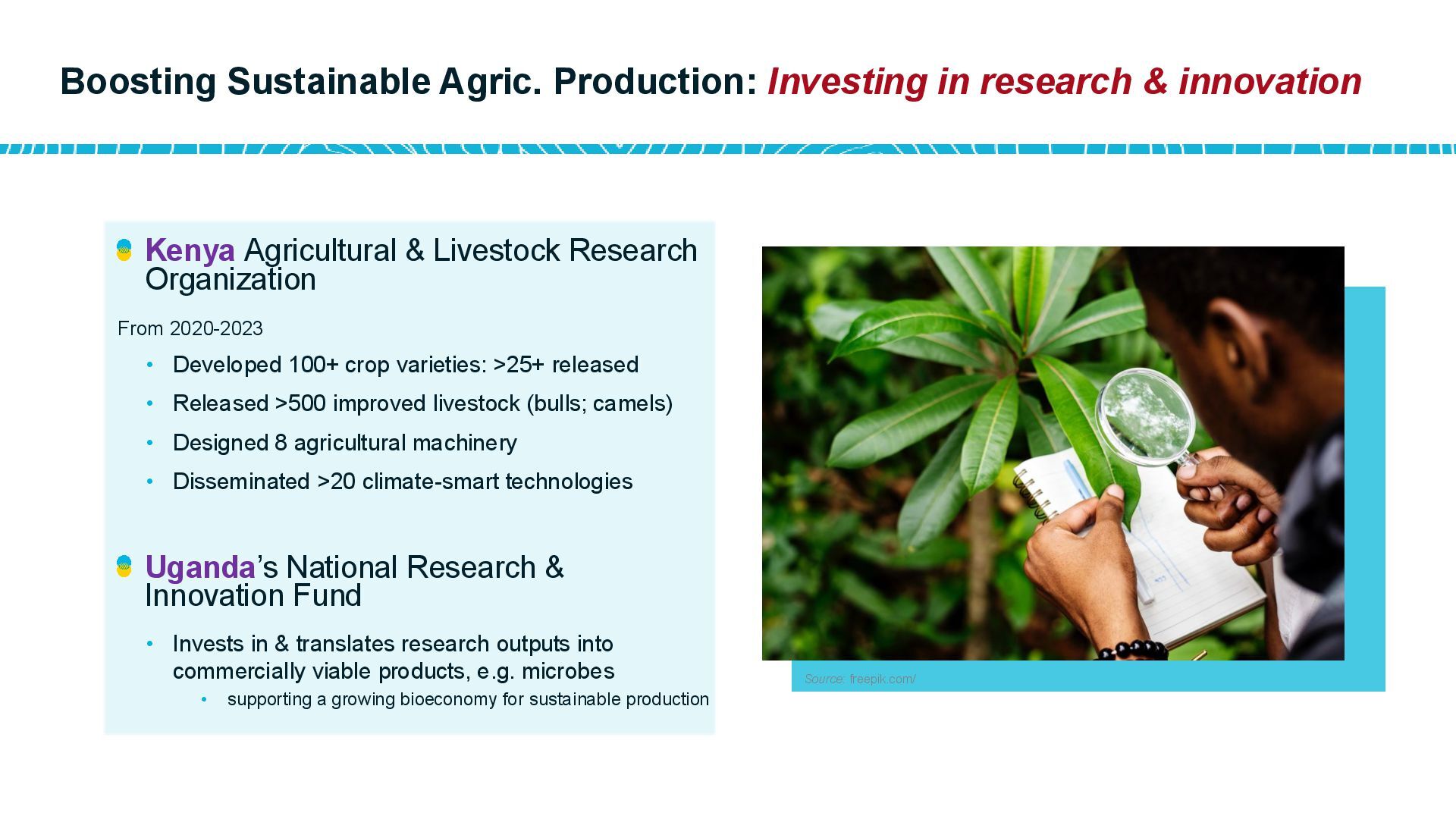
Agricultural & Livestock Research Organization From 2020-2023 • Developed 100+ crop varieties: >25+ released • Released >500 improved livestock (bulls; camels) • Designed 8 agricultural machinery • Disseminated >20 climate-smart technologies Uganda’s National Research & Innovation Fund • Invests in & translates research outputs into commercially viable products, e.g. microbes • supporting a growing bioeconomy for sustainable production Source: freepik.com/
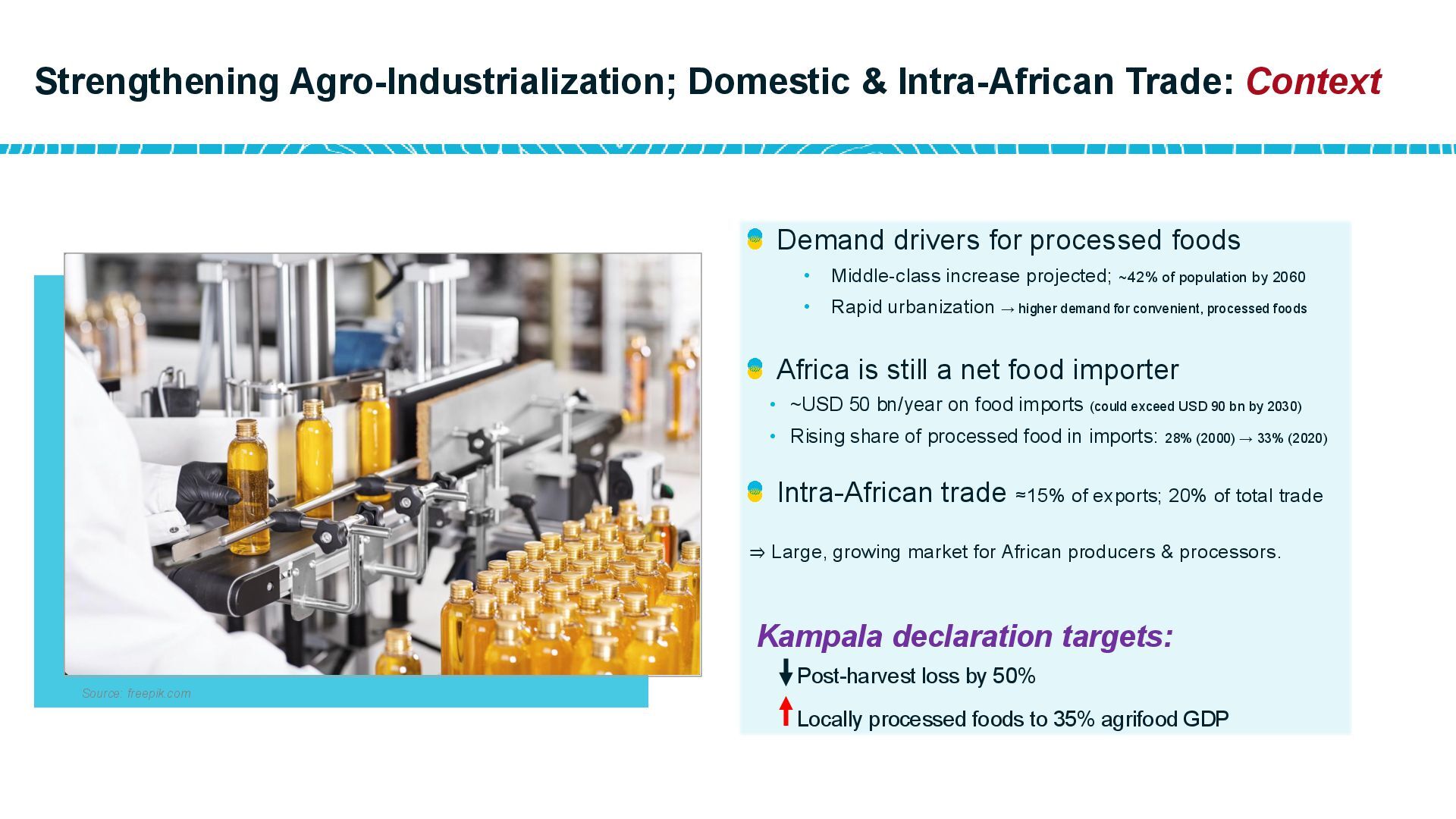
processed foods • Middle-class increase projected; ~42% of population by 2060 • Rapid urbanization → higher demand for convenient, processed foods Africa is still a net food importer • ~USD 50 bn/year on food imports (could exceed USD 90 bn by 2030) • Rising share of processed food in imports: 28% (2000) → 33% (2020) Intra-African trade ≈15% of exports; 20% of total trade ⇒ Large, growing market for African producers & processors. Kampala declaration targets: Post-harvest loss by 50% Locally processed foods to 35% agrifood GDP Source: freepik.com
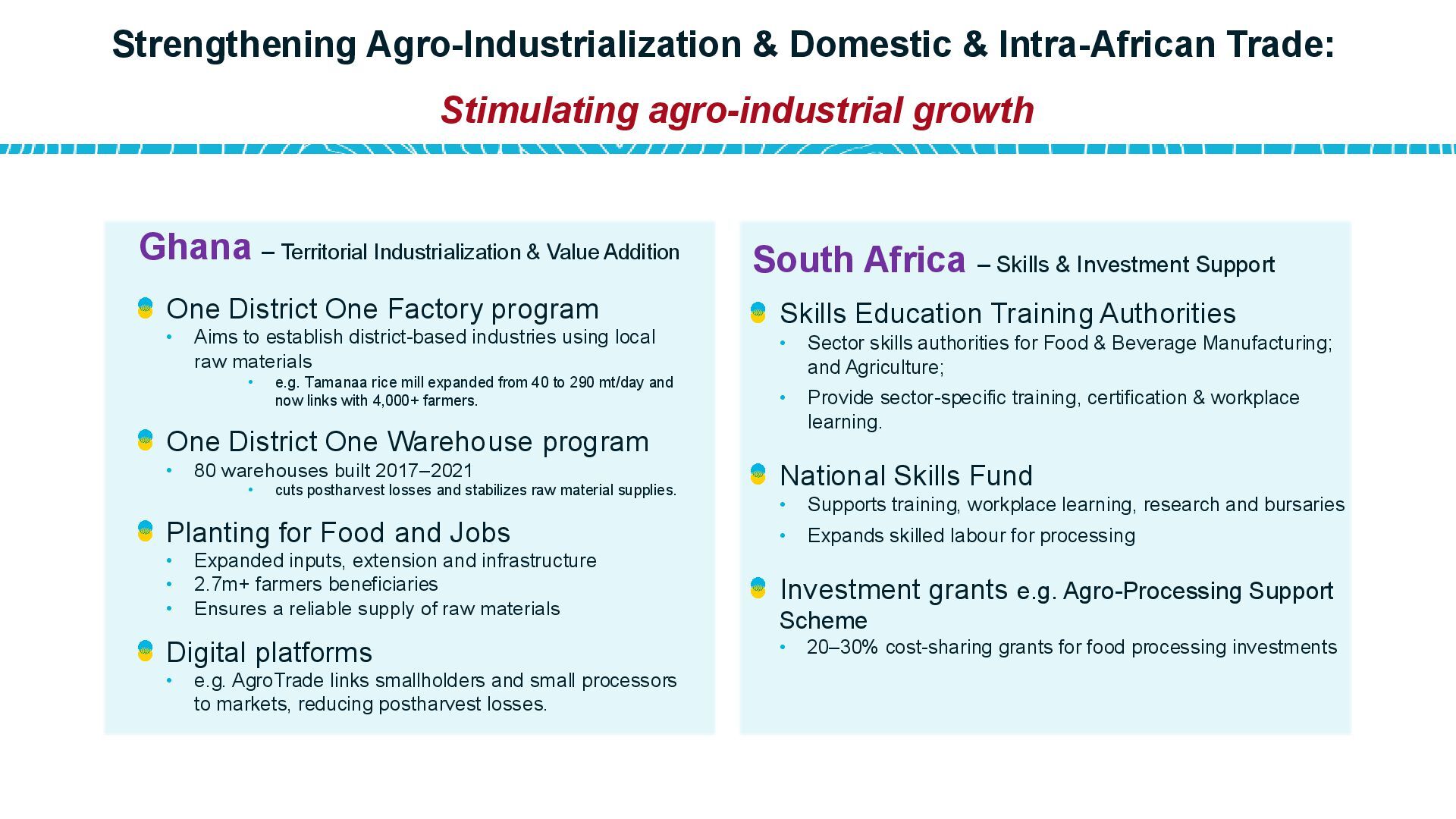
Ghana – Territorial Industrialization & Value Addition One District One Factory program • Aims to establish district-based industries using local raw materials • e.g. Tamanaa rice mill expanded from 40 to 290 mt/day and now links with 4,000+ farmers. One District One Warehouse program • 80 warehouses built 2017–2021 • cuts postharvest losses and stabilizes raw material supplies. Planting for Food and Jobs • Expanded inputs, extension and infrastructure • 2.7m+ farmers beneficiaries • Ensures a reliable supply of raw materials Digital platforms • e.g. AgroTrade links smallholders and small processors to markets, reducing postharvest losses. South Africa – Skills & Investment Support Skills Education Training Authorities • Sector skills authorities for Food & Beverage Manufacturing; and Agriculture; • Provide sector-specific training, certification & workplace learning. National Skills Fund • Supports training, workplace learning, research and bursaries • Expands skilled labour for processing Investment grants e.g. Agro-Processing Support Scheme • 20–30% cost-sharing grants for food processing investments
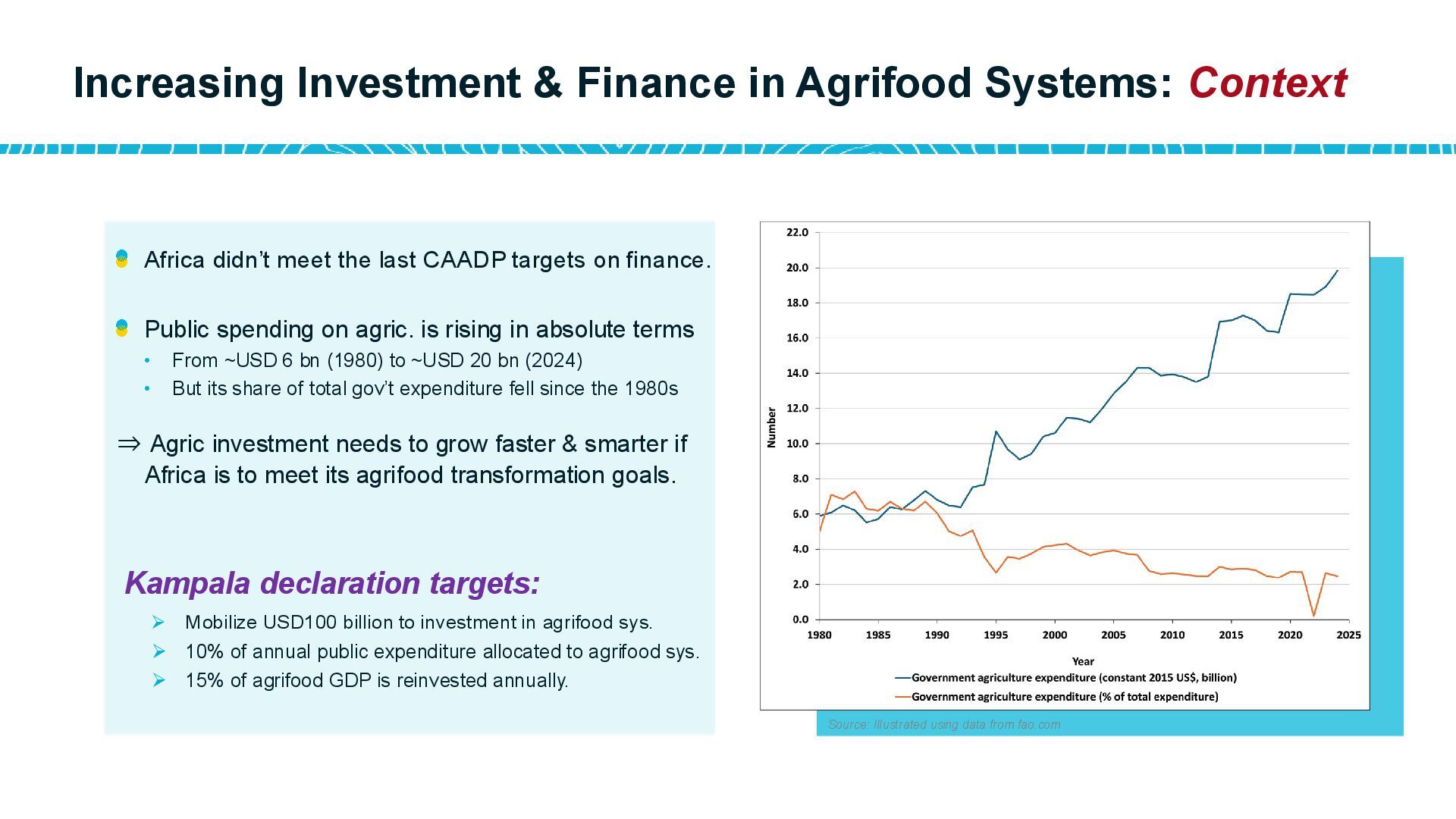
meet the last CAADP targets on finance. Public spending on agric. is rising in absolute terms • From ~USD 6 bn (1980) to ~USD 20 bn (2024) • But its share of total gov’t expenditure fell since the 1980s ⇒ Agric investment needs to grow faster & smarter if Africa is to meet its agrifood transformation goals. Kampala declaration targets: ➢ Mobilize USD100 billion to investment in agrifood sys. ➢ 10% of annual public expenditure allocated to agrifood sys. ➢ 15% of agrifood GDP is reinvested annually. Source: Illustrated using data from fao.com
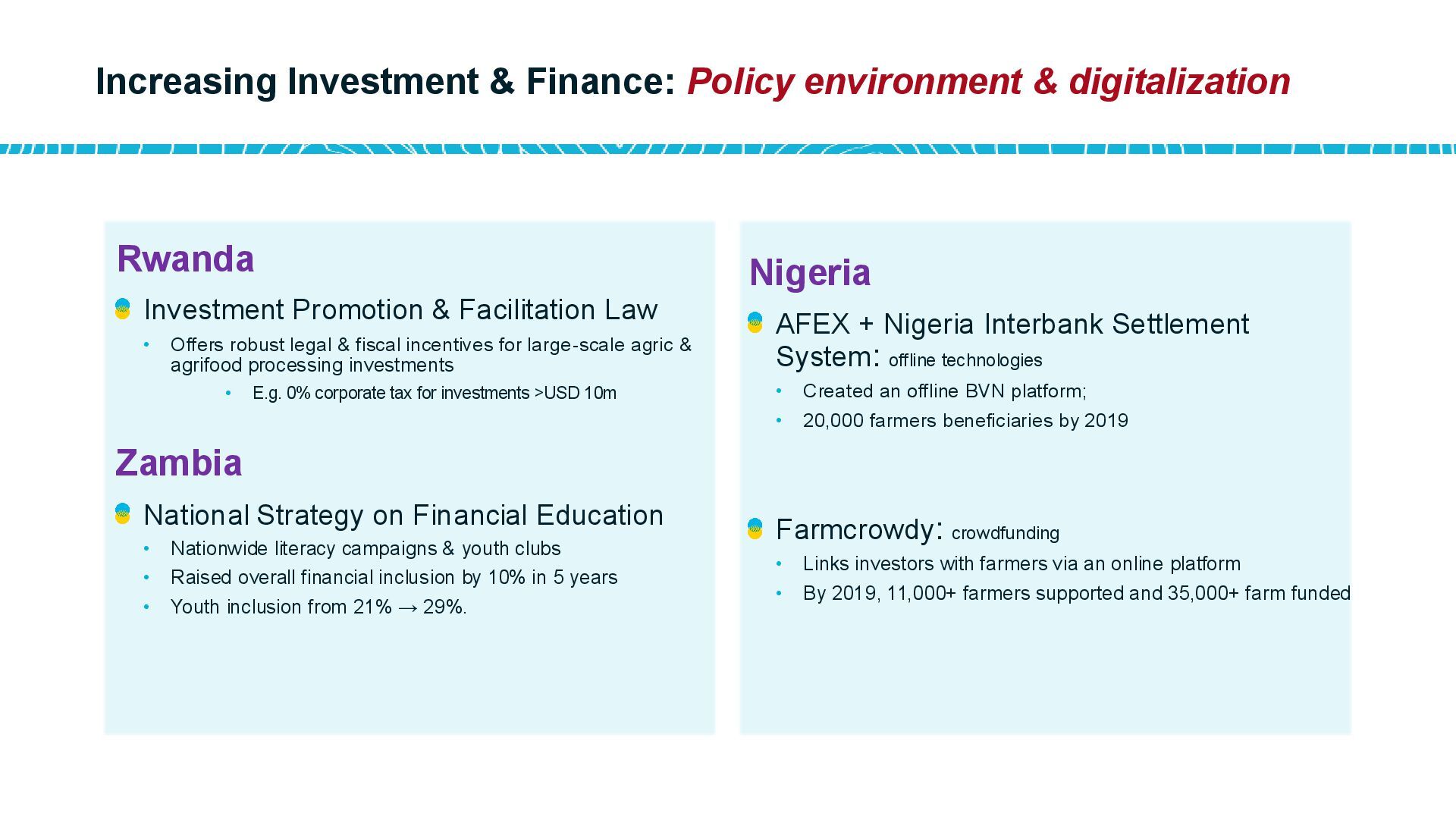
Tamwilcom: blended finance & guarantees (de-risking) • Shares 50–80% of loan risk • Mobilized about USD 4.75 bn in 2024 Tamwil El Fellah: targeted agrifood finance • Offers tailored loans backed by a 60% public guarantee • Reached 67,000+ smallholders by 2016 with 98% repayment. National Strategy for Financial Inclusion • Introduced a data-driven credit scoring Source: istockphoto.com
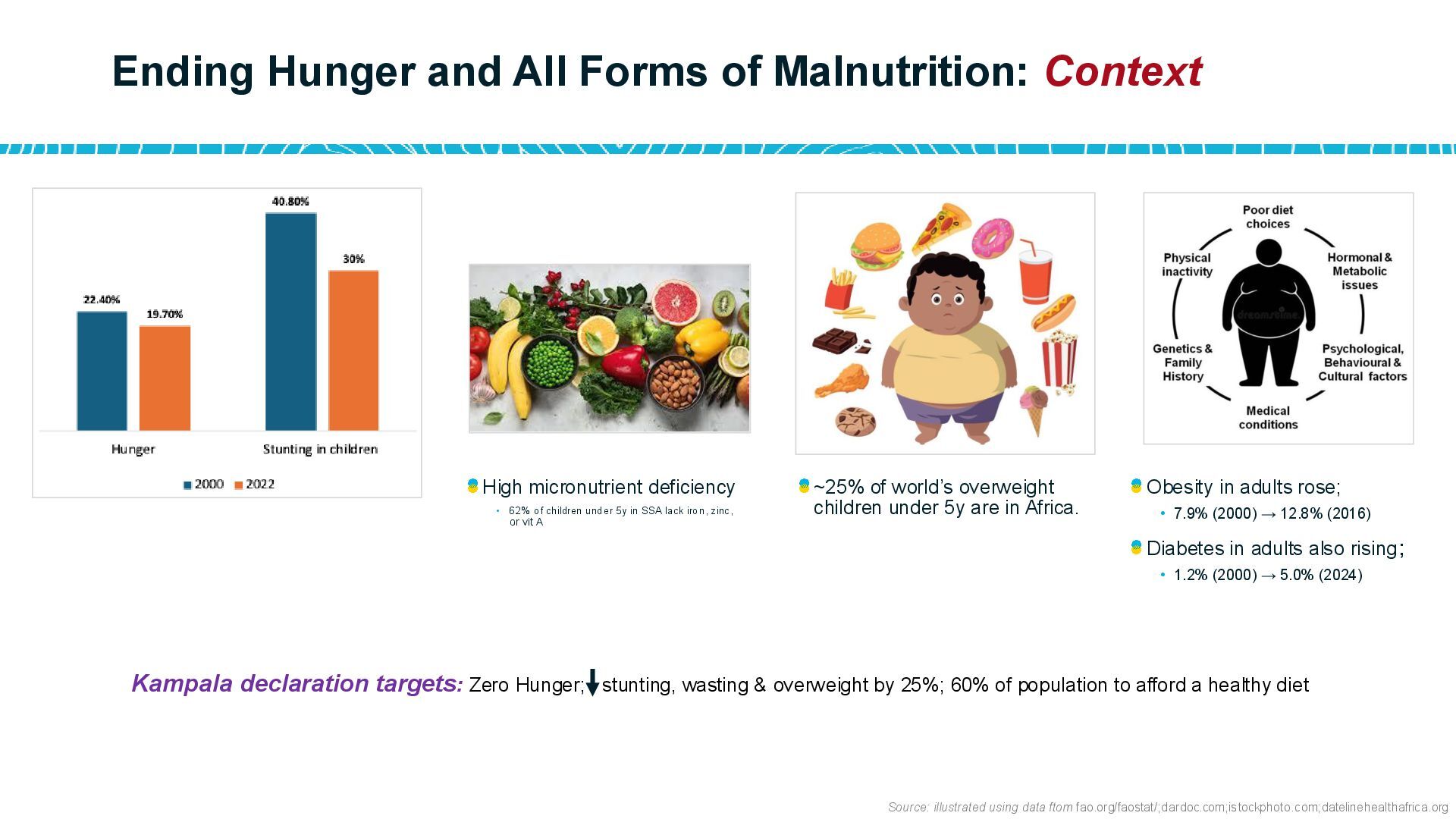
Obesity in adults rose; • 7.9% (2000) → 12.8% (2016) Diabetes in adults also rising; • 1.2% (2000) → 5.0% (2024) High micronutrient deficiency • 62% of children under 5y in SSA lack iron, zinc, or vit A Source: illustrated using data ftom fao.org/faostat/;dardoc.com;istockphoto.com;datelinehealthafrica.org Ending Hunger and All Forms of Malnutrition: Context Kampala declaration targets: Zero Hunger; stunting, wasting & overweight by 25%; 60% of population to afford a healthy diet
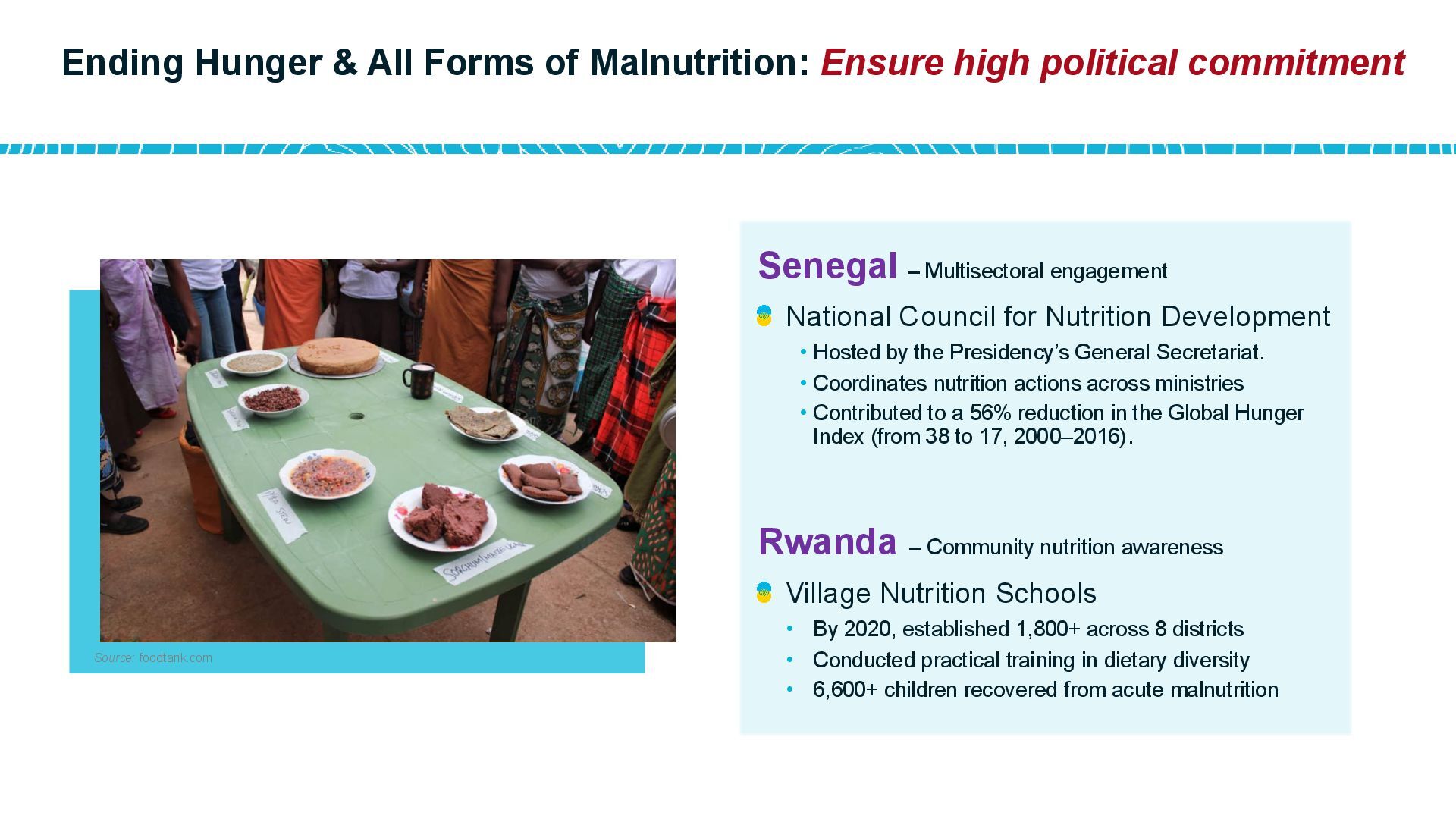
commitment Senegal – Multisectoral engagement National Council for Nutrition Development • Hosted by the Presidency’s General Secretariat. • Coordinates nutrition actions across ministries • Contributed to a 56% reduction in the Global Hunger Index (from 38 to 17, 2000–2016). Rwanda – Community nutrition awareness Village Nutrition Schools • By 2020, established 1,800+ across 8 districts • Conducted practical training in dietary diversity • 6,600+ children recovered from acute malnutrition Source: foodtank.com
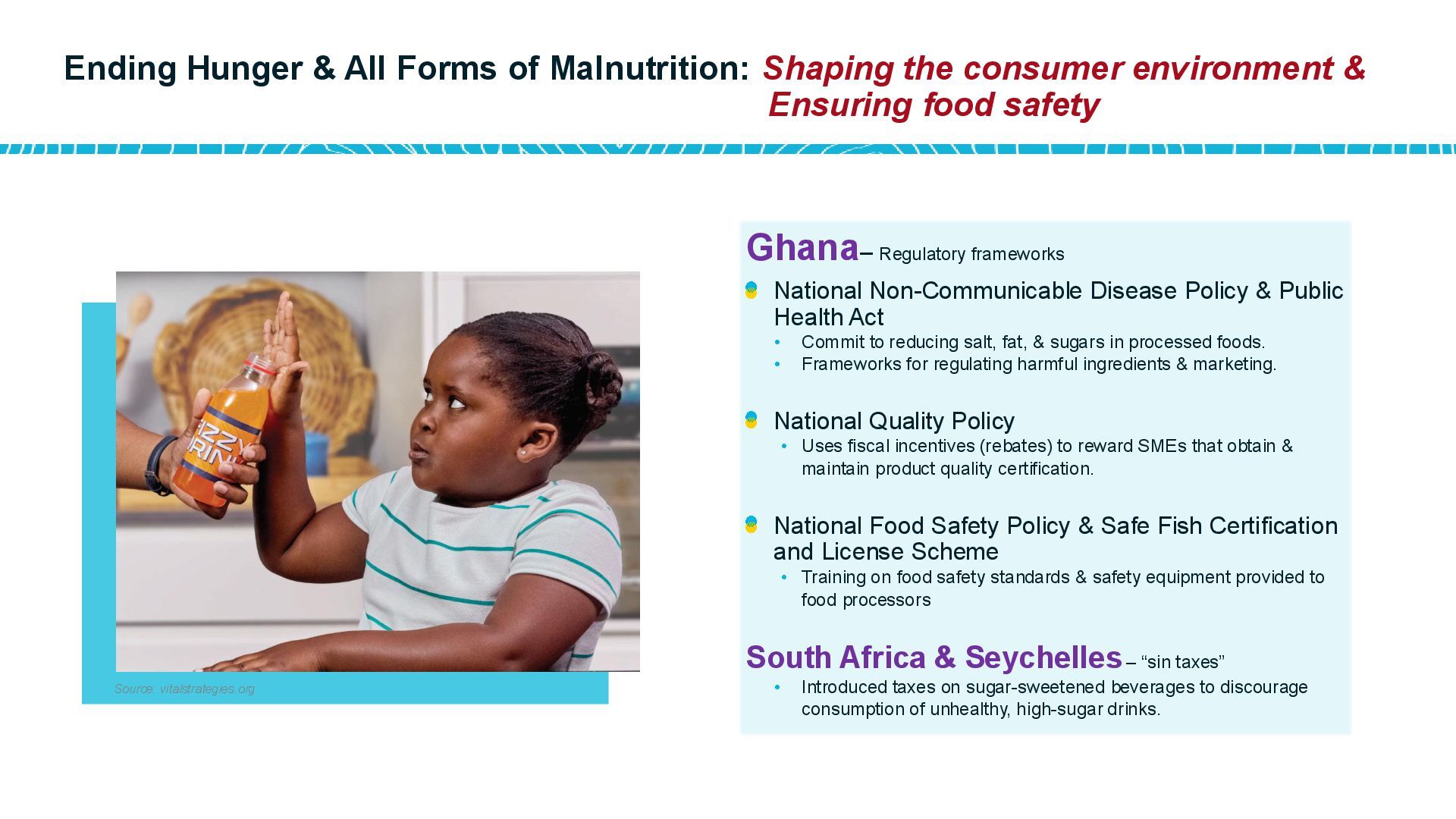
environment & Ensuring food safety Ghana– Regulatory frameworks National Non-Communicable Disease Policy & Public Health Act • Commit to reducing salt, fat, & sugars in processed foods. • Frameworks for regulating harmful ingredients & marketing. National Quality Policy • Uses fiscal incentives (rebates) to reward SMEs that obtain & maintain product quality certification. National Food Safety Policy & Safe Fish Certification and License Scheme • Training on food safety standards & safety equipment provided to food processors South Africa & Seychelles – “sin taxes” • Introduced taxes on sugar-sweetened beverages to discourage consumption of unhealthy, high-sugar drinks. Source: vitalstrategies.org
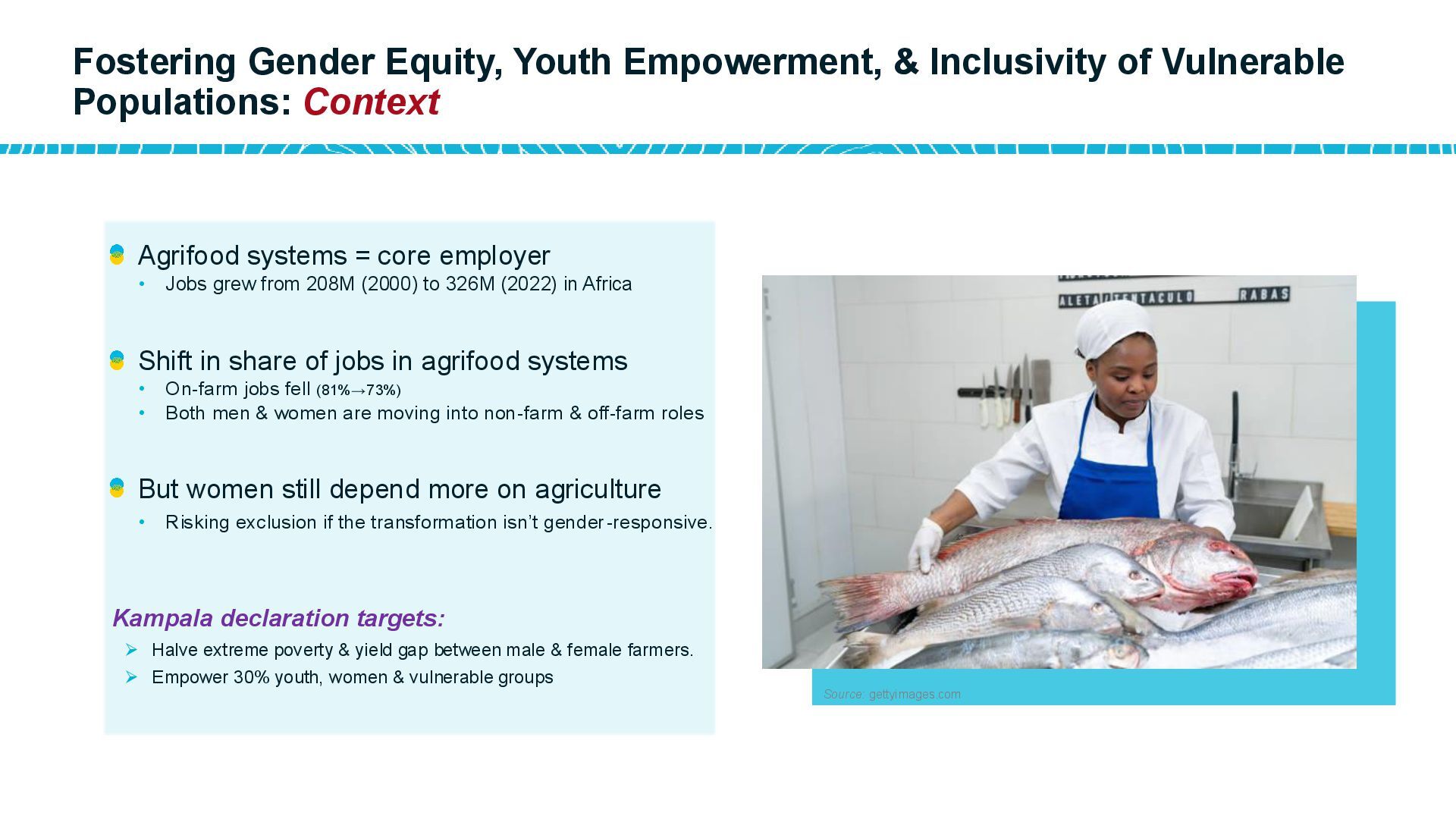
Context Agrifood systems = core employer • Jobs grew from 208M (2000) to 326M (2022) in Africa Shift in share of jobs in agrifood systems • On-farm jobs fell (81%→73%) • Both men & women are moving into non-farm & off-farm roles But women still depend more on agriculture • Risking exclusion if the transformation isn’t gender-responsive. Kampala declaration targets: ➢ Halve extreme poverty & yield gap between male & female farmers. ➢ Empower 30% youth, women & vulnerable groups Source: gettyimages.com
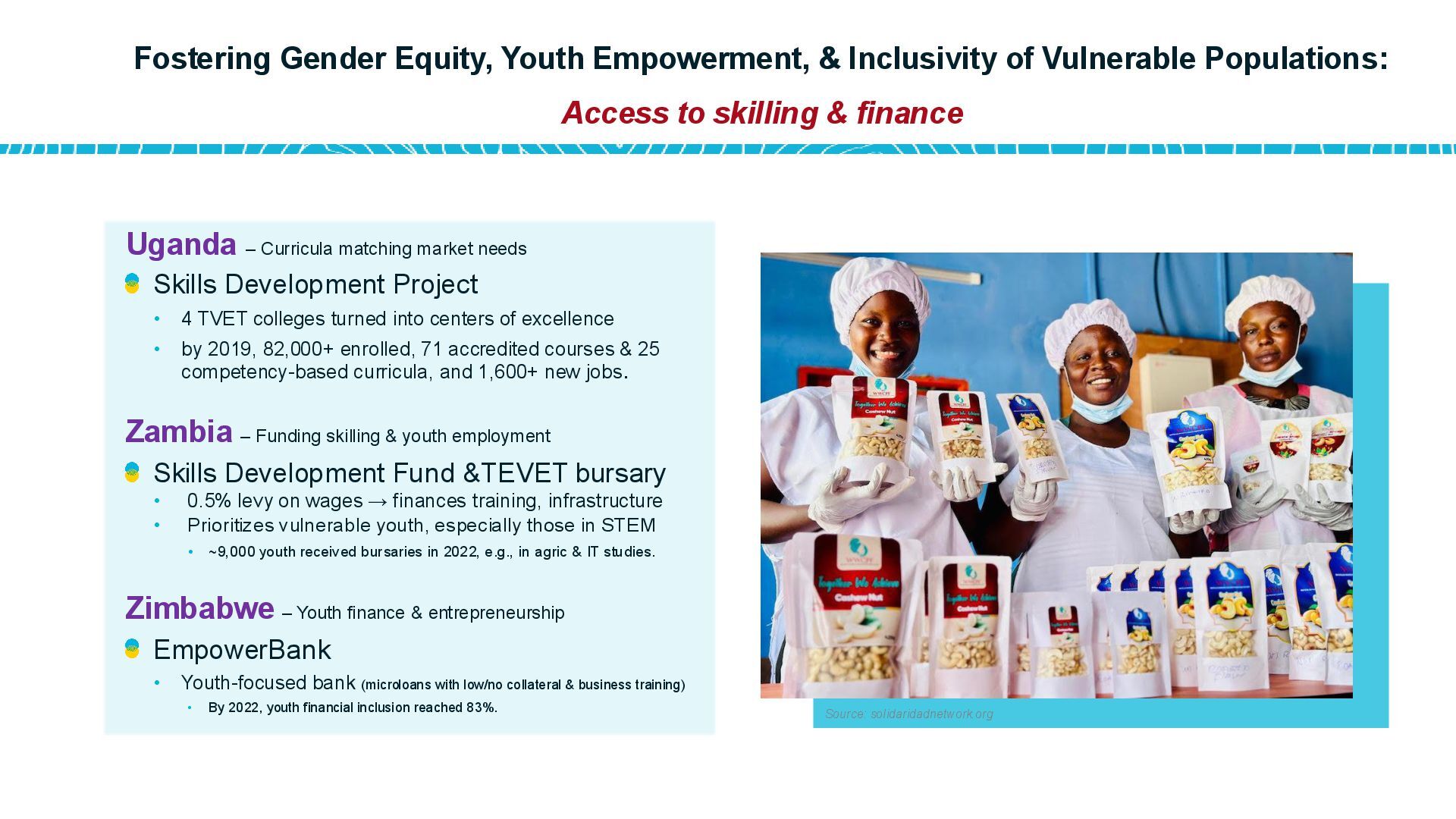
Access to skilling & finance Uganda – Curricula matching market needs Skills Development Project • 4 TVET colleges turned into centers of excellence • by 2019, 82,000+ enrolled, 71 accredited courses & 25 competency-based curricula, and 1,600+ new jobs. Zambia – Funding skilling & youth employment Skills Development Fund &TEVET bursary • 0.5% levy on wages → finances training, infrastructure • Prioritizes vulnerable youth, especially those in STEM • ~9,000 youth received bursaries in 2022, e.g., in agric & IT studies. Zimbabwe – Youth finance & entrepreneurship EmpowerBank • Youth-focused bank (microloans with low/no collateral & business training) • By 2022, youth financial inclusion reached 83%. Source: solidaridadnetwork.org
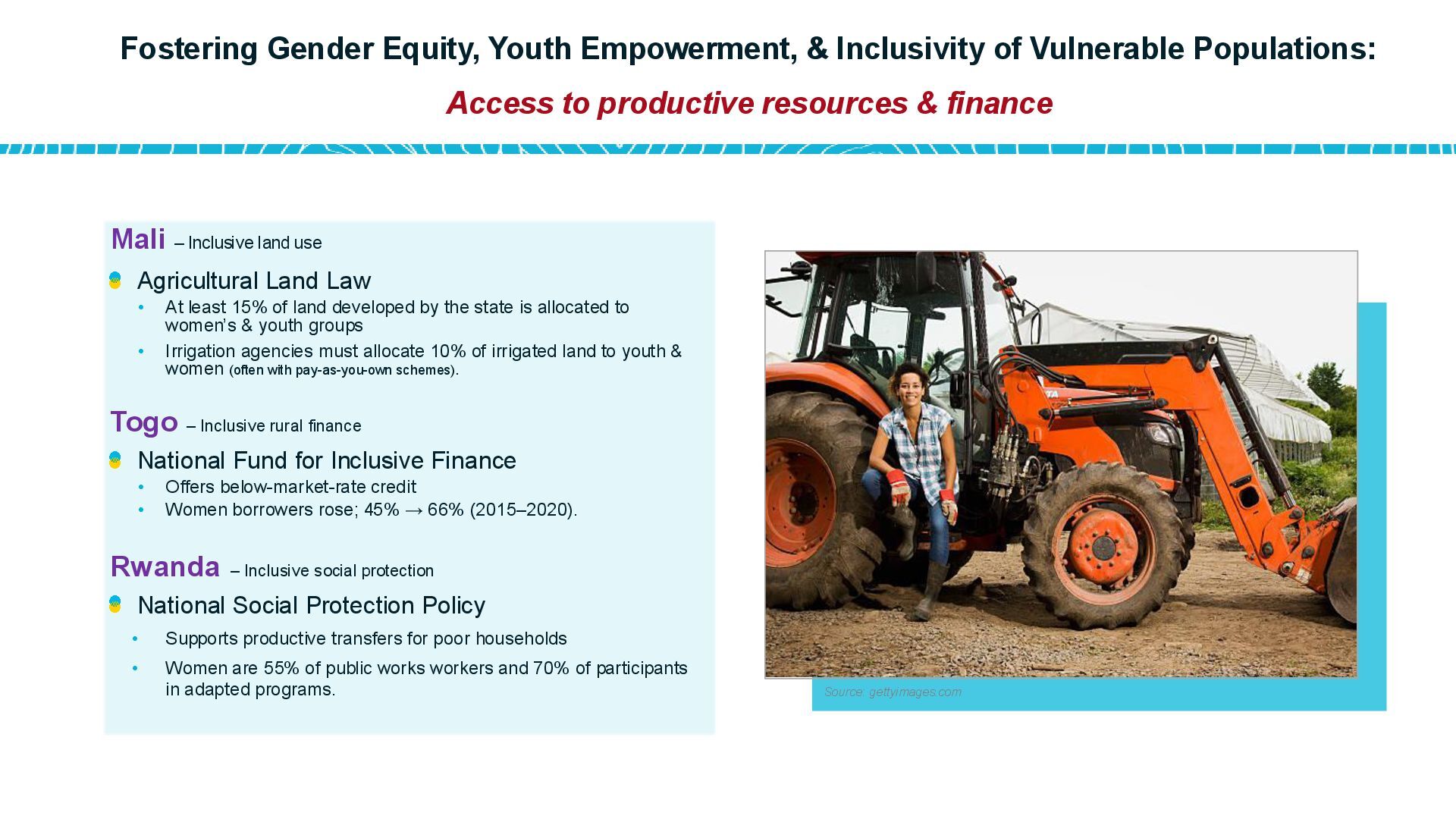
Access to productive resources & finance Mali – Inclusive land use Agricultural Land Law • At least 15% of land developed by the state is allocated to women’s & youth groups • Irrigation agencies must allocate 10% of irrigated land to youth & women (often with pay-as-you-own schemes). Togo – Inclusive rural finance National Fund for Inclusive Finance • Offers below-market-rate credit • Women borrowers rose; 45% → 66% (2015–2020). Rwanda – Inclusive social protection National Social Protection Policy • Supports productive transfers for poor households • Women are 55% of public works workers and 70% of participants in adapted programs. Source: gettyimages.com
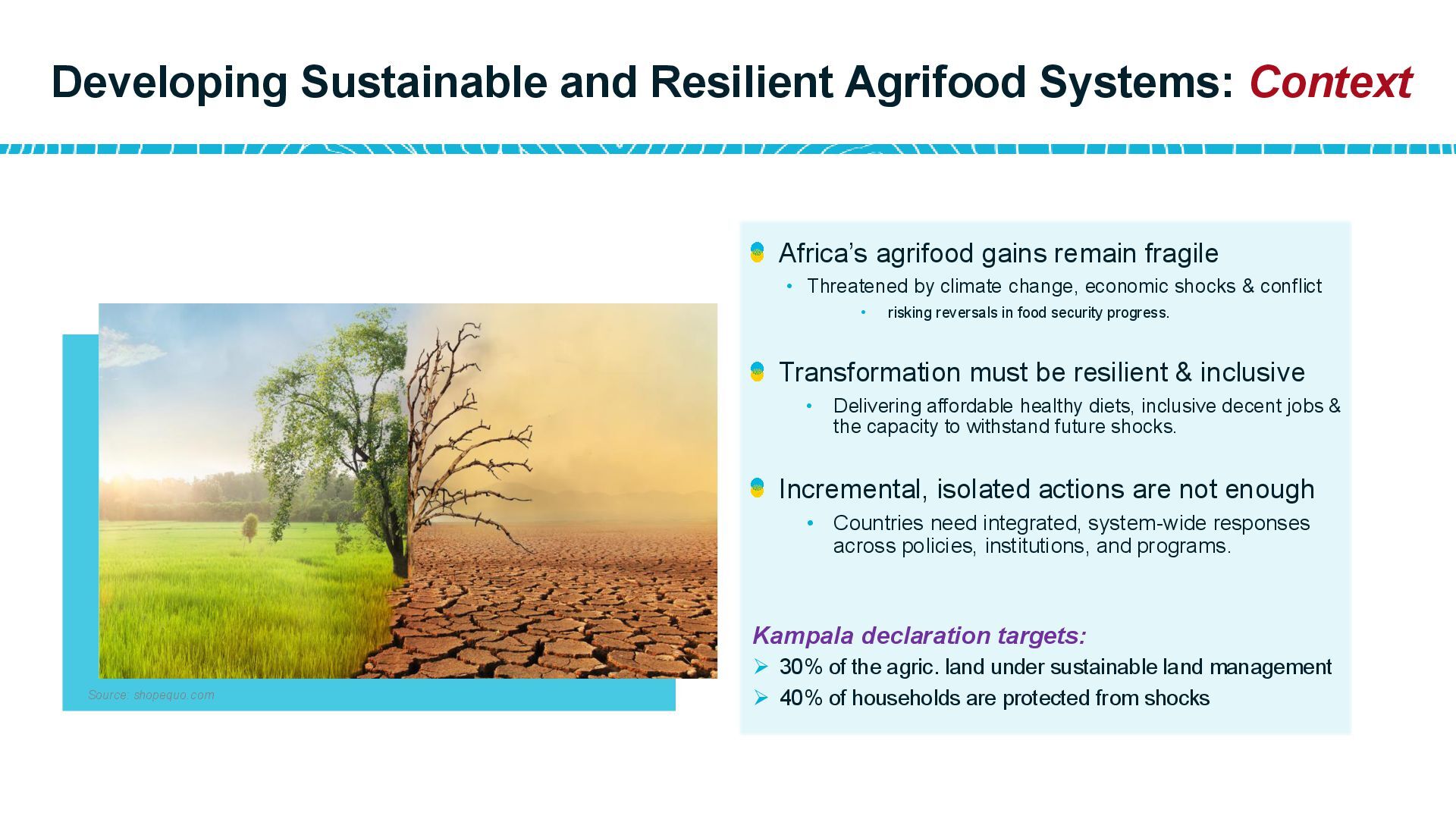
remain fragile • Threatened by climate change, economic shocks & conflict • risking reversals in food security progress. Transformation must be resilient & inclusive • Delivering affordable healthy diets, inclusive decent jobs & the capacity to withstand future shocks. Incremental, isolated actions are not enough • Countries need integrated, system-wide responses across policies, institutions, and programs. Kampala declaration targets: ➢ 30% of the agric. land under sustainable land management ➢ 40% of households are protected from shocks Source: shopequo.com
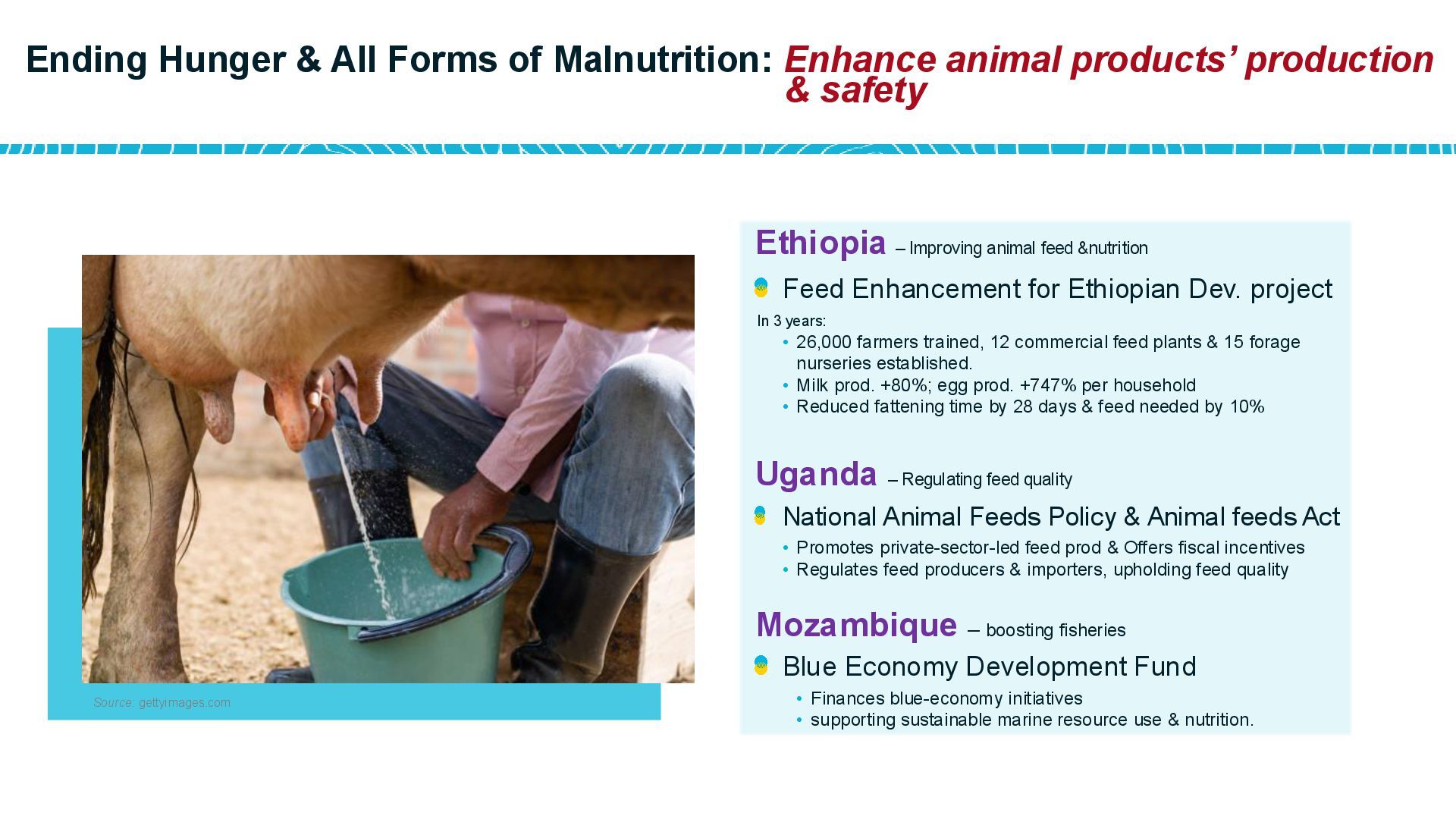
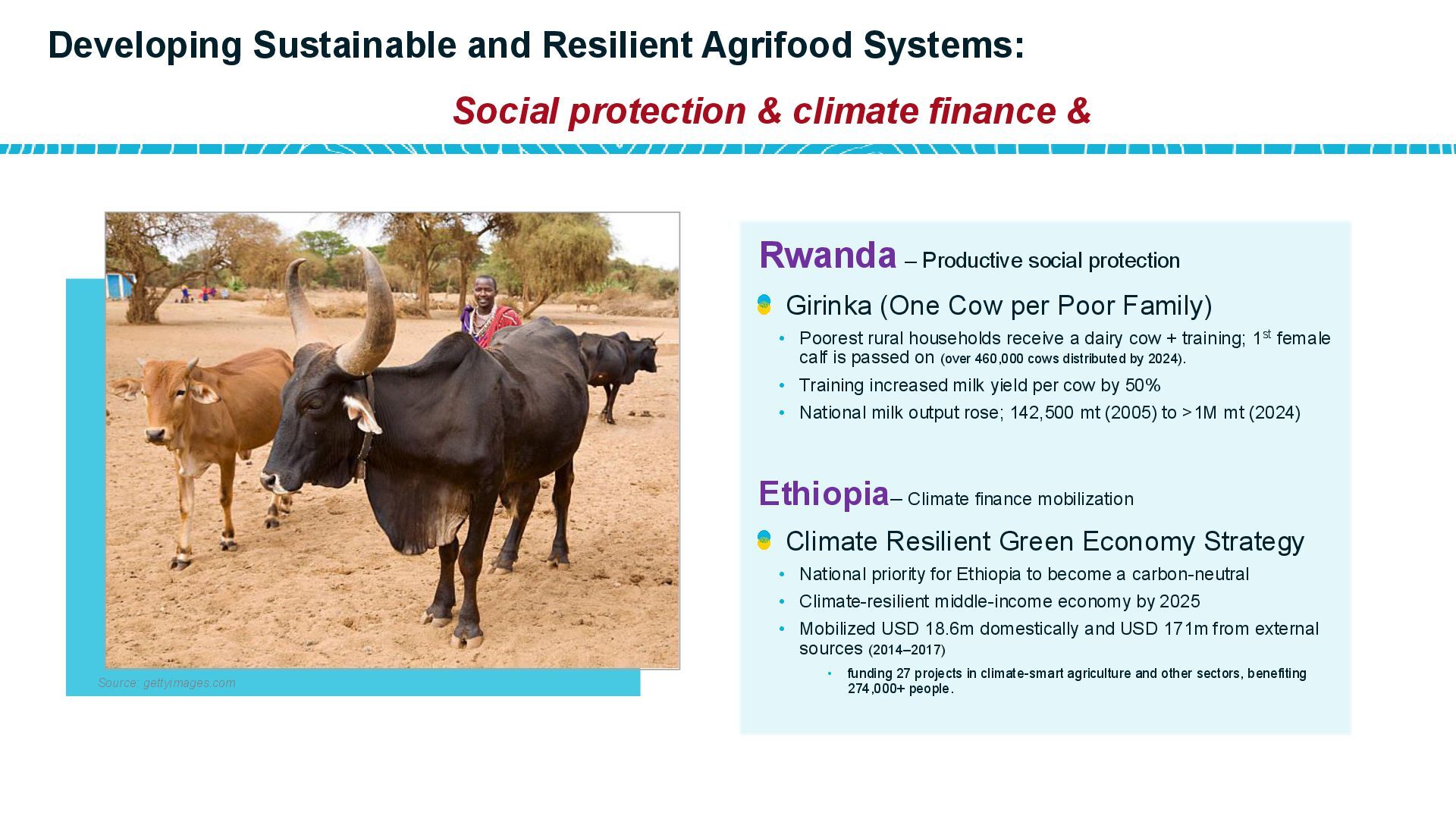
finance & Rwanda – Productive social protection Girinka (One Cow per Poor Family) • Poorest rural households receive a dairy cow + training; 1st female calf is passed on (over 460,000 cows distributed by 2024). • Training increased milk yield per cow by 50% • National milk output rose; 142,500 mt (2005) to >1M mt (2024) Ethiopia– Climate finance mobilization Climate Resilient Green Economy Strategy • National priority for Ethiopia to become a carbon-neutral • Climate-resilient middle-income economy by 2025 • Mobilized USD 18.6m domestically and USD 171m from external sources (2014–2017) • funding 27 projects in climate-smart agriculture and other sectors, benefiting 274,000+ people. Source: gettyimages.com
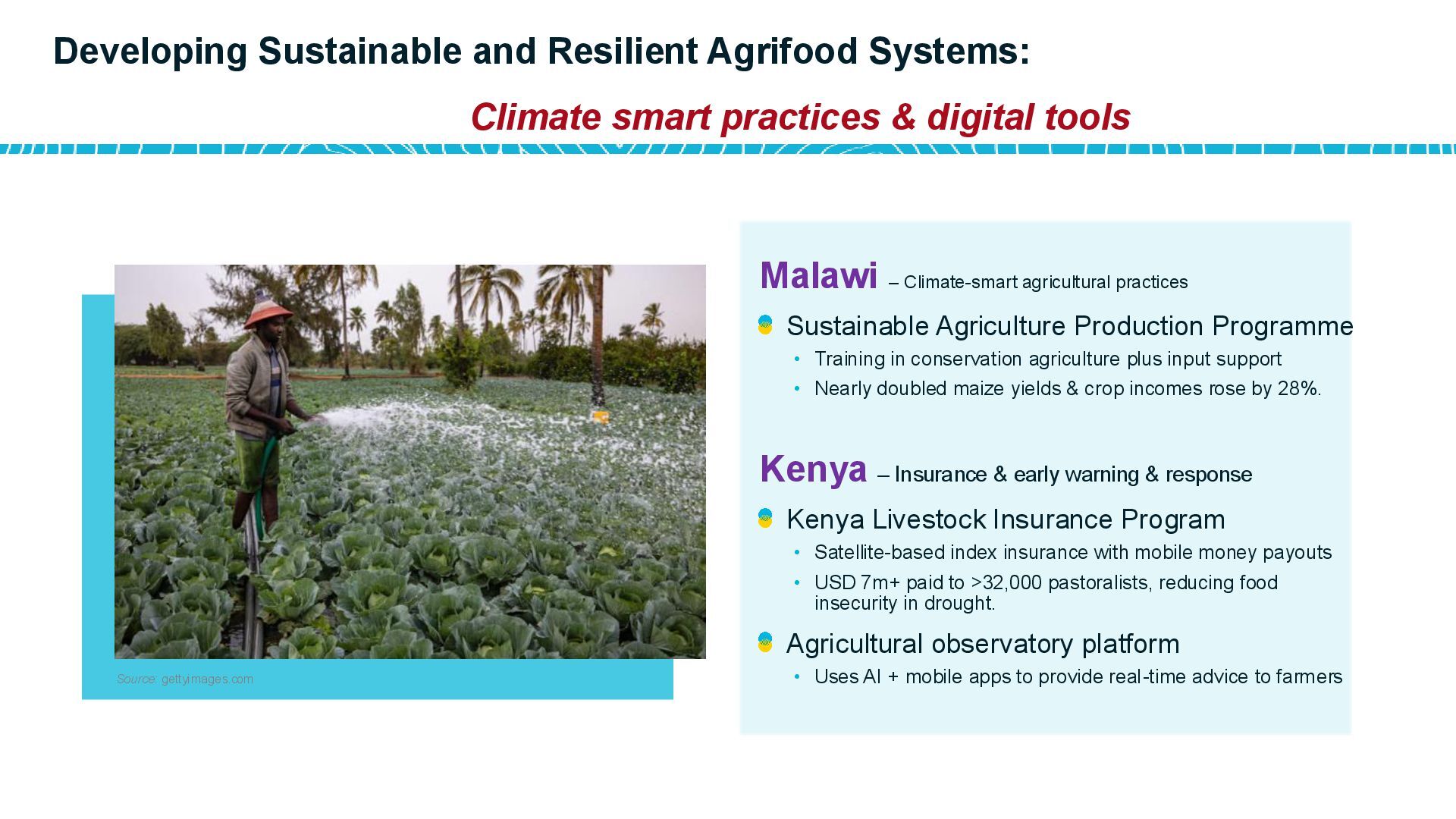
digital tools Malawi – Climate-smart agricultural practices Sustainable Agriculture Production Programme • Training in conservation agriculture plus input support • Nearly doubled maize yields & crop incomes rose by 28%. Kenya – Insurance & early warning & response Kenya Livestock Insurance Program • Satellite-based index insurance with mobile money payouts • USD 7m+ paid to >32,000 pastoralists, reducing food insecurity in drought. Agricultural observatory platform • Uses AI + mobile apps to provide real-time advice to farmers Source: gettyimages.com
study countries Part Three: Tracking Early Reaction to the 2025 Kampala Declaration Eng. Dr. Dorothy Okello Dean, School of Engineering, Makerere University Member, Malabo Montpellier Panel
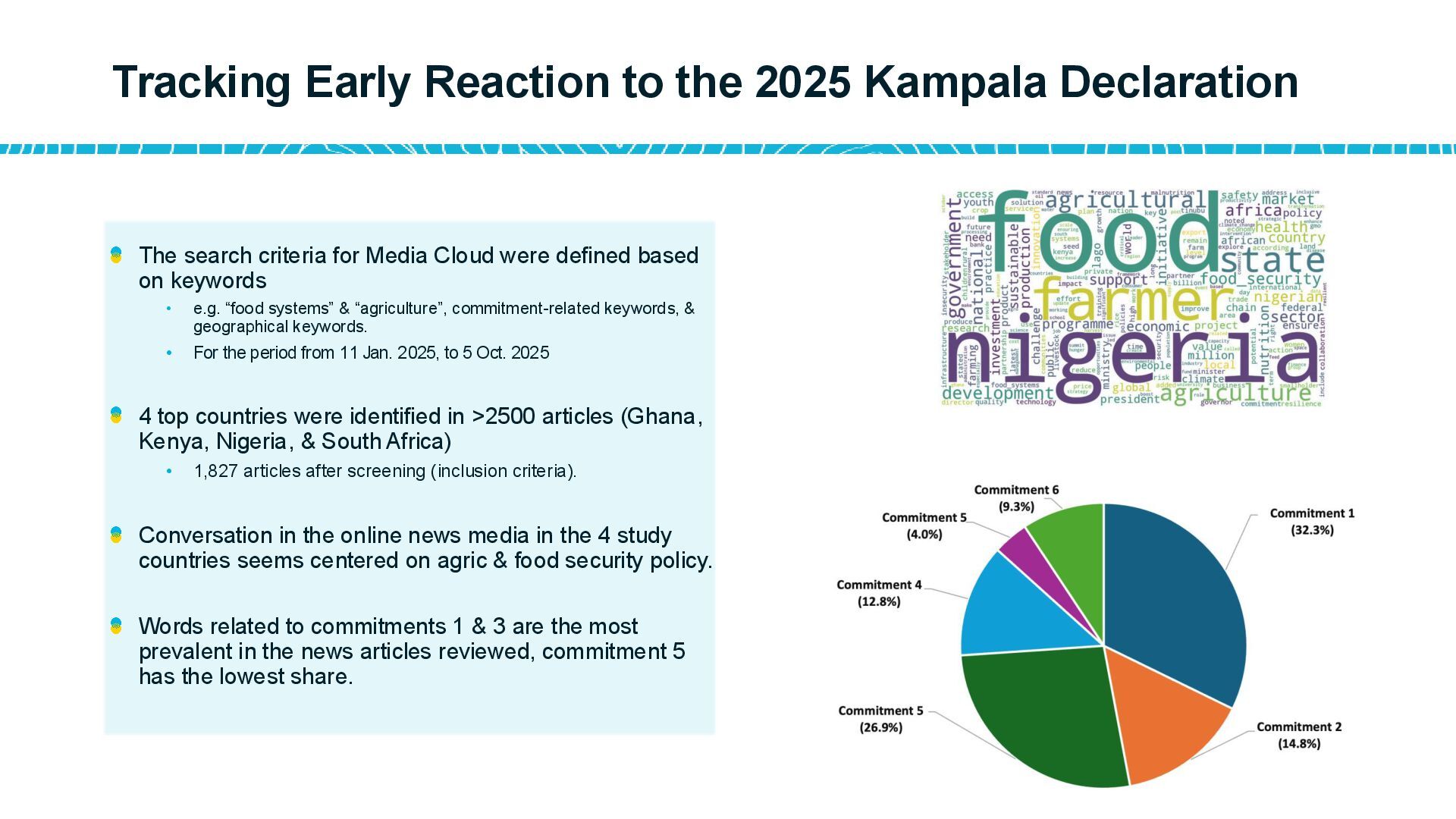
criteria for Media Cloud were defined based on keywords • e.g. “food systems” & “agriculture”, commitment-related keywords, & geographical keywords. • For the period from 11 Jan. 2025, to 5 Oct. 2025 4 top countries were identified in >2500 articles (Ghana, Kenya, Nigeria, & South Africa) • 1,827 articles after screening (inclusion criteria). Conversation in the online news media in the 4 study countries seems centered on agric & food security policy. Words related to commitments 1 & 3 are the most prevalent in the news articles reviewed, commitment 5 has the lowest share.


 akademiya2063
 koide3
 tomonom
 shibuiwilliam
 hotchpotch
 institutdelelevage
 afroscript
 rfujii
 xspa2012
 ftakahashi
 dk999
dk999
 mikimhk
 jonoalderson
 ipullrank
 apolaine
 elsirapls
 varn
varn
 uxyall
 lynnandtonic
 nmsamuel
 thekraken
 mayatellez
 mlcsv
mlcsv
 codingconduct