Emerging Technologies for Resilient and Competitive Livestock Systems Abdrahmane Wane Economist, Regional Director for West and Central Africa International Livestock Research Institute On behalf of Dr Laura Cramer, Dr. Kelvin Shikuku, and Dr. Anthony Whitbread (ILRI) January 22nd, 2026
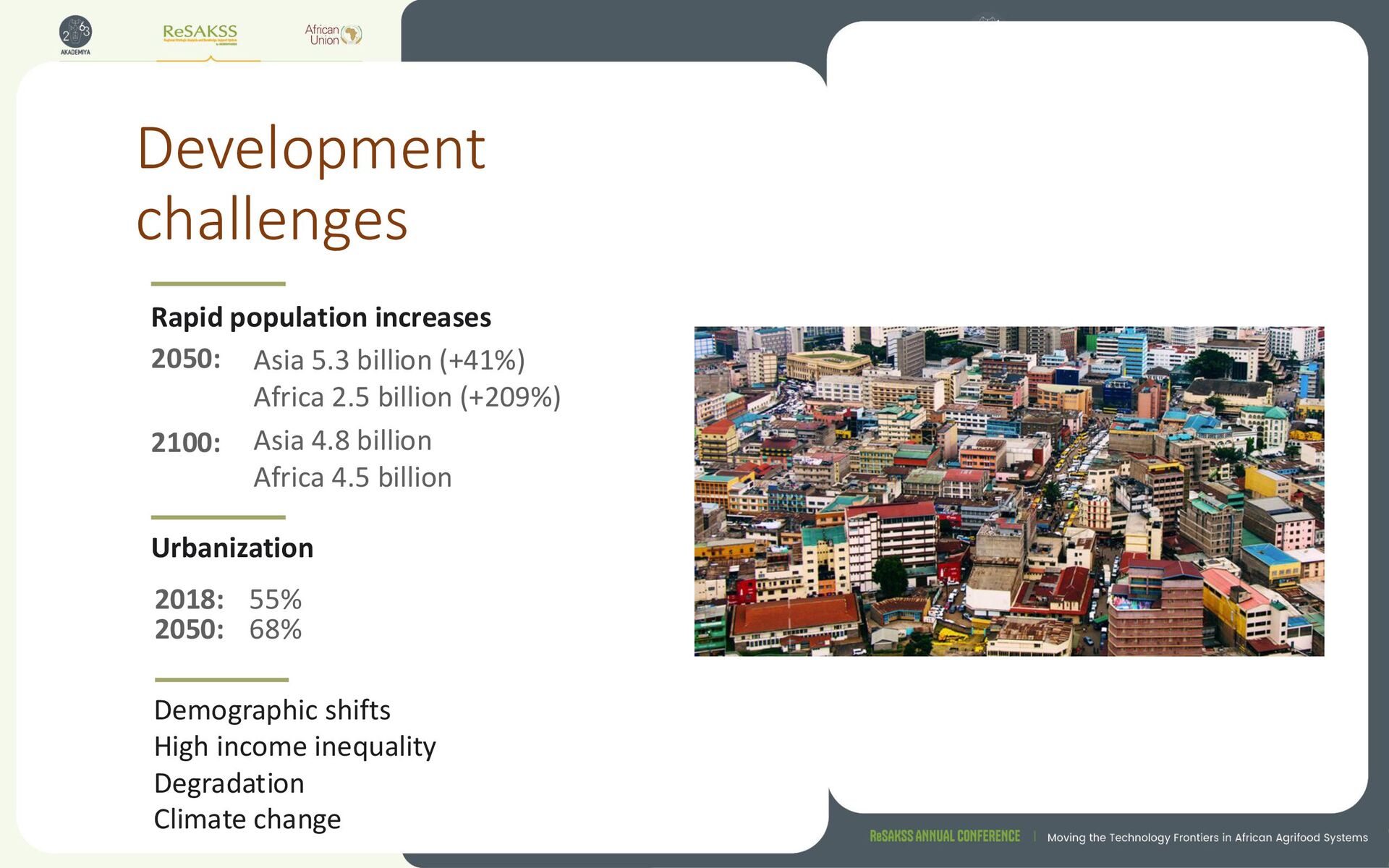
(+41%) Africa 2.5 billion (+209%) 2018: 55% 2050: 68% 2100: Asia 4.8 billion Africa 4.5 billion Demographic shifts High income inequality Degradation Climate change
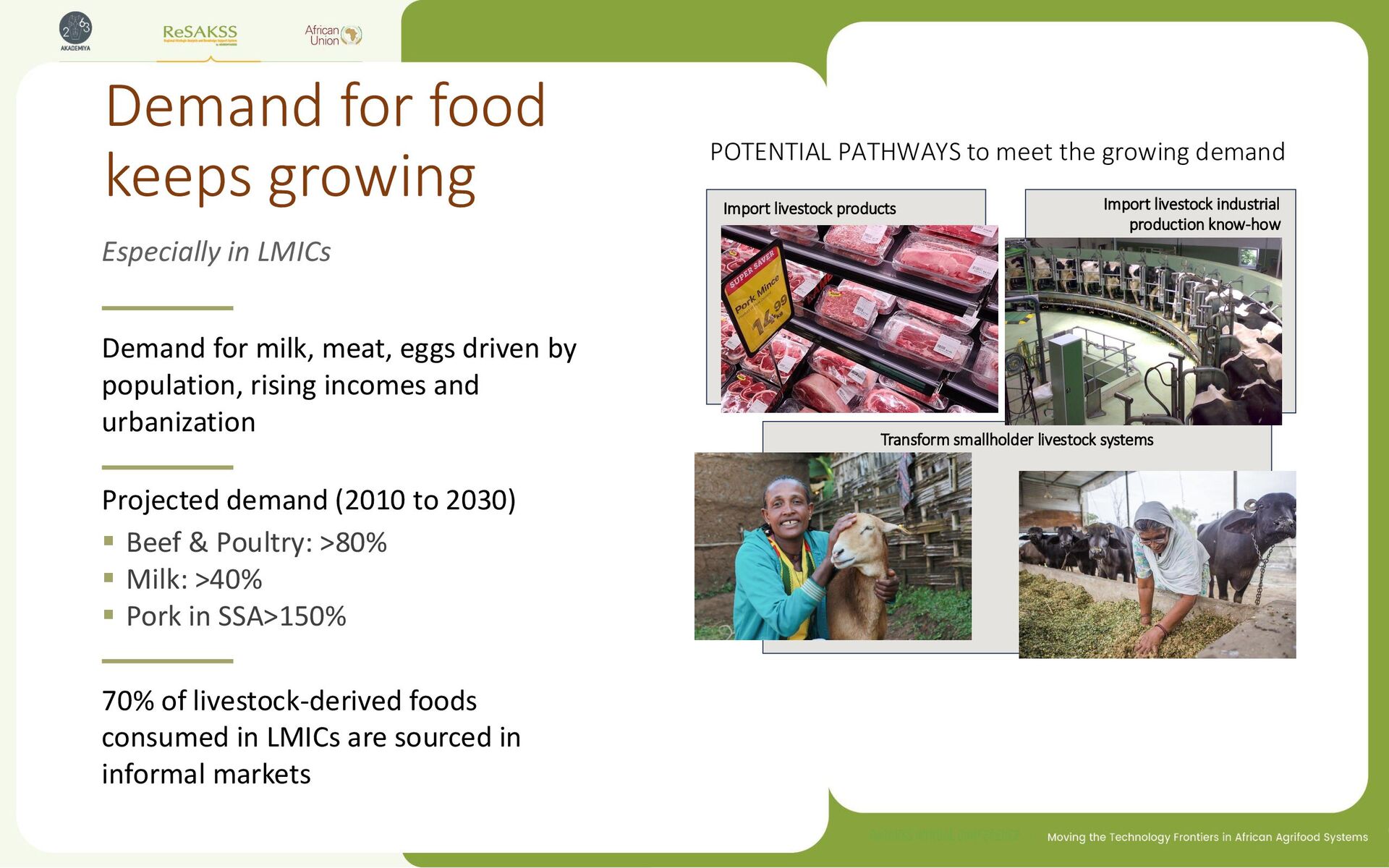
growing demand Import livestock products Import livestock industrial production know-how Transform smallholder livestock systems Demand for milk, meat, eggs driven by population, rising incomes and urbanization Projected demand (2010 to 2030) ▪ Beef & Poultry: >80% ▪ Milk: >40% ▪ Pork in SSA>150% 70% of livestock-derived foods consumed in LMICs are sourced in informal markets Especially in LMICs
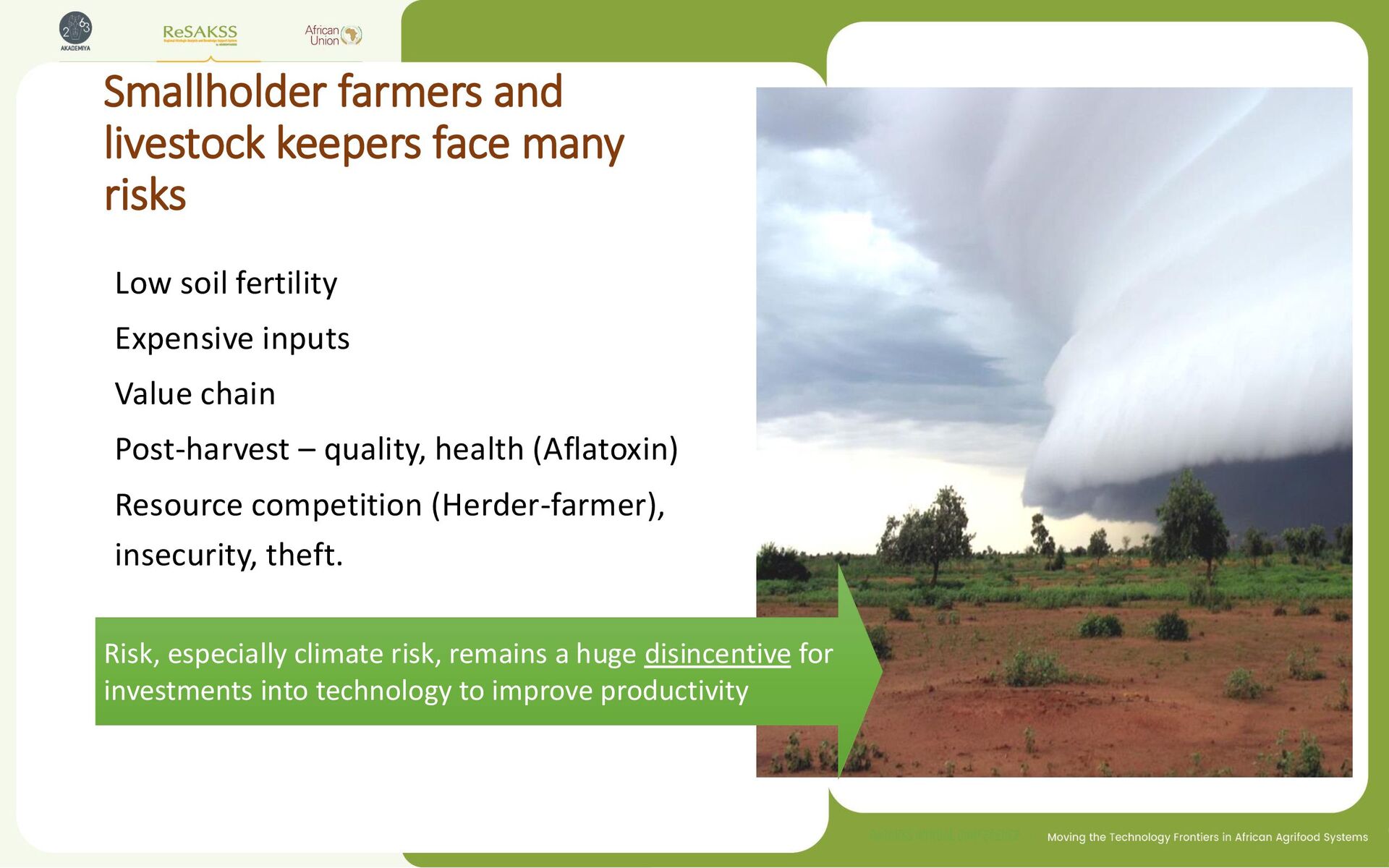
fertility Expensive inputs Value chain Post-harvest – quality, health (Aflatoxin) Resource competition (Herder-farmer), insecurity, theft. Risk, especially climate risk, remains a huge disincentive for investments into technology to improve productivity
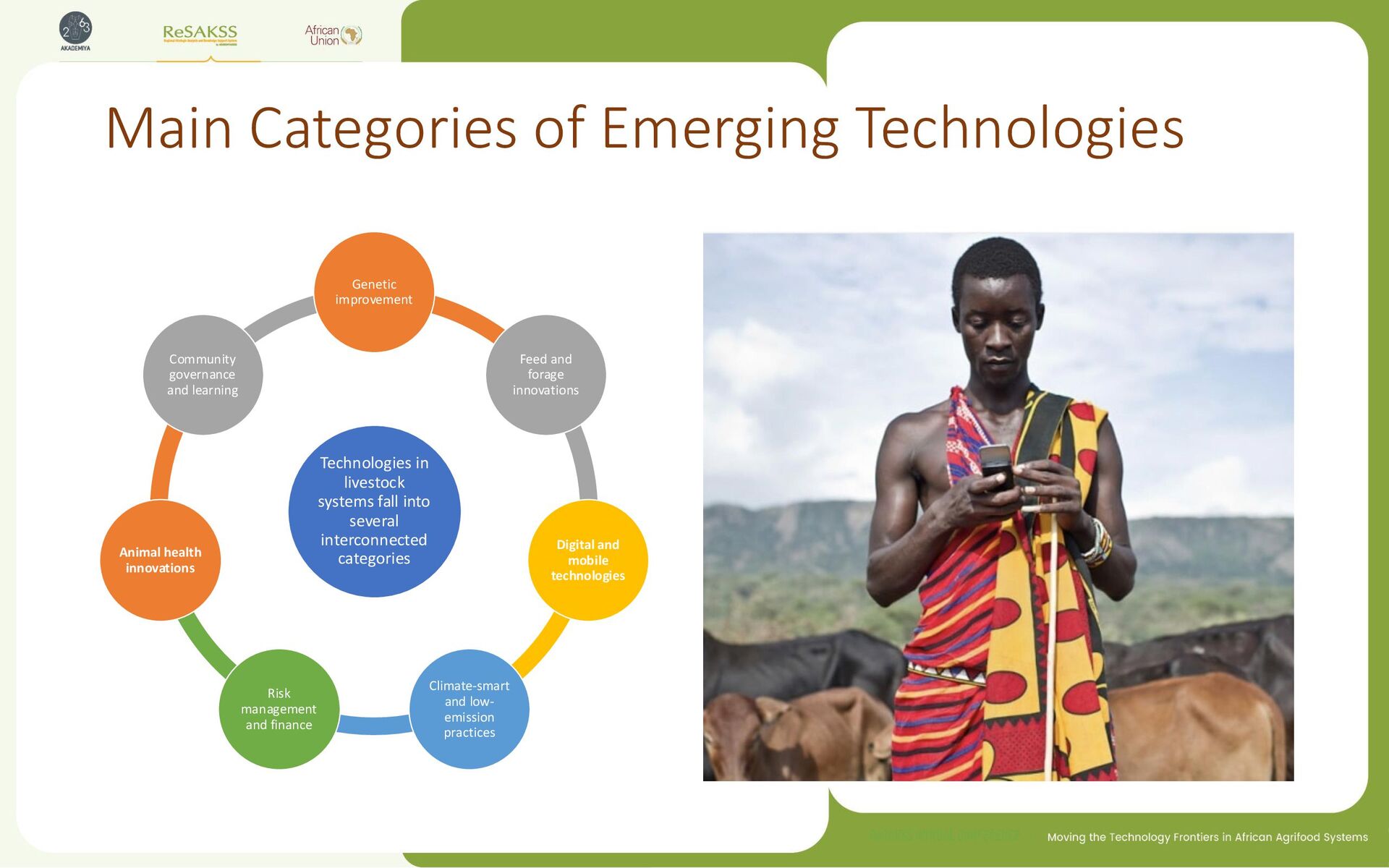
into several interconnected categories Genetic improvement Feed and forage innovations Digital and mobile technologies Climate-smart and low- emission practices Risk management and finance Animal health innovations Community governance and learning
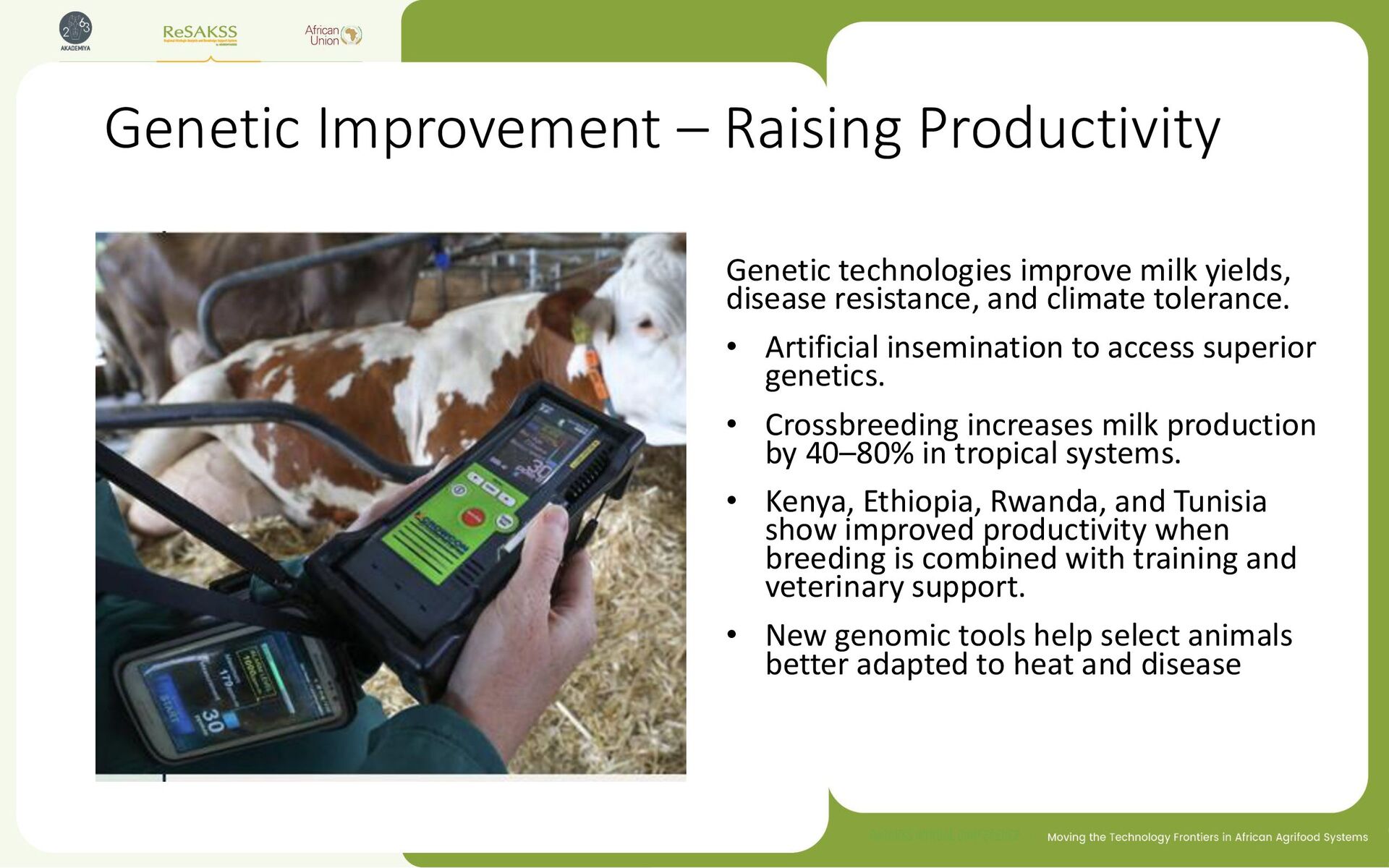
disease resistance, and climate tolerance. • Artificial insemination to access superior genetics. • Crossbreeding increases milk production by 40–80% in tropical systems. • Kenya, Ethiopia, Rwanda, and Tunisia show improved productivity when breeding is combined with training and veterinary support. • New genomic tools help select animals better adapted to heat and disease
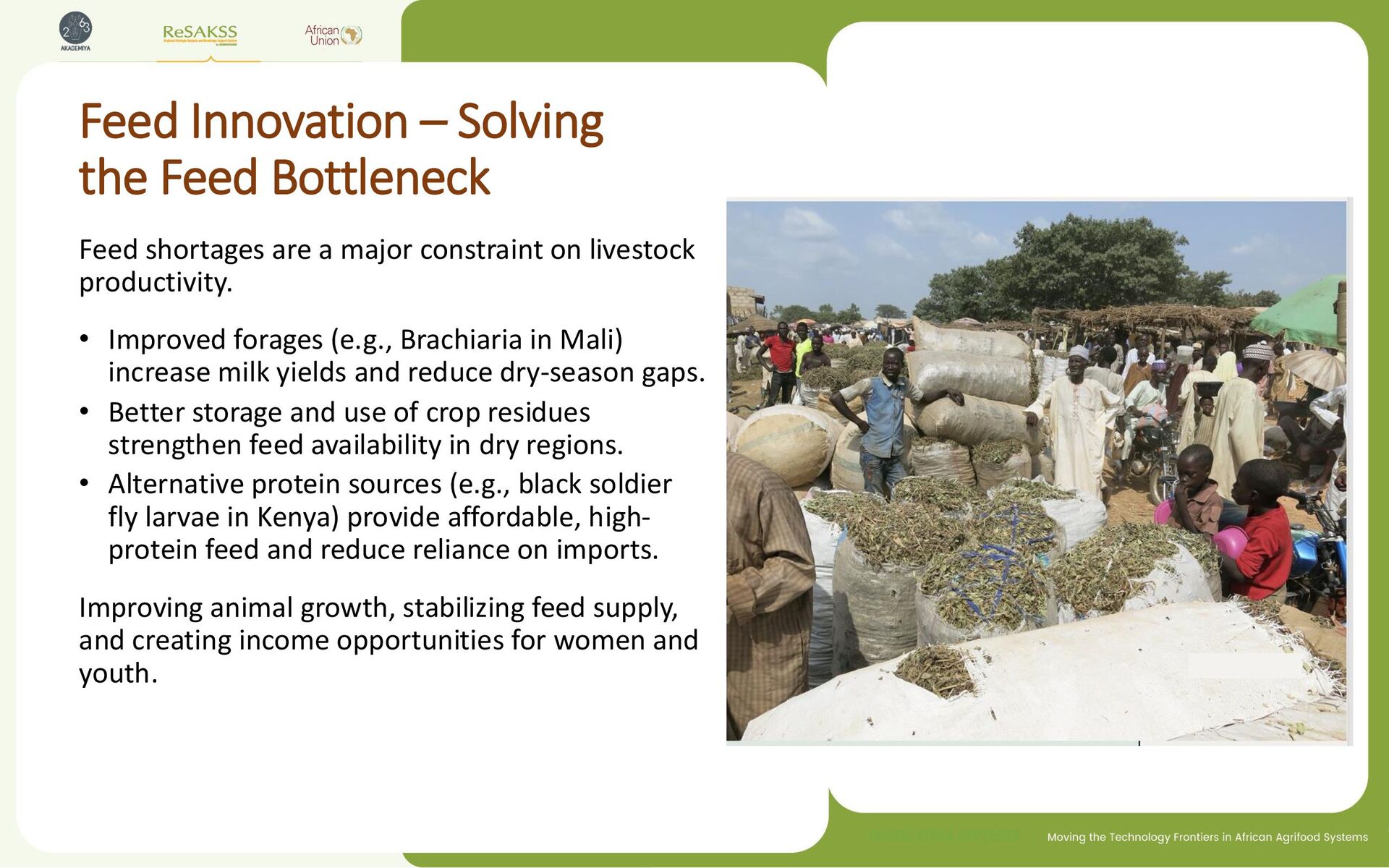
a major constraint on livestock productivity. • Improved forages (e.g., Brachiaria in Mali) increase milk yields and reduce dry-season gaps. • Better storage and use of crop residues strengthen feed availability in dry regions. • Alternative protein sources (e.g., black soldier fly larvae in Kenya) provide affordable, high- protein feed and reduce reliance on imports. Improving animal growth, stabilizing feed supply, and creating income opportunities for women and youth.
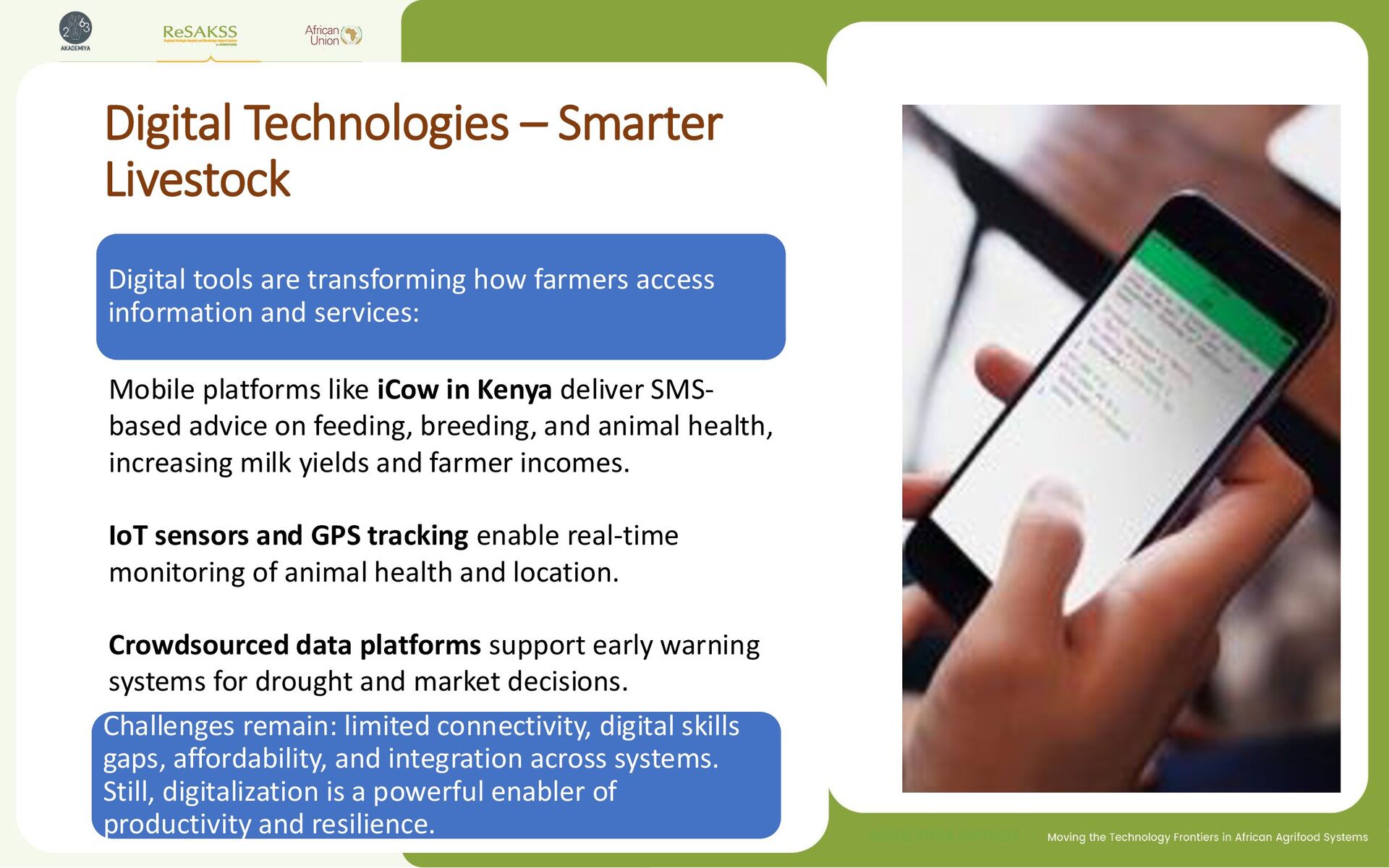
farmers access information and services: Challenges remain: limited connectivity, digital skills gaps, affordability, and integration across systems. Still, digitalization is a powerful enabler of productivity and resilience. Mobile platforms like iCow in Kenya deliver SMS- based advice on feeding, breeding, and animal health, increasing milk yields and farmer incomes. IoT sensors and GPS tracking enable real-time monitoring of animal health and location. Crowdsourced data platforms support early warning systems for drought and market decisions.
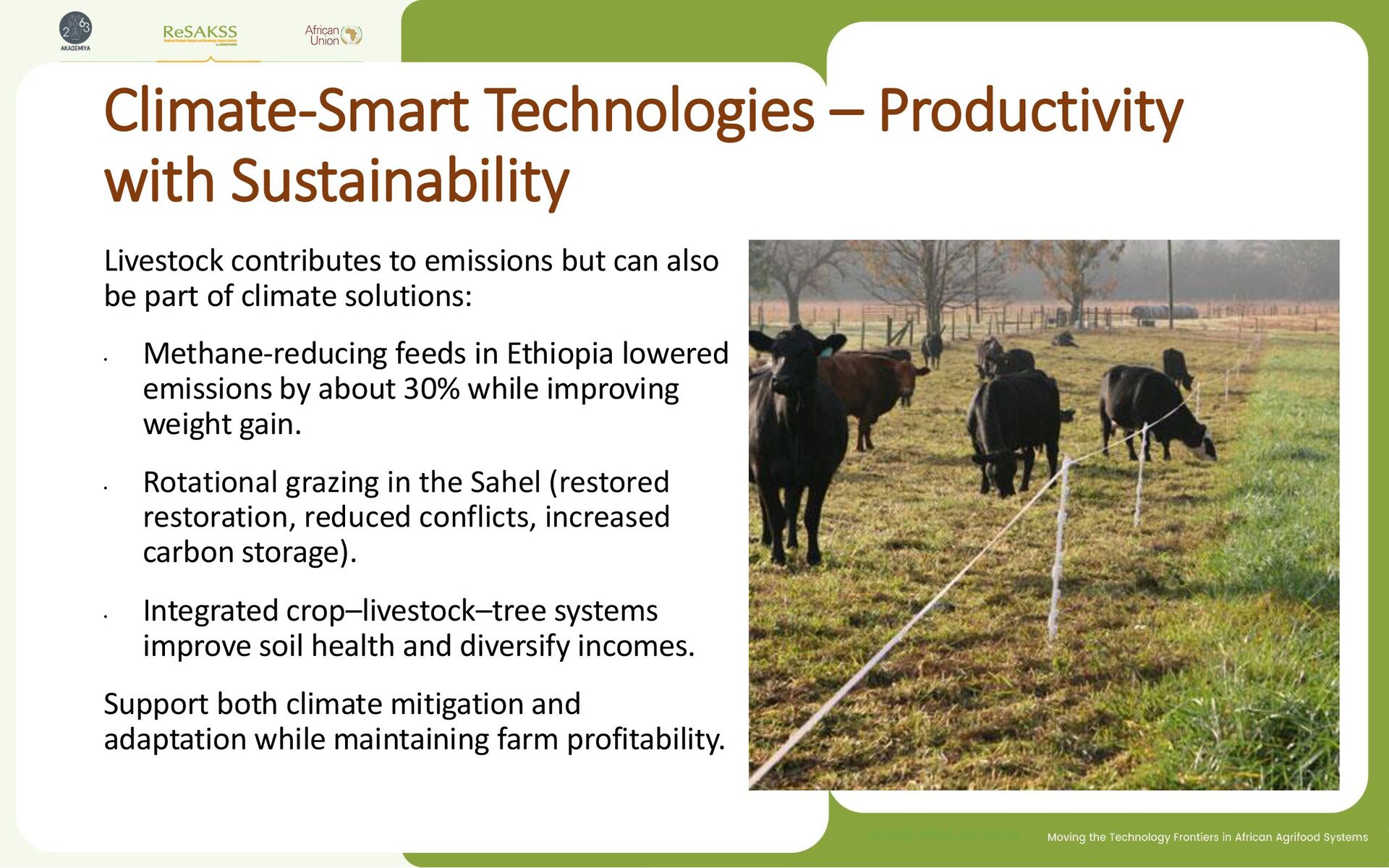
but can also be part of climate solutions: • Methane-reducing feeds in Ethiopia lowered emissions by about 30% while improving weight gain. • Rotational grazing in the Sahel (restored restoration, reduced conflicts, increased carbon storage). • Integrated crop–livestock–tree systems improve soil health and diversify incomes. Support both climate mitigation and adaptation while maintaining farm profitability.
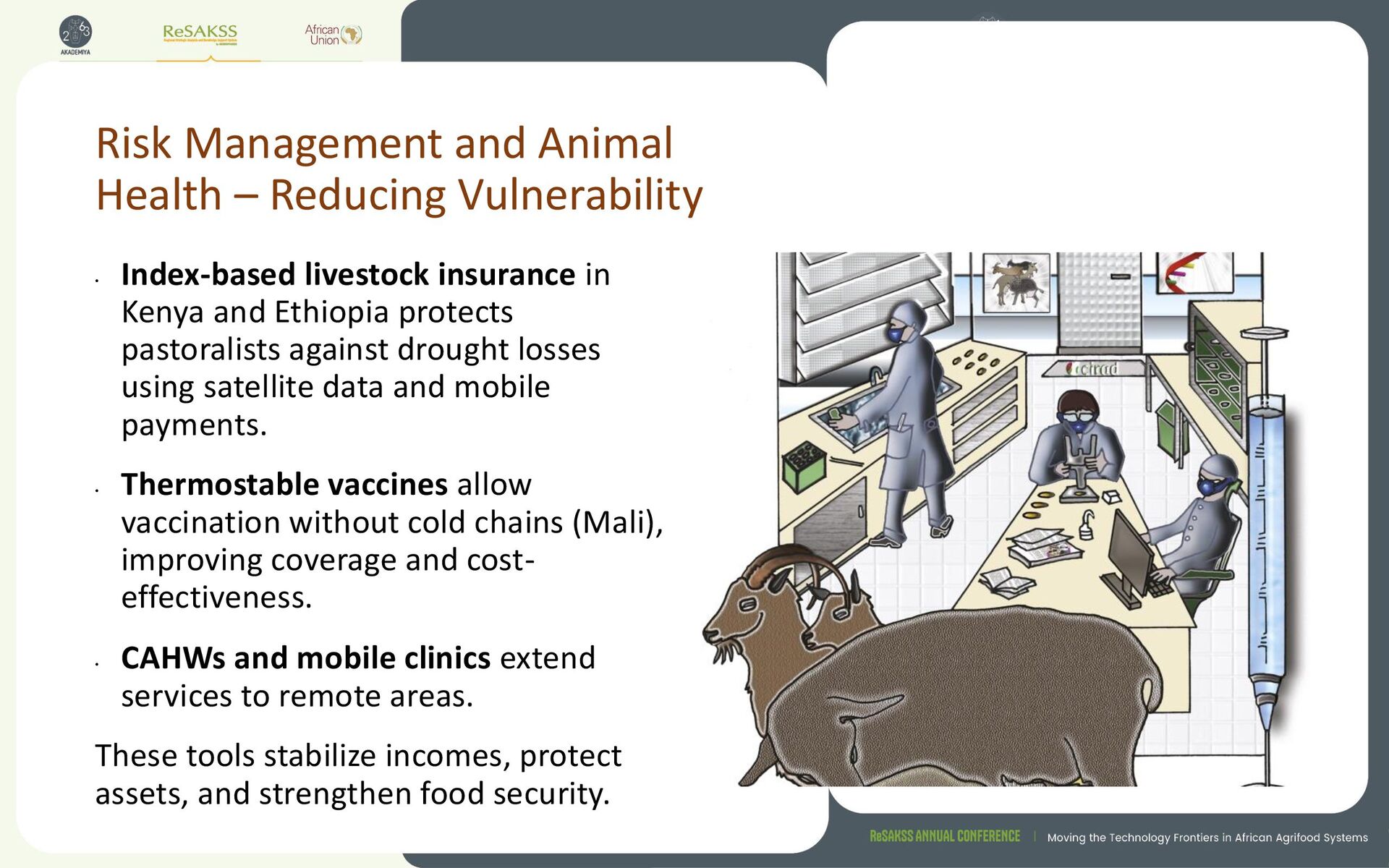
livestock insurance in Kenya and Ethiopia protects pastoralists against drought losses using satellite data and mobile payments. • Thermostable vaccines allow vaccination without cold chains (Mali), improving coverage and cost- effectiveness. • CAHWs and mobile clinics extend services to remote areas. These tools stabilize incomes, protect assets, and strengthen food security.
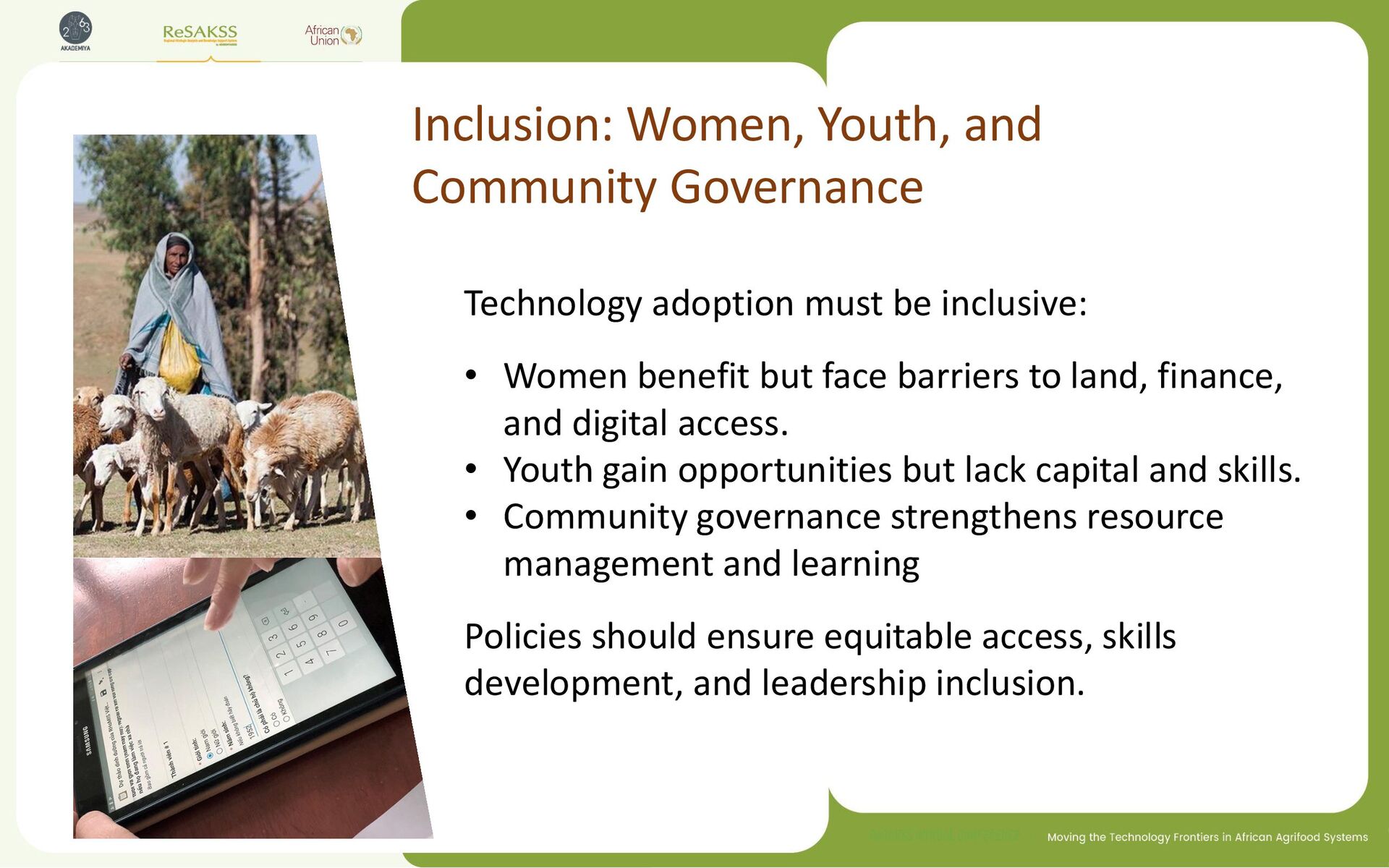
barriers to land, finance, and digital access. • Youth gain opportunities but lack capital and skills. • Community governance strengthens resource management and learning Policies should ensure equitable access, skills development, and leadership inclusion. Inclusion: Women, Youth, and Community Governance
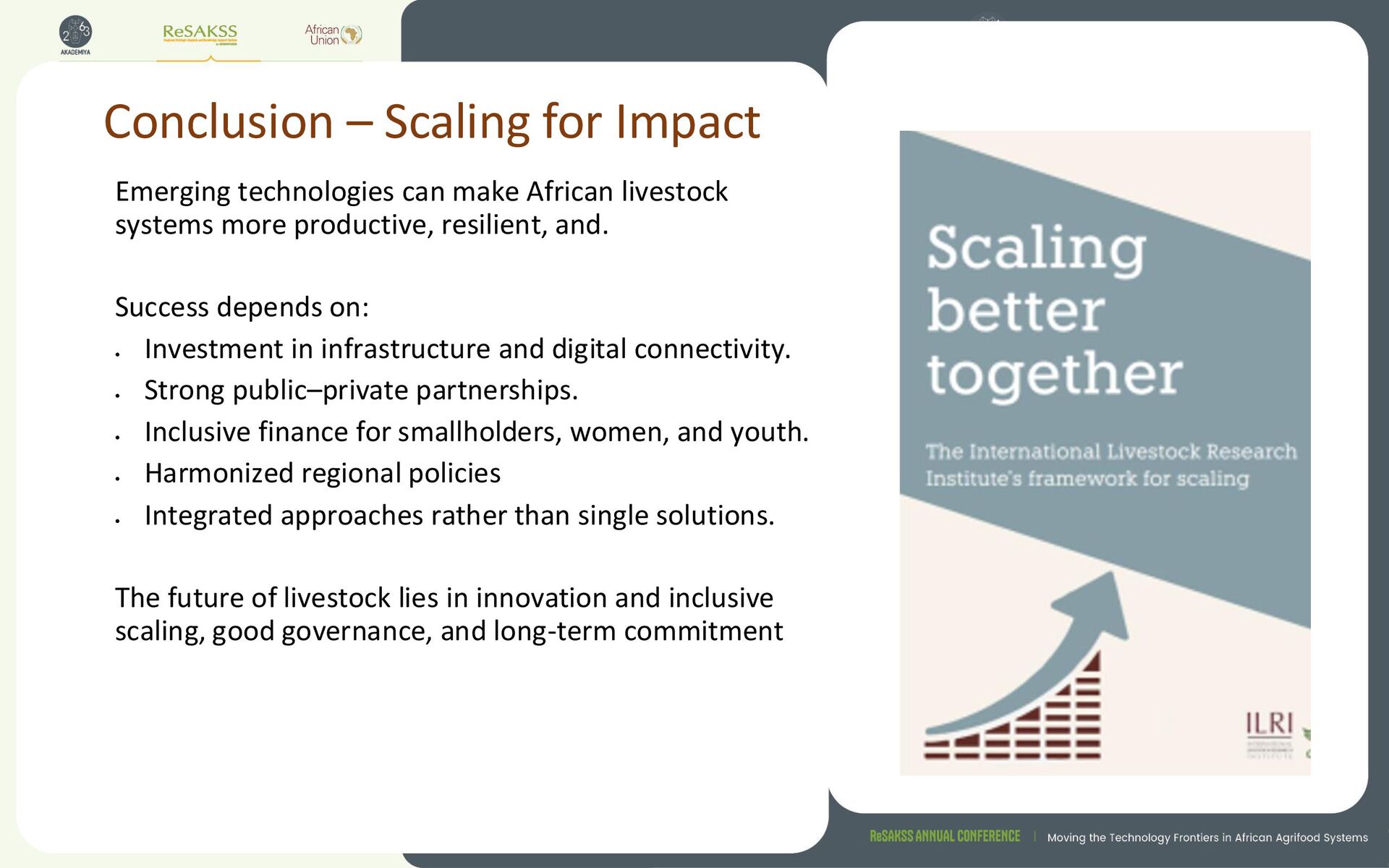
livestock systems more productive, resilient, and. Success depends on: • Investment in infrastructure and digital connectivity. • Strong public–private partnerships. • Inclusive finance for smallholders, women, and youth. • Harmonized regional policies • Integrated approaches rather than single solutions. The future of livestock lies in innovation and inclusive scaling, good governance, and long-term commitment


 akademiya2063
 kogoro
 eumesy
 enochan
 institutdelelevage
 rfujii
 yumulab
 ayaniwa
 naok615
 kzmssk
 corochann
 izumiyama_lab
 szymonslowik
 ianozsvald
 jnunemaker
 techseoconnect
 lara
lara
 csswizardry
 chriscoyier
 skoyamalab
 tammyeverts
 rkendrick25
.png) helenjbeal
helenjbeal
 jmmastey