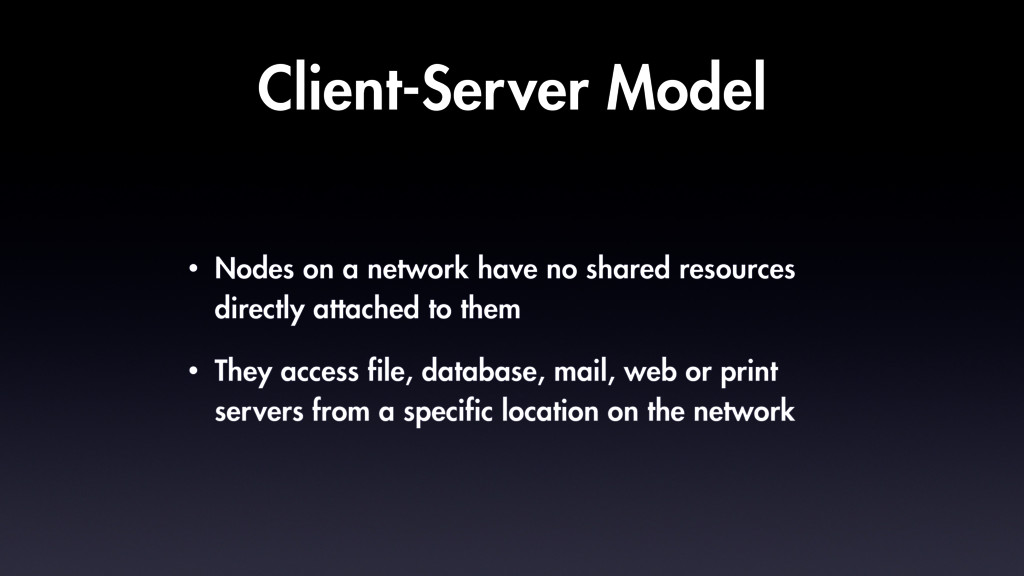
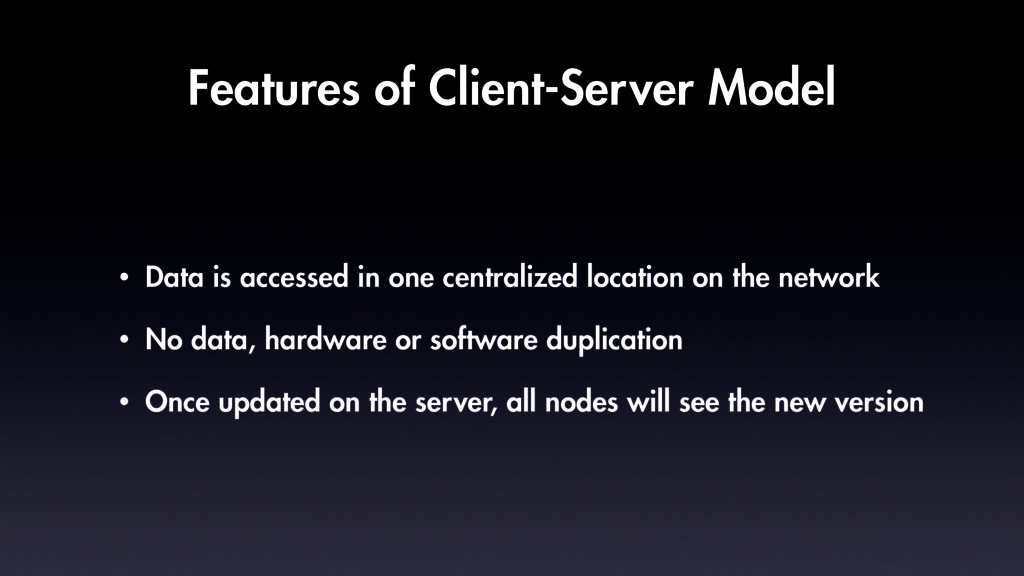
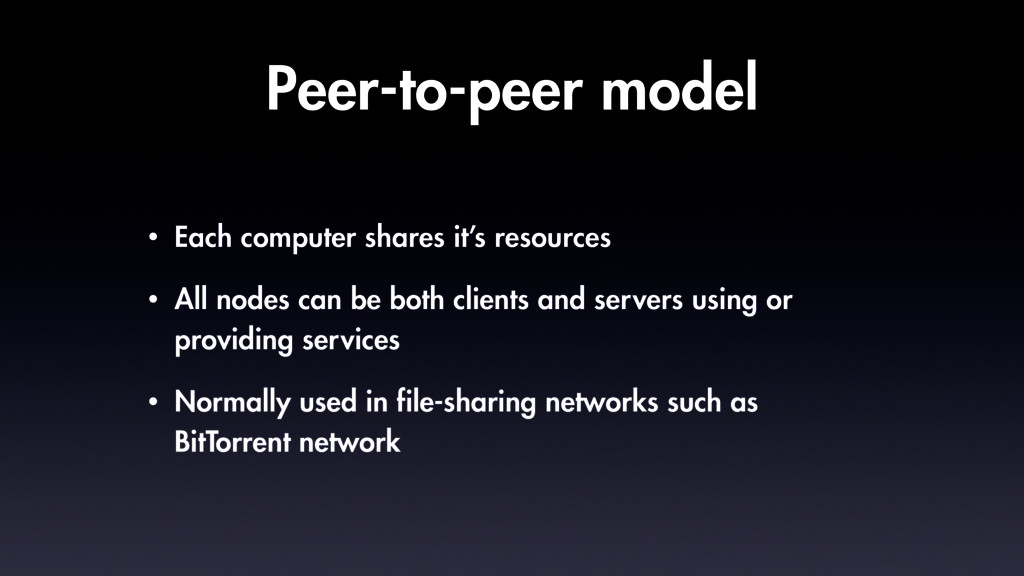
sharing resources on a LAN or WAN network • Implemented using different medium (like cables, optical fiber, satellite) and different protocols (like ATM, Ethernet)
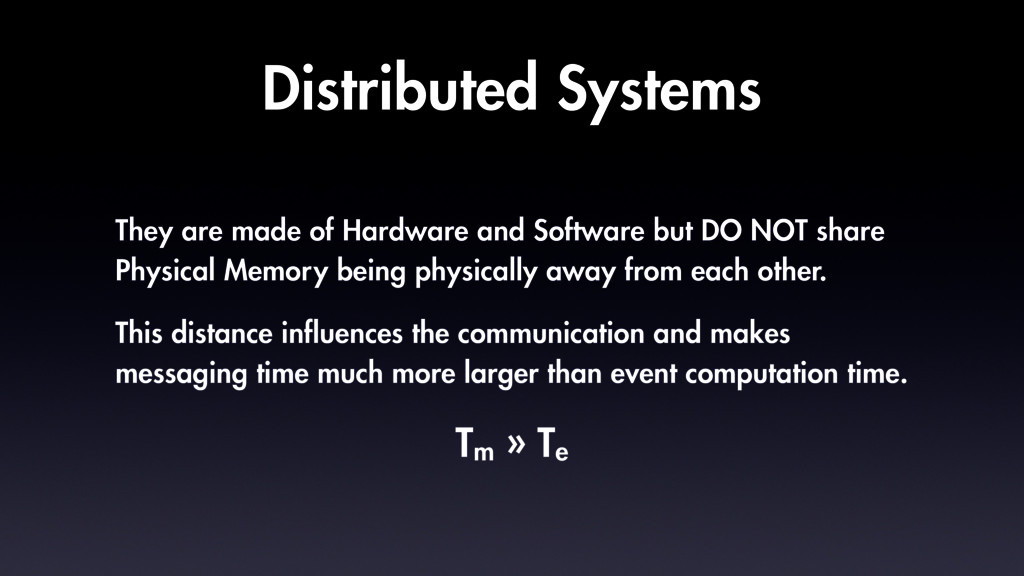
DO NOT share Physical Memory being physically away from each other. This distance influences the communication and makes messaging time much more larger than event computation time. Tm » Te
to message communication failures. If a computer fails in a distributed system another computer can become unusable if it relies heavily on the broken one (e.g.: a filesystem failure)
connected by wired or wireless connections in a large ubiquitous computing network • Increasing demand of multimedia services leads us to see distributed systems as a utility or a commodity
• Accessing them from anywhere through Internet • Nothing to install locally to view contents Inexpensive Efficient Flexible alternative to computers and allows you to work anywhere, at any time. + +


 matleenalaakso
 fmarot
 terasawat
 bvr7352
 masakiokuda
 kekekenta
 signer
 akiraasano
 arnoknobbe
 3l4l5
3l4l5
 ainischool
 sarafernandez
 andyhume
 akihiro_kokubo
 codingconduct
 cassininazir
 marktimemedia
 addyosmani
 skipperchong
 iamctodd
 mojombo
 mkilby