Upgrade to Pro — share decks privately, control downloads, hide ads and more …

Shipping Lithium Batteries to UAE: 2025 Regulat...

Sponsored · Ship Features Fearlessly Turn features on and off without deploys. Used by thousands of Ruby developers.
Avatar for Anil Anil
August 22, 2025

Shipping Lithium Batteries to UAE: 2025 Regulations & Essentials

Explore the 2025 rules for shipping lithium batteries to UAE—from packaging and labeling to air vs. sea freight. Includes common mistakes and compliance tips.
Download the free 2025 UAE Lithium Battery Shipping Checklist and read the full guide at: https://www.boxmanglobal.com/blog/international-shipping/shipping-lithium-batteries-to-uae-your-essential-guide-to-2025-regulations

Avatar for Anil

Anil

August 22, 2025

Other Decks in Business

Transcript

  1. Shipping Lithium Batteries to UAE: Your Essential Guide to 2025

    Regulations Navigating the complexities for safe and compliant transport Boxman Global Logistics
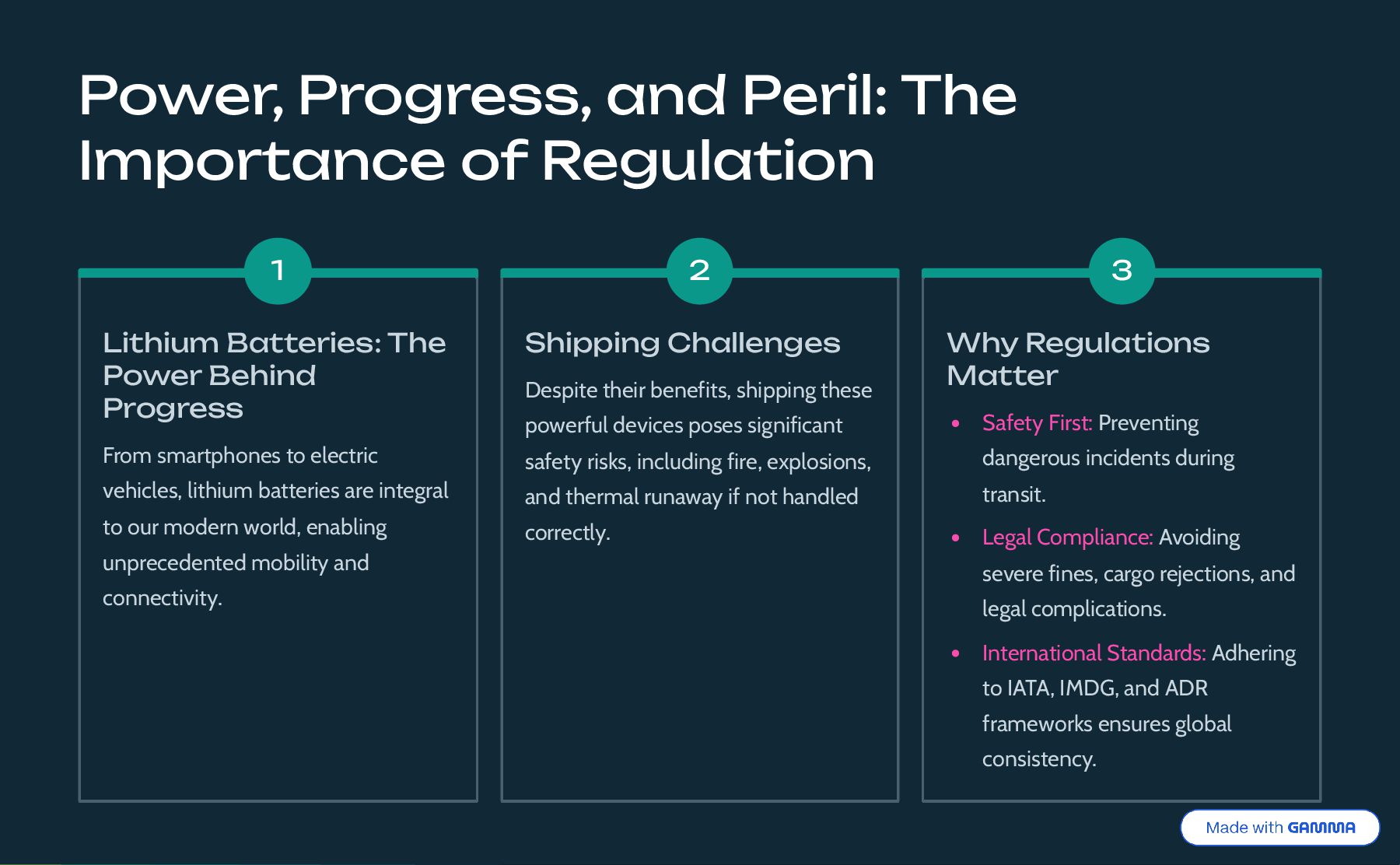
  2. Power, Progress, and Peril: The Importance of Regulation 1 Lithium

    Batteries: The Power Behind Progress From smartphones to electric vehicles, lithium batteries are integral to our modern world, enabling unprecedented mobility and connectivity. 2 Shipping Challenges Despite their benefits, shipping these powerful devices poses significant safety risks, including fire, explosions, and thermal runaway if not handled correctly. 3 Why Regulations Matter Safety First: Preventing dangerous incidents during transit. Legal Compliance: Avoiding severe fines, cargo rejections, and legal complications. International Standards: Adhering to IATA, IMDG, and ADR frameworks ensures global consistency.
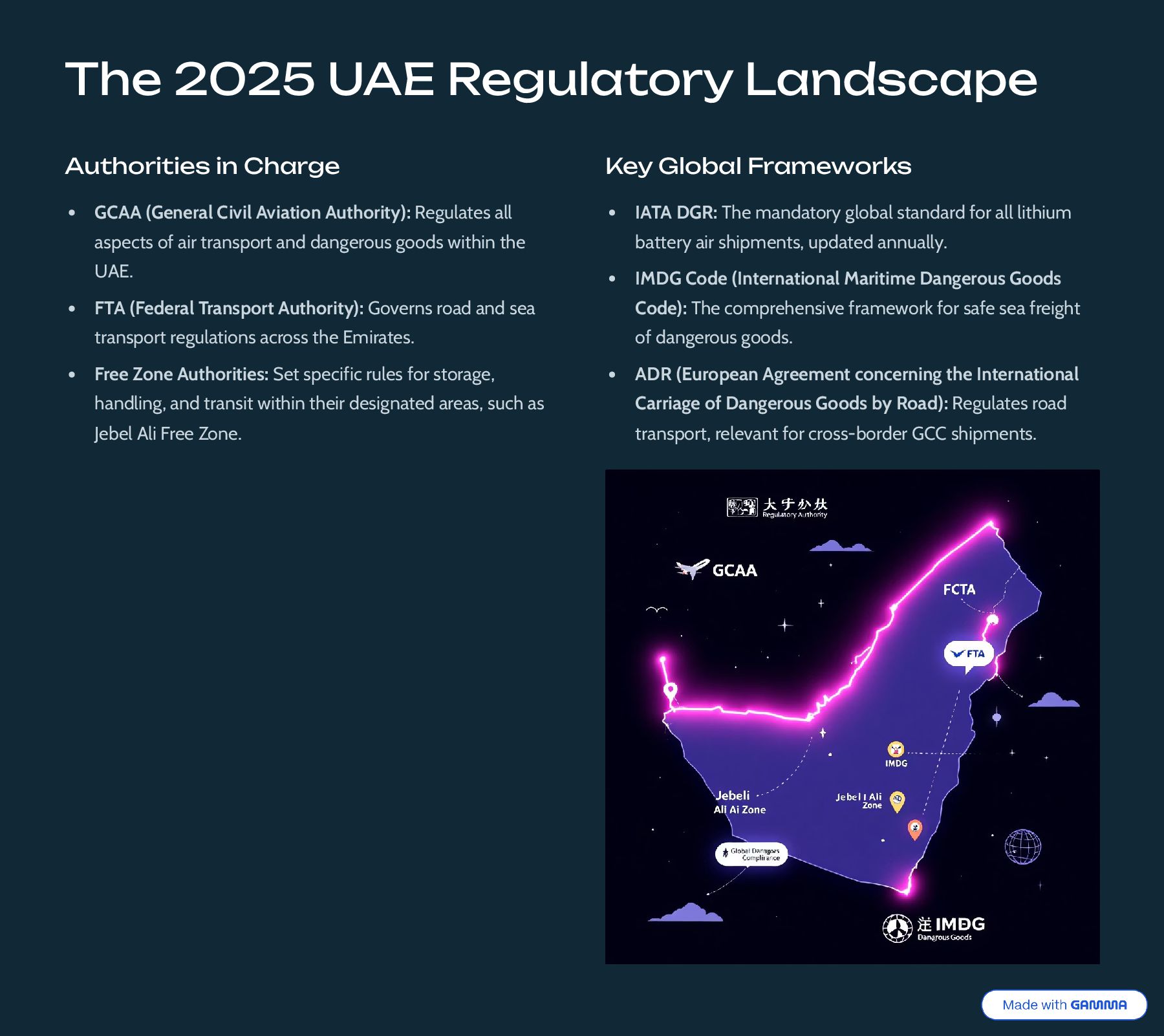
  3. The 2025 UAE Regulatory Landscape Authorities in Charge GCAA (General

    Civil Aviation Authority): Regulates all aspects of air transport and dangerous goods within the UAE. FTA (Federal Transport Authority): Governs road and sea transport regulations across the Emirates. Free Zone Authorities: Set specific rules for storage, handling, and transit within their designated areas, such as Jebel Ali Free Zone. Key Global Frameworks IATA DGR: The mandatory global standard for all lithium battery air shipments, updated annually. IMDG Code (International Maritime Dangerous Goods Code): The comprehensive framework for safe sea freight of dangerous goods. ADR (European Agreement concerning the International Carriage of Dangerous Goods by Road): Regulates road transport, relevant for cross-border GCC shipments.
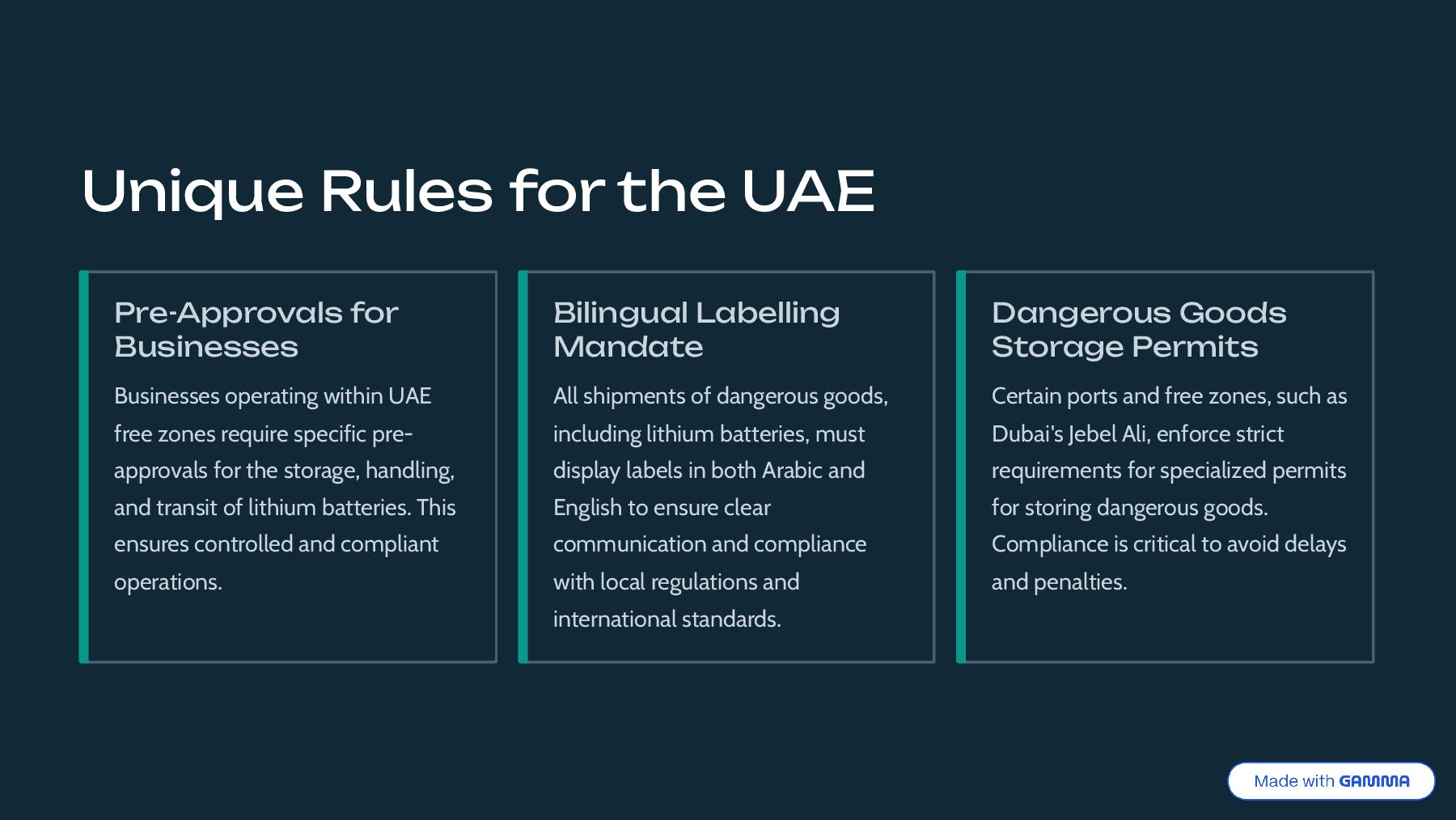
  4. Unique Rules for the UAE Pre-Approvals for Businesses Businesses operating

    within UAE free zones require specific pre- approvals for the storage, handling, and transit of lithium batteries. This ensures controlled and compliant operations. Bilingual Labelling Mandate All shipments of dangerous goods, including lithium batteries, must display labels in both Arabic and English to ensure clear communication and compliance with local regulations and international standards. Dangerous Goods Storage Permits Certain ports and free zones, such as Dubai's Jebel Ali, enforce strict requirements for specialized permits for storing dangerous goods. Compliance is critical to avoid delays and penalties.
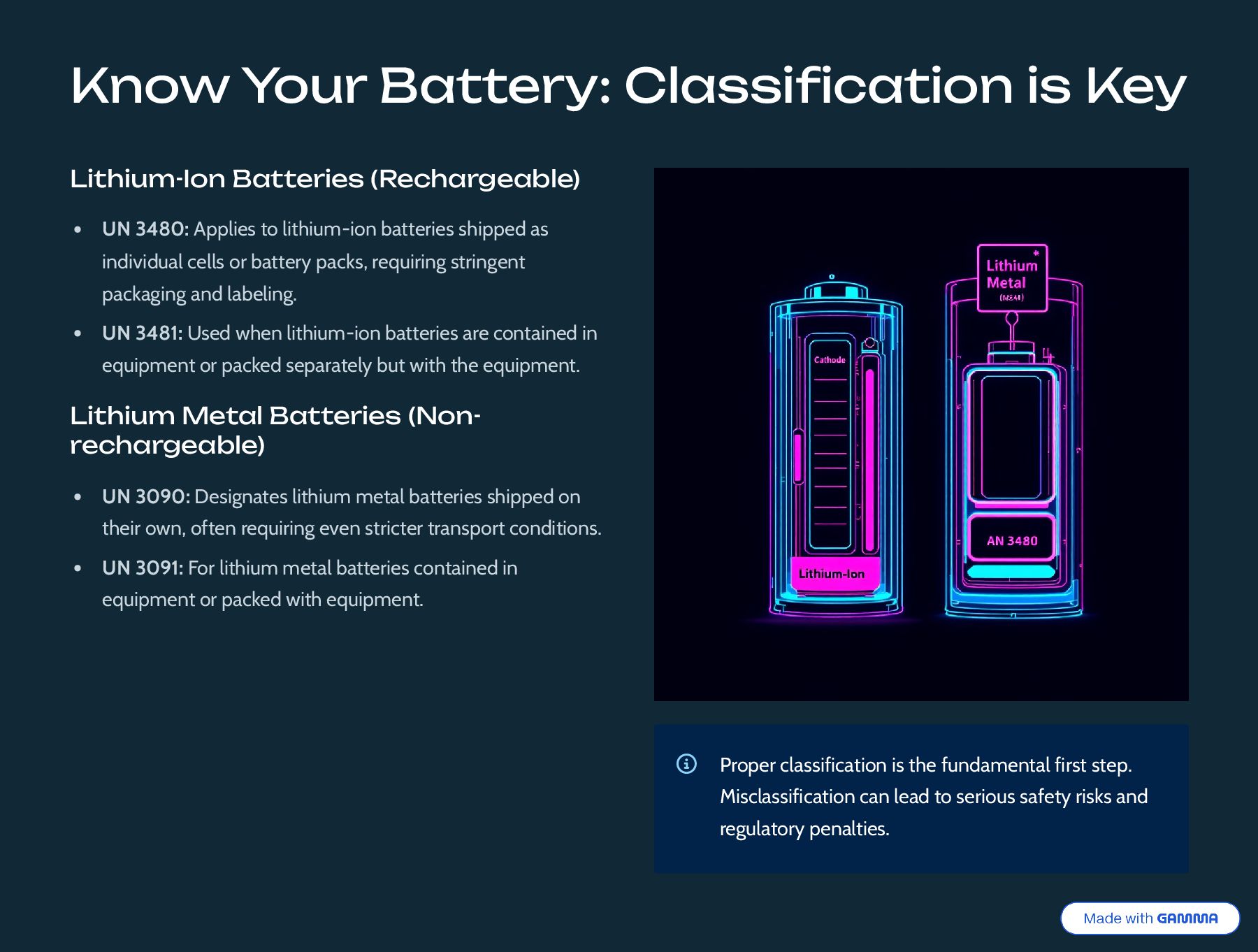
  5. Know Your Battery: Classification is Key Lithium-Ion Batteries (Rechargeable) UN

    3480: Applies to lithium-ion batteries shipped as individual cells or battery packs, requiring stringent packaging and labeling. UN 3481: Used when lithium-ion batteries are contained in equipment or packed separately but with the equipment. Lithium Metal Batteries (Non- rechargeable) UN 3090: Designates lithium metal batteries shipped on their own, often requiring even stricter transport conditions. UN 3091: For lithium metal batteries contained in equipment or packed with equipment. Proper classification is the fundamental first step. Misclassification can lead to serious safety risks and regulatory penalties.
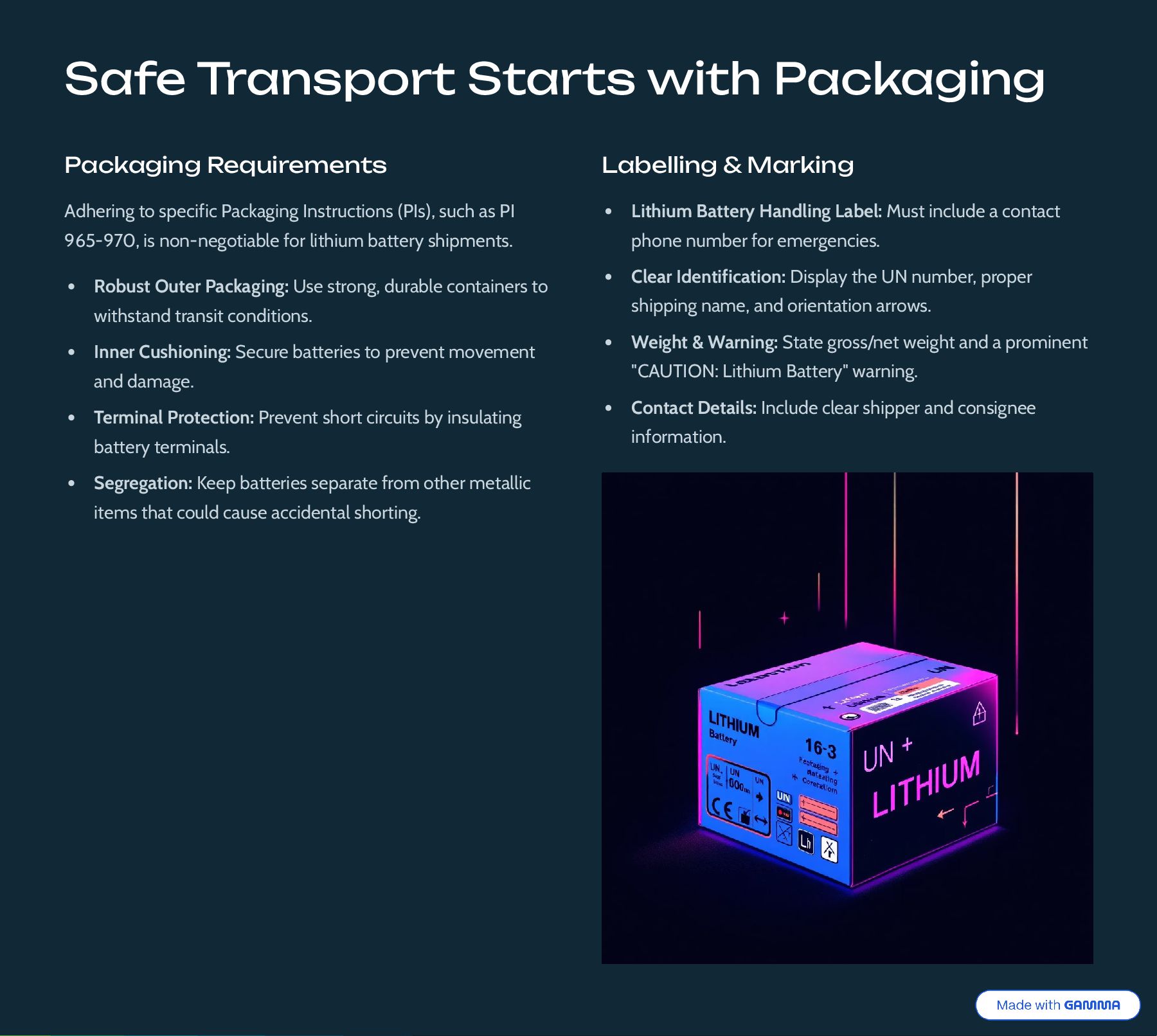
  6. Safe Transport Starts with Packaging Packaging Requirements Adhering to specific

    Packaging Instructions (PIs), such as PI 965-970, is non-negotiable for lithium battery shipments. Robust Outer Packaging: Use strong, durable containers to withstand transit conditions. Inner Cushioning: Secure batteries to prevent movement and damage. Terminal Protection: Prevent short circuits by insulating battery terminals. Segregation: Keep batteries separate from other metallic items that could cause accidental shorting. Labelling & Marking Lithium Battery Handling Label: Must include a contact phone number for emergencies. Clear Identification: Display the UN number, proper shipping name, and orientation arrows. Weight & Warning: State gross/net weight and a prominent "CAUTION: Lithium Battery" warning. Contact Details: Include clear shipper and consignee information.
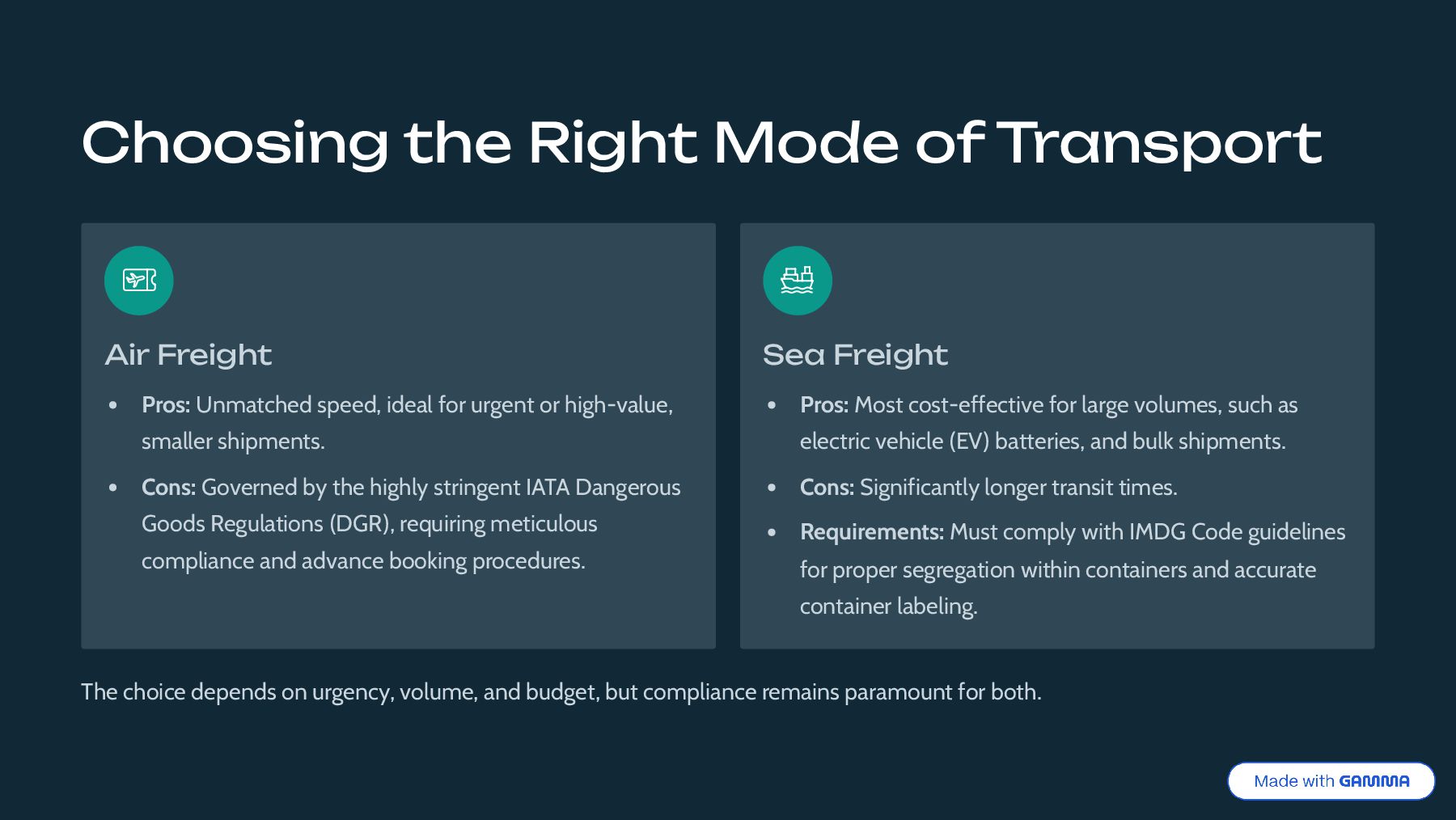
  7. Choosing the Right Mode of Transport Air Freight Pros: Unmatched

    speed, ideal for urgent or high-value, smaller shipments. Cons: Governed by the highly stringent IATA Dangerous Goods Regulations (DGR), requiring meticulous compliance and advance booking procedures. Sea Freight Pros: Most cost-effective for large volumes, such as electric vehicle (EV) batteries, and bulk shipments. Cons: Significantly longer transit times. Requirements: Must comply with IMDG Code guidelines for proper segregation within containers and accurate container labeling. The choice depends on urgency, volume, and budget, but compliance remains paramount for both.
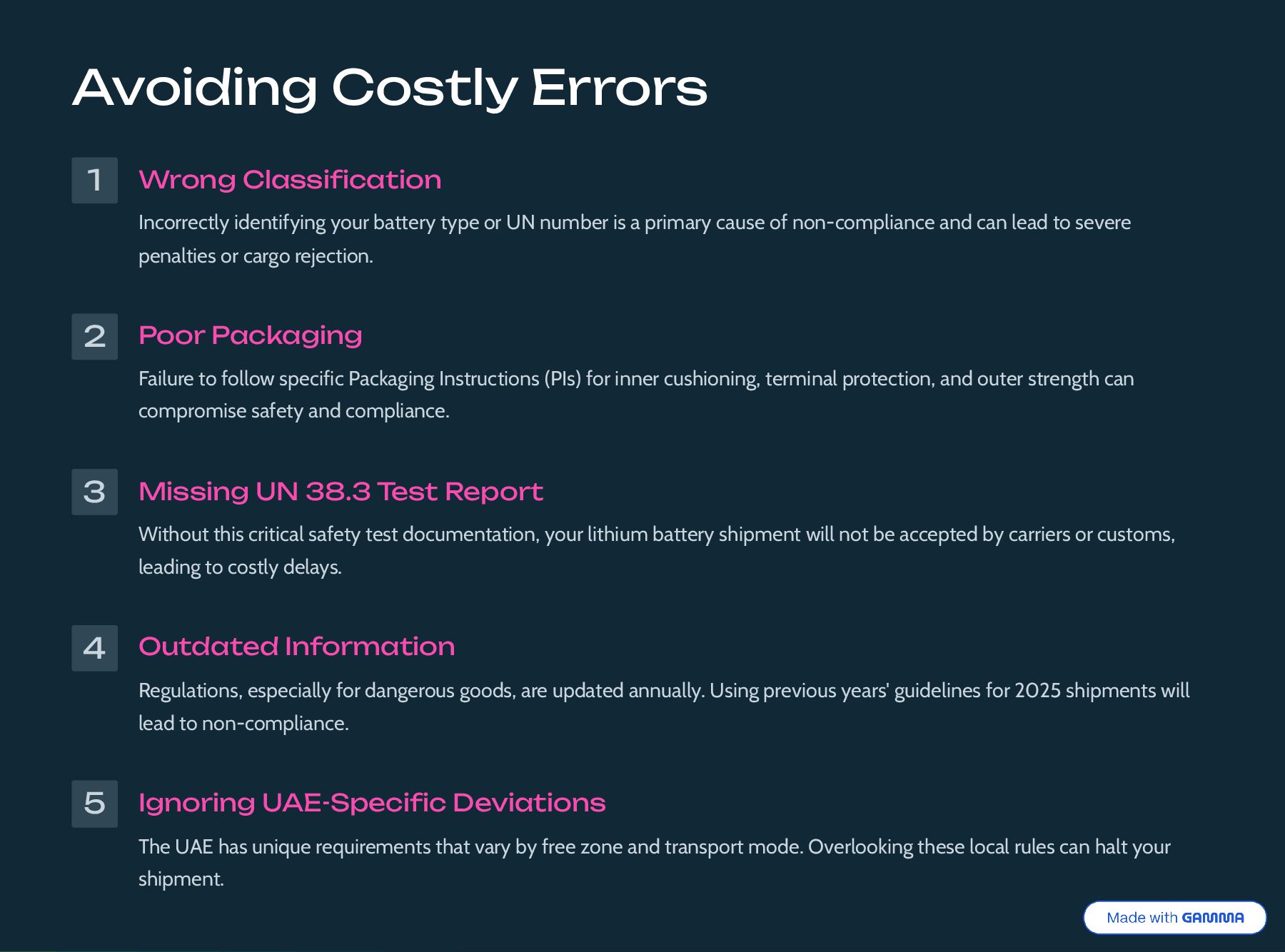
  8. Avoiding Costly Errors 1 Wrong Classification Incorrectly identifying your battery

    type or UN number is a primary cause of non-compliance and can lead to severe penalties or cargo rejection. 2 Poor Packaging Failure to follow specific Packaging Instructions (PIs) for inner cushioning, terminal protection, and outer strength can compromise safety and compliance. 3 Missing UN 38.3 Test Report Without this critical safety test documentation, your lithium battery shipment will not be accepted by carriers or customs, leading to costly delays. 4 Outdated Information Regulations, especially for dangerous goods, are updated annually. Using previous years' guidelines for 2025 shipments will lead to non-compliance. 5 Ignoring UAE-Specific Deviations The UAE has unique requirements that vary by free zone and transport mode. Overlooking these local rules can halt your shipment.
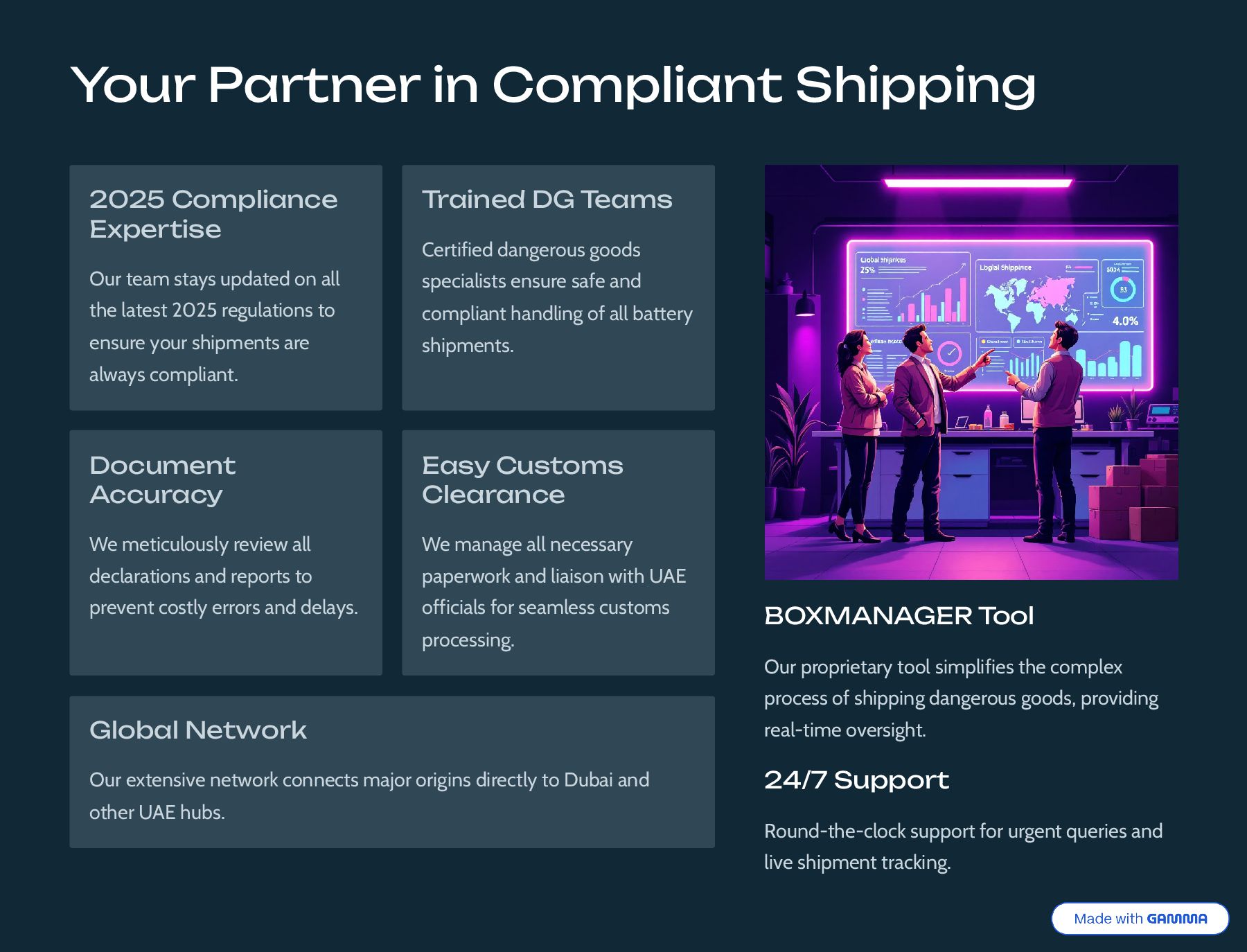
  9. Your Partner in Compliant Shipping 2025 Compliance Expertise Our team

    stays updated on all the latest 2025 regulations to ensure your shipments are always compliant. Trained DG Teams Certified dangerous goods specialists ensure safe and compliant handling of all battery shipments. Document Accuracy We meticulously review all declarations and reports to prevent costly errors and delays. Easy Customs Clearance We manage all necessary paperwork and liaison with UAE officials for seamless customs processing. Global Network Our extensive network connects major origins directly to Dubai and other UAE hubs. BOXMANAGER Tool Our proprietary tool simplifies the complex process of shipping dangerous goods, providing real-time oversight. 24/7 Support Round-the-clock support for urgent queries and live shipment tracking.
  10. Get Your Comprehensive Checklist Navigating these regulations is complex, but

    with the right tools, you can avoid costly errors and ensure seamless shipments. To ensure a flawless and fully compliant shipping process for your lithium batteries to the UAE, download our comprehensive 2025 compliance checklist today. Download Checklist Contact Us www.boxmanglobal.com | +971 4 521 6555