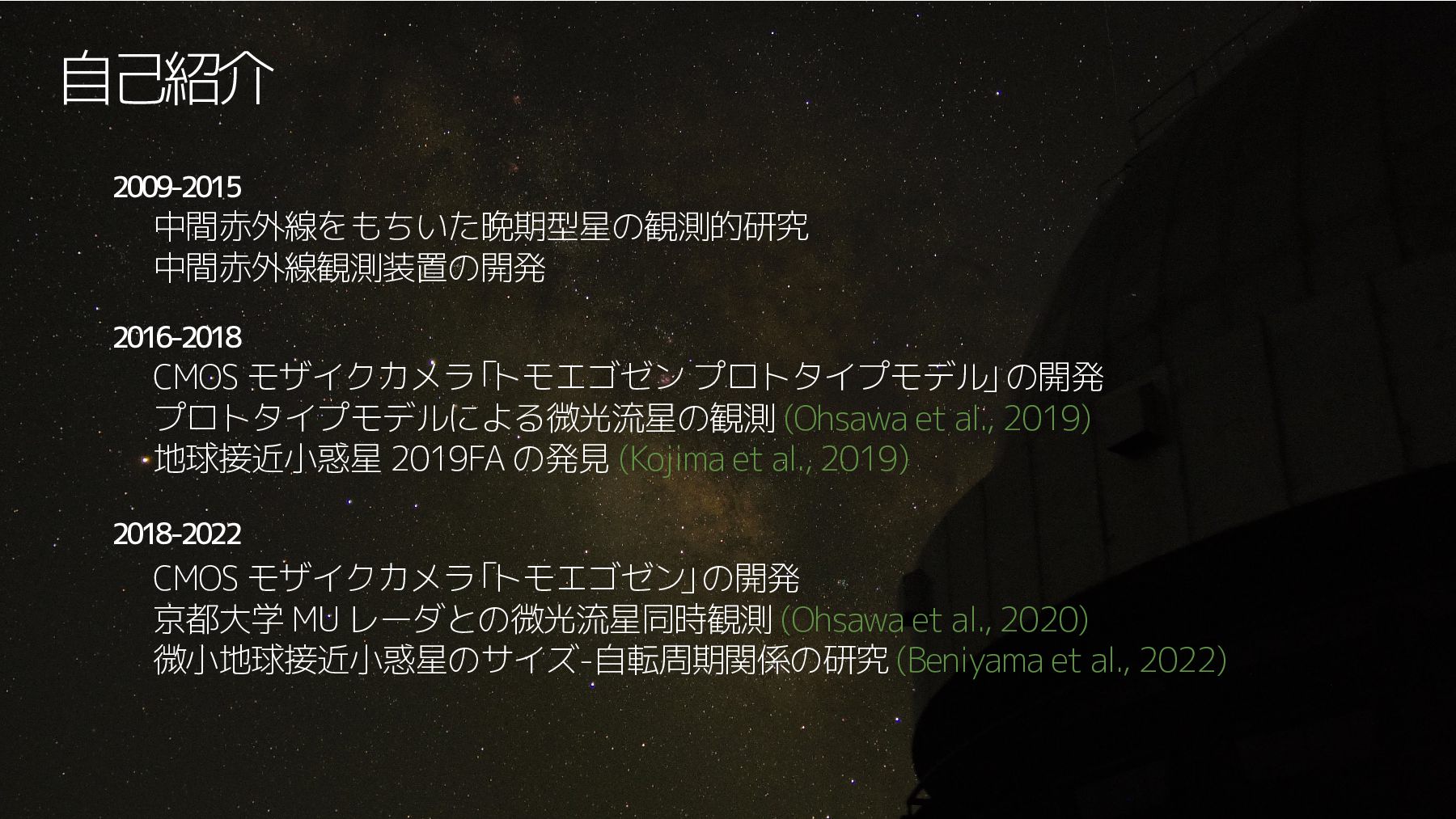
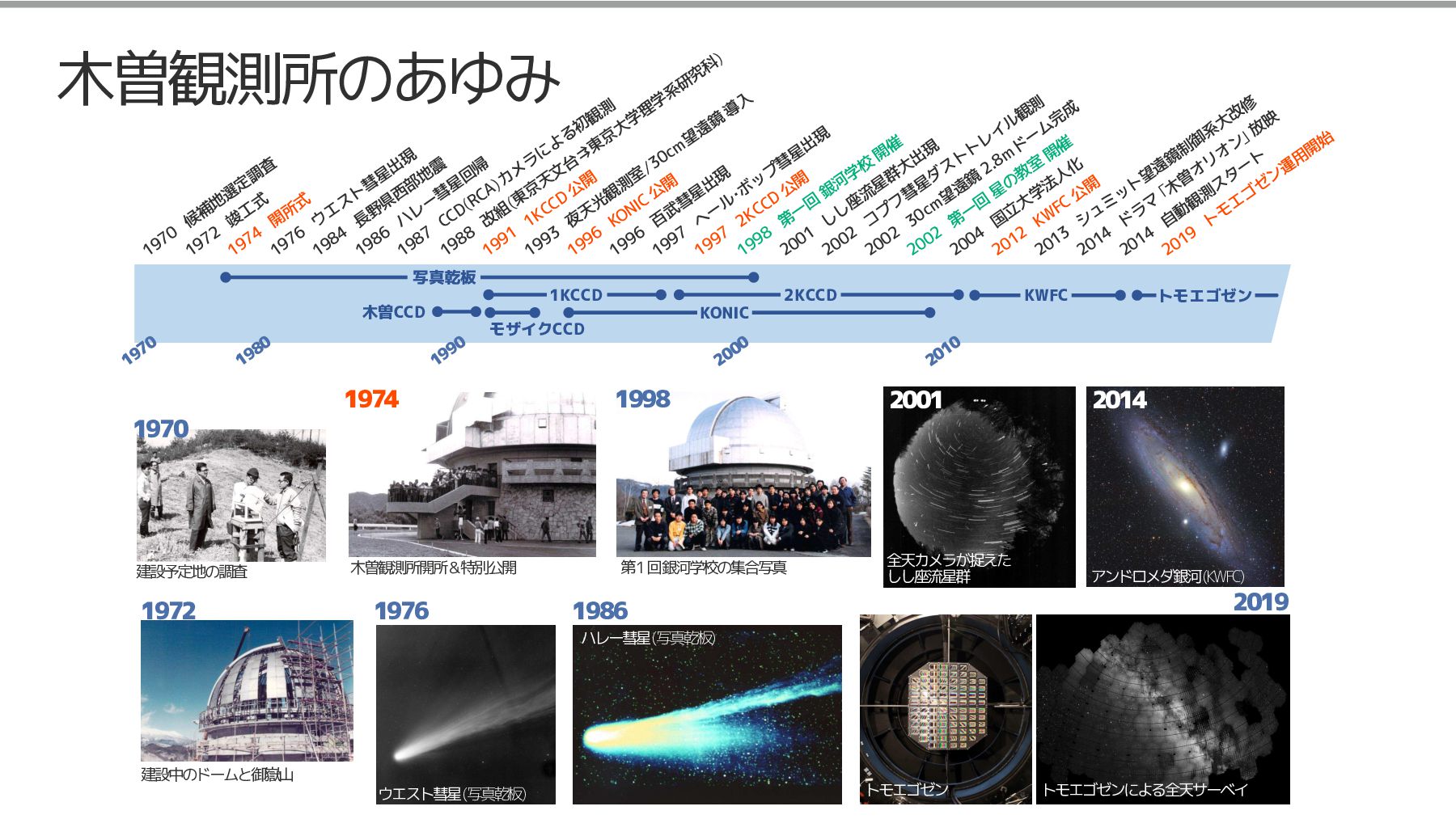
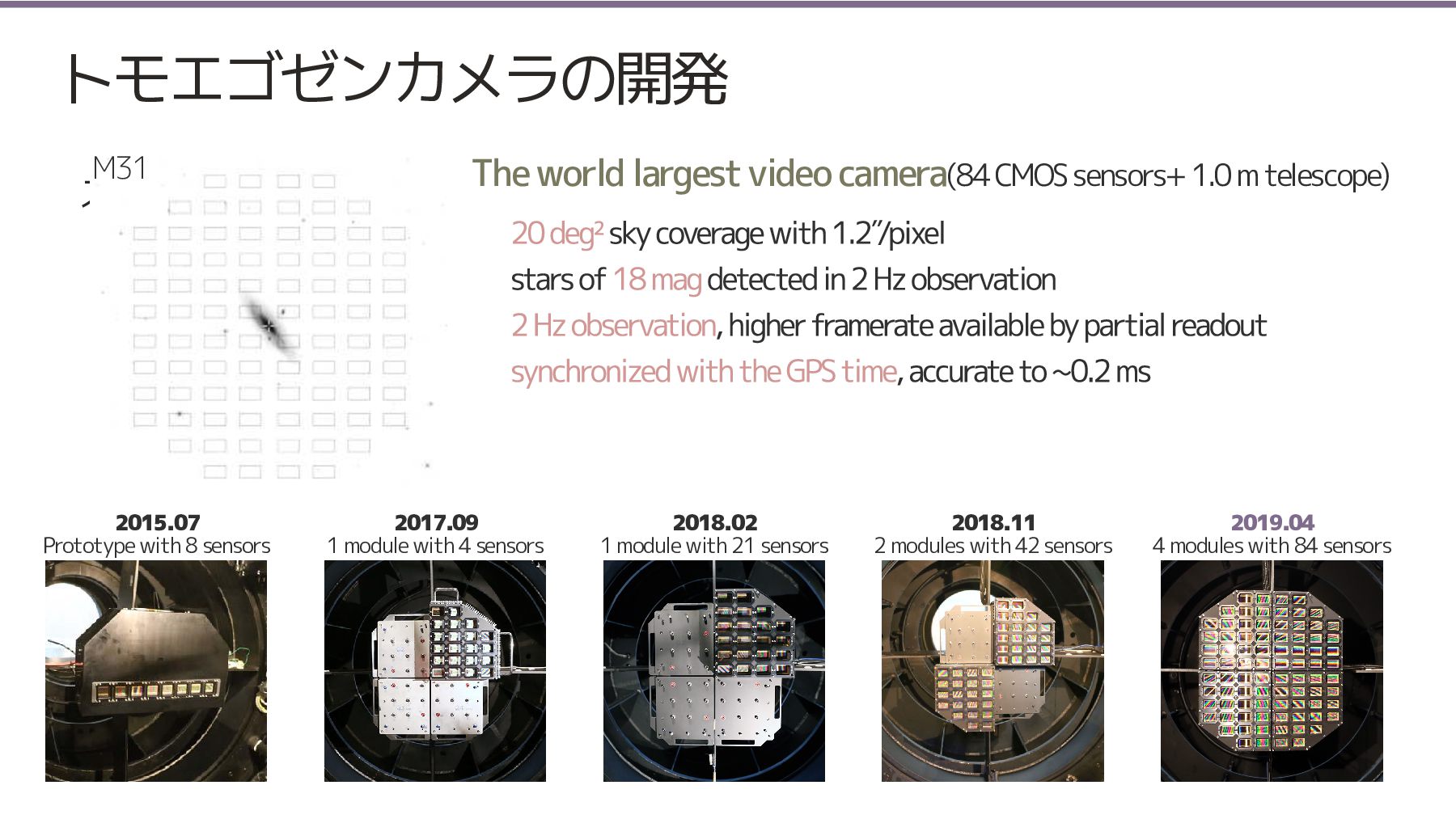
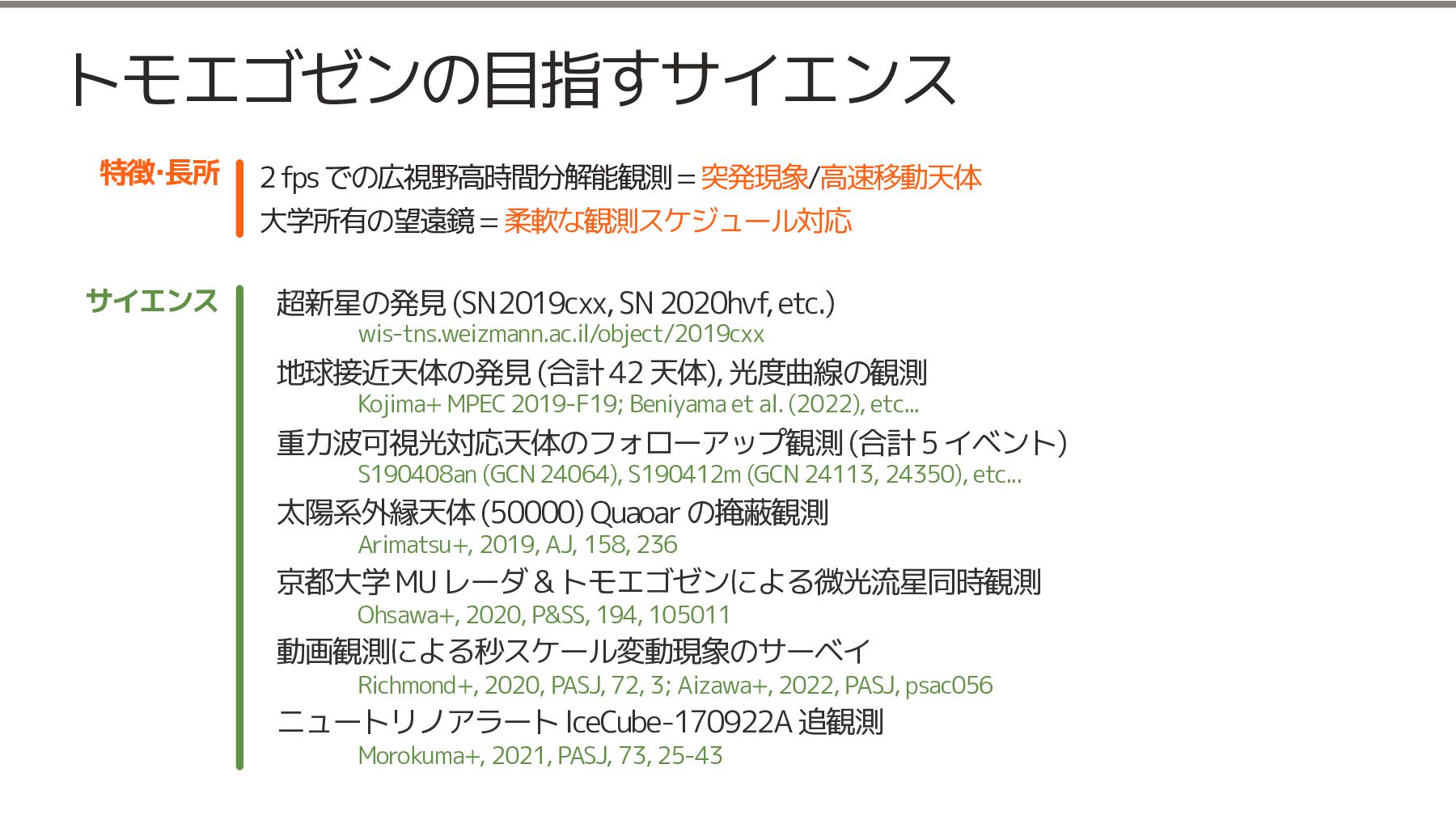
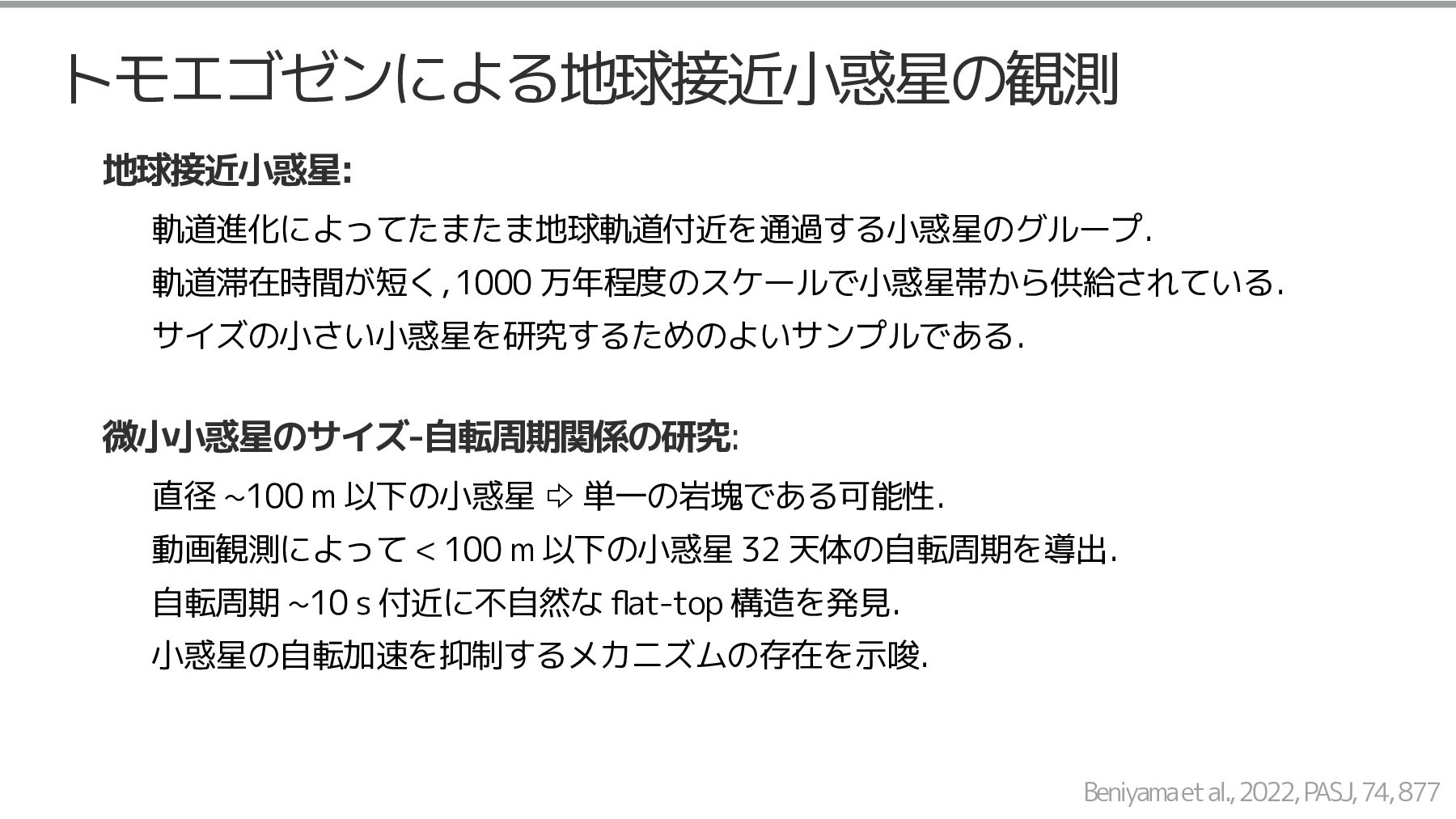
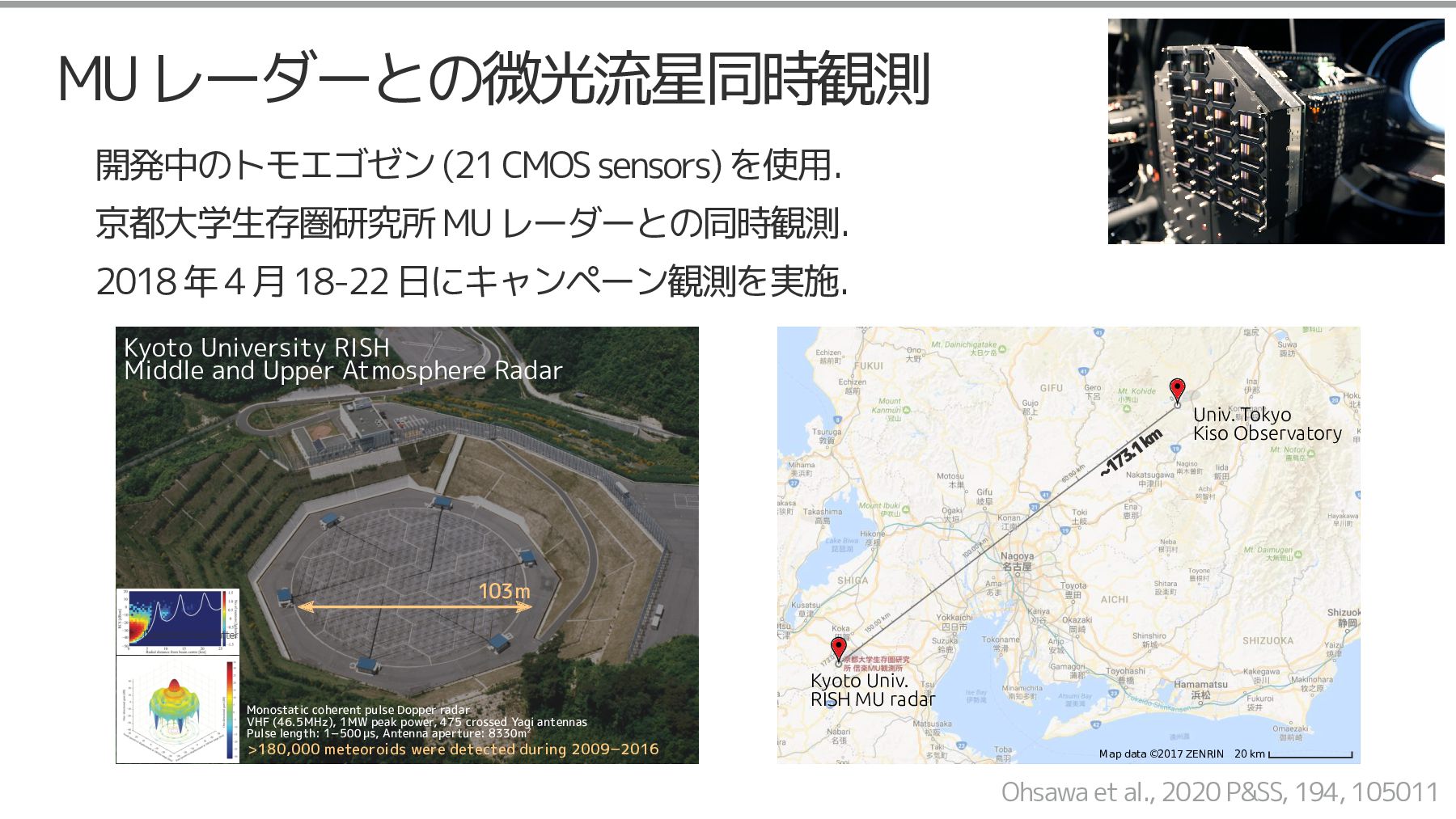
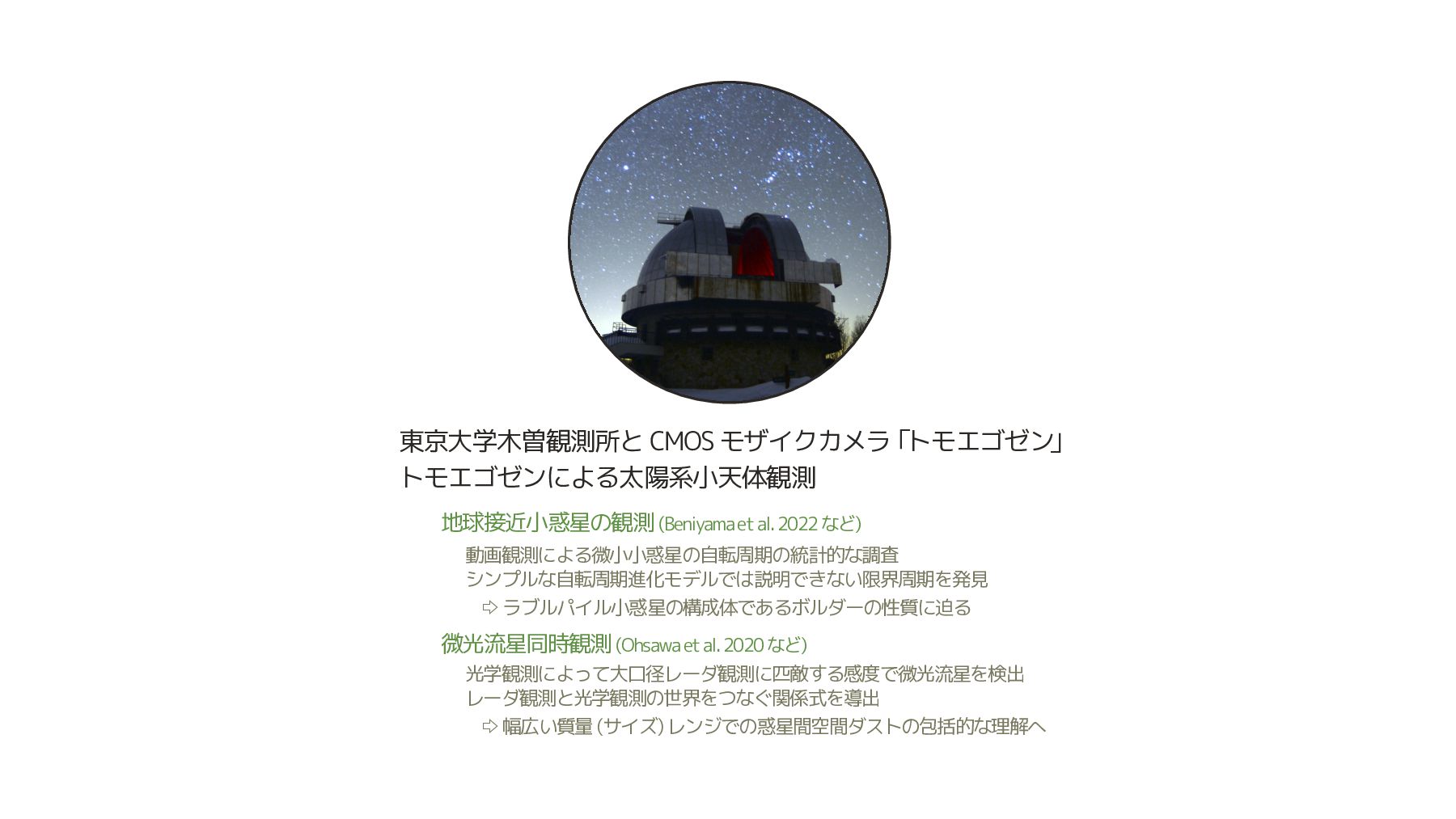
et al., 2019) 地球接近小惑星 2019FA の発見 (Kojima et al., 2019) 2018-2022 CMOS モザイクカメラ「トモエゴゼン」の開発 京都大学 MU レーダとの微光流星同時観測 (Ohsawa et al., 2020) 微小地球接近小惑星のサイズ-自転周期関係の研究 (Beniyama et al., 2022)
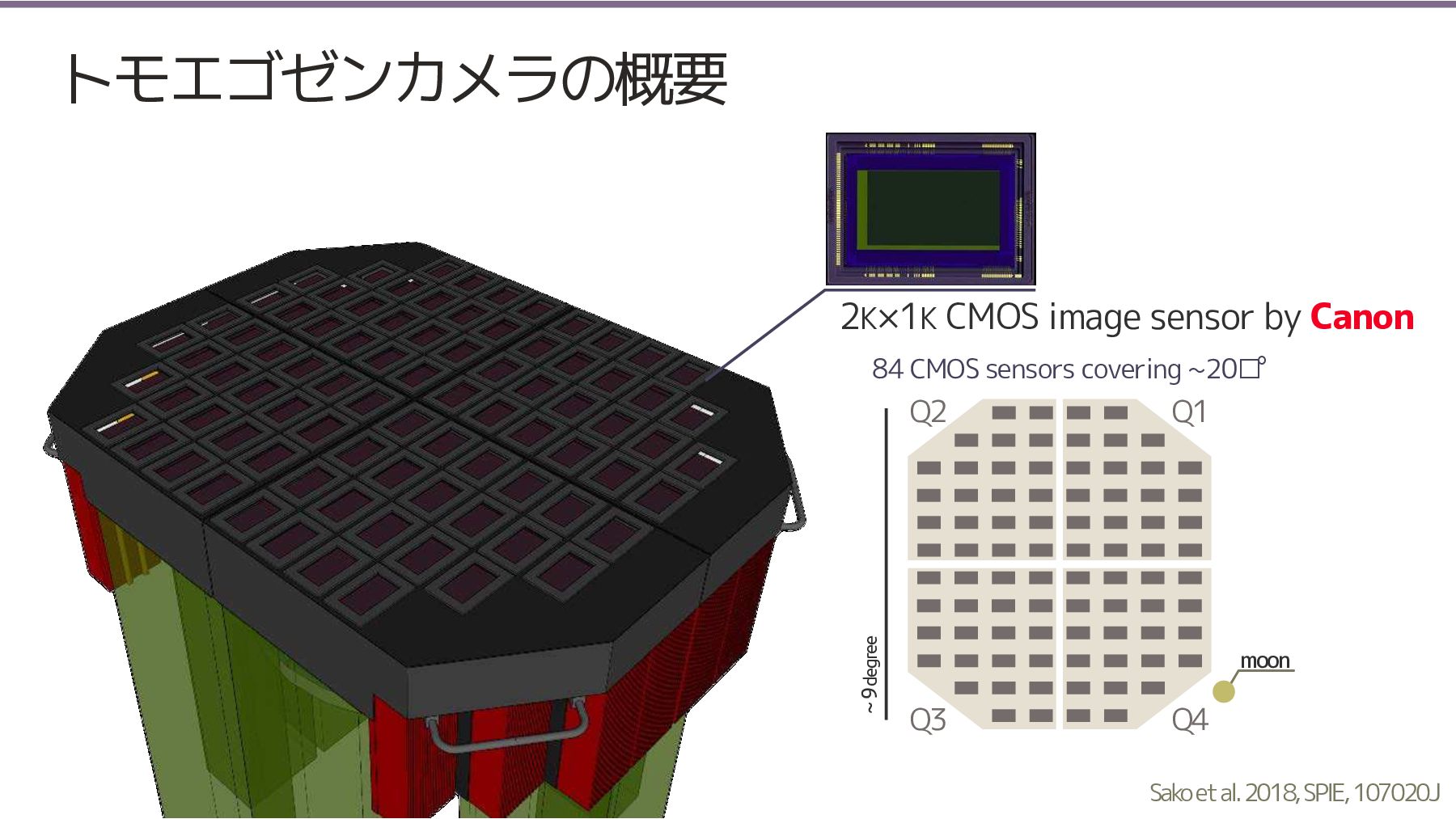
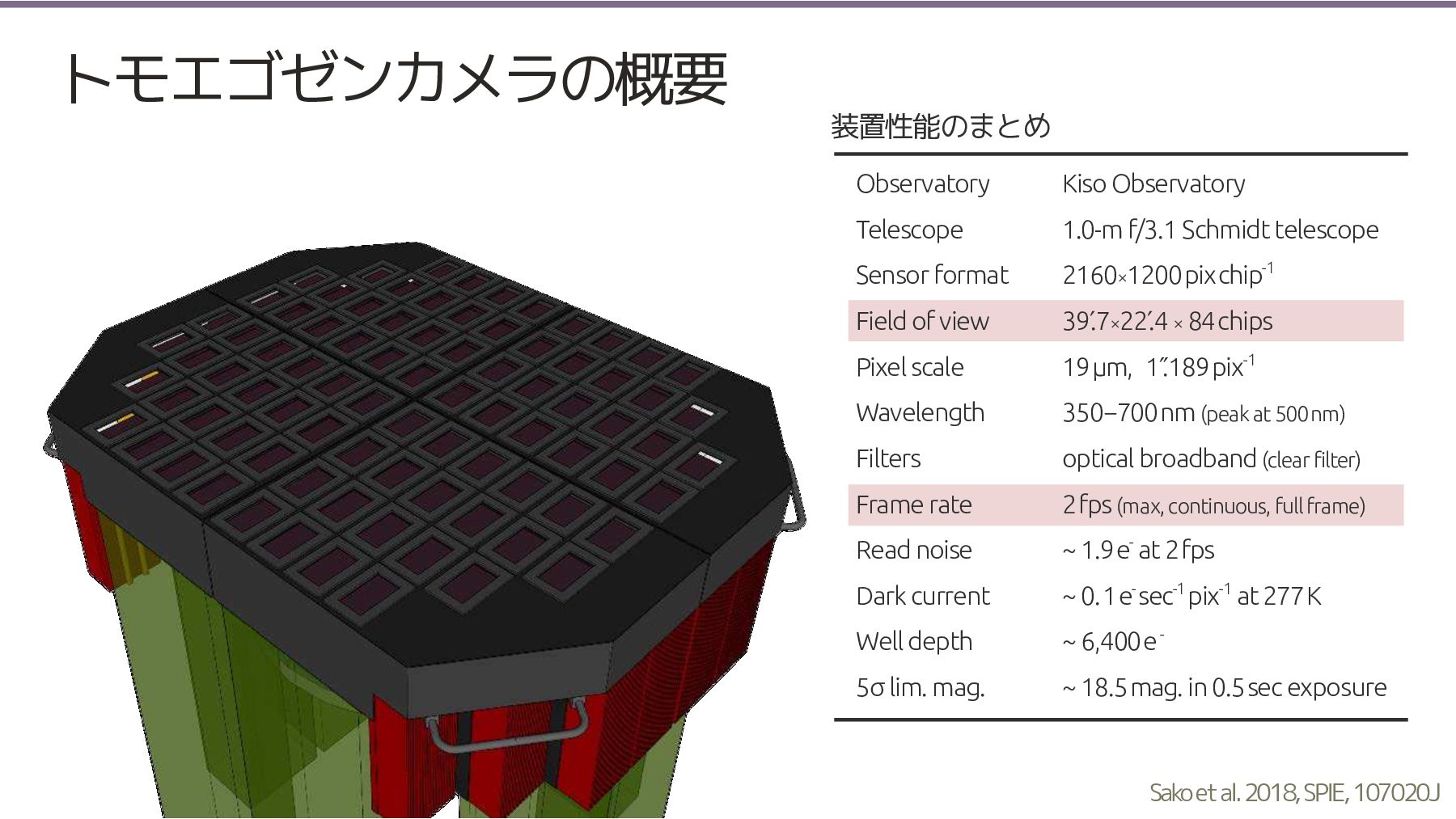
largest video camera(84 CMOS sensors+ 1.0 m telescope) 2017.09 1 module with 4 sensors 2018.02 1 module with 21 sensors 2018.11 2 modules with 42 sensors 2019.04 4 modules with 84 sensors
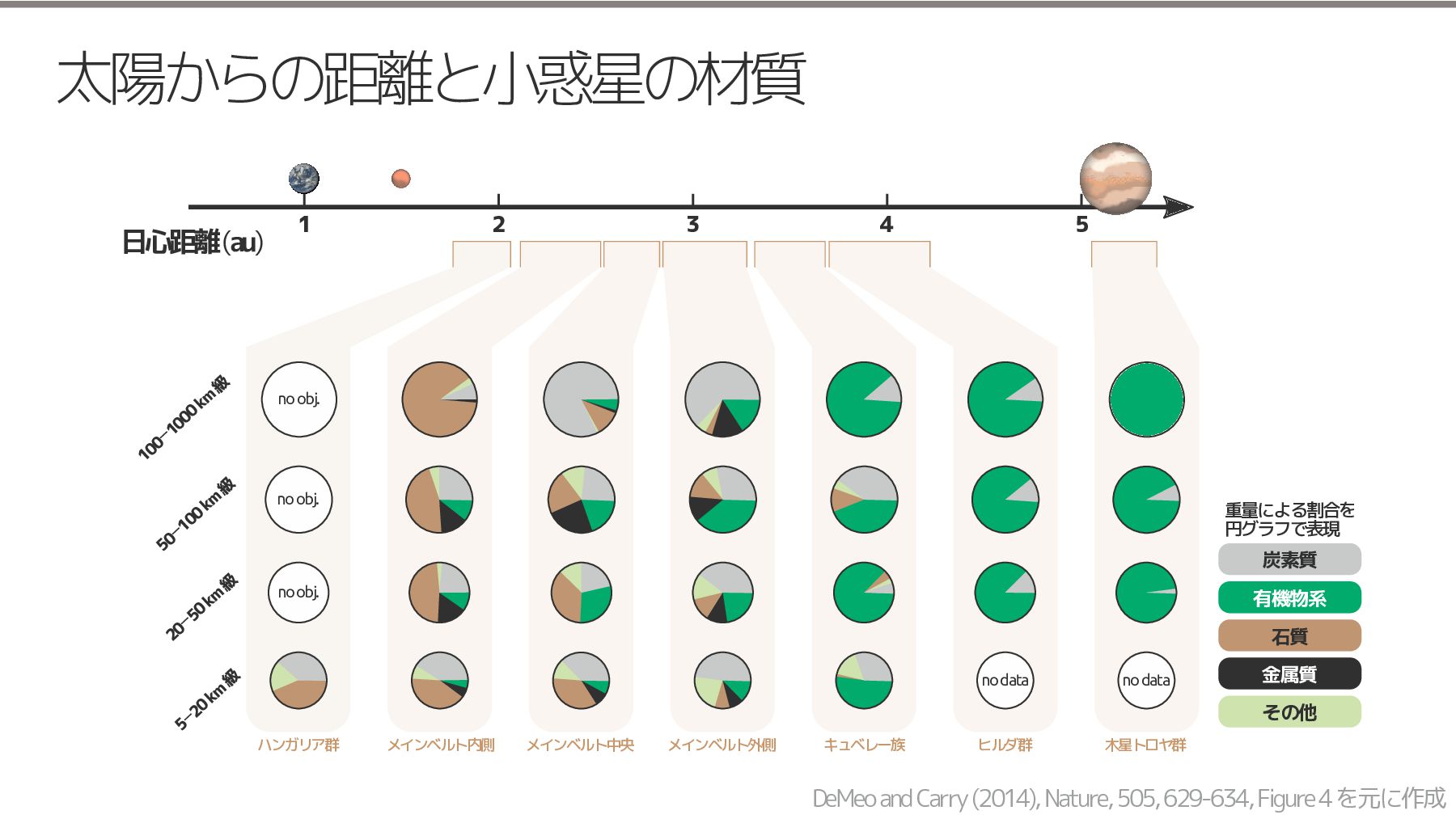
10 − 50 級 no obj. 級 no obj. km 0 −5 0 2 km 20 5− 1 級 2 3 4 5 重量による割合を 円グラフで表現 炭素質 有機物系 no obj. 石質 km 級 no data no data 金属質 その他 ハンガリア群 メインベルト内側 メインベルト中央 メインベルト外側 キュベレー族 ヒルダ群 木星トロヤ群 DeMeo and Carry (2014), Nature, 505, 629-634, Figure 4 を元に作成
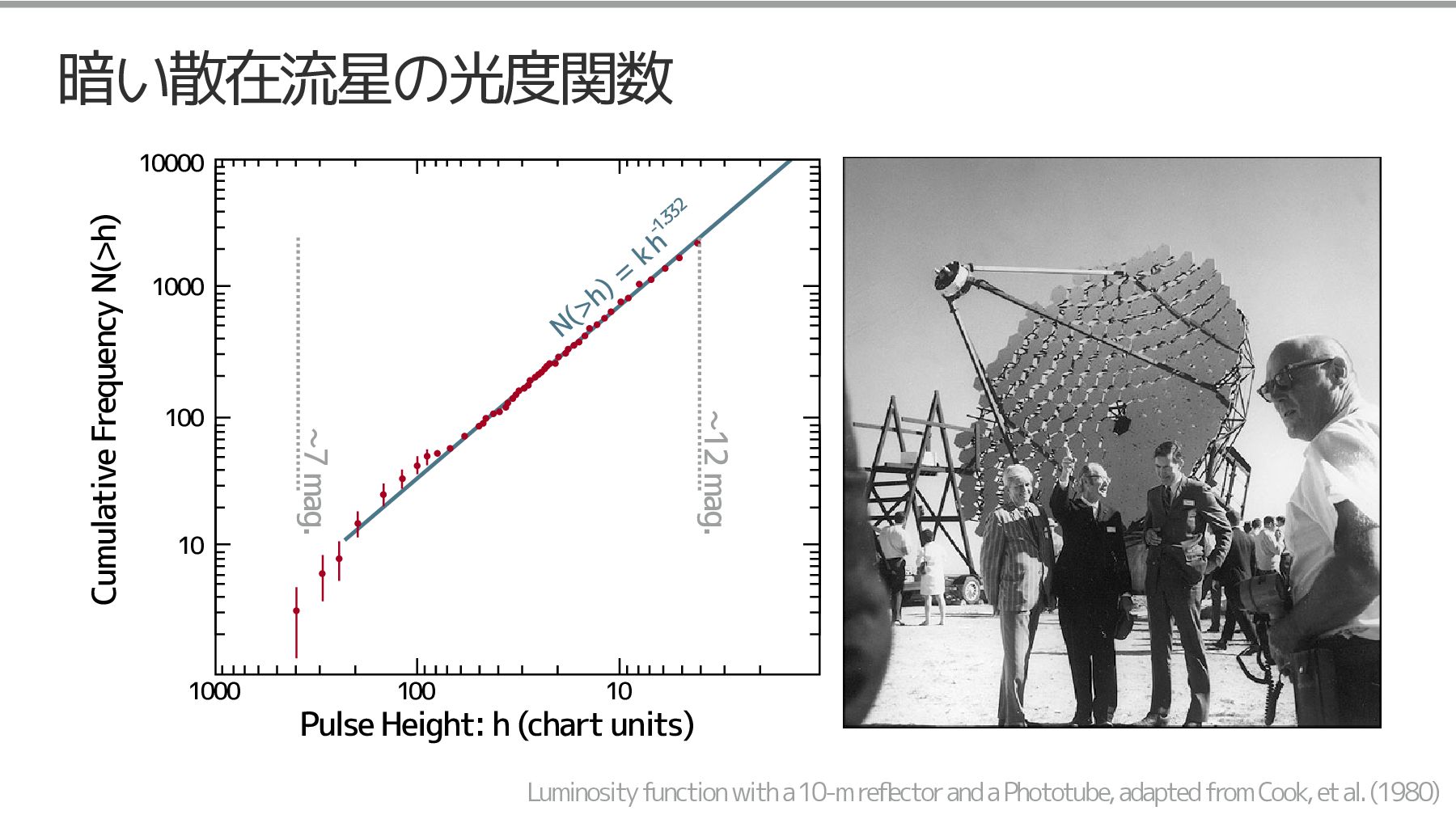
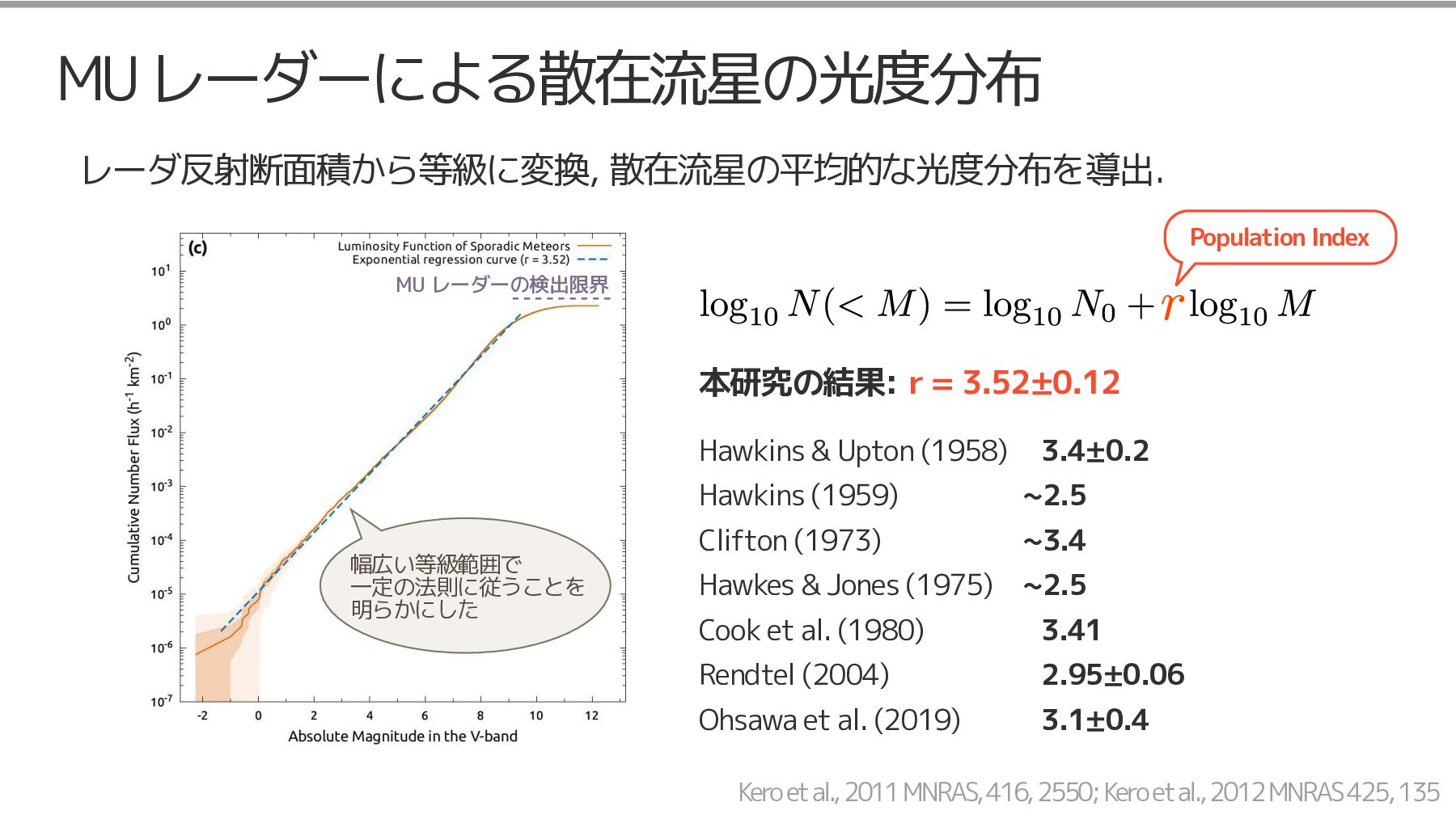
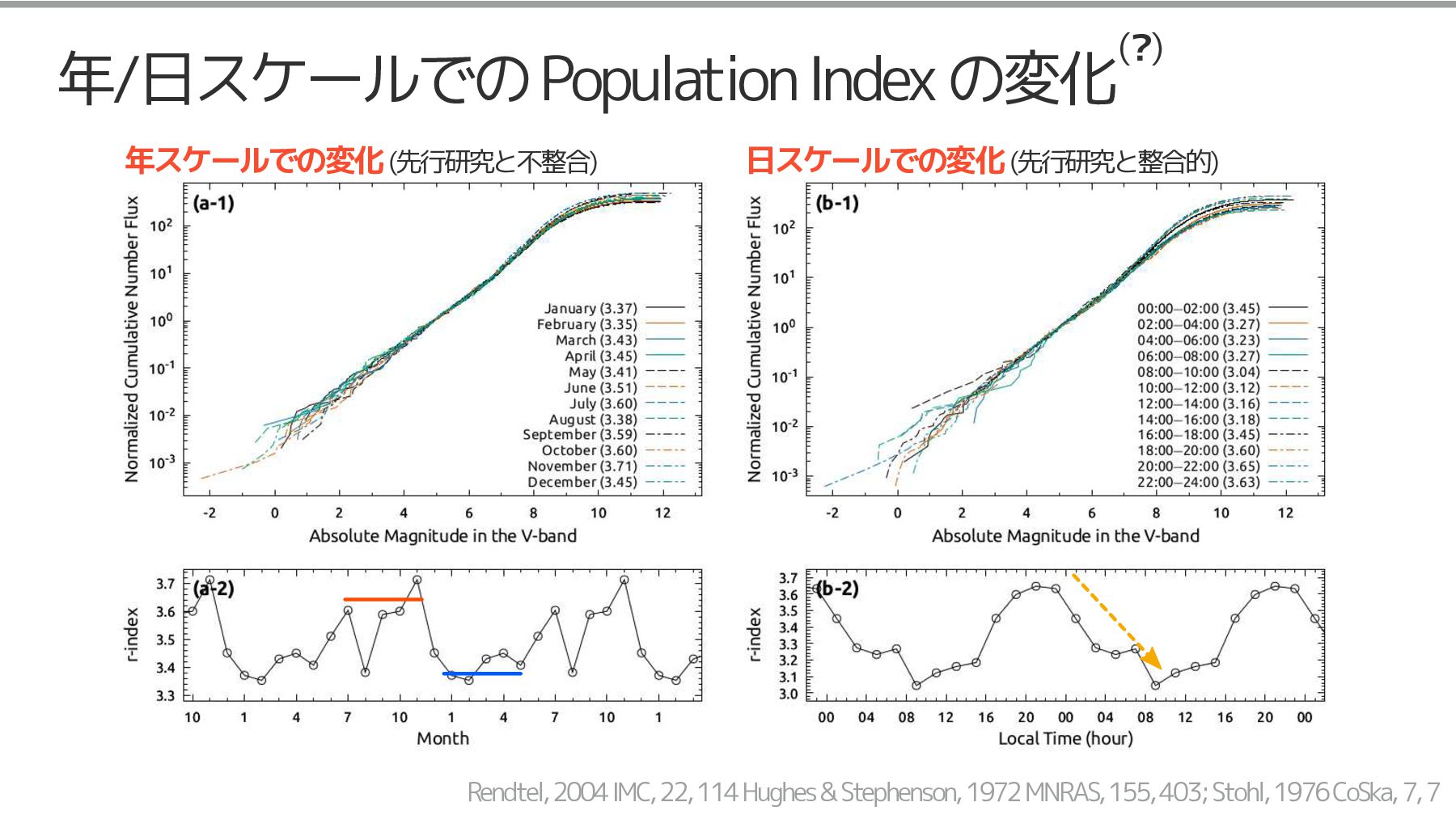
10 1000 ~12 mag. 100 kh ~7 mag. Cumulative Frequency N(>h) 10000 100 10 Pulse Height: h (chart units) Luminosity function with a 10-m reflector and a Phototube, adapted from Cook, et al. (1980)
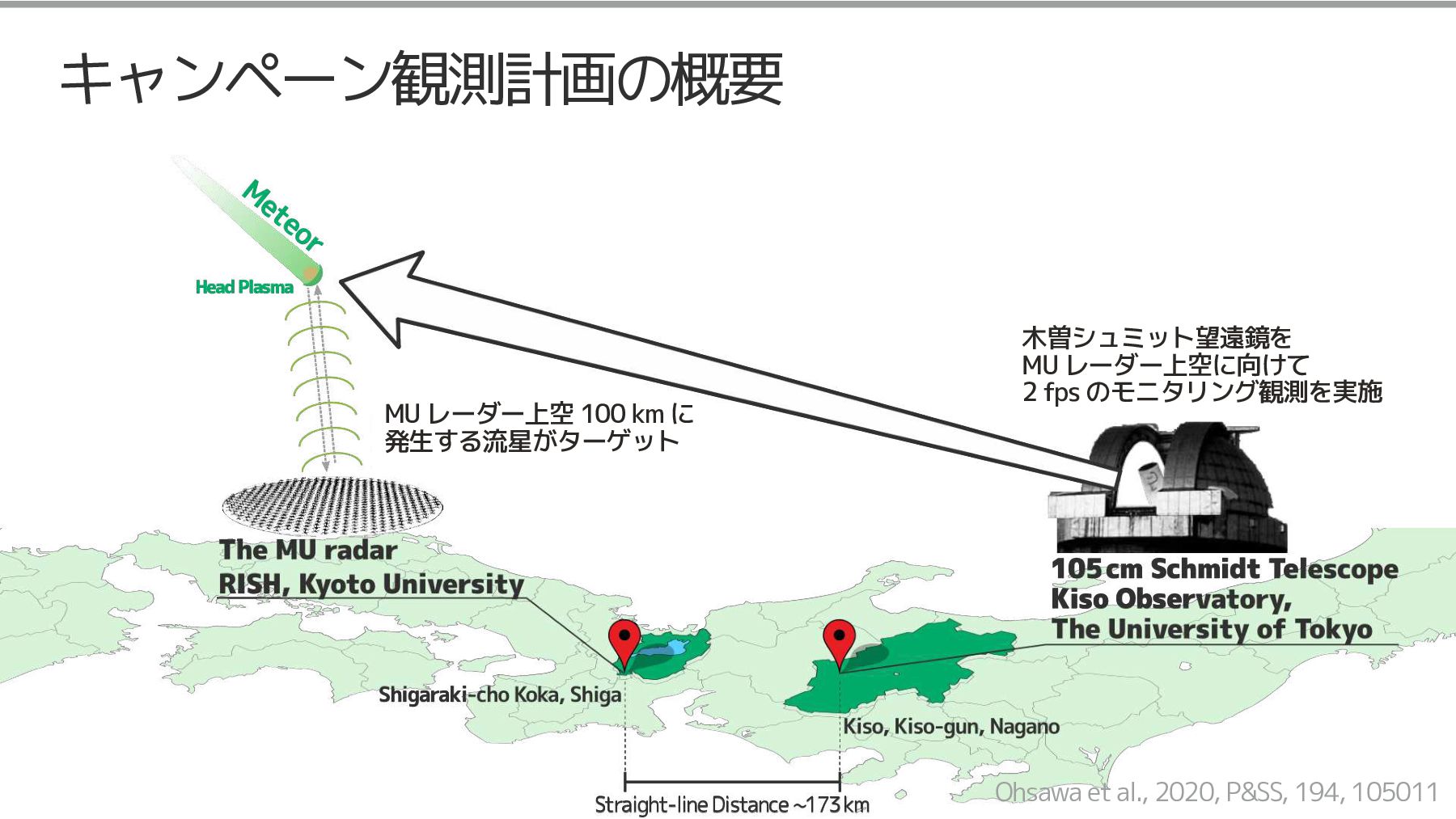
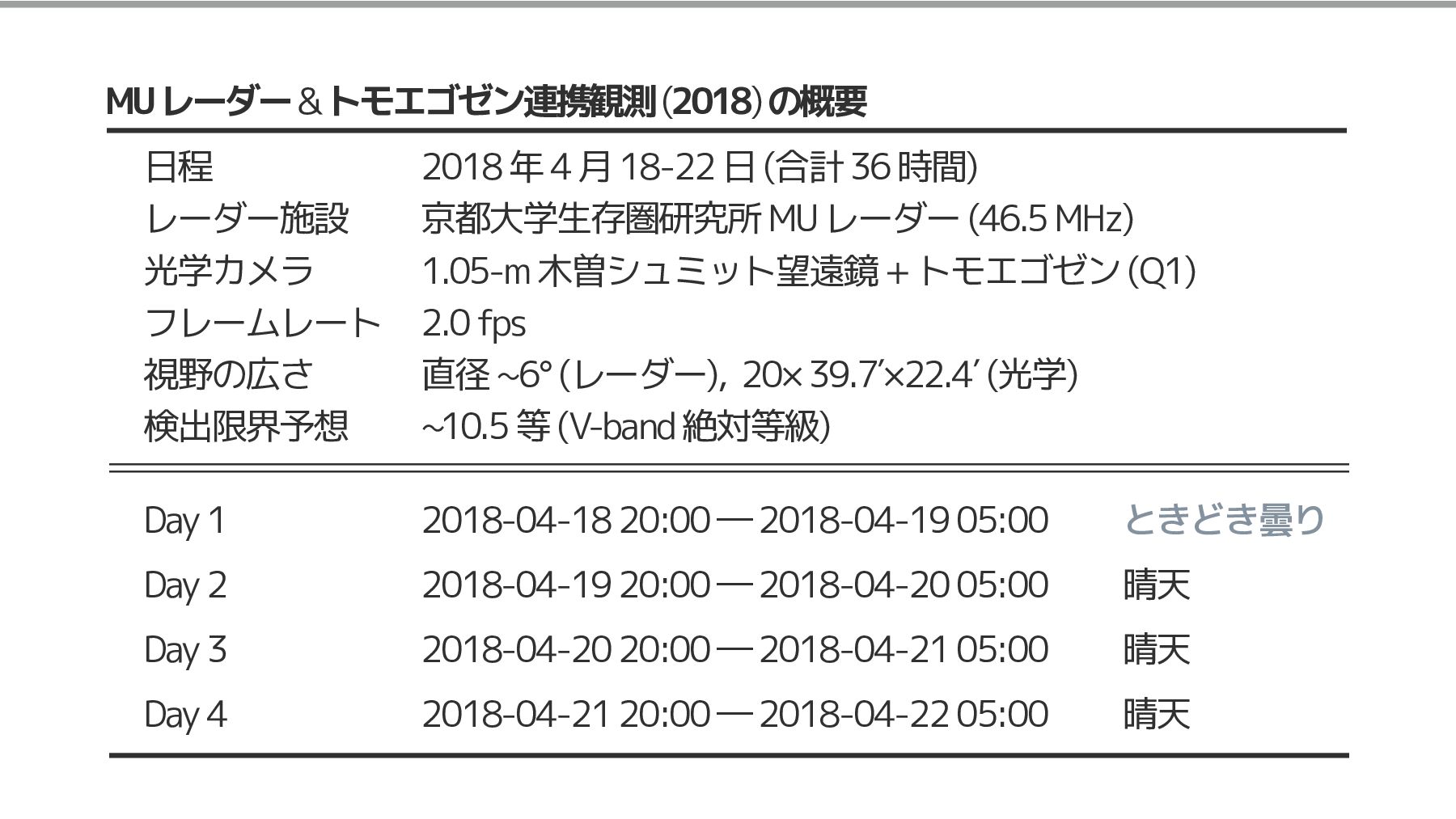
pointed toward the sky 木曽シュミット望遠鏡を above the radar and monitored at 2 fps MUMU レーダー上空に向けて to detect faint meteors. 2 fps のモニタリング観測を実施 MU レーダー上空 100 に Meteors are detected by km transmitting 発生する流星がターゲット pulse waves 100 km above the MU radar. The MU radar RISH, Kyoto University 105cm Schmidt Telescope Kiso Observatory, The University of Tokyo Shigaraki-cho Koka, Shiga Kiso, Kiso-gun, Nagano Straight-line Distance ~173 km Ohsawa et al., 2020, P&SS, 194, 105011
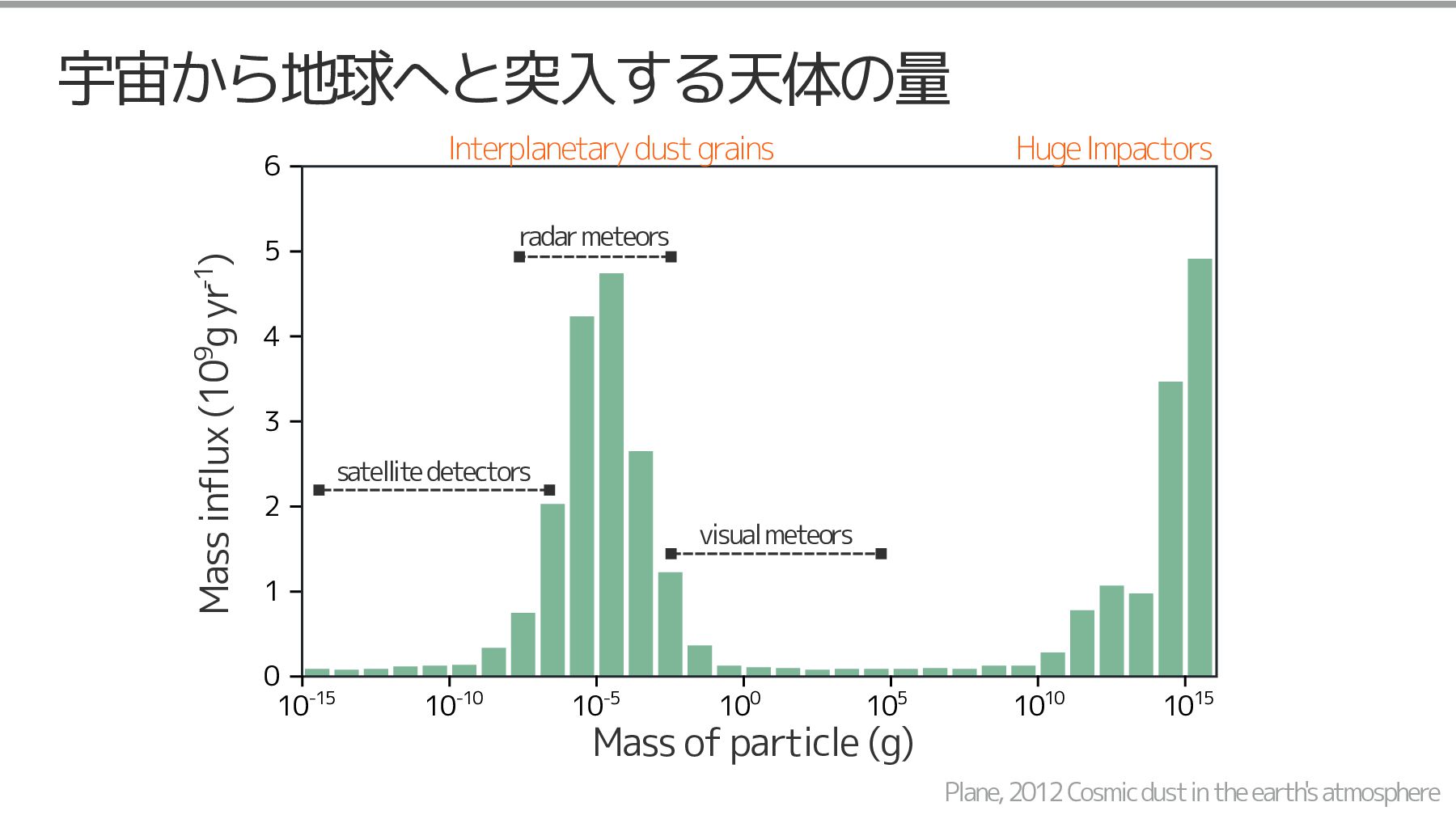
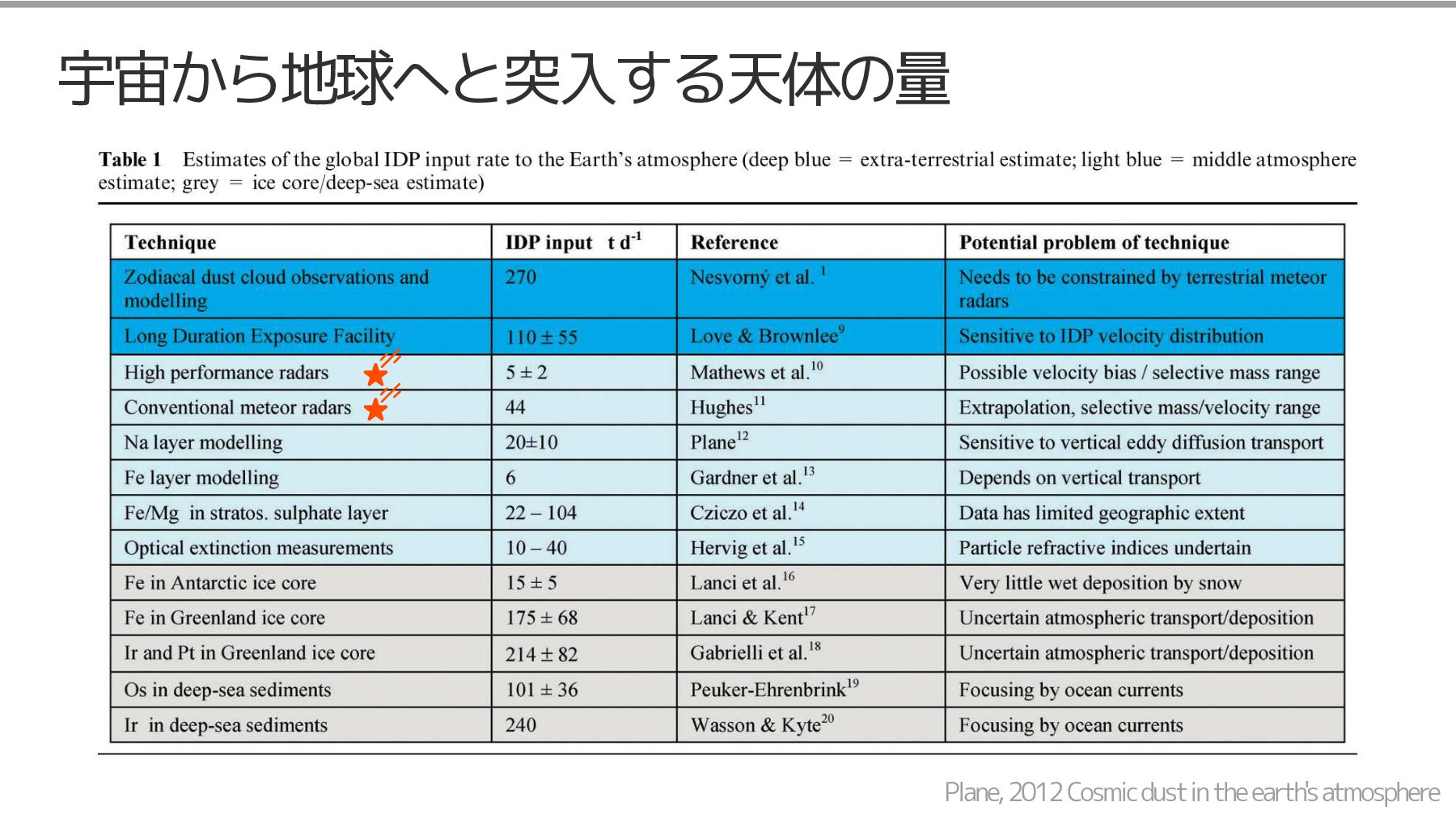
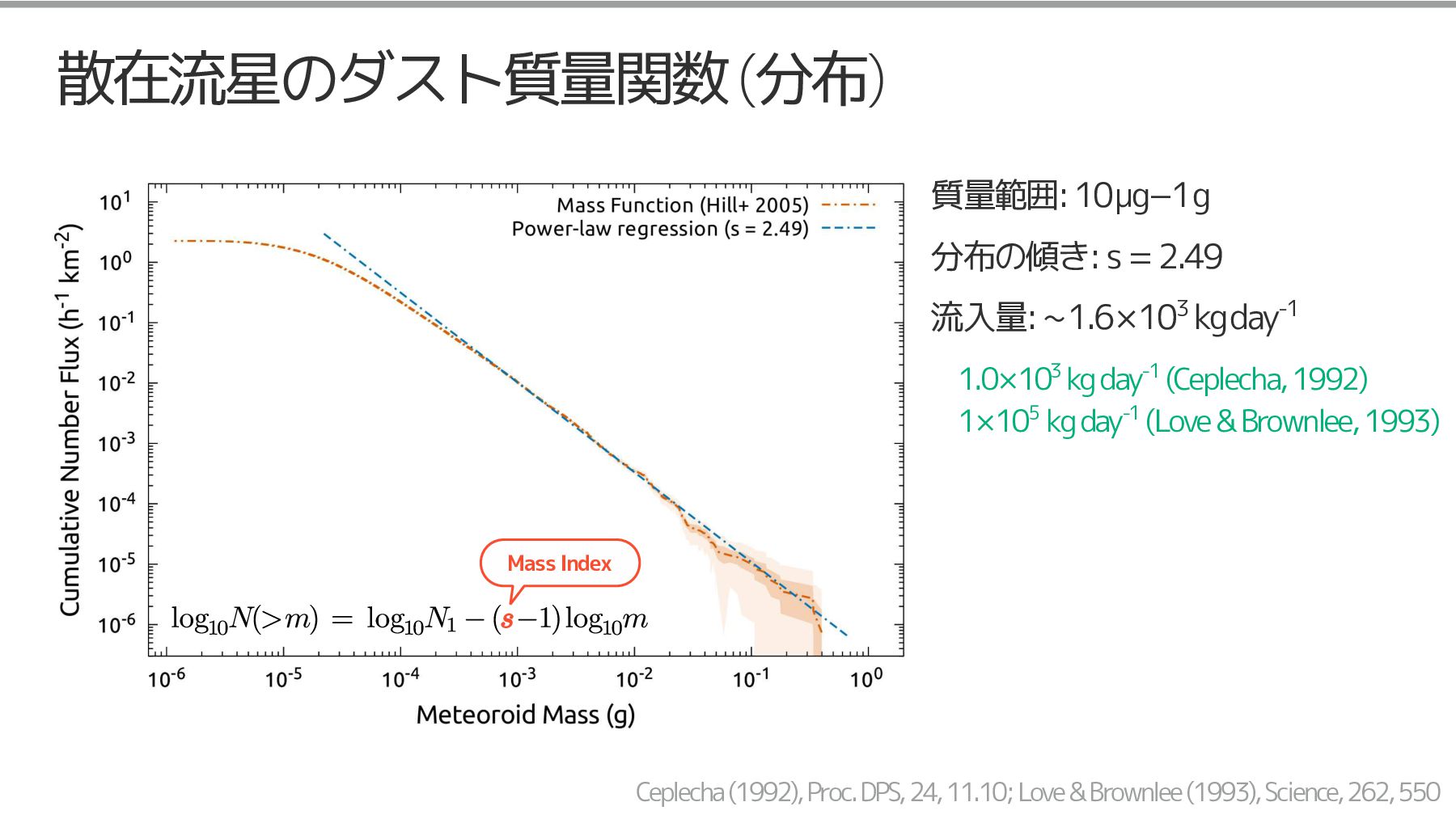
kgday-1 1.0×10³ kg day-1 (Ceplecha, 1992) 1×10⁵ kg day-1 (Love & Brownlee, 1993) Mass Index Ceplecha (1992), Proc. DPS, 24, 11.10; Love & Brownlee (1993), Science, 262, 550
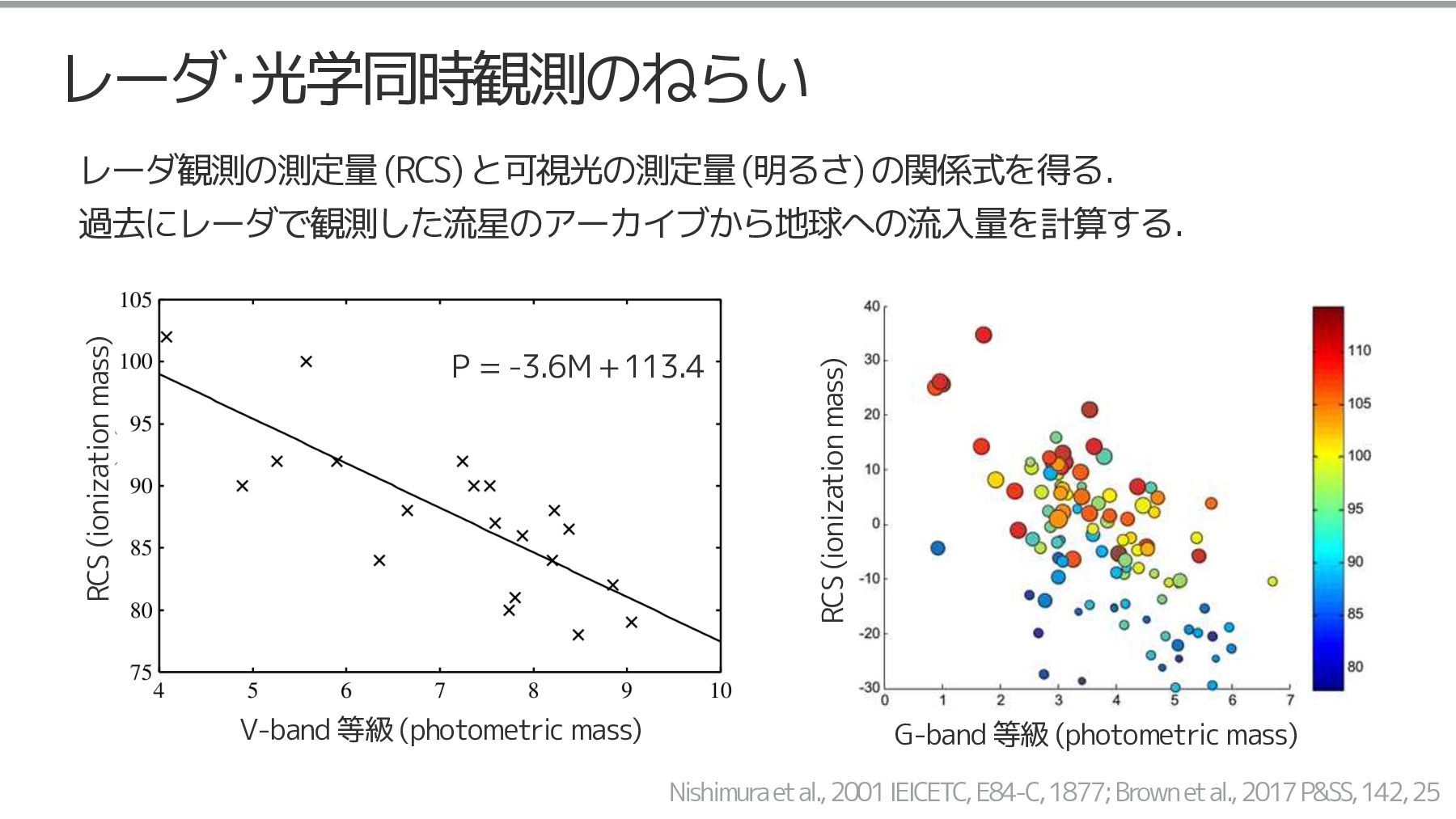
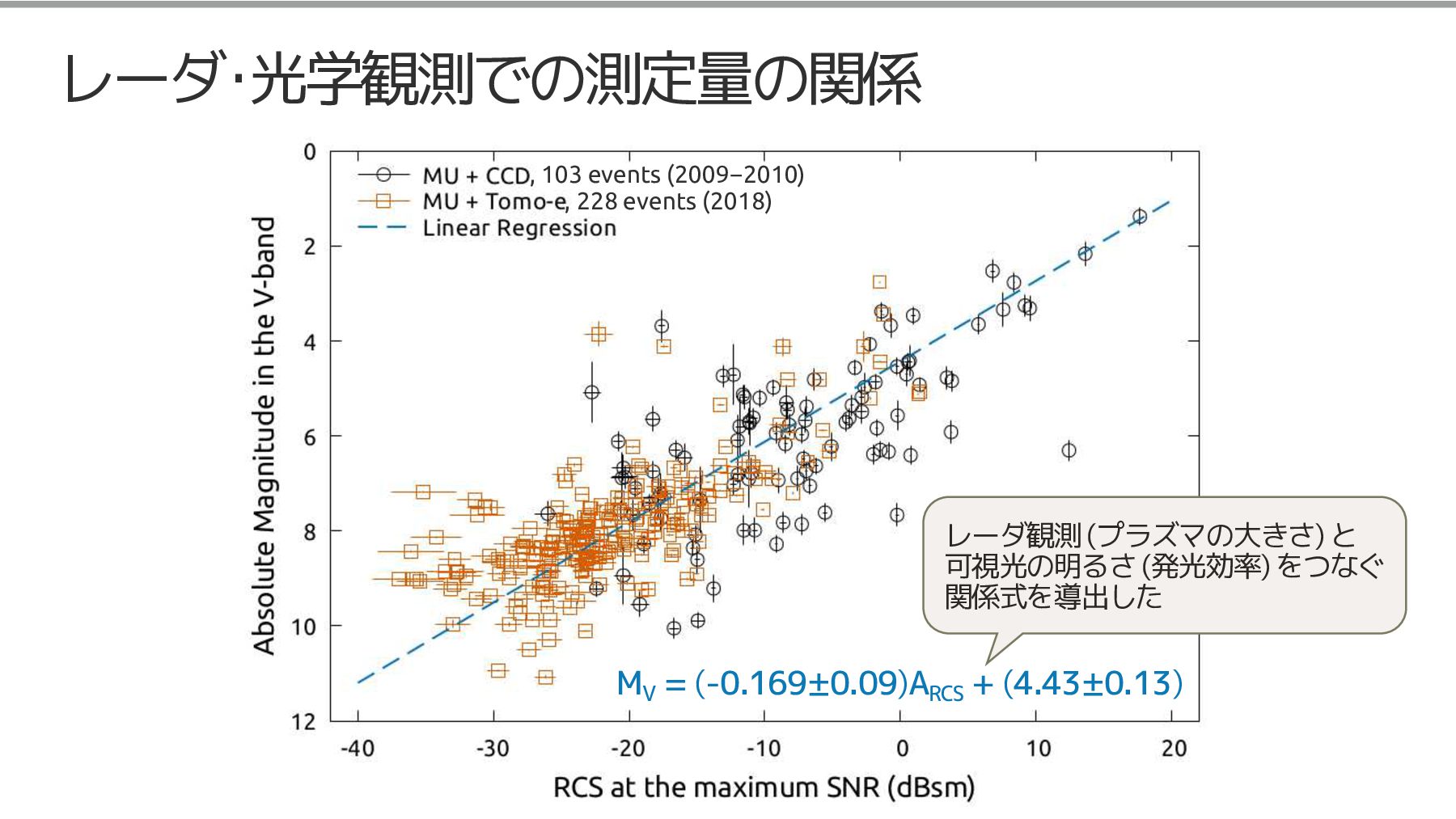
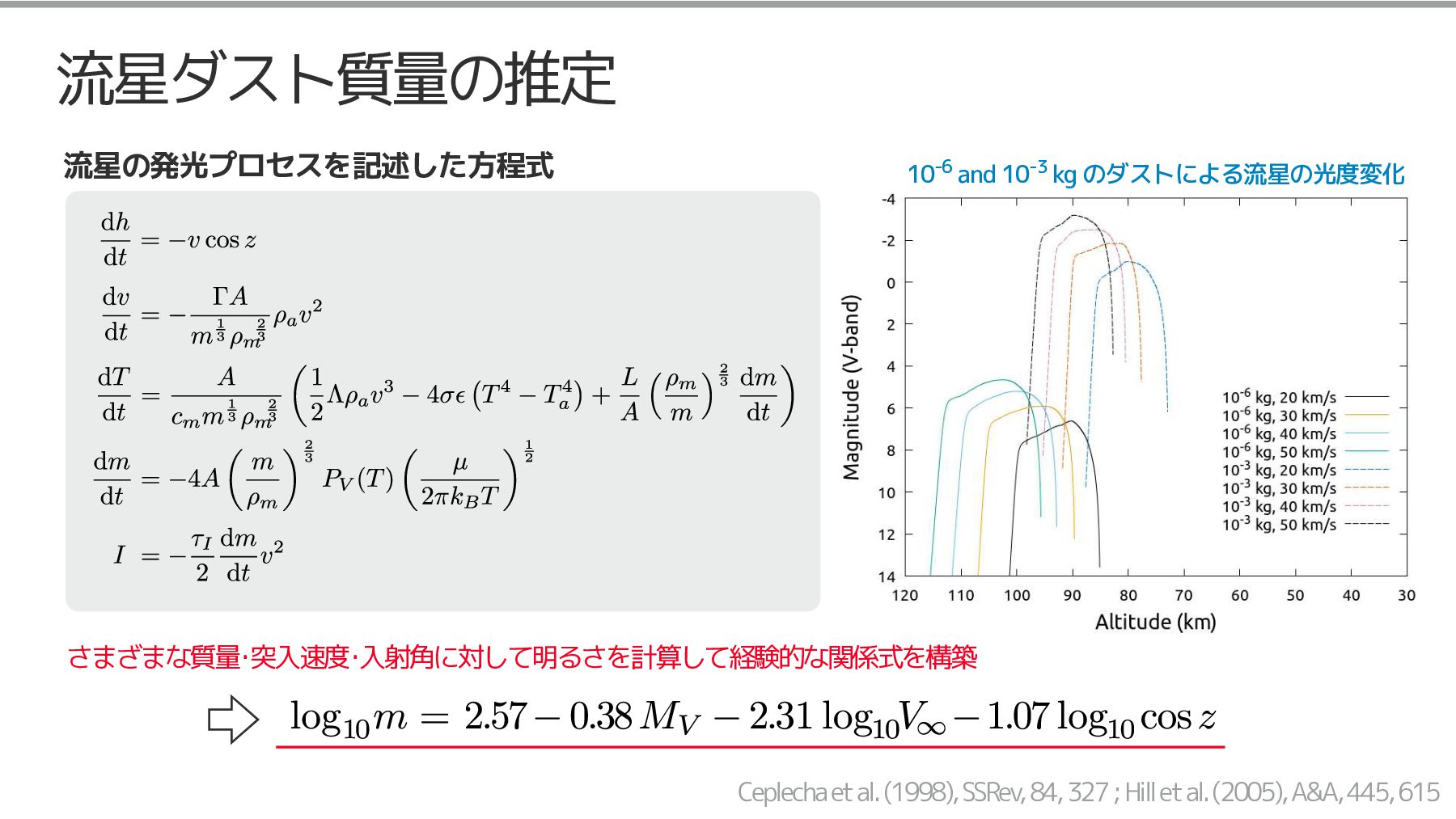
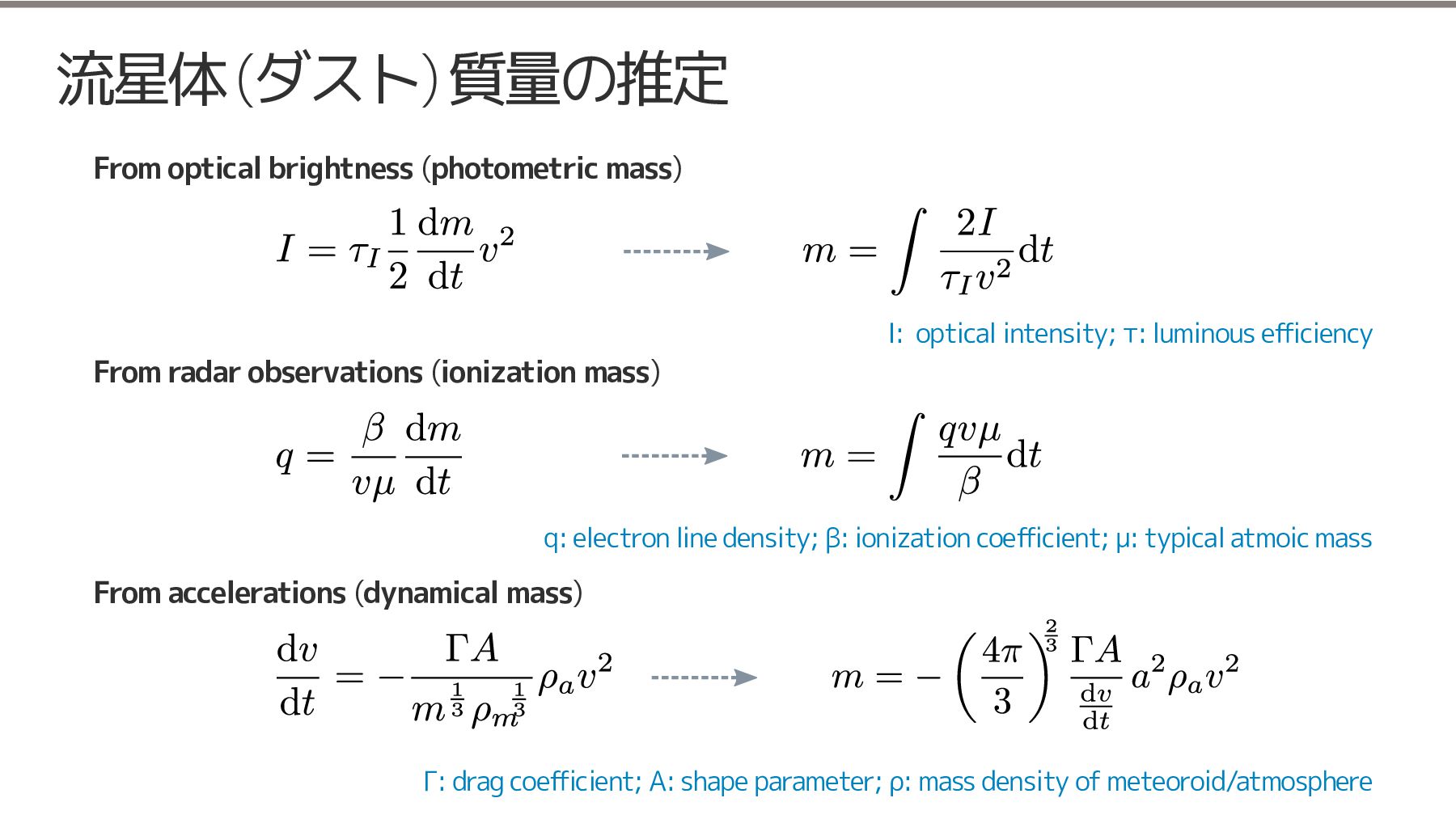
intensity; τ: luminous efficiency From radar observations (ionization mass) q: electron line density; β: ionization coefficient; μ: typical atmoic mass From accelerations (dynamical mass) Γ: drag coefficient; A: shape parameter; ρ: mass density of meteoroid/atmosphere
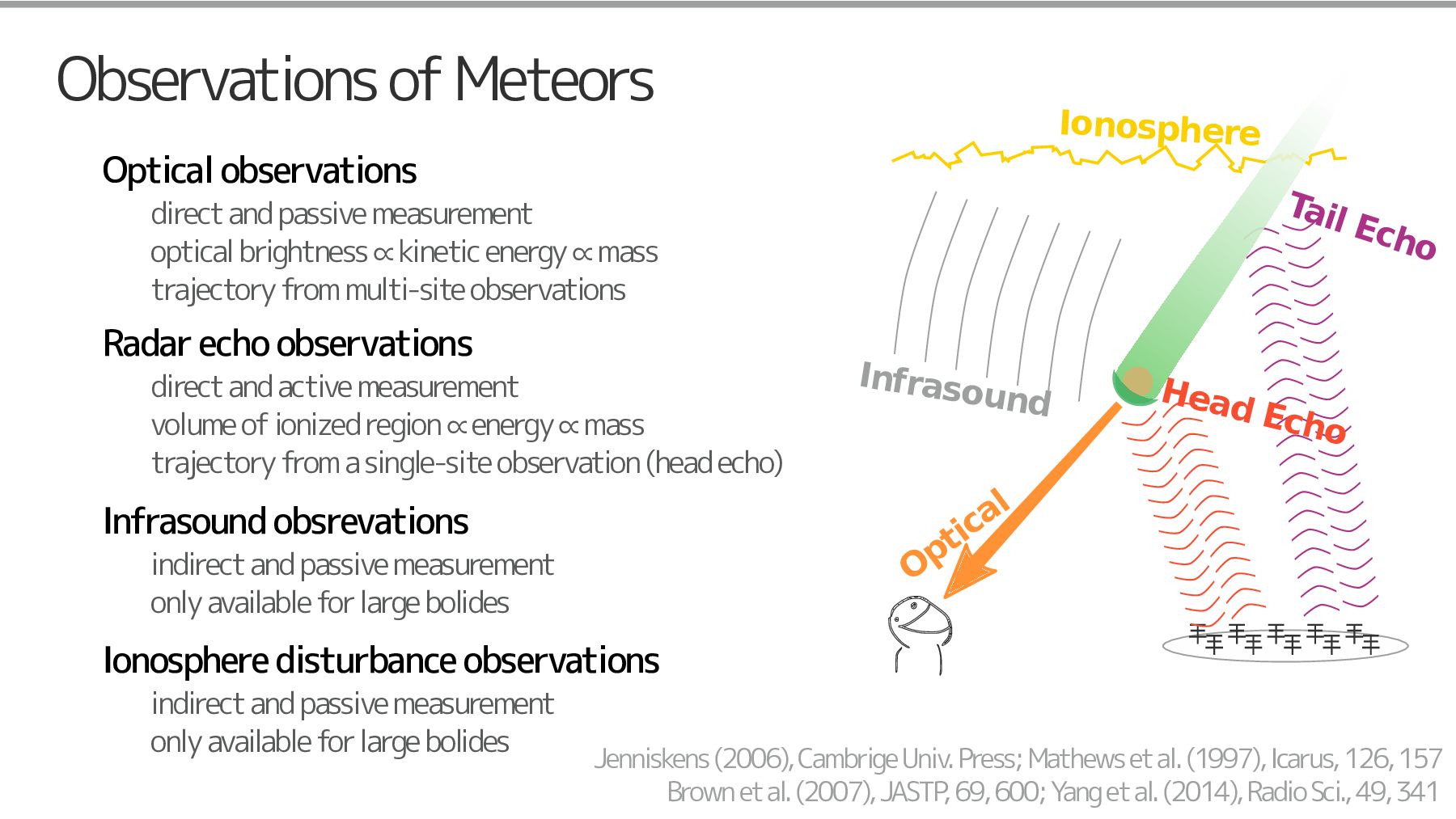
and passive measurement optical brightness ∝ kinetic energy ∝ mass trajectory from multi-site observations Radar echo observations direct and active measurement volume of ionized region ∝ energy ∝ mass trajectory from a single-site observation (head echo) Infraso und Head Echo al c i t Op Infrasound obsrevations indirect and passive measurement only available for large bolides Ionosphere disturbance observations indirect and passive measurement only available for large bolides Jenniskens (2006), Cambrige Univ. Press; Mathews et al. (1997), Icarus, 126, 157 Brown et al. (2007), JASTP, 69, 600; Yang et al. (2014), Radio Sci., 49, 341


 astronasutarou
 trycycle
 jarvist
 tsoh
tsoh
 ykiyota
 voginip
 satocos135
.jpg) ktatsuya
ktatsuya
 konakalab
 mickey_0226
 akasan
 aleyda
 baasie
 joshbly
 sabderemane
 aarron
 wjessup
 greggifford
 michielstock
 uxyall
 scottboms
 inesmontani
 honzajavorek