NRI Investing in PMS: Rules, Taxes & Repatriation | Chanakya Capital
NRIs can invest in Indian PMS via NRE or NRO accounts ₹50 lakh minimum, domestic equity tax rates; TDS at source; repatriation rules differ by account.
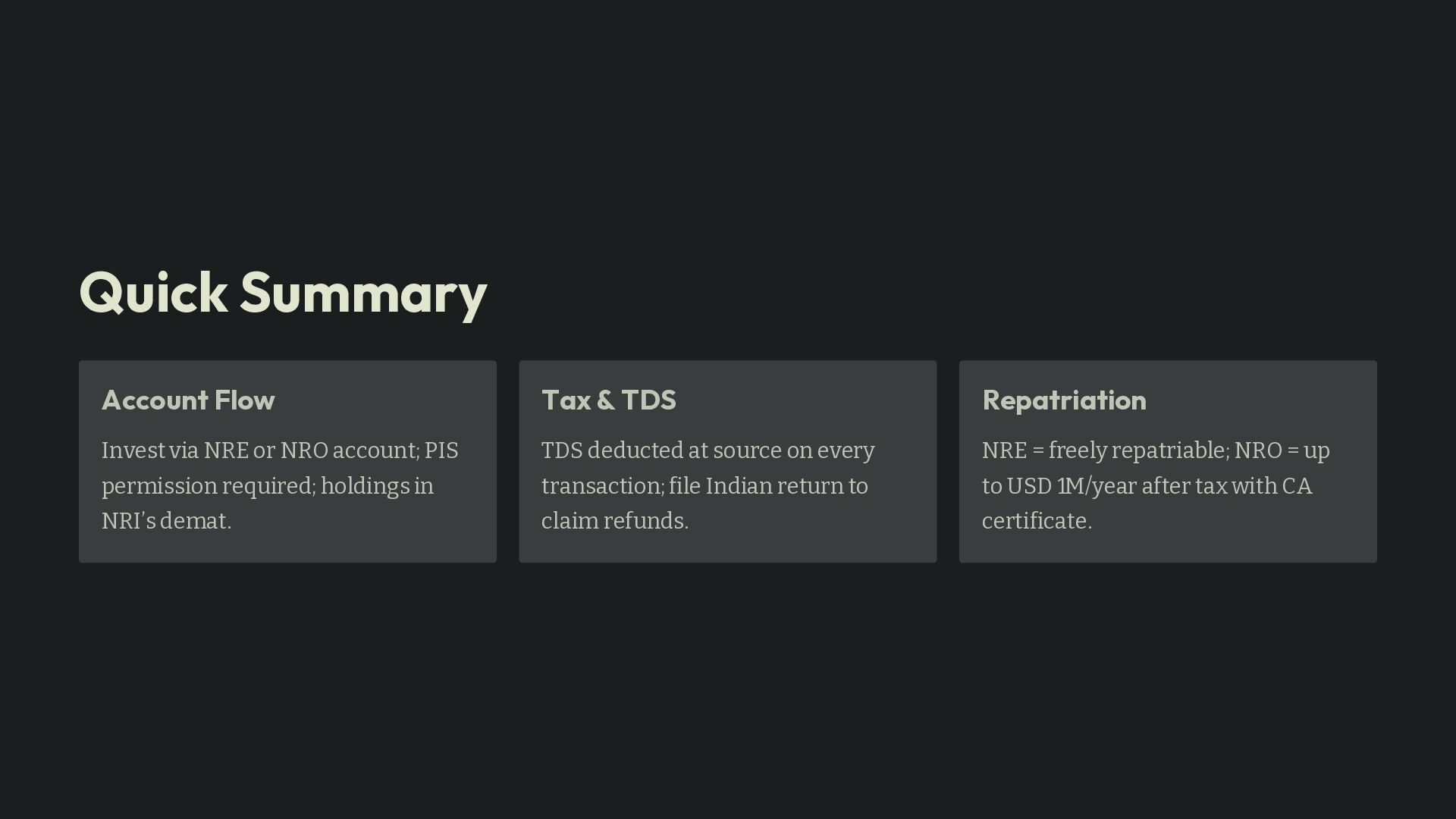
NRE or NRO account; PIS TDS deducted at source on every NRE = freely repatriable; NRO = up permission required; holdings in transaction; file Indian return to to USD 1M/year after tax with CA NRI’s demat. claim refunds. certificate.
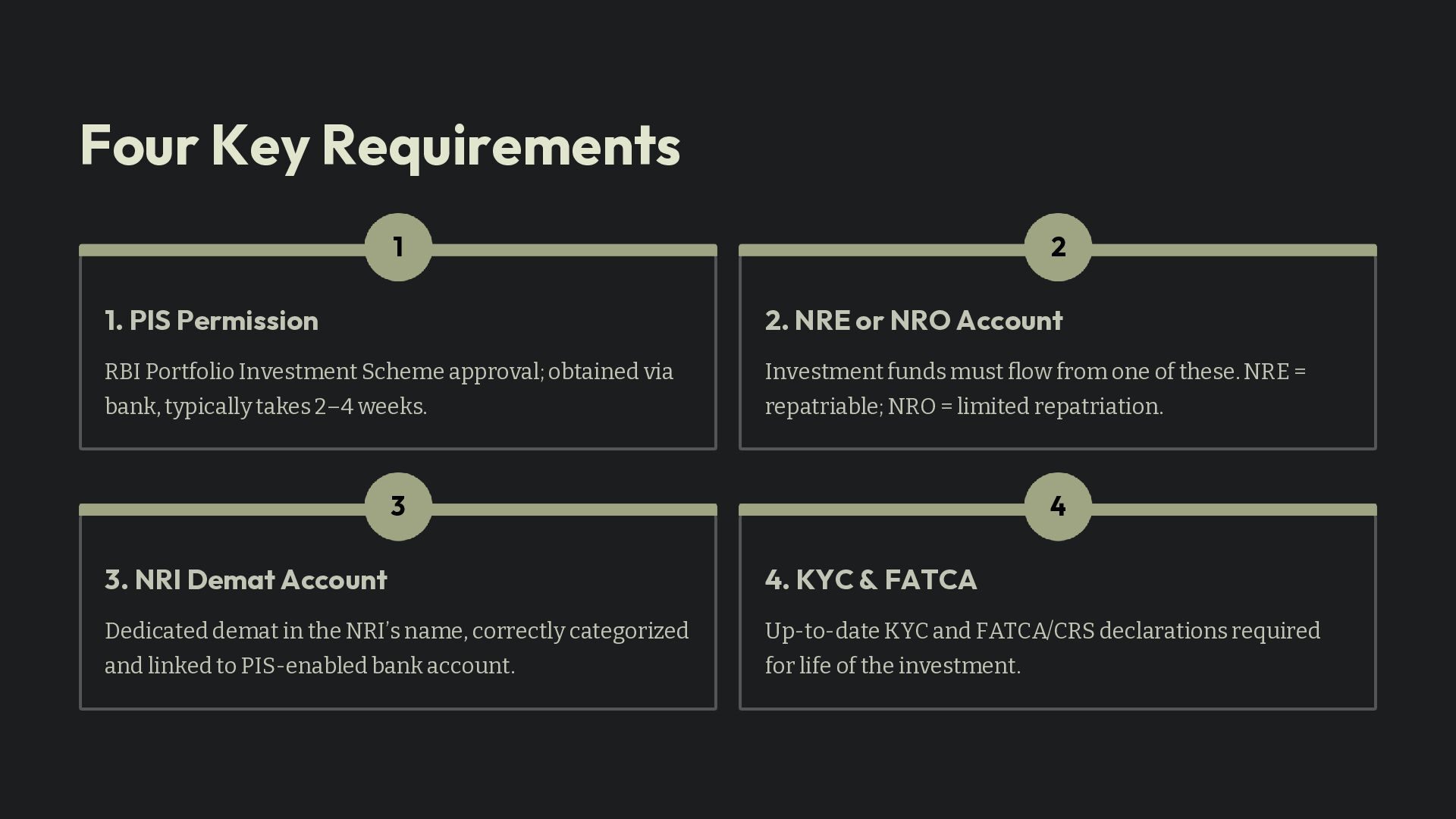
or NRO Account RBI Portfolio Investment Scheme approval; obtained via Investment funds must flow from one of these. NRE = bank, typically takes 2–4 weeks. repatriable; NRO = limited repatriation. 3 4 3. NRI Demat Account 4. KYC & FATCA Dedicated demat in the NRI’s name, correctly categorized Up-to-date KYC and FATCA/CRS declarations required and linked to PIS-enabled bank account. for life of the investment.
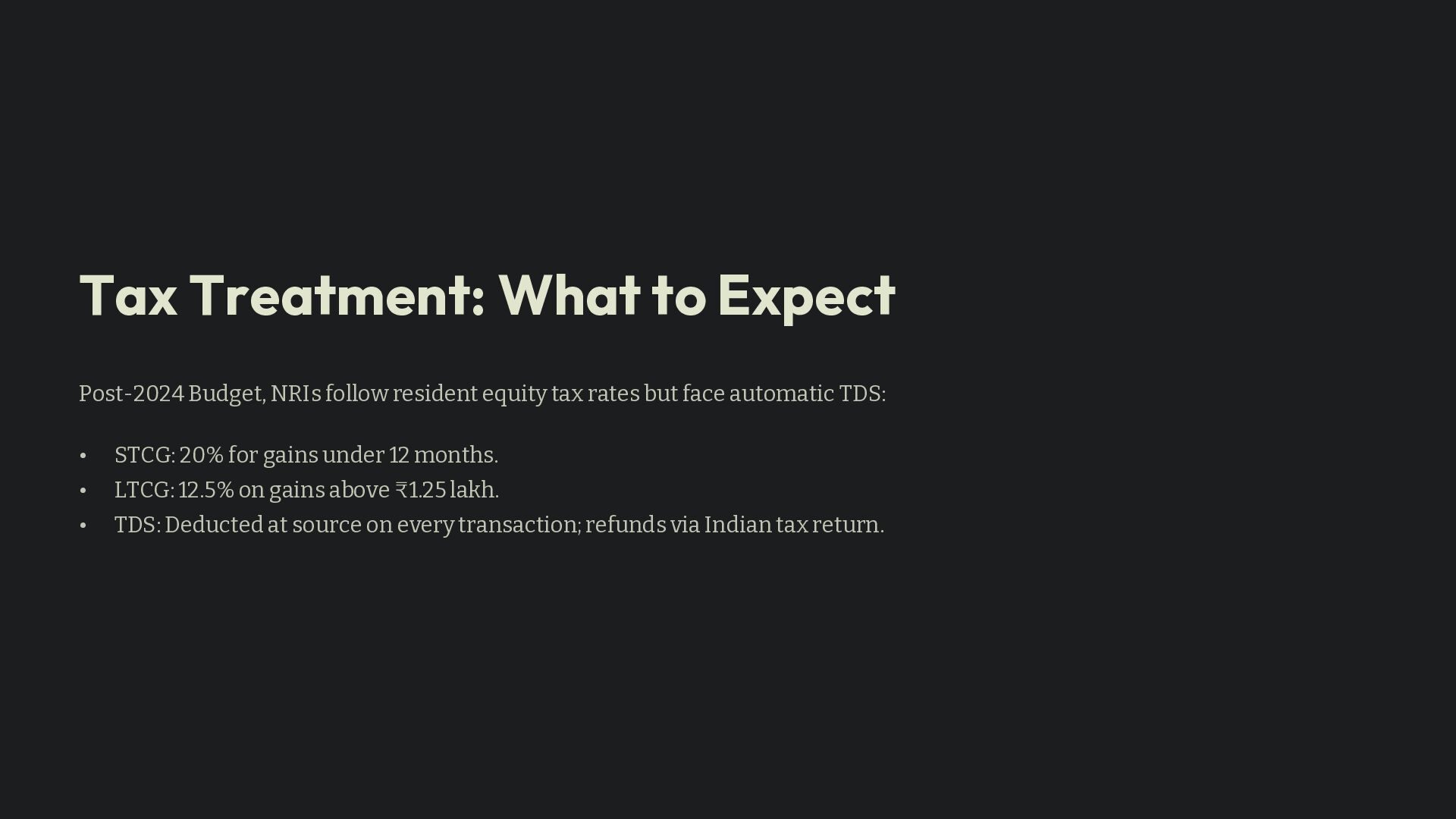
equity tax rates but face automatic TDS: • STCG: 20% for gains under 12 months. • LTCG: 12.5% on gains above ₹1.25 lakh. • TDS: Deducted at source on every transaction; refunds via Indian tax return.
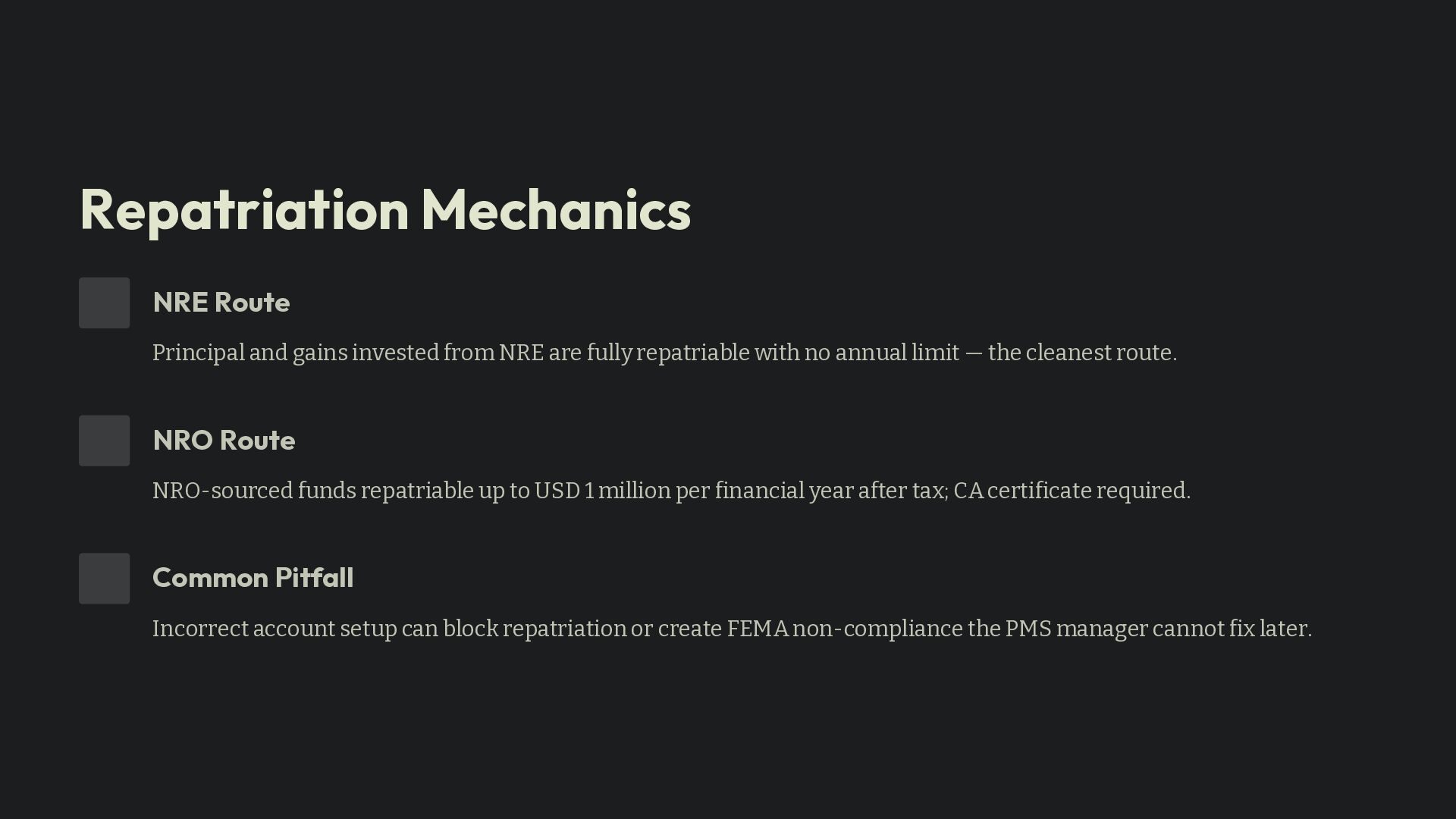
are fully repatriable with no annual limit — the cleanest route. NRO Route NRO-sourced funds repatriable up to USD 1 million per financial year after tax; CA certificate required. Common Pitfall Incorrect account setup can block repatriation or create FEMA non-compliance the PMS manager cannot fix later.
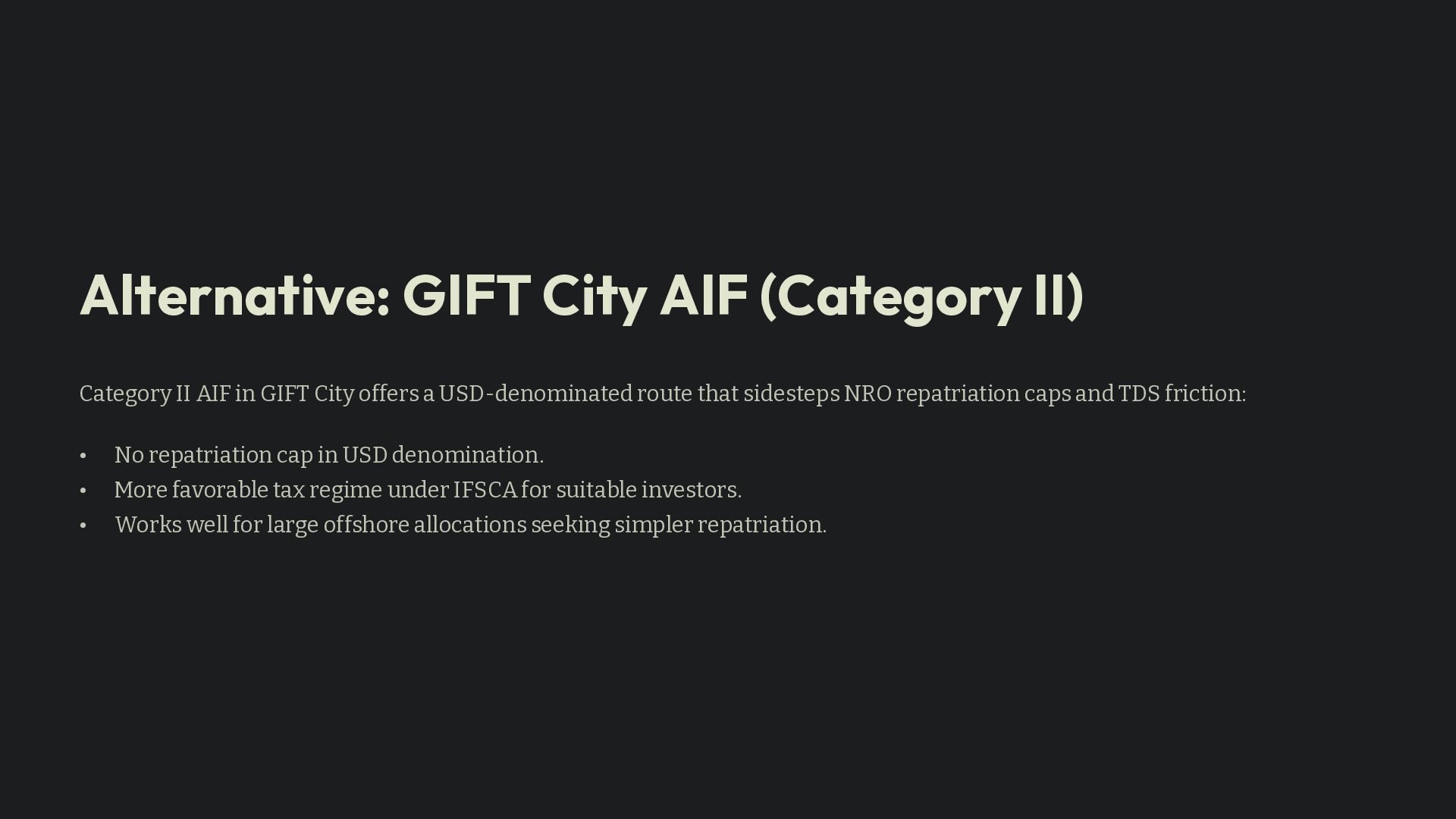
GIFT City offers a USD-denominated route that sidesteps NRO repatriation caps and TDS friction: • No repatriation cap in USD denomination. • More favorable tax regime under IFSCA for suitable investors. • Works well for large offshore allocations seeking simpler repatriation.
for NRIs, HNIs, and SEBI-registered (INP000006040) with 35+ City IFSC. They recommend the structure that fits the client, not the one years combined Indian equity experience. easiest to sell. family offices via onshore PMS (NRE/NRO) and a Category III AIF at GIFT
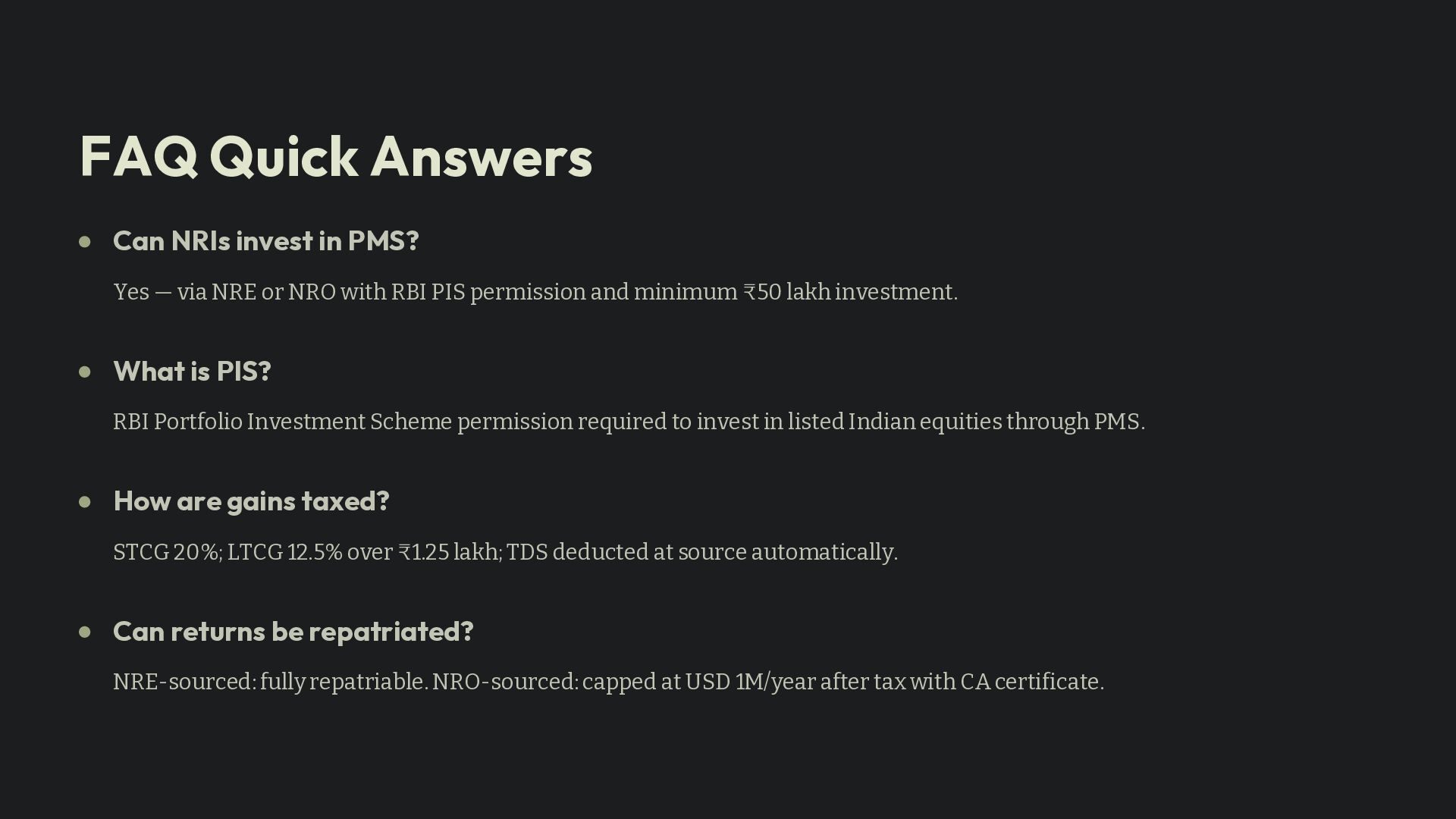
via NRE or NRO with RBI PIS permission and minimum ₹50 lakh investment. What is PIS? RBI Portfolio Investment Scheme permission required to invest in listed Indian equities through PMS. How are gains taxed? STCG 20%; LTCG 12.5% over ₹1.25 lakh; TDS deducted at source automatically. Can returns be repatriated? NRE-sourced: fully repatriable. NRO-sourced: capped at USD 1M/year after tax with CA certificate.
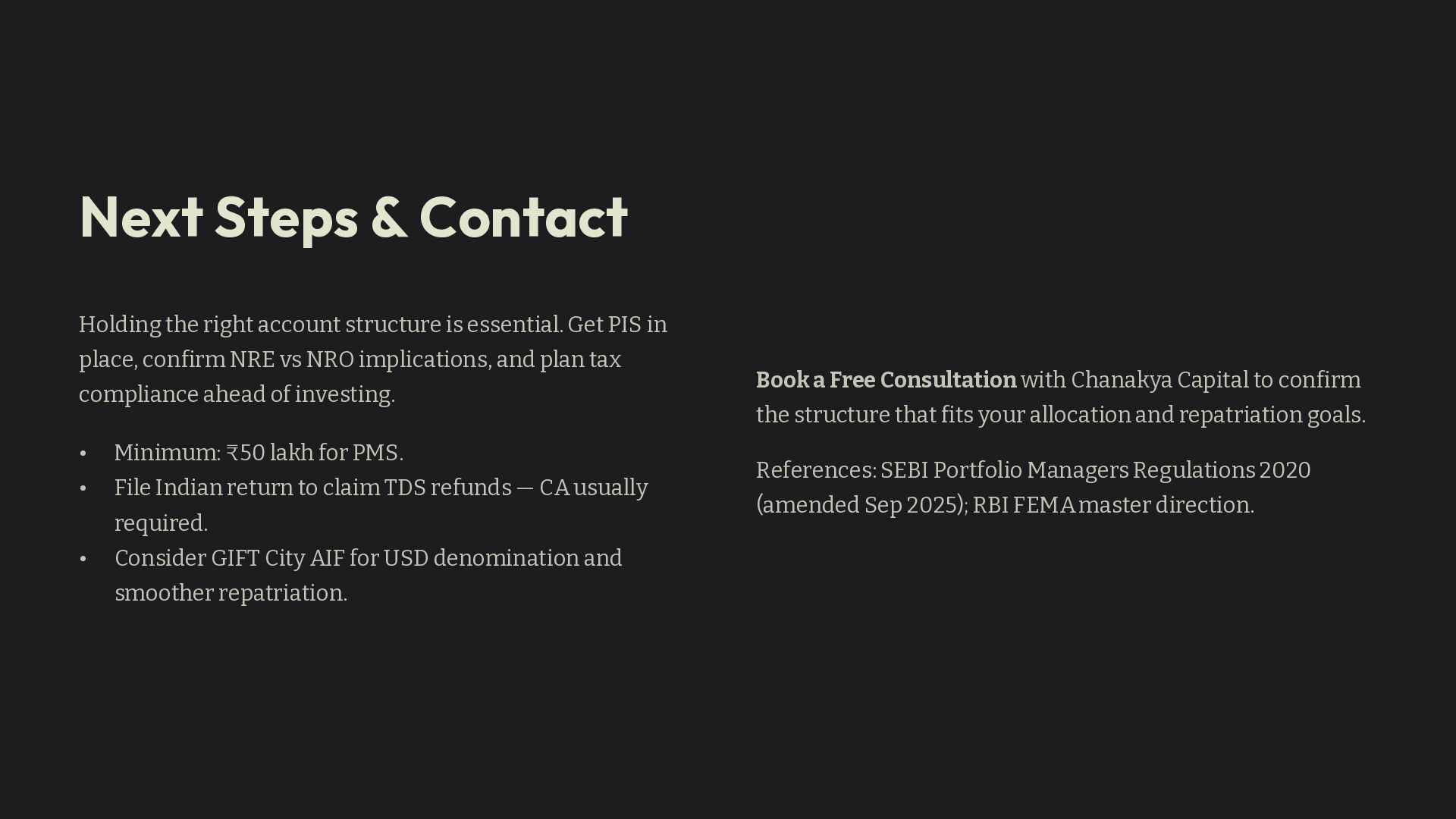
essential. Get PIS in place, confirm NRE vs NRO implications, and plan tax compliance ahead of investing. • Minimum: ₹50 lakh for PMS. • File Indian return to claim TDS refunds — CA usually required. • Consider GIFT City AIF for USD denomination and smoother repatriation. Book a Free Consultation with Chanakya Capital to confirm the structure that fits your allocation and repatriation goals. References: SEBI Portfolio Managers Regulations 2020 (amended Sep 2025); RBI FEMA master direction.


 tribal
 frankvandijk
 gurzu
 speedyindexteam
 katarinadahlin
 joss1
 sarosaro
 decabbit
 amanaut
 pmeyers7
 metehanyesilyurt
 aleyda
 tmiket
 madoxten
 bcantrill
 marcoroth
 livdayseo
 eileencodes
 kneath
 cassininazir
 aki_iinuma
 jonrohan
 lara
 inesmontani