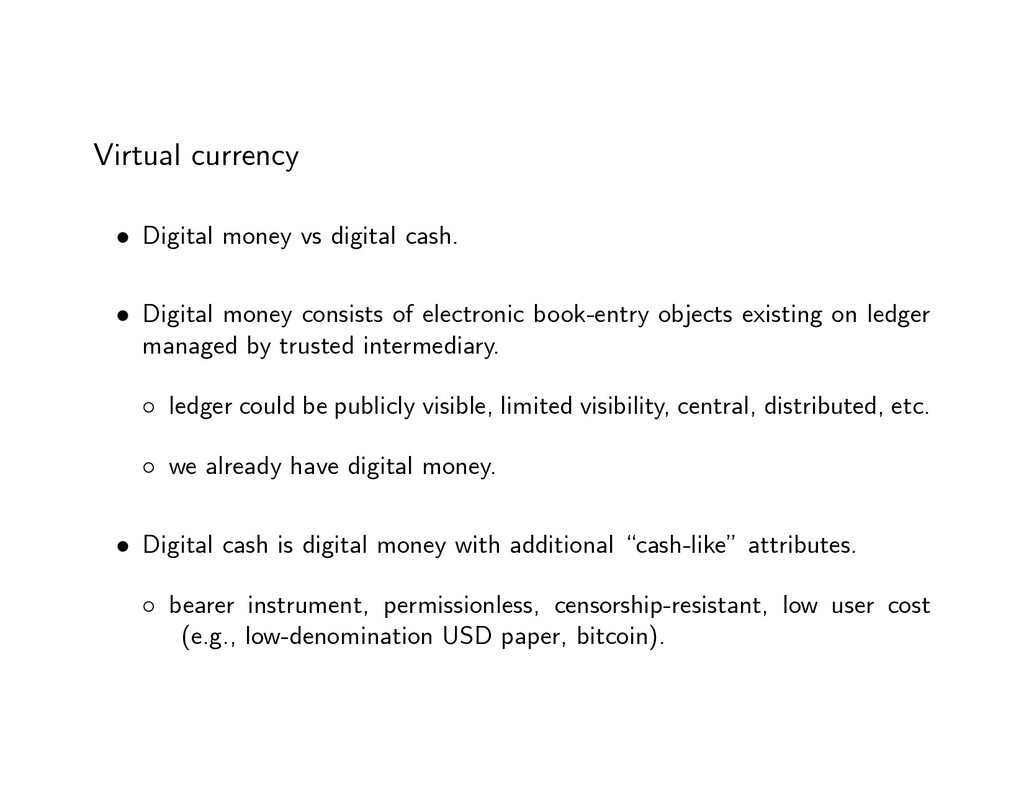
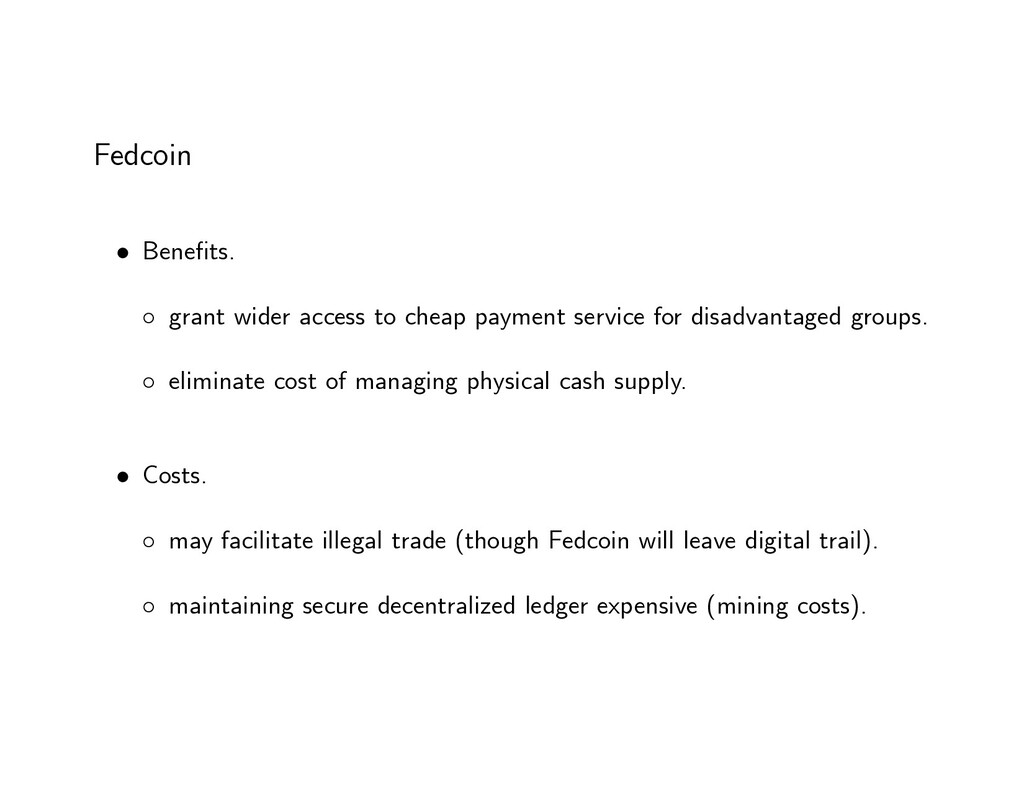
of electronic book-entry objects existing on ledger managed by trusted intermediary. ledger could be publicly visible, limited visibility, central, distributed, etc. we already have digital money. Digital cash is digital money with additional “cash-like” attributes. bearer instrument, permissionless, censorship-resistant, low user cost (e.g., low-denomination USD paper, bitcoin).
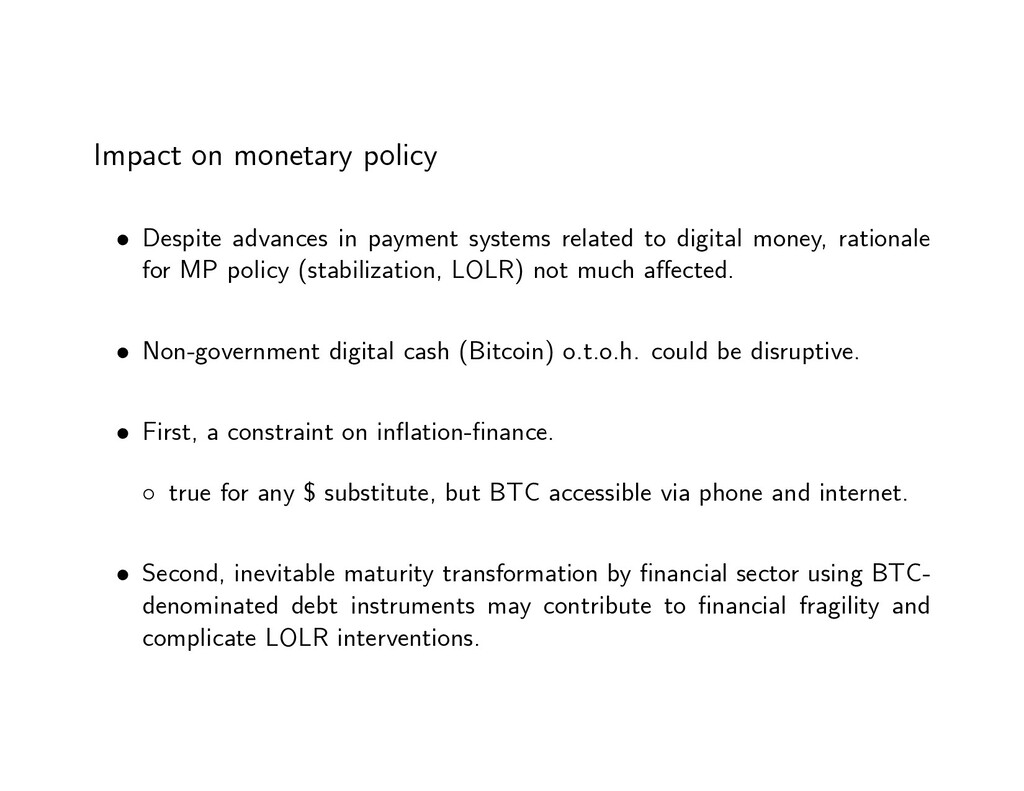
to digital money, rationale for MP policy (stabilization, LOLR) not much a¤ected. Non-government digital cash (Bitcoin) o.t.o.h. could be disruptive. First, a constraint on in‡ation-…nance. true for any $ substitute, but BTC accessible via phone and internet. Second, inevitable maturity transformation by …nancial sector using BTC- denominated debt instruments may contribute to …nancial fragility and complicate LOLR interventions.
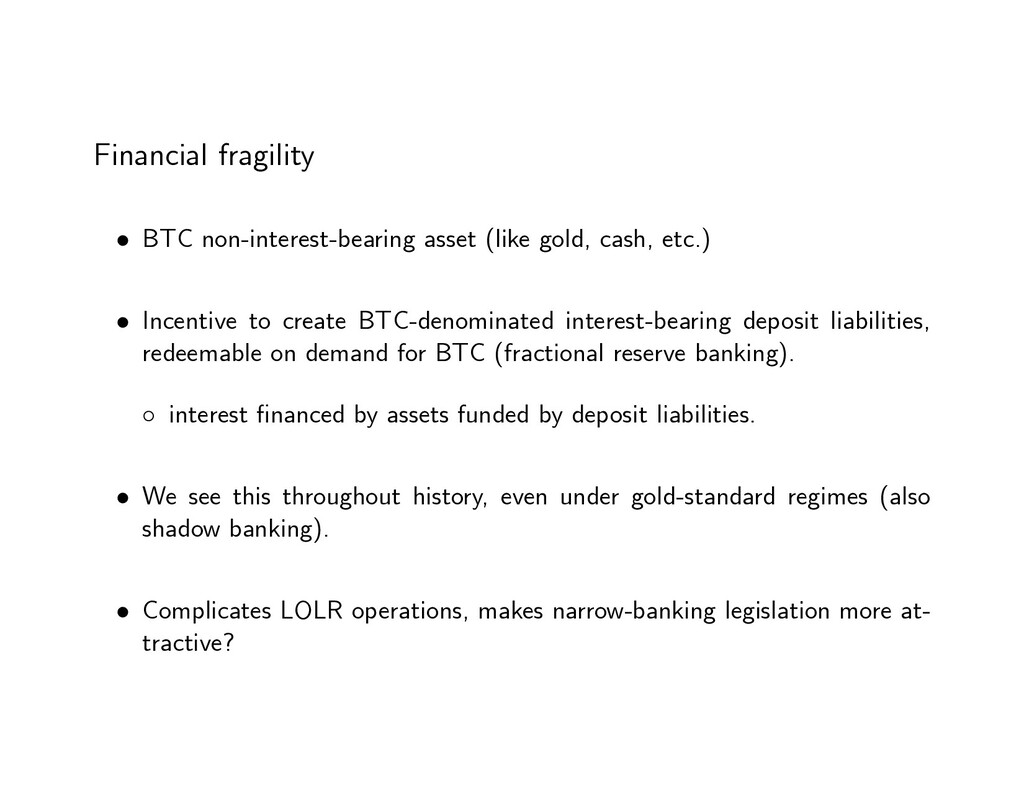
to create BTC-denominated interest-bearing deposit liabilities, redeemable on demand for BTC (fractional reserve banking). interest …nanced by assets funded by deposit liabilities. We see this throughout history, even under gold-standard regimes (also shadow banking). Complicates LOLR operations, makes narrow-banking legislation more at- tractive?
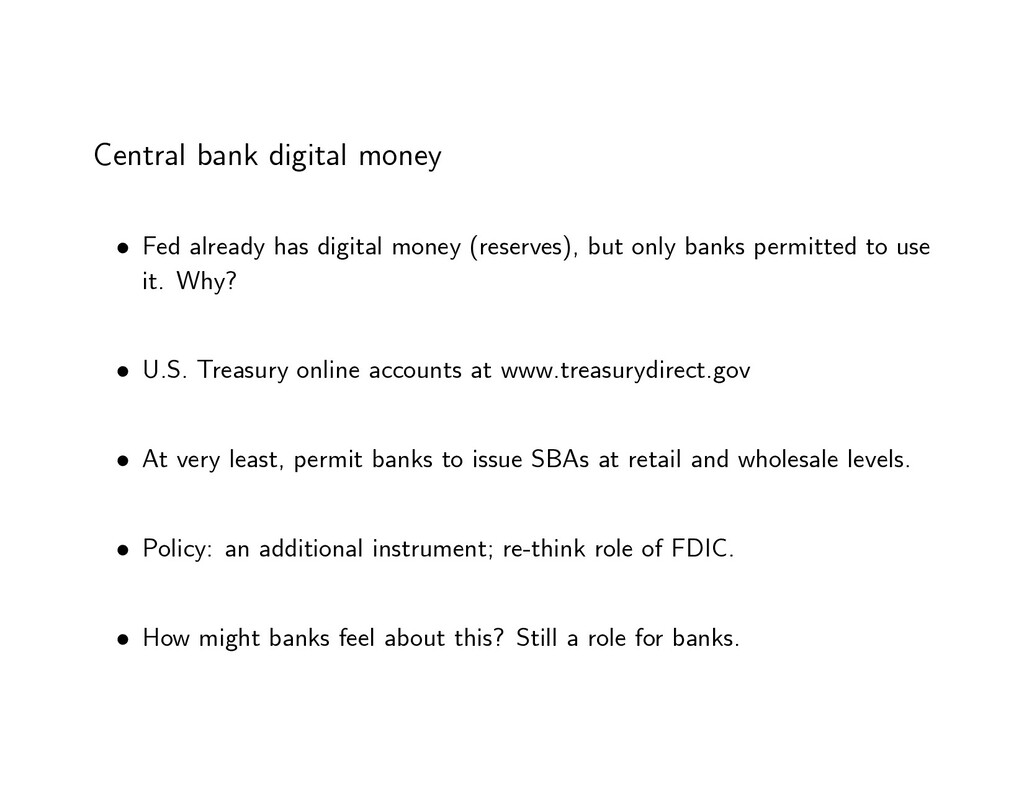
but only banks permitted to use it. Why? U.S. Treasury online accounts at www.treasurydirect.gov At very least, permit banks to issue SBAs at retail and wholesale levels. Policy: an additional instrument; re-think role of FDIC. How might banks feel about this? Still a role for banks.
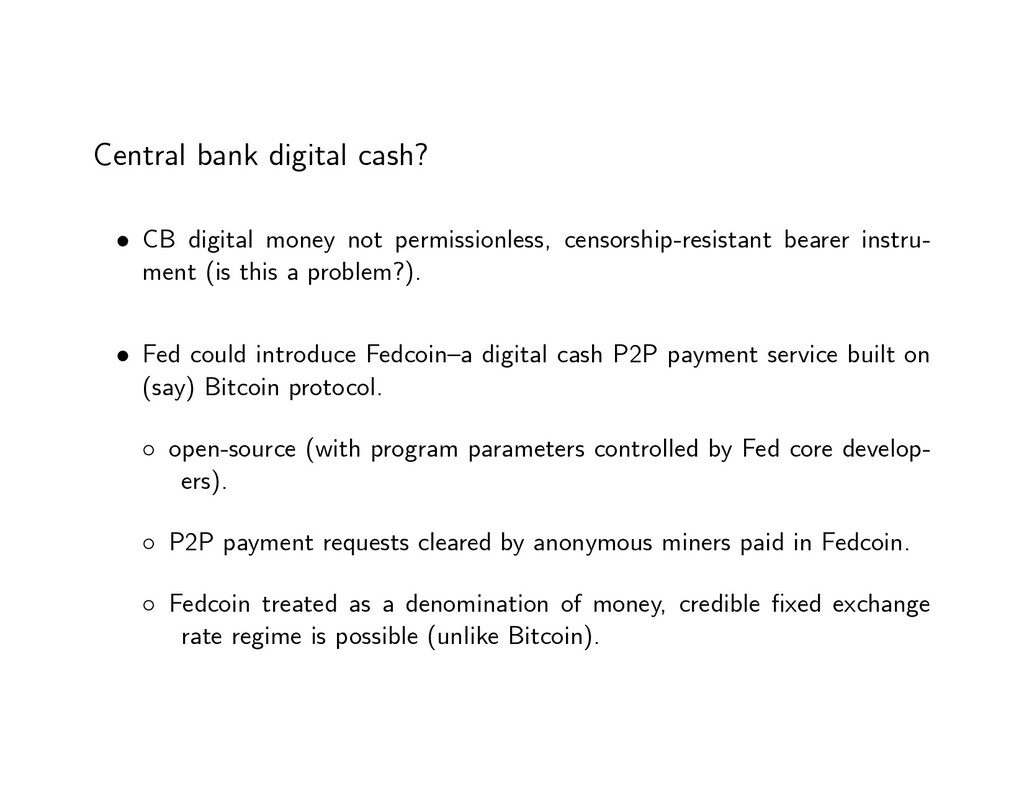
bearer instru- ment (is this a problem?). Fed could introduce Fedcoin–a digital cash P2P payment service built on (say) Bitcoin protocol. open-source (with program parameters controlled by Fed core develop- ers). P2P payment requests cleared by anonymous miners paid in Fedcoin. Fedcoin treated as a denomination of money, credible …xed exchange rate regime is possible (unlike Bitcoin).
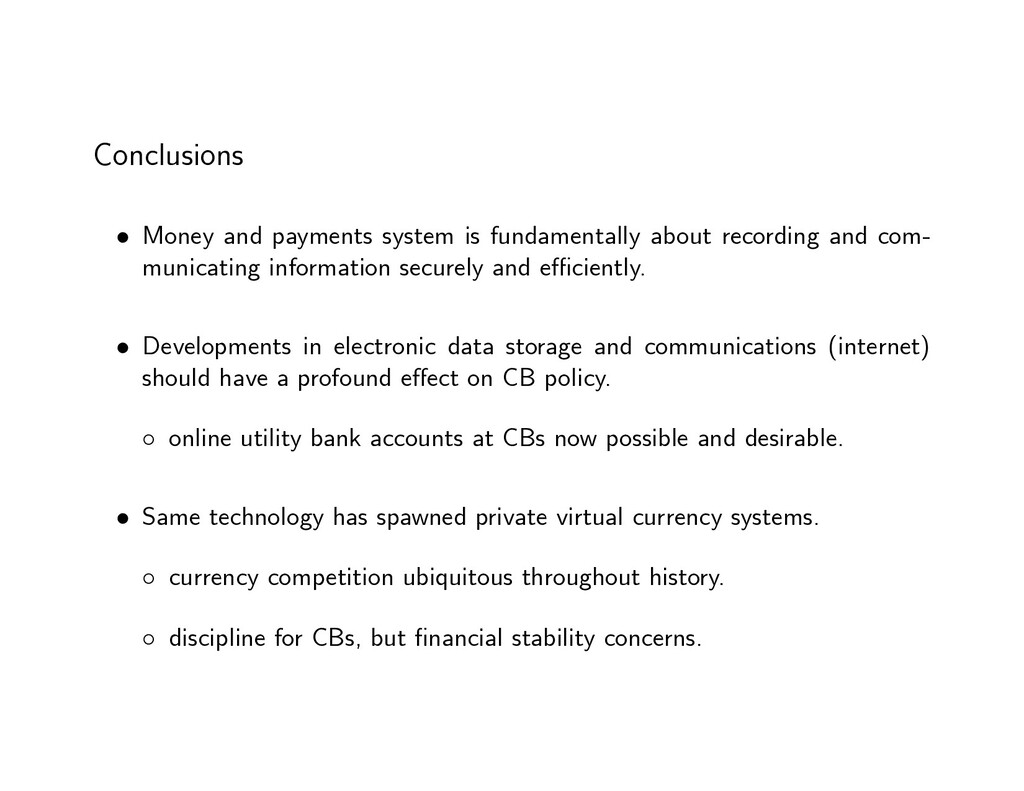
com- municating information securely and e¢ ciently. Developments in electronic data storage and communications (internet) should have a profound e¤ect on CB policy. online utility bank accounts at CBs now possible and desirable. Same technology has spawned private virtual currency systems. currency competition ubiquitous throughout history. discipline for CBs, but …nancial stability concerns.


 dandolfa
 juanmartin2026
 drpoonamkc
 auctria
 kaityo256
 spring_aki
 bvr7352
 robintux
 hiola
hiola
 signer
 dragon2
 terasawat
 reverentgeek
 michaelherold
 hannesfritz
 danielanewman
 eileencodes
 jnunemaker
 marketingsoph
 keathley
 jct
jct
.jpg) cargoodrich
cargoodrich
 codingconduct