Upgrade to Pro — share decks privately, control downloads, hide ads and more …

Solar Panel Maintenance in West Bengal A Comple...

Solar Panel Maintenance in West Bengal A Complete Monsoon Guide

To read the full blog go through this link : https://www.deeurosolar.com/solar-panel-maintenance-west-bengal/

Transcript

7 slides
  1. Solar Panel Maintenance Guide for the Monsoon Season Protecting your

    rooftop solar power investment during heavy rainfall, humidity, and storms.
  2. Routine monsoon maintenance ensures reliable performance and safety. Maximize Reliability

    Ensure Electrical Safety Proactive monitoring prevents unexpected downtime when sunlight is already scarce due to cloud cover. Routine checks help identify potential moisture ingress points before they become severe electrical hazards. Protect Long-Term Lifespan Protect Your Investment Clearing debris and ensuring proper drainage prevents localized water damage and structural strain on your roof and mounting hardware. Consistent care during extreme weather preserves the efficiency and financial return of your residential solar installation.
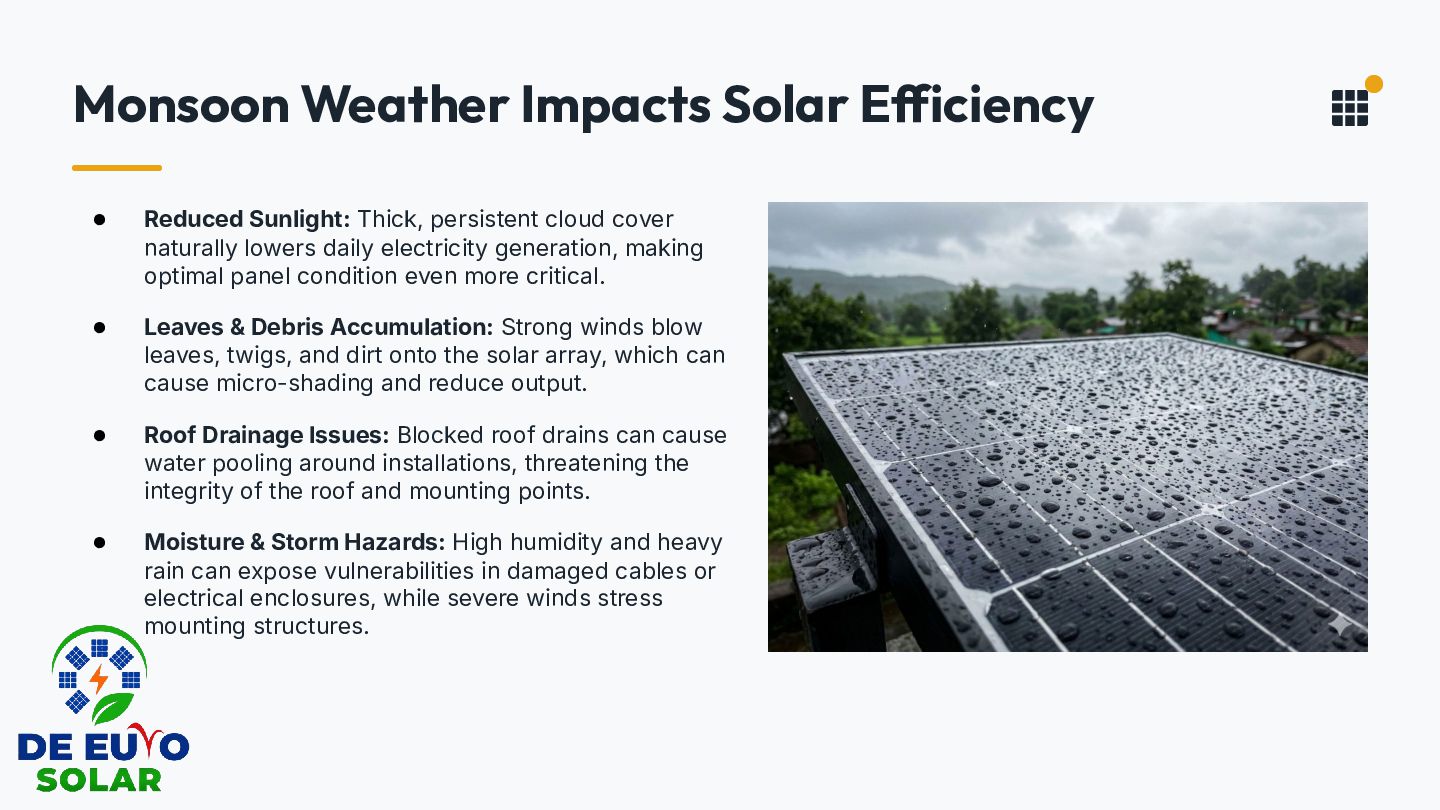
  3. Monsoon Weather Impacts Solar Efficiency • Reduced Sunlight: Thick, persistent

    cloud cover naturally lowers daily electricity generation, making optimal panel condition even more critical. • Leaves & Debris Accumulation: Strong winds blow leaves, twigs, and dirt onto the solar array, which can cause micro-shading and reduce output. • Roof Drainage Issues: Blocked roof drains can cause water pooling around installations, threatening the integrity of the roof and mounting points. • Moisture & Storm Hazards: High humidity and heavy rain can expose vulnerabilities in damaged cables or electrical enclosures, while severe winds stress mounting structures.
  4. Proactive cleaning and monitoring are essential for optimal monsoon performance.

    1 2 3 Safe Panel Cleaning Active System Monitoring Drainage Maintenance Wait until the weather clears completely. Use only soft, non-abrasive materials and clean water to gently remove stubborn dirt, leaves, or bird droppings. Regularly check your inverter display or mobile monitoring app. Compare current generation trends against baseline expectations for cloudy days. Keep your roof healthy by regularly checking and clearing all roof drainage points to prevent standing water near the solar array mounts.
  5. Safety First Guidelines Stay Off the Array Never climb, lean,

    or stand on solar panels under any circumstances. Avoid Hazardous Weather Do not attempt any cleaning or inspection during active rain, strong winds, or when roof surfaces are wet and slippery. Prioritize Safety Always Protect your system and yourself by avoiding hazardous conditions and using proper, safe cleaning methods at all times. Electrical Caution Avoid touching any damaged components, exposed cables, or wet electrical enclosures to prevent severe shock hazards. Proper Cleaning Agents Do not use harsh chemicals, detergents, or abrasive tools, as these can permanently scratch the anti-reflective coating on the glass.
  6. A post-monsoon review helps identify underlying issues and restores optimal

    generation. Generation Comparison Check Inverter Alerts Once the weather stabilizes, compare your current energy generation records with previous sunny periods to ensure the system has fully recovered. Review your inverter's history to identify any recurring warnings, ground faults, or error codes triggered during the storms. Safe Visual Inspection Maintenance Logging Inspect the panels and mounting hardware from a safe ground location to check for accumulated dirt or structural shifts. Keep detailed, documented records of all your personal inspections and any visits from professional technicians.
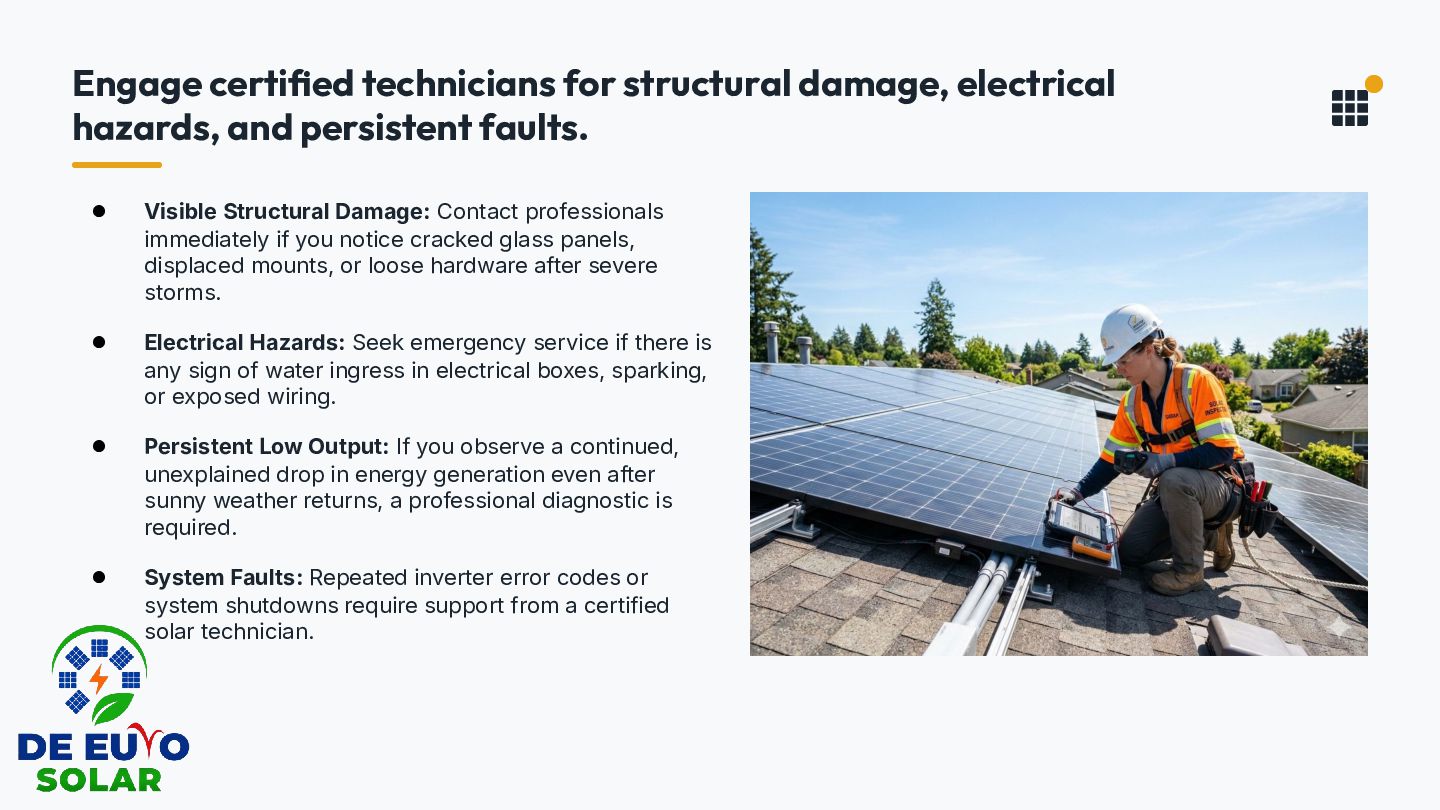
  7. Engage certified technicians for structural damage, electrical hazards, and persistent

    faults. • Visible Structural Damage: Contact professionals immediately if you notice cracked glass panels, displaced mounts, or loose hardware after severe storms. • Electrical Hazards: Seek emergency service if there is any sign of water ingress in electrical boxes, sparking, or exposed wiring. • Persistent Low Output: If you observe a continued, unexplained drop in energy generation even after sunny weather returns, a professional diagnostic is required. • System Faults: Repeated inverter error codes or system shutdowns require support from a certified solar technician.

More Decks by DE EURO SOLAR ENERGY PVT. LTD.

Other Decks in Business