Share
Embed
DevOps Metrics 101
Are you looking for clarity on what really matters when measuring performance from a DevOps perspective? With so much data available, we'll look at which metrics are the most useful to better understand development, build, deployment, release and maintenance of software. This session brings visibility to the types of metrics that help others learn how DevOps teams measure performance, and how to get started in capturing and using these metrics to understand continuous delivery to customers
Dominica DeGrandis
August 08, 2018
Transcript
59 slides
-
ddegrandis.com @dominicad DevOps Metrics 101: What really matters when measuring
performance from a DevOps angle -
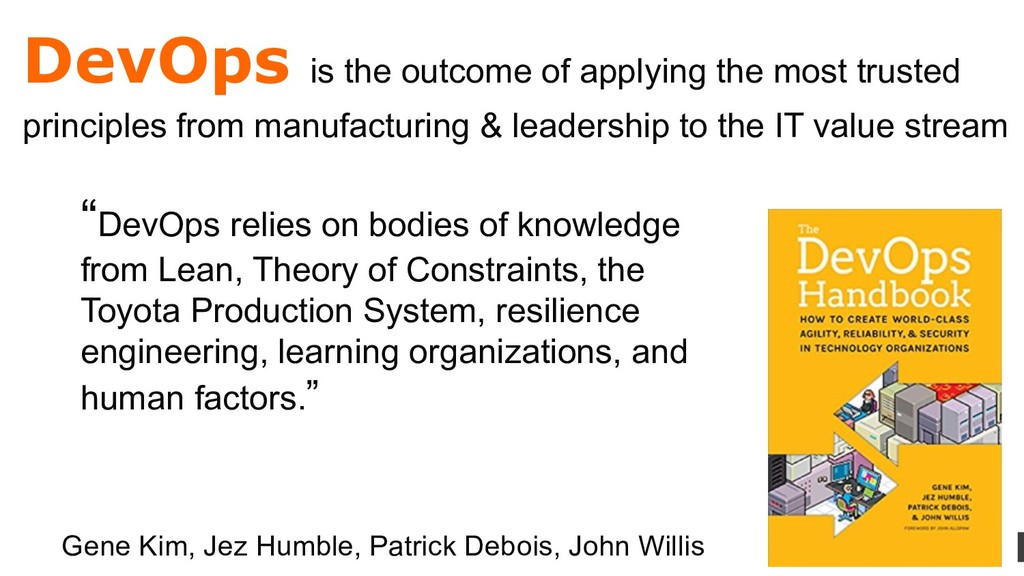
ddegrandis.com @dominicad DevOps is the outcome of applying the most
trusted principles from manufacturing & leadership to the IT value stream Gene Kim, Jez Humble, Patrick Debois, John Willis “DevOps relies on bodies of knowledge from Lean, Theory of Constraints, the Toyota Production System, resilience engineering, learning organizations, and human factors.” -
ddegrandis.com @dominicad “The result is world-class quality, reliability, stability, security
at lower costs/effort; and accelerated flow & reliability throughout the tech value stream, including Product Management, Dev, QA, ITOps, & Infosec.” -
ddegrandis.com @dominicad Learning Outcomes 1. Define the types of metrics
used for DevOps transformations. 2. Show how these metrics are measured and interpreted. 3. Identify top three ways to begin capturing and using DevOps metrics. -
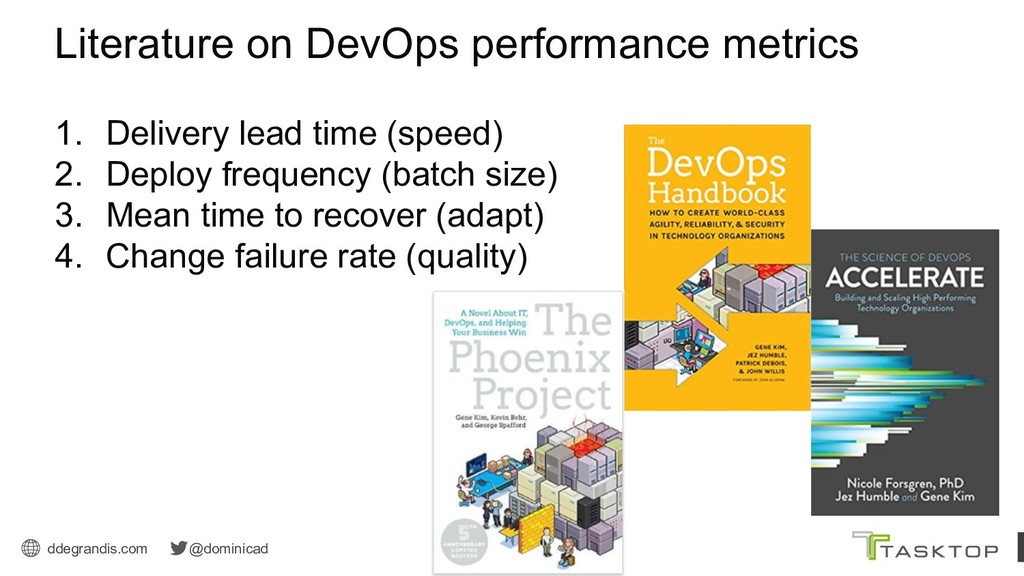
ddegrandis.com @dominicad Literature on DevOps performance metrics 1. Delivery lead
time (speed) 2. Deploy frequency (batch size) 3. Mean time to recover (adapt) 4. Change failure rate (quality) -
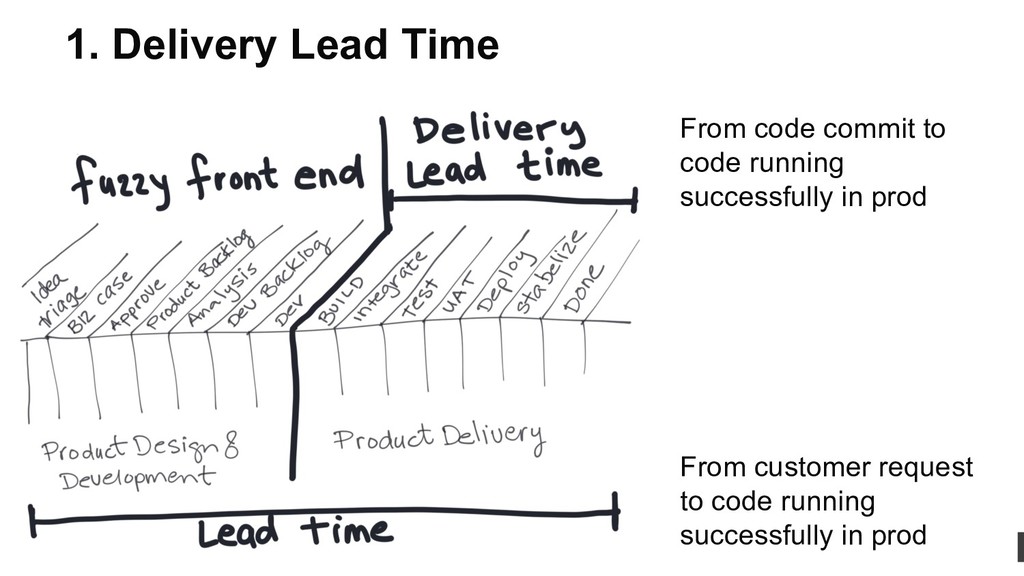
ddegrandis.com @dominicad 1. Delivery Lead Time From code commit to
code running successfully in prod From customer request to code running successfully in prod -
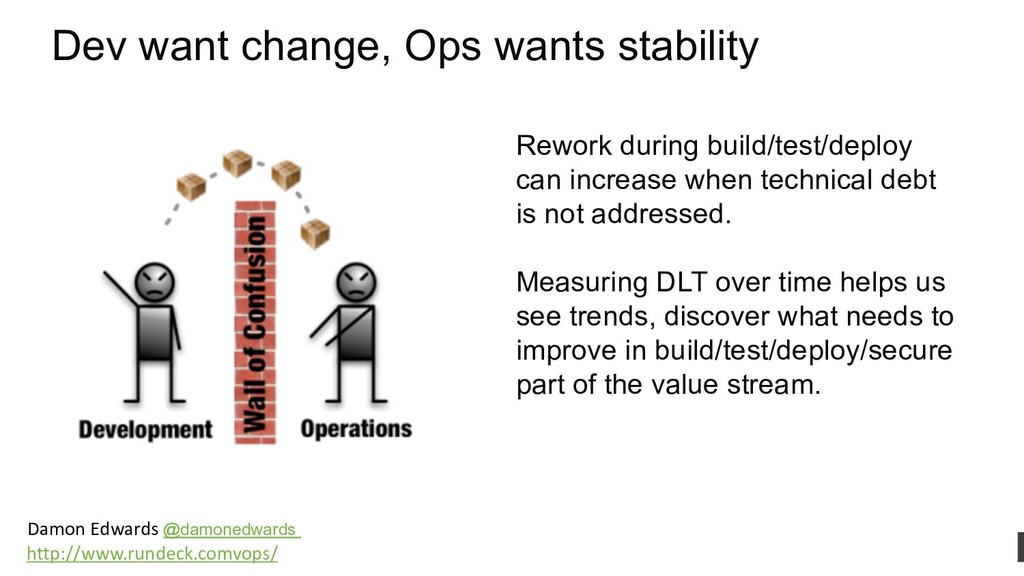
ddegrandis.com @dominicad http://www.rundeck.comvops/ Damon Edwards @damonedwards Rework during build/test/deploy can
increase when technical debt is not addressed. Measuring DLT over time helps us see trends, discover what needs to improve in build/test/deploy/secure part of the value stream. Dev want change, Ops wants stability -
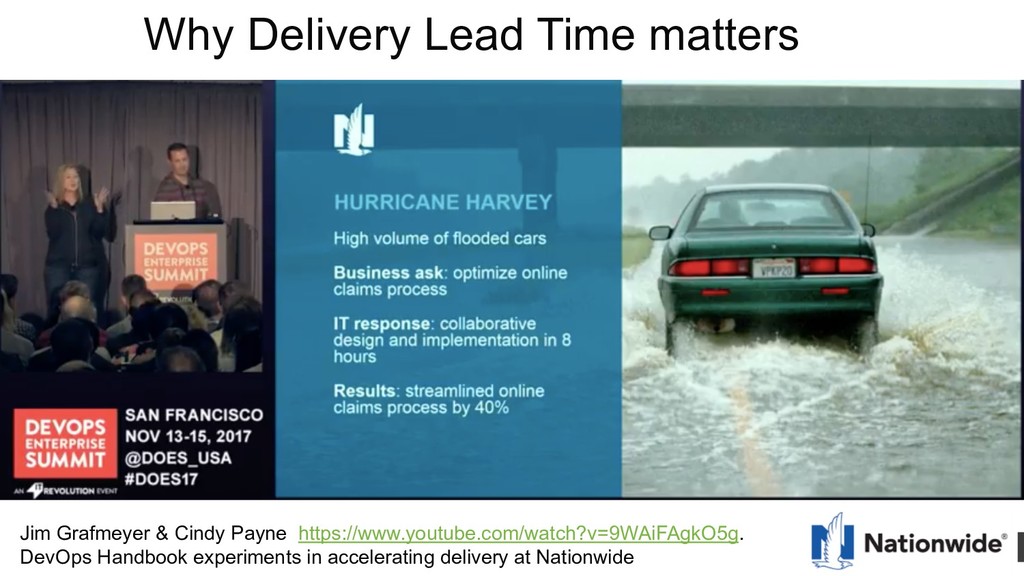
ddegrandis.com @dominicad Jim Grafmeyer & Cindy Payne https://www.youtube.com/watch?v=9WAiFAgkO5g. DevOps Handbook
experiments in accelerating delivery at Nationwide Why Delivery Lead Time matters -
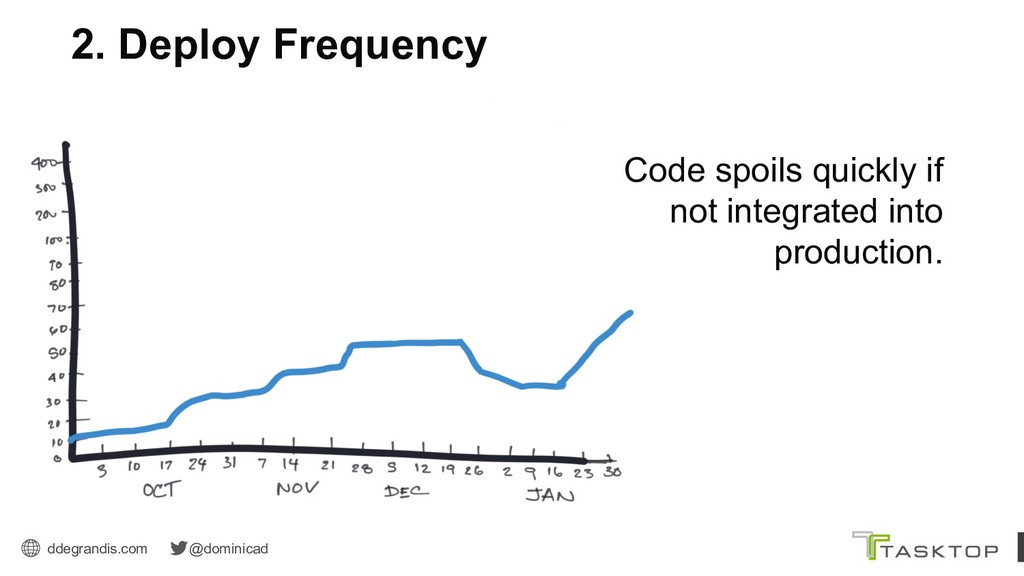
ddegrandis.com @dominicad 2. Deploy Frequency Code spoils quickly if not
integrated into production. -
ddegrandis.com @dominicad Why Deployment Frequency matters The more frequent deployments
are, the smaller the batch size is. Small batches accelerates feedback and reduces WIP which improves lead times, quality, & efficiency. -
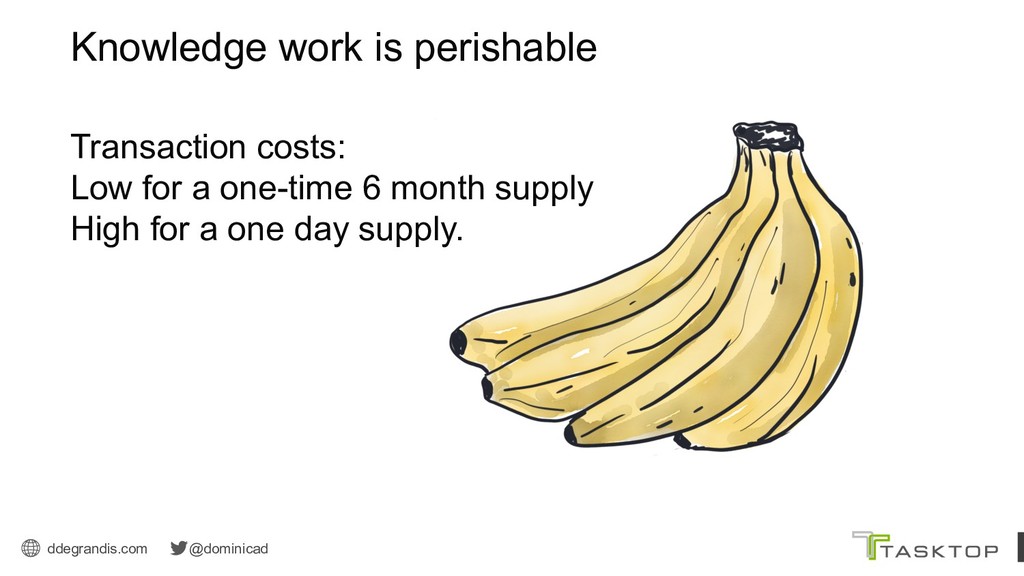
ddegrandis.com @dominicad Dominica DeGrandis Thief Unplanned Work Transaction costs: Low
for a one-time 6 month supply High for a one day supply. Knowledge work is perishable -
ddegrandis.com @dominicad Dominica DeGrandis Thief Unplanned Work Unplanned Work: Interruptions
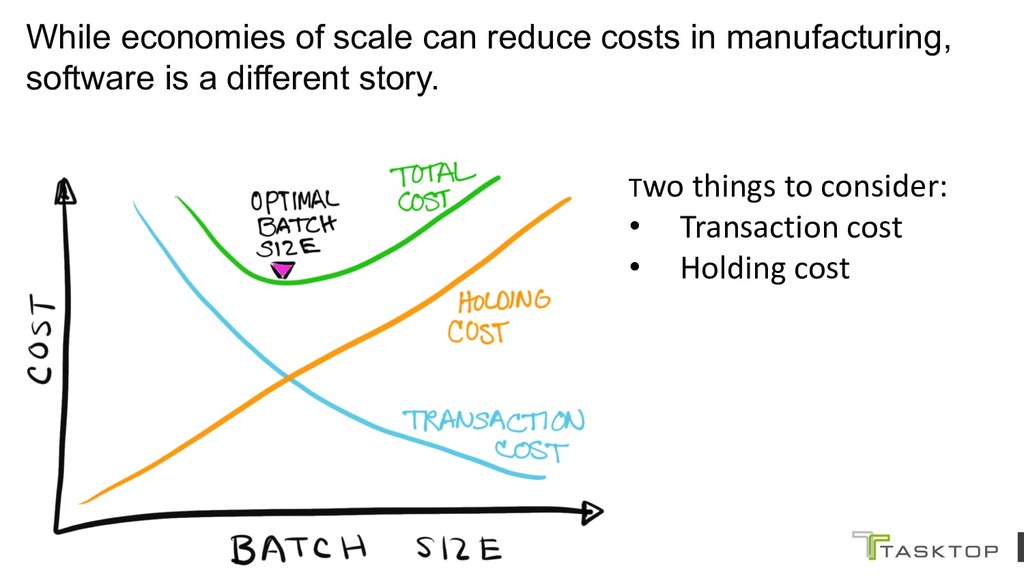
that prevent you from finishing something or from stopping at a better breaking point. Unplanned Work is a time thief b/c unplanned work usurps planned work @dominicad While economies of scale can reduce costs in manufacturing, software is a different story. Two things to consider: • Transaction cost • Holding cost -
ddegrandis.com @dominicad 3. Mean Time to Recover (MTTR) 2 incidents
in Dec had combined downtime of 120 min. Dec MTTR is 60 min. MTTR = downtime / # of incidents How fast we can respond to change? MTTR is a measure of adaptivity. -
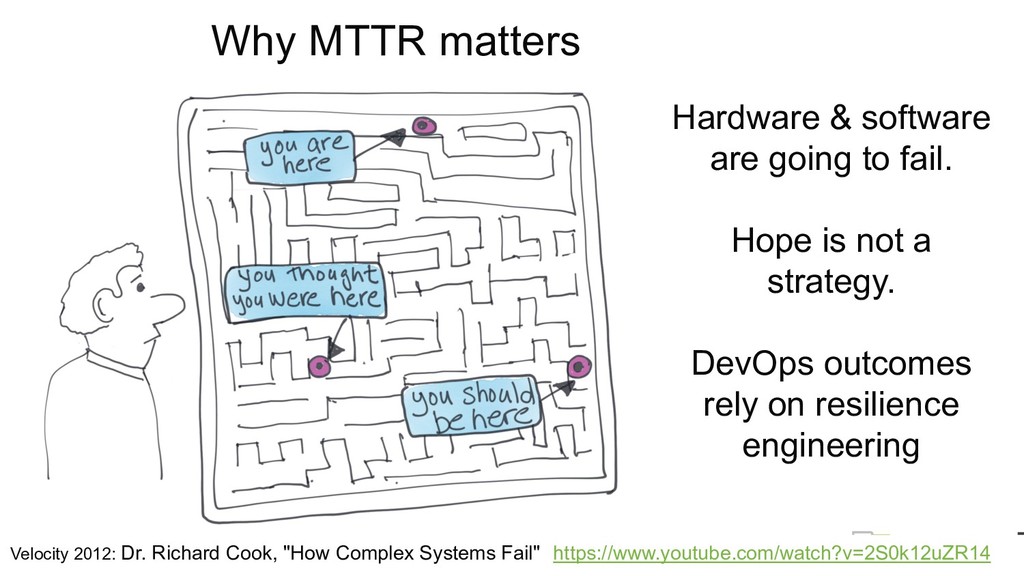
ddegrandis.com @dominicad Why MTTR matters Hardware & software are going
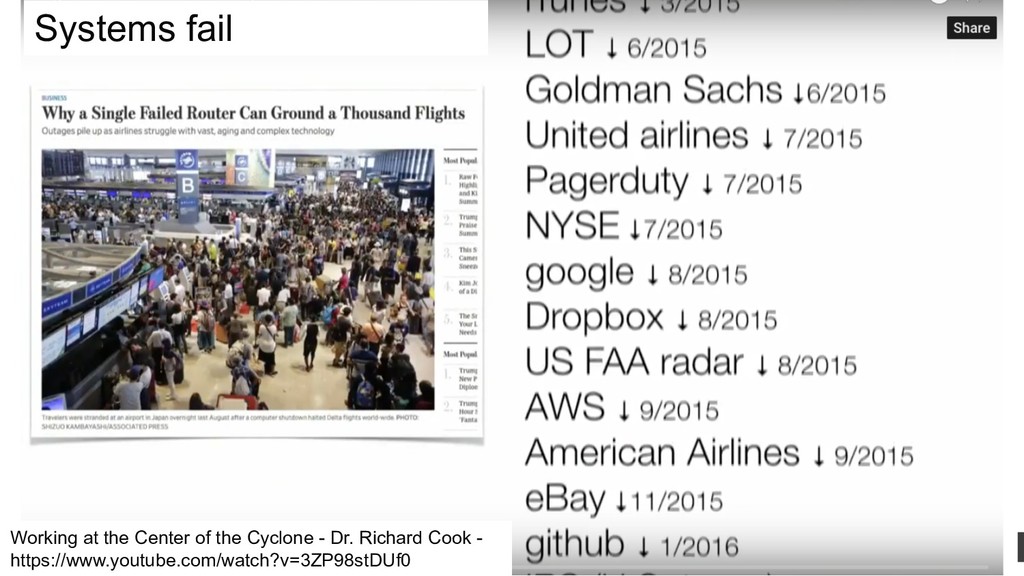
to fail. Hope is not a strategy. DevOps outcomes rely on resilience engineering https://www.youtube.com/watch?v=2S0k12uZR14 Velocity 2012: Dr. Richard Cook, "How Complex Systems Fail" -
ddegrandis.com @dominicad Working at the Center of the Cyclone -
Dr. Richard Cook - https://www.youtube.com/watch?v=3ZP98stDUf0 Systems fail -
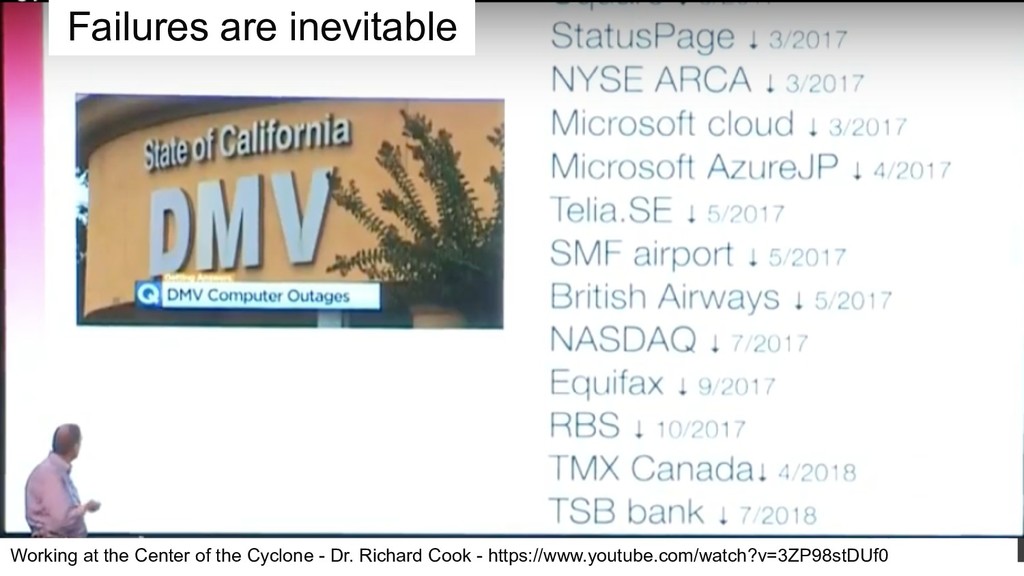
ddegrandis.com @dominicad Systems fail Working at the Center of the
Cyclone - Dr. Richard Cook - https://www.youtube.com/watch?v=3ZP98stDUf0 Failures are inevitable -
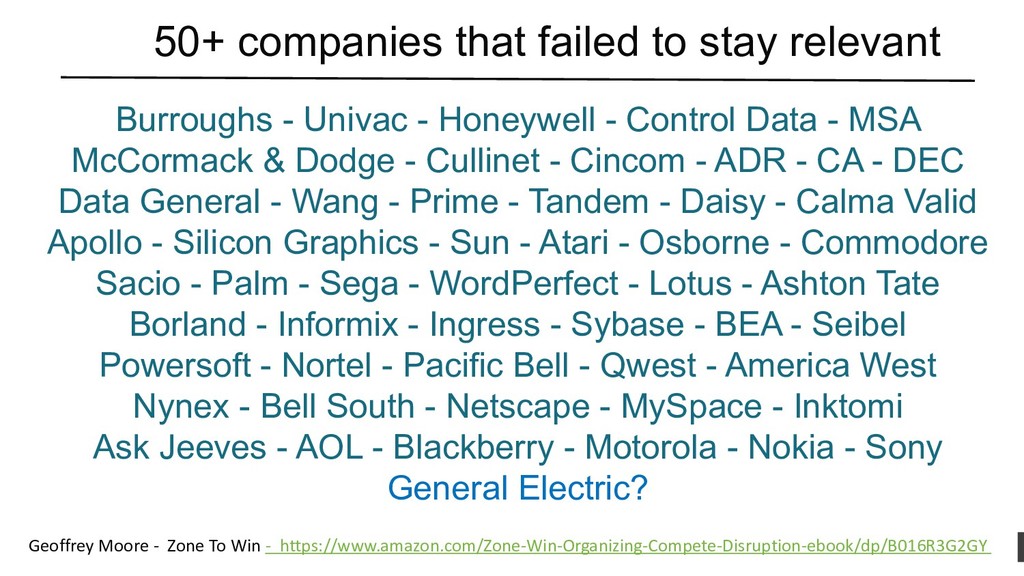
ddegrandis.com @dominicad 50+ companies that failed to stay relevant Burroughs
- Univac - Honeywell - Control Data - MSA McCormack & Dodge - Cullinet - Cincom - ADR - CA - DEC Data General - Wang - Prime - Tandem - Daisy - Calma Valid Apollo - Silicon Graphics - Sun - Atari - Osborne - Commodore Sacio - Palm - Sega - WordPerfect - Lotus - Ashton Tate Borland - Informix - Ingress - Sybase - BEA - Seibel Powersoft - Nortel - Pacific Bell - Qwest - America West Nynex - Bell South - Netscape - MySpace - Inktomi Ask Jeeves - AOL - Blackberry - Motorola - Nokia - Sony General Electric? Geoffrey Moore - Zone To Win - https://www.amazon.com/Zone-Win-Organizing-Compete-Disruption-ebook/dp/B016R3G2GY -
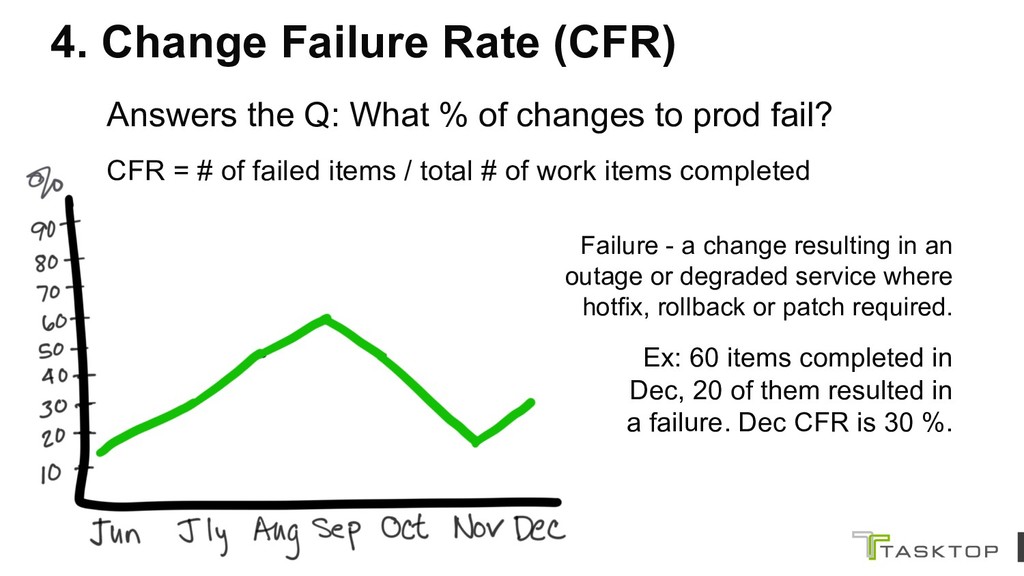
ddegrandis.com @dominicad 4. Change Failure Rate (CFR) Answers the Q:
What % of changes to prod fail? CFR = # of failed items / total # of work items completed Ex: 60 items completed in Dec, 20 of them resulted in a failure. Dec CFR is 30 %. Failure - a change resulting in an outage or degraded service where hotfix, rollback or patch required. -
ddegrandis.com @dominicad Why Change Failure Rate (CFR) matters DevOps outcomes
include “world-class quality”. CFR provides an effective way to identify opportunities to improve quality. -
ddegrandis.com @dominicad “When you focus solely on shallow data you
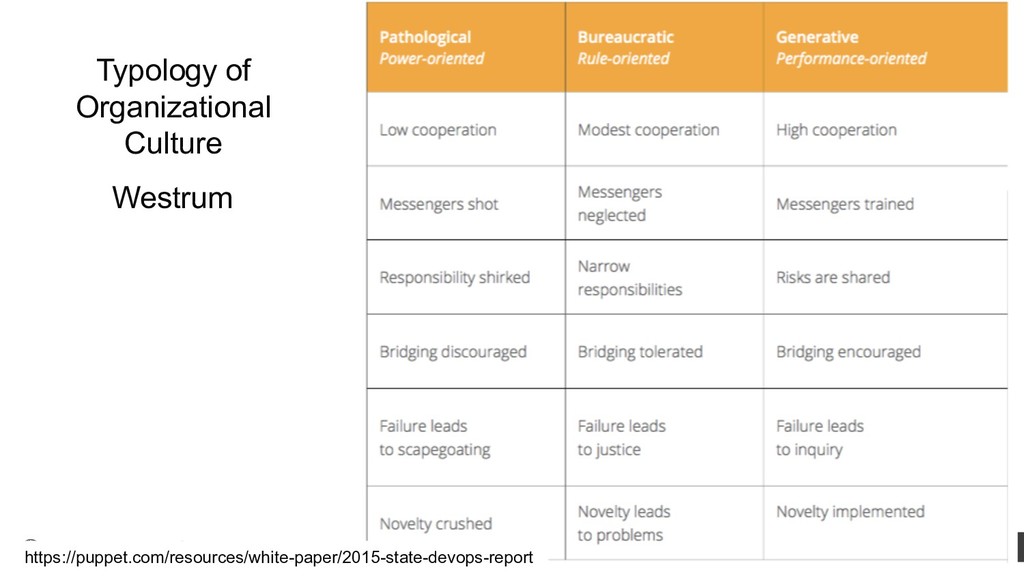
give up the return on investments that can be realized by deeper and more elaborate analysis.” ~John Allspaw Ex: Instead of blame, ask, “why did it make sense for someone to do that at that time?” Learning from incidents requires psychological safety. http://www.adaptivecapacitylabs.com/blog/2018/03/23/moving-past-shallow-incident-data/ -
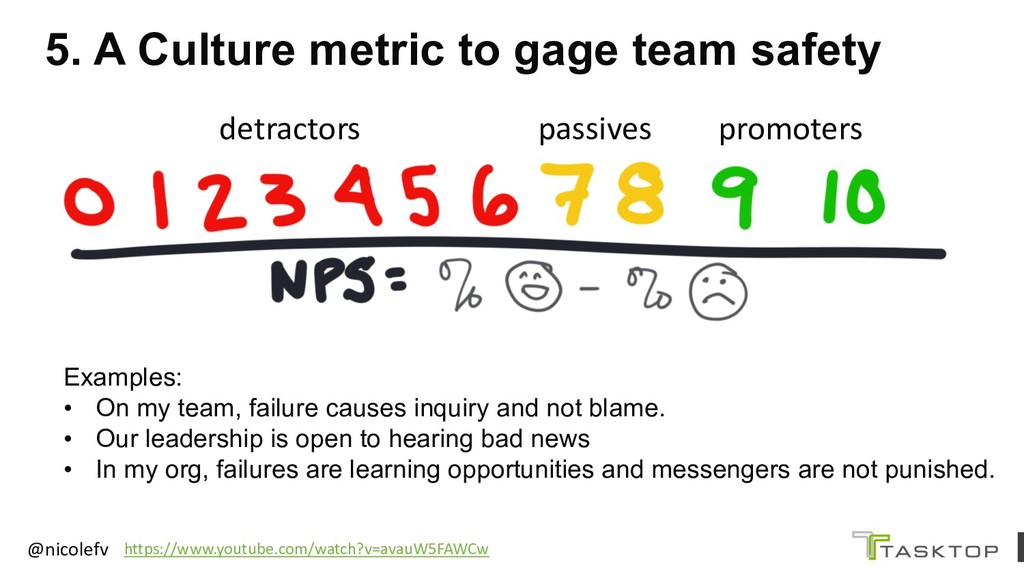
ddegrandis.com @dominicad 5. A Culture metric to gage team safety
Examples: • On my team, failure causes inquiry and not blame. • Our leadership is open to hearing bad news • In my org, failures are learning opportunities and messengers are not punished. @nicolefv https://www.youtube.com/watch?v=avauW5FAWCw promoters passives detractors -
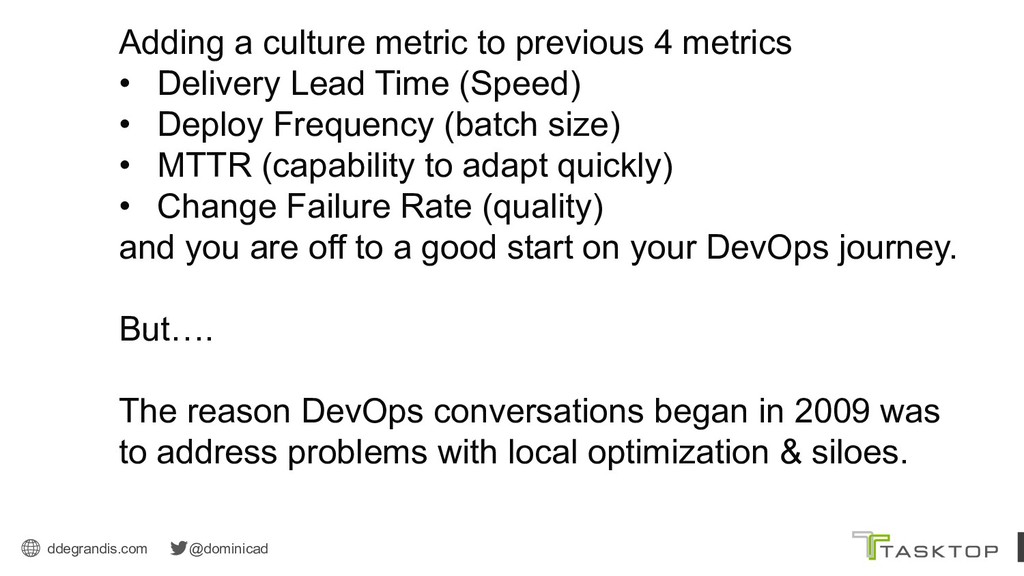
ddegrandis.com @dominicad Adding a culture metric to previous 4 metrics
• Delivery Lead Time (Speed) • Deploy Frequency (batch size) • MTTR (capability to adapt quickly) • Change Failure Rate (quality) and you are off to a good start on your DevOps journey. But…. The reason DevOps conversations began in 2009 was to address problems with local optimization & siloes. -
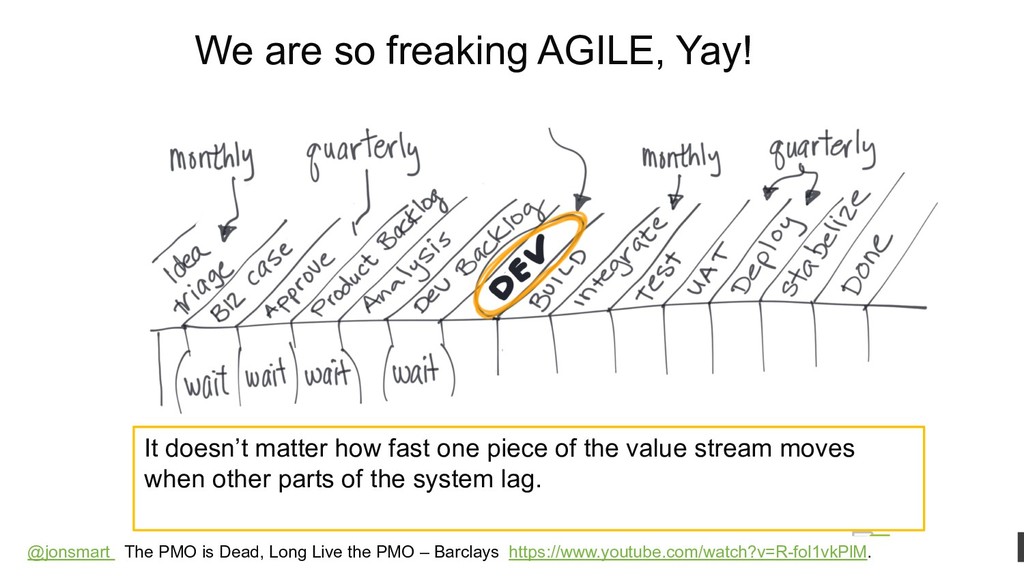
ddegrandis.com @dominicad It doesn’t matter how fast one piece of
the value stream moves when other parts of the system lag. We are so freaking AGILE, Yay! @jonsmart The PMO is Dead, Long Live the PMO – Barclays https://www.youtube.com/watch?v=R-fol1vkPlM. -
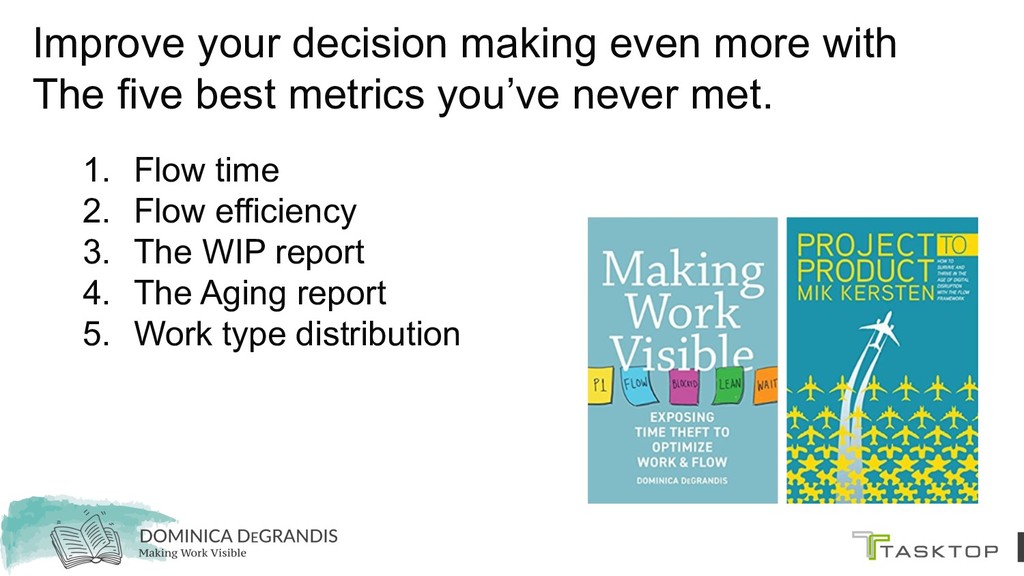
ddegrandis.com @dominicad Improve your decision making even more with The
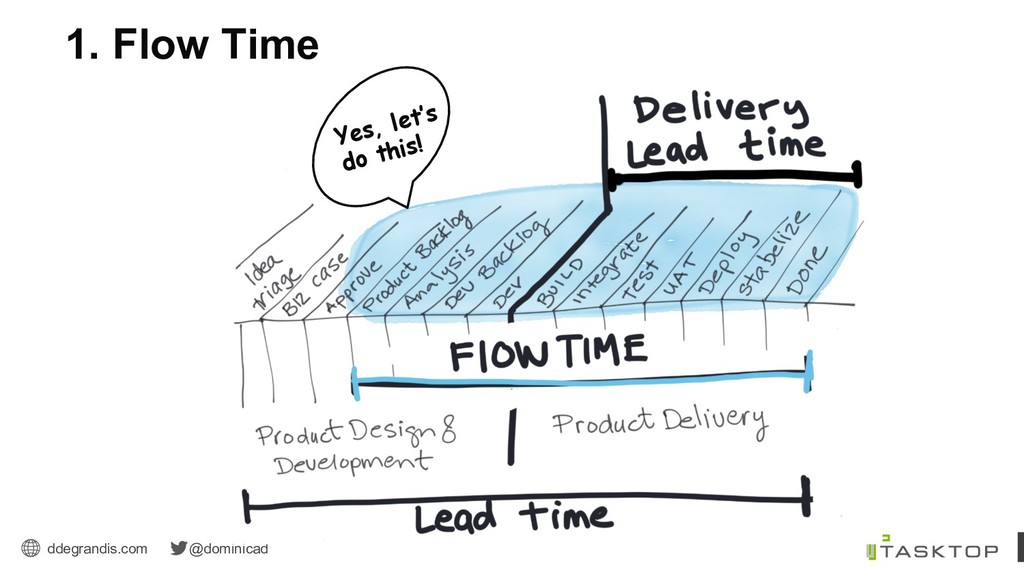
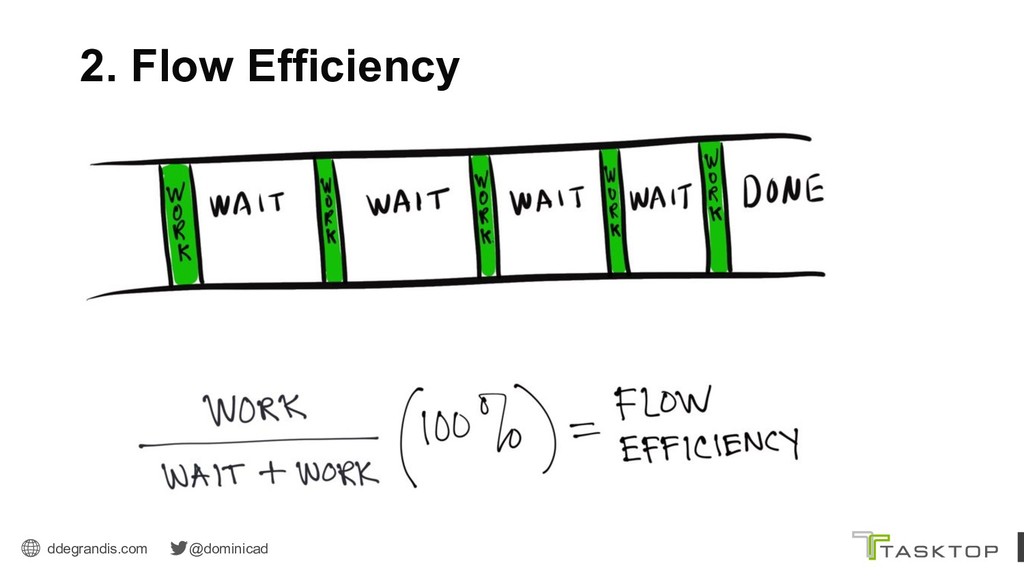
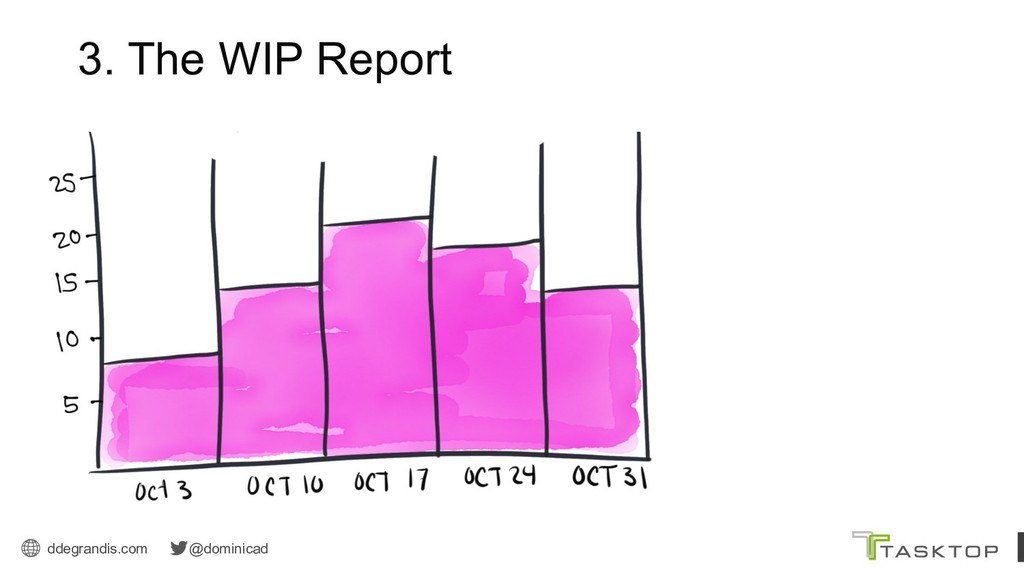
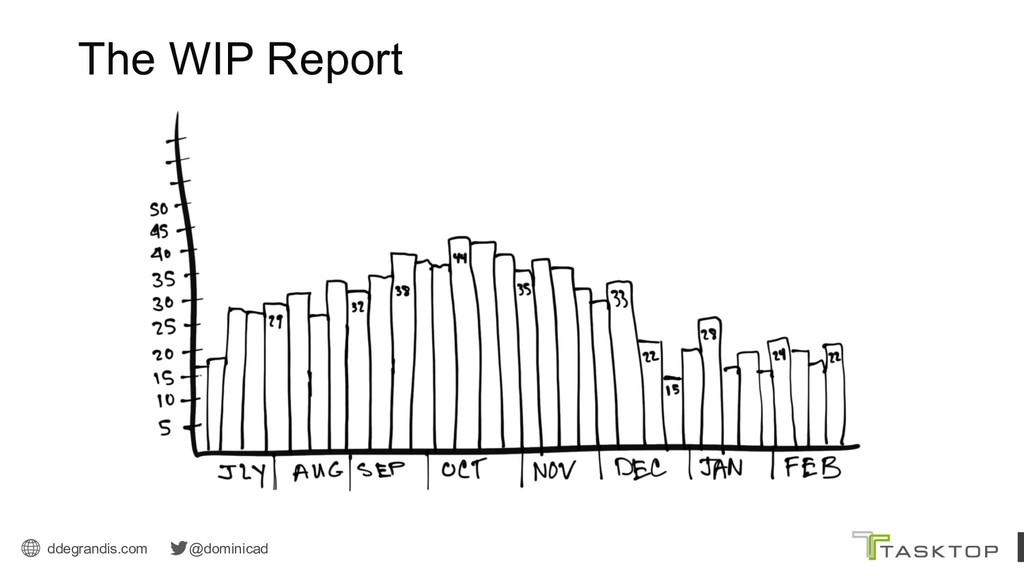
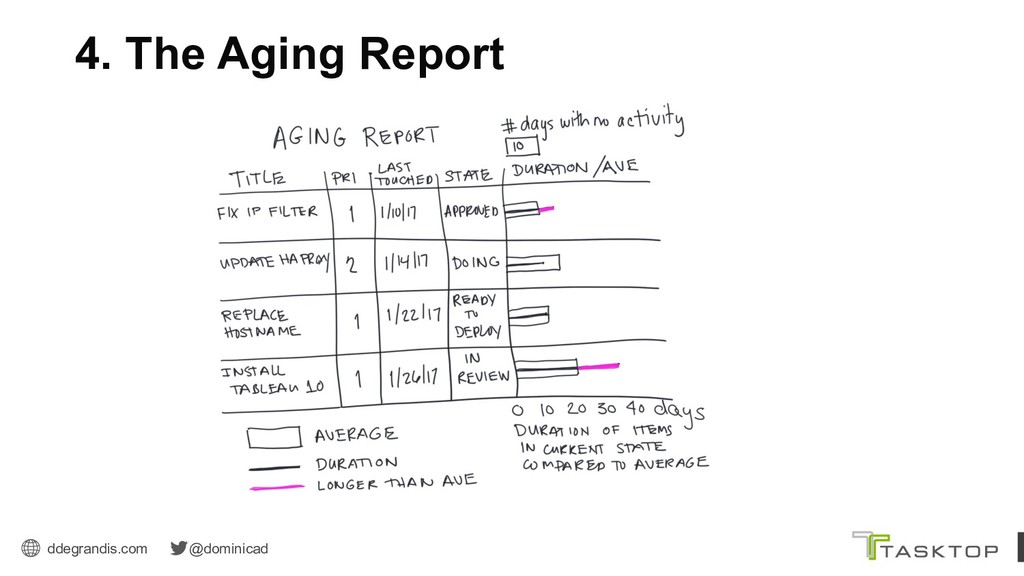
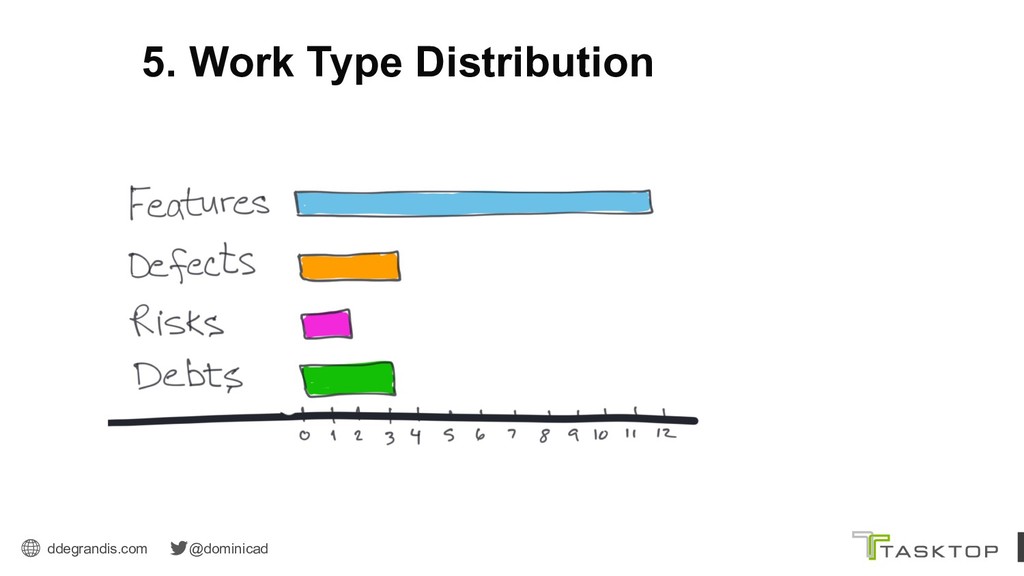
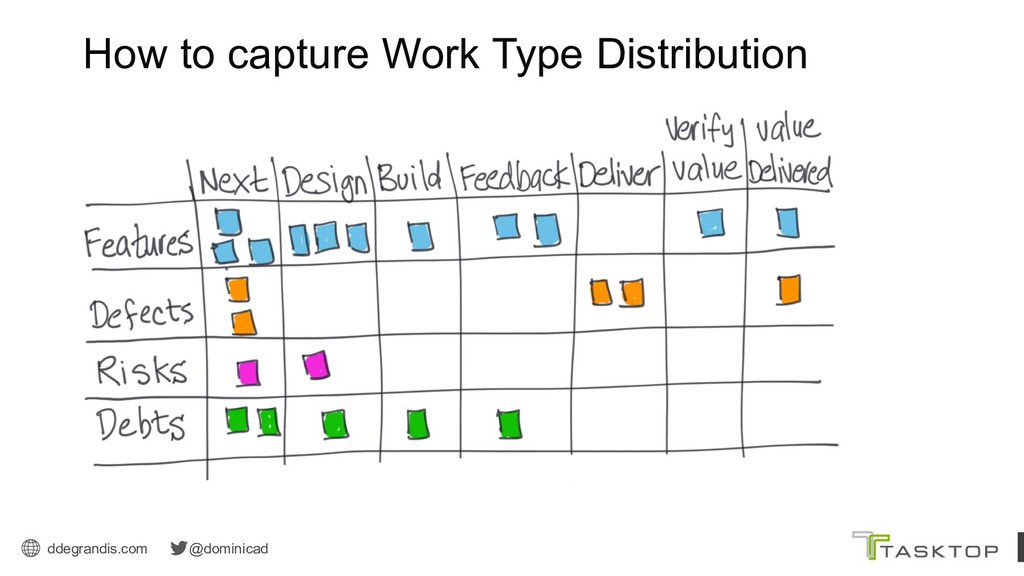
five best metrics you’ve never met. 1. Flow time 2. Flow efficiency 3. The WIP report 4. The Aging report 5. Work type distribution -
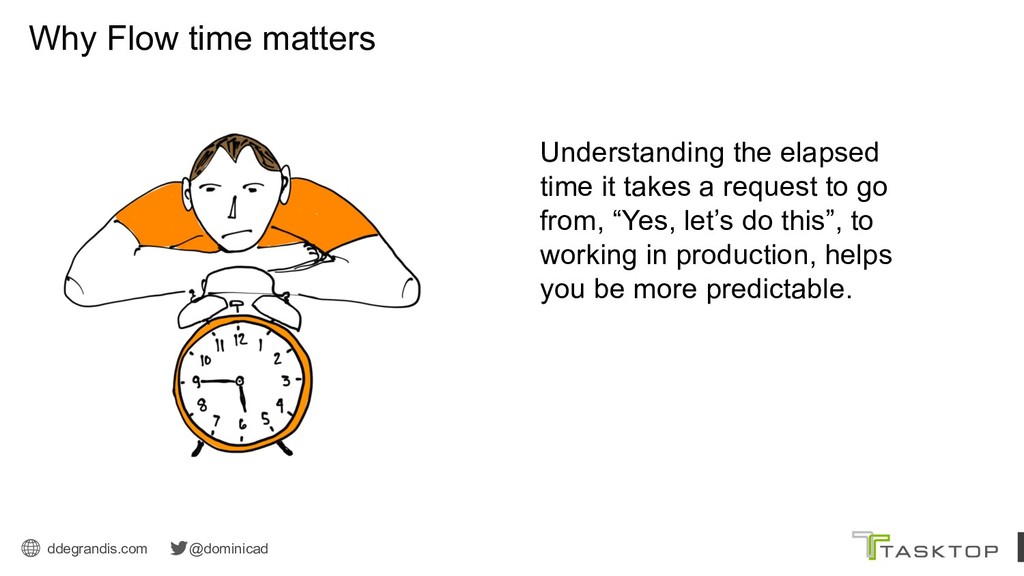
ddegrandis.com @dominicad Why Flow time matters Understanding the elapsed time
it takes a request to go from, “Yes, let’s do this”, to working in production, helps you be more predictable. -
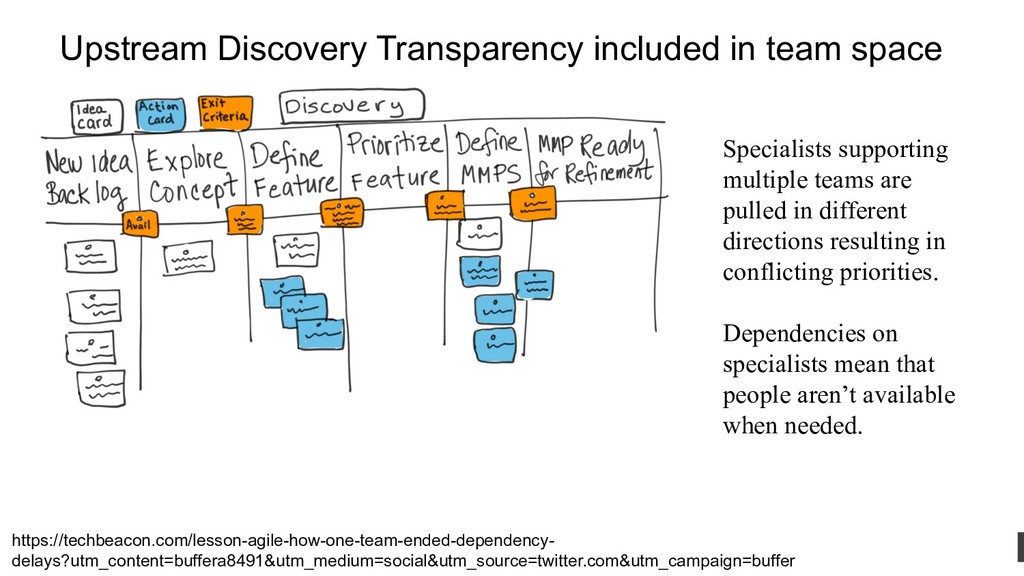
ddegrandis.com @dominicad https://techbeacon.com/lesson-agile-how-one-team-ended-dependency- delays?utm_content=buffera8491&utm_medium=social&utm_source=twitter.com&utm_campaign=buffer Upstream Discovery Transparency included in team
space Specialists supporting multiple teams are pulled in different directions resulting in conflicting priorities. Dependencies on specialists mean that people aren’t available when needed. -
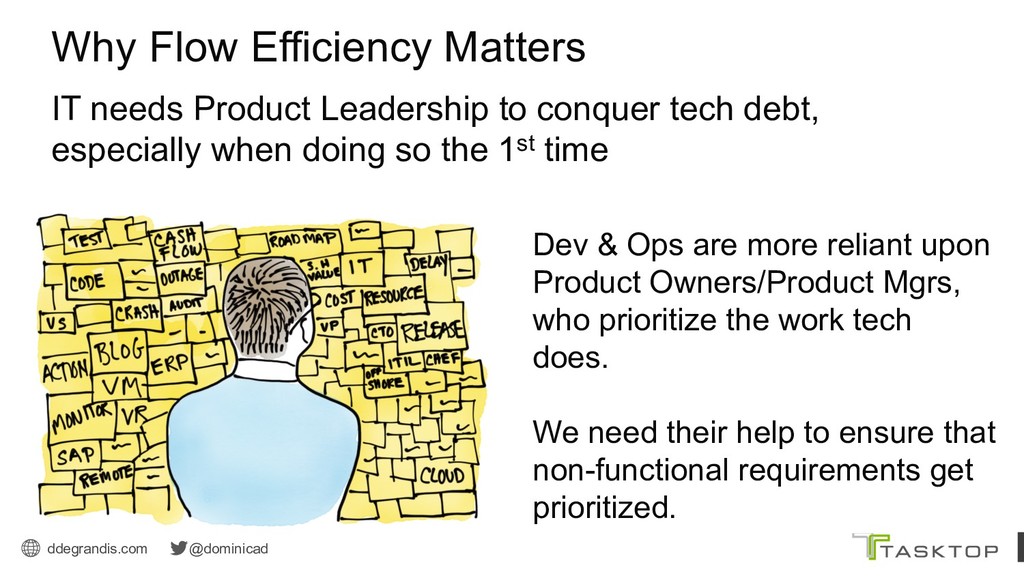
ddegrandis.com @dominicad Dev & Ops are more reliant upon Product
Owners/Product Mgrs, who prioritize the work tech does. We need their help to ensure that non-functional requirements get prioritized. Why Flow Efficiency Matters IT needs Product Leadership to conquer tech debt, especially when doing so the 1st time -
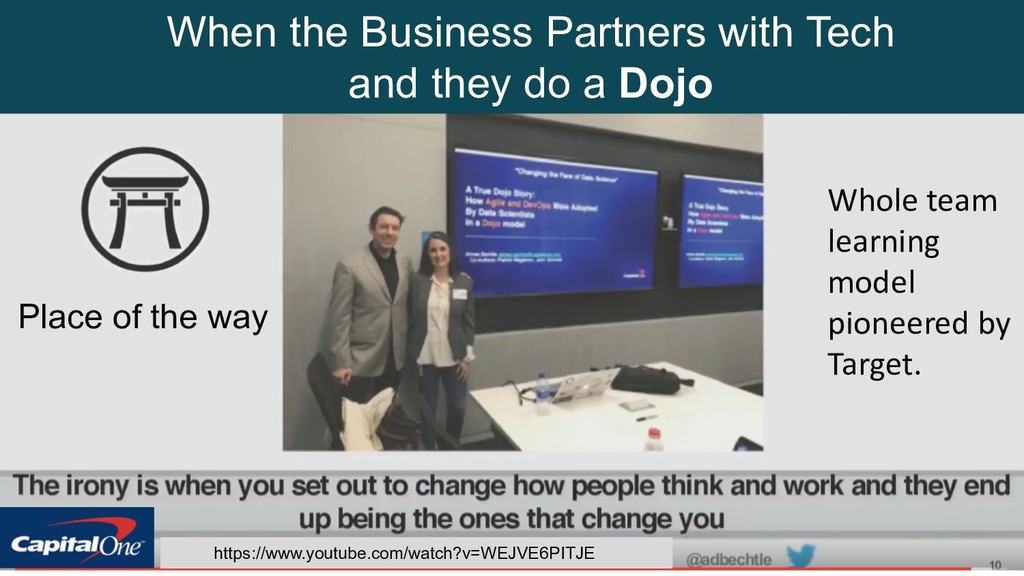
ddegrandis.com @dominicad https://www.youtube.com/watch?v=WEJVE6PITJE When the Business Partners with Tech and
they do a Dojo Why Flow Efficiency matters IT needs Biz Leadership to conquer tech debt, especially for the 1st time https://www.youtube.com/watch?v=WEJVE6PITJE When the Business Partners with Tech and they do a Dojo Whole team learning model pioneered by Target. Place of the way -
ddegrandis.com @dominicad https://www.youtube.com/watch?v=WEJVE6PITJE IT needs Biz Leadership to conquer tech
debt, especially for the 1st time Speed of iterating went from months to hours -
ddegrandis.com @dominicad https://www.youtube.com/watch?v=WEJVE6PITJE When the Business Partners with Tech and
they do a Dojo Why Flow Efficiency matters IT needs Biz Leadership to conquer tech debt, especially for the 1st time Test time reduced from three weeks to three hours https://www.youtube.com/watch?v=WEJVE6PITJE -
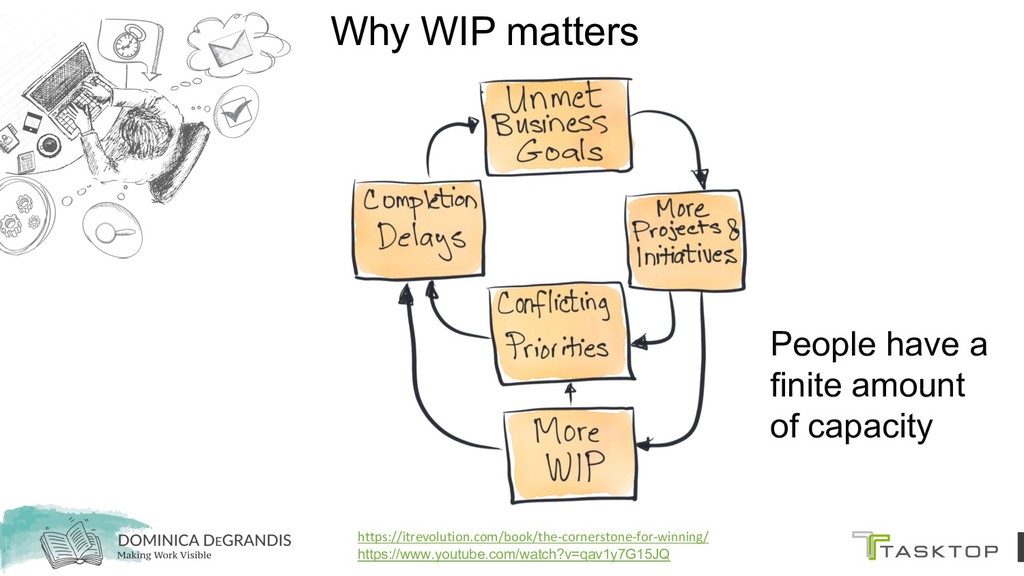
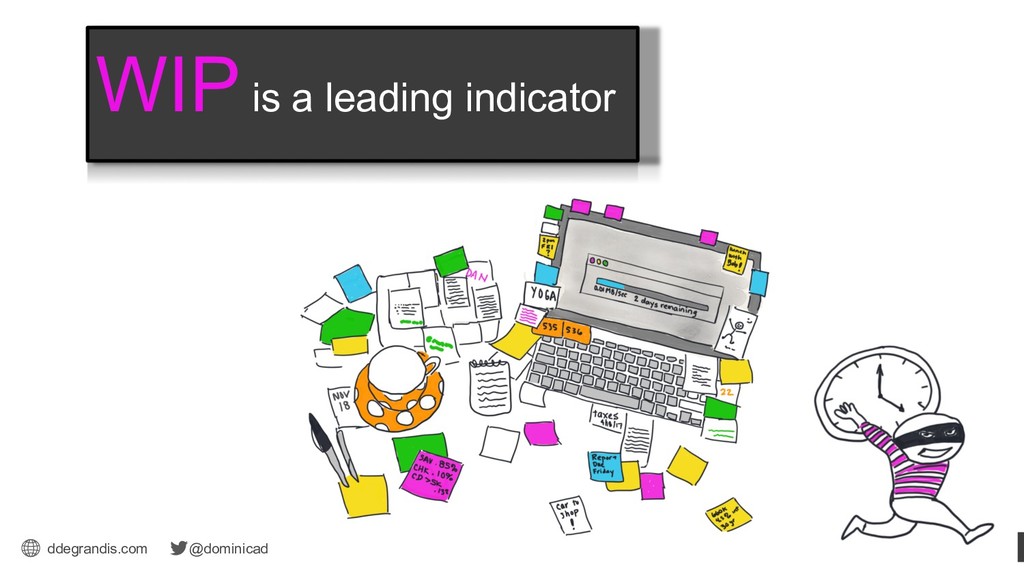
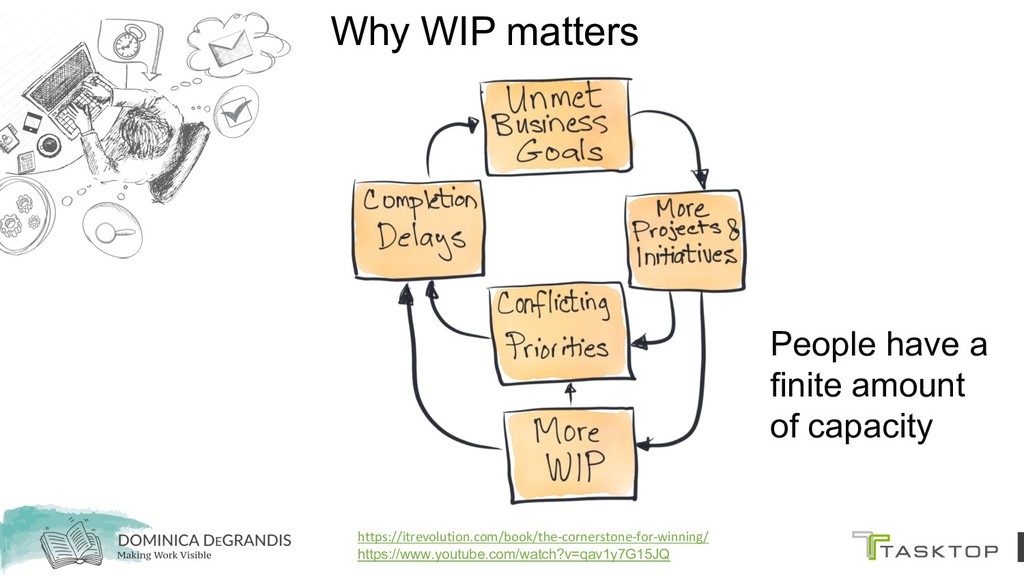
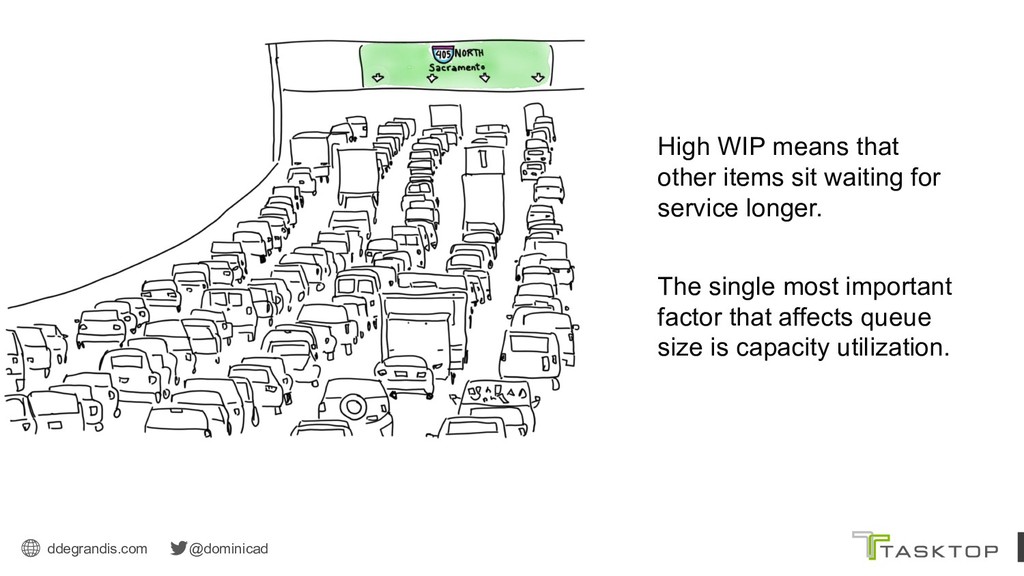
ddegrandis.com @dominicad Dominica DeGrandis Thief Too much Work-in-progress (WIP) High
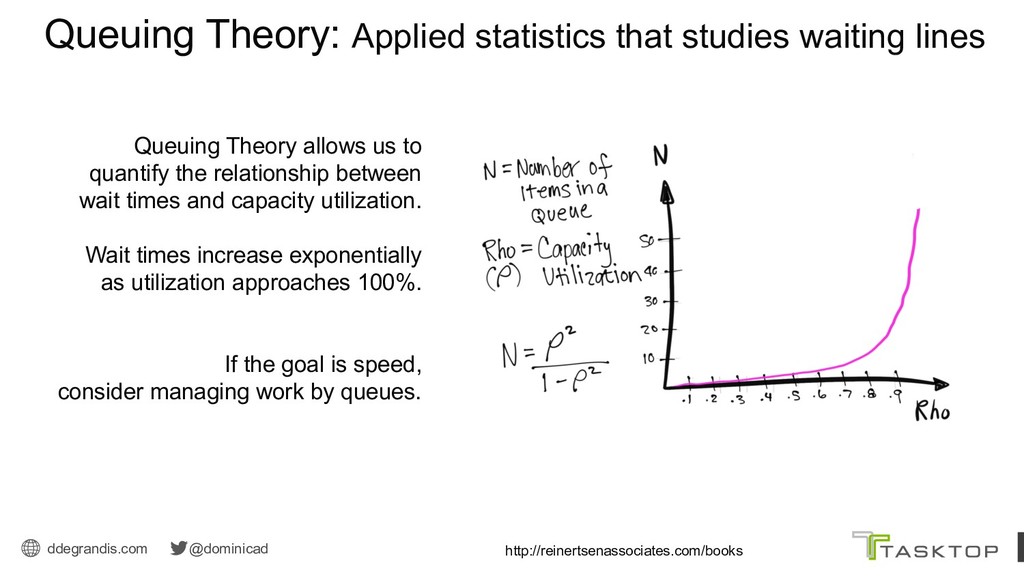
WIP means that other items sit waiting for service longer. The single most important factor that affects queue size is capacity utilization. -
ddegrandis.com @dominicad Dominica DeGrandis Thief Too much Work-in-progress (WIP) Queuing
Theory allows us to quantify the relationship between wait times and capacity utilization. Wait times increase exponentially as utilization approaches 100%. Queuing Theory: Applied statistics that studies waiting lines If the goal is speed, consider managing work by queues. http://reinertsenassociates.com/books/ -
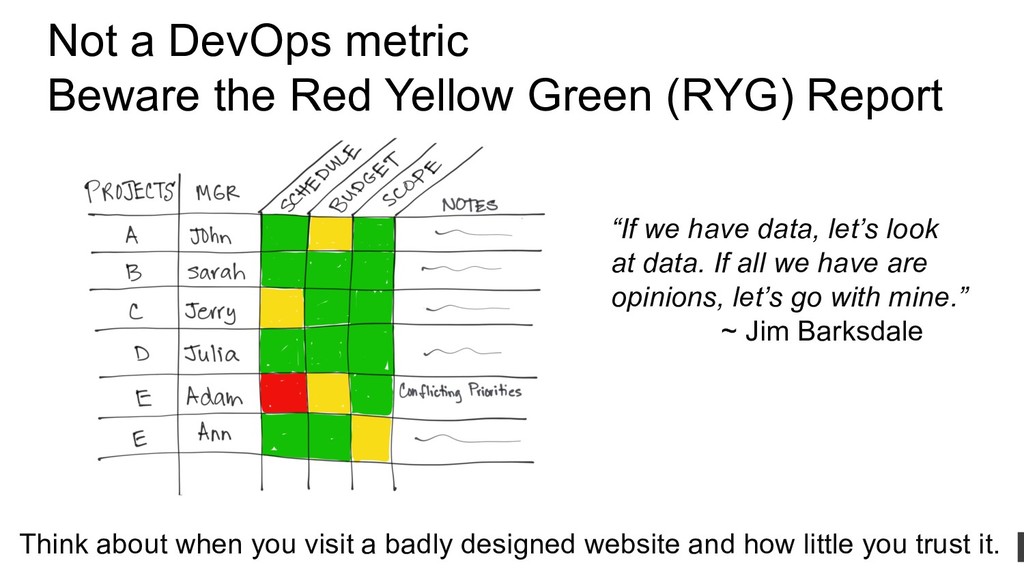
ddegrandis.com @dominicad Not a DevOps metric Beware the Red Yellow
Green (RYG) Report Think about when you visit a badly designed website and how little you trust it. “If we have data, let’s look at data. If all we have are opinions, let’s go with mine.” ~ Jim Barksdale -
ddegrandis.com @dominicad Three ways to begin capturing and using DevOps
metrics 1. Safe to fail experiments 2. Make work visible 3. Automatically capture data with tools -
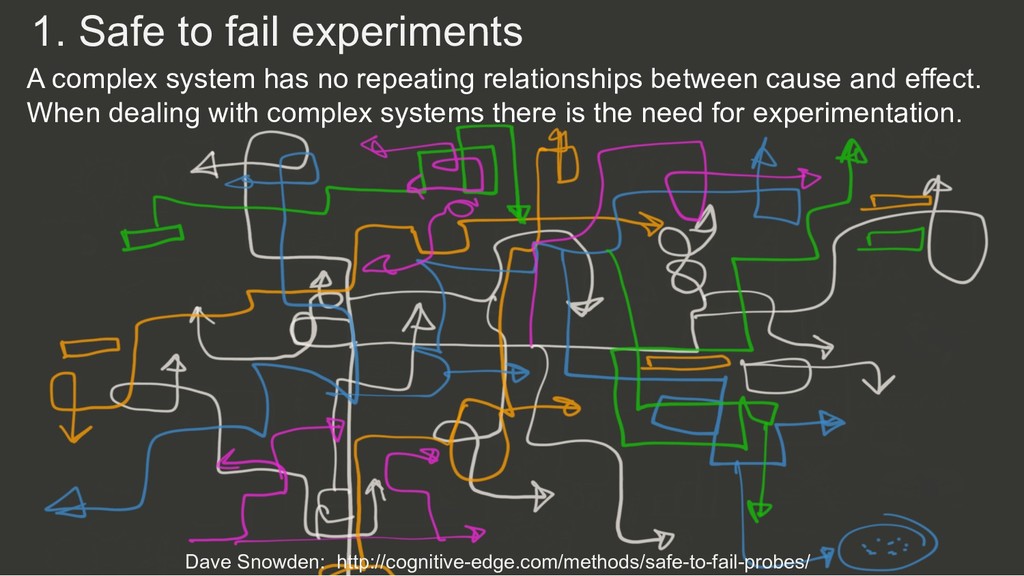
ddegrandis.com @dominicad 1. Safe to fail experiments A complex system
has no repeating relationships between cause and effect. When dealing with complex systems there is the need for experimentation. Dave Snowden: http://cognitive-edge.com/methods/safe-to-fail-probes/ -
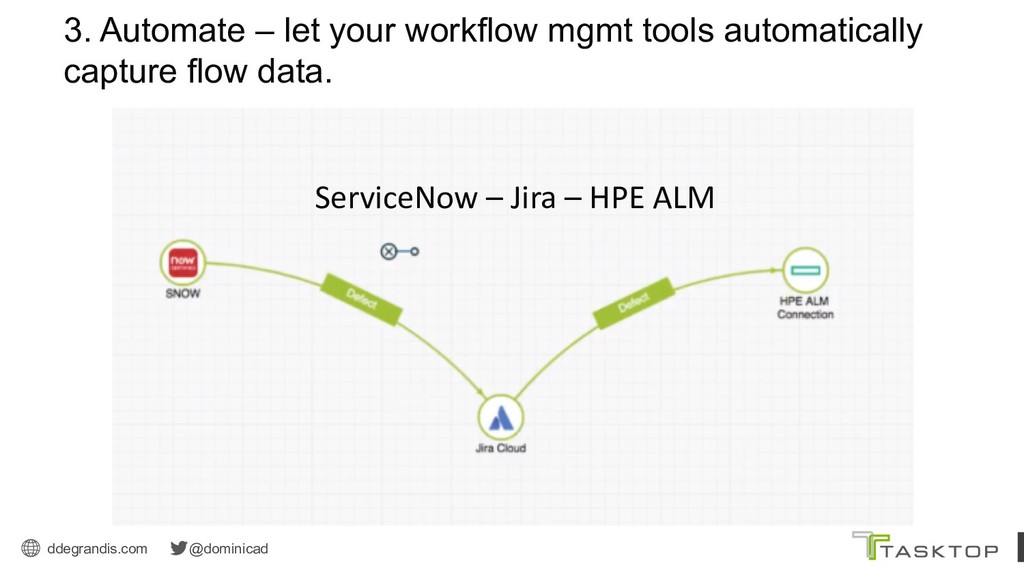
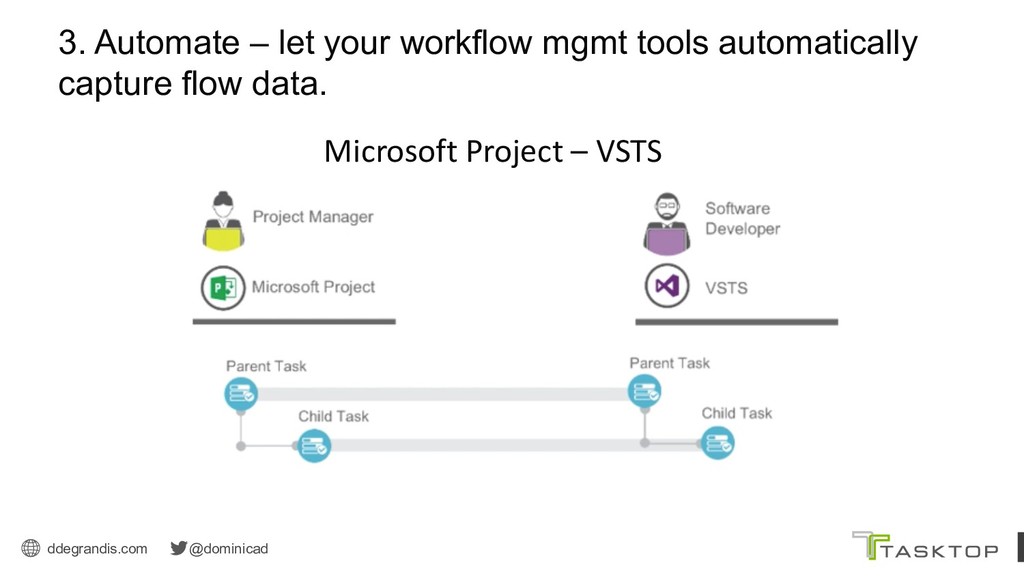
ddegrandis.com @dominicad ServiceNow – Jira – HPE ALM 3. Automate
– let your workflow mgmt tools automatically capture flow data. -
ddegrandis.com @dominicad 3. Automate – let your workflow mgmt tools
automatically capture flow data. Microsoft Project – VSTS -
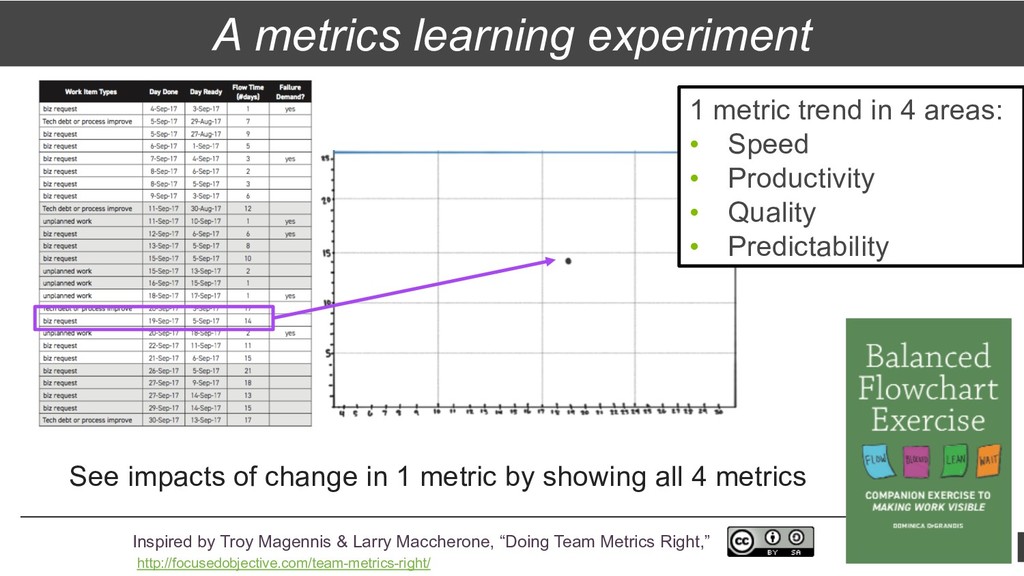
ddegrandis.com @dominicad A metrics learning experiment 1 metric trend in
4 areas: • Speed • Productivity • Quality • Predictability See impacts of change in 1 metric by showing all 4 metrics Inspired by Troy Magennis & Larry Maccherone, “Doing Team Metrics Right,” http://focusedobjective.com/team-metrics-right/ -
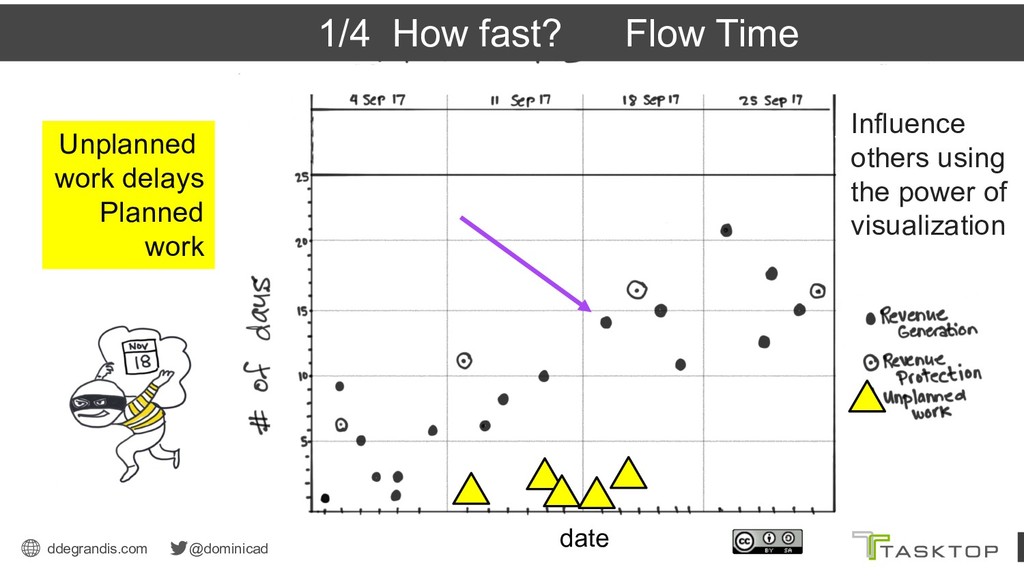
ddegrandis.com @dominicad Look at Flow time 1/4 How fast? Flow
Time Influence others using the power of visualization date Unplanned work delays Planned work -
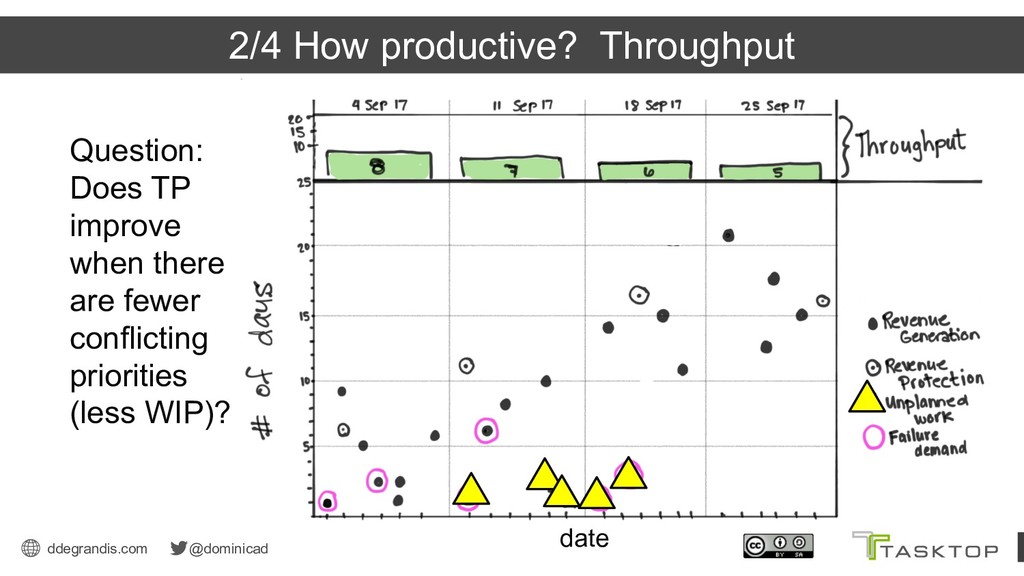
ddegrandis.com @dominicad Look at Throughput 2/4 How productive? Throughput date
Question: Does TP improve when there are fewer conflicting priorities (less WIP)? -
ddegrandis.com @dominicad 3/4 How good? Quality Change Failure Rate #
FD done items # of total done items date Oh - ok – I see what you mean!!! What we measure impacts people b/c people value what is measured. -
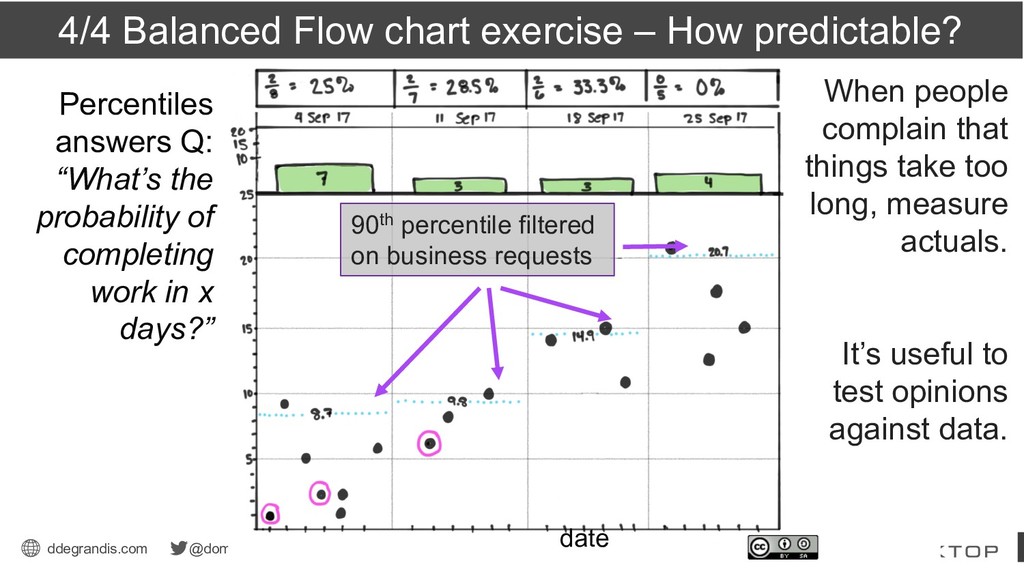
ddegrandis.com @dominicad When people complain that things take too long,
measure actuals. It’s useful to test opinions against data. 90th percentile filtered on business requests 4/4 Balanced Flow chart exercise – How predictable? date Percentiles answers Q: “What’s the probability of completing work in x days?” -
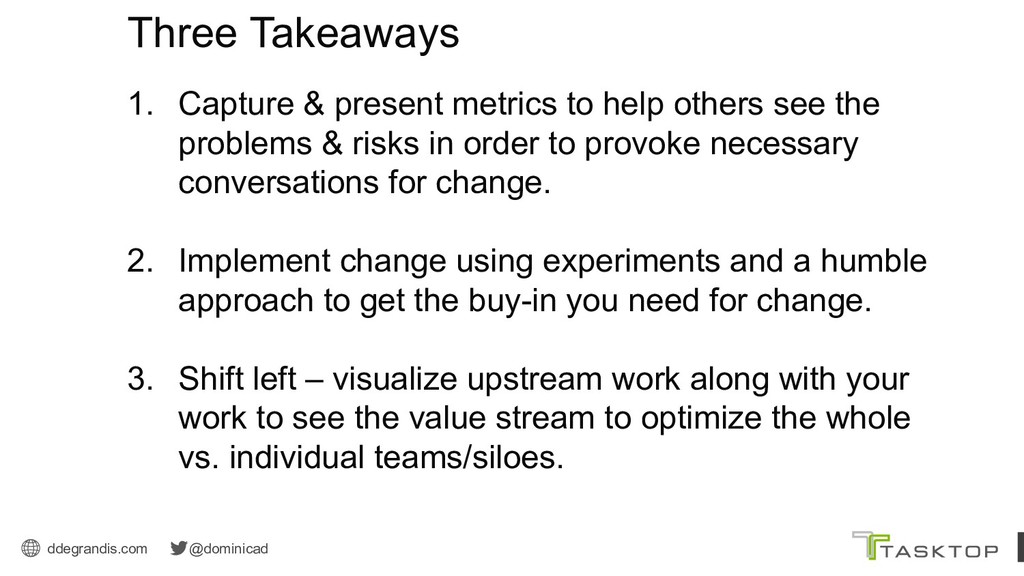
ddegrandis.com @dominicad 1. Capture & present metrics to help others
see the problems & risks in order to provoke necessary conversations for change. 2. Implement change using experiments and a humble approach to get the buy-in you need for change. 3. Shift left – visualize upstream work along with your work to see the value stream to optimize the whole vs. individual teams/siloes. Three Takeaways -
ddegrandis.com @dominicad Email: [email protected] Subject: flow To receive: • copy
of this presentation deck • excerpts of Making Work Visible • Tasktop video on TFS/SN tool integration • Forrester article: Agile-Plus-DevOps With Value Stream Management