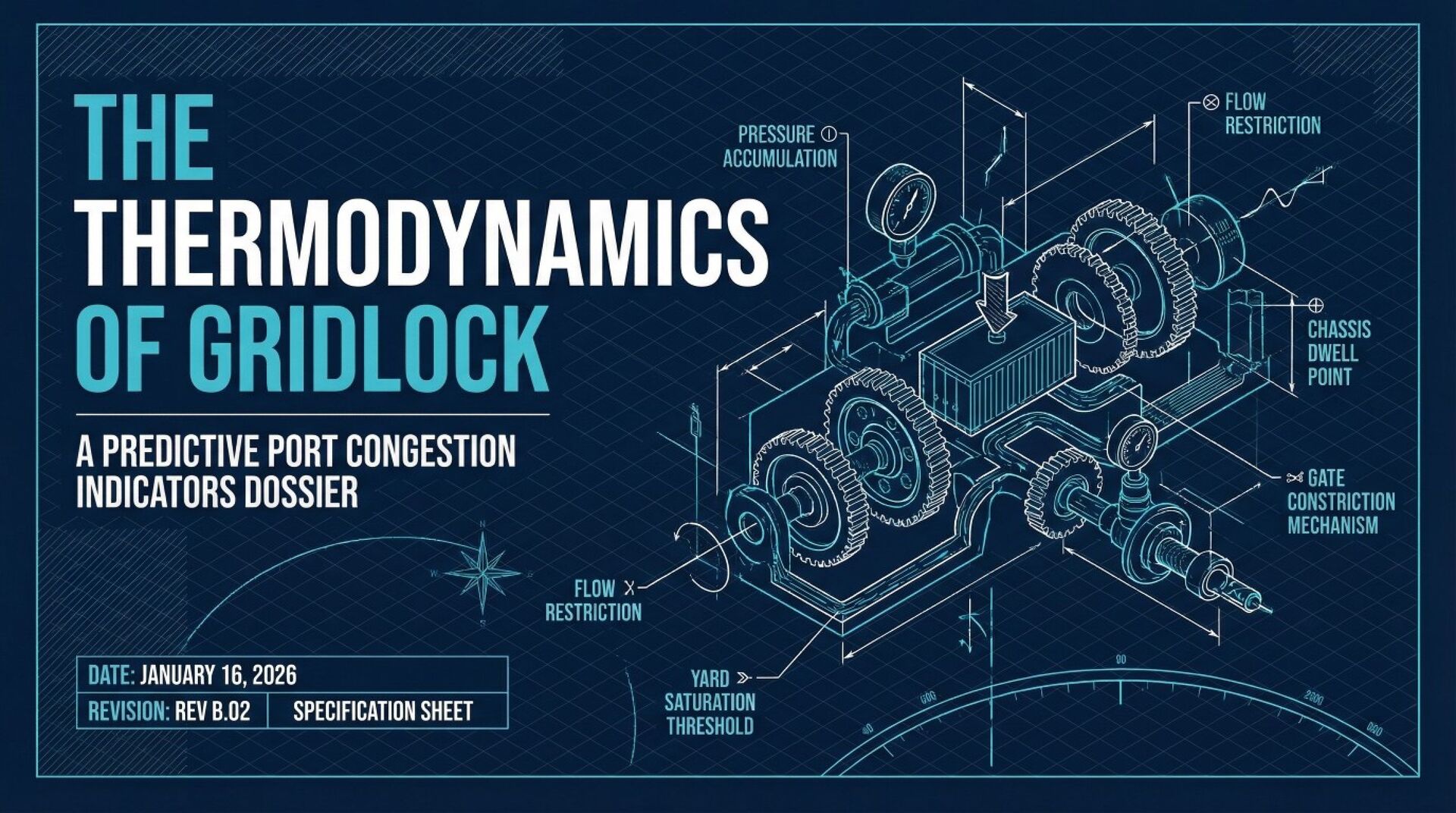
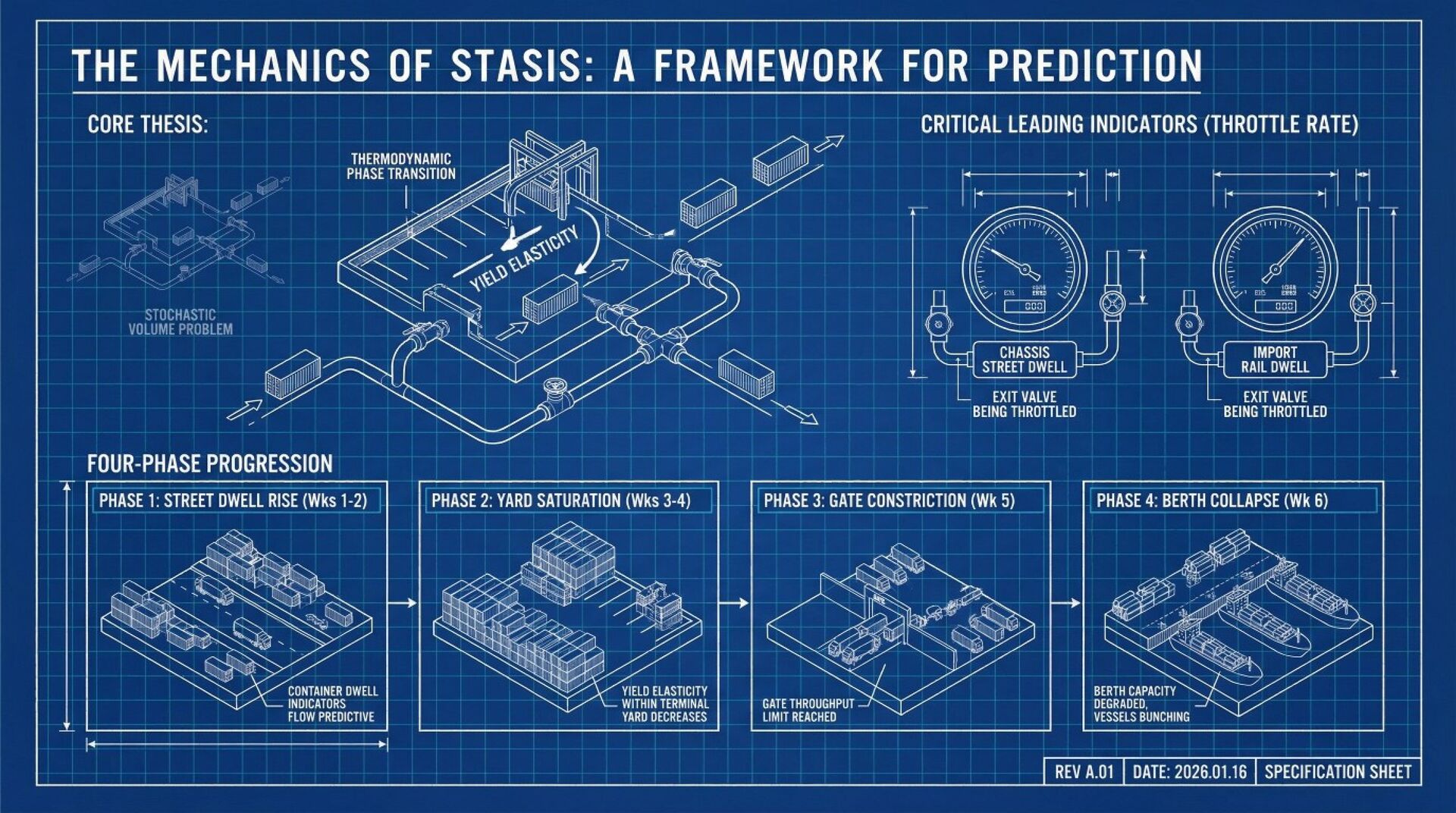
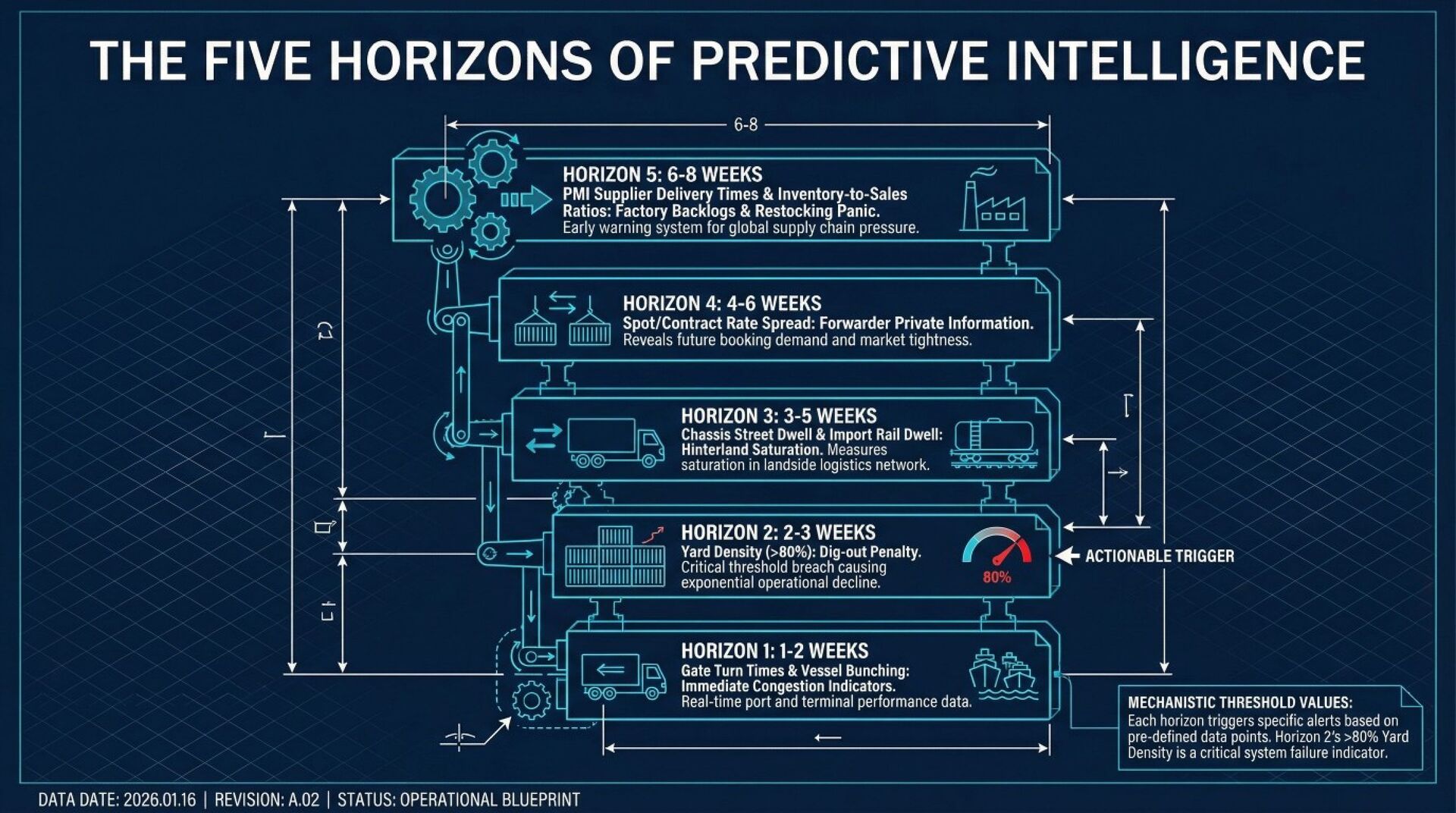
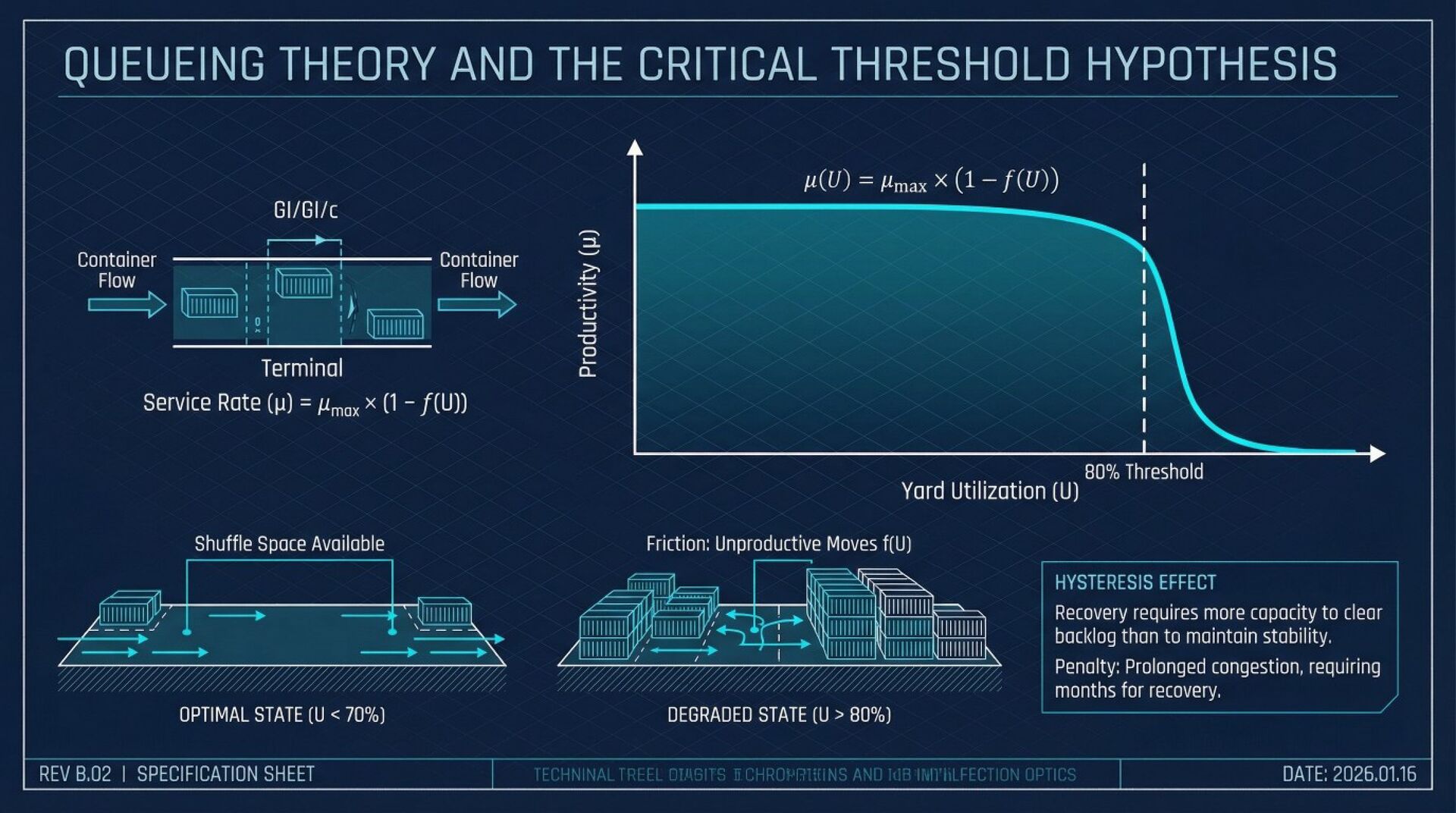
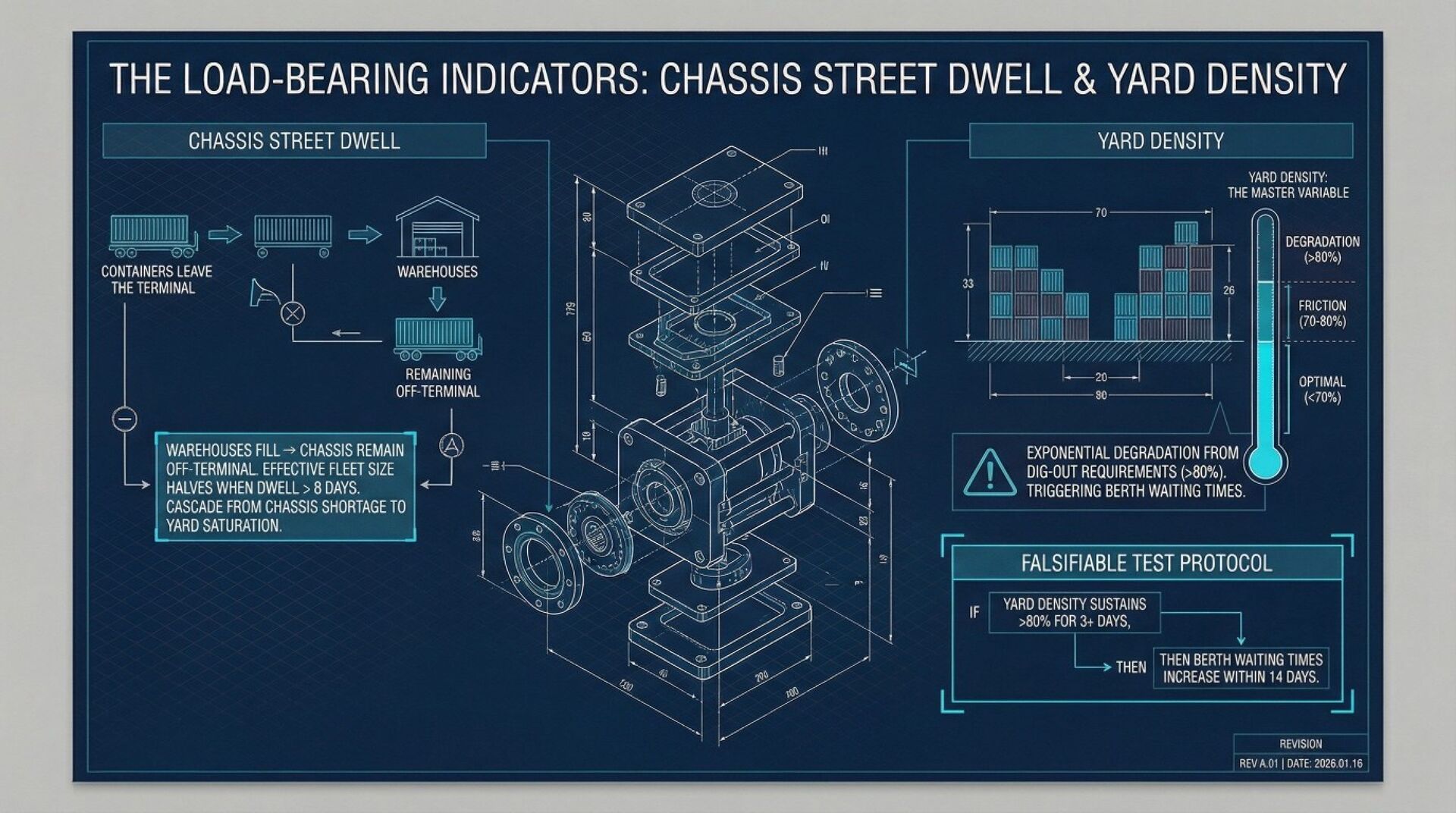
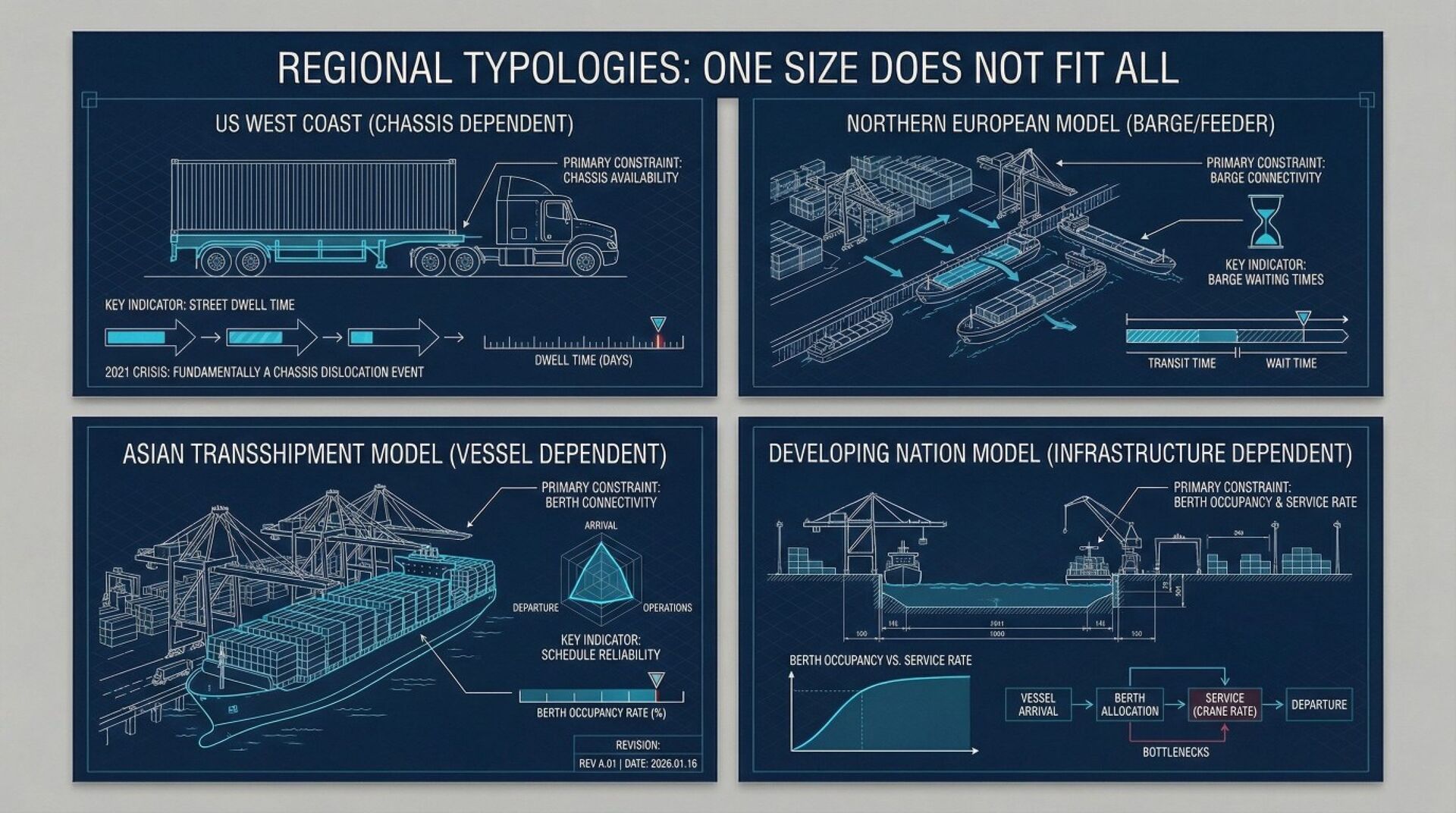
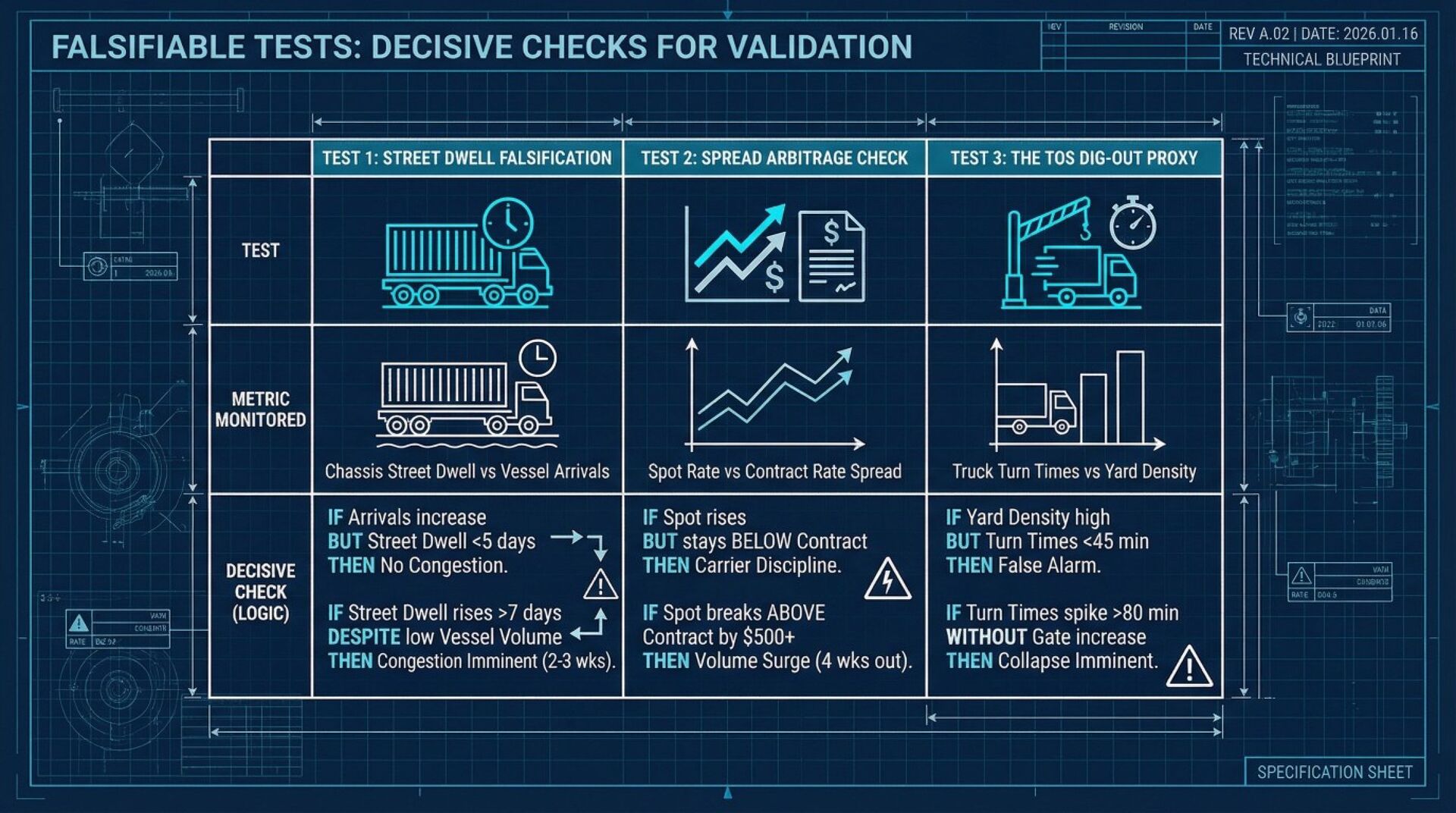
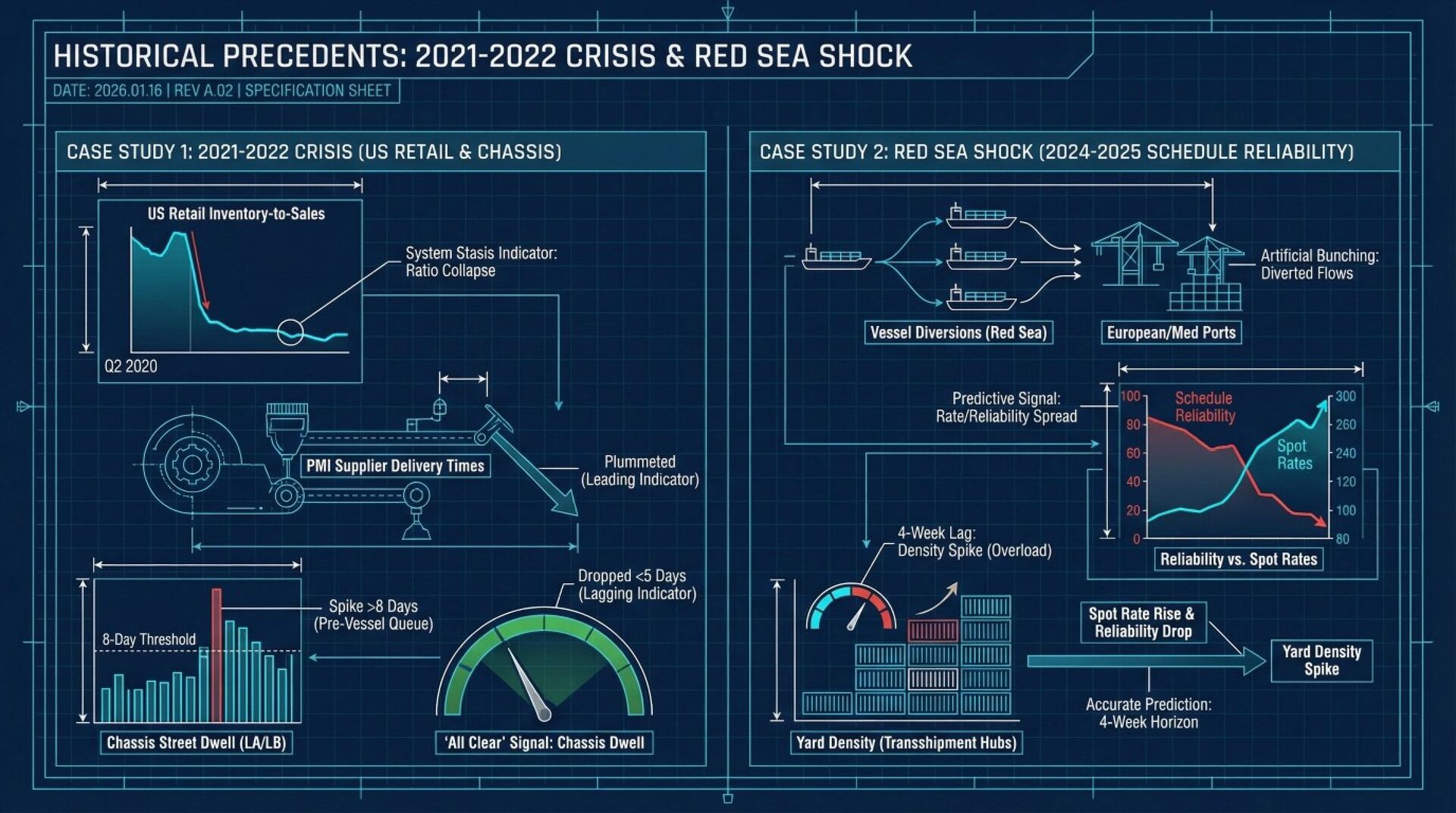
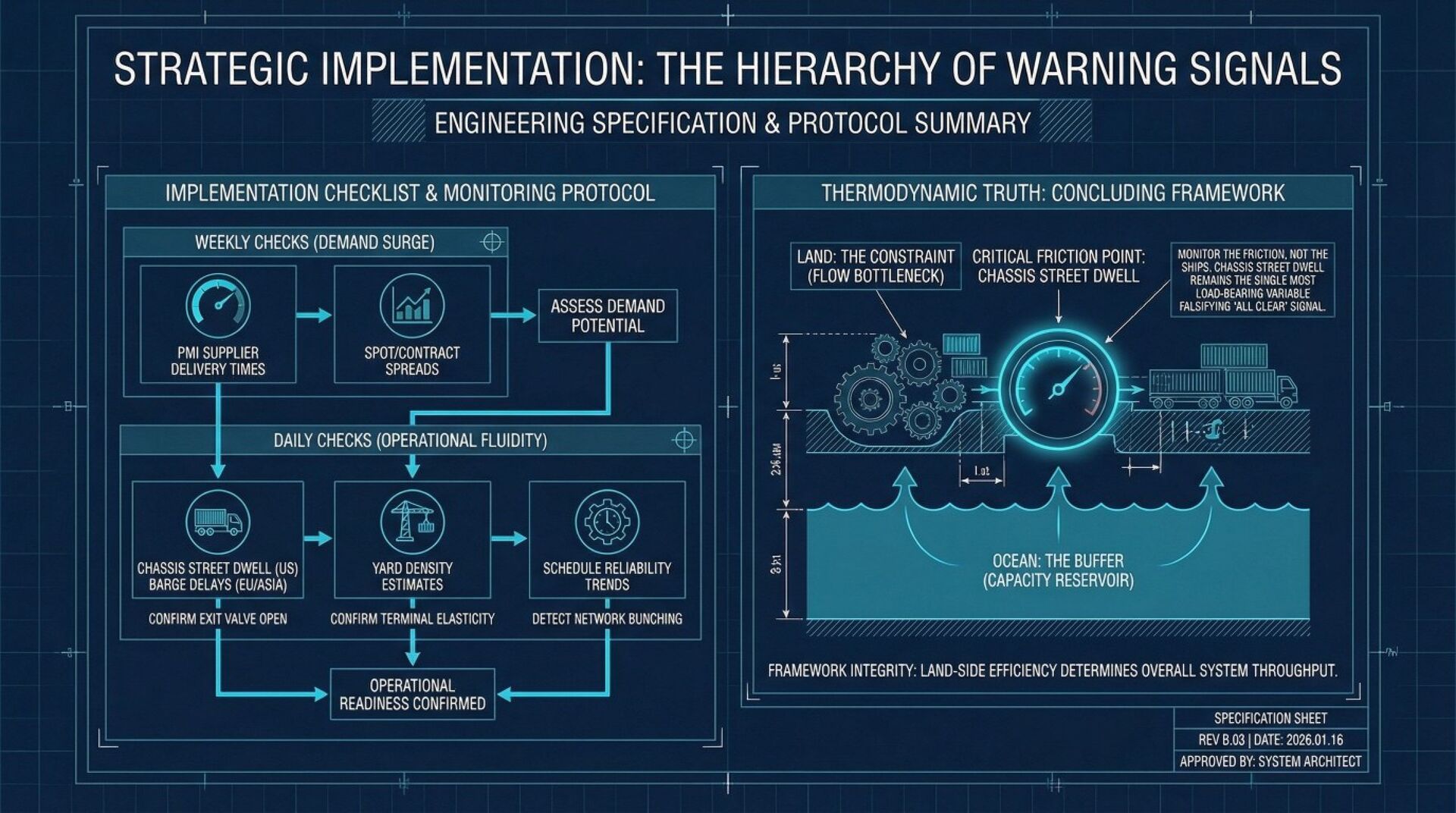
Port congestion is not a stochastic volume problem but a thermodynamic phase transition driven by yield elasticity within the terminal yard. The central thesis establishes that when yard density crosses 80-85% threshold, terminal processing ability drops exponentially. This framework rejects lagging indicators (anchorage counts, berth waiting times) in favor of load-bearing precursors: yard density thresholds, chassis street dwell times, intermodal rail decoupling, and spot rate divergences. The progression follows four predictable phases: Precursor (street dwell rises), Saturation (yard density breaches 80%), Constriction (gate fluidity drops), and Collapse (berth occupancy hits 100%).


 dybilar
 arfon
arfon
 mickey_0226
 tagtag
 shucho0103
 trycycle
 enakai00
 takusamar
 mickey_kubo
 hayataka88
 institutdelelevage
 jonoalderson
 leimatthew05
 addyosmani
 kneath
 afnizarnur
 yeseniaperezcruz
 inesmontani
 skipperchong
 axbom
axbom
 tamaranovitovic
 samlambert
 aleyda