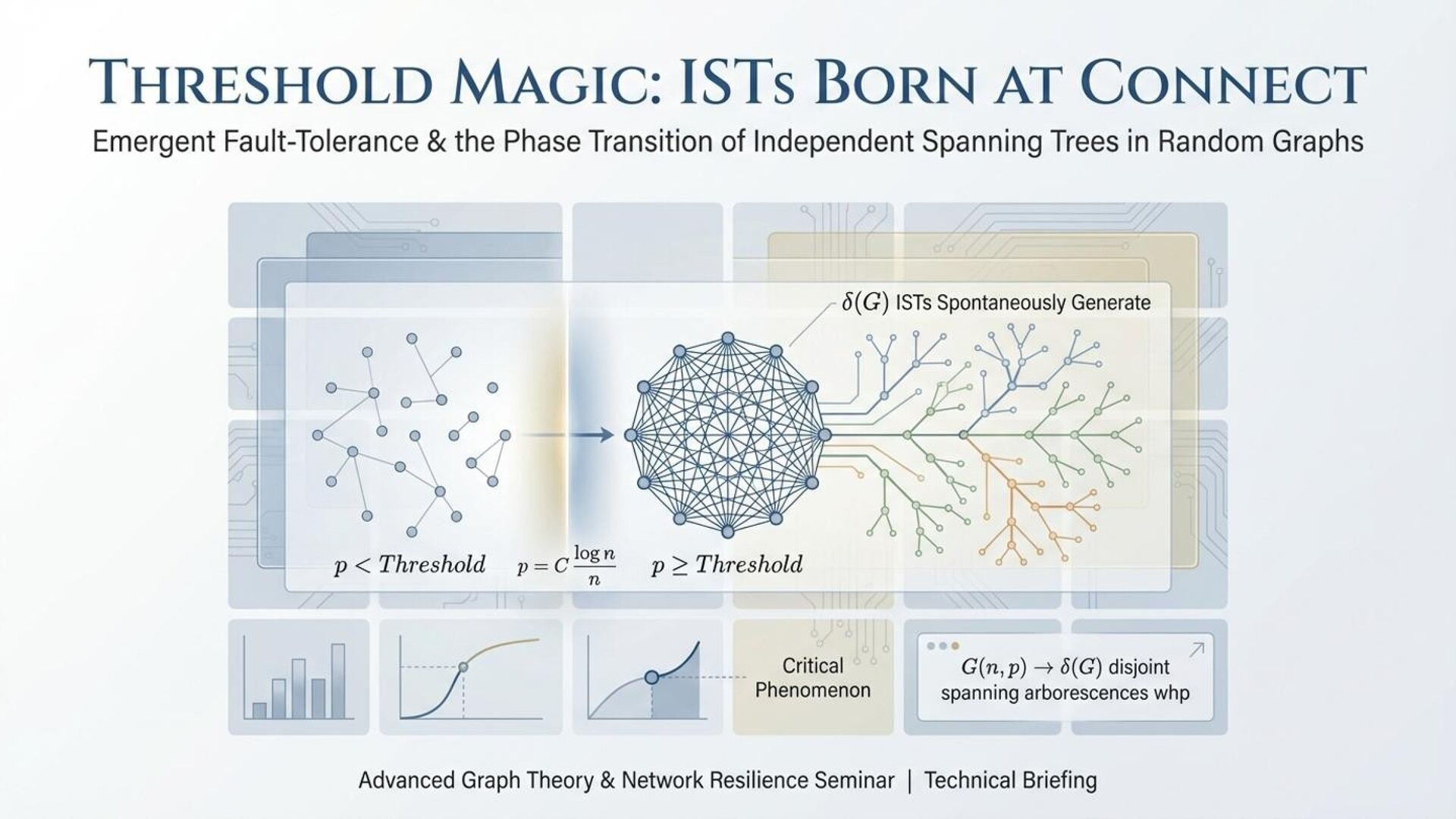
What if your cheapest network topology was also your most fault-tolerant?
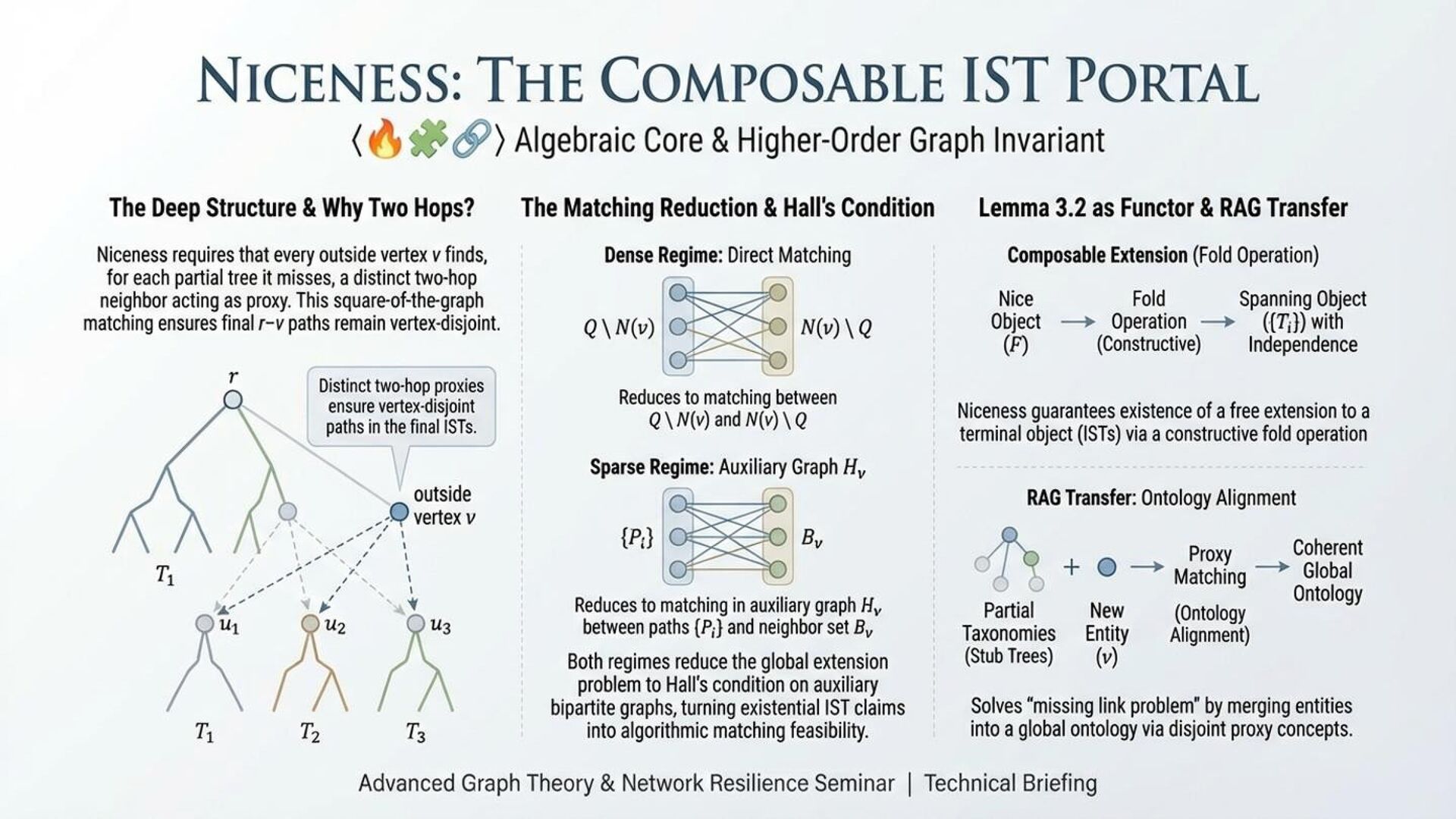
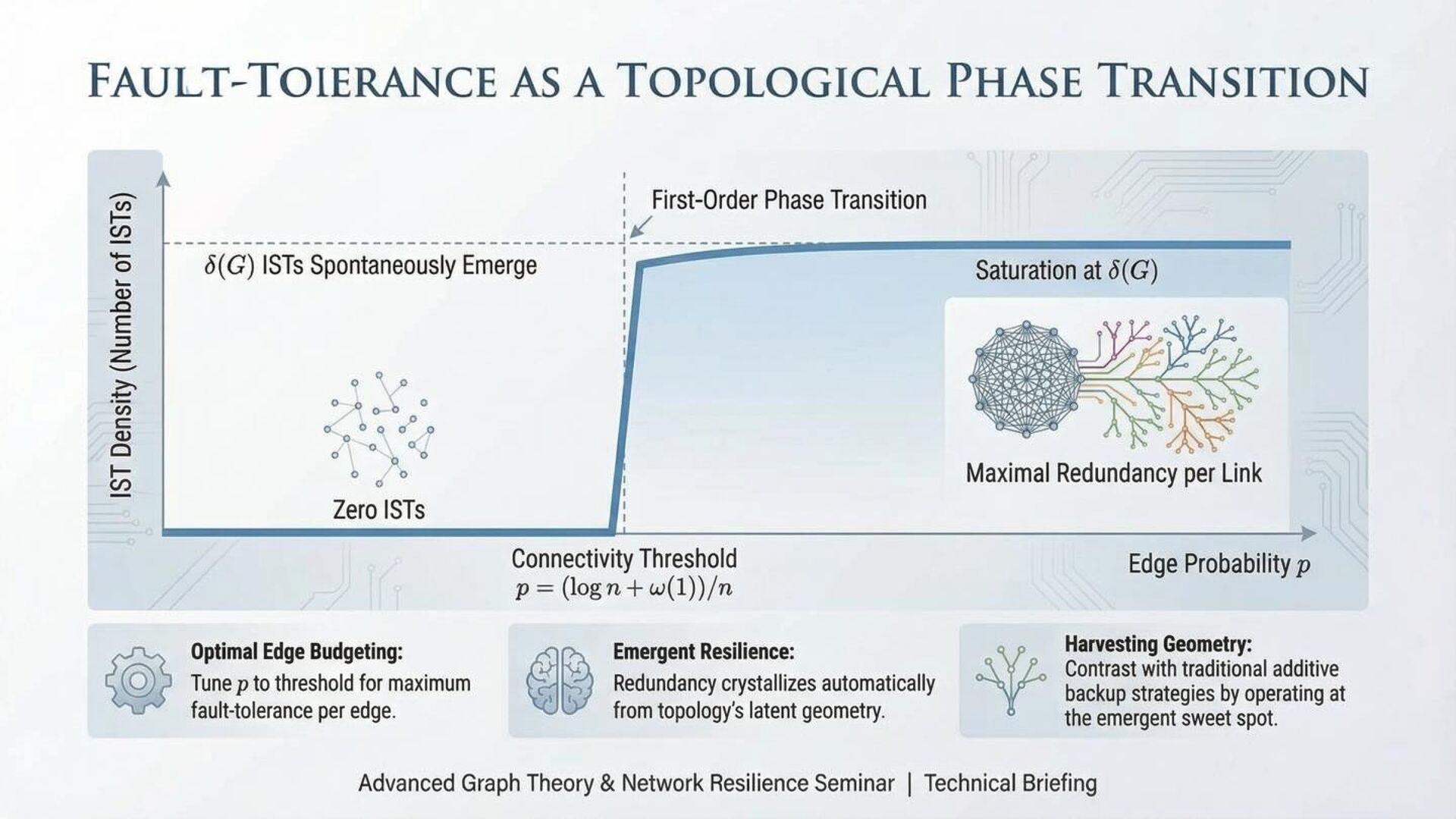
Draganić et al (2026, ACM SODA https://epubs.siam.org/doi/abs/10.1137/1.9781611978971.151 ) reveals a counterintuitive truth: at the exact moment a random graph becomes connected, it spontaneously crystallizes the maximum possible number of independent backup structures. So no over-engineering required.
TL;DR in today’s public-cloud USD:
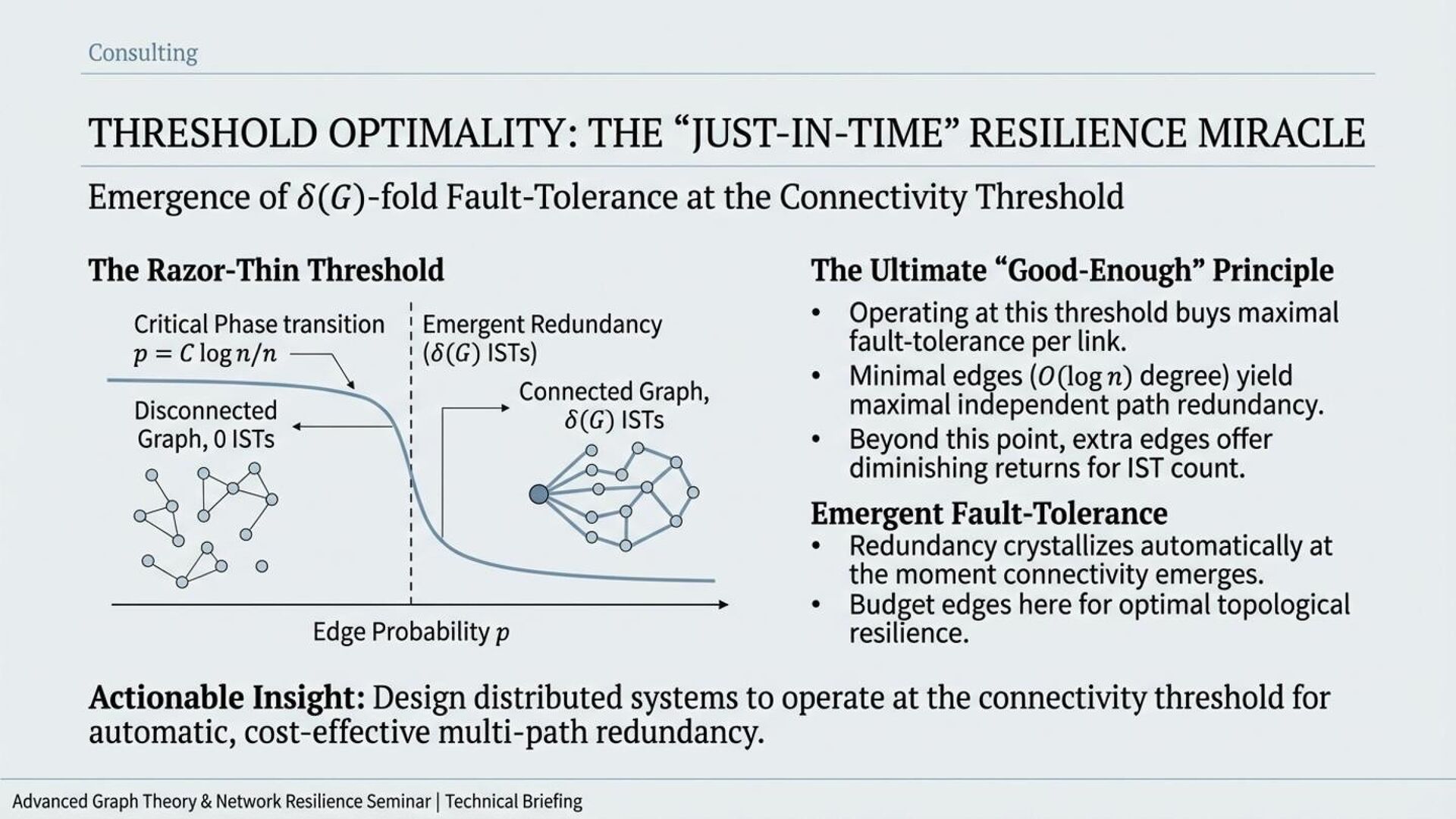
BOE "Stop at connectivity" roughly 15–30% savings on network capex/opex compared to traditionally over-provisioned fabrics so ~5–10% on the total datacenter bill (mostly from reduced switches, optics, & associated power/cooling).
For a typical 100k-server region ≈ $10–20M/year in avoided network-related spend. At 1m-server scale (Azure-level mega-region), the savings scale to ≈ $100–200M/y; enough to meaningfully accelerate new capacity builds.
Now to the paper:
Imagine designing a city's road network where every intersection can reach downtown via k completely separate routes (no shared intersections except start/end). You only pave the minimum number of roads needed for connectivity. Result: You get k-fold redundancy for free.
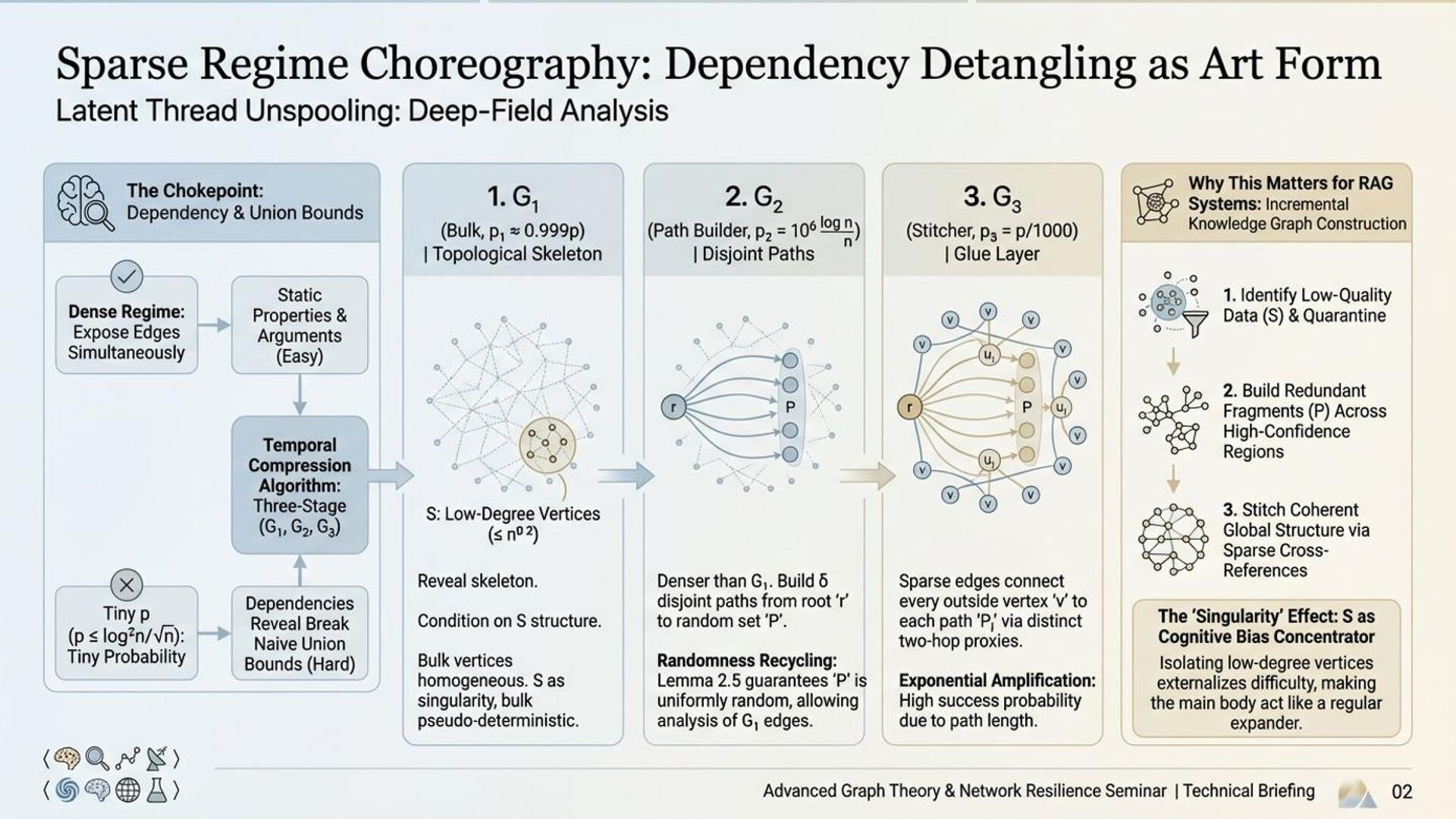
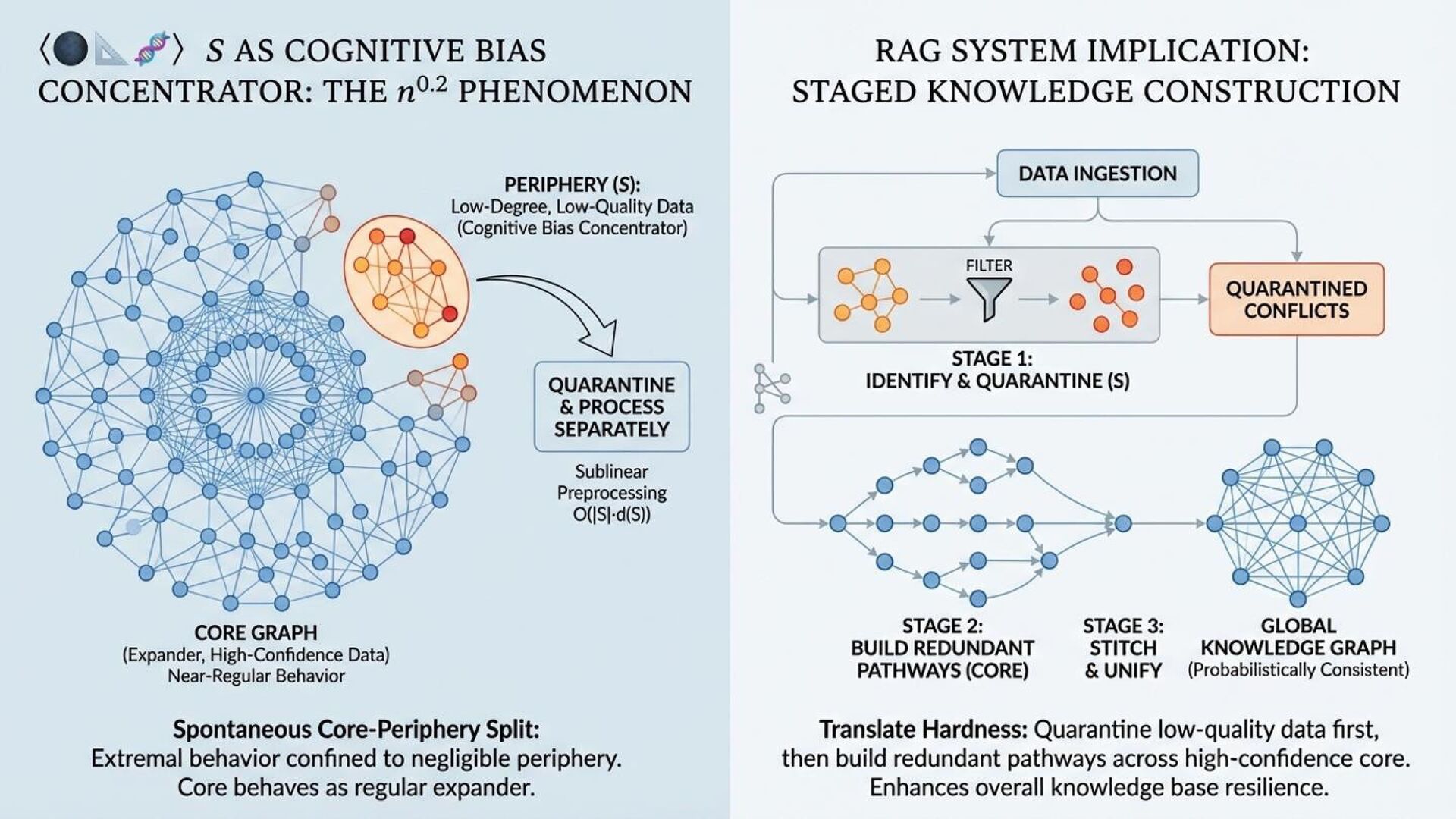
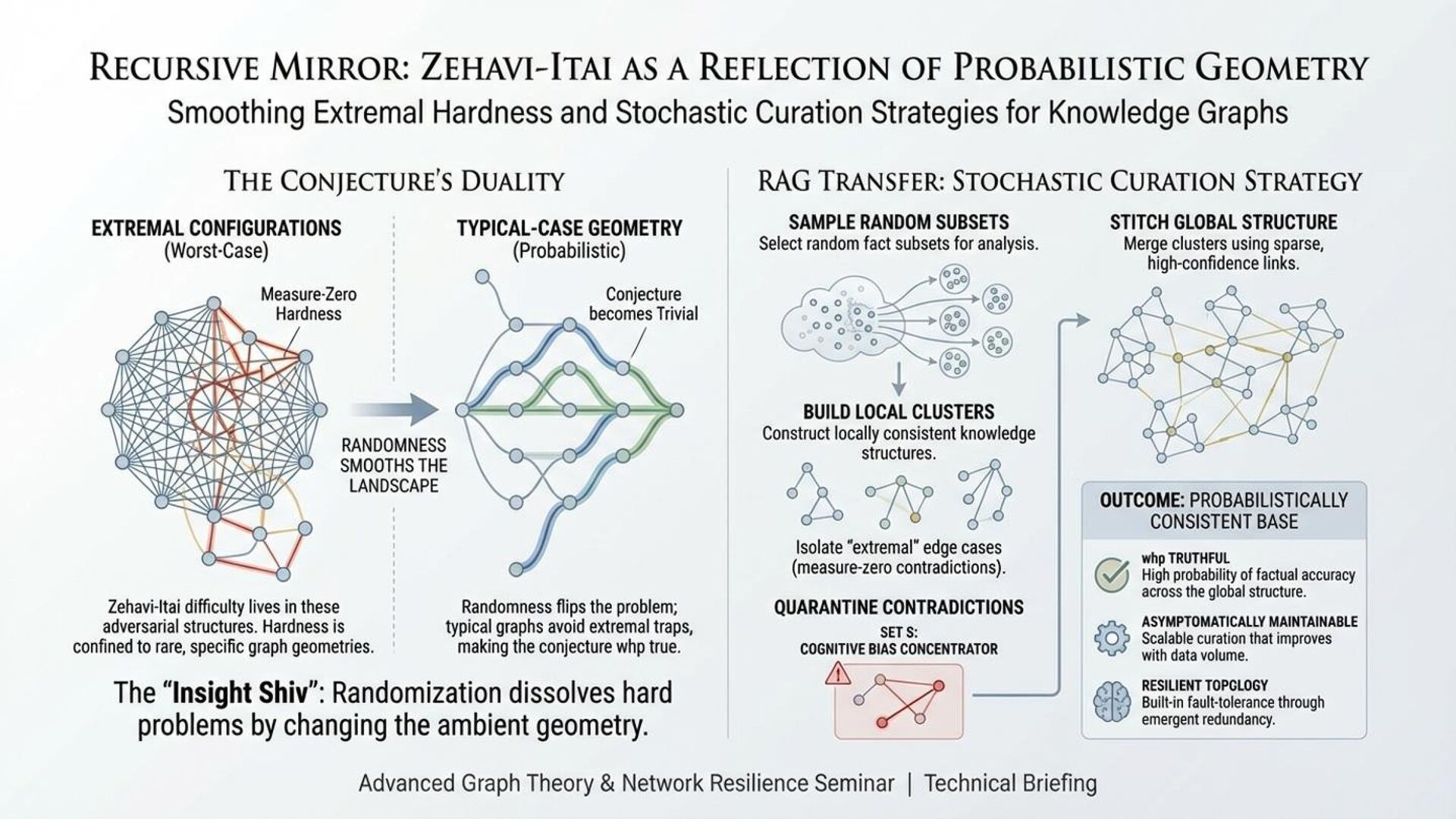
⚡ For RAG systems this suggests a stochastic curation strategy. Instead of trying to resolve all contradictions in a knowledge graph deterministically, sample random subsets of facts and build locally consistent clusters, then stitch them. The "extremal contradictions" (measure-zero edge cases) can be quarantined in S and handled separately. The result: a probabilistically consistent knowledge base that's "whp truthful."
⚡ In cloud datacenters, sensor networks, or P2P systems where links appear probabilistically, operating at "just enough" connectivity gives you optimal fault-tolerance per dollar spent. Adding more edges beyond this yields diminishing returns for resilience.
----
🧠 The paper's neat meta-insight (for SMEs):
Zehavi-Itai is hard bc it's a worst-case statement. Randomness is the lens that flips it into a typical-case triviality. The proof dissolves the conjecture by changing the ambient geometry from adversarial to probabilistic. The hardness lives in measure-zero extremal configurations. Randomness smooths the landscape, revealing that typical graphs are trivially resilient.
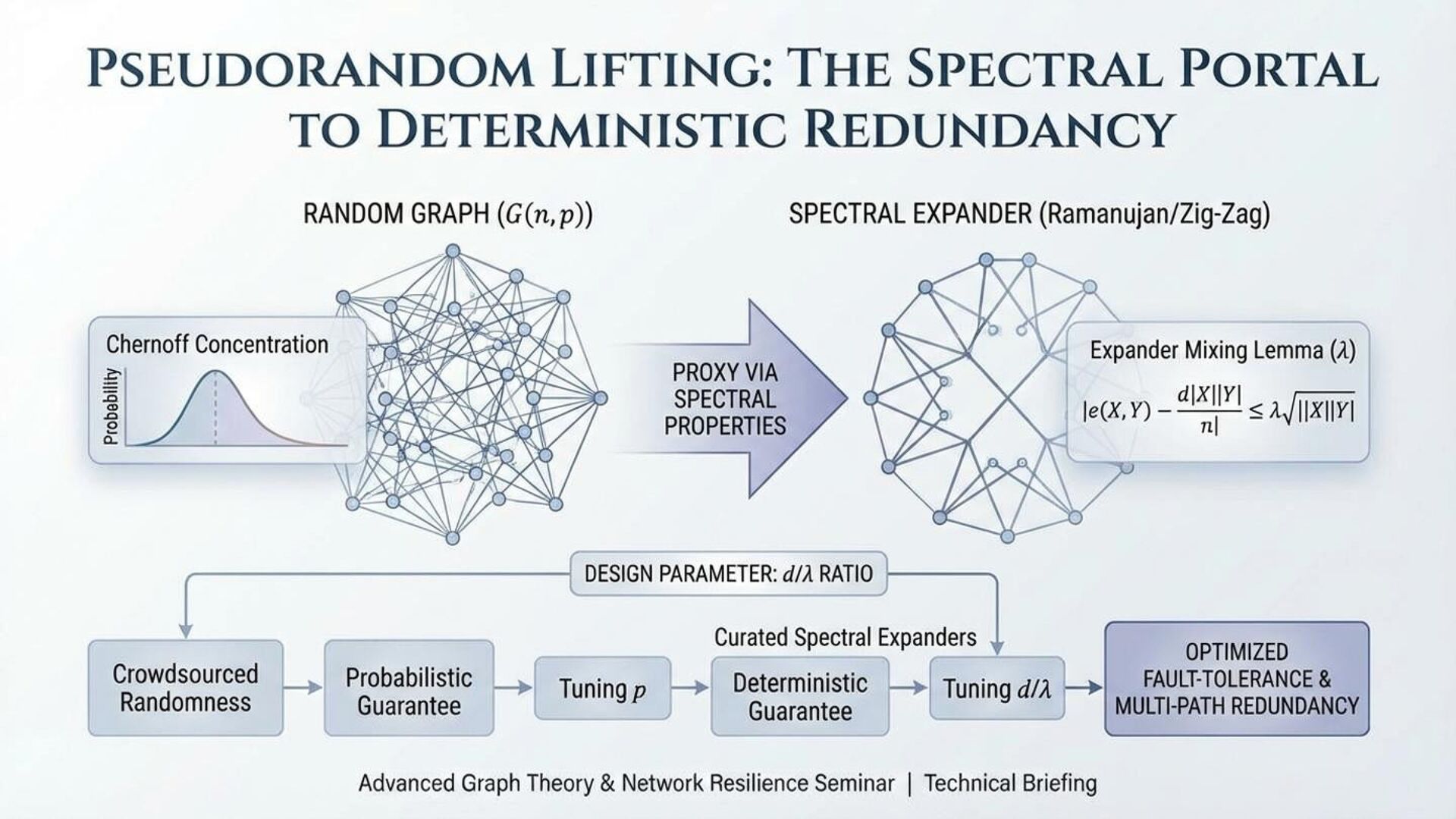
The constant C>1 is just a concentration safety margin; the real threshold is connectivity itself. The proof depends only on expansion and concentration, not full independence. For (n,d,λ)-graphs with d/λ ≫ log n, the same argument yields (1−o(1))d ISTs ... improving the d/4 bound to asymptotically optimal. Spectral ratio becomes a deterministic design parameter.
If you're designing cloud fabrics then tune your link probability to p = 2 log n/n. You'll get δ(G)-fold path diversity w/o provisioning extra switches.
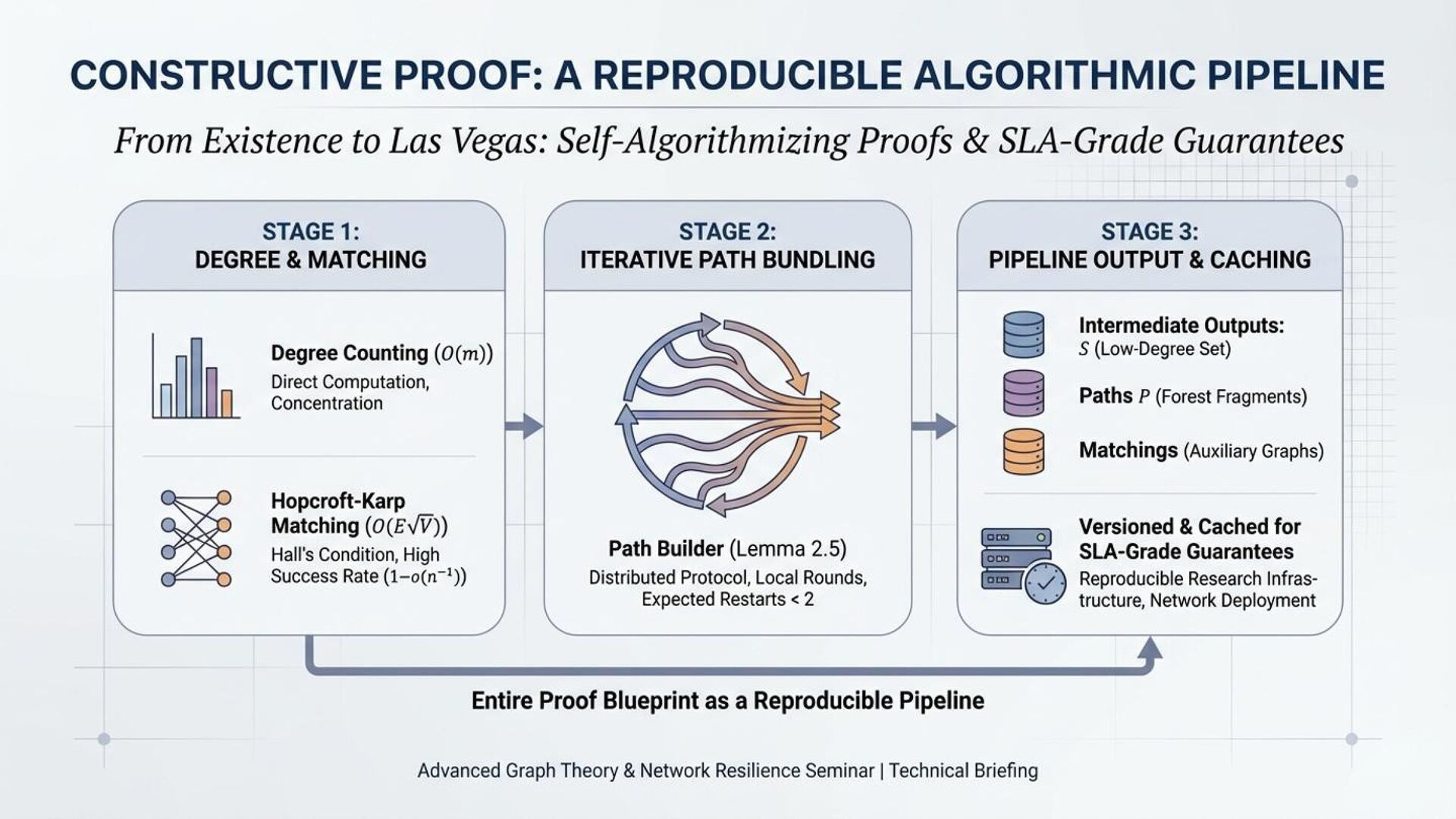
If distributed algorithms: The staged exposure is a blueprint for incremental topology construction .. isolate quirks, build redundant fragments, stitch deterministically.


 dybilar
 takehaya
 sishi2026
 youten622
 naok615
 takasehideki
 ftakahashi
 junkashihara
 s_mizuki_nlp
 ayatokanada
 tkng
tkng
 recsyslab
.png) satai
satai
 axbom
axbom
 jacobian
 danielanewman
 inesmontani
 csswizardry
 reverentgeek
 chriscoyier
 paigeccino
 jmmastey
 holman
 livdayseo