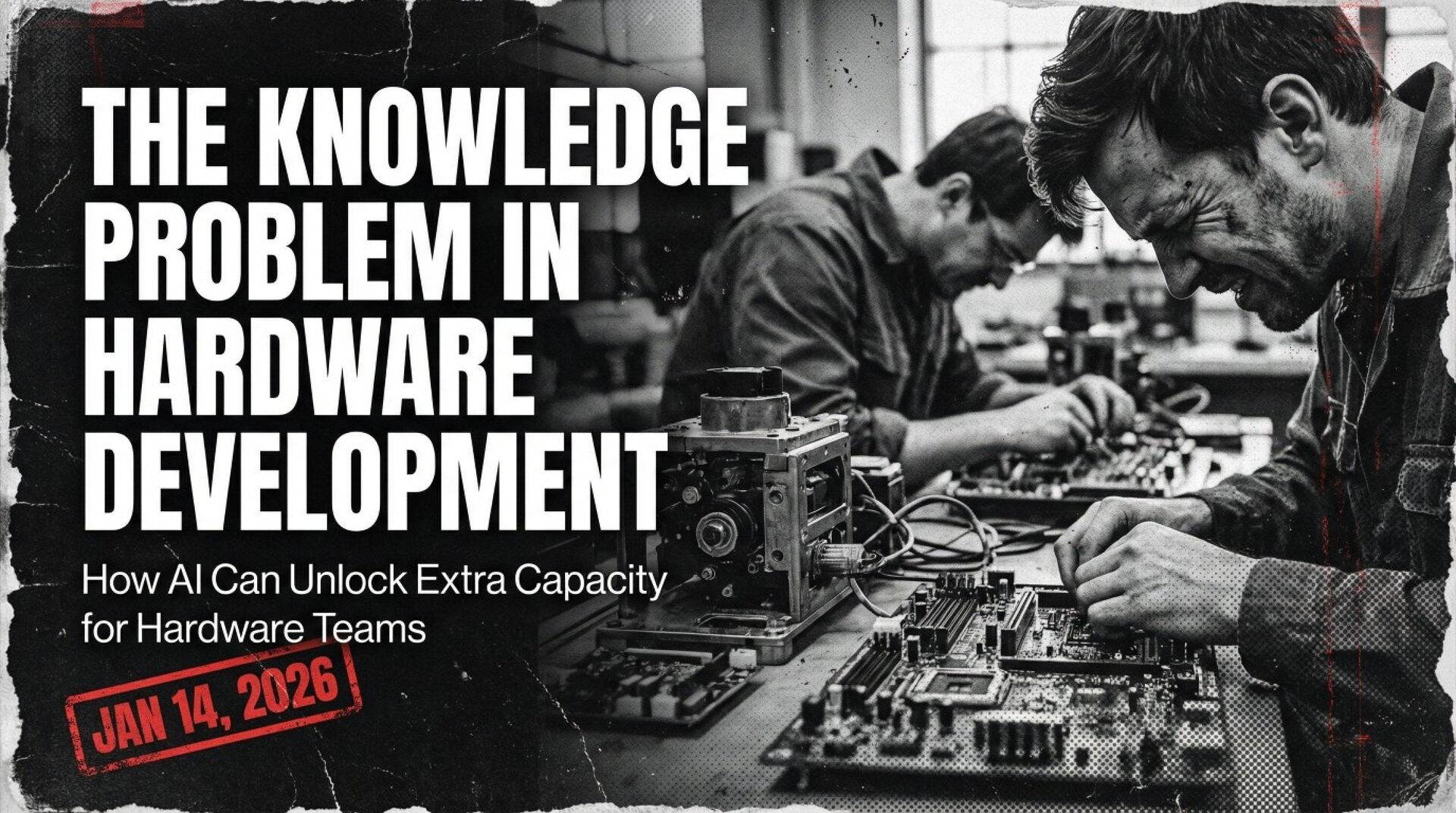
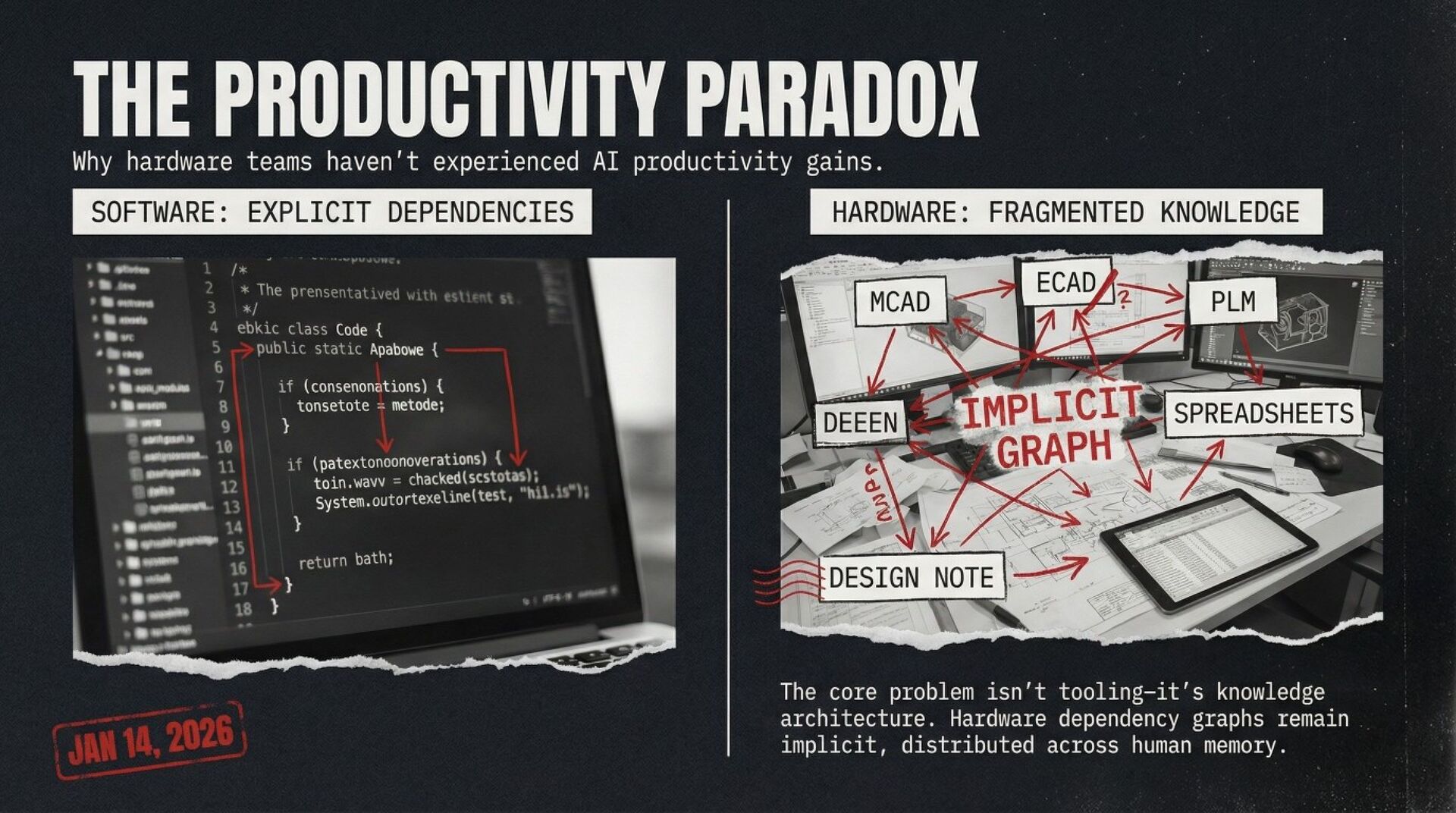
Why hardware teams haven't experienced AI productivity gains. The core problem isn't tooling—it's knowledge architecture. While software teams have consolidated knowledge in codebases with explicit dependencies, hardware teams operate in fragmented tool ecosystems (MCAD, ECAD, PLM, spreadsheets) where dependency graphs remain implicit and distributed across human memory.
The bottleneck is structured institutional knowledge, not compute.
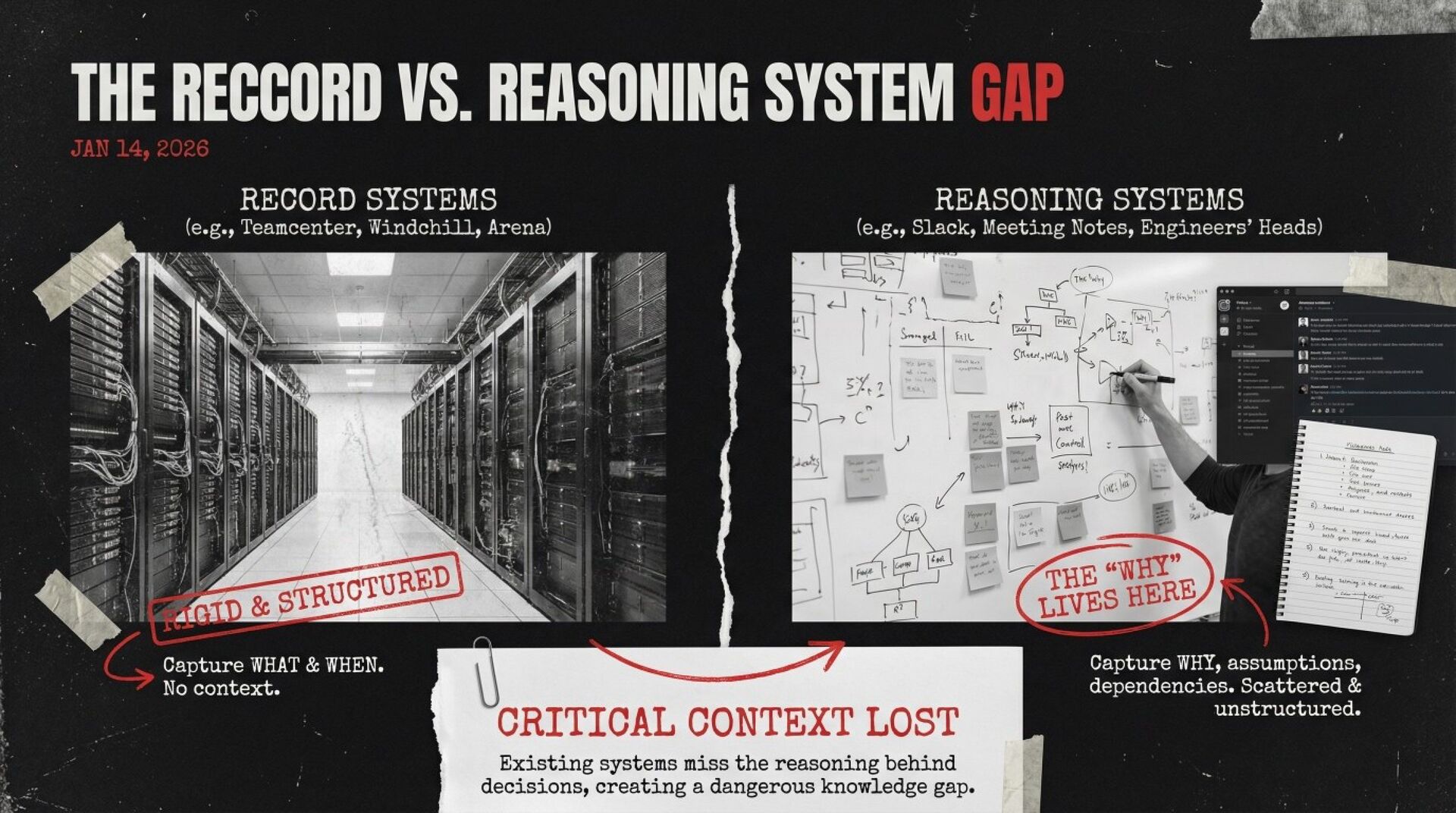
Existing PLM/PDM systems like Teamcenter, Windchill, and Arena are record systems, not reasoning systems. They capture what was decided and when, but not why a decision was made, what assumptions it depended on, or what other decisions would need to change if those assumptions became invalid. The 'why' lives in meeting notes, Slack threads, and engineers' heads.
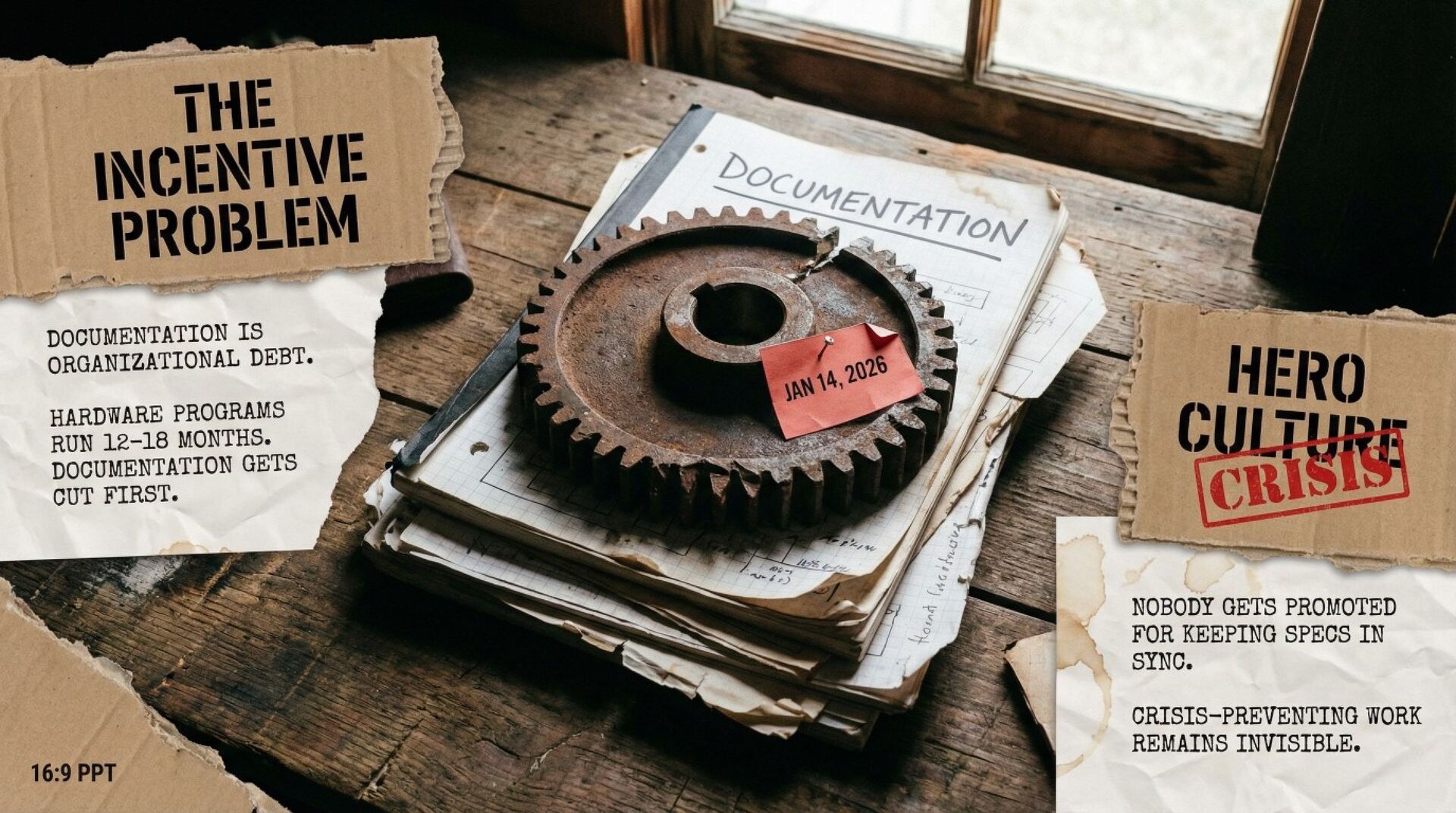
Documentation is organizational debt. Hardware programs run 12-18 months with aggressive timelines, and documentation is the first thing that gets cut. Nobody gets promoted for keeping specs in sync. This creates a tragedy of the commons where rational individual behavior produces irrational collective outcomes, leading to hero culture where crisis-preventing work remains invisible.
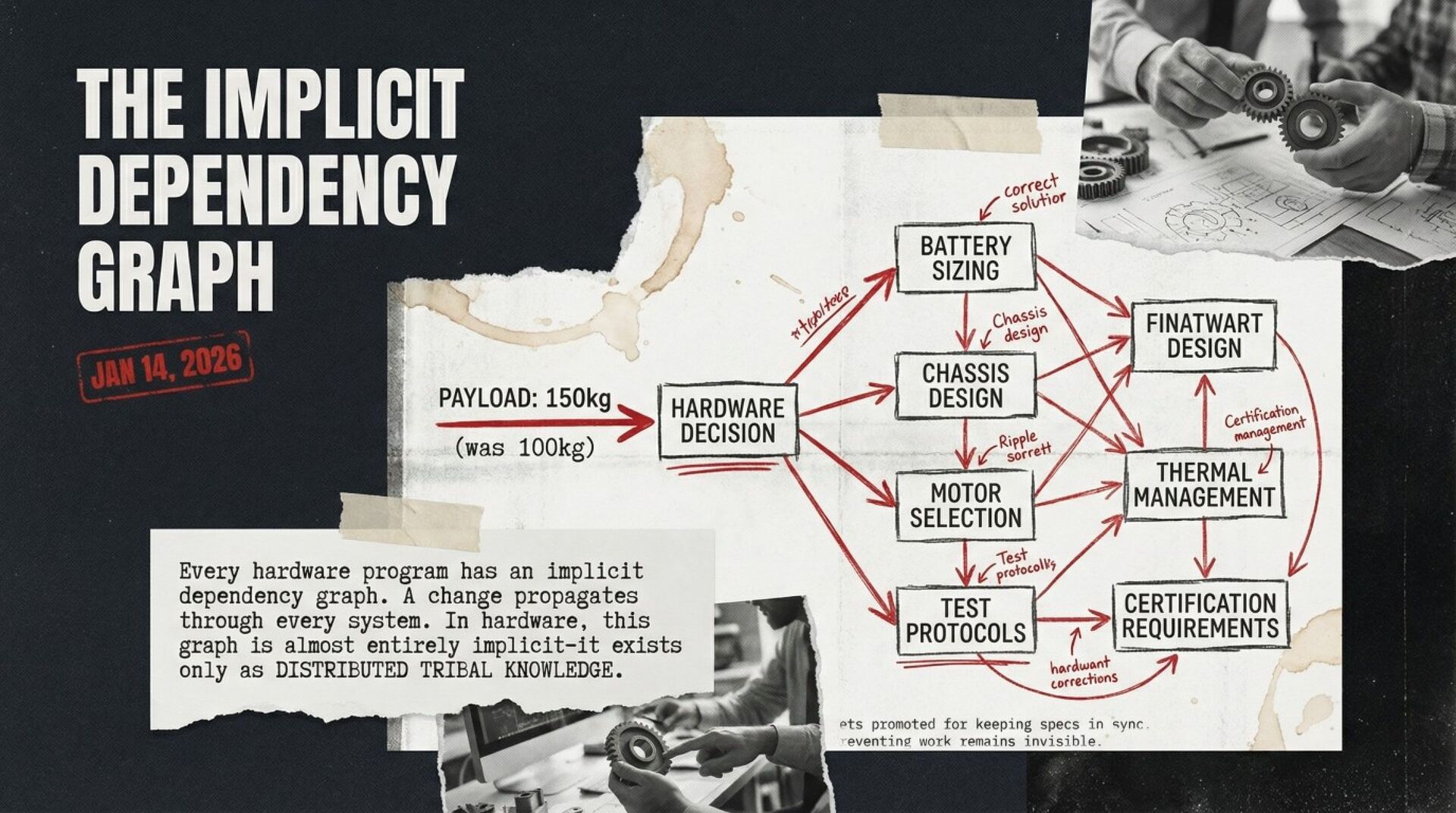
The Implicit Dependency Graph
Every hardware program has an implicit dependency graph connecting decisions to upstream assumptions and downstream consequences. Change the payload spec from 100kg to 150kg, and that change propagates through battery sizing, chassis design, motor selection, thermal management, test protocols, and certification requirements. In hardware, this graph is almost entirely implicit—it exists only as distributed tribal knowledge.
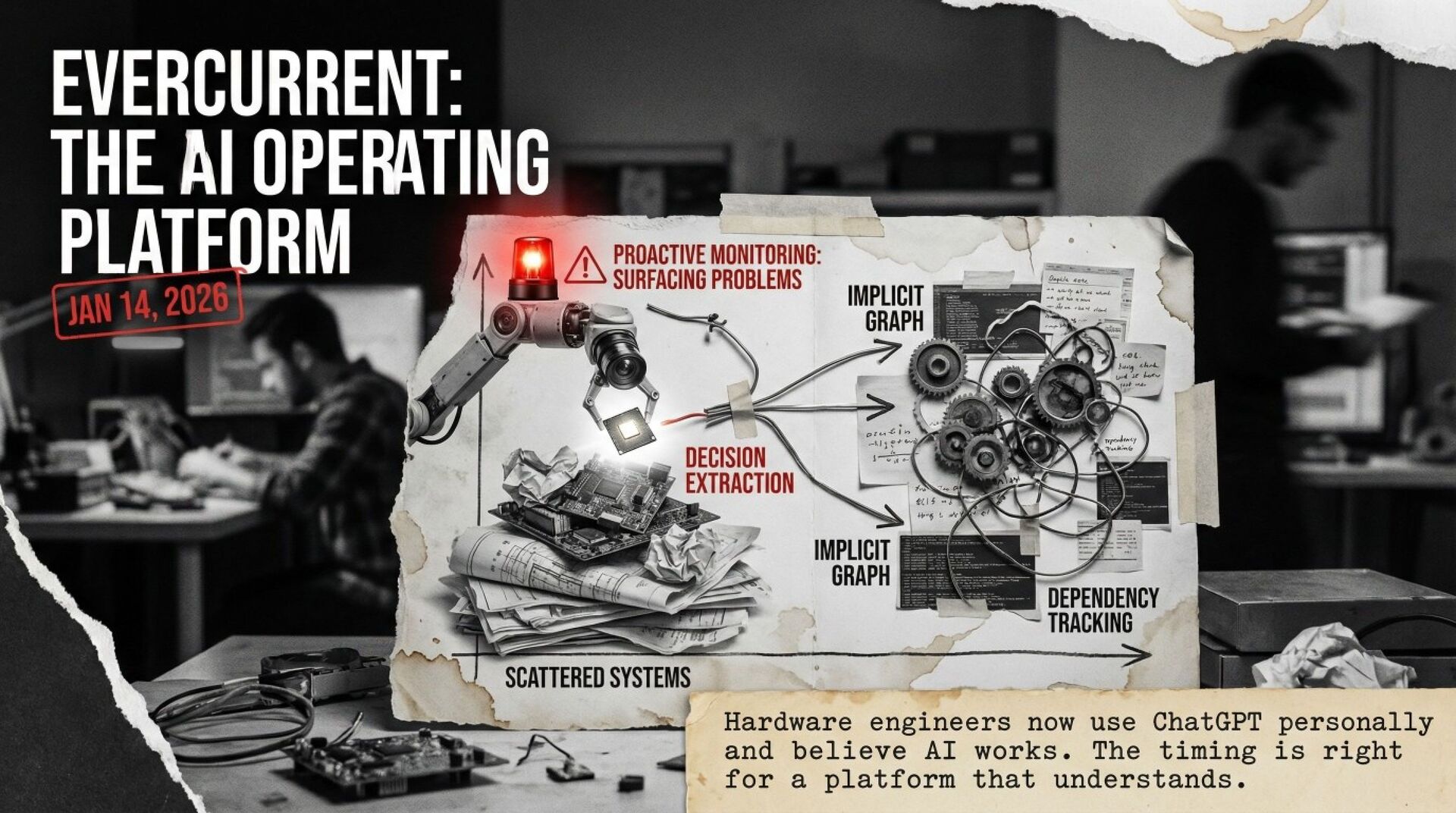
Evercurrent positions itself as an AI operating platform for hardware teams with four layers: (1) Knowledge ingestion from scattered systems, (2) Decision extraction understanding what was decided and why, (3) Dependency tracking building the implicit graph, and (4) Proactive monitoring surfacing problems before they become schedule slips. The timing is right because hardware engineers now use ChatGPT personally and believe AI works.
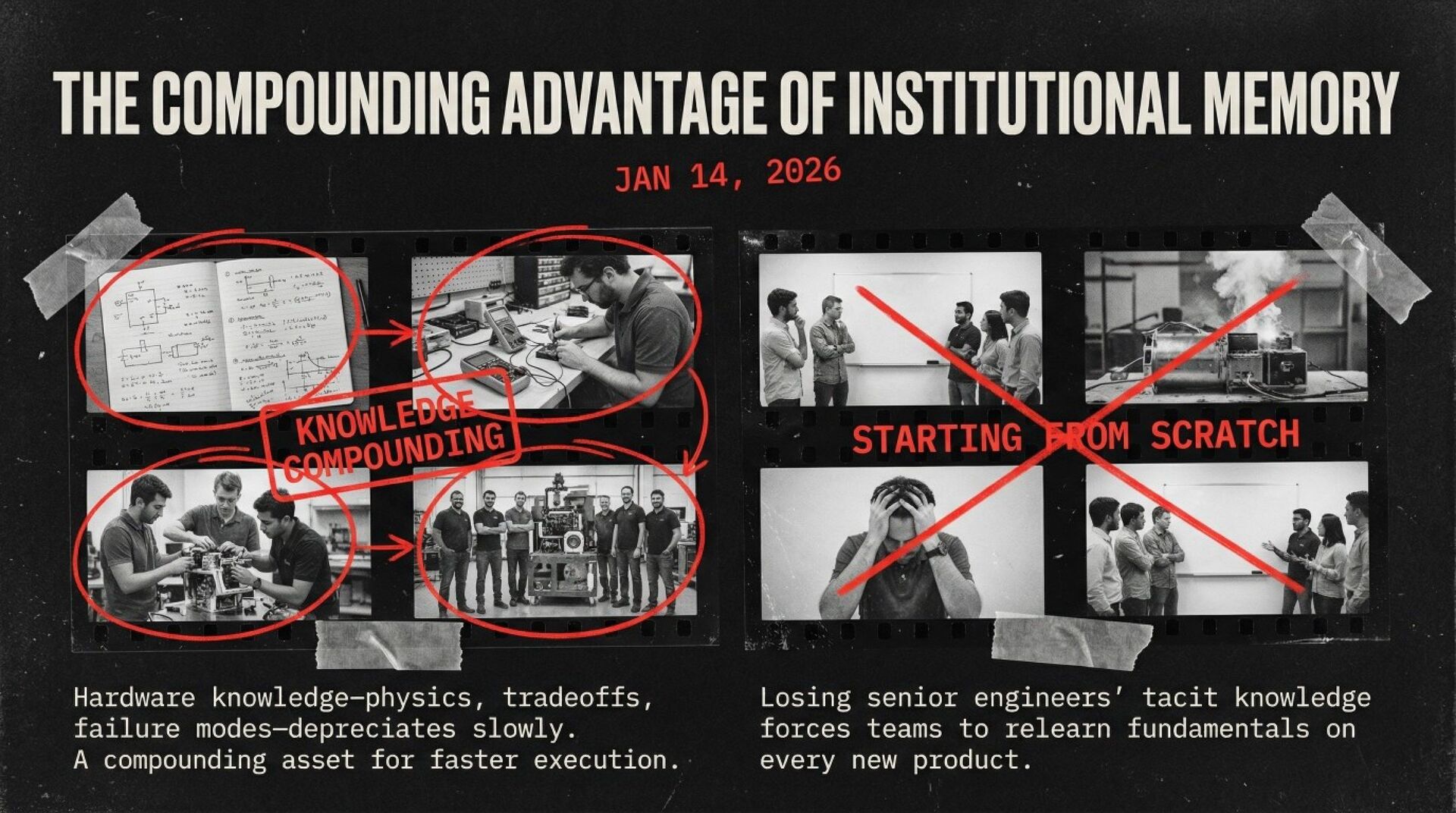
Hardware knowledge depreciates much more slowly than software knowledge. The physics of thermal management, tradeoffs in motor selection, and failure modes of specific components stay relevant for decades. Institutional knowledge in hardware is a compounding asset—the team that gets their knowledge together executes faster on every subsequent product, while companies that lose senior engineers' tacit knowledge start from scratch.
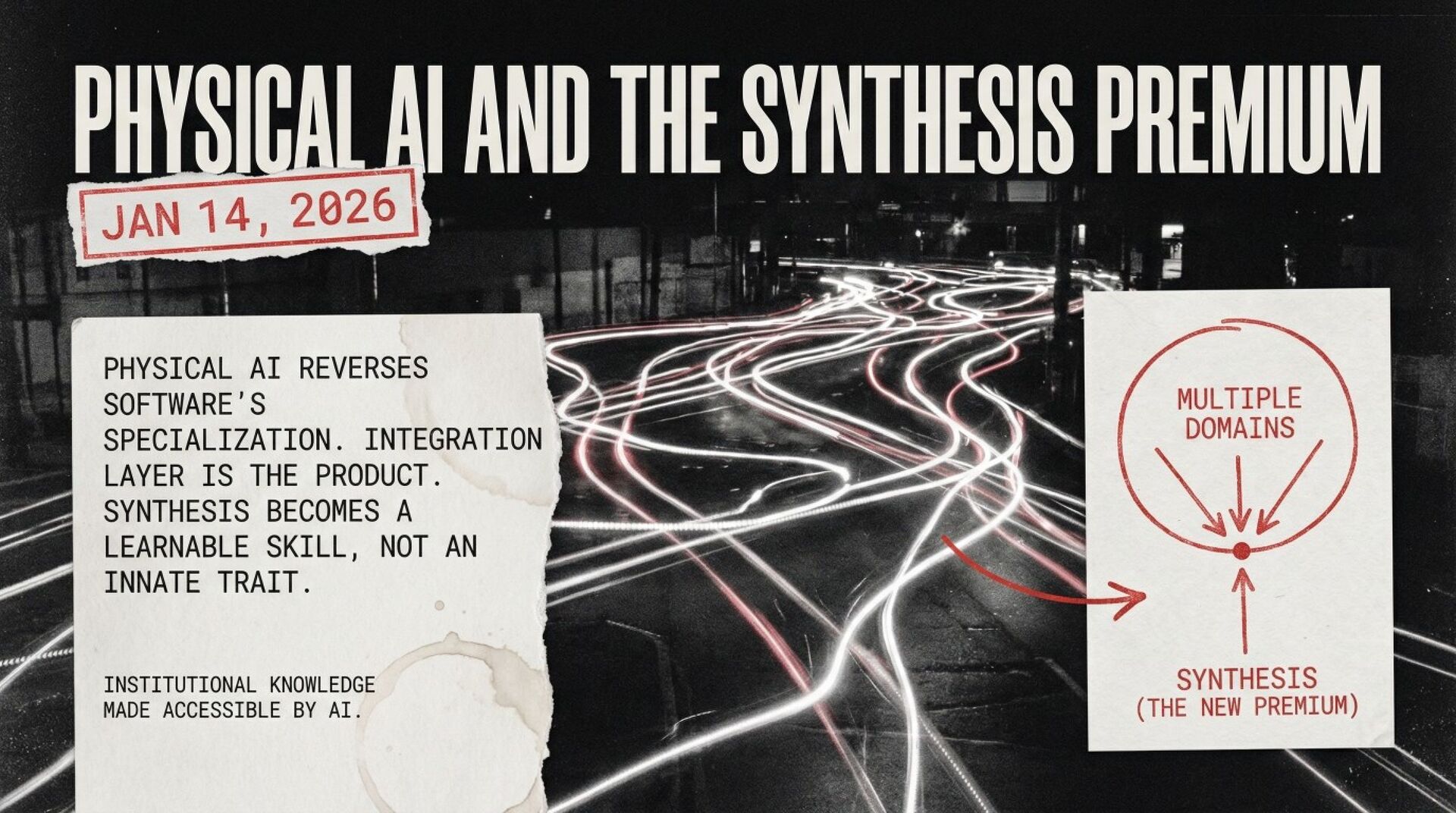
Physical AI and the Synthesis Premium
Physical AI reverses software's specialization trend. When building robots, drones, or wearables, the integration layer is the product. The talent bottleneck isn't people who can go deep on one thing—it's people who can hold multiple domains in their head simultaneously and reason about their interactions. Synthesis is becoming a learnable skill rather than an innate trait through AI systems that make institutional knowledge accessible.
The simulation endgame is decision consequence modeling. If you change assumption X, what decisions become invalid? This enables executives to model second-order effects before committing: What happens to certification timeline if we change battery chemistry? What decisions have we made that assumed the old supplier's lead times? The bottleneck is structured institutional knowledge, not compute.


 dybilar
 loglass2019
 ayakohamaguchi
 mj6237
 hiyoriyamakankou
 gw_recruit
 auditech2022
 takeshisumida_
 nakahara
 kojima1
 nakasonejusetsu
 uluru_hr
 flux
flux
 paigeccino
 addyosmani
 tammielis
 soudai
 aleyda
 cassininazir
 skoyamalab
 geshan
 ivargrimstad
 wayneb77
 davidcarrasco