$30 off During Our Annual Pro Sale. View Details »

FY 2024: MDC 11 - Genitourinary

Avatar for e4health e4health PRO
April 03, 2024
290

FY 2024: MDC 11 - Genitourinary

Avatar for e4health

e4health PRO

April 03, 2024
Tweet

More Decks by e4health

Transcript

  1. H I M | C O D I N G

    & C D I | H E A LT H I T | R E V C Y C L E Empowering Better Health e4health tackles healthcare’s data, quality and revenue challenges empowering your providers to focus on better care.
  2. Objectives • Review MDC 11- Diseases of the kidney and

    urinary tract with a focus on selected diagnoses and procedures • Learner will acquire a basic understanding of the diagnoses and procedures included in MDC-11 • Discuss Query opportunities in MDC-11 • Review coding clinics relevant to the chosen topics in each DRG
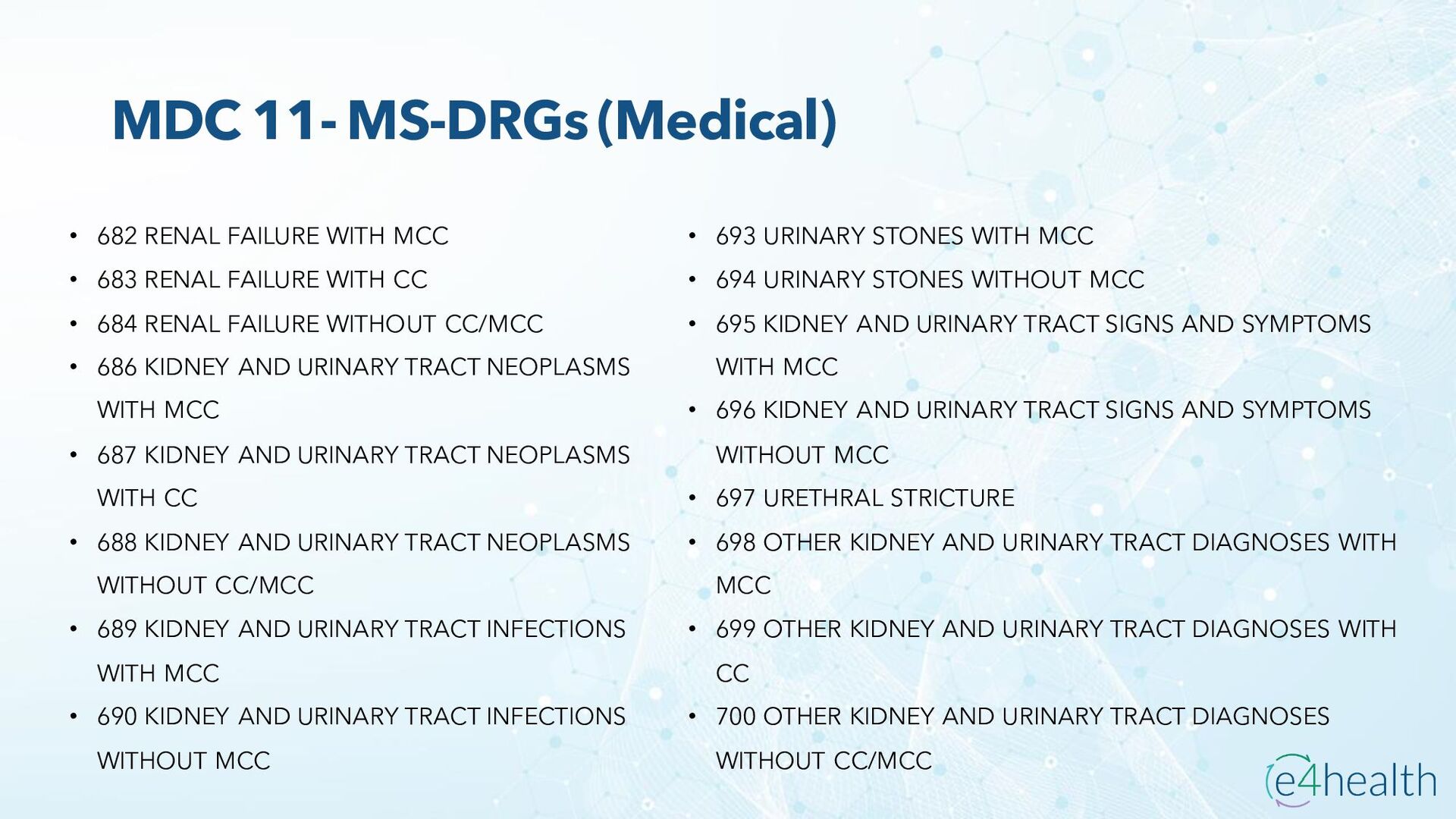
  3. MDC 11- MS-DRGs (Medical) • 682 RENAL FAILURE WITH MCC

    • 683 RENAL FAILURE WITH CC • 684 RENAL FAILURE WITHOUT CC/MCC • 686 KIDNEY AND URINARY TRACT NEOPLASMS WITH MCC • 687 KIDNEY AND URINARY TRACT NEOPLASMS WITH CC • 688 KIDNEY AND URINARY TRACT NEOPLASMS WITHOUT CC/MCC • 689 KIDNEY AND URINARY TRACT INFECTIONS WITH MCC • 690 KIDNEY AND URINARY TRACT INFECTIONS WITHOUT MCC • 693 URINARY STONES WITH MCC • 694 URINARY STONES WITHOUT MCC • 695 KIDNEY AND URINARY TRACT SIGNS AND SYMPTOMS WITH MCC • 696 KIDNEY AND URINARY TRACT SIGNS AND SYMPTOMS WITHOUT MCC • 697 URETHRAL STRICTURE • 698 OTHER KIDNEY AND URINARY TRACT DIAGNOSES WITH MCC • 699 OTHER KIDNEY AND URINARY TRACT DIAGNOSES WITH CC • 700 OTHER KIDNEY AND URINARY TRACT DIAGNOSES WITHOUT CC/MCC
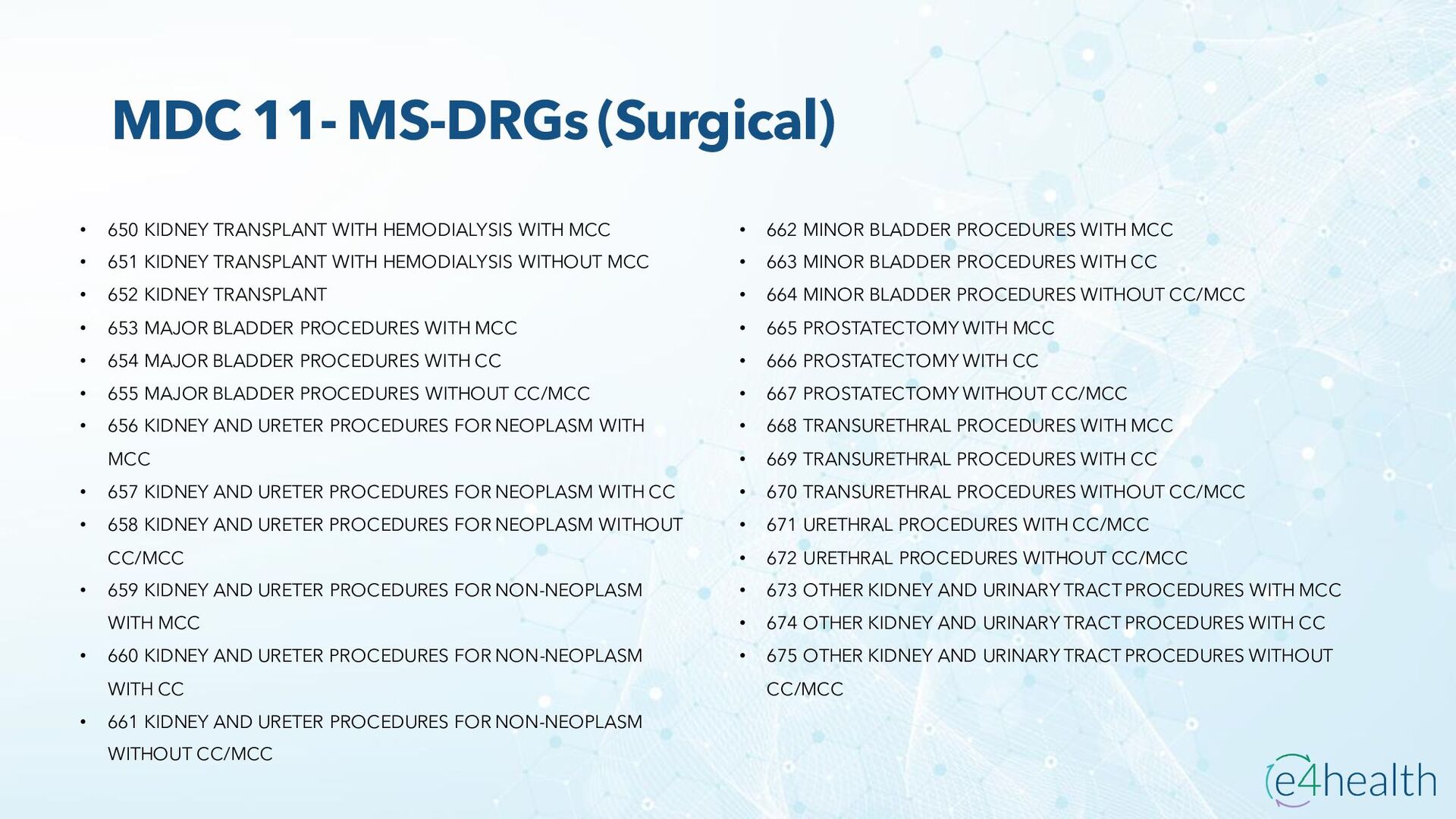
  4. MDC 11- MS-DRGs (Surgical) • 650 KIDNEY TRANSPLANT WITH HEMODIALYSIS

    WITH MCC • 651 KIDNEY TRANSPLANT WITH HEMODIALYSIS WITHOUT MCC • 652 KIDNEY TRANSPLANT • 653 MAJOR BLADDER PROCEDURES WITH MCC • 654 MAJOR BLADDER PROCEDURES WITH CC • 655 MAJOR BLADDER PROCEDURES WITHOUT CC/MCC • 656 KIDNEY AND URETER PROCEDURES FOR NEOPLASM WITH MCC • 657 KIDNEY AND URETER PROCEDURES FOR NEOPLASM WITH CC • 658 KIDNEY AND URETER PROCEDURES FOR NEOPLASM WITHOUT CC/MCC • 659 KIDNEY AND URETER PROCEDURES FOR NON-NEOPLASM WITH MCC • 660 KIDNEY AND URETER PROCEDURES FOR NON-NEOPLASM WITH CC • 661 KIDNEY AND URETER PROCEDURES FOR NON-NEOPLASM WITHOUT CC/MCC • 662 MINOR BLADDER PROCEDURES WITH MCC • 663 MINOR BLADDER PROCEDURES WITH CC • 664 MINOR BLADDER PROCEDURES WITHOUT CC/MCC • 665 PROSTATECTOMY WITH MCC • 666 PROSTATECTOMY WITH CC • 667 PROSTATECTOMY WITHOUT CC/MCC • 668 TRANSURETHRAL PROCEDURES WITH MCC • 669 TRANSURETHRAL PROCEDURES WITH CC • 670 TRANSURETHRAL PROCEDURES WITHOUT CC/MCC • 671 URETHRAL PROCEDURES WITH CC/MCC • 672 URETHRAL PROCEDURES WITHOUT CC/MCC • 673 OTHER KIDNEY AND URINARY TRACT PROCEDURES WITH MCC • 674 OTHER KIDNEY AND URINARY TRACT PROCEDURES WITH CC • 675 OTHER KIDNEY AND URINARY TRACT PROCEDURES WITHOUT CC/MCC
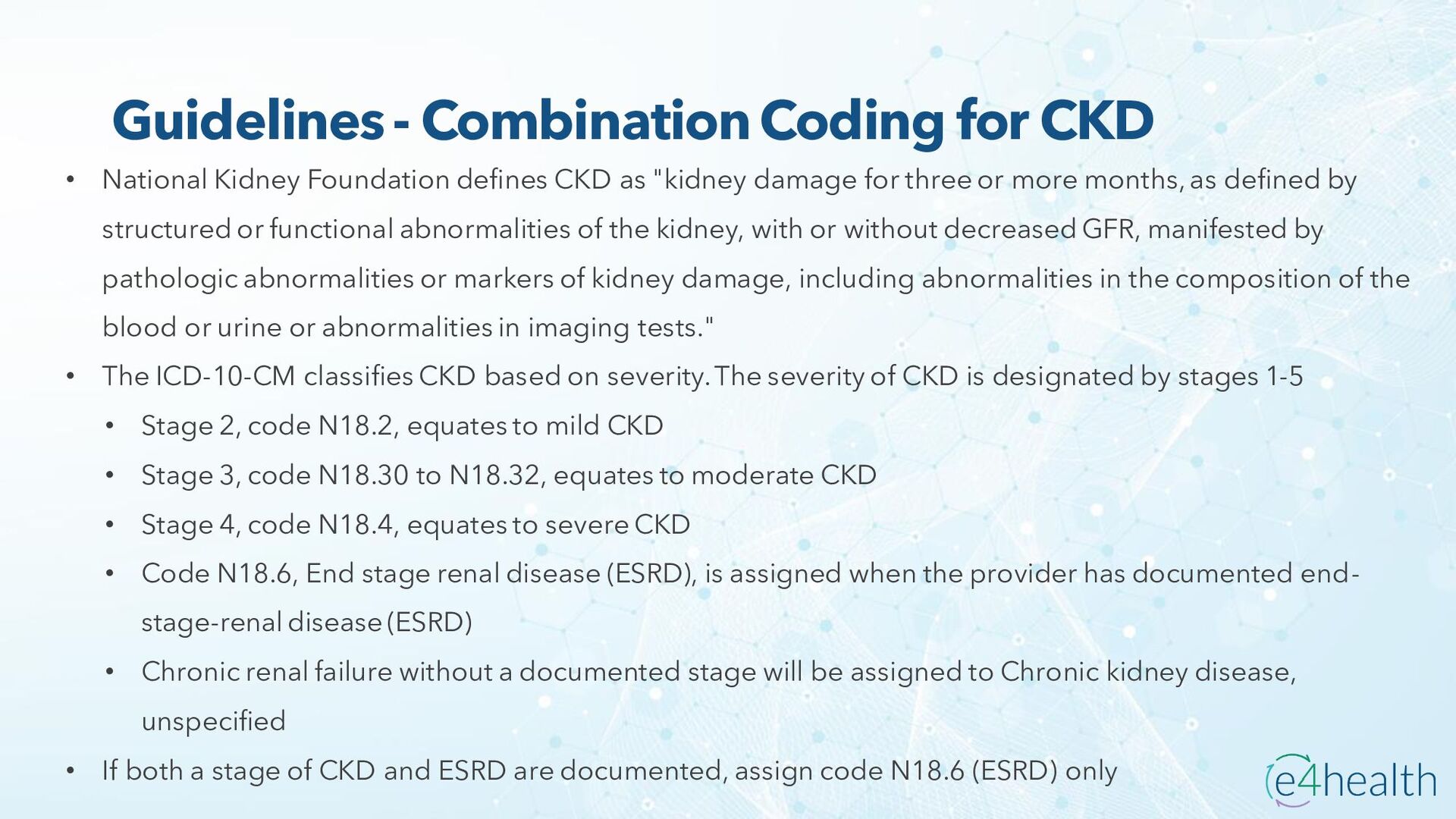
  5. Guidelines - Combination Coding for CKD • National Kidney Foundation

    defines CKD as "kidney damage for three or more months, as defined by structured or functional abnormalities of the kidney, with or without decreased GFR, manifested by pathologic abnormalities or markers of kidney damage, including abnormalities in the composition of the blood or urine or abnormalities in imaging tests." • The ICD-10-CM classifies CKD based on severity. The severity of CKD is designated by stages 1-5 • Stage 2, code N18.2, equates to mild CKD • Stage 3, code N18.30 to N18.32, equates to moderate CKD • Stage 4, code N18.4, equates to severe CKD • Code N18.6, End stage renal disease (ESRD), is assigned when the provider has documented end- stage-renal disease (ESRD) • Chronic renal failure without a documented stage will be assigned to Chronic kidney disease, unspecified • If both a stage of CKD and ESRD are documented, assign code N18.6 (ESRD) only
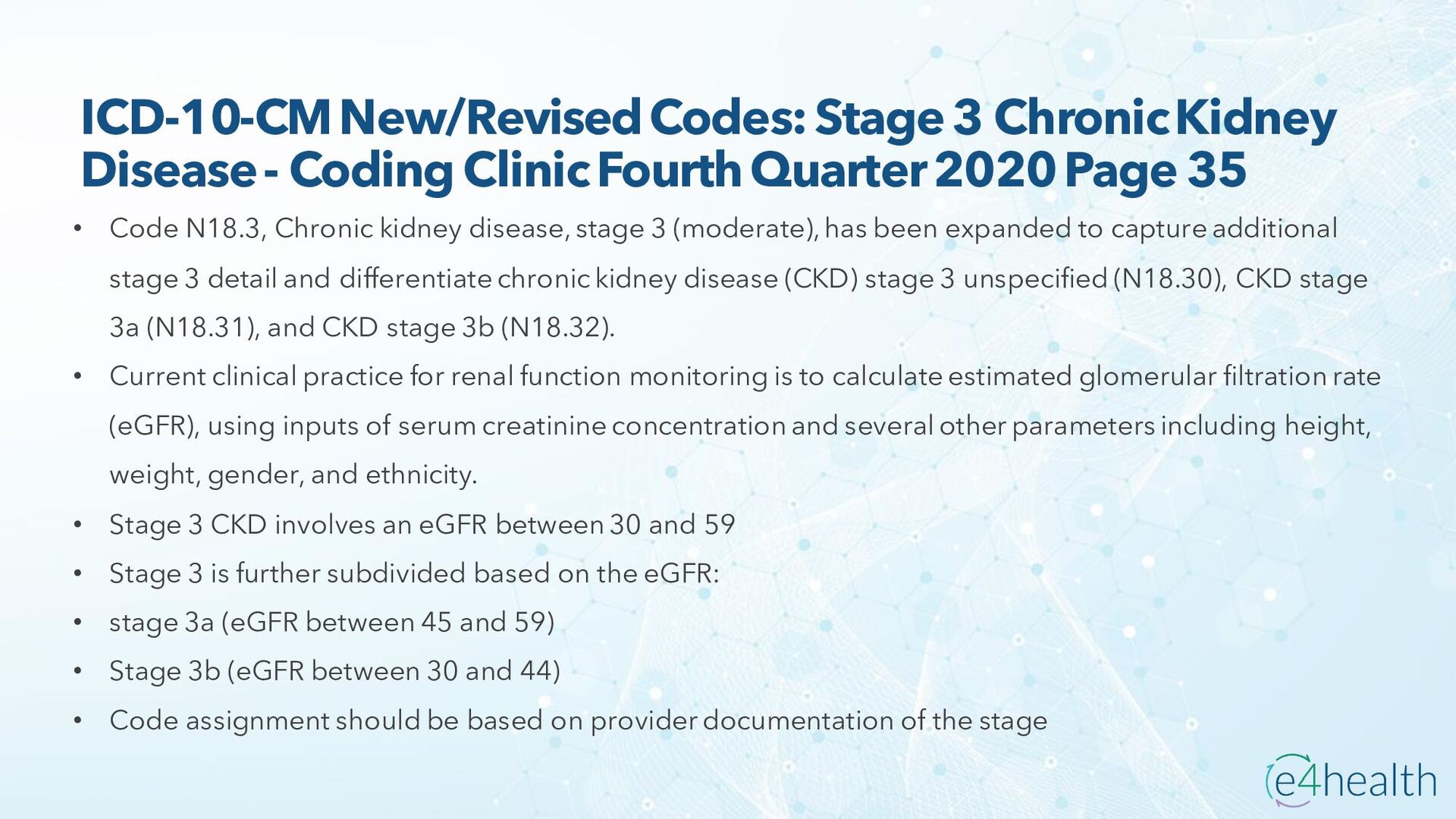
  6. ICD-10-CM New/Revised Codes:Stage 3 Chronic Kidney Disease - Coding Clinic

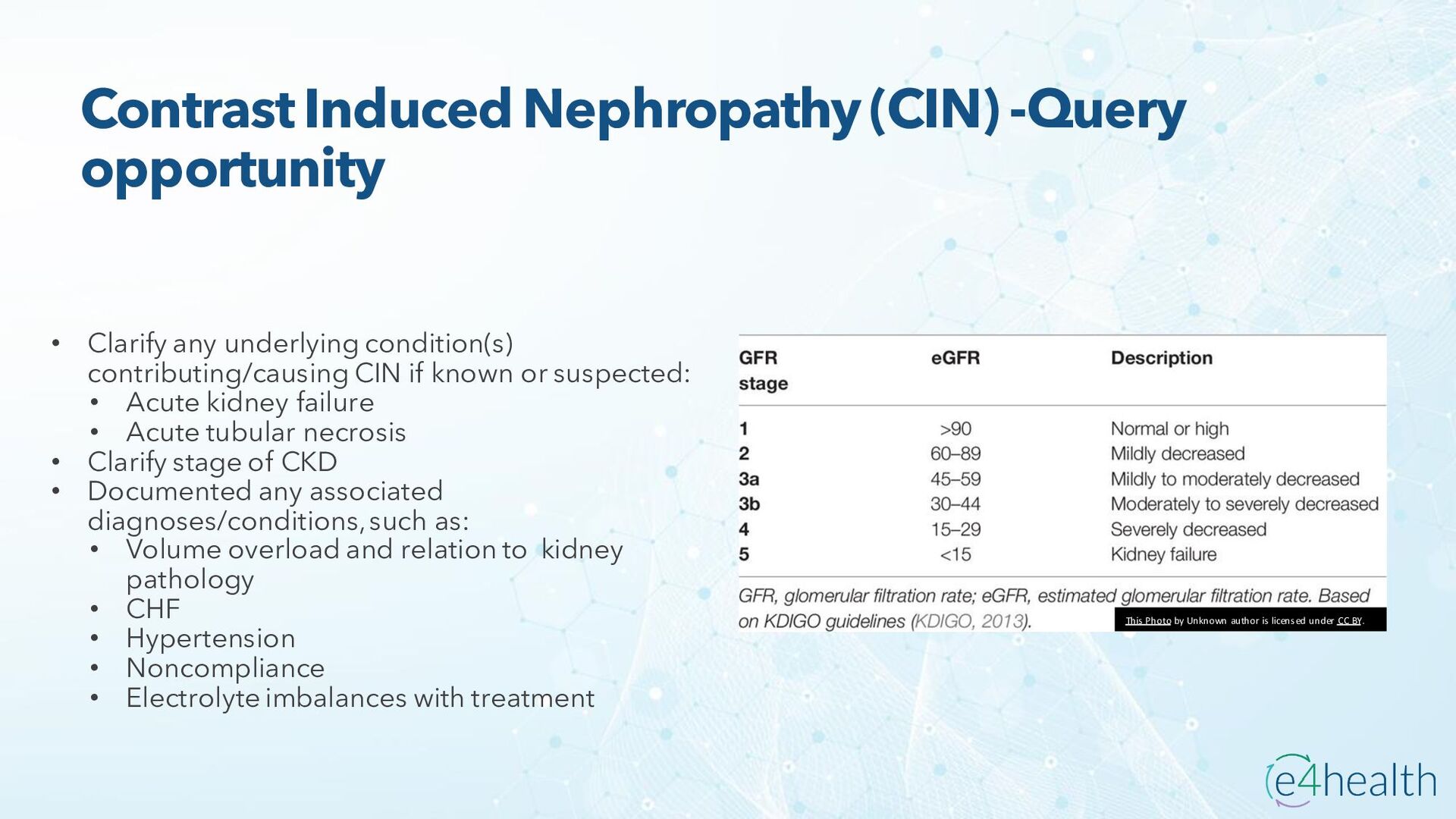
    Fourth Quarter 2020 Page 35 • Code N18.3, Chronic kidney disease, stage 3 (moderate), has been expanded to capture additional stage 3 detail and differentiate chronic kidney disease (CKD) stage 3 unspecified (N18.30), CKD stage 3a (N18.31), and CKD stage 3b (N18.32). • Current clinical practice for renal function monitoring is to calculate estimated glomerular filtration rate (eGFR), using inputs of serum creatinine concentration and several other parameters including height, weight, gender, and ethnicity. • Stage 3 CKD involves an eGFR between 30 and 59 • Stage 3 is further subdivided based on the eGFR: • stage 3a (eGFR between 45 and 59) • Stage 3b (eGFR between 30 and 44) • Code assignment should be based on provider documentation of the stage
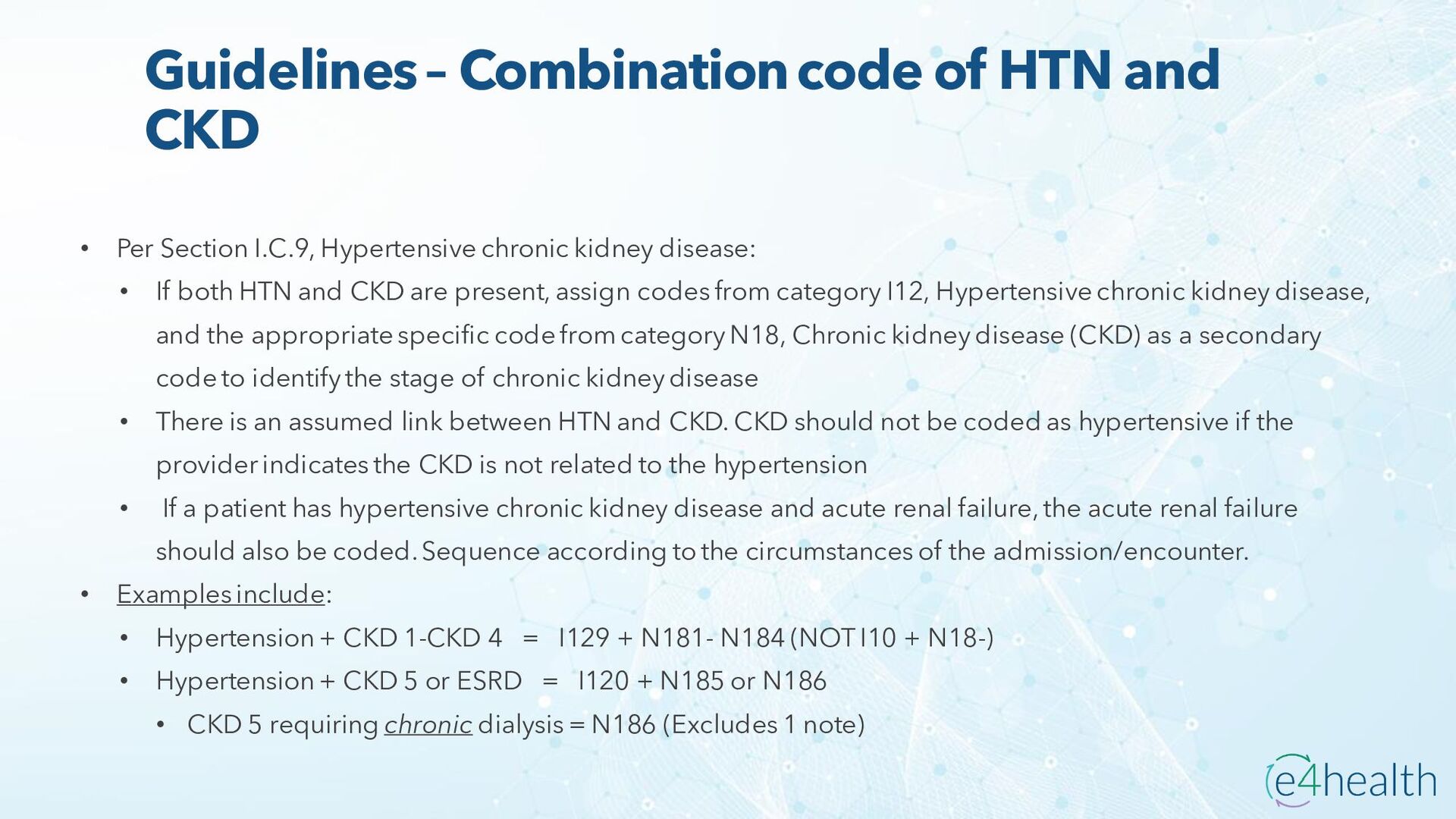
  7. Guidelines – Combination code of HTN and CKD • Per

    Section I.C.9, Hypertensive chronic kidney disease: • If both HTN and CKD are present, assign codes from category I12, Hypertensive chronic kidney disease, and the appropriate specific code from category N18, Chronic kidney disease (CKD) as a secondary code to identify the stage of chronic kidney disease • There is an assumed link between HTN and CKD. CKD should not be coded as hypertensive if the provider indicates the CKD is not related to the hypertension • If a patient has hypertensive chronic kidney disease and acute renal failure, the acute renal failure should also be coded. Sequence according to the circumstances of the admission/encounter. • Examples include: • Hypertension + CKD 1-CKD 4 = I129 + N181- N184 (NOT I10 + N18-) • Hypertension + CKD 5 or ESRD = I120 + N185 or N186 • CKD 5 requiring chronic dialysis = N186 (Excludes 1 note)
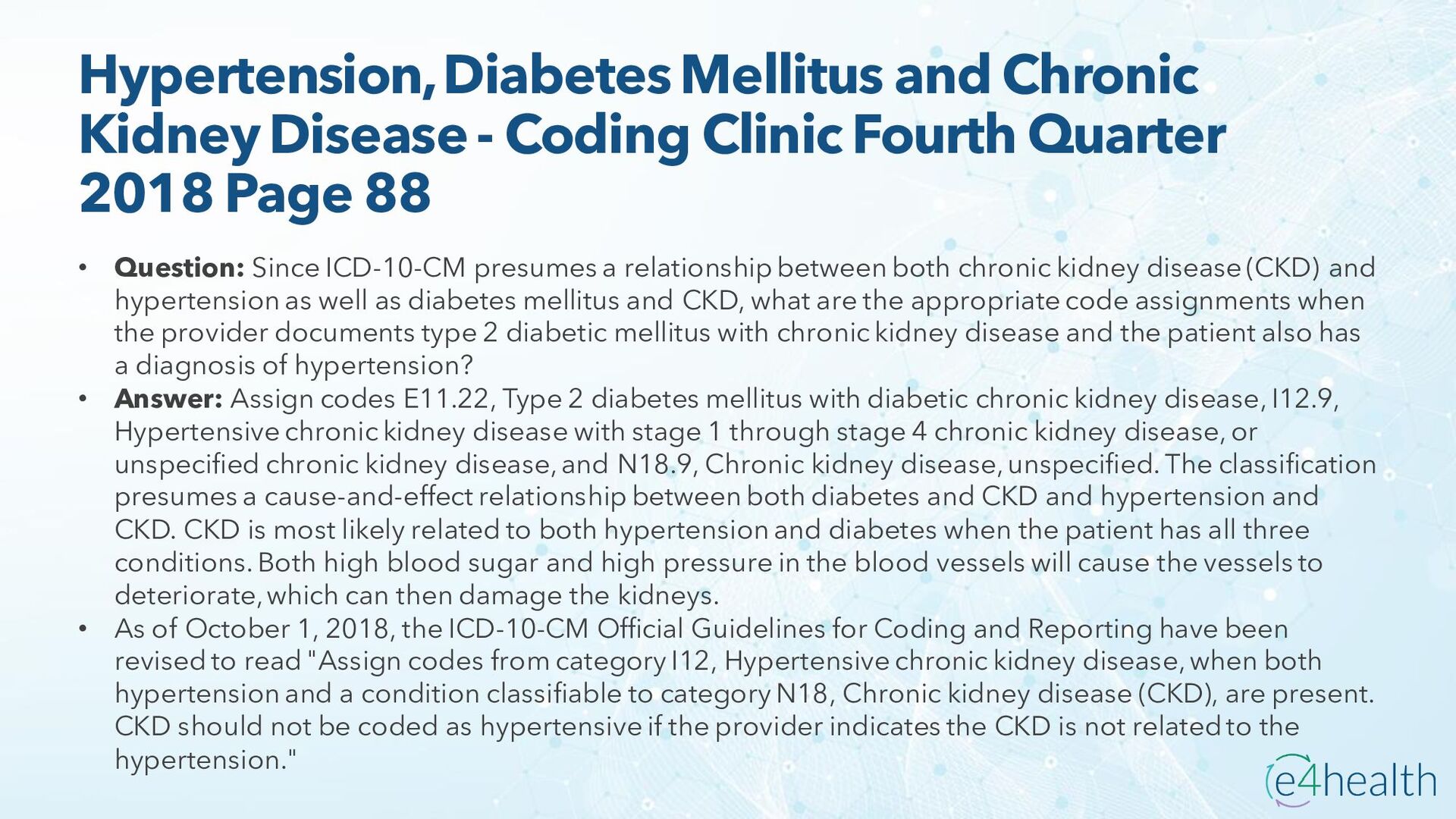
  8. Hypertension, Diabetes Mellitus and Chronic Kidney Disease - Coding Clinic

    Fourth Quarter 2018 Page 88 • Question: Since ICD-10-CM presumes a relationship between both chronic kidney disease (CKD) and hypertension as well as diabetes mellitus and CKD, what are the appropriate code assignments when the provider documents type 2 diabetic mellitus with chronic kidney disease and the patient also has a diagnosis of hypertension? • Answer: Assign codes E11.22, Type 2 diabetes mellitus with diabetic chronic kidney disease, I12.9, Hypertensive chronic kidney disease with stage 1 through stage 4 chronic kidney disease, or unspecified chronic kidney disease, and N18.9, Chronic kidney disease, unspecified. The classification presumes a cause-and-effect relationship between both diabetes and CKD and hypertension and CKD. CKD is most likely related to both hypertension and diabetes when the patient has all three conditions. Both high blood sugar and high pressure in the blood vessels will cause the vessels to deteriorate, which can then damage the kidneys. • As of October 1, 2018, the ICD-10-CM Official Guidelines for Coding and Reporting have been revised to read "Assign codes from category I12, Hypertensive chronic kidney disease, when both hypertension and a condition classifiable to category N18, Chronic kidney disease (CKD), are present. CKD should not be coded as hypertensive if the provider indicates the CKD is not related to the hypertension."
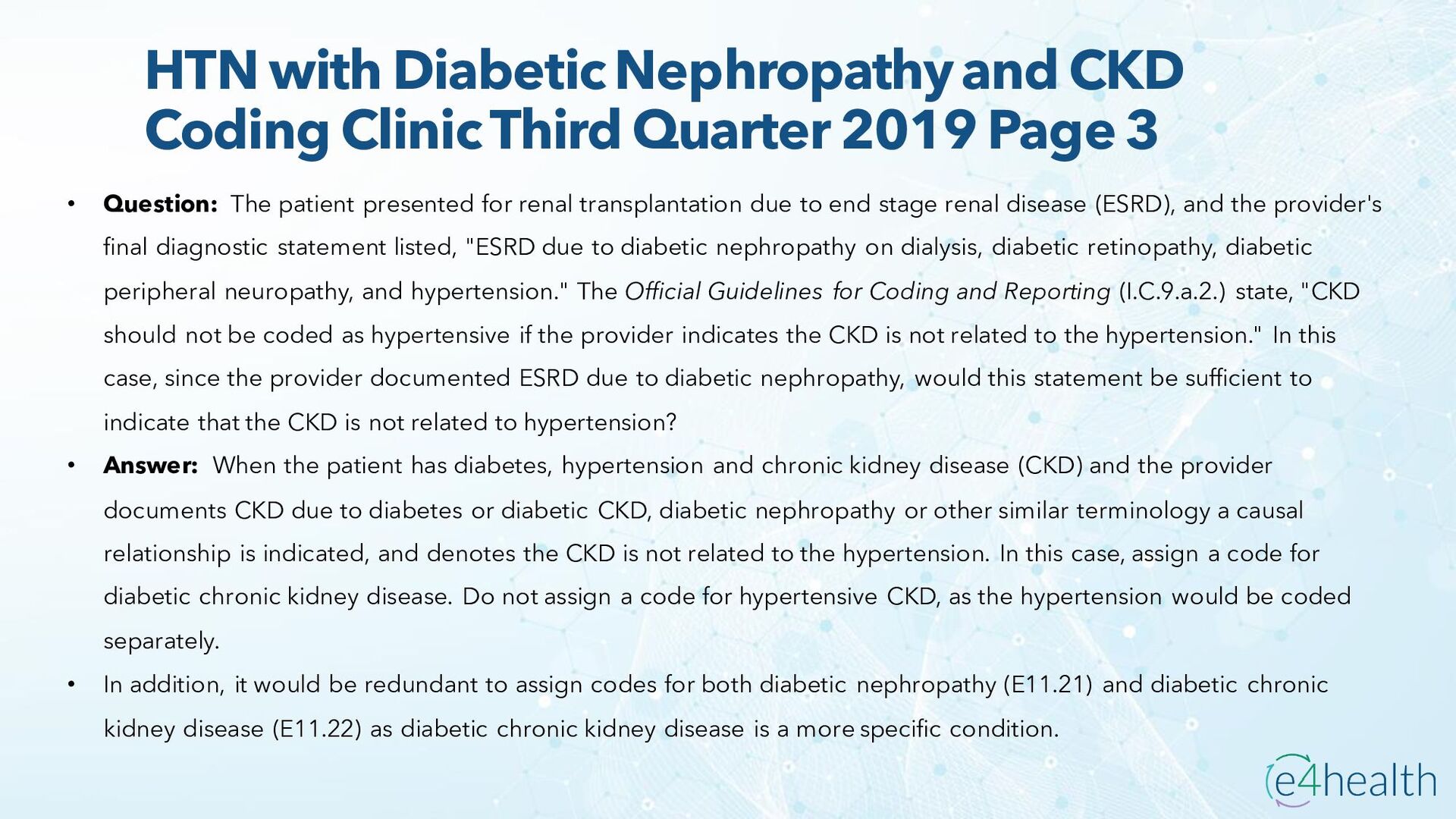
  9. HTN with Diabetic Nephropathy and CKD Coding Clinic Third Quarter

    2019 Page 3 • Question: The patient presented for renal transplantation due to end stage renal disease (ESRD), and the provider's final diagnostic statement listed, "ESRD due to diabetic nephropathy on dialysis, diabetic retinopathy, diabetic peripheral neuropathy, and hypertension." The Official Guidelines for Coding and Reporting (I.C.9.a.2.) state, "CKD should not be coded as hypertensive if the provider indicates the CKD is not related to the hypertension." In this case, since the provider documented ESRD due to diabetic nephropathy, would this statement be sufficient to indicate that the CKD is not related to hypertension? • Answer: When the patient has diabetes, hypertension and chronic kidney disease (CKD) and the provider documents CKD due to diabetes or diabetic CKD, diabetic nephropathy or other similar terminology a causal relationship is indicated, and denotes the CKD is not related to the hypertension. In this case, assign a code for diabetic chronic kidney disease. Do not assign a code for hypertensive CKD, as the hypertension would be coded separately. • In addition, it would be redundant to assign codes for both diabetic nephropathy (E11.21) and diabetic chronic kidney disease (E11.22) as diabetic chronic kidney disease is a more specific condition.
  10. POA for Chronic Kidney Disease, Stage 3, Progressing to ESRD

    - Coding Clinic First Quarter 2013 Page 18 • Question: The patient was admitted with acute respiratory failure, acute kidney injury due to acute tubular necrosis and chronic kidney disease, stage 3. The patient had a prolonged hospitalization and during the hospital course, he advanced to end stage renal disease (ESRD) and was started on hemodialysis. The provider stated, "Concerning possible renal recovery, it appears unlikely he will ever be dialysis independent given his history of CKD prior to his acute on chronic kidney injury and also because he is almost three months from his initial renal insult with no signs of renal recovery." Since the chronic kidney disease, stage 3 had progressed to ESRD, requiring dialysis, what is the appropriate present on admission (POA) indicator for the ESRD? • Answer: Assign POA indicator Y, for the ESRD. The patient experienced deterioration or worsening of the same condition. Even though chronic kidney disease stage 3 and ESRD are assigned different codes, only one code is reported for the highest or most severe stage. This advice is similar to that previously published in Coding Clinic, First Quarter 2009, page 19, regarding a deteriorating pressure ulcer. • NOTE: Although this is in ICD-9-CM coding clinic convention, at current date, this coding clinic is applicable in ICD-10-CM convention
  11. Chronic Kidney Failure – Query opportunity • Clarify the stage

    of CKD • Chronic kidney disease, stage 1 • Chronic kidney disease, stage 2 (mild) • Chronic kidney disease, stage 3 (moderate) • Chronic kidney disease, stage 4 (severe) • Chronic kidney disease, stage 5 • End-stage renal disease (ESRD) • Review record to see if there is an underlying cause of CKD for a combination code for: • Diabetes • Hypertension  Document any associated diagnoses/conditions, such as:  AKI/ATN  Volume overload and relation to kidney pathology  Heart failure and it's specificity  Noncompliance  Transplant rejection/infection/failure
  12. Acute Kidney Injury • Rapid decrease in renal function over

    days to weeks, causing an accumulation of nitrogenous products in the blood with or without reduction in amount of urine output • Can cause hyperkalemia or fluid overload • Per the KDIGO (Kidney Disease: Improving Global Outcomes) Clinical Practice Guideline for Acute Kidney Injury, AKI is defined as any of the following: • Increase in the serum creatinine value of ≥ 0.3 mg/dL (26.52 micromole/L) in 48 hours • Increase in serum creatinine of ≥ 1.5 times baseline within the prior 7 days • Urine volume < 0.5 mL/kg/hour for 6 hours • Treatment is directed at the cause but also includes fluid and electrolyte management and sometimes dialysis
  13. Acute Kidney Injury, continued • Per the AHA Coding Handbook:

    • Physicians sometimes use the terms "renal insufficiency" and "renal failure" interchangeably, but ICD-10-CM classifies these terms to different codes when the conditions are acute • ICD-10-CM classifies unspecified and acute renal insufficiency to code N28.9, whereas acute kidney failure is assigned to category N17 • It is important to be guided by the classification. If the physician uses both terms in the medical record, the physician should be queried for clarification as to the correct diagnosis
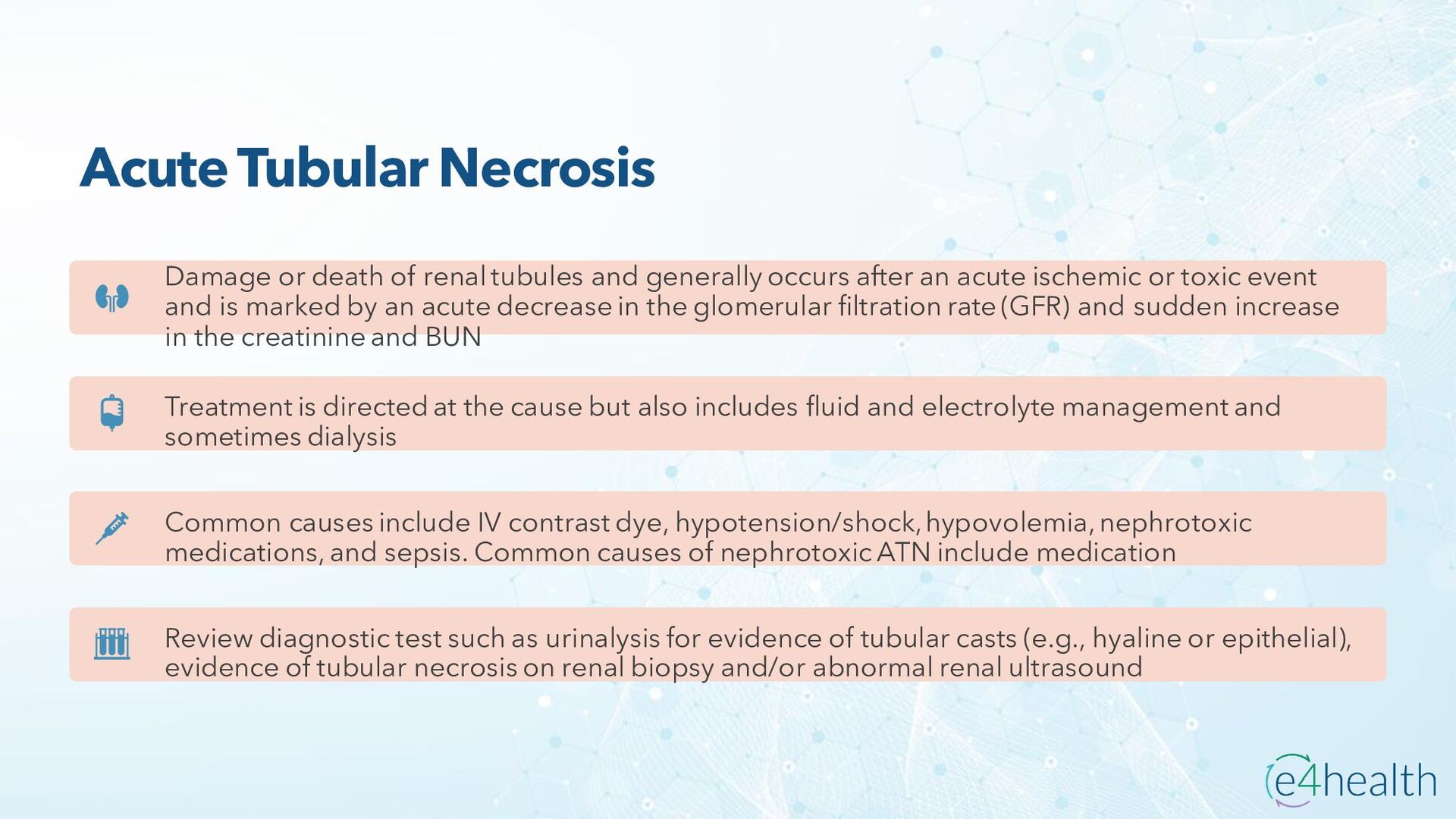
  14. Acute Tubular Necrosis Damage or death of renal tubules and

    generally occurs after an acute ischemic or toxic event and is marked by an acute decrease in the glomerular filtration rate (GFR) and sudden increase in the creatinine and BUN Treatment is directed at the cause but also includes fluid and electrolyte management and sometimes dialysis Common causes include IV contrast dye, hypotension/shock, hypovolemia, nephrotoxic medications, and sepsis. Common causes of nephrotoxic ATN include medication Review diagnostic test such as urinalysis for evidence of tubular casts (e.g., hyaline or epithelial), evidence of tubular necrosis on renal biopsy and/or abnormal renal ultrasound
  15. AKI and ATN Coding Clinic Third Quarter 2020 Page 22

    • Question: A patient with stage 3 chronic kidney disease is admitted with acute kidney injury (AKI). As the patient's renal status is assessed during the hospitalization, the AKI is documented to be due to acute tubular necrosis (ATN). What is the appropriate present on admission (POA) indicator for ATN? • Answer: Assign the POA indicator "Y" for code N17.0, Acute kidney failure with tubular necrosis. Code N17.0, Acute kidney failure with tubular necrosis, provides greater specificity for the AKI, which was documented by the provider as present on admission.
  16. Dehydration and Acute Kidney Injury (Acute Renal Failure) Coding Clinic

    First Quarter 2019 Page 12 • Question: A patient is admitted after an episode of unresponsiveness secondary to syncope and urinary tract infection (UTI). The focus of treatment was directed at the syncope (CT of the head, cardiac work-up, etc.). During the admission, it is noted that the patient also had mild acute kidney injury (AKI) that was treated with intravenous hydration. The provider's discharge diagnosis is syncope secondary to dehydration and AKI. Should AKI always be sequenced as the principal diagnosis, when a patient presents with an acute kidney injury and dehydration? • Answer: The sequencing of dehydration and acute kidney injury (acute renal failure) should be based on the reason for the admission. Query the physician regarding the principal reason that the patient was admitted, if the reason for the admission is not clearly documented. There is no rule that acute kidney injury should always be sequenced first.
  17. Dehydration and Acute KidneyInjury (Acute Renal Failure) Coding Clinic First

    Quarter 2019 Page 12, continued • Question: A patient with nausea, vomiting and lightheadedness for one week was admitted due to severe dehydration. He was noted to have acute kidney injury secondary to dehydration and was treated with intravenous fluids. Is the acute kidney injury sequenced as principal diagnosis? • Answer: The sequencing of dehydration and acute kidney injury should be based on the reason for the admission. Query the physician regarding the principal reason that the patient was admitted, if the reason for the admission is not clearly documented. There is no rule that acute kidney injury should always be sequenced first.
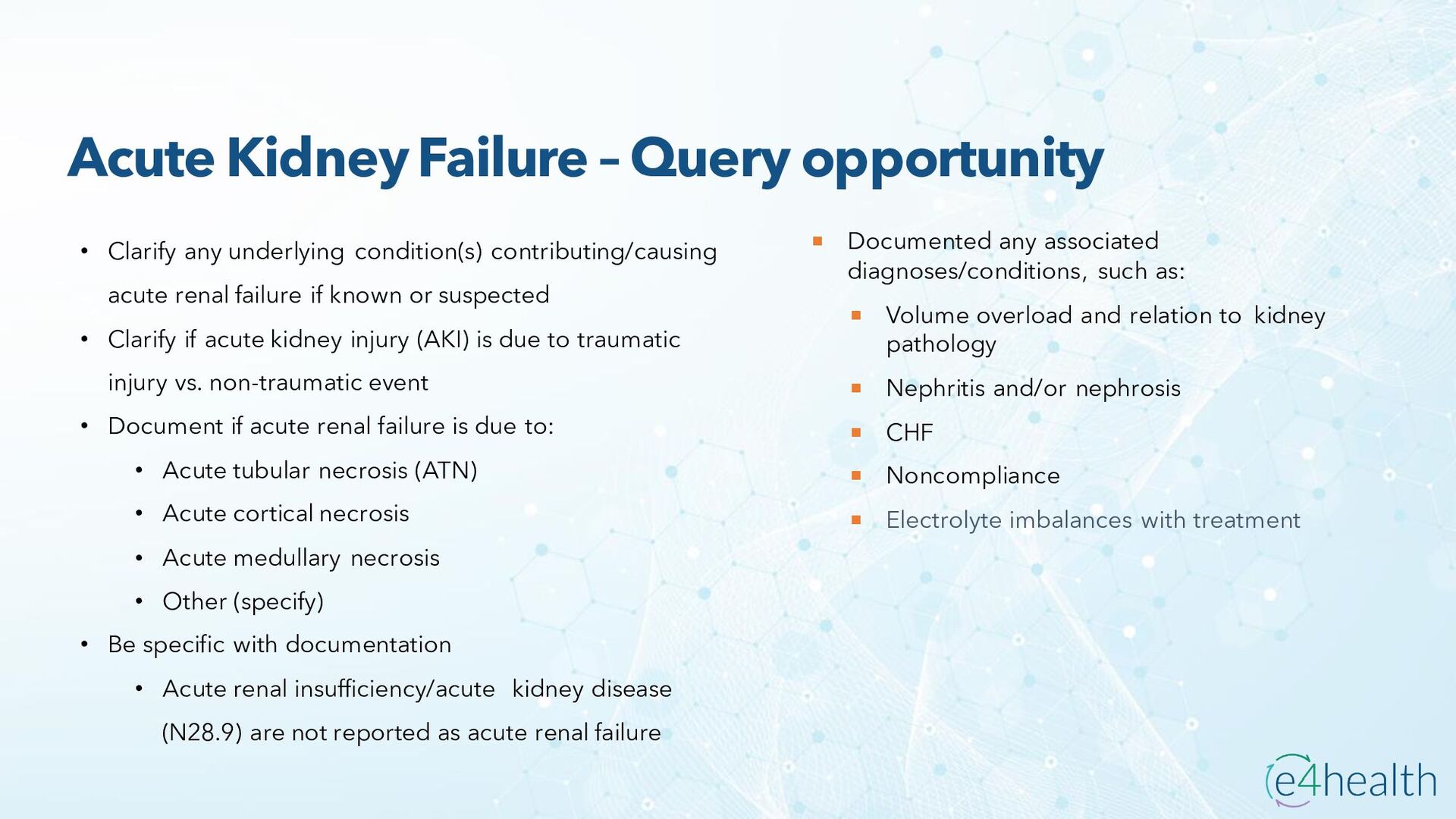
  18. Acute Kidney Failure – Query opportunity • Clarify any underlying

    condition(s) contributing/causing acute renal failure if known or suspected • Clarify if acute kidney injury (AKI) is due to traumatic injury vs. non-traumatic event • Document if acute renal failure is due to: • Acute tubular necrosis (ATN) • Acute cortical necrosis • Acute medullary necrosis • Other (specify) • Be specific with documentation • Acute renal insufficiency/acute kidney disease (N28.9) are not reported as acute renal failure  Documented any associated diagnoses/conditions, such as:  Volume overload and relation to kidney pathology  Nephritis and/or nephrosis  CHF  Noncompliance  Electrolyte imbalances with treatment
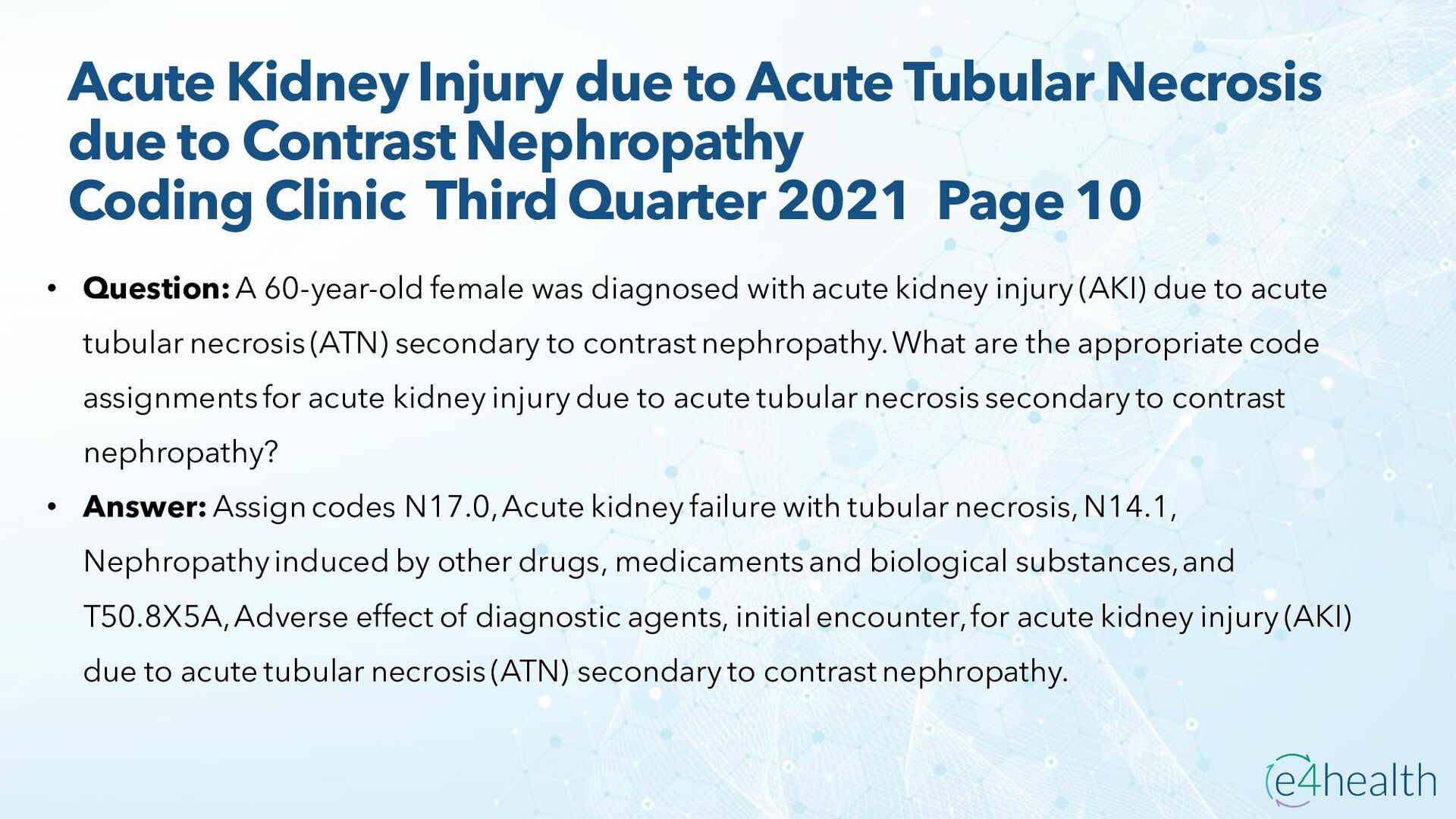
  19. Acute Kidney Injury due to Acute Tubular Necrosis due to

    Contrast Nephropathy Coding Clinic Third Quarter 2021 Page 10 • Question: A 60-year-old female was diagnosed with acute kidney injury (AKI) due to acute tubular necrosis (ATN) secondary to contrast nephropathy. What are the appropriate code assignments for acute kidney injury due to acute tubular necrosis secondary to contrast nephropathy? • Answer: Assign codes N17.0, Acute kidney failure with tubular necrosis, N14.1, Nephropathy induced by other drugs, medicaments and biological substances, and T50.8X5A, Adverse effect of diagnostic agents, initial encounter, for acute kidney injury (AKI) due to acute tubular necrosis (ATN) secondary to contrast nephropathy.
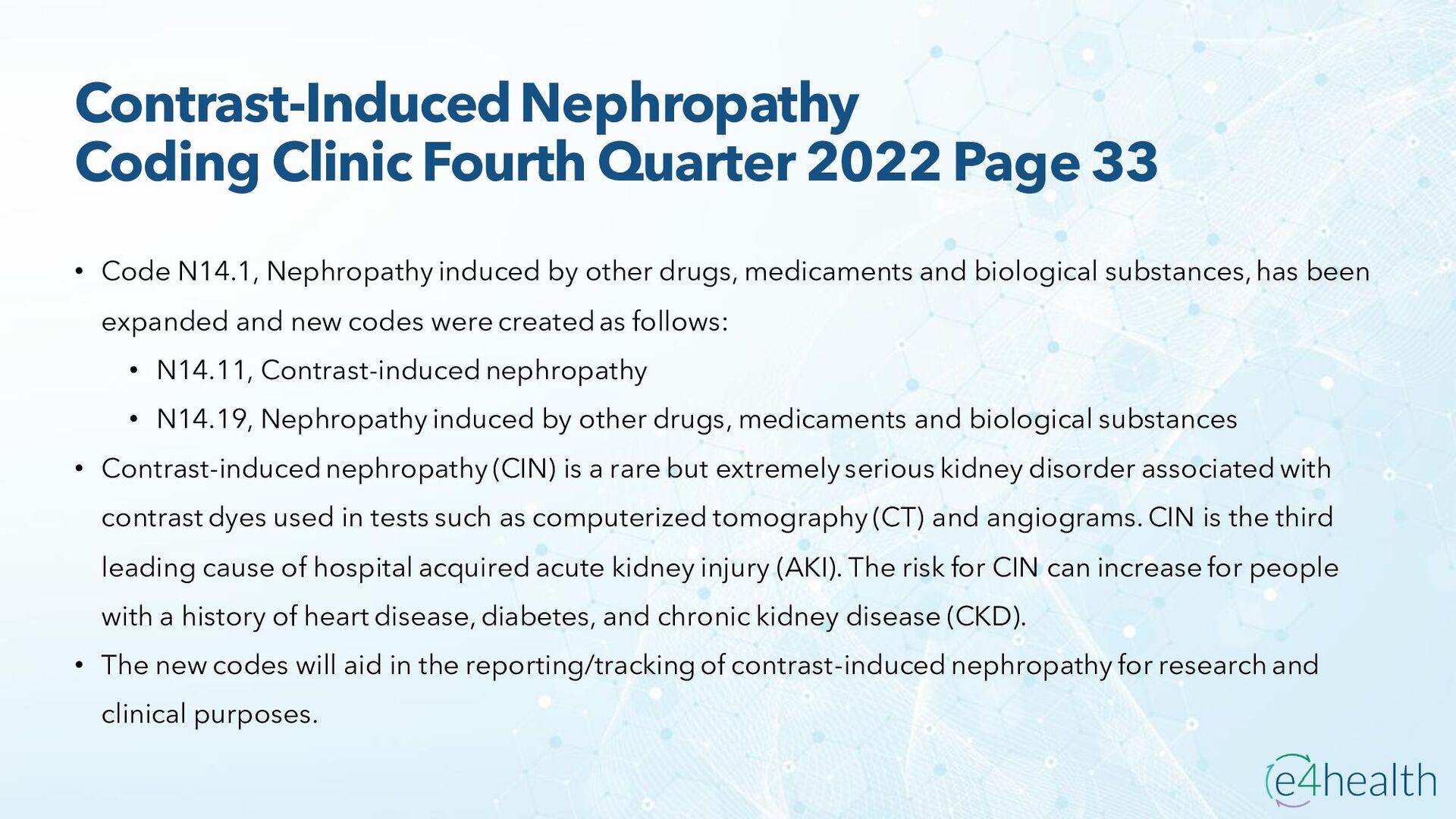
  20. Contrast-Induced Nephropathy Coding Clinic Fourth Quarter 2022 Page 33 •

    Code N14.1, Nephropathy induced by other drugs, medicaments and biological substances, has been expanded and new codes were created as follows: • N14.11, Contrast-induced nephropathy • N14.19, Nephropathy induced by other drugs, medicaments and biological substances • Contrast-induced nephropathy (CIN) is a rare but extremely serious kidney disorder associated with contrast dyes used in tests such as computerized tomography (CT) and angiograms. CIN is the third leading cause of hospital acquired acute kidney injury (AKI). The risk for CIN can increase for people with a history of heart disease, diabetes, and chronic kidney disease (CKD). • The new codes will aid in the reporting/tracking of contrast-induced nephropathy for research and clinical purposes.
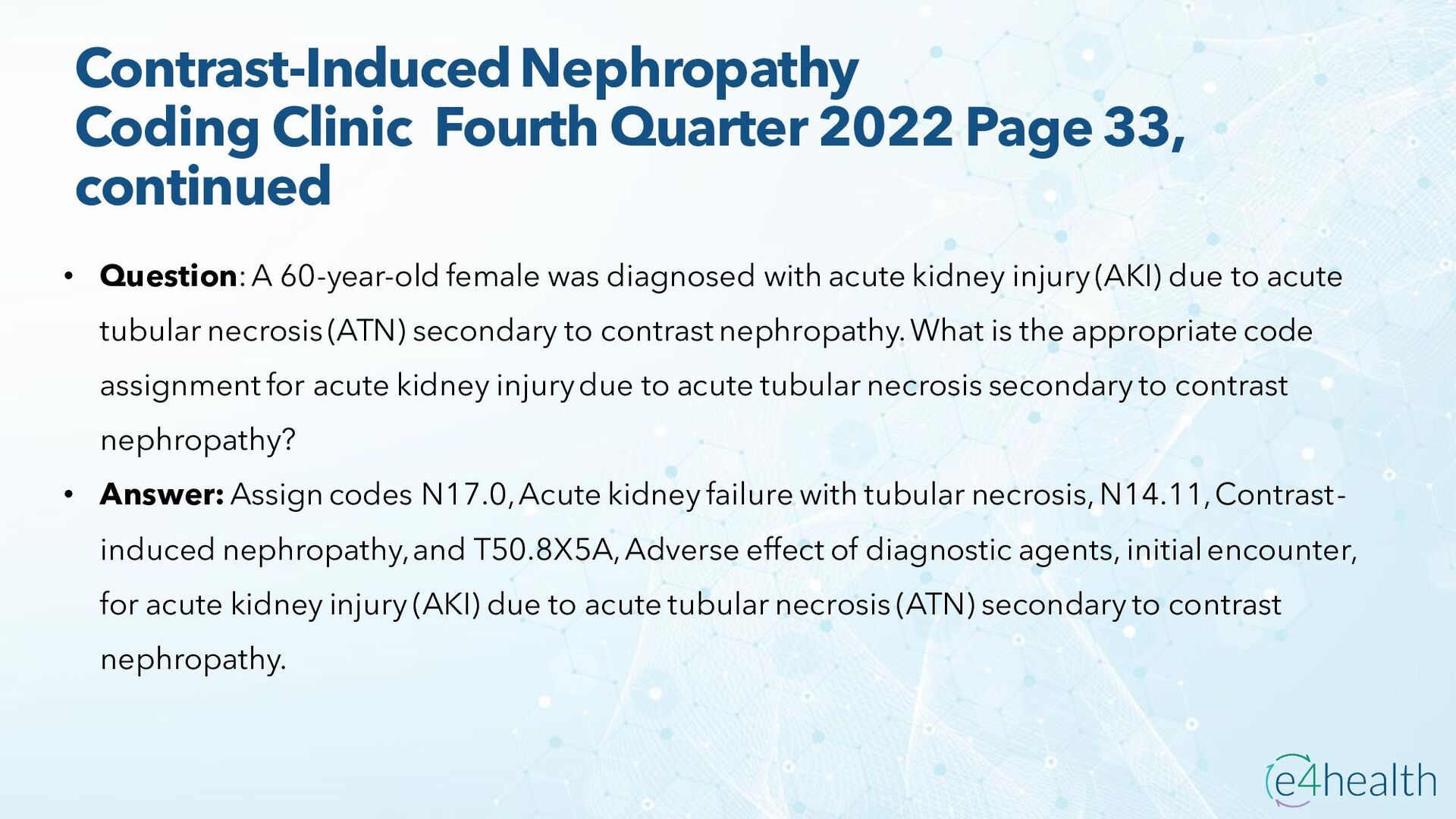
  21. Contrast-Induced Nephropathy Coding Clinic Fourth Quarter 2022 Page 33, continued

    • Question:A 60-year-old female was diagnosed with acute kidney injury (AKI) due to acute tubular necrosis (ATN) secondary to contrast nephropathy. What is the appropriate code assignment for acute kidney injury due to acute tubular necrosis secondary to contrast nephropathy? • Answer: Assign codes N17.0, Acute kidney failure with tubular necrosis, N14.11, Contrast- induced nephropathy, and T50.8X5A, Adverse effect of diagnostic agents, initial encounter, for acute kidney injury (AKI) due to acute tubular necrosis (ATN) secondary to contrast nephropathy.
  22. Contrast Induced Nephropathy (CIN) -Query opportunity • Clarify any underlying

    condition(s) contributing/causing CIN if known or suspected: • Acute kidney failure • Acute tubular necrosis • Clarify stage of CKD • Documented any associated diagnoses/conditions, such as: • Volume overload and relation to kidney pathology • CHF • Hypertension • Noncompliance • Electrolyte imbalances with treatment This Photo by Unknown author is licensed under CC BY.
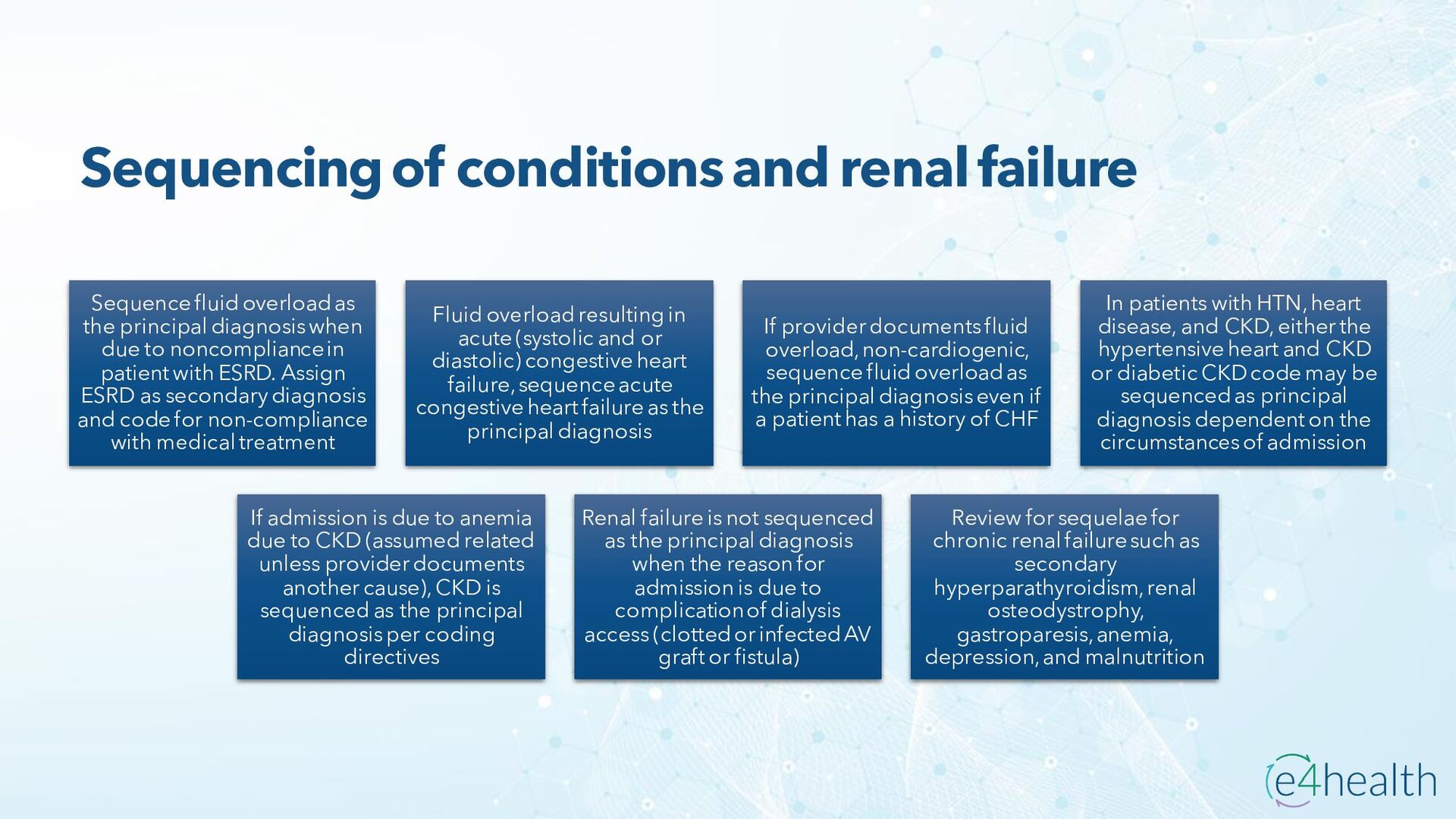
  23. Sequencing of conditions and renal failure Sequence fluid overload as

    the principal diagnosis when due to noncompliance in patient with ESRD. Assign ESRD as secondary diagnosis and code for non-compliance with medical treatment Fluid overload resulting in acute (systolic and or diastolic) congestive heart failure, sequence acute congestive heart failure as the principal diagnosis If provider documents fluid overload, non-cardiogenic, sequence fluid overload as the principal diagnosis even if a patient has a history of CHF In patients with HTN, heart disease, and CKD, either the hypertensive heart and CKD or diabetic CKD code may be sequenced as principal diagnosis dependent on the circumstances of admission If admission is due to anemia due to CKD (assumed related unless provider documents another cause), CKD is sequenced as the principal diagnosis per coding directives Renal failure is not sequenced as the principal diagnosis when the reason for admission is due to complication of dialysis access (clotted or infected AV graft or fistula) Review for sequelae for chronic renal failure such as secondary hyperparathyroidism, renal osteodystrophy, gastroparesis, anemia, depression, and malnutrition
  24. Glomerular Disorders • Nephritic syndrome • Acute inflammation of one

    or both the kidneys • Can be acute or chronic and it most often affects the glomeruli, tufts of microscopic vessels that filter blood • People with the acute form usually recover
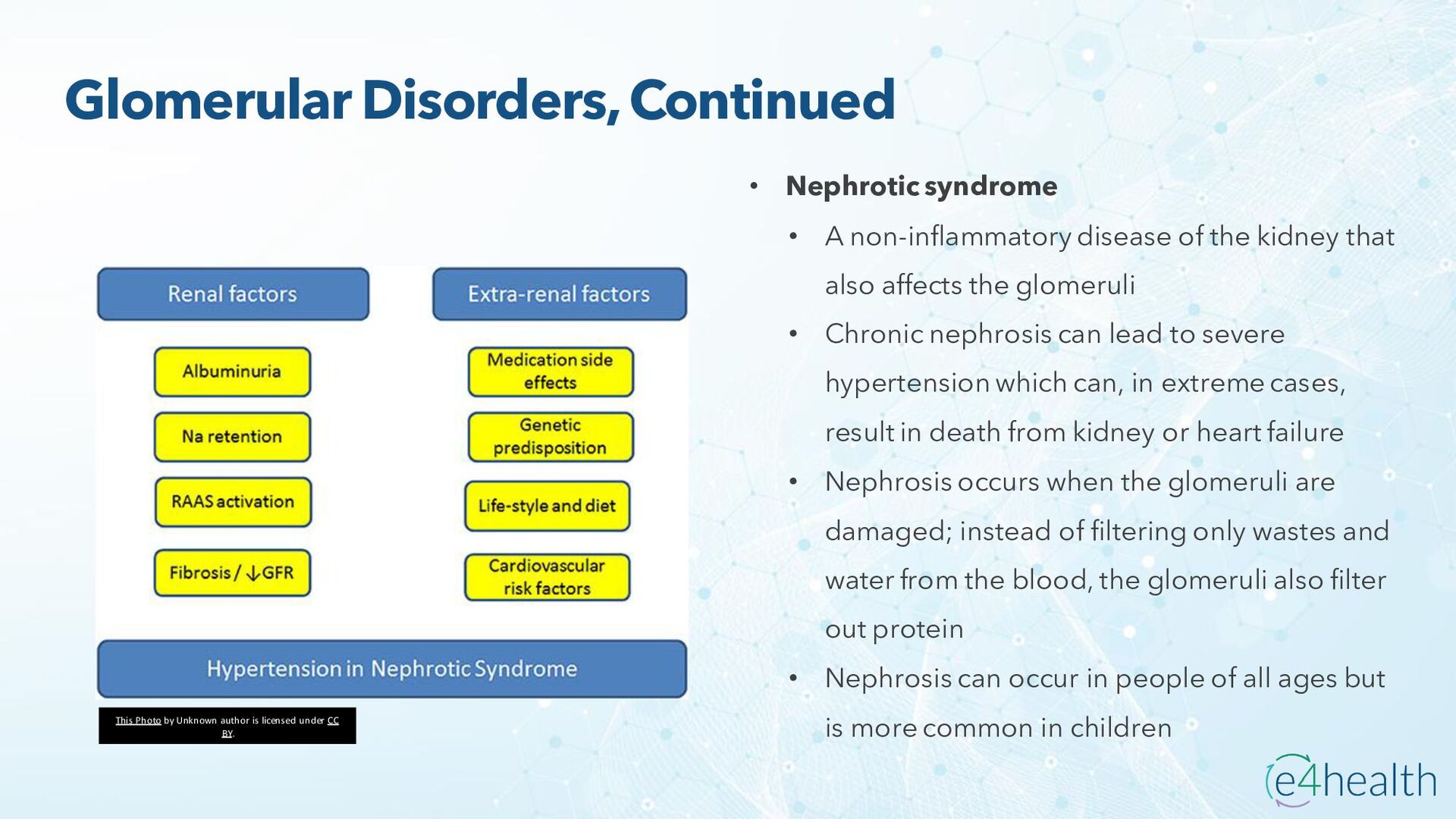
  25. Glomerular Disorders, Continued • Nephrotic syndrome • A non-inflammatory disease

    of the kidney that also affects the glomeruli • Chronic nephrosis can lead to severe hypertension which can, in extreme cases, result in death from kidney or heart failure • Nephrosis occurs when the glomeruli are damaged; instead of filtering only wastes and water from the blood, the glomeruli also filter out protein • Nephrosis can occur in people of all ages but is more common in children This Photo by Unknown author is licensed under CC BY.
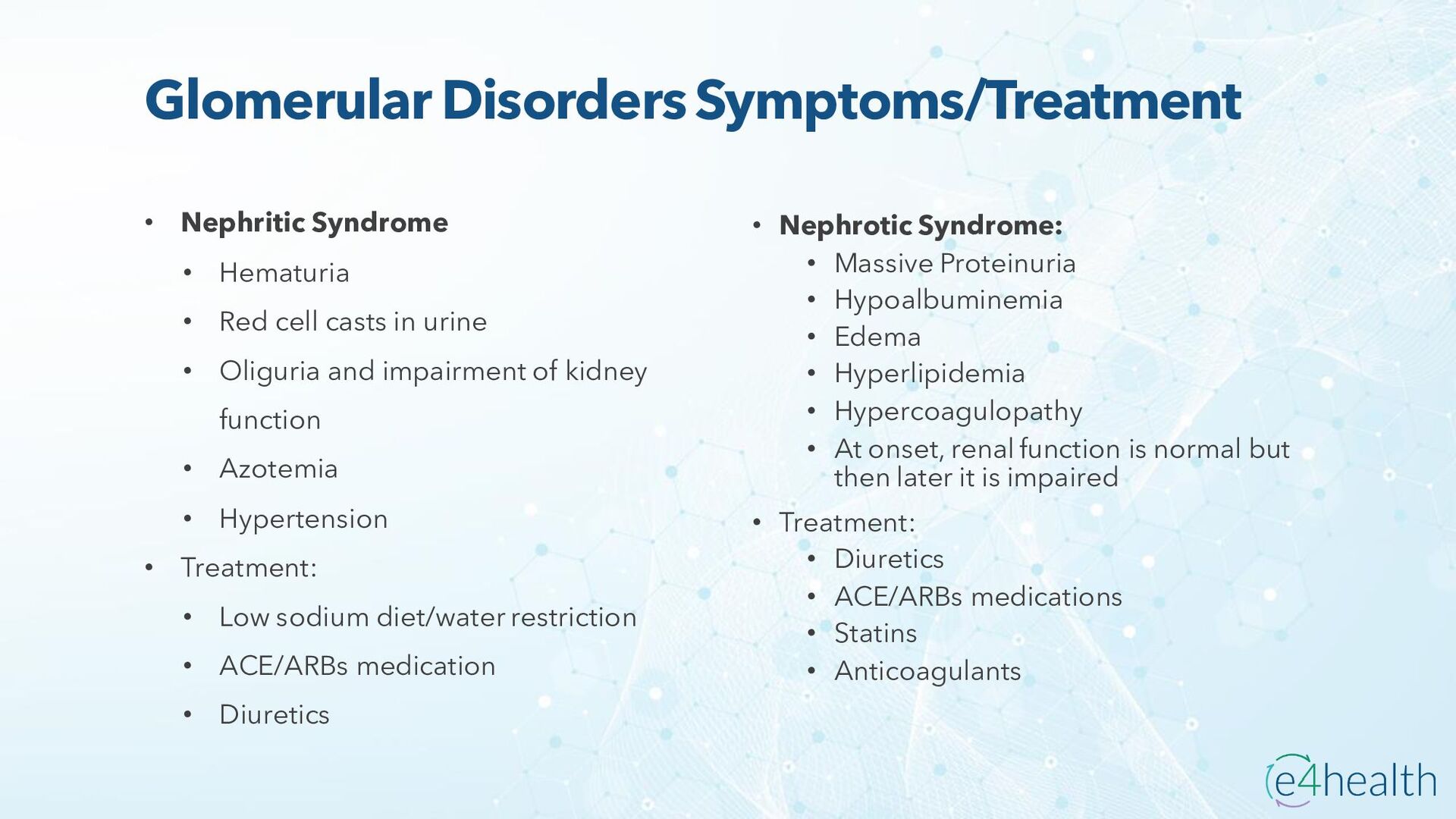
  26. Glomerular Disorders Symptoms/Treatment • Nephritic Syndrome • Hematuria • Red

    cell casts in urine • Oliguria and impairment of kidney function • Azotemia • Hypertension • Treatment: • Low sodium diet/water restriction • ACE/ARBs medication • Diuretics • Nephrotic Syndrome: • Massive Proteinuria • Hypoalbuminemia • Edema • Hyperlipidemia • Hypercoagulopathy • At onset, renal function is normal but then later it is impaired • Treatment: • Diuretics • ACE/ARBs medications • Statins • Anticoagulants
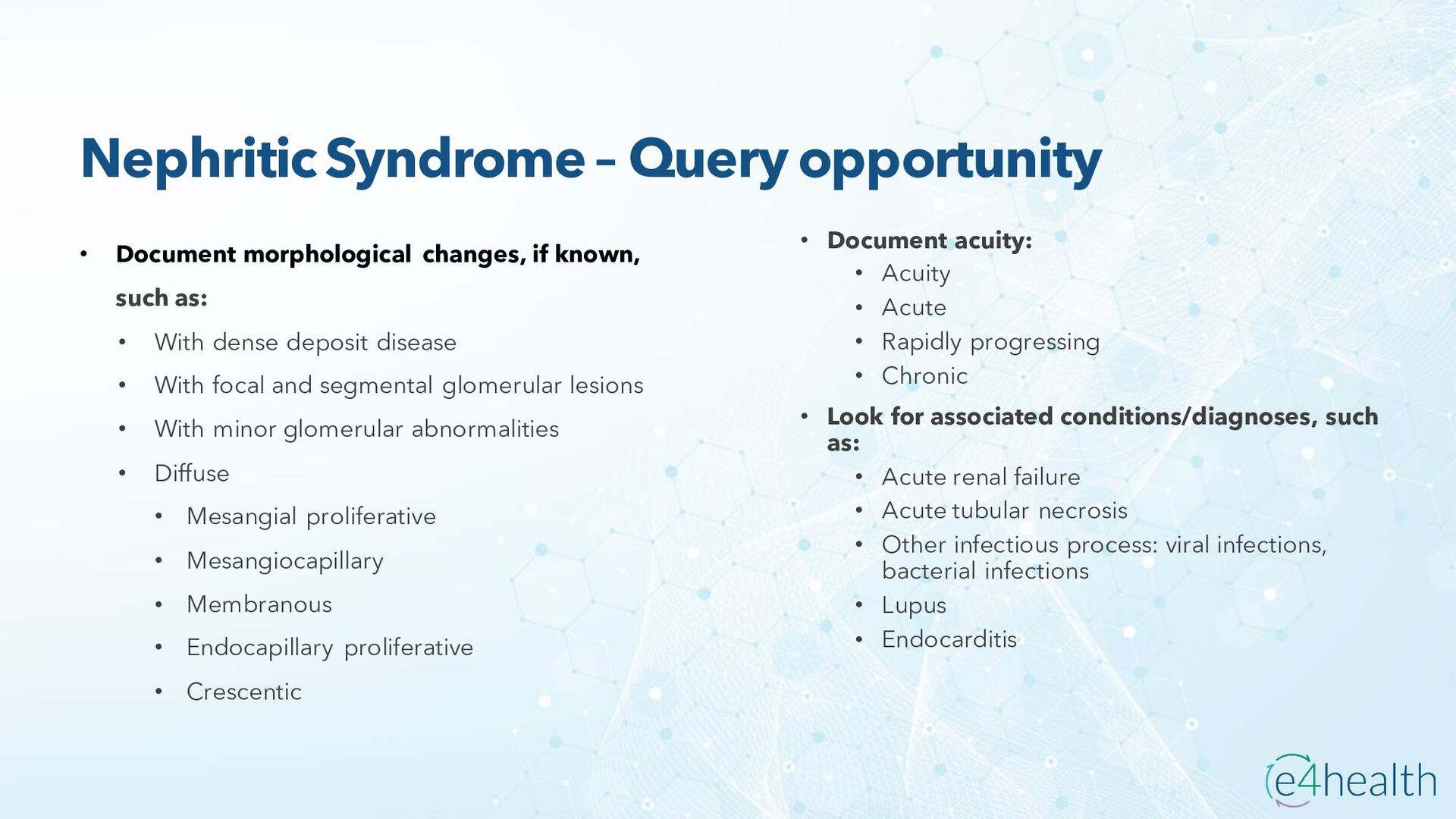
  27. Nephritic Syndrome – Query opportunity • Document morphological changes, if

    known, such as: • With dense deposit disease • With focal and segmental glomerular lesions • With minor glomerular abnormalities • Diffuse • Mesangial proliferative • Mesangiocapillary • Membranous • Endocapillary proliferative • Crescentic • Document acuity: • Acuity • Acute • Rapidly progressing • Chronic • Look for associated conditions/diagnoses, such as: • Acute renal failure • Acute tubular necrosis • Other infectious process: viral infections, bacterial infections • Lupus • Endocarditis
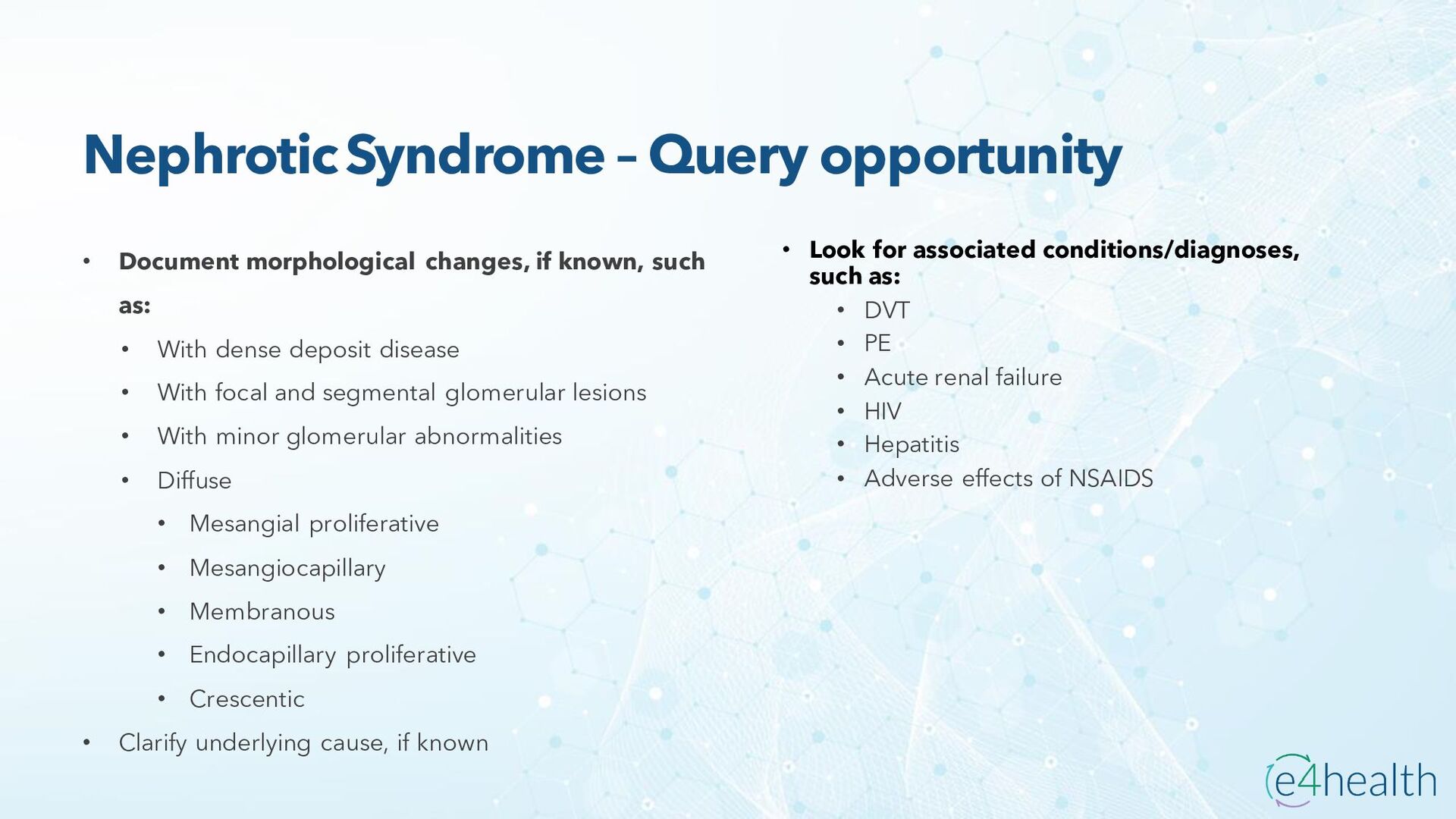
  28. Nephrotic Syndrome – Query opportunity • Document morphological changes, if

    known, such as: • With dense deposit disease • With focal and segmental glomerular lesions • With minor glomerular abnormalities • Diffuse • Mesangial proliferative • Mesangiocapillary • Membranous • Endocapillary proliferative • Crescentic • Clarify underlying cause, if known • Look for associated conditions/diagnoses, such as: • DVT • PE • Acute renal failure • HIV • Hepatitis • Adverse effects of NSAIDS
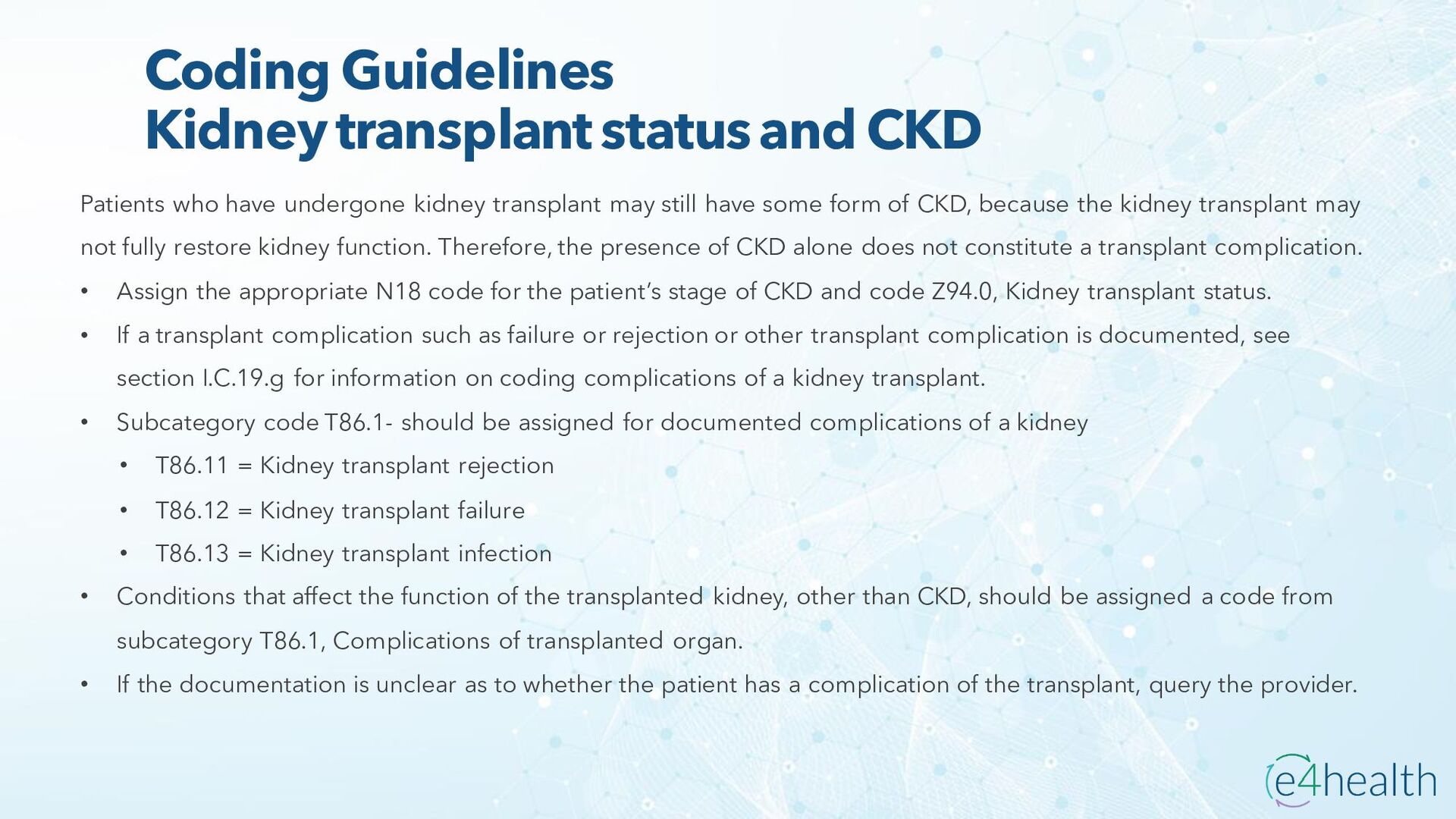
  29. Coding Guidelines Kidney transplant status and CKD Patients who have

    undergone kidney transplant may still have some form of CKD, because the kidney transplant may not fully restore kidney function. Therefore, the presence of CKD alone does not constitute a transplant complication. • Assign the appropriate N18 code for the patient’s stage of CKD and code Z94.0, Kidney transplant status. • If a transplant complication such as failure or rejection or other transplant complication is documented, see section I.C.19.g for information on coding complications of a kidney transplant. • Subcategory code T86.1- should be assigned for documented complications of a kidney • T86.11 = Kidney transplant rejection • T86.12 = Kidney transplant failure • T86.13 = Kidney transplant infection • Conditions that affect the function of the transplanted kidney, other than CKD, should be assigned a code from subcategory T86.1, Complications of transplanted organ. • If the documentation is unclear as to whether the patient has a complication of the transplant, query the provider.
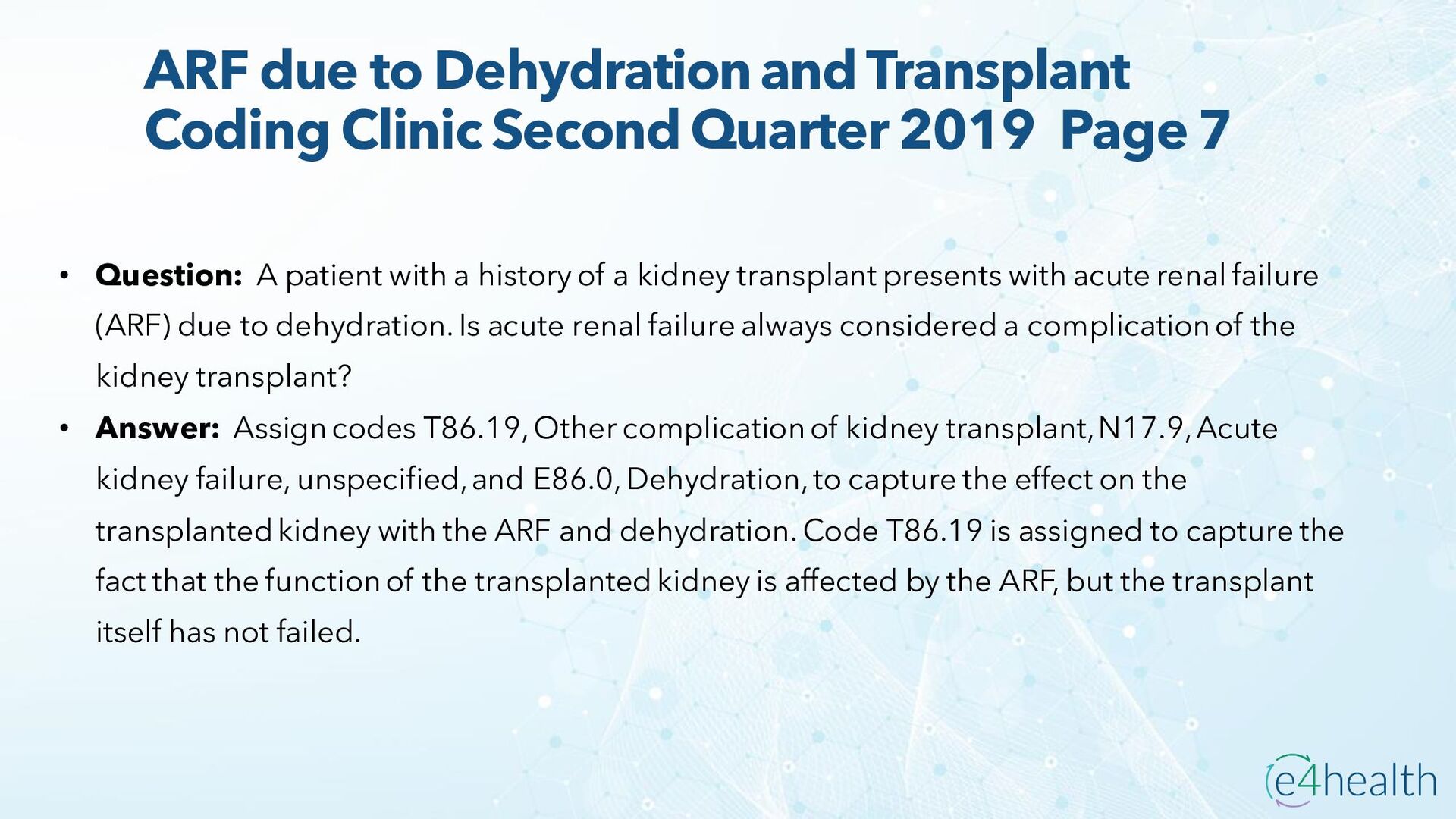
  30. ARF due to Dehydration and Transplant Coding Clinic Second Quarter

    2019 Page 7 • Question: A patient with a history of a kidney transplant presents with acute renal failure (ARF) due to dehydration. Is acute renal failure always considered a complication of the kidney transplant? • Answer: Assign codes T86.19, Other complication of kidney transplant, N17.9, Acute kidney failure, unspecified, and E86.0, Dehydration, to capture the effect on the transplanted kidney with the ARF and dehydration. Code T86.19 is assigned to capture the fact that the function of the transplanted kidney is affected by the ARF, but the transplant itself has not failed.
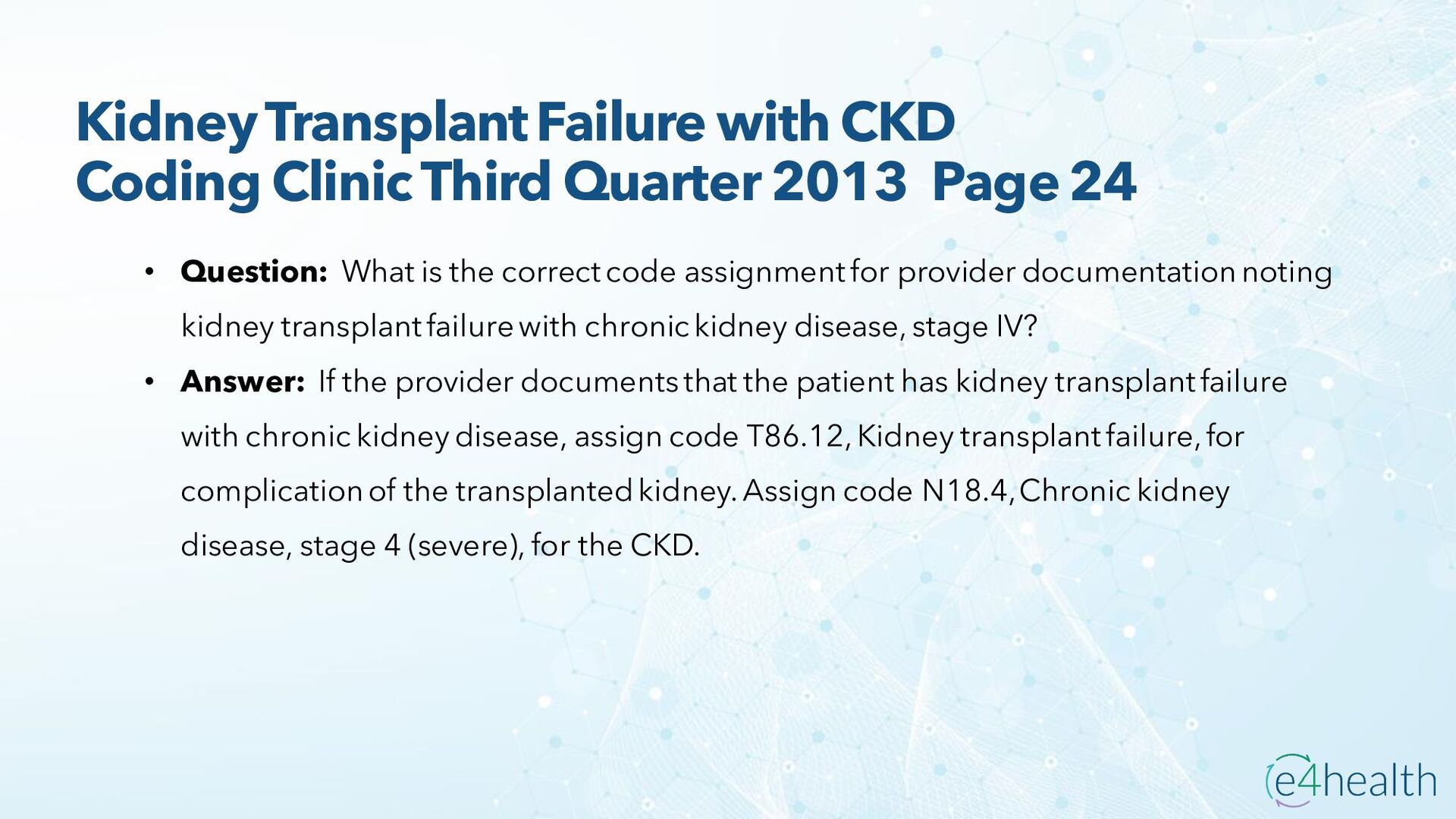
  31. Kidney Transplant Failure with CKD Coding Clinic Third Quarter 2013

    Page 24 • Question: What is the correct code assignment for provider documentation noting kidney transplant failure with chronic kidney disease, stage IV? • Answer: If the provider documents that the patient has kidney transplant failure with chronic kidney disease, assign code T86.12, Kidney transplant failure, for complication of the transplanted kidney. Assign code N18.4, Chronic kidney disease, stage 4 (severe), for the CKD.
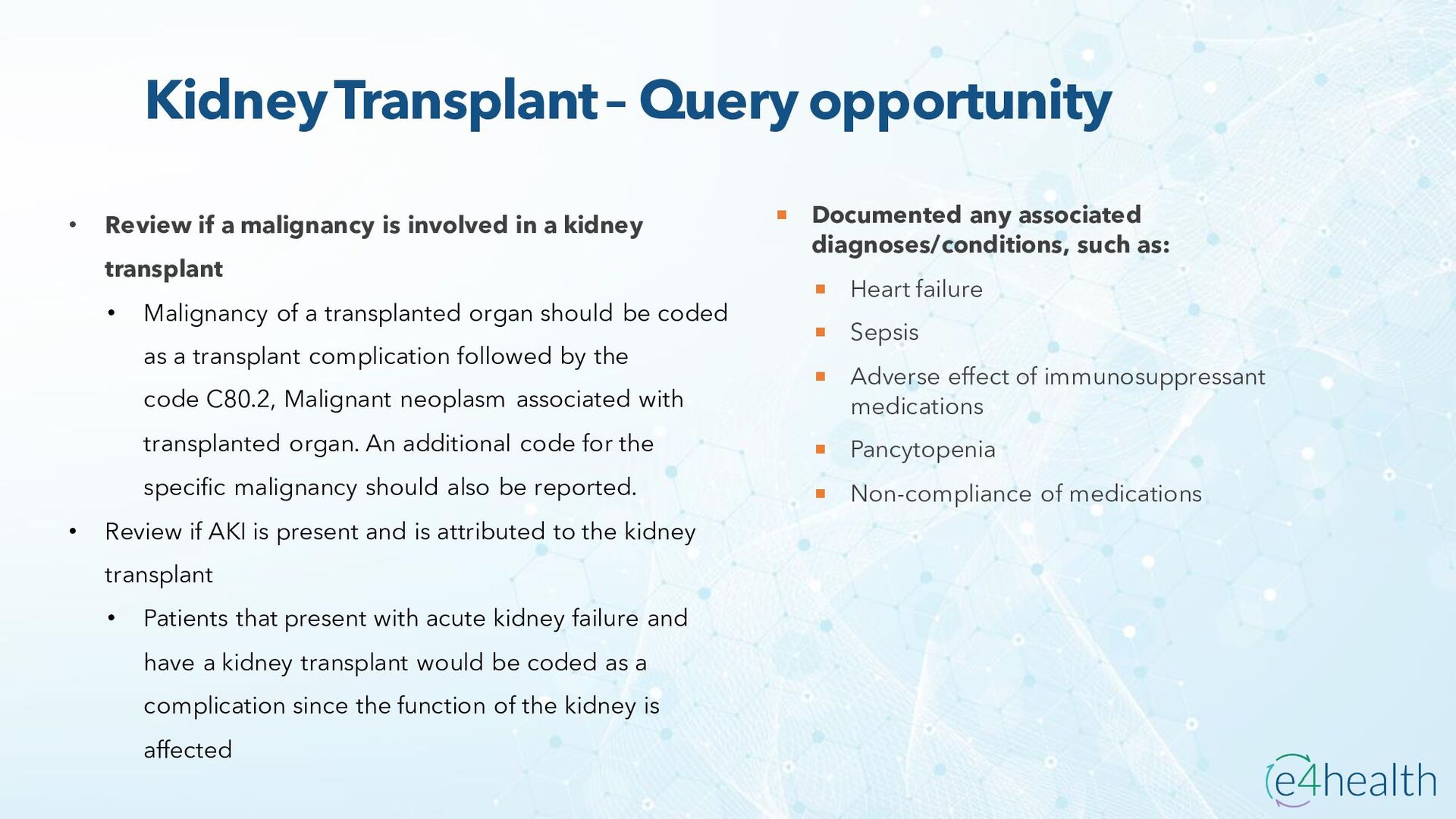
  32. Kidney Transplant – Query opportunity • Review if a malignancy

    is involved in a kidney transplant • Malignancy of a transplanted organ should be coded as a transplant complication followed by the code C80.2, Malignant neoplasm associated with transplanted organ. An additional code for the specific malignancy should also be reported. • Review if AKI is present and is attributed to the kidney transplant • Patients that present with acute kidney failure and have a kidney transplant would be coded as a complication since the function of the kidney is affected  Documented any associated diagnoses/conditions, such as:  Heart failure  Sepsis  Adverse effect of immunosuppressant medications  Pancytopenia  Non-compliance of medications
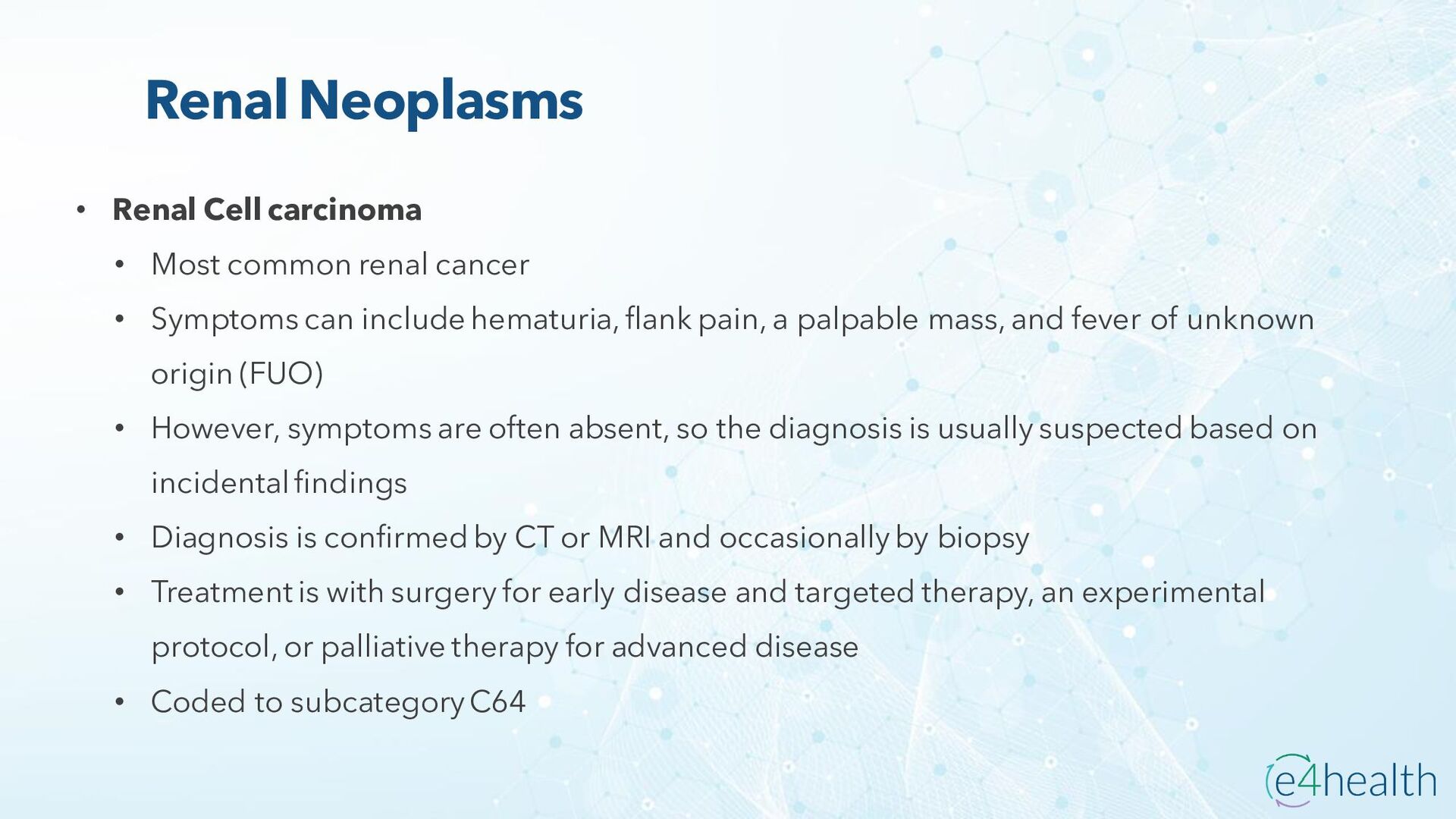
  33. Renal Neoplasms • Renal Cell carcinoma • Most common renal

    cancer • Symptoms can include hematuria, flank pain, a palpable mass, and fever of unknown origin (FUO) • However, symptoms are often absent, so the diagnosis is usually suspected based on incidental findings • Diagnosis is confirmed by CT or MRI and occasionally by biopsy • Treatment is with surgery for early disease and targeted therapy, an experimental protocol, or palliative therapy for advanced disease • Coded to subcategory C64
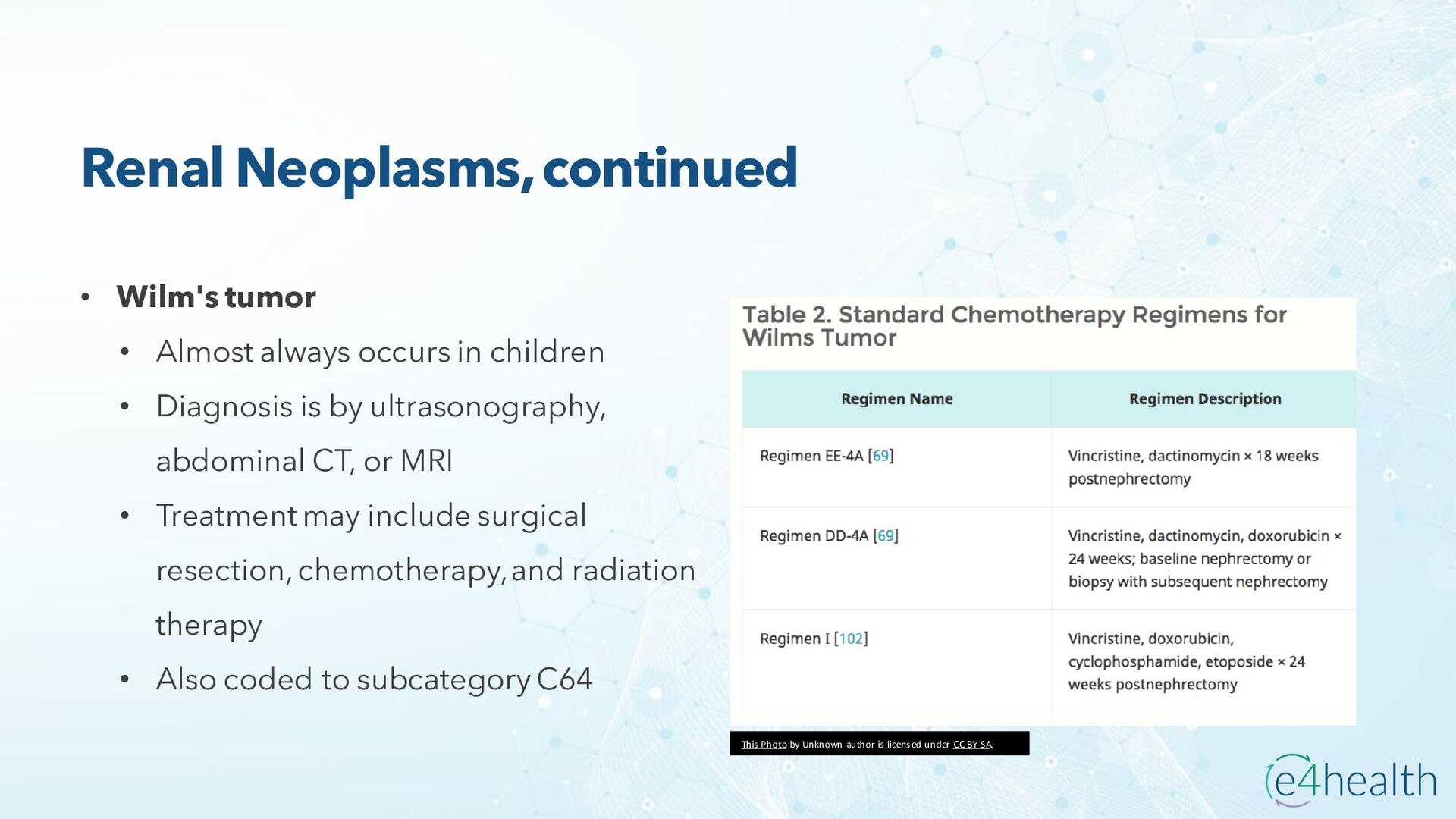
  34. Renal Neoplasms, continued • Wilm's tumor • Almost always occurs

    in children • Diagnosis is by ultrasonography, abdominal CT, or MRI • Treatment may include surgical resection, chemotherapy, and radiation therapy • Also coded to subcategory C64 This Photo by Unknown author is licensed under CC BY-SA.
  35. Renal Neoplasms – Query opportunity • Review documentation for the

    laterality of the tumor • Review documentation if reason for admission is the primary site of renal neoplasm vs. a metastatic site or other reason • Documented any associated diagnoses/conditions, such as: • Anemia and its specificity • Adverse effect of immunosuppressant medications • Pancytopenia • Non-compliance of medications • Nutritional deficiencies • Altered mental status vs. Delirium and causative nature (due to meds or metastatic regions) • Other metastatic sites that are currently being treated
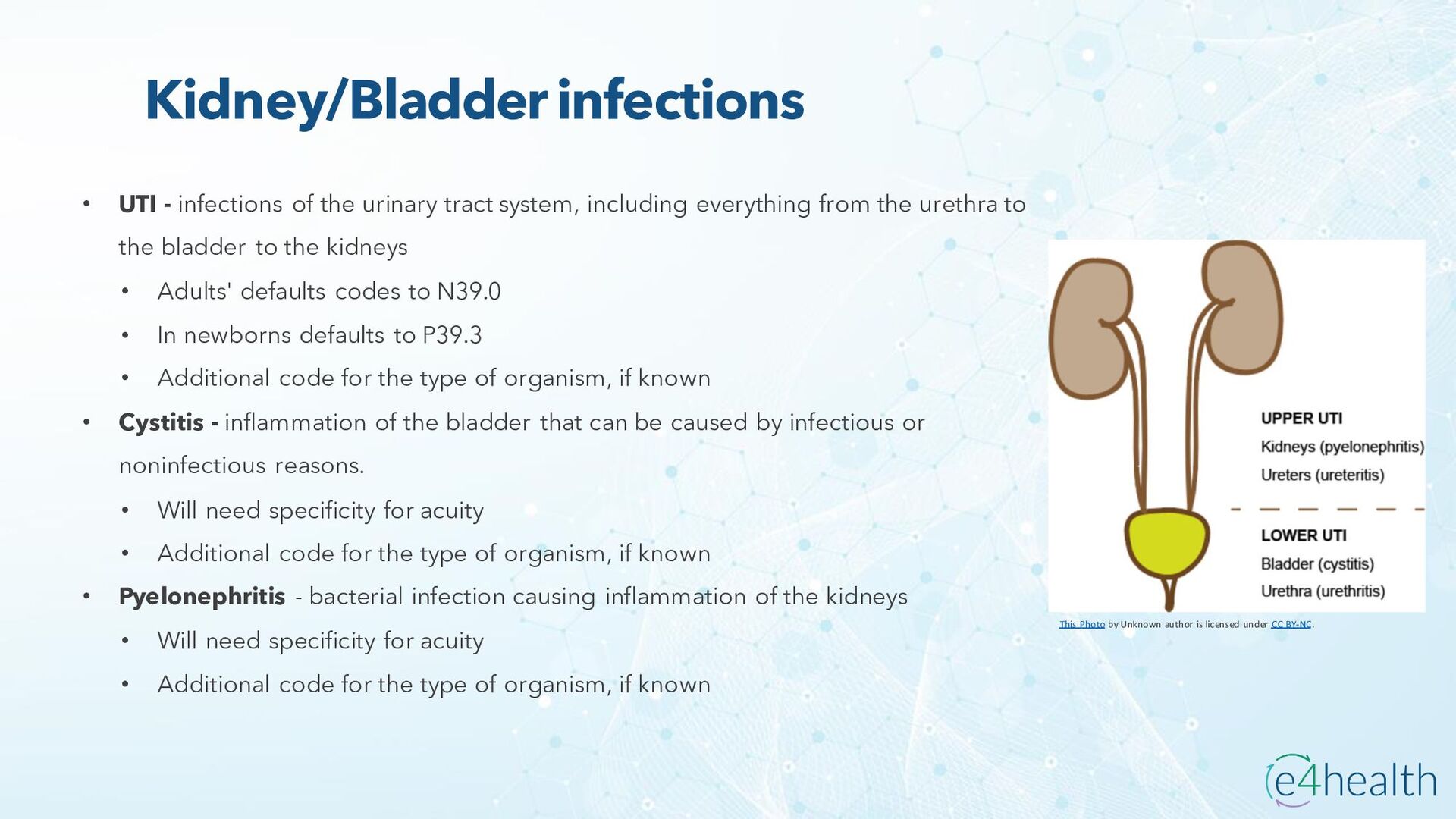
  36. Kidney/Bladder infections • UTI - infections of the urinary tract

    system, including everything from the urethra to the bladder to the kidneys • Adults' defaults codes to N39.0 • In newborns defaults to P39.3 • Additional code for the type of organism, if known • Cystitis - inflammation of the bladder that can be caused by infectious or noninfectious reasons. • Will need specificity for acuity • Additional code for the type of organism, if known • Pyelonephritis - bacterial infection causing inflammation of the kidneys • Will need specificity for acuity • Additional code for the type of organism, if known This Photo by Unknown author is licensed under CC BY-NC.
  37. Urosepsis • Per the AHA Coding Handbook: • It has

    no default code in the Alphabetic Index. • The unusual or imprecise diagnostic reference to a site-specific or organ-specific sepsis, such as urosepsis, may require further clarification for coding purposes. • For example, the term “urosepsis” refers to pyuria or bacteria in the urine, not the blood. Unfortunately, urosepsis is sometimes stated as the diagnosis even though the condition has progressed from a localized urinary tract infection and has become a generalized sepsis. • The term “urosepsis” is a nonspecific term and should not be considered synonymous with sepsis. • When this term is documented, consult the provider for clarification.
  38. Complication of genitourinary device,implant or graft • Specific complications include:

    • Infection due to device such as an indwelling foley • Mechanical complications including malfunction, breakdown, leakage, displacement, obstruction and protrusion such as a genitourinary sphincter • Other complications including occlusion, embolism, hemorrhage, pain, stenosis, or thrombus Query opportunity: • Review documentation if sepsis is present and due to a device • The complication code is assigned as the principal diagnosis followed by sepsis as a secondary code • Review documentation for POA status of a complication of a device • CAUTI is a hospital acquired condition (HAC) when not present on admission • Query the provider for a link of a genitourinary device and UTI or sepsis as well as POA status
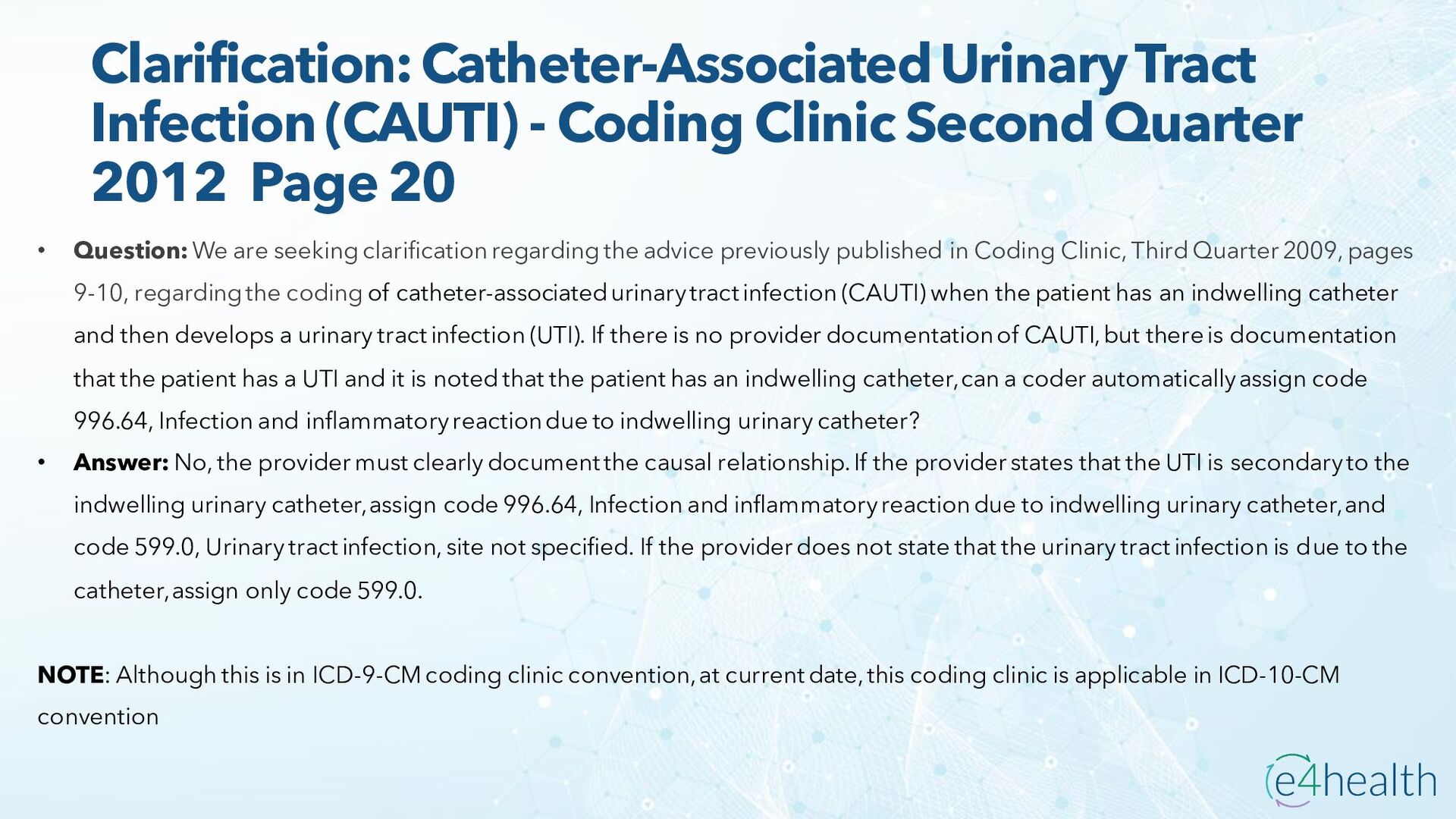
  39. Clarification: Catheter-Associated Urinary Tract Infection (CAUTI) - Coding Clinic Second

    Quarter 2012 Page 20 • Question: We are seeking clarification regarding the advice previously published in Coding Clinic, Third Quarter 2009, pages 9-10, regarding the coding of catheter-associated urinary tract infection (CAUTI) when the patient has an indwelling catheter and then develops a urinary tract infection (UTI). If there is no provider documentation of CAUTI, but there is documentation that the patient has a UTI and it is noted that the patient has an indwelling catheter, can a coder automatically assign code 996.64, Infection and inflammatory reaction due to indwelling urinary catheter? • Answer: No, the provider must clearly document the causal relationship. If the provider states that the UTI is secondary to the indwelling urinary catheter, assign code 996.64, Infection and inflammatory reaction due to indwelling urinary catheter, and code 599.0, Urinary tract infection, site not specified. If the provider does not state that the urinary tract infection is due to the catheter, assign only code 599.0. NOTE: Although this is in ICD-9-CM coding clinic convention, at current date, this coding clinic is applicable in ICD-10-CM convention
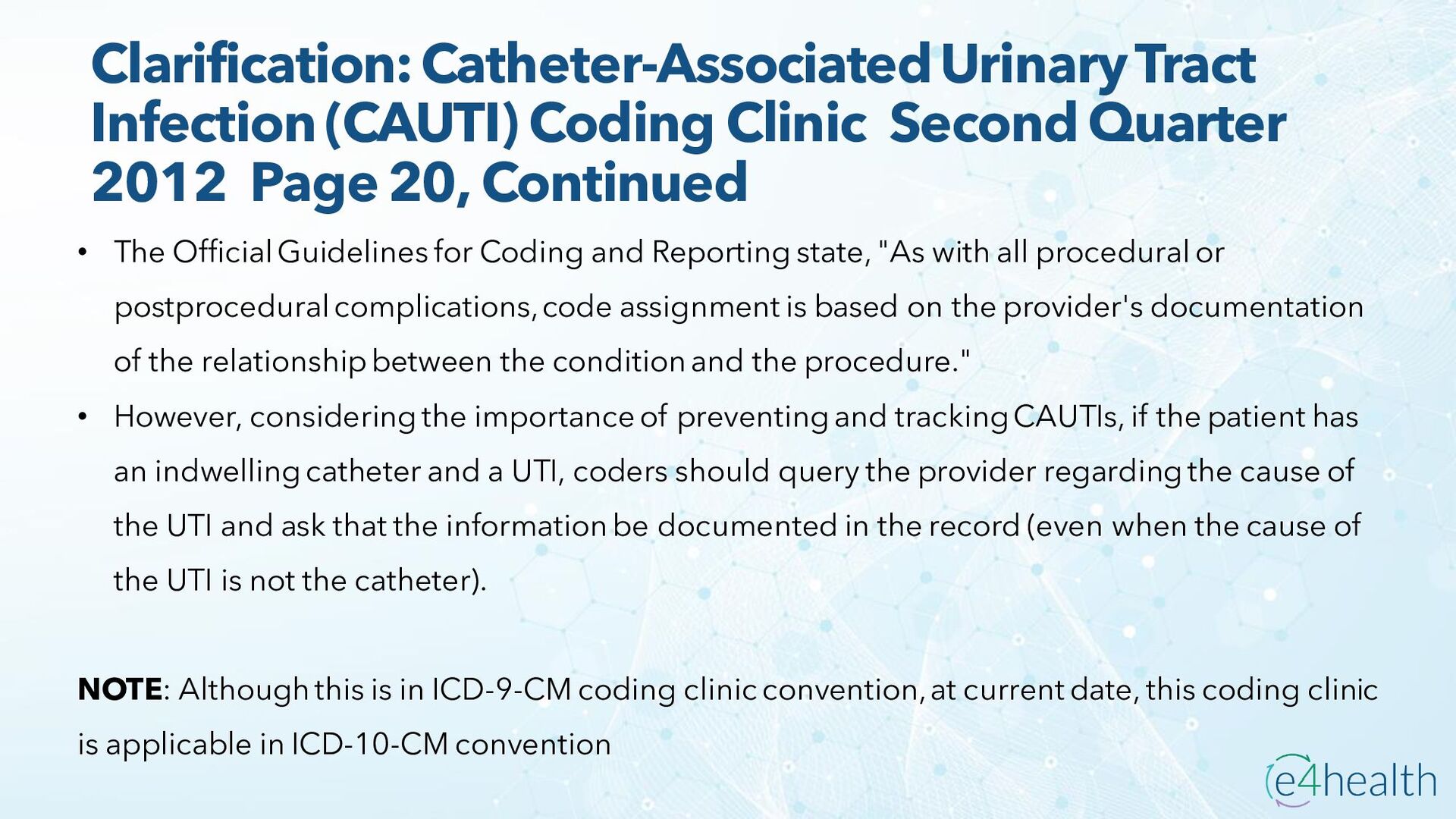
  40. Clarification: Catheter-Associated Urinary Tract Infection (CAUTI) Coding Clinic Second Quarter

    2012 Page 20, Continued • The Official Guidelines for Coding and Reporting state, "As with all procedural or postprocedural complications, code assignment is based on the provider's documentation of the relationship between the condition and the procedure." • However, considering the importance of preventing and tracking CAUTIs, if the patient has an indwelling catheter and a UTI, coders should query the provider regarding the cause of the UTI and ask that the information be documented in the record (even when the cause of the UTI is not the catheter). NOTE: Although this is in ICD-9-CM coding clinic convention, at current date, this coding clinic is applicable in ICD-10-CM convention
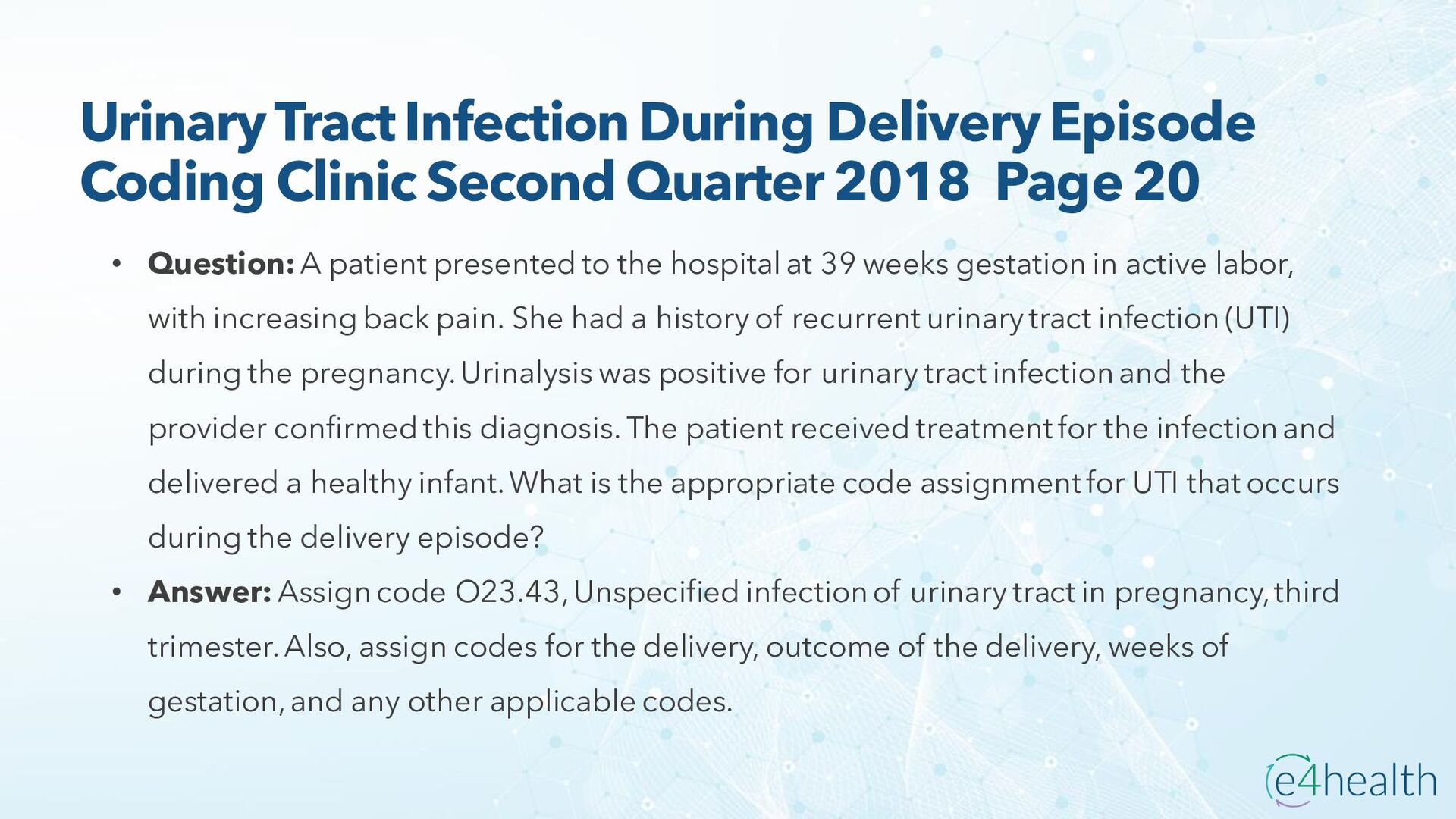
  41. Urinary Tract Infection During Delivery Episode Coding Clinic Second Quarter

    2018 Page 20 • Question: A patient presented to the hospital at 39 weeks gestation in active labor, with increasing back pain. She had a history of recurrent urinary tract infection (UTI) during the pregnancy. Urinalysis was positive for urinary tract infection and the provider confirmed this diagnosis. The patient received treatment for the infection and delivered a healthy infant. What is the appropriate code assignment for UTI that occurs during the delivery episode? • Answer: Assign code O23.43, Unspecified infection of urinary tract in pregnancy, third trimester. Also, assign codes for the delivery, outcome of the delivery, weeks of gestation, and any other applicable codes.
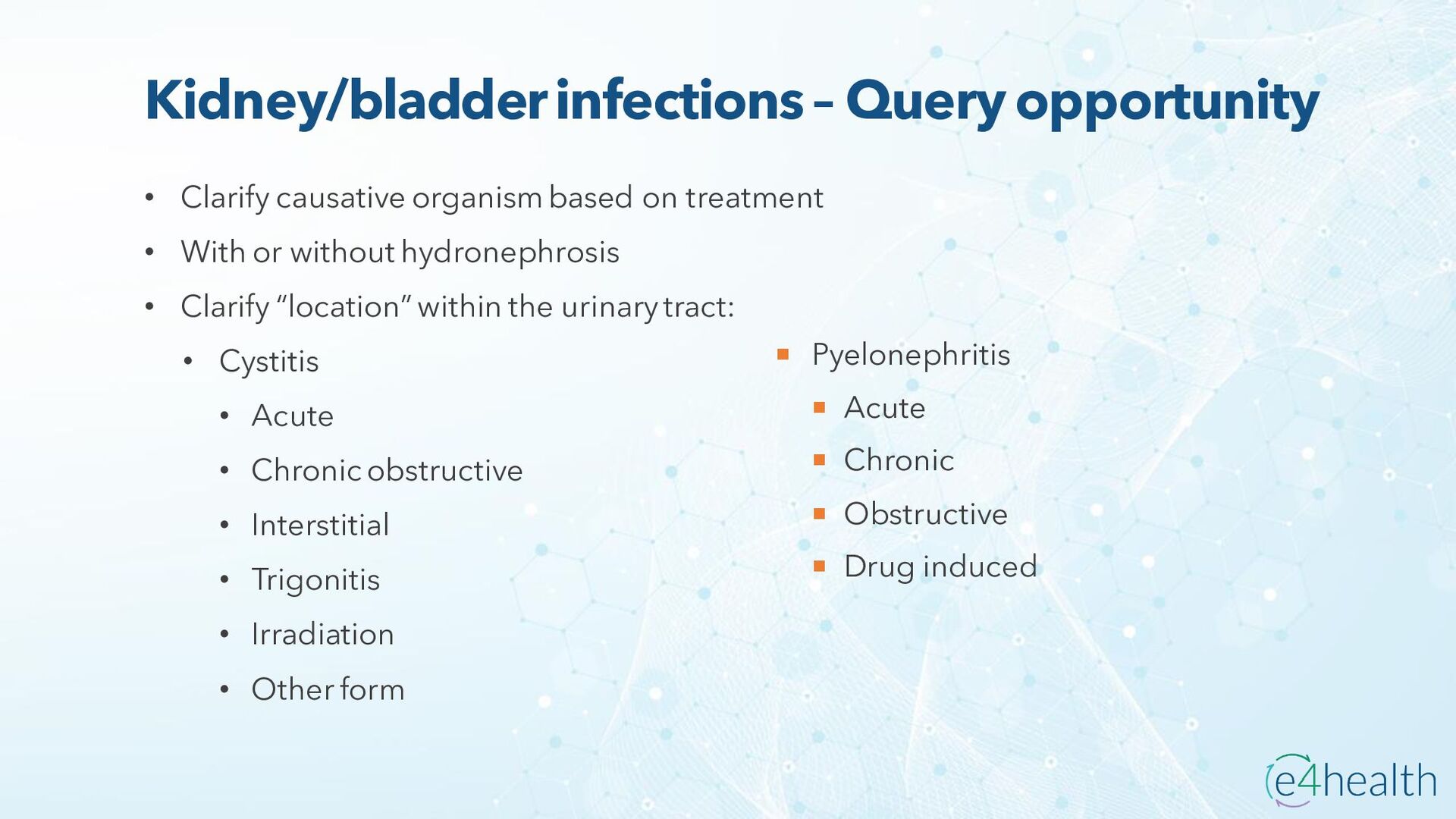
  42. Kidney/bladder infections – Query opportunity • Clarify causative organism based

    on treatment • With or without hydronephrosis • Clarify “location” within the urinary tract: • Cystitis • Acute • Chronic obstructive • Interstitial • Trigonitis • Irradiation • Other form  Pyelonephritis  Acute  Chronic  Obstructive  Drug induced
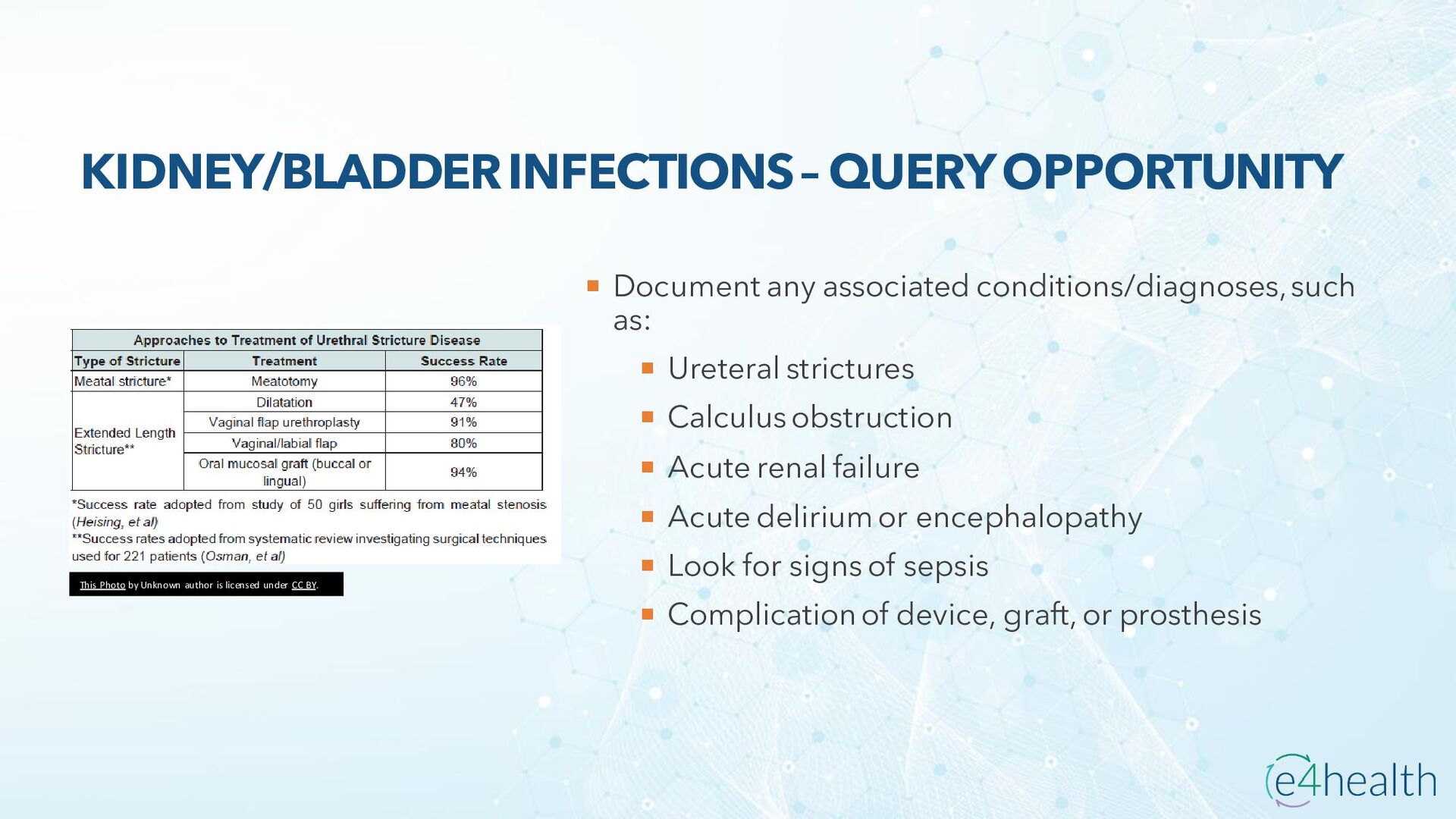
  43. KIDNEY/BLADDER INFECTIONS – QUERY OPPORTUNITY  Document any associated conditions/diagnoses,

    such as:  Ureteral strictures  Calculus obstruction  Acute renal failure  Acute delirium or encephalopathy  Look for signs of sepsis  Complication of device, graft, or prosthesis This Photo by Unknown author is licensed under CC BY.
  44. Post-operative hematuria or acute blood loss anemia • When treated

    outside the normal course, hematuria may be listed as a secondary diagnosis if there is abnormal progression or prolongation of expected post-op bleeding and treatments such as reinstitution of, or increasing speed of manual bladder irrigations, reinsertion of the Foley catheter or a return to O.R. for evacuation of clots or procedure to control hemorrhage. • When treated outside the normal course, post-operative acute blood loss may be listed as a secondary diagnosis if there is abnormal progression or prolongation of expected post-op bleeding and treatments blood transfusion or a return to O.R. for evacuation of clots or procedure to control hemorrhage • Coded to the same code as acute blood loss anemia, D62 Query opportunity: • Review documentation if the hematuria is a complication of the procedure to determine whether additional complication code needs to be assigned.
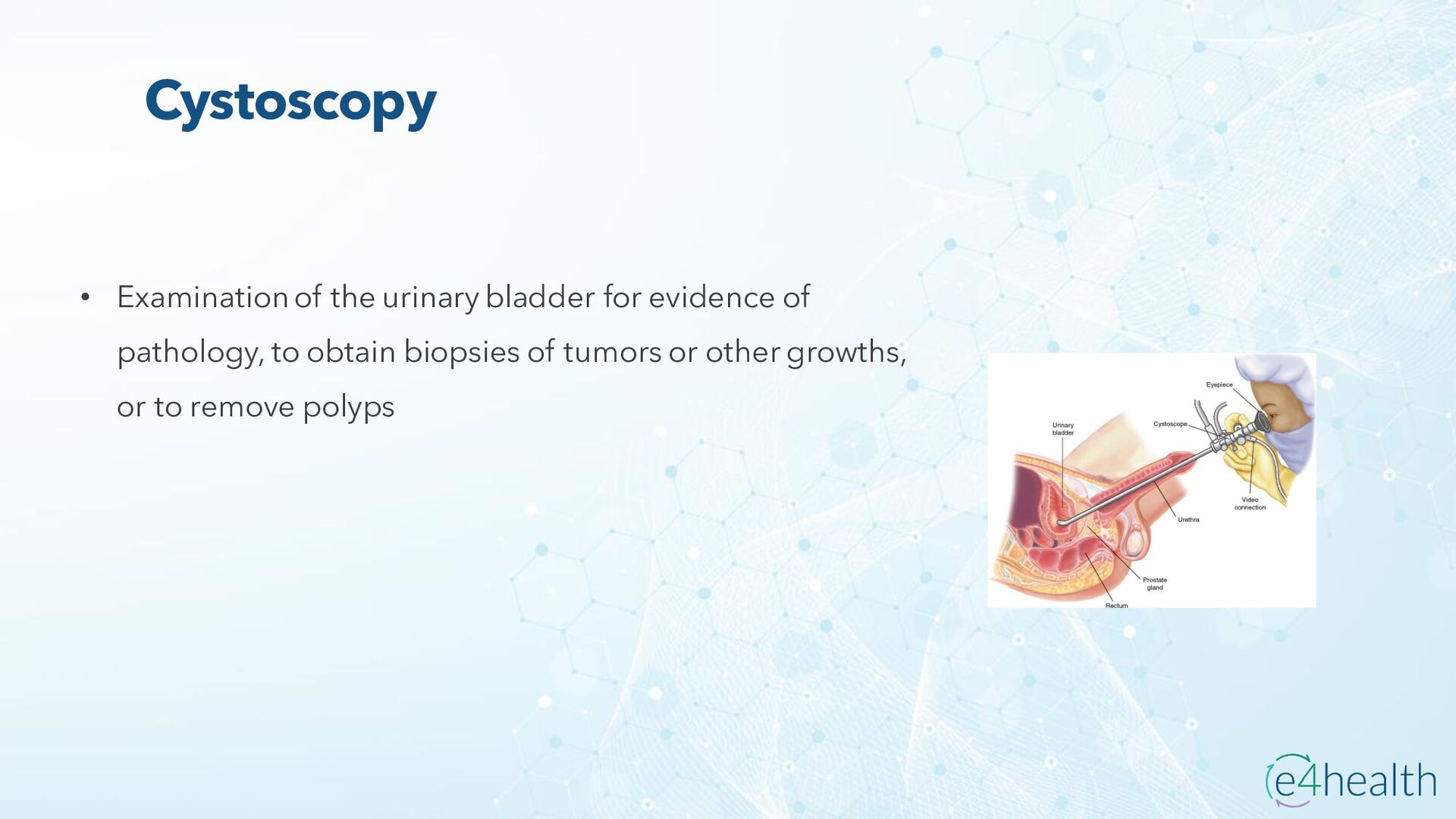
  45. Cystoscopy • Examination of the urinary bladder for evidence of

    pathology, to obtain biopsies of tumors or other growths, or to remove polyps
  46. Bypass • Includes such procedures: • Renal Artery Bypass •

    Segment from another artery or vein to construct a detour around the blocked area of the renal artery • Most used technique creates a bypass from the abdominal aorta (the large artery in the abdomen) to the kidney using a segment from the saphenous vein in the leg or a non- autologus tissue substitute • Cutaneo-peritoneal fistula for peritoneal dialysis, such as peritoneal or Tenckhoff catheter • Insertion through the abdomen (usually near the umbilicus) into the peritoneal cavity • Allows the patient to do 3-5 exchanges per day and no hemodialysis is involved • This is called CAPD, continuous ambulatory peritoneal dialysis
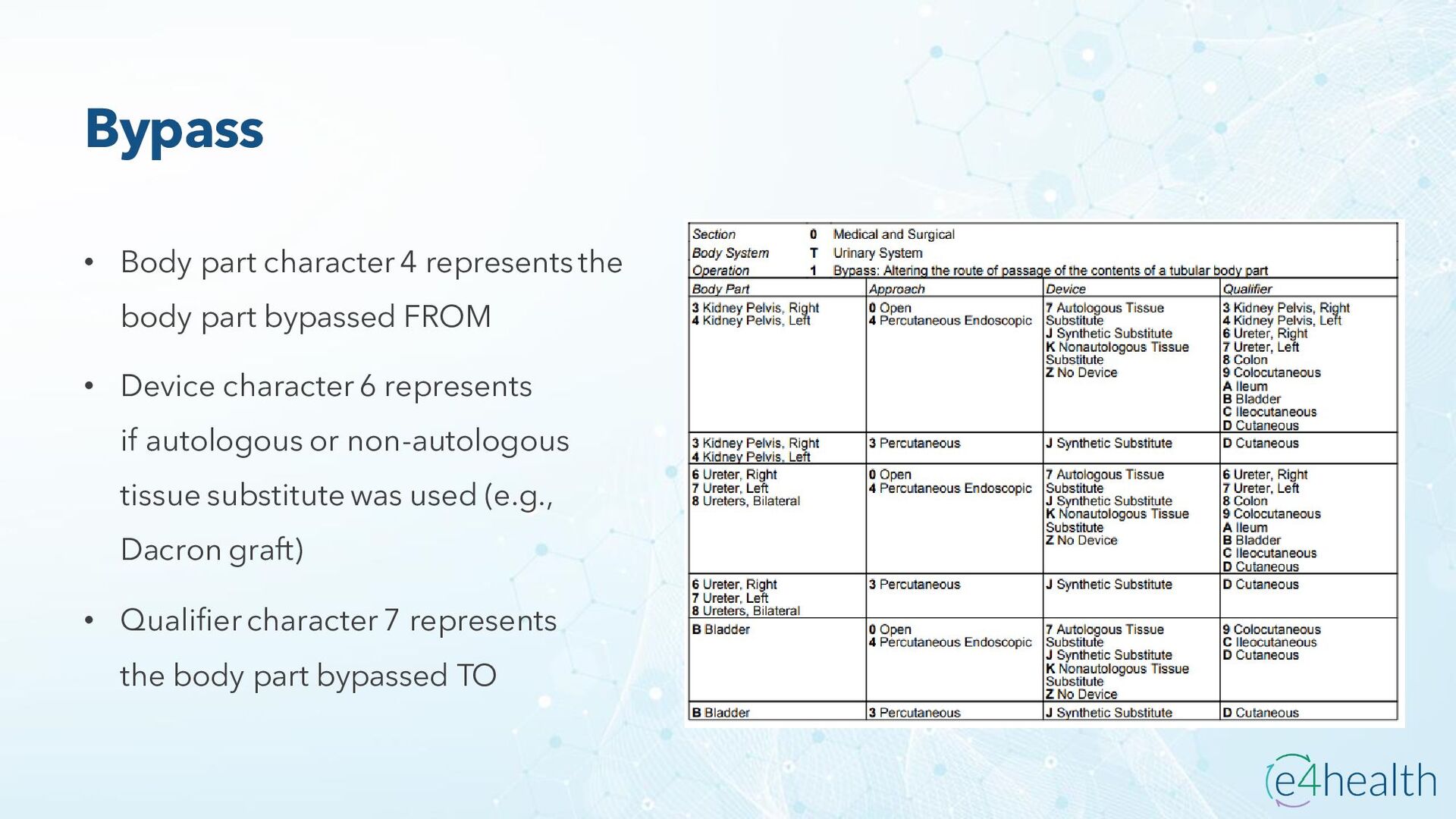
  47. Bypass • Body part character 4 represents the body part

    bypassed FROM • Device character 6 represents if autologous or non-autologous tissue substitutewas used (e.g., Dacron graft) • Qualifier character 7 represents the body part bypassed TO
  48. Bypass • Query opportunity: • Review for documentation of other

    associateddiagnoses: • Acute blood loss anemia • Acute renal failure • Acute tubular necrosis • Failure of AV shunt • Infection at the site • Electrolyte imbalances • Chronic kidney disease and staging • Hypertension
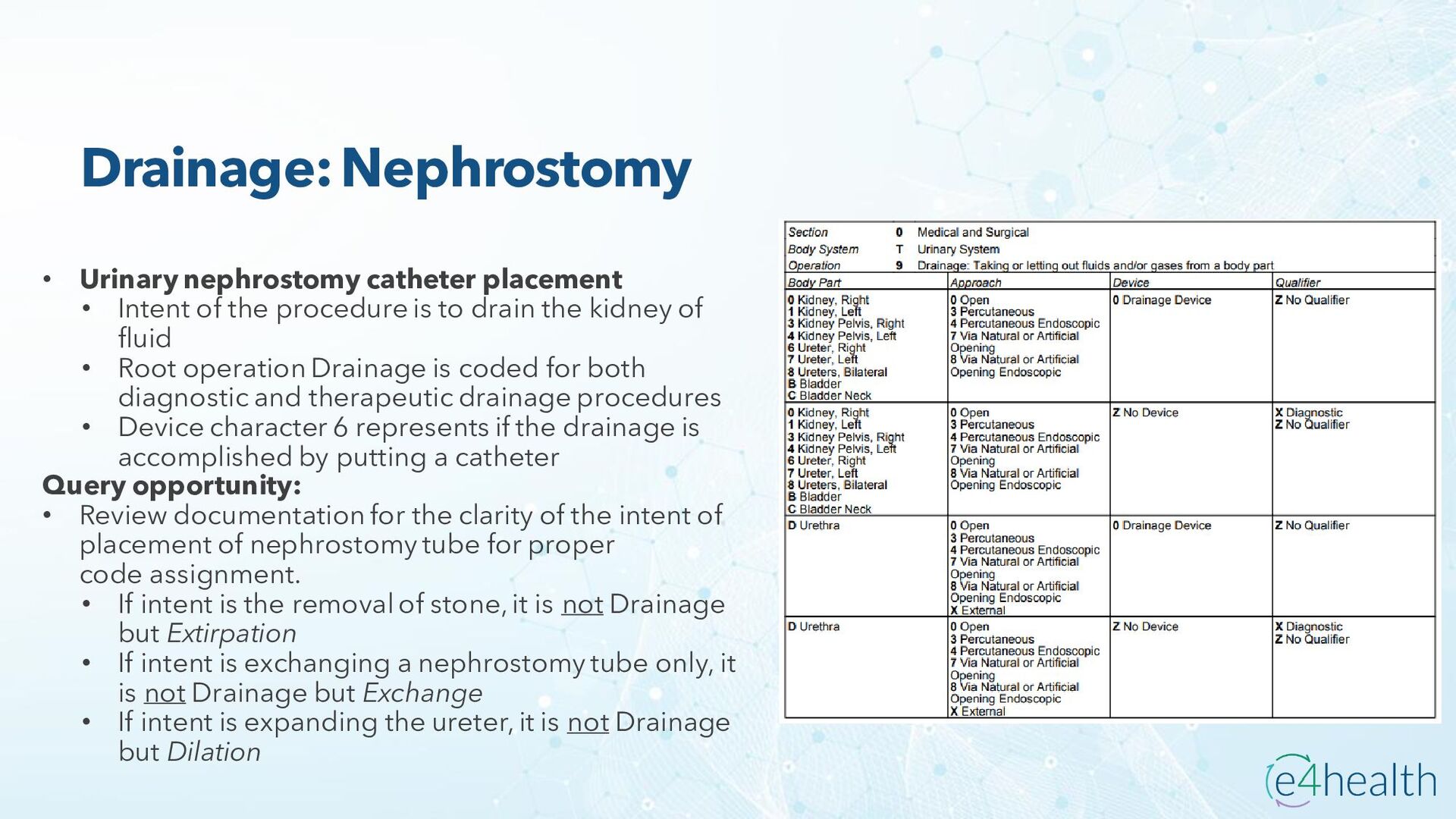
  49. Drainage: Nephrostomy • Urinary nephrostomy catheter placement • Intent of

    the procedure is to drain the kidney of fluid • Root operation Drainage is coded for both diagnostic and therapeutic drainage procedures • Device character 6 represents if the drainage is accomplished by putting a catheter Query opportunity: • Review documentation for the clarity of the intent of placement of nephrostomy tube for proper code assignment. • If intent is the removal of stone, it is not Drainage but Extirpation • If intent is exchanging a nephrostomy tube only, it is not Drainage but Exchange • If intent is expanding the ureter, it is not Drainage but Dilation
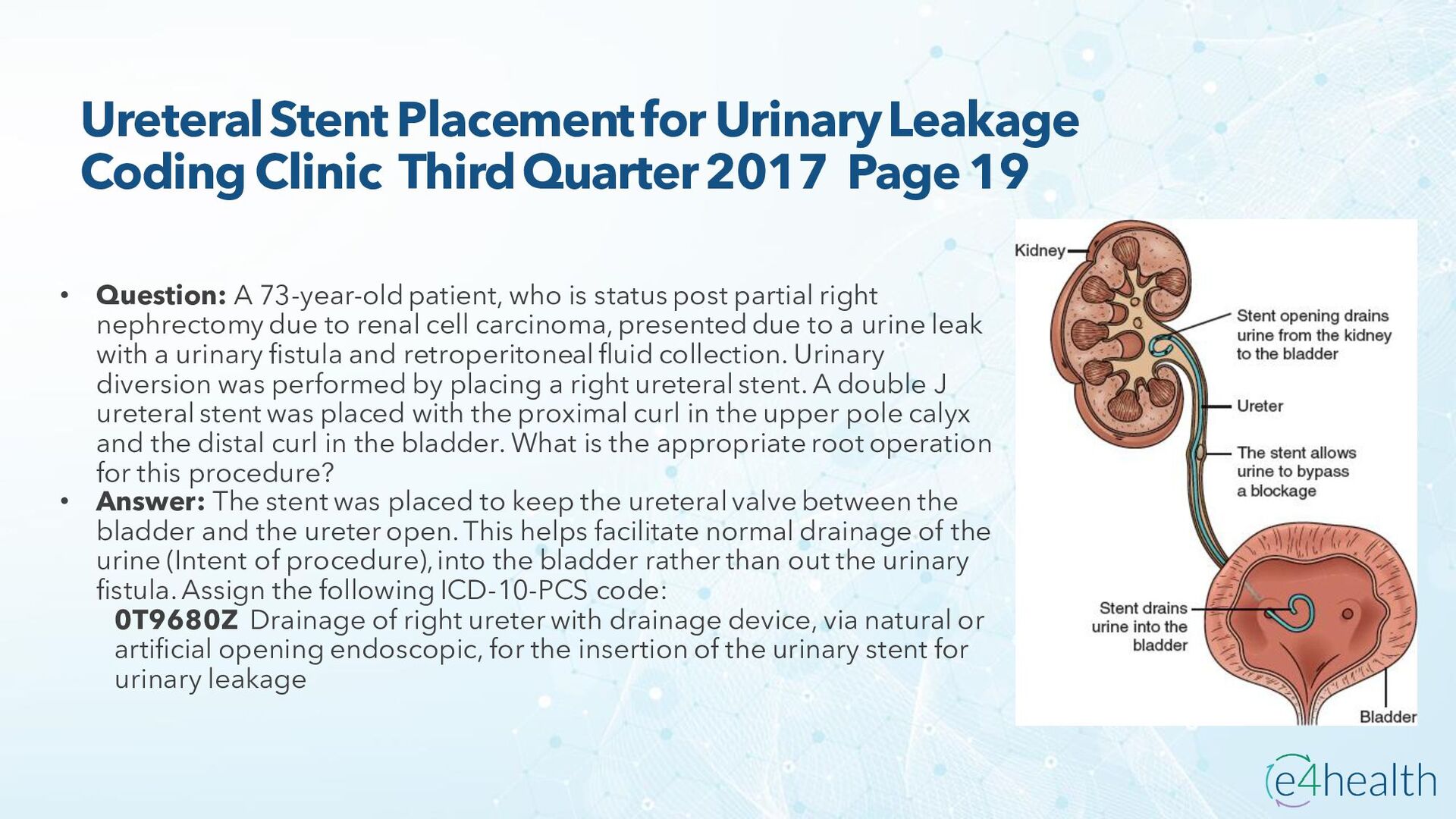
  50. Ureteral Stent Placement for UrinaryLeakage Coding Clinic Third Quarter 2017

    Page 19 • Question: A 73-year-old patient, who is status post partial right nephrectomy due to renal cell carcinoma, presented due to a urine leak with a urinary fistula and retroperitoneal fluid collection. Urinary diversion was performed by placing a right ureteral stent. A double J ureteral stent was placed with the proximal curl in the upper pole calyx and the distal curl in the bladder. What is the appropriate root operation for this procedure? • Answer: The stent was placed to keep the ureteral valve between the bladder and the ureter open. This helps facilitate normal drainage of the urine (Intent of procedure), into the bladder rather than out the urinary fistula. Assign the following ICD-10-PCS code: 0T9680Z Drainage of right ureter with drainage device, via natural or artificial opening endoscopic, for the insertion of the urinary stent for urinary leakage
  51. Exchange of Ureteral Stent Coding Clinic Fourth Quarter 2017 Page

    111 • Question: A patient with hydronephrosis underwent ureteral stent exchange. A cystoscope was inserted into the bladder. A wire was passed and the indwelling right ureteral stent was removed. A catheter was passed and retrograde pyelogram was then obtained. The ureteral stent was passed over a wire and the position of the stent was confirmed fluoroscopically and cystoscopically. What is the correct root operation for the exchange of the ureteral stents? • Advice published in Coding Clinic, Second Quarter 2016, pages 27-28, regarding ureteral stent exchange contained a typographical error. Both codes describing removal of ureteral stent and dilation of ureter should have the approach value "8" (via natural or artificial opening endoscopic) as follows: 0TP98DZ Removal of intraluminal device from ureter, via natural or artificial opening endoscopic and; 0T768DZ Dilation of right ureter with intraluminal device, via natural or artificial opening endoscopic Note: The intent of the stent placement is to continue to expand the ureter. "Dilation" is the root operation.
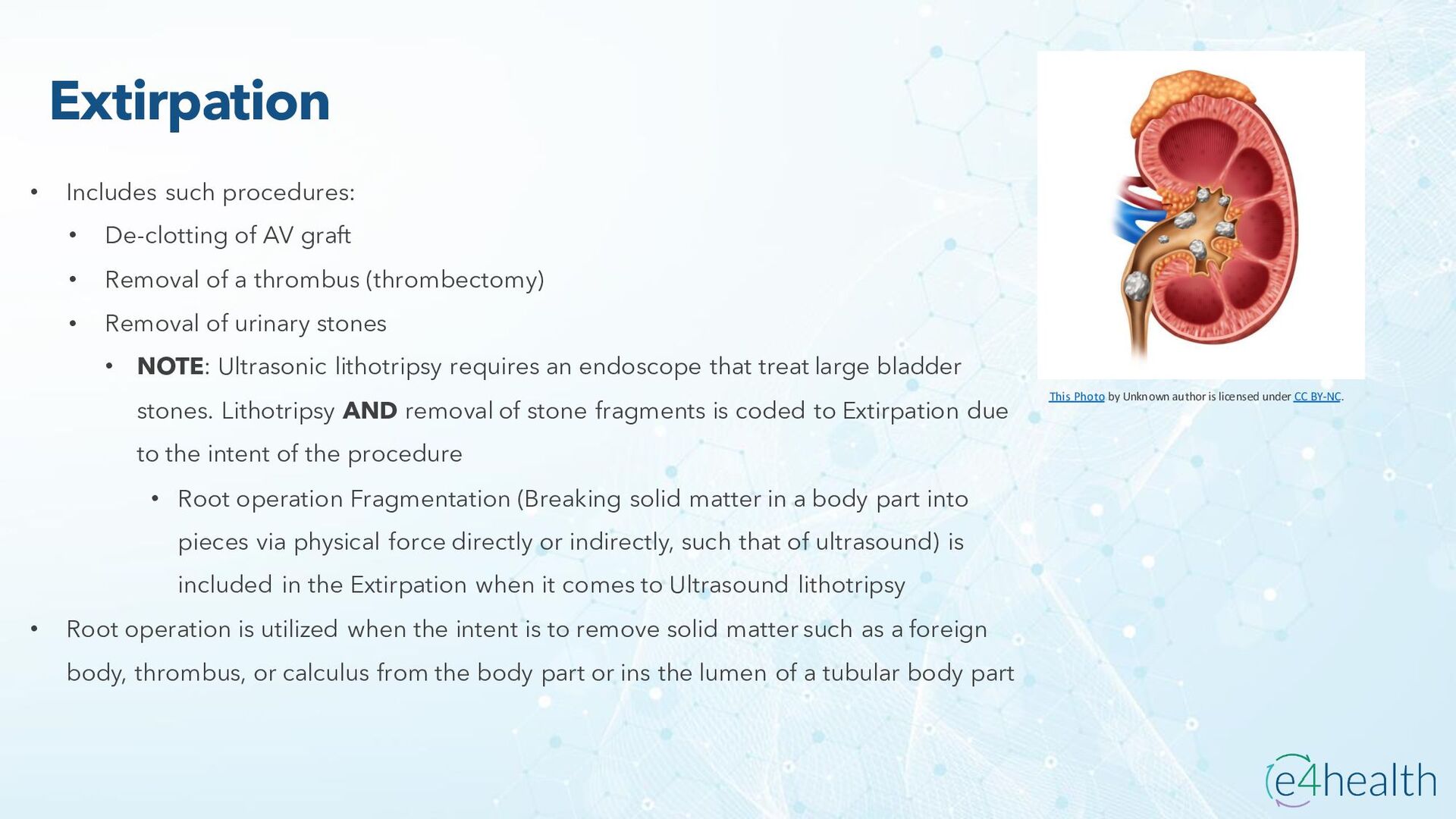
  52. Extirpation • Includes such procedures: • De-clotting of AV graft

    • Removal of a thrombus (thrombectomy) • Removal of urinary stones • NOTE: Ultrasonic lithotripsy requires an endoscope that treat large bladder stones. Lithotripsy AND removal of stone fragments is coded to Extirpation due to the intent of the procedure • Root operation Fragmentation (Breaking solid matter in a body part into pieces via physical force directly or indirectly, such that of ultrasound) is included in the Extirpation when it comes to Ultrasound lithotripsy • Root operation is utilized when the intent is to remove solid matter such as a foreign body, thrombus, or calculus from the body part or ins the lumen of a tubular body part This Photo by Unknown author is licensed under CC BY-NC.
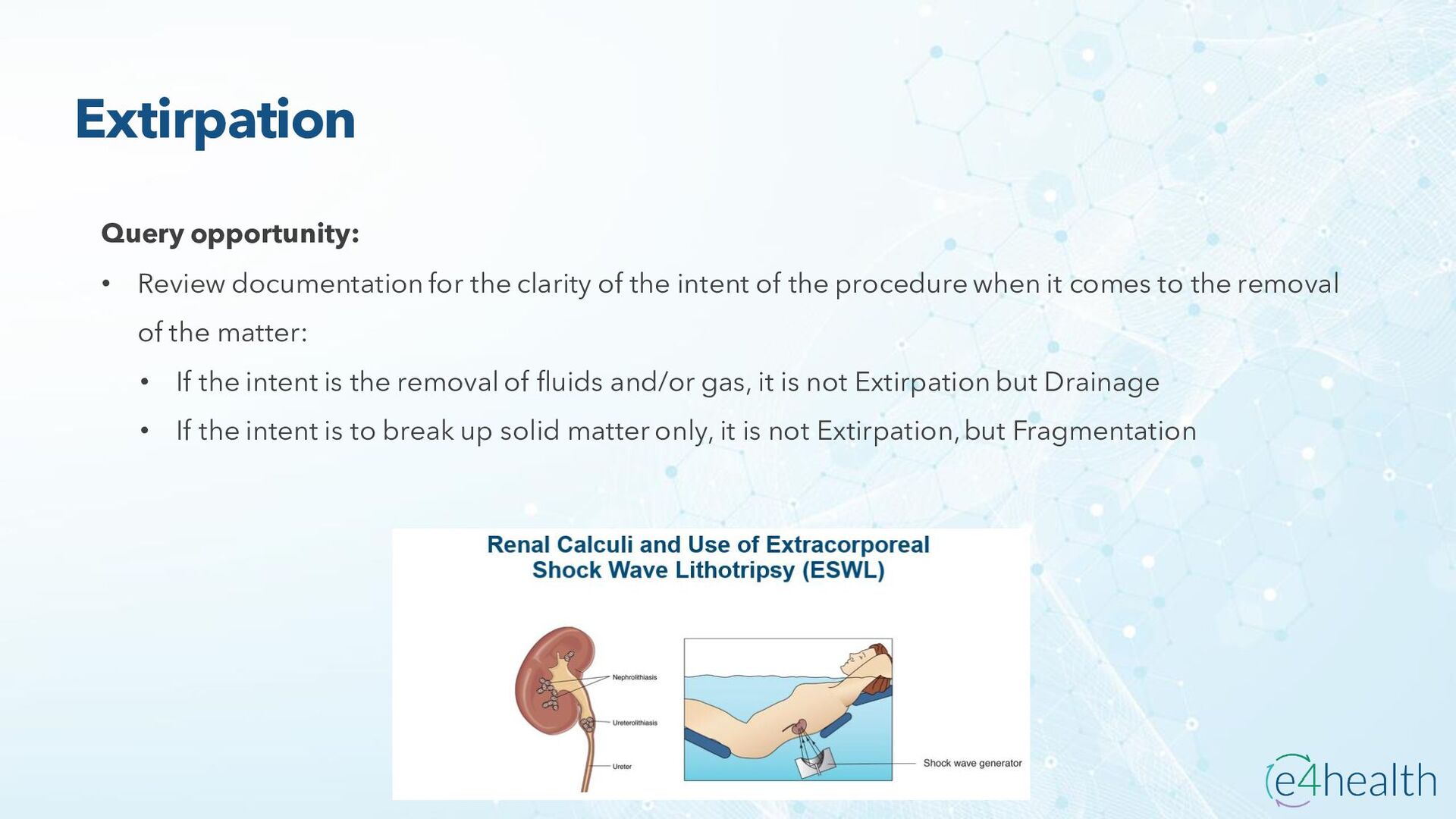
  53. Extirpation Query opportunity: • Review documentation for the clarity of

    the intent of the procedure when it comes to the removal of the matter: • If the intent is the removal of fluids and/or gas, it is not Extirpation but Drainage • If the intent is to break up solid matter only, it is not Extirpation, but Fragmentation
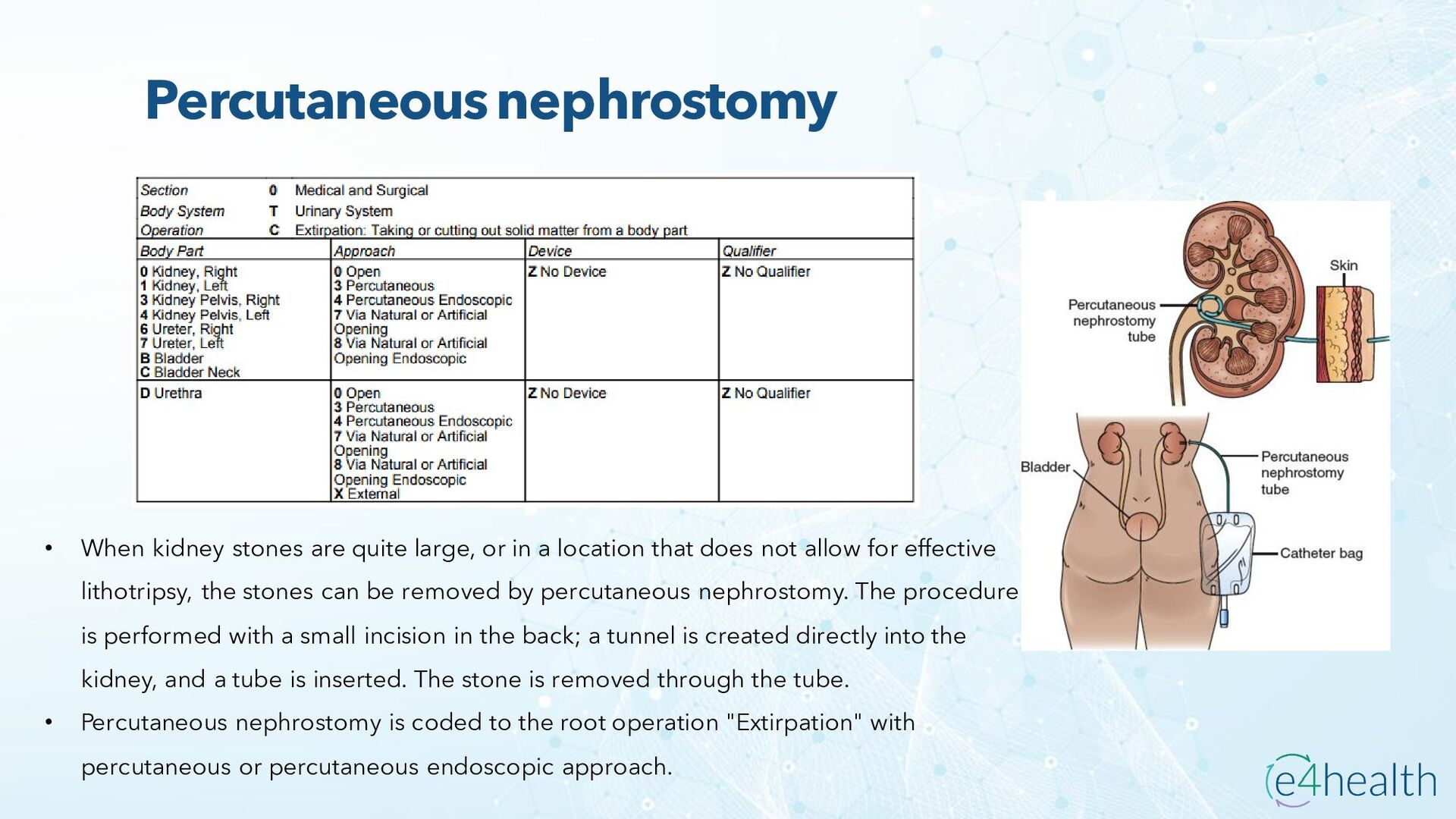
  54. Percutaneous nephrostomy • When kidney stones are quite large, or

    in a location that does not allow for effective lithotripsy, the stones can be removed by percutaneous nephrostomy. The procedure is performed with a small incision in the back; a tunnel is created directly into the kidney, and a tube is inserted. The stone is removed through the tube. • Percutaneous nephrostomy is coded to the root operation "Extirpation" with percutaneous or percutaneous endoscopic approach.
  55. Revision Includes such procedures: • Revision of an artificial sphincter

    in bladder • Removal of old AV fistula, graft or shunt, with creation of new shunt. • Repositioning of cannula Root operation is utilized when the intent is to correct the positioning or function of a previously placed device If revision involves removal of old device and insertion of new device, two codes are required
  56. Revision • Query opportunity: • Review documentation for the clarity

    of the intent of a diversion device involved in a procedure • Root operation may be different if the revision of a diversion device is inherent to a procedure • Root operation may be different if the revision of a diversion device was moved to a different location
  57. Creation of Indiana Pouch Coding Clinic Third Quarter 2017 Page

    20 • Question: A patient underwent a simple cystectomy with creation of an Indiana pouch. During the procedure, dissection of the bladder was carried out. The ascending colon and ileum were divided and sutured creating a pouch, and the bowel was reanastomosed. The right ureter was tunneled through the bowel creating an ureterocolonic anastomosis, and a urinary diversion stent was passed into the patient's right kidney. Through a separate incision, the left ureter was placed into the pouch and an additional urinary diversion stent was passed into the patient's left renal pelvis. Prior to complete closure of the pouch a suprapubic catheter was placed and the bilateral ureteral stents were withdrawn from the lumen of the pouch. The remainder of the pouch was closed and a catheterizable stoma was created at the abdominal wall. What are the appropriate ICD-10-PCS code assignments for creation of an Indiana pouch and stoma following a cystectomy?
  58. Creation of Indiana Pouch Coding Clinic Third Quarter 2017 Page

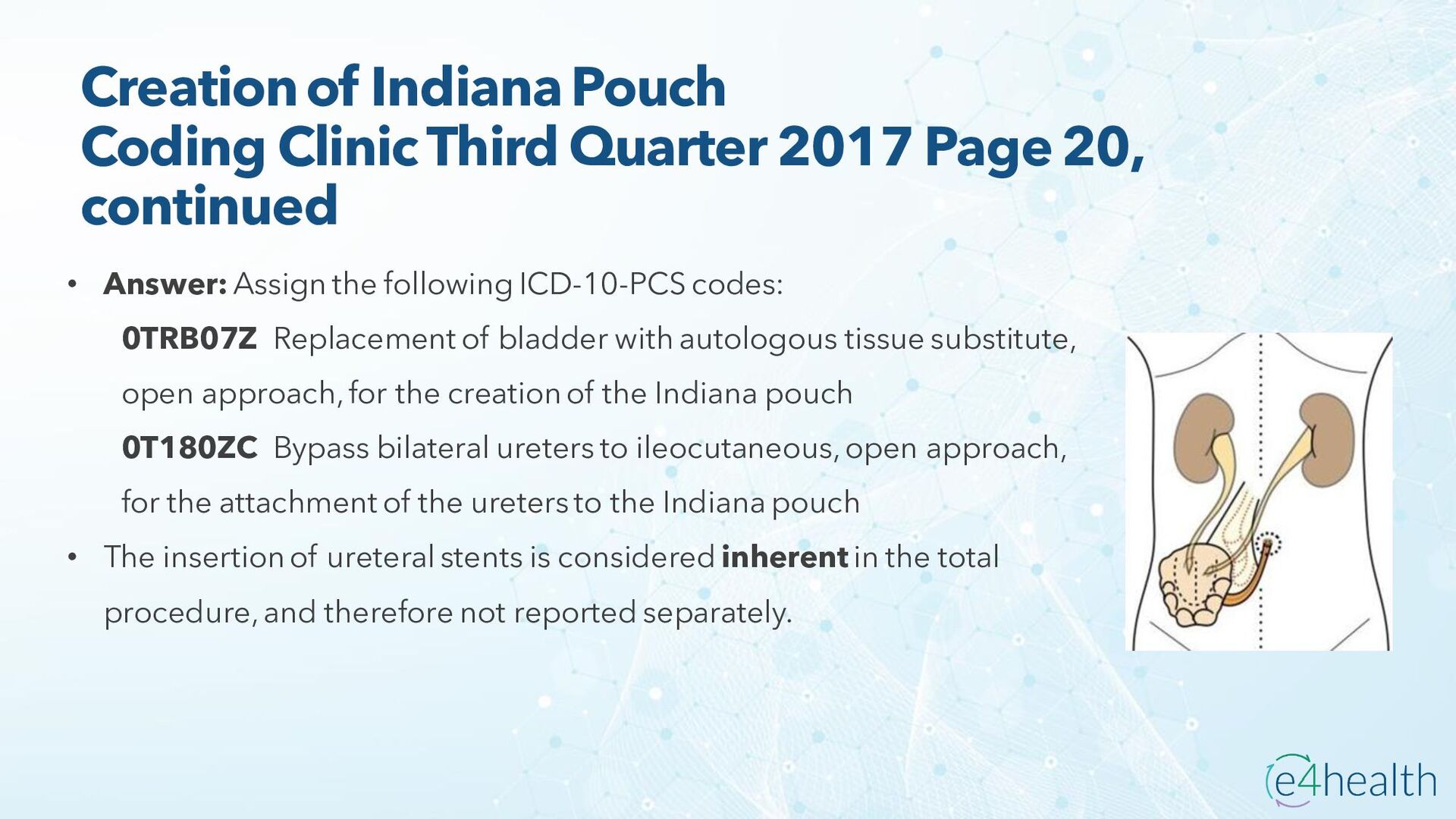
    20, continued • Answer:Assign the following ICD-10-PCS codes: 0TRB07Z Replacement of bladder with autologous tissue substitute, open approach, for the creation of the Indiana pouch 0T180ZC Bypass bilateral ureters to ileocutaneous, open approach, for the attachment of the ureters to the Indiana pouch • The insertion of ureteral stents is considered inherent in the total procedure, and therefore not reported separately.
  59. Redo Urinary Diversion Surgery via Left Ureteral Reimplantation Coding Clinic

    Third Quarter 2015 Page 34 • Question: A 19-year-old patient, status post ileal conduit urinary diversion surgery, developed tortuosity and kinking of the left ureter due to recurrent urinary tract infection. At surgery, the left ureter was detached. The surgeon straightened out the kinking and tortuosity and reimplanted the ureter at a different location. What is the correct root operation and body part for the ureter reimplantation? • Answer: This patient is status post urinary diversion using intestinal tissue. The left ureter has been replaced with the ileum, which is now functioning as a ureter. • During surgery, the kinking and tortuosity were straightened out, and the ureter was then reconnected at a different location. • "Bypass" is the appropriate root operation because the ureter was rerouted, and a new connection was established. 0T170ZB Bypass left ureter to bladder, open approach
  60. Transplantation • Kidney Transplant • Intent of the procedure is

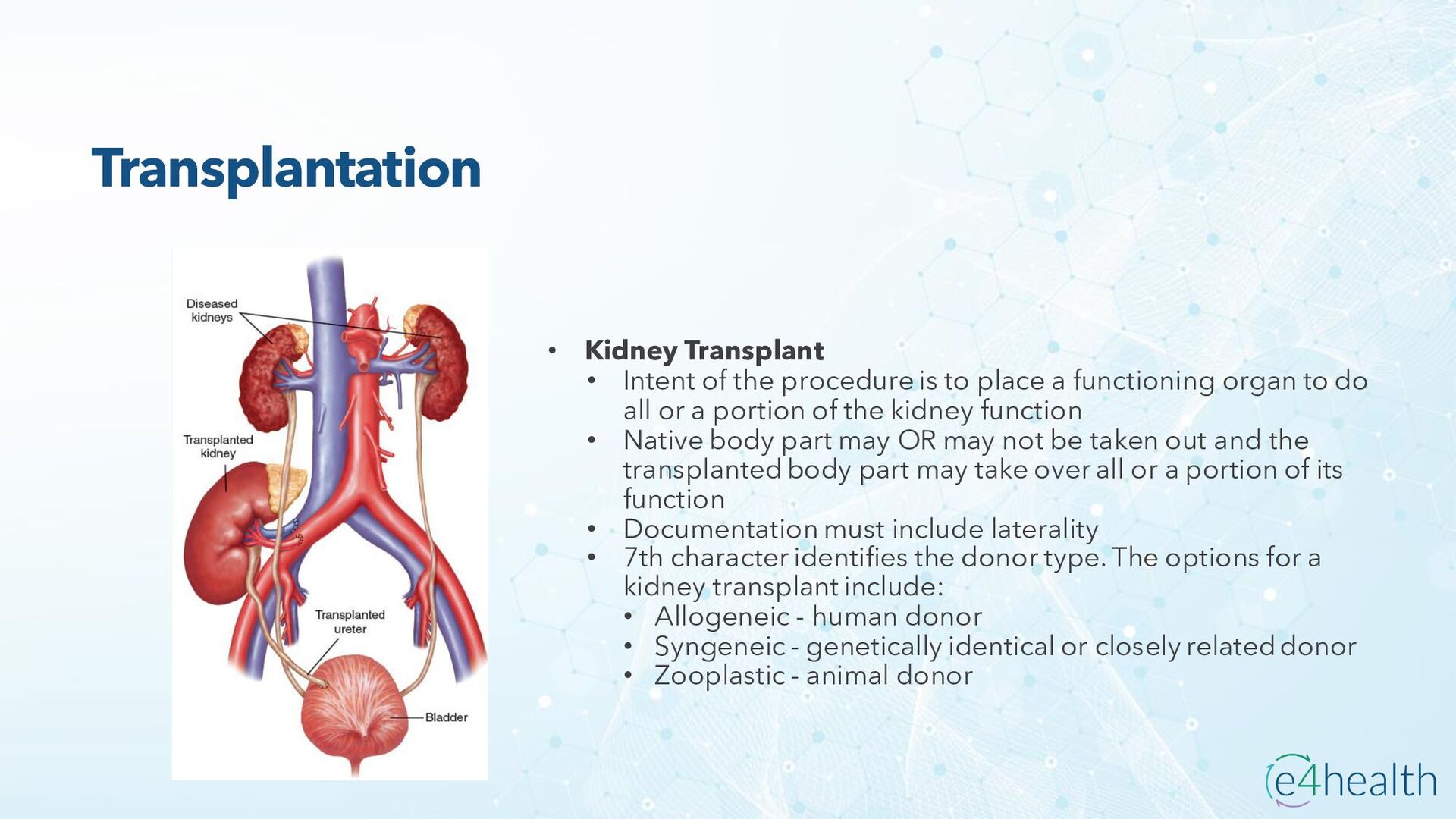
    to place a functioning organ to do all or a portion of the kidney function • Native body part may OR may not be taken out and the transplanted body part may take over all or a portion of its function • Documentation must include laterality • 7th character identifies the donor type. The options for a kidney transplant include: • Allogeneic - human donor • Syngeneic - genetically identical or closely related donor • Zooplastic - animal donor
  61. Transplantation • Query opportunity: • Review for documentation of "delayed

    graft function" for opportunity to clarify acute renal failure or more specified type such as renal papillary (medullary) necrosis or acute tubular necrosis (ATN) in the post-operative period. • Review for documentation of consistency of laterality • Review for documentation of other associated diagnoses: • Acute blood loss anemia • Transplant infection or rejection or failure • Electrolyte imbalances • Chronic kidney disease • Hypertension
  62. Excision • Includes such procedures as: • Genitourinary biopsies include

    around or on bladder, ureter, kidney, and urethra • Partial cystectomy, Excision bladder dome, wedge resection of bladder, Transurethral prostatectomy (TURP) • Procedure code is assigned for each genitourinary organ excised • Additional procedure code would be assigned for the urinary diversion (bypass) such as an attachment of ureter to an Indiana pouch, if applicable • Additional procedure code if lymph nodes were removed (excision or resection), if applicable
  63. Excision • Per ICD-10-PCS Official Coding Guidelines, Section B3.4b (Biopsy

    followed by More Definitive Treatment) • If a diagnostic excision (biopsy) is followed by a therapeutic excision at the same procedure site, or by resection of the body part during the same operative episode, code only the therapeutic excision • Per ICD-10-PCS Official Coding Guidelines, Section B4.1b (Body Part, General Guidelines) • If the prefix "peri" is combined with a body part to identify the site of the procedure, and the site of the procedure is not further specified, then the procedure is coded to the body part named. This guideline applies only when a more specific body part value is not available. • "Peri-renal" procedure site = coded to the kidney body part when site is not further specified
  64. Resection • Includes such procedures as: • Total Nephrectomy •

    Total or Radical Cystectomy or Prostatectomy • Per ICD-10-PCS Official Coding Guidelines, Section B3.8 (Excision vs. Resection) • PCS contains specific body parts for anatomical subdivisions of a body part • Resection of the specific body part is coded whenever all of the body part is cut out or off, rather than coding Excision of a less specific body part • Per ICD-10-PCS Official Coding Guidelines, Section B3.18 (Excision/Resection followed by Replacement) • If an excision or resection of a body part is followed by a replacement procedure, code both procedures to identify each distinct objective, except when the excision or resection is considered integral and preparatory for the replacement procedure.
  65. Excision & Resection • Definitions: • Excision: Cutting out or

    off (with a sharp instrument), without replacement, a portion of a body part • Resection: Cutting out or off, without replacement, all of a body part • Query opportunity: • Review pathology and documentation of all metastatic sites • Review documentation for the clarity of the intent of excision or resection • If intent is the removal of the whole genitourinary organ, it is Resection • If intent is the removal of only part of the genitourinary organ, it is Excision • If intent is the destruction of all or portion of the genitourinary organ with direct use of energy, force, or a destructive agent, it is Destruction
  66. Excision & Resection • Query opportunity: • Review for documentation

    of other associated diagnoses: • Acute blood loss anemia • Acute renal failure • Electrolyte imbalances • Hypertension • Adhesions • Sepsis
  67. Hand-Assisted Laparoscopy Nephroureterectomy Coding Clinic Third Quarter 2014 Page 16

    • Question: A patient underwent a complete left nephroureterectomy. The kidney and proximal ureter were removed via "hand-assisted" laparoscopy and the distal ureter was removed from the bladder via an incision. What is the appropriate ICD-10-PCS code assignment for a left nephroureterectomy when two planned approaches are used to completely remove the ureter? • Answer: The left kidney and proximal ureter were excised using a "hand port" laparoscopic- assisted approach. At surgery, an 8-cm incision was made to gain access to the distal ureter site. This is considered an open approach. For the left nephroureterectomy assign the following ICD- 10-PCS procedure codes: 0TT10ZZ Resection of left kidney, open approach 0TT70ZZ Resection of left ureter, open approach
  68. Radical Prostatectomy - Coding Clinic Fourth Quarter 2014 Page 33

    • Question: A patient presents for robotic-assisted laparoscopic radical prostatectomy. During the procedure partial removal of the bilateral vas deferens was accomplished and the bilateral seminal vesicles were removed. Does a radical prostatectomy include resection of the vas deferens and seminal vesicles, or should these procedures be coded separately? What are the appropriate code assignments for robotic-assisted laparoscopic radical prostatectomy? • Answer: Radical procedures can have different meanings depending on the procedure, and the term "radical" is not always reliable information for coding the procedure. The coder should instead be guided by the information in the operative report. In ICD-10-PCS, code separately the organs or structures that were actually removed and for which there is a distinctly defined body part. The ICD-10-PCS guideline B3.2a states if during the same operative session, the same root operation is repeated at different body sites that are defined by distinct values of the body part character, multiple procedures should be coded.
  69. Radical Prostatectomy - Coding Clinic Fourth Quarter 2014 Page 33,

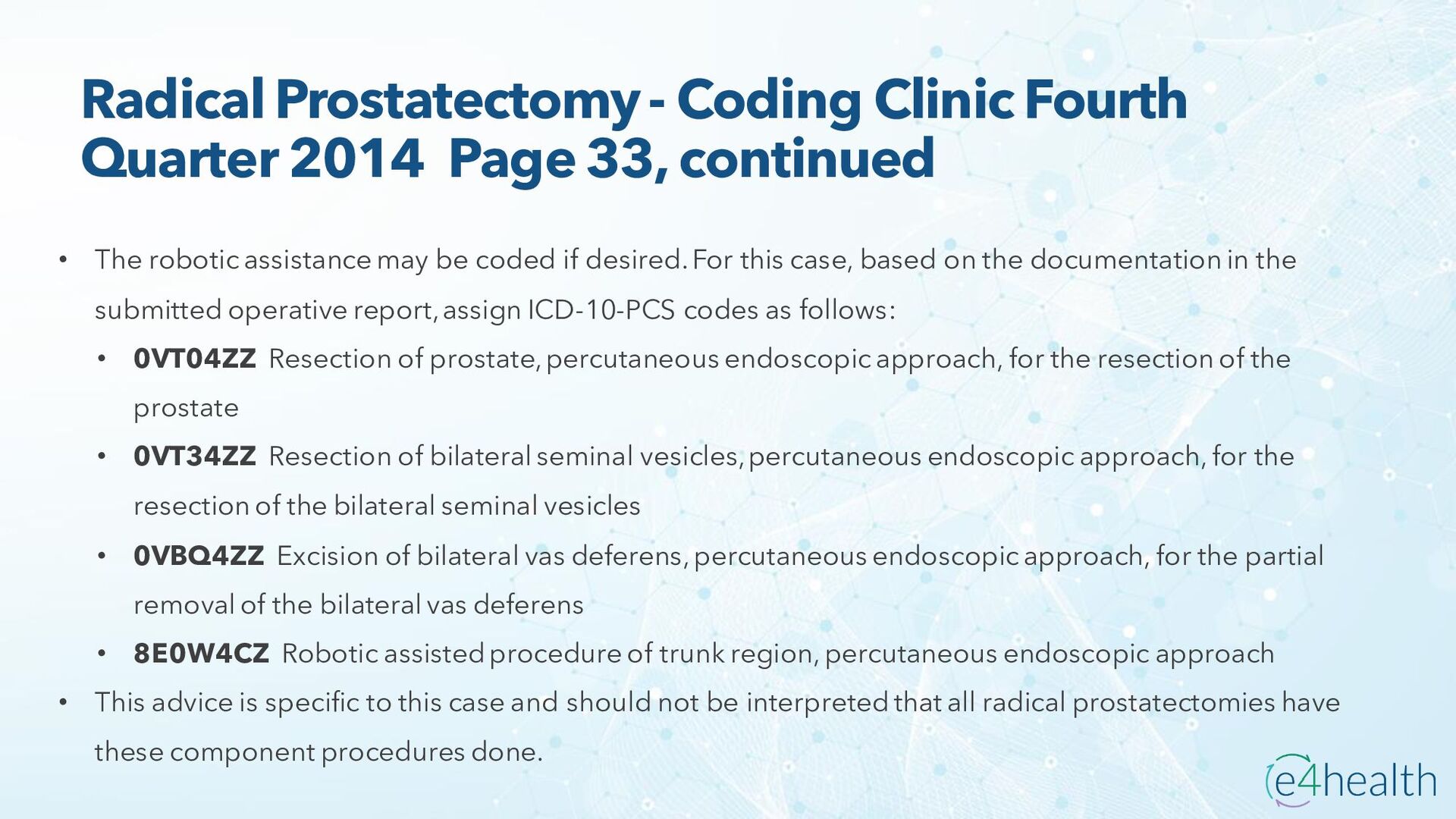
    continued • The robotic assistance may be coded if desired. For this case, based on the documentation in the submitted operative report, assign ICD-10-PCS codes as follows: • 0VT04ZZ Resection of prostate, percutaneous endoscopic approach, for the resection of the prostate • 0VT34ZZ Resection of bilateral seminal vesicles, percutaneous endoscopic approach, for the resection of the bilateral seminal vesicles • 0VBQ4ZZ Excision of bilateral vas deferens, percutaneous endoscopic approach, for the partial removal of the bilateral vas deferens • 8E0W4CZ Robotic assisted procedure of trunk region, percutaneous endoscopic approach • This advice is specific to this case and should not be interpreted that all radical prostatectomies have these component procedures done.
  70. Destruction • Includes such procedures as: • Laser induced prostatectomy/ablation

    (TULIP) • Transurethral microwave thermotherapy (TUMT) of prostate • Transurethral needle ablation (TUNA) of prostate • Fulguration of genitourinary cells or organ Query opportunity: • Review documentation for acute blood loss anemia or post-operative hemorrhage • Review documentation for the clarity of the intent of the procedure • If intent is the removal of only part (or "cutting off" of a portion) of the genitourinary organ, it is Excision
  71. Repair • Includes such procedures as: • Plastic repair of

    bladder neck • Repair of cystocele and rectocele with graft or prosthesis • Repair of fistula between bladder and Cervix, intestine, colon, urethra, uterus, or vagina • Laceration suture • A procedure code for repair would be assigned for each body part repair (e.g., one for bladder and one for colon) • Repair is used only when the method to accomplish the repair (intent) is not one of the other root operations • Functions as the "not elsewhere classified (NEC)" root operation when the procedure does not meet the definition of the other root operations
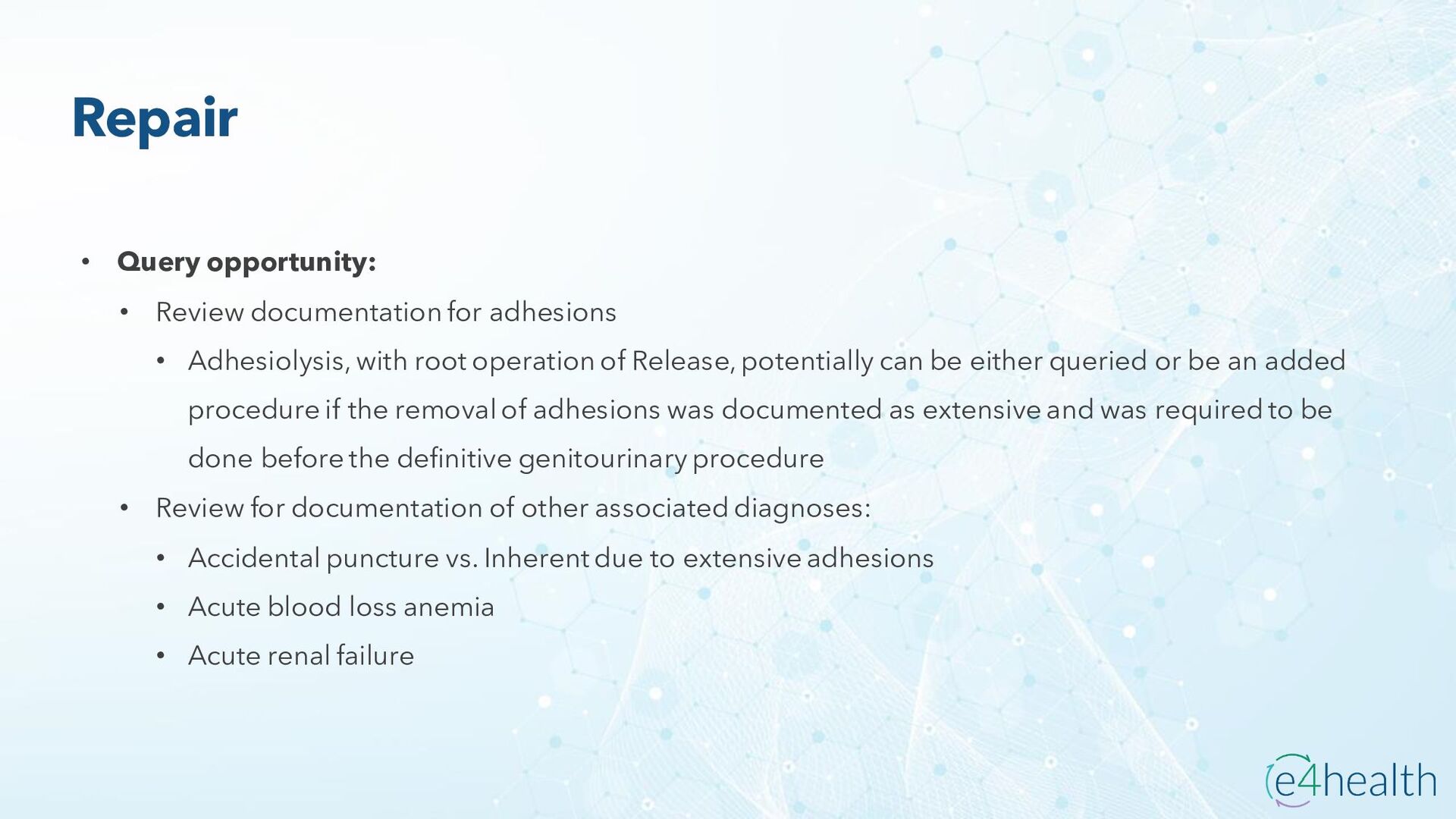
  72. Repair • Query opportunity: • Review if more than one

    body part fits the definition for the root operation of Repair • Review documentation for the clarity of the intent of the genitourinary repair • If intent is to move the body part from an abnormal location or a location where it is not functioning correctly to a more suitable location, it is Reposition • If intent is to put in a device (biological or synthetic material) that physically reinforces and/or augments the function of a body part, it is Supplement
  73. Repair • Query opportunity: • Review documentation for adhesions •

    Adhesiolysis, with root operation of Release, potentially can be either queried or be an added procedure if the removal of adhesions was documented as extensive and was required to be done before the definitive genitourinary procedure • Review for documentation of other associated diagnoses: • Accidental puncture vs. Inherent due to extensive adhesions • Acute blood loss anemia • Acute renal failure
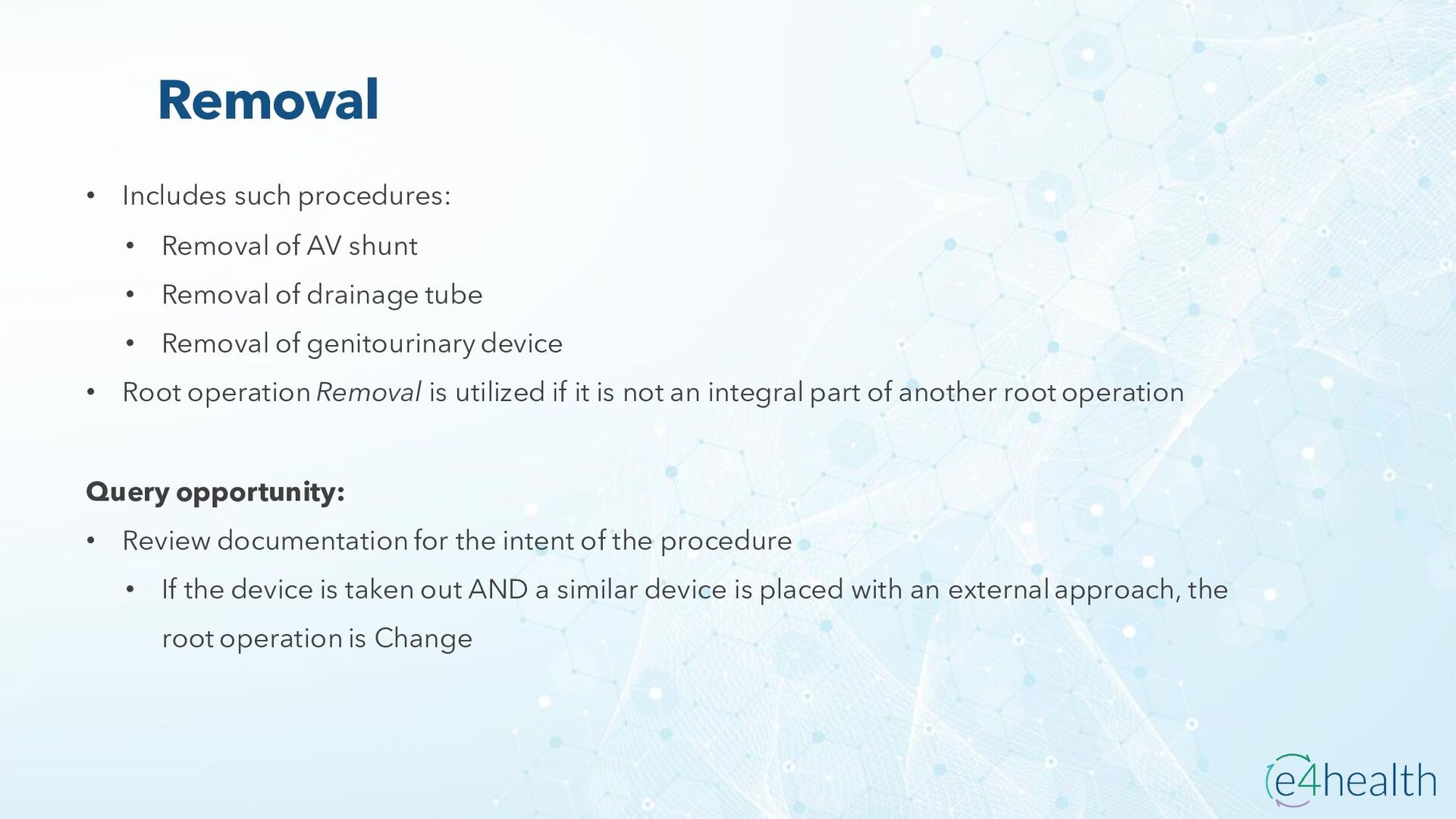
  74. Removal • Includes such procedures: • Removal of AV shunt

    • Removal of drainage tube • Removal of genitourinary device • Root operation Removal is utilized if it is not an integral part of another root operation Query opportunity: • Review documentation for the intent of the procedure • If the device is taken out AND a similar device is placed with an external approach, the root operation is Change
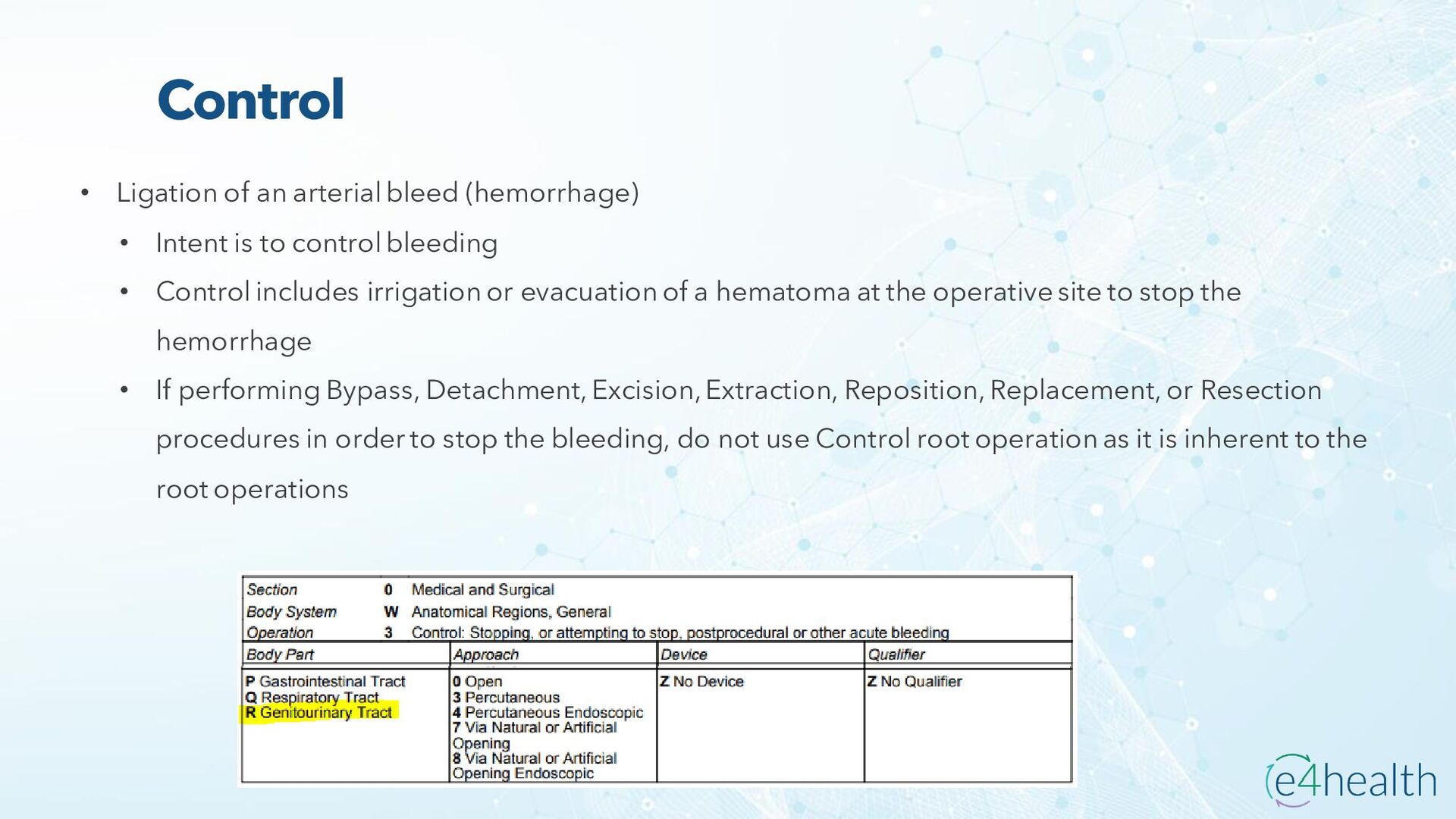
  75. Control • Ligation of an arterial bleed (hemorrhage) • Intent

    is to control bleeding • Control includes irrigation or evacuation of a hematoma at the operative site to stop the hemorrhage • If performing Bypass, Detachment, Excision, Extraction, Reposition, Replacement, or Resection procedures in order to stop the bleeding, do not use Control root operation as it is inherent to the root operations
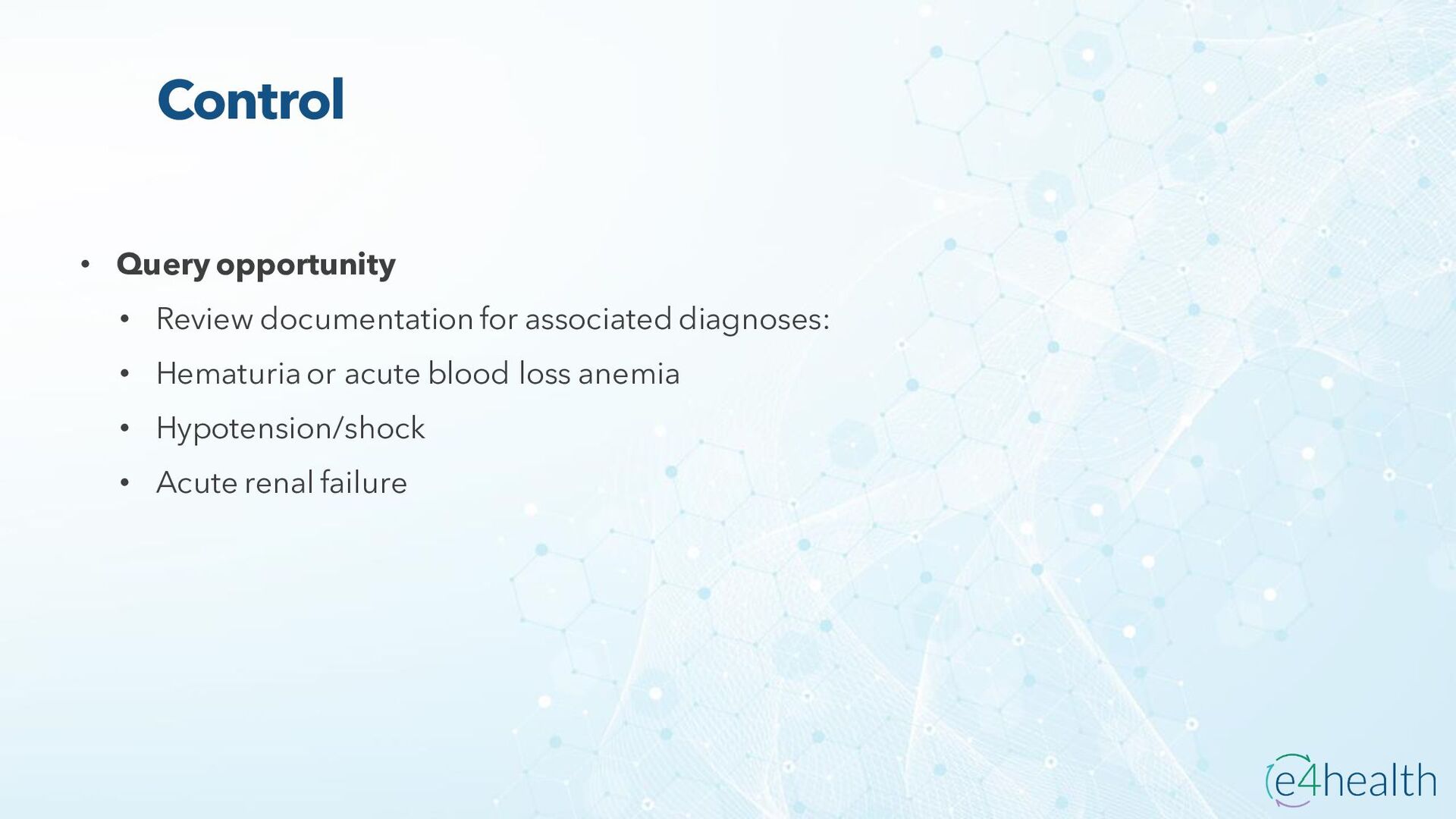
  76. Control • Query opportunity • Review documentation for associated diagnoses:

    • Hematuria or acute blood loss anemia • Hypotension/shock • Acute renal failure
  77. Explanation of the Revised Guideline for Control Coding ClinicFourth Quarter

    2021 Page 99 • The revised guideline for Control is intended to clarify the appropriate use of this root operation. All three general types of scenarios involving procedures to control bleeding are provided in the revised guideline: 1. Those that should assign the root operation Control. 2. Those that should assign a more specific root operation. 3. Those that do not assign a separate code. • Scenario 1: Procedures that meet the definition of the root operation Control use the same techniques—suturing or other ligation or clipping or cautery of bleeding points, application of substances or pressure to the site—as are typically meant by the term "achieving hemostasis" during surgery. When any or all of these techniques are used during a separate procedure performed to control acute bleeding, the root operation Control is assigned. In such cases, the diagnosis on the procedure report may include current or recent acute bleeding. Silver nitrate cautery to treat acute nasal bleeding is used in the revised guideline as an example of this type of scenario. The root operation Control can also be assigned as an additional code in those rare surgical cases where the documentation in the procedure report indicates that something unexpected occurred, requiring additional measures beyond routine hemostasis. An example is a surgical procedure where the procedure site had to be reopened before leaving the surgical suite, due to continued bleeding at the site.
  78. Explanation of the Revised Guideline for Control Coding Clinic Fourth

    Quarter 2021 Page 99, continued • Scenario 2: Because the root operation Control is only assigned when the techniques used are the same as those typically used to "achieve hemostasis," any procedure performed to control bleeding that uses a technique consistent with the definition of one of the other, more specific root operations, then the procedure code is assigned accordingly. A fundamental principle of ICD-10-PCS coding is that the root operation definitions determine the most accurate code that specifies physically what was done to the anatomic site. Assigning root operation Occlusion for liquid embolization of the right internal iliac artery to treat acute hematoma is used in the revised guideline as an example of this type of scenario. • Scenario 3: Types of scenarios in which a separate code is not assigned are also covered in the revised guideline, to emphasize the fact that Control is not intended to be assigned for routine, expected techniques used during a procedure to achieve hemostasis. The revised guideline uses transbronchial cryobiopsy with suctioning of residual blood to achieve hemostasis as an example, to remind coders that typical measures taken to achieve hemostasis are still considered integral to the procedure and are not coded separately
  79. Hemodialysis • In hemodialysis, blood is removed from the body

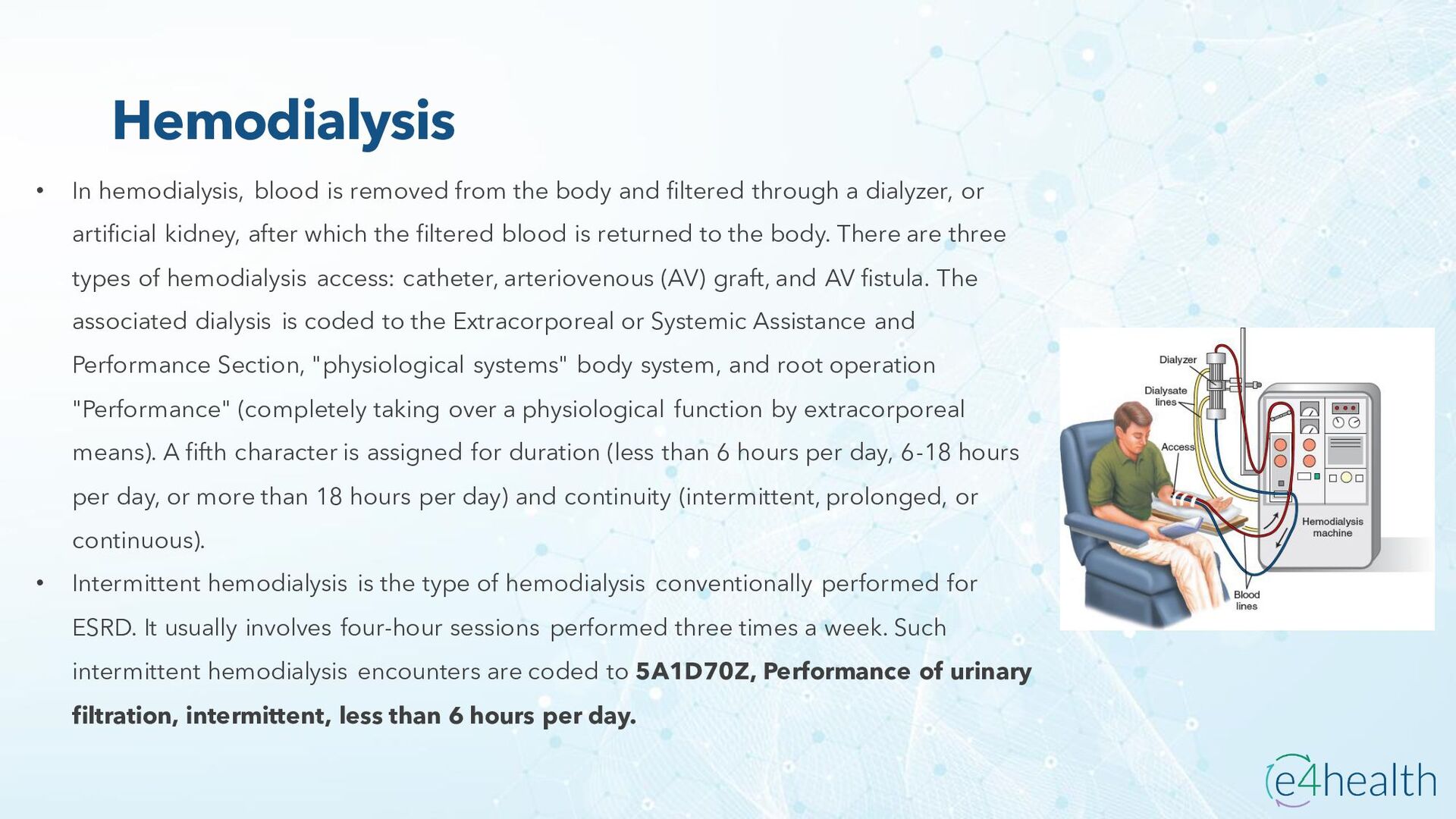
    and filtered through a dialyzer, or artificial kidney, after which the filtered blood is returned to the body. There are three types of hemodialysis access: catheter, arteriovenous (AV) graft, and AV fistula. The associated dialysis is coded to the Extracorporeal or Systemic Assistance and Performance Section, "physiological systems" body system, and root operation "Performance" (completely taking over a physiological function by extracorporeal means). A fifth character is assigned for duration (less than 6 hours per day, 6-18 hours per day, or more than 18 hours per day) and continuity (intermittent, prolonged, or continuous). • Intermittent hemodialysis is the type of hemodialysis conventionally performed for ESRD. It usually involves four-hour sessions performed three times a week. Such intermittent hemodialysis encounters are coded to 5A1D70Z, Performance of urinary filtration, intermittent, less than 6 hours per day.
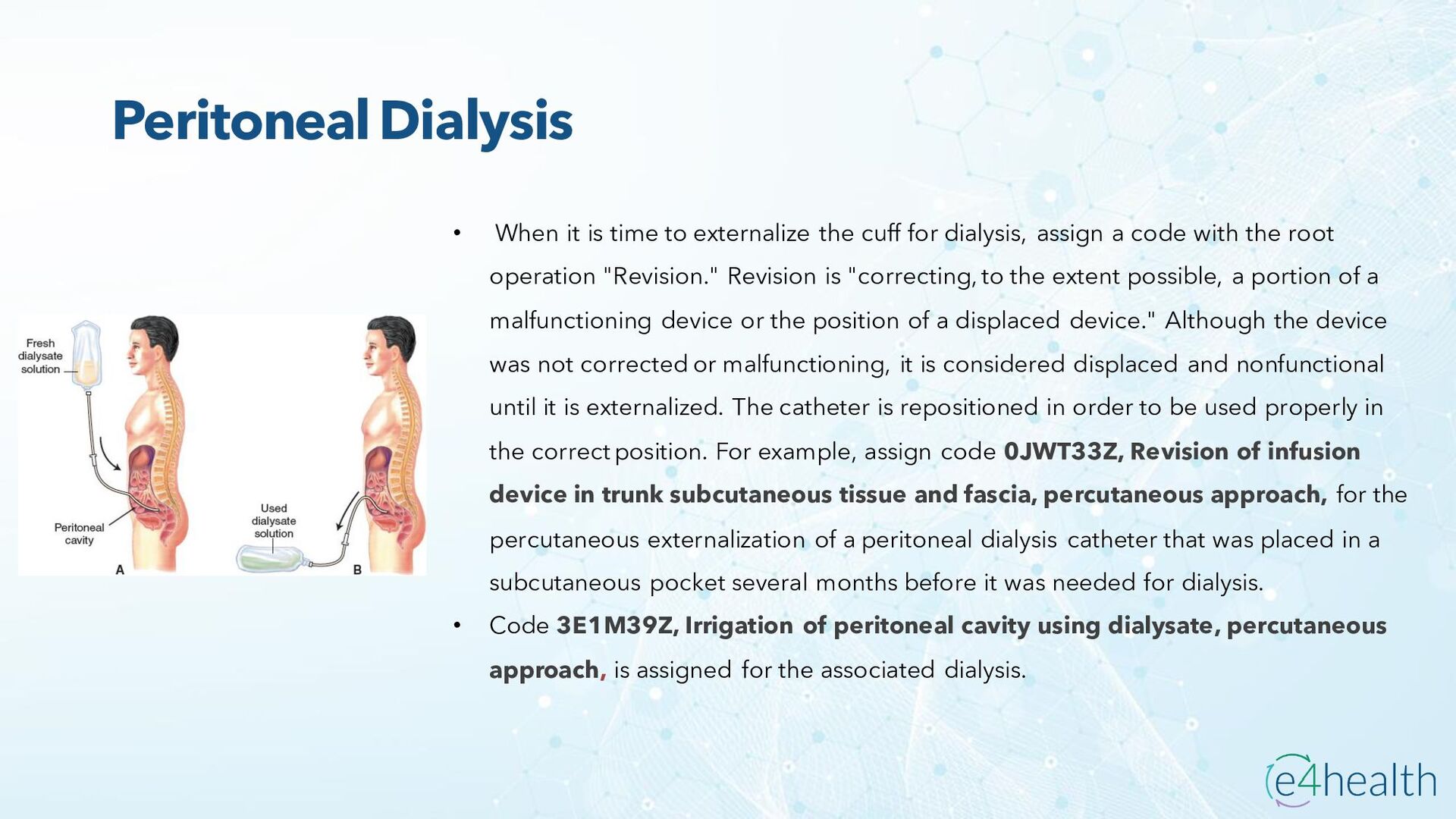
  80. Peritoneal Dialysis • Peritoneal dialysis is accomplished by instilling a

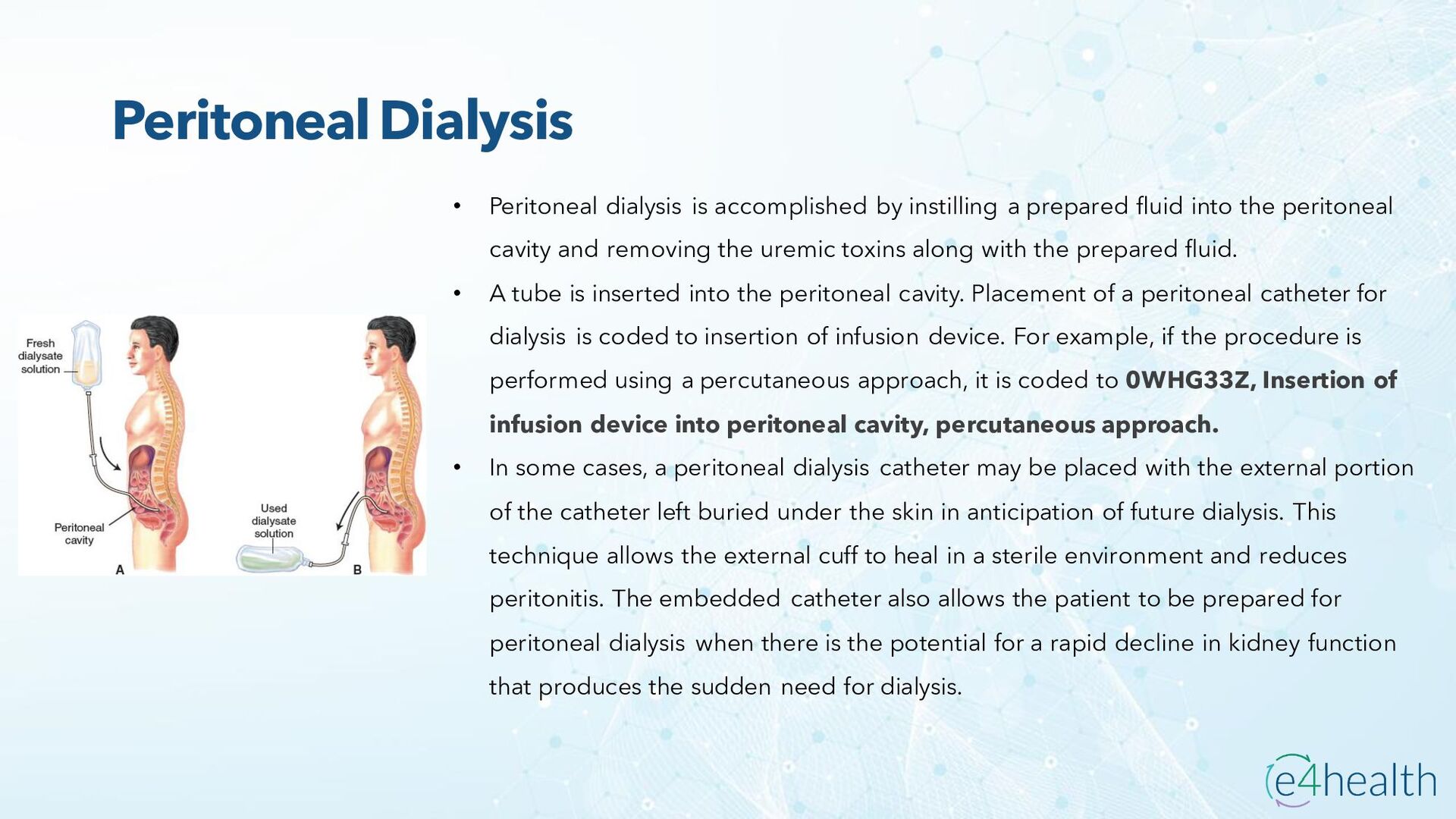
    prepared fluid into the peritoneal cavity and removing the uremic toxins along with the prepared fluid. • A tube is inserted into the peritoneal cavity. Placement of a peritoneal catheter for dialysis is coded to insertion of infusion device. For example, if the procedure is performed using a percutaneous approach, it is coded to 0WHG33Z, Insertion of infusion device into peritoneal cavity, percutaneous approach. • In some cases, a peritoneal dialysis catheter may be placed with the external portion of the catheter left buried under the skin in anticipation of future dialysis. This technique allows the external cuff to heal in a sterile environment and reduces peritonitis. The embedded catheter also allows the patient to be prepared for peritoneal dialysis when there is the potential for a rapid decline in kidney function that produces the sudden need for dialysis.
  81. Peritoneal Dialysis • When it is time to externalize the

    cuff for dialysis, assign a code with the root operation "Revision." Revision is "correcting, to the extent possible, a portion of a malfunctioning device or the position of a displaced device." Although the device was not corrected or malfunctioning, it is considered displaced and nonfunctional until it is externalized. The catheter is repositioned in order to be used properly in the correct position. For example, assign code 0JWT33Z, Revision of infusion device in trunk subcutaneous tissue and fascia, percutaneous approach, for the percutaneous externalization of a peritoneal dialysis catheter that was placed in a subcutaneous pocket several months before it was needed for dialysis. • Code 3E1M39Z, Irrigation of peritoneal cavity using dialysate, percutaneous approach, is assigned for the associated dialysis.
  82. References • Chronic kidney disease (CKD) - Symptoms, causes, treatment

    | National Kidney Foundation • Acute Kidney Injury (AKI) - Genitourinary Disorders - Merck Manuals Professional Edition • KDIGO Clinical Practice Guideline for Acute Kidney Injury. Kidney Inter Suppl. 2:1-138, 2012. • AHA Coding Handbook • Renal Cell Carcinoma - Genitourinary Disorders - Merck Manuals Professional Edition • Wilms Tumor - Pediatrics - Merck Manuals Professional Edition • AHA ICD-10-CM and ICD-10-PCS Coding Handbook • ICD-10-PCS: An Applied Approach 2023 • Cengage: 3-2-1 CODE IT!