$30 off During Our Annual Pro Sale. View Details »

FY 2024: MDC 21 - Injuries, Poisonings & Toxic...

Avatar for e4health e4health PRO
April 04, 2024
140

FY 2024: MDC 21 - Injuries, Poisonings & Toxic Effects

Avatar for e4health

e4health PRO

April 04, 2024
Tweet

Transcript

  1. H I M | C O D I N G

    & C D I | H E A LT H I T | R E V C Y C L E Empowering Better Health e4health tackles healthcare’s data, quality and revenue challenges empowering your providers to focus on better care.
  2. Objectives • Review MDC 21- Injuries, Poisonings & Toxic Effects

    of Drugs with a focus on selected diagnoses and procedures. • Learner will acquire a basic understanding of the diagnoses and procedures included in MDC-21 • Discuss Query opportunities in MDC-21 • Review coding clinics relevant to the chosen topics in each DRG.
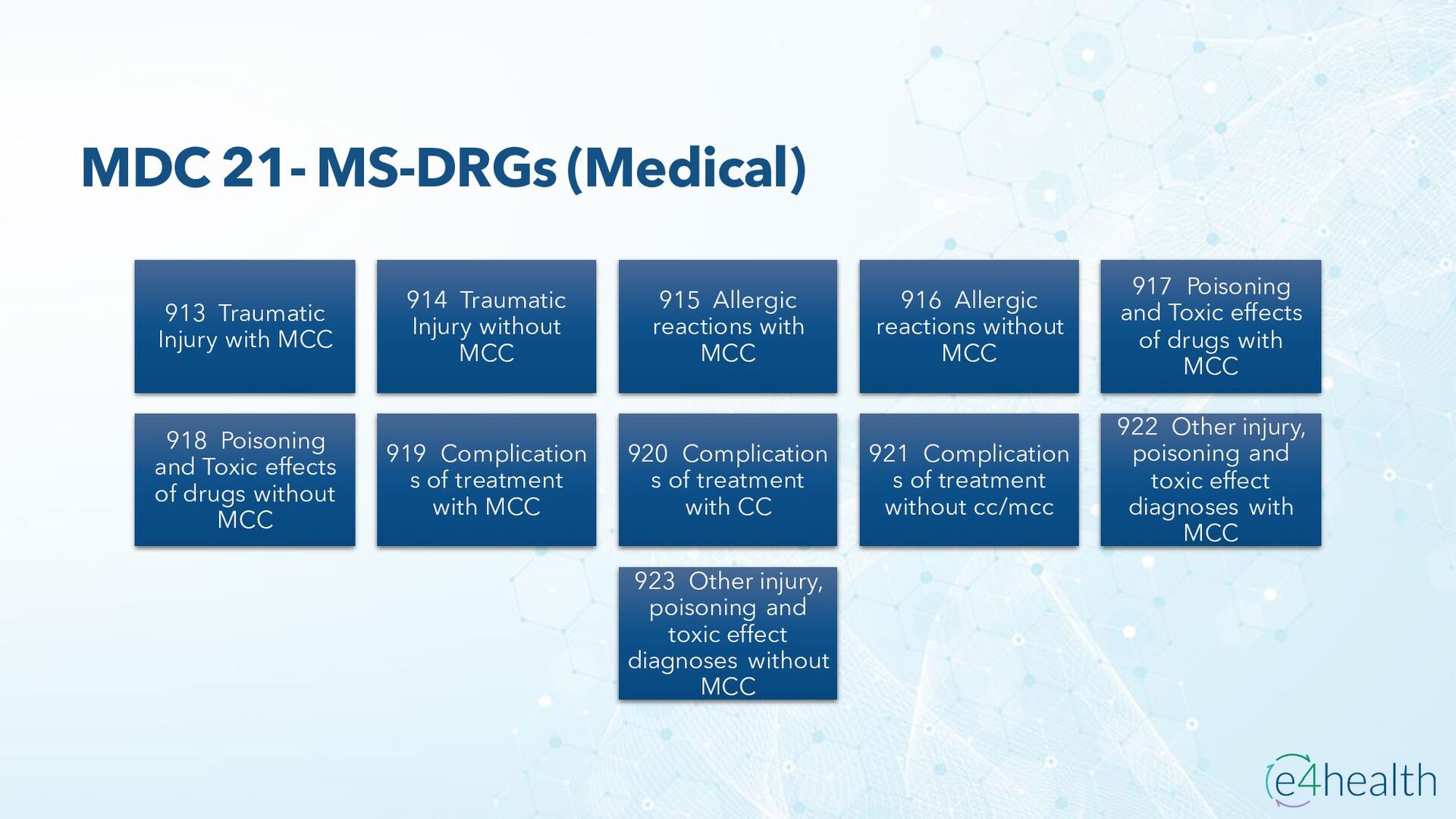
  3. MDC 21- MS-DRGs (Medical) 913 Traumatic Injury with MCC 914

    Traumatic Injury without MCC 915 Allergic reactions with MCC 916 Allergic reactions without MCC 917 Poisoning and Toxic effects of drugs with MCC 918 Poisoning and Toxic effects of drugs without MCC 919 Complication s of treatment with MCC 920 Complication s of treatment with CC 921 Complication s of treatment without cc/mcc 922 Other injury, poisoning and toxic effect diagnoses with MCC 923 Other injury, poisoning and toxic effect diagnoses without MCC
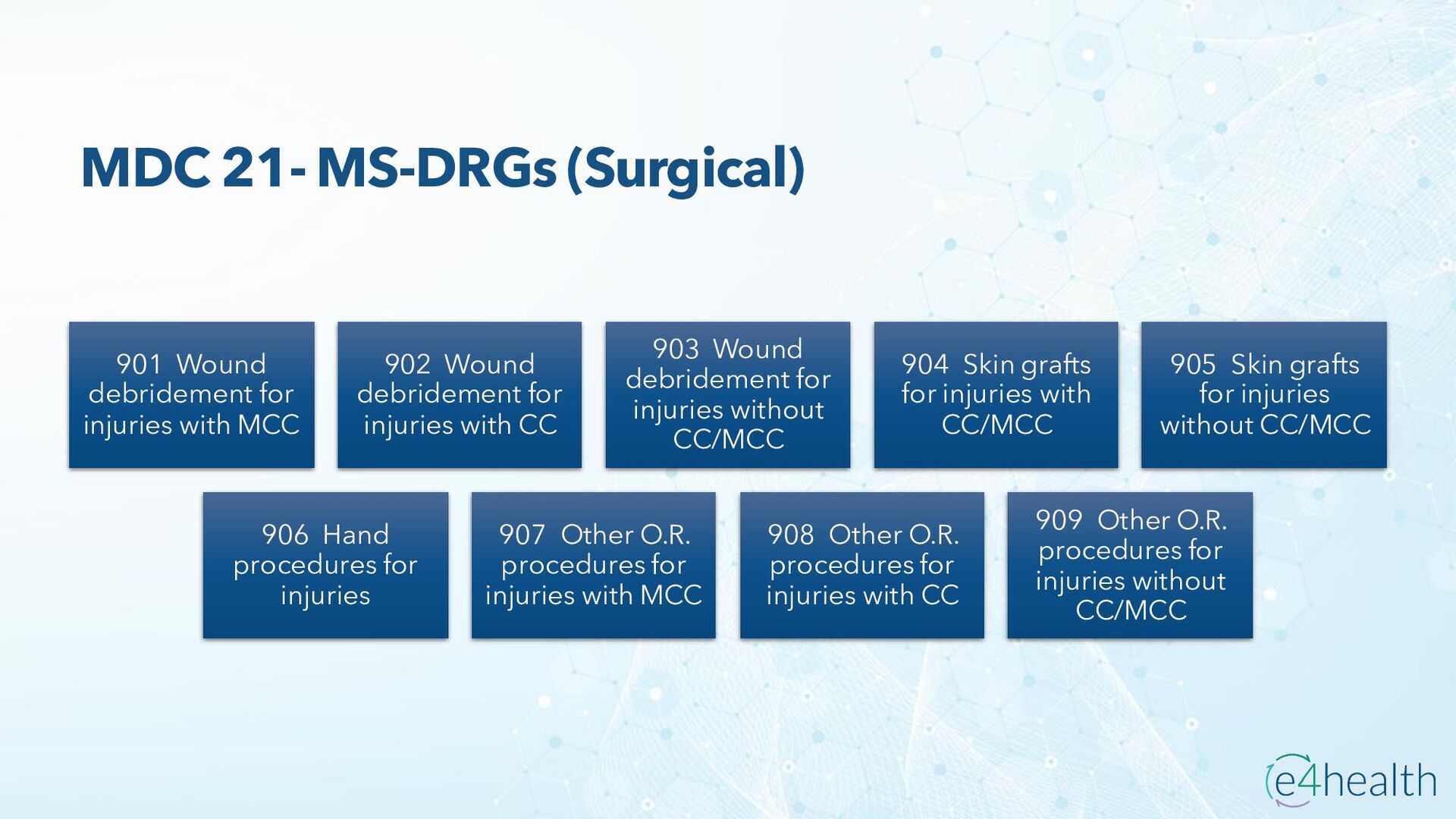
  4. MDC 21- MS-DRGs (Surgical) 901 Wound debridement for injuries with

    MCC 902 Wound debridement for injuries with CC 903 Wound debridement for injuries without CC/MCC 904 Skin grafts for injuries with CC/MCC 905 Skin grafts for injuries without CC/MCC 906 Hand procedures for injuries 907 Other O.R. procedures for injuries with MCC 908 Other O.R. procedures for injuries with CC 909 Other O.R. procedures for injuries without CC/MCC
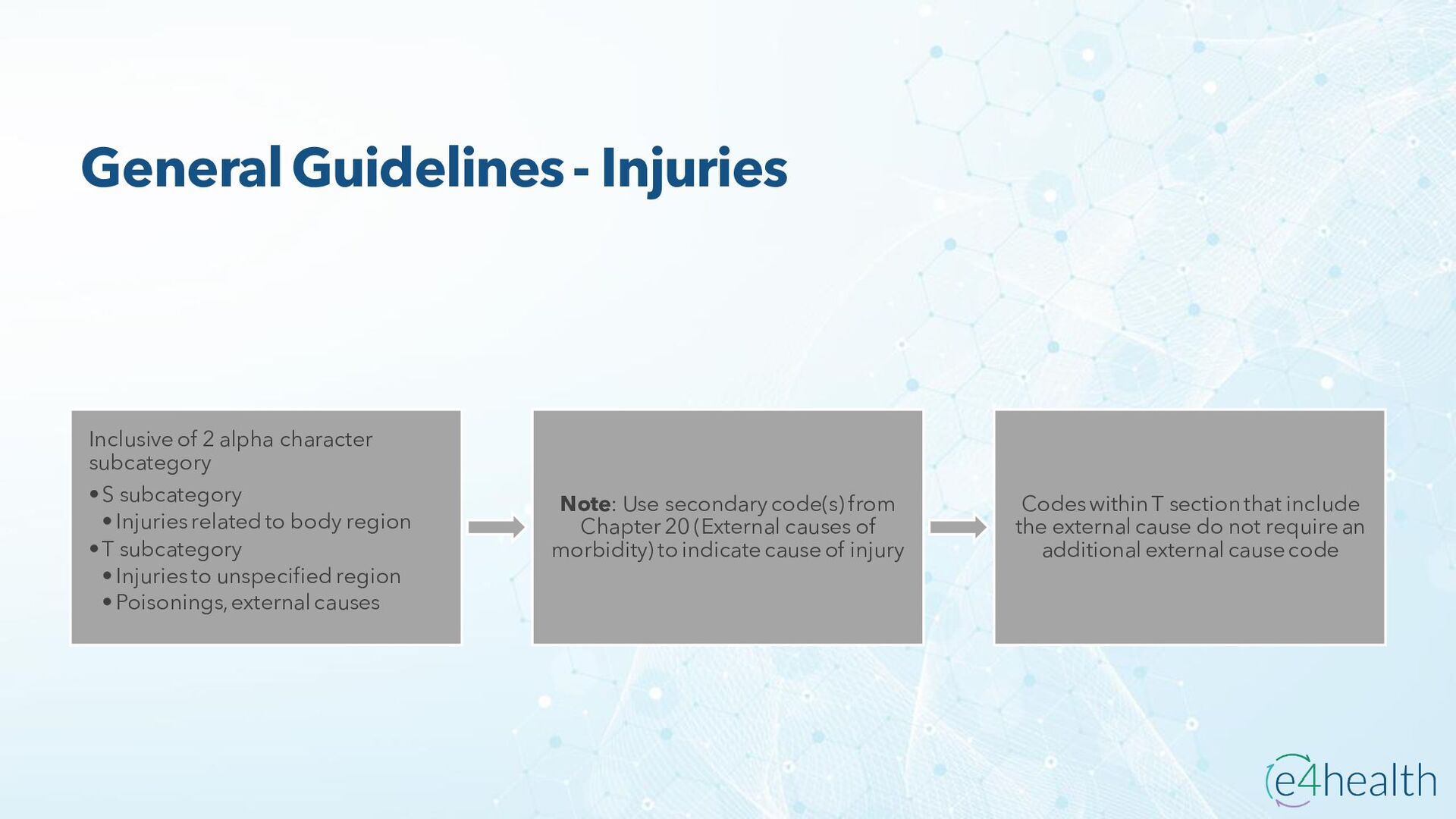
  5. General Guidelines - Injuries • Injuries, poisoning, and certain other

    consequences of external causes are found in chapter 19 of the ICD-10-CM • The primary axis for classifying injuries is the anatomical site • The secondary axis is the type of injury • Acute current fractures make an extensive use of the seventh-character value, which is more detailed than for other injuries • If dislocations accompany fractures, they are included in the fracture code • An amputation not identified as partial or complete should be coded to complete • Injuries grouped by body part rather than category of injury
  6. General Guidelines - Injuries Inclusive of 2 alpha character subcategory

    •S subcategory •Injuries related to body region •T subcategory •Injuries to unspecified region •Poisonings, external causes Note: Use secondary code(s) from Chapter 20 (External causes of morbidity) to indicate cause of injury Codes within T section that include the external cause do not require an additional external cause code
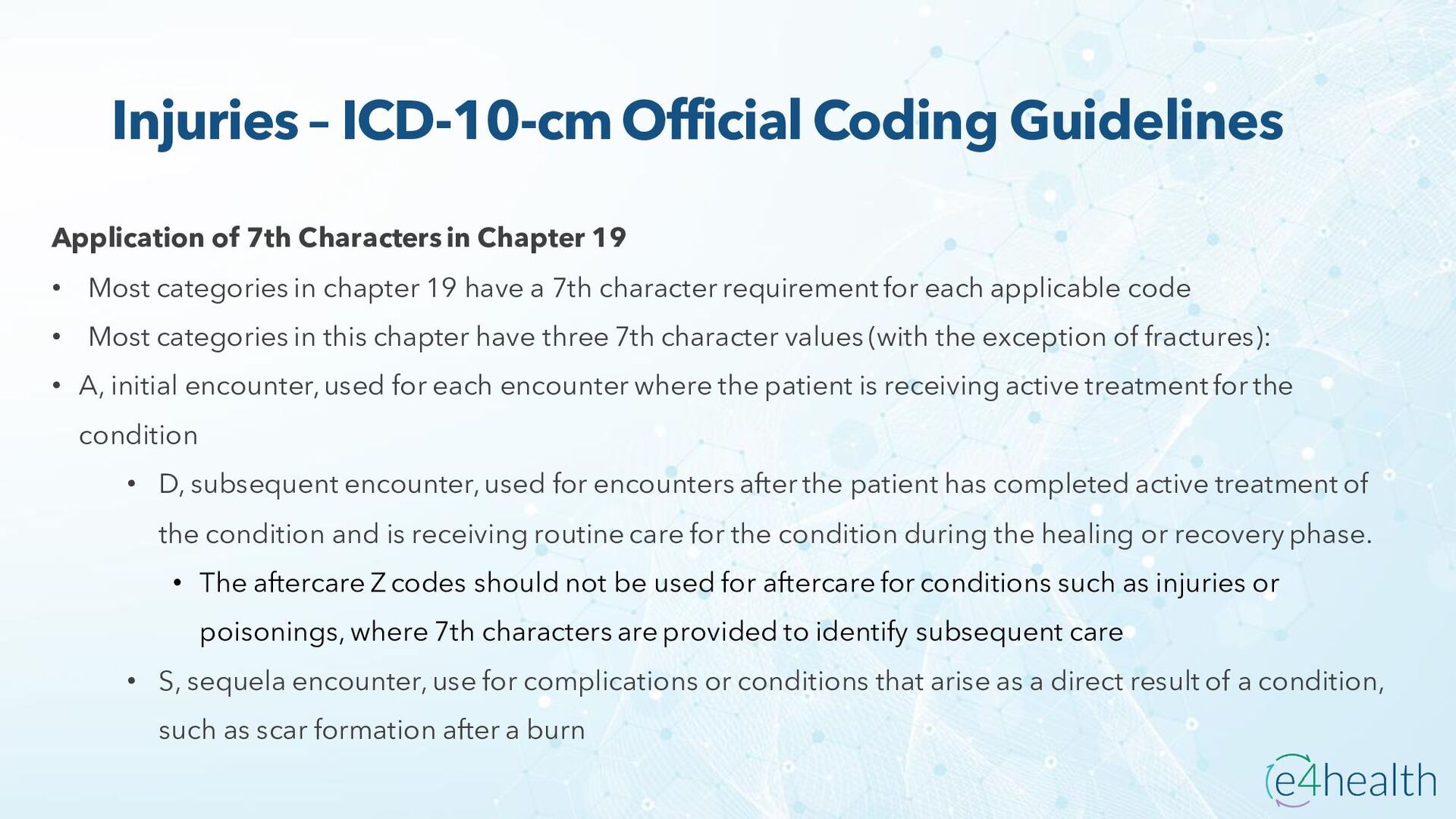
  7. Injuries – ICD-10-cm Official Coding Guidelines Application of 7th Characters

    in Chapter 19 • Most categories in chapter 19 have a 7th character requirement for each applicable code • Most categories in this chapter have three 7th character values (with the exception of fractures): • A, initial encounter, used for each encounter where the patient is receiving active treatment for the condition • D, subsequent encounter, used for encounters after the patient has completed active treatment of the condition and is receiving routine care for the condition during the healing or recovery phase. • The aftercare Z codes should not be used for aftercare for conditions such as injuries or poisonings, where 7th characters are provided to identify subsequent care • S, sequela encounter, use for complications or conditions that arise as a direct result of a condition, such as scar formation after a burn
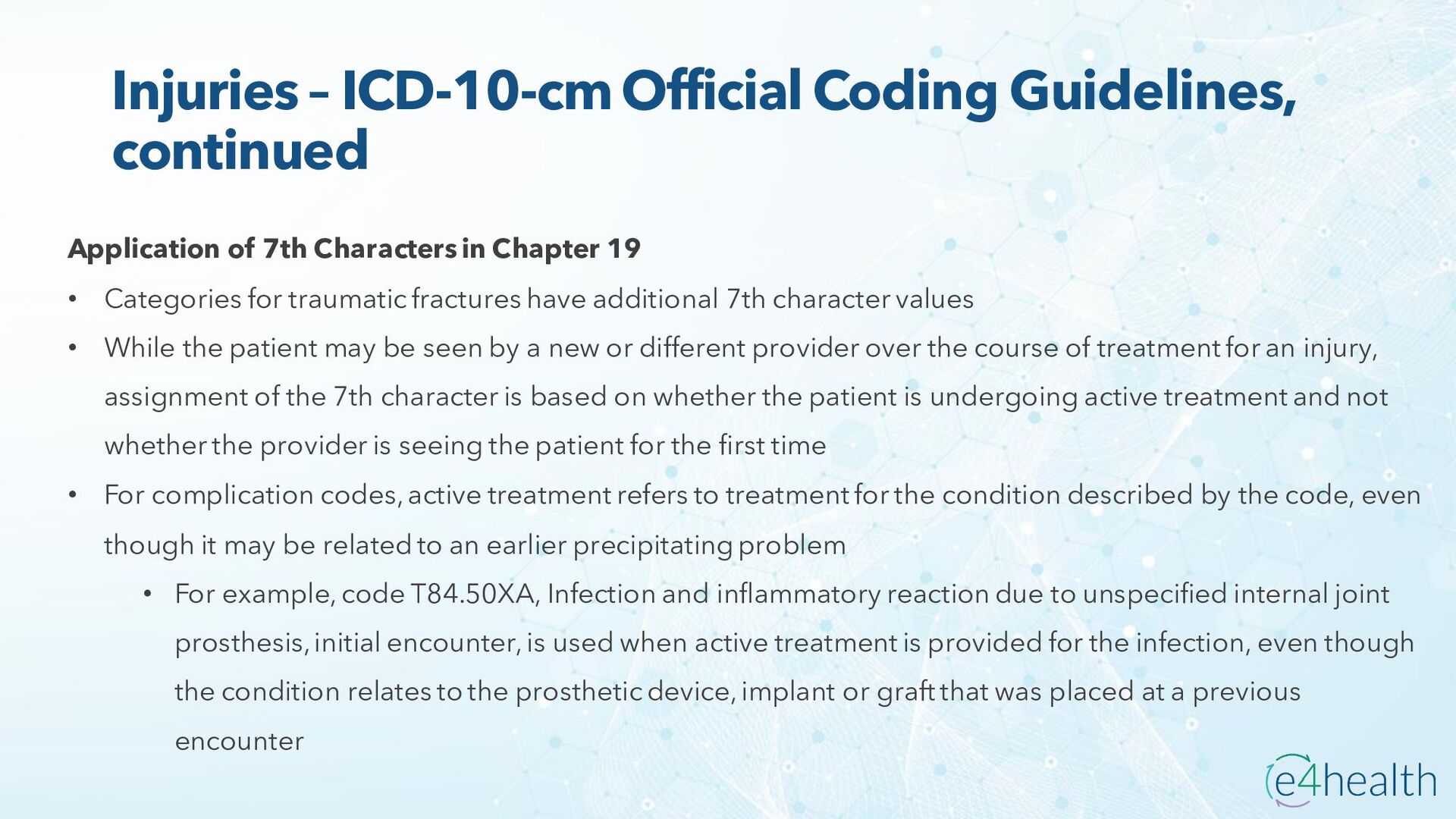
  8. Injuries – ICD-10-cm Official Coding Guidelines, continued Application of 7th

    Characters in Chapter 19 • Categories for traumatic fractures have additional 7th character values • While the patient may be seen by a new or different provider over the course of treatment for an injury, assignment of the 7th character is based on whether the patient is undergoing active treatment and not whether the provider is seeing the patient for the first time • For complication codes, active treatment refers to treatment for the condition described by the code, even though it may be related to an earlier precipitating problem • For example, code T84.50XA, Infection and inflammatory reaction due to unspecified internal joint prosthesis, initial encounter, is used when active treatment is provided for the infection, even though the condition relates to the prosthetic device, implant or graft that was placed at a previous encounter
  9. Injuries – ICD-10-CM Official Coding Guidelines, continued •Coding of Injuries

    • Assign separate codes for each injury unless a combination code is provided, in which case the combination code is assigned • Codes from category T07, Unspecified multiple injuries should not be assigned in the inpatient setting unless information for a more specific code is not available • Traumatic injury codes (S00- T14.9) are not to be used for normal, healing surgical wounds or to identify complications of surgical wounds This Photo by Unknown author is licensed under CC BY-NC- ND.
  10. Multiple coding of Injuries – in Depth Per ICD-10-CM Official

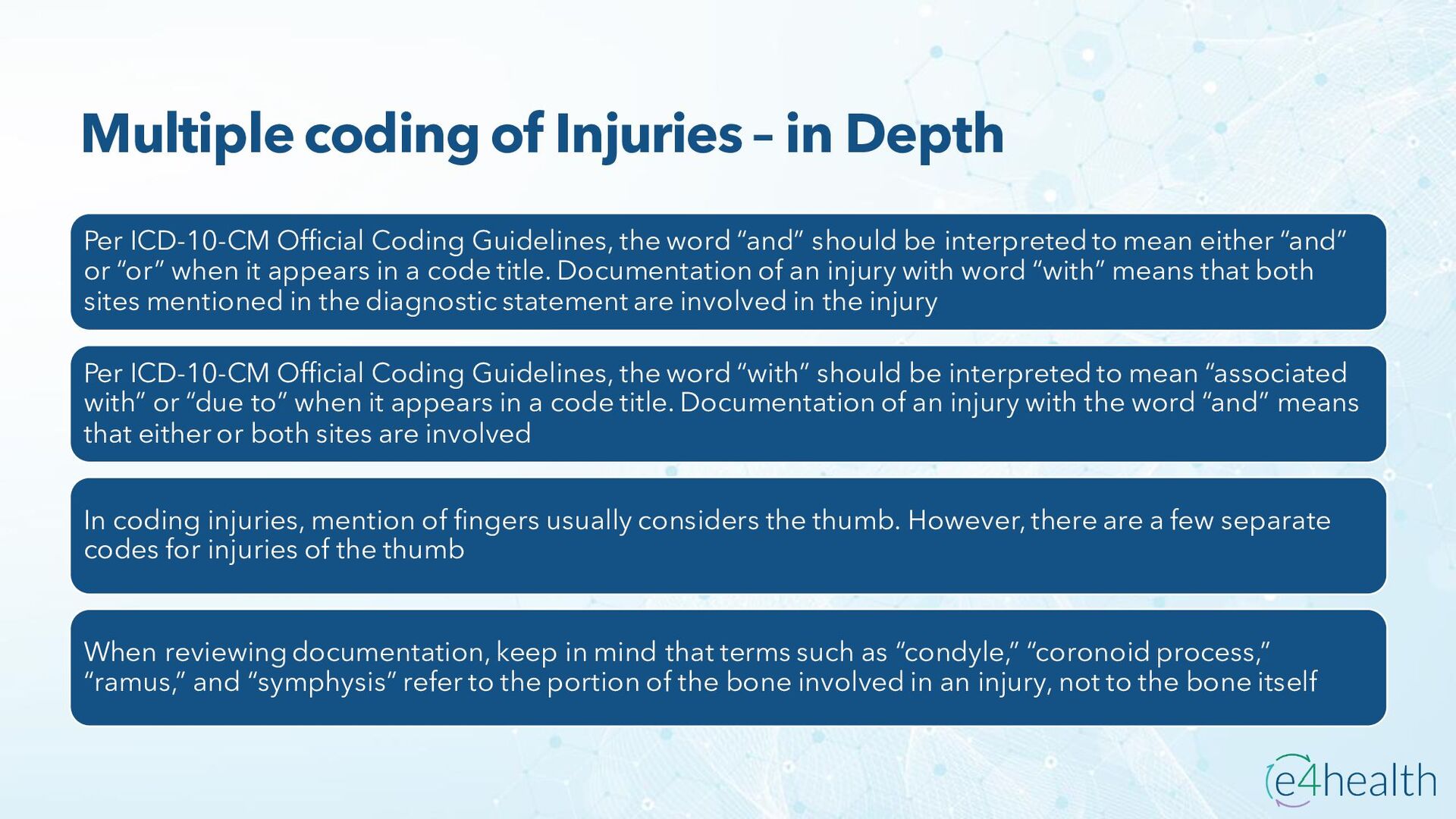
    Coding Guidelines, the word “and” should be interpreted to mean either “and” or “or” when it appears in a code title. Documentation of an injury with word “with” means that both sites mentioned in the diagnostic statement are involved in the injury Per ICD-10-CM Official Coding Guidelines, the word “with” should be interpreted to mean “associated with” or “due to” when it appears in a code title. Documentation of an injury with the word “and” means that either or both sites are involved In coding injuries, mention of fingers usually considers the thumb. However, there are a few separate codes for injuries of the thumb When reviewing documentation, keep in mind that terms such as “condyle,” “coronoid process,” “ramus,” and “symphysis” refer to the portion of the bone involved in an injury, not to the bone itself
  11. Injuries – ICD-10-cm Official Coding Guidelines, continued Coding of Injuries

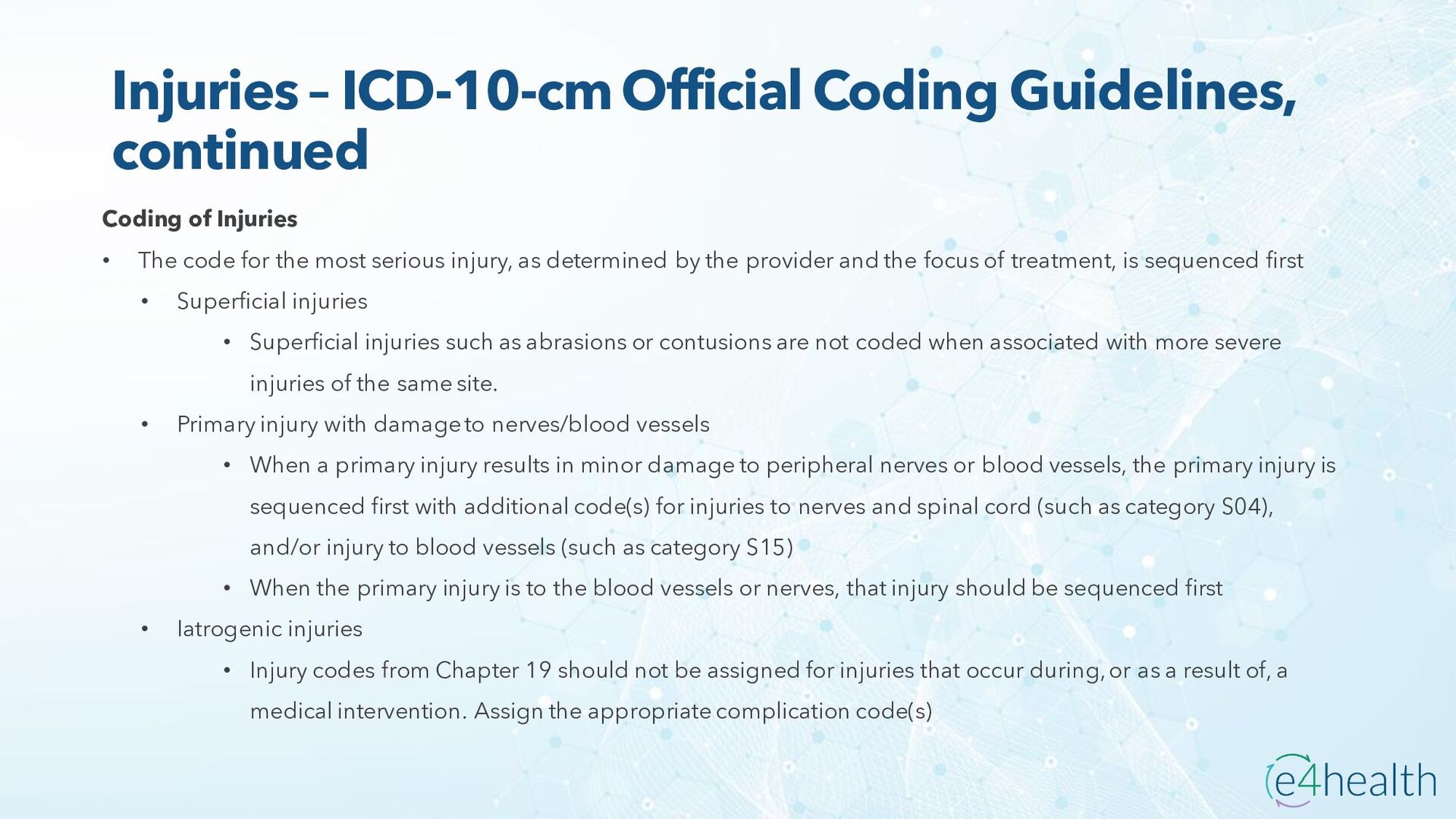
    • The code for the most serious injury, as determined by the provider and the focus of treatment, is sequenced first • Superficial injuries • Superficial injuries such as abrasions or contusions are not coded when associated with more severe injuries of the same site. • Primary injury with damage to nerves/blood vessels • When a primary injury results in minor damage to peripheral nerves or blood vessels, the primary injury is sequenced first with additional code(s) for injuries to nerves and spinal cord (such as category S04), and/or injury to blood vessels (such as category S15) • When the primary injury is to the blood vessels or nerves, that injury should be sequenced first • Iatrogenic injuries • Injury codes from Chapter 19 should not be assigned for injuries that occur during, or as a result of, a medical intervention. Assign the appropriate complication code(s)
  12. Superficial Injury of Thorax Coding Clinic Fourth Quarter 2020 Page

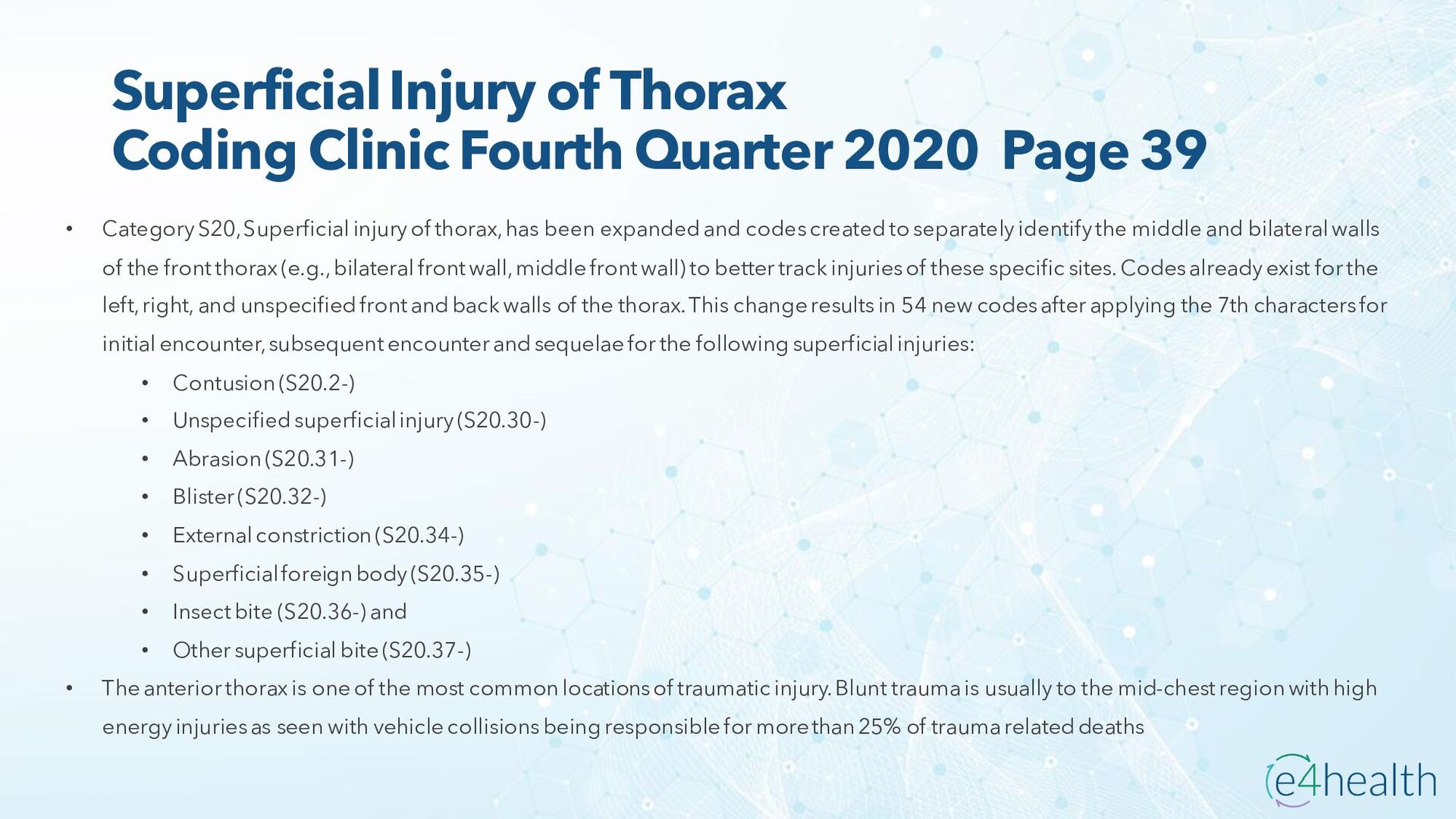
    39 • Category S20, Superficial injury of thorax, has been expanded and codes created to separately identify the middle and bilateral walls of the front thorax (e.g., bilateral front wall, middle front wall) to better track injuries of these specific sites. Codes already exist for the left, right, and unspecified front and back walls of the thorax. This change results in 54 new codes after applying the 7th characters for initial encounter, subsequent encounter and sequelae for the following superficial injuries: • Contusion (S20.2-) • Unspecified superficial injury (S20.30-) • Abrasion (S20.31-) • Blister (S20.32-) • External constriction (S20.34-) • Superficial foreign body (S20.35-) • Insect bite (S20.36-) and • Other superficial bite (S20.37-) • The anterior thorax is one of the most common locations of traumatic injury. Blunt trauma is usually to the mid-chest region with high energy injuries as seen with vehicle collisions being responsible for more than 25% of trauma related deaths
  13. Glasgow coma scale Not the only criteria for diagnosing coma

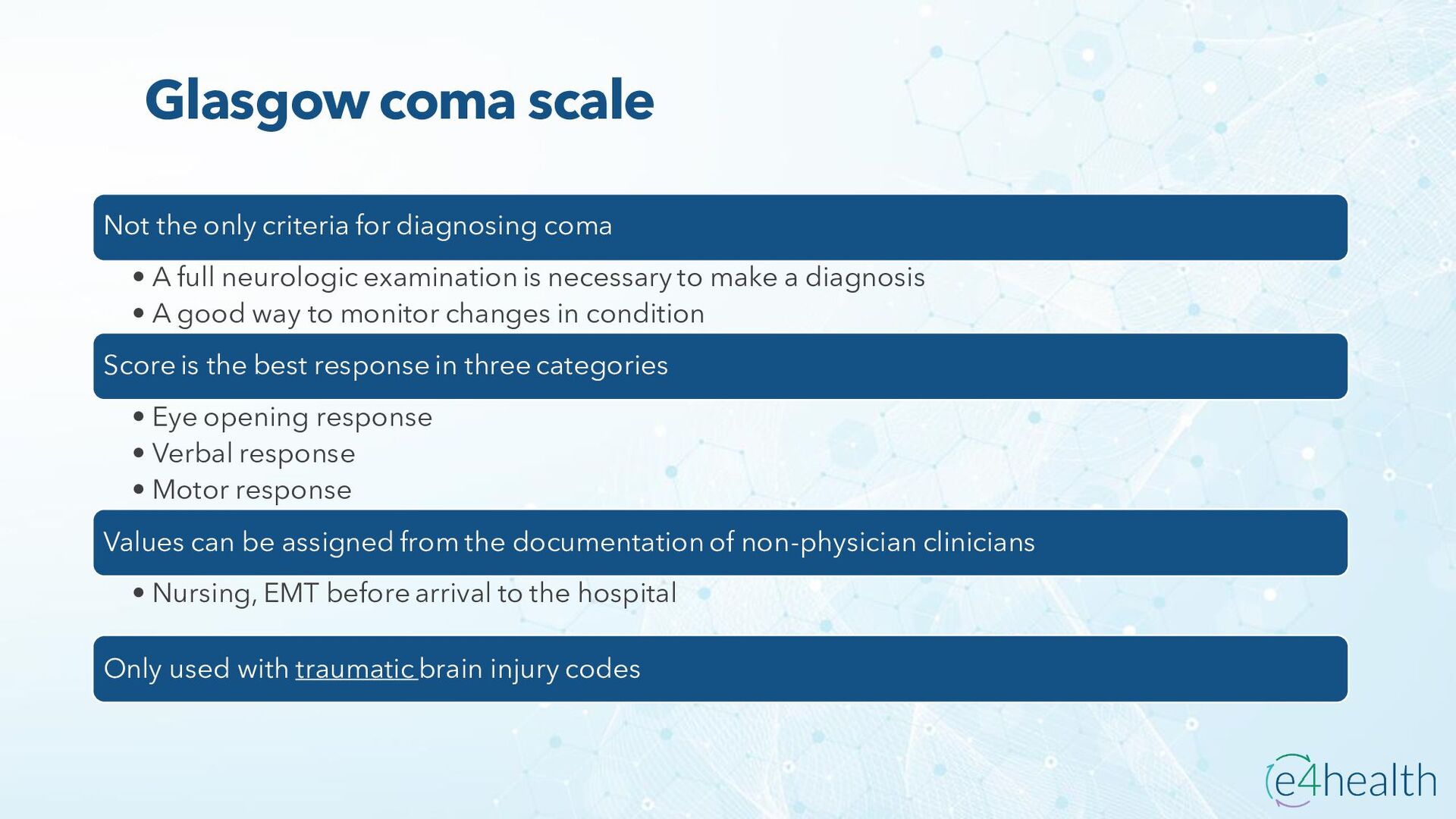
    • A full neurologic examination is necessary to make a diagnosis • A good way to monitor changes in condition Score is the best response in three categories • Eye opening response • Verbal response • Motor response Values can be assigned from the documentation of non-physician clinicians • Nursing, EMT before arrival to the hospital Only used with traumatic brain injury codes
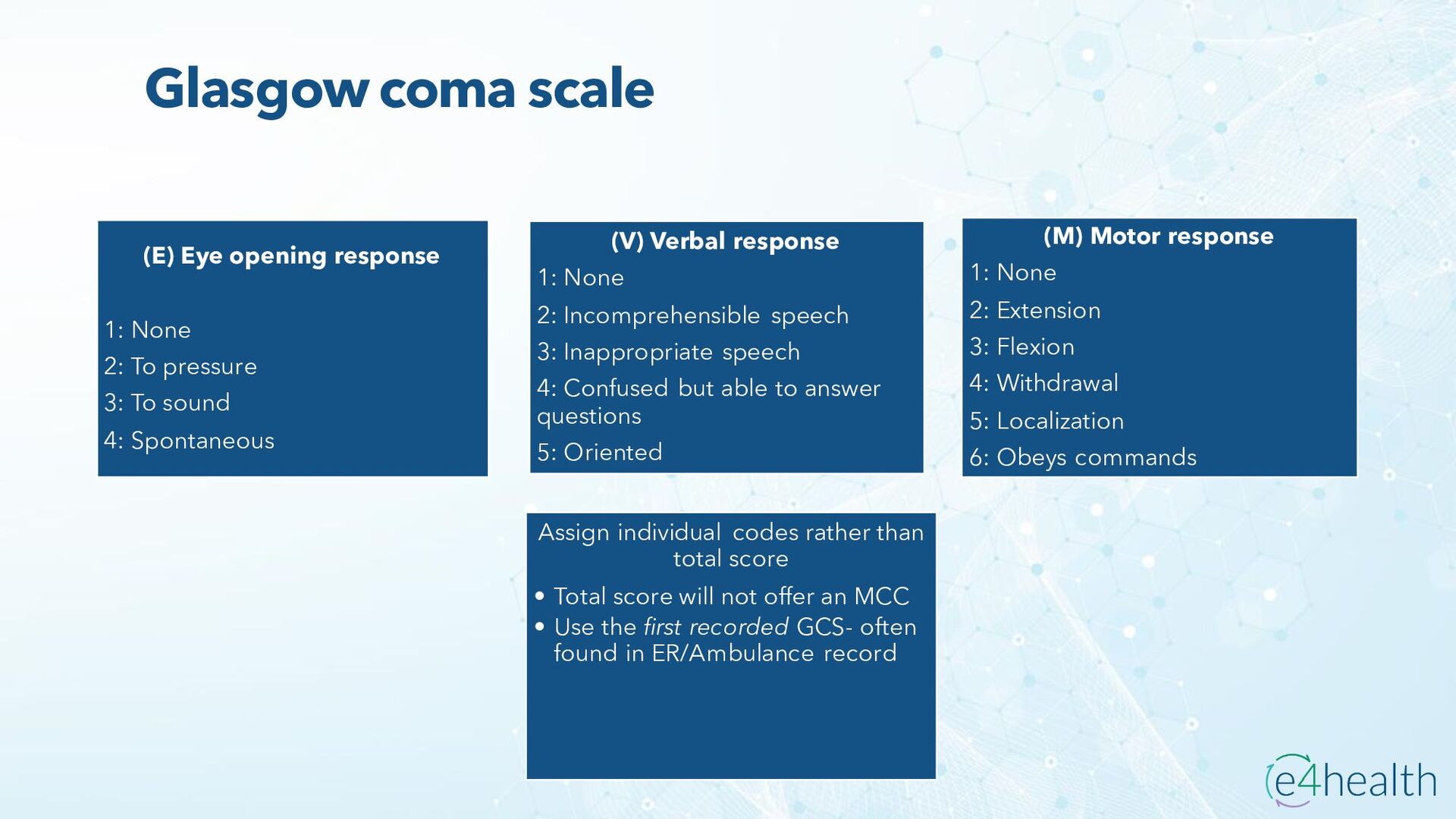
  14. Glasgow coma scale (E) Eye opening response 1: None 2:

    To pressure 3: To sound 4: Spontaneous (V) Verbal response 1: None 2: Incomprehensible speech 3: Inappropriate speech 4: Confused but able to answer questions 5: Oriented (M) Motor response 1: None 2: Extension 3: Flexion 4: Withdrawal 5: Localization 6: Obeys commands Assign individual codes rather than total score • Total score will not offer an MCC • Use the first recorded GCS- often found in ER/Ambulance record
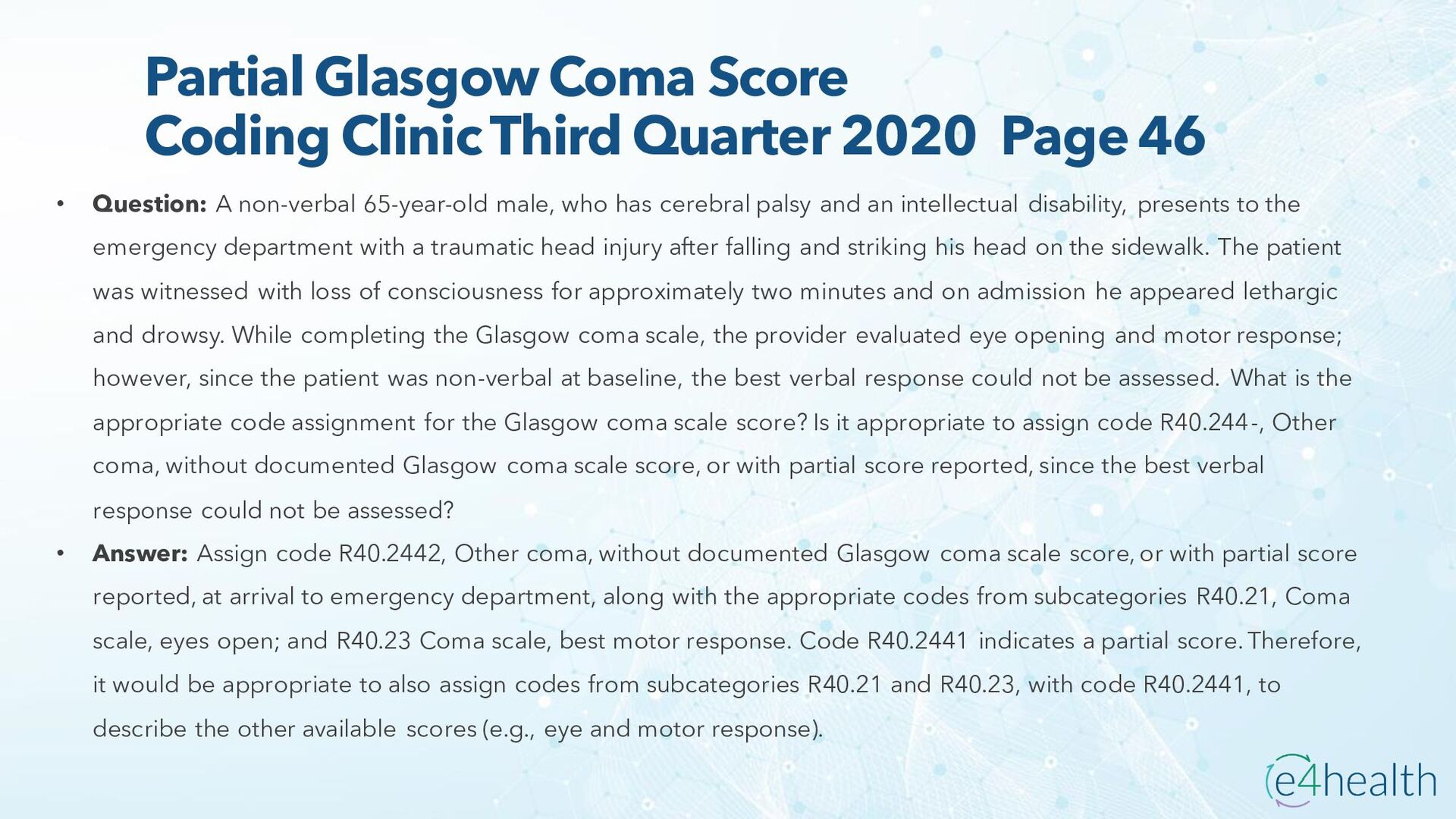
  15. Partial Glasgow Coma Score Coding Clinic Third Quarter 2020 Page

    46 • Question: A non-verbal 65-year-old male, who has cerebral palsy and an intellectual disability, presents to the emergency department with a traumatic head injury after falling and striking his head on the sidewalk. The patient was witnessed with loss of consciousness for approximately two minutes and on admission he appeared lethargic and drowsy. While completing the Glasgow coma scale, the provider evaluated eye opening and motor response; however, since the patient was non-verbal at baseline, the best verbal response could not be assessed. What is the appropriate code assignment for the Glasgow coma scale score? Is it appropriate to assign code R40.244-, Other coma, without documented Glasgow coma scale score, or with partial score reported, since the best verbal response could not be assessed? • Answer: Assign code R40.2442, Other coma, without documented Glasgow coma scale score, or with partial score reported, at arrival to emergency department, along with the appropriate codes from subcategories R40.21, Coma scale, eyes open; and R40.23 Coma scale, best motor response. Code R40.2441 indicates a partial score. Therefore, it would be appropriate to also assign codes from subcategories R40.21 and R40.23, with code R40.2441, to describe the other available scores (e.g., eye and motor response).
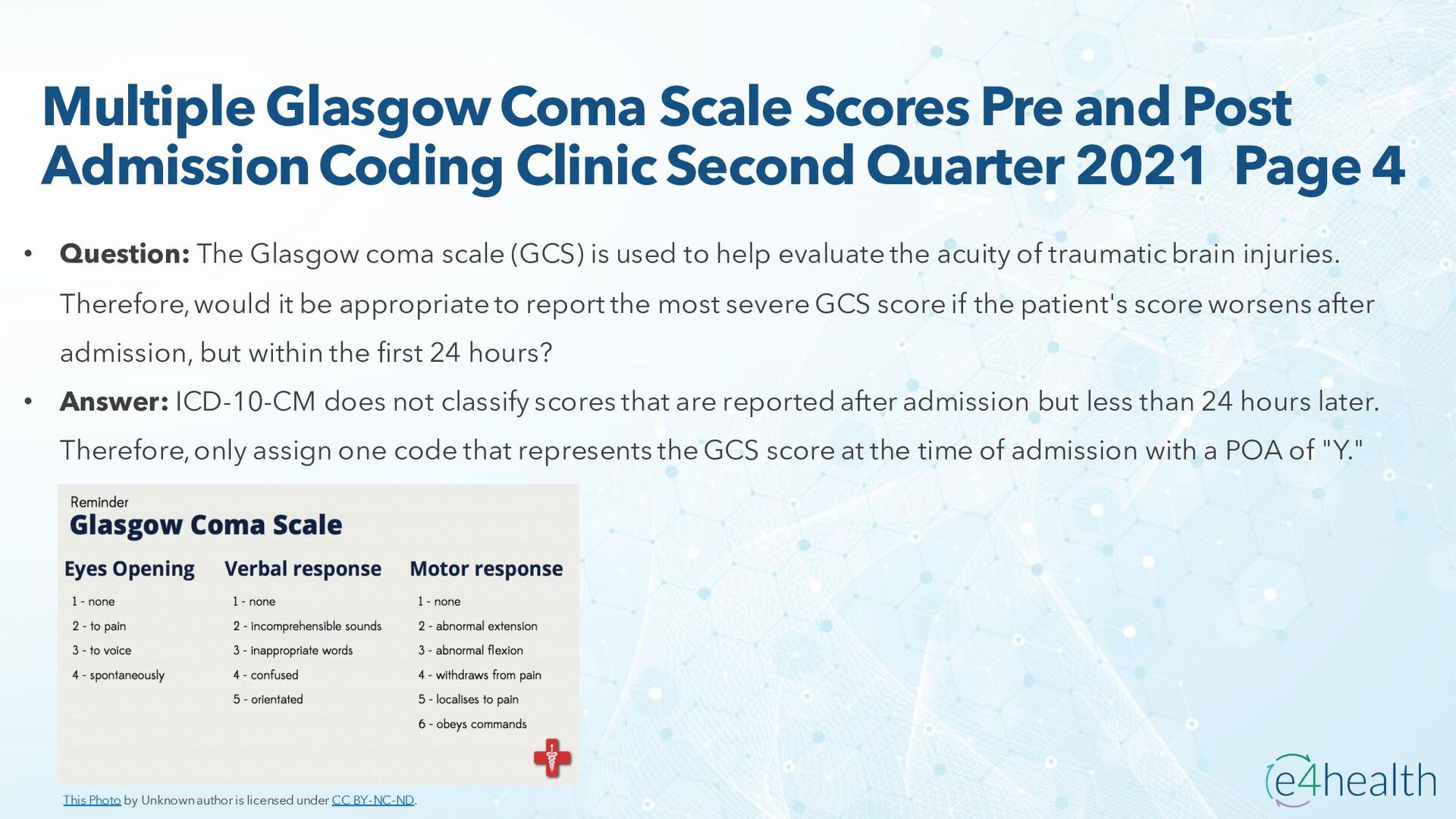
  16. Multiple Glasgow Coma Scale Scores Pre and Post Admission Coding

    Clinic Second Quarter 2021 Page 4 • Question: The Glasgow coma scale (GCS) is used to help evaluate the acuity of traumatic brain injuries. Therefore, would it be appropriate to report the most severe GCS score if the patient's score worsens after admission, but within the first 24 hours? • Answer: ICD-10-CM does not classify scores that are reported after admission but less than 24 hours later. Therefore, only assign one code that represents the GCS score at the time of admission with a POA of "Y." This Photo by Unknown author is licensed under CC BY-NC-ND.
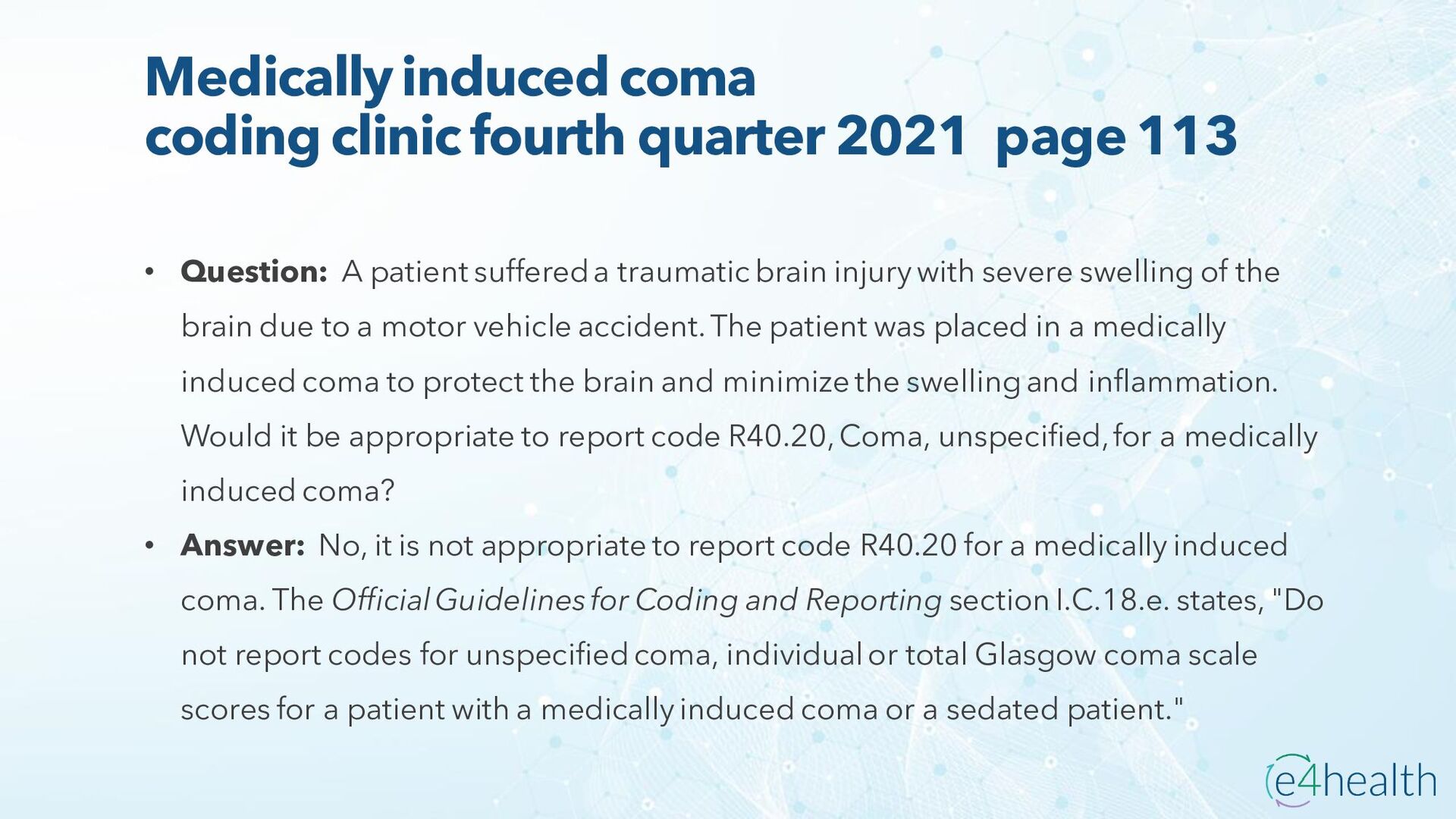
  17. Medically induced coma coding clinic fourth quarter 2021 page 113

    • Question: A patient suffered a traumatic brain injury with severe swelling of the brain due to a motor vehicle accident. The patient was placed in a medically induced coma to protect the brain and minimize the swelling and inflammation. Would it be appropriate to report code R40.20, Coma, unspecified, for a medically induced coma? • Answer: No, it is not appropriate to report code R40.20 for a medically induced coma. The Official Guidelines for Coding and Reporting section I.C.18.e. states, "Do not report codes for unspecified coma, individual or total Glasgow coma scale scores for a patient with a medically induced coma or a sedated patient."
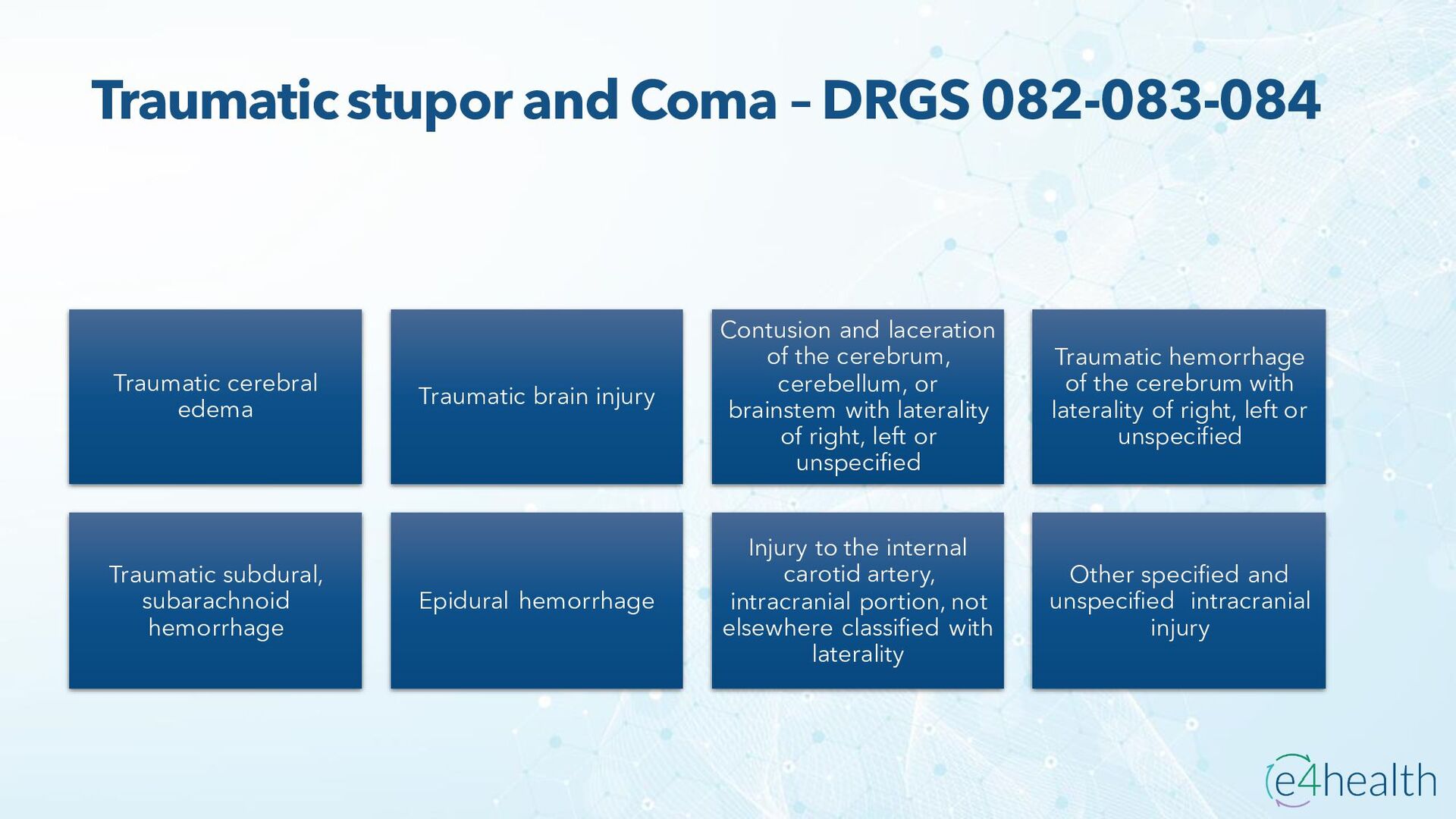
  18. Traumatic stupor and Coma – DRGS 082-083-084 Traumatic cerebral edema

    Traumatic brain injury Contusion and laceration of the cerebrum, cerebellum, or brainstem with laterality of right, left or unspecified Traumatic hemorrhage of the cerebrum with laterality of right, left or unspecified Traumatic subdural, subarachnoid hemorrhage Epidural hemorrhage Injury to the internal carotid artery, intracranial portion, not elsewhere classified with laterality Other specified and unspecified intracranial injury
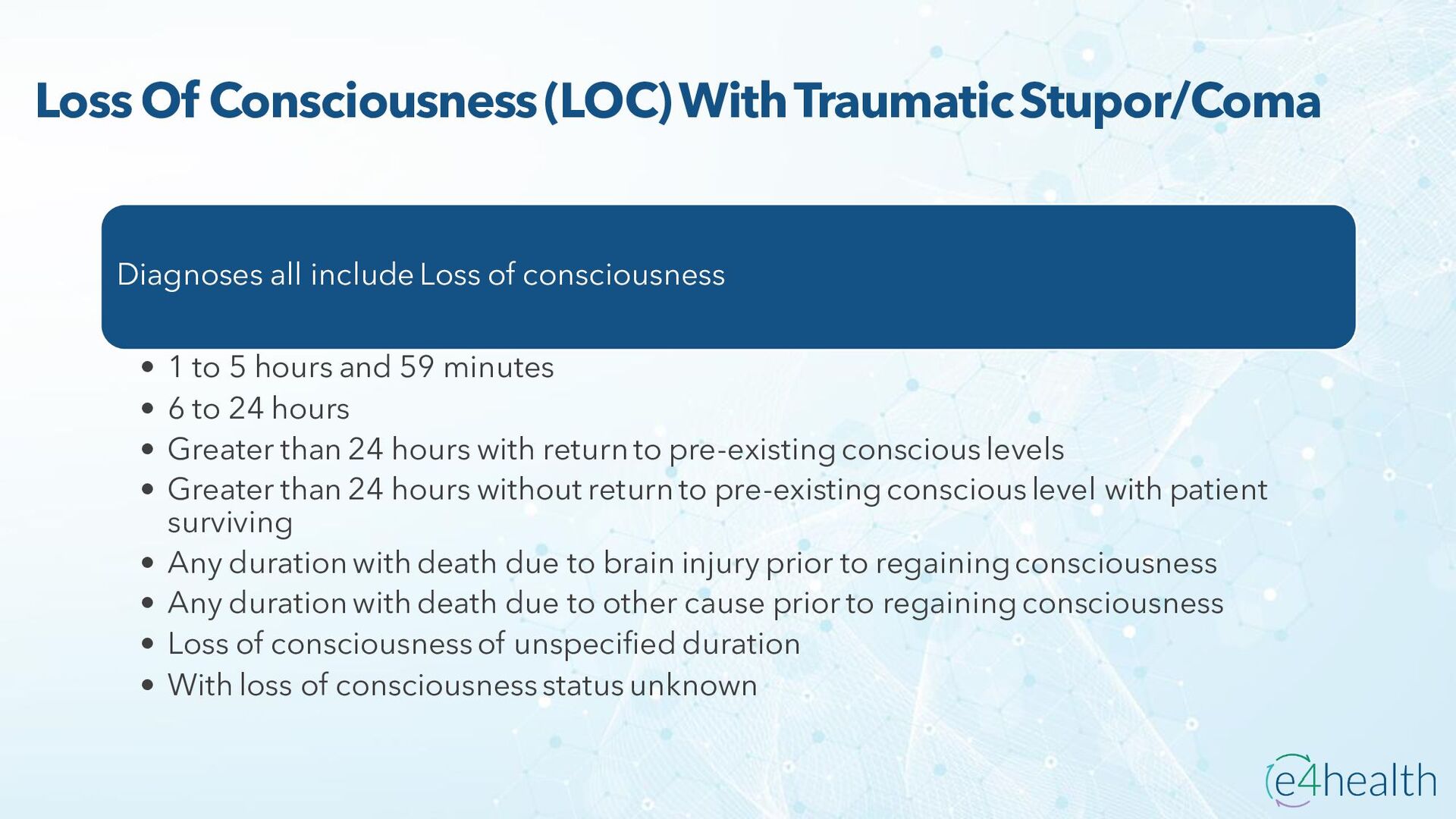
  19. Loss Of Consciousness (LOC) With Traumatic Stupor/Coma Diagnoses all include

    Loss of consciousness • 1 to 5 hours and 59 minutes • 6 to 24 hours • Greater than 24 hours with return to pre-existing conscious levels • Greater than 24 hours without return to pre-existing conscious level with patient surviving • Any duration with death due to brain injury prior to regaining consciousness • Any duration with death due to other cause prior to regaining consciousness • Loss of consciousness of unspecified duration • With loss of consciousness status unknown
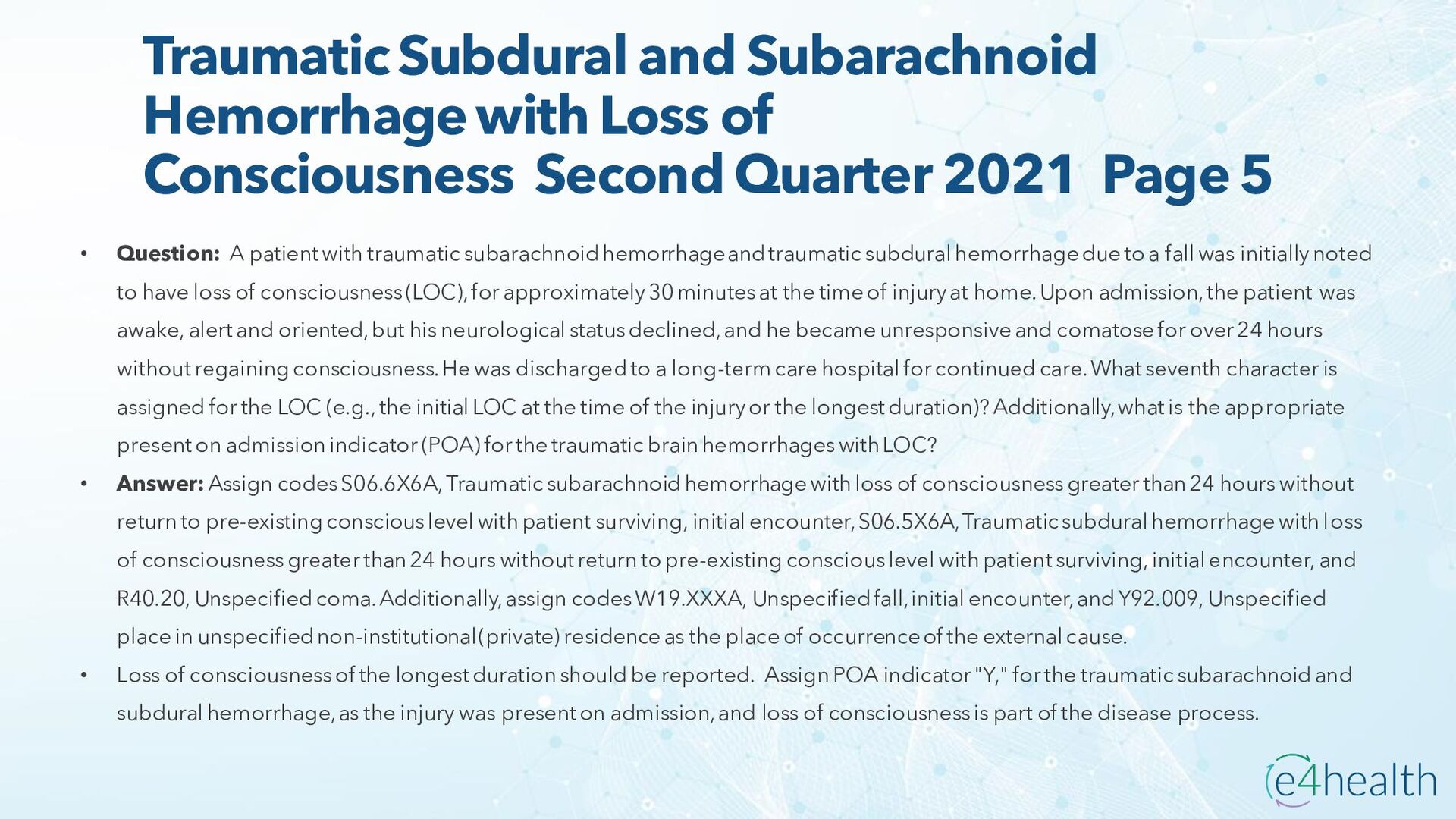
  20. Traumatic Subdural and Subarachnoid Hemorrhage with Loss of Consciousness Second

    Quarter 2021 Page 5 • Question: A patient with traumatic subarachnoid hemorrhage and traumatic subdural hemorrhage due to a fall was initially noted to have loss of consciousness (LOC), for approximately 30 minutes at the time of injury at home. Upon admission, the patient was awake, alert and oriented, but his neurological status declined, and he became unresponsive and comatose for over 24 hours without regaining consciousness. He was discharged to a long-term care hospital for continued care. What seventh character is assigned for the LOC (e.g., the initial LOC at the time of the injury or the longest duration)? Additionally, what is the appropriate present on admission indicator (POA) for the traumatic brain hemorrhages with LOC? • Answer: Assign codes S06.6X6A, Traumatic subarachnoid hemorrhage with loss of consciousness greater than 24 hours without return to pre-existing conscious level with patient surviving, initial encounter, S06.5X6A, Traumatic subdural hemorrhage with loss of consciousness greater than 24 hours without return to pre-existing conscious level with patient surviving, initial encounter, and R40.20, Unspecified coma. Additionally, assign codes W19.XXXA, Unspecified fall, initial encounter, and Y92.009, Unspecified place in unspecified non-institutional (private) residence as the place of occurrence of the external cause. • Loss of consciousness of the longest duration should be reported. Assign POA indicator "Y," for the traumatic subarachnoid and subdural hemorrhage, as the injury was present on admission, and loss of consciousness is part of the disease process.
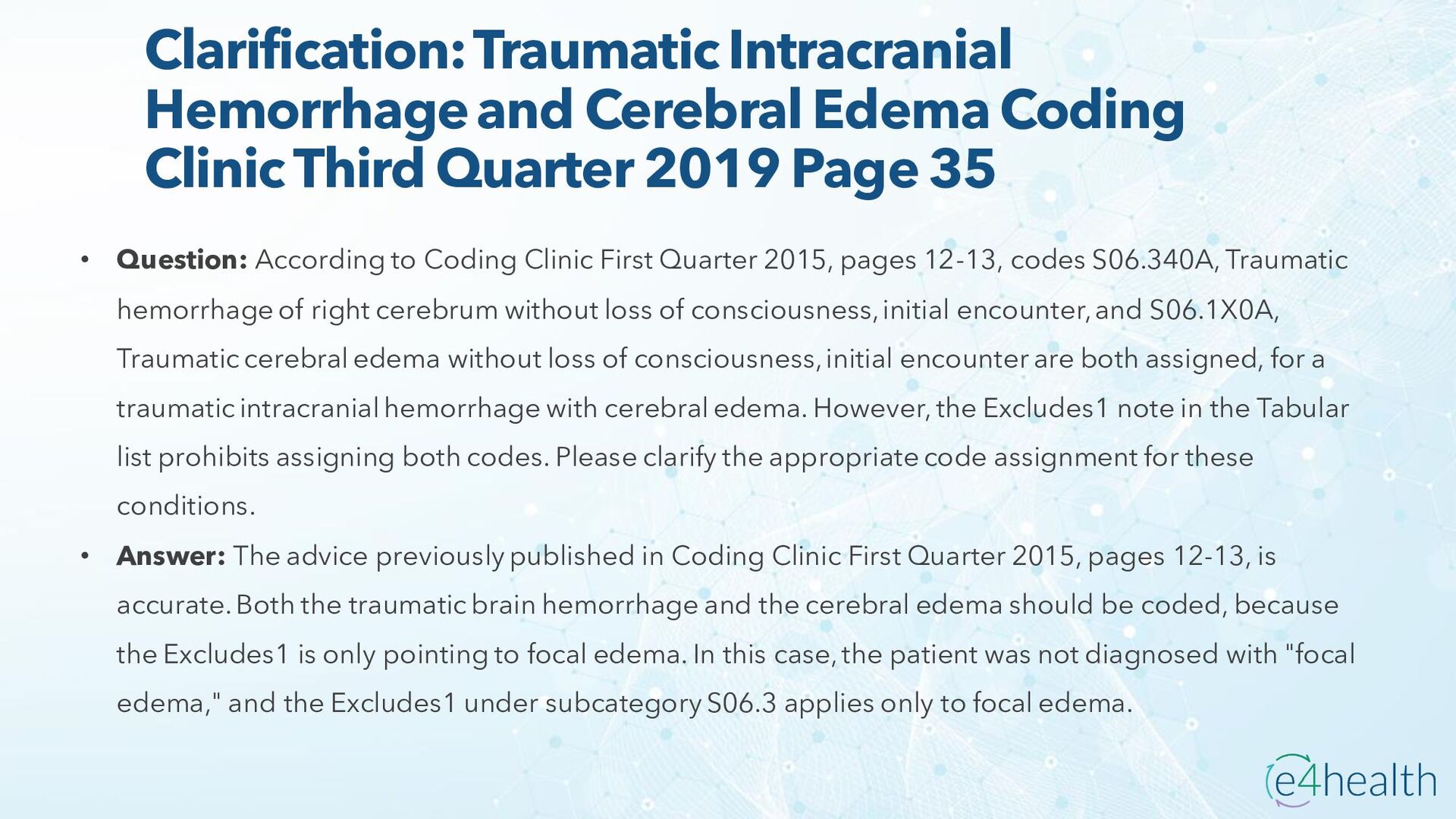
  21. Clarification: Traumatic Intracranial Hemorrhage and Cerebral Edema Coding ClinicThird Quarter

    2019 Page 35 • Question: According to Coding Clinic First Quarter 2015, pages 12-13, codes S06.340A, Traumatic hemorrhage of right cerebrum without loss of consciousness, initial encounter, and S06.1X0A, Traumatic cerebral edema without loss of consciousness, initial encounter are both assigned, for a traumatic intracranial hemorrhage with cerebral edema. However, the Excludes1 note in the Tabular list prohibits assigning both codes. Please clarify the appropriate code assignment for these conditions. • Answer: The advice previously published in Coding Clinic First Quarter 2015, pages 12-13, is accurate. Both the traumatic brain hemorrhage and the cerebral edema should be coded, because the Excludes1 is only pointing to focal edema. In this case, the patient was not diagnosed with "focal edema," and the Excludes1 under subcategory S06.3 applies only to focal edema.
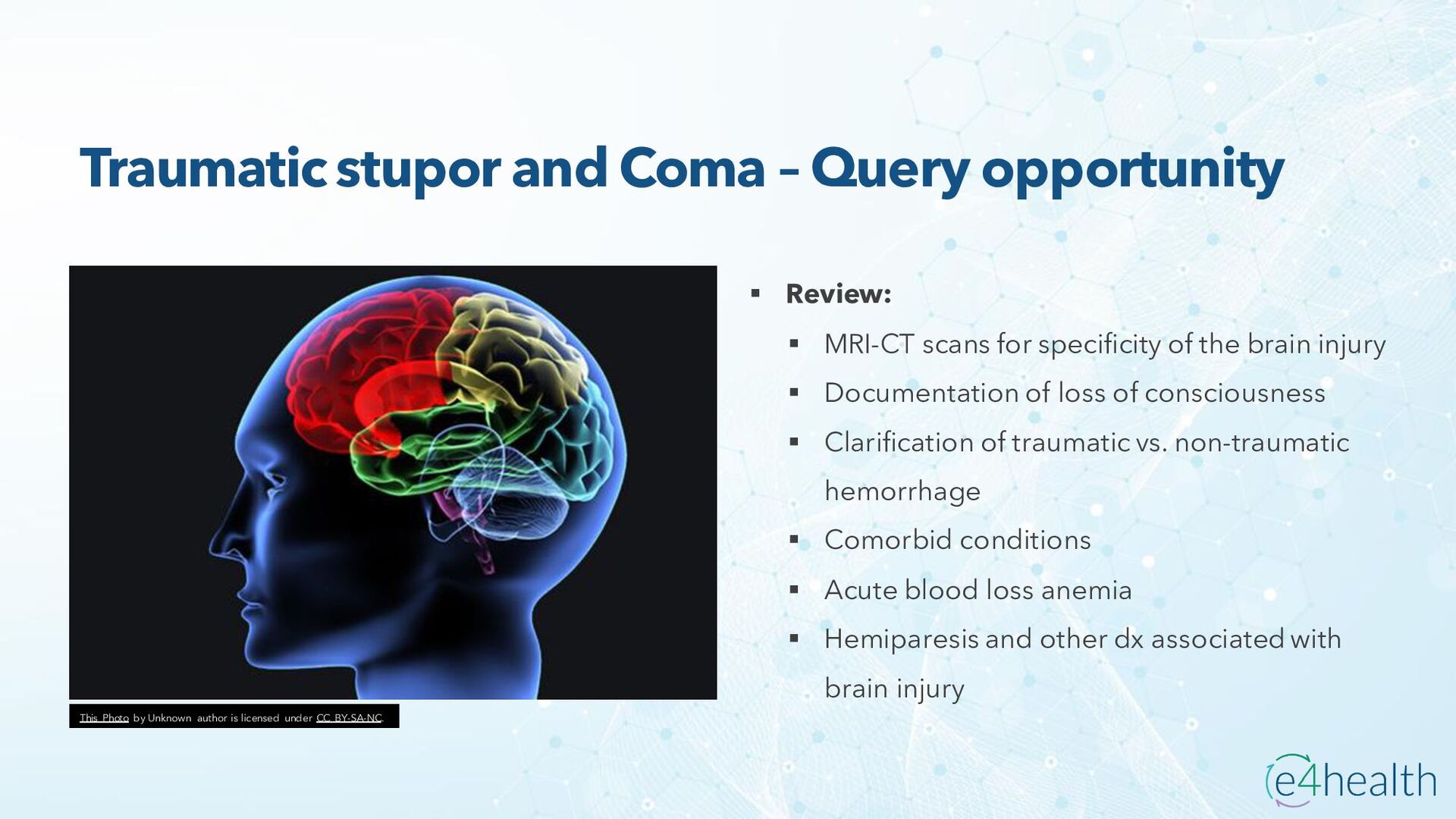
  22. Traumatic stupor and Coma – Query opportunity ▪ Review: ▪

    MRI-CT scans for specificity of the brain injury ▪ Documentation of loss of consciousness ▪ Clarification of traumatic vs. non-traumatic hemorrhage ▪ Comorbid conditions ▪ Acute blood loss anemia ▪ Hemiparesis and other dx associated with brain injury This Photo by Unknown author is licensed under CC BY-SA-NC.
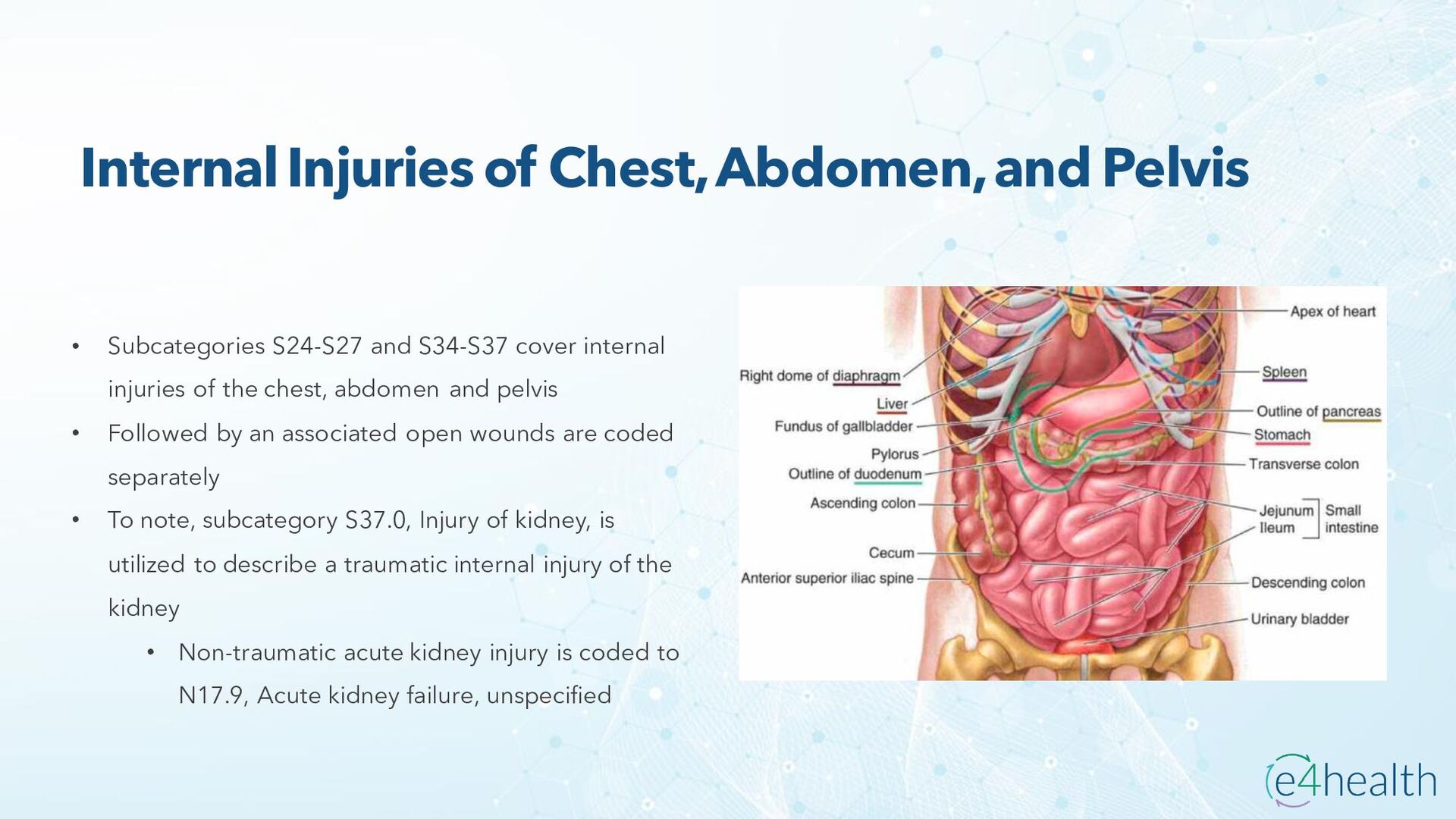
  23. Internal Injuries of Chest, Abdomen, and Pelvis • Subcategories S24-S27

    and S34-S37 cover internal injuries of the chest, abdomen and pelvis • Followed by an associated open wounds are coded separately • To note, subcategory S37.0, Injury of kidney, is utilized to describe a traumatic internal injury of the kidney • Non-traumatic acute kidney injury is coded to N17.9, Acute kidney failure, unspecified
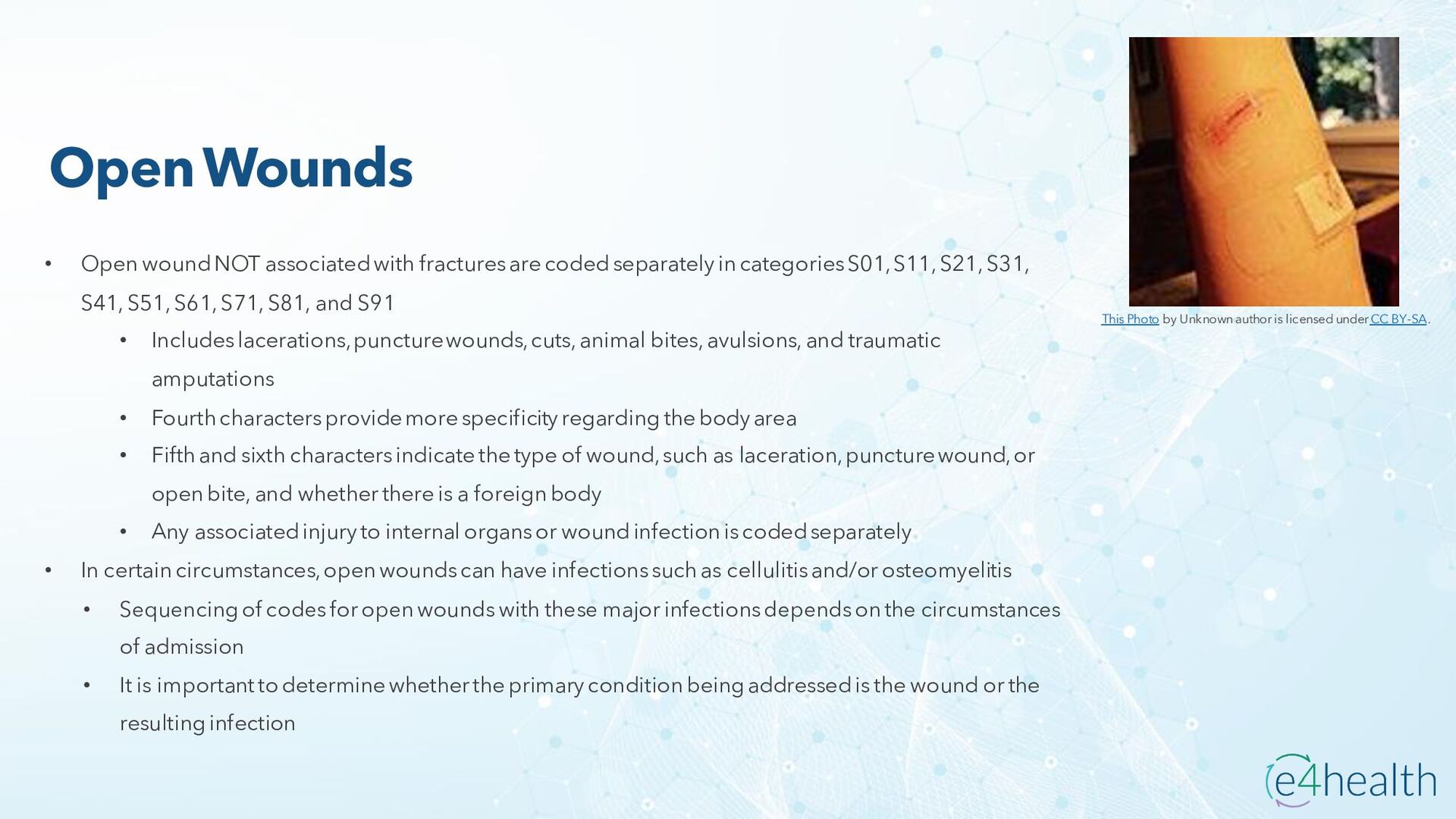
  24. Open Wounds • Open wound NOT associated with fractures are

    coded separately in categories S01, S11, S21, S31, S41, S51, S61, S71, S81, and S91 • Includes lacerations, puncture wounds, cuts, animal bites, avulsions, and traumatic amputations • Fourth characters provide more specificity regarding the body area • Fifth and sixth characters indicate the type of wound, such as laceration, puncture wound, or open bite, and whether there is a foreign body • Any associated injury to internal organs or wound infection is coded separately • In certain circumstances, open wounds can have infections such as cellulitis and/or osteomyelitis • Sequencing of codes for open wounds with these major infections depends on the circumstances of admission • It is important to determine whether the primary condition being addressed is the wound or the resulting infection This Photo by Unknown author is licensed under CC BY-SA.
  25. Surgical Site Infection Following a Procedure Coding Clinic Fourth Quarter

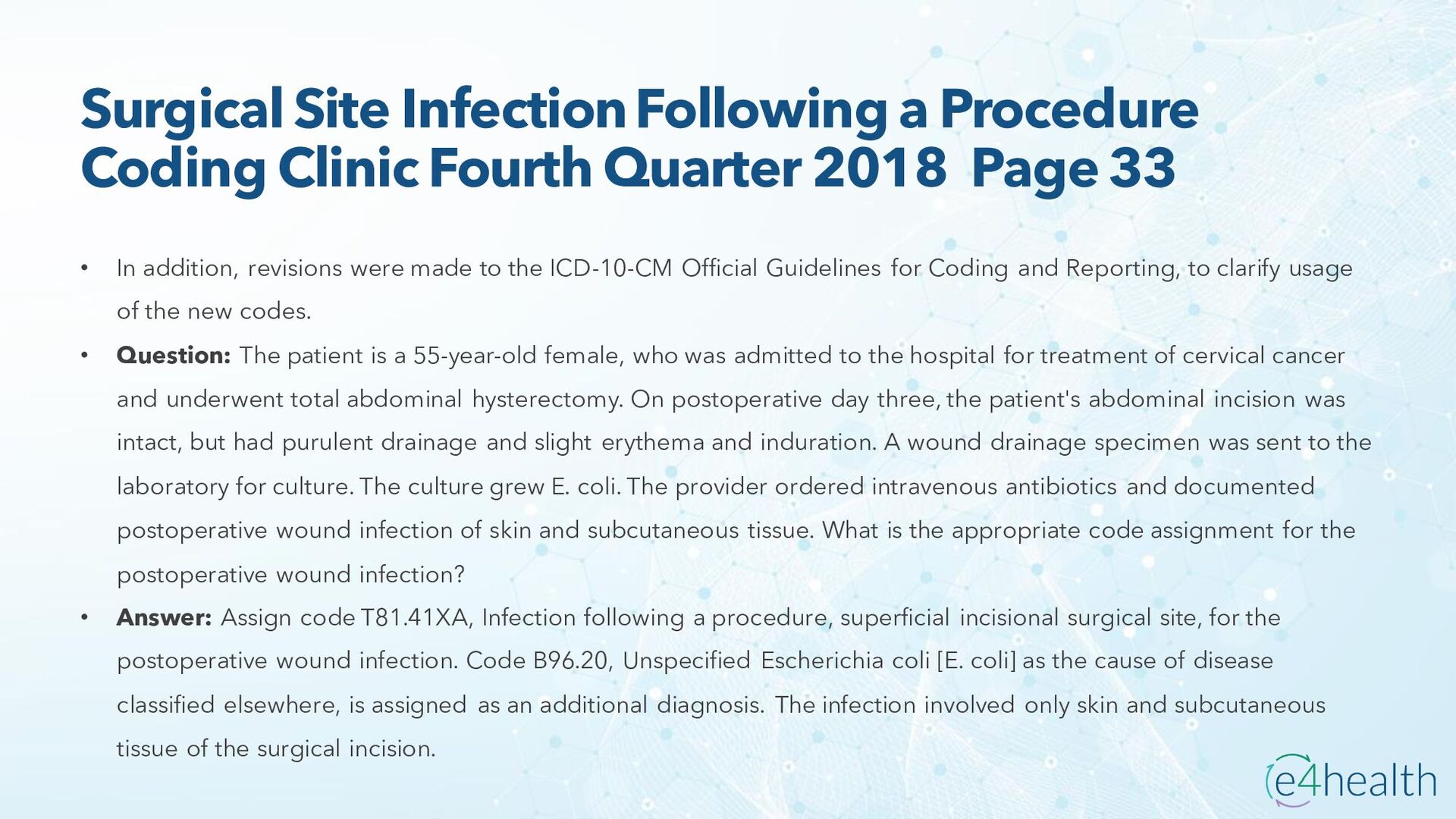
    2018 Page 33 • Subcategory T81.4, Infection following a procedure, has been expanded and new codes created to identify surgical site infections according to depth. Six codes were created to describe infection following a procedure: unspecified (T81.40); infection following a procedure, superficial incisional surgical site (T81.41); infection following a procedure, deep incisional surgical site (T81.42); infection following a procedure, organ and space surgical site (T81.43); sepsis following a procedure (T81.44); and infection following a procedure, other surgical site (T81.49). These codes are assigned based on the provider's documentation of a postsurgical wound infection (surgical site infection). • Surgical site infections are commonly classified according to their depth: superficial incisional, deep incisional, and organ/space infection. These categories are consistent with the Centers for Disease Control and Prevention criteria for defining a Surgical Site Infection (SSI). The Patient Assessment and Outcome Committee of the American Association for the Surgery of Trauma requested these code revisions in order to distinguish the severity of an infection following a procedure.
  26. Surgical Site Infection Following a Procedure Coding Clinic Fourth Quarter

    2018 Page 33 • In addition, revisions were made to the ICD-10-CM Official Guidelines for Coding and Reporting, to clarify usage of the new codes. • Question: The patient is a 55-year-old female, who was admitted to the hospital for treatment of cervical cancer and underwent total abdominal hysterectomy. On postoperative day three, the patient's abdominal incision was intact, but had purulent drainage and slight erythema and induration. A wound drainage specimen was sent to the laboratory for culture. The culture grew E. coli. The provider ordered intravenous antibiotics and documented postoperative wound infection of skin and subcutaneous tissue. What is the appropriate code assignment for the postoperative wound infection? • Answer: Assign code T81.41XA, Infection following a procedure, superficial incisional surgical site, for the postoperative wound infection. Code B96.20, Unspecified Escherichia coli [E. coli] as the cause of disease classified elsewhere, is assigned as an additional diagnosis. The infection involved only skin and subcutaneous tissue of the surgical incision.
  27. Foreign Body Injury Presence of a foreign body entering through

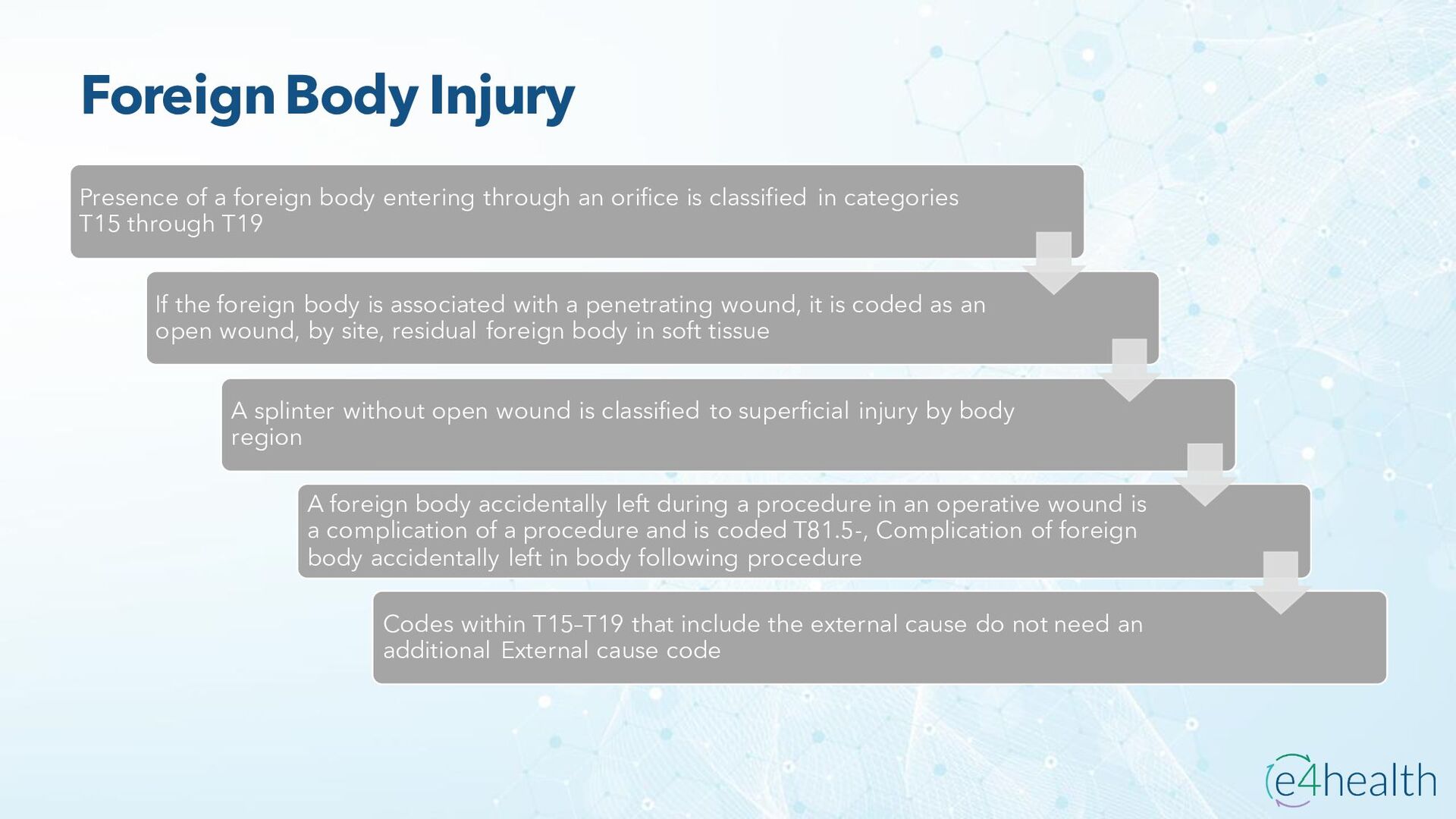
    an orifice is classified in categories T15 through T19 If the foreign body is associated with a penetrating wound, it is coded as an open wound, by site, residual foreign body in soft tissue A splinter without open wound is classified to superficial injury by body region A foreign body accidentally left during a procedure in an operative wound is a complication of a procedure and is coded T81.5-, Complication of foreign body accidentally left in body following procedure Codes within T15–T19 that include the external cause do not need an additional External cause code
  28. Amputations • Traumatic amputations are classified to subcategories S08.1- through

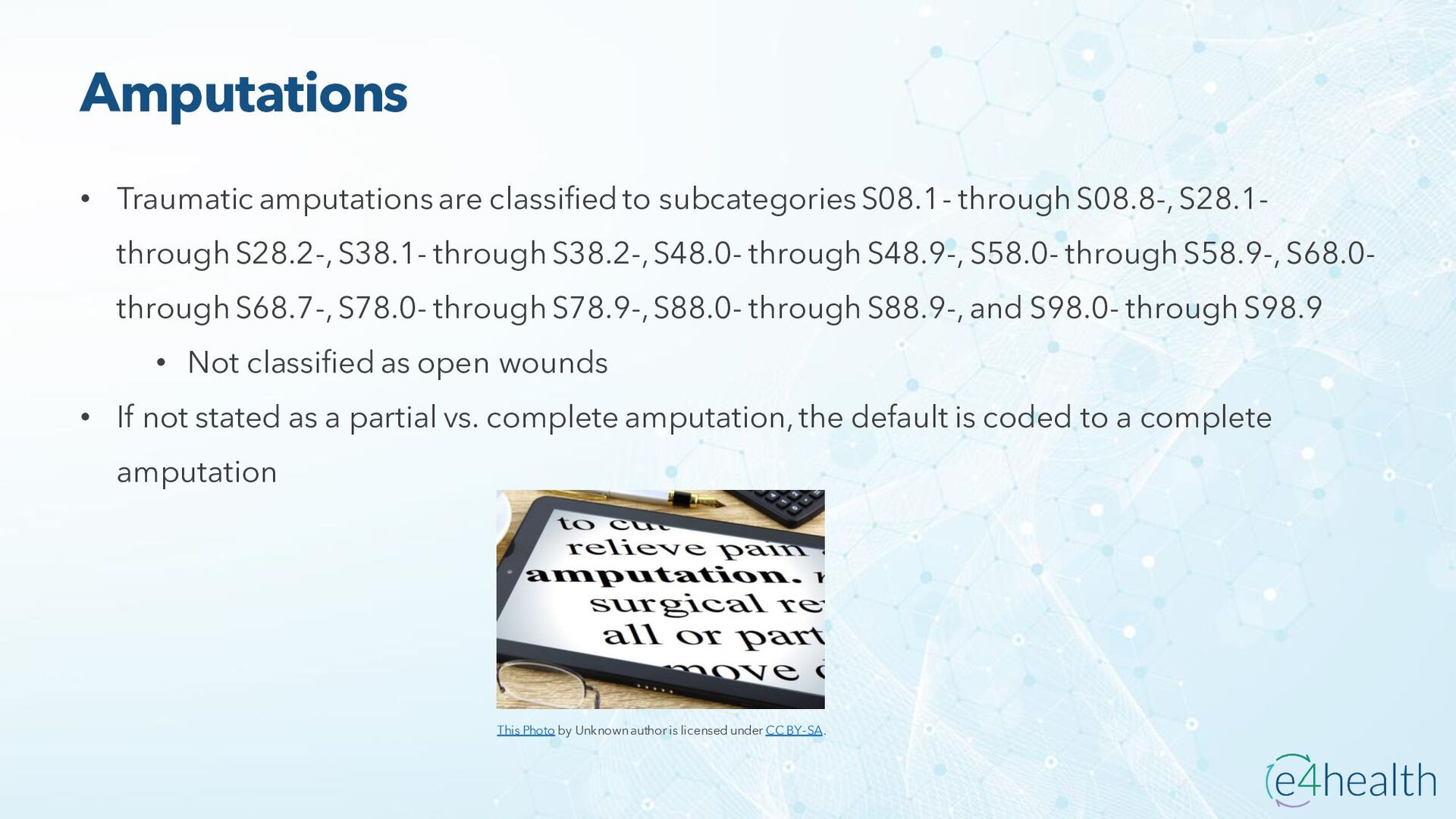
    S08.8-, S28.1- through S28.2-, S38.1- through S38.2-, S48.0- through S48.9-, S58.0- through S58.9-, S68.0- through S68.7-, S78.0- through S78.9-, S88.0- through S88.9-, and S98.0- through S98.9 • Not classified as open wounds • If not stated as a partial vs. complete amputation, the default is coded to a complete amputation This Photo by Unknown author is licensed under CC BY-SA.
  29. Other injuries • Superficial injuries such as contusions, blisters, abrasions,

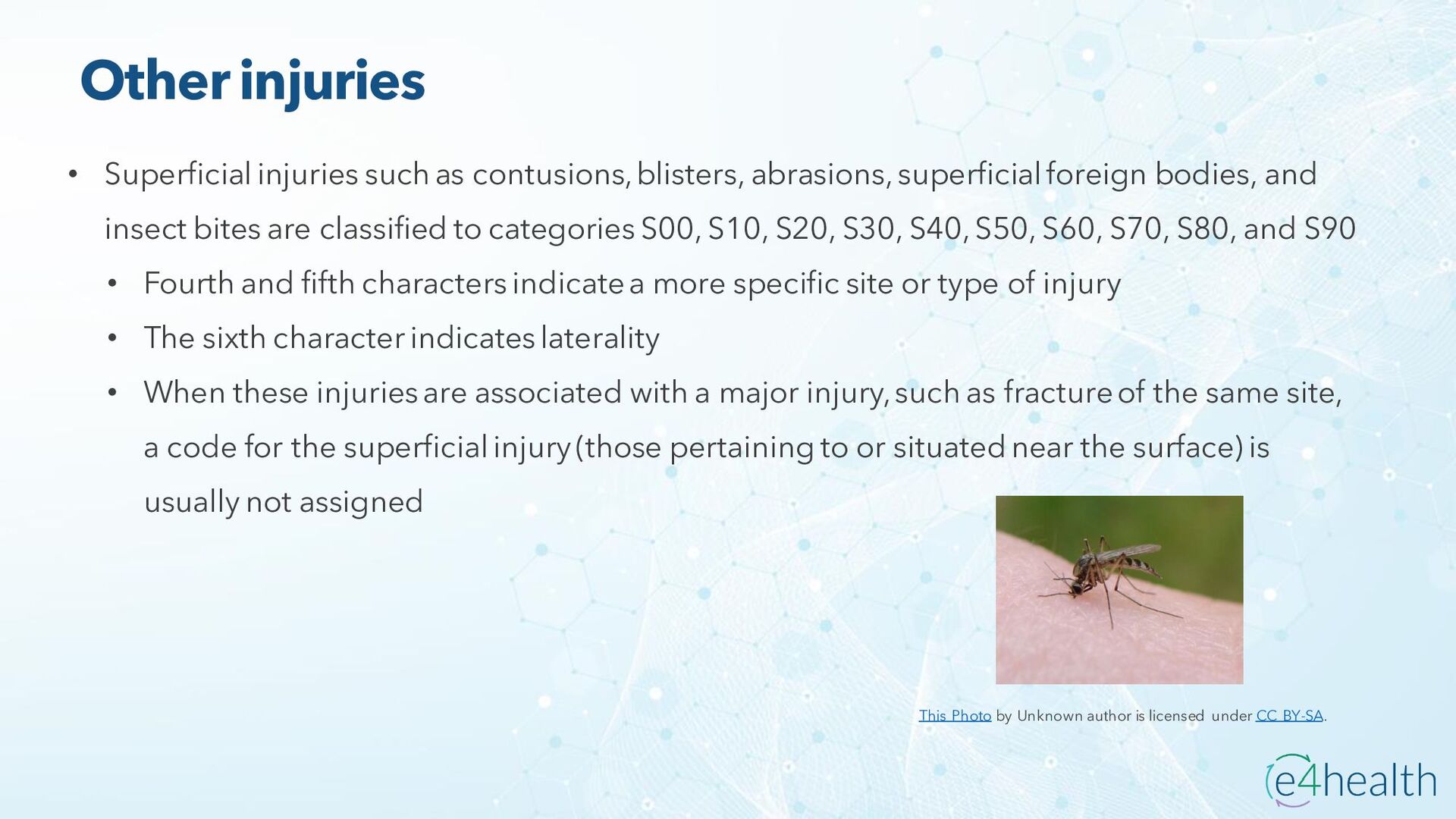
    superficial foreign bodies, and insect bites are classified to categories S00, S10, S20, S30, S40, S50, S60, S70, S80, and S90 • Fourth and fifth characters indicate a more specific site or type of injury • The sixth character indicates laterality • When these injuries are associated with a major injury, such as fracture of the same site, a code for the superficial injury (those pertaining to or situated near the surface) is usually not assigned This Photo by Unknown author is licensed under CC BY-SA.
  30. Early complications of Trauma • Certain early complications of trauma

    that are not included in the code for the injury are classified in category T79, Certain early complications of trauma, not elsewhere classified • The fourth-character axis indicates the type of complication, such as air or fat embolism, traumatic secondary and recurrent hemorrhage and seroma, traumatic shock, traumatic anuria, traumatic ischemia of muscle, traumatic subcutaneous emphysema, or traumatic compartment syndrome • Usually, codes from category T79 are assigned as secondary codes, with the code for the injury sequenced first • However, the complication itself may occasionally be the reason the encounter or admission and is the principal diagnosis in such cases • Sequencing of codes for trauma complications depends on the circumstances of admission • It is important to determine whether the primary condition being addressed is the injury or the resulting traumatic complication
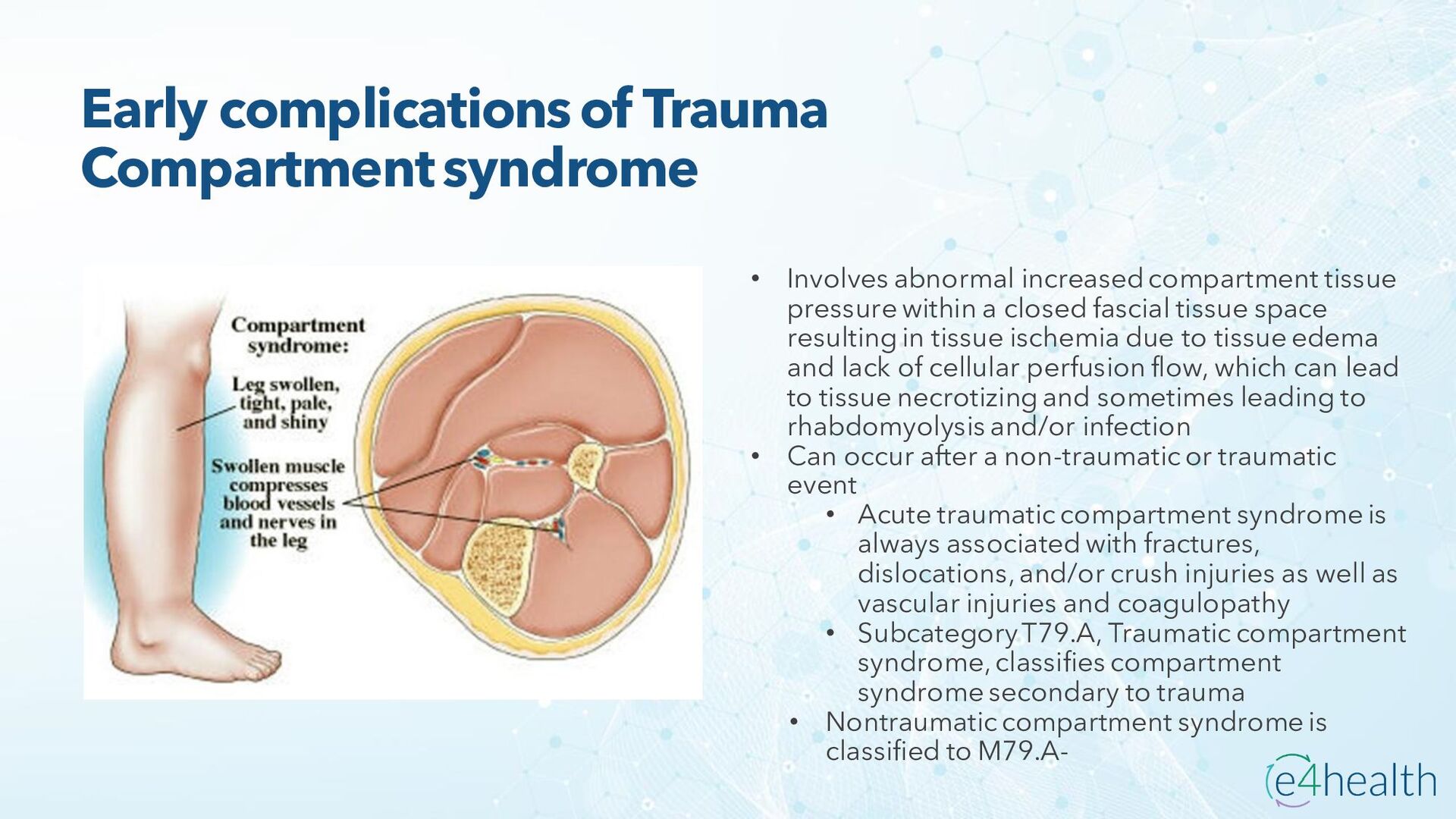
  31. Early complications of Trauma Compartment syndrome • Involves abnormal increased

    compartment tissue pressure within a closed fascial tissue space resulting in tissue ischemia due to tissue edema and lack of cellular perfusion flow, which can lead to tissue necrotizing and sometimes leading to rhabdomyolysis and/or infection • Can occur after a non-traumatic or traumatic event • Acute traumatic compartment syndrome is always associated with fractures, dislocations, and/or crush injuries as well as vascular injuries and coagulopathy • Subcategory T79.A, Traumatic compartment syndrome, classifies compartment syndrome secondary to trauma • Nontraumatic compartment syndrome is classified to M79.A-
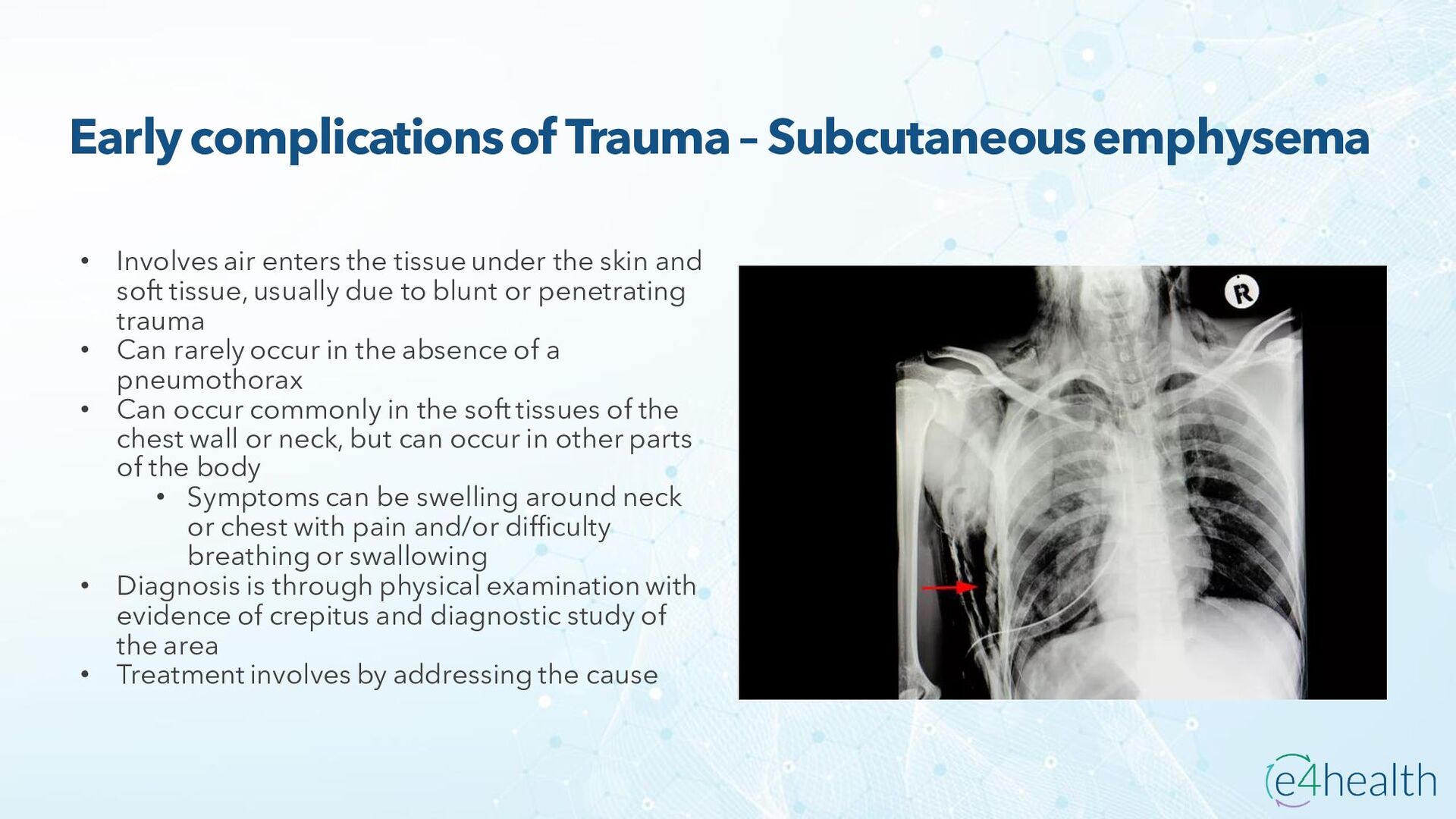
  32. Early complications of Trauma – Subcutaneous emphysema • Involves air

    enters the tissue under the skin and soft tissue, usually due to blunt or penetrating trauma • Can rarely occur in the absence of a pneumothorax • Can occur commonly in the soft tissues of the chest wall or neck, but can occur in other parts of the body • Symptoms can be swelling around neck or chest with pain and/or difficulty breathing or swallowing • Diagnosis is through physical examination with evidence of crepitus and diagnostic study of the area • Treatment involves by addressing the cause
  33. Early complications of Trauma – Traumatic embolisms Air Embolism •

    Bubble of air that enters arteries or veins that can cause a decrease in blood flow to organs, usually to the lungs • Traumatic air embolism is usually due to a penetrating traumatic event or as a complication of a surgery • Treatment includes stopping the source of an air embolism or a hyperbaric oxygen therapy Fat Embolism  Systemic disperse of fat to the circulatory system causing either a blockage in the heart, lung, or brain  Common causes can be due to traumatic long bone fractures or as a complication of surgery  Treatment procedures to fix traumatic fractures immediately and/or IVC filters
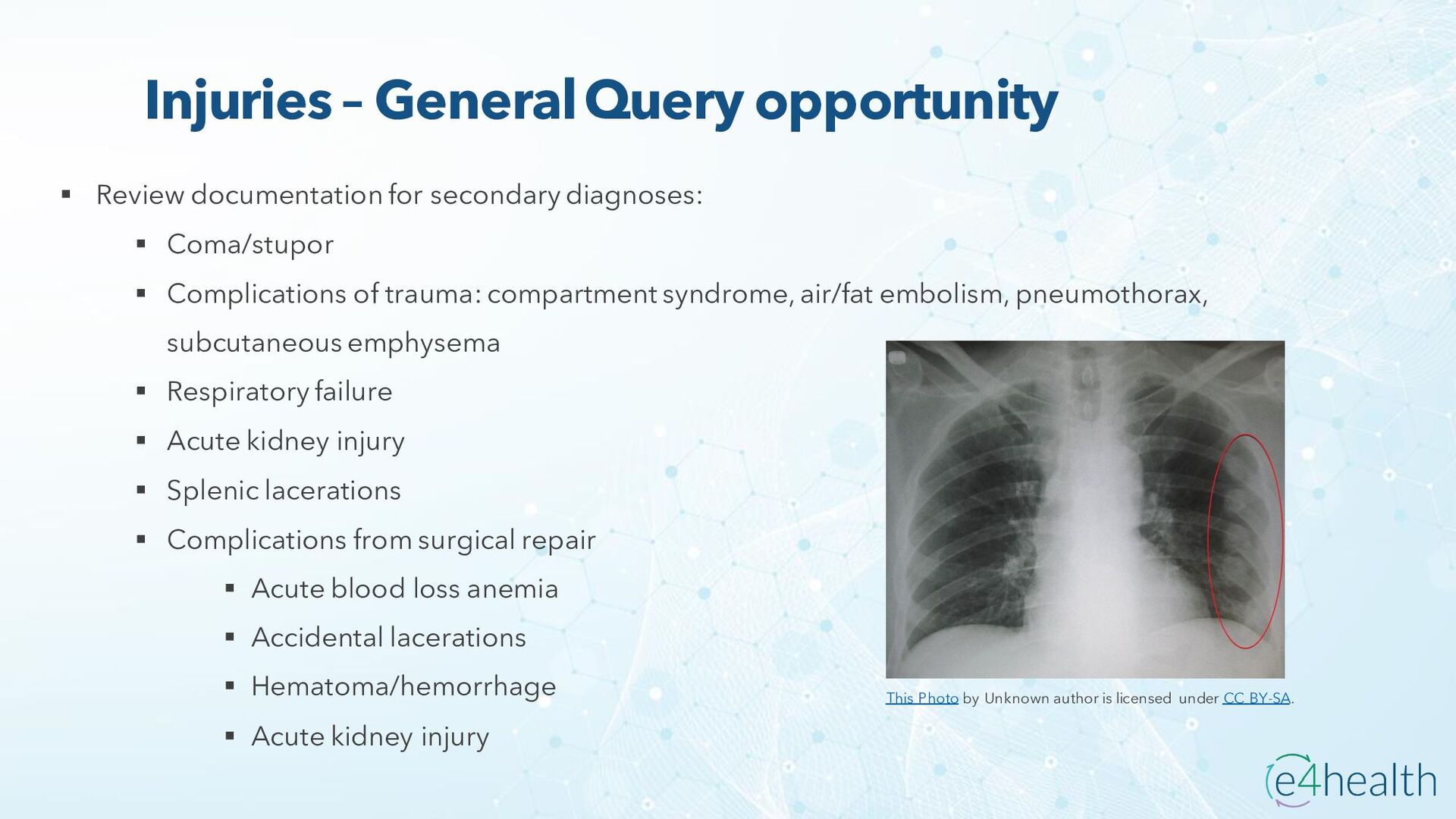
  34. Injuries – General Query opportunity ▪ Review documentation for secondary

    diagnoses: ▪ Coma/stupor ▪ Complications of trauma: compartment syndrome, air/fat embolism, pneumothorax, subcutaneous emphysema ▪ Respiratory failure ▪ Acute kidney injury ▪ Splenic lacerations ▪ Complications from surgical repair ▪ Acute blood loss anemia ▪ Accidental lacerations ▪ Hematoma/hemorrhage ▪ Acute kidney injury This Photo by Unknown author is licensed under CC BY-SA.
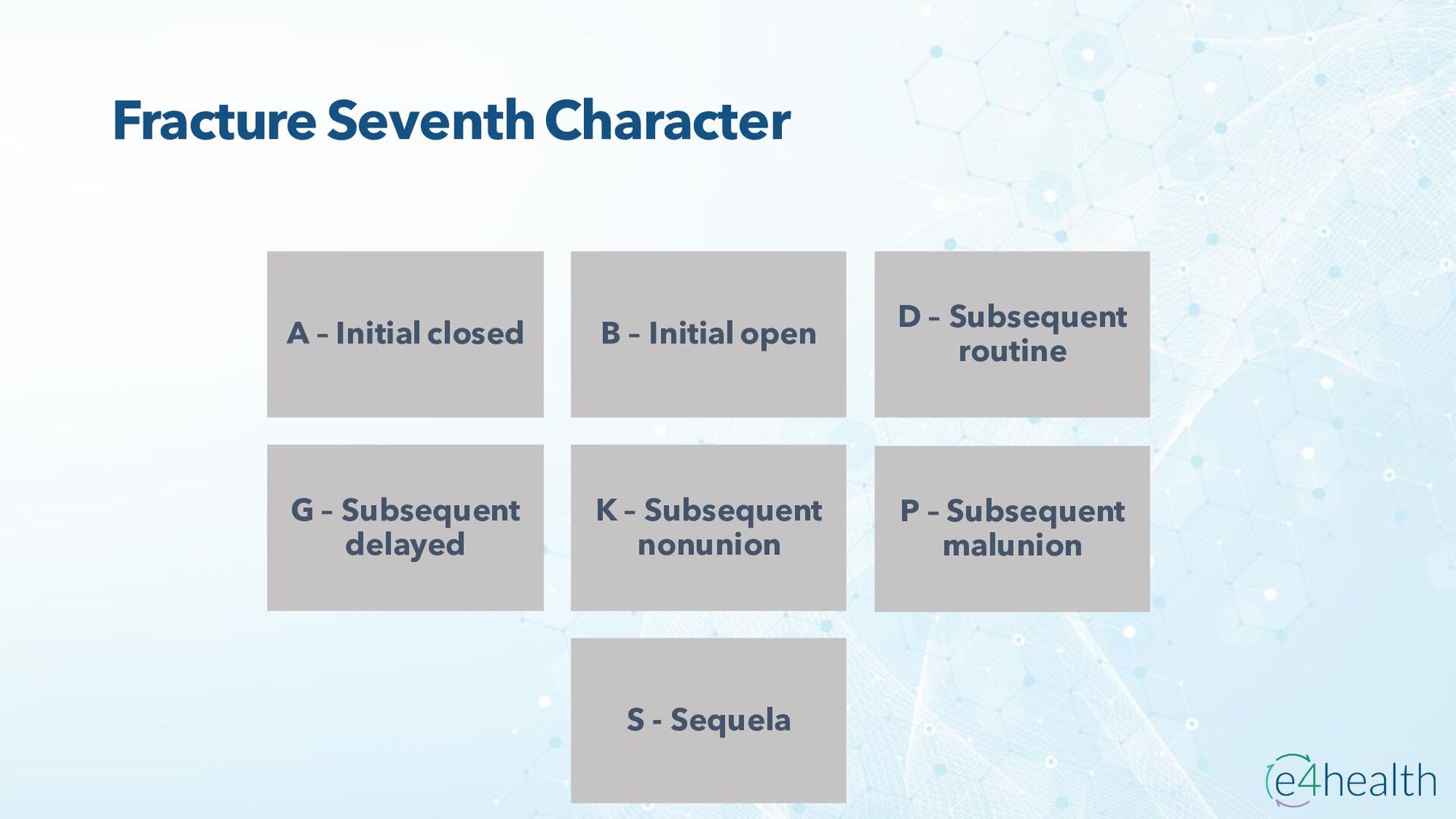
  35. Fracture Seventh Character A – Initial closed B – Initial

    open D – Subsequent routine G – Subsequent delayed K – Subsequent nonunion P – Subsequent malunion S - Sequela
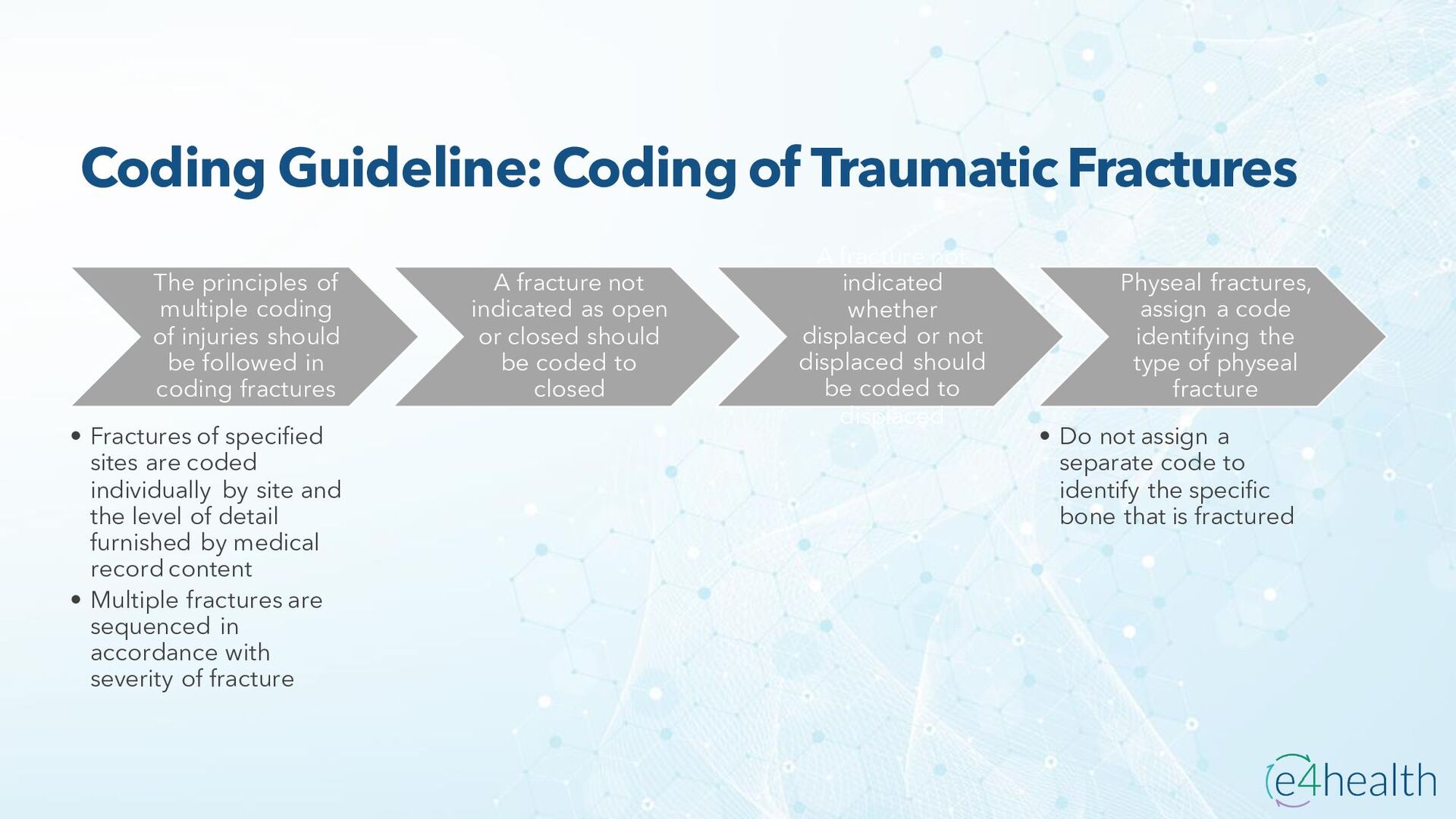
  36. Coding Guideline: Coding of Traumatic Fractures The principles of multiple

    coding of injuries should be followed in coding fractures • Fractures of specified sites are coded individually by site and the level of detail furnished by medical record content • Multiple fractures are sequenced in accordance with severity of fracture A fracture not indicated as open or closed should be coded to closed A fracture not indicated whether displaced or not displaced should be coded to displaced Physeal fractures, assign a code identifying the type of physeal fracture • Do not assign a separate code to identify the specific bone that is fractured
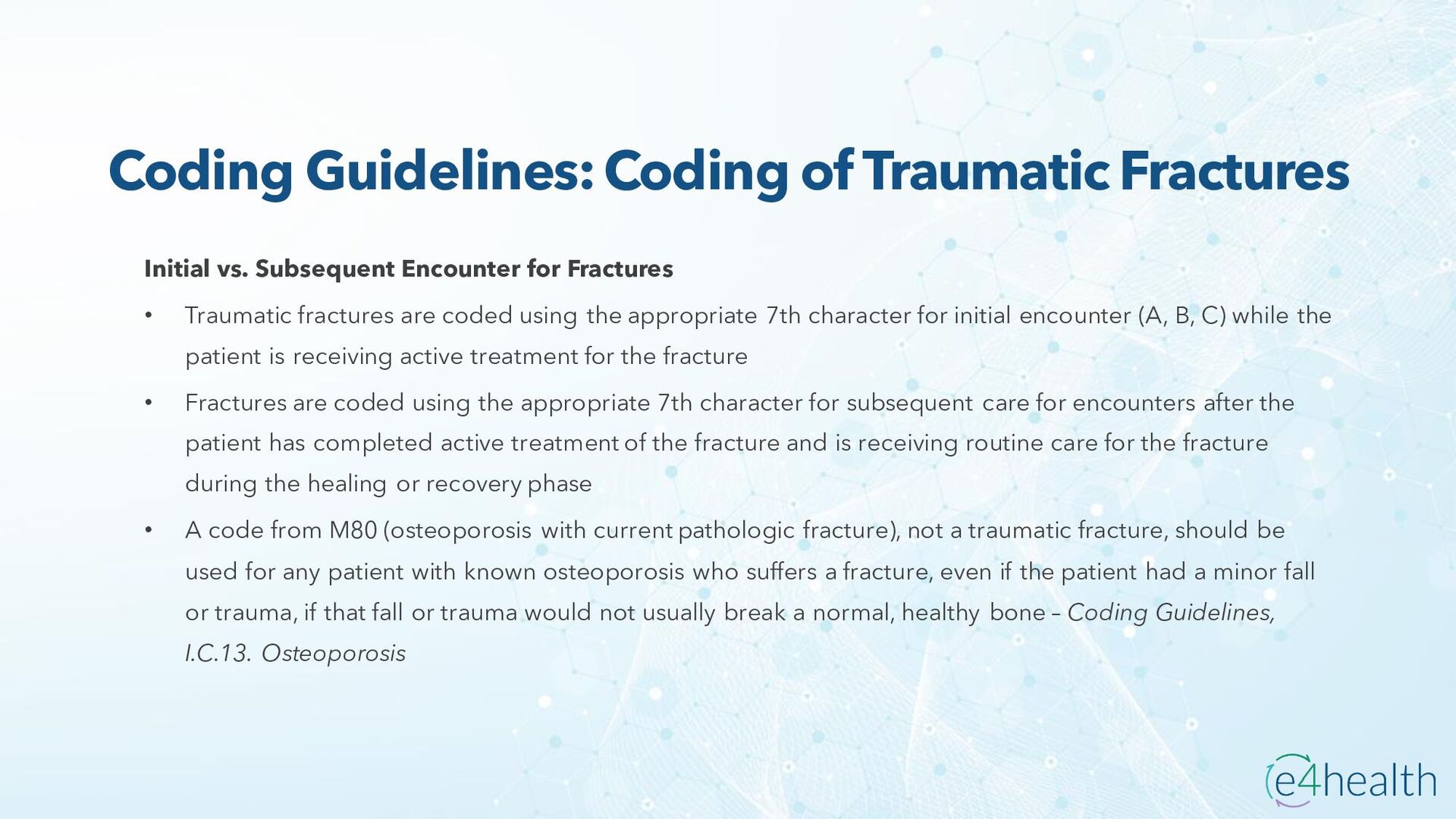
  37. Initial vs. Subsequent Encounter for Fractures • Traumatic fractures are

    coded using the appropriate 7th character for initial encounter (A, B, C) while the patient is receiving active treatment for the fracture • Fractures are coded using the appropriate 7th character for subsequent care for encounters after the patient has completed active treatment of the fracture and is receiving routine care for the fracture during the healing or recovery phase • A code from M80 (osteoporosis with current pathologic fracture), not a traumatic fracture, should be used for any patient with known osteoporosis who suffers a fracture, even if the patient had a minor fall or trauma, if that fall or trauma would not usually break a normal, healthy bone – Coding Guidelines, I.C.13. Osteoporosis Coding Guidelines: Coding of Traumatic Fractures
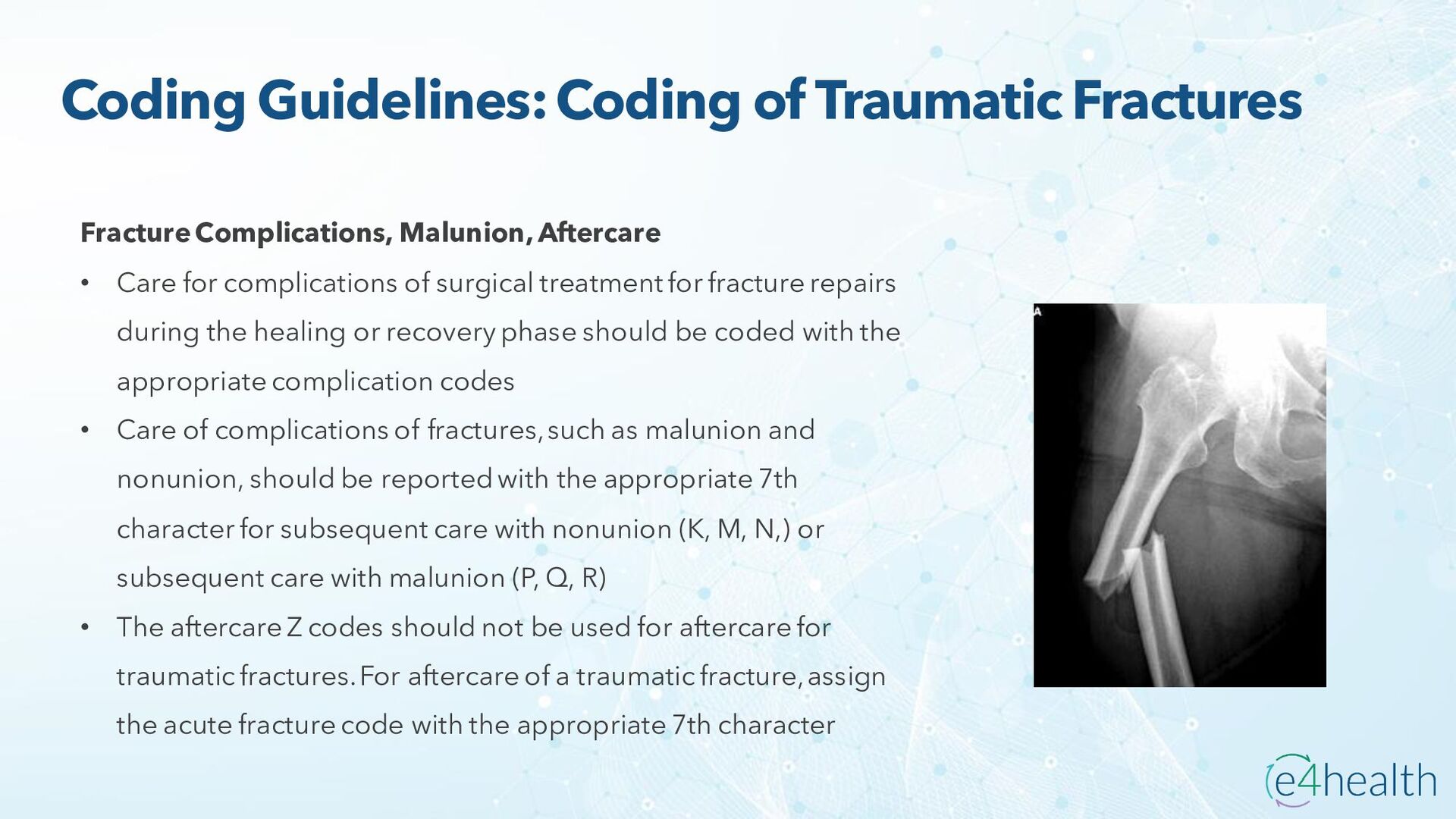
  38. Coding Guidelines: Coding of Traumatic Fractures Fracture Complications, Malunion, Aftercare

    • Care for complications of surgical treatment for fracture repairs during the healing or recovery phase should be coded with the appropriate complication codes • Care of complications of fractures, such as malunion and nonunion, should be reported with the appropriate 7th character for subsequent care with nonunion (K, M, N,) or subsequent care with malunion (P, Q, R) • The aftercare Z codes should not be used for aftercare for traumatic fractures. For aftercare of a traumatic fracture, assign the acute fracture code with the appropriate 7th character
  39. Pathologic Fractures – The difference Per the ICD-10-CM Index and

    Tabular, pathological fractures are assigned categories/subcategories M80, M84.4-, M84.5-, and M84.6-, in the musculoskeletal conditions rather than with injuries Documentation in the record should be clear and consistent to demonstrate that the fracture is traumatic or pathologic. If unsure, query the provider • At times, a patient who has osteoporosis, for example, can have a traumatic fall. If the fracture is uncertain to be due to osteoporosis or due to the trauma, query the provider for clarity
  40. Other Types of Fractures Compression Fractures • Compression fractures may

    be due to either disease or trauma • Review documentation for any recent significant trauma or for any indication of concurrent bone disease that might point to pathological fracture Stress Fractures • Stress fractures due to repetitive force applied before the bone and its supporting tissues have had enough time to absorb such force that results in damage to the bone • Stress fractures are classified with musculoskeletal conditions with subcategory M84.3-
  41. Other Types of Fractures, continued Periprosthetic Fractures • Periprosthetic fractures

    are fractures that occur around a prosthesis • Are not complications of the prosthesis but are a result of trauma or pathologic condition around any prosthesis, usually the most common sites are the hip, knee, ankle, shoulder, and elbow • Periprosthetic fractures are classified to category M97, Periprosthetic fracture around internal prosthetic joint Fractures Due to Birth Injury • Birth injury fractures, such as that of a clavicle fracture in a neonate born vaginally, are not classified in the injury chapter of ICD-10-CM • Classified as perinatal conditions (category P13)
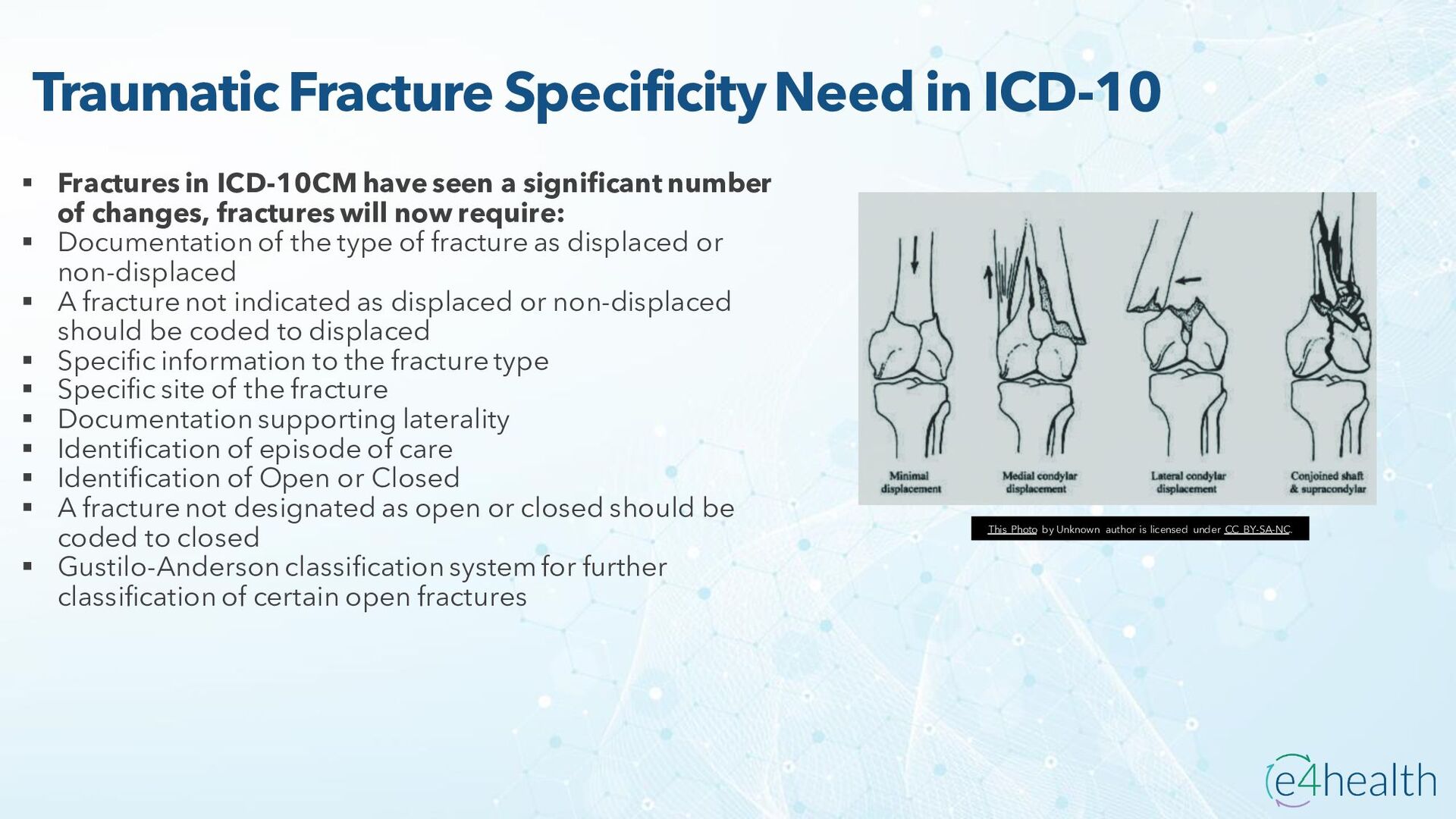
  42. Traumatic Fracture Specificity Need in ICD-10 ▪ Fractures in ICD-10CM

    have seen a significant number of changes, fractures will now require: ▪ Documentation of the type of fracture as displaced or non-displaced ▪ A fracture not indicated as displaced or non-displaced should be coded to displaced ▪ Specific information to the fracture type ▪ Specific site of the fracture ▪ Documentation supporting laterality ▪ Identification of episode of care ▪ Identification of Open or Closed ▪ A fracture not designated as open or closed should be coded to closed ▪ Gustilo-Anderson classification system for further classification of certain open fractures This Photo by Unknown author is licensed under CC BY-SA-NC.
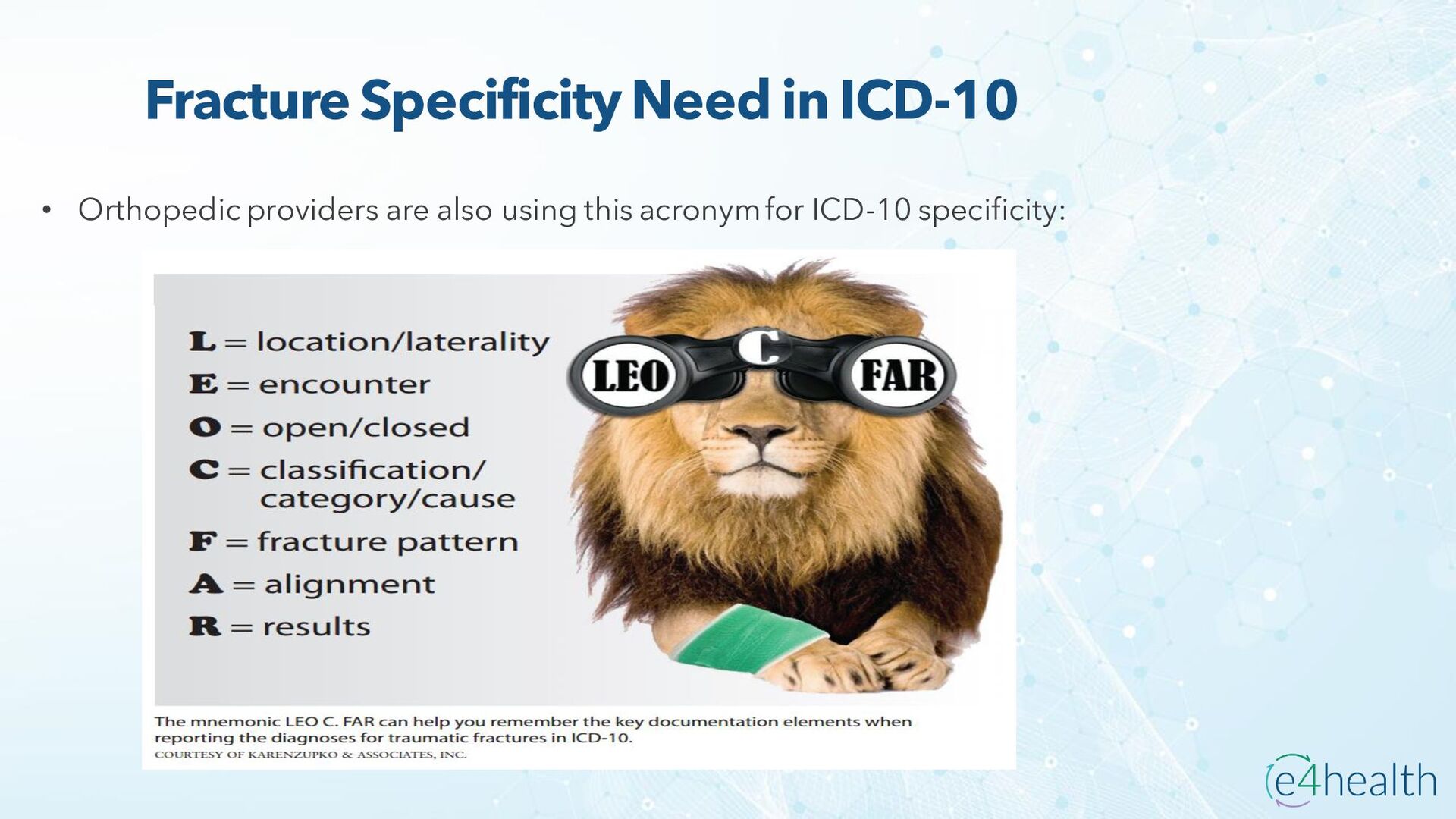
  43. • Orthopedic providers are also using this acronym for ICD-10

    specificity: Fracture Specificity Need in ICD-10
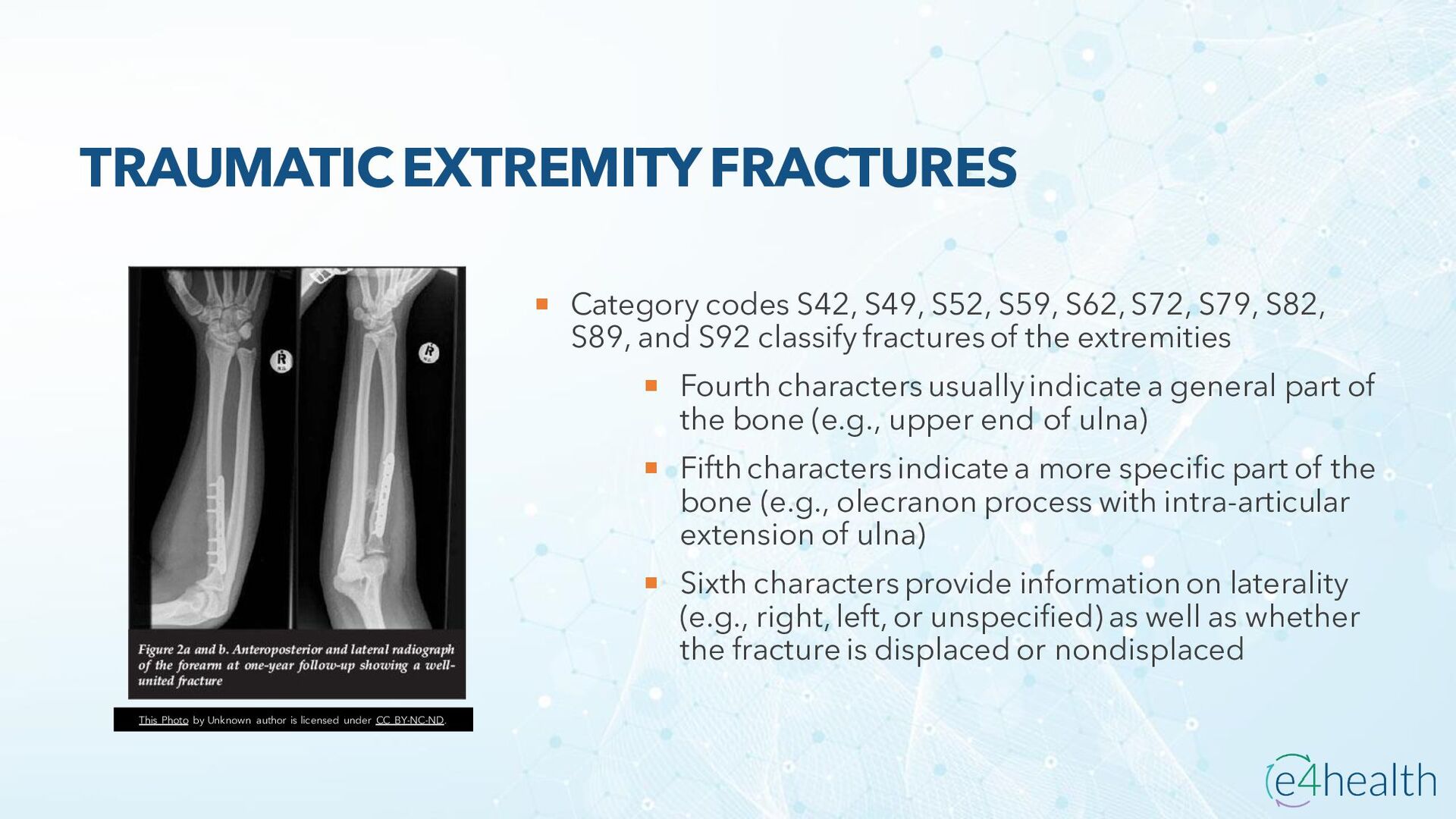
  44. TRAUMATIC EXTREMITY FRACTURES  Category codes S42, S49, S52, S59,

    S62, S72, S79, S82, S89, and S92 classify fractures of the extremities  Fourth characters usually indicate a general part of the bone (e.g., upper end of ulna)  Fifth characters indicate a more specific part of the bone (e.g., olecranon process with intra-articular extension of ulna)  Sixth characters provide information on laterality (e.g., right, left, or unspecified) as well as whether the fracture is displaced or nondisplaced This Photo by Unknown author is licensed under CC BY-NC-ND.
  45.  Multiple fractures of the same bone(s) classified with different

    fourth-character or fifth-character subdivisions (bone part) within the same three-character category are coded individually by site  For example:  Initial encounter for nondisplaced comminuted fracture of the shaft of the right humerus, with nondisplaced closed-fracture dislocation of right shoulder involving the greater tuberosity, is coded S42.354A, Nondisplaced comminuted fracture of shaft of humerus, right arm, initial encounter for closed fracture, and S42.254A, Nondisplaced fracture of greater tuberosity of right humerus, initial encounter for closed fracture  Initial encounter closed fractures of the olecranon process and coronoid process of the left ulna are coded S52.022A, Displaced fracture of olecranon process without intraarticular extension of left ulna, initial encounter for closed fracture, and S52.042A, Displaced fracture of coronoid process of left ulna, initial encounter for closed fracture Traumatic Extremity fractures Multiple fractures
  46. • Classification system to rate the severity of open fractures

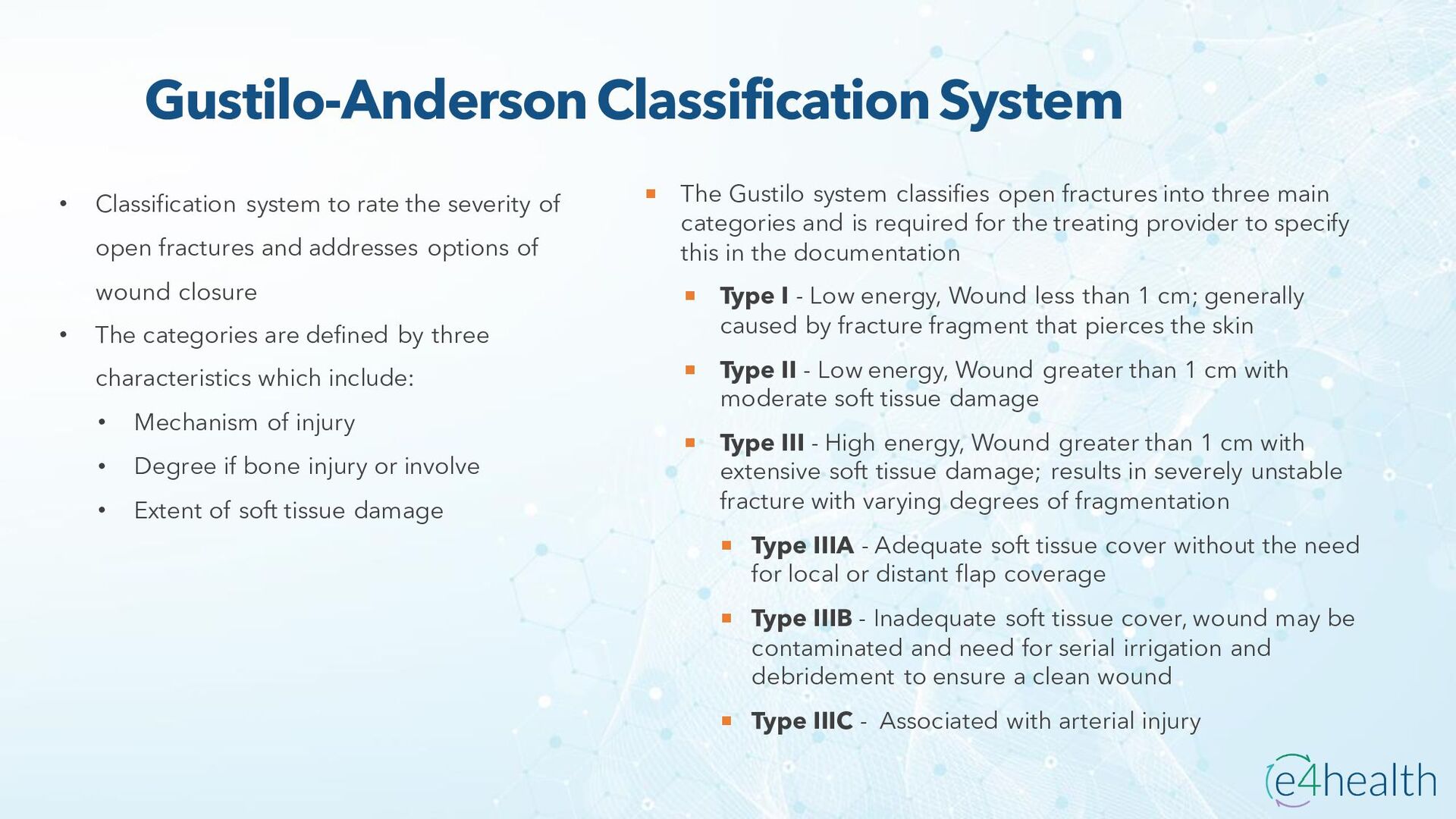
    and addresses options of wound closure • The categories are defined by three characteristics which include: • Mechanism of injury • Degree if bone injury or involve • Extent of soft tissue damage Gustilo-Anderson Classification System  The Gustilo system classifies open fractures into three main categories and is required for the treating provider to specify this in the documentation  Type I - Low energy, Wound less than 1 cm; generally caused by fracture fragment that pierces the skin  Type II - Low energy, Wound greater than 1 cm with moderate soft tissue damage  Type III - High energy, Wound greater than 1 cm with extensive soft tissue damage; results in severely unstable fracture with varying degrees of fragmentation  Type IIIA - Adequate soft tissue cover without the need for local or distant flap coverage  Type IIIB - Inadequate soft tissue cover, wound may be contaminated and need for serial irrigation and debridement to ensure a clean wound  Type IIIC - Associated with arterial injury
  47. Coding Note: ICD-10-CM categories  Have additional seventh characters (B,

    C, E, F, H, J, M, N, Q, R) to identify open fractures with the Gustilo classification  S52, Fracture of forearm;  S72, Fracture of femur;  S82, Fracture of lower leg, including ankle  Provider documentation must state it is a Gustilo- Anderson fractures of the above Where in ICD-10 is Gustilo-Anderson Utilized?
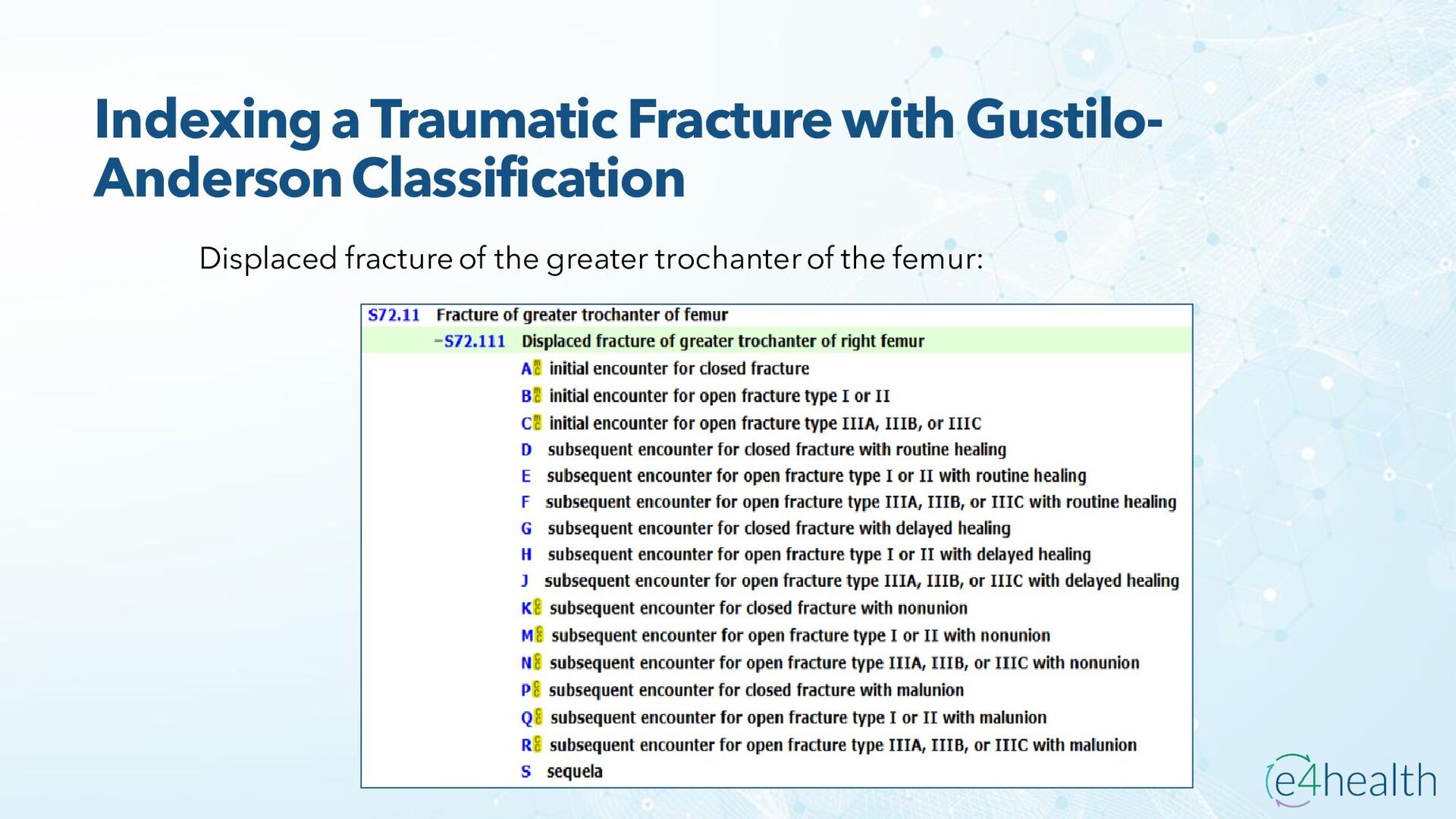
  48. Displaced fracture of the greater trochanter of the femur: Indexing

    a Traumatic Fracture with Gustilo- Anderson Classification
  49.  New codes have been created to identify Salter-Harris physeal

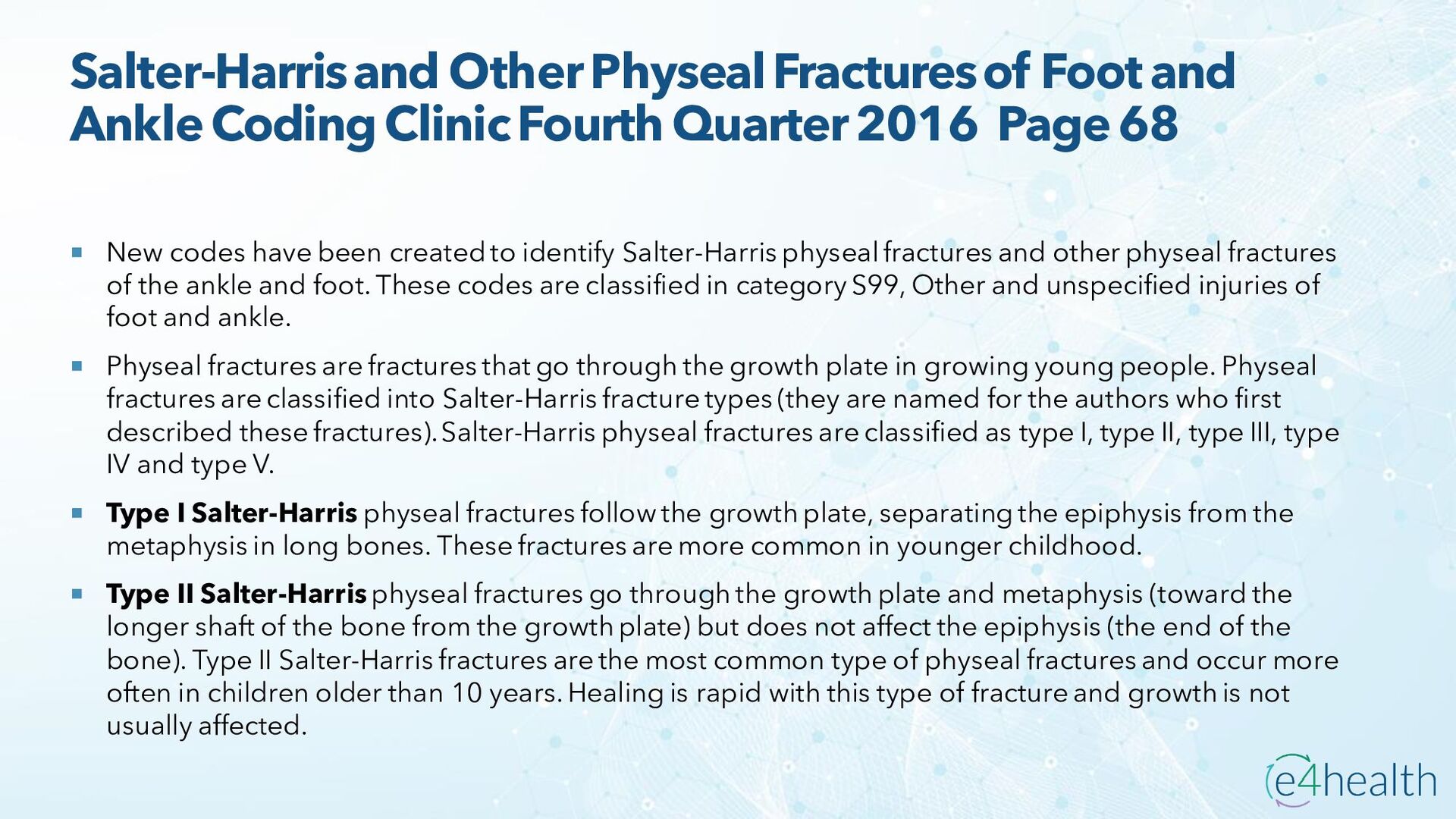
    fractures and other physeal fractures of the ankle and foot. These codes are classified in category S99, Other and unspecified injuries of foot and ankle.  Physeal fractures are fractures that go through the growth plate in growing young people. Physeal fractures are classified into Salter-Harris fracture types (they are named for the authors who first described these fractures). Salter-Harris physeal fractures are classified as type I, type II, type III, type IV and type V.  Type I Salter-Harris physeal fractures follow the growth plate, separating the epiphysis from the metaphysis in long bones. These fractures are more common in younger childhood.  Type II Salter-Harris physeal fractures go through the growth plate and metaphysis (toward the longer shaft of the bone from the growth plate) but does not affect the epiphysis (the end of the bone). Type II Salter-Harris fractures are the most common type of physeal fractures and occur more often in children older than 10 years. Healing is rapid with this type of fracture and growth is not usually affected. Salter-Harris and Other Physeal Fractures of Foot and Ankle Coding Clinic Fourth Quarter 2016 Page 68
  50.  Type III Salter-Harris physeal fractures are fractures that go

    through the growth plate and epiphysis, but do not involve the metaphysis. These fractures usually happen after the age of 10, and when the growth plate is partially fused. Type III fractures often cause chronic disability, affecting the articular surface of the bone. Surgery is often needed.  Type IV Salter-Harris physeal fractures go across the growth plate and affects both the metaphysis and the epiphysis. These fractures may happen at any age. Type IV fractures may affect growth, as well they may involve the articular surface of the bone and may cause chronic disability. Surgery may be needed for these types of fractures.  Other physeal fractures are less common. A Salter-Harris fracture type V involves compression of the growth plate, which can destroy growth potential and lead to unequal limb lengths or abnormal limb angles.  ICD-10-CM codes already exist for a number of physeal fracture types involving the long bones of the limb. However, because these fractures may also affect the growth plates of various bones in the foot, including the calcaneus, the metatarsals, and the phalanges, additional codes were created to specifically represent these types of fractures. SALTER-HARRIS AND OTHERPHYSEALFRACTURES OF FOOT AND ANKLECODING CLINIC FOURTH QUARTER 2016 PAGE 68, continued
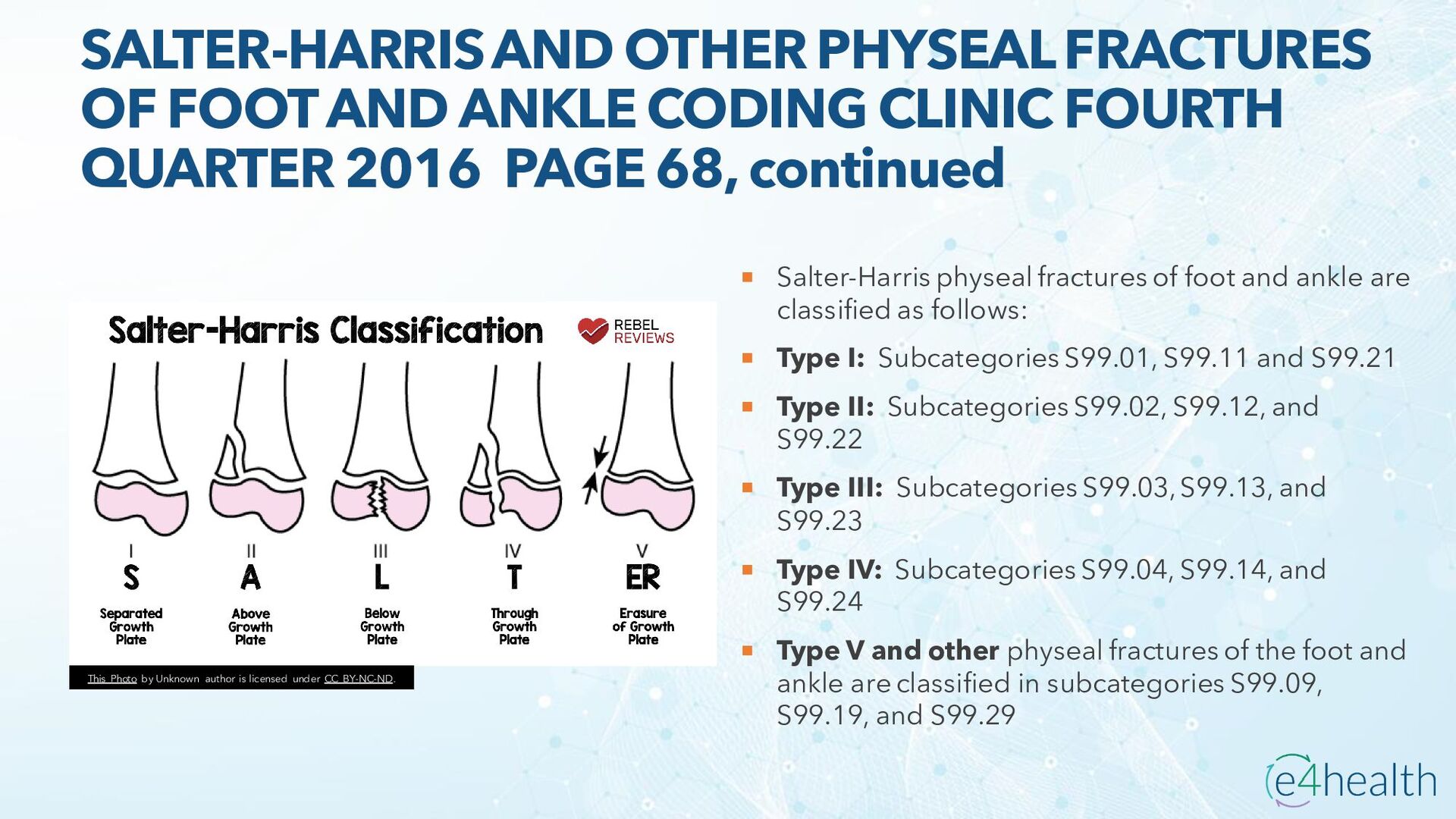
  51. SALTER-HARRIS AND OTHERPHYSEALFRACTURES OF FOOT AND ANKLE CODING CLINIC FOURTH

    QUARTER 2016 PAGE 68, continued  Salter-Harris physeal fractures of foot and ankle are classified as follows:  Type I: Subcategories S99.01, S99.11 and S99.21  Type II: Subcategories S99.02, S99.12, and S99.22  Type III: Subcategories S99.03, S99.13, and S99.23  Type IV: Subcategories S99.04, S99.14, and S99.24  Type V and other physeal fractures of the foot and ankle are classified in subcategories S99.09, S99.19, and S99.29 This Photo by Unknown author is licensed under CC BY-NC-ND.
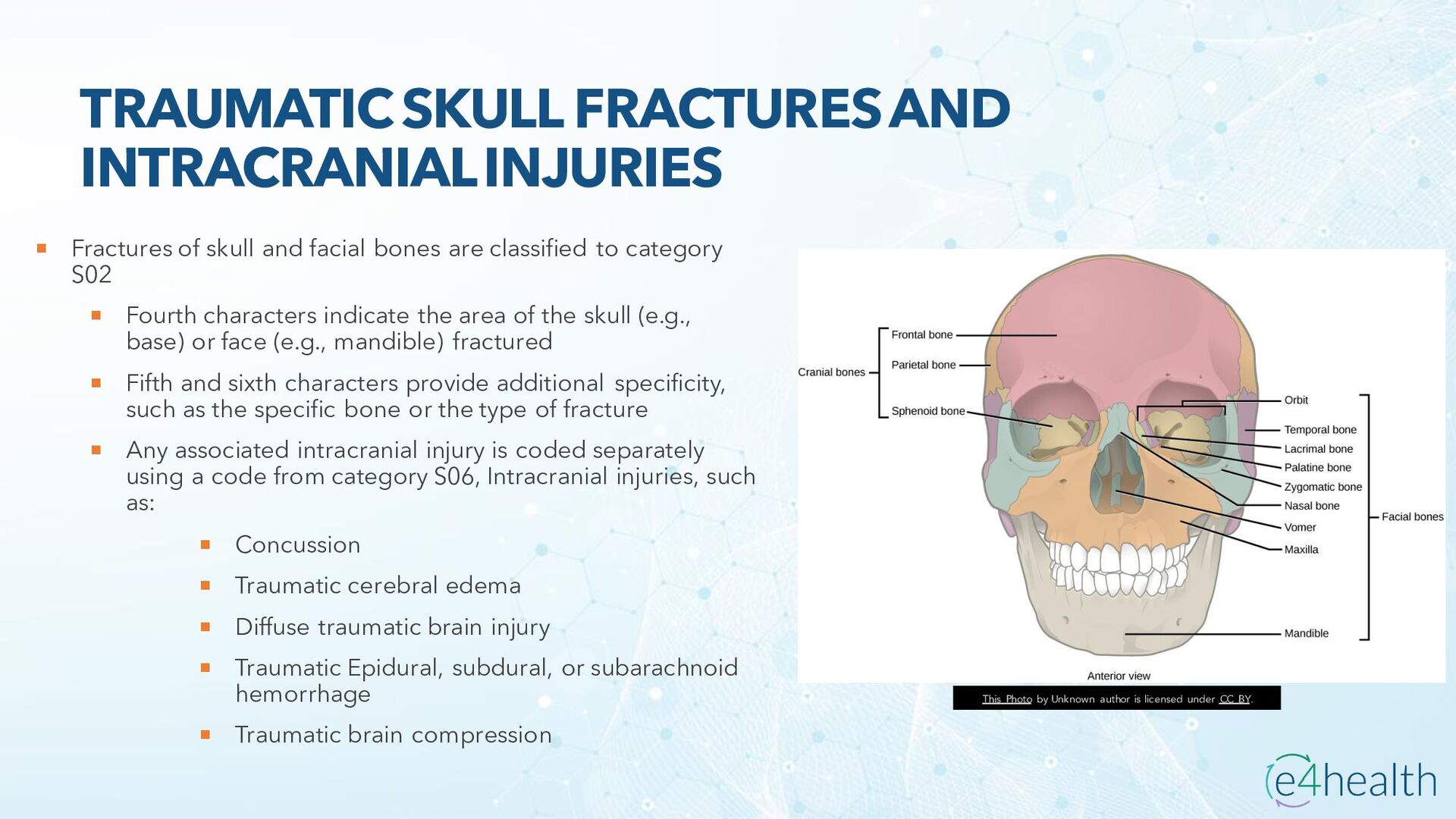
  52. TRAUMATIC SKULL FRACTURES AND INTRACRANIAL INJURIES  Fractures of skull

    and facial bones are classified to category S02  Fourth characters indicate the area of the skull (e.g., base) or face (e.g., mandible) fractured  Fifth and sixth characters provide additional specificity, such as the specific bone or the type of fracture  Any associated intracranial injury is coded separately using a code from category S06, Intracranial injuries, such as:  Concussion  Traumatic cerebral edema  Diffuse traumatic brain injury  Traumatic Epidural, subdural, or subarachnoid hemorrhage  Traumatic brain compression This Photo by Unknown author is licensed under CC BY.
  53.  If an intracranial injury involves an open wound of

    the head (S01.-) or a fracture of the skull (S02.), these are coded separately, as instructed by the notes in the Tabular List  Codes for intracranial injury (S06.-) have additional characters to indicate:  Whether a loss of consciousness was associated with the injury  How long the unconscious state lasted  If the loss of consciousness was greater than 24 hours  with return to pre-existing level of consciousness  without return to pre-existing level of consciousness with patient surviving  Whether there was loss of consciousness of any duration with death due to brain injury or due to any other cause, prior to regaining consciousness Traumatic Skull Fractures and Intracranial Injuries
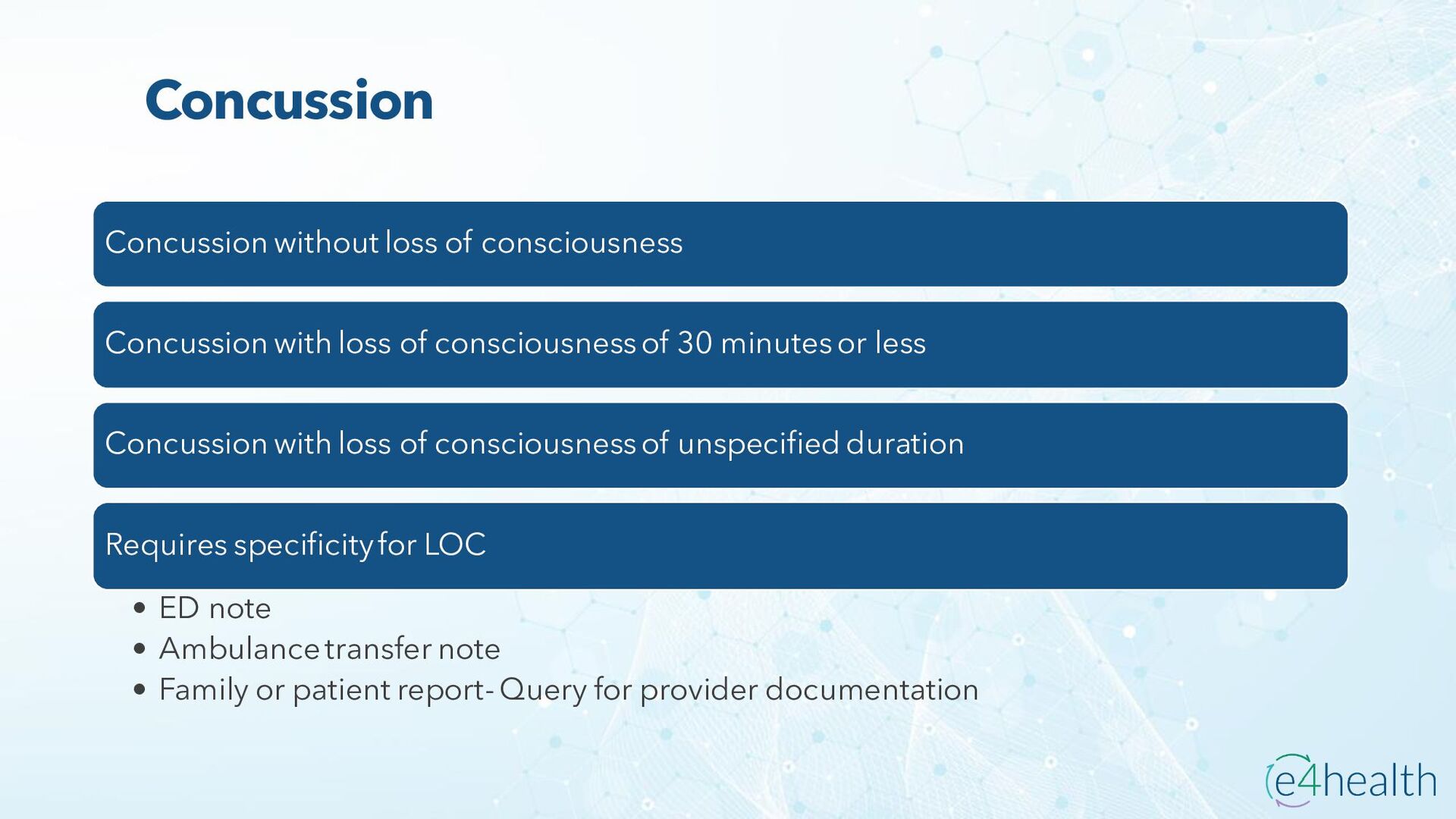
  54. Concussion Concussion without loss of consciousness Concussion with loss of

    consciousness of 30 minutes or less Concussion with loss of consciousness of unspecified duration Requires specificity for LOC • ED note • Ambulance transfer note • Family or patient report- Query for provider documentation
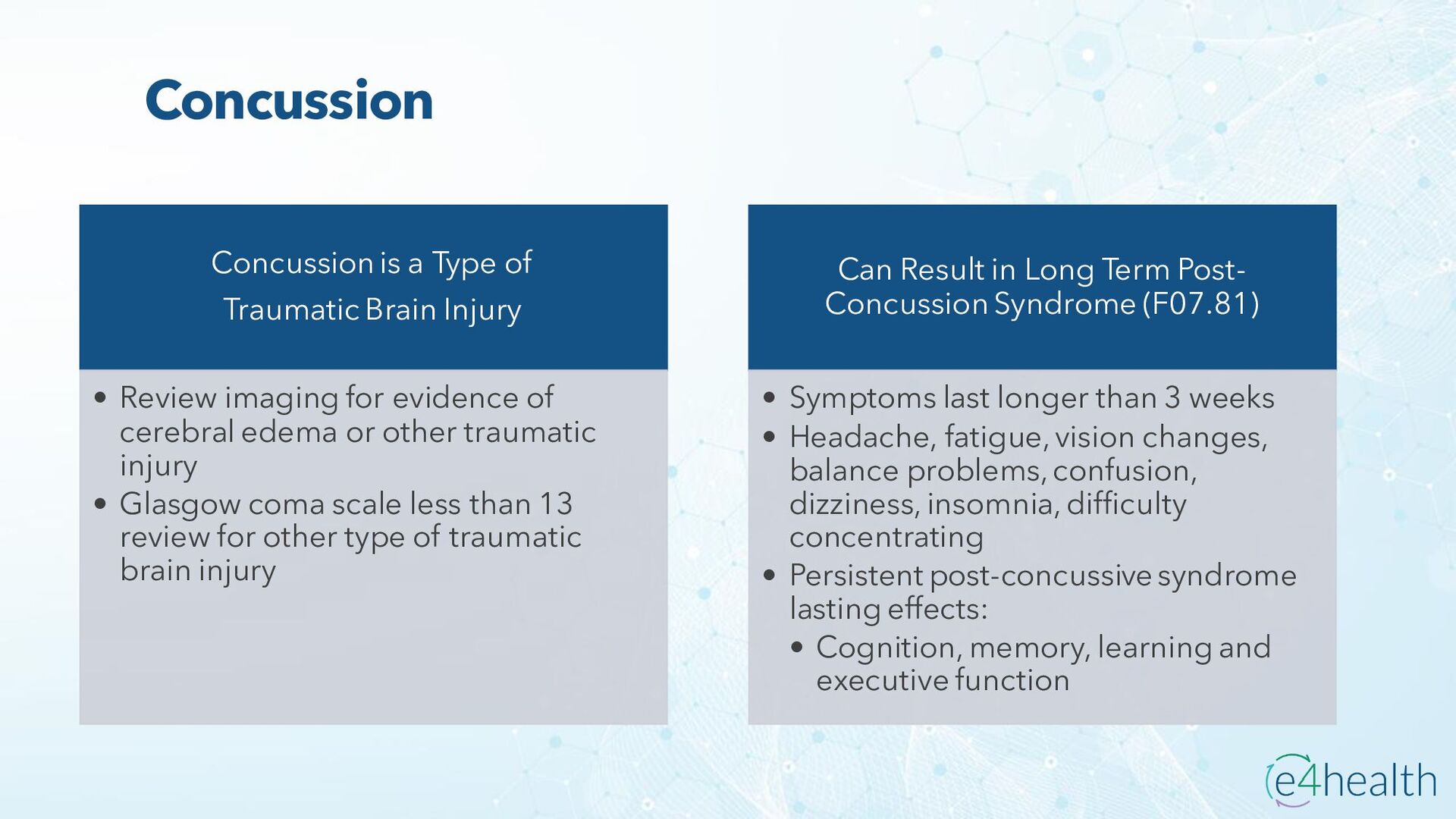
  55. Concussion Concussion is a Type of Traumatic Brain Injury •

    Review imaging for evidence of cerebral edema or other traumatic injury • Glasgow coma scale less than 13 review for other type of traumatic brain injury Can Result in Long Term Post- Concussion Syndrome (F07.81) • Symptoms last longer than 3 weeks • Headache, fatigue, vision changes, balance problems, confusion, dizziness, insomnia, difficulty concentrating • Persistent post-concussive syndrome lasting effects: • Cognition, memory, learning and executive function
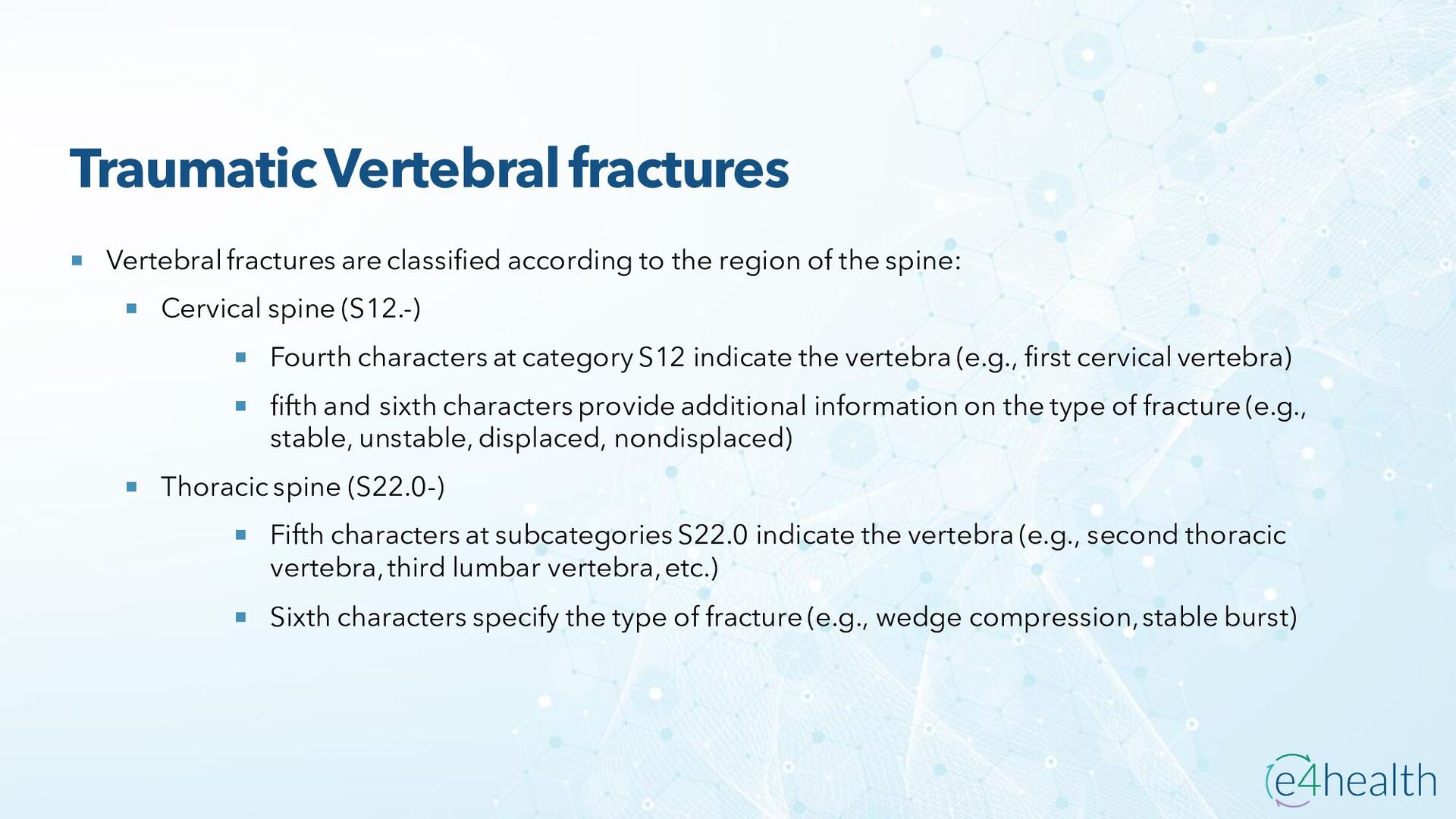
  56.  Vertebral fractures are classified according to the region of

    the spine:  Cervical spine (S12.-)  Fourth characters at category S12 indicate the vertebra (e.g., first cervical vertebra)  fifth and sixth characters provide additional information on the type of fracture (e.g., stable, unstable, displaced, nondisplaced)  Thoracic spine (S22.0-)  Fifth characters at subcategories S22.0 indicate the vertebra (e.g., second thoracic vertebra, third lumbar vertebra, etc.)  Sixth characters specify the type of fracture (e.g., wedge compression, stable burst) Traumatic Vertebral fractures
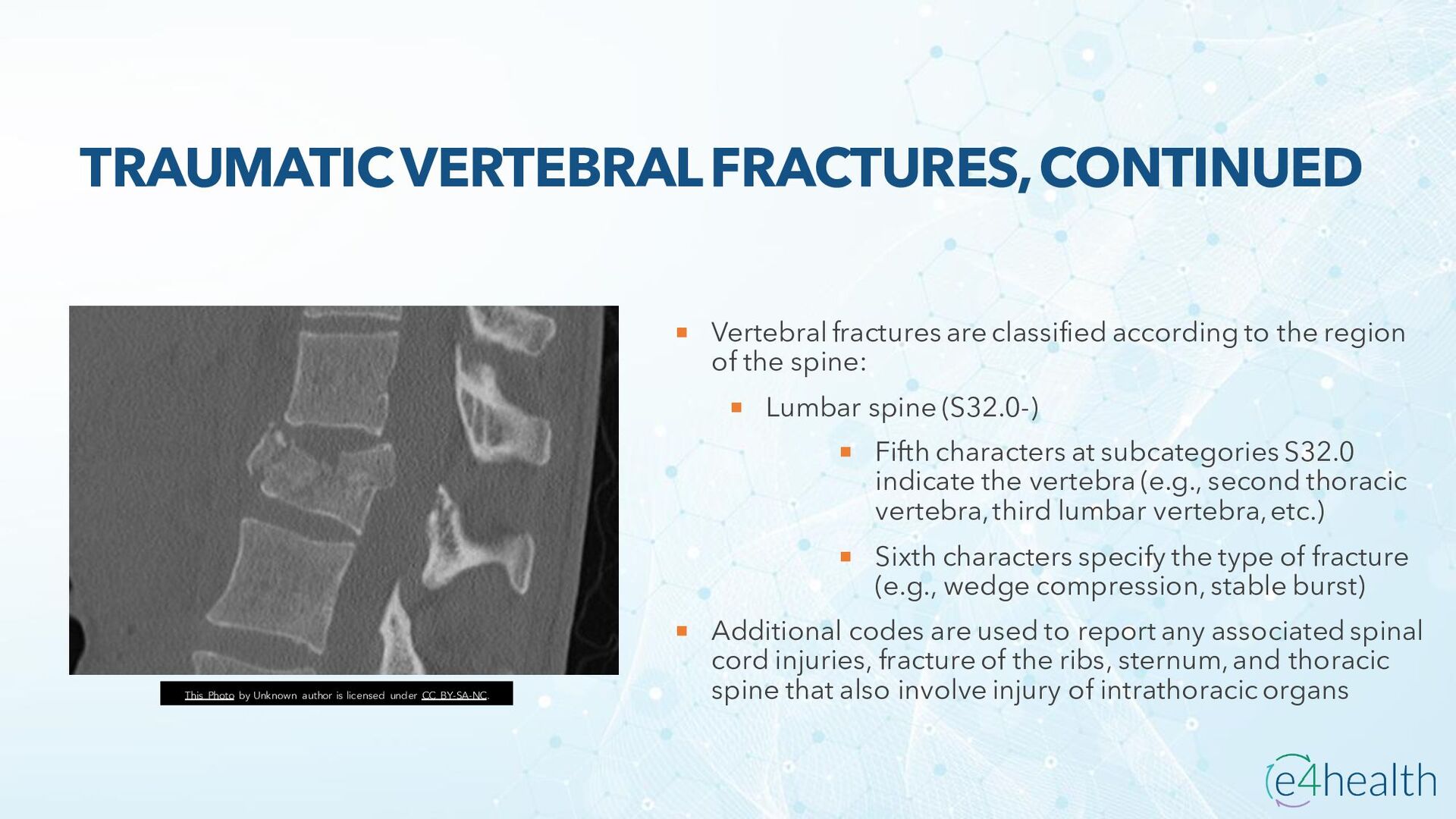
  57. TRAUMATIC VERTEBRAL FRACTURES, CONTINUED  Vertebral fractures are classified according

    to the region of the spine:  Lumbar spine (S32.0-)  Fifth characters at subcategories S32.0 indicate the vertebra (e.g., second thoracic vertebra, third lumbar vertebra, etc.)  Sixth characters specify the type of fracture (e.g., wedge compression, stable burst)  Additional codes are used to report any associated spinal cord injuries, fracture of the ribs, sternum, and thoracic spine that also involve injury of intrathoracic organs This Photo by Unknown author is licensed under CC BY-SA-NC.
  58. TRAUMATIC PELVIC FRACTURES  The pelvis is formed by a

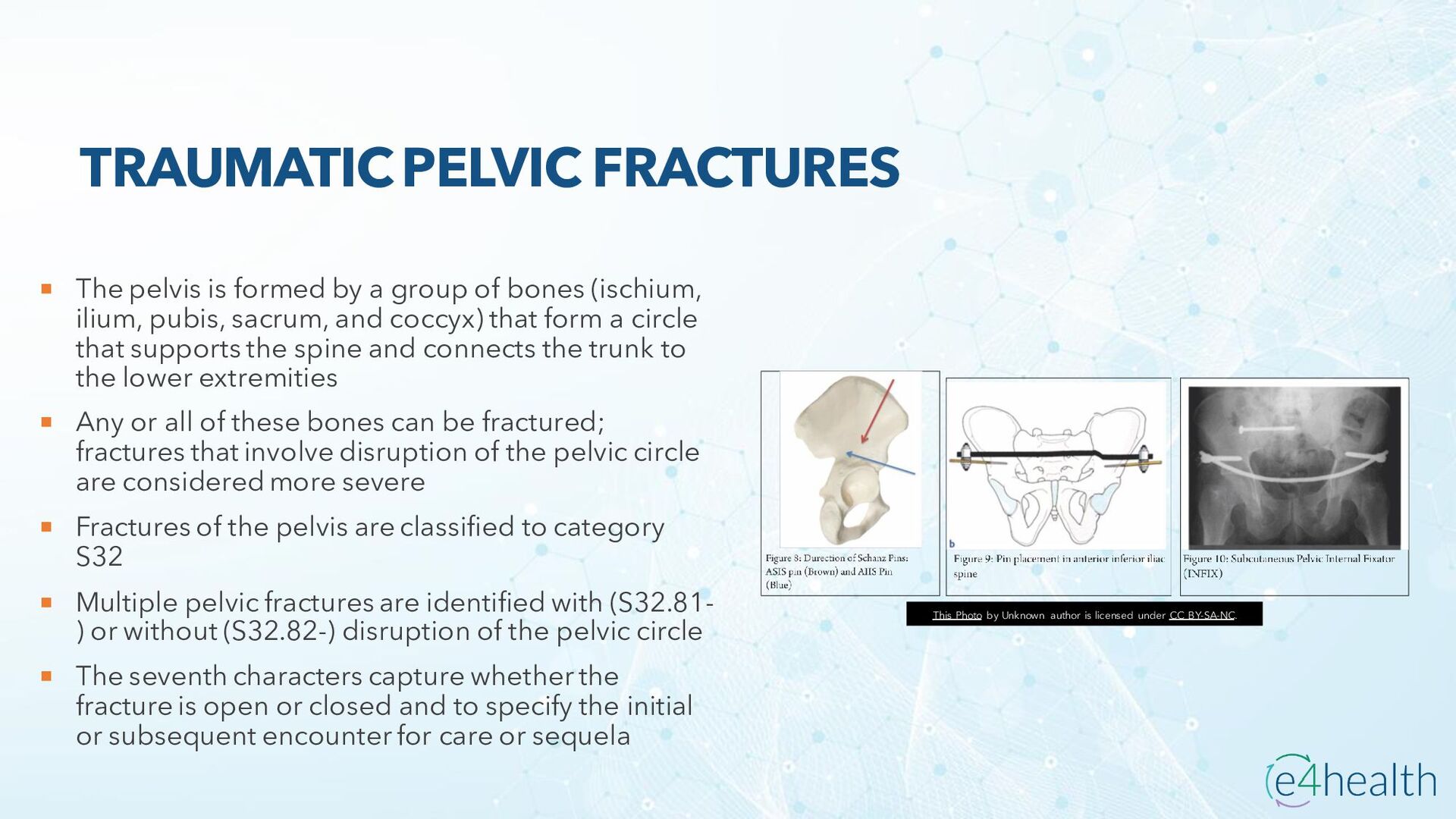
    group of bones (ischium, ilium, pubis, sacrum, and coccyx) that form a circle that supports the spine and connects the trunk to the lower extremities  Any or all of these bones can be fractured; fractures that involve disruption of the pelvic circle are considered more severe  Fractures of the pelvis are classified to category S32  Multiple pelvic fractures are identified with (S32.81- ) or without (S32.82-) disruption of the pelvic circle  The seventh characters capture whether the fracture is open or closed and to specify the initial or subsequent encounter for care or sequela This Photo by Unknown author is licensed under CC BY-SA-NC.
  59. Query opportunity – Traumatic fractures • Cause: • Traumatic •

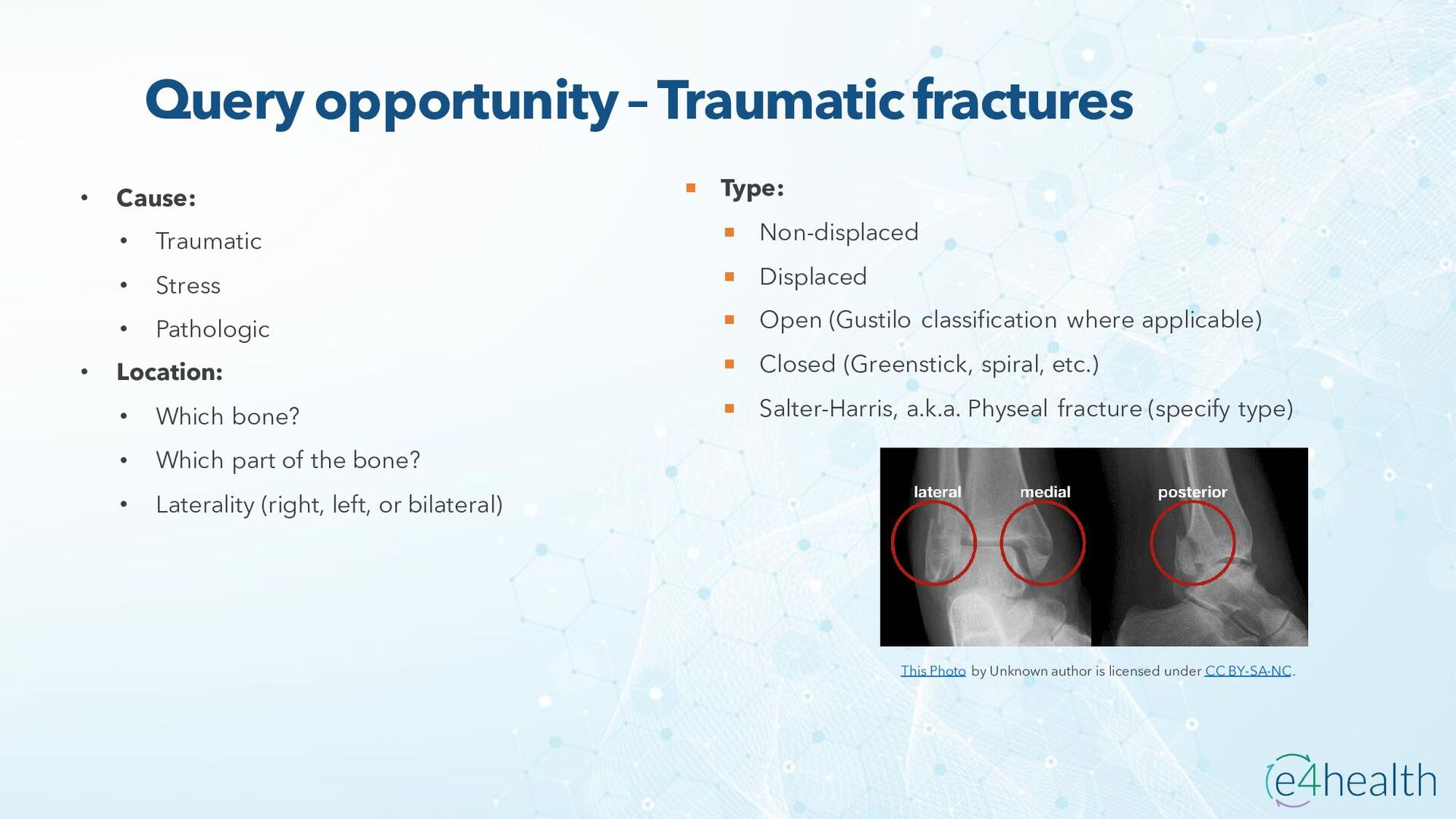
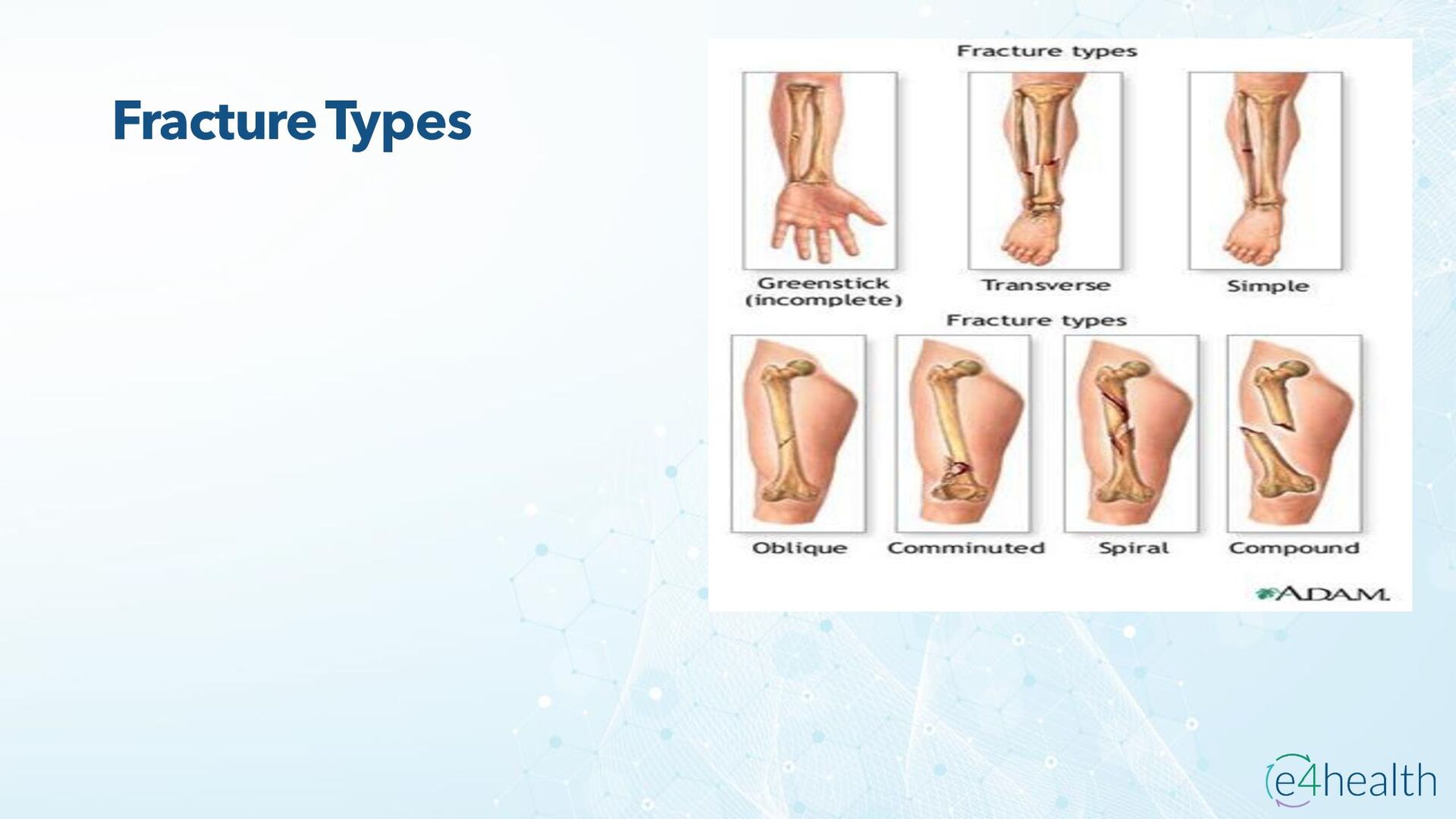
    Stress • Pathologic • Location: • Which bone? • Which part of the bone? • Laterality (right, left, or bilateral)  Type:  Non-displaced  Displaced  Open (Gustilo classification where applicable)  Closed (Greenstick, spiral, etc.)  Salter-Harris, a.k.a. Physeal fracture (specify type) This Photo by Unknown author is licensed under CC BY-SA-NC.
  60. Query opportunity – Traumatic fractures, continued  Encounter:  Initial

     Subsequent  For routine healing  For delayed healing  For non-union  For malunion  Sequela (such as bone shortening)  Include the external cause of the fracture  Document any associated diagnoses/conditions, such as:  Cellulitis  Acute organ injuries  Osteoporosis/Osteopenia  Concussion and length of unconsciousness  Post-concussive syndrome present  Coma/stupor
  61. DEFINITIONS  Adverse effect - classification of a condition caused

    by a drug or another substance when used correctly  Poisoning - classification of a condition caused by a drug or another substance when used incorrectly  Toxic effect - classification of a condition caused by ingestion or contact with a harmful substance  Underdosing - classification of a condition caused by taking less of a medication than is prescribed by a provider or a manufacturer's instruction This Photo by Unknown author is licensed under CC BY.
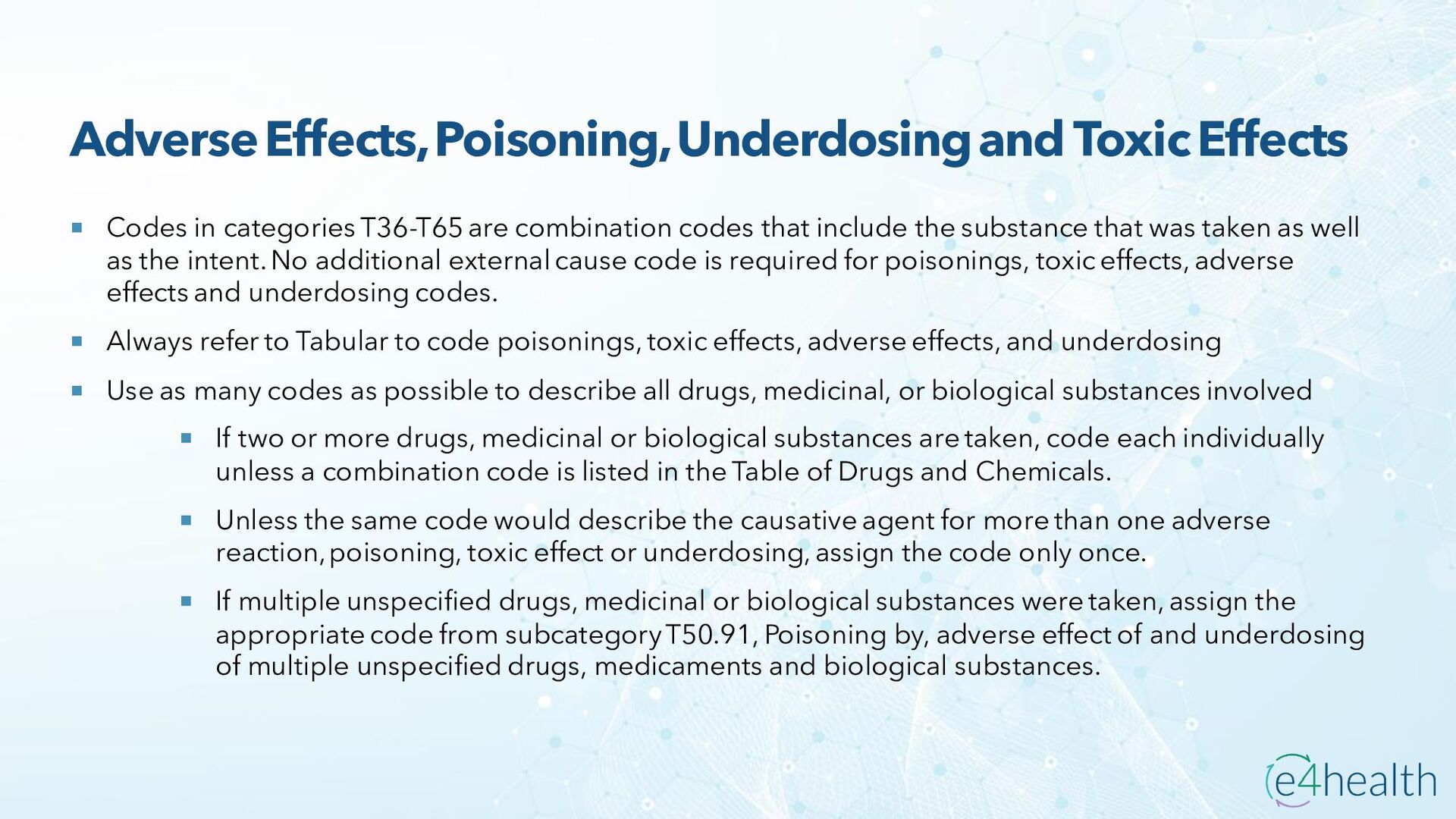
  62.  Codes in categories T36-T65 are combination codes that include

    the substance that was taken as well as the intent. No additional external cause code is required for poisonings, toxic effects, adverse effects and underdosing codes.  Always refer to Tabular to code poisonings, toxic effects, adverse effects, and underdosing  Use as many codes as possible to describe all drugs, medicinal, or biological substances involved  If two or more drugs, medicinal or biological substances are taken, code each individually unless a combination code is listed in the Table of Drugs and Chemicals.  Unless the same code would describe the causative agent for more than one adverse reaction, poisoning, toxic effect or underdosing, assign the code only once.  If multiple unspecified drugs, medicinal or biological substances were taken, assign the appropriate code from subcategory T50.91, Poisoning by, adverse effect of and underdosing of multiple unspecified drugs, medicaments and biological substances. Adverse Effects, Poisoning, Underdosing and Toxic Effects
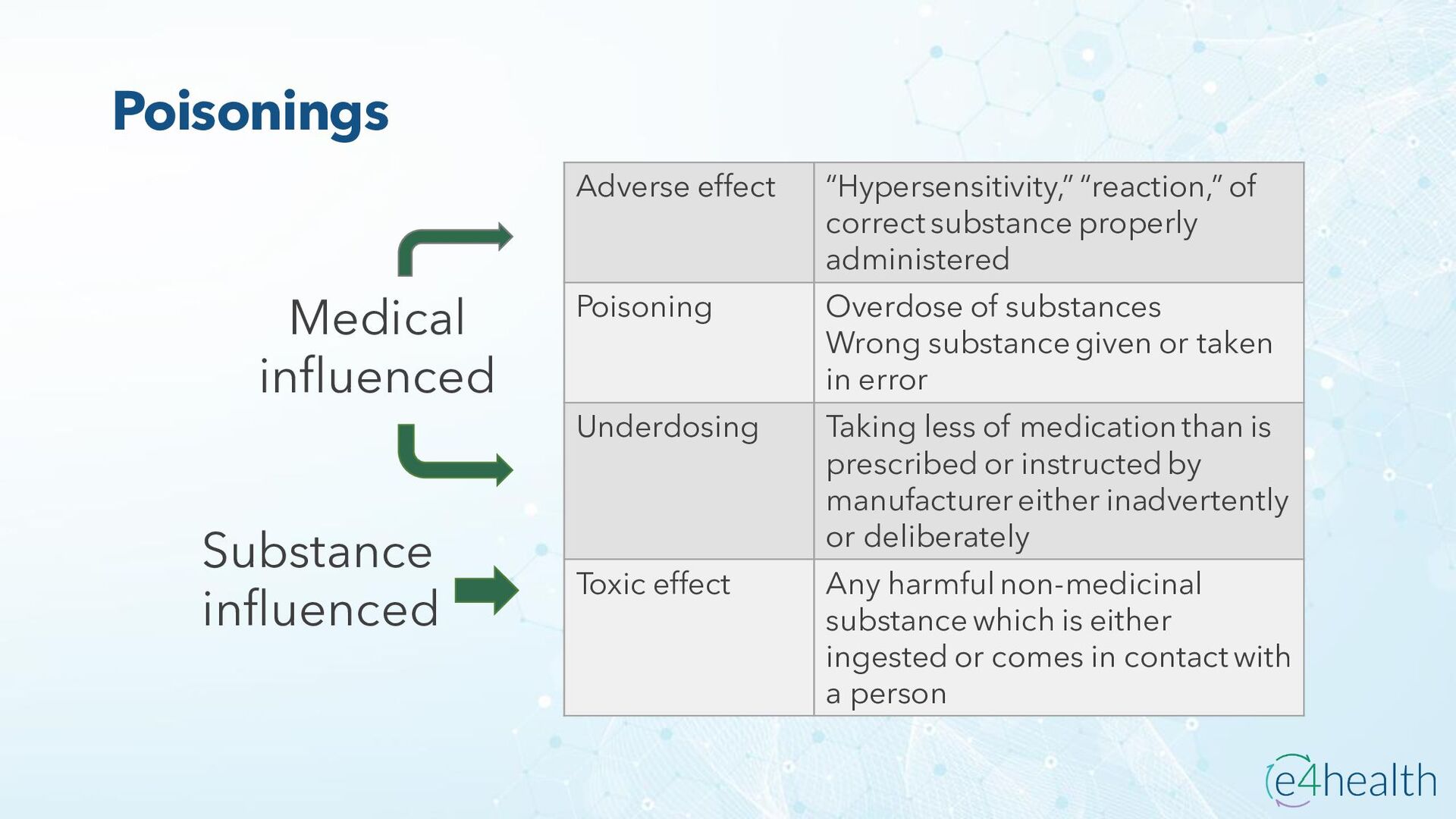
  63. Poisonings Adverse effect “Hypersensitivity,” “reaction,” of correct substance properly administered

    Poisoning Overdose of substances Wrong substance given or taken in error Underdosing Taking less of medication than is prescribed or instructed by manufacturer either inadvertently or deliberately Toxic effect Any harmful non-medicinal substance which is either ingested or comes in contact with a person Medical influenced Substance influenced
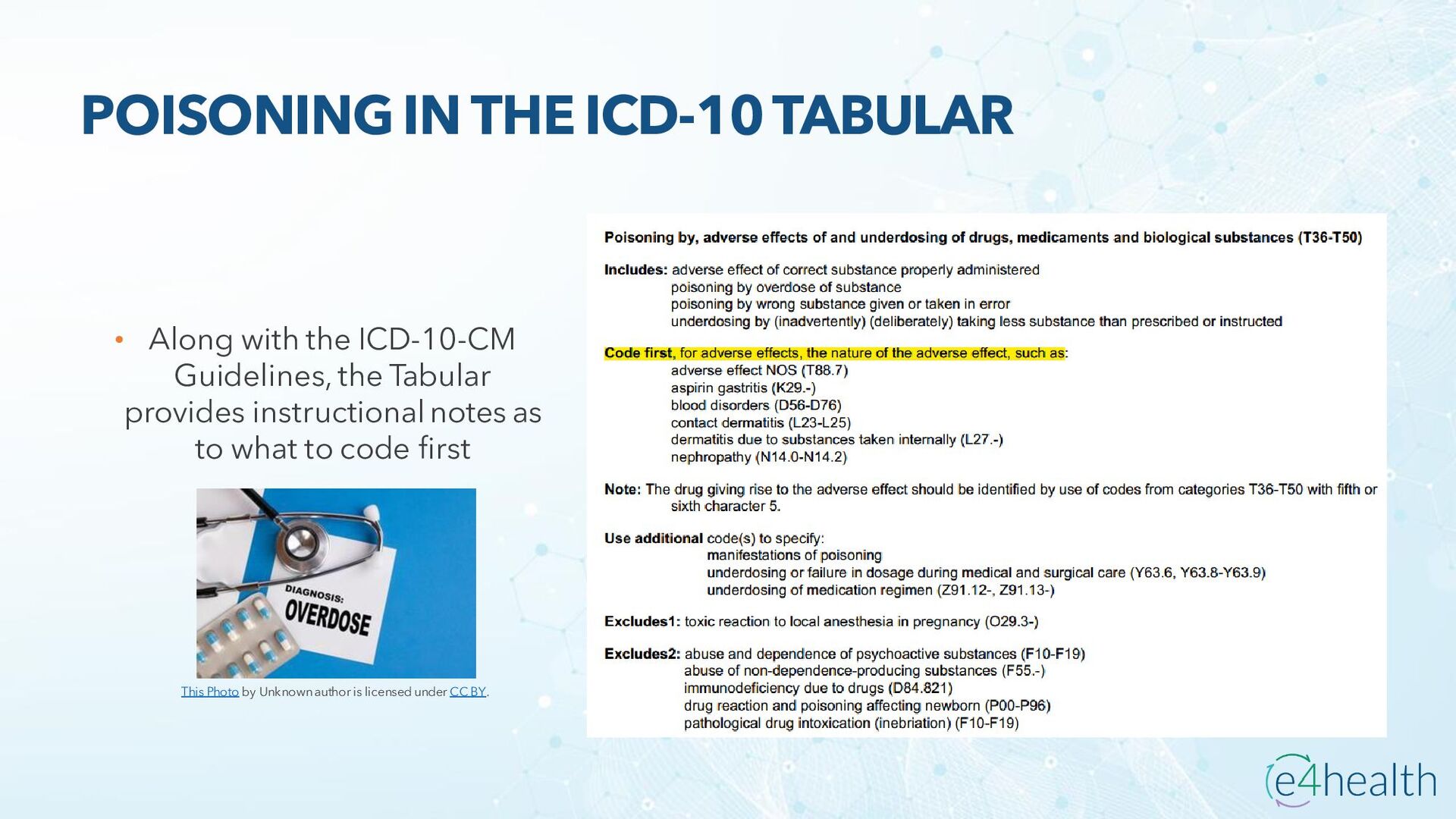
  64. POISONING IN THE ICD-10 TABULAR • Along with the ICD-10-CM

    Guidelines, the Tabular provides instructional notes as to what to code first This Photo by Unknown author is licensed under CC BY.
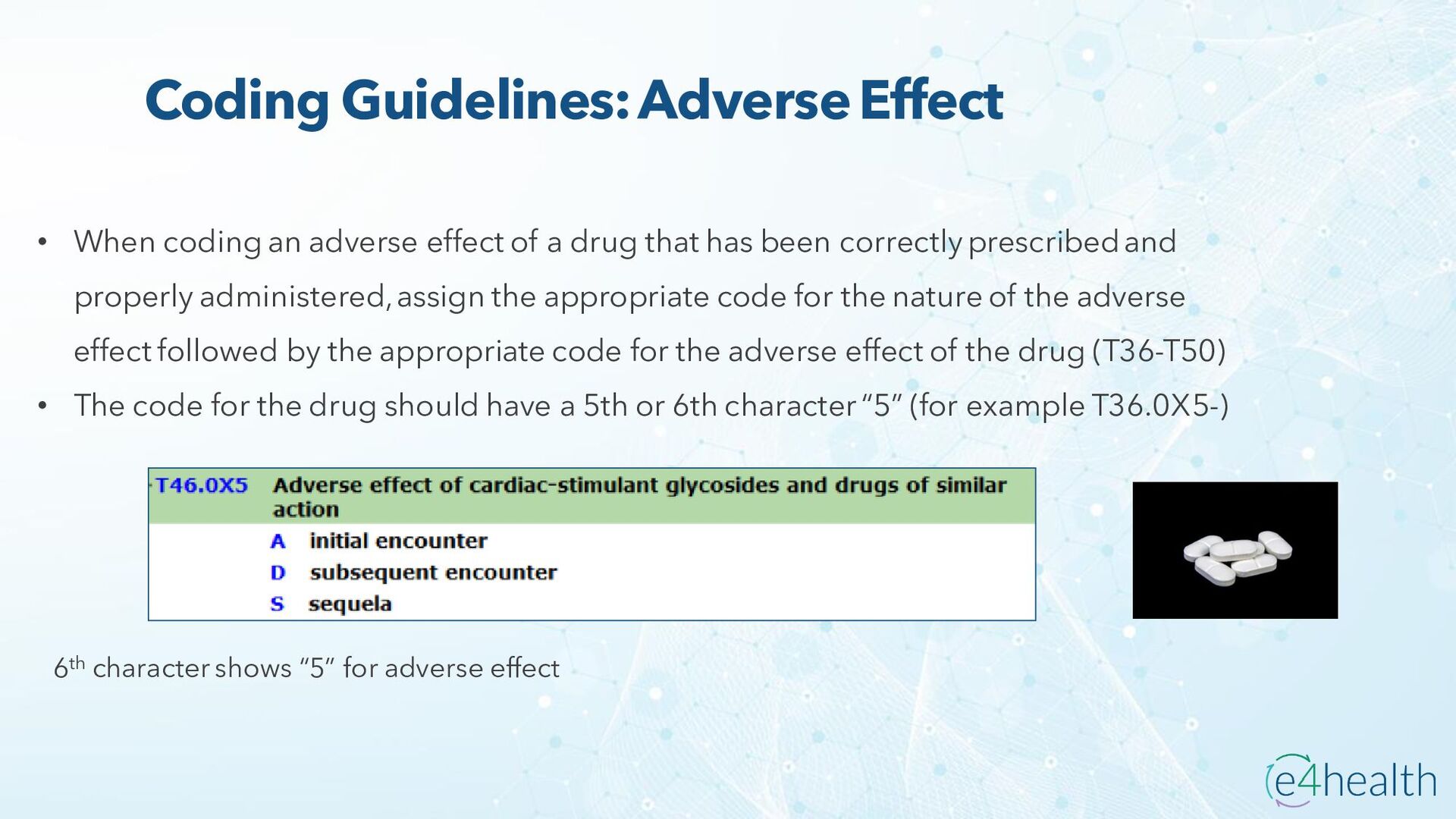
  65. Coding Guidelines: Adverse Effect • When coding an adverse effect

    of a drug that has been correctly prescribed and properly administered, assign the appropriate code for the nature of the adverse effect followed by the appropriate code for the adverse effect of the drug (T36-T50) • The code for the drug should have a 5th or 6th character “5” (for example T36.0X5-) 6th character shows “5” for adverse effect
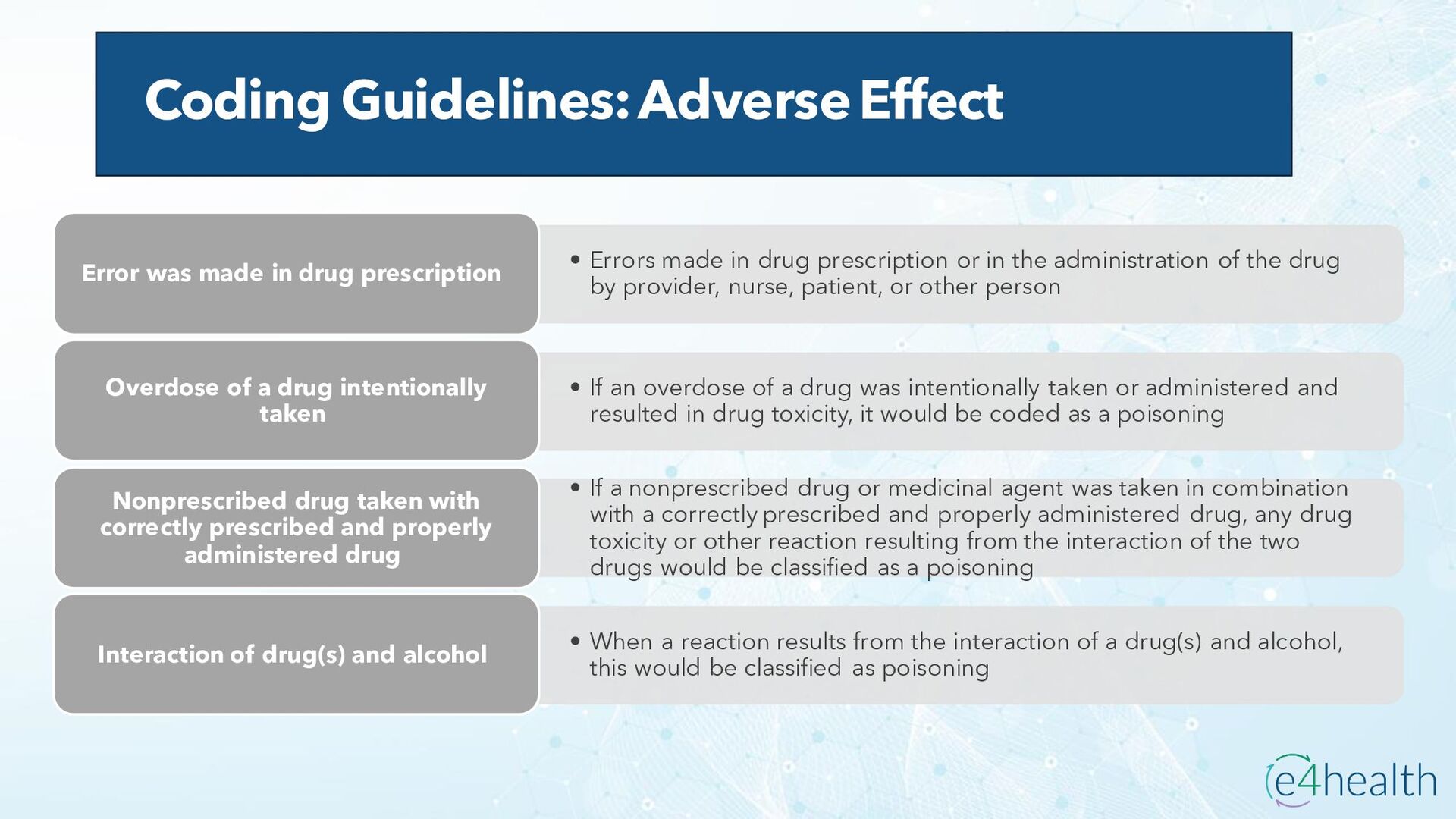
  66. Coding Guidelines: Adverse Effect • Errors made in drug prescription

    or in the administration of the drug by provider, nurse, patient, or other person Error was made in drug prescription • If an overdose of a drug was intentionally taken or administered and resulted in drug toxicity, it would be coded as a poisoning Overdose of a drug intentionally taken • If a nonprescribed drug or medicinal agent was taken in combination with a correctly prescribed and properly administered drug, any drug toxicity or other reaction resulting from the interaction of the two drugs would be classified as a poisoning Nonprescribed drug taken with correctly prescribed and properly administered drug • When a reaction results from the interaction of a drug(s) and alcohol, this would be classified as poisoning Interaction of drug(s) and alcohol
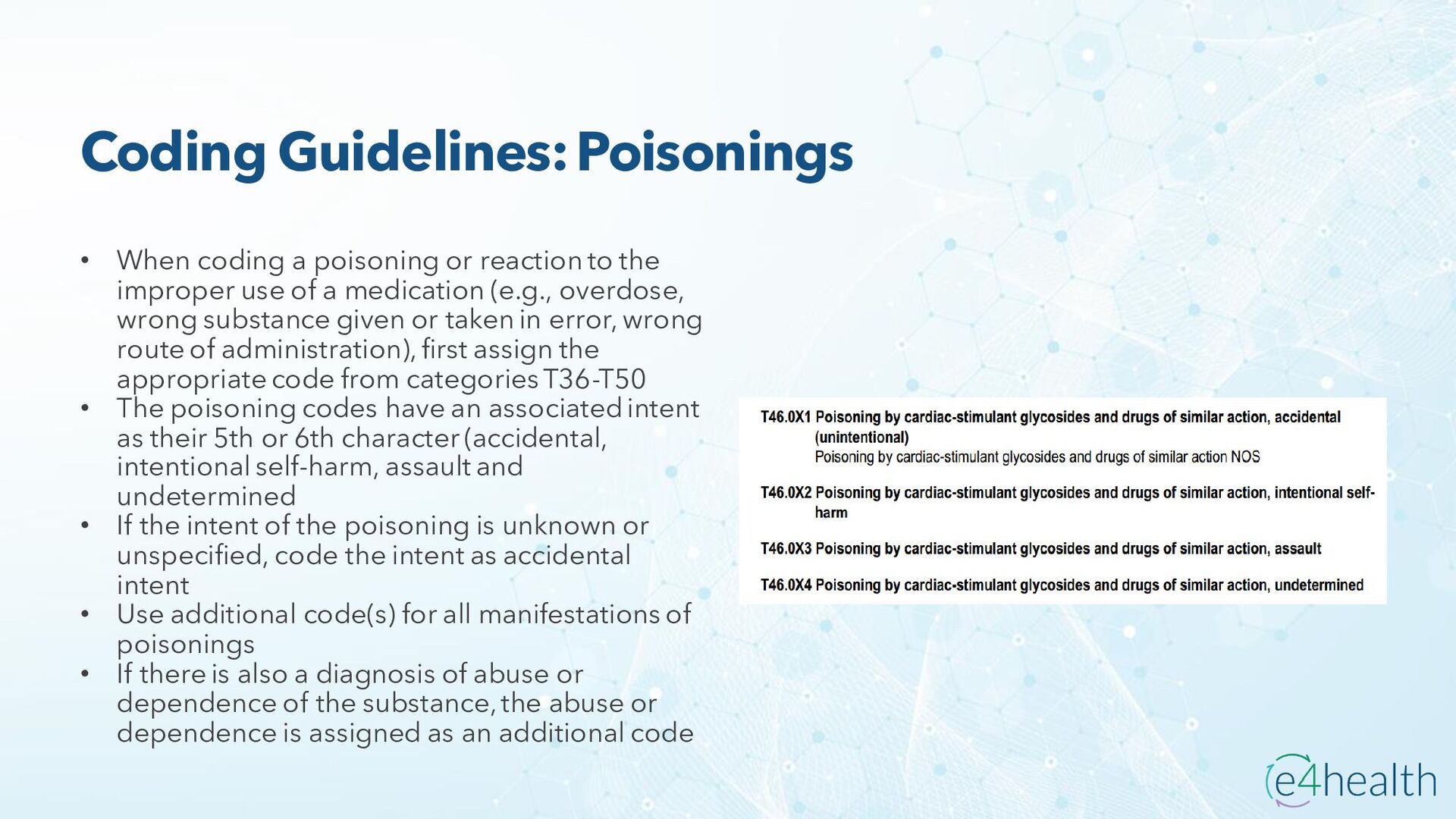
  67. Coding Guidelines: Poisonings • When coding a poisoning or reaction

    to the improper use of a medication (e.g., overdose, wrong substance given or taken in error, wrong route of administration), first assign the appropriate code from categories T36-T50 • The poisoning codes have an associated intent as their 5th or 6th character (accidental, intentional self-harm, assault and undetermined • If the intent of the poisoning is unknown or unspecified, code the intent as accidental intent • Use additional code(s) for all manifestations of poisonings • If there is also a diagnosis of abuse or dependence of the substance, the abuse or dependence is assigned as an additional code
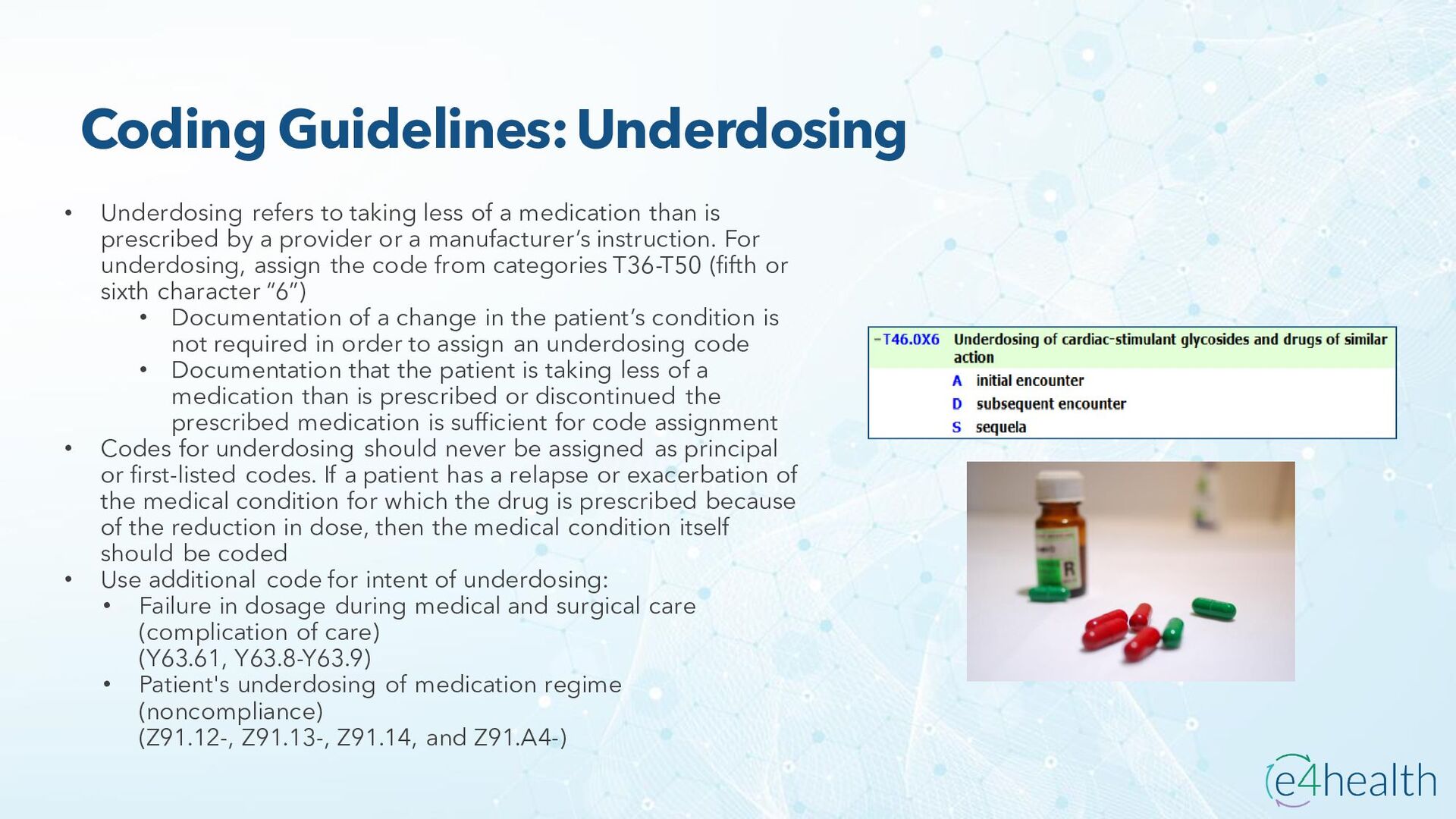
  68. Coding Guidelines: Underdosing • Underdosing refers to taking less of

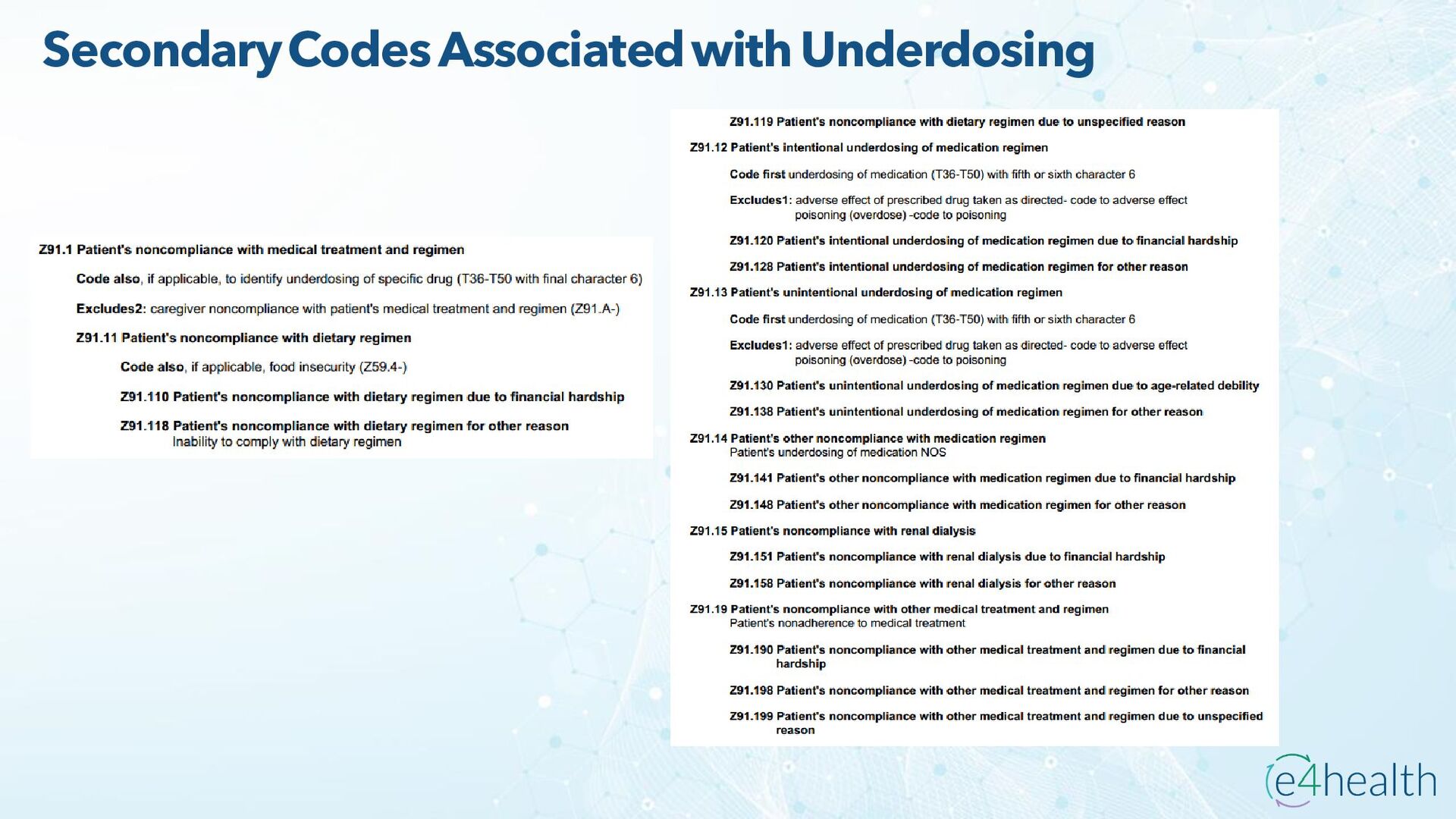
    a medication than is prescribed by a provider or a manufacturer’s instruction. For underdosing, assign the code from categories T36-T50 (fifth or sixth character “6”) • Documentation of a change in the patient’s condition is not required in order to assign an underdosing code • Documentation that the patient is taking less of a medication than is prescribed or discontinued the prescribed medication is sufficient for code assignment • Codes for underdosing should never be assigned as principal or first-listed codes. If a patient has a relapse or exacerbation of the medical condition for which the drug is prescribed because of the reduction in dose, then the medical condition itself should be coded • Use additional code for intent of underdosing: • Failure in dosage during medical and surgical care (complication of care) (Y63.61, Y63.8-Y63.9) • Patient's underdosing of medication regime (noncompliance) (Z91.12-, Z91.13-, Z91.14, and Z91.A4-)
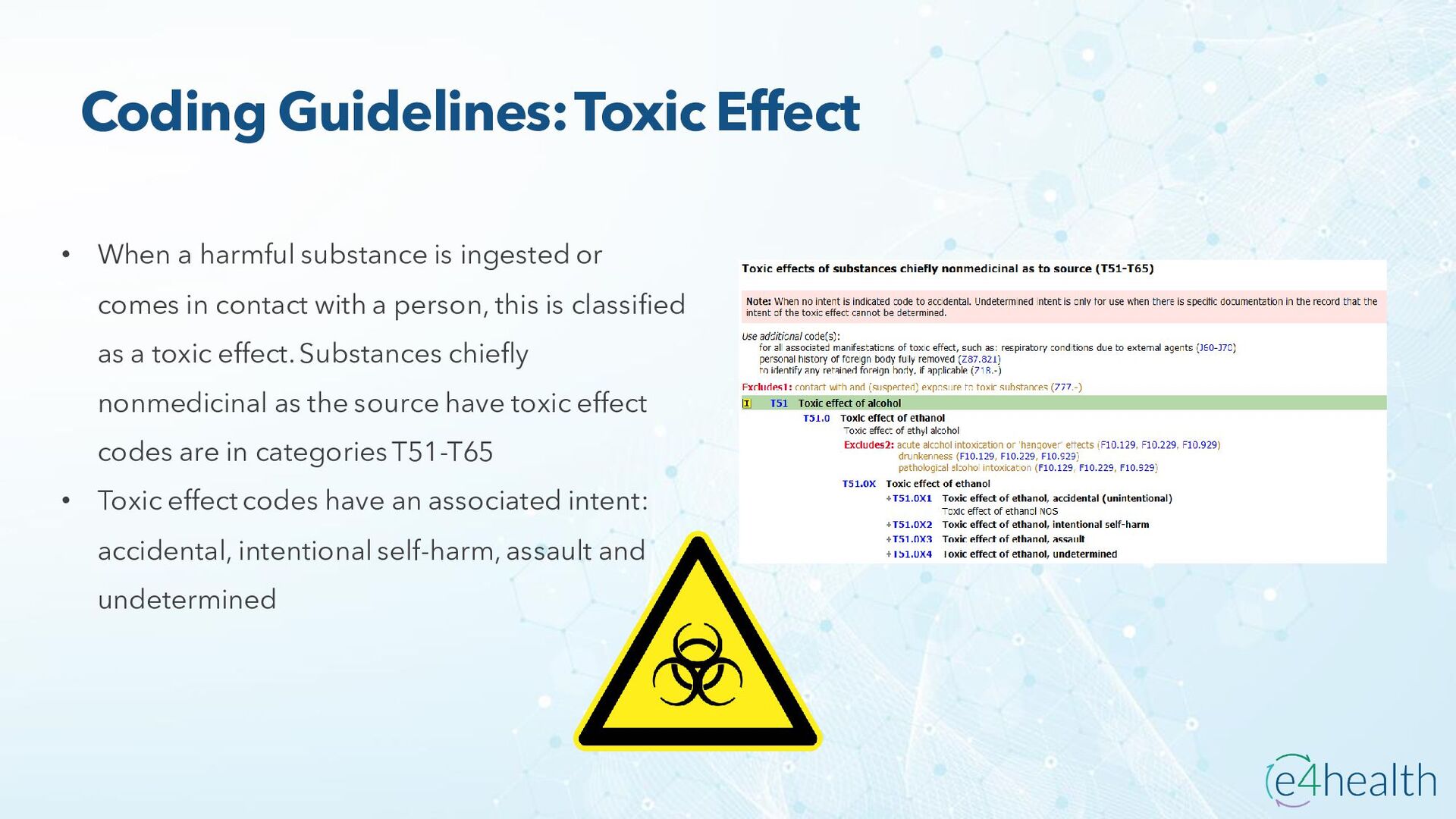
  69. Coding Guidelines: Toxic Effect • When a harmful substance is

    ingested or comes in contact with a person, this is classified as a toxic effect. Substances chiefly nonmedicinal as the source have toxic effect codes are in categories T51-T65 • Toxic effect codes have an associated intent: accidental, intentional self-harm, assault and undetermined
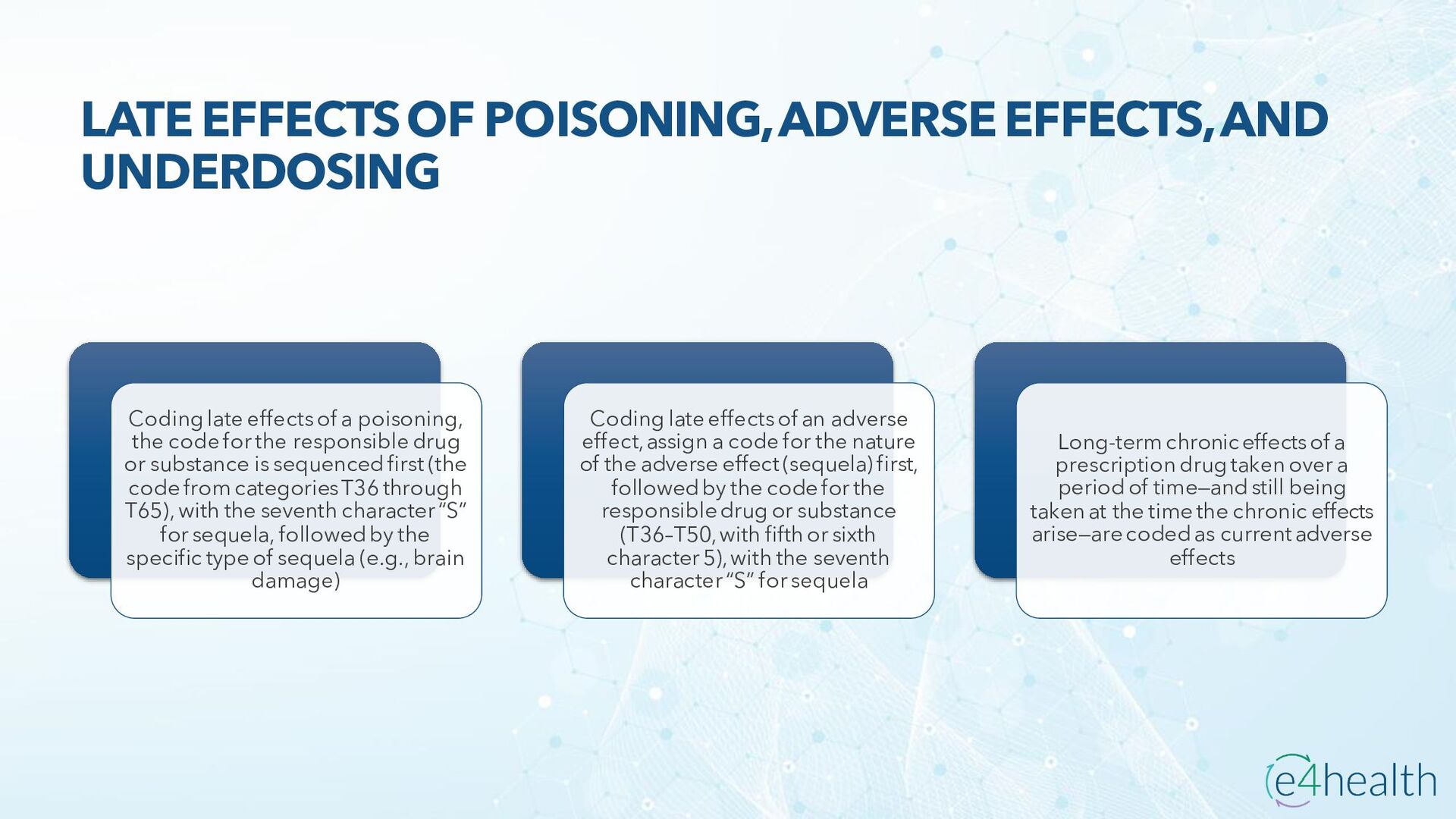
  70. LATE EFFECTS OF POISONING, ADVERSE EFFECTS, AND UNDERDOSING Coding late

    effects of a poisoning, the code for the responsible drug or substance is sequenced first (the code from categories T36 through T65), with the seventh character “S” for sequela, followed by the specific type of sequela (e.g., brain damage) Coding late effects of an adverse effect, assign a code for the nature of the adverse effect (sequela) first, followed by the code for the responsible drug or substance (T36–T50, with fifth or sixth character 5), with the seventh character “S” for sequela Long-term chronic effects of a prescription drug taken over a period of time—and still being taken at the time the chronic effects arise—are coded as current adverse effects
  71. Coding Guideline: Adult and child abuse, neglect and other maltreatment

    • Sequence first the appropriate code from categories T74.- (Adult and child abuse, neglect and other maltreatment, confirmed) or T76.- (Adult and child abuse, neglect and other maltreatment, suspected) for abuse, neglect and other maltreatment, followed by any accompanying mental health or injury code(s) • If the documentation in the medical record states abuse or neglect it is coded as confirmed (T74.-) • For cases of confirmed abuse or neglect an external cause code from the assault section (X92-Y08) should be added to identify the cause of any physical injuries • A perpetrator code (Y07) should be added when the perpetrator of the abuse is known
  72. Coding Guideline: Adult and child abuse, neglect and other maltreatment,

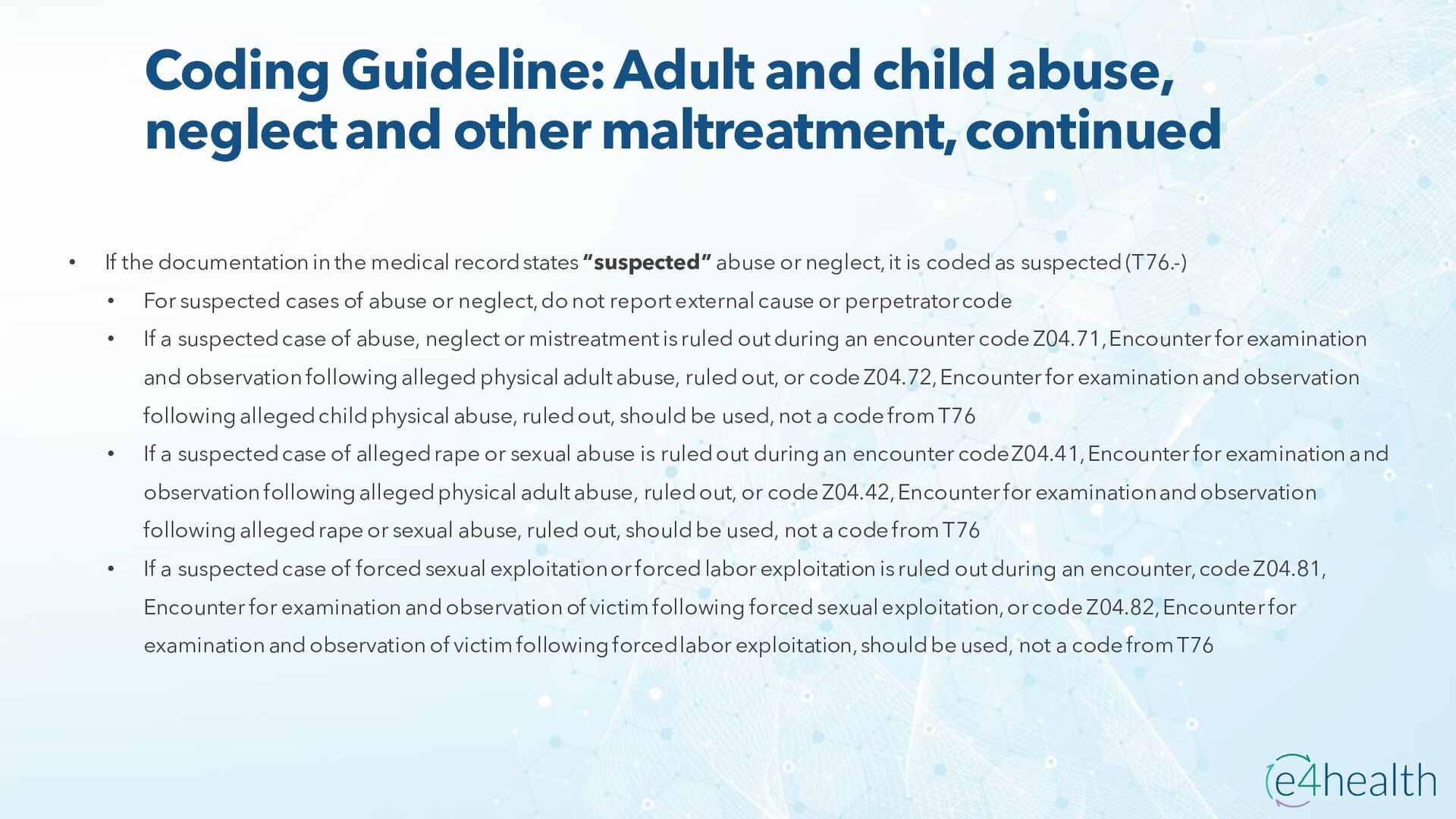
    continued • If the documentation in the medical record states “suspected” abuse or neglect, it is coded as suspected (T76.-) • For suspected cases of abuse or neglect, do not report external cause or perpetrator code • If a suspected case of abuse, neglect or mistreatment is ruled out during an encounter code Z04.71, Encounter for examination and observation following alleged physical adult abuse, ruled out, or code Z04.72, Encounter for examination and observation following alleged child physical abuse, ruled out, should be used, not a code from T76 • If a suspected case of alleged rape or sexual abuse is ruled out during an encounter code Z04.41, Encounter for examination and observation following alleged physical adult abuse, ruled out, or code Z04.42, Encounter for examination and observation following alleged rape or sexual abuse, ruled out, should be used, not a code from T76 • If a suspected case of forced sexual exploitation or forced labor exploitation is ruled out during an encounter, code Z04.81, Encounter for examination and observation of victim following forced sexual exploitation, or code Z04.82, Encounter for examination and observation of victim following forced labor exploitation, should be used, not a code from T76
  73. Factitious Disorder Coding Clinic Fourth Quarter 2018 Page 9 •

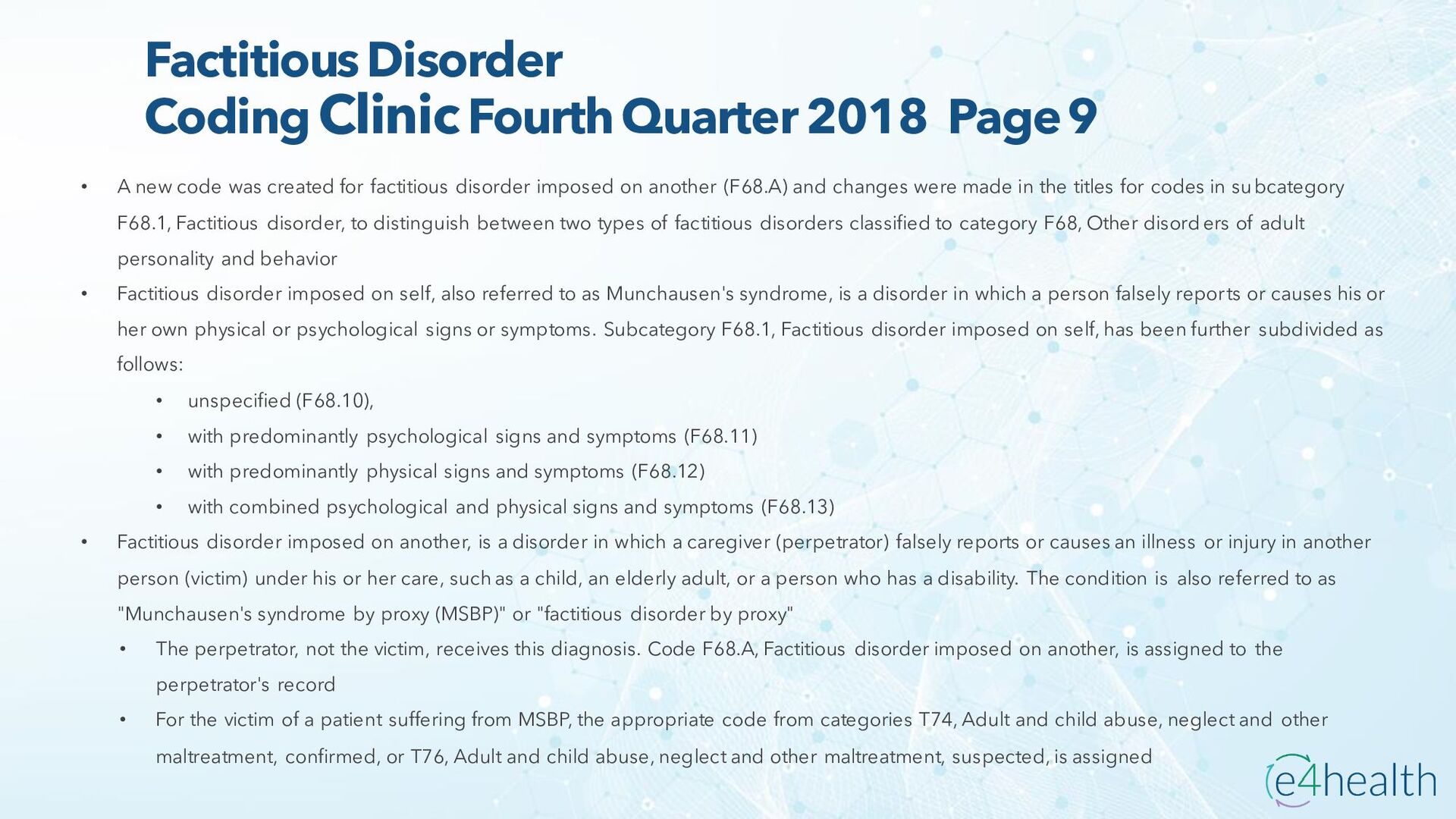
    A new code was created for factitious disorder imposed on another (F68.A) and changes were made in the titles for codes in subcategory F68.1, Factitious disorder, to distinguish between two types of factitious disorders classified to category F68, Other disorders of adult personality and behavior • Factitious disorder imposed on self, also referred to as Munchausen's syndrome, is a disorder in which a person falsely reports or causes his or her own physical or psychological signs or symptoms. Subcategory F68.1, Factitious disorder imposed on self, has been further subdivided as follows: • unspecified (F68.10), • with predominantly psychological signs and symptoms (F68.11) • with predominantly physical signs and symptoms (F68.12) • with combined psychological and physical signs and symptoms (F68.13) • Factitious disorder imposed on another, is a disorder in which a caregiver (perpetrator) falsely reports or causes an illness or injury in another person (victim) under his or her care, such as a child, an elderly adult, or a person who has a disability. The condition is also referred to as "Munchausen's syndrome by proxy (MSBP)" or "factitious disorder by proxy" • The perpetrator, not the victim, receives this diagnosis. Code F68.A, Factitious disorder imposed on another, is assigned to the perpetrator's record • For the victim of a patient suffering from MSBP, the appropriate code from categories T74, Adult and child abuse, neglect and other maltreatment, confirmed, or T76, Adult and child abuse, neglect and other maltreatment, suspected, is assigned
  74. Child/Adult Abuse – General Query opportunity • Review medical record

    for secondary diagnoses, such as: • New or healing fractures with location and laterality • Homelessness • Parkinson’s or Alzheimer's • Immobility or wheel choir bound
  75. Amputation Procedure – General Guidelines • Amputations can be utilized

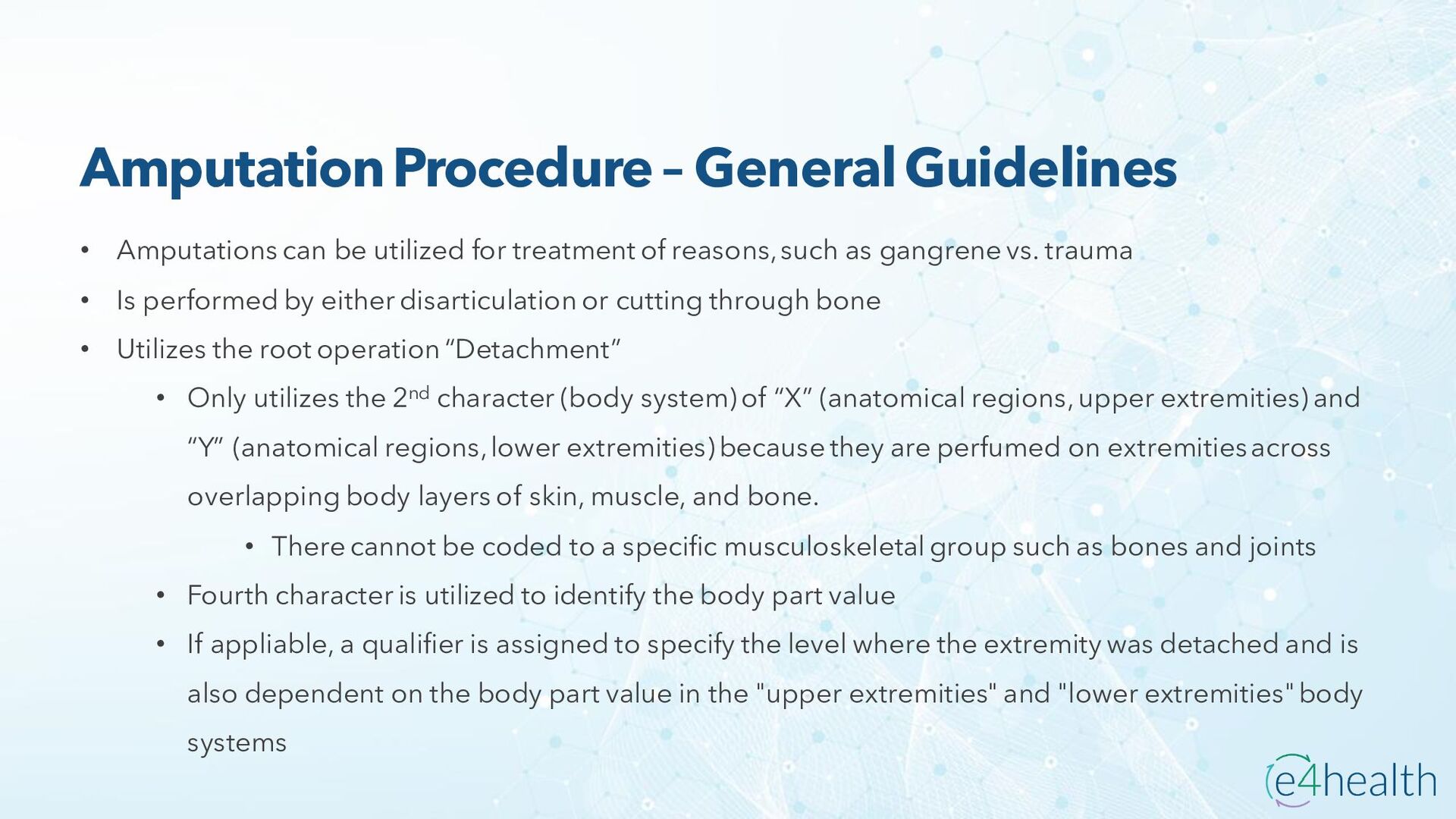
    for treatment of reasons, such as gangrene vs. trauma • Is performed by either disarticulation or cutting through bone • Utilizes the root operation “Detachment” • Only utilizes the 2nd character (body system) of “X” (anatomical regions, upper extremities) and “Y” (anatomical regions, lower extremities) because they are perfumed on extremities across overlapping body layers of skin, muscle, and bone. • There cannot be coded to a specific musculoskeletal group such as bones and joints • Fourth character is utilized to identify the body part value • If appliable, a qualifier is assigned to specify the level where the extremity was detached and is also dependent on the body part value in the "upper extremities" and "lower extremities" body systems
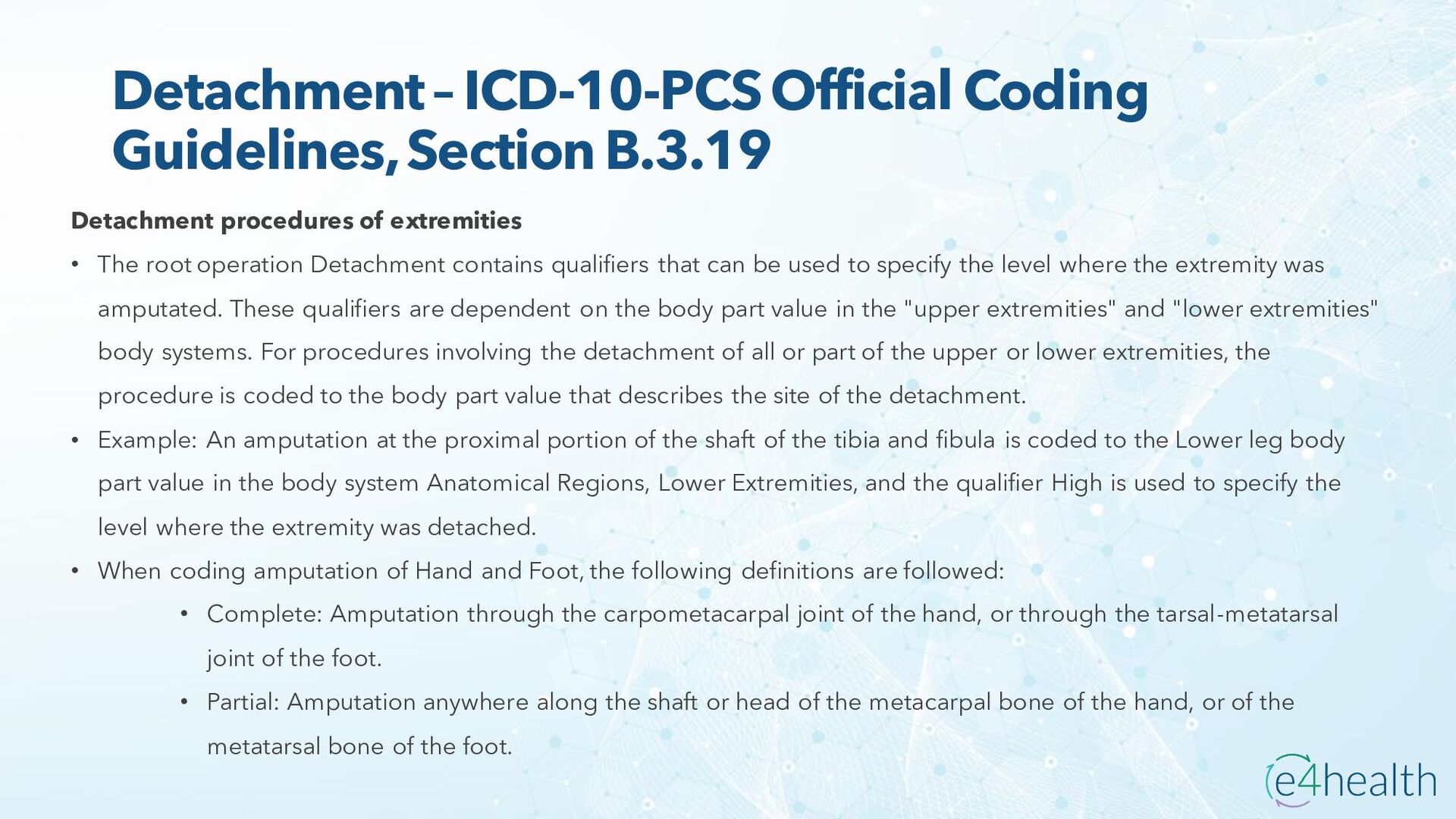
  76. Detachment – ICD-10-PCS Official Coding Guidelines, Section B.3.19 Detachment procedures

    of extremities • The root operation Detachment contains qualifiers that can be used to specify the level where the extremity was amputated. These qualifiers are dependent on the body part value in the "upper extremities" and "lower extremities" body systems. For procedures involving the detachment of all or part of the upper or lower extremities, the procedure is coded to the body part value that describes the site of the detachment. • Example: An amputation at the proximal portion of the shaft of the tibia and fibula is coded to the Lower leg body part value in the body system Anatomical Regions, Lower Extremities, and the qualifier High is used to specify the level where the extremity was detached. • When coding amputation of Hand and Foot, the following definitions are followed: • Complete: Amputation through the carpometacarpal joint of the hand, or through the tarsal-metatarsal joint of the foot. • Partial: Amputation anywhere along the shaft or head of the metacarpal bone of the hand, or of the metatarsal bone of the foot.
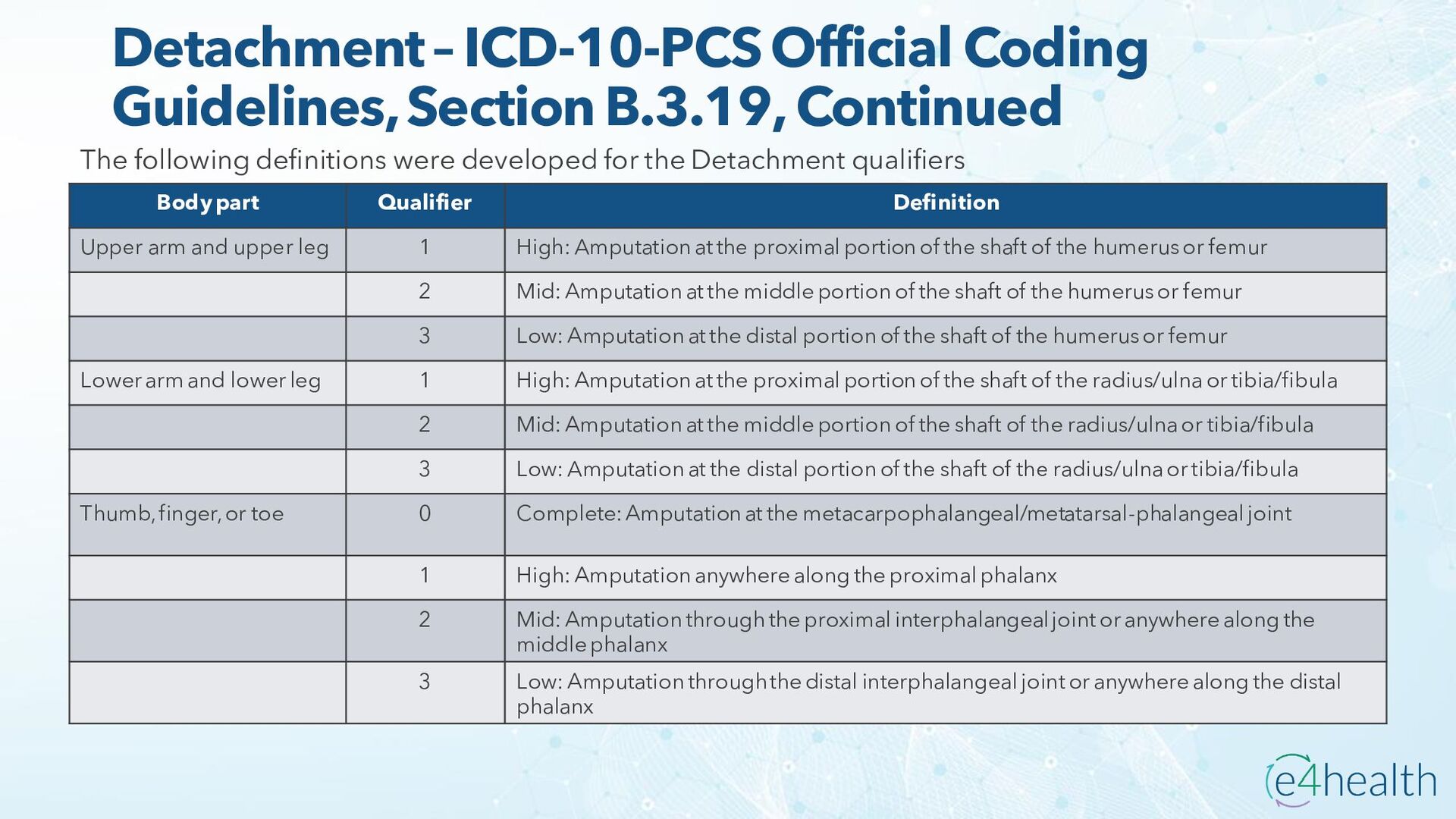
  77. Detachment – ICD-10-PCS Official Coding Guidelines, Section B.3.19, Continued Body

    part Qualifier Definition Upper arm and upper leg 1 High: Amputation at the proximal portion of the shaft of the humerus or femur 2 Mid: Amputation at the middle portion of the shaft of the humerus or femur 3 Low: Amputation at the distal portion of the shaft of the humerus or femur Lower arm and lower leg 1 High: Amputation at the proximal portion of the shaft of the radius/ulna or tibia/fibula 2 Mid: Amputation at the middle portion of the shaft of the radius/ulna or tibia/fibula 3 Low: Amputation at the distal portion of the shaft of the radius/ulna or tibia/fibula Thumb, finger, or toe 0 Complete: Amputation at the metacarpophalangeal/metatarsal-phalangeal joint 1 High: Amputation anywhere along the proximal phalanx 2 Mid: Amputation through the proximal interphalangeal joint or anywhere along the middle phalanx 3 Low: Amputation through the distal interphalangeal joint or anywhere along the distal phalanx The following definitions were developed for the Detachment qualifiers
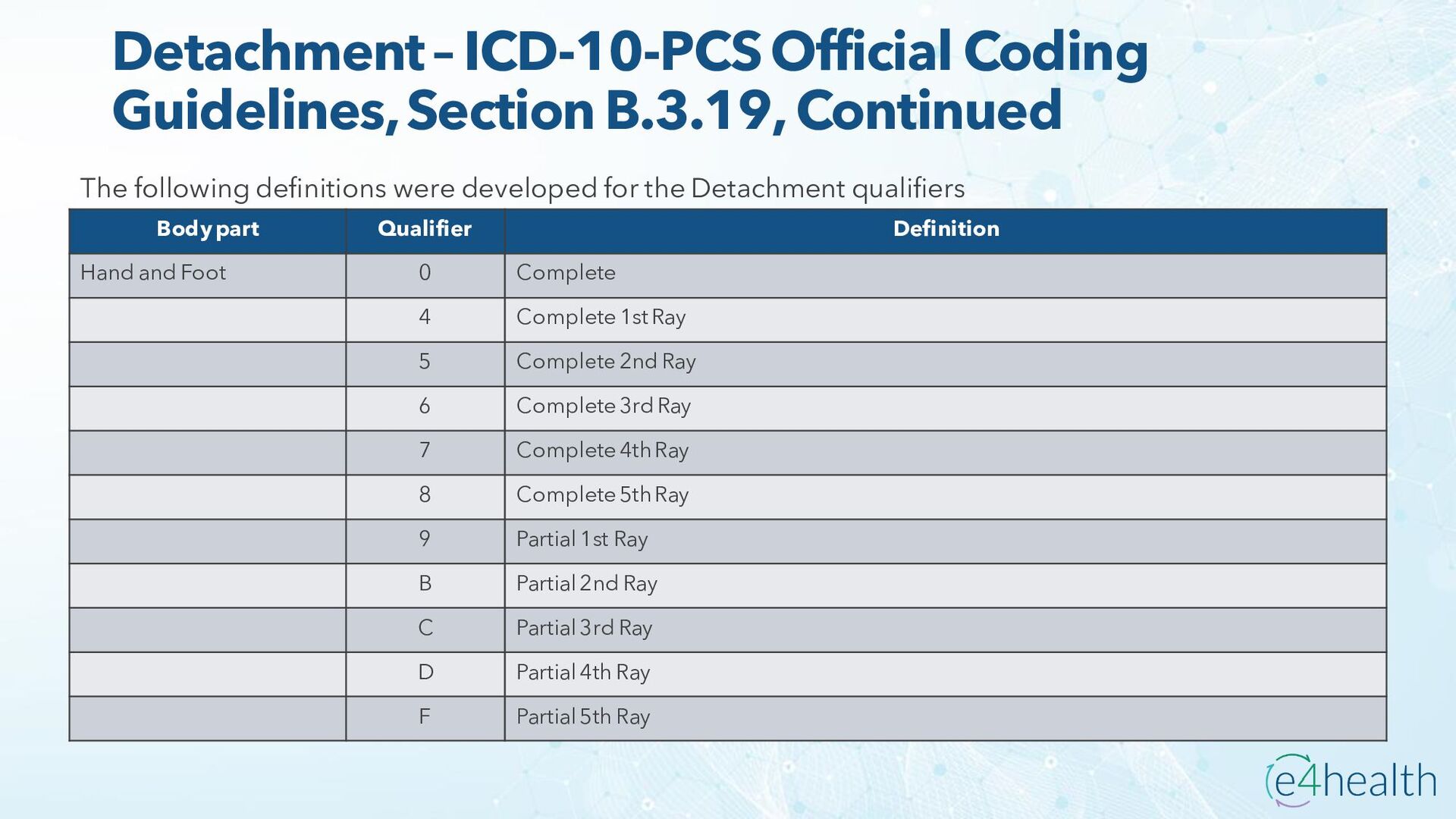
  78. Detachment – ICD-10-PCS Official Coding Guidelines, Section B.3.19, Continued Body

    part Qualifier Definition Hand and Foot 0 Complete 4 Complete 1st Ray 5 Complete 2nd Ray 6 Complete 3rd Ray 7 Complete 4th Ray 8 Complete 5th Ray 9 Partial 1st Ray B Partial 2nd Ray C Partial 3rd Ray D Partial 4th Ray F Partial 5th Ray The following definitions were developed for the Detachment qualifiers
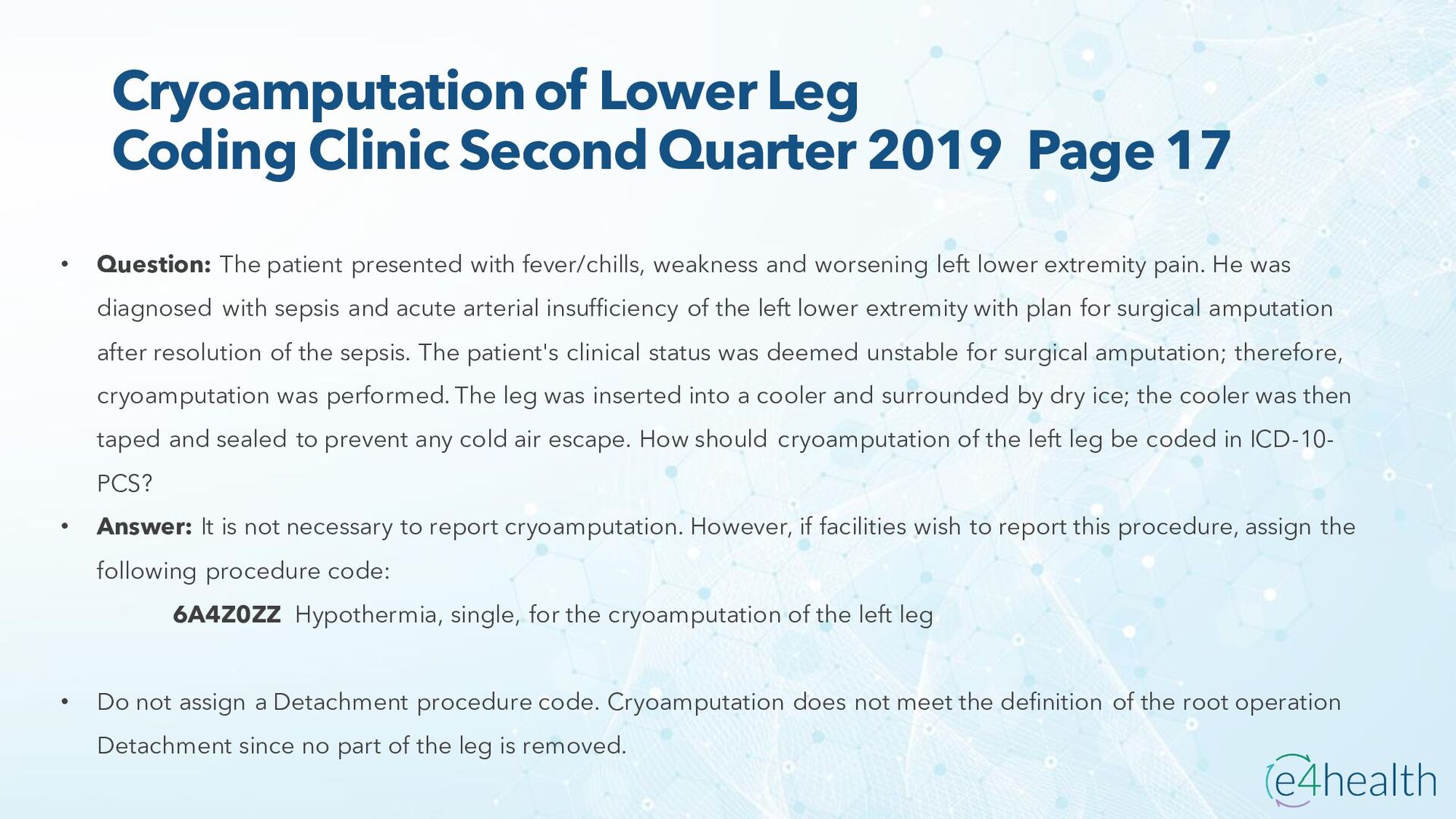
  79. Cryoamputation of Lower Leg Coding Clinic Second Quarter 2019 Page

    17 • Question: The patient presented with fever/chills, weakness and worsening left lower extremity pain. He was diagnosed with sepsis and acute arterial insufficiency of the left lower extremity with plan for surgical amputation after resolution of the sepsis. The patient's clinical status was deemed unstable for surgical amputation; therefore, cryoamputation was performed. The leg was inserted into a cooler and surrounded by dry ice; the cooler was then taped and sealed to prevent any cold air escape. How should cryoamputation of the left leg be coded in ICD-10- PCS? • Answer: It is not necessary to report cryoamputation. However, if facilities wish to report this procedure, assign the following procedure code: 6A4Z0ZZ Hypothermia, single, for the cryoamputation of the left leg • Do not assign a Detachment procedure code. Cryoamputation does not meet the definition of the root operation Detachment since no part of the leg is removed.
  80. Chopart Amputation of Foot Coding Clinic First Quarter 2017 Page

    22 • Question: A 9-year-old male patient with gangrene, myelomeningocele with insensate feet, and chronic osteomyelitis of the left foot, underwent Chopart amputation. The midfoot was disarticulated at the talonavicular and the calcaneocuboid joints. The bones of the mid-foot along with the metatarsals were carefully separated from the underlying plantar soft tissues. The toes and the remainder of the dorsum of the foot were removed. What is the correct code for Chopart amputation of the foot by disarticulation at the talonavicular and the calcaneocuboid joints? • Answer: Assign the following ICD-10-PCS code: 0Y6N0Z0 Detachment at left foot, complete, open approach. • Whether the amputation occurs at the junction of the tarsals with the metatarsals or further up between the tarsal bones closer to the heel, it is classified as a complete foot amputation in ICD-10-PCS. The resection of the associated bones would not be coded separately in addition to the Detachment procedure.
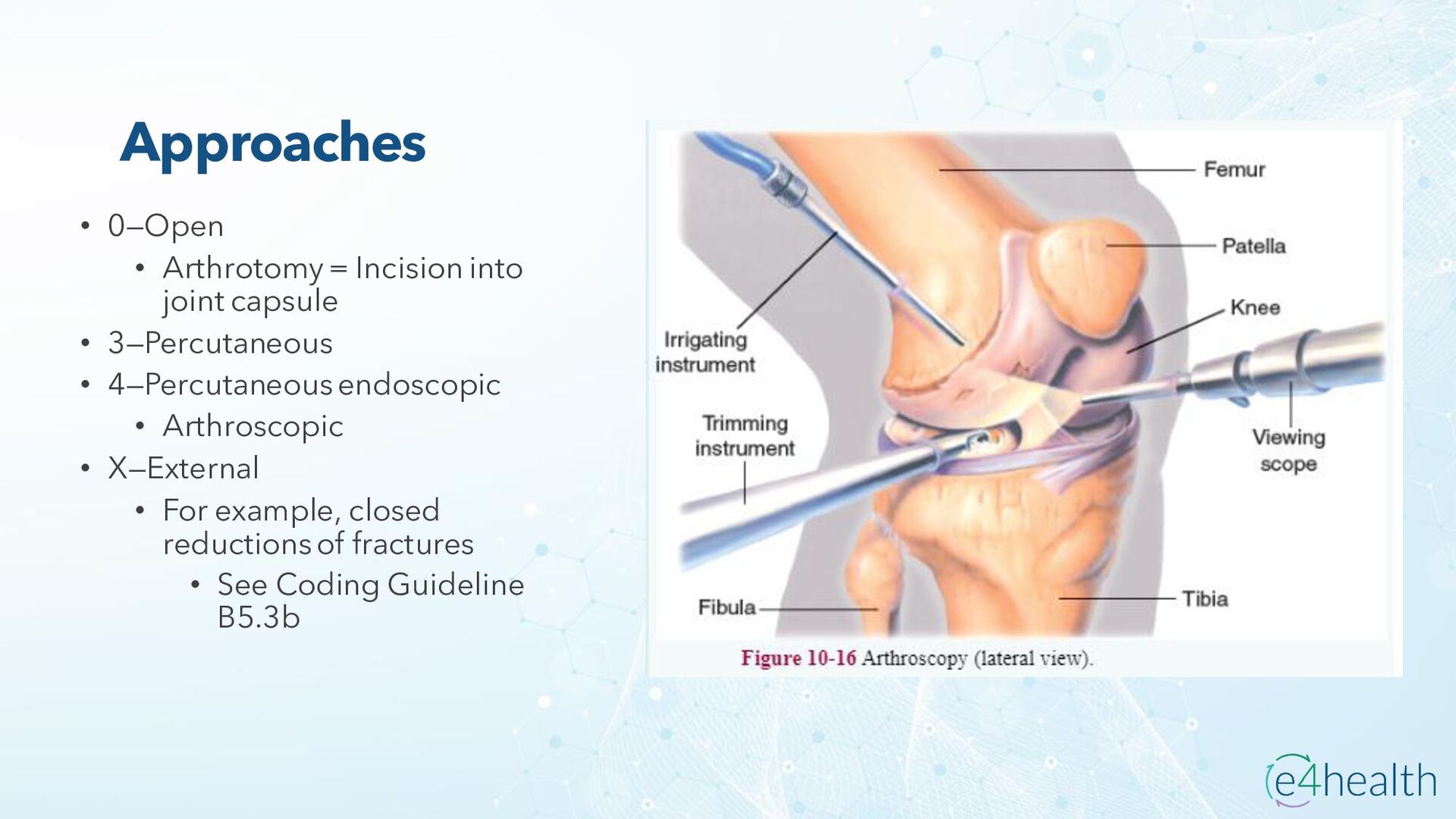
  81. Approaches • 0—Open • Arthrotomy = Incision into joint capsule

    • 3—Percutaneous • 4—Percutaneous endoscopic • Arthroscopic • X—External • For example, closed reductions of fractures • See Coding Guideline B5.3b
  82. External fixation devices Monoplanar or uniplane—holds fracture in one plane

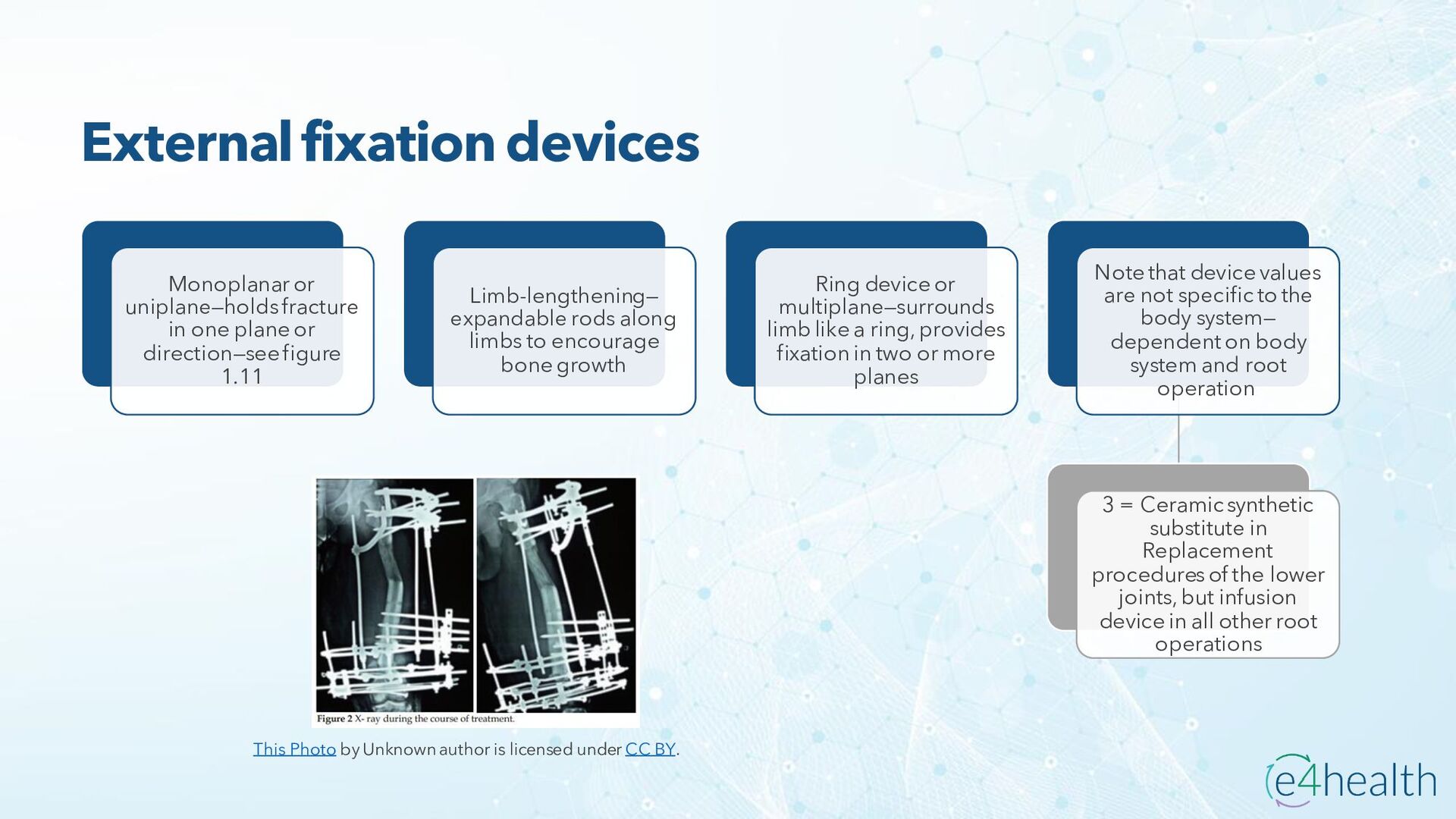
    or direction—see figure 1.11 Limb-lengthening— expandable rods along limbs to encourage bone growth Ring device or multiplane—surrounds limb like a ring, provides fixation in two or more planes Note that device values are not specific to the body system— dependent on body system and root operation 3 = Ceramic synthetic substitute in Replacement procedures of the lower joints, but infusion device in all other root operations This Photo by Unknown author is licensed under CC BY.
  83. Ankle Distraction Procedure Coding Clinic Second Quarter 2022 Page 22

    • Question: A patient with post-traumatic arthritis of the left ankle was admitted for distraction arthroplasty. An ankle distraction frame and ring were applied to the distal third of the tibia and stabilized with pins. A transmalleolar wire was placed through the talus to identify the center of rotation and guide the building of lateral and medial distraction hinges. A foot ring was attached to hinges and stabilized to the foot with wires through the calcaneus and talar neck. The wires were tensioned and an anterior locking rod was placed to hold the ankle in neutral position. Distraction was placed across the ankle at 4mm and bone marrow aspirate and stem cells were inserted into the ankle joint. What is the ICD-10-PCS code for distraction arthroplasty of the ankle with application of an external hinged fixator? Is the procedure a distraction of the ankle joint or tarsal joint? • Answer: Assign the following ICD-10-PCS code: 0SSG35Z Reposition left ankle joint with external fixation device, percutaneous approach, for application of the external hinged fixator to distract the ankle. • The surgery is performed to move the ankle joint to a neutral position, to allow healing and repair. In the mechanical sense, in this case the distraction involved movement (reposition) of the ankle joint.
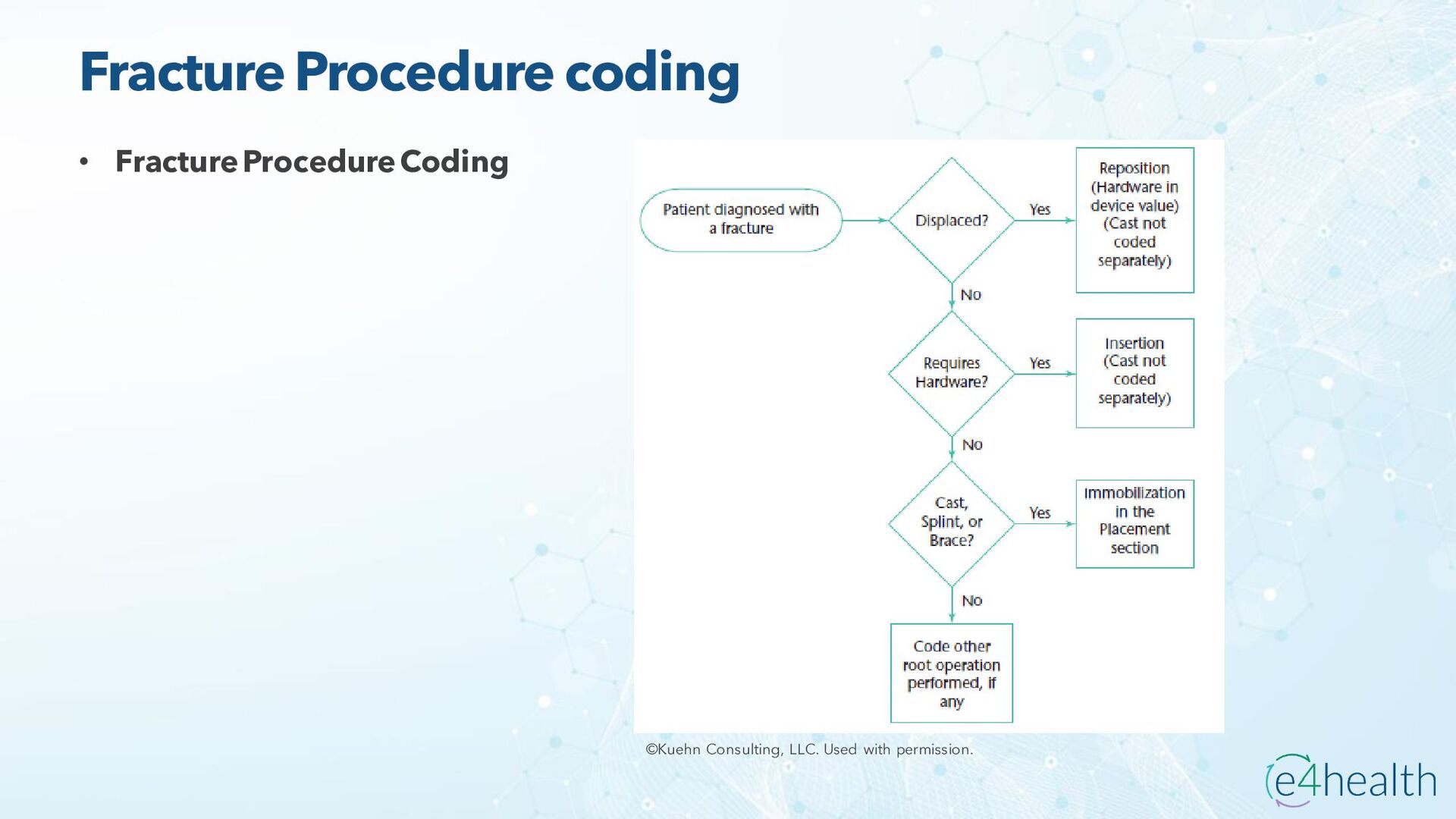
  84. Repair of Fractures • Reposition for fracture treatment Guideline B3.15

    • Reduction of a displaced fracture is coded to the root operation Reposition • The application of a cast or splint in conjunction with the Reposition procedure is not coded separately • Treatment of a nondisplaced fracture is coded to the procedure performed • Examples: • Casting of a nondisplaced fracture is coded to the root operation Immobilization in the Placement section • Putting a pin in a nondisplaced fracture is coded to the root operation Insertion
  85. References • Arterial Gas Embolism - Injuries; Poisoning - Merck

    Manuals Professional Edition • AHA ICD-10-CM and ICD-10-PCS Coding Handbook • ICD-10-PCS: An Applied Approach 2023 • Cengage: 3-2-1 CODE IT! • Medical Terminology Systems, 8th Edition • Fat Embolism - StatPearls - NCBI Bookshelf (nih.gov) • Subcutaneous emphysema, a different way to diagnose - PubMed (nih.gov) • Compartment Syndrome - Injuries; Poisoning - Merck Manuals Professional Edition • Overview of Child Maltreatment - Pediatrics - Merck Manuals Professional Edition • Elder Abuse - Geriatrics - Merck Manuals Professional Edition • Specific Poisons - Injuries; Poisoning - Merck Manuals Professional Edition