Upgrade to PRO for Only $50/Year—Limited-Time Offer! 🔥

FY 2024: MDC 24 - Multiple Significant Trauma

Avatar for e4health e4health PRO
April 04, 2024
180

FY 2024: MDC 24 - Multiple Significant Trauma

Avatar for e4health

e4health PRO

April 04, 2024
Tweet

More Decks by e4health

Transcript

  1. H I M | C O D I N G

    & C D I | H E A LT H I T | R E V C Y C L E Empowering Better Health e4health tackles healthcare’s data, quality and revenue challenges empowering your providers to focus on better care.
  2. Objectives • Review MDC 24- Multiple Significant Trauma with a

    focus on selected diagnoses and procedures • Learner will acquire a basic understanding of the diagnoses and procedures included in MDC 24 • Discuss Query opportunities related to MDC 24 • Review coding clinics relevant to MDC 24
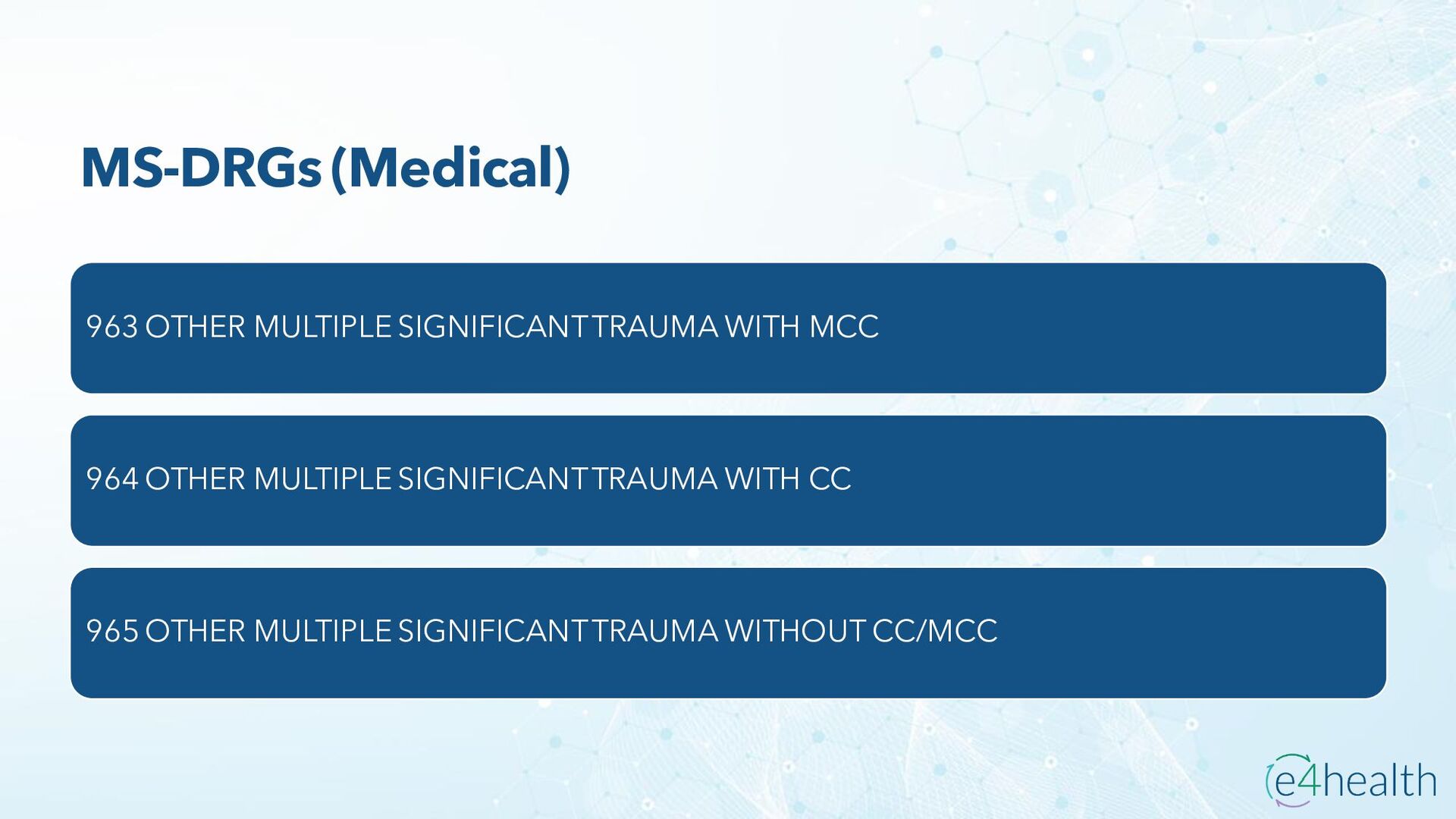
  3. MS-DRGs (Medical) 963 OTHER MULTIPLE SIGNIFICANT TRAUMA WITH MCC 964

    OTHER MULTIPLE SIGNIFICANT TRAUMA WITH CC 965 OTHER MULTIPLE SIGNIFICANT TRAUMA WITHOUT CC/MCC
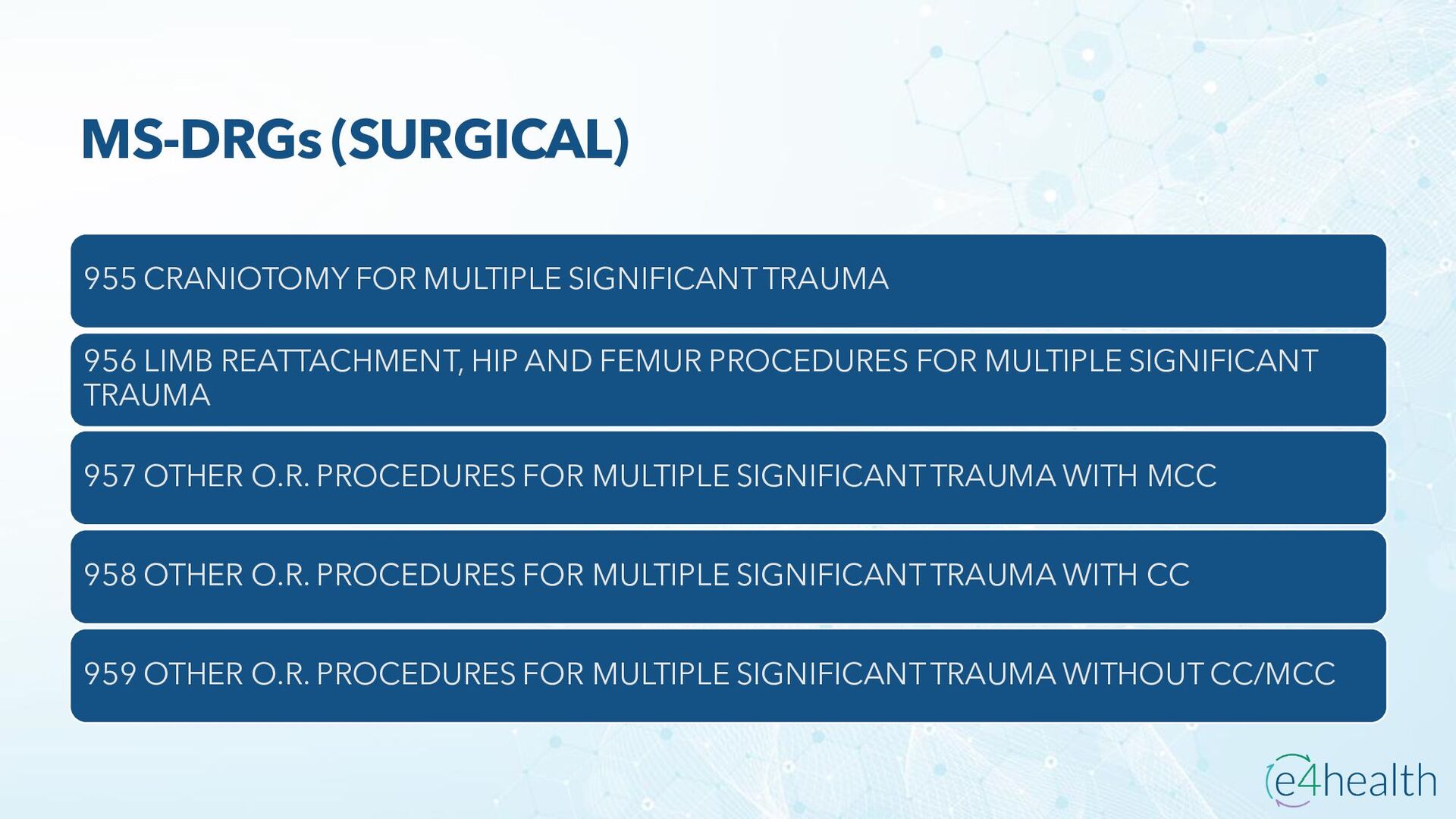
  4. MS-DRGs (SURGICAL) 955 CRANIOTOMY FOR MULTIPLE SIGNIFICANT TRAUMA 956 LIMB

    REATTACHMENT, HIP AND FEMUR PROCEDURES FOR MULTIPLE SIGNIFICANT TRAUMA 957 OTHER O.R. PROCEDURES FOR MULTIPLE SIGNIFICANT TRAUMA WITH MCC 958 OTHER O.R. PROCEDURES FOR MULTIPLE SIGNIFICANT TRAUMA WITH CC 959 OTHER O.R. PROCEDURES FOR MULTIPLE SIGNIFICANT TRAUMA WITHOUT CC/MCC
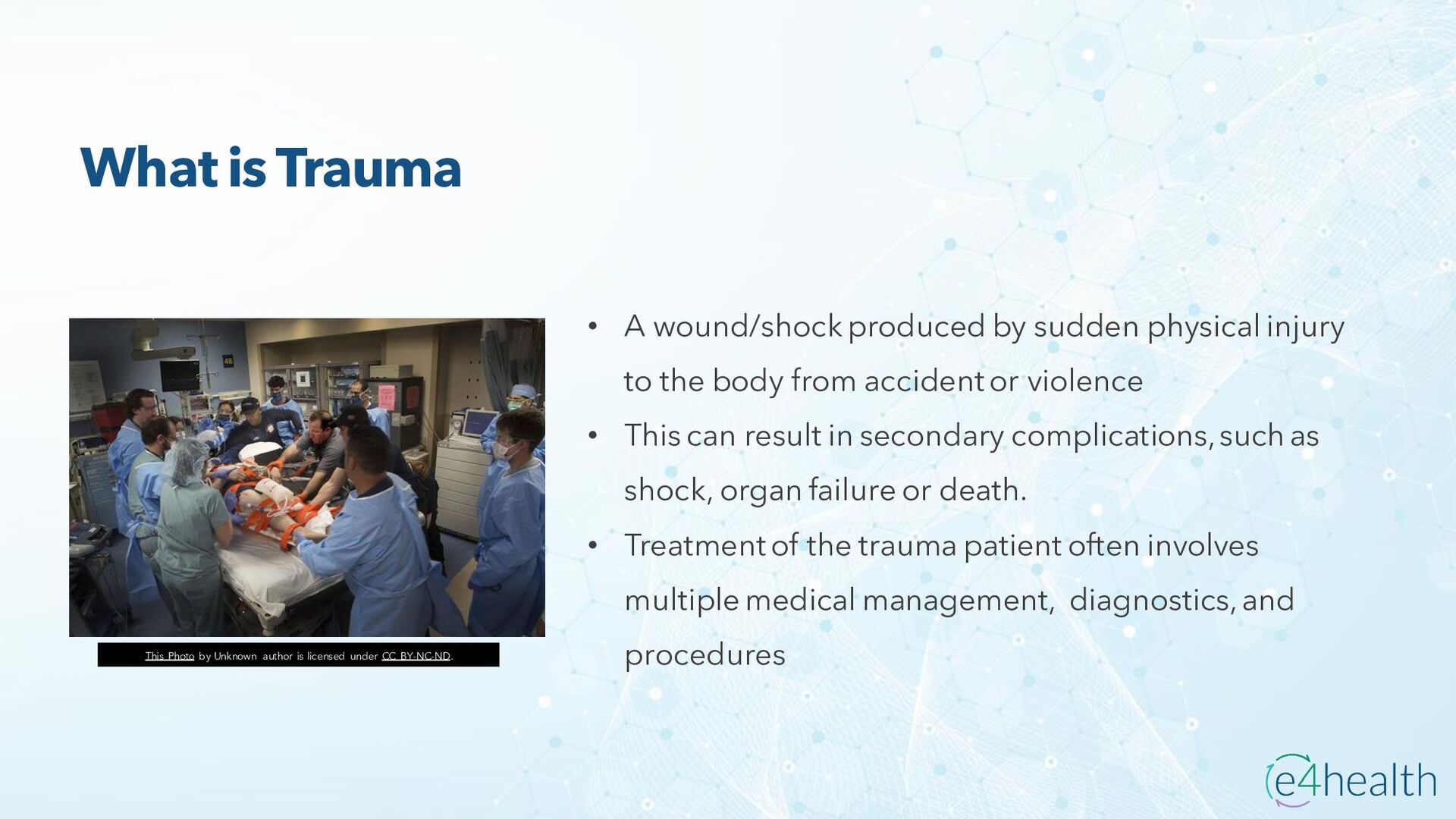
  5. What is Trauma • A wound/shock produced by sudden physical

    injury to the body from accident or violence • This can result in secondary complications, such as shock, organ failure or death. • Treatment of the trauma patient often involves multiple medical management, diagnostics, and procedures This Photo by Unknown author is licensed under CC BY-NC-ND.
  6. General injury Coding Each injury receives a separate code POA

    status of injuries Fractures that occur during the inpatient admission are considered “hospital-acquired” Clarify POA status when radiological findings indicate a fracture with no known in-hospital fall or event
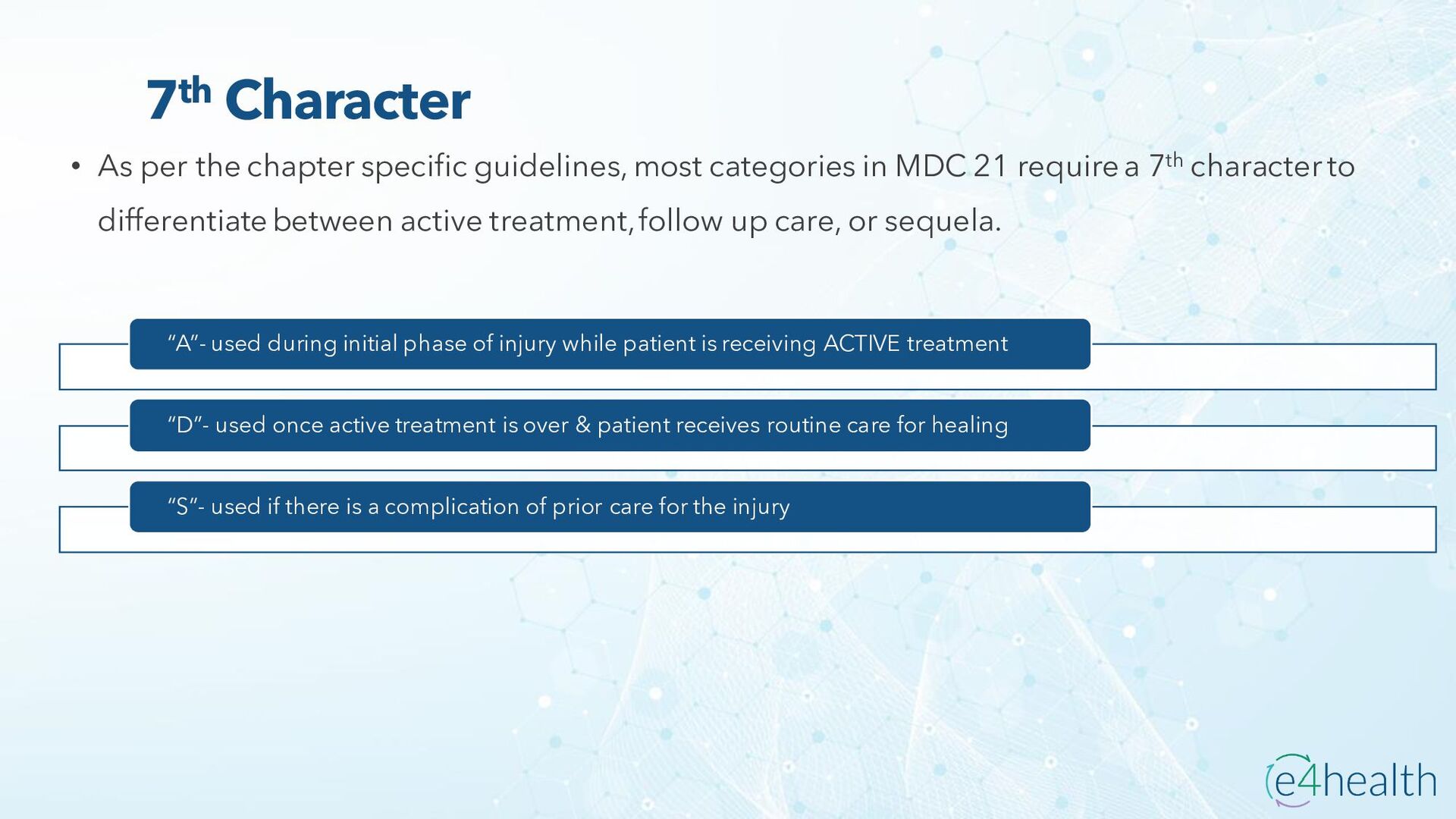
  7. 7th Character • As per the chapter specific guidelines, most

    categories in MDC 21 require a 7th character to differentiate between active treatment, follow up care, or sequela. “A”- used during initial phase of injury while patient is receiving ACTIVE treatment “D”- used once active treatment is over & patient receives routine care for healing “S”- used if there is a complication of prior care for the injury
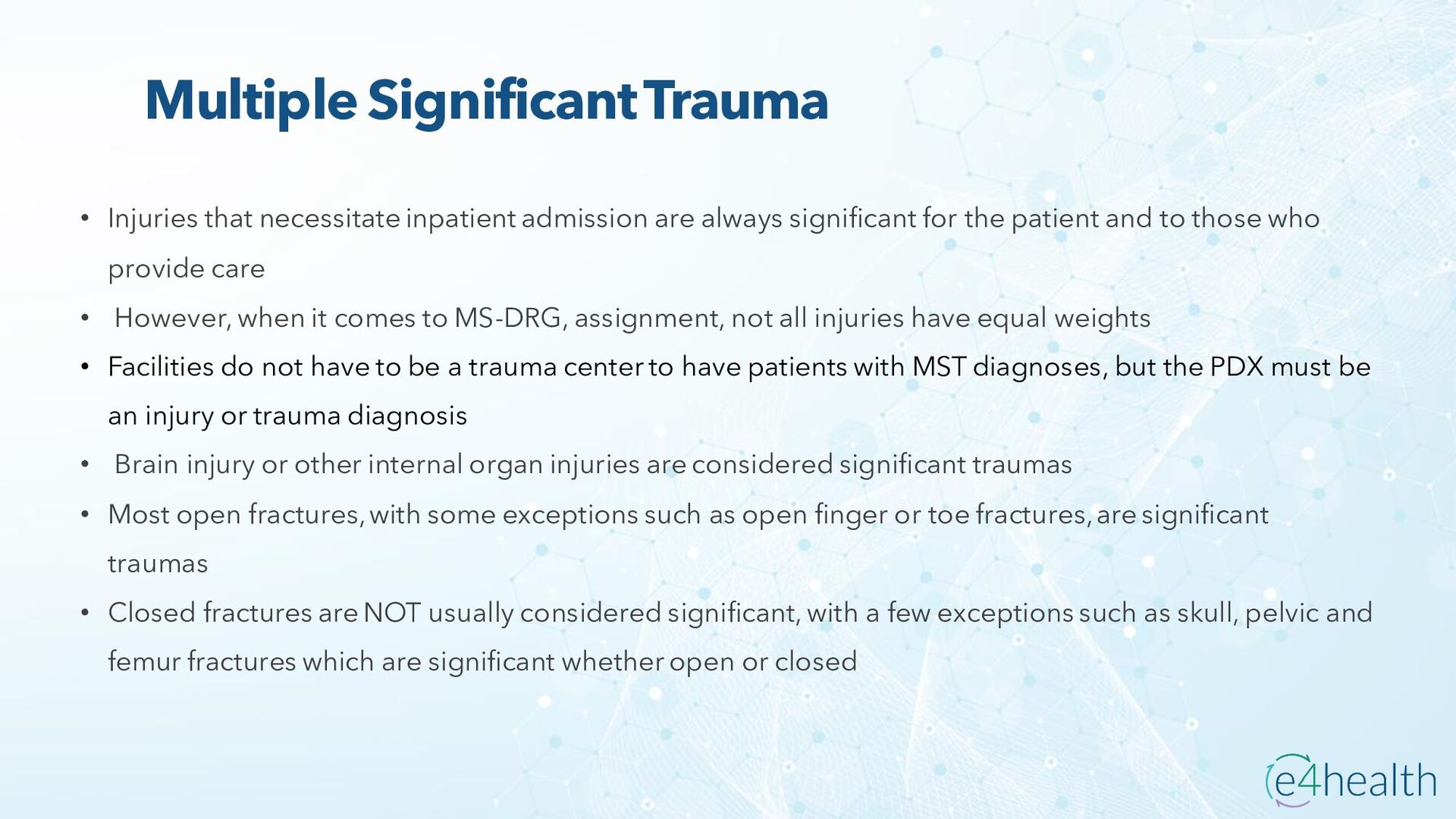
  8. Multiple Significant Trauma • Injuries that necessitate inpatient admission are

    always significant for the patient and to those who provide care • However, when it comes to MS-DRG, assignment, not all injuries have equal weights • Facilities do not have to be a trauma center to have patients with MST diagnoses, but the PDX must be an injury or trauma diagnosis • Brain injury or other internal organ injuries are considered significant traumas • Most open fractures, with some exceptions such as open finger or toe fractures, are significant traumas • Closed fractures are NOT usually considered significant, with a few exceptions such as skull, pelvic and femur fractures which are significant whether open or closed
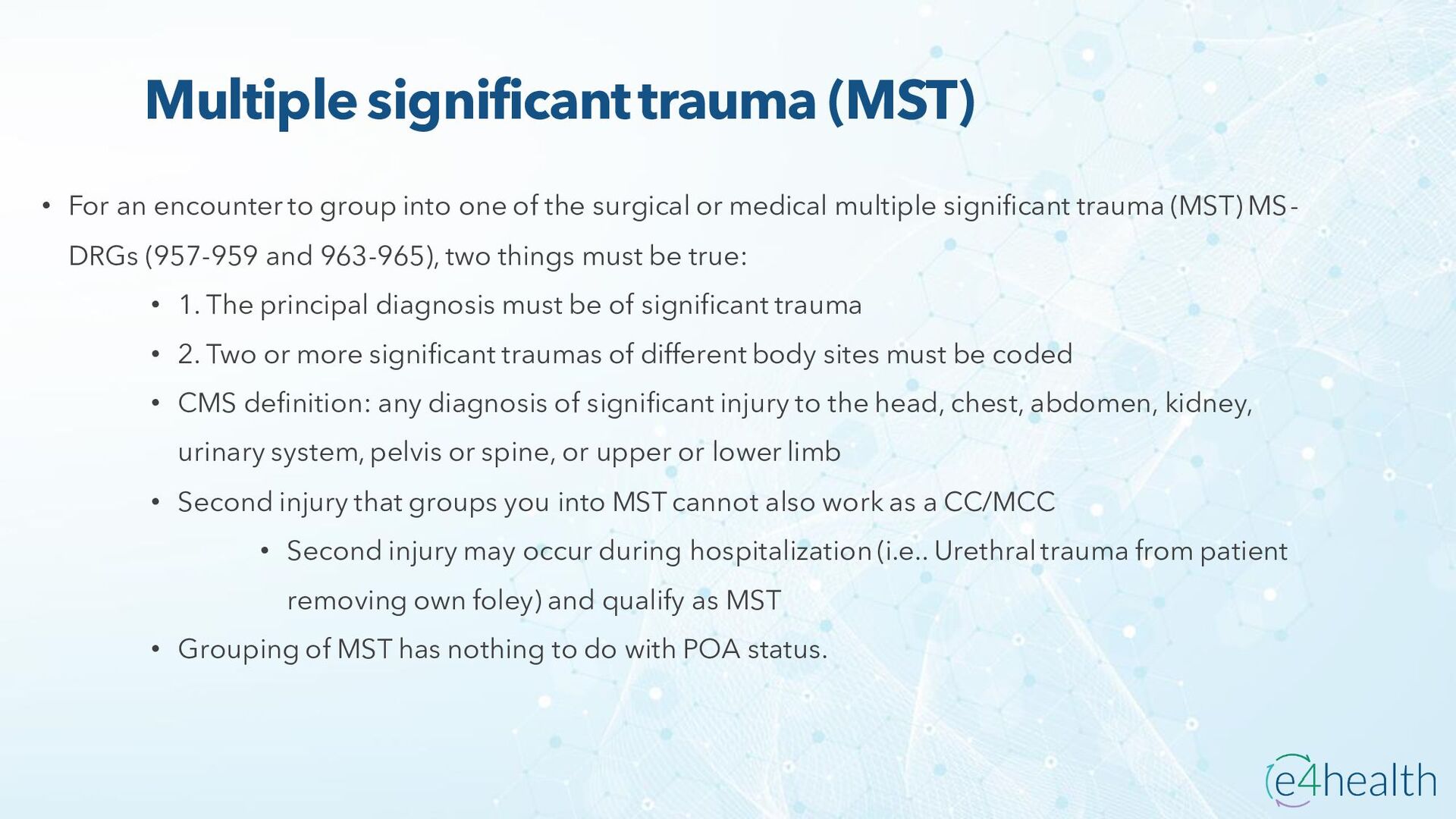
  9. Multiple significant trauma (MST) • For an encounter to group

    into one of the surgical or medical multiple significant trauma (MST) MS- DRGs (957-959 and 963-965), two things must be true: • 1. The principal diagnosis must be of significant trauma • 2. Two or more significant traumas of different body sites must be coded • CMS definition: any diagnosis of significant injury to the head, chest, abdomen, kidney, urinary system, pelvis or spine, or upper or lower limb • Second injury that groups you into MST cannot also work as a CC/MCC • Second injury may occur during hospitalization (i.e.. Urethral trauma from patient removing own foley) and qualify as MST • Grouping of MST has nothing to do with POA status.
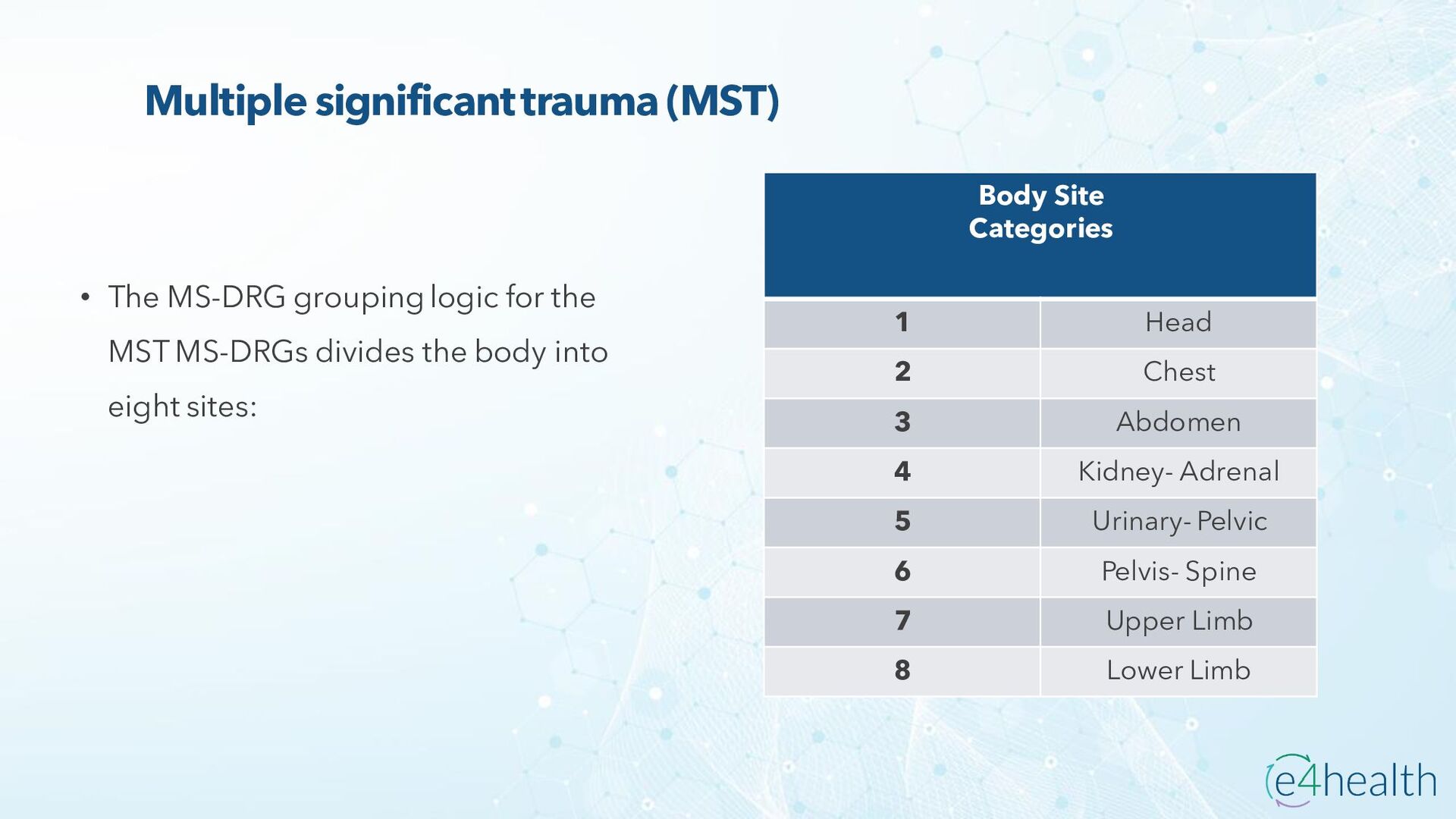
  10. Multiple significant trauma (MST) • The MS-DRG grouping logic for

    the MST MS-DRGs divides the body into eight sites: Body Site Categories 1 Head 2 Chest 3 Abdomen 4 Kidney- Adrenal 5 Urinary- Pelvic 6 Pelvis- Spine 7 Upper Limb 8 Lower Limb
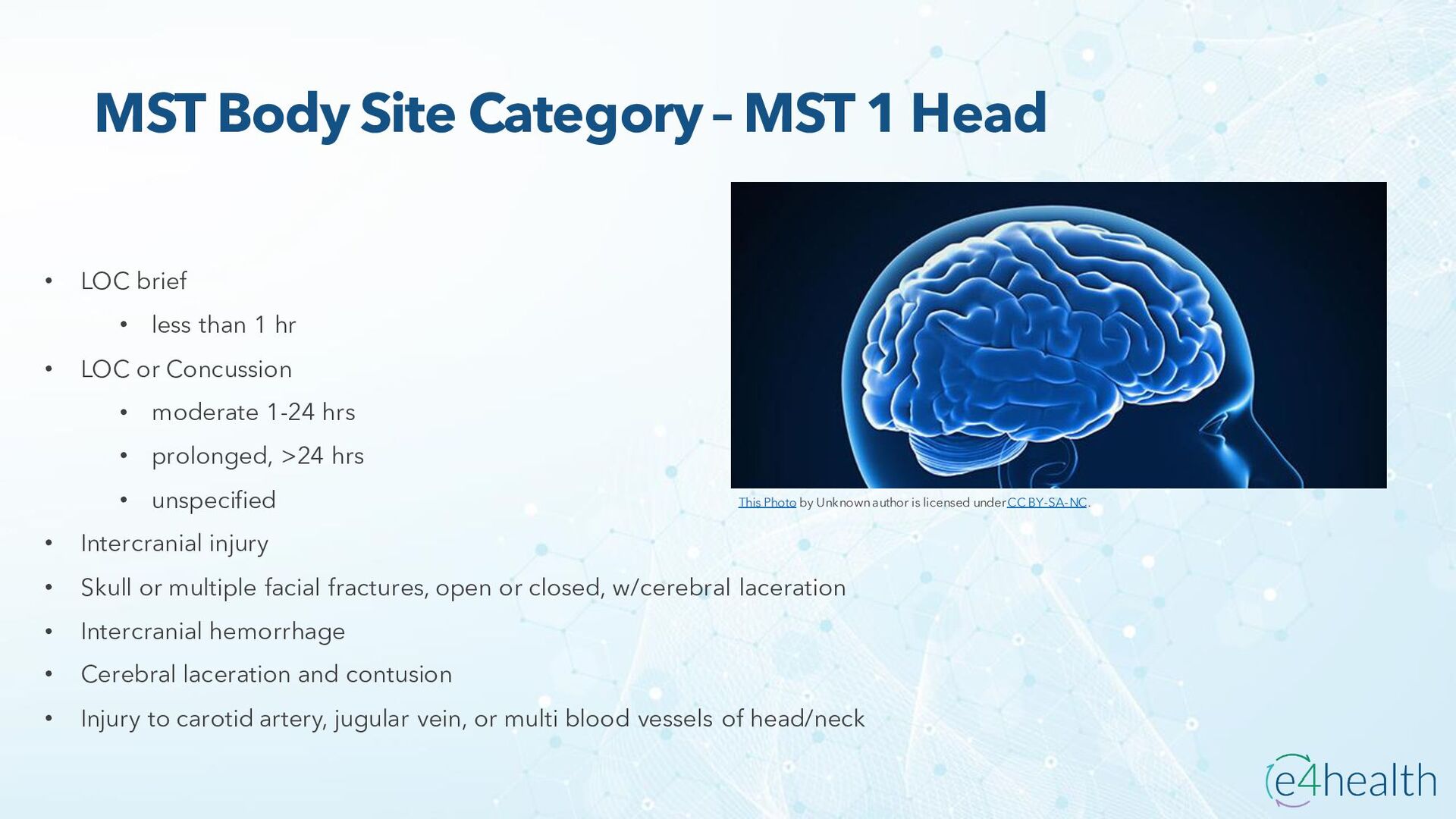
  11. MST Body Site Category – MST 1 Head • LOC

    brief • less than 1 hr • LOC or Concussion • moderate 1-24 hrs • prolonged, >24 hrs • unspecified • Intercranial injury • Skull or multiple facial fractures, open or closed, w/cerebral laceration • Intercranial hemorrhage • Cerebral laceration and contusion • Injury to carotid artery, jugular vein, or multi blood vessels of head/neck This Photo by Unknown author is licensed under CC BY-SA-NC.
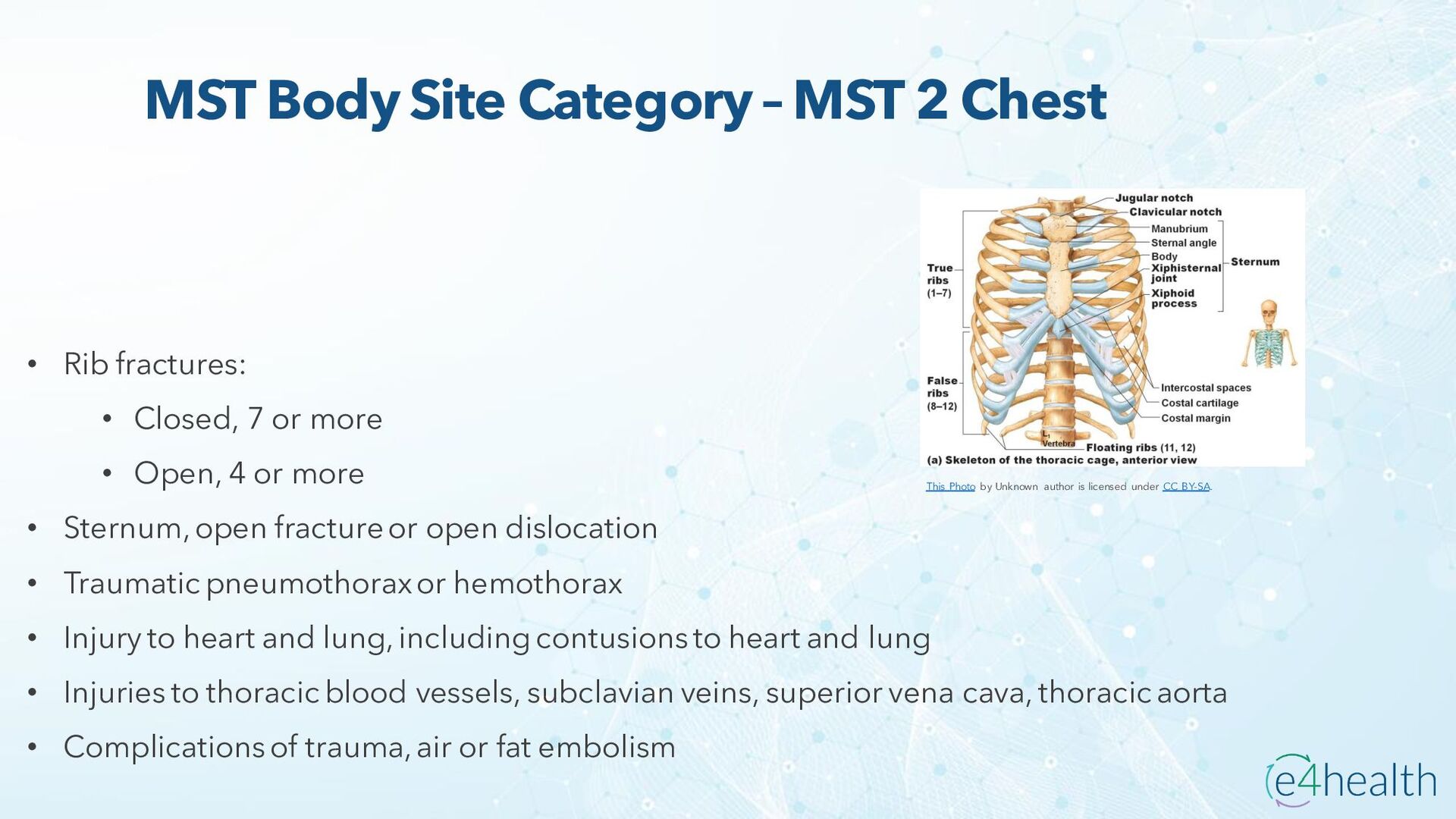
  12. MST Body Site Category – MST 2 Chest • Rib

    fractures: • Closed, 7 or more • Open, 4 or more • Sternum, open fracture or open dislocation • Traumatic pneumothorax or hemothorax • Injury to heart and lung, including contusions to heart and lung • Injuries to thoracic blood vessels, subclavian veins, superior vena cava, thoracic aorta • Complications of trauma, air or fat embolism This Photo by Unknown author is licensed under CC BY-SA.
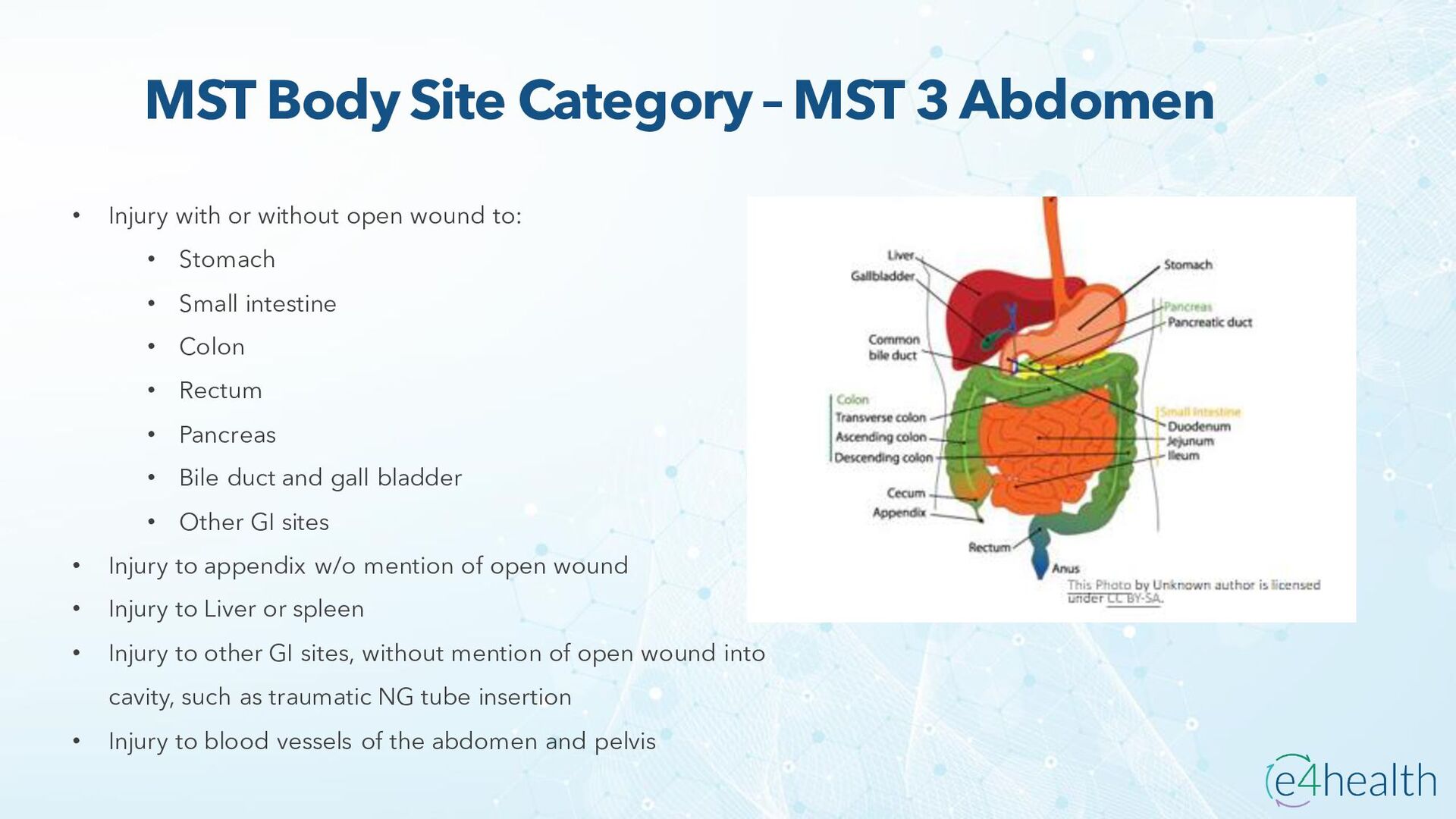
  13. MST Body Site Category – MST 3 Abdomen • Injury

    with or without open wound to: • Stomach • Small intestine • Colon • Rectum • Pancreas • Bile duct and gall bladder • Other GI sites • Injury to appendix w/o mention of open wound • Injury to Liver or spleen • Injury to other GI sites, without mention of open wound into cavity, such as traumatic NG tube insertion • Injury to blood vessels of the abdomen and pelvis
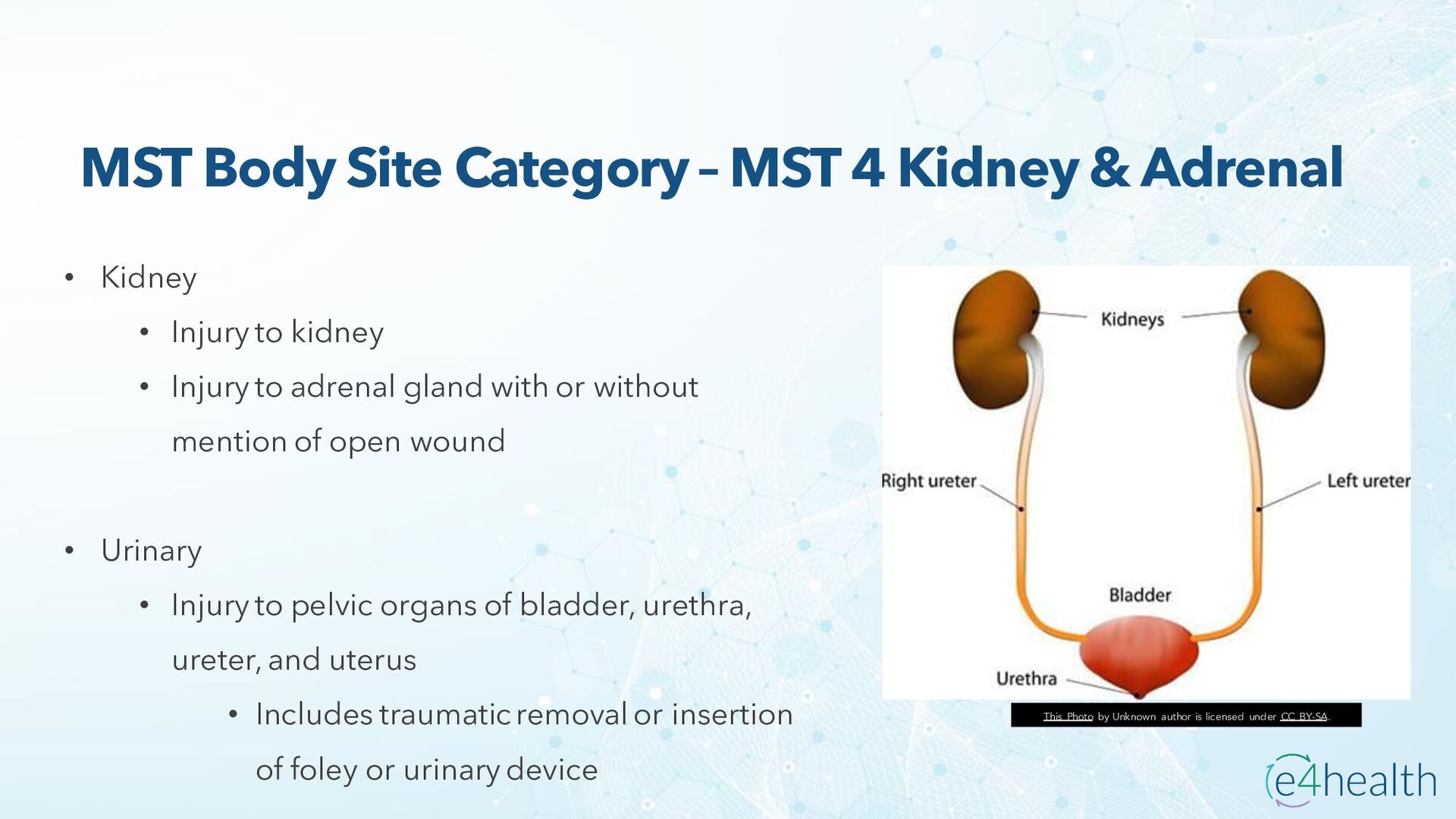
  14. MST Body Site Category – MST 4 Kidney & Adrenal

    • Kidney • Injury to kidney • Injury to adrenal gland with or without mention of open wound • Urinary • Injury to pelvic organs of bladder, urethra, ureter, and uterus • Includes traumatic removal or insertion of foley or urinary device This Photo by Unknown author is licensed under CC BY-SA.
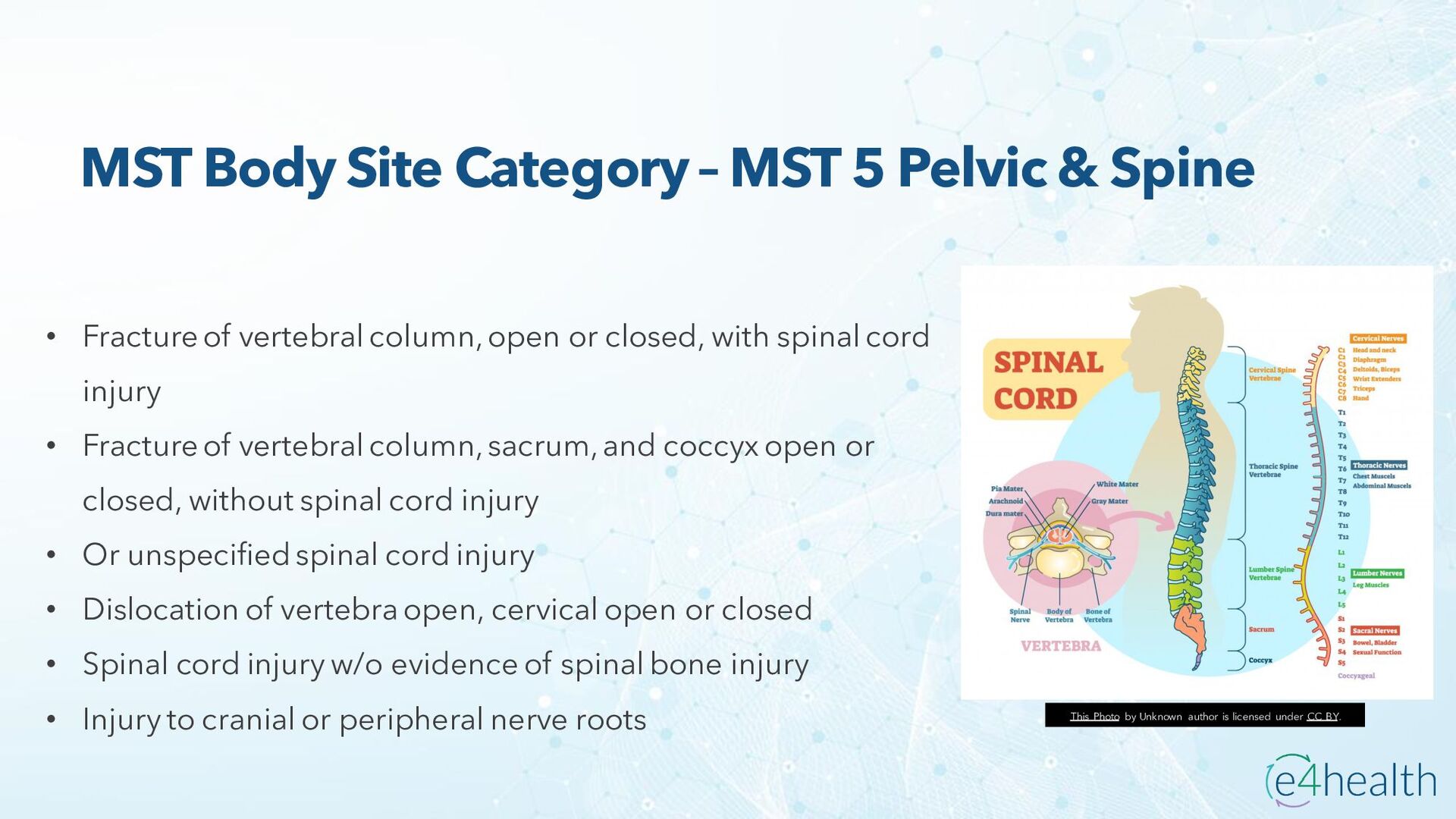
  15. MST Body Site Category – MST 5 Pelvic & Spine

    • Fracture of vertebral column, open or closed, with spinal cord injury • Fracture of vertebral column, sacrum, and coccyx open or closed, without spinal cord injury • Or unspecified spinal cord injury • Dislocation of vertebra open, cervical open or closed • Spinal cord injury w/o evidence of spinal bone injury • Injury to cranial or peripheral nerve roots This Photo by Unknown author is licensed under CC BY.
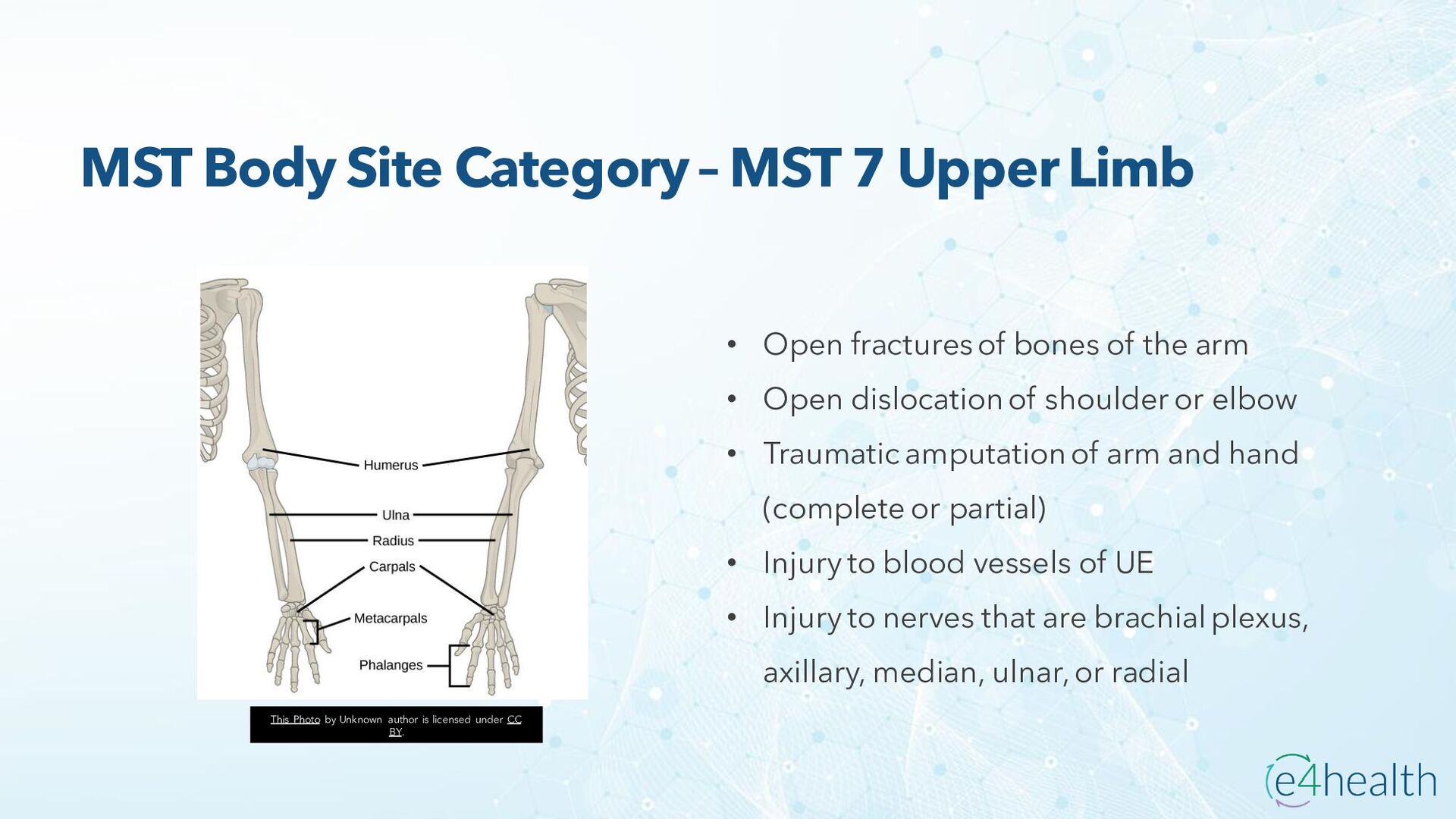
  16. MST Body Site Category – MST 7 Upper Limb •

    Open fractures of bones of the arm • Open dislocation of shoulder or elbow • Traumatic amputation of arm and hand (complete or partial) • Injury to blood vessels of UE • Injury to nerves that are brachial plexus, axillary, median, ulnar, or radial This Photo by Unknown author is licensed under CC BY.
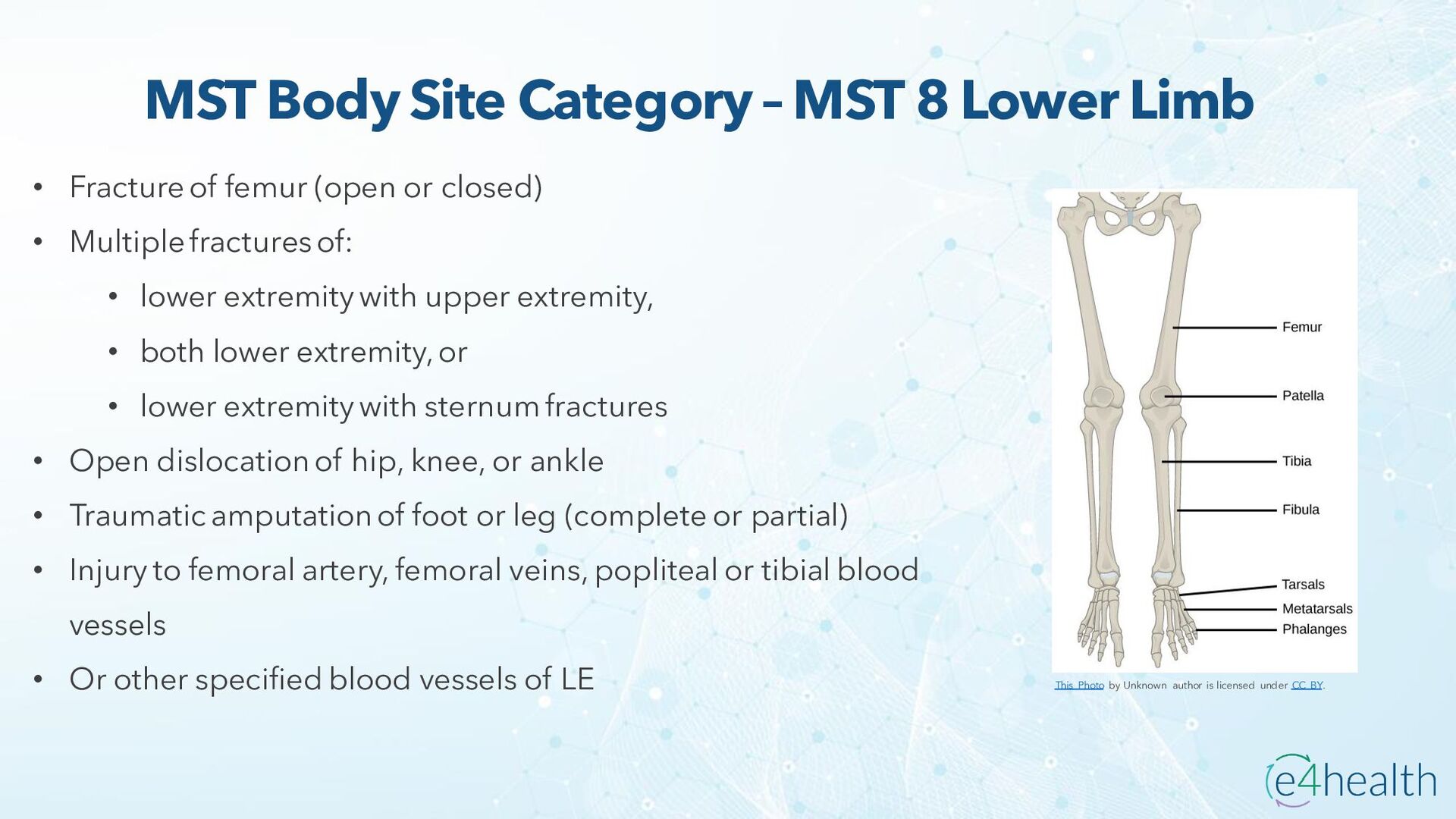
  17. MST Body Site Category – MST 8 Lower Limb •

    Fracture of femur (open or closed) • Multiple fractures of: • lower extremity with upper extremity, • both lower extremity, or • lower extremity with sternum fractures • Open dislocation of hip, knee, or ankle • Traumatic amputation of foot or leg (complete or partial) • Injury to femoral artery, femoral veins, popliteal or tibial blood vessels • Or other specified blood vessels of LE This Photo by Unknown author is licensed under CC BY.
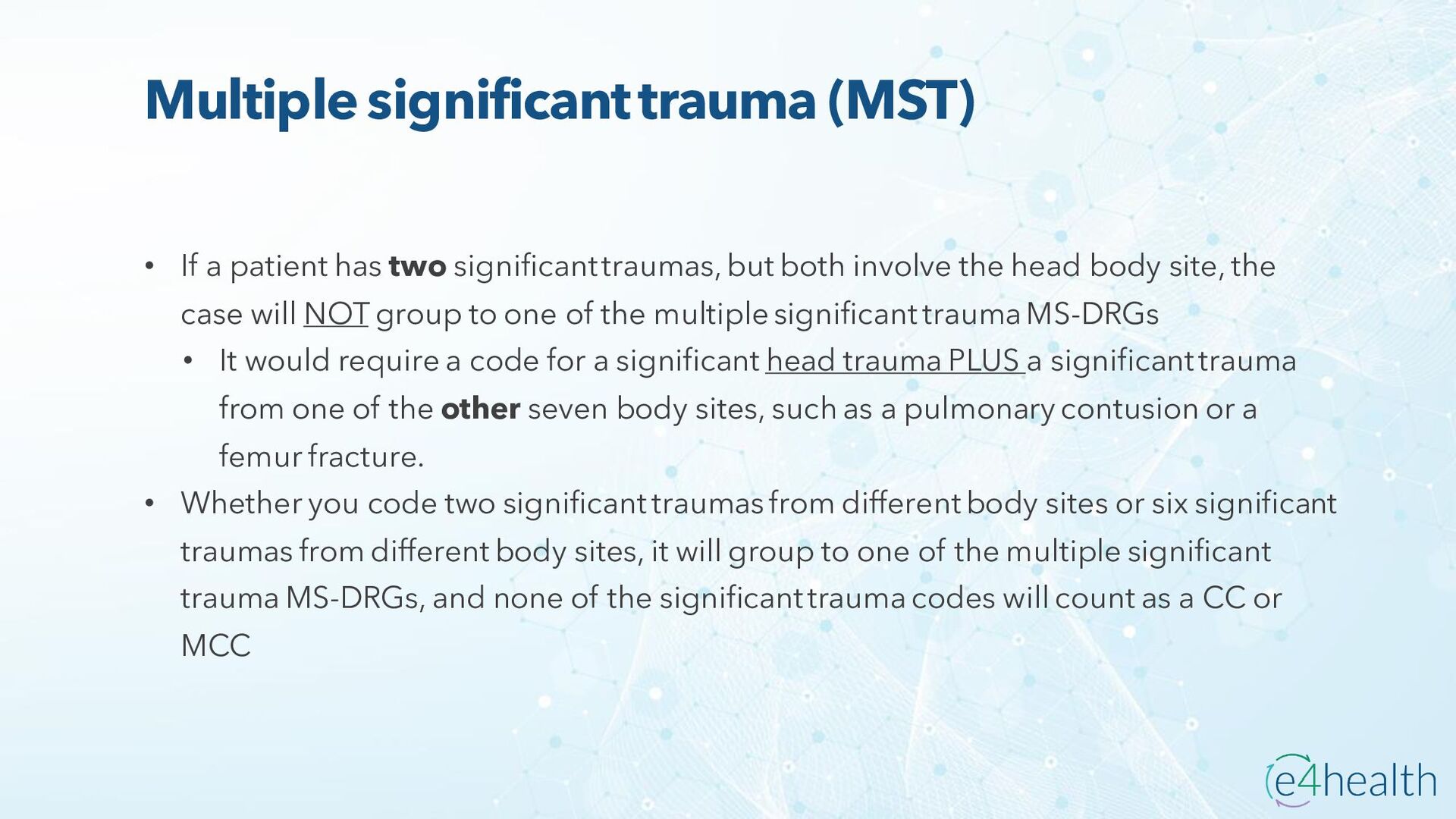
  18. Multiple significant trauma (MST) • If a patient has two

    significant traumas, but both involve the head body site, the case will NOT group to one of the multiple significant trauma MS-DRGs • It would require a code for a significant head trauma PLUS a significant trauma from one of the other seven body sites, such as a pulmonary contusion or a femur fracture. • Whether you code two significant traumas from different body sites or six significant traumas from different body sites, it will group to one of the multiple significant trauma MS-DRGs, and none of the significant trauma codes will count as a CC or MCC
  19. Multiple significant trauma (MST) • If an insignificant trauma code

    is a CC, it will count as a CC for the MST MS-DRG • For example, multiple closed rib fracture of the left side is not considered a significant trauma. The code for multiple closed rib fracture of the left side does not contribute to the MST DRG assignment, so it will count as a CC for the MST-MS-DRGs This Photo by Unknown author is licensed under CC BY-NC-ND.
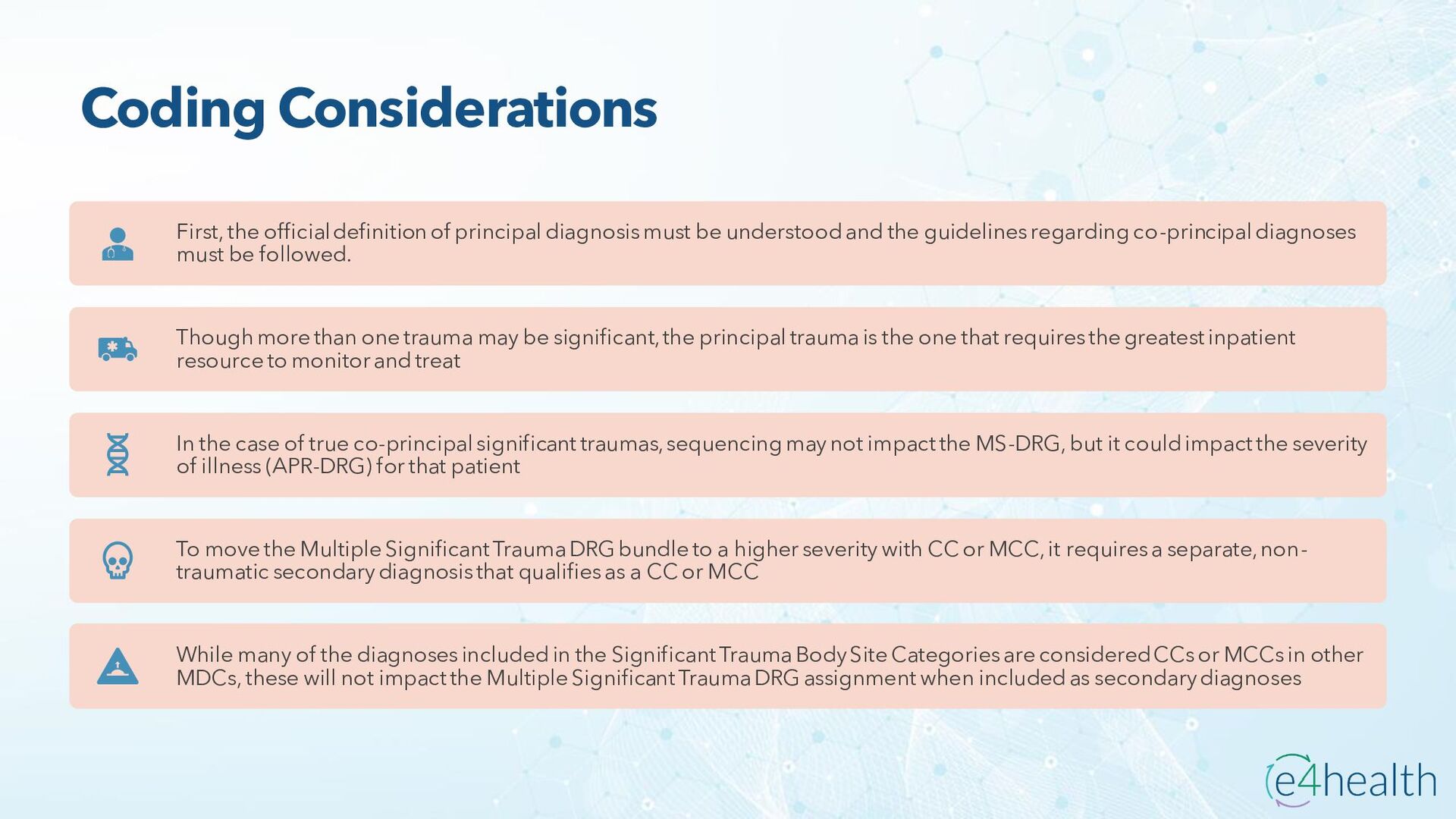
  20. Coding Considerations First, the official definition of principal diagnosis must

    be understood and the guidelines regarding co-principal diagnoses must be followed. Though more than one trauma may be significant, the principal trauma is the one that requires the greatest inpatient resource to monitor and treat In the case of true co-principal significant traumas, sequencing may not impact the MS-DRG, but it could impact the severity of illness (APR-DRG) for that patient To move the Multiple Significant Trauma DRG bundle to a higher severity with CC or MCC, it requires a separate, non- traumatic secondary diagnosis that qualifies as a CC or MCC While many of the diagnoses included in the Significant Trauma Body Site Categories are considered CCs or MCCs in other MDCs, these will not impact the Multiple Significant Trauma DRG assignment when included as secondary diagnoses
  21. Coding Considerations • Don’t overlook codable injuries • Overlooking codable

    injuries could make the difference between designation of an MST MS-DRG and a lower weighted, less accurate MS-DRG • Official Coding Guideline for injuries states, “When coding injuries, assign separate codes for each injury unless a combination code is provided, in which case the combination code is assigned. • Code T07, Unspecified multiple injuries should not be assigned in the inpatient setting unless information for a more specific code is not available. … The code for the most serious injury, as determined by the provider and the focus of treatment, is sequenced first This Photo by Unknown author is licensed under CC BY-SA- NC.
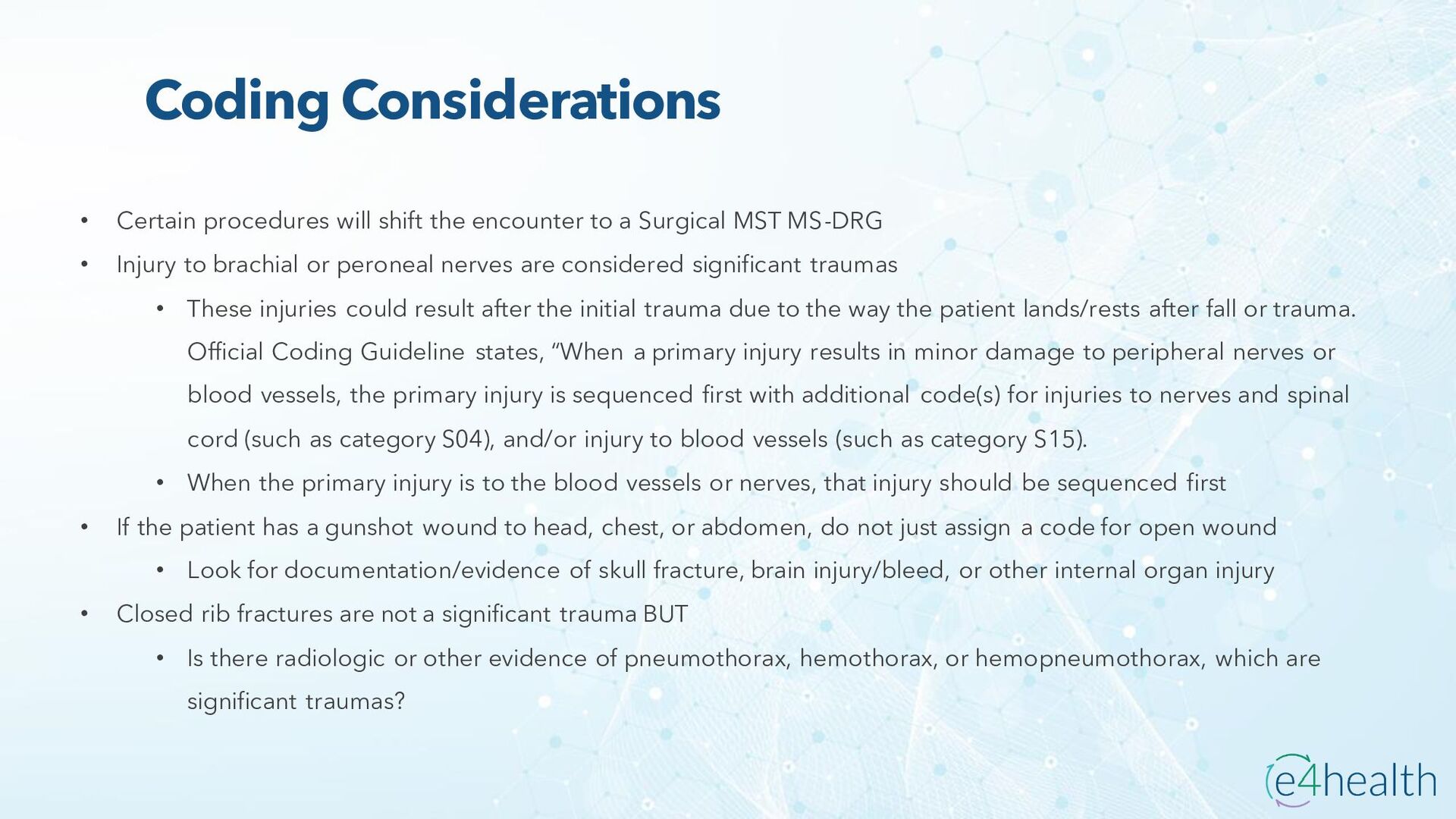
  22. Coding Considerations • Certain procedures will shift the encounter to

    a Surgical MST MS-DRG • Injury to brachial or peroneal nerves are considered significant traumas • These injuries could result after the initial trauma due to the way the patient lands/rests after fall or trauma. Official Coding Guideline states, “When a primary injury results in minor damage to peripheral nerves or blood vessels, the primary injury is sequenced first with additional code(s) for injuries to nerves and spinal cord (such as category S04), and/or injury to blood vessels (such as category S15). • When the primary injury is to the blood vessels or nerves, that injury should be sequenced first • If the patient has a gunshot wound to head, chest, or abdomen, do not just assign a code for open wound • Look for documentation/evidence of skull fracture, brain injury/bleed, or other internal organ injury • Closed rib fractures are not a significant trauma BUT • Is there radiologic or other evidence of pneumothorax, hemothorax, or hemopneumothorax, which are significant traumas?
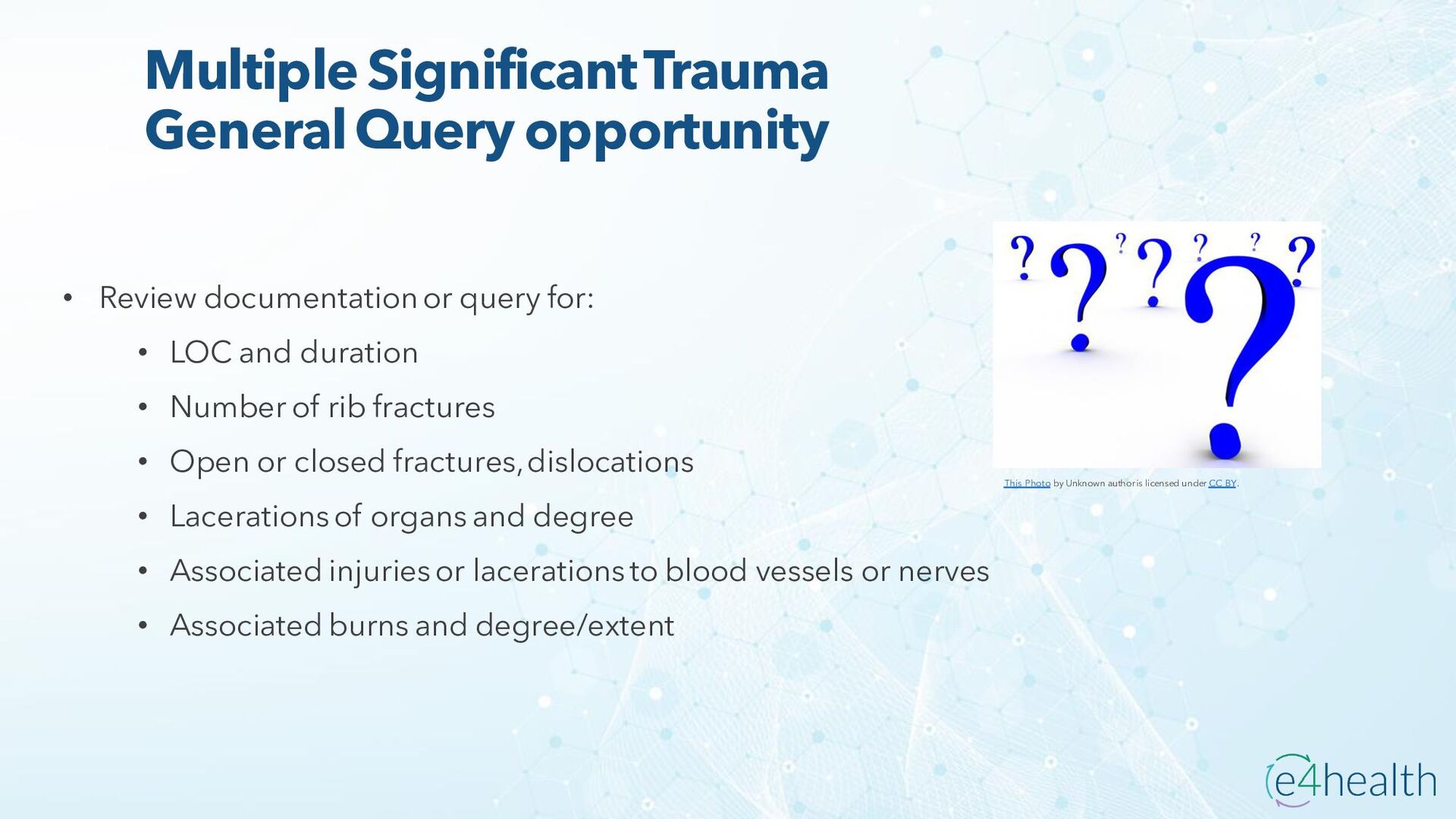
  23. Multiple Significant Trauma General Query opportunity • Review documentation or

    query for: • LOC and duration • Number of rib fractures • Open or closed fractures, dislocations • Lacerations of organs and degree • Associated injuries or lacerations to blood vessels or nerves • Associated burns and degree/extent This Photo by Unknown author is licensed under CC BY.
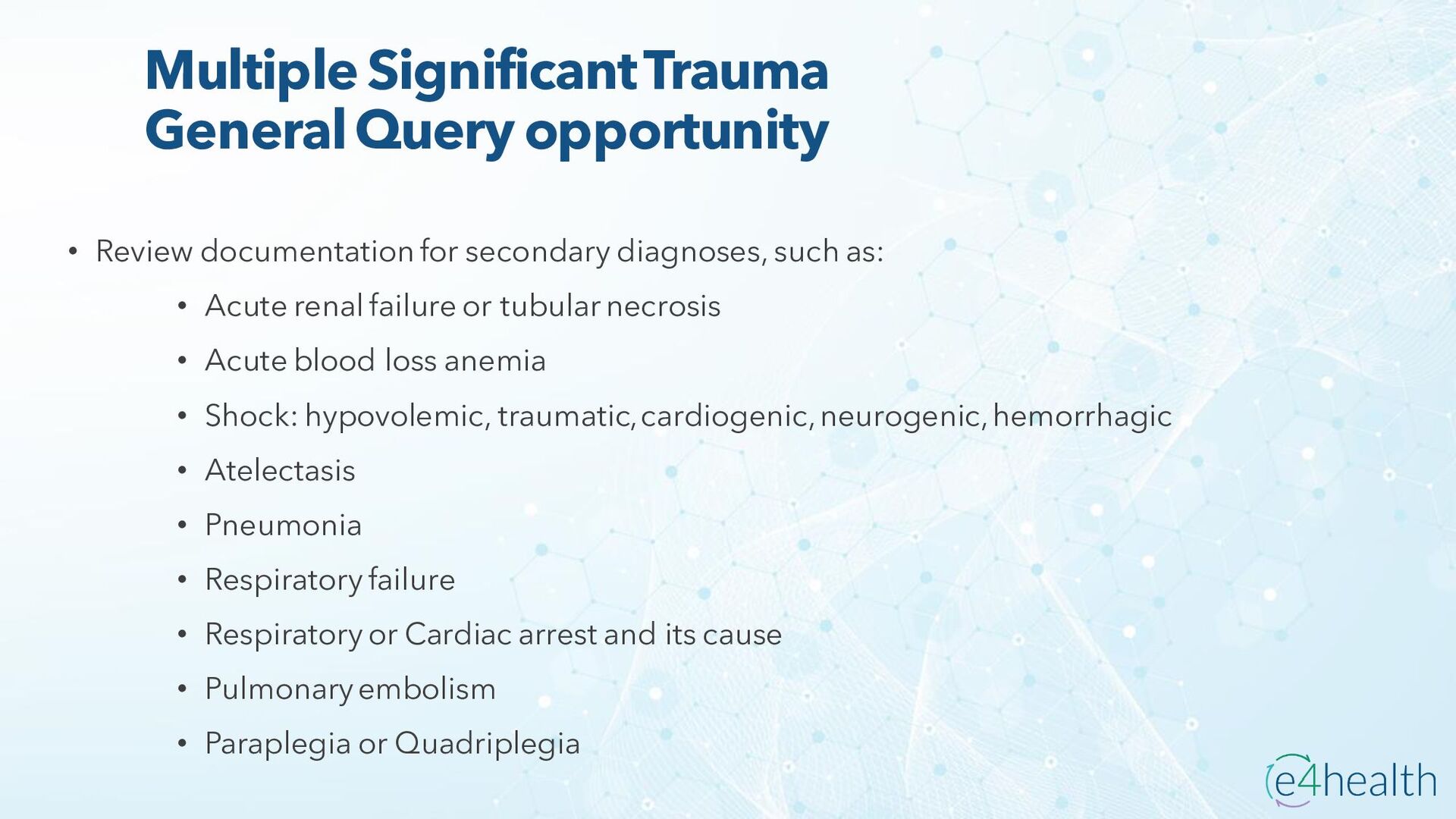
  24. Multiple Significant Trauma General Query opportunity • Review documentation for

    secondary diagnoses, such as: • Acute renal failure or tubular necrosis • Acute blood loss anemia • Shock: hypovolemic, traumatic, cardiogenic, neurogenic, hemorrhagic • Atelectasis • Pneumonia • Respiratory failure • Respiratory or Cardiac arrest and its cause • Pulmonary embolism • Paraplegia or Quadriplegia
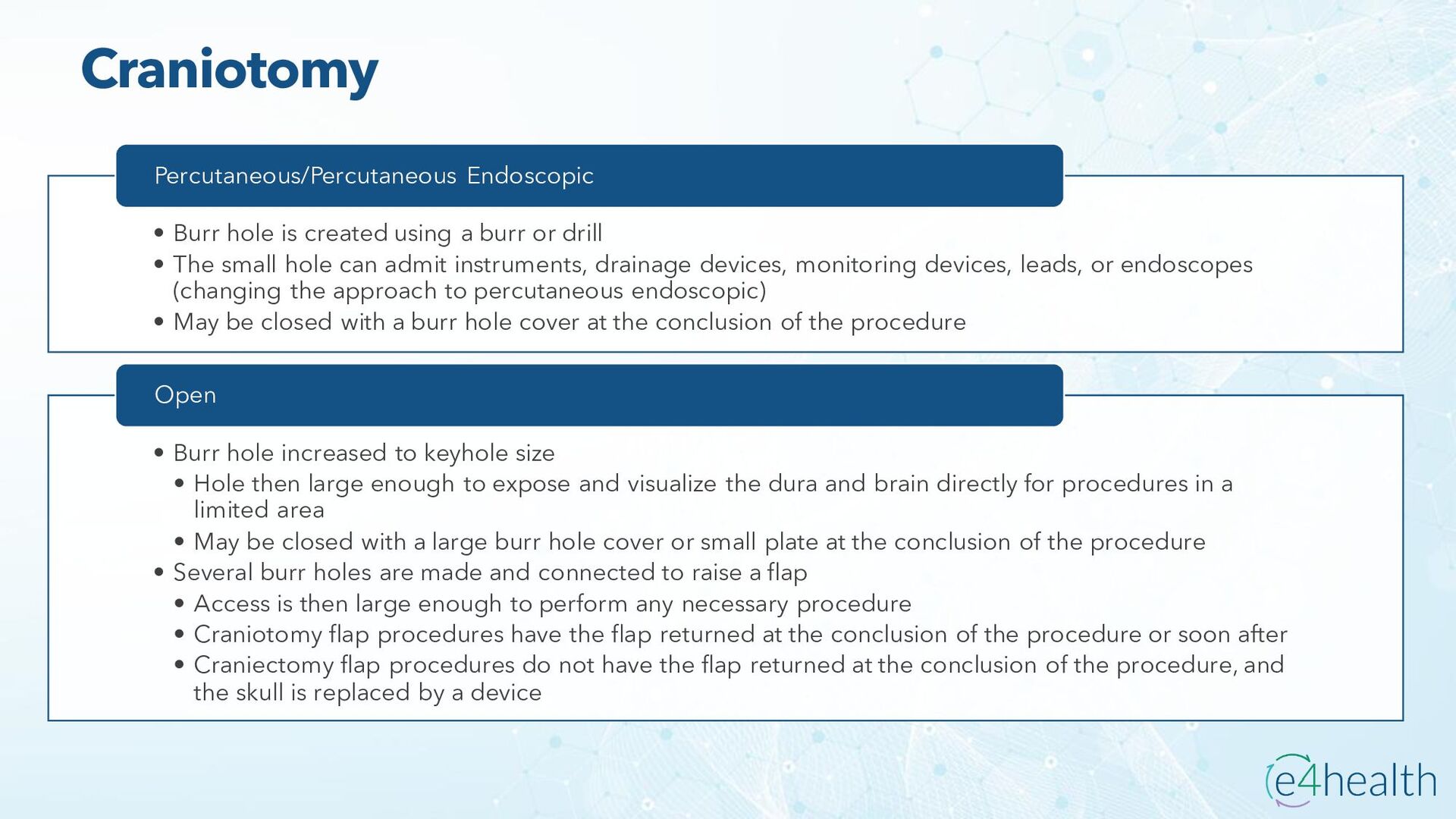
  25. Craniotomy • Burr hole is created using a burr or

    drill • The small hole can admit instruments, drainage devices, monitoring devices, leads, or endoscopes (changing the approach to percutaneous endoscopic) • May be closed with a burr hole cover at the conclusion of the procedure Percutaneous/Percutaneous Endoscopic • Burr hole increased to keyhole size • Hole then large enough to expose and visualize the dura and brain directly for procedures in a limited area • May be closed with a large burr hole cover or small plate at the conclusion of the procedure • Several burr holes are made and connected to raise a flap • Access is then large enough to perform any necessary procedure • Craniotomy flap procedures have the flap returned at the conclusion of the procedure or soon after • Craniectomy flap procedures do not have the flap returned at the conclusion of the procedure, and the skull is replaced by a device Open
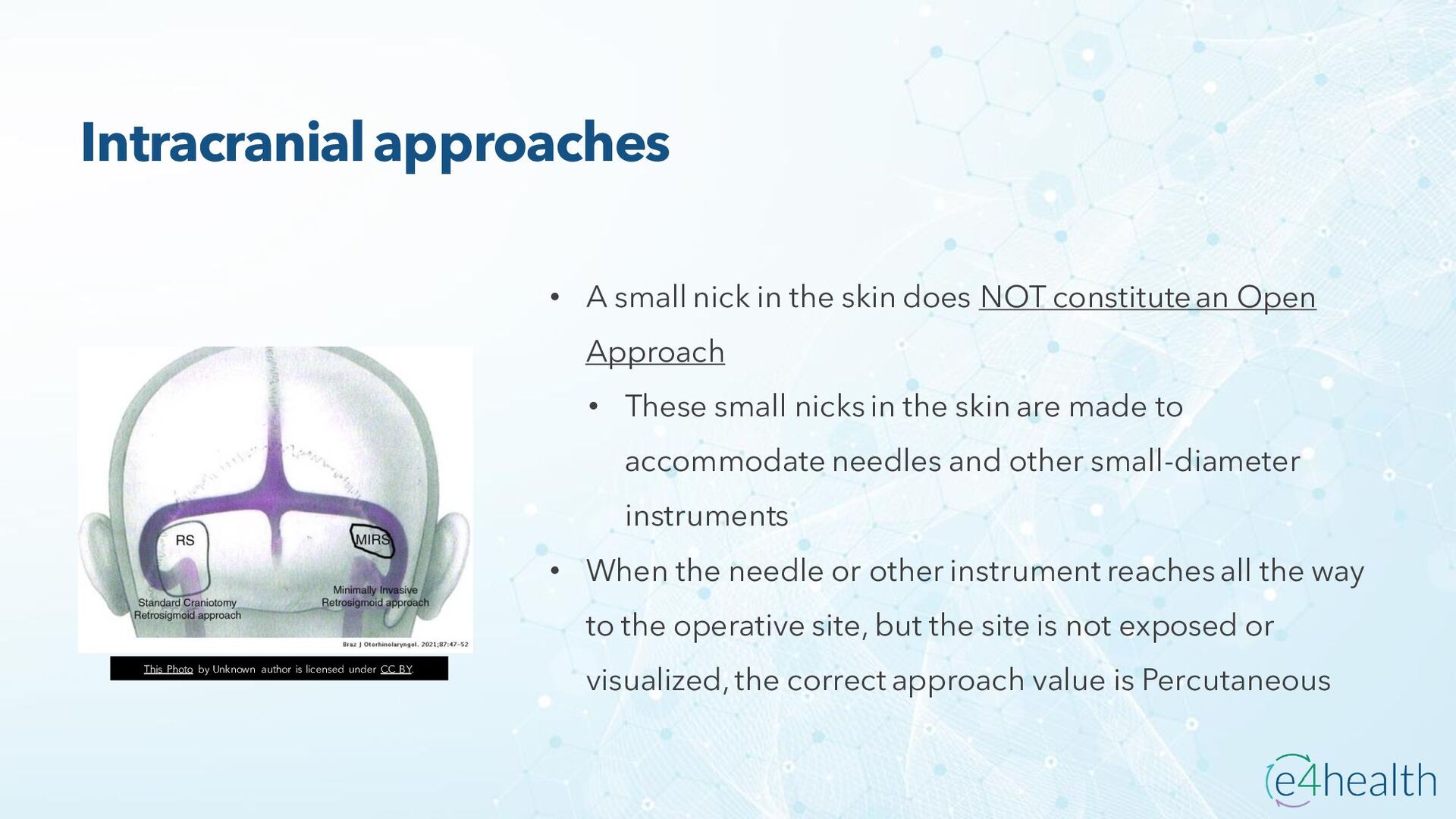
  26. Intracranial approaches • A small nick in the skin does

    NOT constitute an Open Approach • These small nicks in the skin are made to accommodate needles and other small-diameter instruments • When the needle or other instrument reaches all the way to the operative site, but the site is not exposed or visualized, the correct approach value is Percutaneous This Photo by Unknown author is licensed under CC BY.
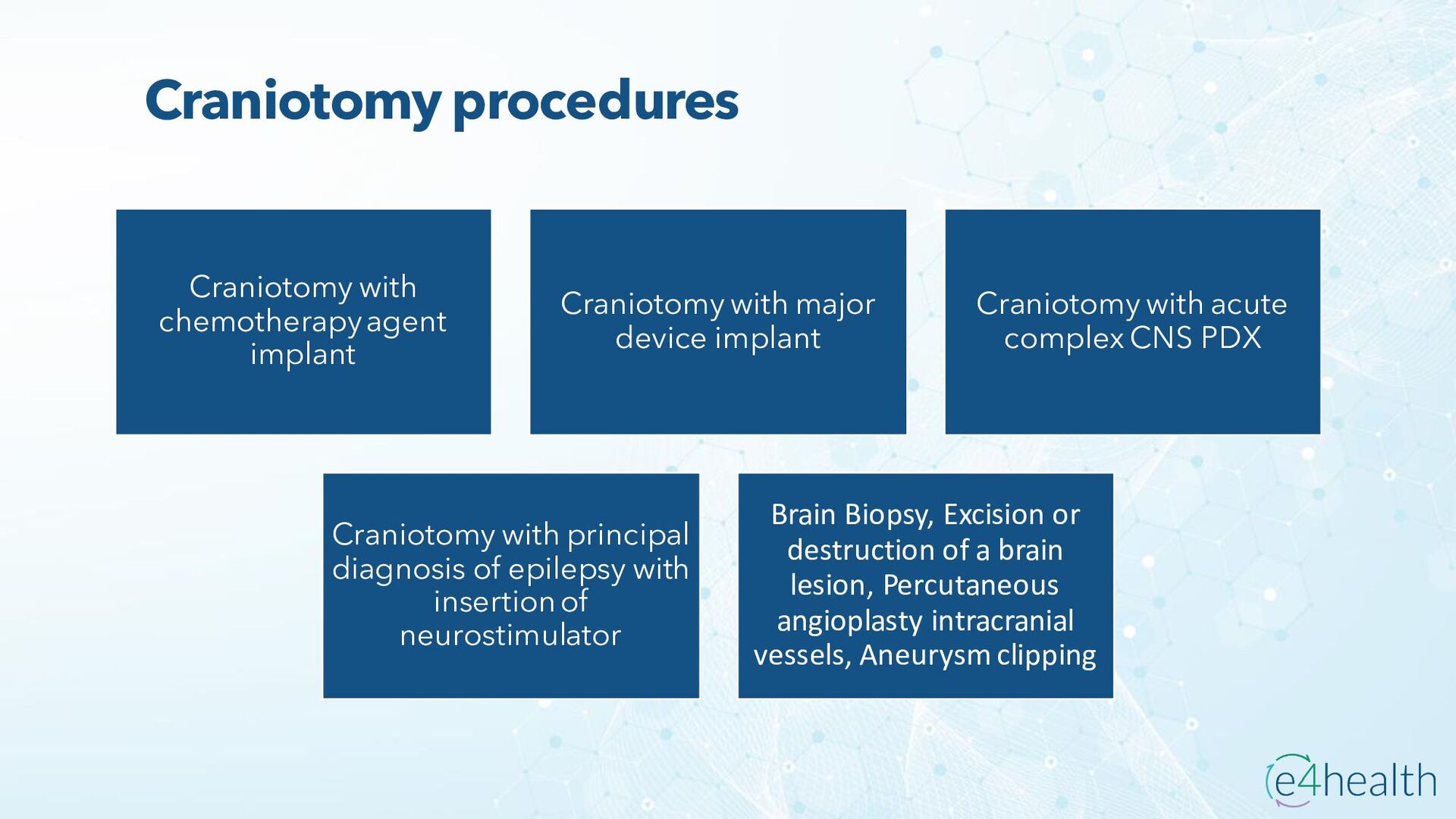
  27. Craniotomy procedures Craniotomy with chemotherapy agent implant Craniotomy with major

    device implant Craniotomy with acute complex CNS PDX Craniotomy with principal diagnosis of epilepsy with insertion of neurostimulator Brain Biopsy, Excision or destruction of a brain lesion, Percutaneous angioplasty intracranial vessels, Aneurysm clipping
  28. Evacuation of Intracerebral Hematoma Coding Clinic Third Quarter 2015 Page

    13 • Question: The patient presents for surgical treatment of an acute right basal ganglia intraparenchymal intracerebral hematoma. He underwent percutaneous endoscopic evacuation of an organized solid hematoma in the brain via a burr hole. What is the appropriate ICD-10-PCS code for this surgery? • Answer: "Extirpation" is the appropriate root operation since an organized solid hematoma was evacuated. Assign the following ICD-10-PCS code: 00C74ZZ Extirpation of matter from cerebral hemisphere, percutaneous endoscopic approach • The percutaneous endoscopic approach is defined as entry, by puncture or minor incision, of instrumentation through the skin or mucous membrane and any other body layers necessary to reach and visualize the site of the procedure.
  29. Percutaneous Drainage of Subdural Hematoma Coding Clinic Third Quarter 2015

    Page 11 • Question: A patient with a chronic subdural hematoma of the right hemisphere underwent drainage via burr hole. The liquefied portion of the hematoma was drained, and a drainage device was left in the subdural space. What is the appropriate approach value for this procedure? How should this surgery be coded in ICD-10-PCS? • Answer: A burr hole is a small hole that is drilled through the skull to assess a targeted local area. In this case, the correct approach is "percutaneous." The ICD-10-PCS defines "percutaneous" as entry, by puncture or minor incision, of instrumentation through the skin or mucous membrane and any other body layers necessary to reach the site of the procedure. Assign the following ICD-10-PCS code: 009430Z Drainage of subdural space with drainage device, percutaneous approach • As previously stated, the root operation "Extirpation" should be used when removal of solid matter is documented. If only liquid is removed, "Drainage" is the appropriate root operation. If both drainage of fluid and cleaning out of solid matter is done, code ONLY the root operation "Extirpation."
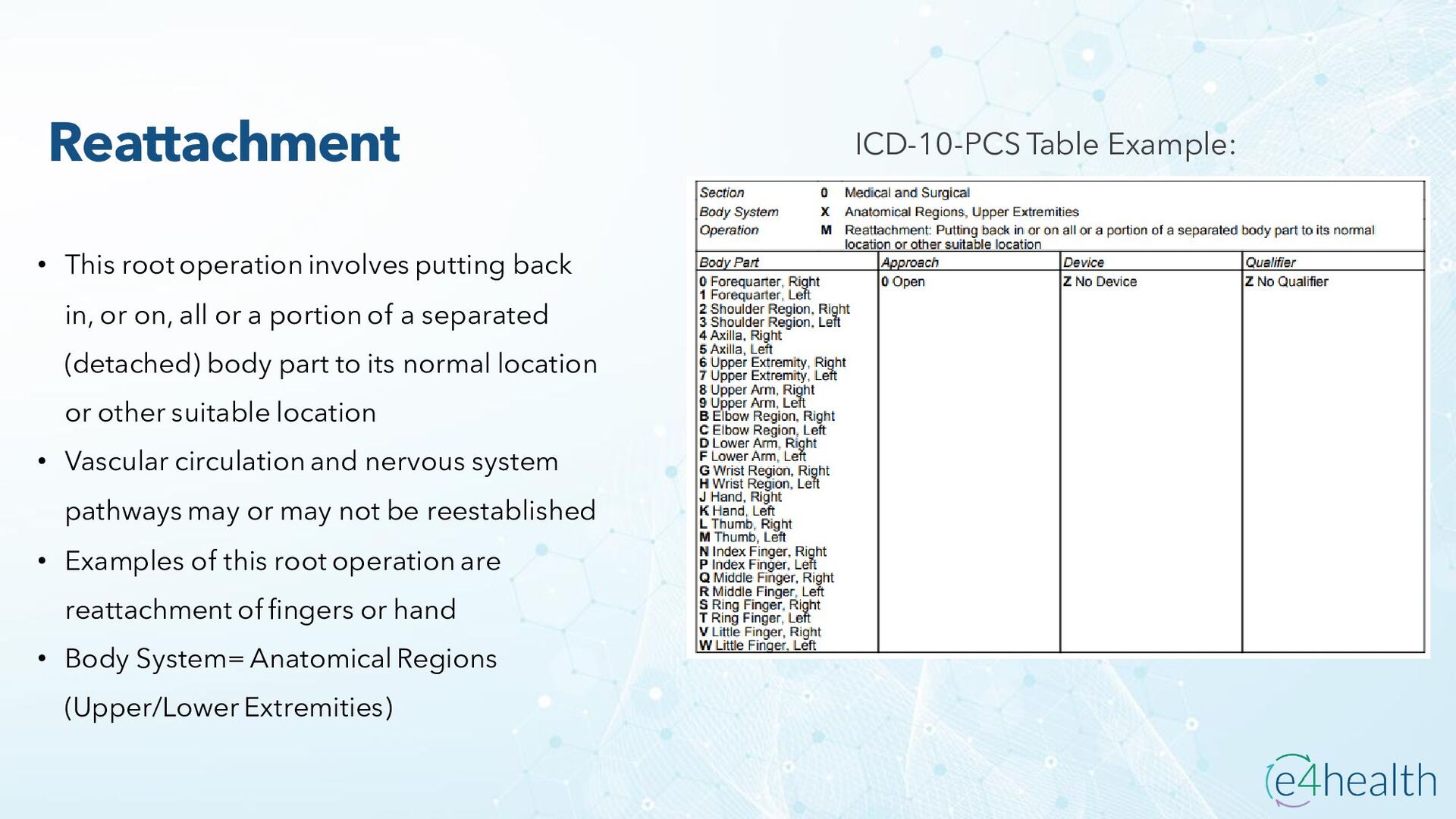
  30. Reattachment • This root operation involves putting back in, or

    on, all or a portion of a separated (detached) body part to its normal location or other suitable location • Vascular circulation and nervous system pathways may or may not be reestablished • Examples of this root operation are reattachment of fingers or hand • Body System= Anatomical Regions (Upper/Lower Extremities) ICD-10-PCS Table Example:
  31. References • AHA ICD-10-CM and ICD-10-PCS Coding Handbook • ICD-10-PCS:

    An Applied Approach 2023 • Cengage: 3-2-1 CODE IT! • Medical Terminology Systems, 8th Edition • ICD-10-CM/PCS MS-DRG v40.0 Definitions Manual (cms.gov) • chrome- extension://efaidnbmnnnibpcajpcglclefindmkaj/https://bok.ahima.org/PdfView?oid=3 02716 • https://uasisolutions.com/monthly-cdi-scenario-discussion-april-2020/ • Microsoft Word - Resourcebook_040909.doc (ahima.org)