Upgrade to PRO for Only $50/Year—Limited-Time Offer! 🔥

FY 2024: MDC 6 - Digestive System - Medical

Avatar for e4health e4health PRO
April 03, 2024
610

FY 2024: MDC 6 - Digestive System - Medical

Avatar for e4health

e4health PRO

April 03, 2024
Tweet

Transcript

  1. H I M | C O D I N G

    & C D I | H E A LT H I T | R E V C Y C L E Empowering Better Health e4health tackles healthcare’s data, quality and revenue challenges empowering your providers to focus on better care.
  2. Objectives • Review MDC 6- Diseases and Disorders of the

    Digestive System with a focus on selected diagnoses and procedures • Learner will acquire a basic understanding of the diagnoses and procedures included in MDC-6 • Discuss Query opportunities in MDC-6 • Review coding clinics relevant to the chosen topics in each DRG
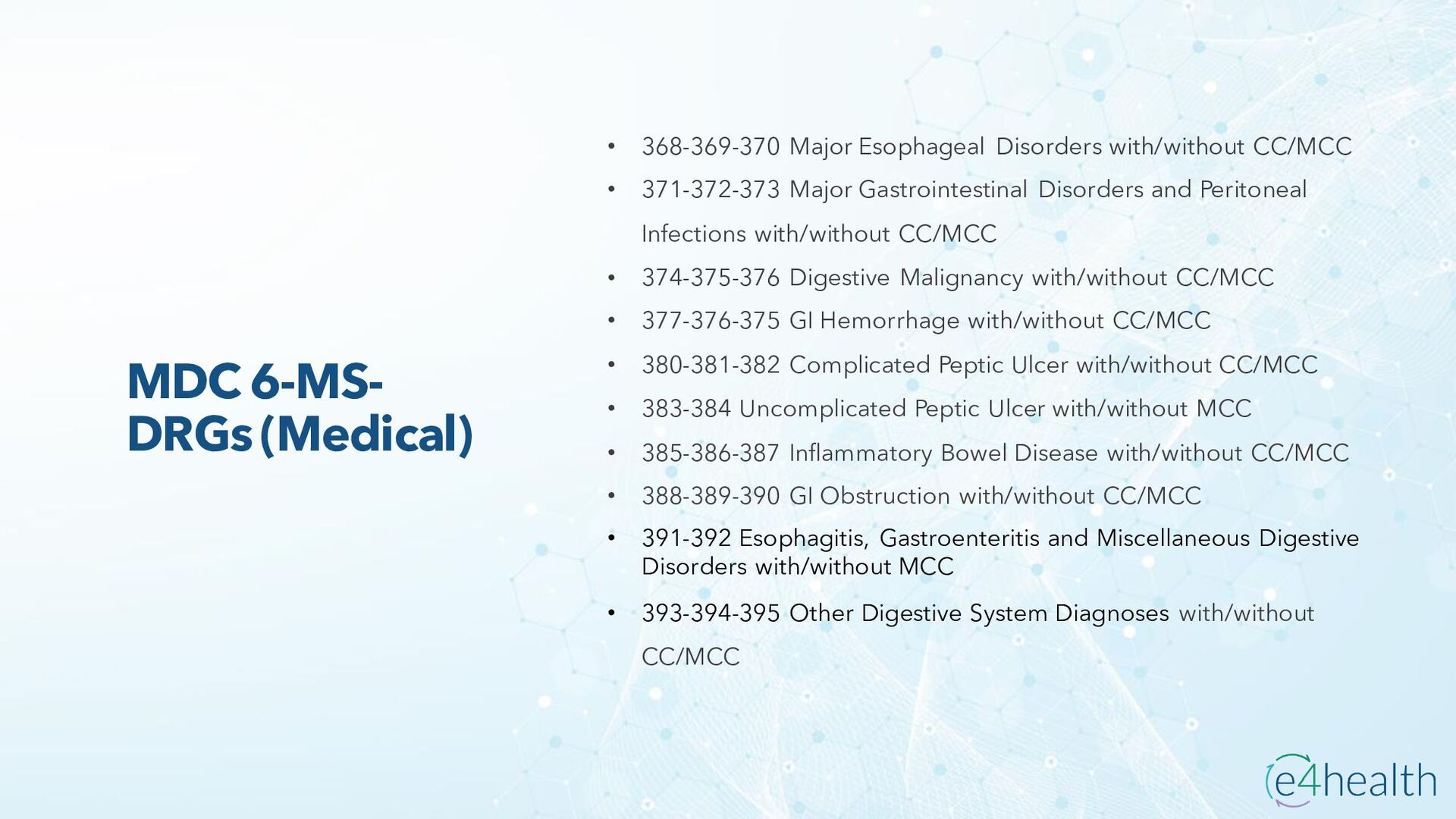
  3. MDC 6-MS- DRGs (Medical) • 368-369-370 Major Esophageal Disorders with/without

    CC/MCC • 371-372-373 Major Gastrointestinal Disorders and Peritoneal Infections with/without CC/MCC • 374-375-376 Digestive Malignancy with/without CC/MCC • 377-376-375 GI Hemorrhage with/without CC/MCC • 380-381-382 Complicated Peptic Ulcer with/without CC/MCC • 383-384 Uncomplicated Peptic Ulcer with/without MCC • 385-386-387 Inflammatory Bowel Disease with/without CC/MCC • 388-389-390 GI Obstruction with/without CC/MCC • 391-392 Esophagitis, Gastroenteritis and Miscellaneous Digestive Disorders with/without MCC • 393-394-395 Other Digestive System Diagnoses with/without CC/MCC
  4. Chapter Specific Guidelines There is no specific coding chapter for

    the digestive system 01 Coding concepts are specific to the disease processes that fall within MDC 6 02 Clinical concepts and query opportunities are included as part of each disease process that affects the digestive system 03
  5. General Coding Guidelines Combination Codes As noted in ICD-10-CM Coding

    Guidelines, Section I.B.9: Combination Code • A combination code is a single code used to classify: • Two diagnoses, or • A diagnosis with an associated secondary process (manifestation) • A diagnosis with an associated complication • Combination codes are identified by referring to sub-term entries in the Alphabetic Index and by reading the inclusion and exclusion notes in the Tabular List. • Assign only the combination code when that code fully identifies the diagnostic conditions involved or when the Alphabetic Index so directs. • Multiple coding should not be used when the classification provides a combination code that clearly identifies all of the elements documented in the diagnosis. • When the combination code lacks necessary specificity in describing the manifestation or complication, an additional code should be used as a secondary code.
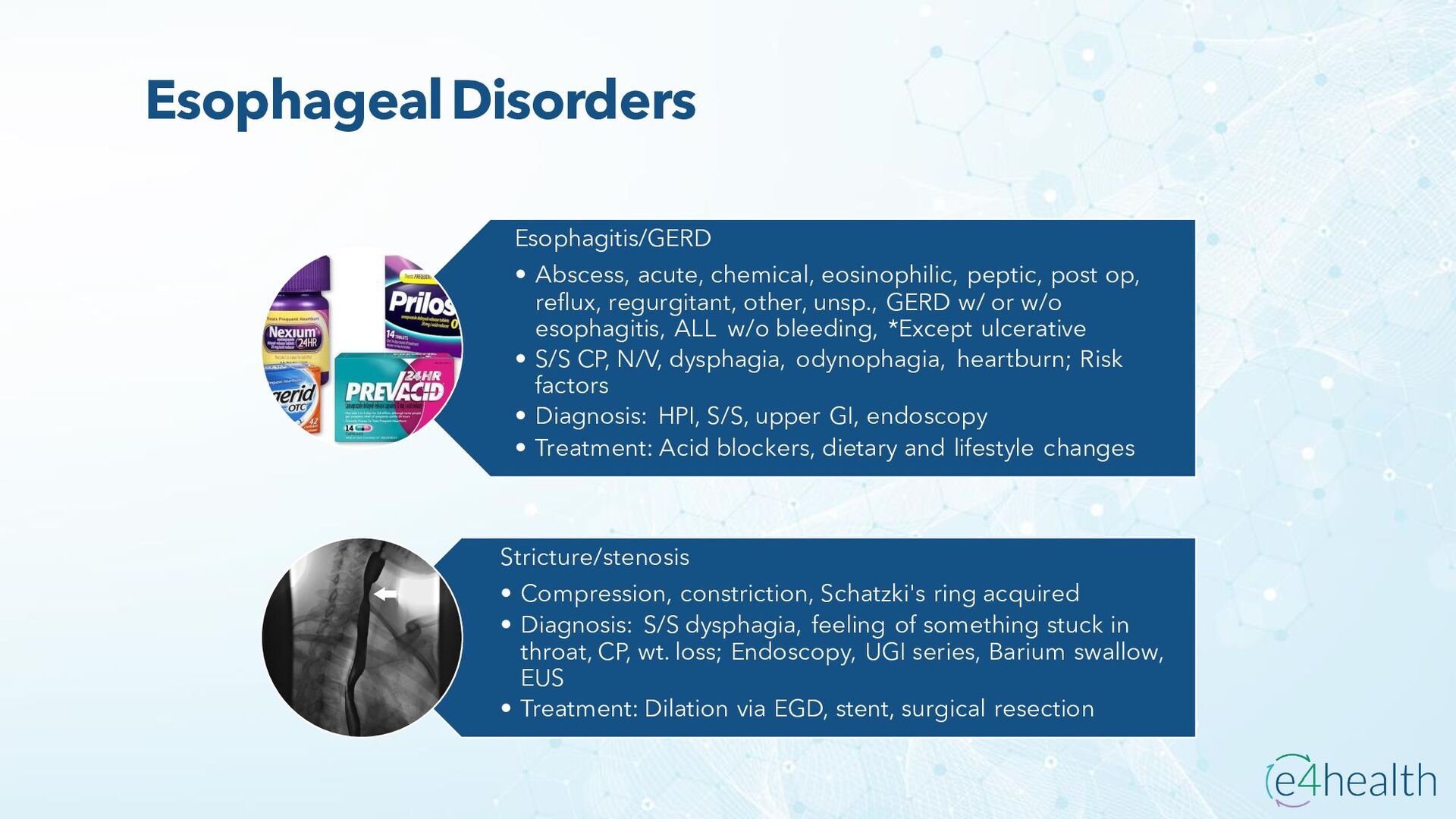
  6. Esophageal Disorders Esophagitis/GERD • Abscess, acute, chemical, eosinophilic, peptic, post

    op, reflux, regurgitant, other, unsp., GERD w/ or w/o esophagitis, ALL w/o bleeding, *Except ulcerative • S/S CP, N/V, dysphagia, odynophagia, heartburn; Risk factors • Diagnosis: HPI, S/S, upper GI, endoscopy • Treatment: Acid blockers, dietary and lifestyle changes Stricture/stenosis • Compression, constriction, Schatzki's ring acquired • Diagnosis: S/S dysphagia, feeling of something stuck in throat, CP, wt. loss; Endoscopy, UGI series, Barium swallow, EUS • Treatment: Dilation via EGD, stent, surgical resection
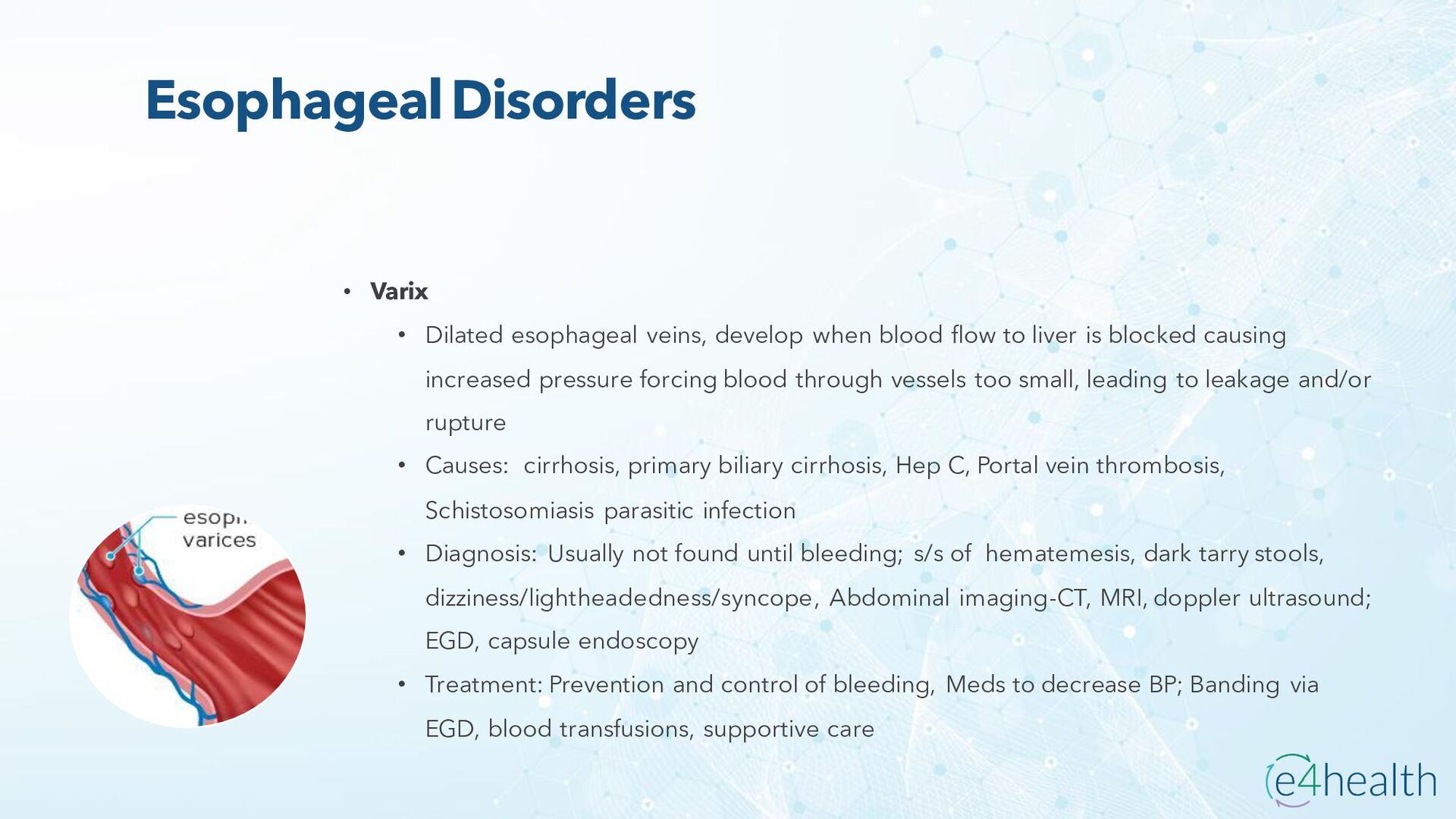
  7. Esophageal Disorders • Varix • Dilated esophageal veins, develop when

    blood flow to liver is blocked causing increased pressure forcing blood through vessels too small, leading to leakage and/or rupture • Causes: cirrhosis, primary biliary cirrhosis, Hep C, Portal vein thrombosis, Schistosomiasis parasitic infection • Diagnosis: Usually not found until bleeding; s/s of hematemesis, dark tarry stools, dizziness/lightheadedness/syncope, Abdominal imaging-CT, MRI, doppler ultrasound; EGD, capsule endoscopy • Treatment: Prevention and control of bleeding, Meds to decrease BP; Banding via EGD, blood transfusions, supportive care
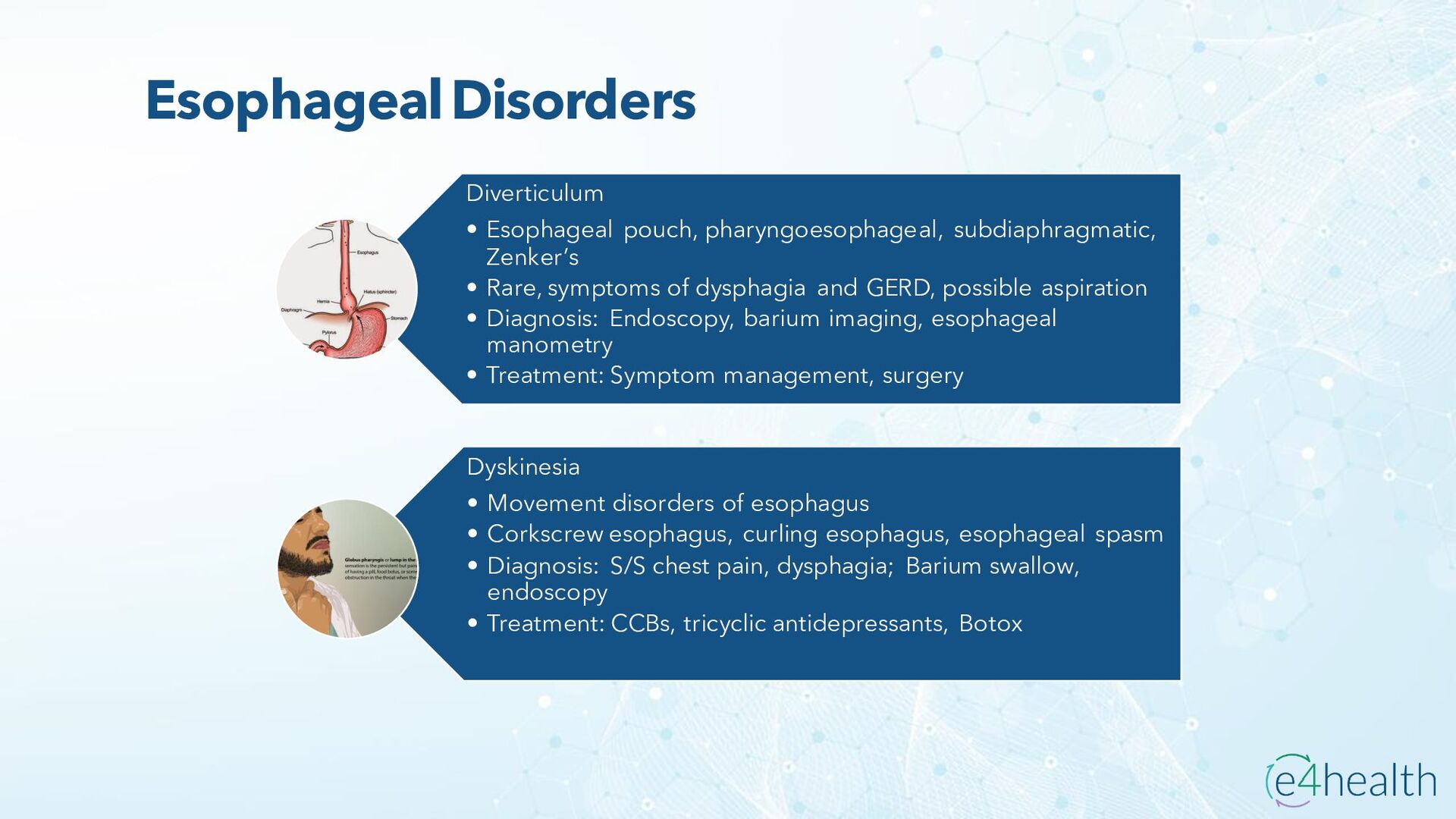
  8. Esophageal Disorders Diverticulum • Esophageal pouch, pharyngoesophageal, subdiaphragmatic, Zenker’s •

    Rare, symptoms of dysphagia and GERD, possible aspiration • Diagnosis: Endoscopy, barium imaging, esophageal manometry • Treatment: Symptom management, surgery Dyskinesia • Movement disorders of esophagus • Corkscrew esophagus, curling esophagus, esophageal spasm • Diagnosis: S/S chest pain, dysphagia; Barium swallow, endoscopy • Treatment: CCBs, tricyclic antidepressants, Botox
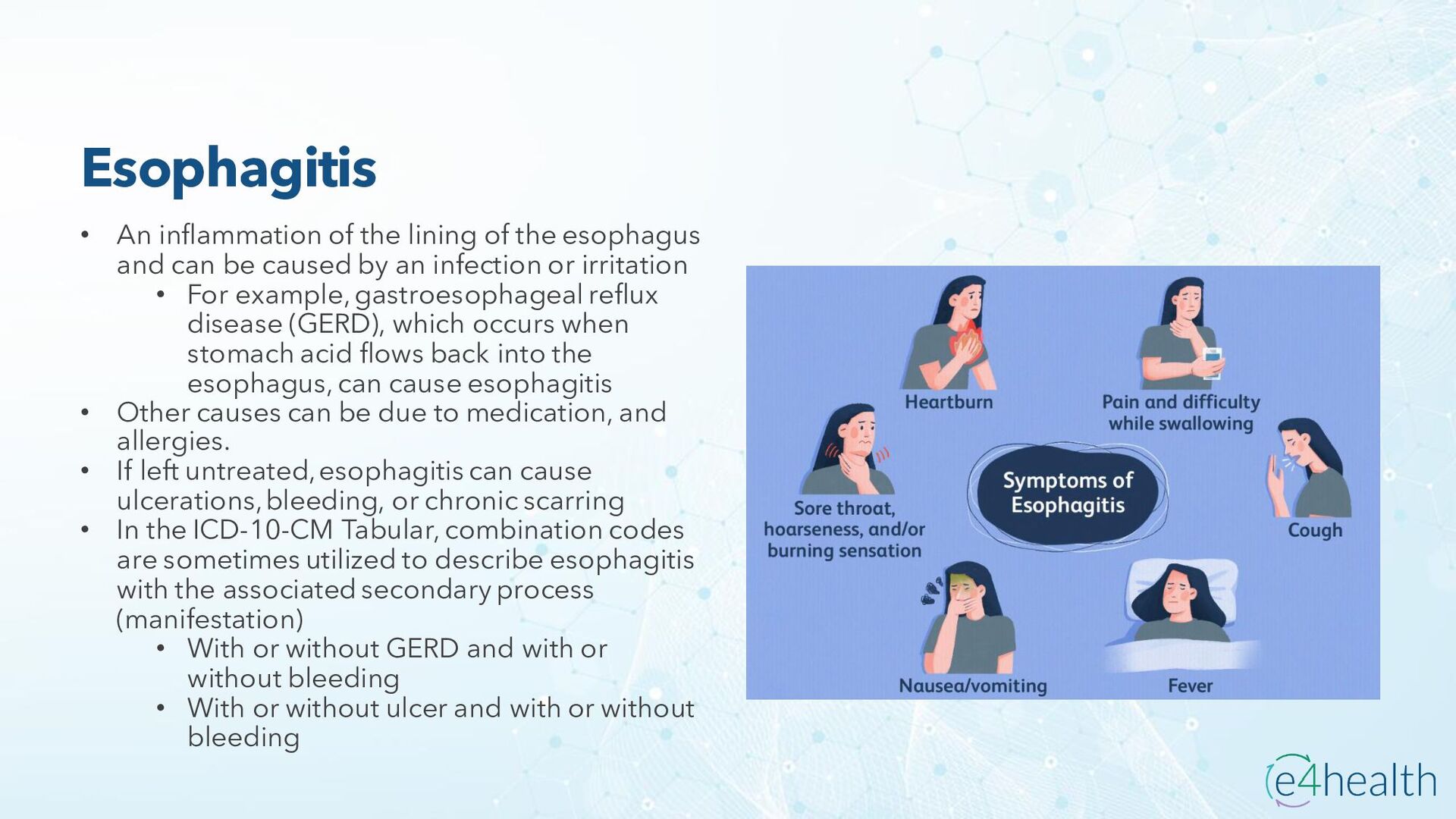
  9. Esophagitis • An inflammation of the lining of the esophagus

    and can be caused by an infection or irritation • For example, gastroesophageal reflux disease (GERD), which occurs when stomach acid flows back into the esophagus, can cause esophagitis • Other causes can be due to medication, and allergies. • If left untreated, esophagitis can cause ulcerations, bleeding, or chronic scarring • In the ICD-10-CM Tabular, combination codes are sometimes utilized to describe esophagitis with the associated secondary process (manifestation) • With or without GERD and with or without bleeding • With or without ulcer and with or without bleeding
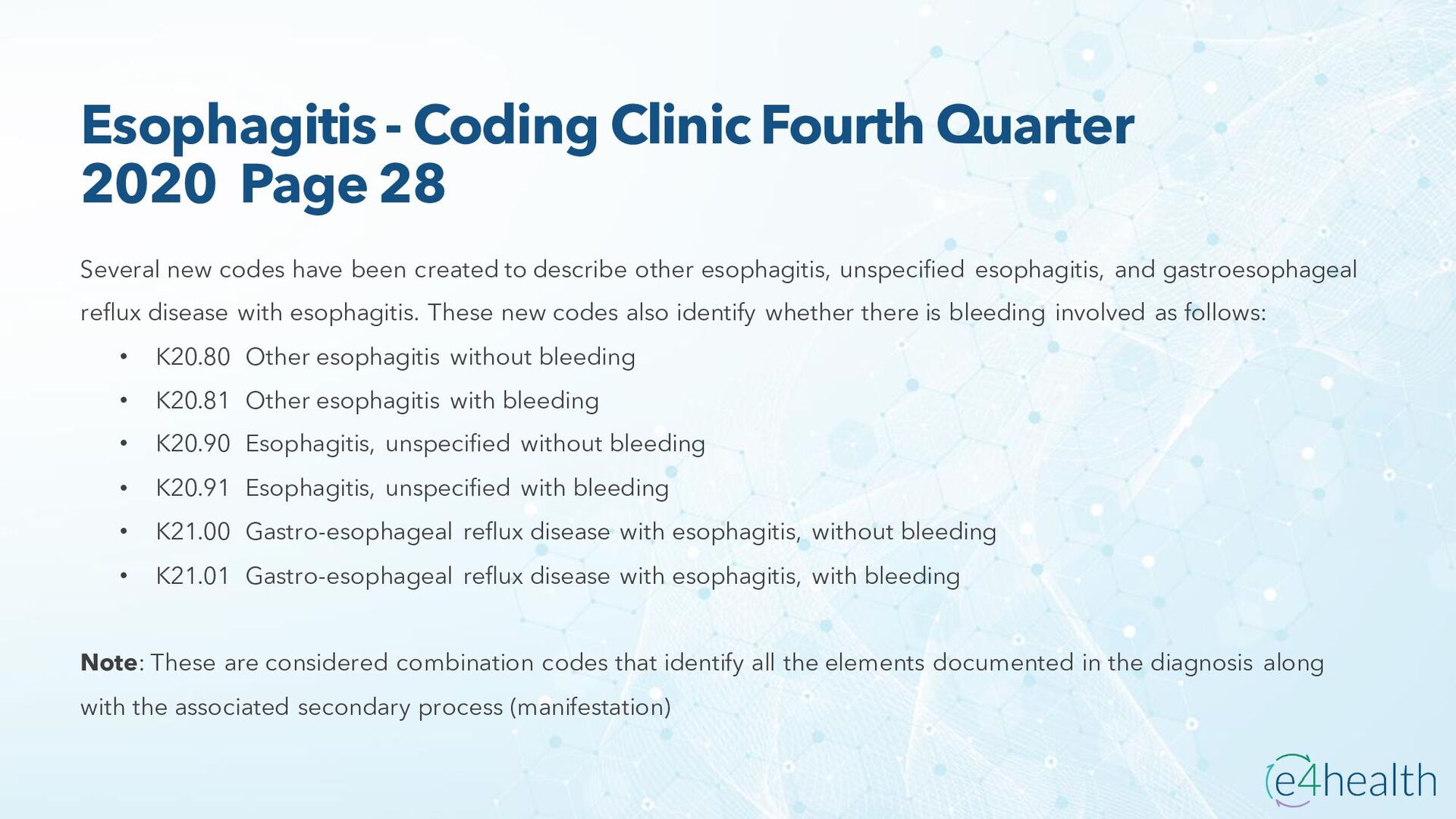
  10. Esophagitis - Coding Clinic Fourth Quarter 2020 Page 28 Several

    new codes have been created to describe other esophagitis, unspecified esophagitis, and gastroesophageal reflux disease with esophagitis. These new codes also identify whether there is bleeding involved as follows: • K20.80 Other esophagitis without bleeding • K20.81 Other esophagitis with bleeding • K20.90 Esophagitis, unspecified without bleeding • K20.91 Esophagitis, unspecified with bleeding • K21.00 Gastro-esophageal reflux disease with esophagitis, without bleeding • K21.01 Gastro-esophageal reflux disease with esophagitis, with bleeding Note: These are considered combination codes that identify all the elements documented in the diagnosis along with the associated secondary process (manifestation)
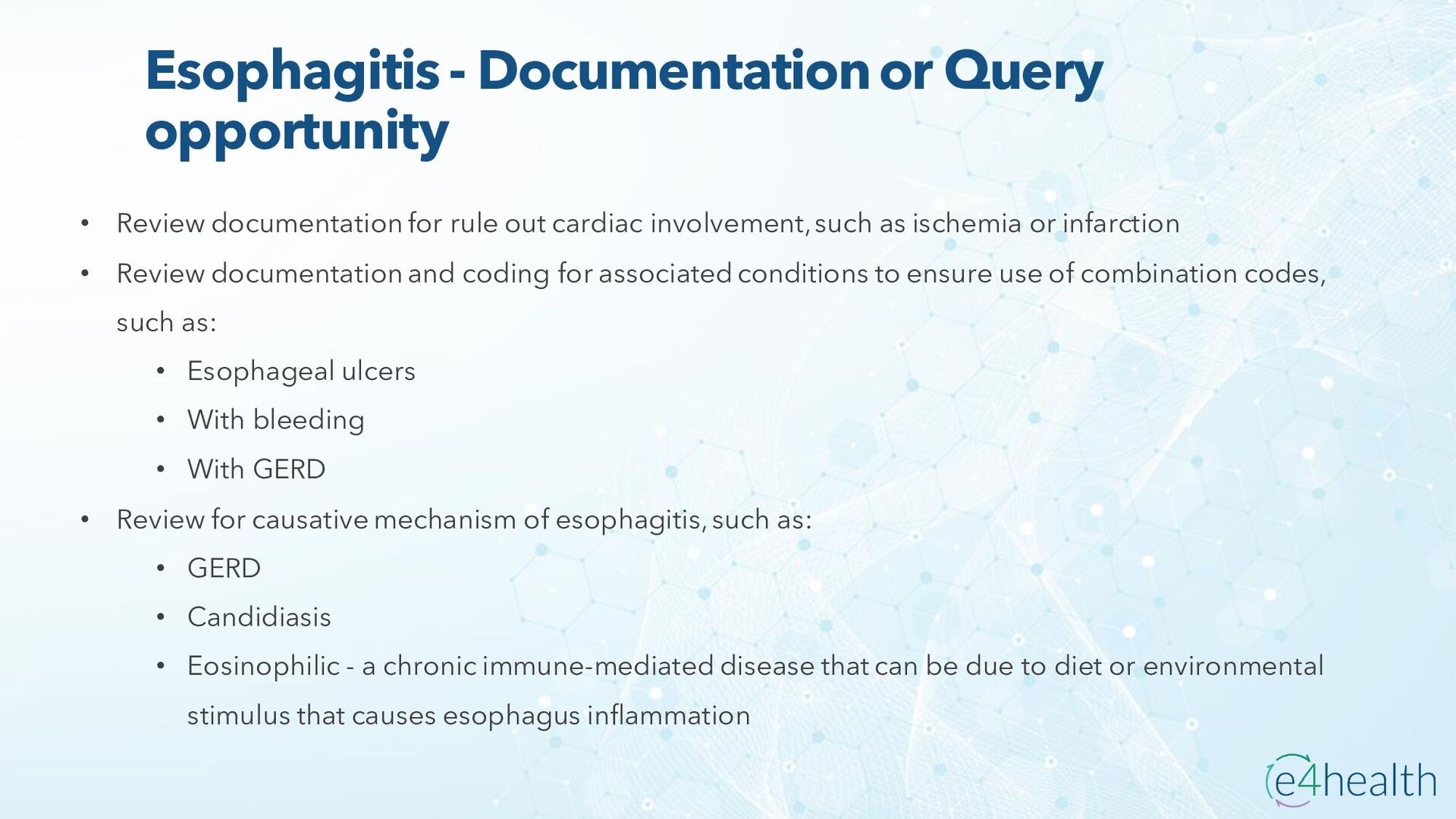
  11. Esophagitis - Documentation or Query opportunity • Review documentation for

    rule out cardiac involvement, such as ischemia or infarction • Review documentation and coding for associated conditions to ensure use of combination codes, such as: • Esophageal ulcers • With bleeding • With GERD • Review for causative mechanism of esophagitis, such as: • GERD • Candidiasis • Eosinophilic - a chronic immune-mediated disease that can be due to diet or environmental stimulus that causes esophagus inflammation
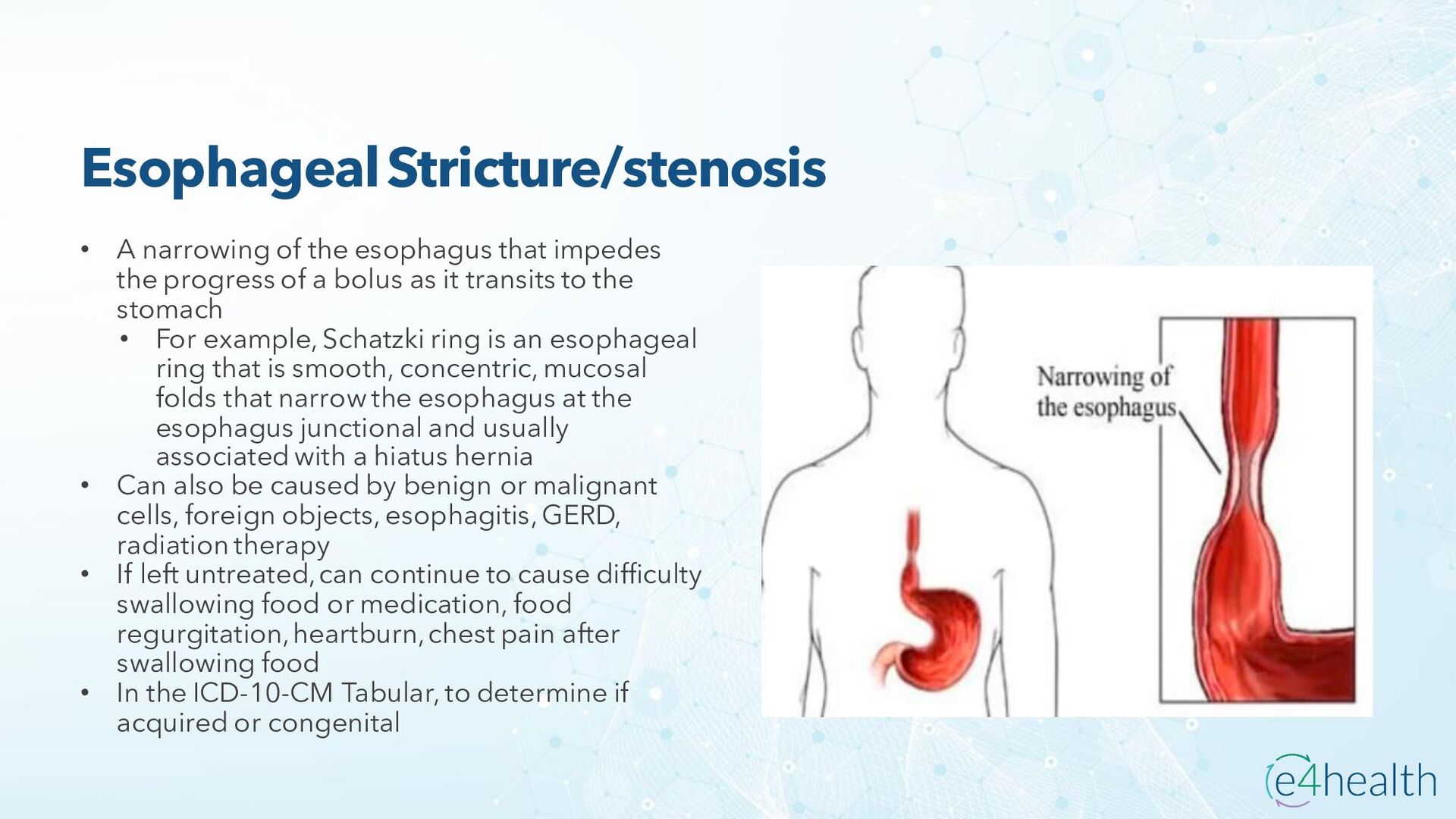
  12. Esophageal Stricture/stenosis • A narrowing of the esophagus that impedes

    the progress of a bolus as it transits to the stomach • For example, Schatzki ring is an esophageal ring that is smooth, concentric, mucosal folds that narrow the esophagus at the esophagus junctional and usually associated with a hiatus hernia • Can also be caused by benign or malignant cells, foreign objects, esophagitis, GERD, radiation therapy • If left untreated, can continue to cause difficulty swallowing food or medication, food regurgitation, heartburn, chest pain after swallowing food • In the ICD-10-CM Tabular, to determine if acquired or congenital
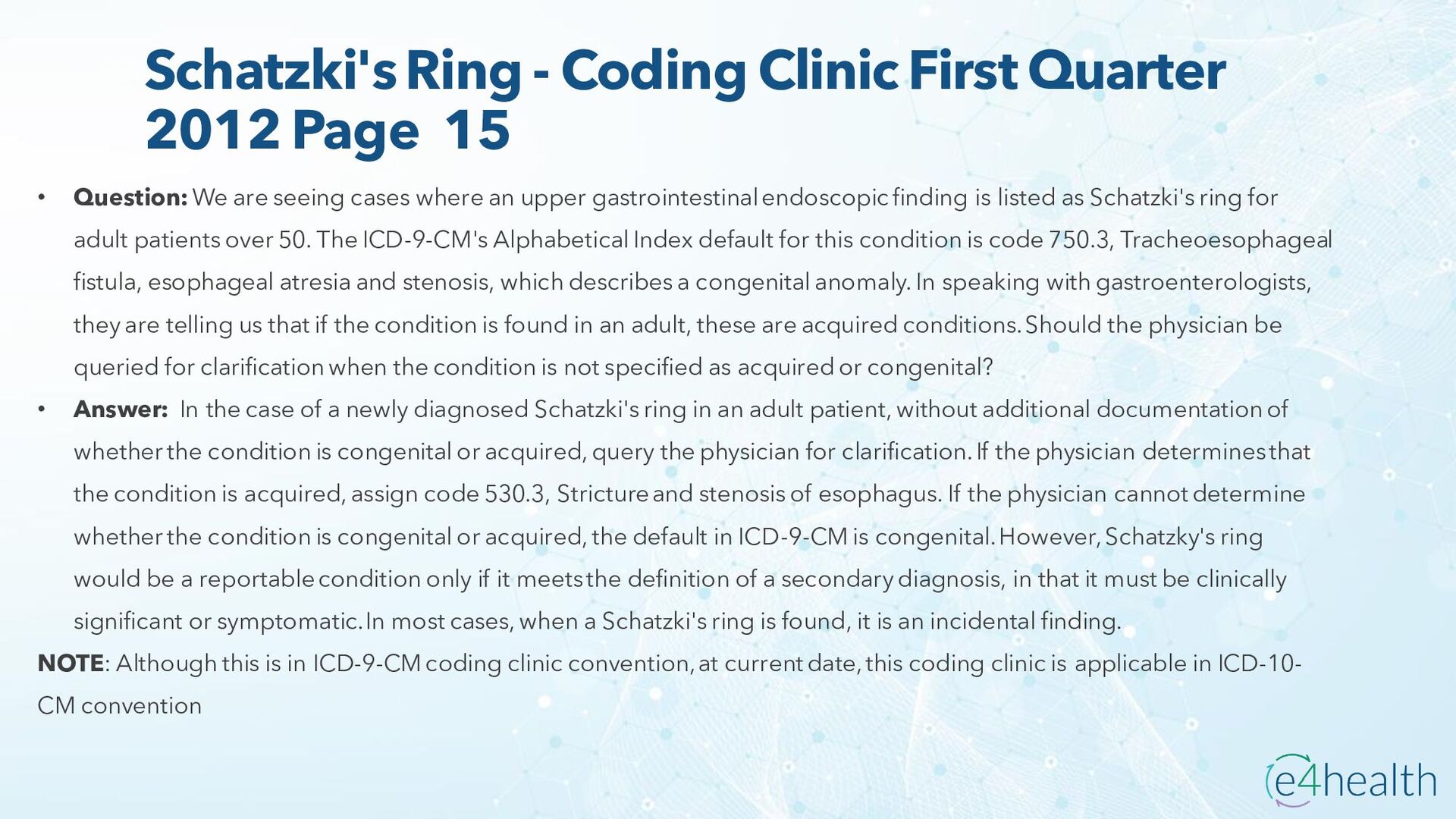
  13. Schatzki's Ring - Coding Clinic First Quarter 2012 Page 15

    • Question: We are seeing cases where an upper gastrointestinal endoscopic finding is listed as Schatzki's ring for adult patients over 50. The ICD-9-CM's Alphabetical Index default for this condition is code 750.3, Tracheoesophageal fistula, esophageal atresia and stenosis, which describes a congenital anomaly. In speaking with gastroenterologists, they are telling us that if the condition is found in an adult, these are acquired conditions. Should the physician be queried for clarification when the condition is not specified as acquired or congenital? • Answer: In the case of a newly diagnosed Schatzki's ring in an adult patient, without additional documentation of whether the condition is congenital or acquired, query the physician for clarification. If the physician determines that the condition is acquired, assign code 530.3, Stricture and stenosis of esophagus. If the physician cannot determine whether the condition is congenital or acquired, the default in ICD-9-CM is congenital. However, Schatzky's ring would be a reportable condition only if it meets the definition of a secondary diagnosis, in that it must be clinically significant or symptomatic. In most cases, when a Schatzki's ring is found, it is an incidental finding. NOTE: Although this is in ICD-9-CM coding clinic convention, at current date, this coding clinic is applicable in ICD-10- CM convention
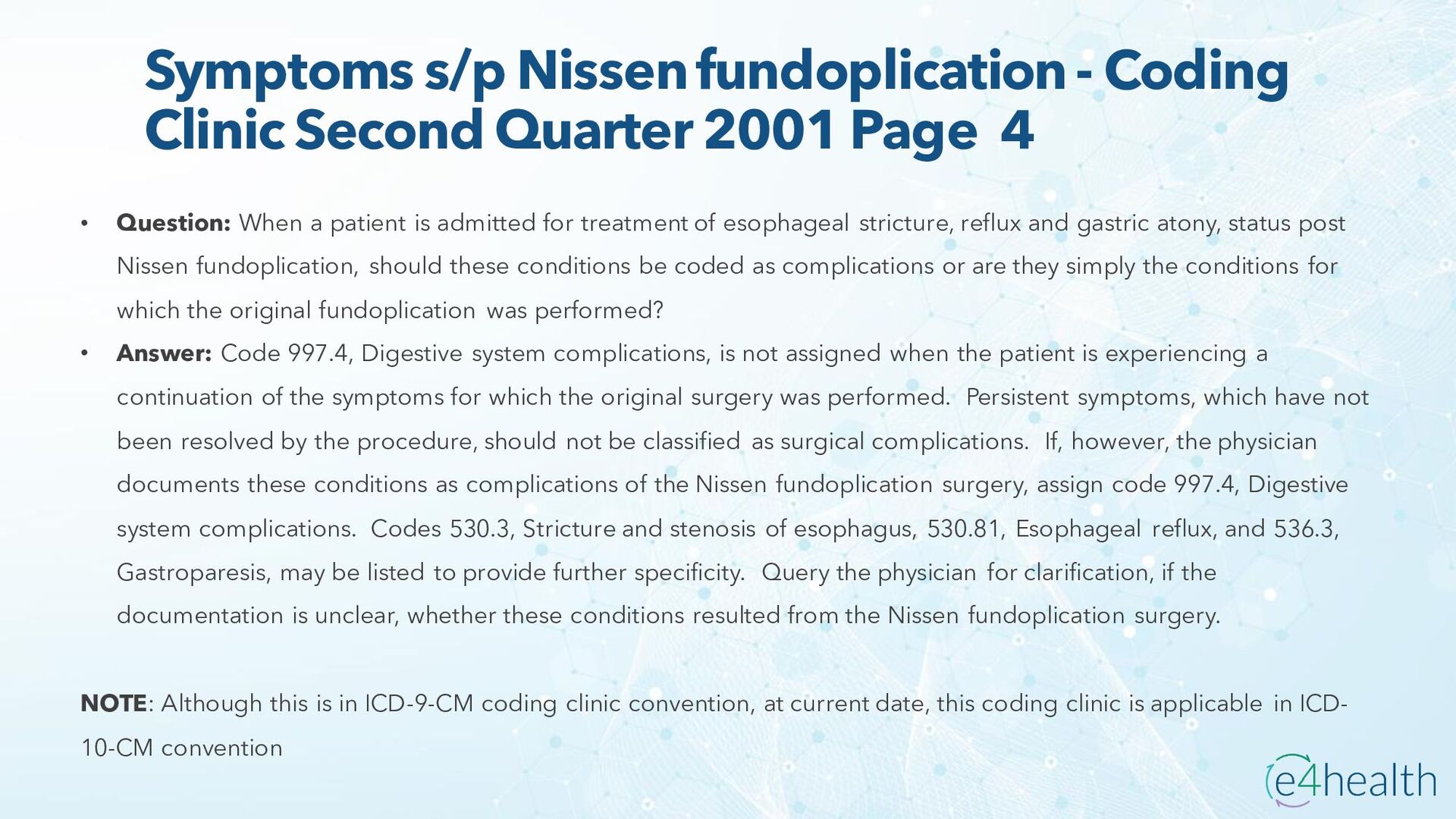
  14. Symptoms s/p Nissen fundoplication - Coding Clinic Second Quarter 2001

    Page 4 • Question: When a patient is admitted for treatment of esophageal stricture, reflux and gastric atony, status post Nissen fundoplication, should these conditions be coded as complications or are they simply the conditions for which the original fundoplication was performed? • Answer: Code 997.4, Digestive system complications, is not assigned when the patient is experiencing a continuation of the symptoms for which the original surgery was performed. Persistent symptoms, which have not been resolved by the procedure, should not be classified as surgical complications. If, however, the physician documents these conditions as complications of the Nissen fundoplication surgery, assign code 997.4, Digestive system complications. Codes 530.3, Stricture and stenosis of esophagus, 530.81, Esophageal reflux, and 536.3, Gastroparesis, may be listed to provide further specificity. Query the physician for clarification, if the documentation is unclear, whether these conditions resulted from the Nissen fundoplication surgery. NOTE: Although this is in ICD-9-CM coding clinic convention, at current date, this coding clinic is applicable in ICD- 10-CM convention
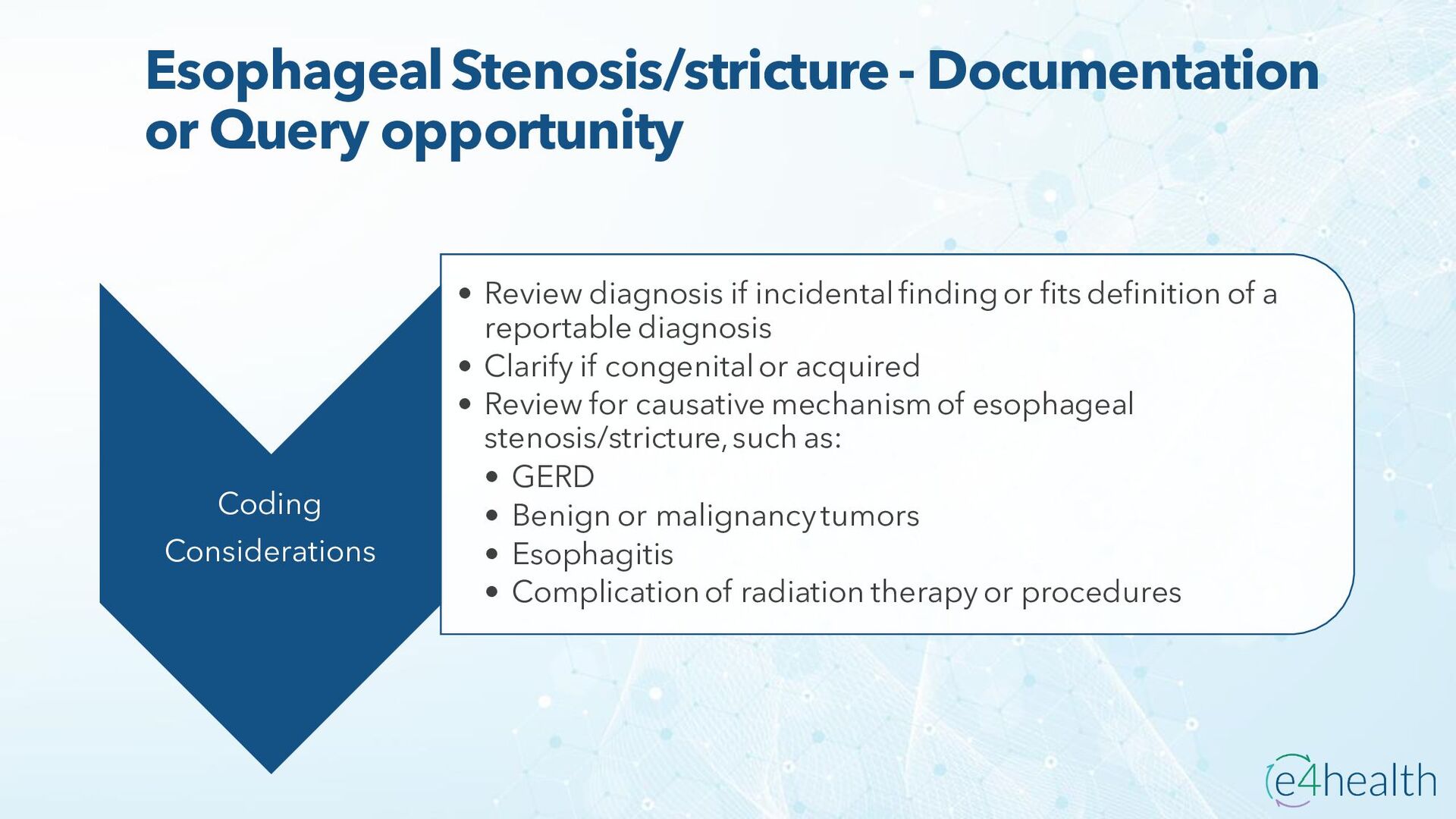
  15. Esophageal Stenosis/stricture - Documentation or Query opportunity Coding Considerations •

    Review diagnosis if incidental finding or fits definition of a reportable diagnosis • Clarify if congenital or acquired • Review for causative mechanism of esophageal stenosis/stricture, such as: • GERD • Benign or malignancy tumors • Esophagitis • Complication of radiation therapy or procedures
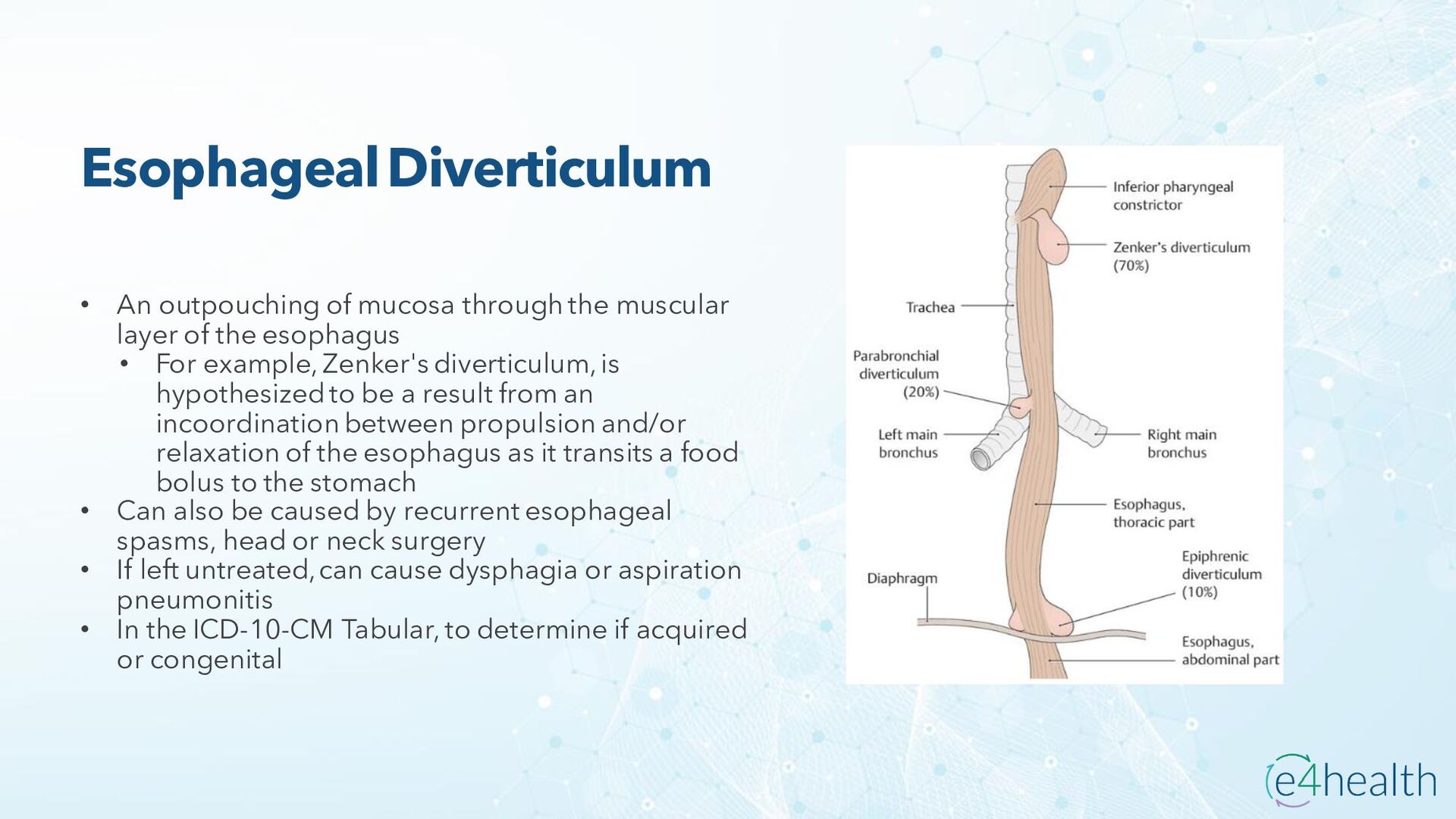
  16. Esophageal Diverticulum • An outpouching of mucosa through the muscular

    layer of the esophagus • For example, Zenker's diverticulum, is hypothesized to be a result from an incoordination between propulsion and/or relaxation of the esophagus as it transits a food bolus to the stomach • Can also be caused by recurrent esophageal spasms, head or neck surgery • If left untreated, can cause dysphagia or aspiration pneumonitis • In the ICD-10-CM Tabular, to determine if acquired or congenital
  17. Acquired esophageal diverticulum - Coding Clinic January - February 1985

    Page 3 -4 • An esophageal diverticulum may be described as either a traction or a pulsion type. Both are classified to 530.6, unless stated as congenital. Congenital esophageal diverticulum is coded 750.4. • Esophageal diverticula refers to the three regions of the esophagus in which a diverticulum may occur. ICD-9-CM assigns code 530.6 to all three regions. The anatomical location is taken into consideration when the operative procedures are coded. • A pharyngoesophageal (pulsion or Zenker's) diverticulum, 530.6, occurs at the upper end of the esophagus at the junction of the hypopharynx and esophagus (Lannier-Hackerman space) and protrudes through the constrictor and cricopharyngeal muscles. It is found most frequently in patients over 50 years of age and is more common in men than in women. • Midesophageal (traction) diverticulum, 530.6, is thought to result from a pull of scar from an adjacent inflammatory process. The diverticulum is small and more than one may be present (diverticula). The midesophageal is often asymptomatic, but can become inflamed, causing dysphagia. In rare instances it can perforate, causing fistula to neighboring structure. When surgery is necessary, a thoracotomy approach with excision of diverticulum may be carried out, 42.31. • Epiphrenic (pulsion) diverticulum, 530.6, is found in the lower third of the esophagus. It is the least common of the esophageal diverticula. Epiphrenic diverticulum may be accompanied by esophagospasms, 530.6 + 530.5, or by esophagitis, 530.6 + 530.1. Surgery may consist of a thoracotomy with excision of diverticulum, 42.31, and may include also an esophagomyotomy, 42.7, for any esophageal motility disorder (achalasia or spasm) and a repair of a hiatal hernia, 53.80. NOTE: Although this is in ICD-9-CM coding clinic convention, at current date, this coding clinic is applicable in ICD-10- CM convention
  18. Esophageal Diverticulum - Documentation or Query opportunity Coding Considerations •

    Review diagnosis if incidental finding or fits definition of a reportable diagnosis • Clarify if congenital or acquired • Associated diagnoses, such as: • Aspiration pneumonitis • Dysphagia and location • GERD • Complication of head or neck surgery
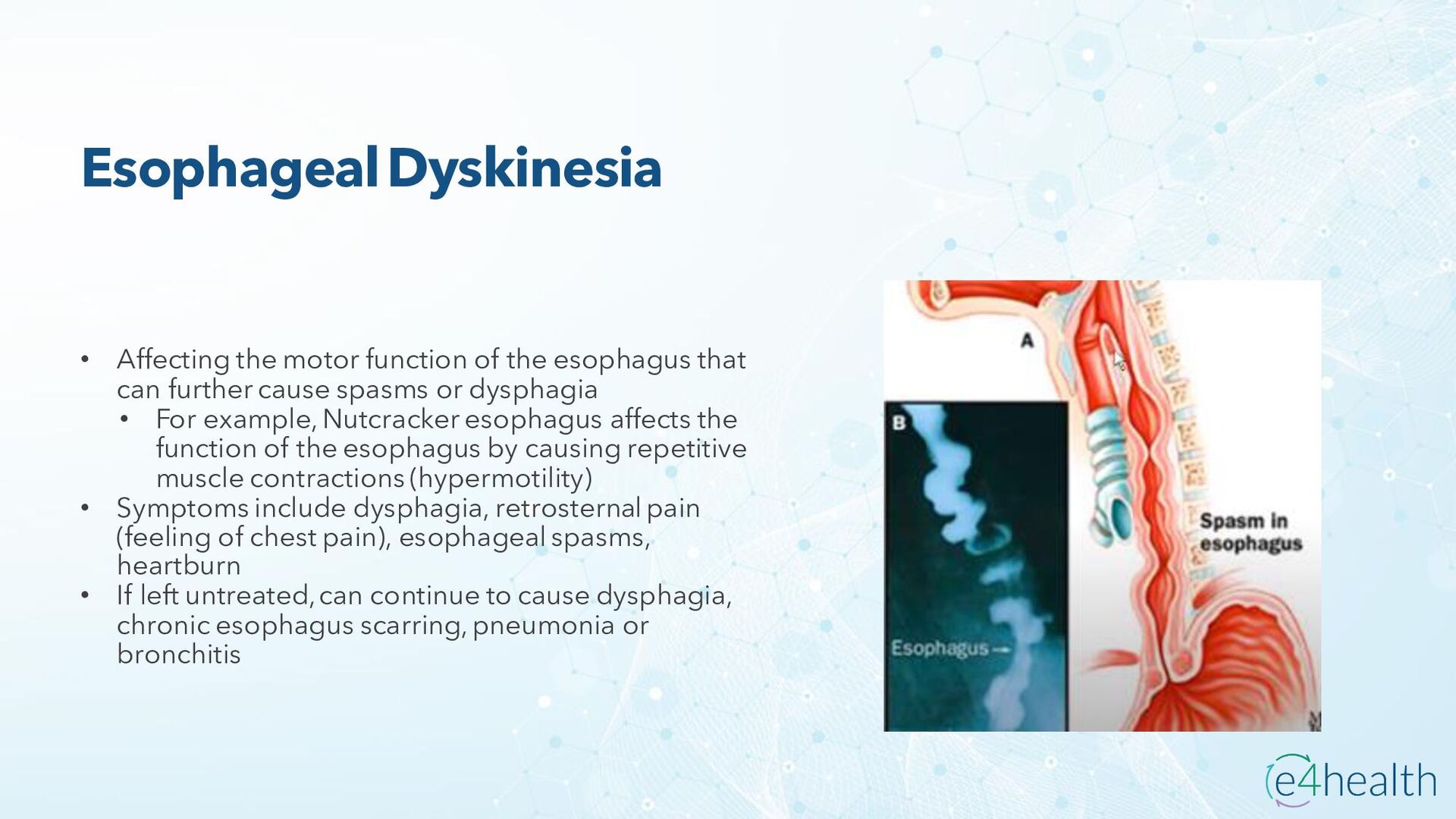
  19. Esophageal Dyskinesia • Affecting the motor function of the esophagus

    that can further cause spasms or dysphagia • For example, Nutcracker esophagus affects the function of the esophagus by causing repetitive muscle contractions (hypermotility) • Symptoms include dysphagia, retrosternal pain (feeling of chest pain), esophageal spasms, heartburn • If left untreated, can continue to cause dysphagia, chronic esophagus scarring, pneumonia or bronchitis
  20. Nutcracker esophagus - Coding Clinic First Quarter 1988 Page 13

    • Question: What is the code assignment for nutcracker esophagus? • Answer: Assign nutcracker esophagus to code 530.5, Dyskinesia of esophagus. Nutcracker esophagus is described as normal progressive peristaltic sequences of very high amplitude with simultaneous contractions of variable frequency causing severe chest pain of esophageal origin. It may represent a variant of diffuse esophageal spasm. NOTE: Although this is in ICD-9-CM coding clinic convention, at current date, this coding clinic is applicable in ICD-10-CM convention
  21. Esophageal dyskinesia - Documentation or Query opportunity Coding Considerations •

    Review diagnosis if incidental finding or fits definition of a reportable diagnosis • Review documentation for rule out cardiac involvement, such as ischemia or infarction • Associated diagnoses, such as: • Aspiration pneumonia, pneumonitis or bronchitis • Dysphagia and location • GERD
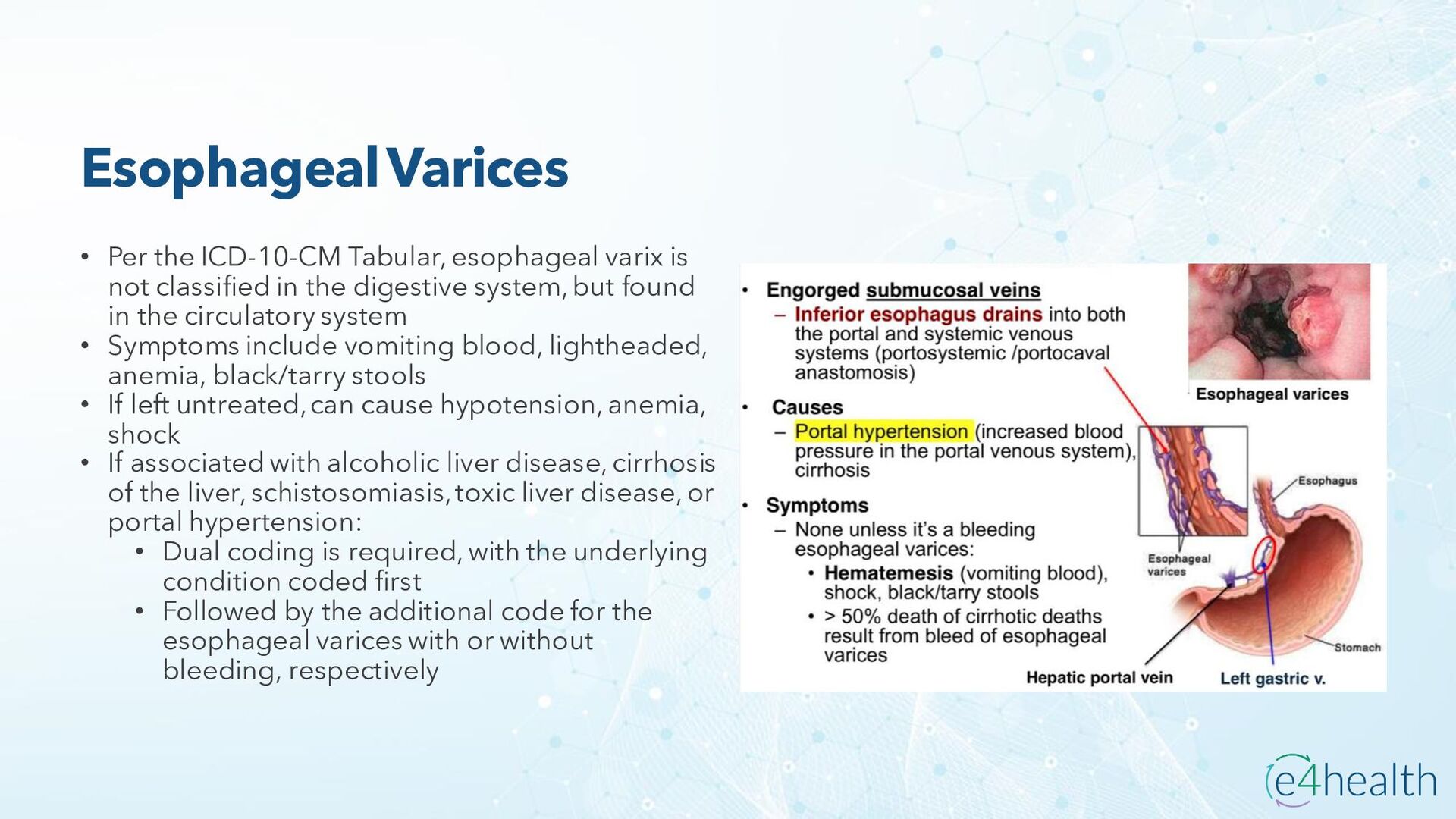
  22. Esophageal Varices • Per the ICD-10-CM Tabular, esophageal varix is

    not classified in the digestive system, but found in the circulatory system • Symptoms include vomiting blood, lightheaded, anemia, black/tarry stools • If left untreated, can cause hypotension, anemia, shock • If associated with alcoholic liver disease, cirrhosis of the liver, schistosomiasis, toxic liver disease, or portal hypertension: • Dual coding is required, with the underlying condition coded first • Followed by the additional code for the esophageal varices with or without bleeding, respectively
  23. Bleeding gastric varices due to alcoholic Cirrhosis/hepatitis - Coding Clinic

    Second Quarter 2002 Page 4 • Question: What is the correct principal diagnosis code when a patient is admitted for a hematemesis, which is found to be due to a gastric varix that is caused by alcoholic cirrhosis/hepatitis? The patient also had esophageal varices without active bleeding. Creation of trans-jugular intrahepatic portosystemic shunt (TIPS) was carried out. Would code 456.8, Varices of other specified sites, be assigned as the principal diagnosis? Or, should the cirrhosis/hepatitis be assigned as the principal diagnosis following the coding logic for esophageal varix? • Answer: Assign code 456.8, Varices of other specified sites, as the principal diagnosis. Since the bleeding is due to the gastric varices, the varices should be listed as the principal diagnosis. Also, assign code 578.0, Hematemesis, to identify the gastrointestinal bleeding. Code 303.90, Other and unspecified alcohol dependence, unspecified, Code 571.2, Alcoholic cirrhosis of liver, code 571.1, Acute alcoholic hepatitis, and code 456.21, Esophageal varices in diseases classified elsewhere, without mention of bleeding, should be assigned as secondary diagnoses. Assign code 39.1, Intra- abdominal venous shunt, for the creation of the TIPS. NOTE: Although this is in ICD-9-CM coding clinic convention, at current date, this coding clinic is applicable in ICD-10-CM convention
  24. Bleeding gastric varices due to alcoholic Cirrhosis/hepatitis - Coding Clinic

    Second Quarter 2002 Page 4, continued • Certain conditions have both an underlying etiology and multiple body system manifestations due to the underlying etiology. For such conditions, the ICD-9-CM has a coding convention that requires the underlying condition to be sequenced first followed by the manifestation. Although alcoholic liver cirrhosis with esophageal varices (571.2 and 456.21) requires coding of both the manifestation and etiology with the manifestation sequenced second, this coding convention is not applicable to gastric varices resulting from alcoholic liver cirrhosis. NOTE: Although this is in ICD-9-CM coding clinic convention, at current date, this coding clinic is applicable in ICD-10-CM convention
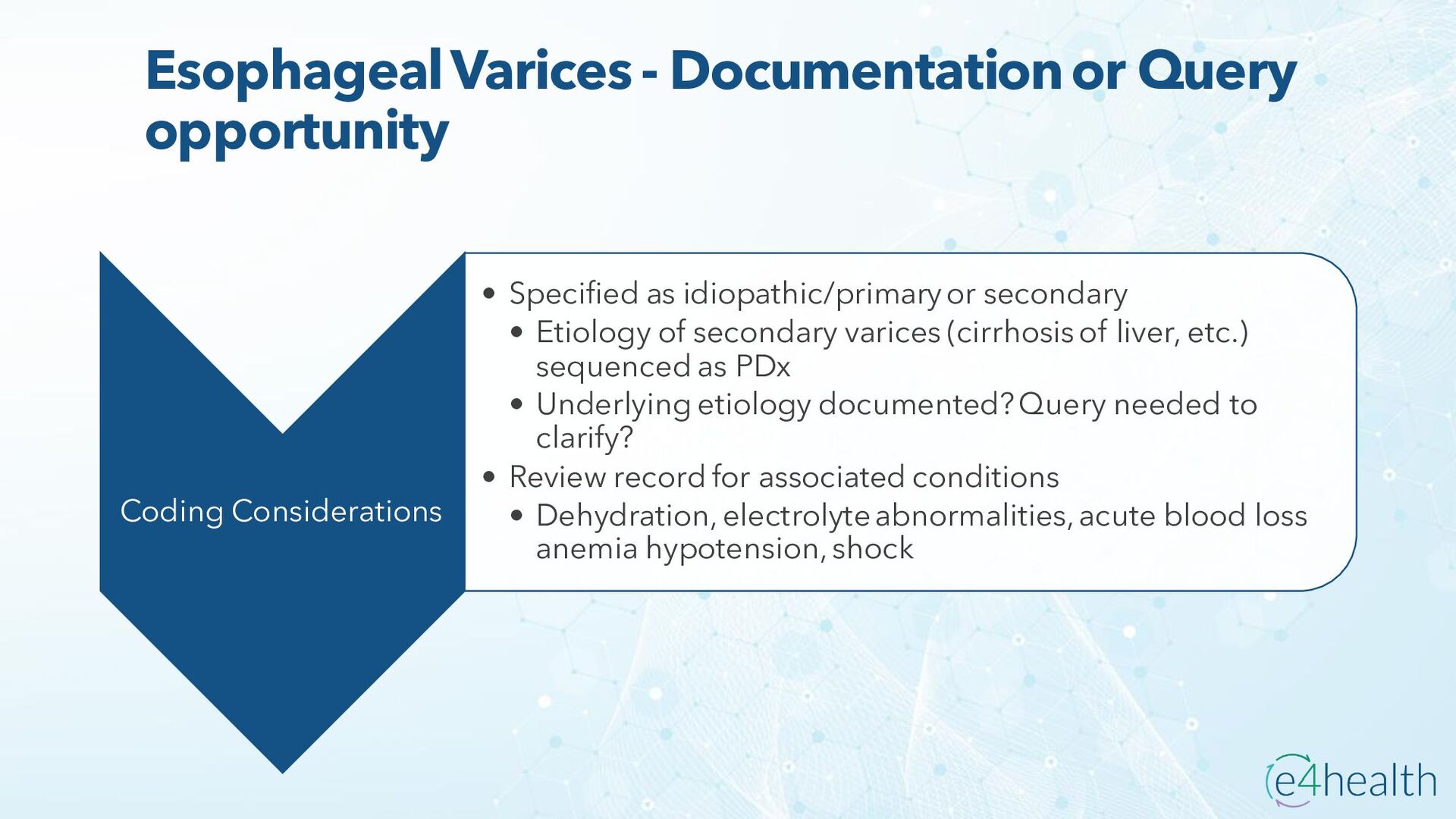
  25. Esophageal Varices - Documentation or Query opportunity Coding Considerations •

    Specified as idiopathic/primary or secondary • Etiology of secondary varices (cirrhosis of liver, etc.) sequenced as PDx • Underlying etiology documented? Query needed to clarify? • Review record for associated conditions • Dehydration, electrolyte abnormalities, acute blood loss anemia hypotension, shock
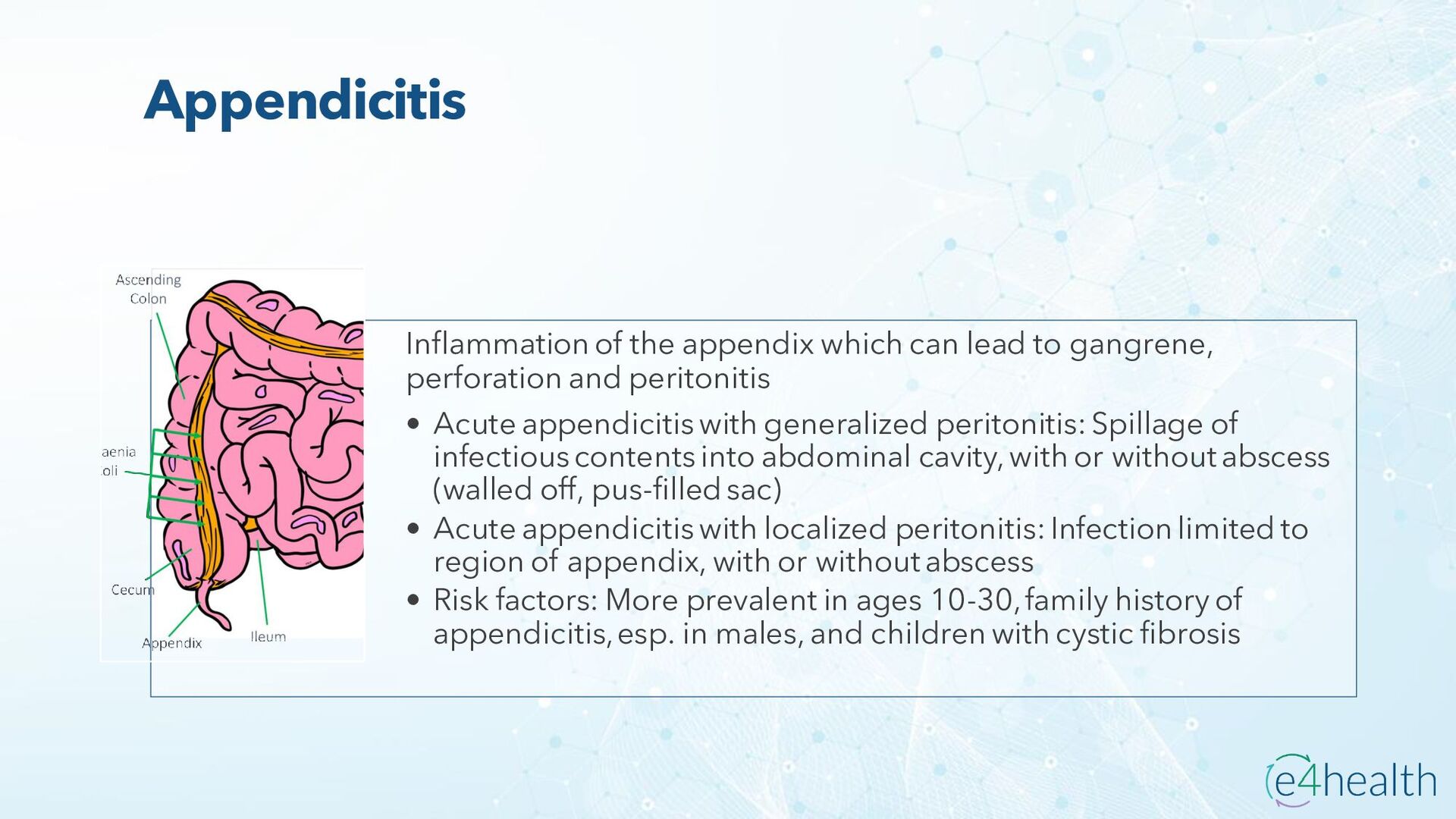
  26. Appendicitis Inflammation of the appendix which can lead to gangrene,
    perforation and peritonitis • Acute appendicitis with generalized peritonitis: Spillage of infectious contents into abdominal cavity, with or without abscess (walled off, pus-filled sac) • Acute appendicitis with localized peritonitis: Infection limited to region of appendix, with or without abscess • Risk factors: More prevalent in ages 10-30, family history of appendicitis, esp. in males, and children with cystic fibrosis
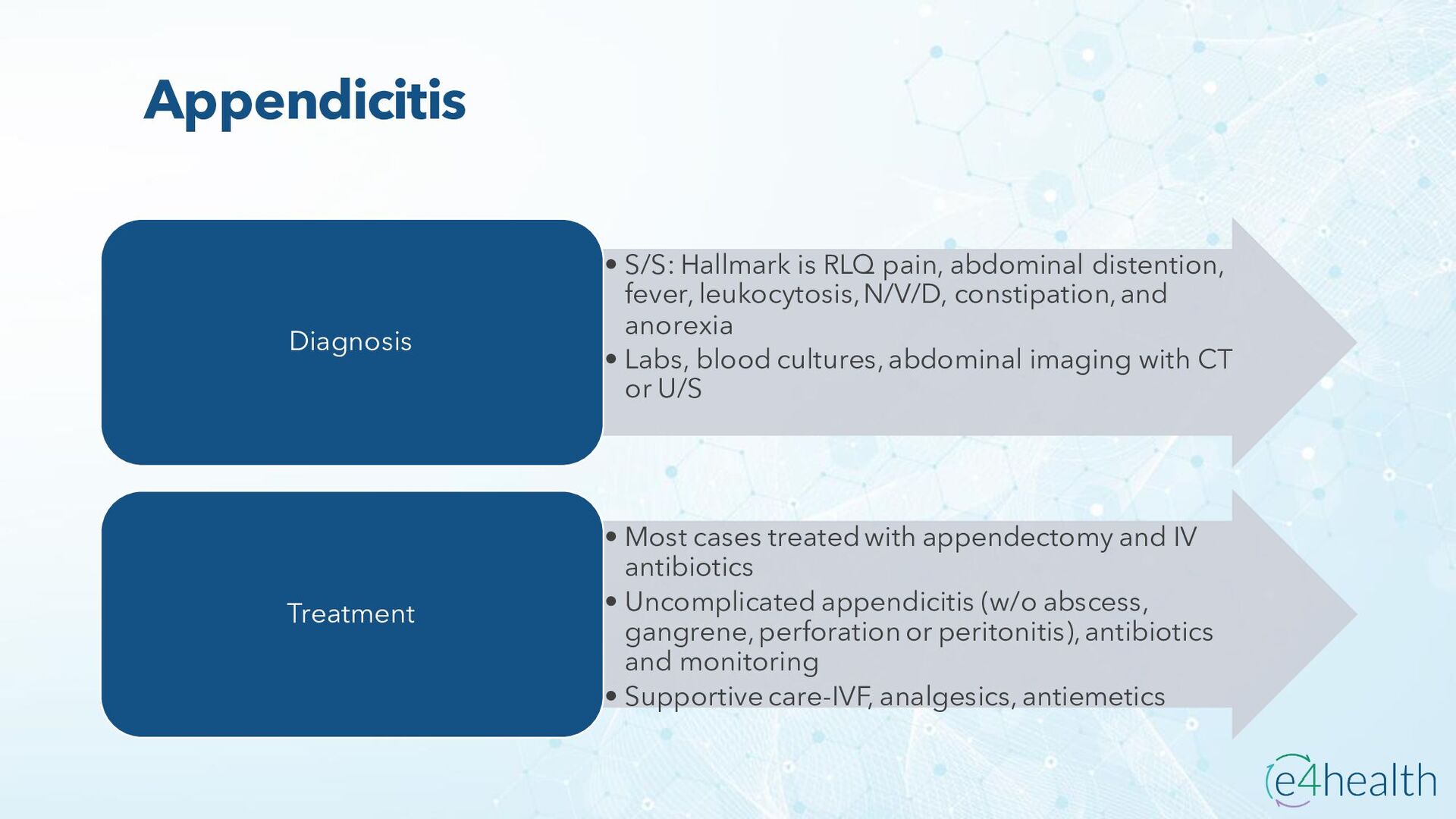
  27. Appendicitis • S/S: Hallmark is RLQ pain, abdominal distention, fever,

    leukocytosis, N/V/D, constipation, and anorexia • Labs, blood cultures, abdominal imaging with CT or U/S Diagnosis • Most cases treated with appendectomy and IV antibiotics • Uncomplicated appendicitis (w/o abscess, gangrene, perforation or peritonitis), antibiotics and monitoring • Supportive care-IVF, analgesics, antiemetics Treatment
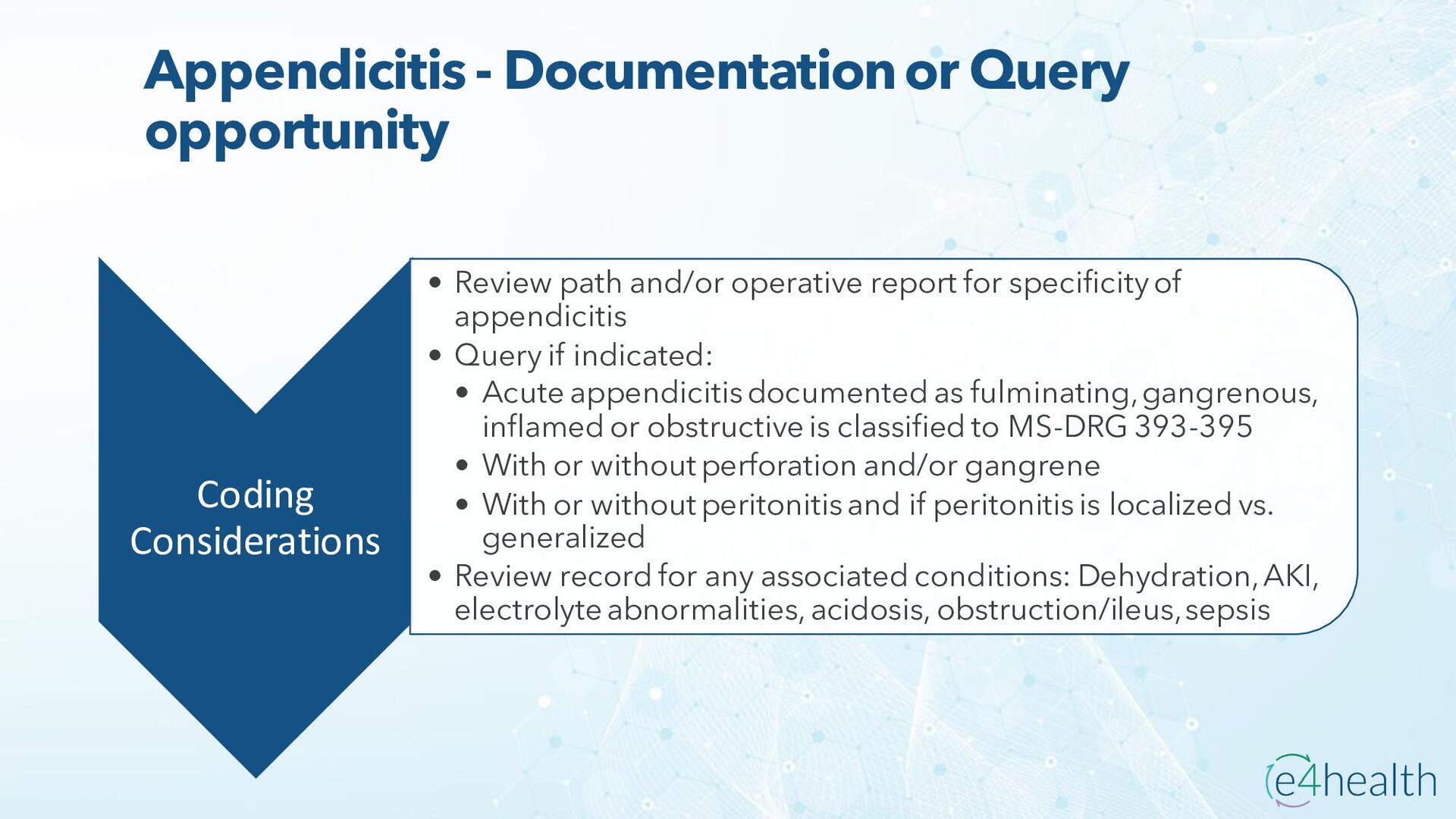
  28. Appendicitis - Documentation or Query opportunity Coding Considerations • Review

    path and/or operative report for specificity of appendicitis • Query if indicated: • Acute appendicitis documented as fulminating, gangrenous, inflamed or obstructive is classified to MS-DRG 393-395 • With or without perforation and/or gangrene • With or without peritonitis and if peritonitis is localized vs. generalized • Review record for any associated conditions: Dehydration, AKI, electrolyte abnormalities, acidosis, obstruction/ileus, sepsis
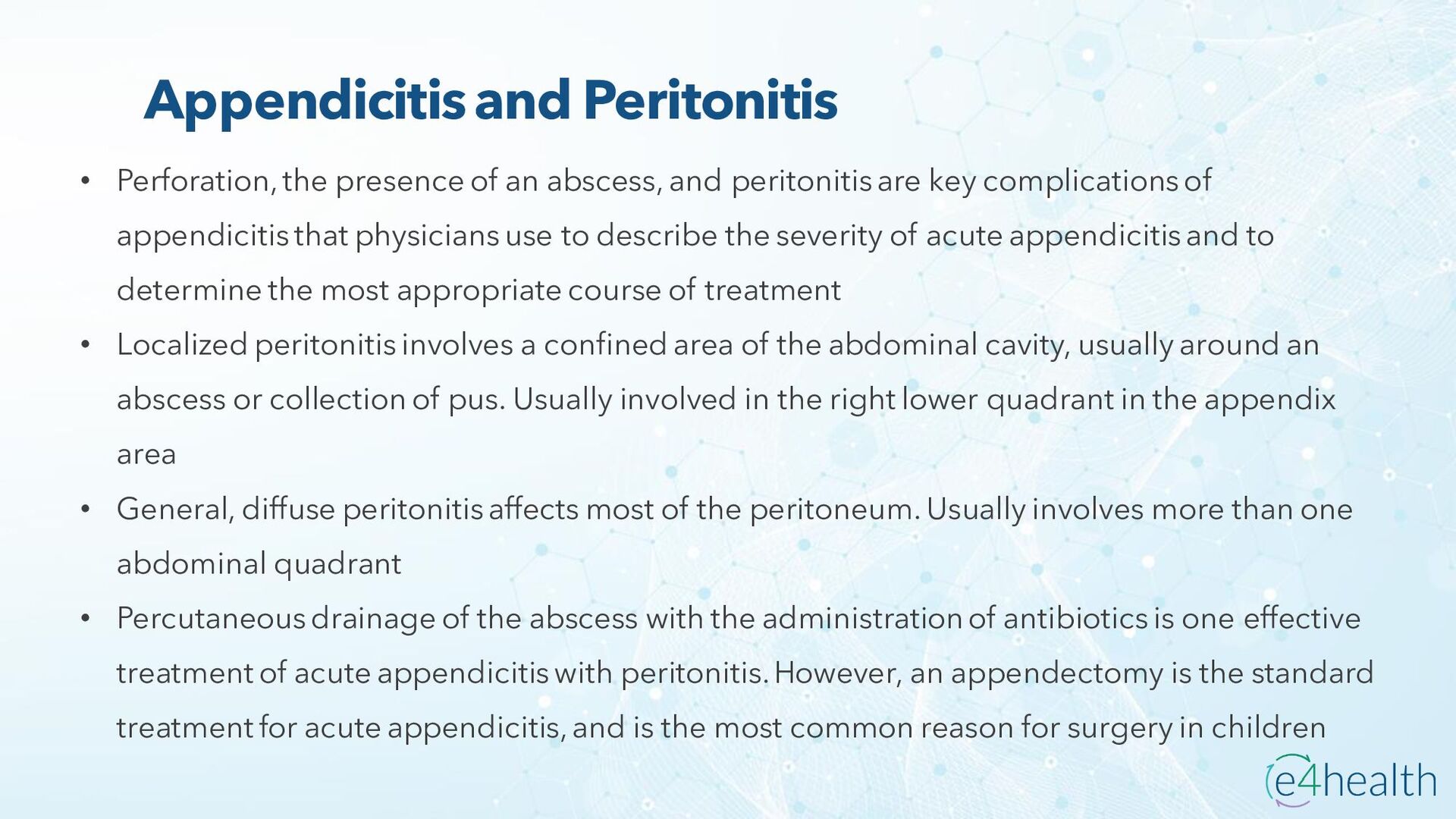
  29. Appendicitis and Peritonitis • Perforation, the presence of an abscess,

    and peritonitis are key complications of appendicitis that physicians use to describe the severity of acute appendicitis and to determine the most appropriate course of treatment • Localized peritonitis involves a confined area of the abdominal cavity, usually around an abscess or collection of pus. Usually involved in the right lower quadrant in the appendix area • General, diffuse peritonitis affects most of the peritoneum. Usually involves more than one abdominal quadrant • Percutaneous drainage of the abscess with the administration of antibiotics is one effective treatment of acute appendicitis with peritonitis. However, an appendectomy is the standard treatment for acute appendicitis, and is the most common reason for surgery in children
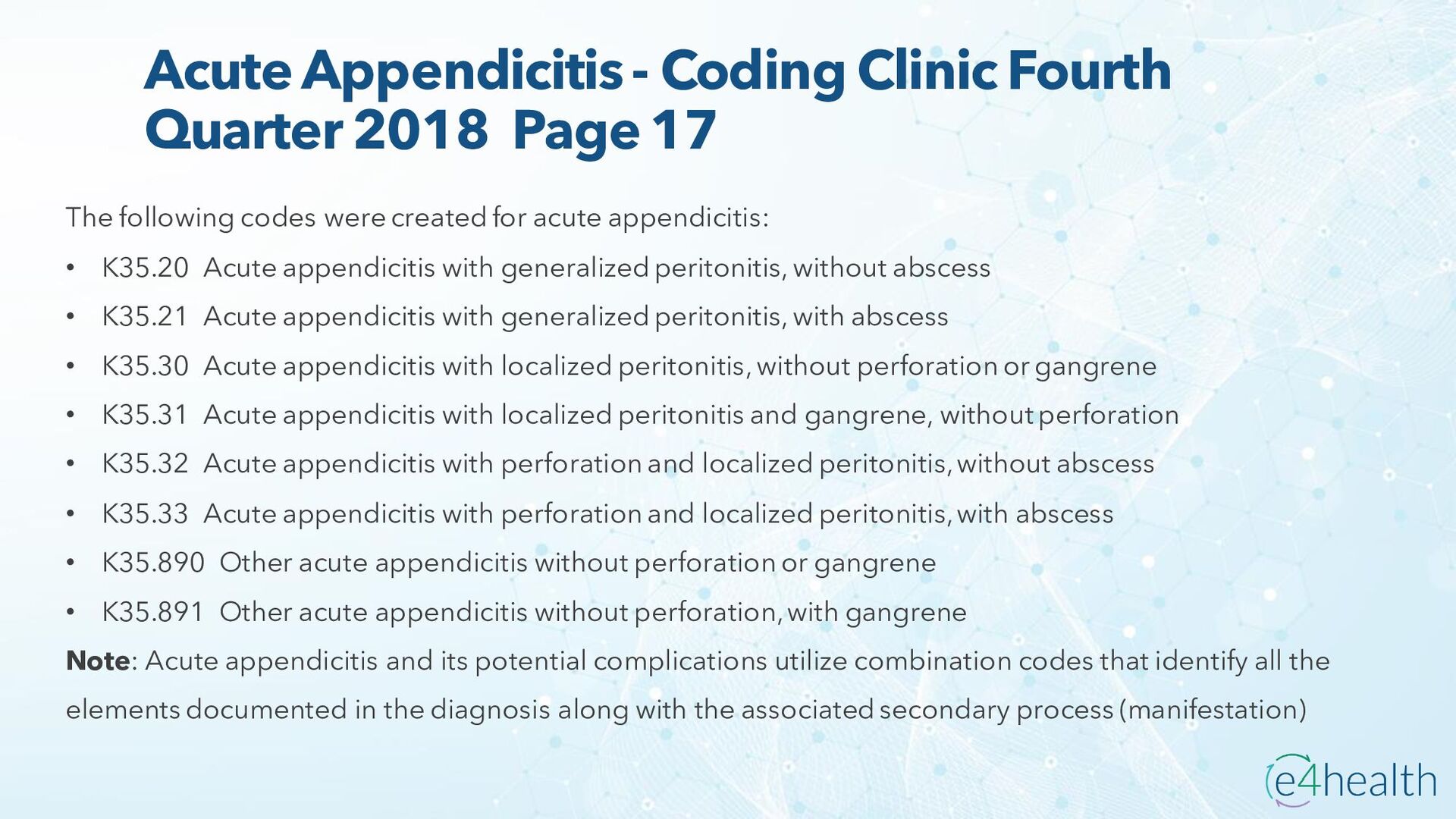
  30. Acute Appendicitis - Coding Clinic Fourth Quarter 2018 Page 17

    The following codes were created for acute appendicitis: • K35.20 Acute appendicitis with generalized peritonitis, without abscess • K35.21 Acute appendicitis with generalized peritonitis, with abscess • K35.30 Acute appendicitis with localized peritonitis, without perforation or gangrene • K35.31 Acute appendicitis with localized peritonitis and gangrene, without perforation • K35.32 Acute appendicitis with perforation and localized peritonitis, without abscess • K35.33 Acute appendicitis with perforation and localized peritonitis, with abscess • K35.890 Other acute appendicitis without perforation or gangrene • K35.891 Other acute appendicitis without perforation, with gangrene Note: Acute appendicitis and its potential complications utilize combination codes that identify all the elements documented in the diagnosis along with the associated secondary process (manifestation)
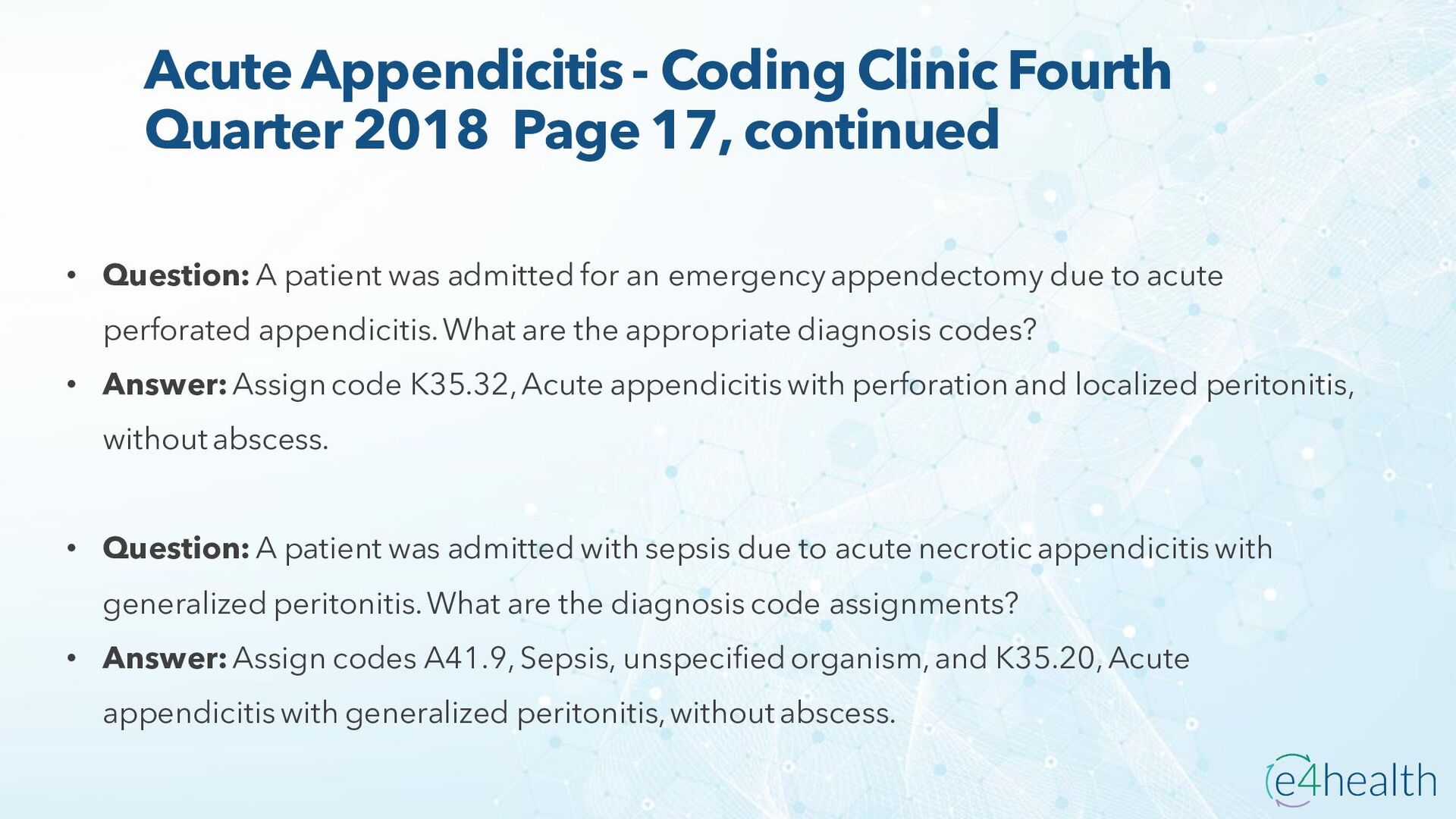
  31. Acute Appendicitis - Coding Clinic Fourth Quarter 2018 Page 17,

    continued • Question: A patient was admitted for an emergency appendectomy due to acute perforated appendicitis. What are the appropriate diagnosis codes? • Answer: Assign code K35.32, Acute appendicitis with perforation and localized peritonitis, without abscess. • Question: A patient was admitted with sepsis due to acute necrotic appendicitis with generalized peritonitis. What are the diagnosis code assignments? • Answer: Assign codes A41.9, Sepsis, unspecified organism, and K35.20, Acute appendicitis with generalized peritonitis, without abscess.
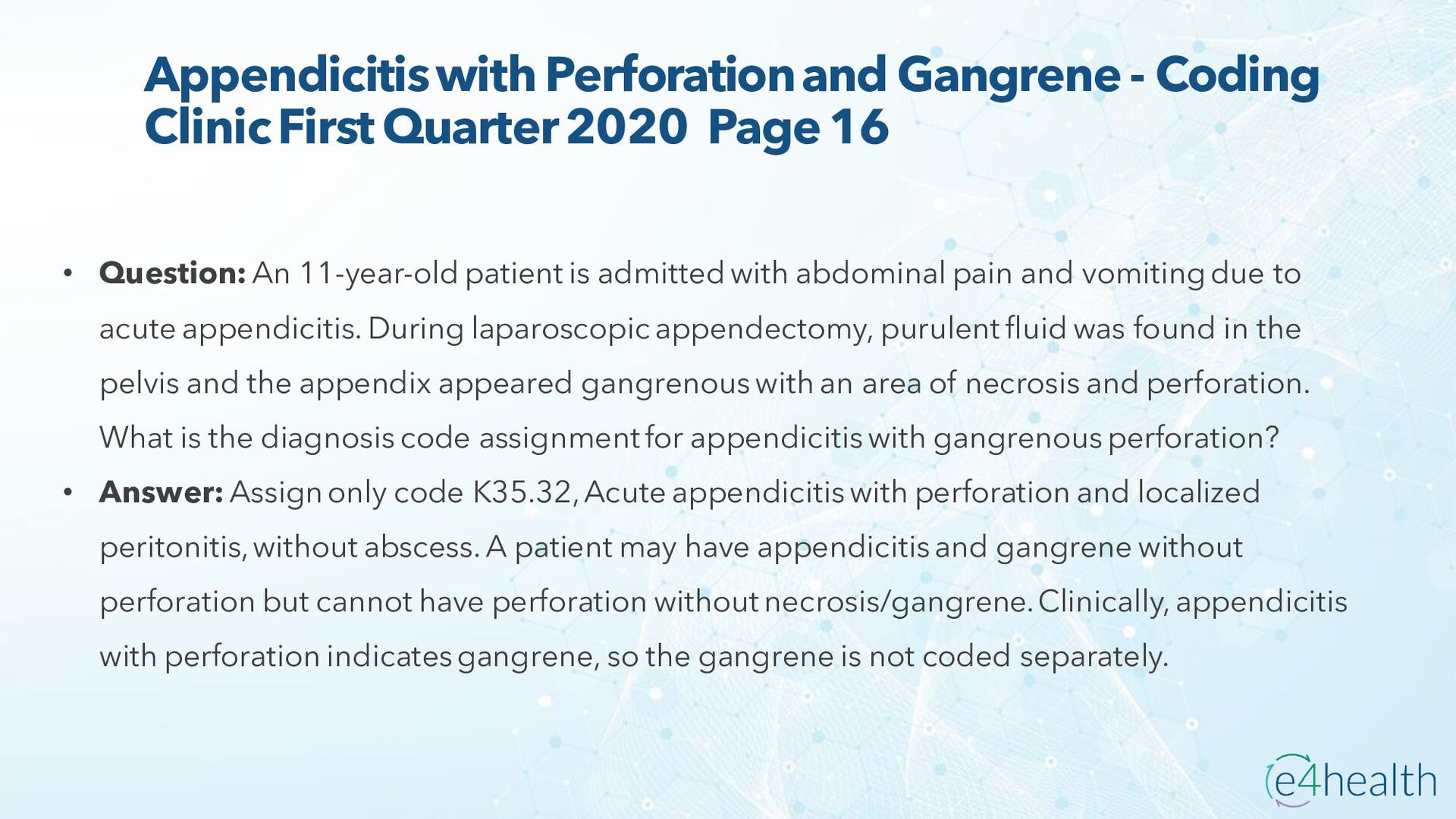
  32. Appendicitis with Perforation and Gangrene - Coding Clinic First Quarter

    2020 Page 16 • Question: An 11-year-old patient is admitted with abdominal pain and vomiting due to acute appendicitis. During laparoscopic appendectomy, purulent fluid was found in the pelvis and the appendix appeared gangrenous with an area of necrosis and perforation. What is the diagnosis code assignment for appendicitis with gangrenous perforation? • Answer: Assign only code K35.32, Acute appendicitis with perforation and localized peritonitis, without abscess. A patient may have appendicitis and gangrene without perforation but cannot have perforation without necrosis/gangrene. Clinically, appendicitis with perforation indicates gangrene, so the gangrene is not coded separately.
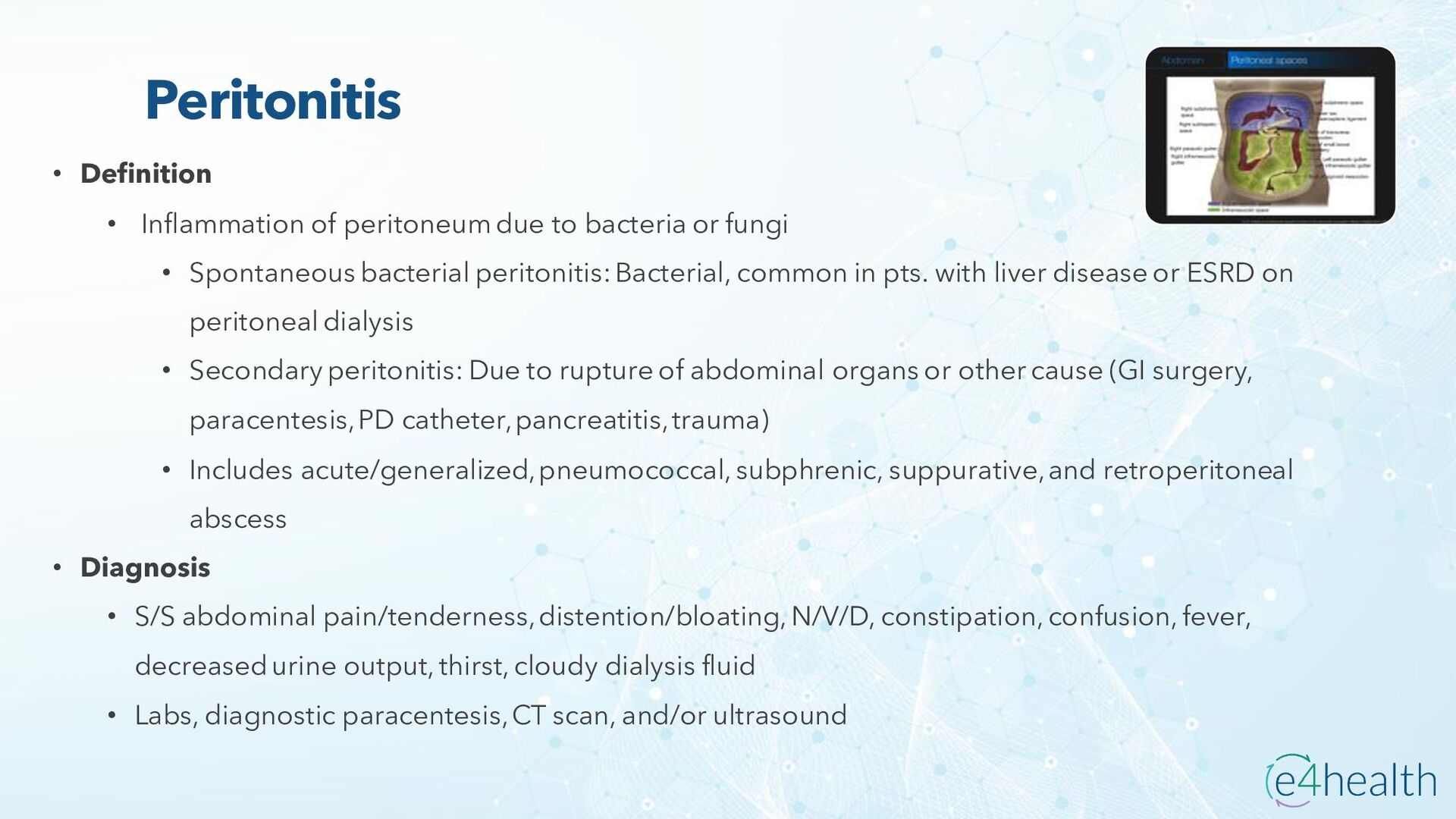
  33. Peritonitis • Definition • Inflammation of peritoneum due to bacteria

    or fungi • Spontaneous bacterial peritonitis: Bacterial, common in pts. with liver disease or ESRD on peritoneal dialysis • Secondary peritonitis: Due to rupture of abdominal organs or other cause (GI surgery, paracentesis, PD catheter, pancreatitis, trauma) • Includes acute/generalized, pneumococcal, subphrenic, suppurative, and retroperitoneal abscess • Diagnosis • S/S abdominal pain/tenderness, distention/bloating, N/V/D, constipation, confusion, fever, decreased urine output, thirst, cloudy dialysis fluid • Labs, diagnostic paracentesis, CT scan, and/or ultrasound
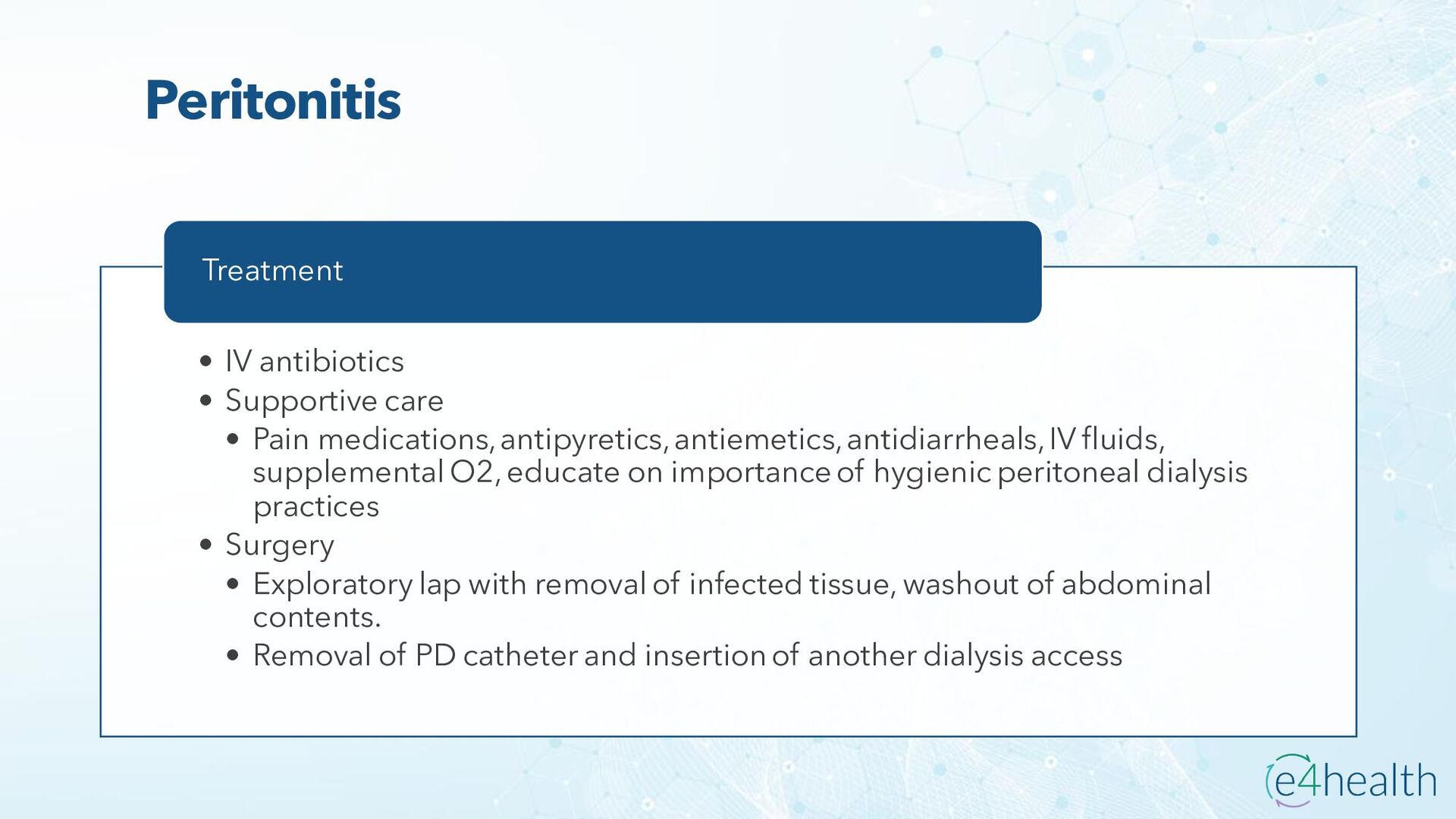
  34. Peritonitis • IV antibiotics • Supportive care • Pain medications,

    antipyretics, antiemetics, antidiarrheals, IV fluids, supplemental O2, educate on importance of hygienic peritoneal dialysis practices • Surgery • Exploratory lap with removal of infected tissue, washout of abdominal contents. • Removal of PD catheter and insertion of another dialysis access Treatment
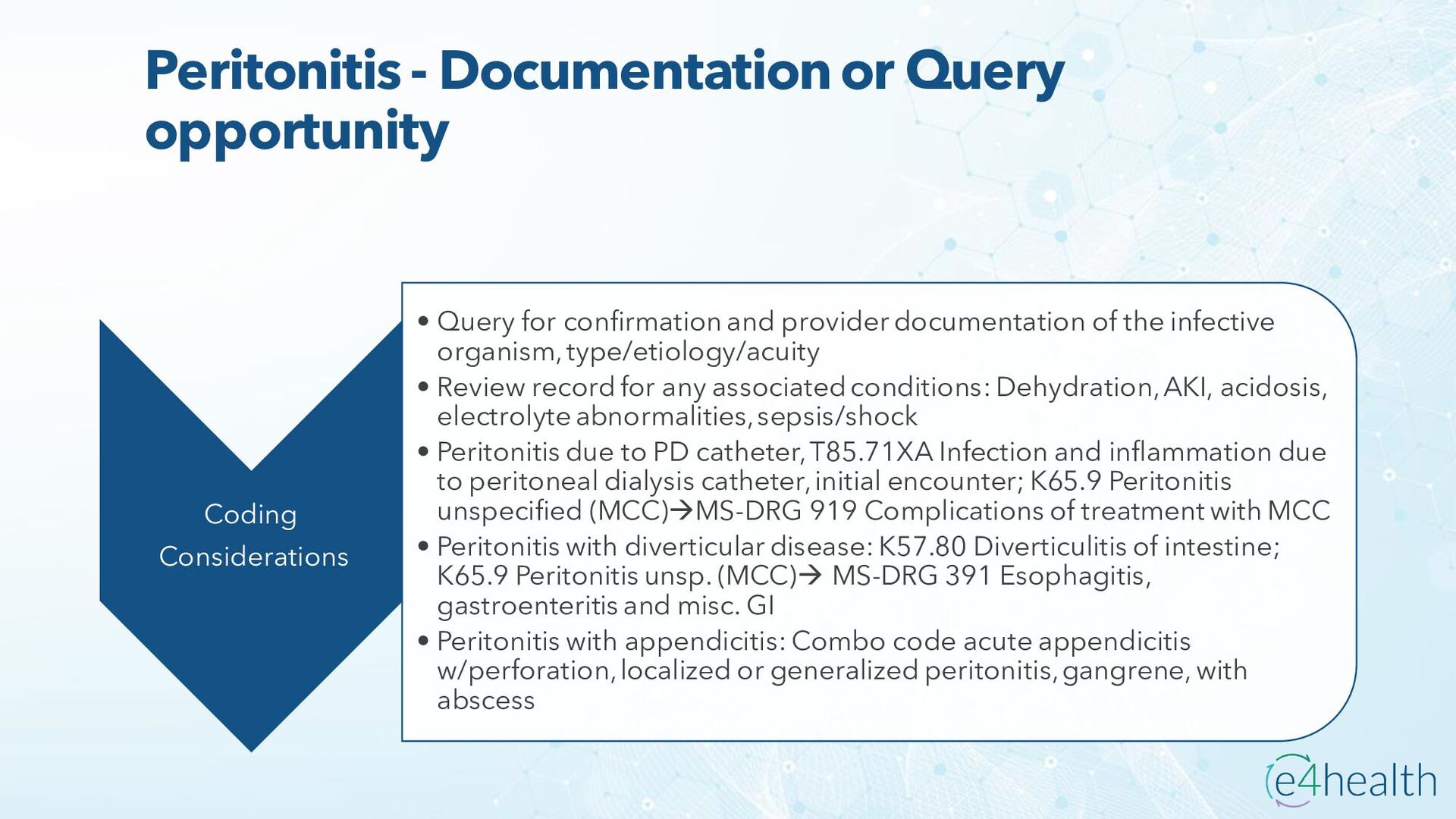
  35. Peritonitis - Documentation or Query opportunity Coding Considerations • Query

    for confirmation and provider documentation of the infective organism, type/etiology/acuity • Review record for any associated conditions: Dehydration, AKI, acidosis, electrolyte abnormalities, sepsis/shock • Peritonitis due to PD catheter, T85.71XA Infection and inflammation due to peritoneal dialysis catheter, initial encounter; K65.9 Peritonitis unspecified (MCC)→MS-DRG 919 Complications of treatment with MCC • Peritonitis with diverticular disease: K57.80 Diverticulitis of intestine; K65.9 Peritonitis unsp. (MCC)→ MS-DRG 391 Esophagitis, gastroenteritis and misc. GI • Peritonitis with appendicitis: Combo code acute appendicitis w/perforation, localized or generalized peritonitis, gangrene, with abscess
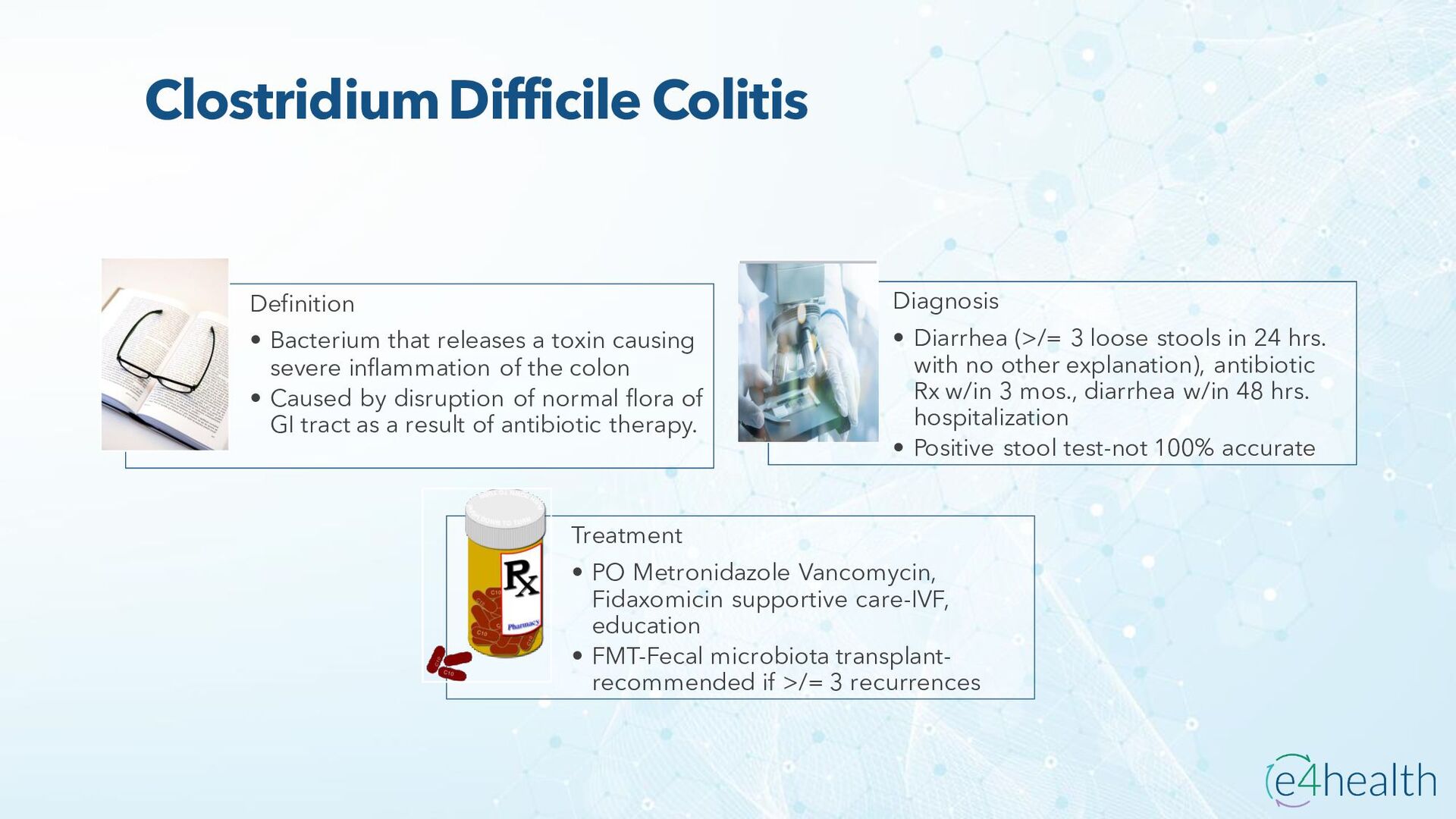
  36. Clostridium Difficile Colitis Definition • Bacterium that releases a toxin

    causing severe inflammation of the colon • Caused by disruption of normal flora of GI tract as a result of antibiotic therapy. Diagnosis • Diarrhea (>/= 3 loose stools in 24 hrs. with no other explanation), antibiotic Rx w/in 3 mos., diarrhea w/in 48 hrs. hospitalization • Positive stool test-not 100% accurate Treatment • PO Metronidazole Vancomycin, Fidaxomicin supportive care-IVF, education • FMT-Fecal microbiota transplant- recommended if >/= 3 recurrences
  37. Failed Fecal Transplant - Coding Clinic First Quarter 2020 Page

    18 • Question: A patient with recurrent Clostridium difficile was admitted for a fecal transplant following failure of a prior transplant. What is the ICD-10-CM diagnosis code for a failed fecal transplant? Is it coded to transplant failure? • Answer: Assign only code A04.71, Enterocolitis due Clostridium difficile, recurrent. It is not appropriate to assign a code for a transplant failure for a fecal transplant that did not prevent a recurrence of Clostridium difficile enteritis. A fecal transplant is a medical treatment rather than an "organ/tissue" transplant.
  38. Clostridium Difficile Colitis - Documentation or Query opportunity Coding Considerations

    • Recurrent vs Not specified as recurrent • Code assignment is based on provider documentation • Negative stool test with symptomatic patient • If receiving treatment, ensure documentation states diagnosis was made on clinical assessment • Treatment stopped? May need query to confirm if ruled out • Review record for associated conditions • CC as secondary Dx
  39. Gastrointestinal Hemorrhage Definitions • Melena: Dark, black, tarry stools with

    strong odor; Usually indicates upper GI bleed • Hematochezia: Bright red blood in or with stool: Usually indicates lower GI bleed • Hematemesis: Vomiting blood or stomach contents, either bright red blood or coffee ground emesis; Common with esophageal varices • Occult GI bleed: Initial positive fecal occult blood test and/or iron deficiency anemia with no evidence of visible blood loss
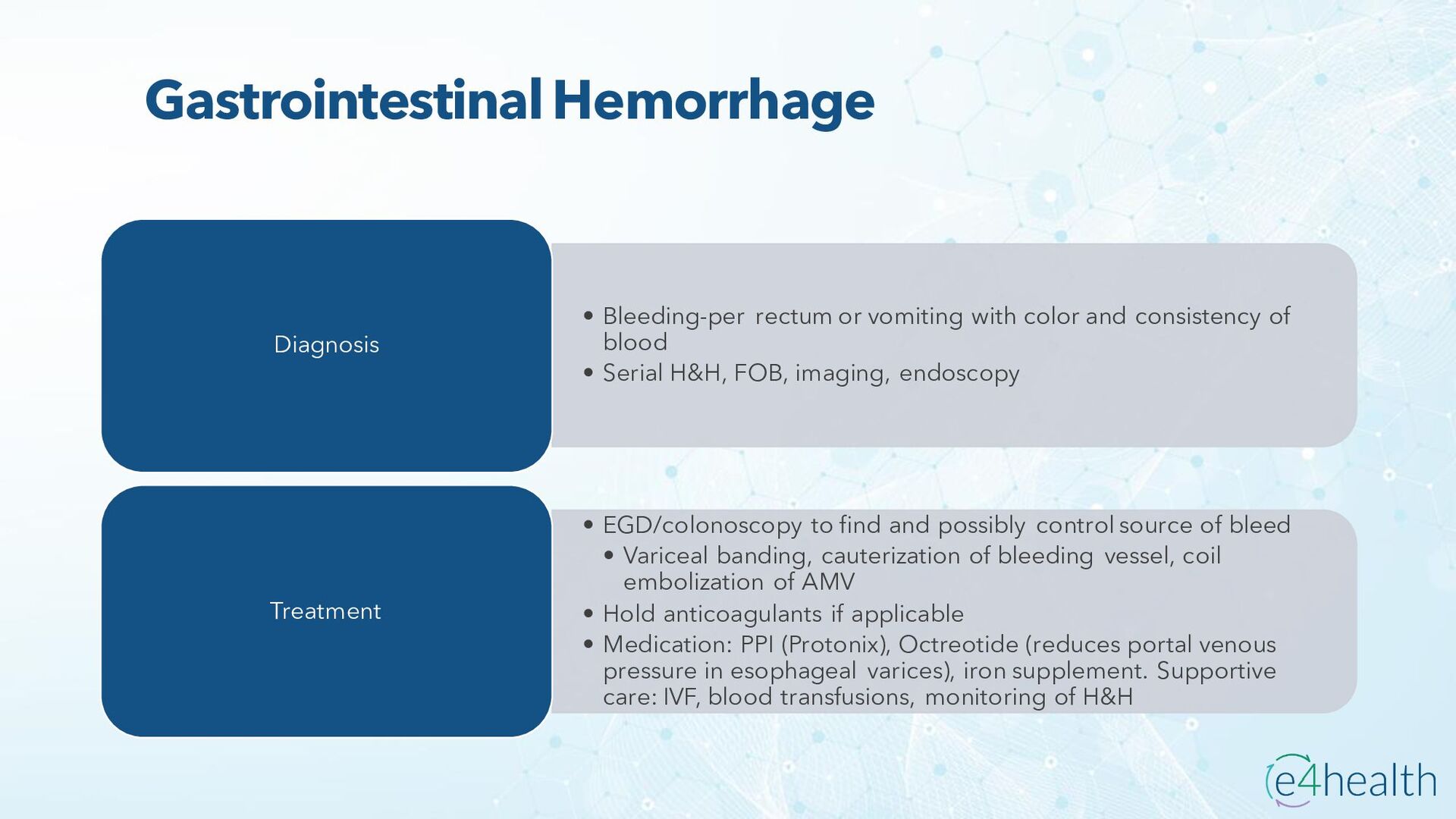
  40. Gastrointestinal Hemorrhage • Bleeding-per rectum or vomiting with color and

    consistency of blood • Serial H&H, FOB, imaging, endoscopy Diagnosis • EGD/colonoscopy to find and possibly control source of bleed • Variceal banding, cauterization of bleeding vessel, coil embolization of AMV • Hold anticoagulants if applicable • Medication: PPI (Protonix), Octreotide (reduces portal venous pressure in esophageal varices), iron supplement. Supportive care: IVF, blood transfusions, monitoring of H&H Treatment
  41. “With” – General Coding Guidelines As noted in ICD-10-CM Coding

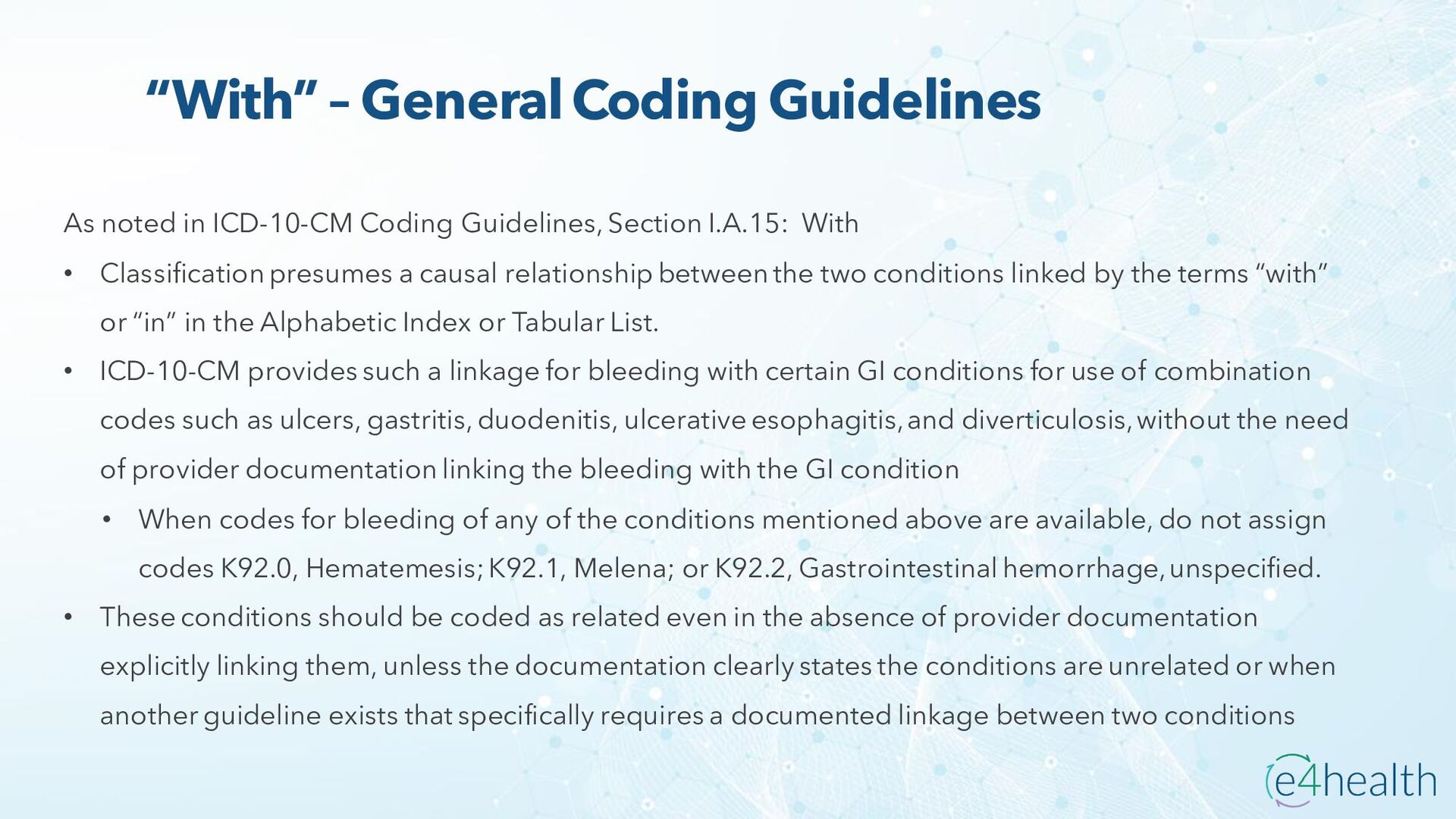
    Guidelines, Section I.A.15: With • Classification presumes a causal relationship between the two conditions linked by the terms “with” or “in” in the Alphabetic Index or Tabular List. • ICD-10-CM provides such a linkage for bleeding with certain GI conditions for use of combination codes such as ulcers, gastritis, duodenitis, ulcerative esophagitis, and diverticulosis, without the need of provider documentation linking the bleeding with the GI condition • When codes for bleeding of any of the conditions mentioned above are available, do not assign codes K92.0, Hematemesis; K92.1, Melena; or K92.2, Gastrointestinal hemorrhage, unspecified. • These conditions should be coded as related even in the absence of provider documentation explicitly linking them, unless the documentation clearly states the conditions are unrelated or when another guideline exists that specifically requires a documented linkage between two conditions
  42. Examinations of GI bleeds – Coding Nuances • Patients with

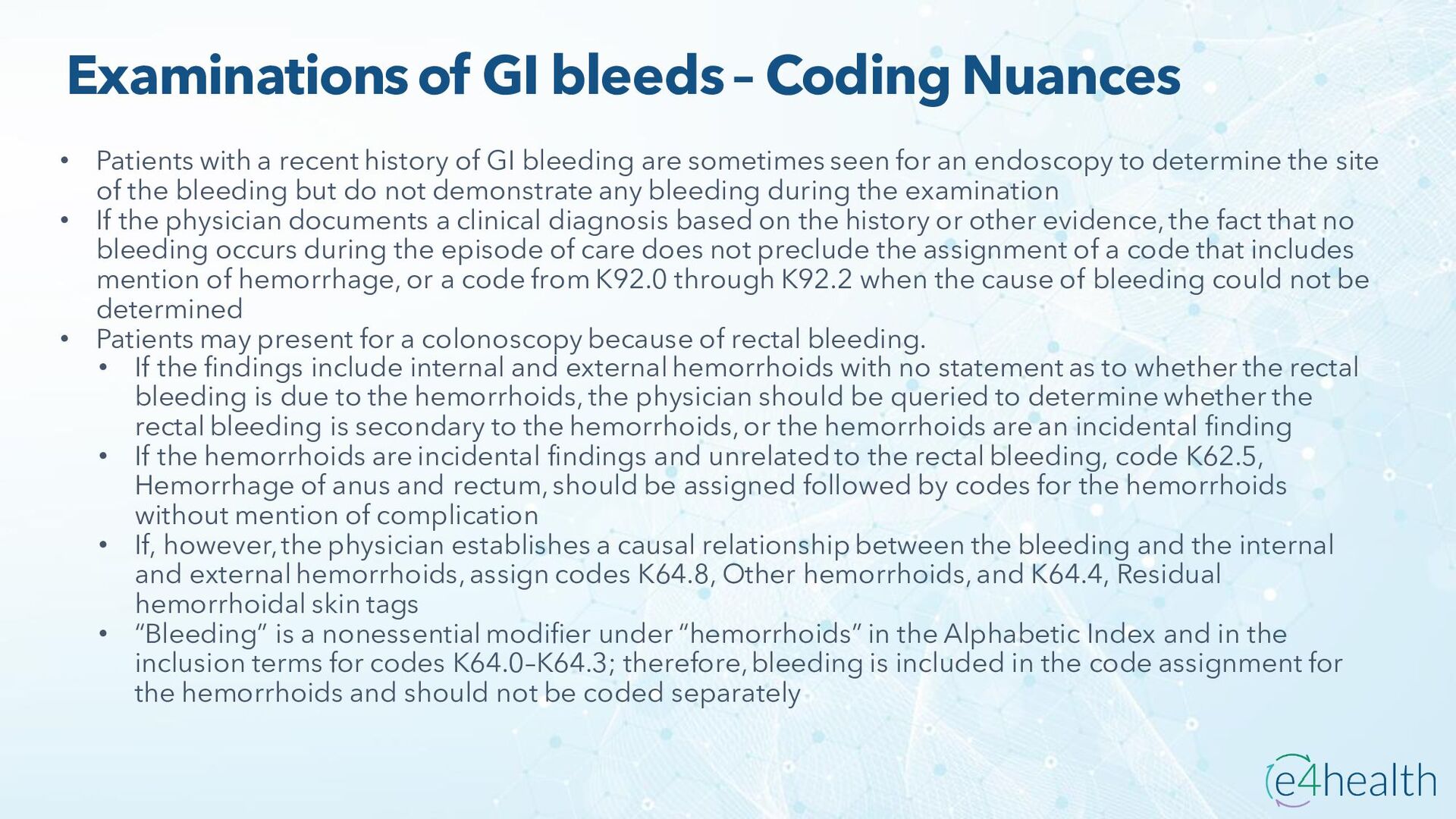
    a recent history of GI bleeding are sometimes seen for an endoscopy to determine the site of the bleeding but do not demonstrate any bleeding during the examination • If the physician documents a clinical diagnosis based on the history or other evidence, the fact that no bleeding occurs during the episode of care does not preclude the assignment of a code that includes mention of hemorrhage, or a code from K92.0 through K92.2 when the cause of bleeding could not be determined • Patients may present for a colonoscopy because of rectal bleeding. • If the findings include internal and external hemorrhoids with no statement as to whether the rectal bleeding is due to the hemorrhoids, the physician should be queried to determine whether the rectal bleeding is secondary to the hemorrhoids, or the hemorrhoids are an incidental finding • If the hemorrhoids are incidental findings and unrelated to the rectal bleeding, code K62.5, Hemorrhage of anus and rectum, should be assigned followed by codes for the hemorrhoids without mention of complication • If, however, the physician establishes a causal relationship between the bleeding and the internal and external hemorrhoids, assign codes K64.8, Other hemorrhoids, and K64.4, Residual hemorrhoidal skin tags • “Bleeding” is a nonessential modifier under “hemorrhoids” in the Alphabetic Index and in the inclusion terms for codes K64.0–K64.3; therefore, bleeding is included in the code assignment for the hemorrhoids and should not be coded separately
  43. Gastrointestinal Hemorrhage Coding Clinics • CC 3rd Q 2017, p.

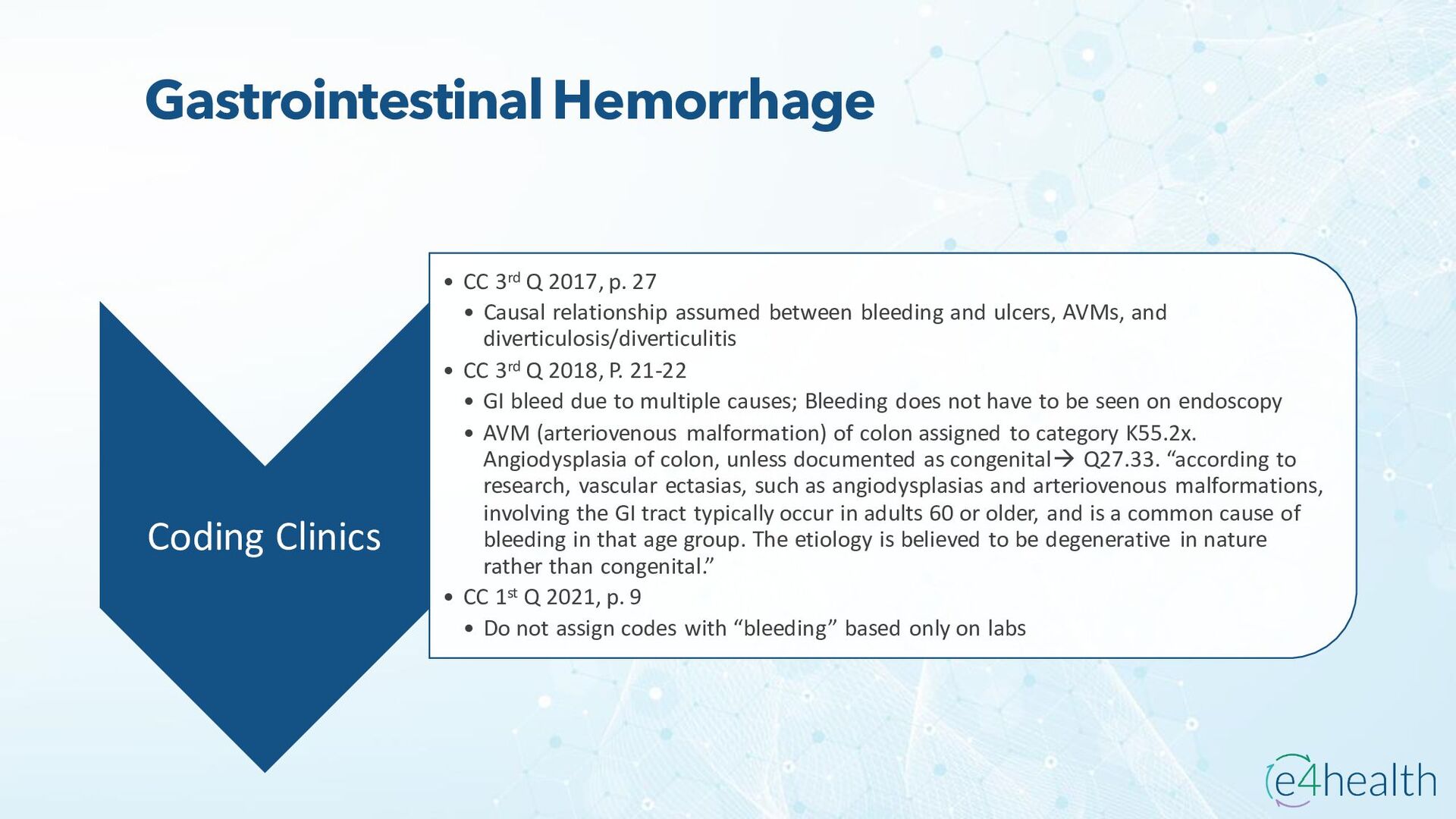
    27 • Causal relationship assumed between bleeding and ulcers, AVMs, and diverticulosis/diverticulitis • CC 3rd Q 2018, P. 21-22 • GI bleed due to multiple causes; Bleeding does not have to be seen on endoscopy • AVM (arteriovenous malformation) of colon assigned to category K55.2x. Angiodysplasia of colon, unless documented as congenital→ Q27.33. “according to research, vascular ectasias, such as angiodysplasias and arteriovenous malformations, involving the GI tract typically occur in adults 60 or older, and is a common cause of bleeding in that age group. The etiology is believed to be degenerative in nature rather than congenital.” • CC 1st Q 2021, p. 9 • Do not assign codes with “bleeding” based only on labs
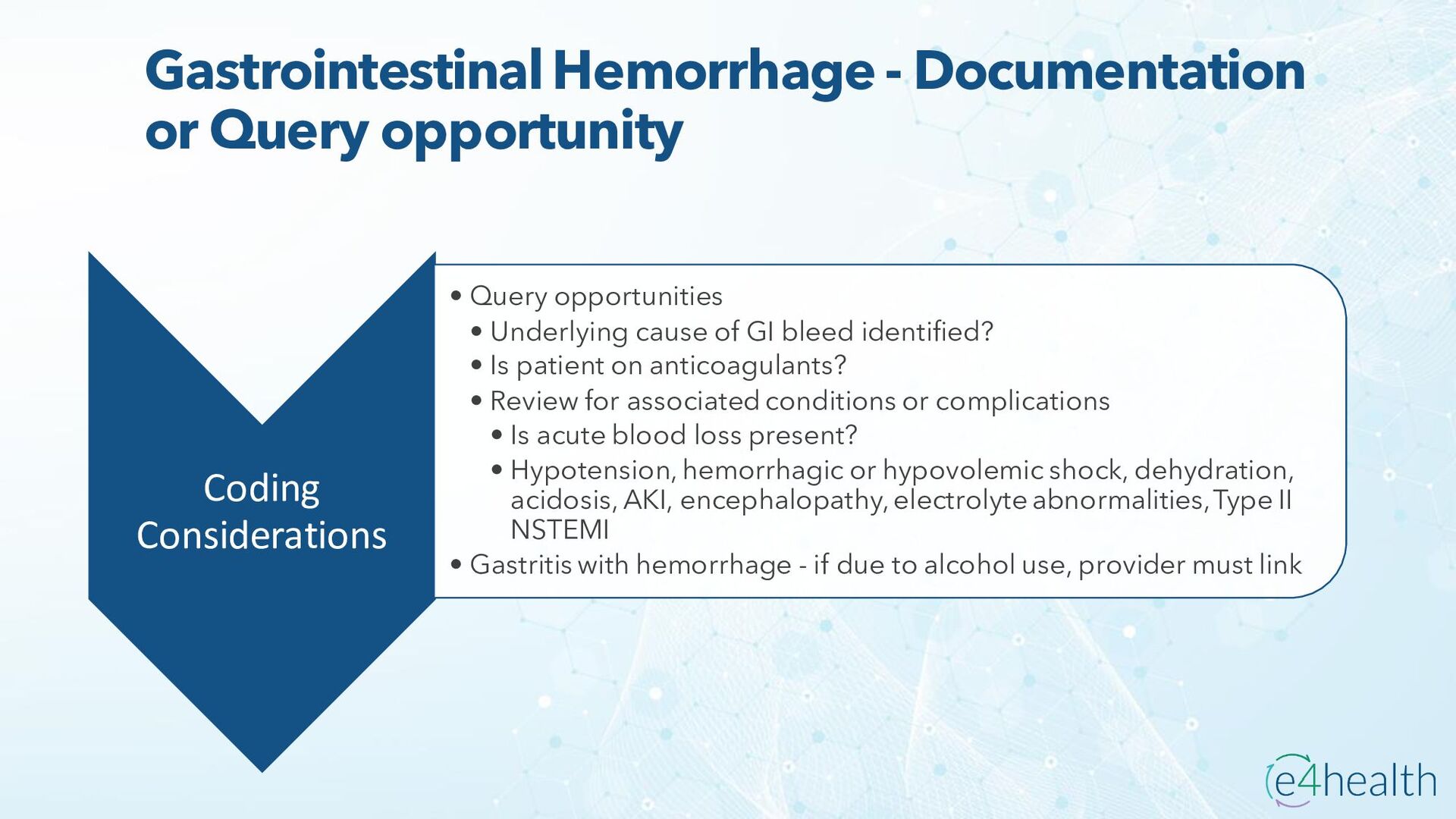
  44. Gastrointestinal Hemorrhage - Documentation or Query opportunity Coding Considerations •

    Query opportunities • Underlying cause of GI bleed identified? • Is patient on anticoagulants? • Review for associated conditions or complications • Is acute blood loss present? • Hypotension, hemorrhagic or hypovolemic shock, dehydration, acidosis, AKI, encephalopathy, electrolyte abnormalities, Type II NSTEMI • Gastritis with hemorrhage - if due to alcohol use, provider must link
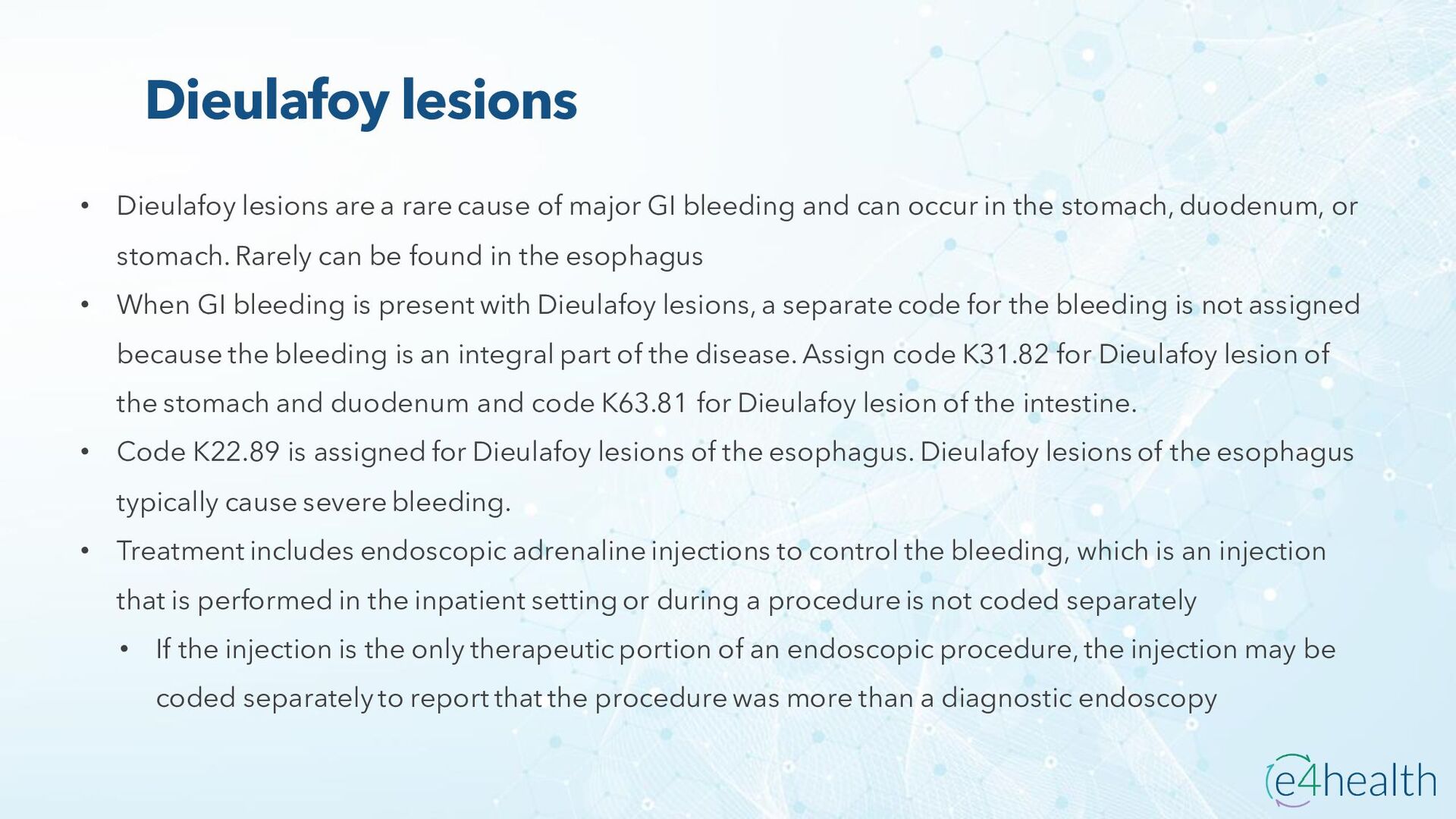
  45. Dieulafoy lesions • Dieulafoy lesions are a rare cause of

    major GI bleeding and can occur in the stomach, duodenum, or stomach. Rarely can be found in the esophagus • When GI bleeding is present with Dieulafoy lesions, a separate code for the bleeding is not assigned because the bleeding is an integral part of the disease. Assign code K31.82 for Dieulafoy lesion of the stomach and duodenum and code K63.81 for Dieulafoy lesion of the intestine. • Code K22.89 is assigned for Dieulafoy lesions of the esophagus. Dieulafoy lesions of the esophagus typically cause severe bleeding. • Treatment includes endoscopic adrenaline injections to control the bleeding, which is an injection that is performed in the inpatient setting or during a procedure is not coded separately • If the injection is the only therapeutic portion of an endoscopic procedure, the injection may be coded separately to report that the procedure was more than a diagnostic endoscopy
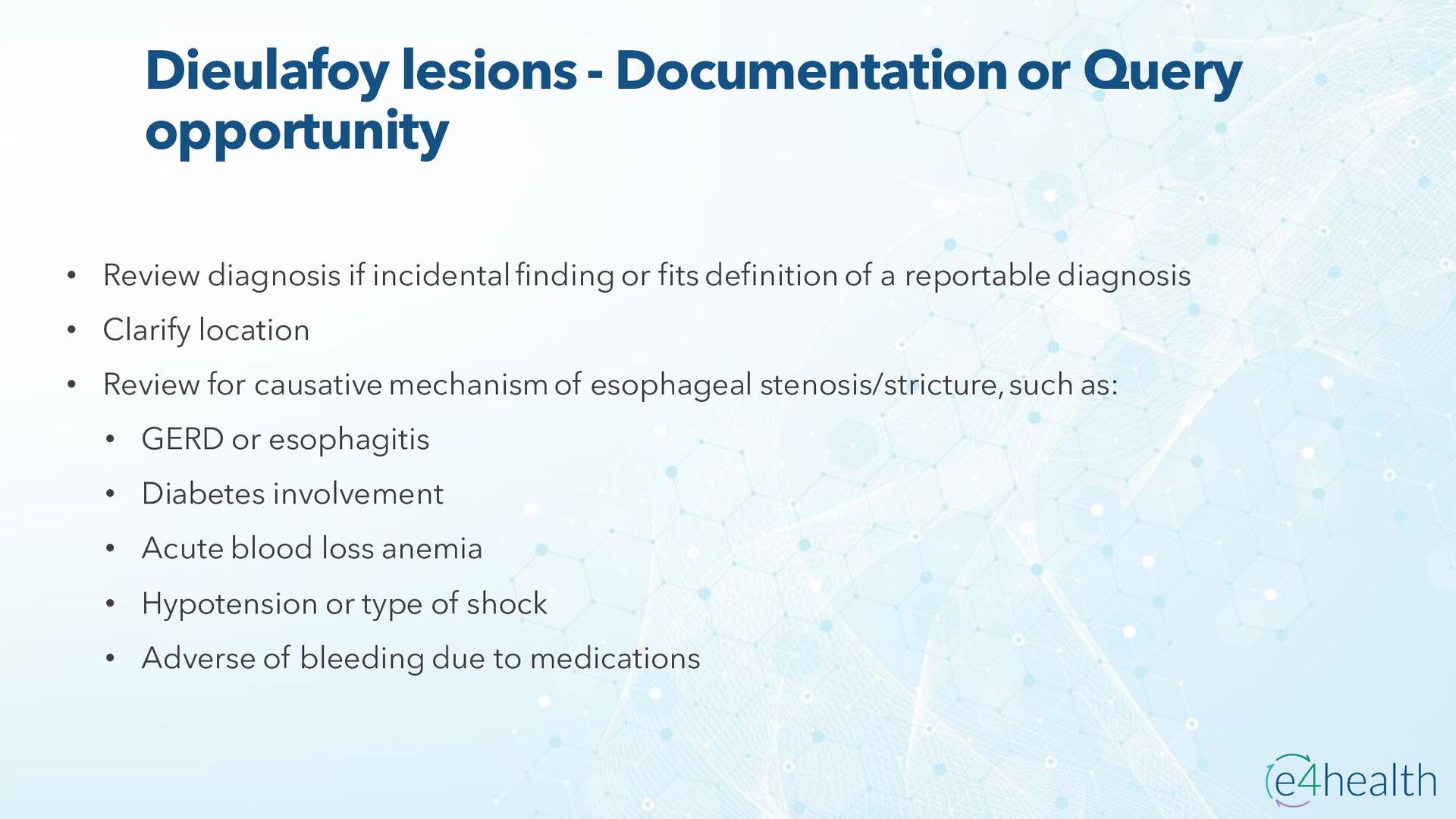
  46. Dieulafoy lesions - Documentation or Query opportunity • Review diagnosis

    if incidental finding or fits definition of a reportable diagnosis • Clarify location • Review for causative mechanism of esophageal stenosis/stricture, such as: • GERD or esophagitis • Diabetes involvement • Acute blood loss anemia • Hypotension or type of shock • Adverse of bleeding due to medications
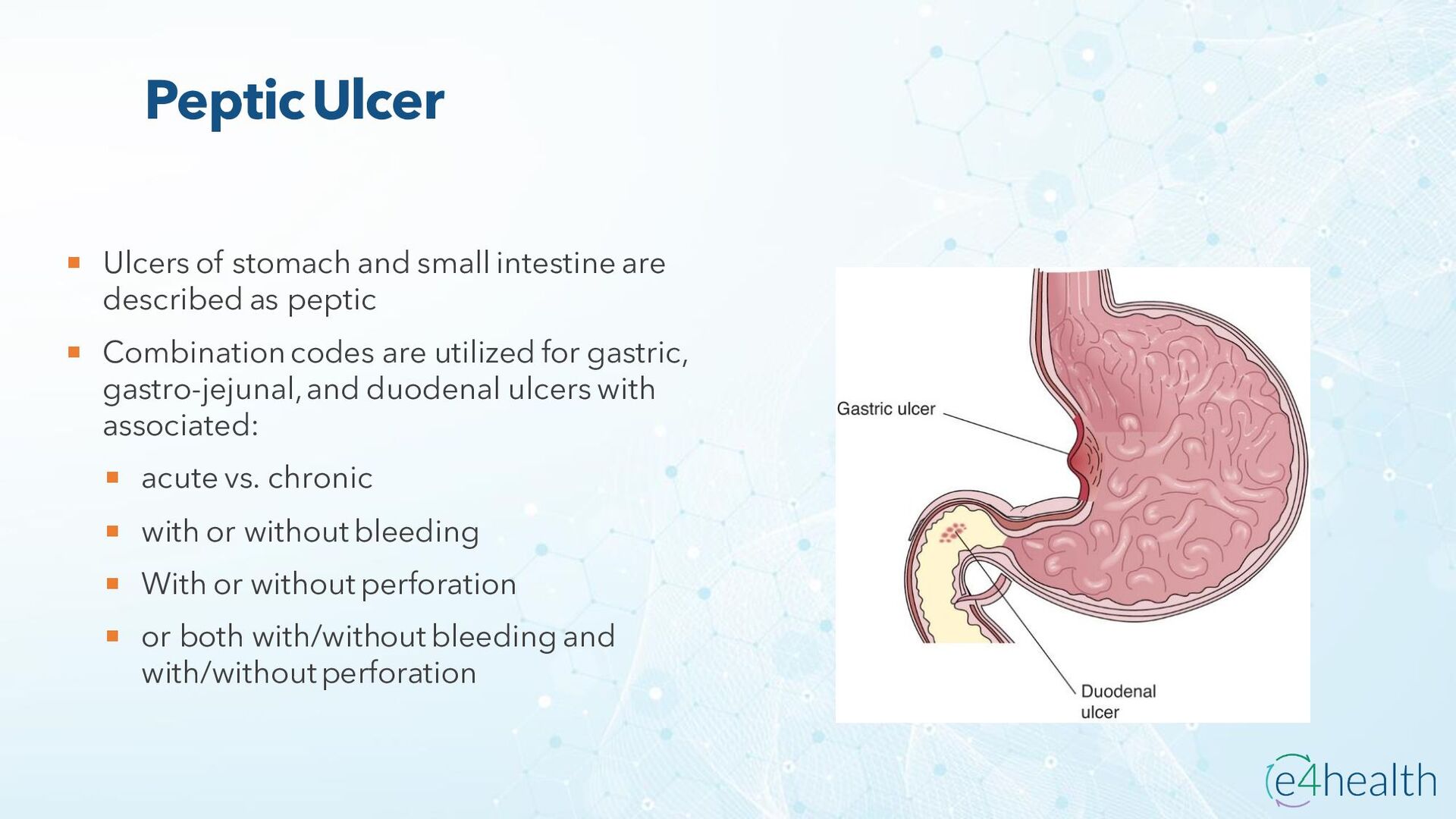
  47. Peptic Ulcer  Ulcers of stomach and small intestine are

    described as peptic  Combination codes are utilized for gastric, gastro-jejunal, and duodenal ulcers with associated:  acute vs. chronic  with or without bleeding  With or without perforation  or both with/without bleeding and with/without perforation
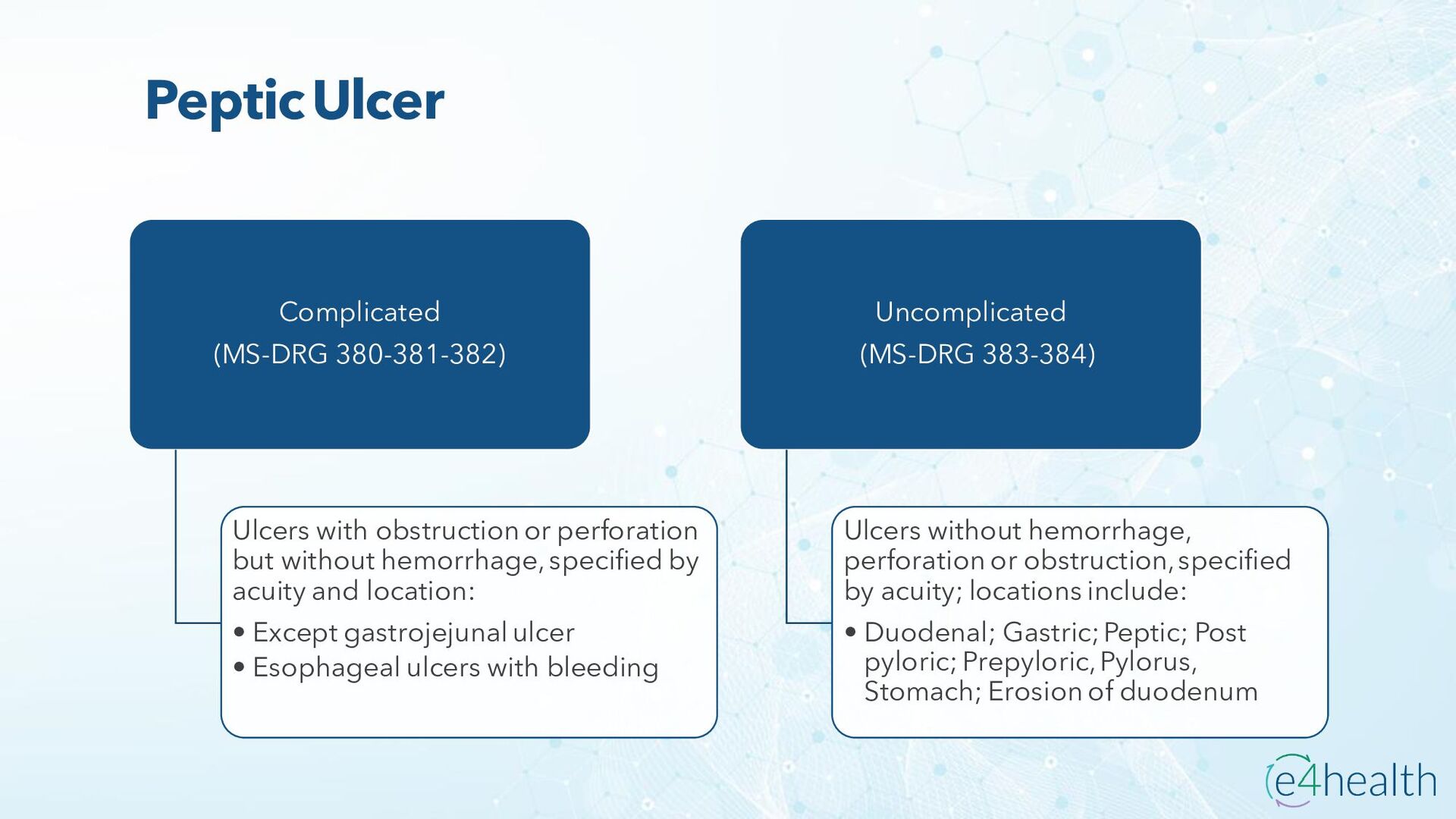
  48. Peptic Ulcer Complicated (MS-DRG 380-381-382) Ulcers with obstruction or perforation

    but without hemorrhage, specified by acuity and location: • Except gastrojejunal ulcer • Esophageal ulcers with bleeding Uncomplicated (MS-DRG 383-384) Ulcers without hemorrhage, perforation or obstruction, specified by acuity; locations include: • Duodenal; Gastric; Peptic; Post pyloric; Prepyloric, Pylorus, Stomach; Erosion of duodenum
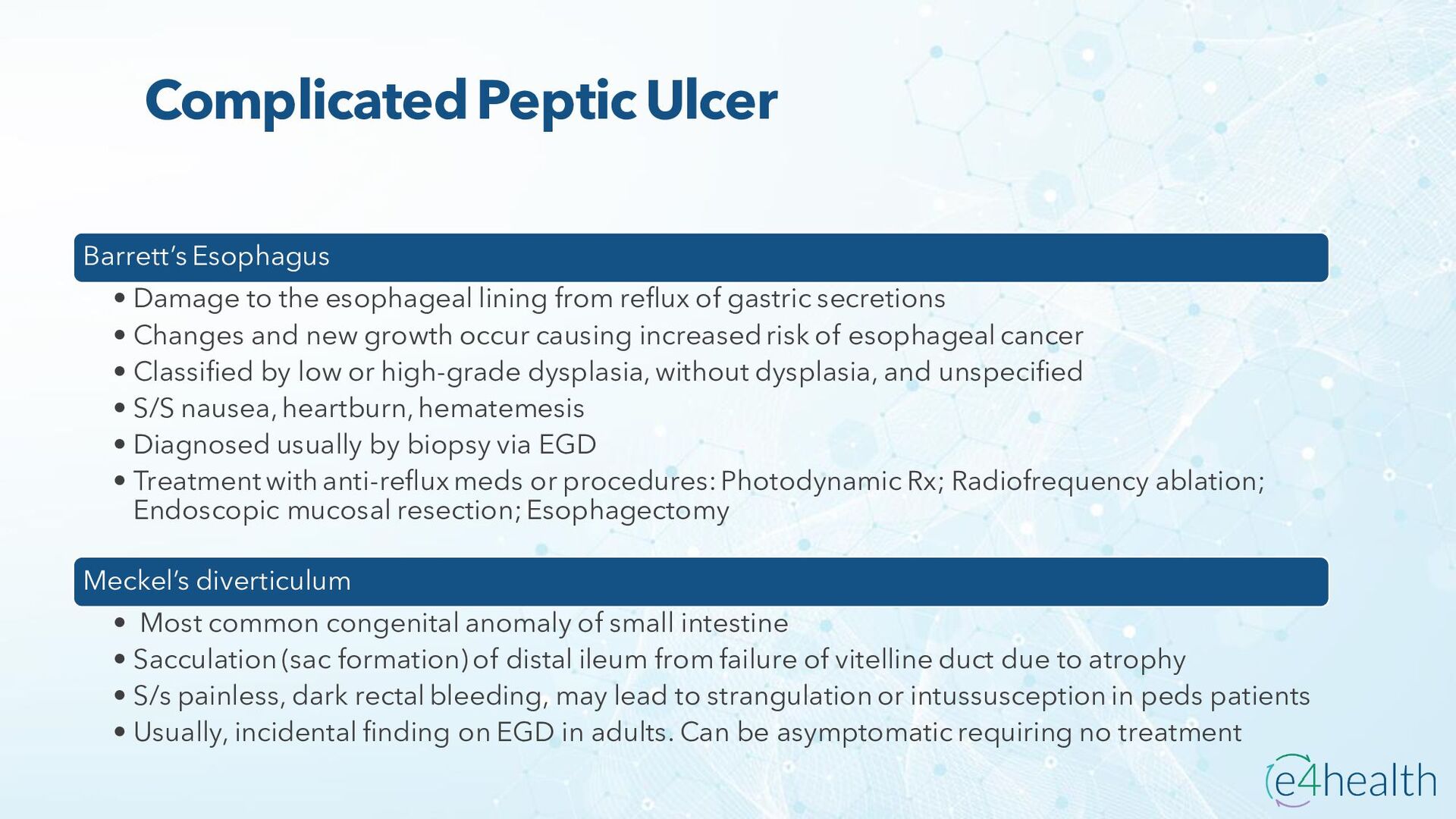
  49. Complicated Peptic Ulcer Barrett’s Esophagus • Damage to the esophageal

    lining from reflux of gastric secretions • Changes and new growth occur causing increased risk of esophageal cancer • Classified by low or high-grade dysplasia, without dysplasia, and unspecified • S/S nausea, heartburn, hematemesis • Diagnosed usually by biopsy via EGD • Treatment with anti-reflux meds or procedures: Photodynamic Rx; Radiofrequency ablation; Endoscopic mucosal resection; Esophagectomy Meckel’s diverticulum • Most common congenital anomaly of small intestine • Sacculation (sac formation) of distal ileum from failure of vitelline duct due to atrophy • S/s painless, dark rectal bleeding, may lead to strangulation or intussusception in peds patients • Usually, incidental finding on EGD in adults. Can be asymptomatic requiring no treatment
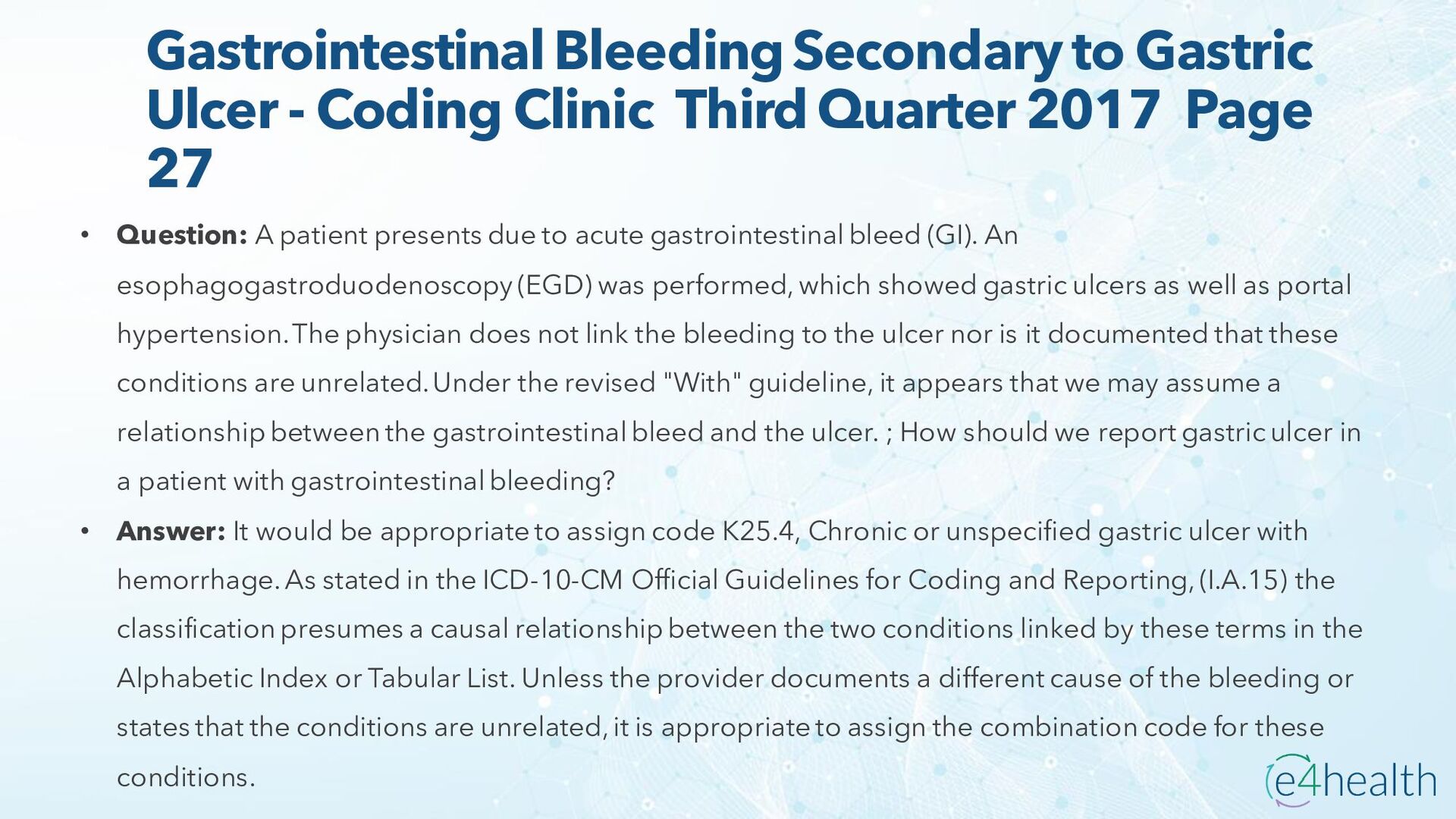
  50. Gastrointestinal Bleeding Secondary to Gastric Ulcer - Coding Clinic Third

    Quarter 2017 Page 27 • Question: A patient presents due to acute gastrointestinal bleed (GI). An esophagogastroduodenoscopy (EGD) was performed, which showed gastric ulcers as well as portal hypertension. The physician does not link the bleeding to the ulcer nor is it documented that these conditions are unrelated. Under the revised "With" guideline, it appears that we may assume a relationship between the gastrointestinal bleed and the ulcer. ; How should we report gastric ulcer in a patient with gastrointestinal bleeding? • Answer: It would be appropriate to assign code K25.4, Chronic or unspecified gastric ulcer with hemorrhage. As stated in the ICD-10-CM Official Guidelines for Coding and Reporting, (I.A.15) the classification presumes a causal relationship between the two conditions linked by these terms in the Alphabetic Index or Tabular List. Unless the provider documents a different cause of the bleeding or states that the conditions are unrelated, it is appropriate to assign the combination code for these conditions.
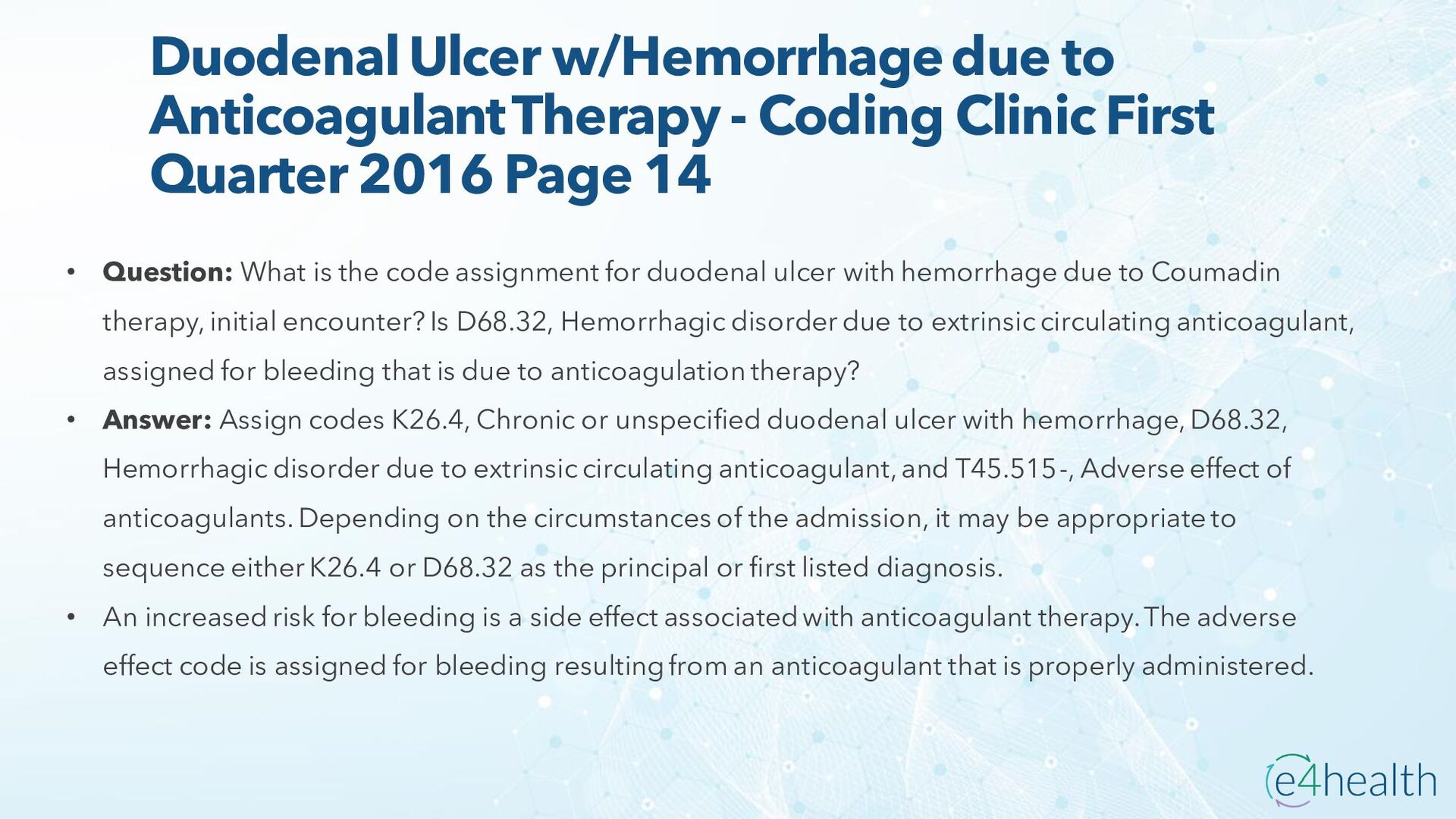
  51. Duodenal Ulcer w/Hemorrhage due to Anticoagulant Therapy - Coding Clinic

    First Quarter 2016 Page 14 • Question: What is the code assignment for duodenal ulcer with hemorrhage due to Coumadin therapy, initial encounter? Is D68.32, Hemorrhagic disorder due to extrinsic circulating anticoagulant, assigned for bleeding that is due to anticoagulation therapy? • Answer: Assign codes K26.4, Chronic or unspecified duodenal ulcer with hemorrhage, D68.32, Hemorrhagic disorder due to extrinsic circulating anticoagulant, and T45.515-, Adverse effect of anticoagulants. Depending on the circumstances of the admission, it may be appropriate to sequence either K26.4 or D68.32 as the principal or first listed diagnosis. • An increased risk for bleeding is a side effect associated with anticoagulant therapy. The adverse effect code is assigned for bleeding resulting from an anticoagulant that is properly administered.
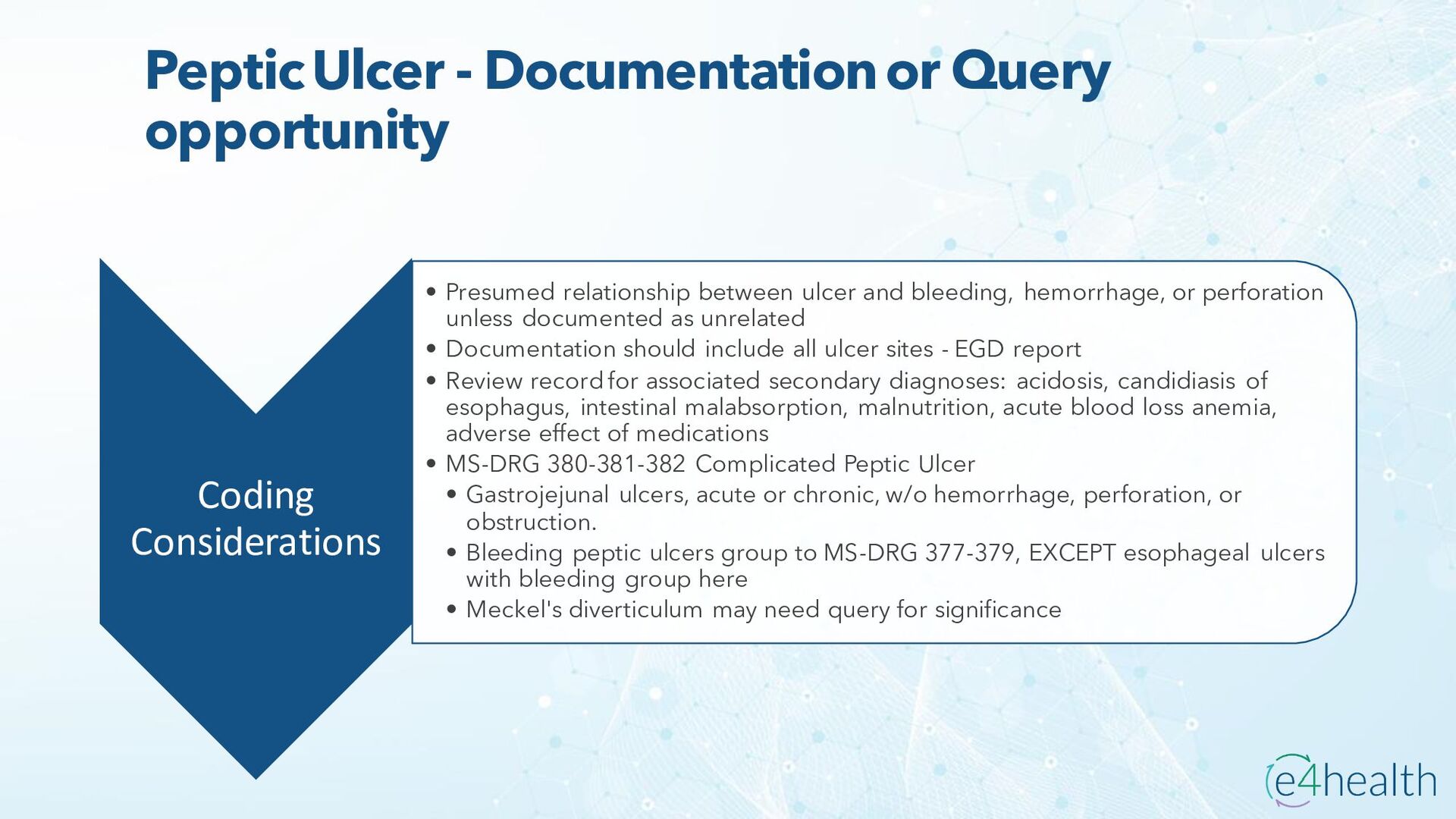
  52. Peptic Ulcer - Documentation or Query opportunity Coding Considerations •

    Presumed relationship between ulcer and bleeding, hemorrhage, or perforation unless documented as unrelated • Documentation should include all ulcer sites - EGD report • Review record for associated secondary diagnoses: acidosis, candidiasis of esophagus, intestinal malabsorption, malnutrition, acute blood loss anemia, adverse effect of medications • MS-DRG 380-381-382 Complicated Peptic Ulcer • Gastrojejunal ulcers, acute or chronic, w/o hemorrhage, perforation, or obstruction. • Bleeding peptic ulcers group to MS-DRG 377-379, EXCEPT esophageal ulcers with bleeding group here • Meckel's diverticulum may need query for significance
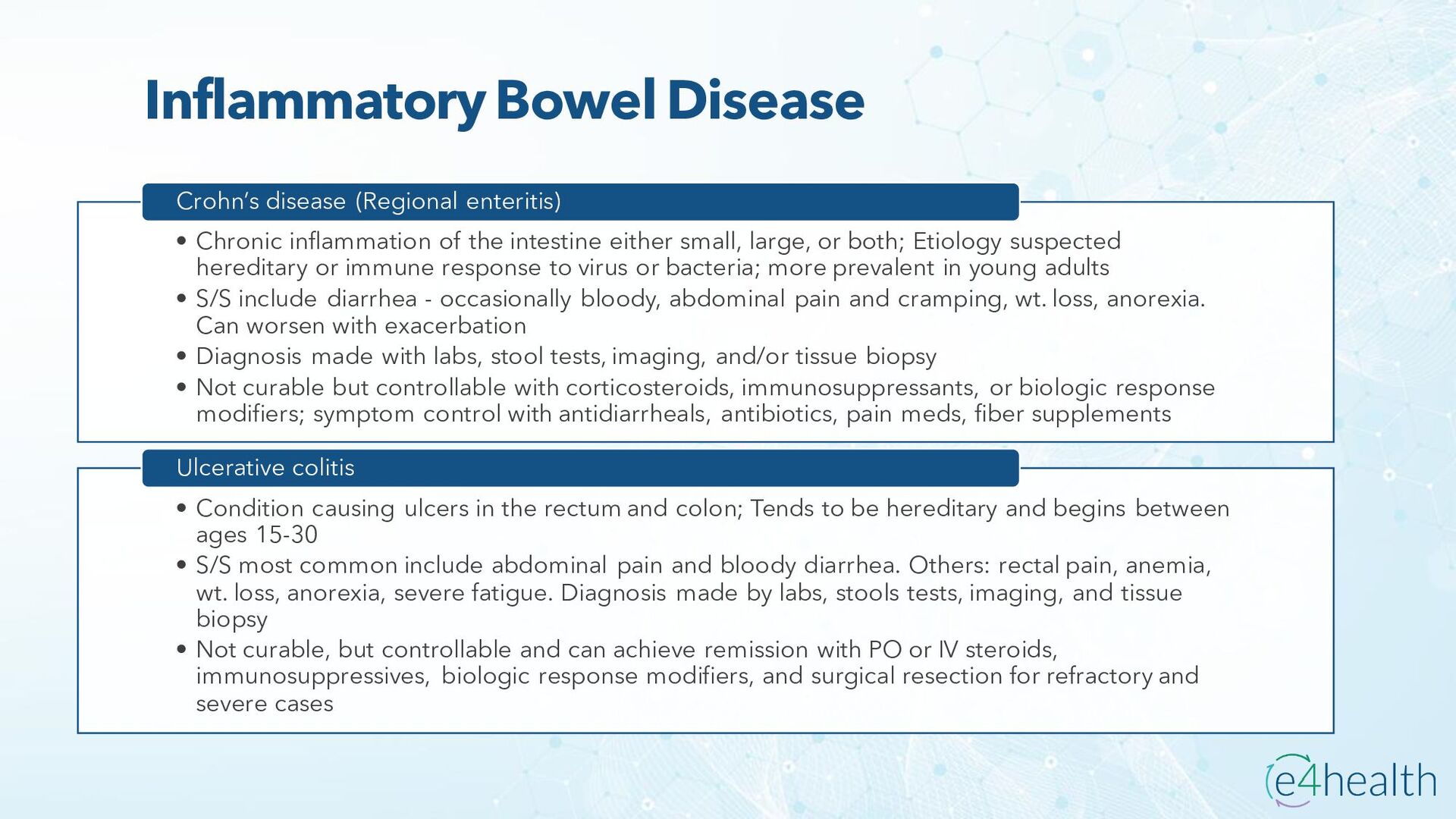
  53. Inflammatory Bowel Disease • Chronic inflammation of the intestine either

    small, large, or both; Etiology suspected hereditary or immune response to virus or bacteria; more prevalent in young adults • S/S include diarrhea - occasionally bloody, abdominal pain and cramping, wt. loss, anorexia. Can worsen with exacerbation • Diagnosis made with labs, stool tests, imaging, and/or tissue biopsy • Not curable but controllable with corticosteroids, immunosuppressants, or biologic response modifiers; symptom control with antidiarrheals, antibiotics, pain meds, fiber supplements Crohn’s disease (Regional enteritis) • Condition causing ulcers in the rectum and colon; Tends to be hereditary and begins between ages 15-30 • S/S most common include abdominal pain and bloody diarrhea. Others: rectal pain, anemia, wt. loss, anorexia, severe fatigue. Diagnosis made by labs, stools tests, imaging, and tissue biopsy • Not curable, but controllable and can achieve remission with PO or IV steroids, immunosuppressives, biologic response modifiers, and surgical resection for refractory and severe cases Ulcerative colitis
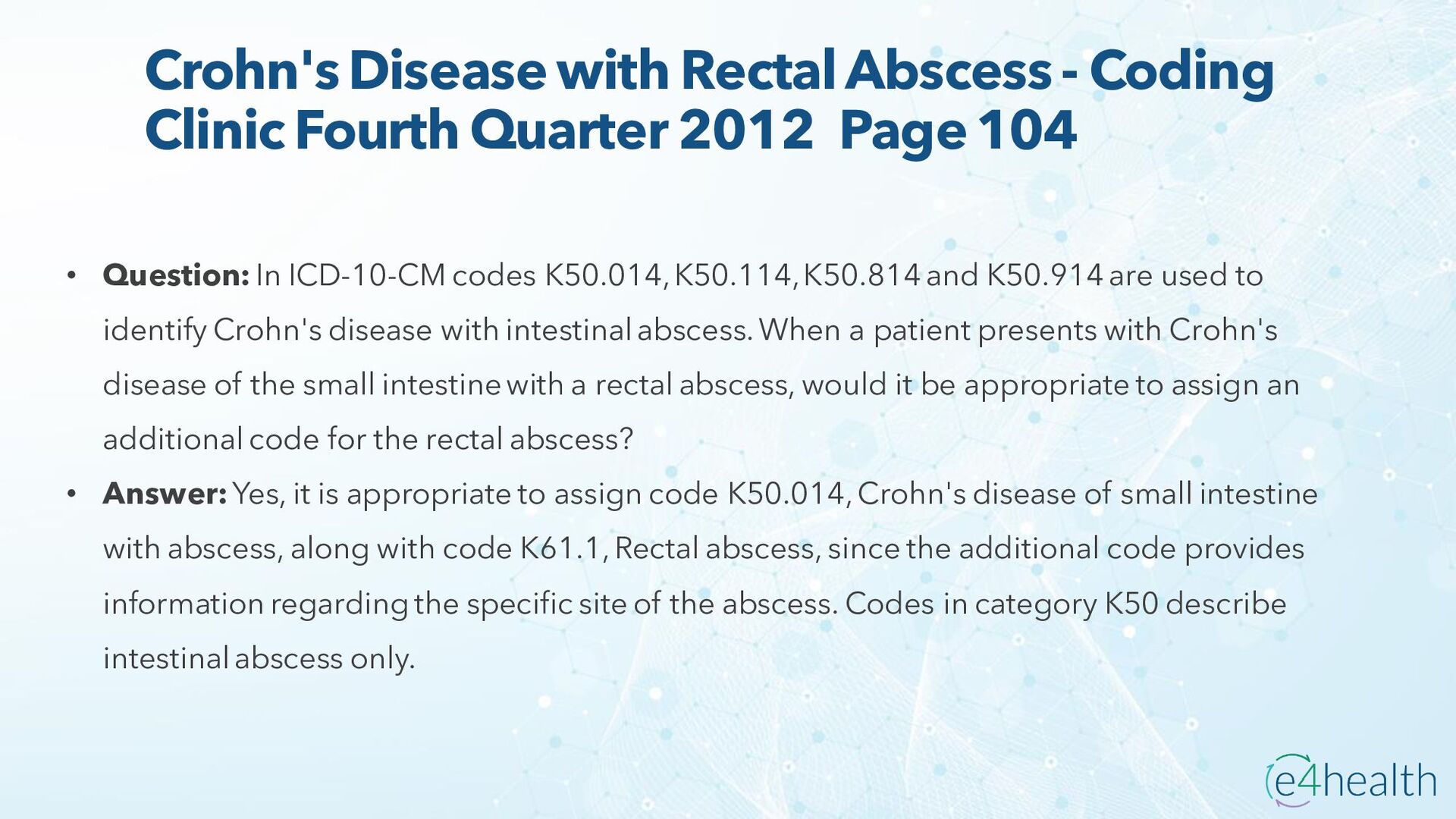
  54. Crohn's Disease with Rectal Abscess - Coding Clinic Fourth Quarter

    2012 Page 104 • Question: In ICD-10-CM codes K50.014, K50.114, K50.814 and K50.914 are used to identify Crohn's disease with intestinal abscess. When a patient presents with Crohn's disease of the small intestine with a rectal abscess, would it be appropriate to assign an additional code for the rectal abscess? • Answer: Yes, it is appropriate to assign code K50.014, Crohn's disease of small intestine with abscess, along with code K61.1, Rectal abscess, since the additional code provides information regarding the specific site of the abscess. Codes in category K50 describe intestinal abscess only.
  55. Noninfective Gastroenteritis and Colitis - Coding Clinic Fourth Quarter 2016

    Page 30 • The following new codes have been created for gastroenteritis and colitis at category K52, Other and unspecified noninfective gastroenteritis and colitis: • K52.3 Indeterminate colitis • Indeterminate colitis (K52.3) refers to inflammatory bowel disease with colitis that cannot definitely be diagnosed as Crohn's disease or ulcerative colitis upon colonoscopy, colon biopsy or colectomy. Clinically however, around half of the patients who are diagnosed with this condition are subsequently diagnosed with Crohn's disease or ulcerative colitis. For a significant amount of individuals, this does not happen. Another term for indeterminate colitis is colonic inflammatory bowel disease unclassified (IBDU). • There are currently no set markers that identify indeterminate colitis. It is a diagnosis of exclusion, but identifiers such as anti- saccharomyces cerevisiae (ASCA) and perinuclear anti-cytoplasmic antibody (pANCA) are usually negative. Patients who lack these markers continue to have indeterminate colitis. Those who have one or both markers eventually manifest Crohn's disease or ulcerative colitis. Treatment is similar to therapies for ulcerative colitis. When proctocolectomy with ileal pouch to anal anastomosis is performed, patients with indeterminate colitis are more likely to have complications than those with ulcerative colitis, but less likely to have complications than patients with Crohn's disease. Note: Portion of this Coding Clinic is illustrated for the purposes of this presentation
  56. Megacolon - Coding Clinic Fourth Quarter 2016 Page 33 •

    Codes K59.31, Toxic megacolon, and K59.39, Other megacolon, have been created for megacolon. • Megacolon is a significant dilation of the colon. Toxic megacolon is the rapid nonobstructive dilation of the colon with infection or inflammation. • Various forms of colitis such as ulcerative colitis, Crohn's colitis, infectious colitis, ischemic colitis, radiation colitis and colitis associated with chemotherapy, and medications that affect motility of the bowel can all cause megacolon. • The dilation may be segmental or include the entire colon. As nitric oxide increases and inhibits smooth muscle tone, inflammation progresses from the mucosa into smooth muscle layers and serosa, which causes the colon to expand. Radiologic evidence shows that the transverse colon may expand over 6 cm. This rapid widening may cause abdominal pain and tenderness, fever, perforation of the colon, rapid heart rate, shock, and sepsis. • Prognosis is best in the absence of perforation and when toxic megacolon is diagnosed and treated early. The distention must be reduced, electrolytes and fluids must be restored, and any infection must be treated with antibiotics. Colectomy is recommended when dilation persists.
  57. Inflammatory Bowel Disease - Documentation or Query opportunity Coding Considerations

    • Presumed relationship between UC or Crohn’s and: • Abscess, fistula, intestinal obstruction, and rectal bleeding • Review record for common secondary diagnoses • Acidosis, acute blood loss anemia, AKI, GI bleed, Ileus, malnutrition, peritoneal abscess, toxic megacolon, intestinal perforation, sepsis, shock
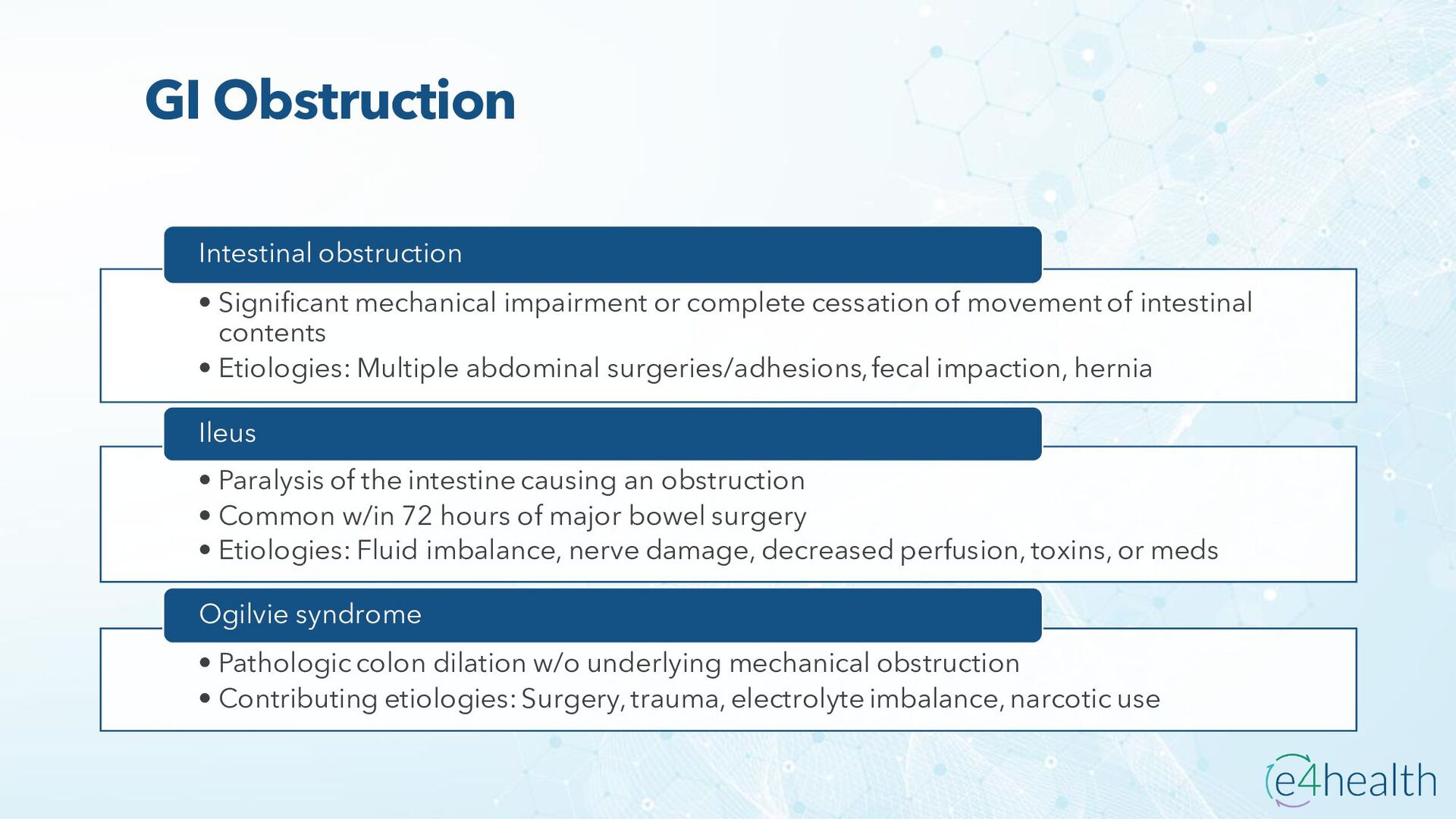
  58. GI Obstruction • Significant mechanical impairment or complete cessation of

    movement of intestinal contents • Etiologies: Multiple abdominal surgeries/adhesions, fecal impaction, hernia Intestinal obstruction • Paralysis of the intestine causing an obstruction • Common w/in 72 hours of major bowel surgery • Etiologies: Fluid imbalance, nerve damage, decreased perfusion, toxins, or meds Ileus • Pathologic colon dilation w/o underlying mechanical obstruction • Contributing etiologies: Surgery, trauma, electrolyte imbalance, narcotic use Ogilvie syndrome
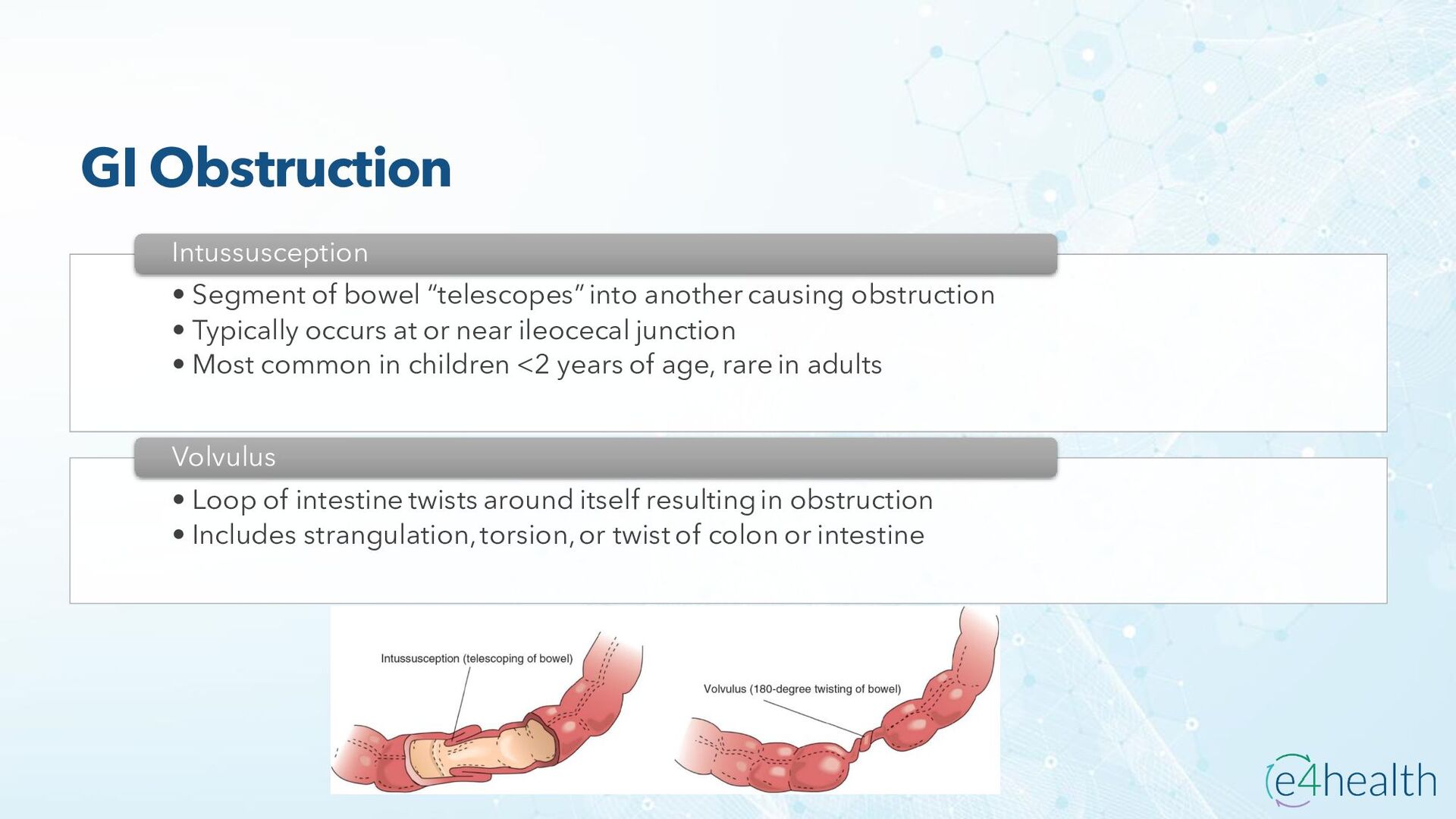
  59. GI Obstruction • Segment of bowel “telescopes” into another causing

    obstruction • Typically occurs at or near ileocecal junction • Most common in children <2 years of age, rare in adults Intussusception • Loop of intestine twists around itself resulting in obstruction • Includes strangulation, torsion, or twist of colon or intestine Volvulus
  60. GI Obstruction Diagnosis • S/S: Mild to severe abdominal pain,

    abdominal distention, N/V, constipation, diarrhea; Hx abdominal surgery • Objective: Distended abdomen, guarding, minimal to absent bowel sounds; Imaging with gaseous distention of isolated segments of bowel Treatment • NPO, NGT, IV fluids, electrolyte replacement, avoid opioids, sedatives, anticholinergics, serial abdominal exams and/or imaging, surgery
  61. Postoperative Ileus - Coding Clinic First Quarter 2017 Page 40

    • Question: Since an ileus does not always involve obstruction, should a diagnosis of postoperative ileus be assigned code K91.3, Postprocedural intestinal obstruction? Previously, postoperative ileus defaulted to a complication code. However, in ICD-10-CM, there is no default code assignment for postoperative ileus. ; • Answer: Query the physician to determine if the ileus is a postoperative complication. If the physician confirms that the ileus is a postoperative complication, assign code K91.89, Other postprocedural complications and disorders of digestive system. Code K56.7, Ileus, unspecified, should be assigned as an additional diagnosis to describe the specific complication. If, however, after query, the physician confirms that the ileus is not a surgical complication, assign only code K56.7. Only assign code K91.3, Postprocedural intestinal obstruction, for an obstructive ileus that the physician has documented as a post-op complication.
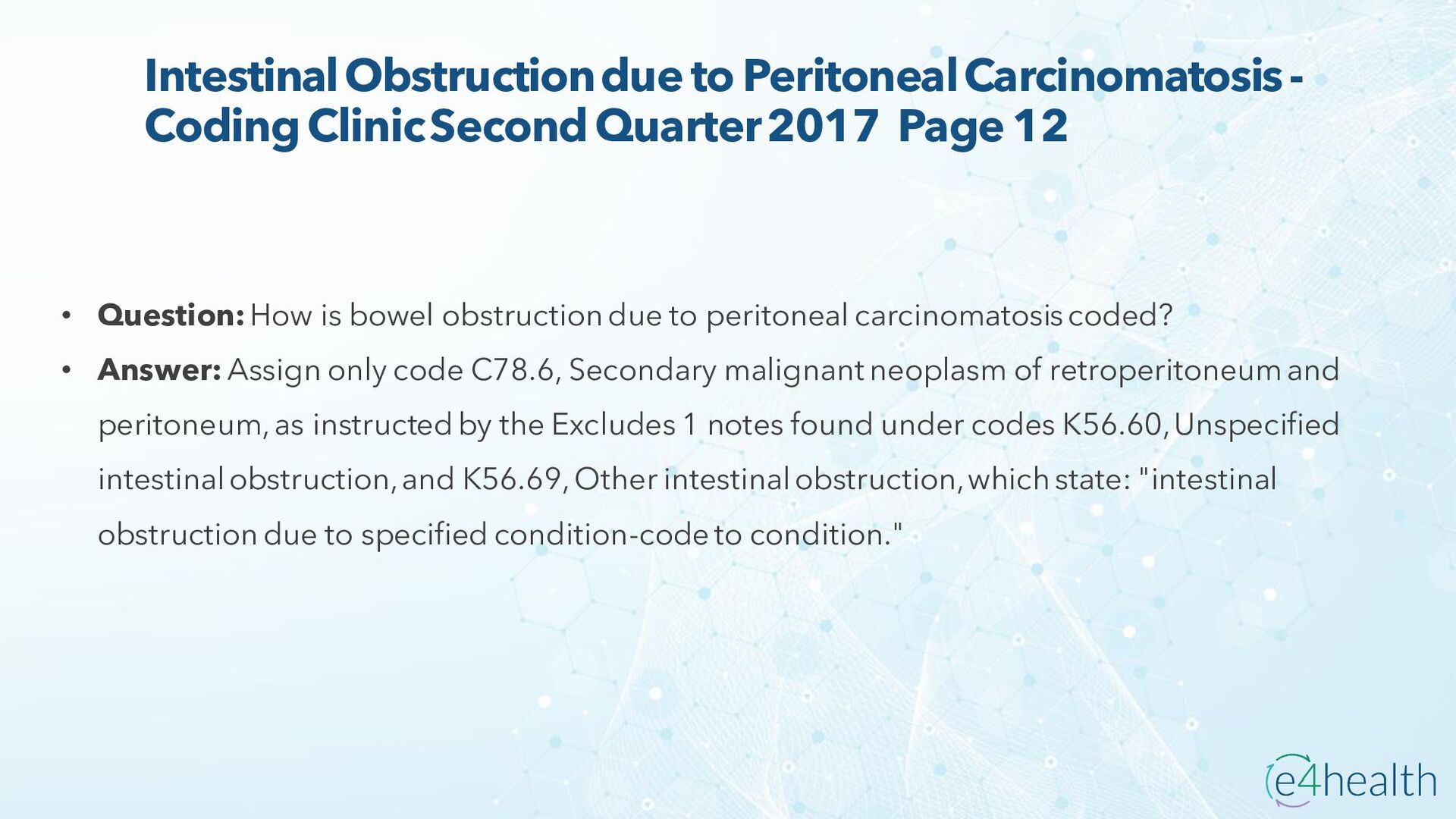
  62. Intestinal Obstruction due to Peritoneal Carcinomatosis - Coding Clinic Second

    Quarter 2017 Page 12 • Question: How is bowel obstruction due to peritoneal carcinomatosis coded? • Answer: Assign only code C78.6, Secondary malignant neoplasm of retroperitoneum and peritoneum, as instructed by the Excludes 1 notes found under codes K56.60, Unspecified intestinal obstruction, and K56.69, Other intestinal obstruction, which state: "intestinal obstruction due to specified condition-code to condition."
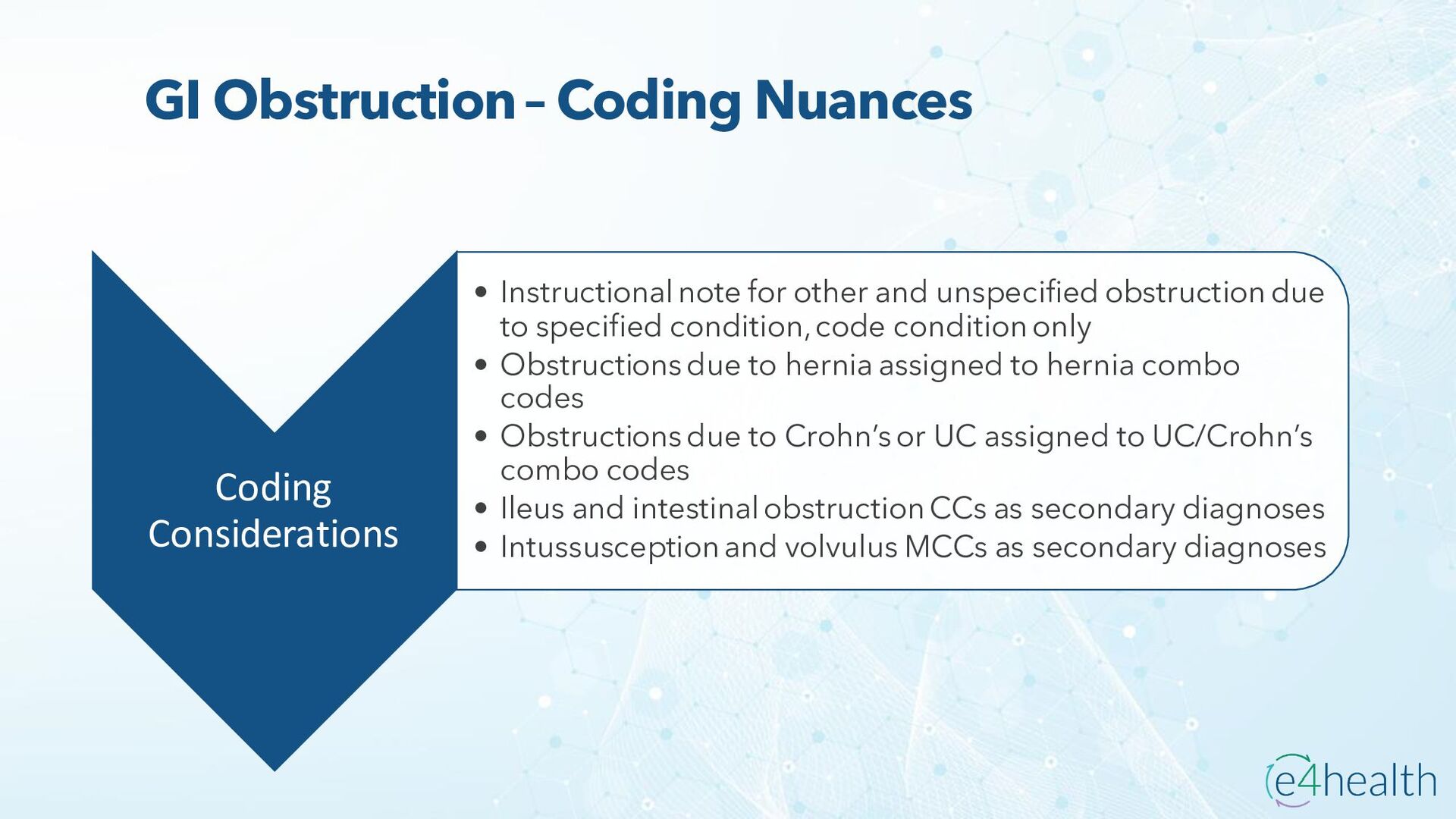
  63. GI Obstruction – Coding Nuances Coding Considerations • Instructional note

    for other and unspecified obstruction due to specified condition, code condition only • Obstructions due to hernia assigned to hernia combo codes • Obstructions due to Crohn’s or UC assigned to UC/Crohn’s combo codes • Ileus and intestinal obstruction CCs as secondary diagnoses • Intussusception and volvulus MCCs as secondary diagnoses
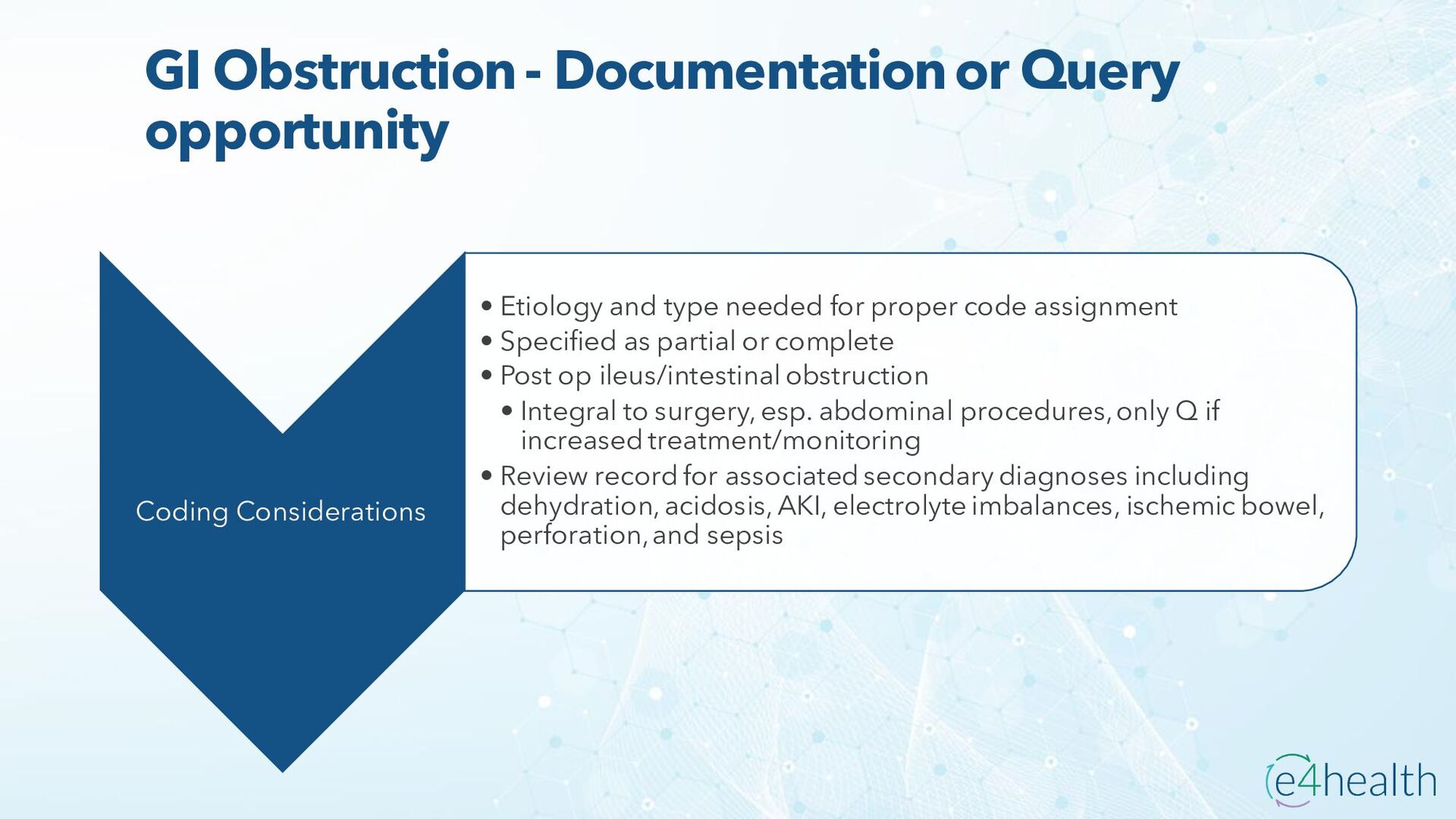
  64. GI Obstruction - Documentation or Query opportunity Coding Considerations •

    Etiology and type needed for proper code assignment • Specified as partial or complete • Post op ileus/intestinal obstruction • Integral to surgery, esp. abdominal procedures, only Q if increased treatment/monitoring • Review record for associated secondary diagnoses including dehydration, acidosis, AKI, electrolyte imbalances, ischemic bowel, perforation, and sepsis
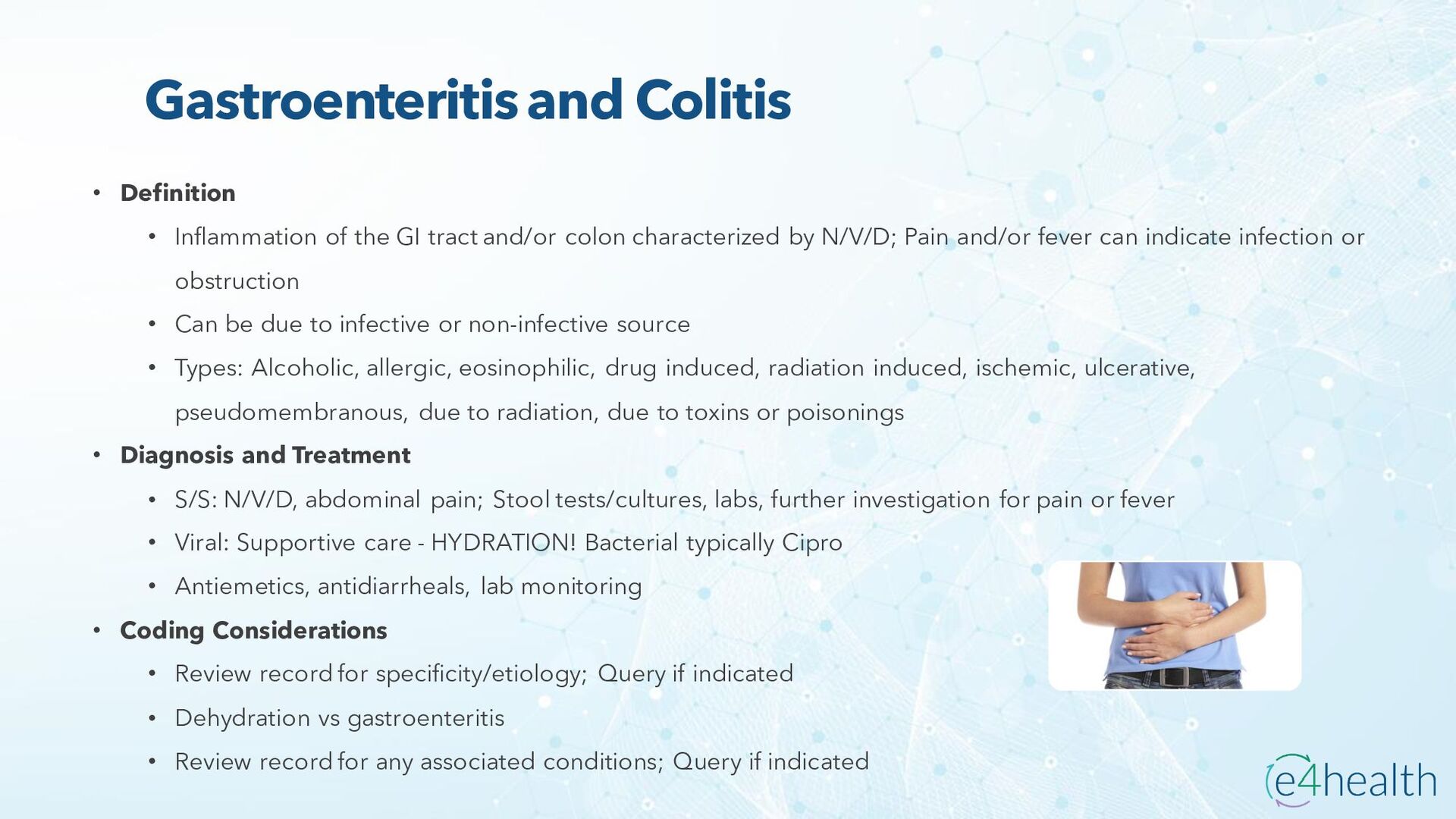
  65. Gastroenteritis and Colitis • Definition • Inflammation of the GI

    tract and/or colon characterized by N/V/D; Pain and/or fever can indicate infection or obstruction • Can be due to infective or non-infective source • Types: Alcoholic, allergic, eosinophilic, drug induced, radiation induced, ischemic, ulcerative, pseudomembranous, due to radiation, due to toxins or poisonings • Diagnosis and Treatment • S/S: N/V/D, abdominal pain; Stool tests/cultures, labs, further investigation for pain or fever • Viral: Supportive care - HYDRATION! Bacterial typically Cipro • Antiemetics, antidiarrheals, lab monitoring • Coding Considerations • Review record for specificity/etiology; Query if indicated • Dehydration vs gastroenteritis • Review record for any associated conditions; Query if indicated
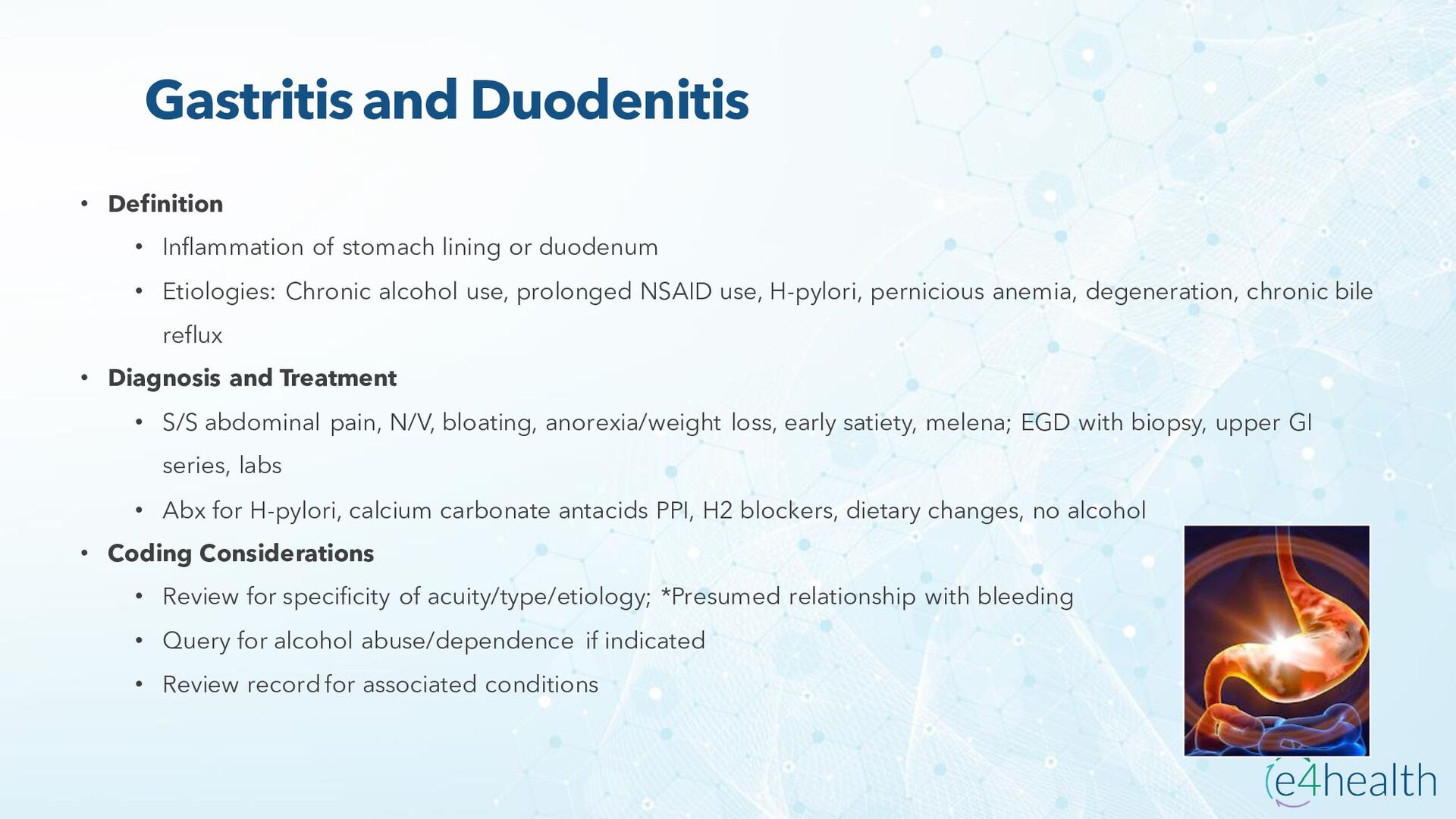
  66. Gastritis and Duodenitis • Definition • Inflammation of stomach lining

    or duodenum • Etiologies: Chronic alcohol use, prolonged NSAID use, H-pylori, pernicious anemia, degeneration, chronic bile reflux • Diagnosis and Treatment • S/S abdominal pain, N/V, bloating, anorexia/weight loss, early satiety, melena; EGD with biopsy, upper GI series, labs • Abx for H-pylori, calcium carbonate antacids PPI, H2 blockers, dietary changes, no alcohol • Coding Considerations • Review for specificity of acuity/type/etiology; *Presumed relationship with bleeding • Query for alcohol abuse/dependence if indicated • Review record for associated conditions
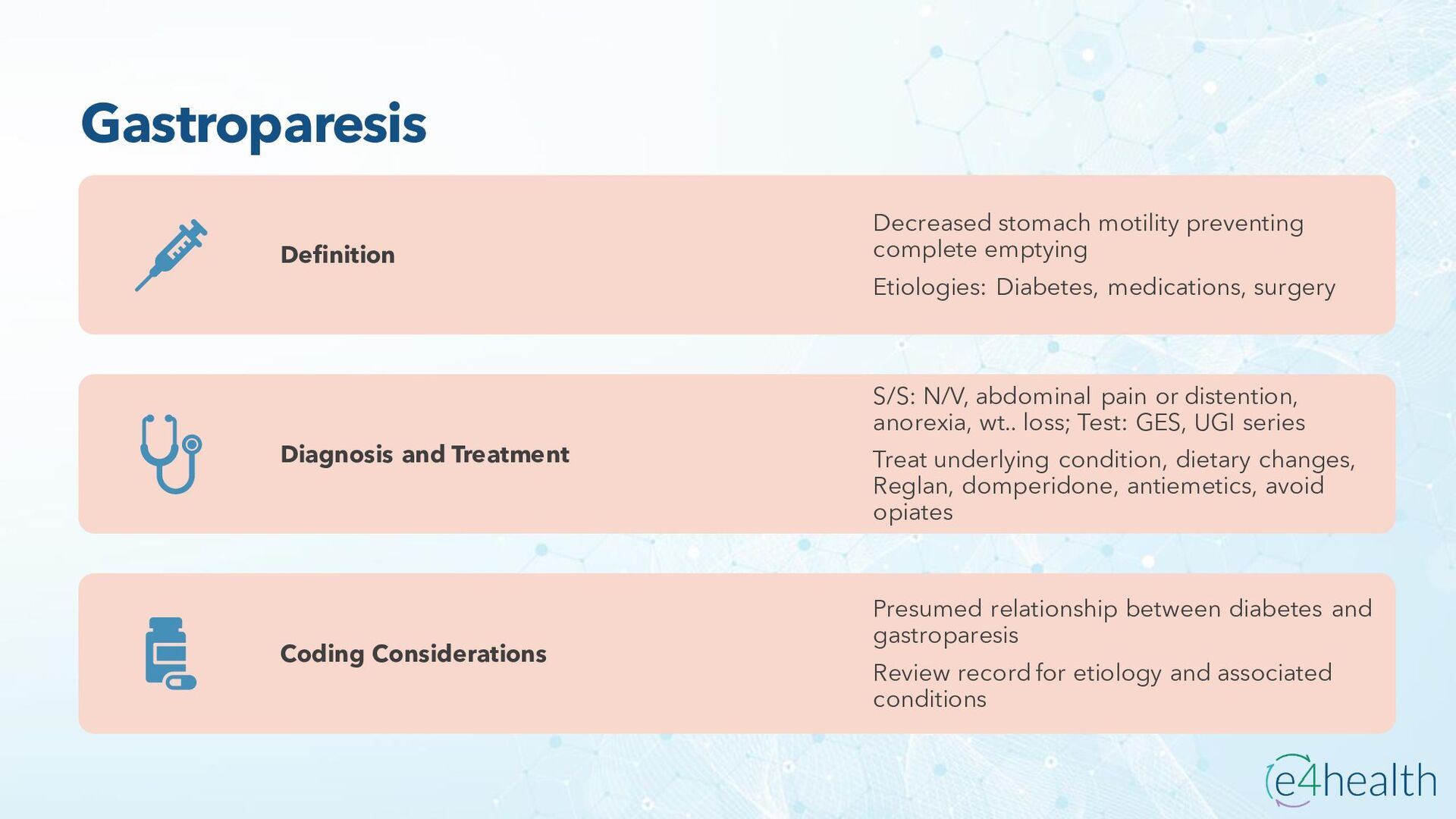
  67. Gastroparesis Definition Decreased stomach motility preventing complete emptying Etiologies: Diabetes,

    medications, surgery Diagnosis and Treatment S/S: N/V, abdominal pain or distention, anorexia, wt.. loss; Test: GES, UGI series Treat underlying condition, dietary changes, Reglan, domperidone, antiemetics, avoid opiates Coding Considerations Presumed relationship between diabetes and gastroparesis Review record for etiology and associated conditions
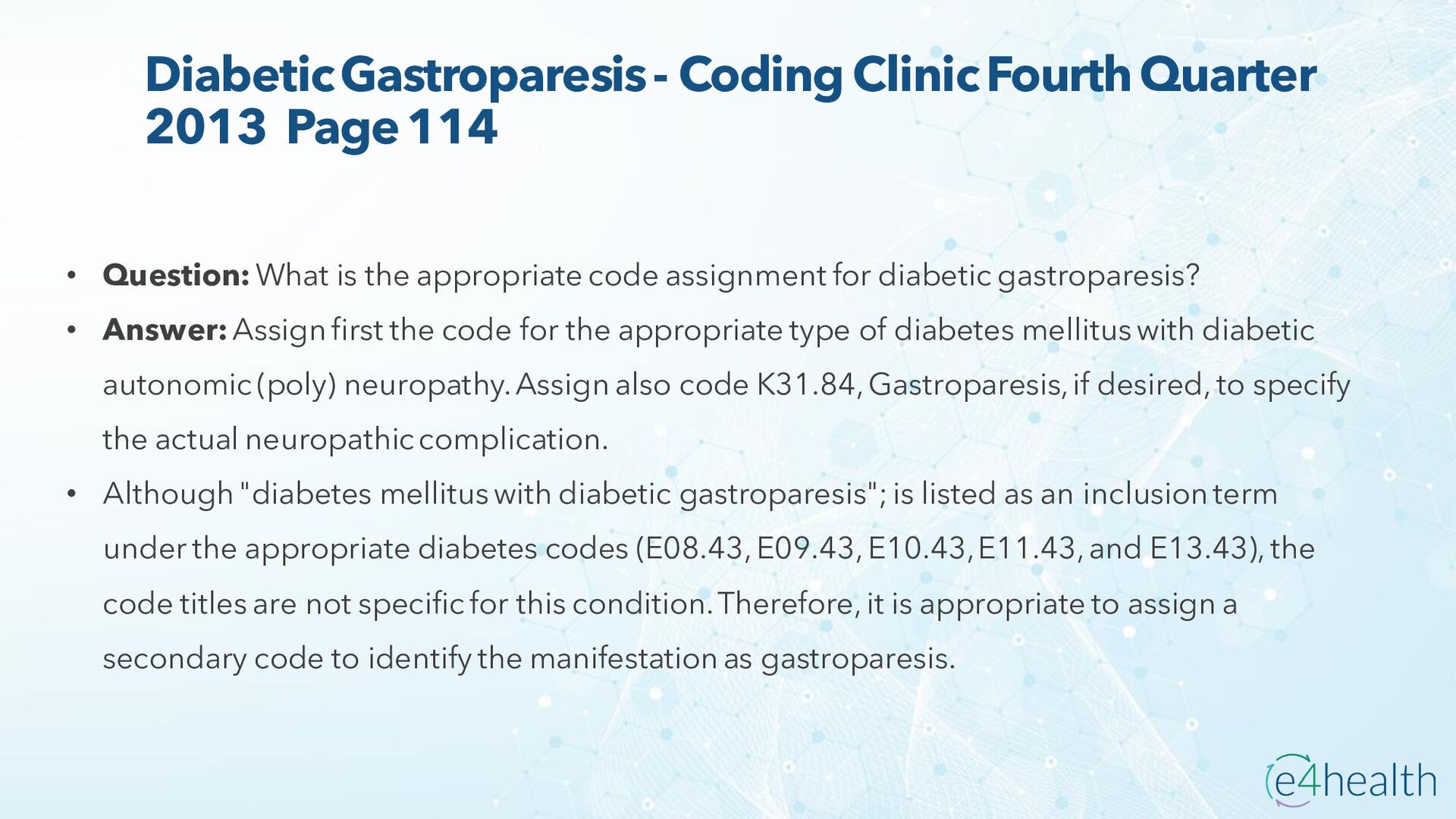
  68. Diabetic Gastroparesis - Coding Clinic Fourth Quarter 2013 Page 114

    • Question: What is the appropriate code assignment for diabetic gastroparesis? • Answer: Assign first the code for the appropriate type of diabetes mellitus with diabetic autonomic (poly) neuropathy. Assign also code K31.84, Gastroparesis, if desired, to specify the actual neuropathic complication. • Although "diabetes mellitus with diabetic gastroparesis"; is listed as an inclusion term under the appropriate diabetes codes (E08.43, E09.43, E10.43, E11.43, and E13.43), the code titles are not specific for this condition. Therefore, it is appropriate to assign a secondary code to identify the manifestation as gastroparesis.
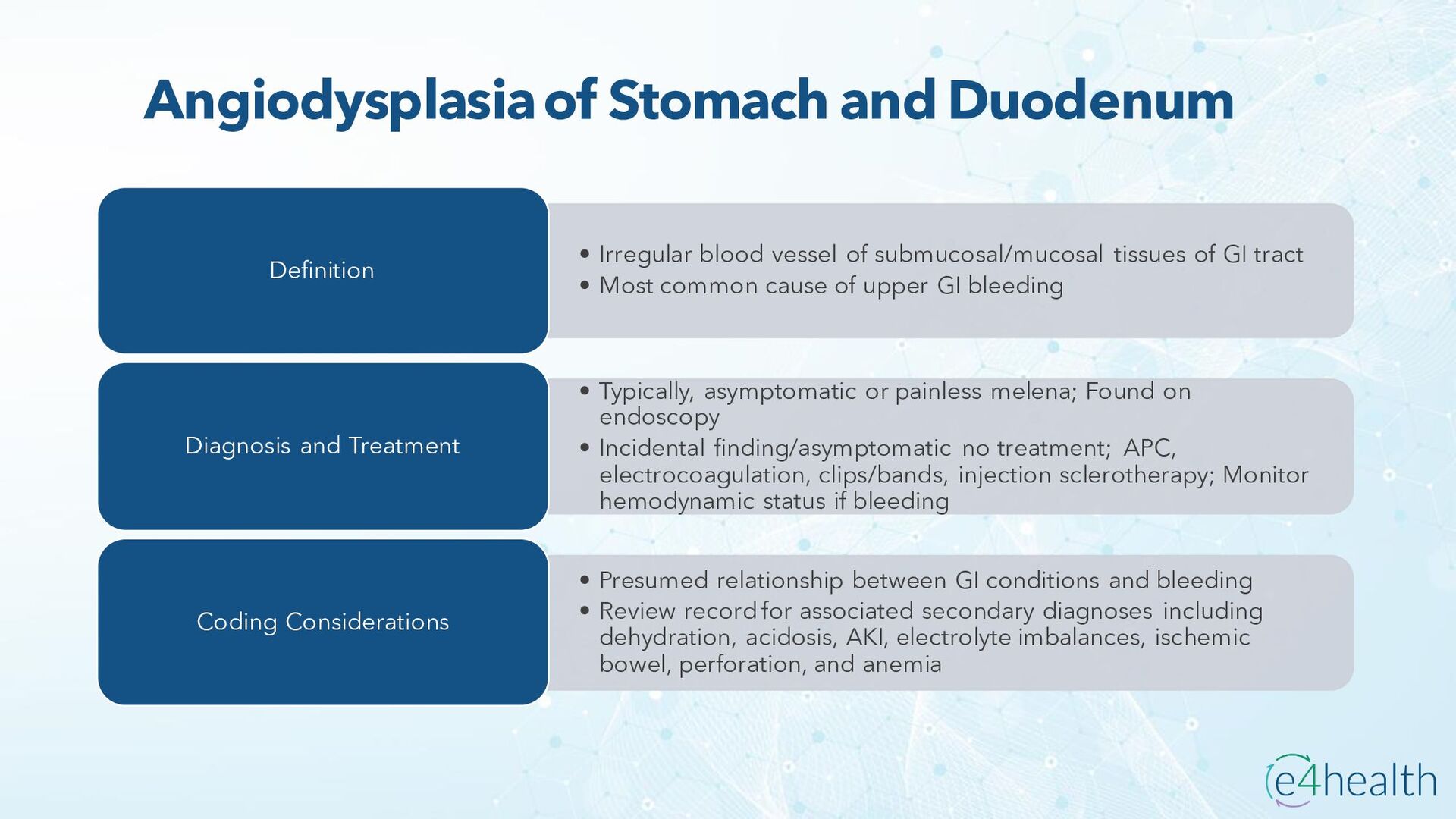
  69. Angiodysplasia of Stomach and Duodenum • Irregular blood vessel of

    submucosal/mucosal tissues of GI tract • Most common cause of upper GI bleeding Definition • Typically, asymptomatic or painless melena; Found on endoscopy • Incidental finding/asymptomatic no treatment; APC, electrocoagulation, clips/bands, injection sclerotherapy; Monitor hemodynamic status if bleeding Diagnosis and Treatment • Presumed relationship between GI conditions and bleeding • Review record for associated secondary diagnoses including dehydration, acidosis, AKI, electrolyte imbalances, ischemic bowel, perforation, and anemia Coding Considerations
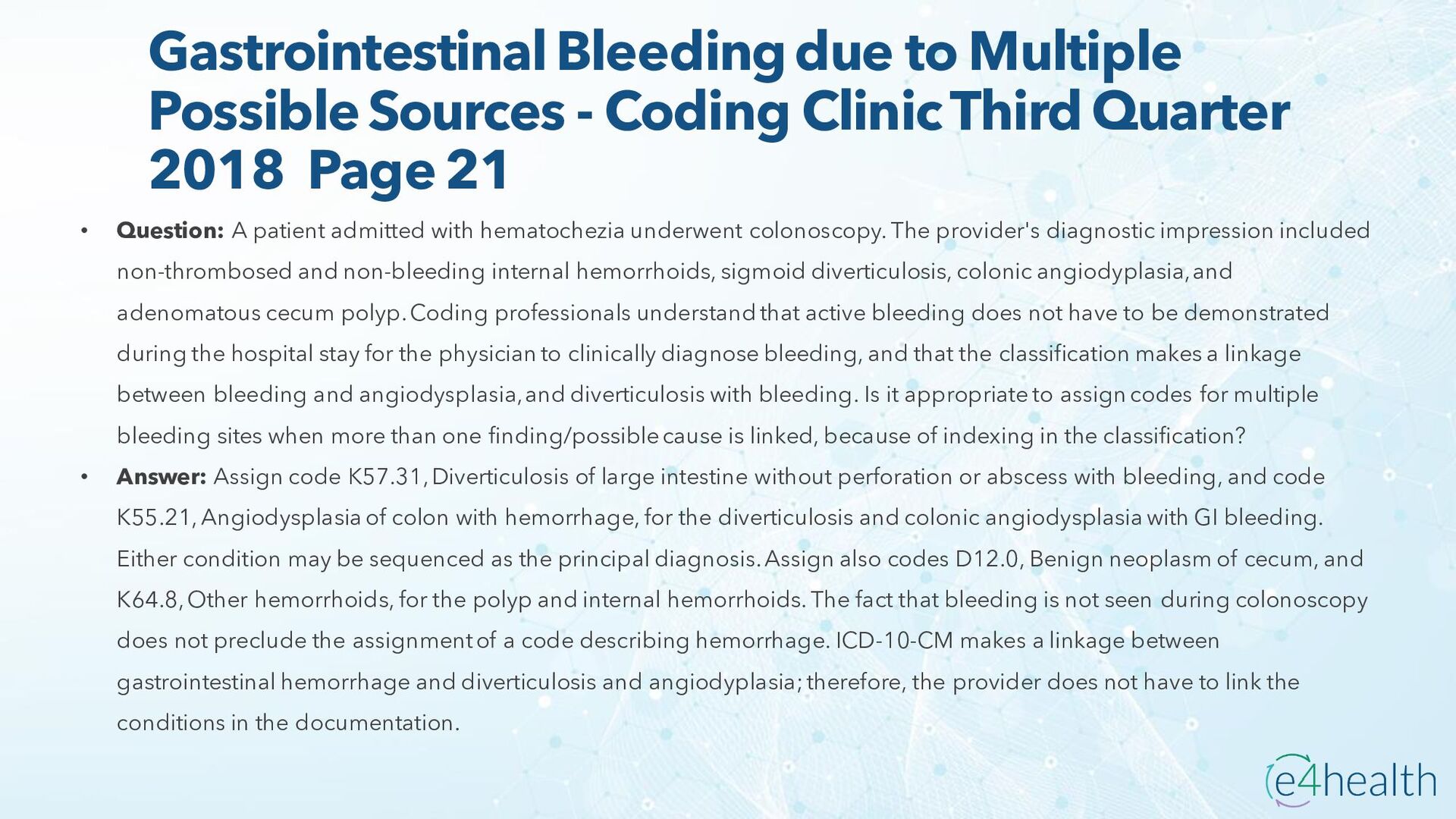
  70. Gastrointestinal Bleeding due to Multiple Possible Sources - Coding Clinic

    Third Quarter 2018 Page 21 • Question: A patient admitted with hematochezia underwent colonoscopy. The provider's diagnostic impression included non-thrombosed and non-bleeding internal hemorrhoids, sigmoid diverticulosis, colonic angiodyplasia, and adenomatous cecum polyp. Coding professionals understand that active bleeding does not have to be demonstrated during the hospital stay for the physician to clinically diagnose bleeding, and that the classification makes a linkage between bleeding and angiodysplasia, and diverticulosis with bleeding. Is it appropriate to assign codes for multiple bleeding sites when more than one finding/possible cause is linked, because of indexing in the classification? • Answer: Assign code K57.31, Diverticulosis of large intestine without perforation or abscess with bleeding, and code K55.21, Angiodysplasia of colon with hemorrhage, for the diverticulosis and colonic angiodysplasia with GI bleeding. Either condition may be sequenced as the principal diagnosis. Assign also codes D12.0, Benign neoplasm of cecum, and K64.8, Other hemorrhoids, for the polyp and internal hemorrhoids. The fact that bleeding is not seen during colonoscopy does not preclude the assignment of a code describing hemorrhage. ICD-10-CM makes a linkage between gastrointestinal hemorrhage and diverticulosis and angiodyplasia; therefore, the provider does not have to link the conditions in the documentation.
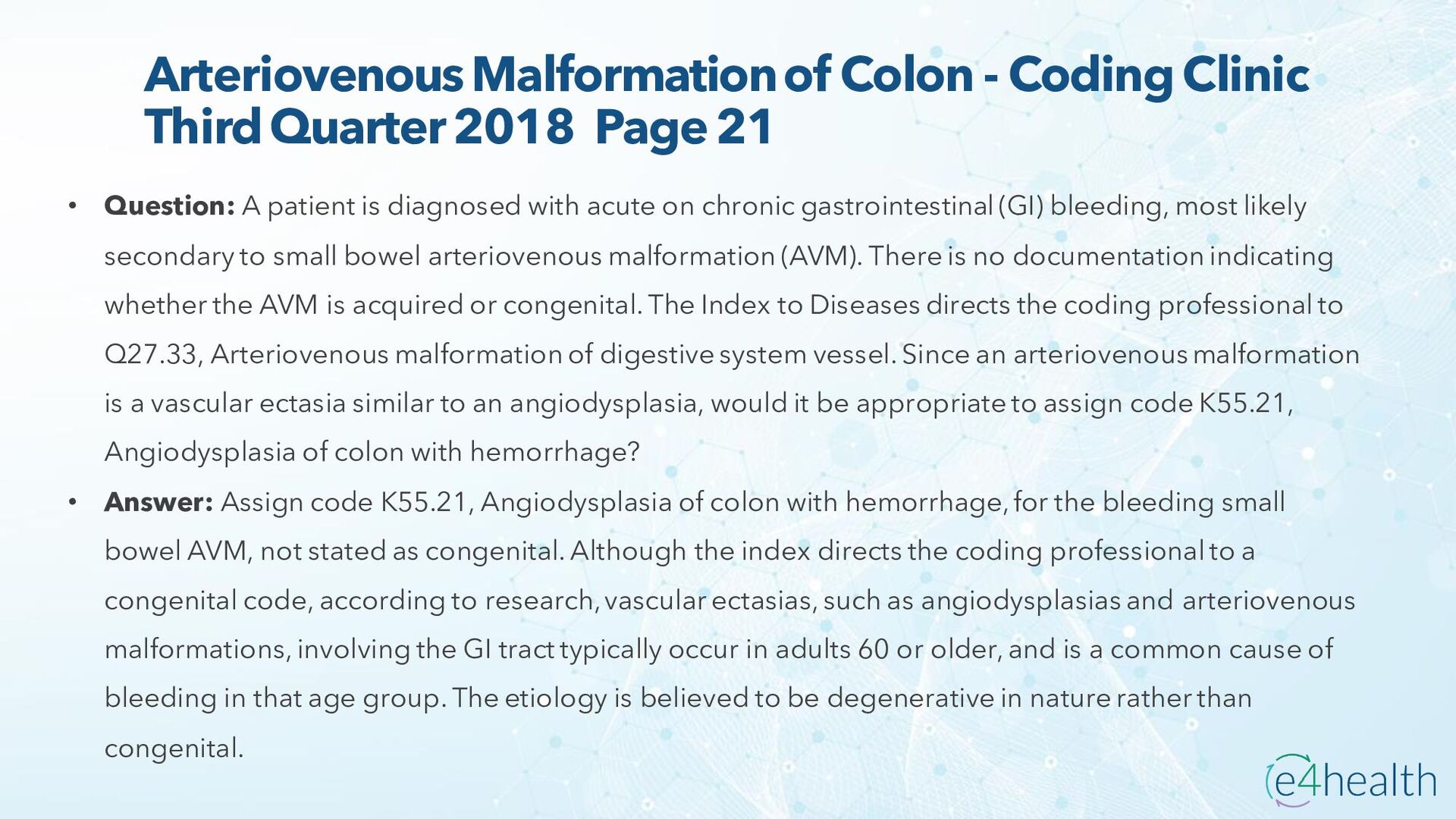
  71. Arteriovenous Malformation of Colon - Coding Clinic Third Quarter 2018

    Page 21 • Question: A patient is diagnosed with acute on chronic gastrointestinal (GI) bleeding, most likely secondary to small bowel arteriovenous malformation (AVM). There is no documentation indicating whether the AVM is acquired or congenital. The Index to Diseases directs the coding professional to Q27.33, Arteriovenous malformation of digestive system vessel. Since an arteriovenous malformation is a vascular ectasia similar to an angiodysplasia, would it be appropriate to assign code K55.21, Angiodysplasia of colon with hemorrhage? • Answer: Assign code K55.21, Angiodysplasia of colon with hemorrhage, for the bleeding small bowel AVM, not stated as congenital. Although the index directs the coding professional to a congenital code, according to research, vascular ectasias, such as angiodysplasias and arteriovenous malformations, involving the GI tract typically occur in adults 60 or older, and is a common cause of bleeding in that age group. The etiology is believed to be degenerative in nature rather than congenital.
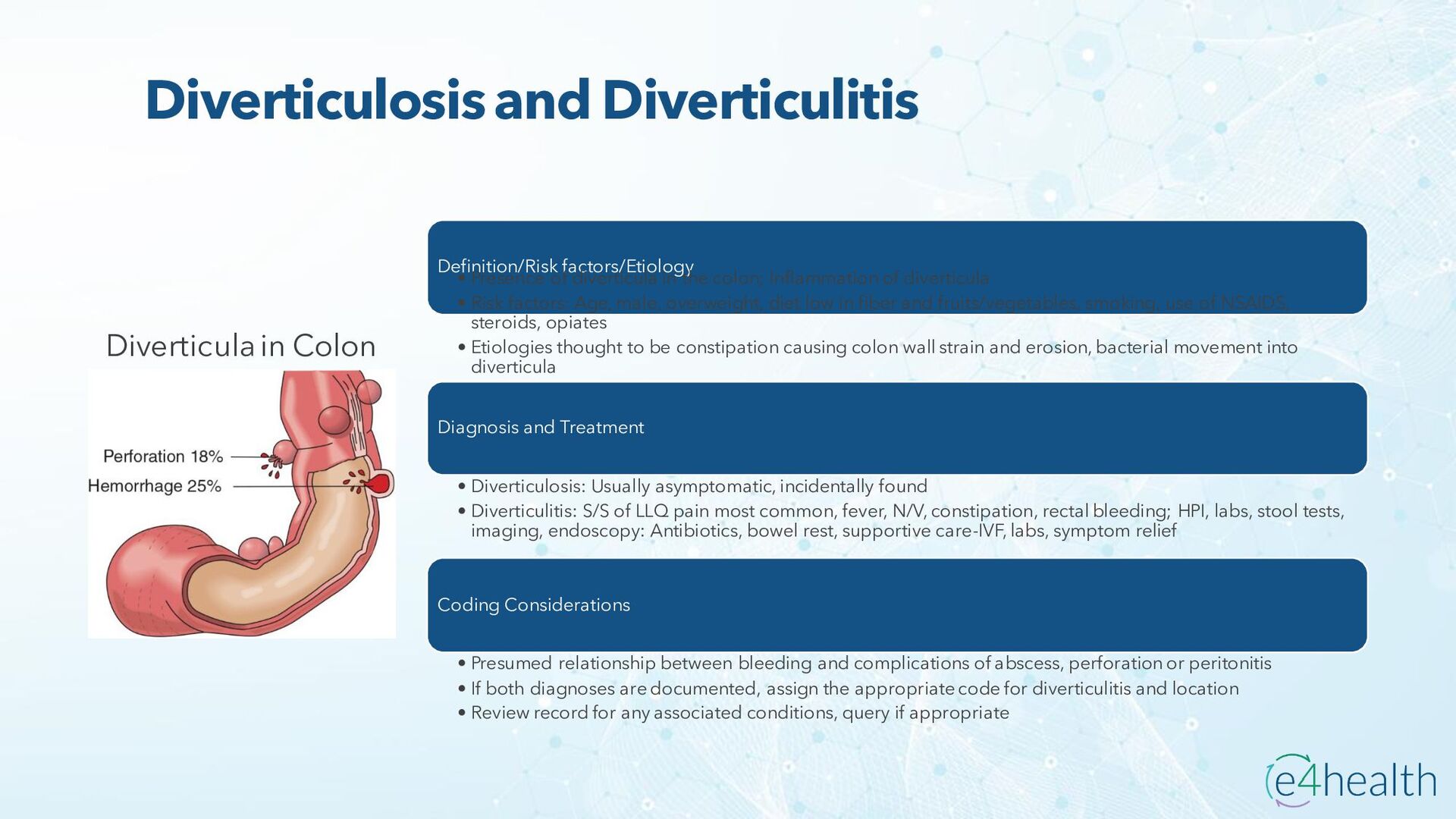
  72. Diverticulosis and Diverticulitis Definition/Risk factors/Etiology • Presence of diverticula in

    the colon; Inflammation of diverticula • Risk factors: Age, male, overweight, diet low in fiber and fruits/vegetables, smoking, use of NSAIDS, steroids, opiates • Etiologies thought to be constipation causing colon wall strain and erosion, bacterial movement into diverticula Diagnosis and Treatment • Diverticulosis: Usually asymptomatic, incidentally found • Diverticulitis: S/S of LLQ pain most common, fever, N/V, constipation, rectal bleeding; HPI, labs, stool tests, imaging, endoscopy: Antibiotics, bowel rest, supportive care-IVF, labs, symptom relief Coding Considerations • Presumed relationship between bleeding and complications of abscess, perforation or peritonitis • If both diagnoses are documented, assign the appropriate code for diverticulitis and location • Review record for any associated conditions, query if appropriate Diverticula in Colon
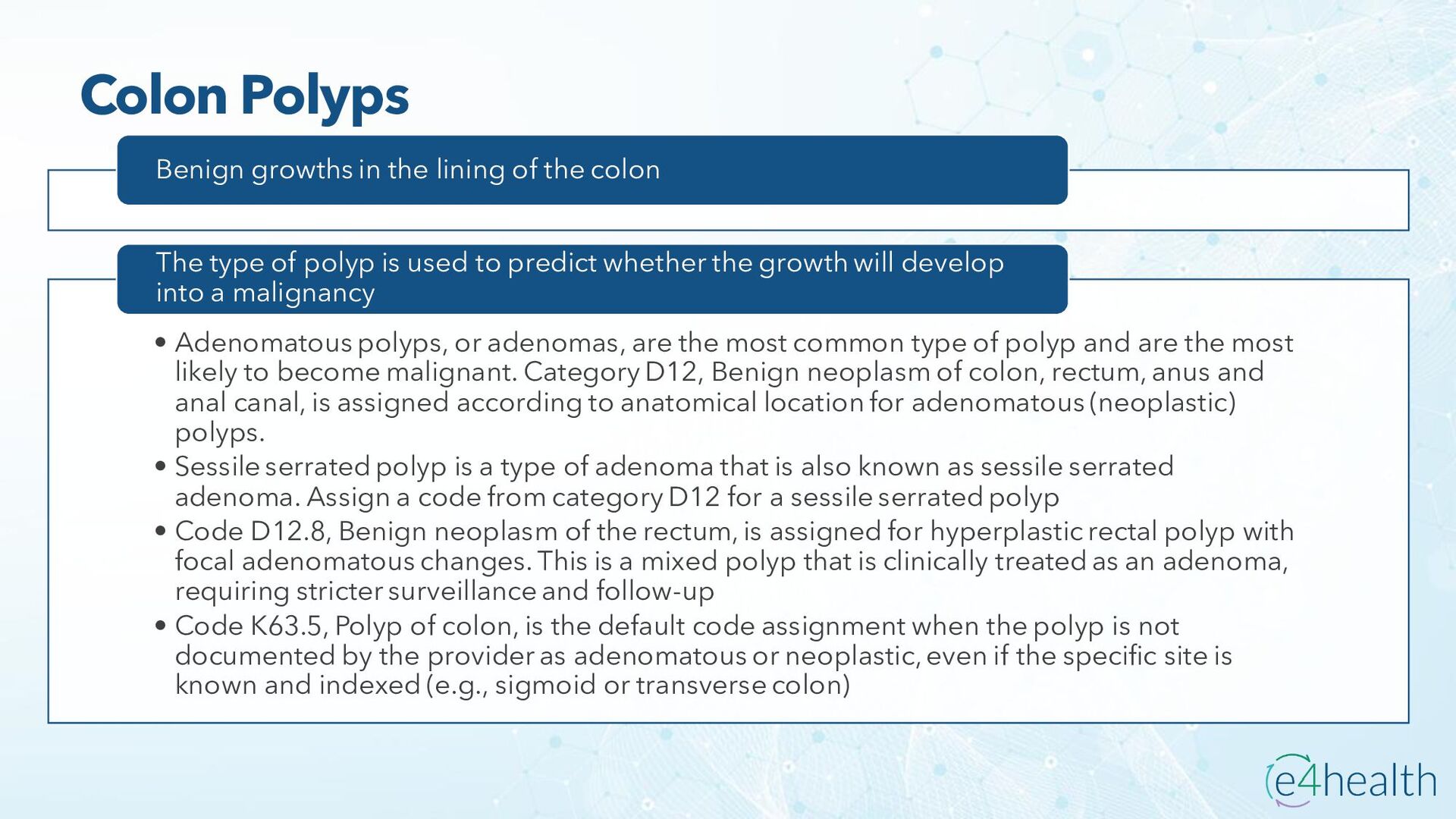
  73. Colon Polyps Benign growths in the lining of the colon

    • Adenomatous polyps, or adenomas, are the most common type of polyp and are the most likely to become malignant. Category D12, Benign neoplasm of colon, rectum, anus and anal canal, is assigned according to anatomical location for adenomatous (neoplastic) polyps. • Sessile serrated polyp is a type of adenoma that is also known as sessile serrated adenoma. Assign a code from category D12 for a sessile serrated polyp • Code D12.8, Benign neoplasm of the rectum, is assigned for hyperplastic rectal polyp with focal adenomatous changes. This is a mixed polyp that is clinically treated as an adenoma, requiring stricter surveillance and follow-up • Code K63.5, Polyp of colon, is the default code assignment when the polyp is not documented by the provider as adenomatous or neoplastic, even if the specific site is known and indexed (e.g., sigmoid or transverse colon) The type of polyp is used to predict whether the growth will develop into a malignancy
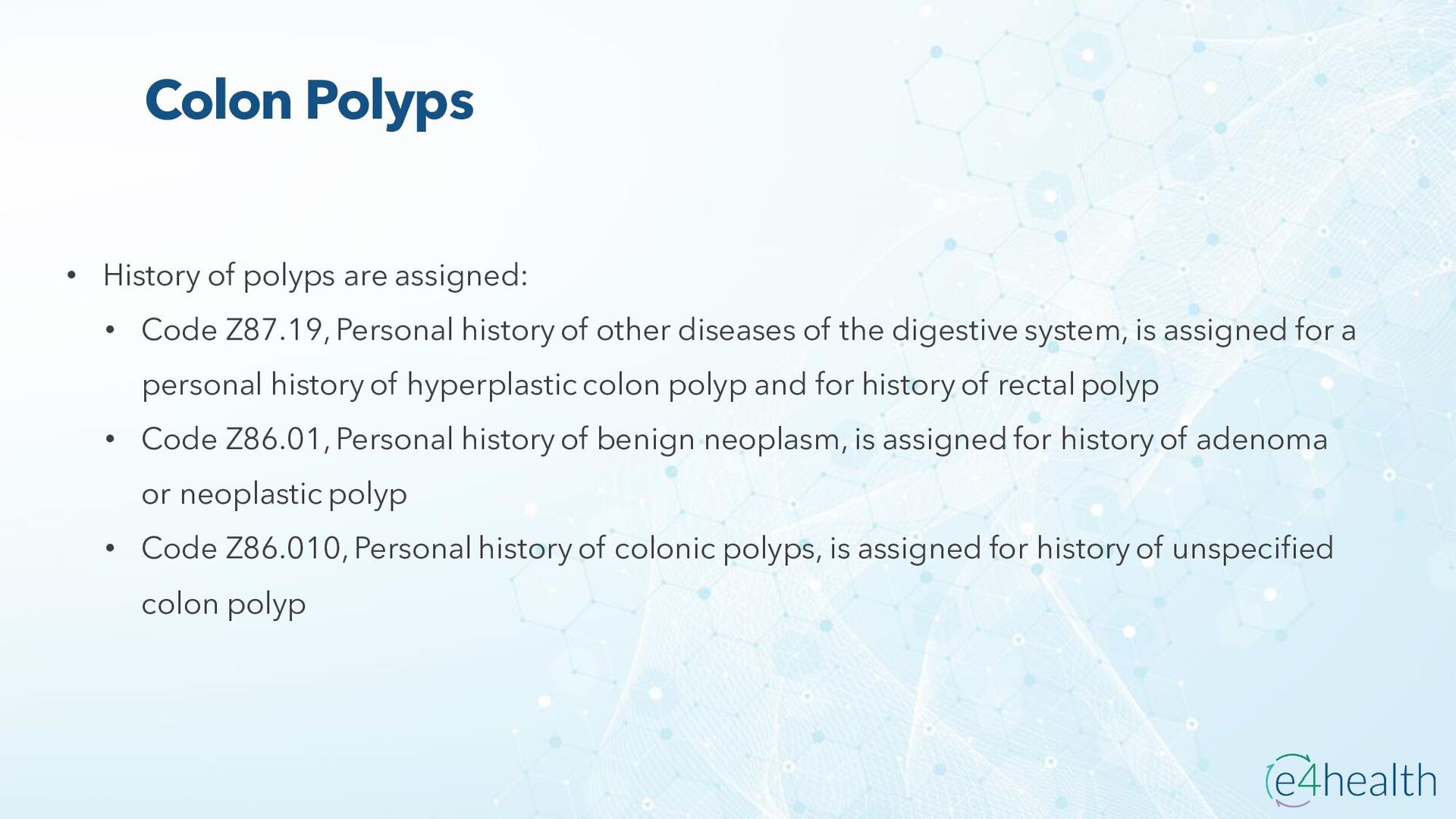
  74. Colon Polyps • History of polyps are assigned: • Code

    Z87.19, Personal history of other diseases of the digestive system, is assigned for a personal history of hyperplastic colon polyp and for history of rectal polyp • Code Z86.01, Personal history of benign neoplasm, is assigned for history of adenoma or neoplastic polyp • Code Z86.010, Personal history of colonic polyps, is assigned for history of unspecified colon polyp
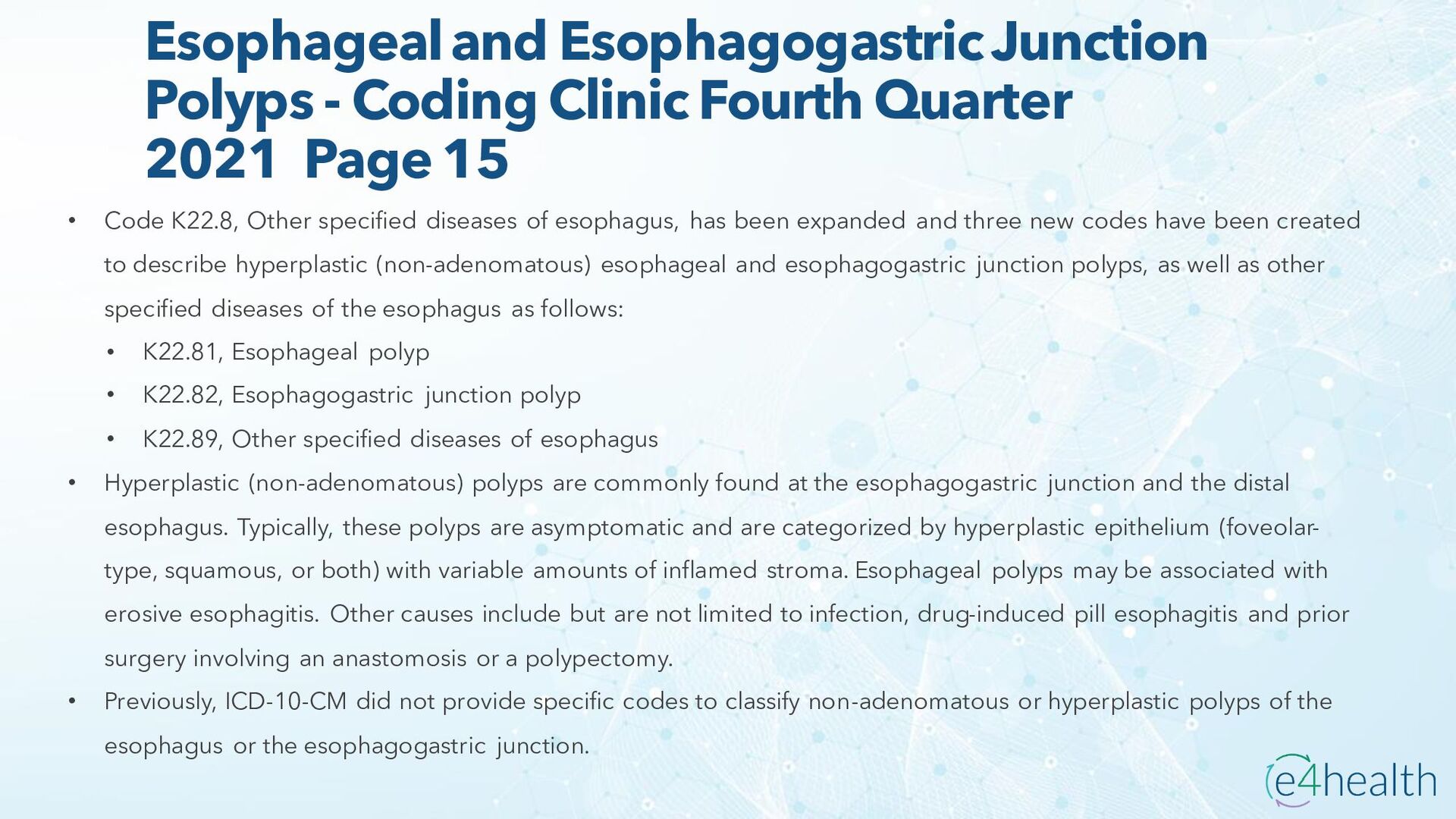
  75. Esophageal and Esophagogastric Junction Polyps - Coding Clinic Fourth Quarter

    2021 Page 15 • Code K22.8, Other specified diseases of esophagus, has been expanded and three new codes have been created to describe hyperplastic (non-adenomatous) esophageal and esophagogastric junction polyps, as well as other specified diseases of the esophagus as follows: • K22.81, Esophageal polyp • K22.82, Esophagogastric junction polyp • K22.89, Other specified diseases of esophagus • Hyperplastic (non-adenomatous) polyps are commonly found at the esophagogastric junction and the distal esophagus. Typically, these polyps are asymptomatic and are categorized by hyperplastic epithelium (foveolar- type, squamous, or both) with variable amounts of inflamed stroma. Esophageal polyps may be associated with erosive esophagitis. Other causes include but are not limited to infection, drug-induced pill esophagitis and prior surgery involving an anastomosis or a polypectomy. • Previously, ICD-10-CM did not provide specific codes to classify non-adenomatous or hyperplastic polyps of the esophagus or the esophagogastric junction.
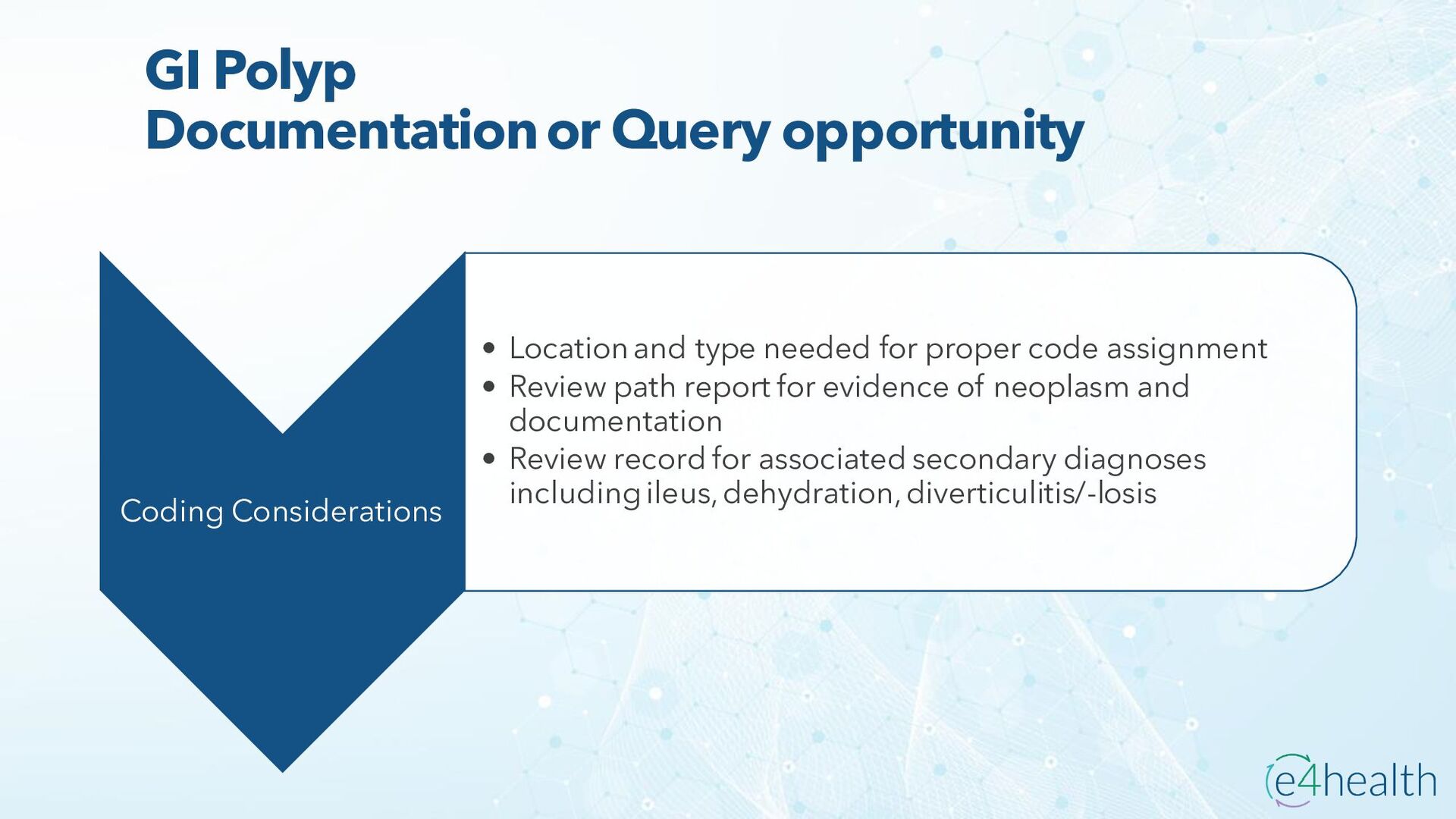
  76. GI Polyp Documentation or Query opportunity Coding Considerations • Location

    and type needed for proper code assignment • Review path report for evidence of neoplasm and documentation • Review record for associated secondary diagnoses including ileus, dehydration, diverticulitis/-losis
  77. Digestive Malignancy Concepts • Neoplasm: An abnormal growth, usually rapid,

    of new cells that may invade and damage adjacent organs or structures; differentiated by behavior. • Benign: Normally localized without spread. • In situ: “In its original place”; abnormal cells found only in the area they originally formed without spread. • Malignant: Cancerous growths, often resistant to Rx and may metastasize or spread. • Primary: Initial site of origin. • Secondary: Metastatic site of initial origin. • Uncertain behavior: Unpredictable behavior on pathology, currently benign but may become malignant. • Tumor: “see also” neoplasm • Mass: R code specified by location
  78. Digestive Malignancy Concepts • Sequencing guidelines of malignancies • Condition

    being treated should be PDx • Except anemia of malignancy, malignant pleural effusion or ascites, and bowel obstruction- malignancy will be PDx • Carcinoid tumors • Benign or malignant-may need query to specify • Carcinoid syndrome present? Provides CC as secondary Dx • Benign neoplasms of digestive system assigned to MS-DRG 393-395 Other Digestive System Diagnoses with MCC, CC, or without CC or MCC • Review path and imaging for primary site (uncertain behavior) and any metastatic sites, malignant ascites or pleural effusion • Query if not documented by attending • Review record for associated conditions
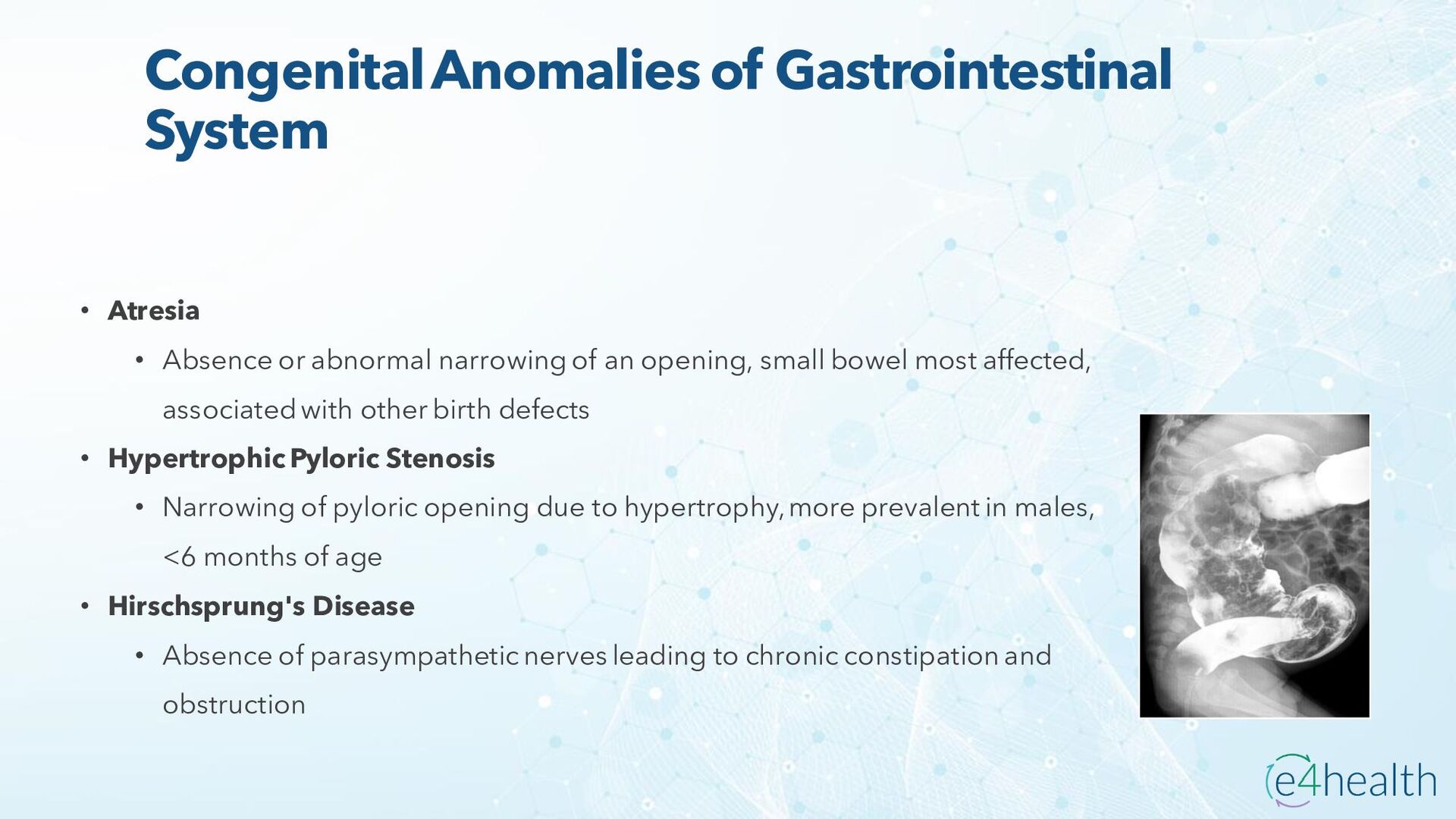
  79. Congenital Anomalies of Gastrointestinal System • Atresia • Absence or

    abnormal narrowing of an opening, small bowel most affected, associated with other birth defects • Hypertrophic Pyloric Stenosis • Narrowing of pyloric opening due to hypertrophy, more prevalent in males, <6 months of age • Hirschsprung's Disease • Absence of parasympathetic nerves leading to chronic constipation and obstruction
  80. Congenital Anomalies of Gastrointestinal System • Imperforate jejunum, anus, rectum

    • Deformity of rectal area: High and low types • Unknown etiology, 1 out of every 5,000 infants • Situs inversus • Mirror image of normal human chest and abdominal anatomy: Dextrocardia and levocardia • More common in males, 1 out of every 10,000, inherited autosomal recessive genetic mutation • Other Congenital GI anomalies • Absence, duplication, malposition, malrotation, obstruction, stricture or transposition of gastrointestinal tract (except esophageal or higher), gastroschisis, hiatal hernia
  81. Congenital Anomalies of Gastrointestinal system - Documentation or Query opportunity

    • Review for associated conditions such as: • Acute kidney injury/ATN • Dehydration • Hypotension/shock • Other congenital defects from other body systems • Pressure ulcers from IVs, oxygen delivery tubes/masks in long length stay • Hospital acquired conditions such as sepsis, infections due to lines, VAP
  82. Hernias • Classified by type and site, with combination codes

    used to indicate any associated gangrene or obstruction • Hernia with both gangrene and obstruction is classified to hernia with gangrene • Hernias described as incarcerated or strangulated are classified as obstructed • An incisional hernia is classified as a ventral hernia • With inguinal and femoral hernias, the codes further subdivide the hernia as unilateral or bilateral and to indicate whether it is specified as recurrent (that is, whether it had been repaired during a previous surgery) • Common types of GI hernias: • Diaphragmatic • Femoral • Hiatal – Includes esophageal hiatal • Inguinal • Incisional/Ventral • Umbilical
  83. Strangulated Ventral Hernia with Necrotic Bowel and Perforation - Coding

    Clinic Second Quarter 2020 Page 22 • Question: What are the appropriate diagnosis codes for a strangulated recurrent incisional hernia with necrotic bowel and perforation? Would multiple codes be assigned to capture the patient's conditions? • Answer: Assign codes K43.1, Incisional hernia with gangrene, and K63.1, Perforation of intestine (nontraumatic), for the recurrent incisional hernia with necrotic small bowel and perforation, to fully capture the patient's condition.
  84. Bilateral Inguinal & Femoral Hernia with Unilateral Complication - Coding

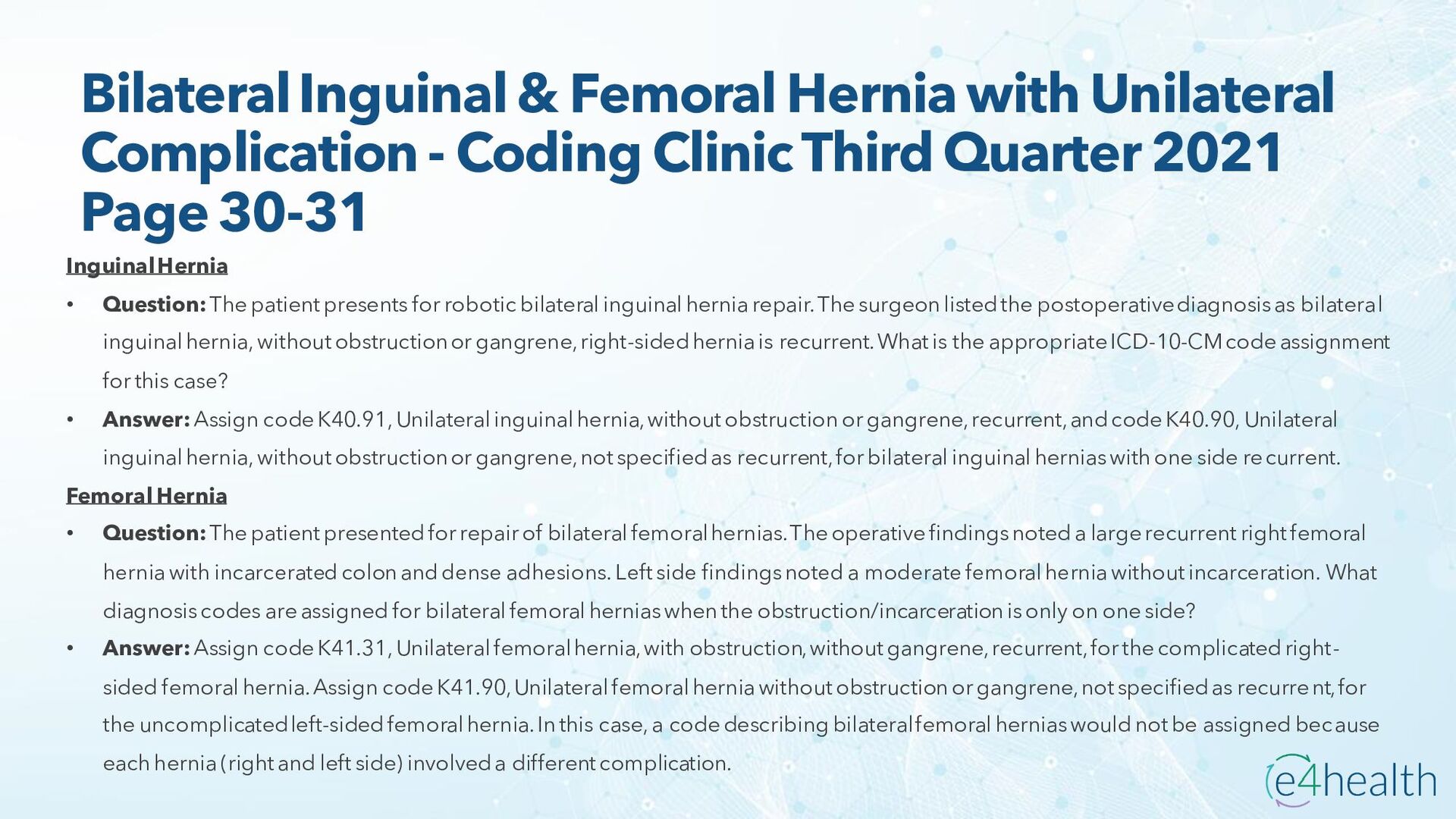
    Clinic Third Quarter 2021 Page 30-31 Inguinal Hernia • Question: The patient presents for robotic bilateral inguinal hernia repair. The surgeon listed the postoperative diagnosis as bilateral inguinal hernia, without obstruction or gangrene, right-sided hernia is recurrent. What is the appropriate ICD-10-CM code assignment for this case? • Answer: Assign code K40.91, Unilateral inguinal hernia, without obstruction or gangrene, recurrent, and code K40.90, Unilateral inguinal hernia, without obstruction or gangrene, not specified as recurrent, for bilateral inguinal hernias with one side recurrent. Femoral Hernia • Question: The patient presented for repair of bilateral femoral hernias. The operative findings noted a large recurrent right femoral hernia with incarcerated colon and dense adhesions. Left side findings noted a moderate femoral hernia without incarceration. What diagnosis codes are assigned for bilateral femoral hernias when the obstruction/incarceration is only on one side? • Answer: Assign code K41.31, Unilateral femoral hernia, with obstruction, without gangrene, recurrent, for the complicated right- sided femoral hernia. Assign code K41.90, Unilateral femoral hernia without obstruction or gangrene, not specified as recurrent, for the uncomplicated left-sided femoral hernia. In this case, a code describing bilateral femoral hernias would not be assigned because each hernia (right and left side) involved a different complication.
  85. Hiatal Hernia with Esophagogastric Junction Outflow Obstruction - Coding Clinic

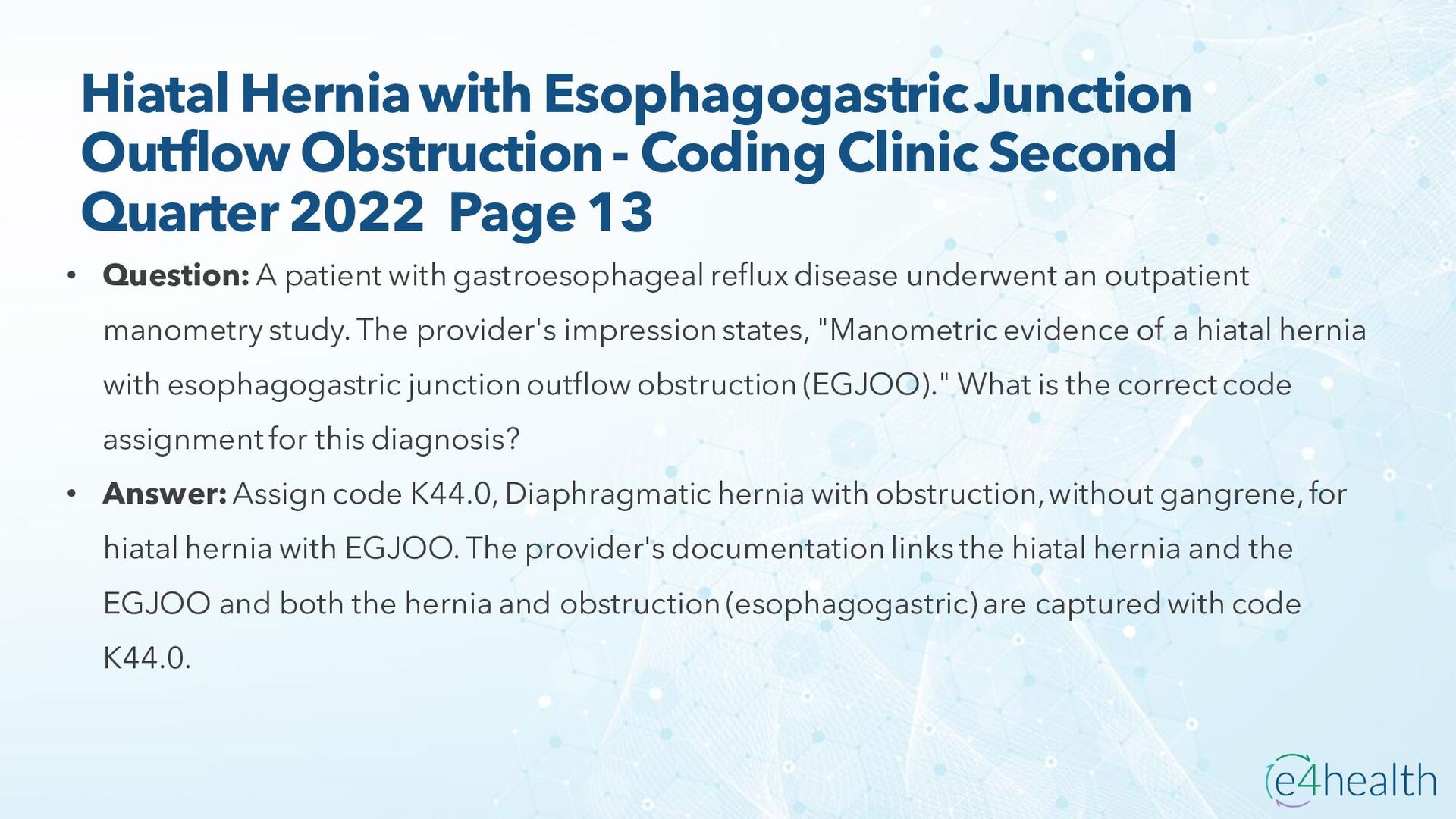
    Second Quarter 2022 Page 13 • Question: A patient with gastroesophageal reflux disease underwent an outpatient manometry study. The provider's impression states, "Manometric evidence of a hiatal hernia with esophagogastric junction outflow obstruction (EGJOO)." What is the correct code assignment for this diagnosis? • Answer: Assign code K44.0, Diaphragmatic hernia with obstruction, without gangrene, for hiatal hernia with EGJOO. The provider's documentation links the hiatal hernia and the EGJOO and both the hernia and obstruction (esophagogastric) are captured with code K44.0.
  86. Hernias - Documentation or Query opportunity Coding Considerations • Review

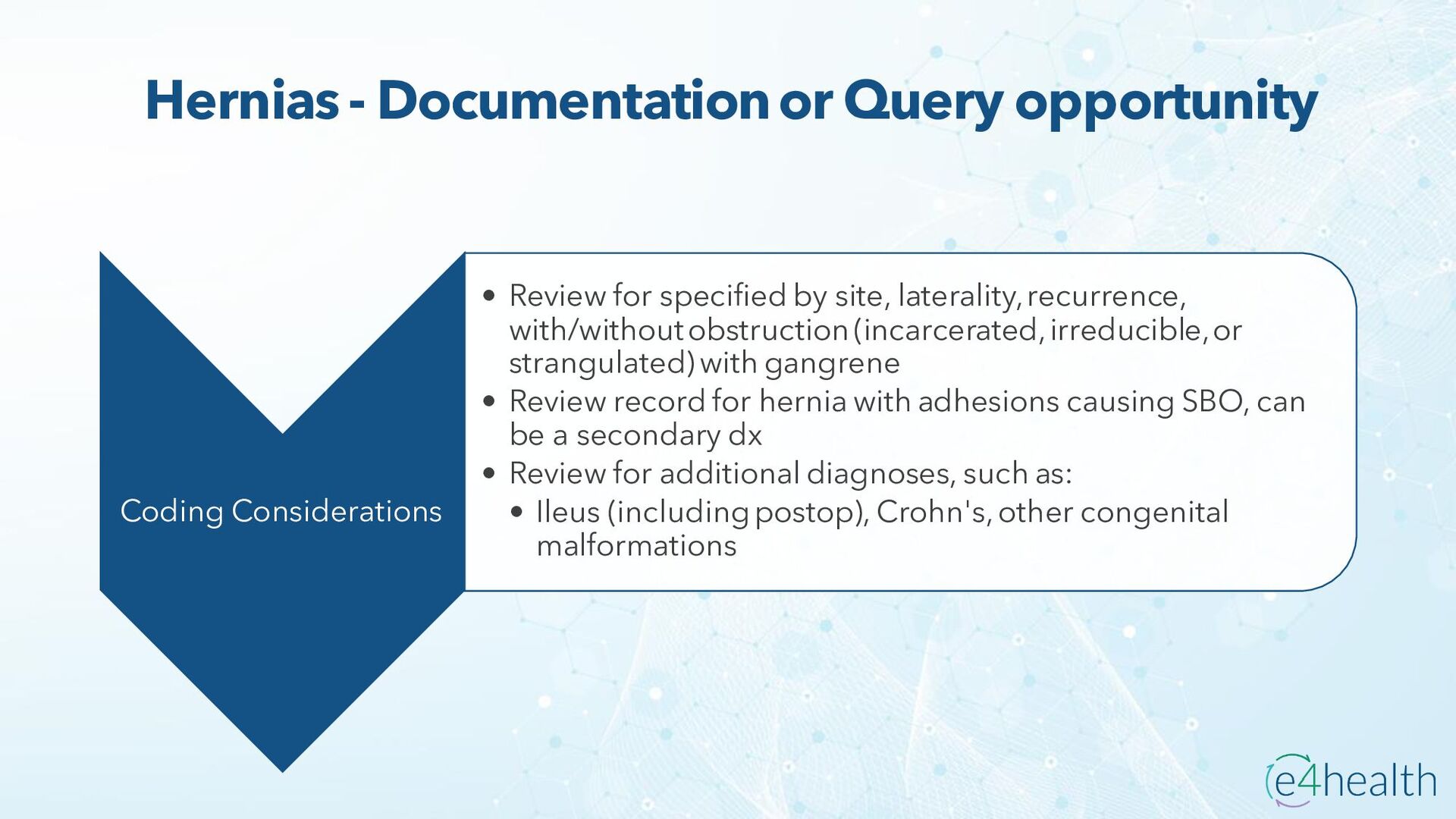
    for specified by site, laterality, recurrence, with/without obstruction (incarcerated, irreducible, or strangulated) with gangrene • Review record for hernia with adhesions causing SBO, can be a secondary dx • Review for additional diagnoses, such as: • Ileus (including postop), Crohn's, other congenital malformations
  87. Other Digestive Disorders • Includes abdominal pain (all types/locations), diarrhea,

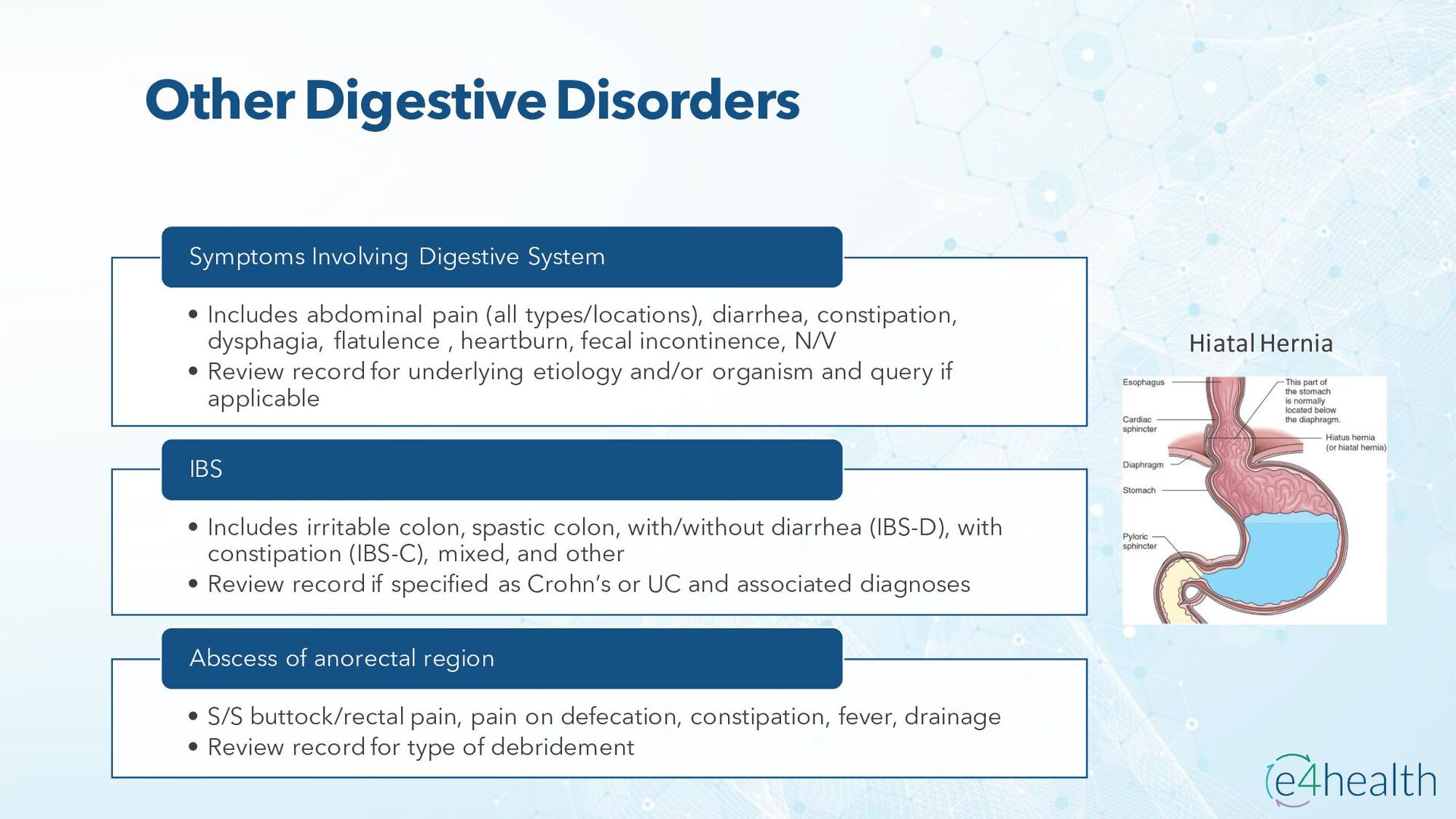
    constipation, dysphagia, flatulence , heartburn, fecal incontinence, N/V • Review record for underlying etiology and/or organism and query if applicable Symptoms Involving Digestive System • Includes irritable colon, spastic colon, with/without diarrhea (IBS-D), with constipation (IBS-C), mixed, and other • Review record if specified as Crohn’s or UC and associated diagnoses IBS • S/S buttock/rectal pain, pain on defecation, constipation, fever, drainage • Review record for type of debridement Abscess of anorectal region Hiatal Hernia
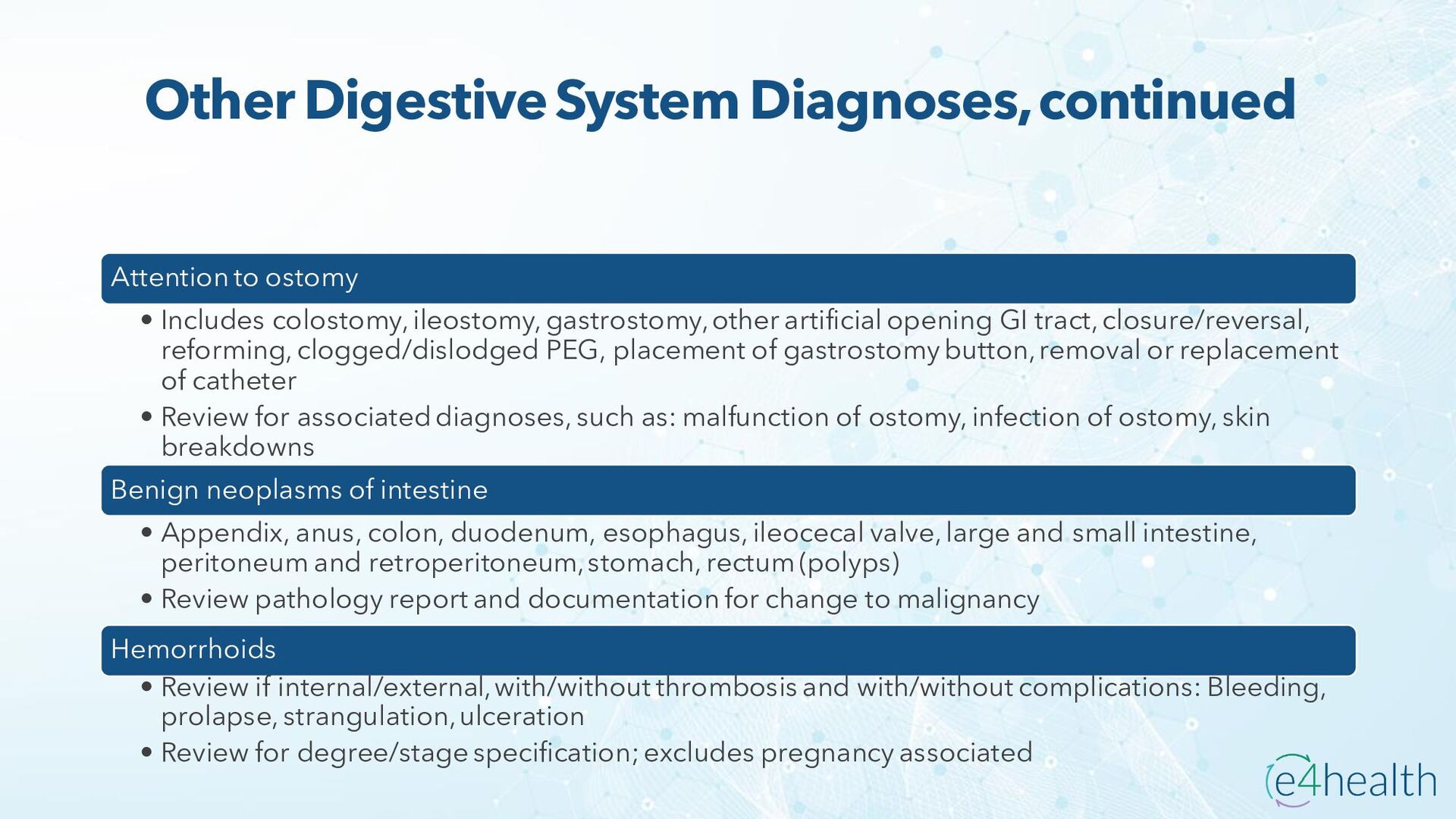
  88. Other Digestive System Diagnoses, continued Attention to ostomy • Includes

    colostomy, ileostomy, gastrostomy, other artificial opening GI tract, closure/reversal, reforming, clogged/dislodged PEG, placement of gastrostomy button, removal or replacement of catheter • Review for associated diagnoses, such as: malfunction of ostomy, infection of ostomy, skin breakdowns Benign neoplasms of intestine • Appendix, anus, colon, duodenum, esophagus, ileocecal valve, large and small intestine, peritoneum and retroperitoneum, stomach, rectum (polyps) • Review pathology report and documentation for change to malignancy Hemorrhoids • Review if internal/external, with/without thrombosis and with/without complications: Bleeding, prolapse, strangulation, ulceration • Review for degree/stage specification; excludes pregnancy associated
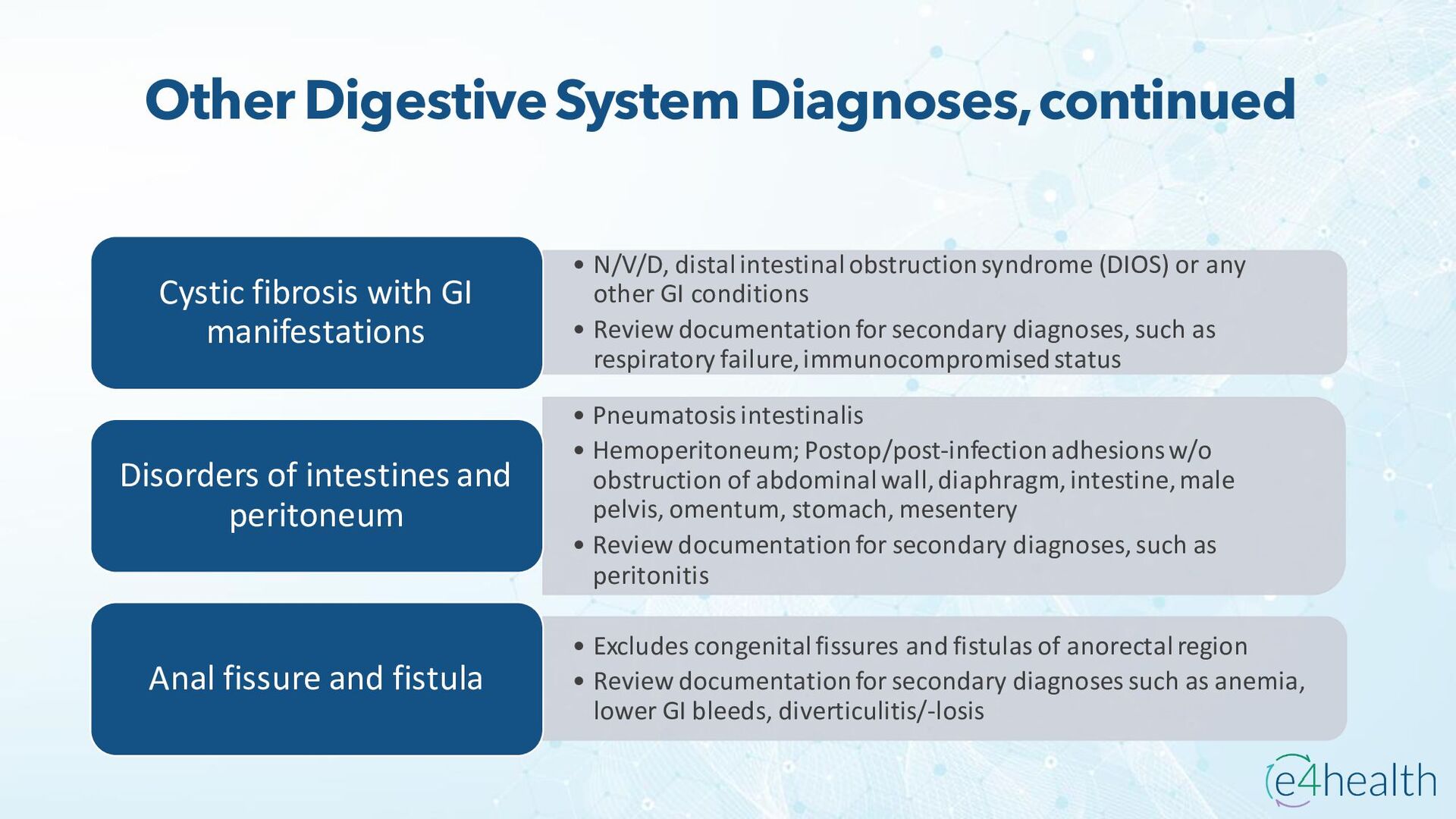
  89. Other Digestive System Diagnoses, continued • N/V/D, distal intestinal obstruction

    syndrome (DIOS) or any other GI conditions • Review documentation for secondary diagnoses, such as respiratory failure, immunocompromised status Cystic fibrosis with GI manifestations • Pneumatosis intestinalis • Hemoperitoneum; Postop/post-infection adhesions w/o obstruction of abdominal wall, diaphragm, intestine, male pelvis, omentum, stomach, mesentery • Review documentation for secondary diagnoses, such as peritonitis Disorders of intestines and peritoneum • Excludes congenital fissures and fistulas of anorectal region • Review documentation for secondary diagnoses such as anemia, lower GI bleeds, diverticulitis/-losis Anal fissure and fistula
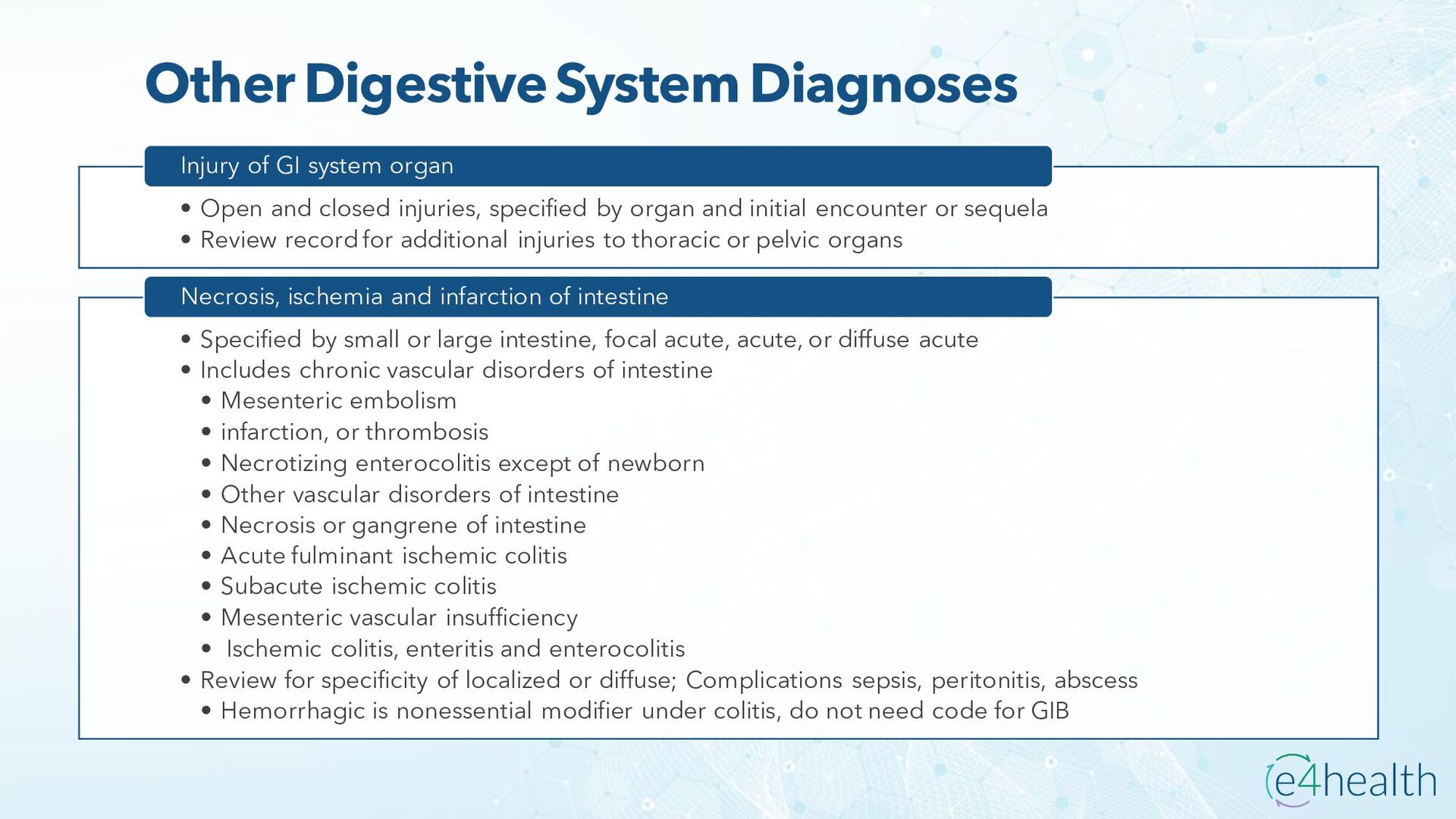
  90. Other Digestive System Diagnoses • Open and closed injuries, specified

    by organ and initial encounter or sequela • Review record for additional injuries to thoracic or pelvic organs Injury of GI system organ • Specified by small or large intestine, focal acute, acute, or diffuse acute • Includes chronic vascular disorders of intestine • Mesenteric embolism • infarction, or thrombosis • Necrotizing enterocolitis except of newborn • Other vascular disorders of intestine • Necrosis or gangrene of intestine • Acute fulminant ischemic colitis • Subacute ischemic colitis • Mesenteric vascular insufficiency • Ischemic colitis, enteritis and enterocolitis • Review for specificity of localized or diffuse; Complications sepsis, peritonitis, abscess • Hemorrhagic is nonessential modifier under colitis, do not need code for GIB Necrosis, ischemia and infarction of intestine
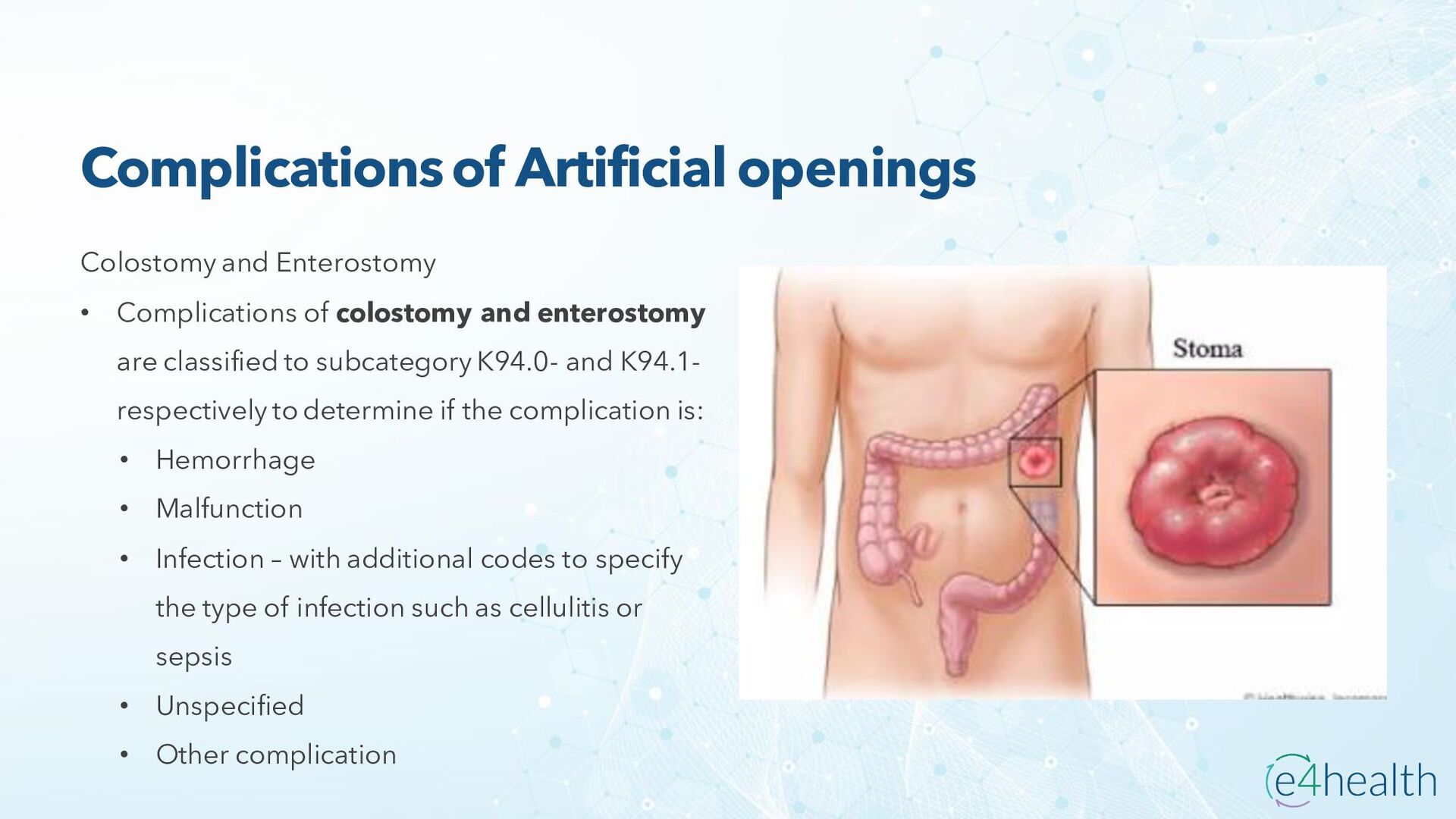
  91. Complications of Artificial openings Colostomy and Enterostomy • Complications of

    colostomy and enterostomy are classified to subcategory K94.0- and K94.1- respectively to determine if the complication is: • Hemorrhage • Malfunction • Infection – with additional codes to specify the type of infection such as cellulitis or sepsis • Unspecified • Other complication
  92. Complications of Artificial openings Gastrostomy and Esophagostomy • Complications of

    Gastrostomy and Esophagostomy are classified to subcategory K94.2- and K94.3- respectively to determine if the complication is: • Hemorrhage • Malfunction, such as a clogged tube • Infection – with additional codes to specify the type of infection such as cellulitis or sepsis • Unspecified • Other complication
  93. Clogged Gastrojejunostomy Tube - Coding Clinic First Quarter 2019 Page

    26 Question: A patient with a clogged gastrojejunostomy (GJ) tube is admitted to undergo gastrojejunostomy tube change. What is the appropriate ICD-10-CM diagnosis code assignment for the GJ tube change? Answer: Assign code K94.23, Mechanical complication of gastrostomy, for the clogged GJ tube. The complication is occurring in the stomach.
  94. Complications of Artificial openings - Documentation or Query opportunity •

    Review for associated conditions such as: • Hemorrhage at the site • Cellulitis • Sepsis • Dehydration • Malnutrition or malabsorption • Acute kidney injury/ATN
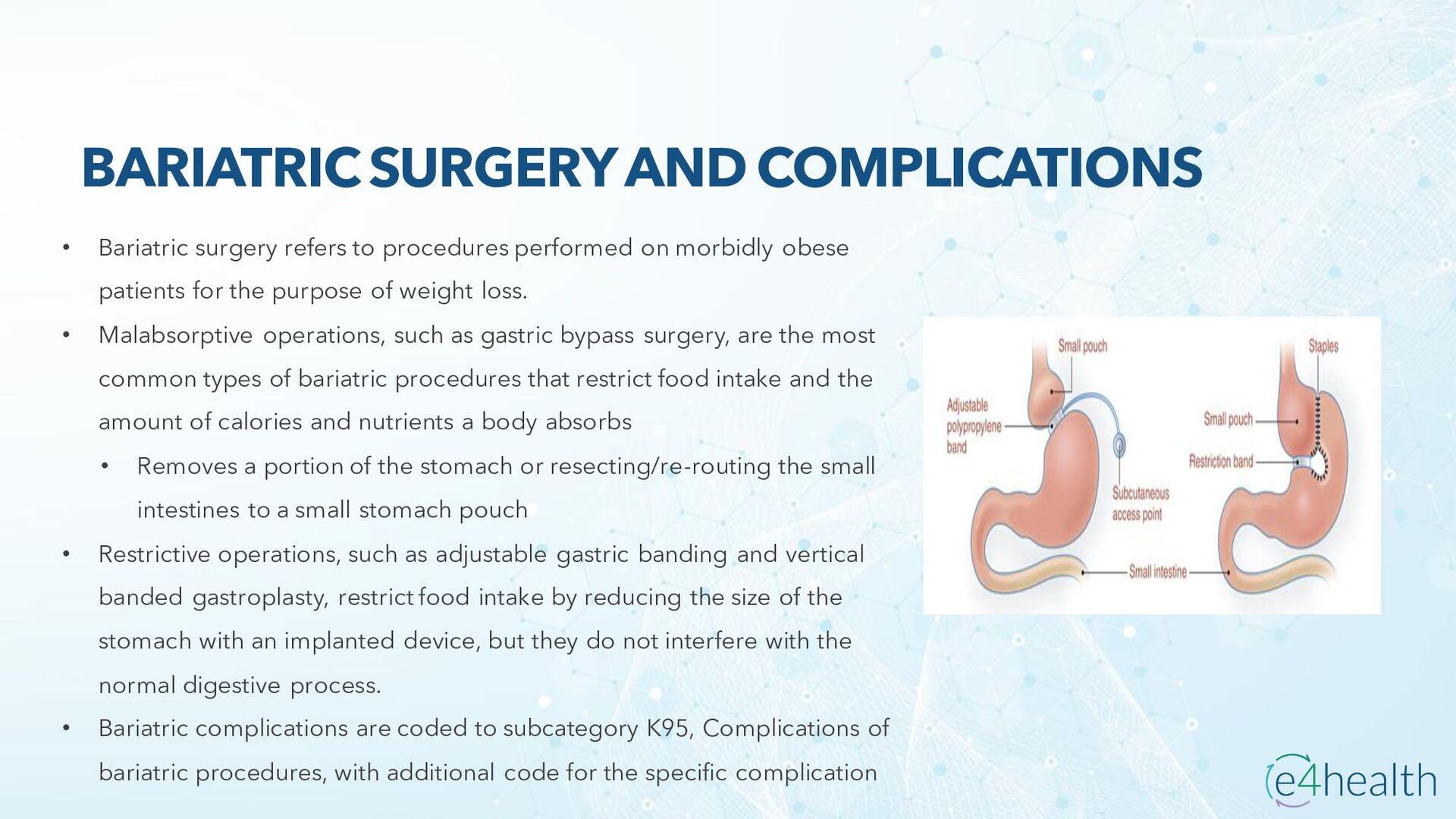
  95. BARIATRIC SURGERY AND COMPLICATIONS • Bariatric surgery refers to procedures

    performed on morbidly obese patients for the purpose of weight loss. • Malabsorptive operations, such as gastric bypass surgery, are the most common types of bariatric procedures that restrict food intake and the amount of calories and nutrients a body absorbs • Removes a portion of the stomach or resecting/re-routing the small intestines to a small stomach pouch • Restrictive operations, such as adjustable gastric banding and vertical banded gastroplasty, restrict food intake by reducing the size of the stomach with an implanted device, but they do not interfere with the normal digestive process. • Bariatric complications are coded to subcategory K95, Complications of bariatric procedures, with additional code for the specific complication
  96. BARIATRIC SURGERY AND COMPLICATIONS Documentation or Query opportunity Coding Considerations

    • Review documentation for the presence of: • Hemorrhage, cellulitis of abdominal wall • Review for additional diagnoses, such as: • Sepsis, malnutrition, depression, respiratory failure, dumping syndrome
  97. Other GI procedure complications Documentation or Query opportunity Coding Considerations

    • Intraoperative and postprocedural complications code to those body systems • Review documentation for the manifestation link to procedure, such as: • Complication of intestinal anastomosis and bypass, • Accidental puncture during procedure • Hepatic failure or HRS due to procedure, • Ileus due to procedure • Postop respiratory failure • Acute blood loss anemia • Shock • Review for additional diagnoses, such as: • Sepsis, malnutrition, depression, respiratory failure, AKI, adhesions
  98. Persistent Postoperative Enterocutaneous Fistula Coding Clinic Third Quarter 2017 Page

    4 • Question: The patient has a history of bowel perforation and obstruction and is status post complex abdominal surgery due to intestinal anastomotic leak. She was transferred to the long-term care hospital (LTCH) for ongoing care of her abdominal wound. The patient presented with an enterocutaneous fistula with a large open abdominal wound and surgical wound dehiscence. Should the fistula be coded as a persistent postoperative fistula or according to the site of the fistula? • Answer: Assign codes T81.83X-, Persistent postoperative fistula, and K63.2, Fistula of intestine, for the enterocutaneous postsurgical fistula. Both codes are needed to show the postoperative complication and the specific site of the fistula. Assign also code T81.32X-, Disruption of internal operation (surgical) wound, not elsewhere classified, for the wound dehiscence. The assignment of the 7th character "A" depends on whether active treatment is still being provided. • The postoperative fistula is considered "persistent," because it is a continuing problem requiring care. "Postoperative fistula" can be referenced as follows: • Complication(s) • surgical procedure • fistula (persistent postoperative) T81.83
  99. References • Anal fissure. Retrieved from https://www.mayoclinic.org/diseases-conditions/anal-fissure/symptoms-causes/syc-20351424 on 11/23/22. •

    Anal fistula. Last reviewed 02/14/2019. Retrieved from https://my.clevelandclinic.org/health/diseases/14466-anal-fistula on 11/23/22 • Angiodysplasia StatPearls [Internet]. Maryam Aghighi; Mehran Taherian; Ashish Sharma. Retrieved from https://www.ncbi.nlm.nih.gov/books/NBK549777/ 11/11/22 • Anorectal Abscess. Retrieved from https://www.hopkinsmedicine.org/health/conditions-and-diseases/anorectal-abscess on 11/18/22 • Appendicitis. Retrieved from https://www.hopkinsmedicine.org/health/conditions-and-diseases/appendicitis 11/10/2022 • Bariatric Surgery Risks, Complications and Side Effects. Retrieved from https://www.upmc.com/Services/bariatrics/candidate/risks- and-complications on 11/23/22 • Birth Defects Surveillance Toolkit. November 19, 2020. Retrieved from https://www.cdc.gov/ncbddd/birthdefects/surveillancemanual/chapters/chapter-1/chapter1-4.html on 11/18/22 • Diverticulosis and Diverticulitis of the Colon. Retrieved from https://my.clevelandclinic.org/health/diseases/10352-diverticular- disease on 11/11/22 • Dumping Syndrome. Retrieved from https://www.mayoclinic.org/diseases-conditions/dumping-syndrome/symptoms-causes/syc- 20371915 11/17/22
  100. References • Esophageal Diverticulum. Retrieved from https://my.clevelandclinic.org/health/diseases/16977-esophageal-diverticulum on 11/11/22 •

    Esophageal Spasms. Retrieved from https://my.clevelandclinic.org/health/diseases/15575-esophageal-spasms on 11/11/22 • Gastroparesis. Retrieved from https://www.mayoclinic.org/diseases-conditions/gastroparesis/symptoms-causes/syc- 20355787 on 11/17/22 • Hemorrhoids. Retrieved from https://www.mayoclinic.org/diseases-conditions/hemorrhoids/symptoms-causes/syc-20360268 on 11/30/22 • Hernia. Last reviewed on 09/27/2018. Retrieved from https://my.clevelandclinic.org/health/diseases/15757-hernia on 11/30/2022 • Imperforate Anus. Retrieved from https://pediatricsurgery.wustl.edu/patient-care/congenital-and-pediatric- conditions/imperforate-anus/ on 11/22/22 • Intestinal Atresia and Stenosis. Reviewed By Katelyn Grube, MSN, APRN. Last Updated 10/2022. Retrieved 11/18/22 from https://www.cincinnatichildrens.org/health/i/obstructions • Intestinal ischemia. Retrieved from https://www.mayoclinic.org/diseases-conditions/intestinal-ischemia/symptoms- causes/syc-20373946 on 11/30/22 • Irritable Bowel Syndrome. Retrieved from https://www.mayoclinic.org/diseases-conditions/irritable-bowel- syndrome/symptoms-causes/syc-20360016 11/17/22
  101. References • AHA ICD-10-CM and ICD-10-PCS Coding Handbook • ICD-10-PCS:

    An Applied Approach 2023 • Cengage: 3-2-1 CODE IT! • https://www.mayoclinic.org/diseases-conditions/esophageal-varices/symptoms-causes/syc-20351538. Retrieved 10/20/22 12:50PM • Mayo Clinic retrieved 11/9/22 from https://www.mayoclinic.org/diseases-conditions/peritonitis/symptoms-causes/syc-20376247 and https://www.mayoclinic.org/diseases-conditions/peritonitis/diagnosis-treatment/drc-20376250 • Pneumatosis Intestinalis. Jaehyuck Im; Fatima Anjum. Last Update: June 19, 2022. Retrieved from https://www.ncbi.nlm.nih.gov/books/NBK564381/ on 11/23/22 • Situs Inversus. Last reviewed 07/18/2022. Retrieved from https://my.clevelandclinic.org/health/diseases/23486-situs-inversus on 11/22/22 • What Is Cystic Fibrosis? Last updated on March 24, 2022. Retrieved from https://www.nhlbi.nih.gov/health/cystic-fibrosis on 11/23/22