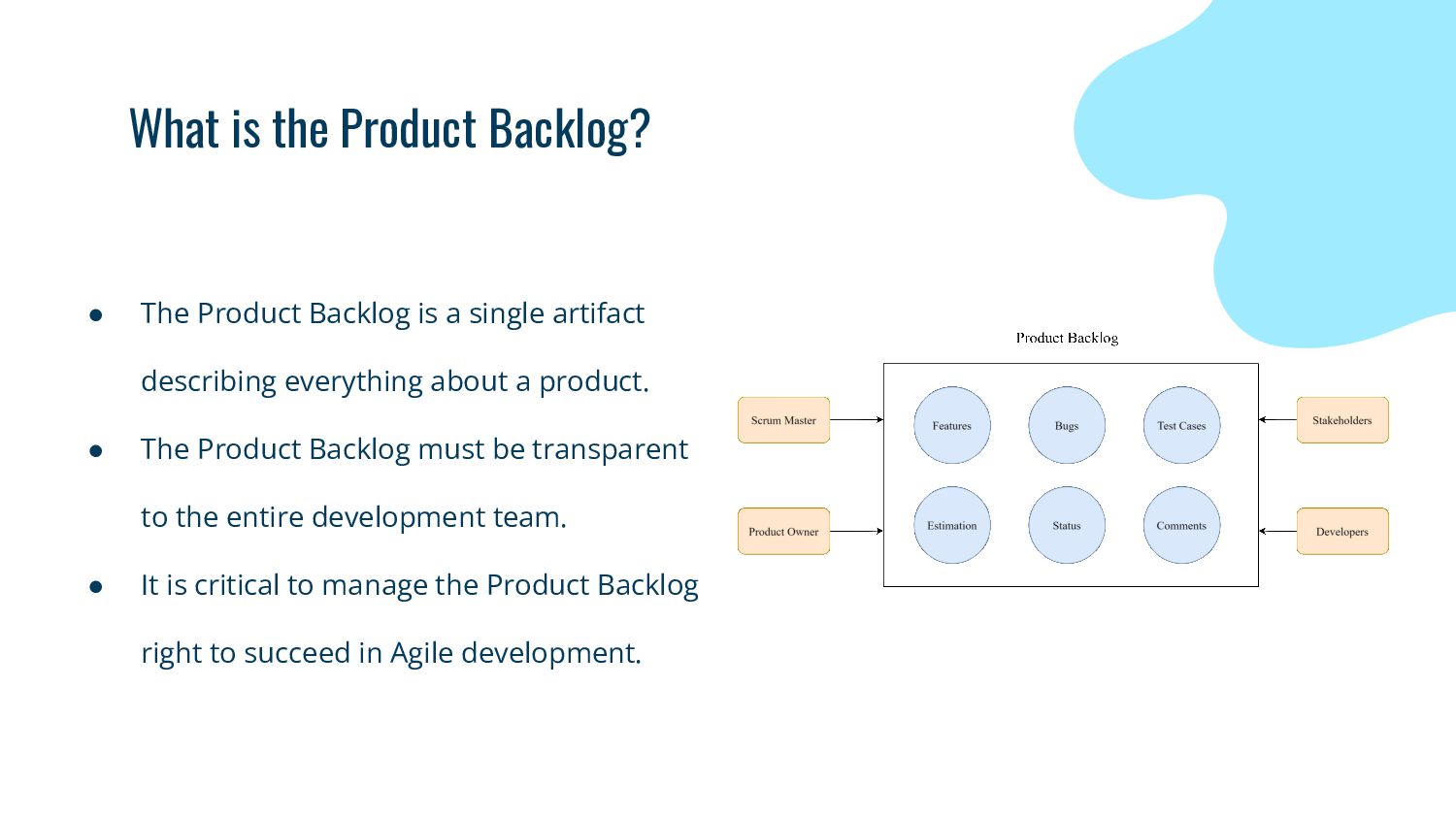
a single artifact describing everything about a product. • The Product Backlog must be transparent to the entire development team. • It is critical to manage the Product Backlog right to succeed in Agile development.
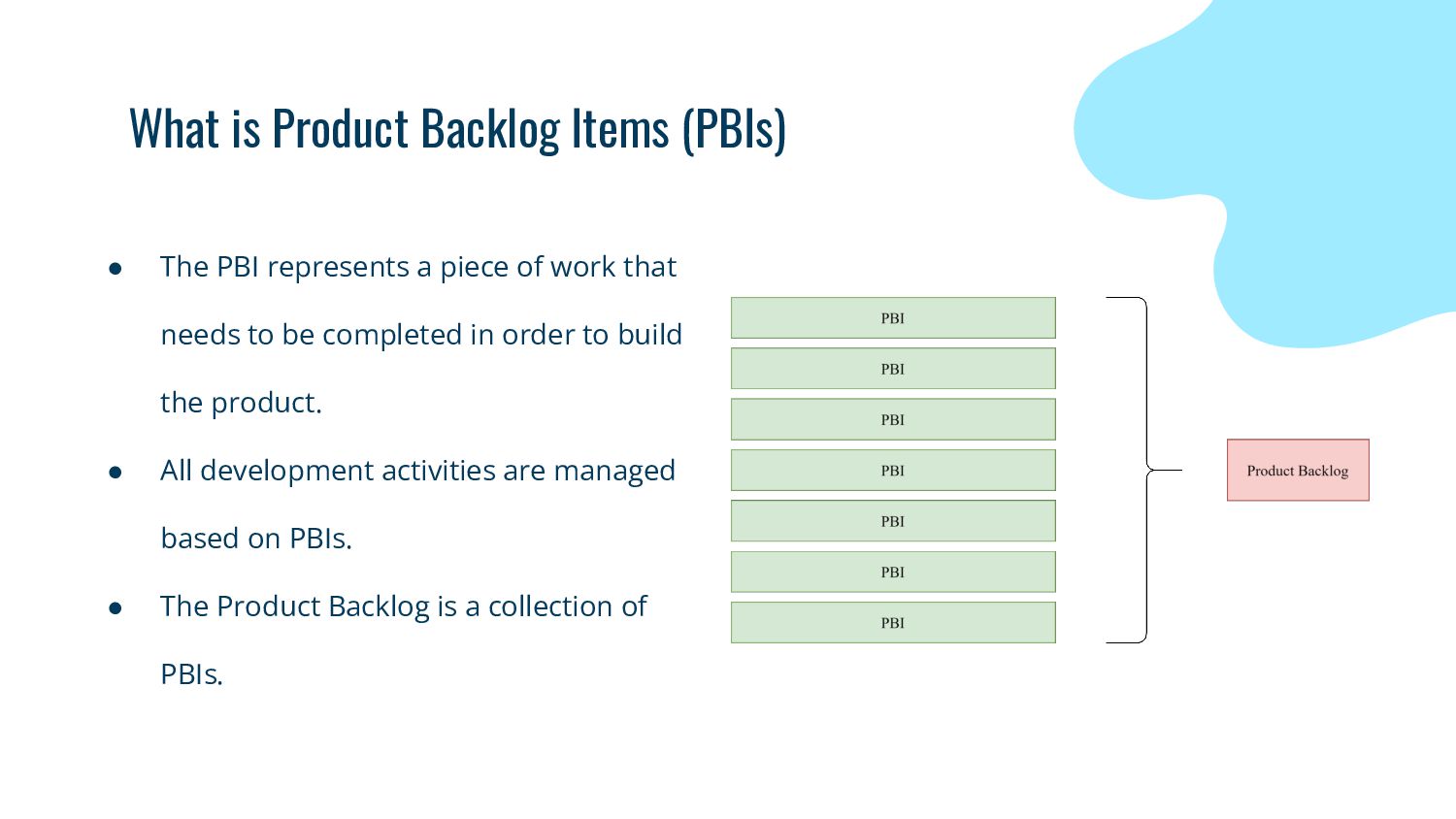
a piece of work that needs to be completed in order to build the product. • All development activities are managed based on PBIs. • The Product Backlog is a collection of PBIs.
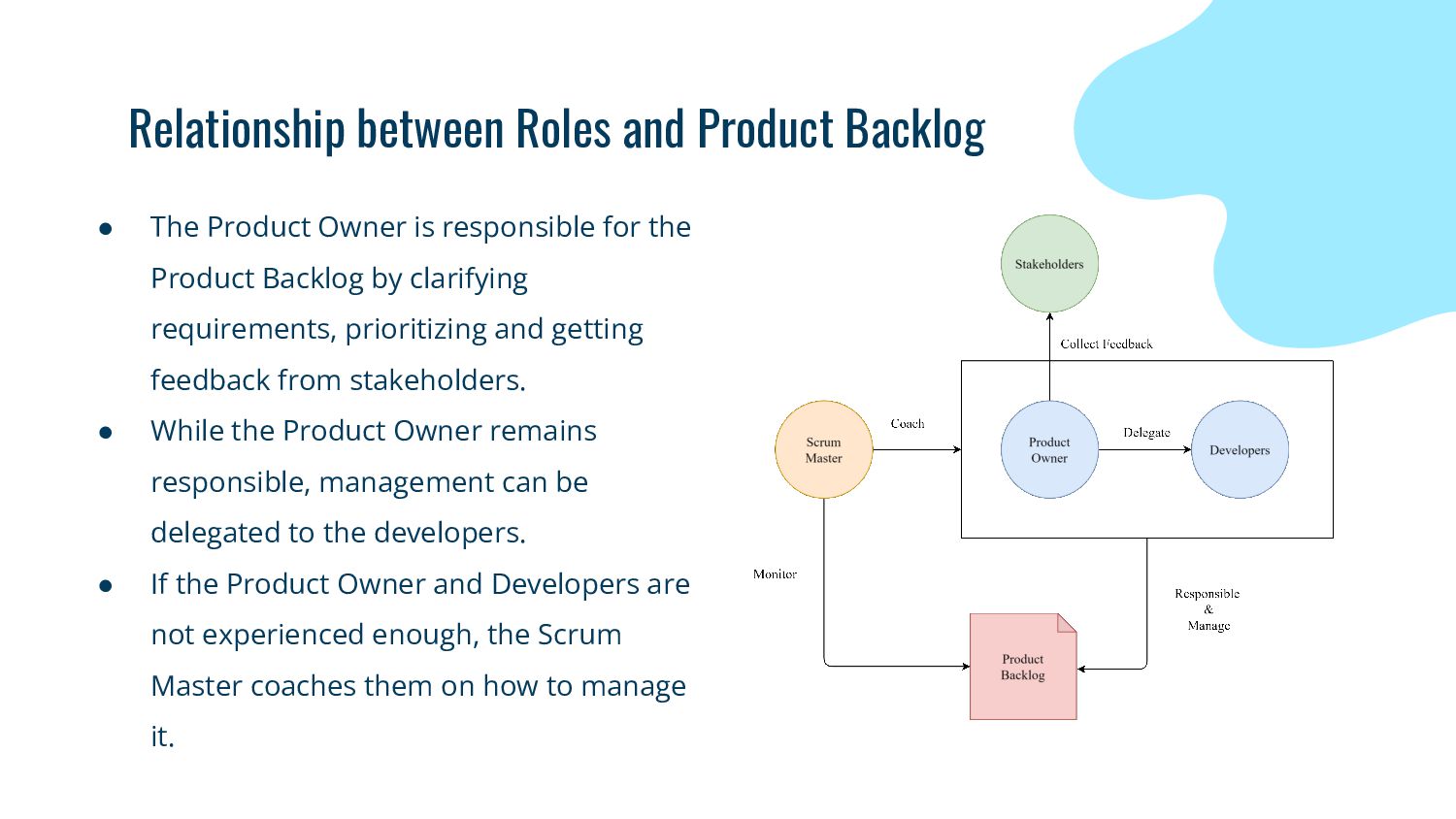
is responsible for the Product Backlog by clarifying requirements, prioritizing and getting feedback from stakeholders. • While the Product Owner remains responsible, management can be delegated to the developers. • If the Product Owner and Developers are not experienced enough, the Scrum Master coaches them on how to manage it.
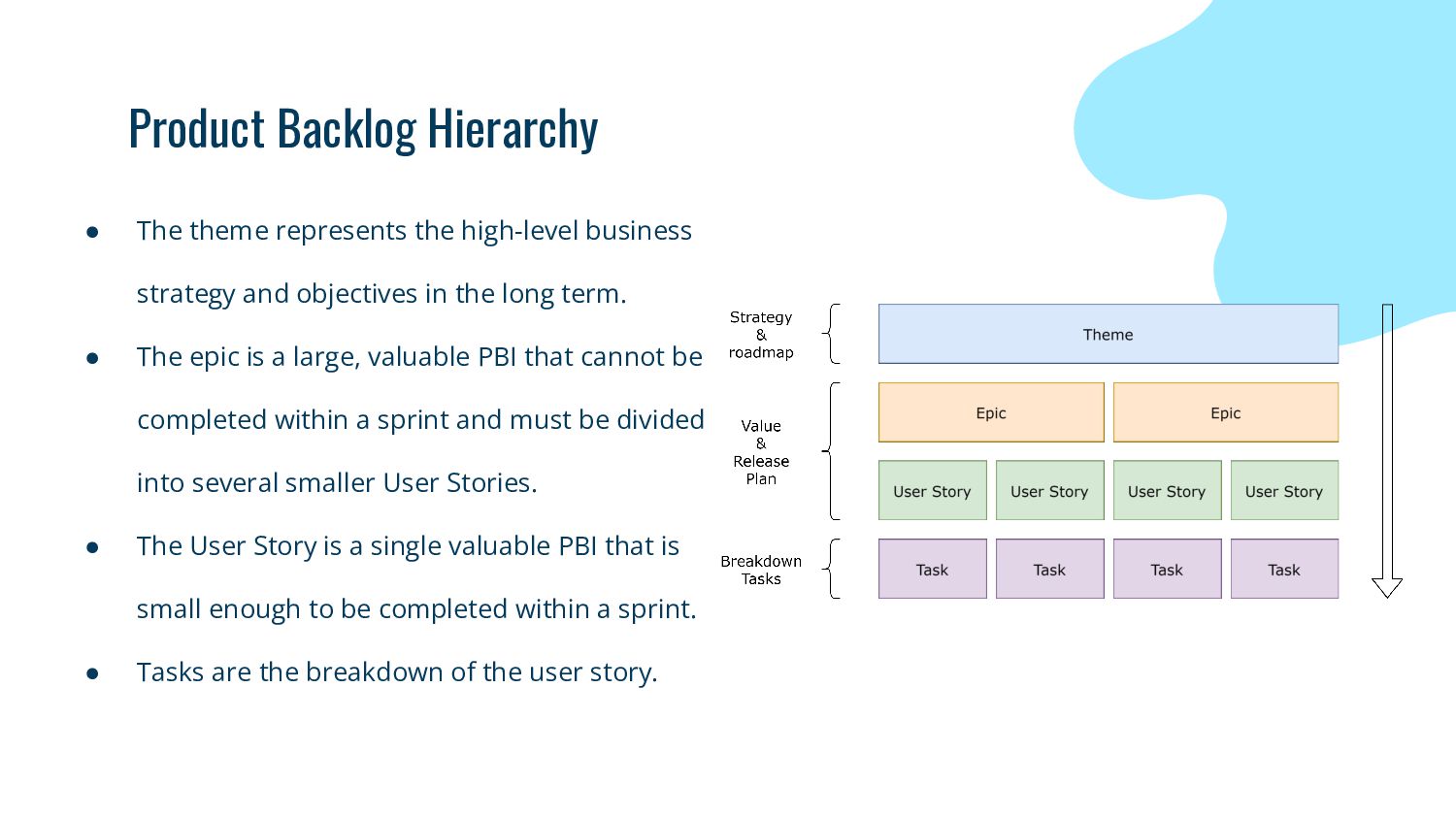
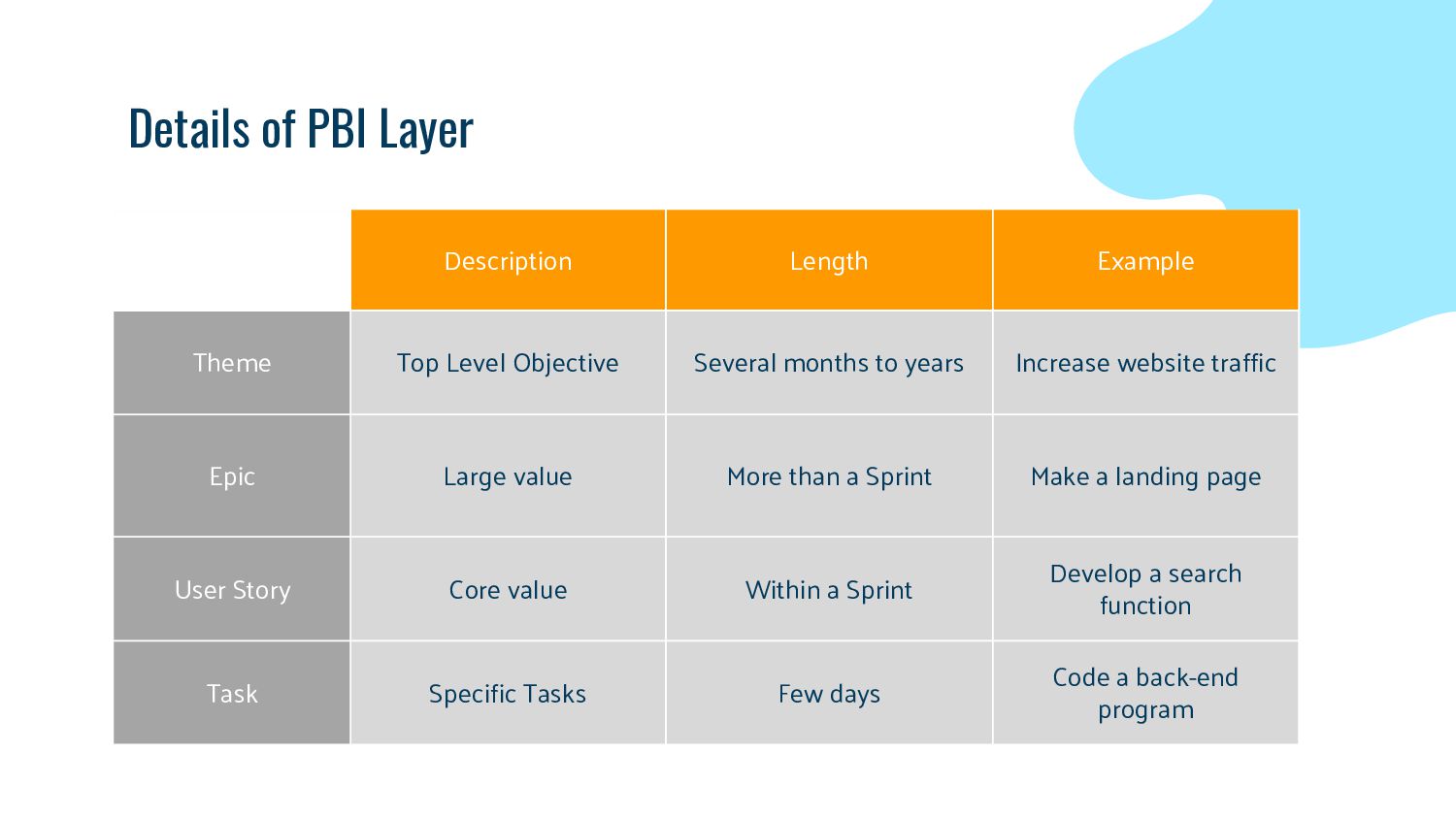
strategy and objectives in the long term. • The epic is a large, valuable PBI that cannot be completed within a sprint and must be divided into several smaller User Stories. • The User Story is a single valuable PBI that is small enough to be completed within a sprint. • Tasks are the breakdown of the user story.
Objective Several months to years Increase website traffic Epic Large value More than a Sprint Make a landing page User Story Core value Within a Sprint Develop a search function Task Specific Tasks Few days Code a back-end program
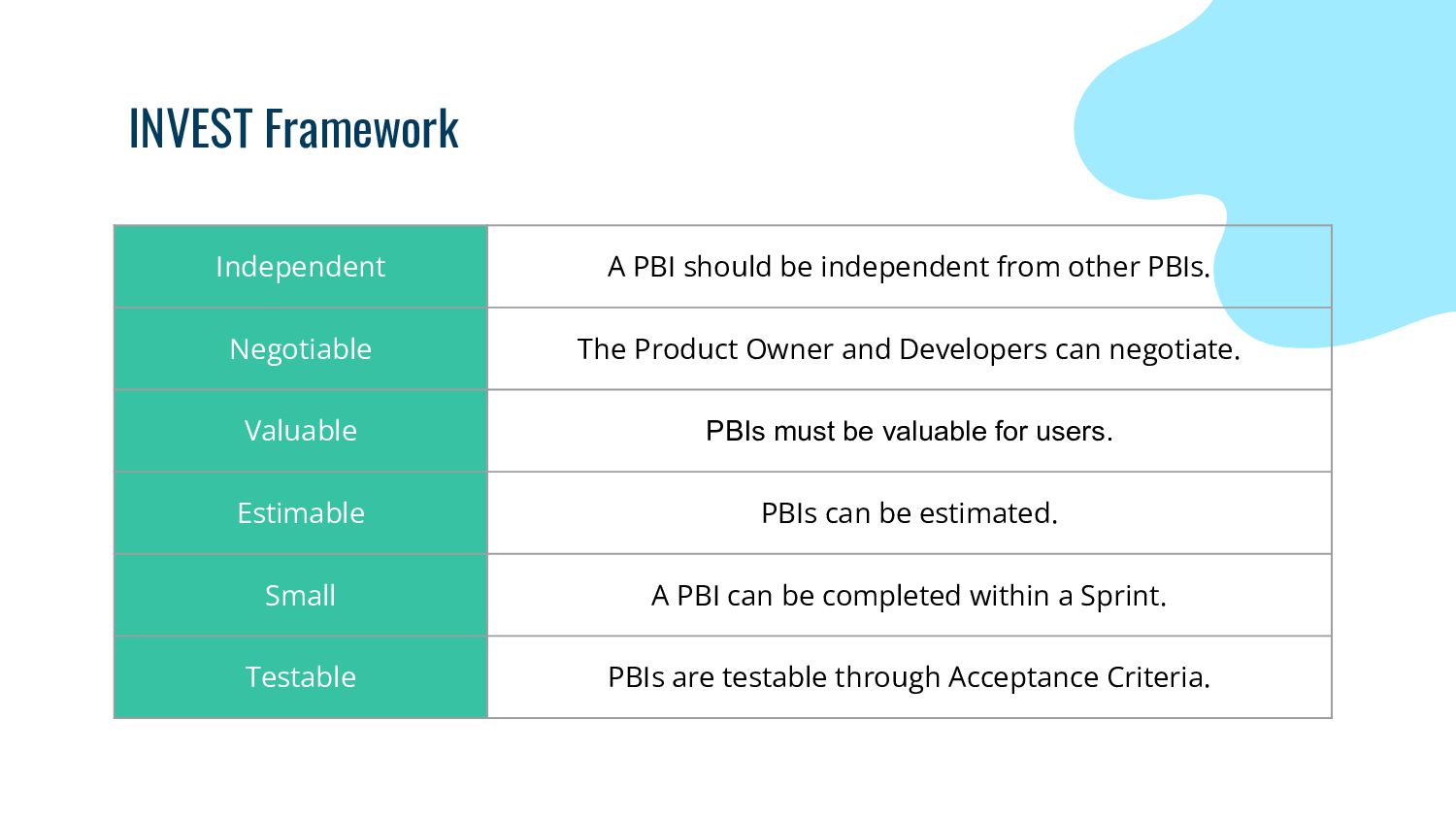
PBIs. Negotiable The Product Owner and Developers can negotiate. Valuable PBIs must be valuable for users. Estimable PBIs can be estimated. Small A PBI can be completed within a Sprint. Testable PBIs are testable through Acceptance Criteria.
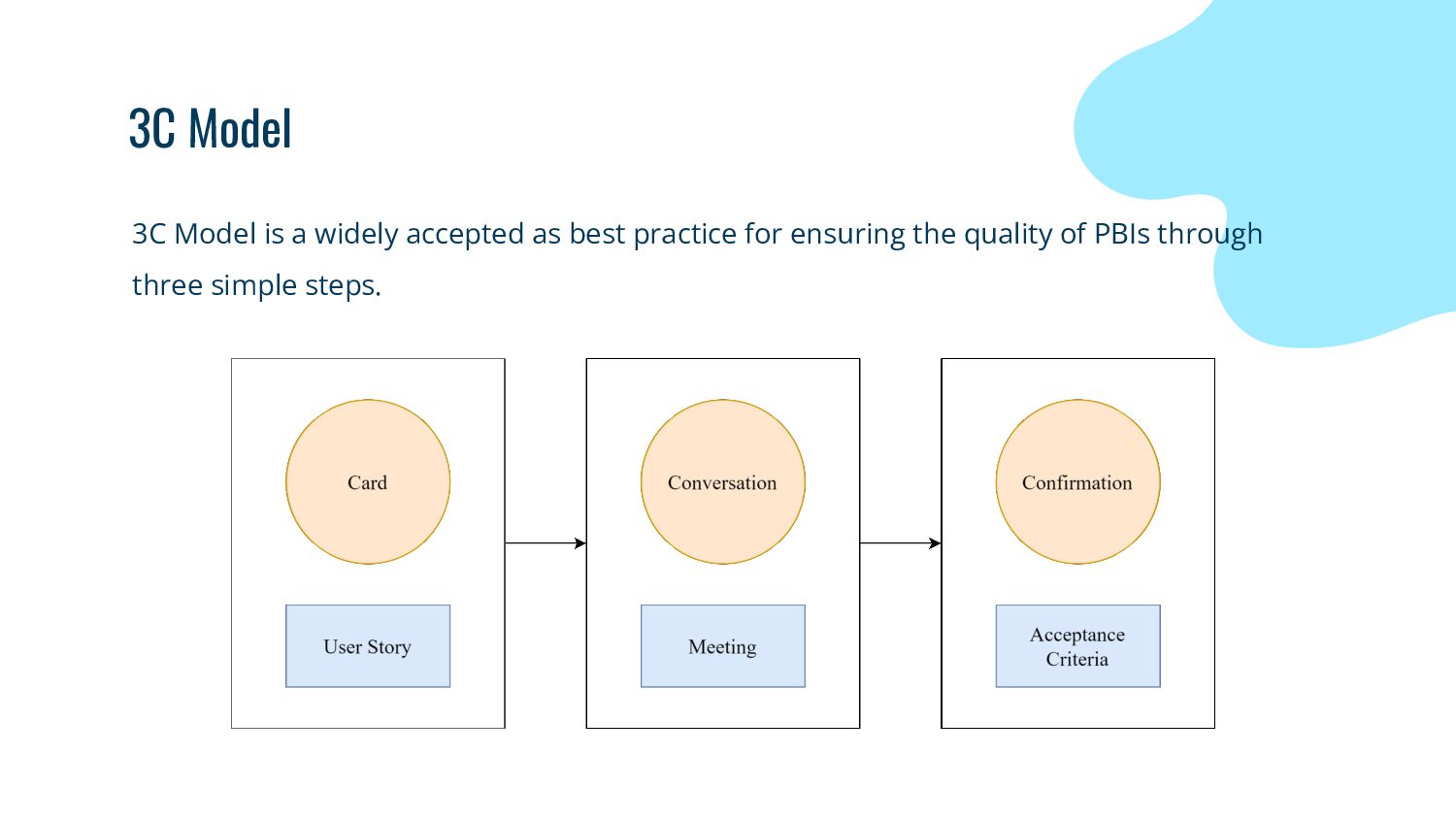
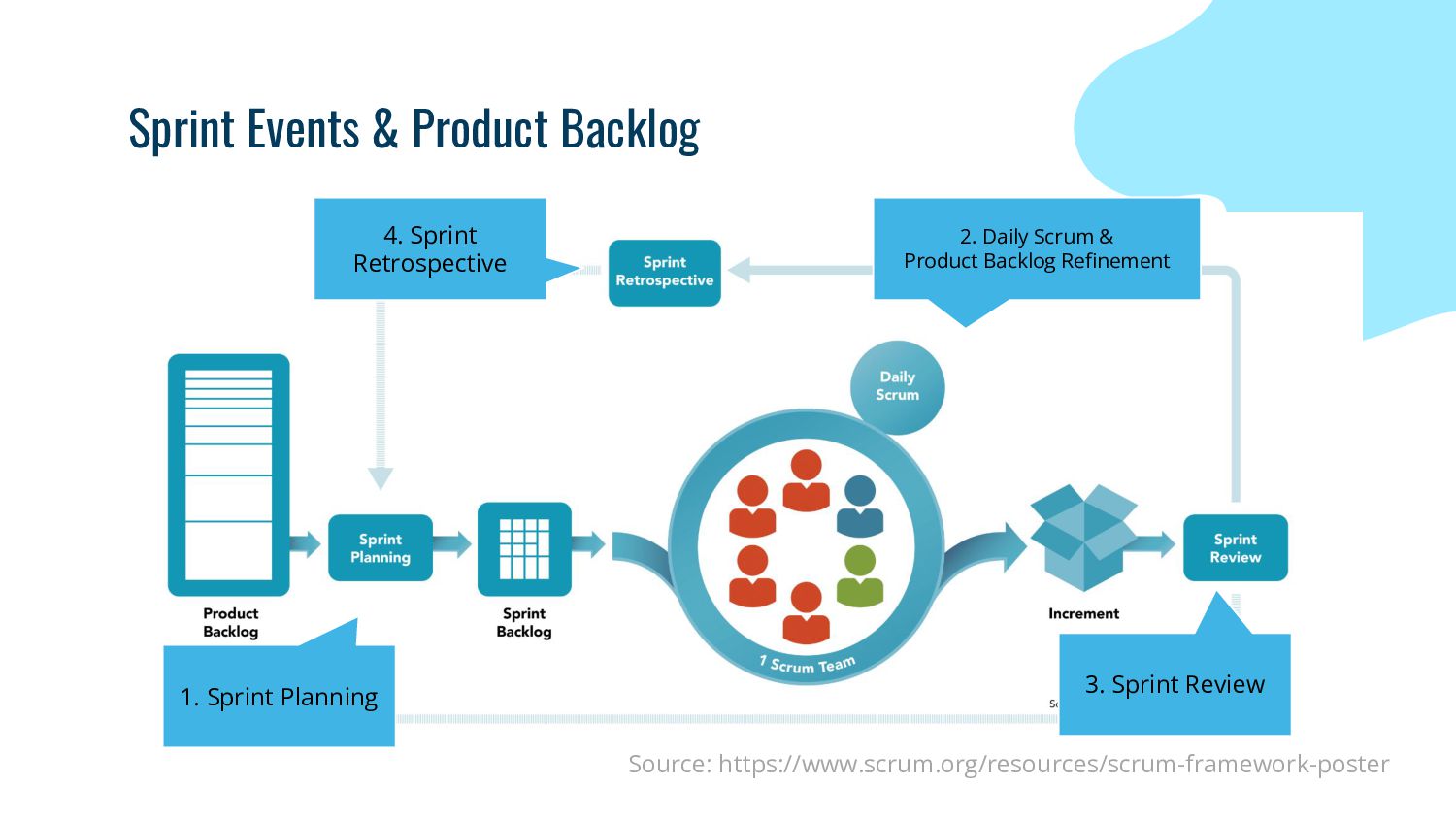
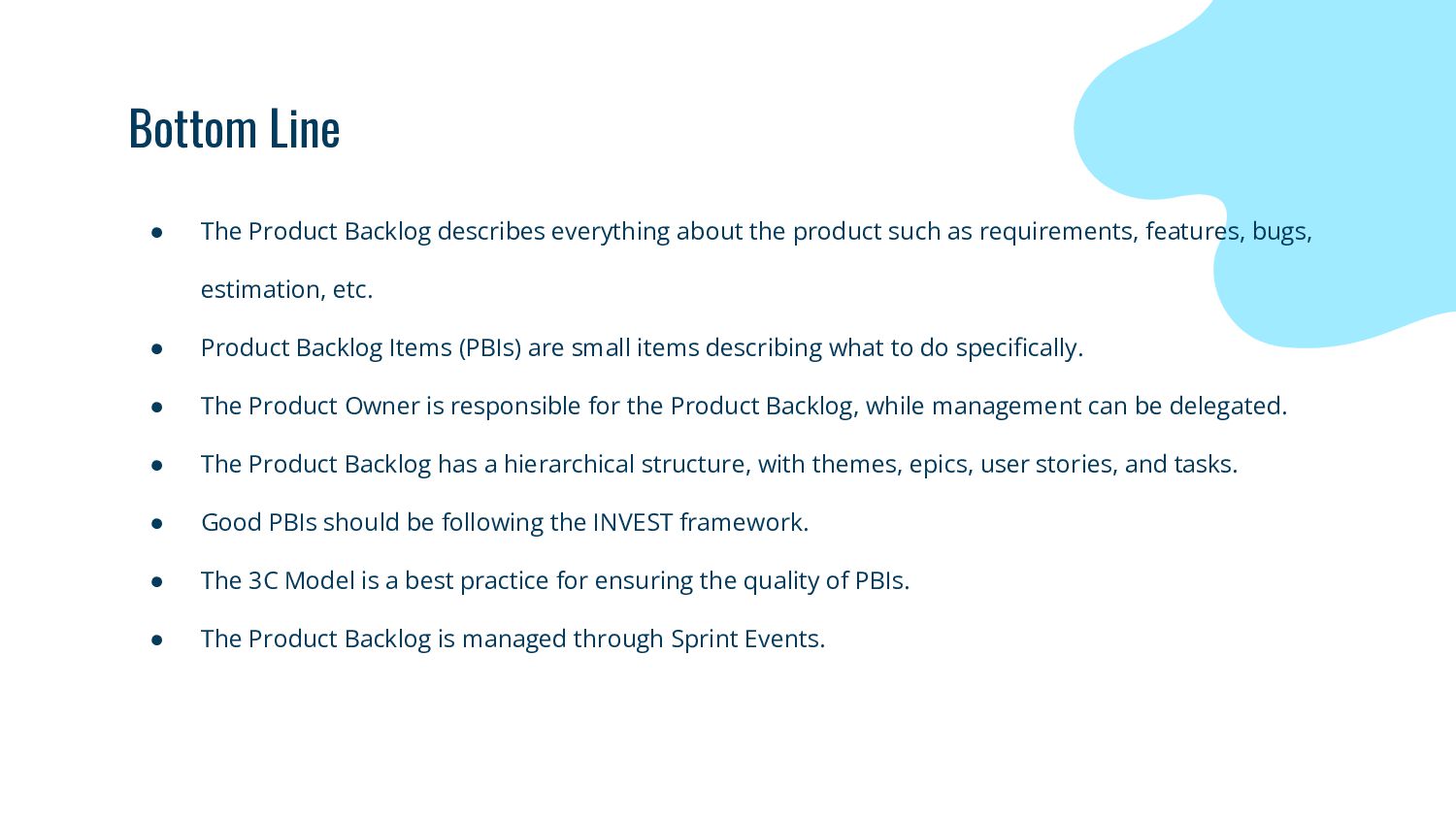
product such as requirements, features, bugs, estimation, etc. • Product Backlog Items (PBIs) are small items describing what to do specifically. • The Product Owner is responsible for the Product Backlog, while management can be delegated. • The Product Backlog has a hierarchical structure, with themes, epics, user stories, and tasks. • Good PBIs should be following the INVEST framework. • The 3C Model is a best practice for ensuring the quality of PBIs. • The Product Backlog is managed through Sprint Events.


 eiki
eiki
 nayuts
 ryotarai
 k_adachi_01
 taiki45
 soudai
 shisyu_gaku
 shichijoyuhi
 kohbis
 iwatatomoya
 diggymo
 sansantech
 kairim0
 danielanewman
 michaelherold
 mayunak
 jonyablonski
 techseoconnect
 jakevdp
 moore
moore
 tonyrice
 tammyeverts
 thoeni
 rkendrick25
 tanoku