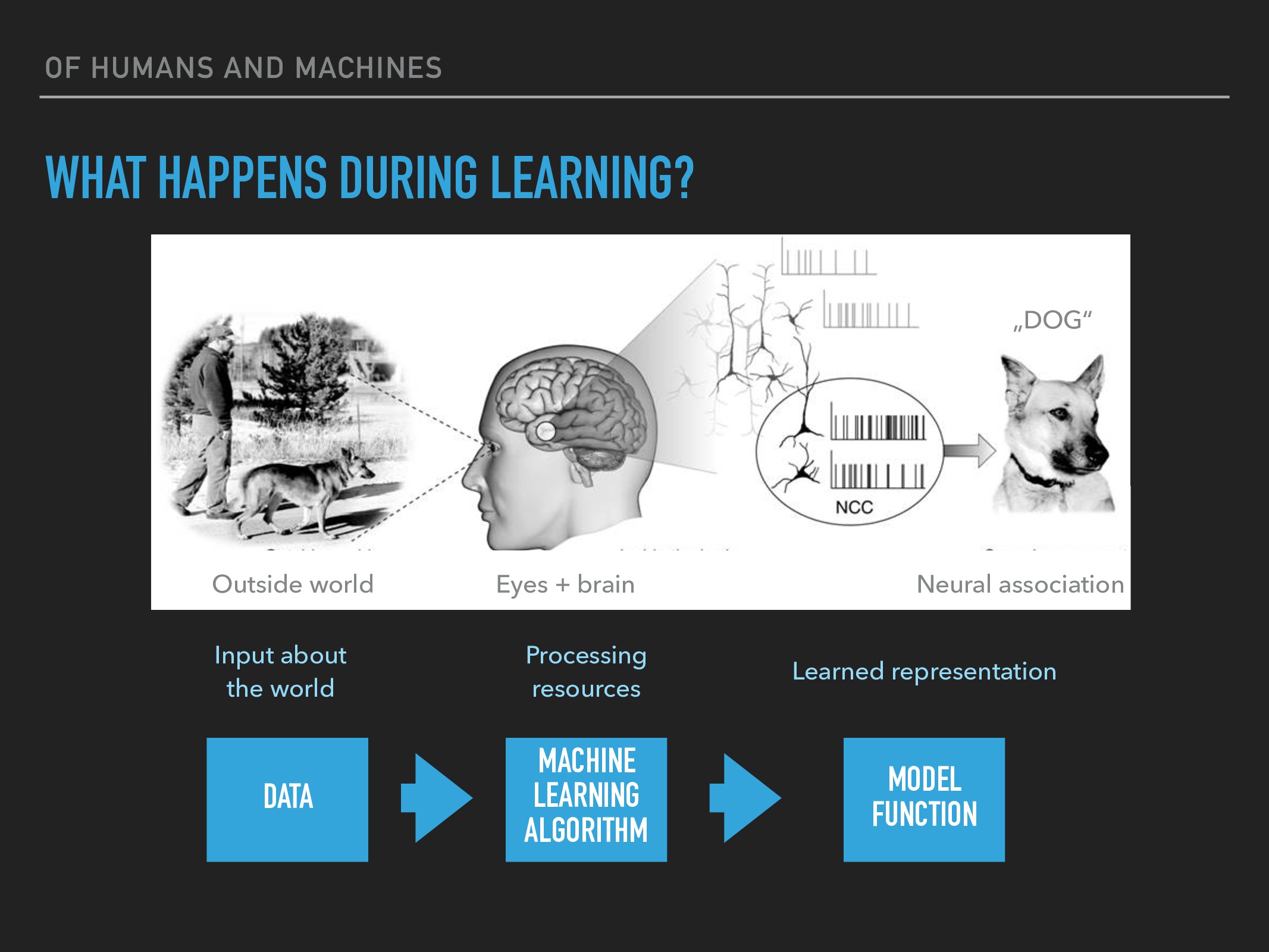
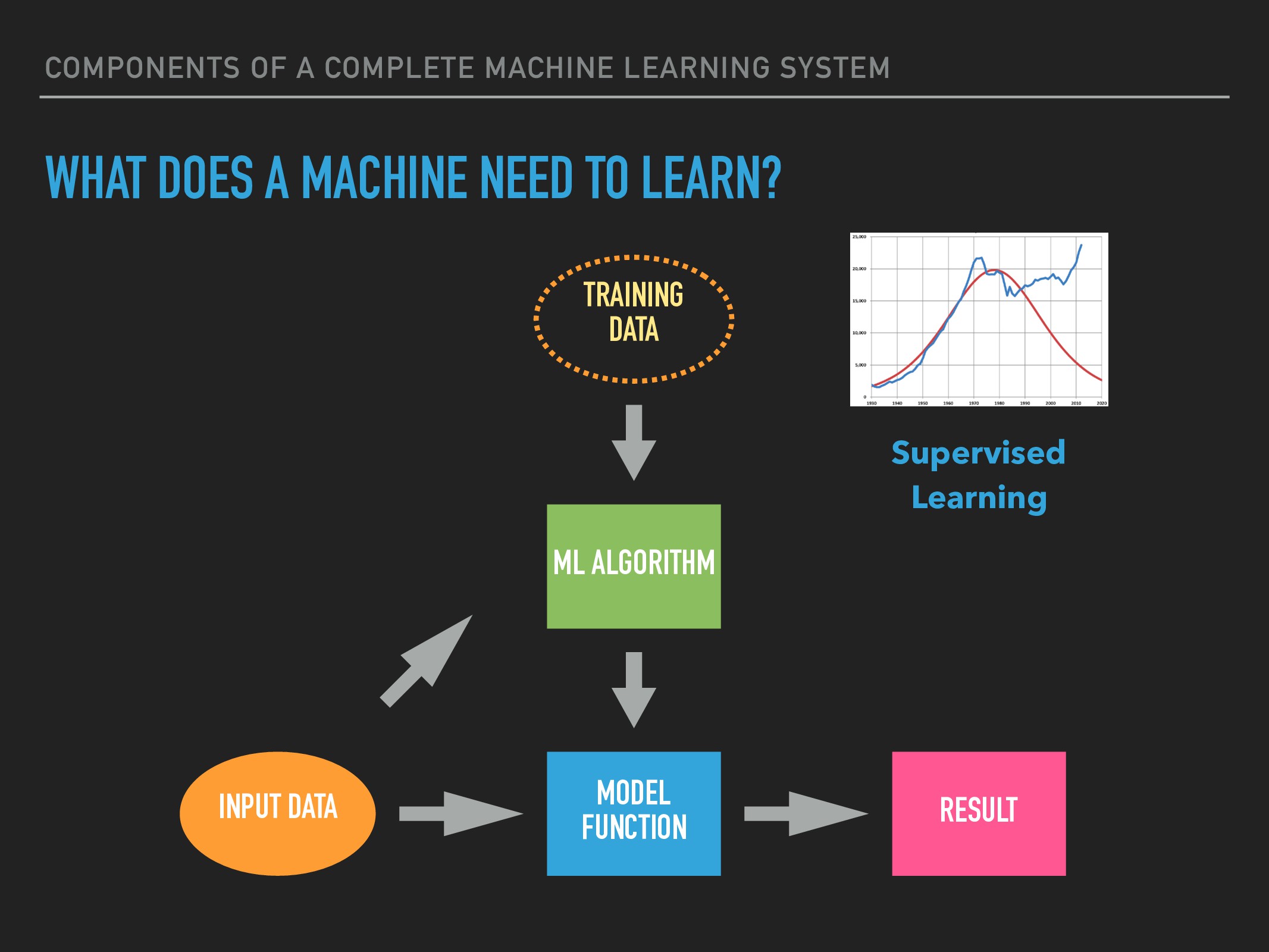
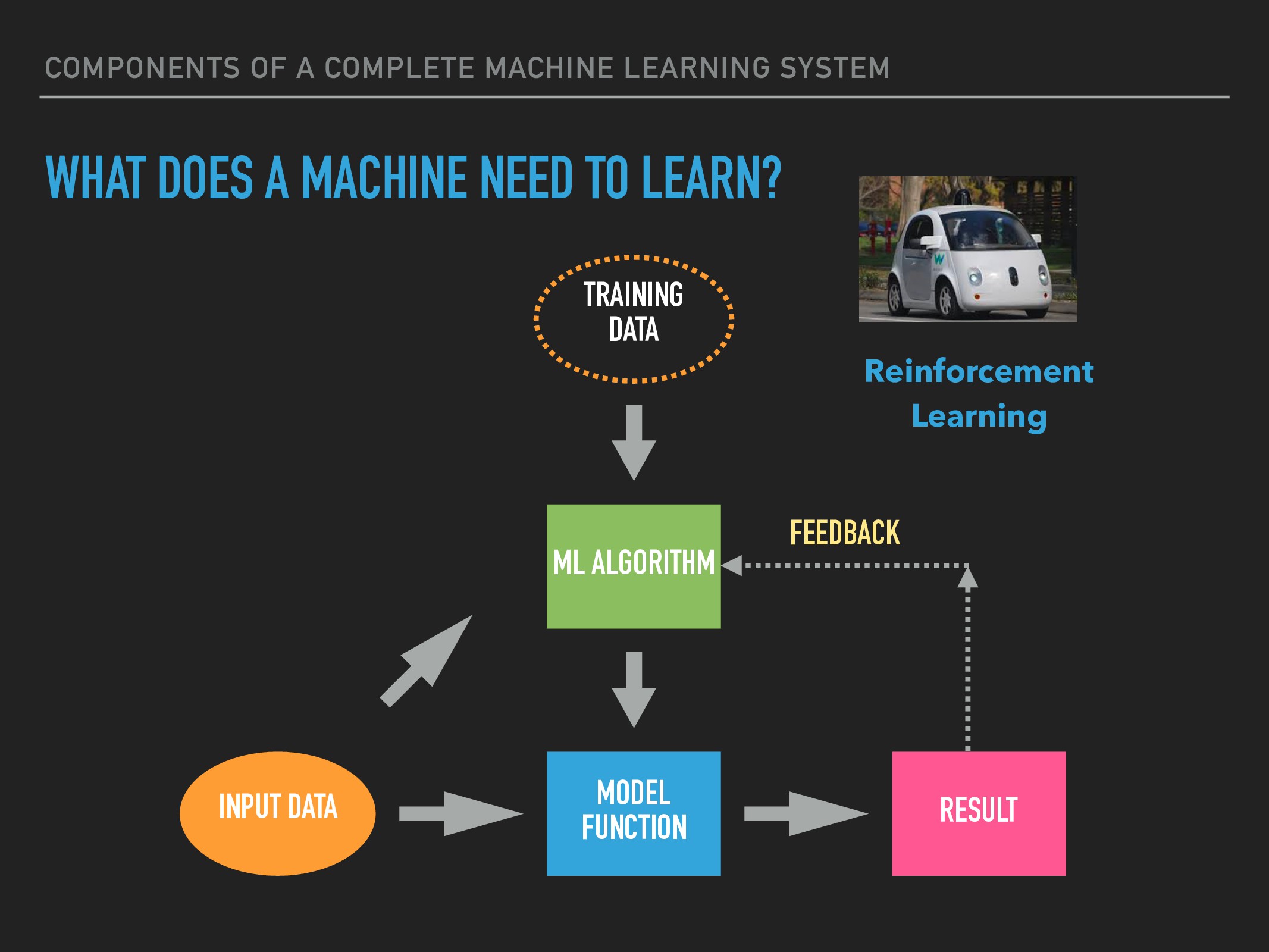
LEARNING ALGORITHM MODEL FUNCTION Input about the world Processing resources Learned representation „DOG“ Neural association Eyes + brain Outside world
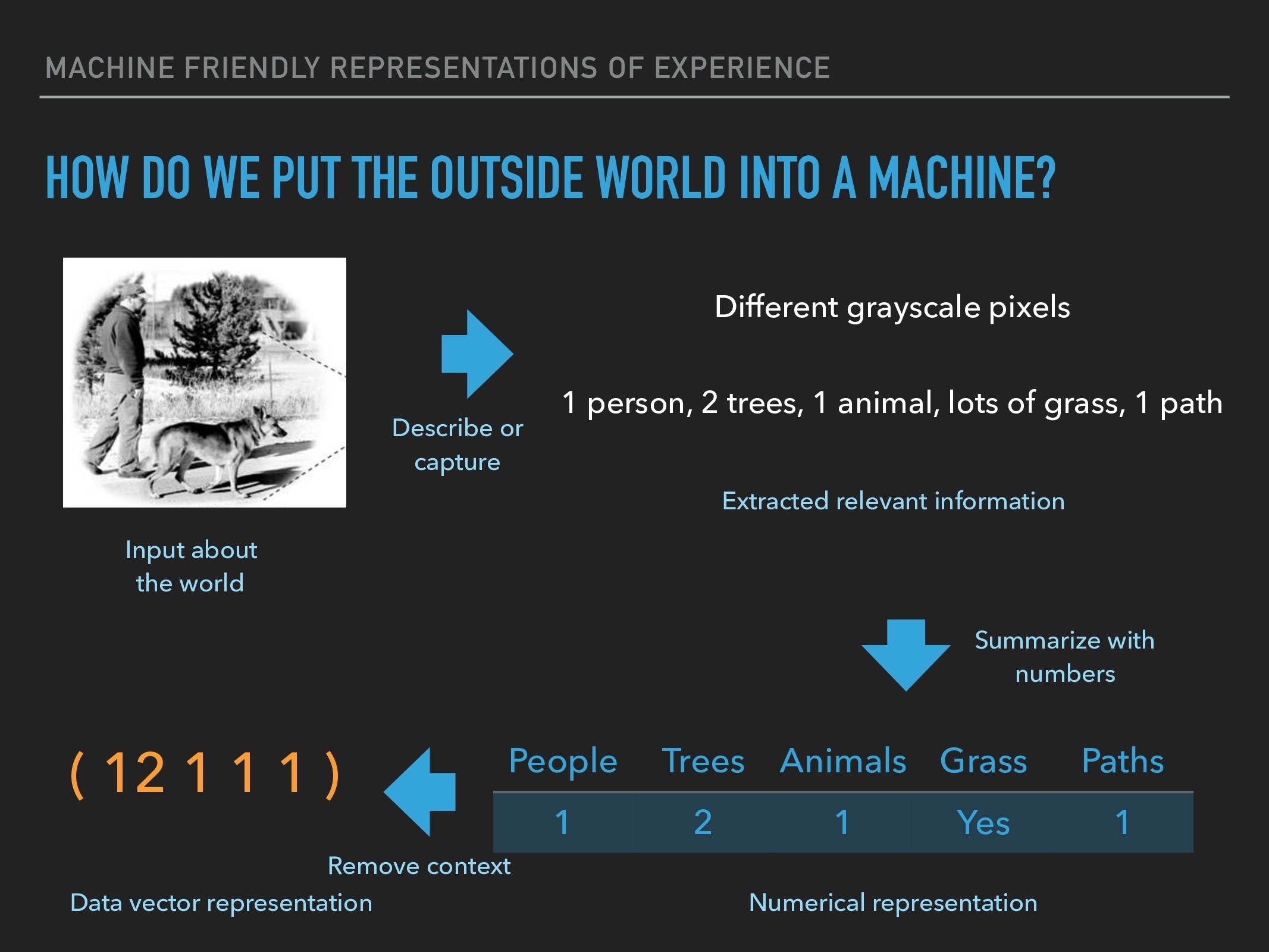
OUTSIDE WORLD INTO A MACHINE? Input about the world 1 person, 2 trees, 1 animal, lots of grass, 1 path Different grayscale pixels Extracted relevant information People Trees Animals Grass Paths 1 2 1 Yes 1 Numerical representation ( 12 1 1 1 ) Data vector representation Describe or capture Remove context Summarize with numbers
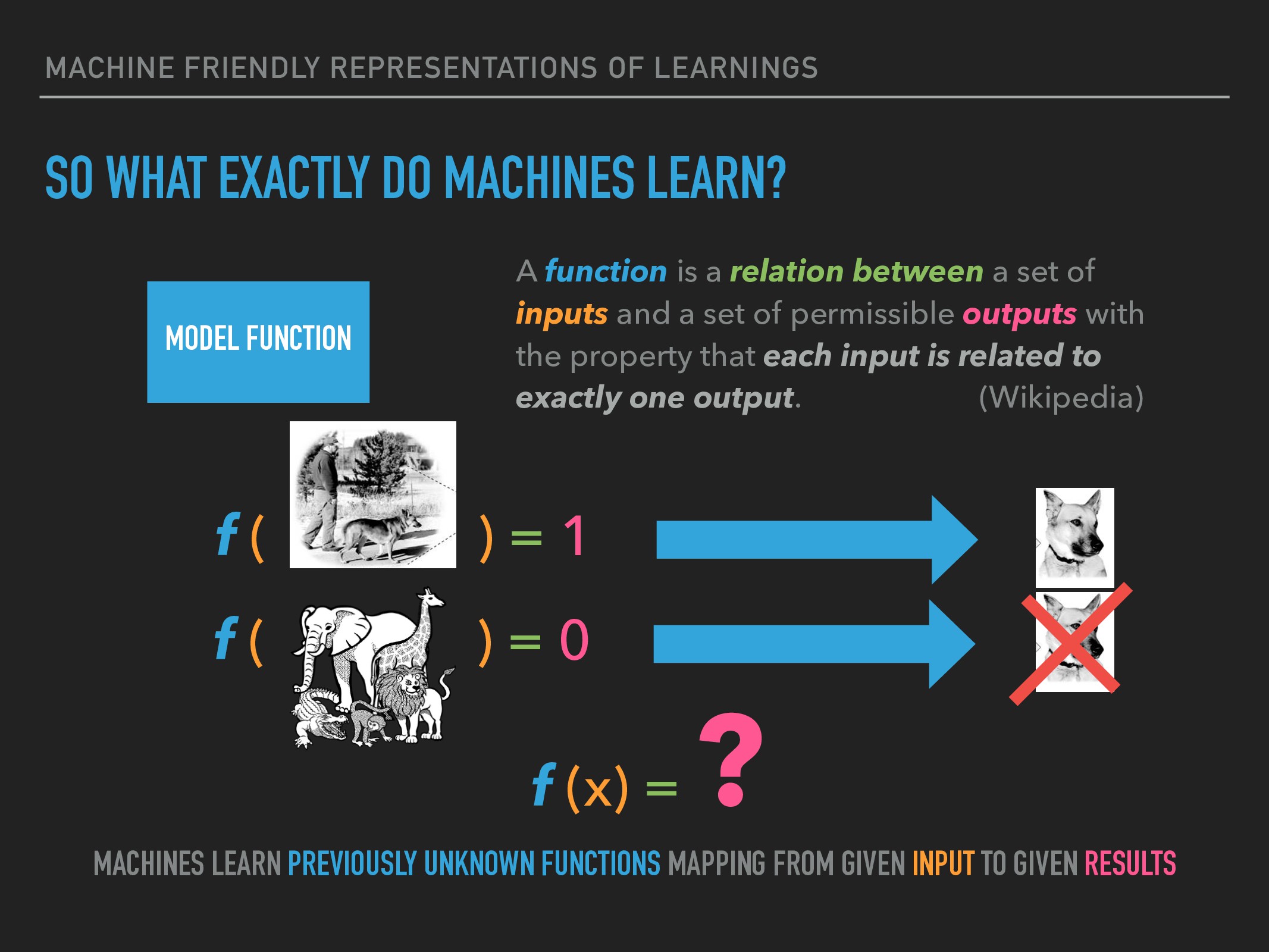
LEARN? A function is a relation between a set of inputs and a set of permissible outputs with the property that each input is related to exactly one output. (Wikipedia) f ( ) = 1 MACHINES LEARN PREVIOUSLY UNKNOWN FUNCTIONS MAPPING FROM GIVEN INPUT TO GIVEN RESULTS MODEL FUNCTION f ( ) = 0 f (x) = ?
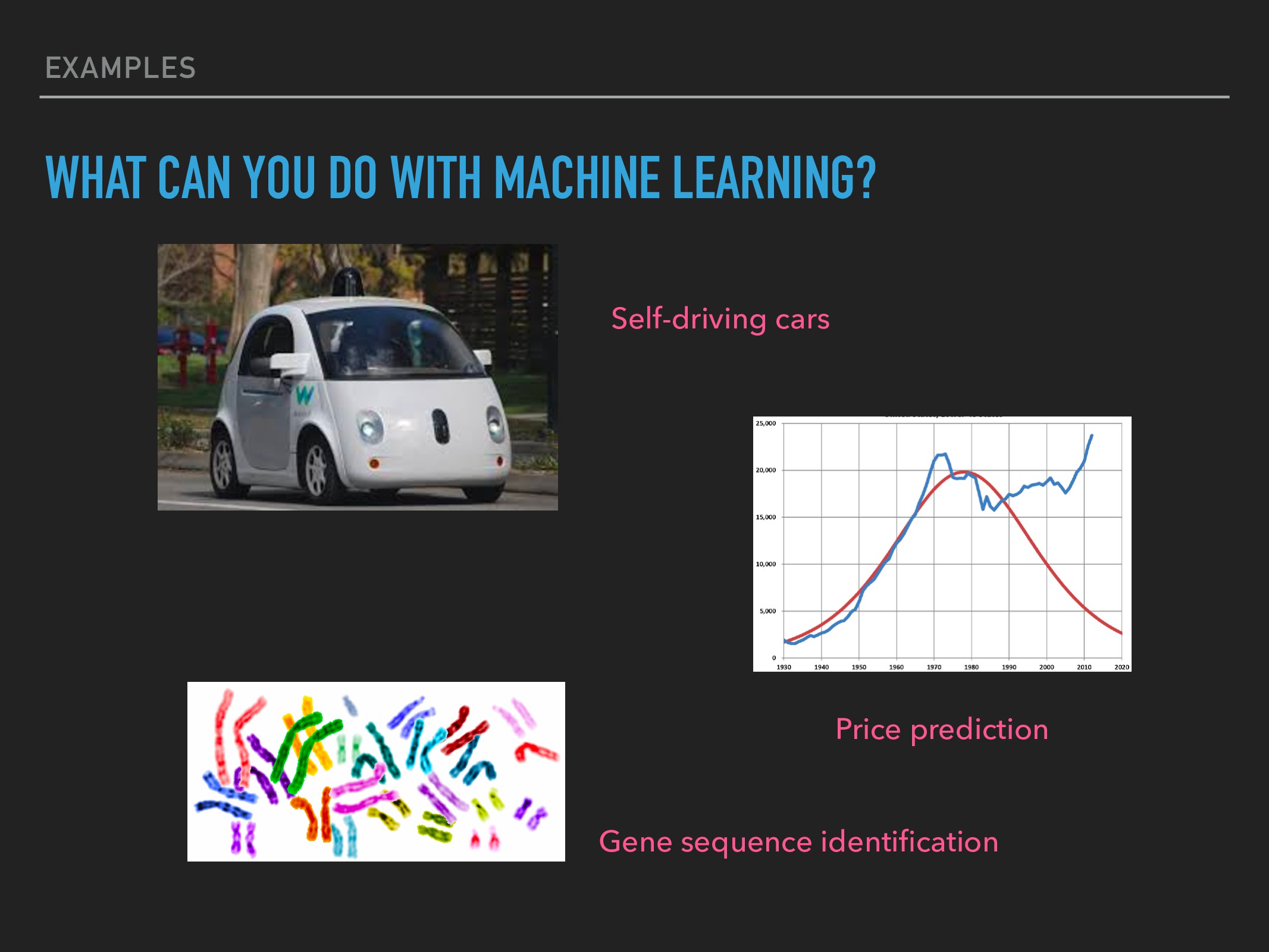
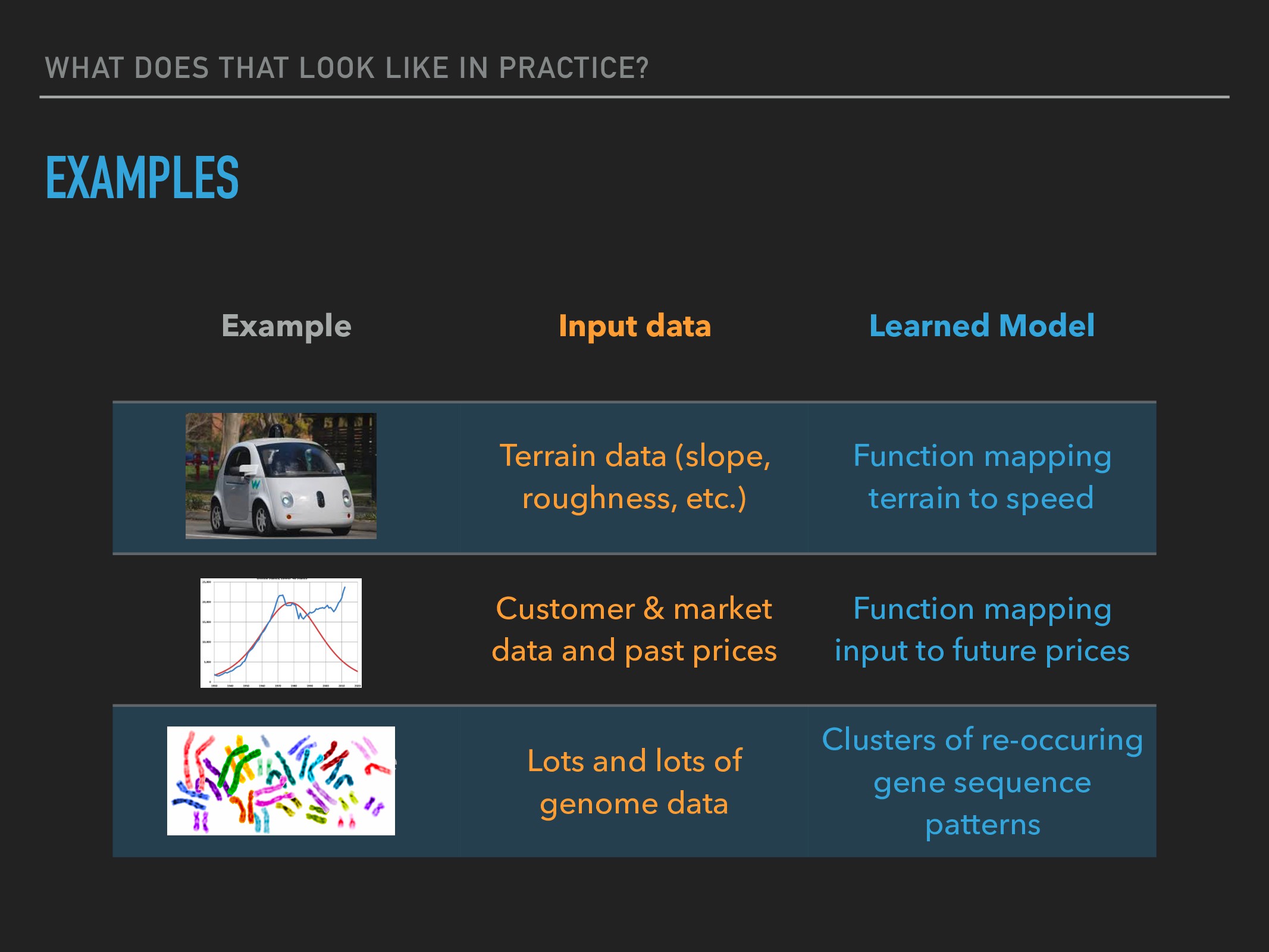
data Learned Model Terrain data (slope, roughness, etc.) Function mapping terrain to speed Customer & market data and past prices Function mapping input to future prices Gene sequence identificatio Lots and lots of genome data Clusters of re-occuring gene sequence patterns
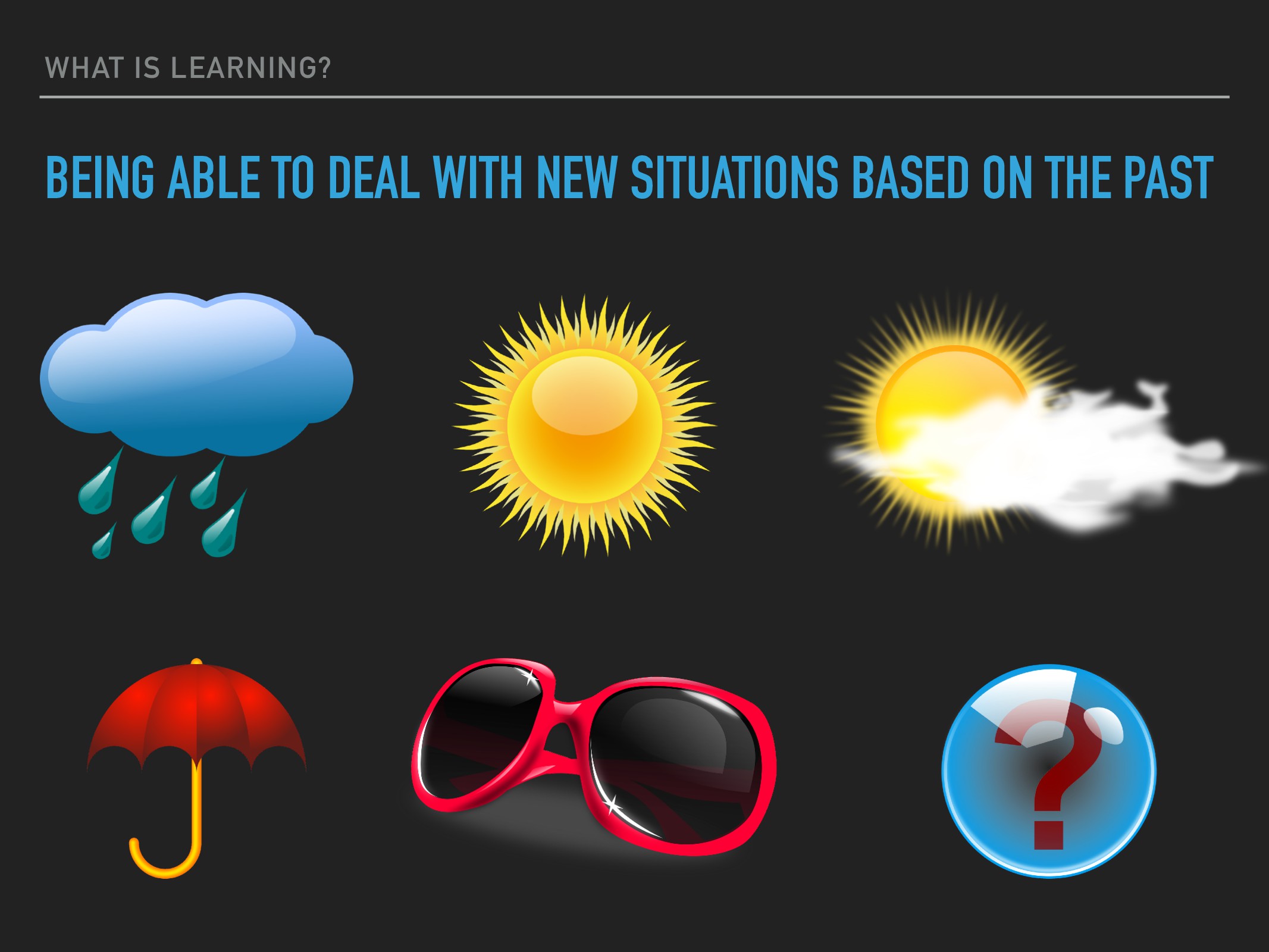
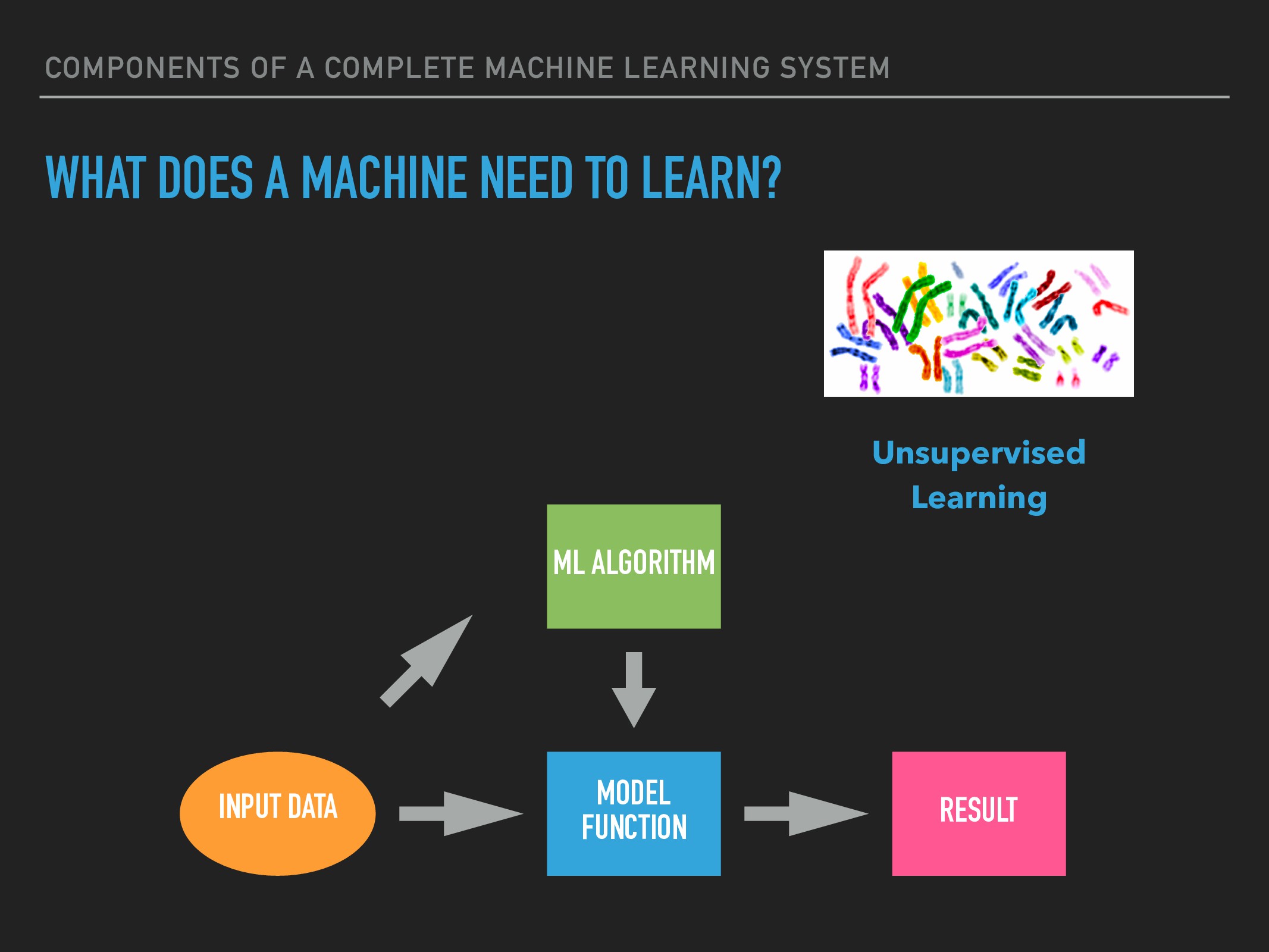
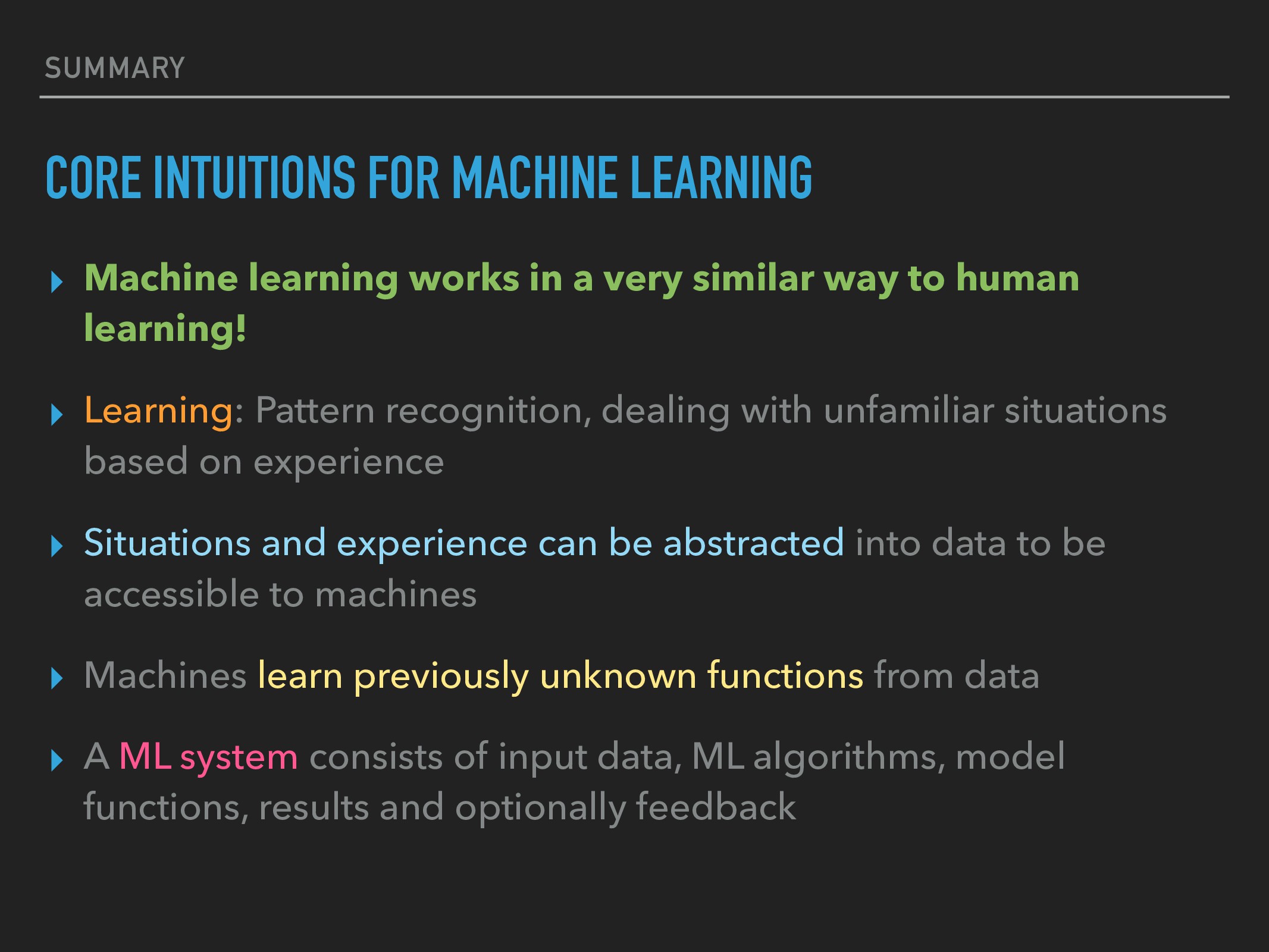
in a very similar way to human learning! ▸ Learning: Pattern recognition, dealing with unfamiliar situations based on experience ▸ Situations and experience can be abstracted into data to be accessible to machines ▸ Machines learn previously unknown functions from data ▸ A ML system consists of input data, ML algorithms, model functions, results and optionally feedback
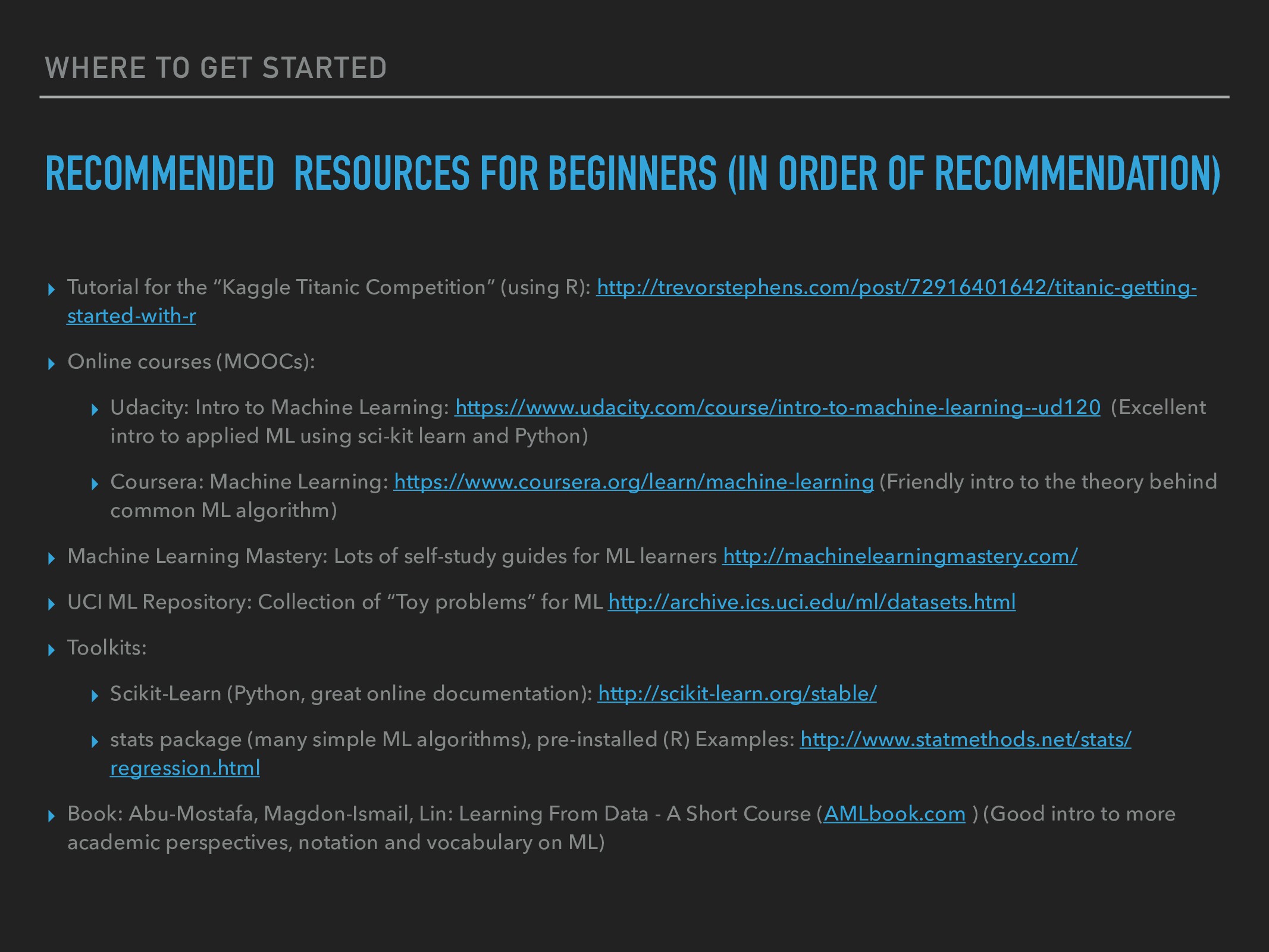
OF RECOMMENDATION) ▸ Tutorial for the “Kaggle Titanic Competition” (using R): http://trevorstephens.com/post/72916401642/titanic-getting- started-with-r ▸ Online courses (MOOCs): ▸ Udacity: Intro to Machine Learning: https://www.udacity.com/course/intro-to-machine-learning--ud120 (Excellent intro to applied ML using sci-kit learn and Python) ▸ Coursera: Machine Learning: https://www.coursera.org/learn/machine-learning (Friendly intro to the theory behind common ML algorithm) ▸ Machine Learning Mastery: Lots of self-study guides for ML learners http://machinelearningmastery.com/ ▸ UCI ML Repository: Collection of “Toy problems” for ML http://archive.ics.uci.edu/ml/datasets.html ▸ Toolkits: ▸ Scikit-Learn (Python, great online documentation): http://scikit-learn.org/stable/ ▸ stats package (many simple ML algorithms), pre-installed (R) Examples: http://www.statmethods.net/stats/ regression.html ▸ Book: Abu-Mostafa, Magdon-Ismail, Lin: Learning From Data - A Short Course (AMLbook.com ) (Good intro to more academic perspectives, notation and vocabulary on ML)


 ellenkoenig
 kishida
 timakin
 minodriven
 suneo3476
 optim
optim
 mixplace
 n_takehata
 yutobara
 yukiny
 iwiwi
iwiwi
 dske104
 satoshi256kbyte
 thoeni
 techseoconnect
 yeseniaperezcruz
 schroneko
 madoxten
 bermonpainter
 malarkey
 oripsolob
 tmiket
 tessaabrams
 rabernat