Vision Night 01.13.14
Sponsored
·
 Your Podcast. Everywhere. Effortlessly.
Share. Educate. Inspire. Entertain. You do you. We'll handle the rest.
→
Your Podcast. Everywhere. Effortlessly.
Share. Educate. Inspire. Entertain. You do you. We'll handle the rest.
→

Share
Embed
Vision Night 01.13.14

EvFree Fullerton
January 13, 2014
Transcript
72 slides
-
1. Smaller/Shrinking Size 2. The Exit of Young Adults
3. Decline in Giving 4. Failure to Focus on Mission 5. HosKlity from Outside 6. Division from Within -
Inflated: The evangelical church is smaller than many
of us have been told – accounKng for less than 1 in 10 Americans. The Impression: Many have claimed that 1 in 3 or even 1 in 2 Americans are evangelical ChrisKans. -
Evangelical ChrisKans are only 7% of the US
populaKon, less than 1 in 10. If every evangelical moved to New York State, there would not be a single evangelical among the roughly 300 million Americans in the other 49 states. -
In internaKonal terms, there are slightly more evangelicals in
the enKre United States than there are Muslims in greater Cairo. Evangelical populaKon esKmates by Dr. ChrisKan Smith, Notre Dame, The Barna Group, American Church Research Project. -
The evangelical church is shrinking because the majority of
young evangelicals are abandoning the faith. This shrinking is acceleraKng because the church is top-‐heavy in age. -
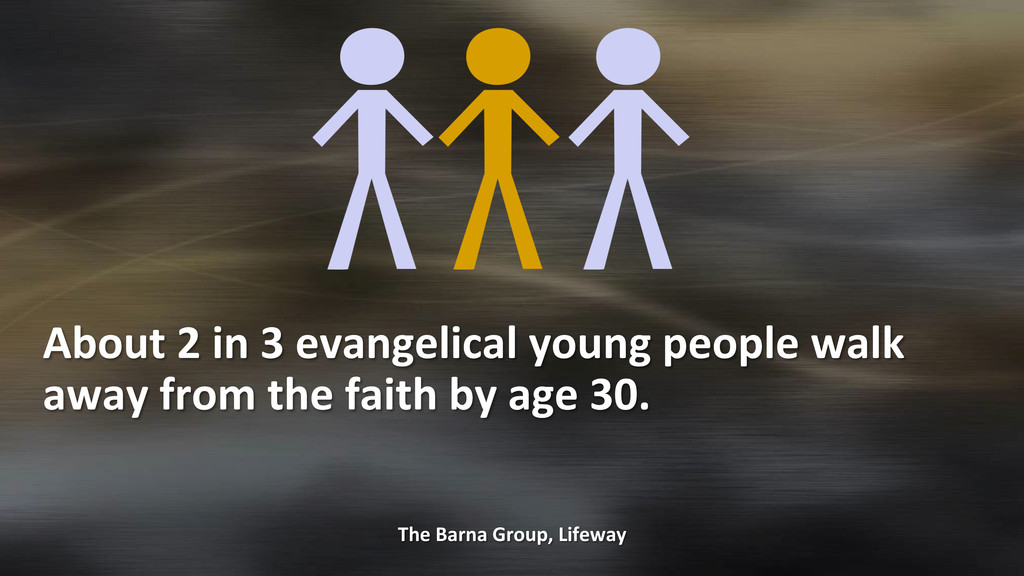
About 2 in 3 evangelical young people walk away
from the faith by age 30. The Barna Group, Lifeway -
While its true that some evangelical young people return
to the Church in their 30s, the majority no longer do. Those who return oben suffer from divorce and a decade of lifestyle habits made apart from Christ. Youth TransiKon Network, Lifeway -
The church is not making converts fast enough to
keep pace with rapid populaKon growth. -
As these trends weaken the church internally, the external
culture is turning hosKle towards followers of Jesus Christ. Many leading edges of 21st century American culture are antagonisKc towards evangelicals. -
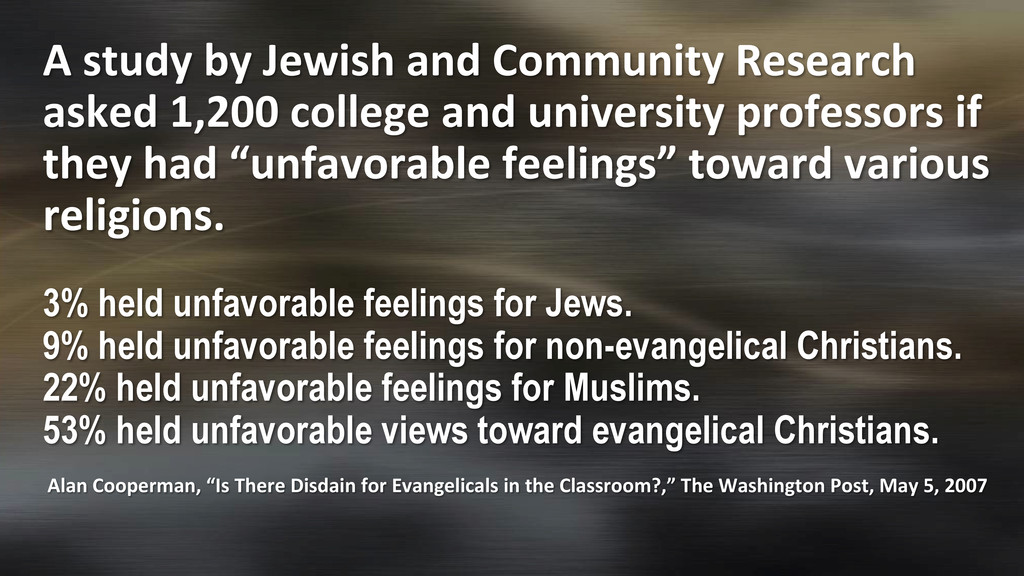
A study by Jewish and Community Research asked 1,200
college and university professors if they had “unfavorable feelings” toward various religions. 3% held unfavorable feelings for Jews. 9% held unfavorable feelings for non-evangelical Christians. 22% held unfavorable feelings for Muslims. 53% held unfavorable views toward evangelical Christians. Alan Cooperman, “Is There Disdain for Evangelicals in the Classroom?,” The Washington Post, May 5, 2007 -
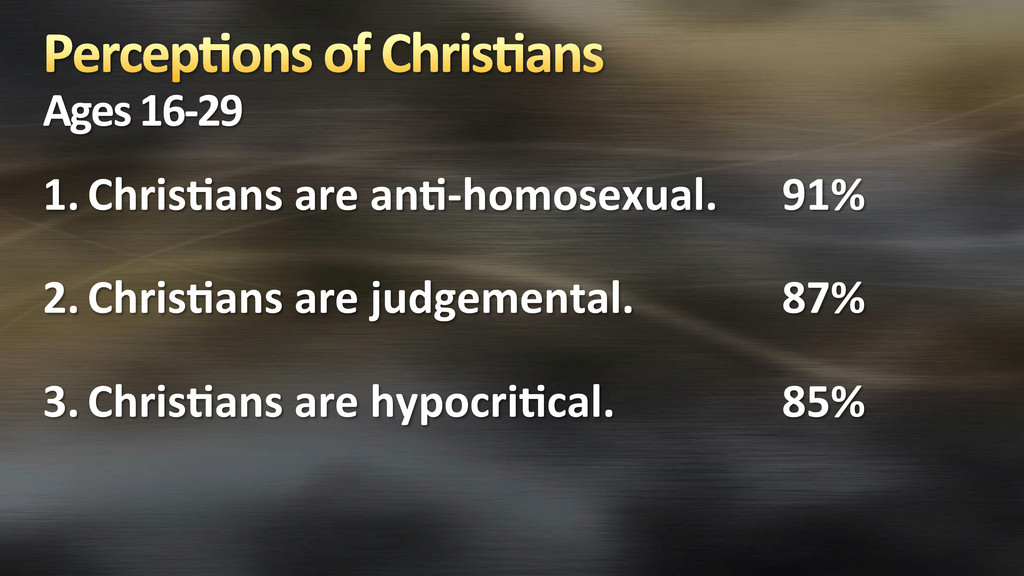
Ages 16-‐29 1. ChrisKans are anK-‐homosexual. 91%
2. ChrisKans are judgemental. 87% 3. ChrisKans are hypocriKcal. 85% -
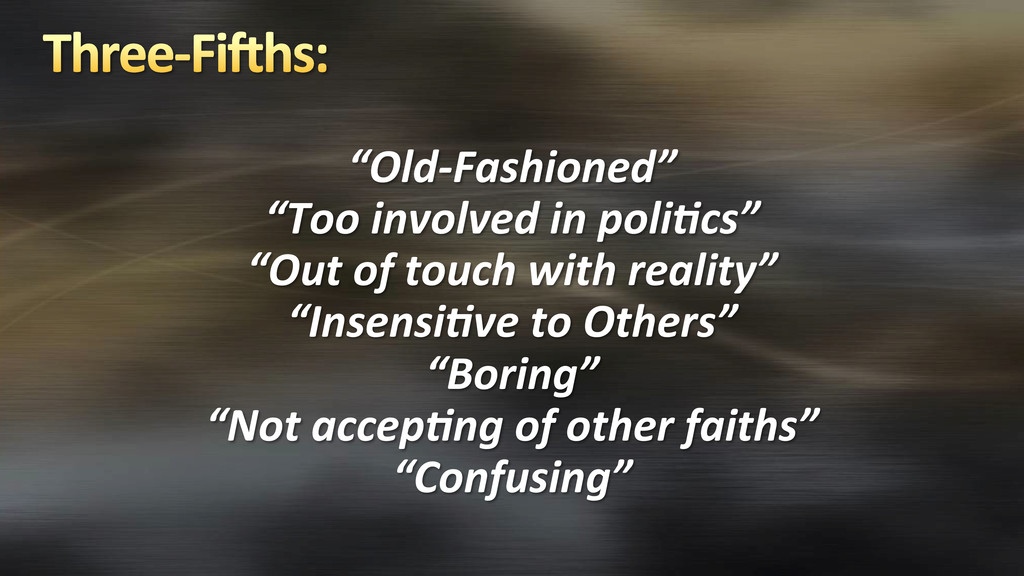
“Old-‐Fashioned” “Too involved in poli3cs” “Out of touch
with reality” “Insensi3ve to Others” “Boring” “Not accep3ng of other faiths” “Confusing” -
SIN Sin Separa+on Peace Forgiveness
Eternal Life GOD Chris+anity and the Chris+an Subculture BUILDING TRUST -
This struggling church is splihng itself. Different
groups of evangelicals are sharply divided over how to respond to the rapidly changing culture. As a result, evangelicals are infighKng when we most need to be uniKng. -
Evangelicals are increasingly dividing over poliKcs. Republican
54% Democrat 22% Independent 25% -
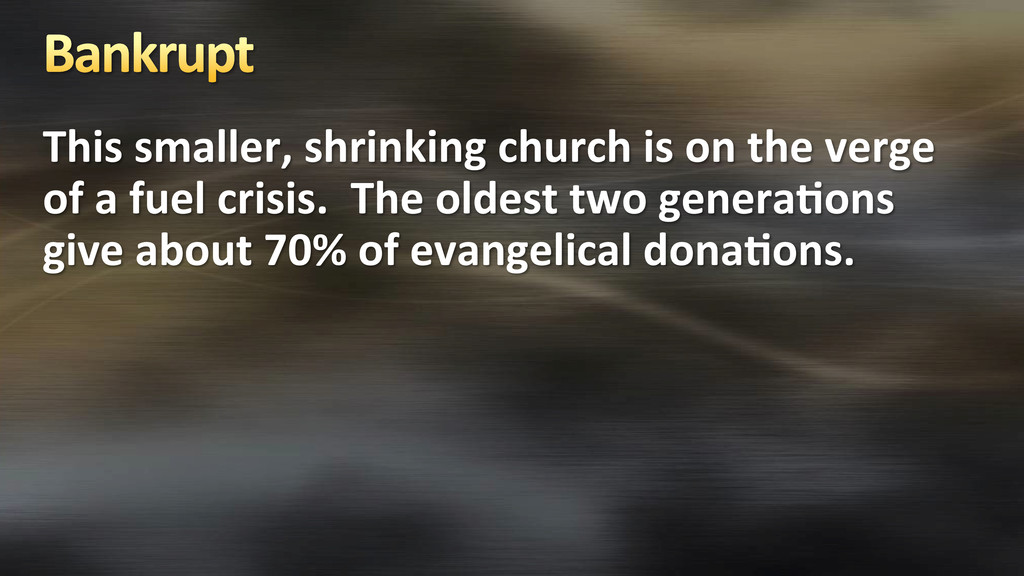
This smaller, shrinking church is on the verge of
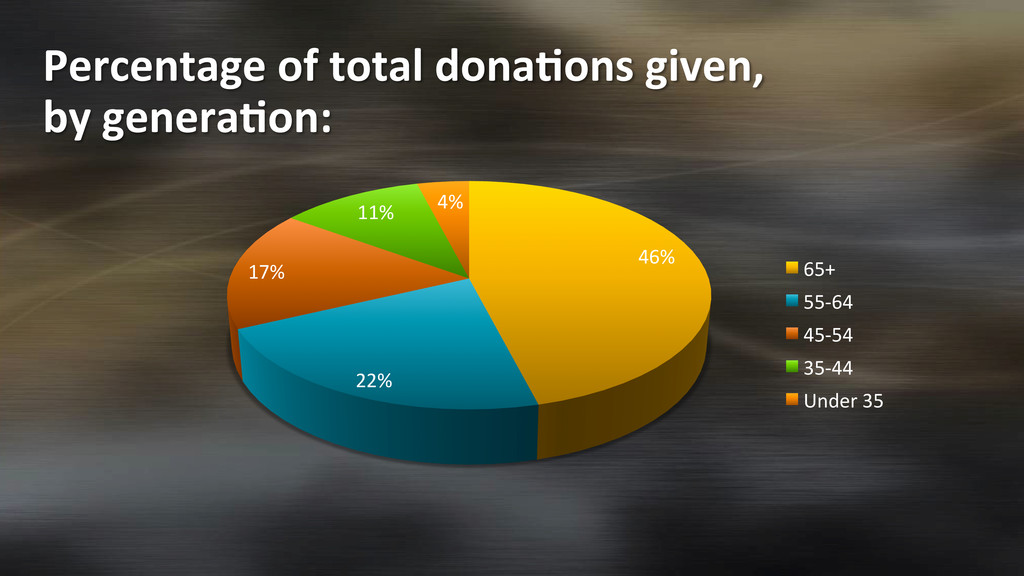
a fuel crisis. The oldest two generaKons give about 70% of evangelical donaKons. -
DonaKons could decrease by as much as 70% in
the next 25 years – if younger generaKons do not change their giving habits. -
Percentage of total donaKons given, by generaKon:
46% 22% 17% 11% 4% 65+ 55-‐64 45-‐54 35-‐44 Under 35 -
Somewhere along the way, many American ministries became more
dependent on dollars than on disciples. -
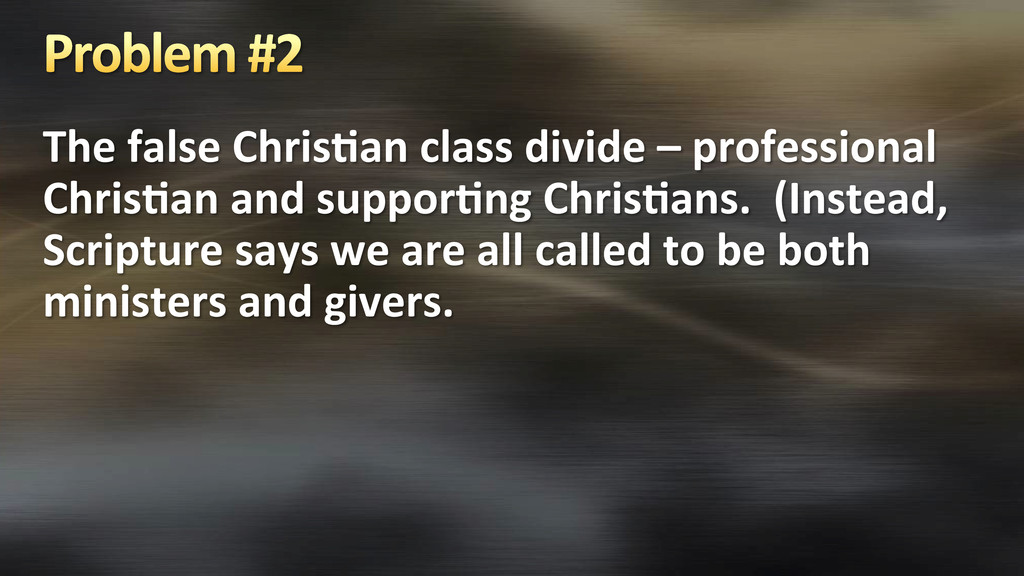
The false ChrisKan class divide – professional ChrisKan and
supporKng ChrisKans. (Instead, Scripture says we are all called to be both ministers and givers. -
As American wealth has increased, giving on the whole
has decreased for decades – across all generaKons. -
In 2004, the church reached its lowest level of
giving as a percentage of income since 1961, lower than the worst years of the Great Depression. John L. Ronsvalle and Silvia Ronsvalle, The State of Church Giving through 2004 -
The percentage of Americans who give at all, including
Kthing and supporKng evangelical works, conKnues to decline. 17% of ChrisKans say they “Kthe” but only 3% actually give 10% or more of their income to the Lord’s work. Brian Kluth, Kingdom Seekers -
SoluKon 1 :: Hybrid Ministry Resurrect the gibs of
the body by training faithful non-‐paid disciples to work in concert with gibed paid staff. (2 Timothy 2:2, Romans 12:4-‐8, 1 Timothy 5:17-‐18) -
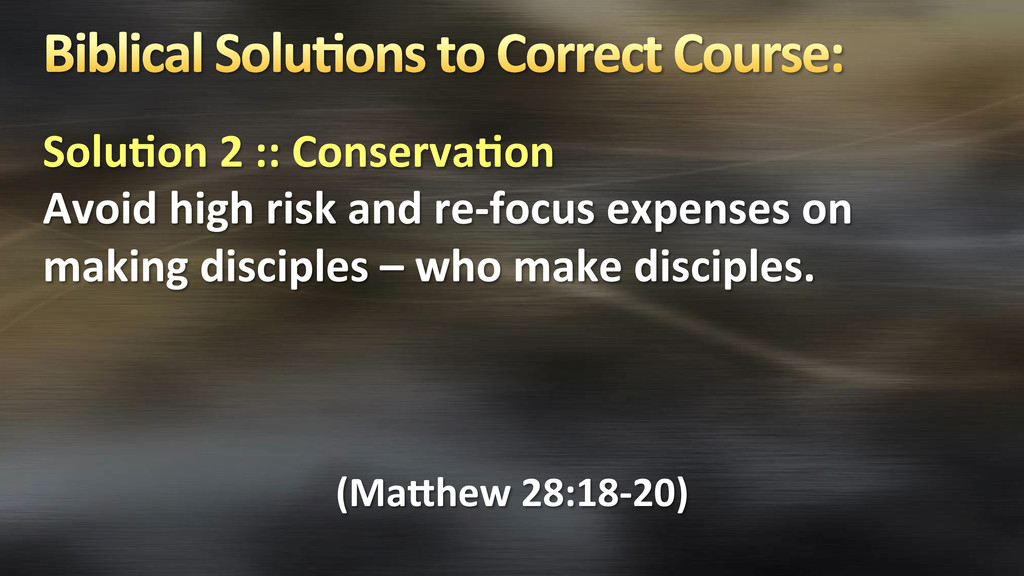
SoluKon 2 :: ConservaKon Avoid high risk and re-‐focus
expenses on making disciples – who make disciples. (Manhew 28:18-‐20) -
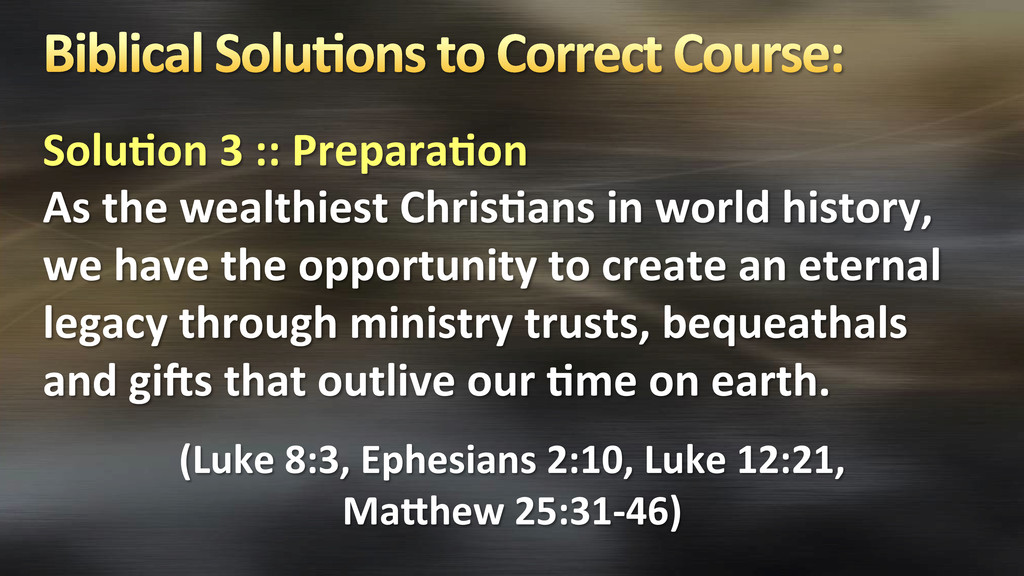
SoluKon 3 :: PreparaKon As the wealthiest ChrisKans in
world history, we have the opportunity to create an eternal legacy through ministry trusts, bequeathals and gibs that outlive our Kme on earth. (Luke 8:3, Ephesians 2:10, Luke 12:21, Manhew 25:31-‐46) -
SoluKon 4 :: Disciple Disciple all generaKons (especially the
younger generaKons) into Biblical surrender and stewardship. -
1. “Hybrid Ministry” equips people for serious evangelism/discipleship.
2. “ConservaKon” avoids debt and prioriKzes on disciple-‐making. 3. “PreparaKon” challenges mature givers to invest in an eternal legacy. 4. “Disciple” teaches our younger believers the joy of generous, sacrificial and consistent giving. -
EvFree Fullerton exists to develop, empower and release kingdom
people and kingdom communiKes into missional engagement in their spheres of influence. -
Kingdom people are people who follow Jesus as disciples
and worshippers, who are increasingly transformed by God’s grace and Holy Spirit to become more like Jesus, and whose hearts, minds, relaKonships and lifestyles reflect the character and mission of Jesus. “Follow me and I will make you fishers of people.” -
Kingdom communiKes are communiKes defined by the purposes, prioriKes
and presence of Jesus Christ (Manhew 28:18-‐20): • to love God and love others • to make Jesus-‐followers of all naKons • to care for the poor, outcast and marginalized • to re-‐orient our lives in worship, communion and bapKsm -
• to equip believers for their ministries locally and
globally • to sit under the authority of God’s Word as it is regularly taught • to reproduce other thriving kingdom communiKes • to foster a partnership of generaKons to fulfill God’s mission in the world -
Missional engagement is our passionate convicKon to pass along
to others what God has given to us; is our recogniKon that God is at work in the world and is looking for cooperaKve parKcipants in His mission; is our idenKty as ambassadors and missionaries to our world. -
Let us hold unswervingly to the hope we profess,
for he who promised is faithful. And let us consider how we may spur one another on toward love and good deeds, not giving up mee3ng together, as some are in the habit of doing, but encouraging one another—and all the more as you see the Day approaching. Hebrews 10:23-‐25 -
In fulfilling our mission, we seek to be: Focused
on Mission :: We believe that the church exists to parKcipate in the mission of God in Christ by redempKvely engaging all aspects of society with the intent of proclaiming and demonstraKng the good news about Jesus Christ. We believe all of God’s people are called to be ambassadors of -
reconciliaKon whatever their context and that this is the
central work of the church. We believe mission is expressed in both word and deed, at home and at work, in neighborhoods and across the world. -
Centered on the Kingdom of God :: The
Kingdom of God (God’s rule and authority manifest on earth) was (and is) the focus of the work and teaching of Jesus on earth. Our purpose as His community is to parKcipate with God in the advancement and extension of His kingdom into the world. We seek to serve His -
movement, not our own agendas, projects and organizaKons. We
desire, bless and parKcipate in the movement of God wherever and however we find it. -
Rooted in Worship and Scripture :: The Bible
is the most important authority for life and faith. We believe that the Bible is to be read and studied for formaKon, not just informaKon. We seek to be culturally relevant in our teaching while remaining faithful to the inspired text. We recognize the centrality of -
worship in all we do, in both corporate and
individual expressions, and respect the great diversity of worship forms present in God’s kingdom. -
Connected in Community :: We believe the
church to be a spiritual family where all are welcome and loved. We believe that transformaKon happens best when people meet and are honest and vulnerable with each other, speaking the truth to each other in love. We believe the best expressions of community -
are those that are not homogeneous, but instead integrate
people from all ethniciKes, generaKons and socio-‐economic statuses. We believe that the church is a picture of the new humanity, where previous ways of dividing humanity no longer apply in Christ. -
Filled with Grace and Love :: We
believe in the power of God’s grace to transform lives, and reject anempts to legislate the ChrisKan life through human rules. We respect differences of theology and pracKce in non-‐essenKals and secondary maners. We seek to deal with issues redempKvely and allow -
people to be in process. We recognize that love
is the highest ChrisKan value and seek to embody love of God, neighbor, and enemy. -
Responsive to the Holy Spirit :: We believe
in the gibs, power, and presence of the Holy Spirit to bring about the transformaKon of God’s people. We believe that God is the iniKator of worship and mission. We believe the calling of God’s people is to parKcipate with God in His work in the world. -
We seek to avoid both a theology of excess and
a theology of reacKon regarding the role of the Holy Spirit today. We seek the Holy Spirit’s filling and empowering without dictaKng how that should occur. -
Empowering and Developmental :: We believe that
each person has a unique contribuKon to make in God’s Kingdom, and that the role of the church is to inspire, teach and empower people for ministry in whatever place in life that God has called them. We oppose anything that places limits on the -
priesthood of all believers and therefore resist the professional/volunteer
(or ‘clergy’ and ‘laity’) disKncKons common to American church culture. We seek to grow a courageous, generous and faithful community that emphasizes lifelong learning and development, the discovery and pracKce of spiritual gibs, and decentralized ministry. -
Strategic and Supernatural :: The Church is both
organizaKon and organism; therefore, we seek to be pracKcal and wise, while at the same Kme expecKng and praying that God would move, speak and lead us in surprising ways. We believe in prayer meeKngs and planning meeKngs. We want to be spiritual and spirit-‐led while at the same Kme being diligent and strategic. -
Counter-‐cultural and Culturally Engaged :: We stand against
both cultural withdrawal and cultural accommodaKon. We desire to be discerningly and selecKvely engaged in culture without being formed by its prioriKes and values. We seek to be a propheKc alternaKve to the ideals and ways of the world without -
retreaKng into our own ChrisKan sub-‐cultures. We believe
the church exists in the world for the sake of the world. We believe the incarnaKon and sacrifice of Jesus is our model for engaging the world. -
Sensi3ve to the needs of the poor and
marginalized :: We believe we best embody the heart of God to the world by serving the poor and marginalized. We believe the wealthy need the poor as much as much as the poor need the wealthy. We seek to be known for our -
compassion, as we work against the systemic and individual
injusKces of our world, by showing love in pracKcal, tangible ways. We believe the church is to seek the public good and promote human flourishing in every sphere of human society. -
“Follow me and I will make you fishers of
people” (MaZhew 4:19) 1. “Follow me…” is the call to discipleship and worship where we bring all of life under the authority of the one true God. -
2. “…I will make you...” is the invitaKon to
transformaKon into Christlikeness as we culKvate environments of spiritual growth in partnership with the Holy Spirit. 3. “…fishers of people” reflects the direcKve of Jesus to offer our lives in service and mission for the sake of the world. -
We believe we must conKnually ask what acKviKes and
pracKces have the biggest impact or most facilitate the mission of the church. We believe we must be strategically focused in how we uKlize the church’s Kme, energy, and resources, while at the same Kme encouraging people to find their own unique -
mission and ministry. We believe that every program
and ministry of the church should exist in harmony with and in support of the overall mission of the church. We believe in focused, simple, and flexible ministry structures in order to best facilitate mission and the empowerment of people. -
Therefore, in the ways we organize and structure ministries
we’ll value: 1. Alignment around common mission 2. Risk/experimentaKon that leads to innovaKon 3. CreaKng adaptable, flexible and simple structures 4. SimplificaKon that leads to greater focus and empowerment -
He will make you" [cultivating environments of spiritual growth that
lead to transformation]! Culture" Follow Jesus " [worship + discipleship]! Fishers of people" [in service and mission]! Individual! -
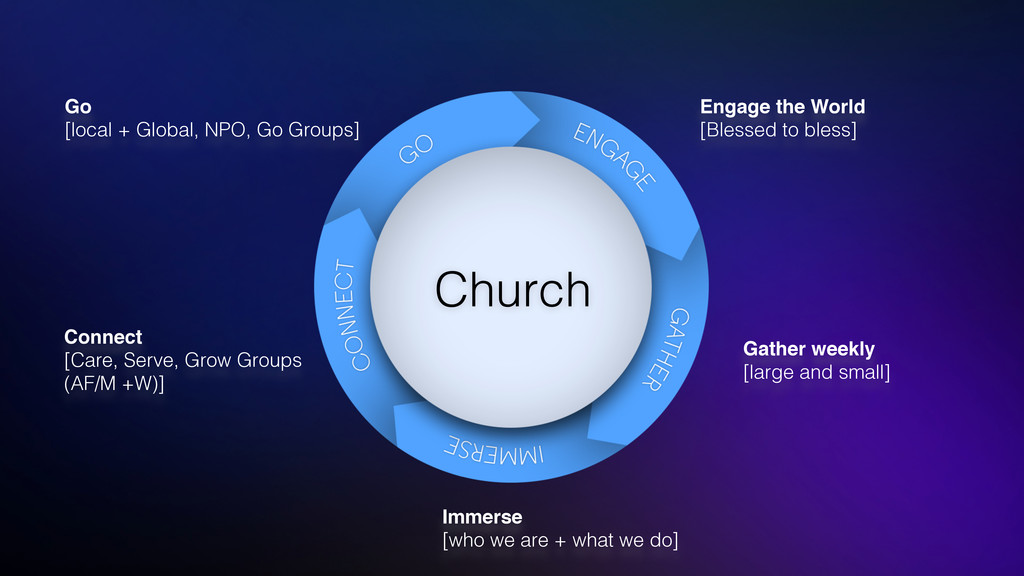
Connect" [Care, Serve, Grow Groups (AF/M +W)]! Engage the World"
[Blessed to bless]! Immerse" [who we are + what we do]! Go" [local + Global, NPO, Go Groups]! Gather weekly" [large and small]! Church!
 evfreefullerton
 matleenalaakso
 neuroiwm
 baltimoreniso
 aisw77
 ainischool
 adeputra13
 cbtlibrary
 hiola
 rashwhitman
 echaille
 akiraasano
 chriscoyier
 aleyda
 shpigford
 zakiyama
 kastner
 jmmastey
 deanohume
 tammyeverts
 jacobian
 axbom
 colly