Stay away from the internet - securiting modern infrastructure
A run through three topics relevant to securing and reducing the attack surface area for modern web infrastructure. Talk of network complexity, SDN, end user device security, spearphishing, unikernels and more.
subrequest, passing the request body res = ngx.location.capture( "/request", { method = ngx.HTTP_POST, body = ngx.var.request_body } ) -- if the subrequest errors if res.status == ngx.HTTP_OK then else ngx.status = ngx.HTTP_BAD_REQUEST ngx.say("invalid request") return end -- if we have a valid request, decode response as JSON local success, response = pcall(cjson.decode, res.body) if success then -- if valid JSON just pass through the response Nginx supports Lua and JS extensions, HAProxy supports Lua
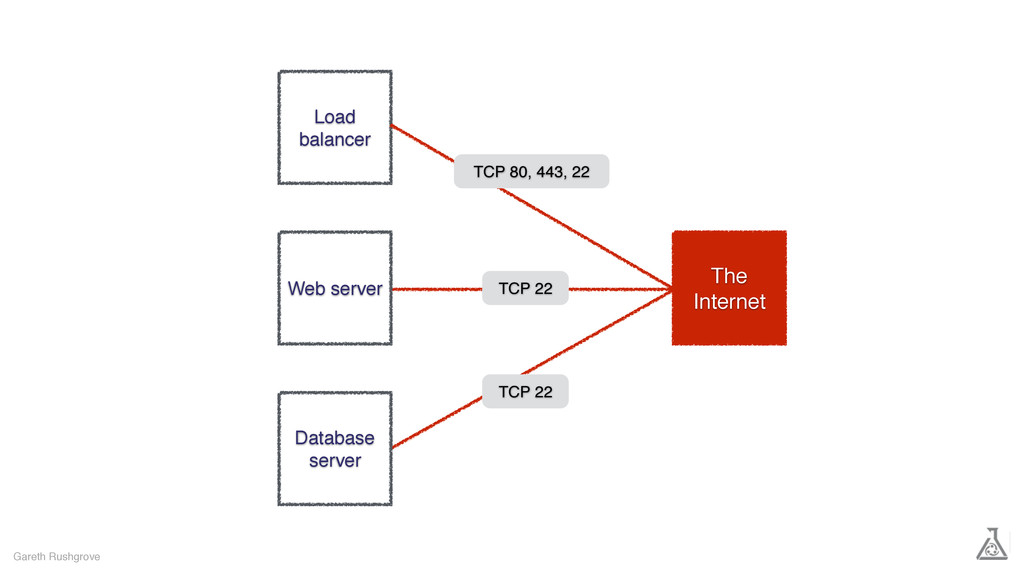
expect(@open_ports.count).to eq(3) end it 'exposes a web server' do expect(@open_ports).to include('80/tcp') expect(@open_ports).to include('443/tcp') end it 'exposes an SSH server' do expect(@open_ports).to include('22/tcp') end it 'rejects email traffic' do expect(@closed_ports).to include('25/tcp') end Using any unit testing framework we can make explicit assertions against our network
ports (FAILED - 3) exposes a web server exposes an SSH server rejects accept email traffic (FAILED - 4) Anyone can run the tests and understand what is expected and what is currently broken
iniface => '! lo', proto => 'all', destination => '127.0.0.1/8', action => 'reject', } Necessary but not sufficient. Still requires domain knowledge and lots of context.
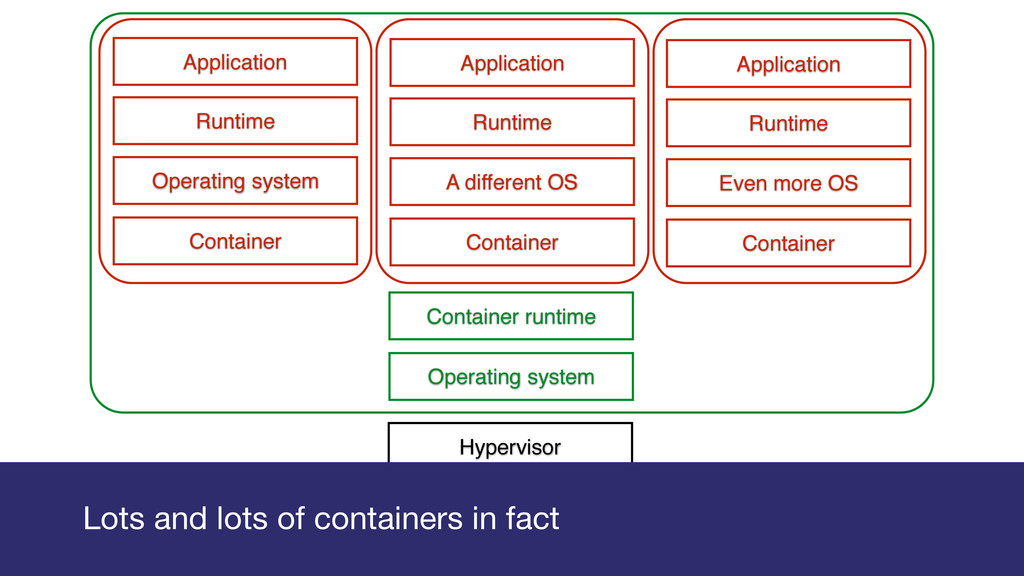
Runtime Application Container runtime Container Operating system Runtime Application Container Even more OS Runtime Application Lots and lots of containers in fact


 garethr
 kawanago
 hironobuiga
 yakumo
 terurou
 iotengineer22
 ks91
ks91
 tsukuboshi
 athug
athug
 maimyyym
 miidas
 oracle4engineer
 recruitengineers
 brad_frost
 elsirapls
 bethany
 uxyall
 csswizardry
 kimpetersen
 jonoalderson
 codingconduct
 aleyda
 minecr
 geoffreycrofte