Upgrade to Pro — share decks privately, control downloads, hide ads and more …

Do You Need an Architect, a Contractor, or a Co...

Sponsored · Your Podcast. Everywhere. Effortlessly. Share. Educate. Inspire. Entertain. You do you. We'll handle the rest. →

Do You Need an Architect, a Contractor, or a Construction Company?

A practical guide to the five roles behind most construction projects — architect, civil contractor, interior designer, structural engineer, and project management consultant — and what each one actually handles. Includes a clear breakdown of when it makes sense to hire specialists separately, and when a single team covering design, civil work, interiors, and project management saves you the coordination headache. Useful for homeowners and businesses planning construction or renovation in Jaipur and beyond.

Learn more at https://www.nakshaconstruction.com/

Avatar for gulshan sharma

gulshan sharma

September 14, 2026

More Decks by gulshan sharma

Other Decks in Business

Transcript

  1. A PROJECT ROLES GUIDE Do You Need an Architect, a

    Contractor, or a Construction Company? Understanding who actually does what, before you hire anyone.
  2. Why This Question Trips People Up Most people planning a

    build have never had to hire for this before, and the job titles genuinely overlap in ways that aren’t obvious from outside the industry. An architect designs. A contractor builds. But plenty of firms do both — a construction company in Jaipur combining several of these roles under one roof is just as valid a starting point as hiring each specialist separately. Either way, plenty of homeowners end up with the wrong combination — too many people for a simple job, or too few for a complex one. The five roles below cover almost every residential or small commercial project. Knowing what each one actually does — and doesn’t — is the fastest way to hire correctly the first time.
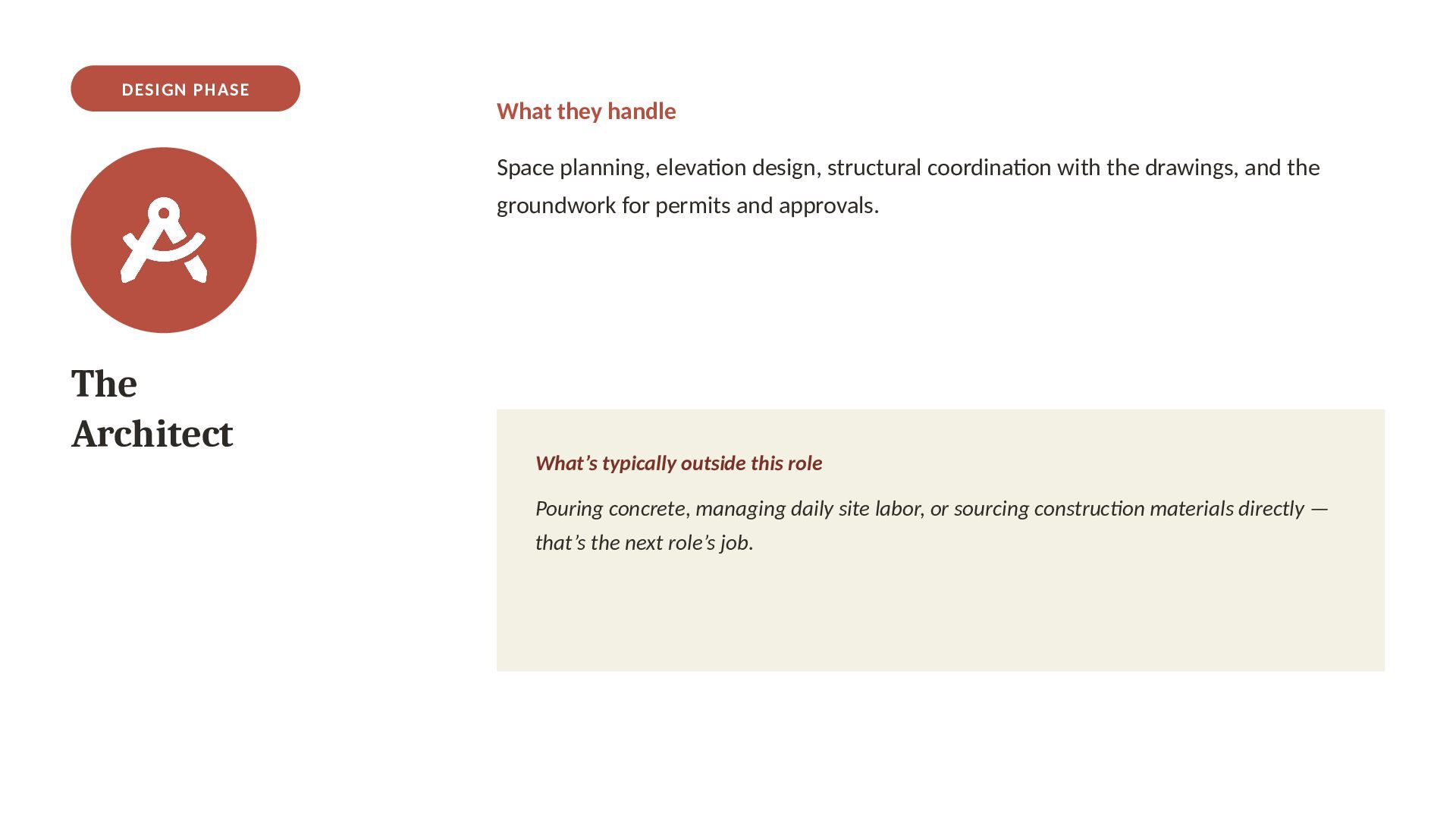
  3. DESIGN PHASE What they handle Space planning, elevation design, structural

    coordination with the drawings, and the groundwork for permits and approvals. The Architect What’s typically outside this role Pouring concrete, managing daily site labor, or sourcing construction materials directly — that’s the next role’s job.
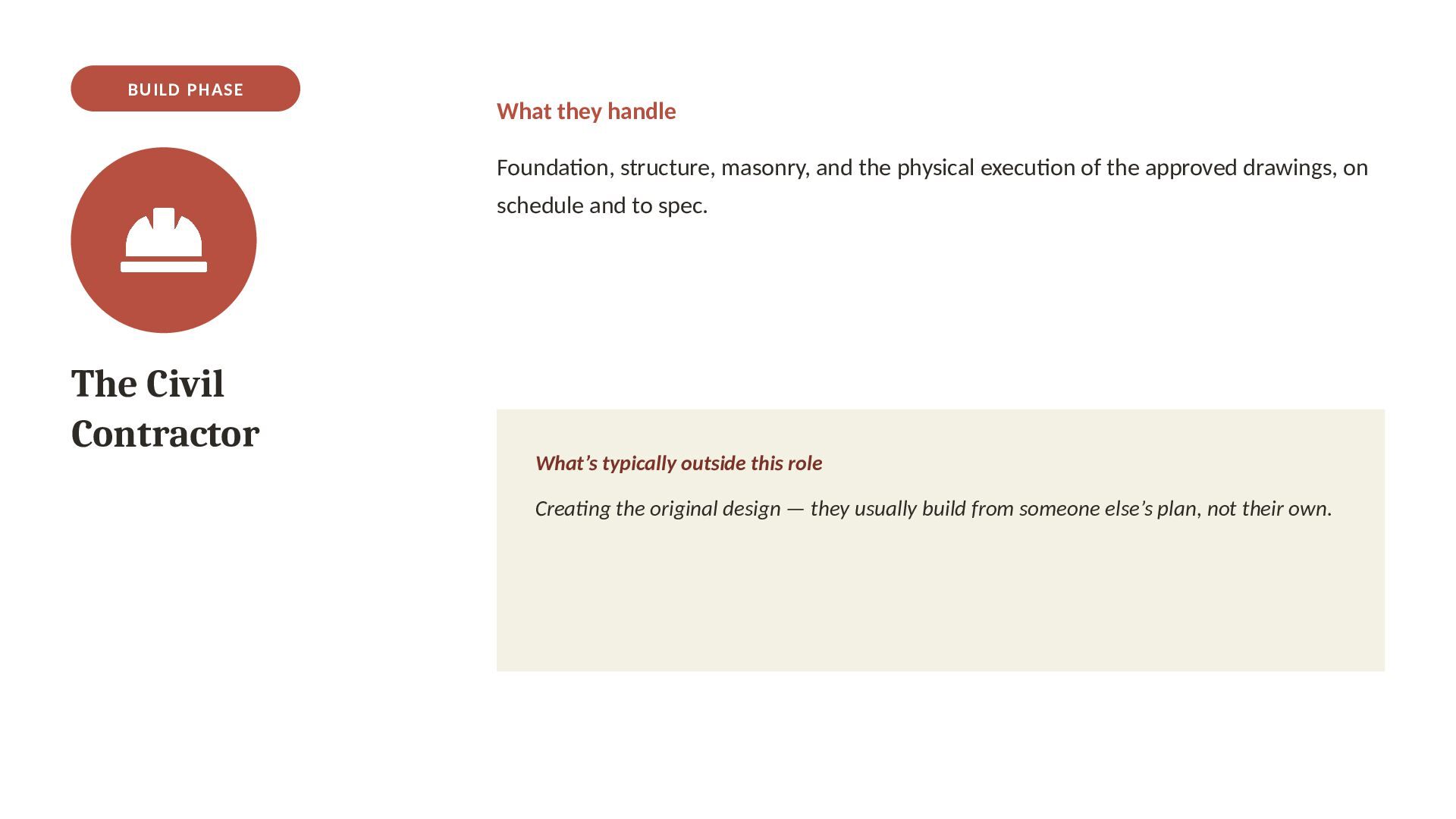
  4. BUILD PHASE What they handle Foundation, structure, masonry, and the

    physical execution of the approved drawings, on schedule and to spec. The Civil Contractor What’s typically outside this role Creating the original design — they usually build from someone else’s plan, not their own.
  5. FINISHING PHASE What they handle Space planning for furnishing, material

    and finish selection, and the details that shape how a space actually gets used day to day. The Interior Designer What’s typically outside this role Structural decisions — moving walls or load-bearing changes sit outside this role, even when they affect the interior layout.
  6. TECHNICAL What they handle Calculating load-bearing capacity and verifying that

    a design is structurally sound before construction begins. The Structural Engineer What’s typically outside this role Aesthetics or finishing — their sign-off is about safety, not how the space looks or feels.
  7. OVERSIGHT What they handle Scheduling, quality checks, cost tracking, and

    coordinating every role above so nothing falls through the gaps between them. The Project Management Consultant What’s typically outside this role Designing or building directly — their job is making sure everyone else’s work actually lines up.
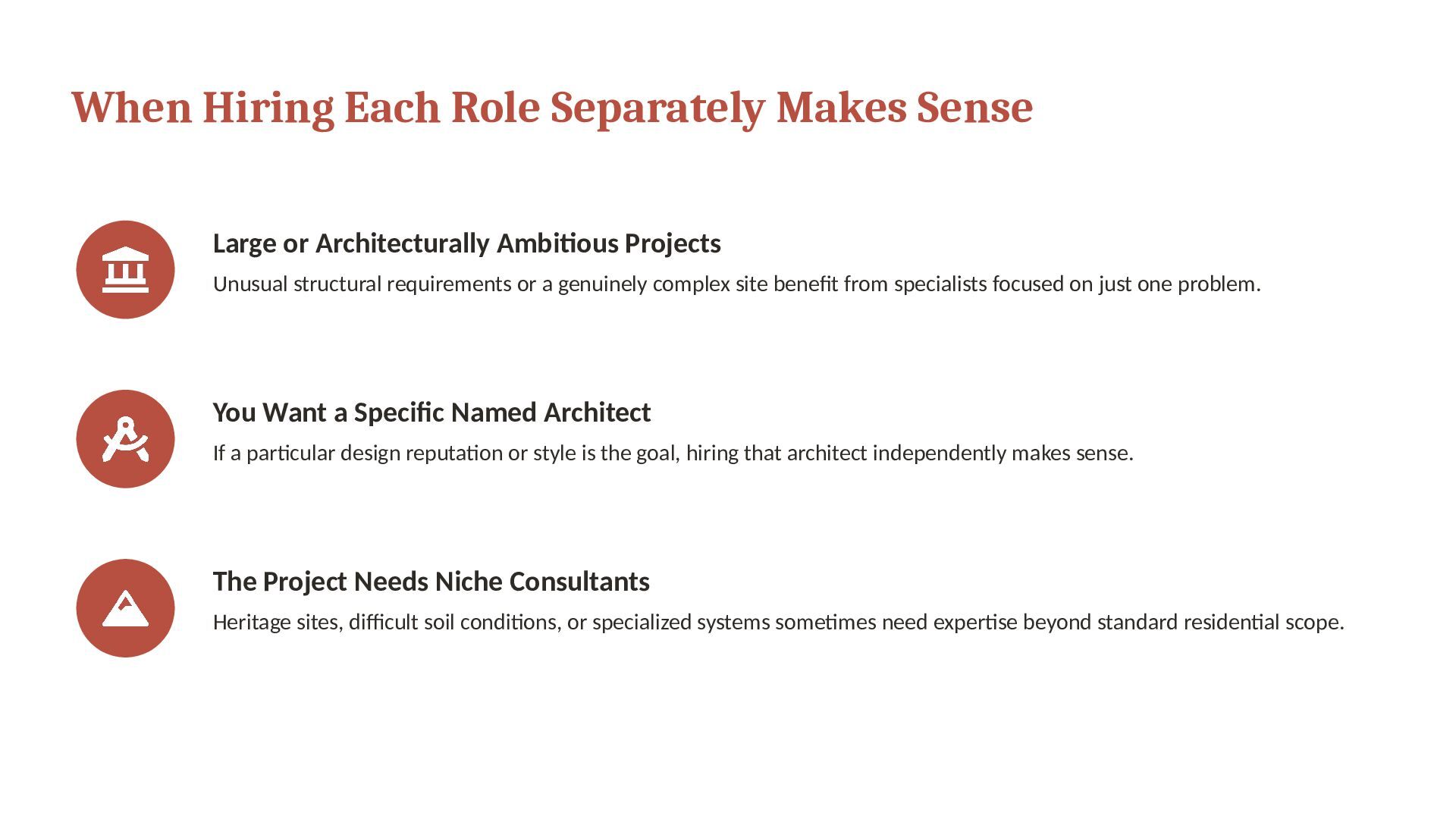
  8. When Hiring Each Role Separately Makes Sense Large or Architecturally

    Ambitious Projects Unusual structural requirements or a genuinely complex site benefit from specialists focused on just one problem. You Want a Specific Named Architect If a particular design reputation or style is the goal, hiring that architect independently makes sense. The Project Needs Niche Consultants Heritage sites, difficult soil conditions, or specialized systems sometimes need expertise beyond standard residential scope.
  9. When One Team Makes More Sense For most residential and

    small commercial projects, the bigger risk isn’t a lack of expertise — it’s the gap between people who were hired separately and never quite agree on the details. The architect says one thing, the contractor interprets it differently, and nobody’s clearly accountable when something needs fixing. That’s usually when a construction company in Jaipur that keeps design, civil work, interiors, and PMC under one roof makes the practical difference — fewer handoffs, one point of accountability if something needs fixing.
  10. Know Who You’re Hiring, Before You Hire Them. A project-roles

    guide for homeowners and businesses planning construction in Jaipur. www.nakshaconstruction.com