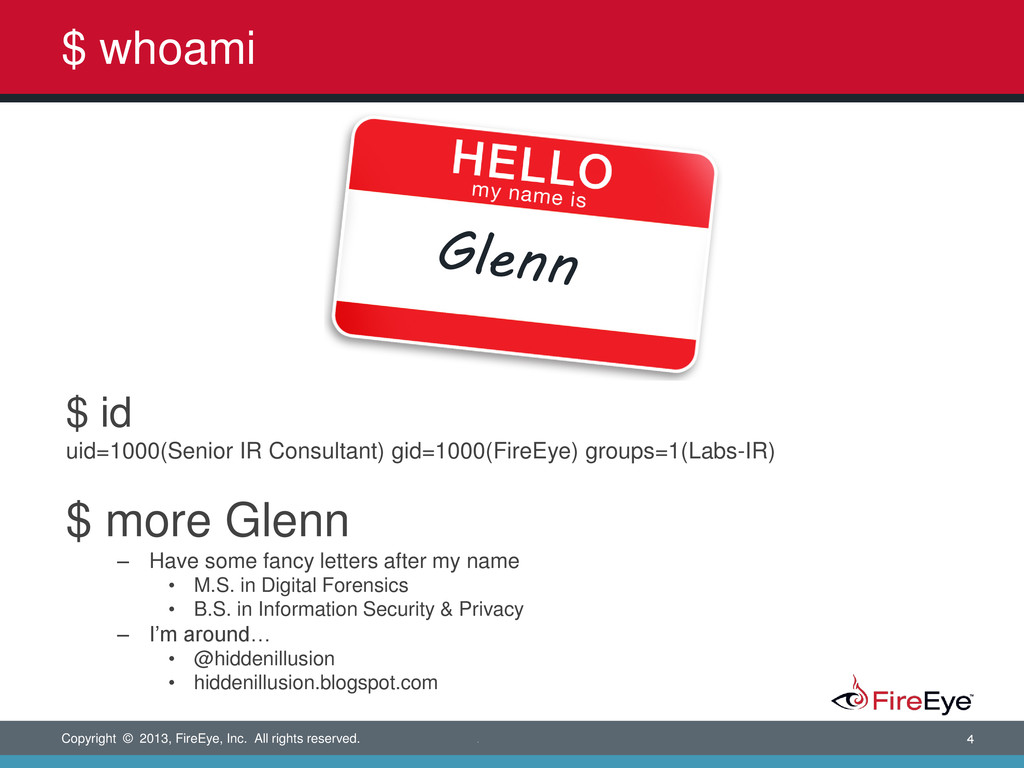
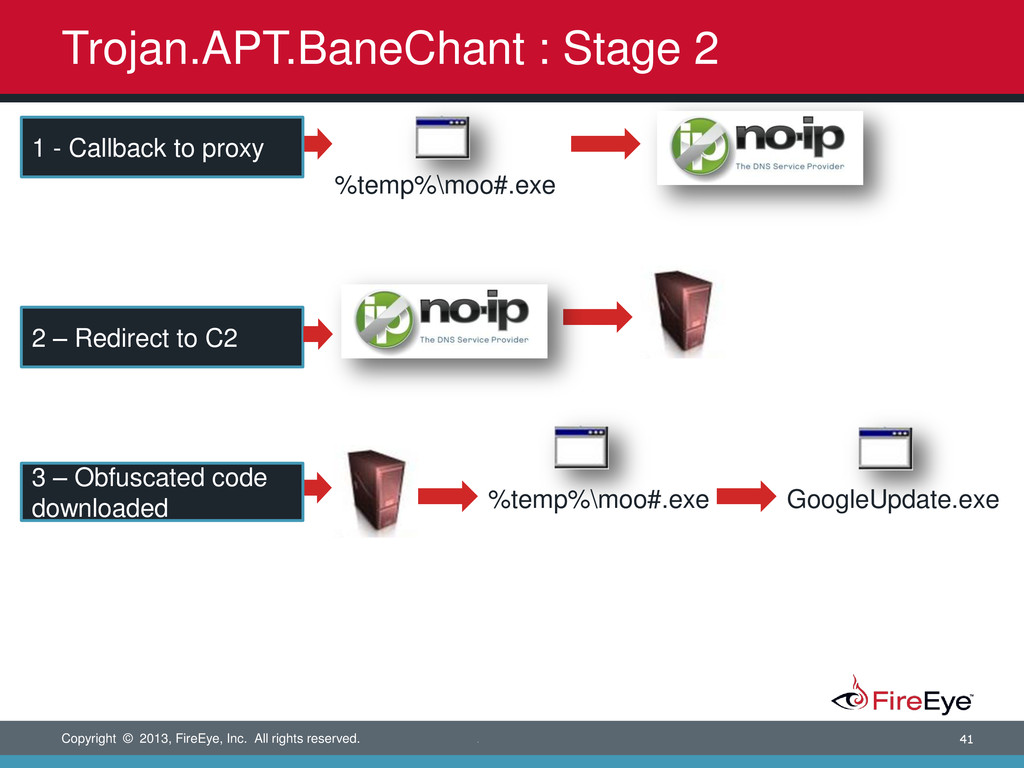
4 $ whoami $ id uid=1000(Senior IR Consultant) gid=1000(FireEye) groups=1(Labs-IR) $ more Glenn – Have some fancy letters after my name • M.S. in Digital Forensics • B.S. in Information Security & Privacy – I’m around… • @hiddenillusion • hiddenillusion.blogspot.com
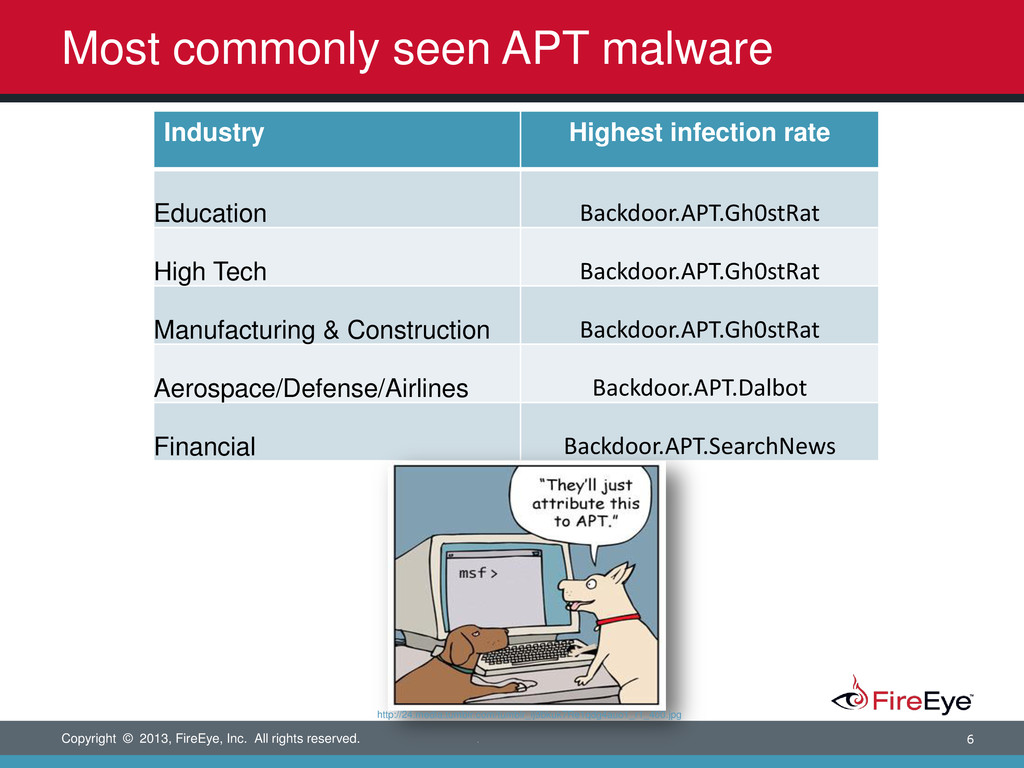
6 Most commonly seen APT malware Industry Highest infection rate Education Backdoor.APT.Gh0stRat High Tech Backdoor.APT.Gh0stRat Manufacturing & Construction Backdoor.APT.Gh0stRat Aerospace/Defense/Airlines Backdoor.APT.Dalbot Financial Backdoor.APT.SearchNews http://24.media.tumblr.com/tumblr_lj9bkuk7Re1qdg4auo1_r1_400.jpg
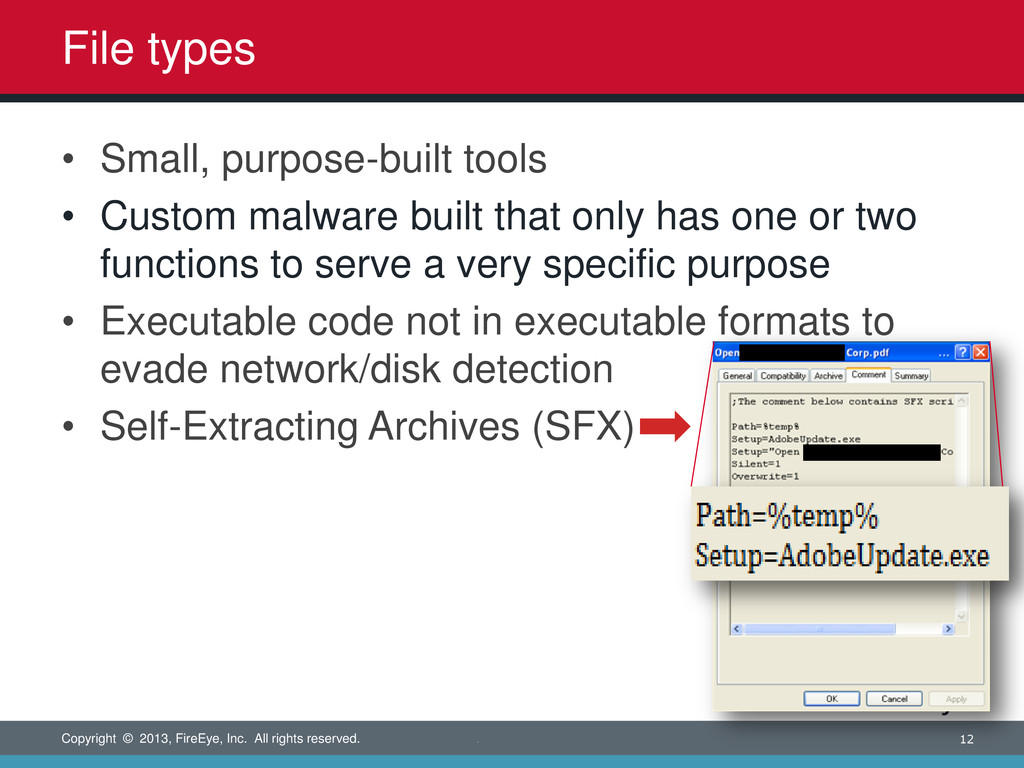
12 File types • Small, purpose-built tools • Custom malware built that only has one or two functions to serve a very specific purpose • Executable code not in executable formats to evade network/disk detection • Self-Extracting Archives (SFX)
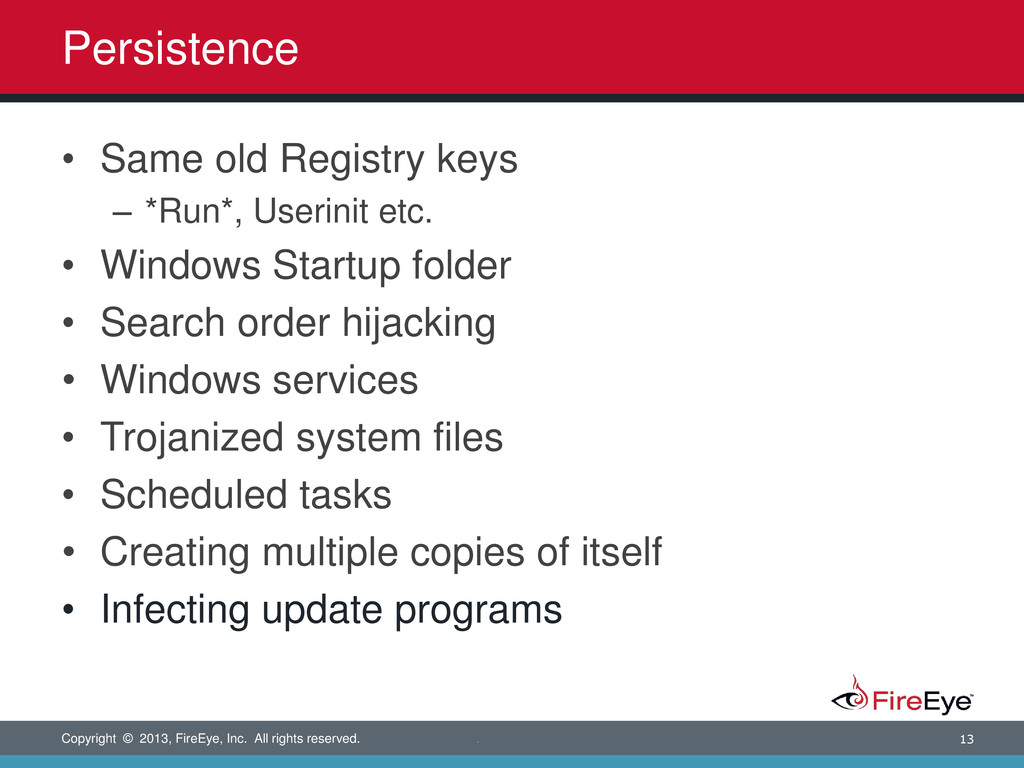
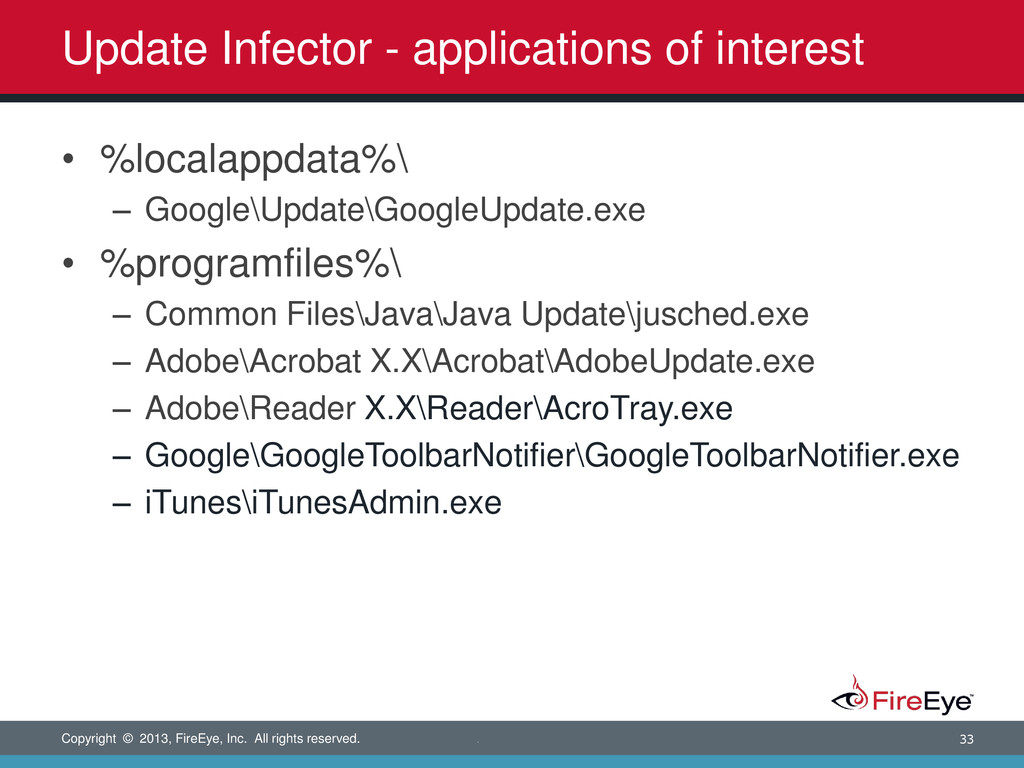
13 Persistence • Same old Registry keys – *Run*, Userinit etc. • Windows Startup folder • Search order hijacking • Windows services • Trojanized system files • Scheduled tasks • Creating multiple copies of itself • Infecting update programs
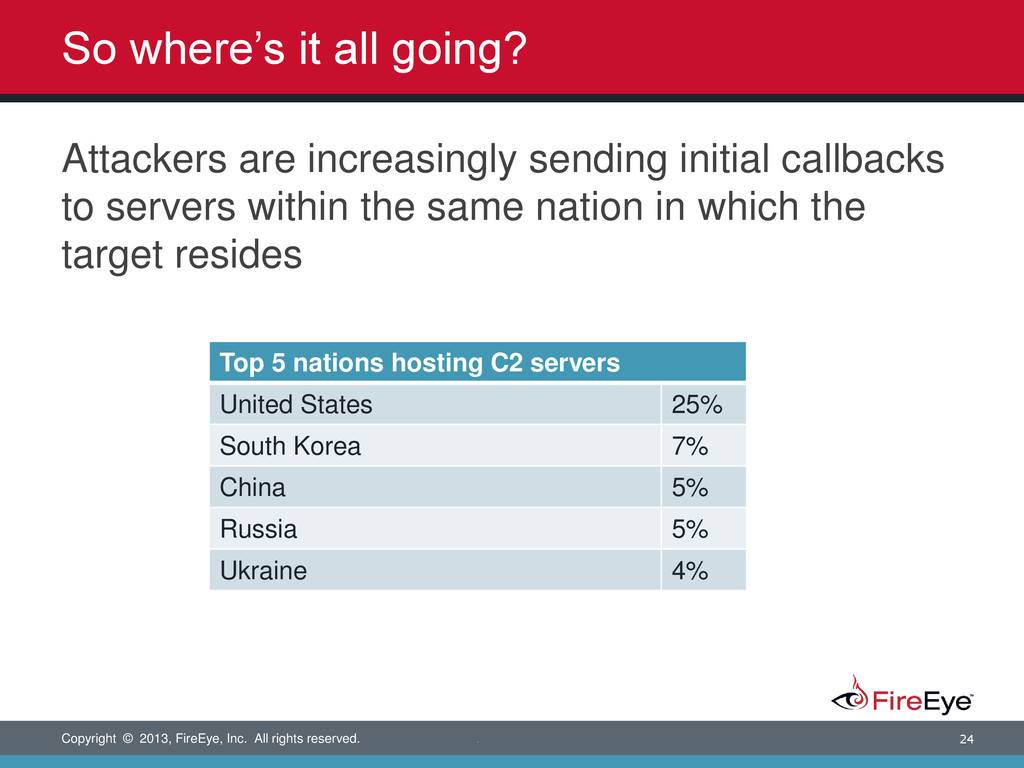
24 So where’s it all going? Attackers are increasingly sending initial callbacks to servers within the same nation in which the target resides Top 5 nations hosting C2 servers United States 25% South Korea 7% China 5% Russia 5% Ukraine 4%
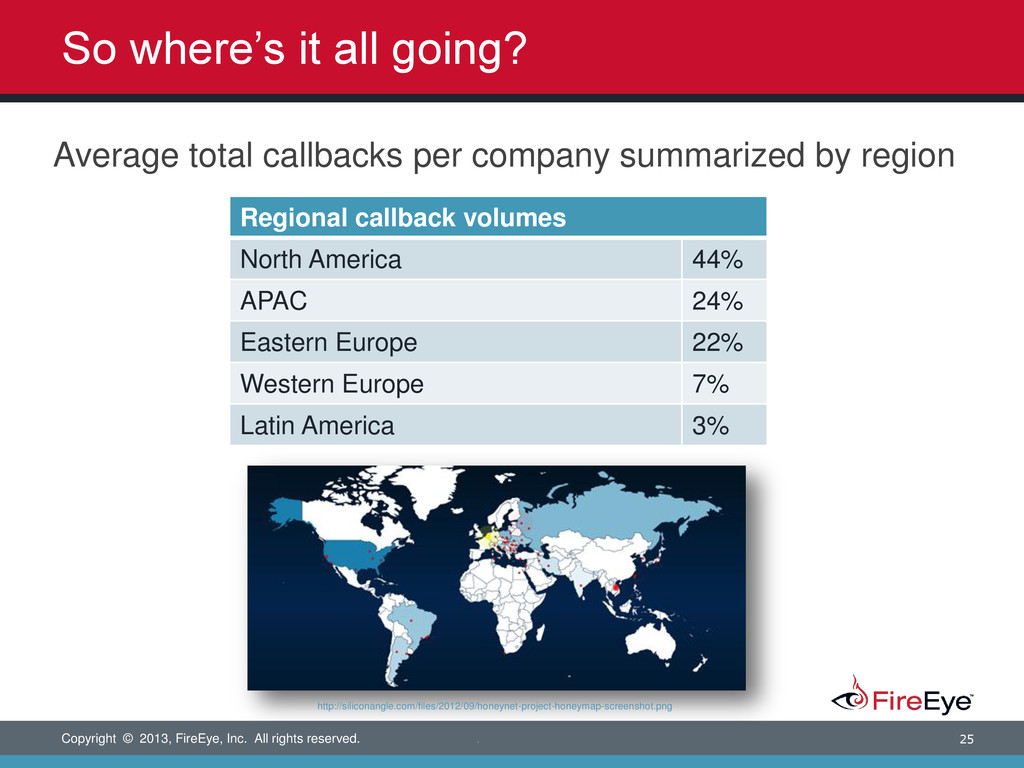
25 So where’s it all going? Average total callbacks per company summarized by region Regional callback volumes North America 44% APAC 24% Eastern Europe 22% Western Europe 7% Latin America 3% http://siliconangle.com/files/2012/09/honeynet-project-honeymap-screenshot.png
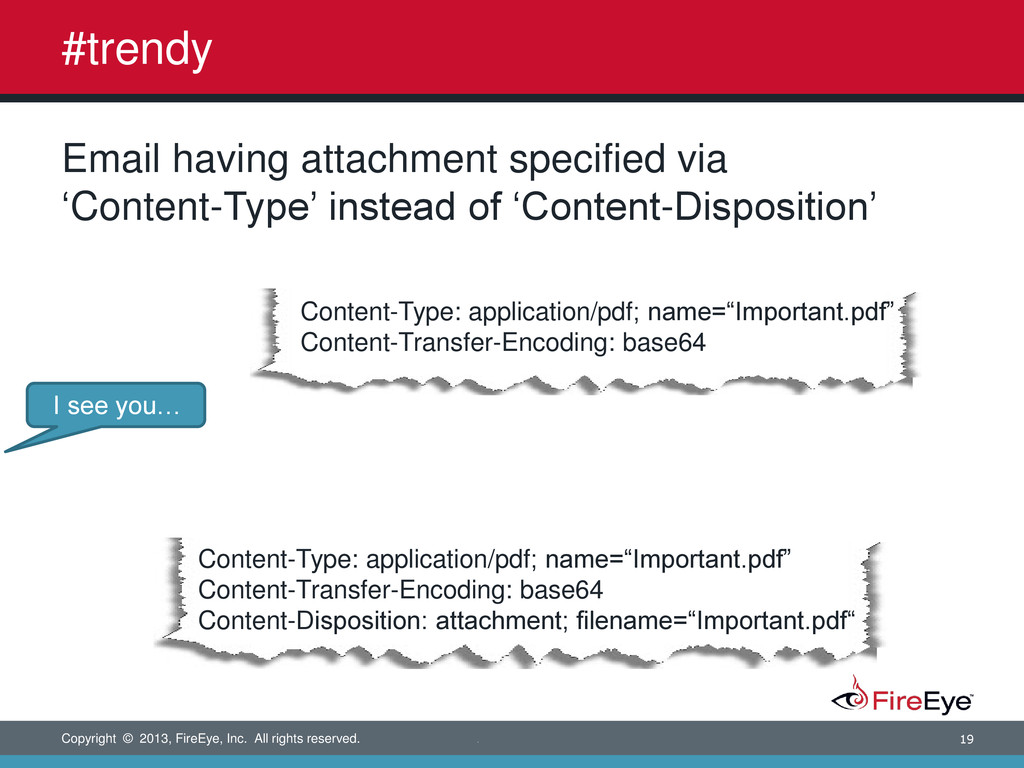
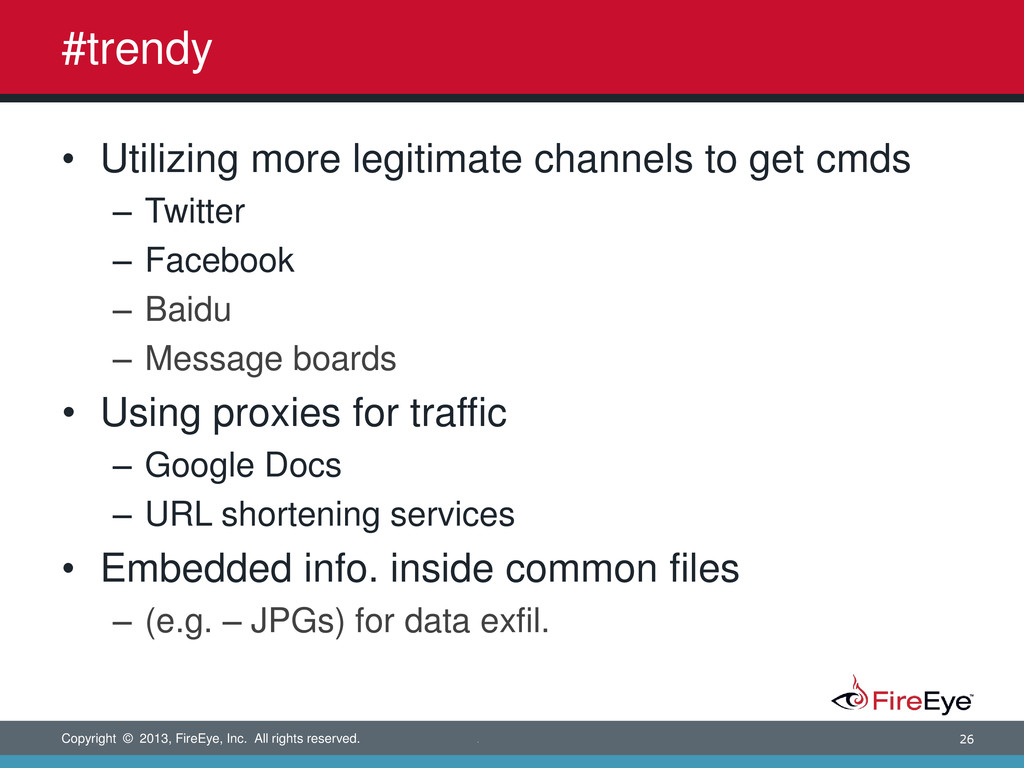
26 #trendy • Utilizing more legitimate channels to get cmds – Twitter – Facebook – Baidu – Message boards • Using proxies for traffic – Google Docs – URL shortening services • Embedded info. inside common files – (e.g. – JPGs) for data exfil.
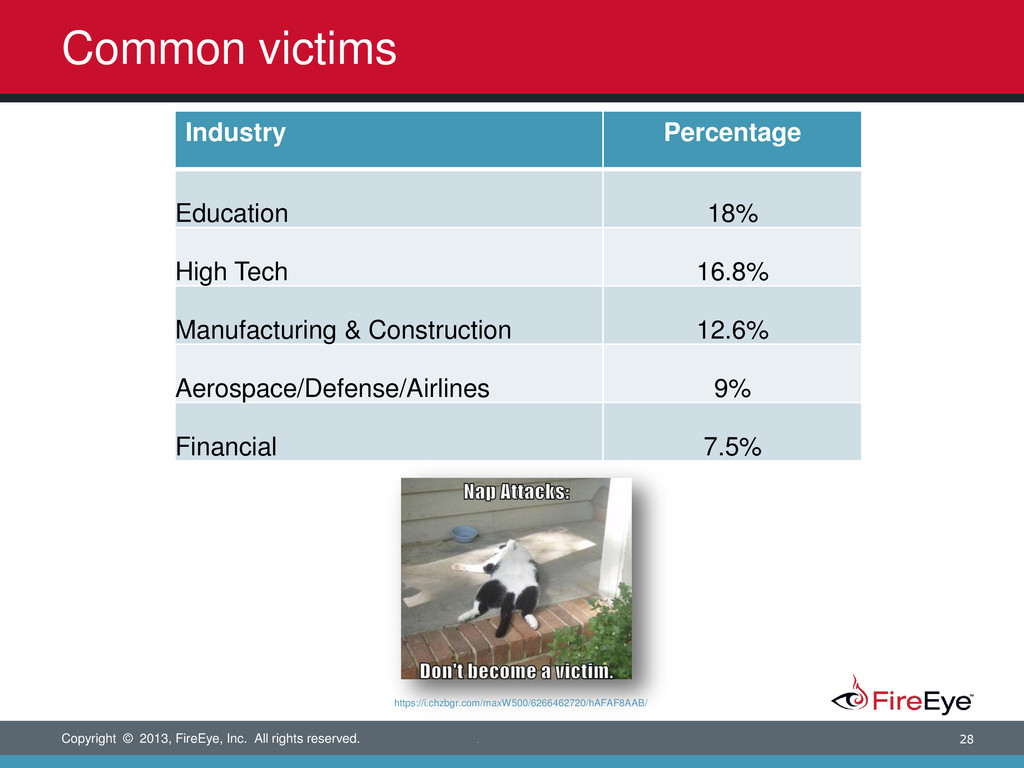
28 Common victims Industry Percentage Education 18% High Tech 16.8% Manufacturing & Construction 12.6% Aerospace/Defense/Airlines 9% Financial 7.5% https://i.chzbgr.com/maxW500/6266462720/hAFAF8AAB/
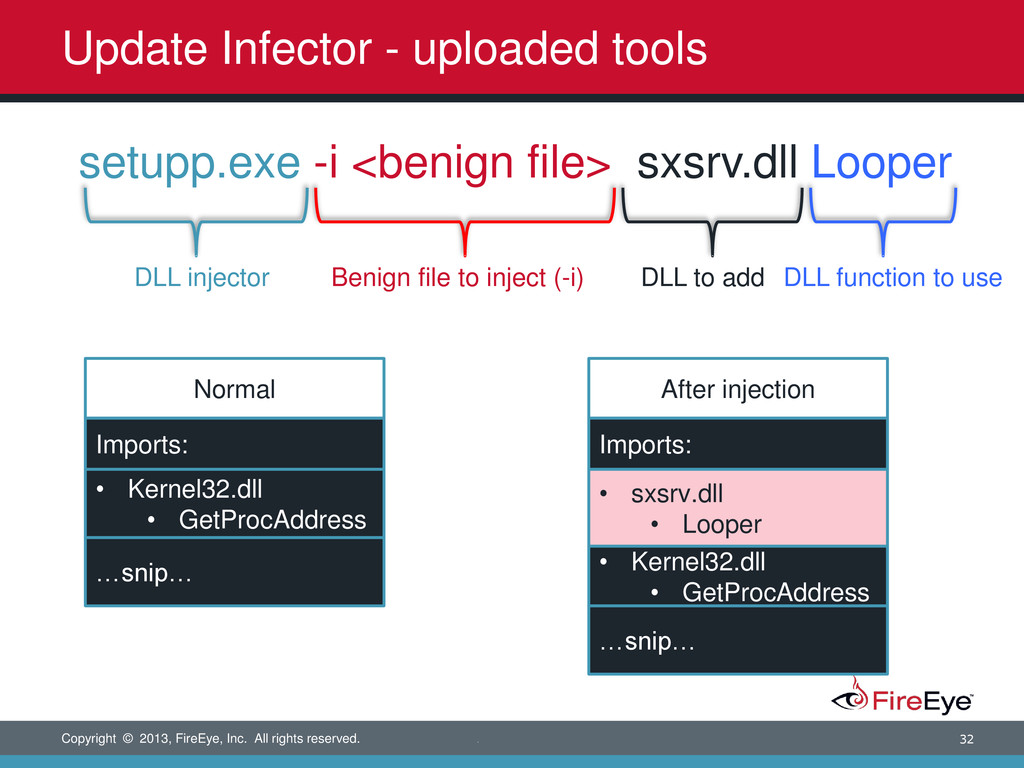
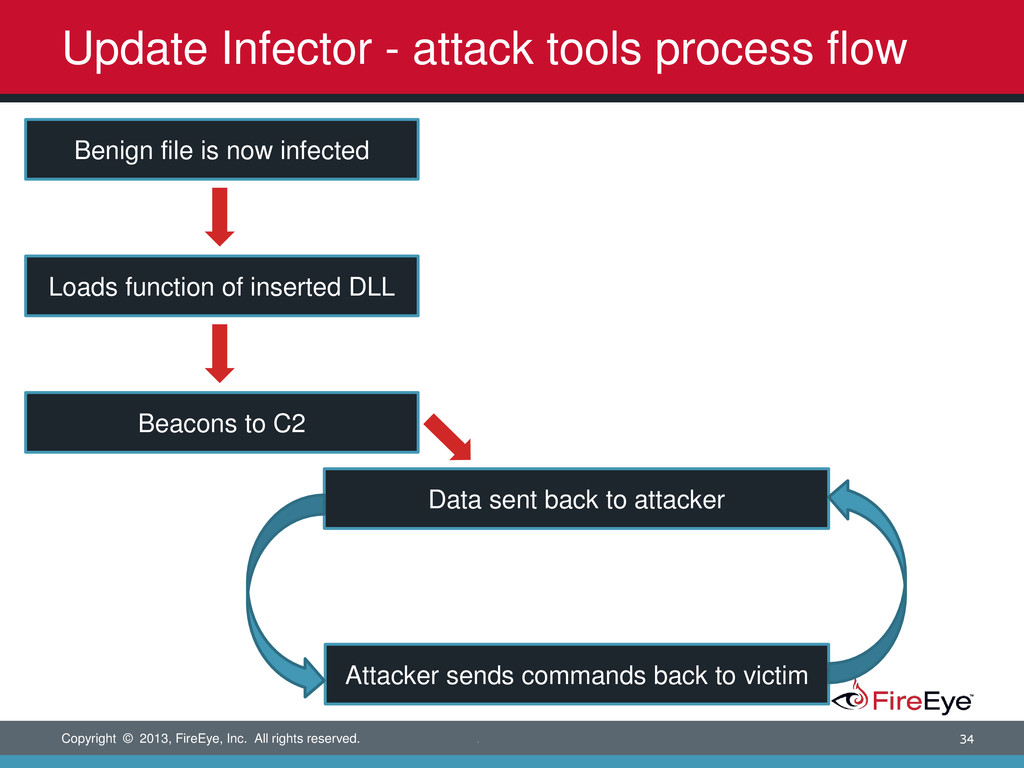
34 Update Infector - attack tools process flow Benign file is now infected Loads function of inserted DLL Beacons to C2 Attacker sends commands back to victim Data sent back to attacker
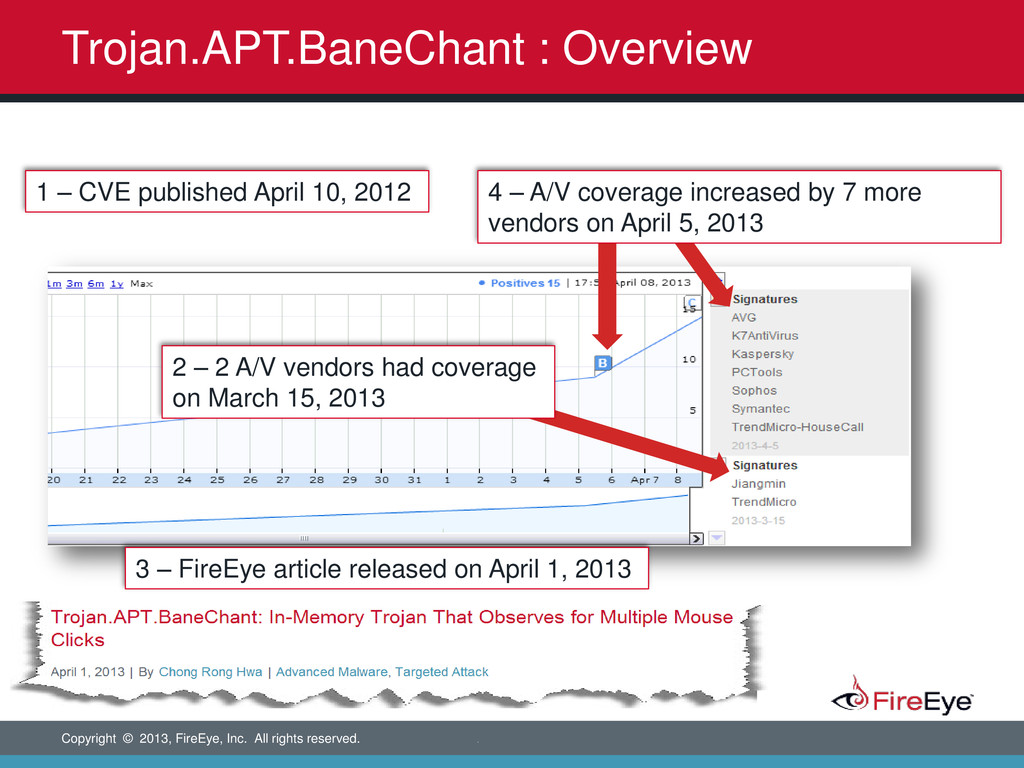
Trojan.APT.BaneChant : Overview 3 – FireEye article released on April 1, 2013 1 – CVE published April 10, 2012 4 – A/V coverage increased by 7 more vendors on April 5, 2013 2 – 2 A/V vendors had coverage on March 15, 2013
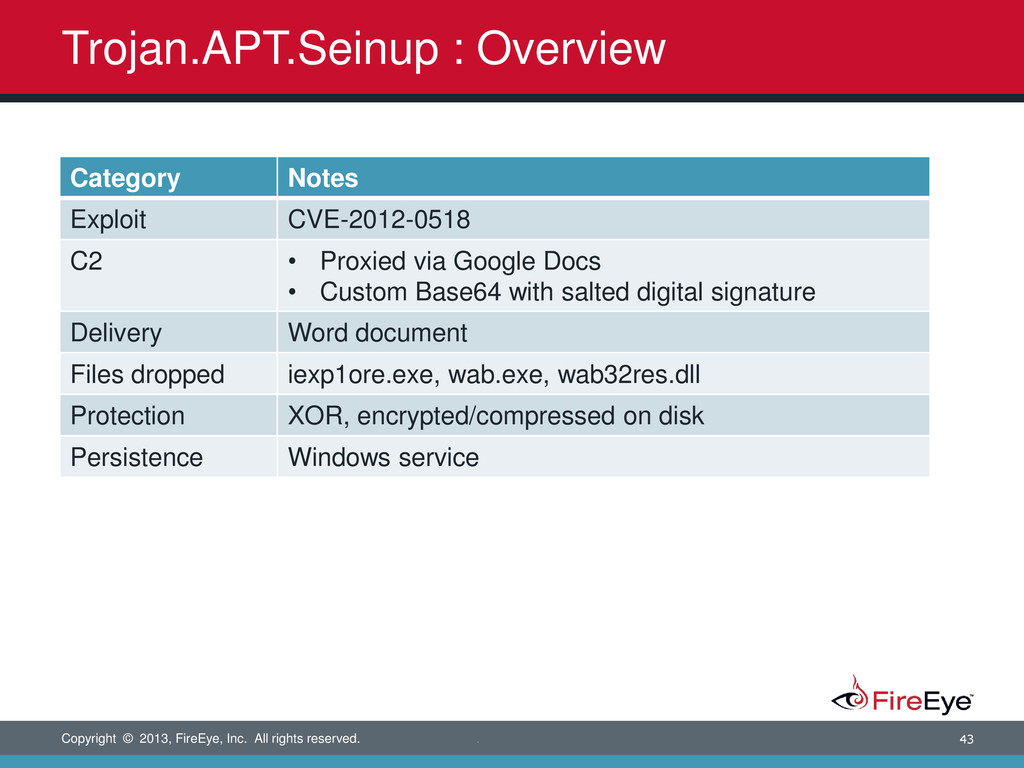
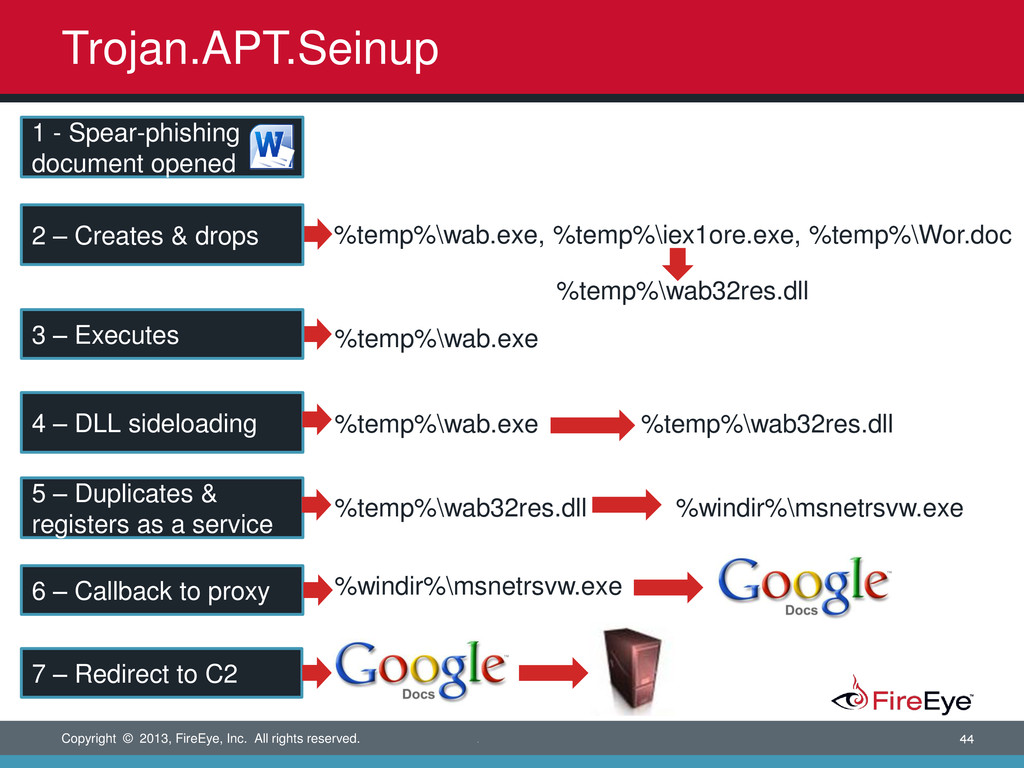
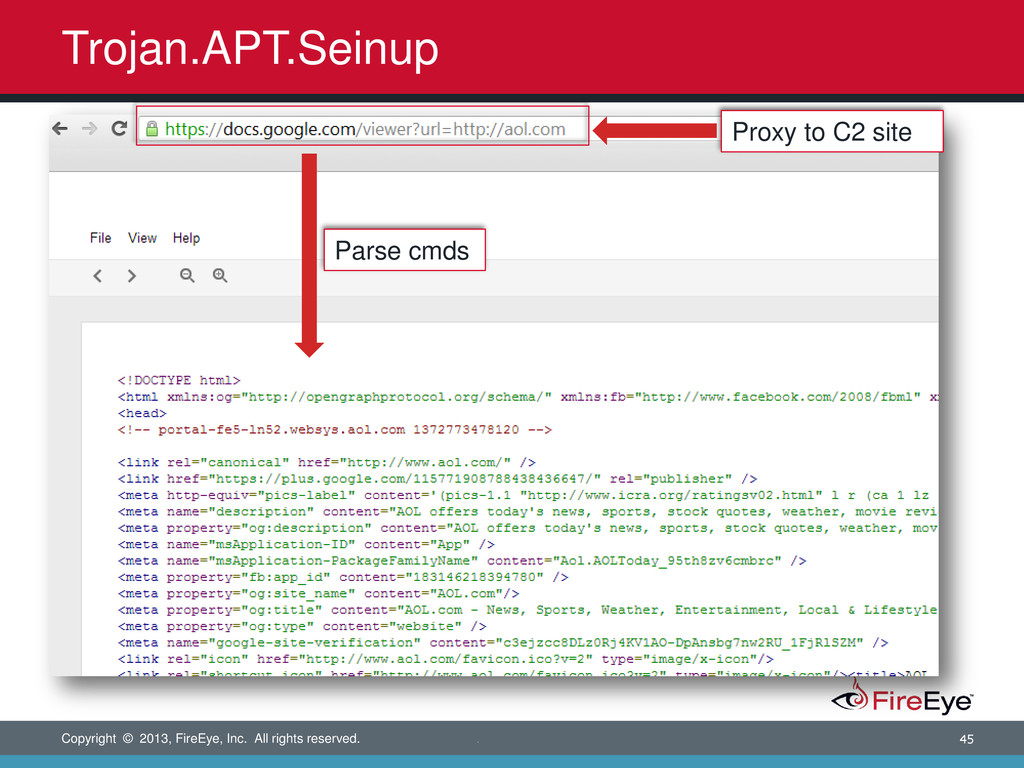
43 Trojan.APT.Seinup : Overview Category Notes Exploit CVE-2012-0518 C2 • Proxied via Google Docs • Custom Base64 with salted digital signature Delivery Word document Files dropped iexp1ore.exe, wab.exe, wab32res.dll Protection XOR, encrypted/compressed on disk Persistence Windows service


 hiddenillusion
 yama3133
.jpg) lamaglama39
lamaglama39
 fufufukakaka
 yachibit
 iktakahiro
 minorun365
 keio_smilab
 hamadakoji
 orgachem
 freee
freee
 soracom
 tokuty
 morganepeng
 dugsong
 aleyda
 inesmontani
 csswizardry
 livdayseo
 minecr
 techseoconnect
 rkendrick25
 axbom
axbom