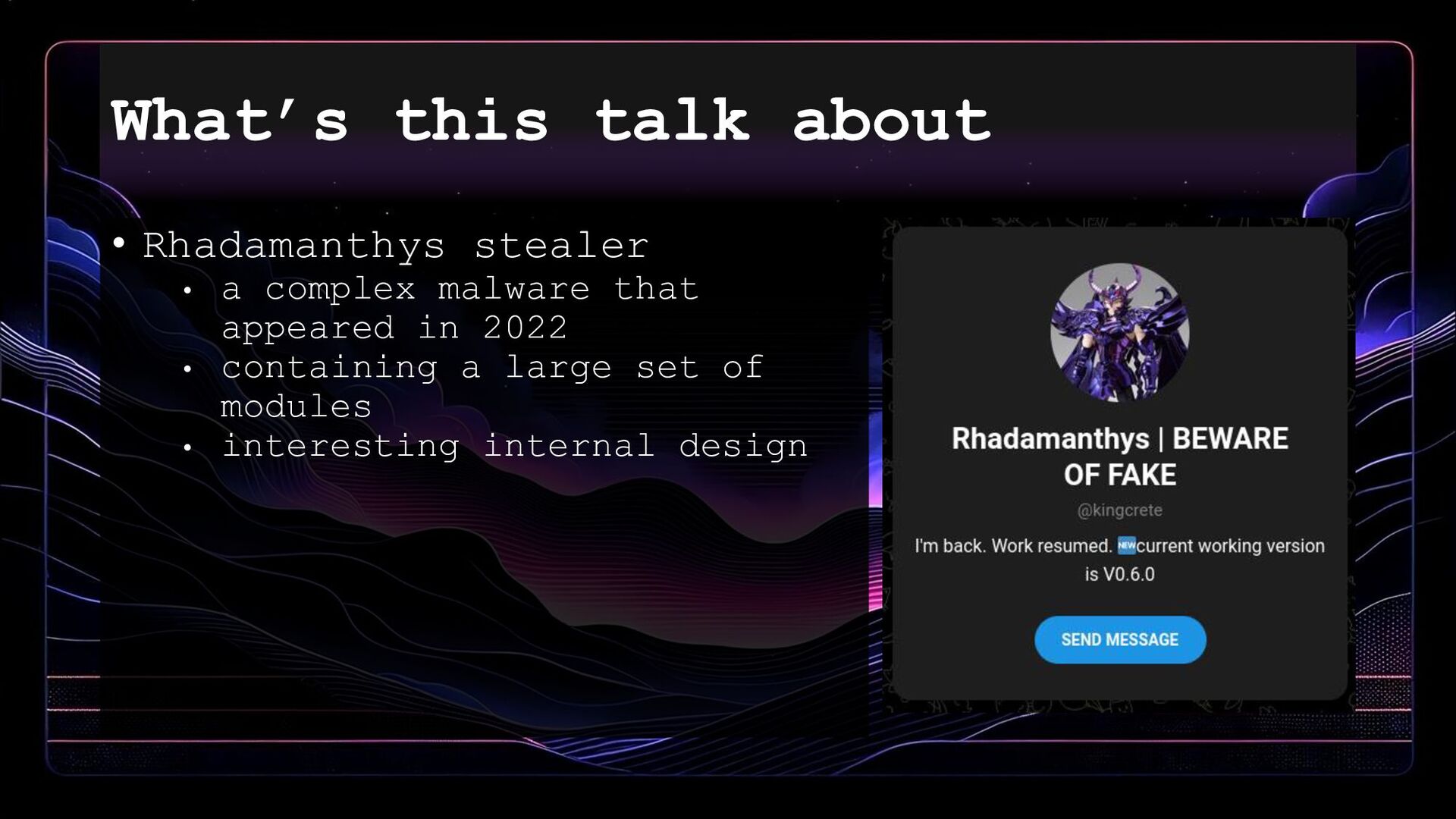
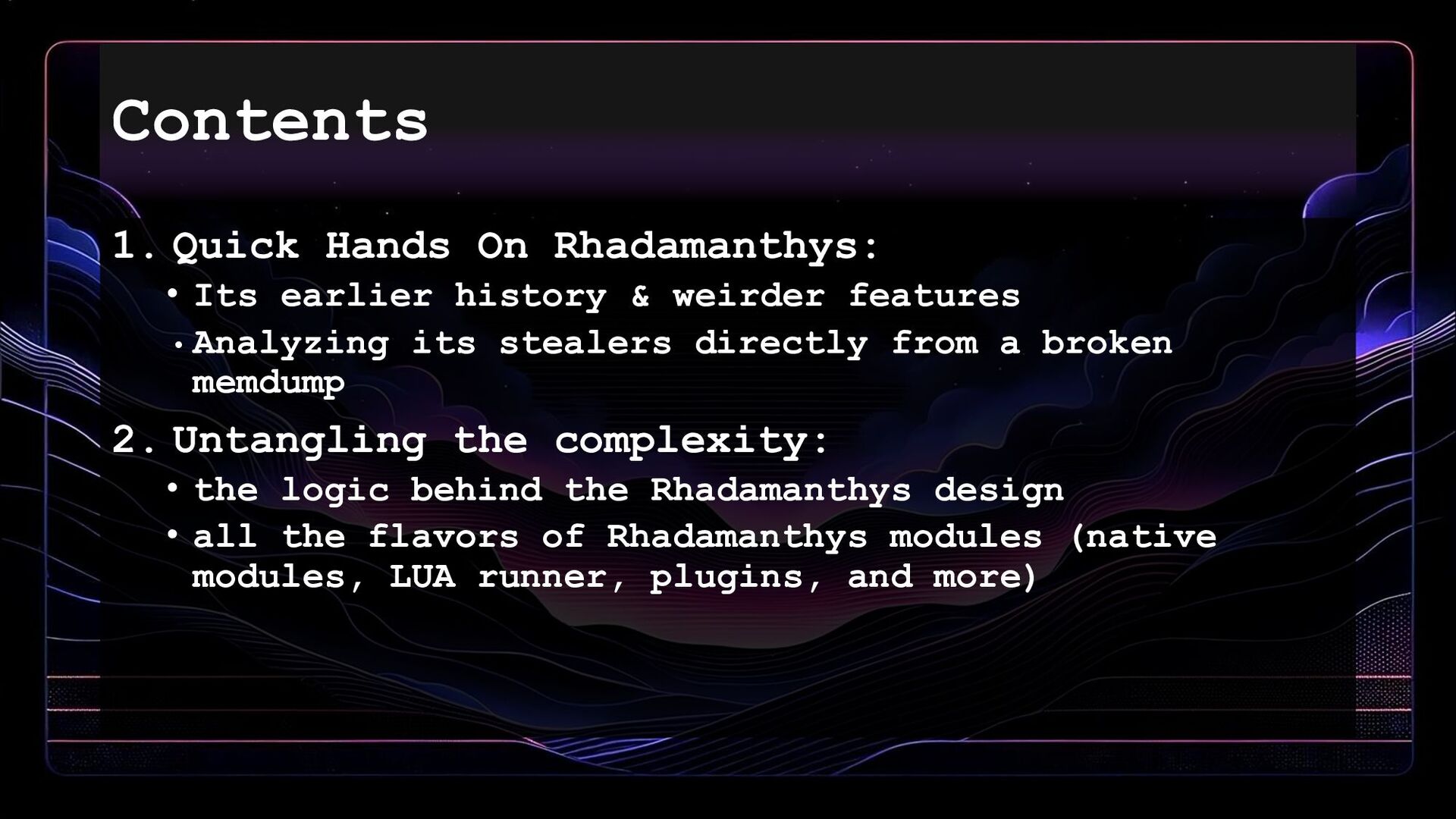
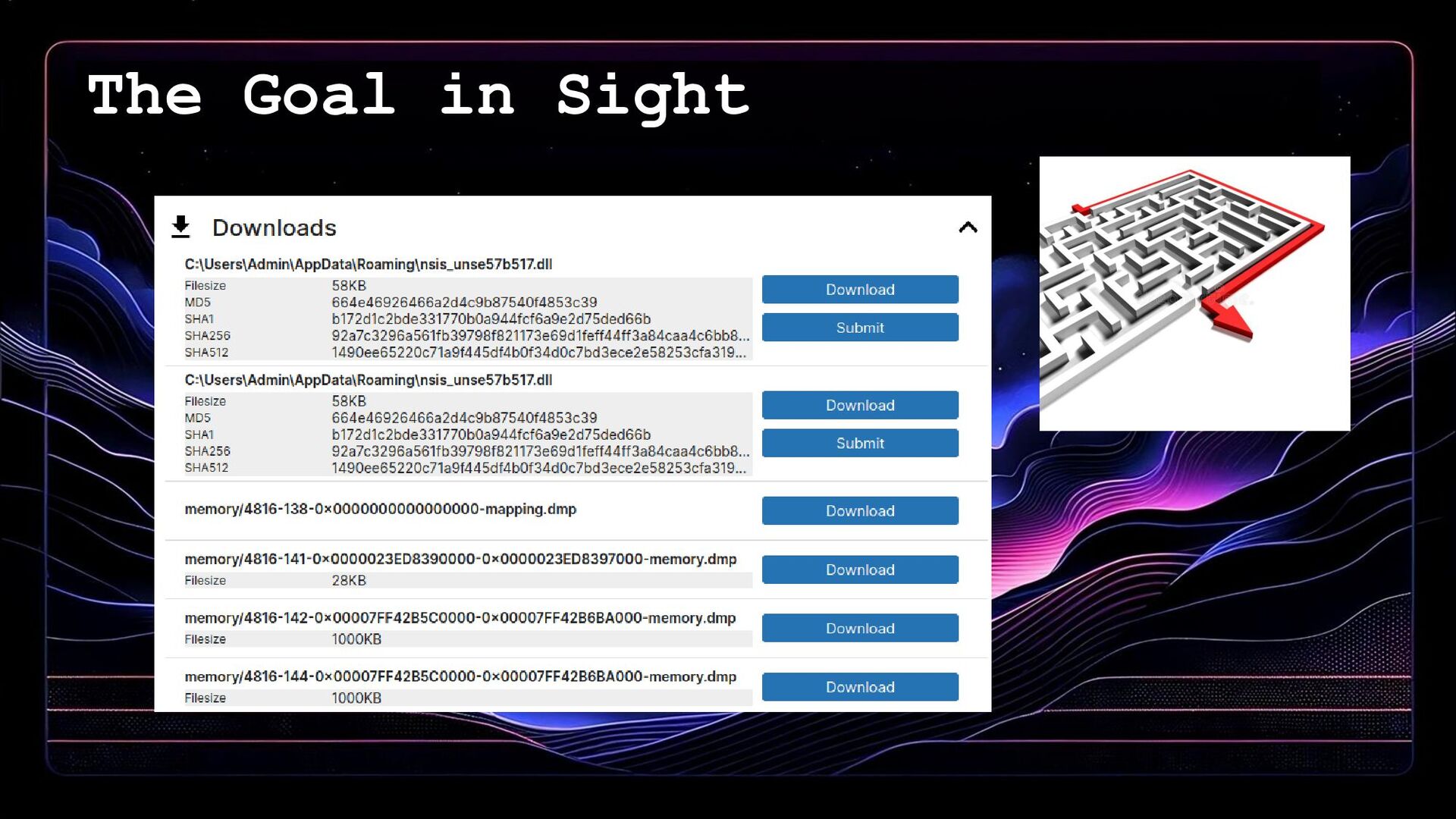
& weirder features • Analyzing its stealers directly from a broken memdump 2. Untangling the complexity: • the logic behind the Rhadamanthys design • all the flavors of Rhadamanthys modules (native modules, LUA runner, plugins, and more)
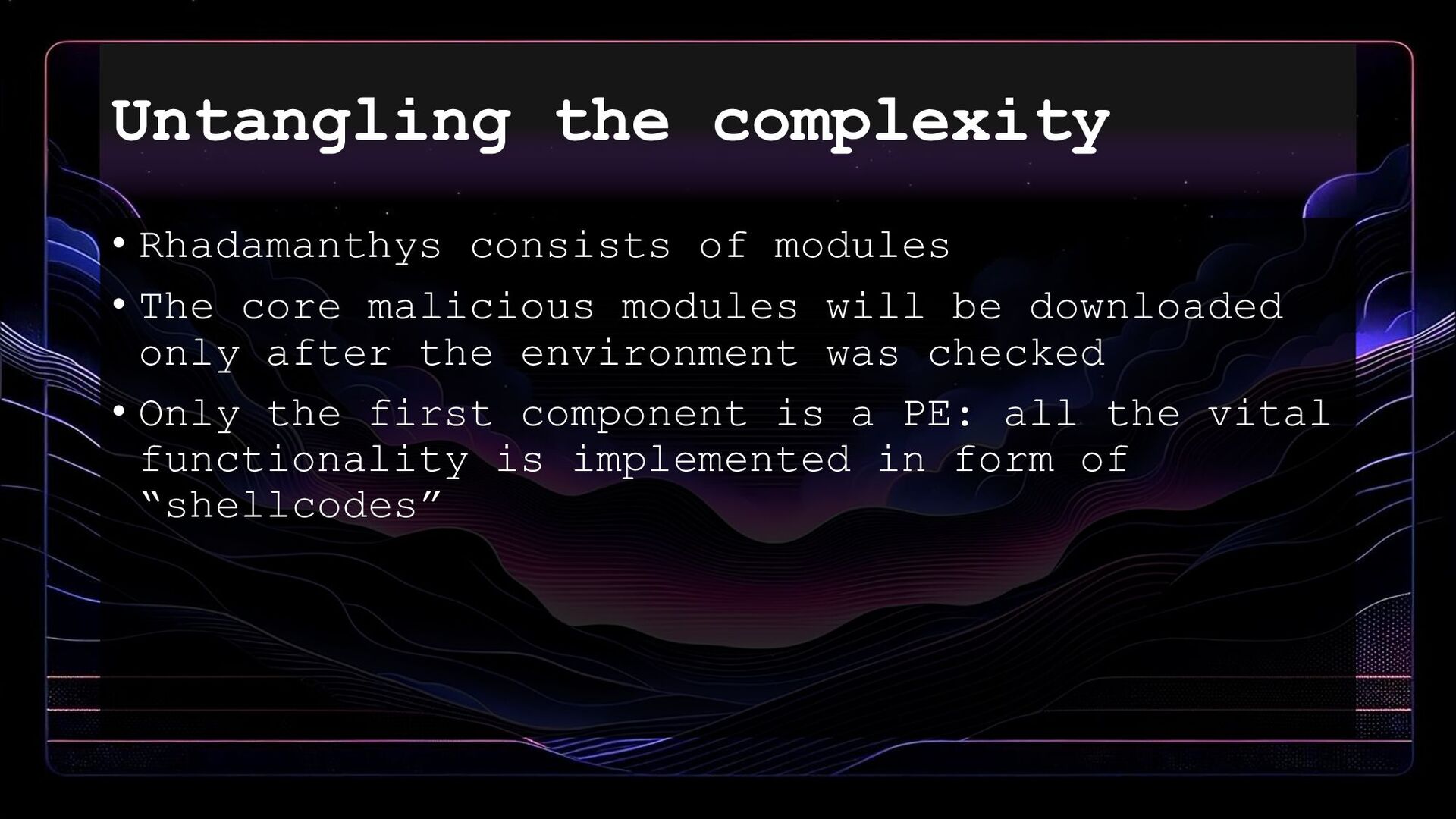
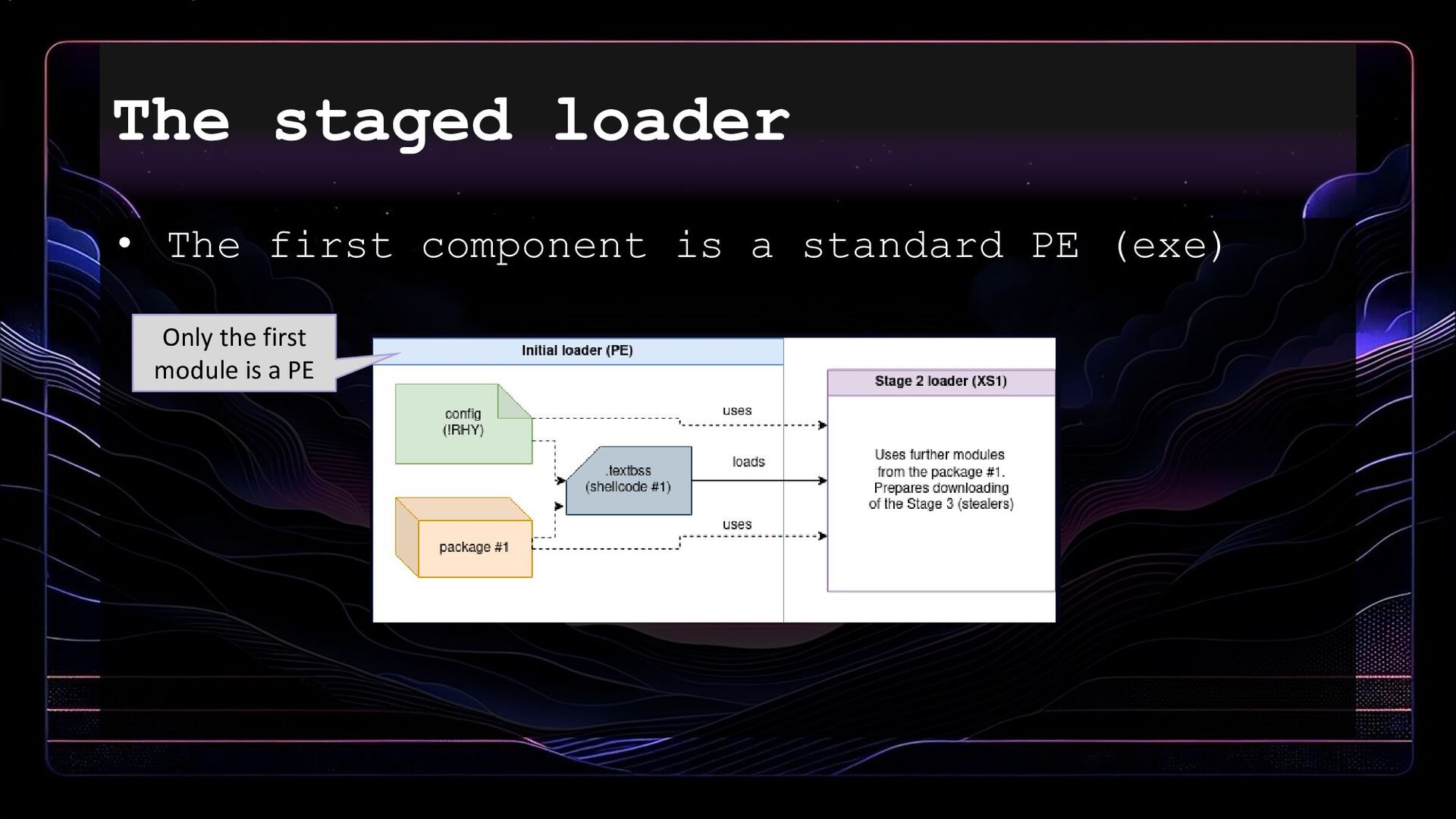
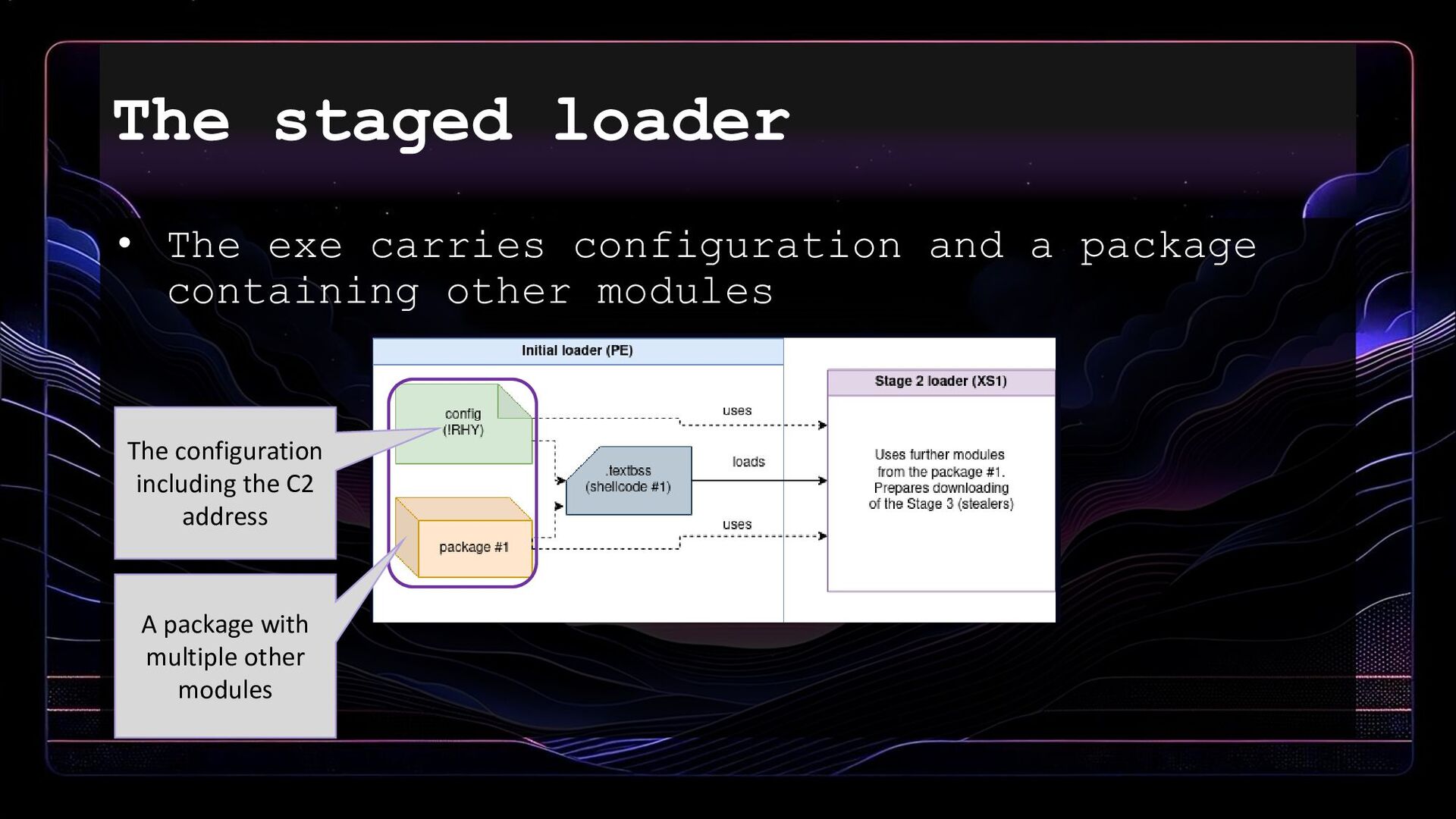
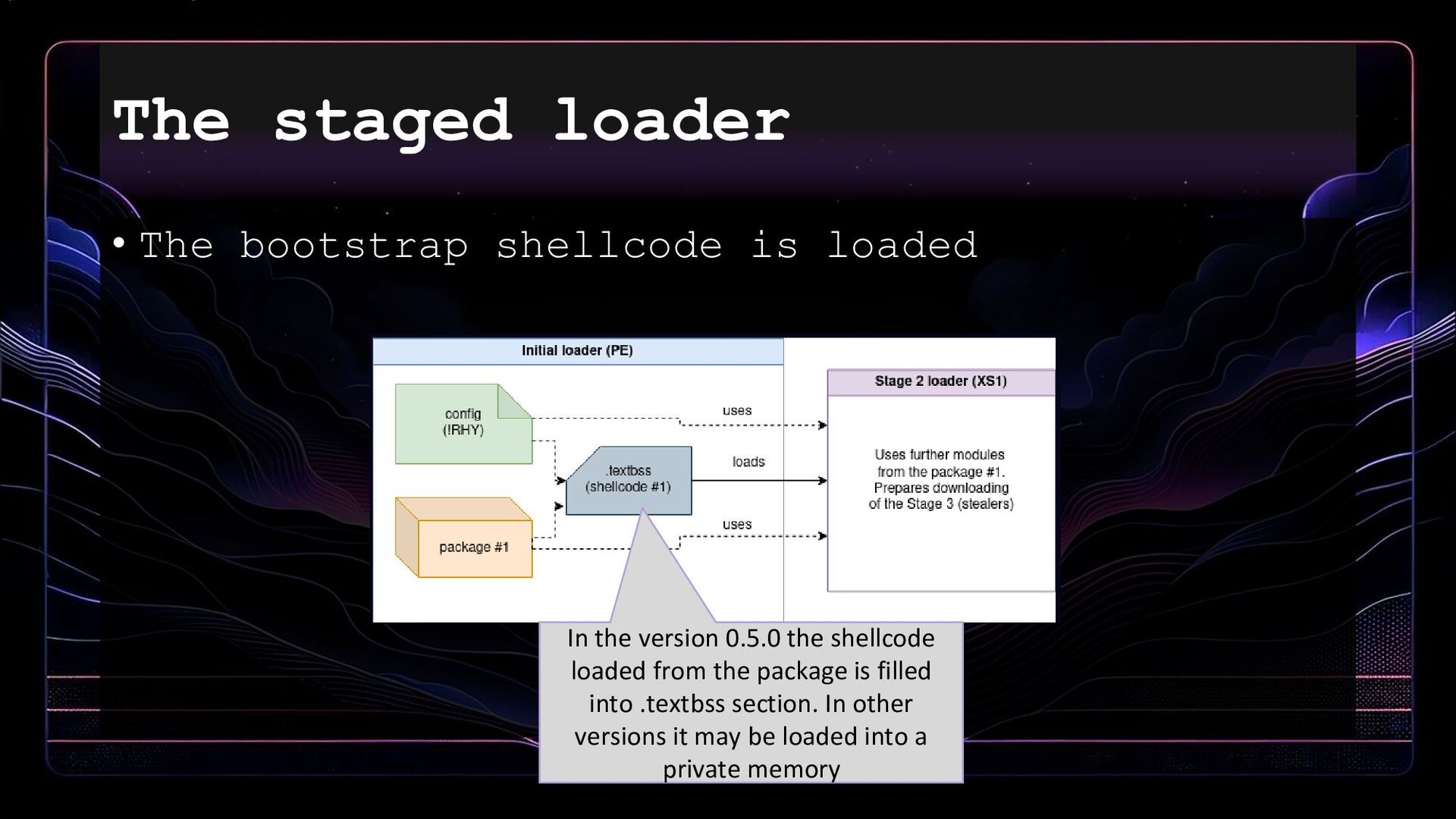
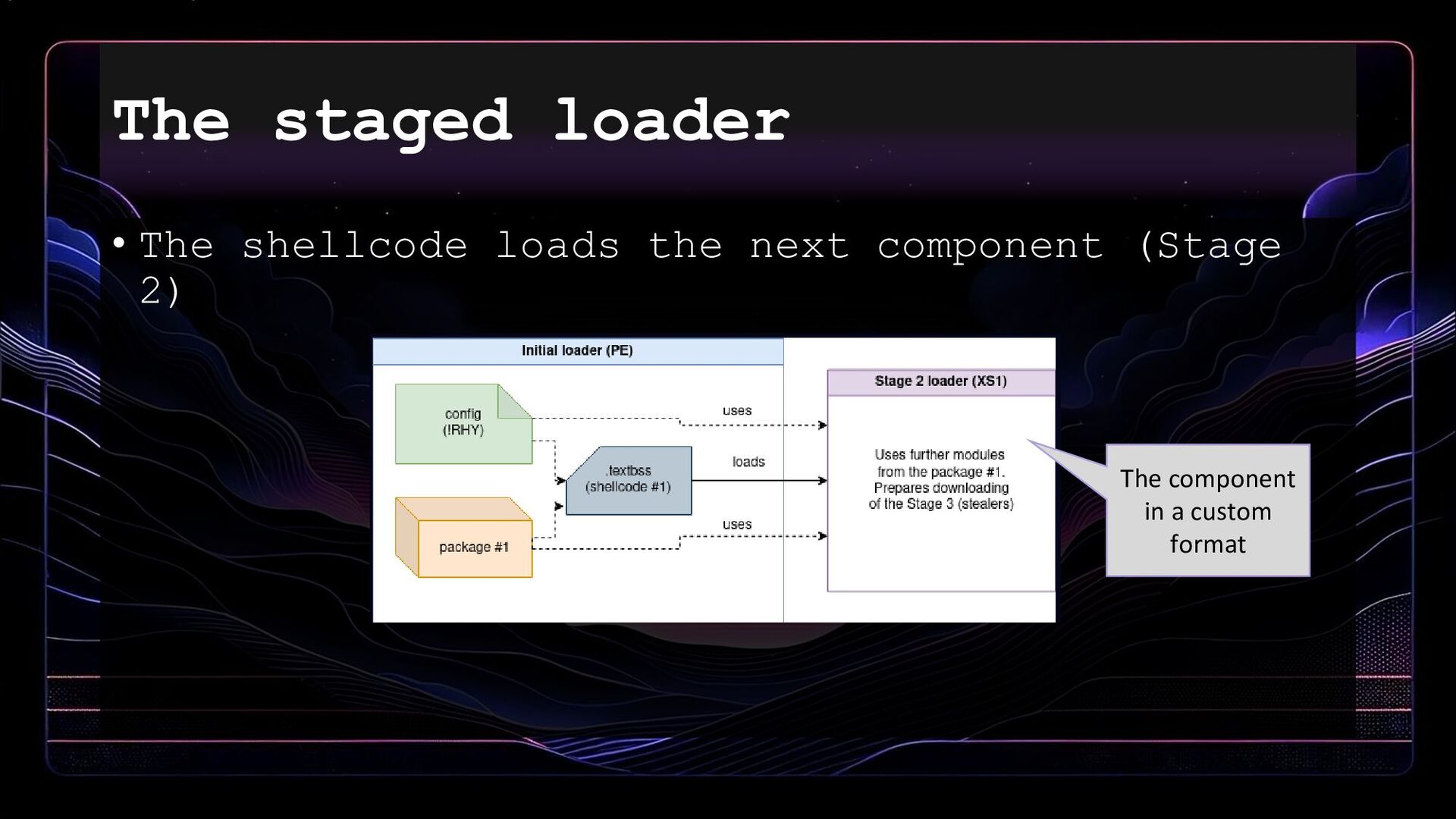
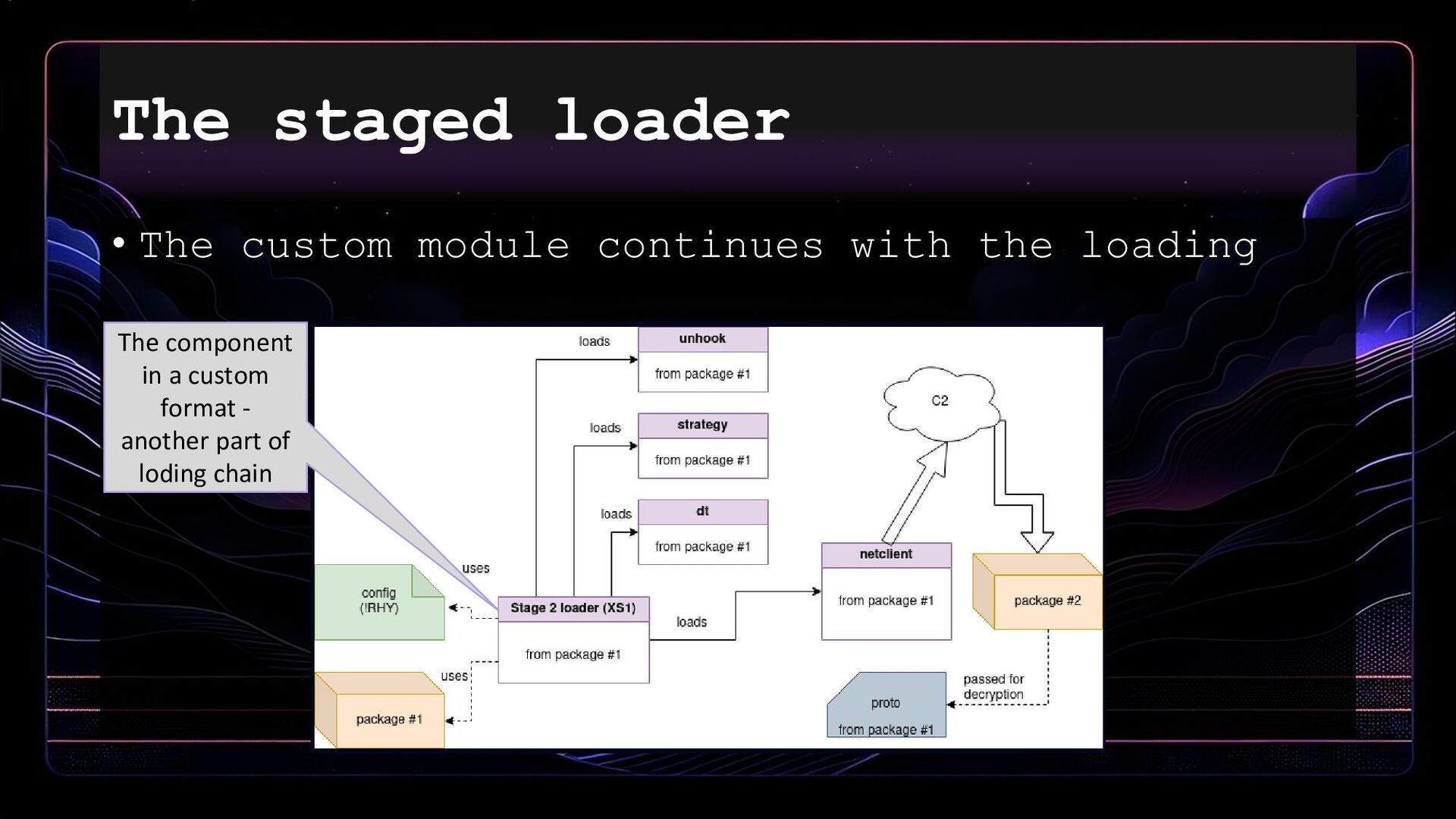
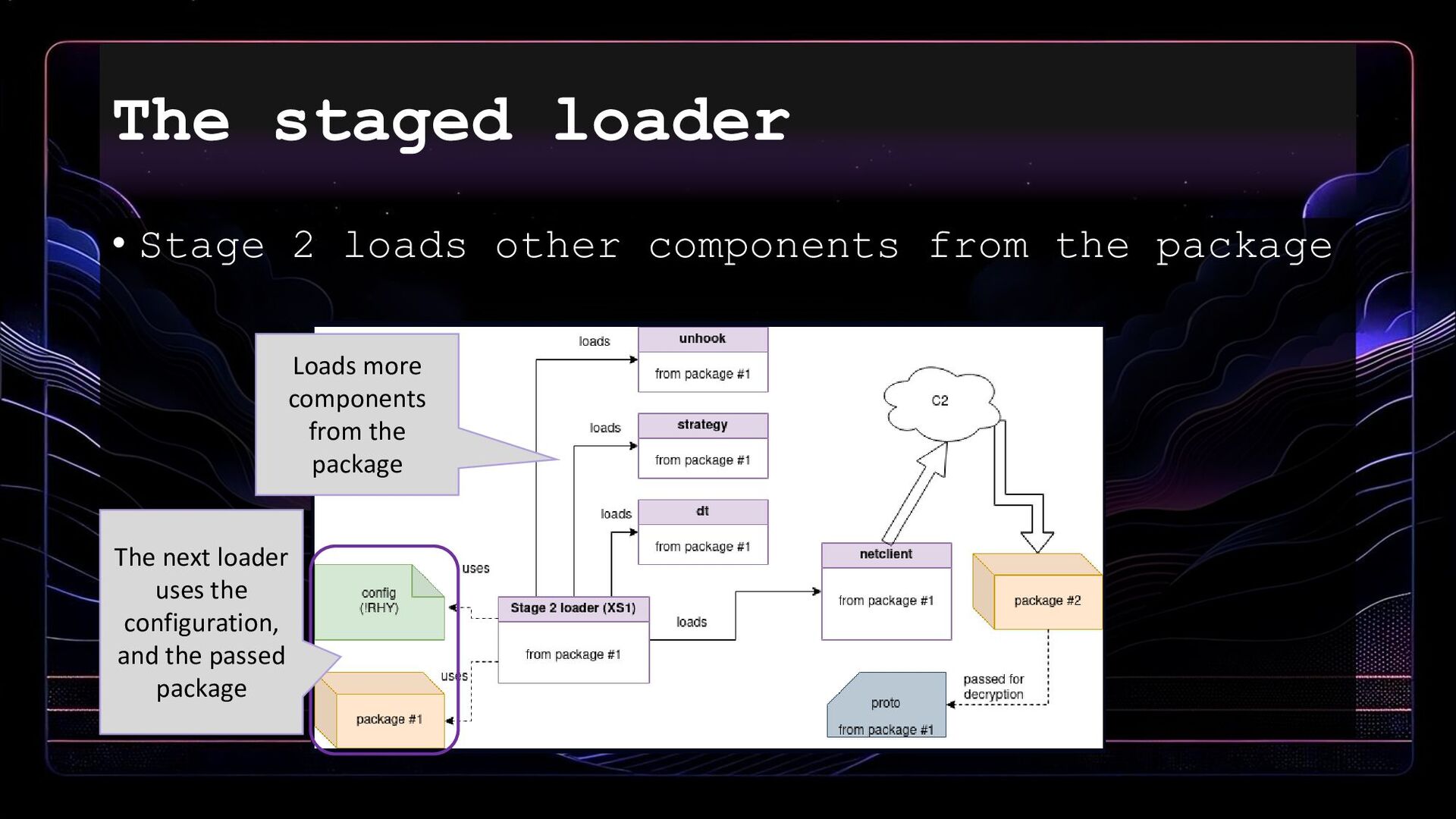
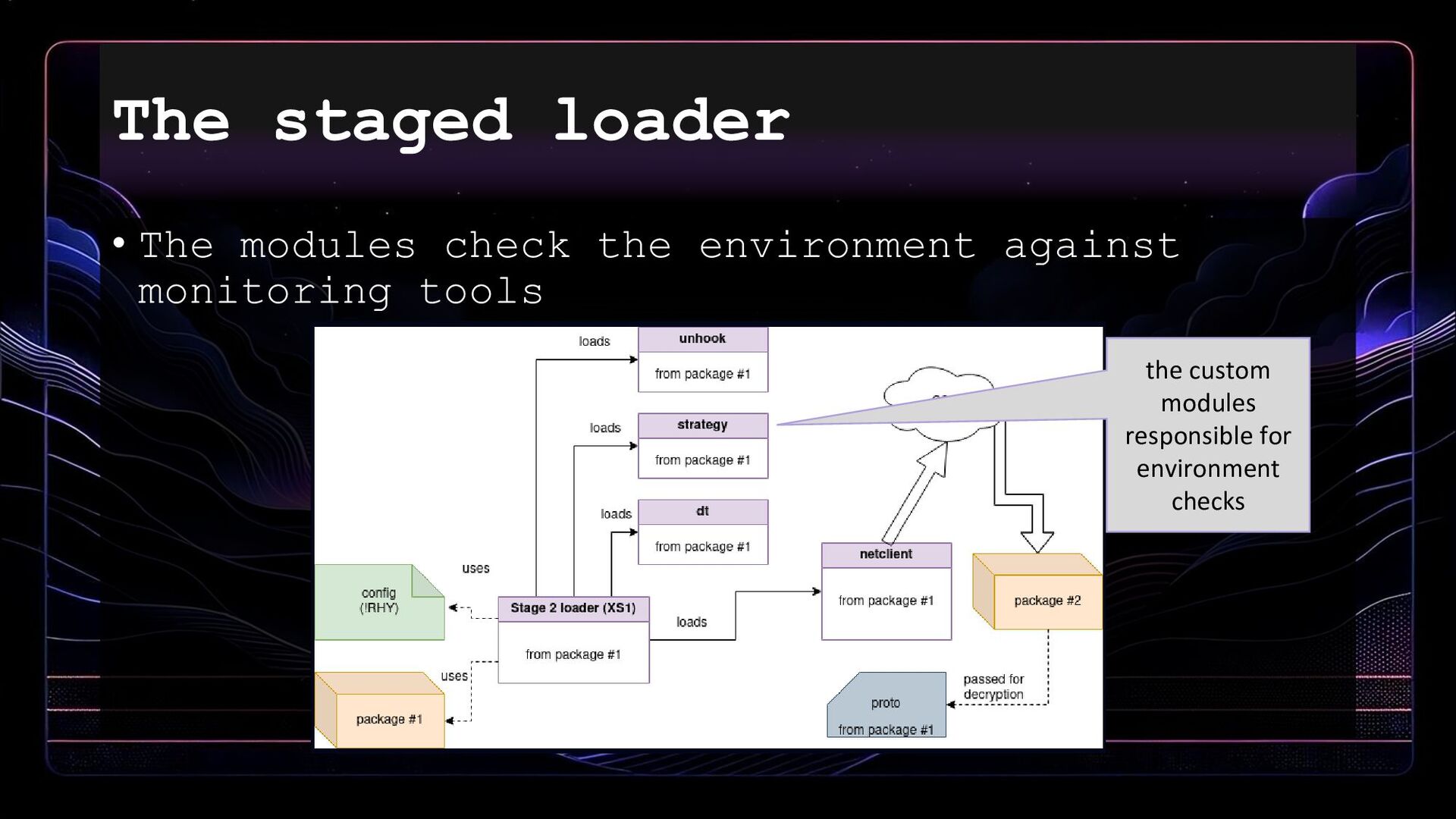
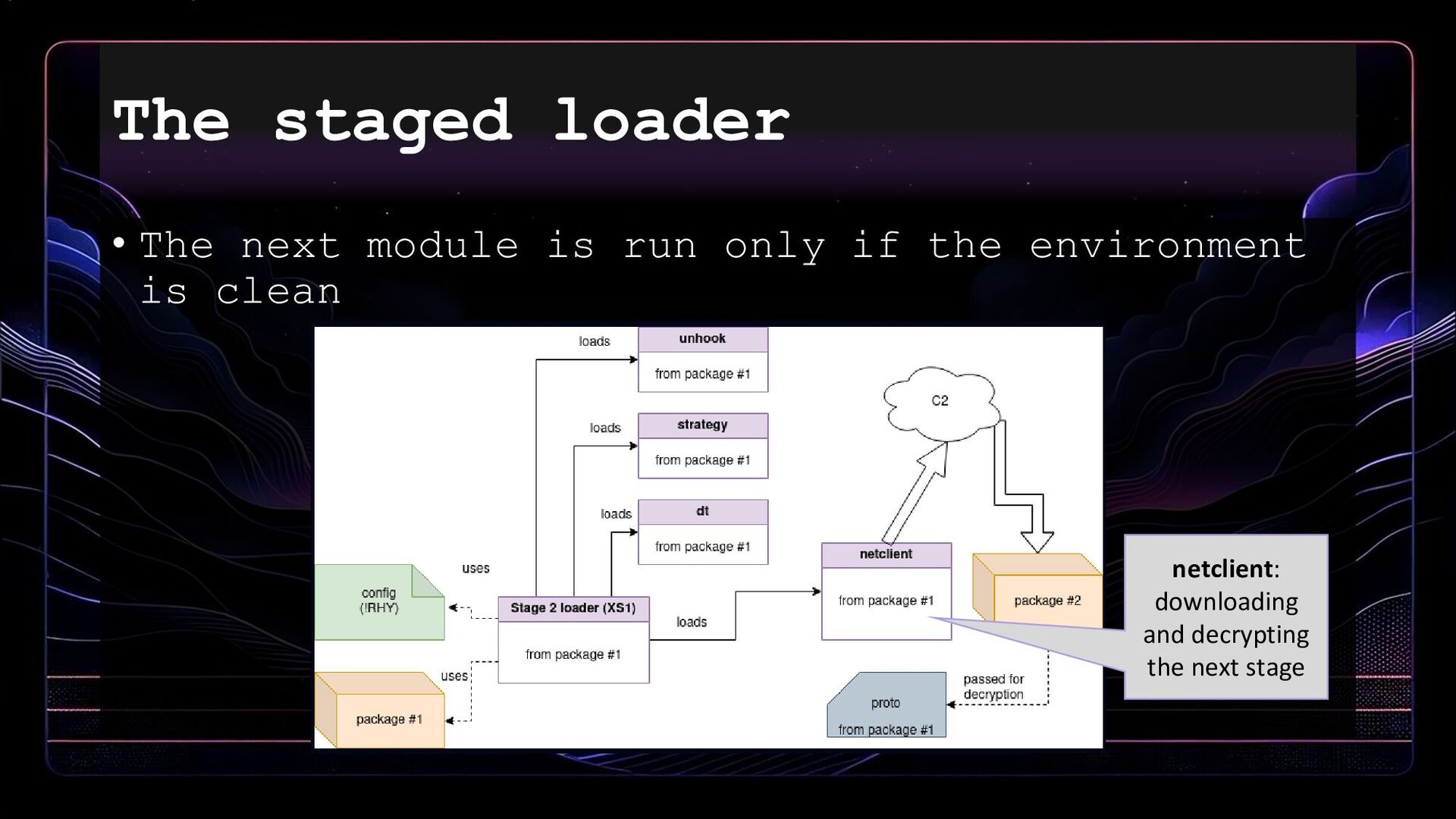
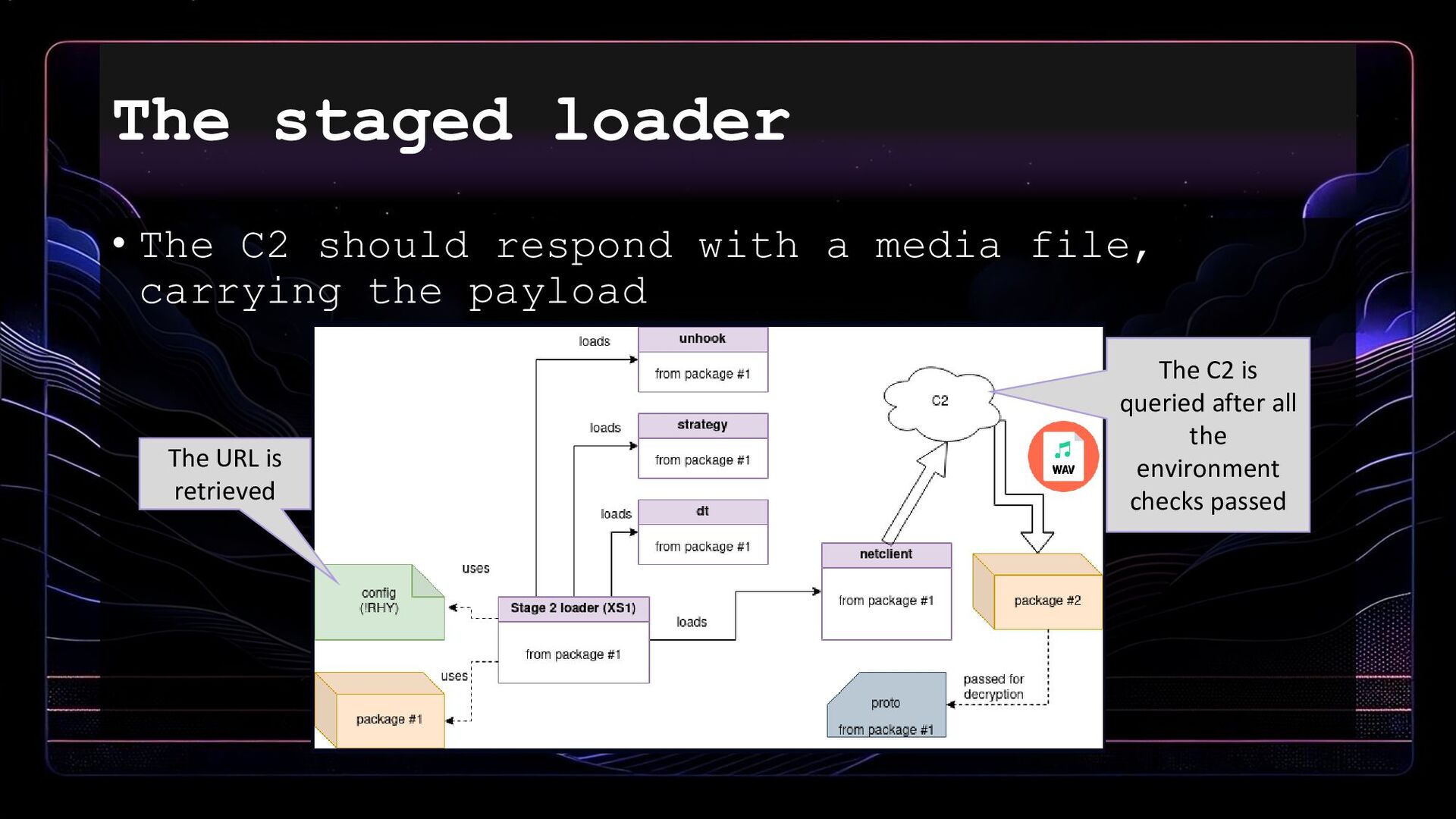
core malicious modules will be downloaded only after the environment was checked • Only the first component is a PE: all the vital functionality is implemented in form of “shellcodes”
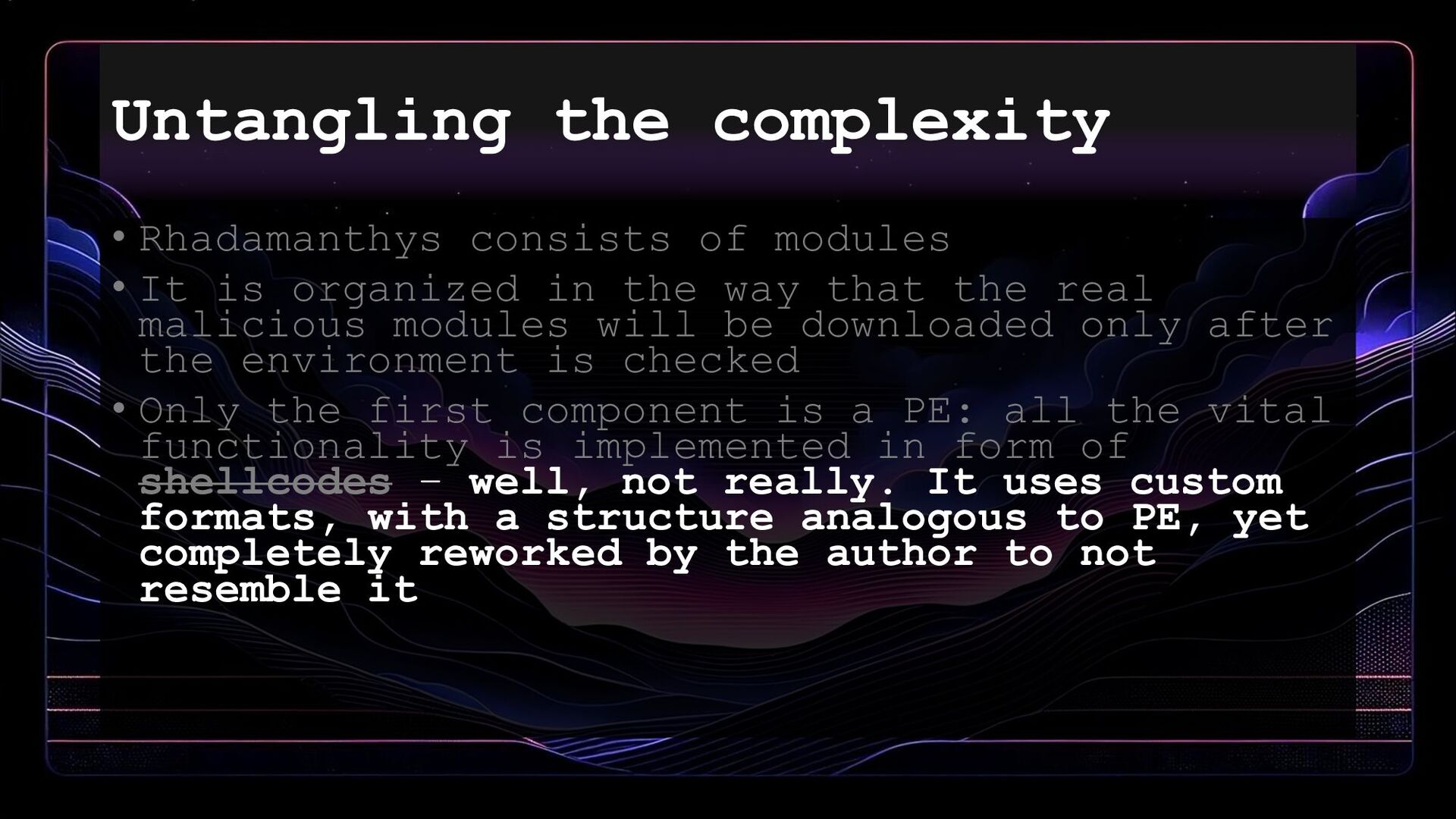
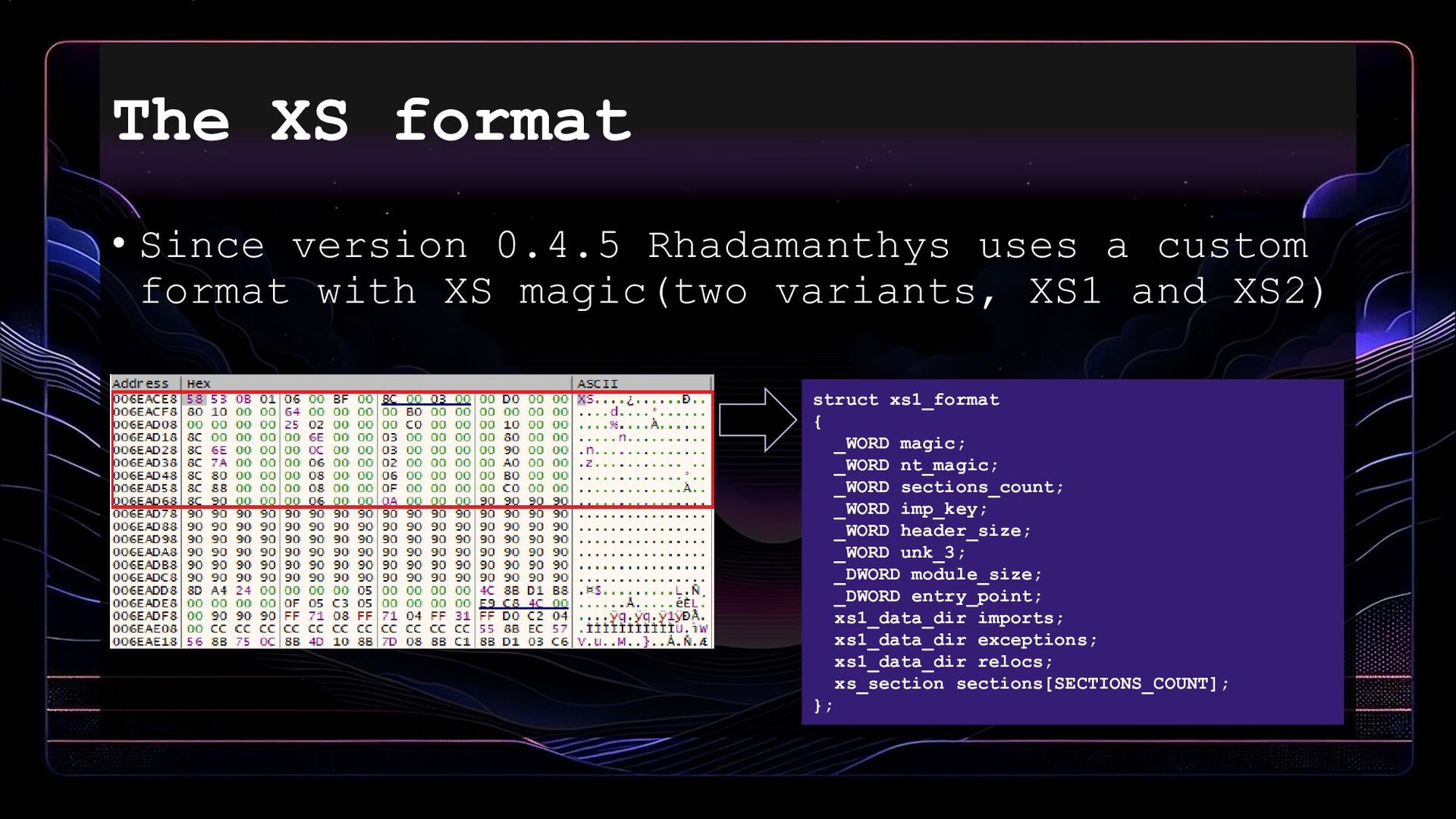
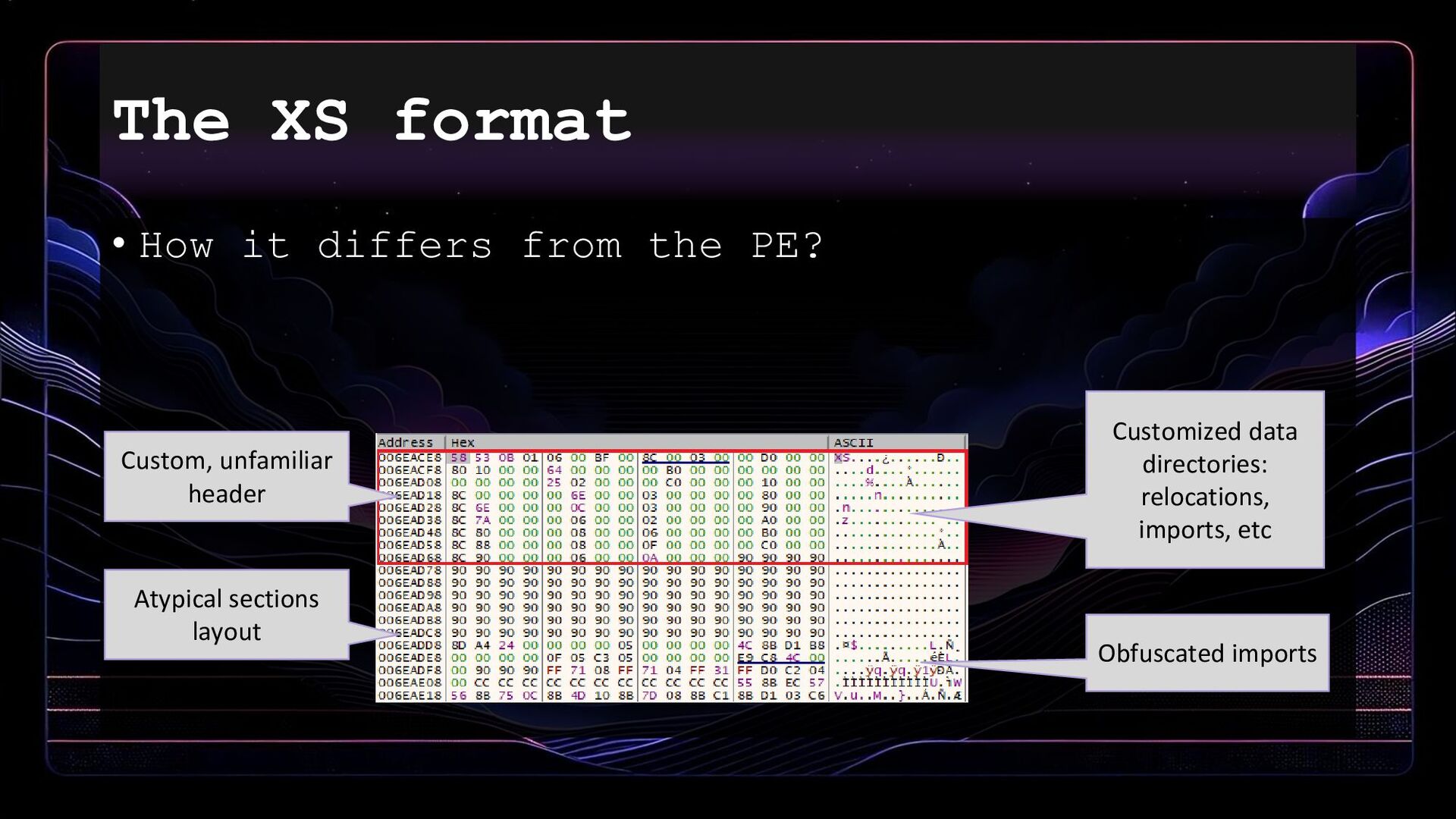
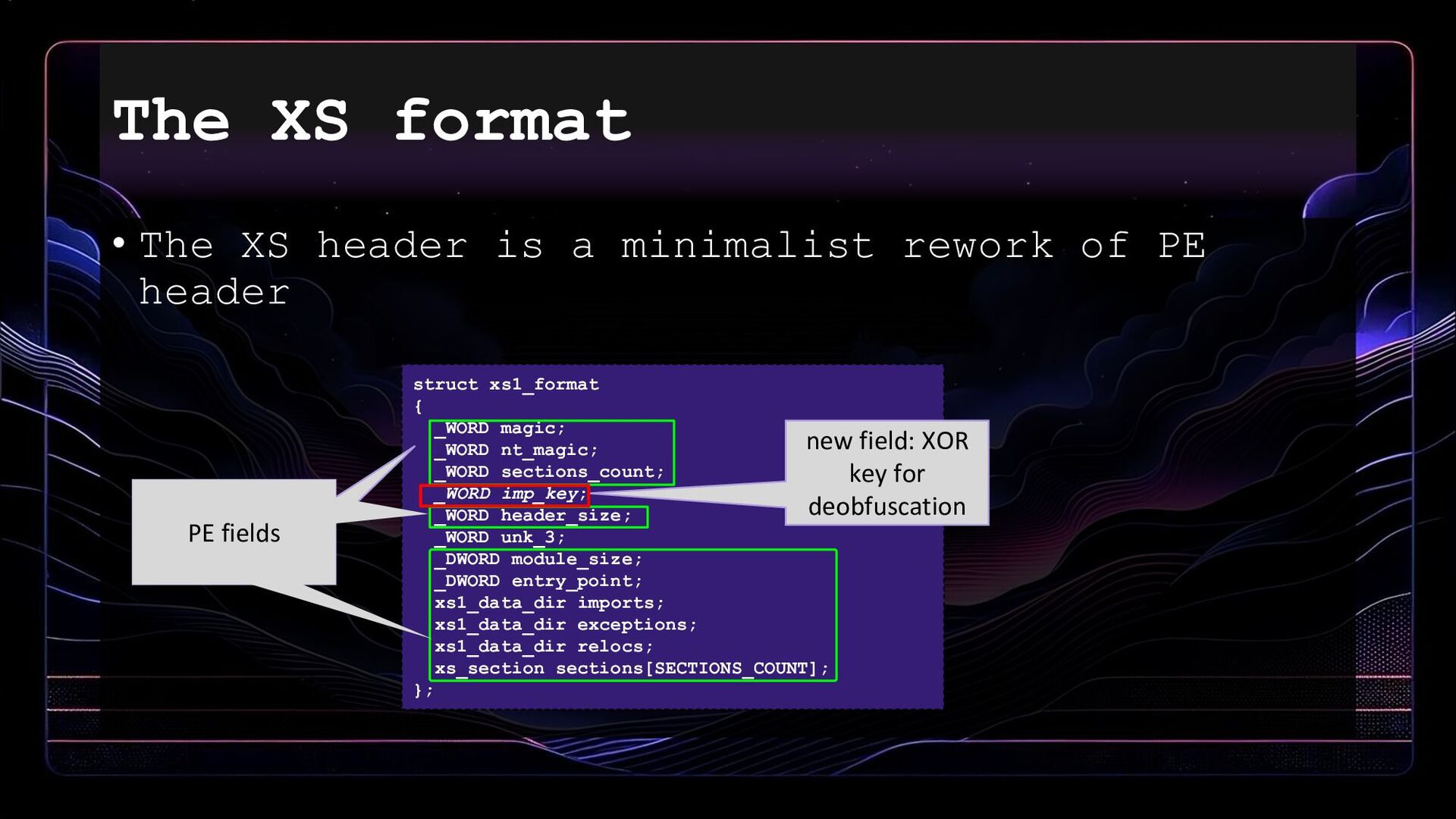
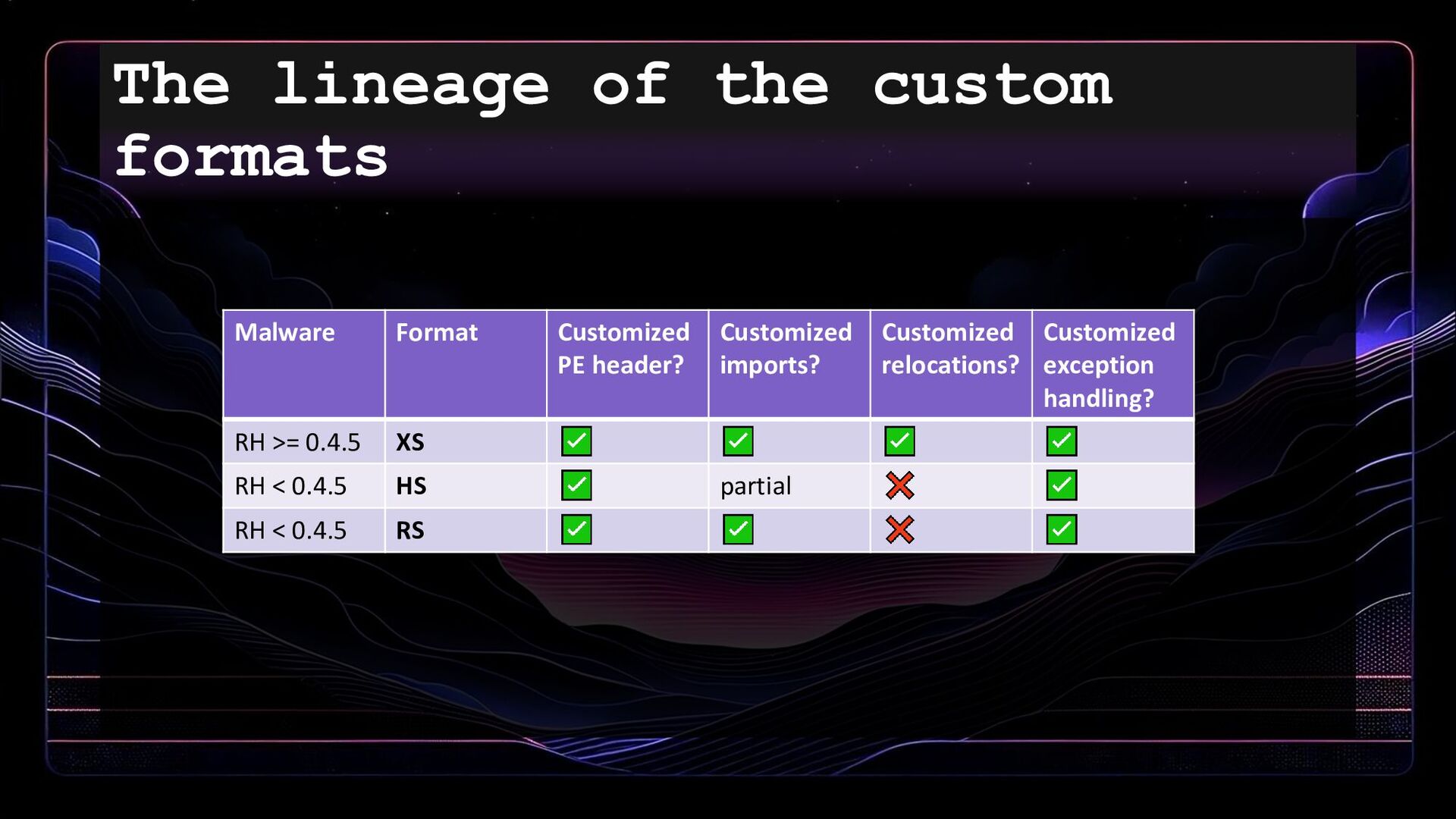
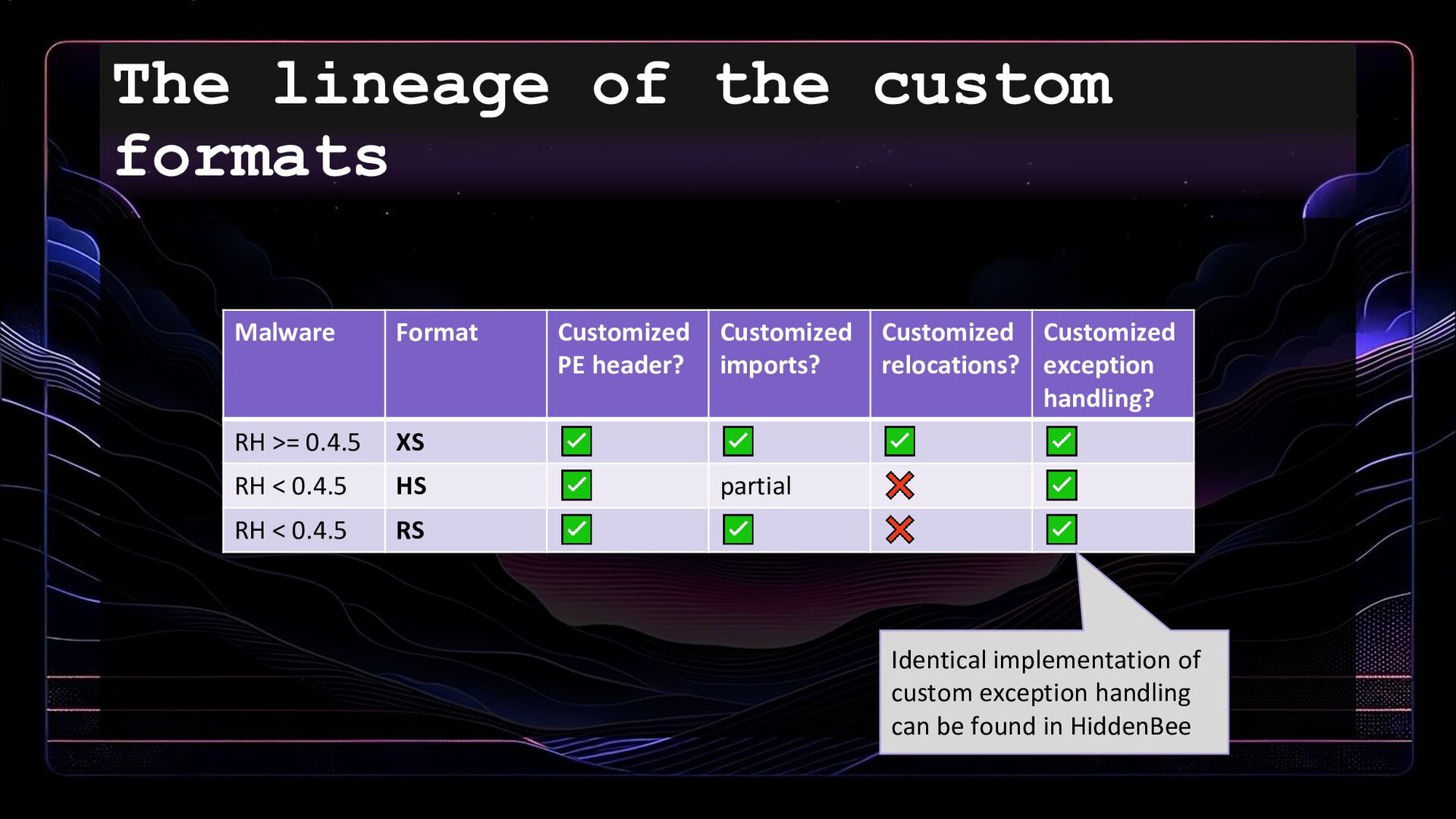
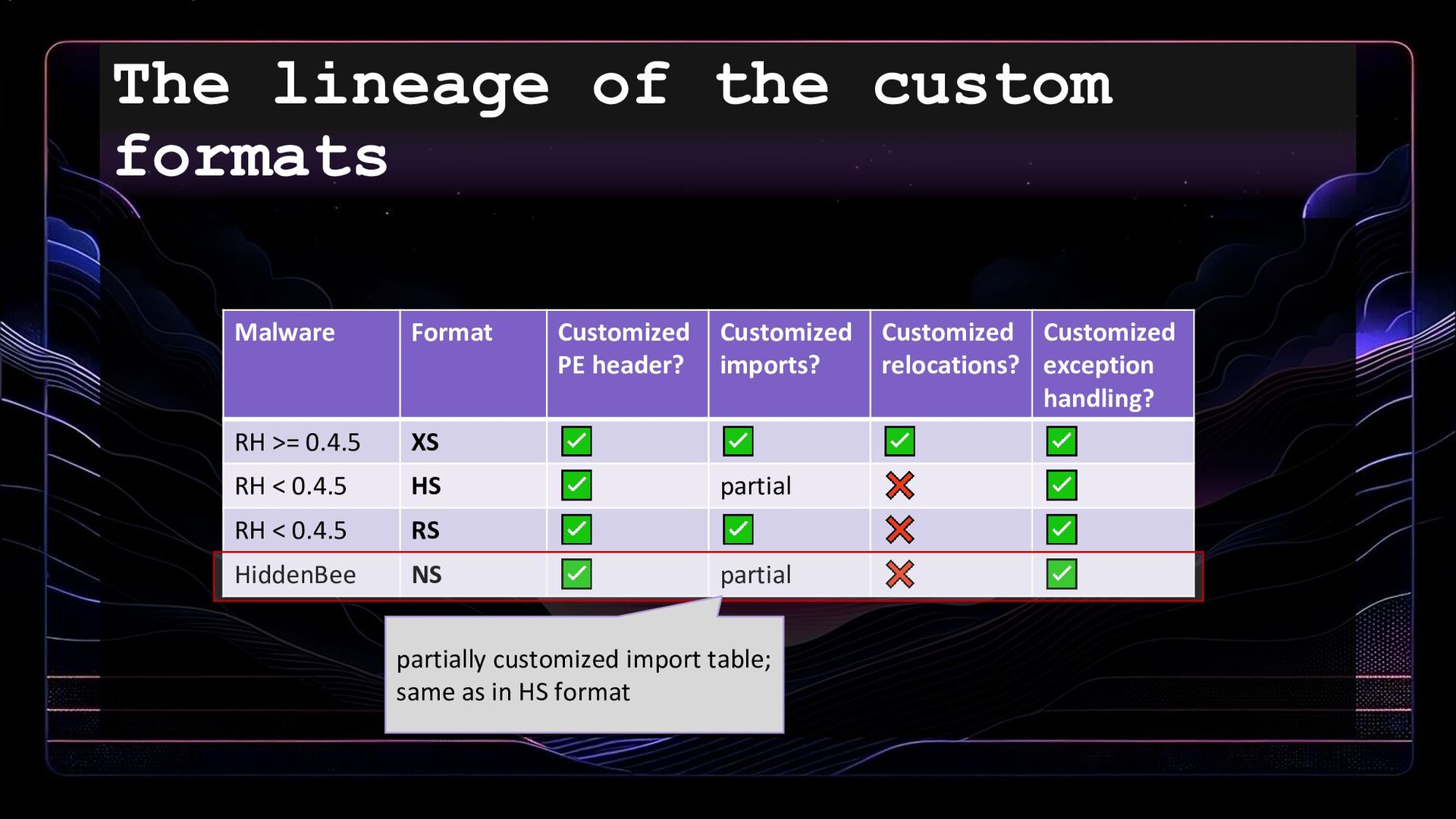
is organized in the way that the real malicious modules will be downloaded only after the environment is checked • Only the first component is a PE: all the vital functionality is implemented in form of shellcodes – well, not really. It uses custom formats, with a structure analogous to PE, yet completely reworked by the author to not resemble it
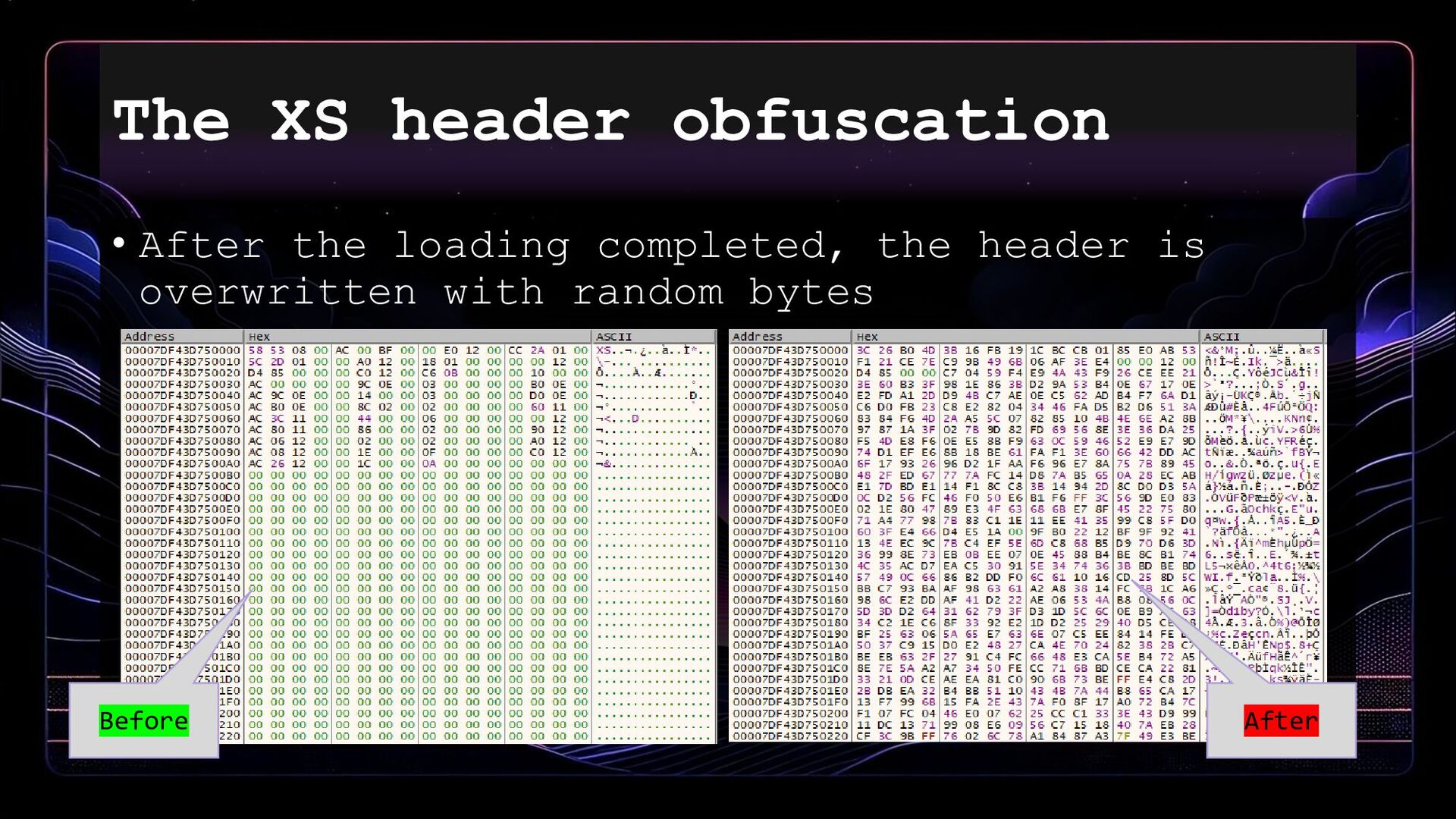
which: • Is meant to mislead tools used for automated dumping (no artifacts that resemble PE can be found in memory – only code) • Makes the life of the analyst harder: unpacking and understanding of the important components require some reconstructive work • Components cannot be parsed by typical analysis tools
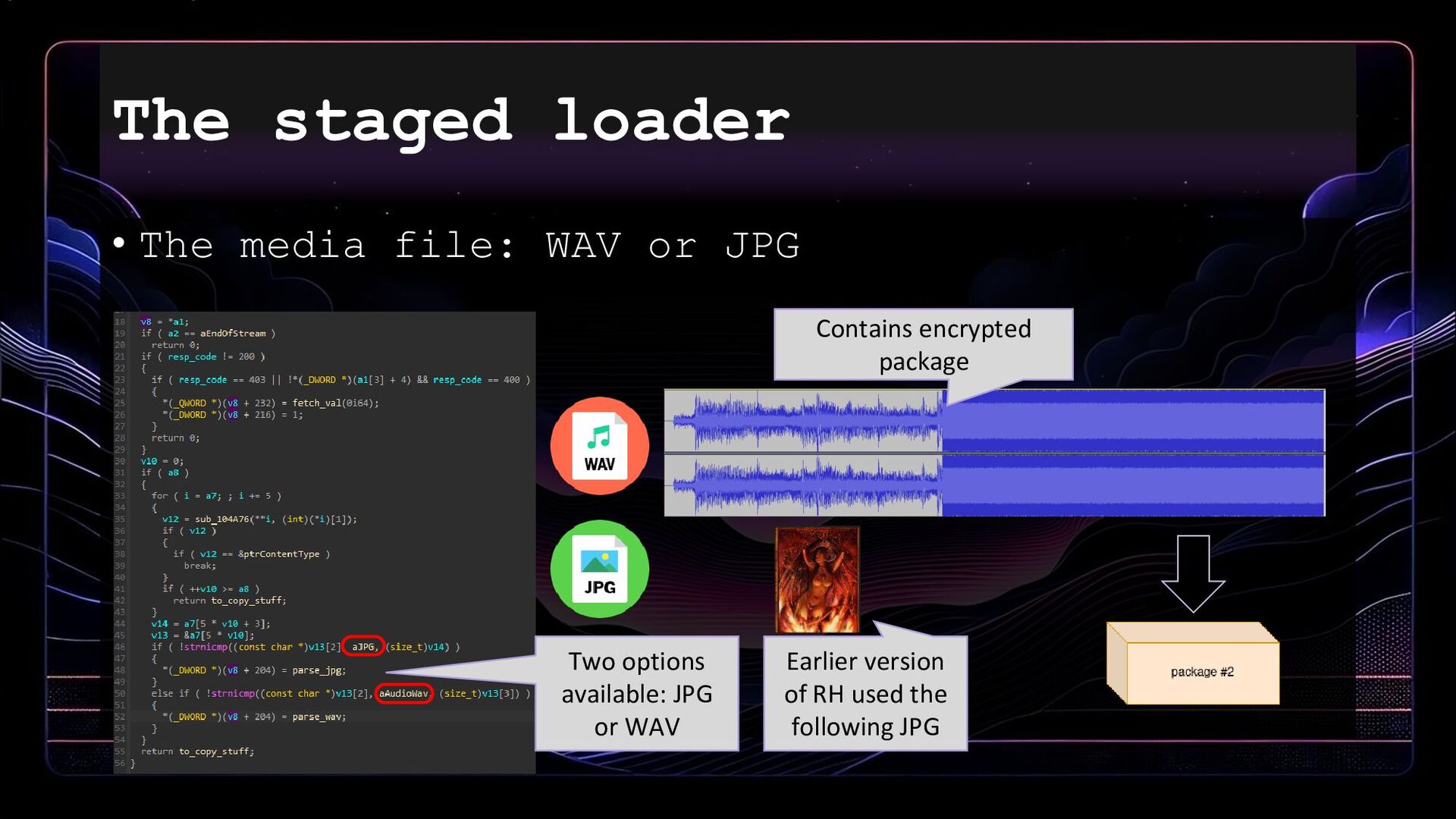
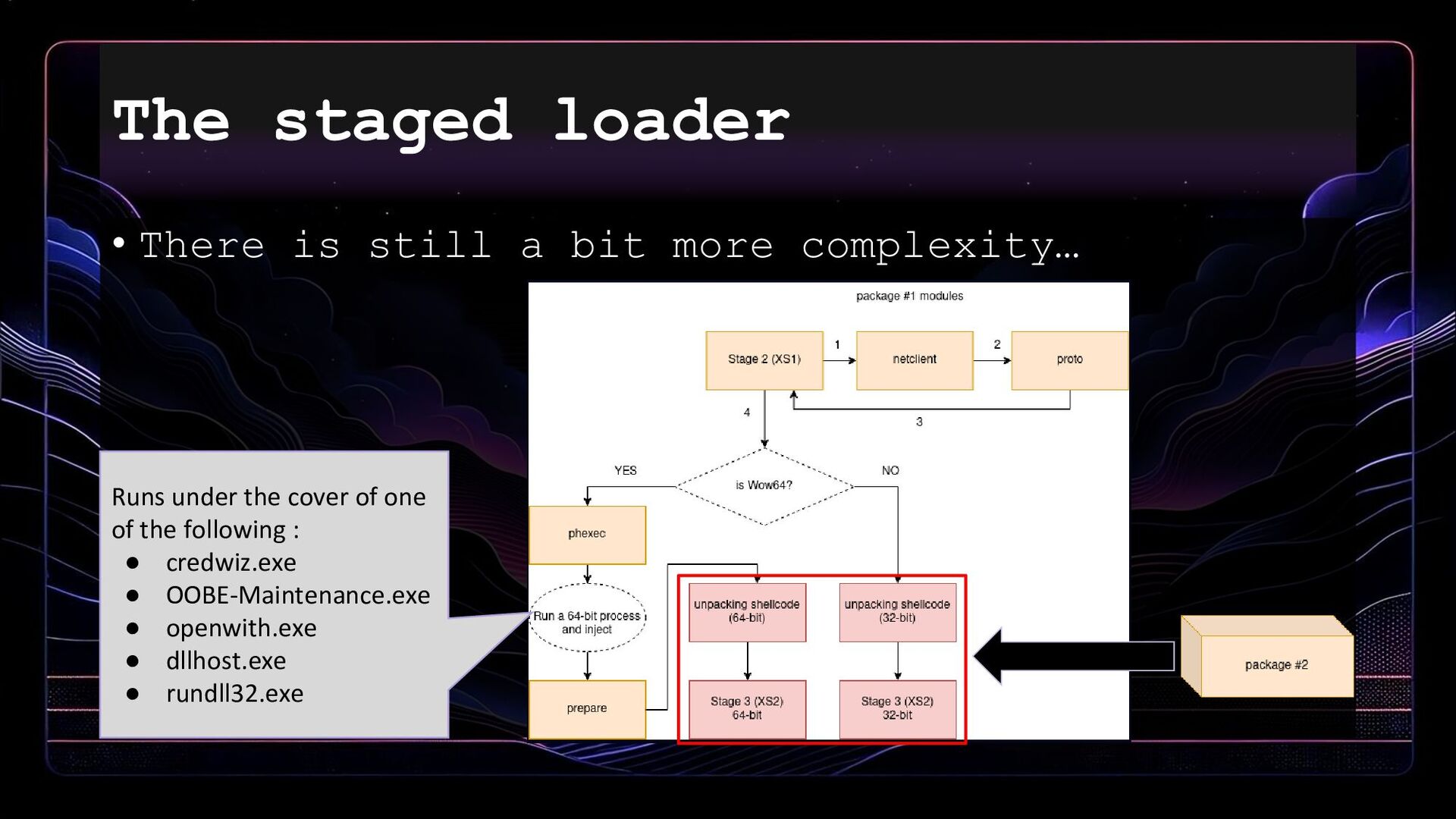
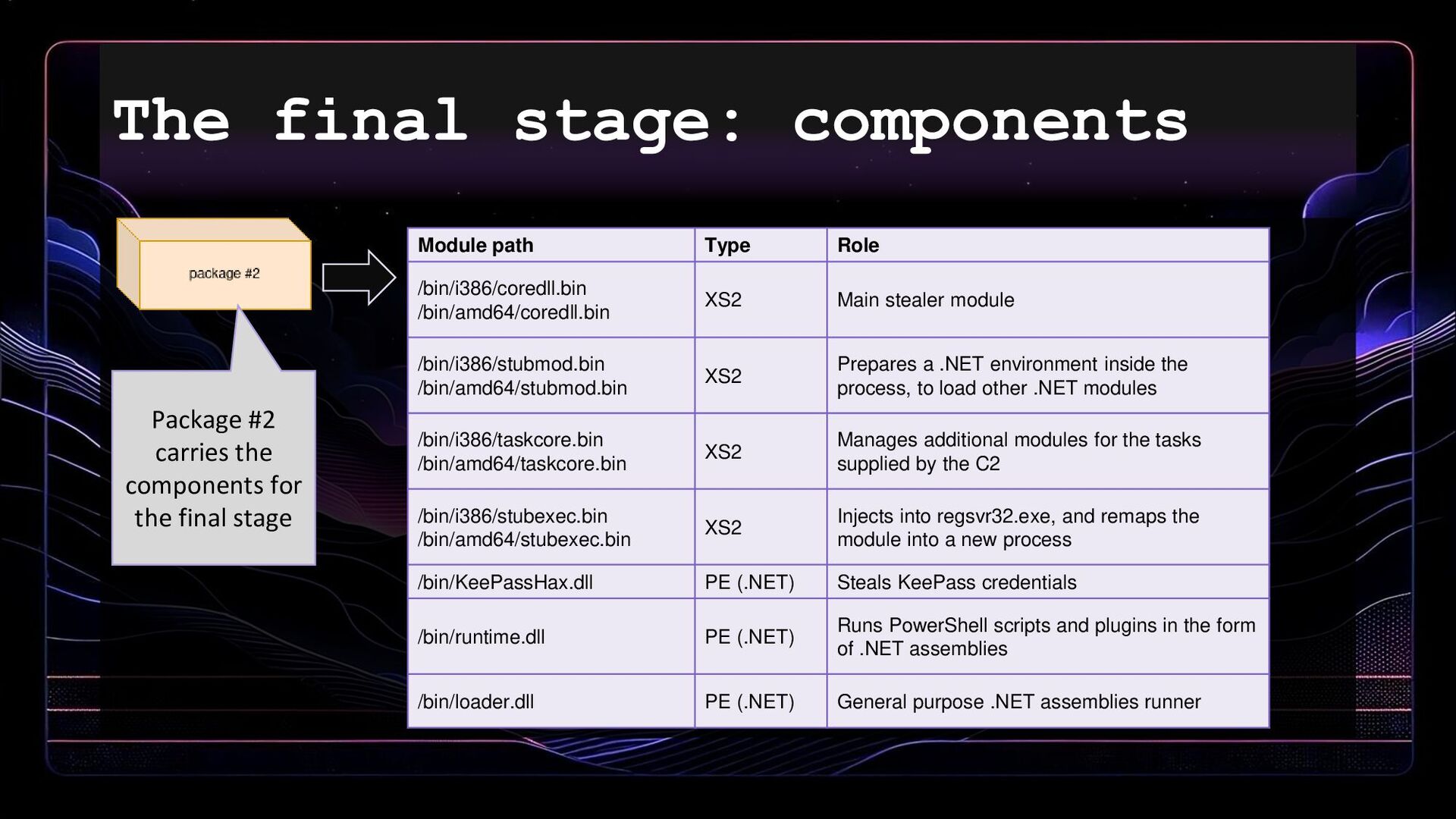
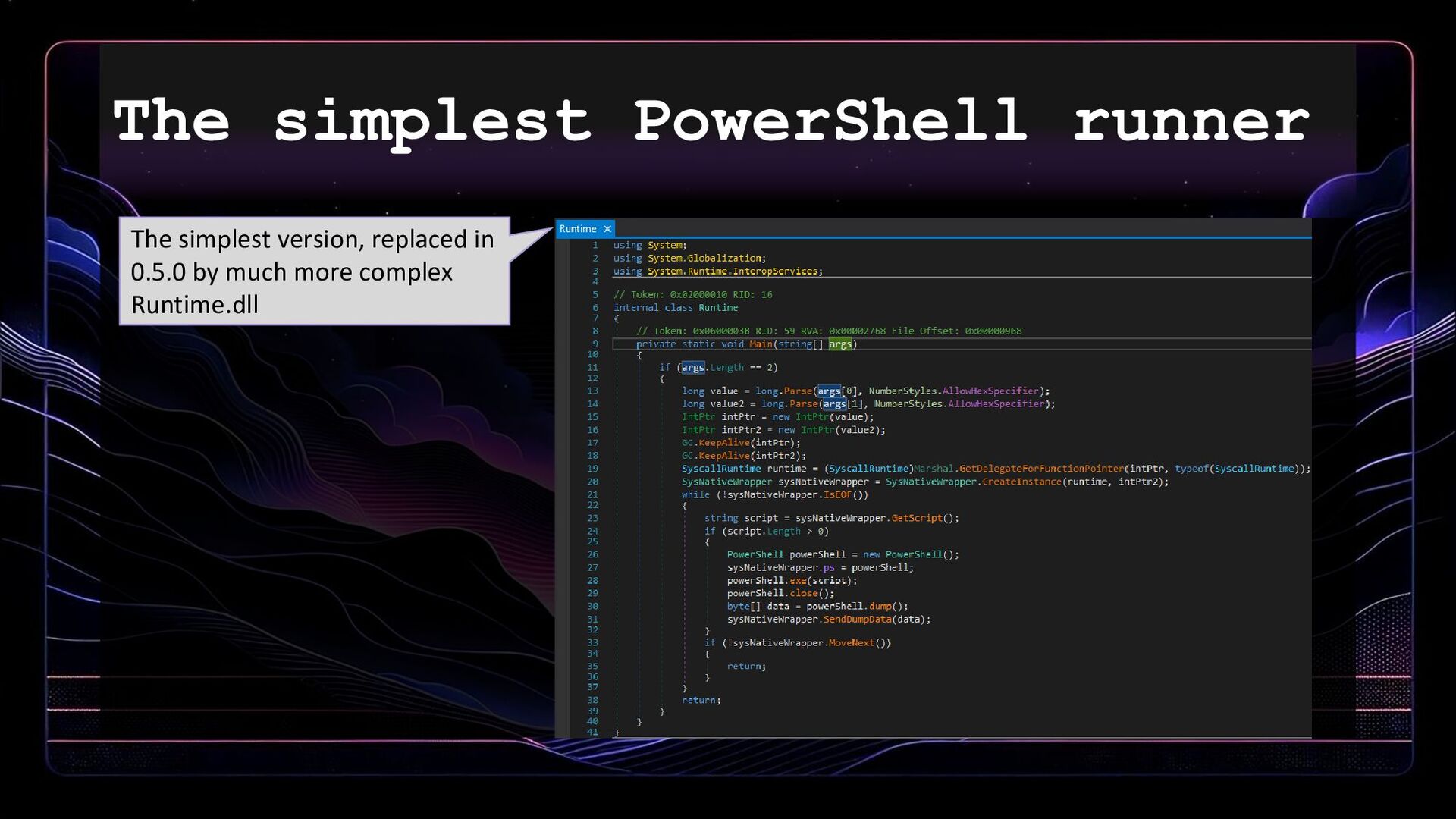
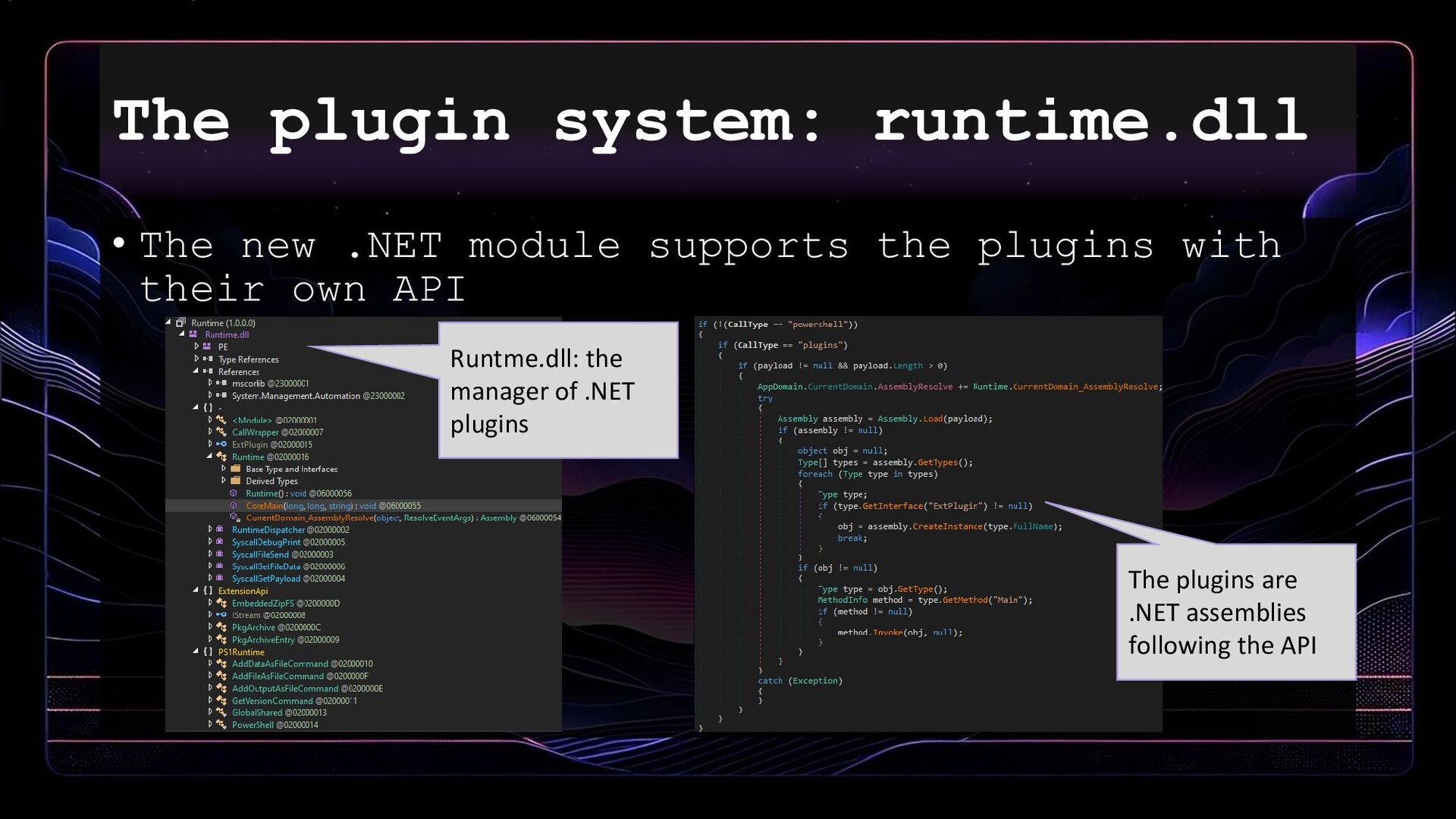
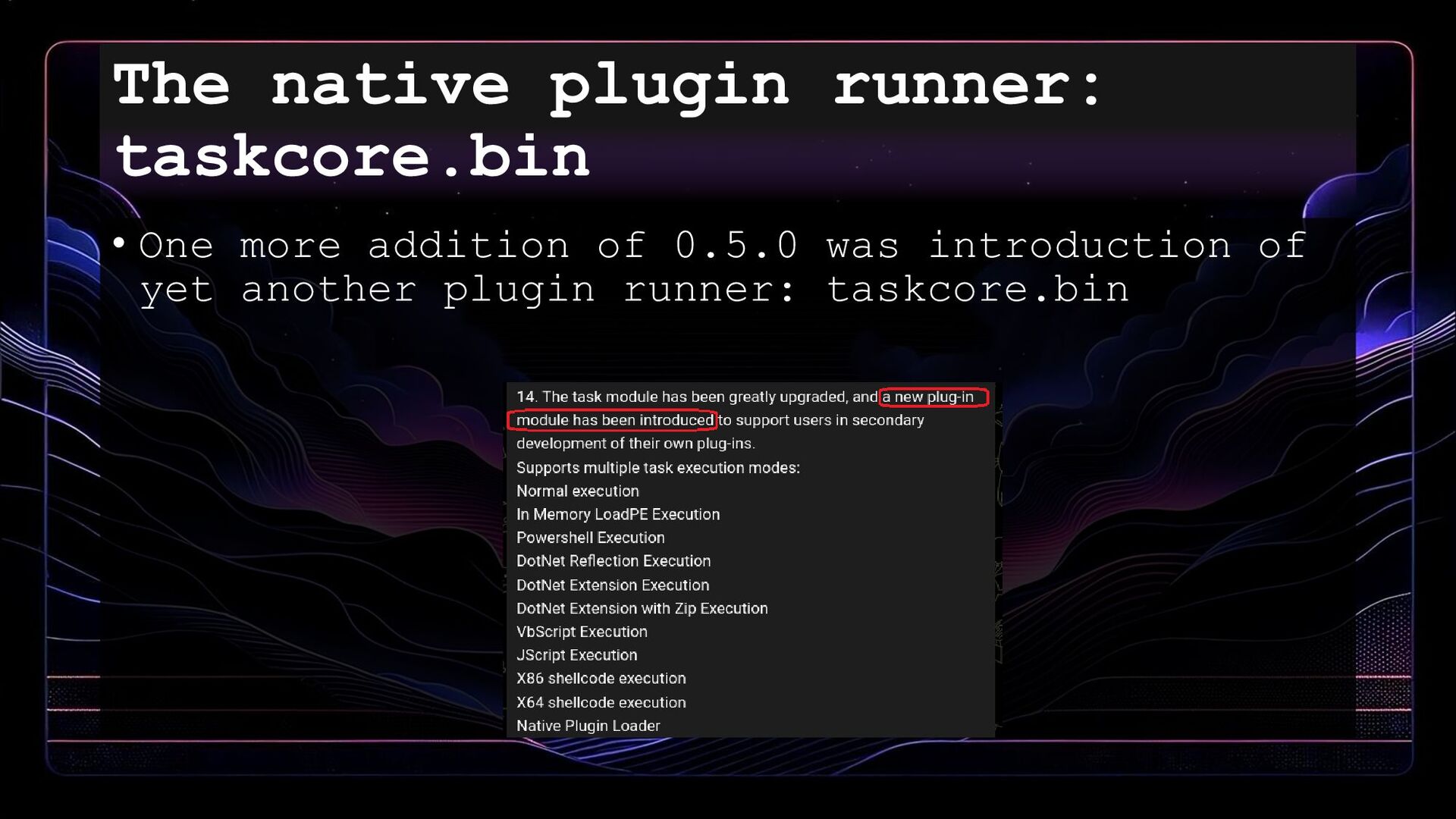
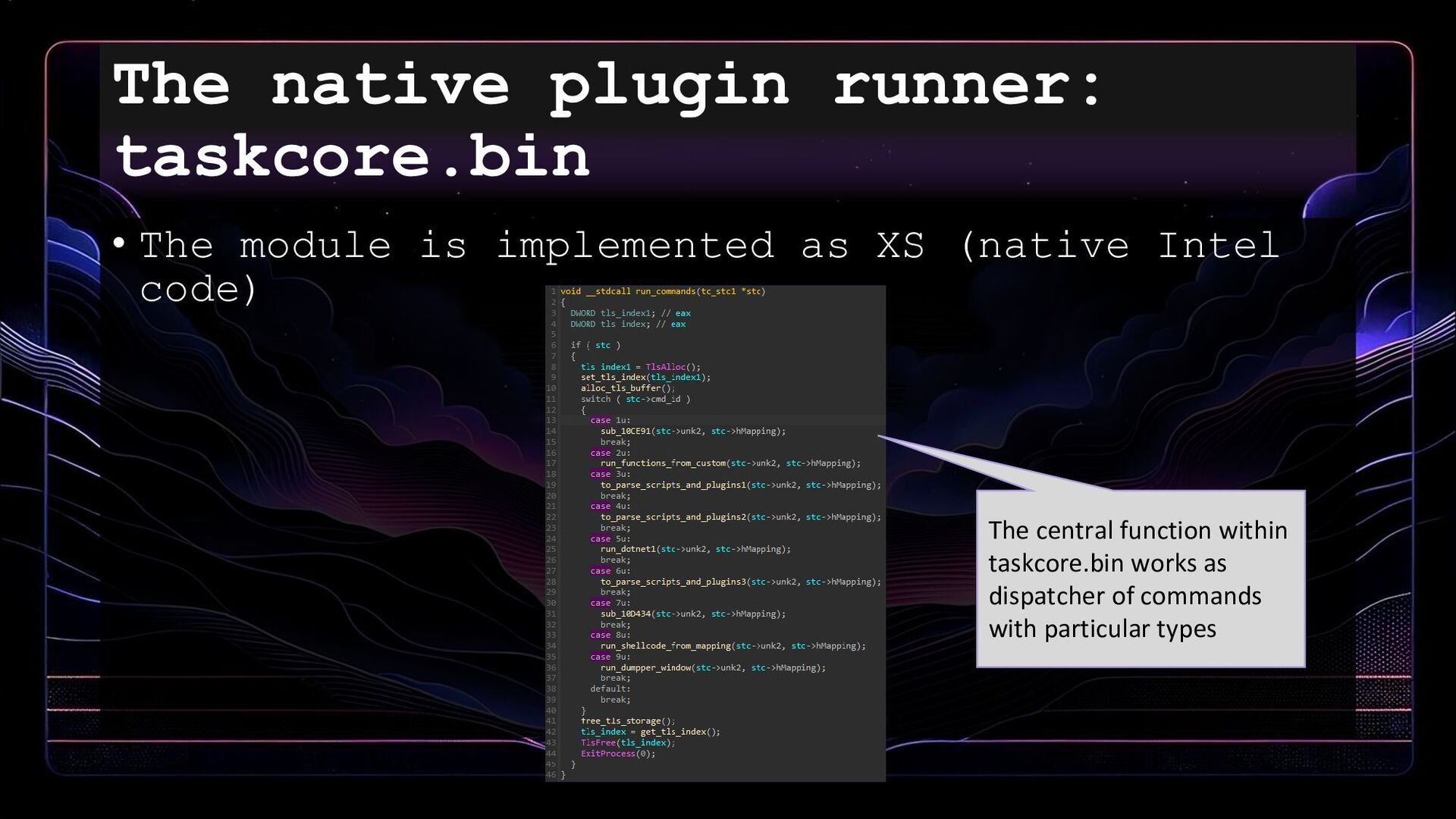
XS2 Main stealer module /bin/i386/stubmod.bin /bin/amd64/stubmod.bin XS2 Prepares a .NET environment inside the process, to load other .NET modules /bin/i386/taskcore.bin /bin/amd64/taskcore.bin XS2 Manages additional modules for the tasks supplied by the C2 /bin/i386/stubexec.bin /bin/amd64/stubexec.bin XS2 Injects into regsvr32.exe, and remaps the module into a new process /bin/KeePassHax.dll PE (.NET) Steals KeePass credentials /bin/runtime.dll PE (.NET) Runs PowerShell scripts and plugins in the form of .NET assemblies /bin/loader.dll PE (.NET) General purpose .NET assemblies runner Package #2 carries the components for the final stage
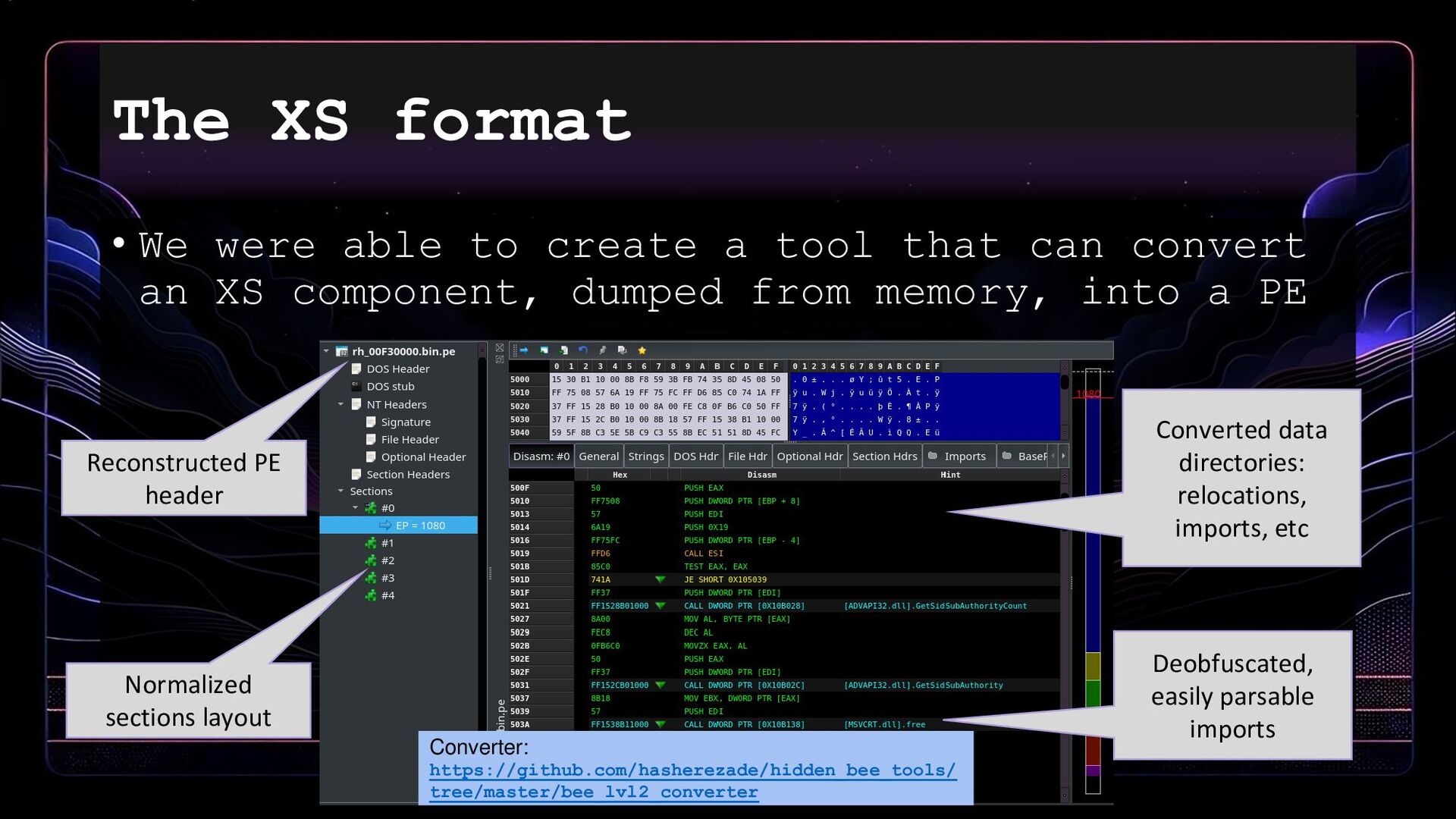
tool that can convert an XS component, dumped from memory, into a PE Reconstructed PE header Normalized sections layout Converted data directories: relocations, imports, etc Deobfuscated, easily parsable imports Converter: https://github.com/hasherezade/hidden_bee_tools/ tree/master/bee_lvl2_converter
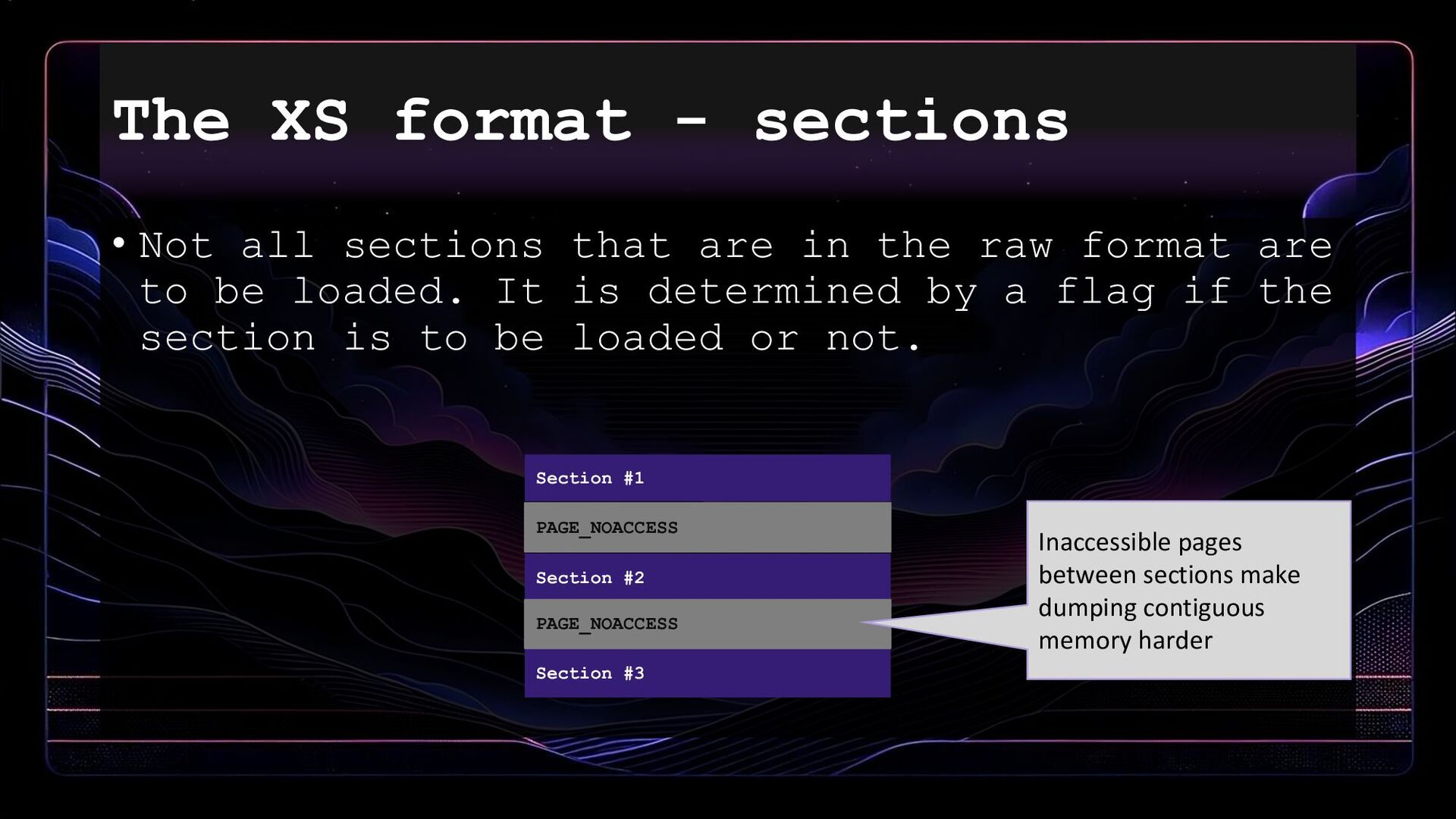
are in the raw format are to be loaded. It is determined by a flag if the section is to be loaded or not. Section #1 Section #2 PAGE_NOACCESS Section #3 PAGE_NOACCESS Inaccessible pages between sections make dumping contiguous memory harder
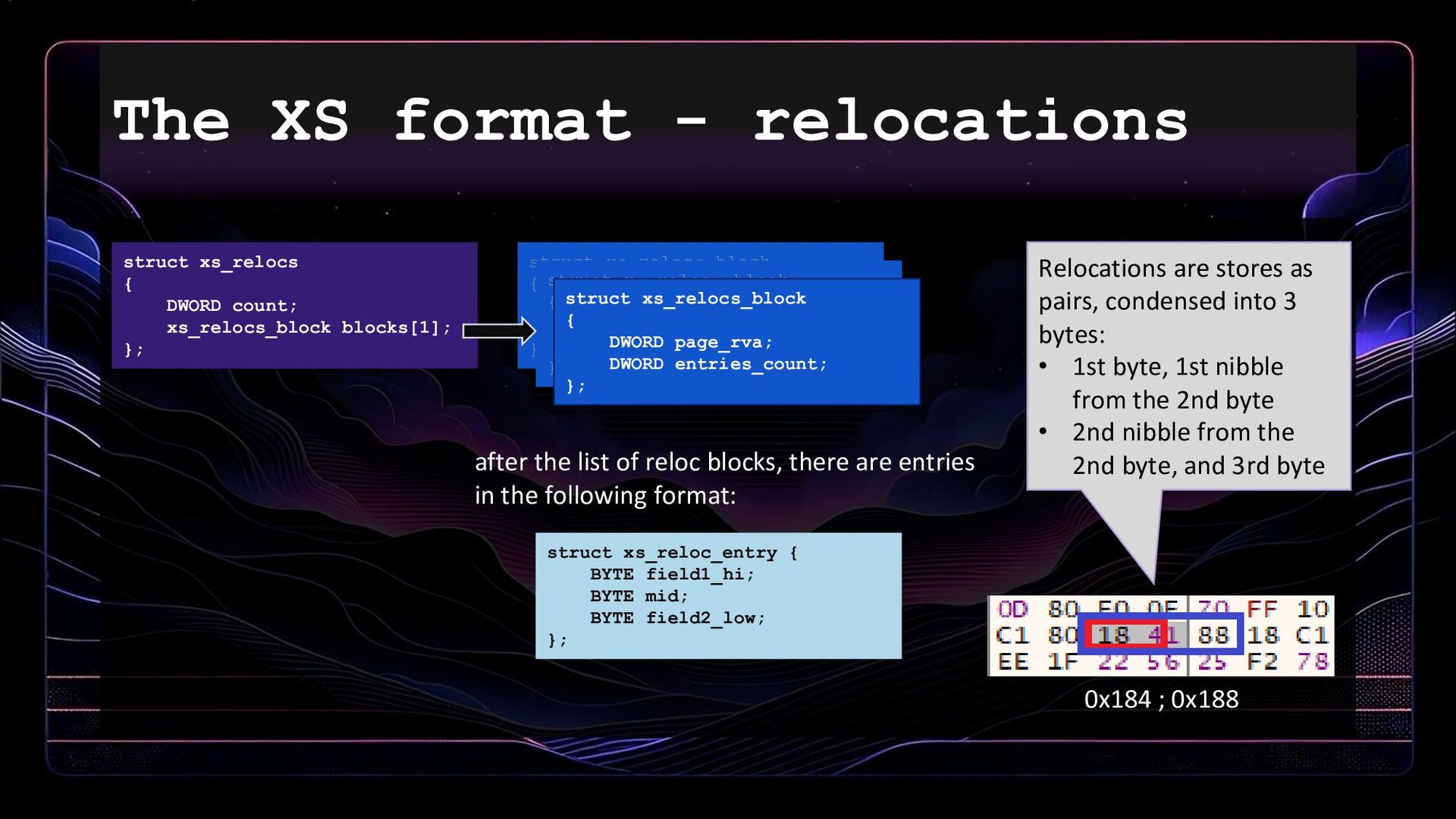
xs_relocs_block blocks[1]; }; struct xs_relocs_block { DWORD page_rva; DWORD entries_count; }; struct xs_relocs_block { DWORD page_rva; DWORD entries_count; }; struct xs_relocs_block { DWORD page_rva; DWORD entries_count; }; struct xs_reloc_entry { BYTE field1_hi; BYTE mid; BYTE field2_low; }; after the list of reloc blocks, there are entries in the following format: Relocations are stores as pairs, condensed into 3 bytes: • 1st byte, 1st nibble from the 2nd byte • 2nd nibble from the 2nd byte, and 3rd byte 0x184 ; 0x188
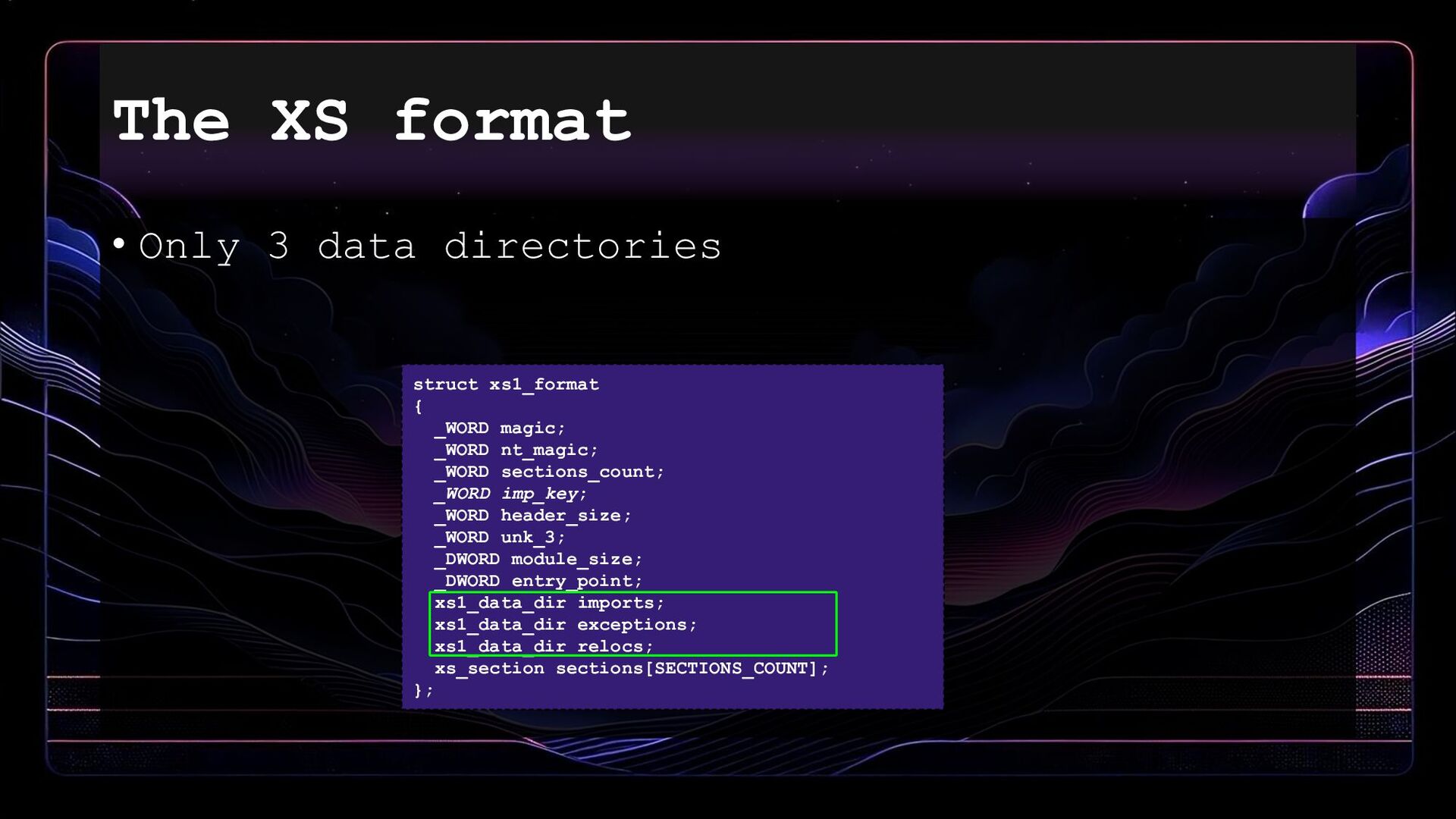
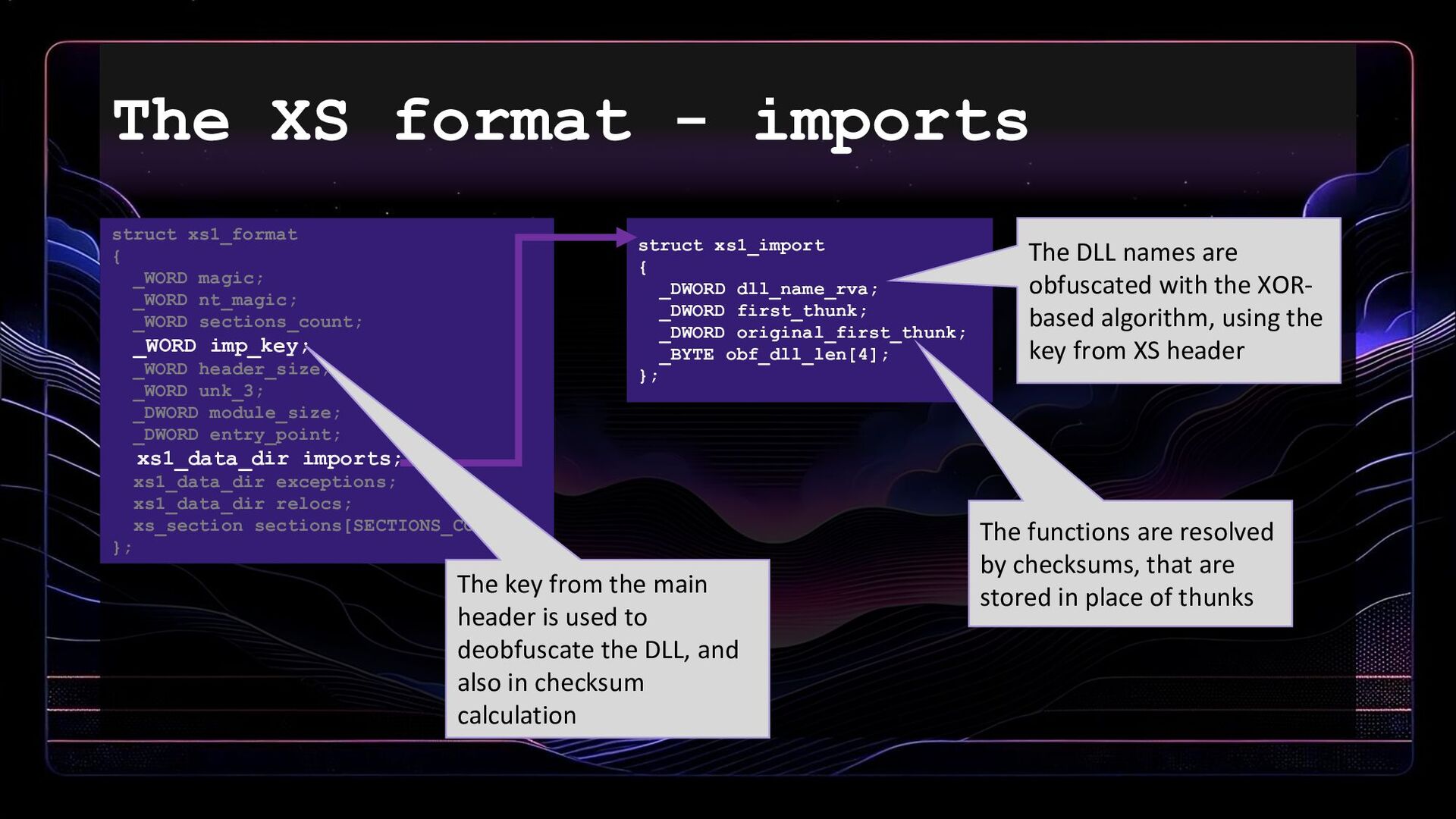
_DWORD first_thunk; _DWORD original_first_thunk; _BYTE obf_dll_len[4]; }; struct xs1_format { _WORD magic; _WORD nt_magic; _WORD sections_count; _WORD imp_key; _WORD header_size; _WORD unk_3; _DWORD module_size; _DWORD entry_point; xs1_data_dir imports; xs1_data_dir exceptions; xs1_data_dir relocs; xs_section sections[SECTIONS_COUNT]; }; The functions are resolved by checksums, that are stored in place of thunks The DLL names are obfuscated with the XOR- based algorithm, using the key from XS header The key from the main header is used to deobfuscate the DLL, and also in checksum calculation
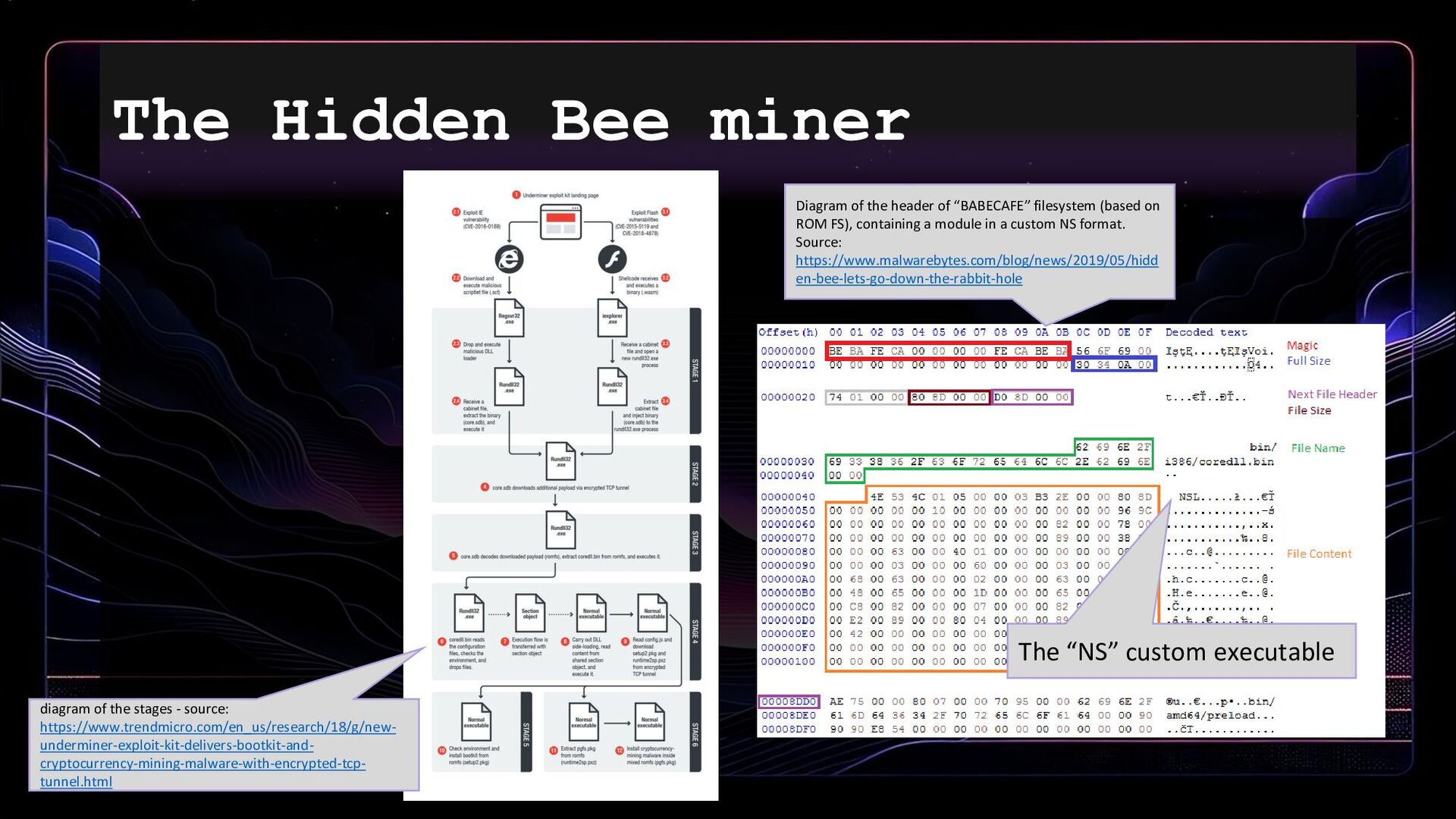
https://www.trendmicro.com/en_us/research/18/g/new- underminer-exploit-kit-delivers-bootkit-and- cryptocurrency-mining-malware-with-encrypted-tcp- tunnel.html Diagram of the header of “BABECAFE” filesystem (based on ROM FS), containing a module in a custom NS format. Source: https://www.malwarebytes.com/blog/news/2019/05/hidd en-bee-lets-go-down-the-rabbit-hole The “NS” custom executable
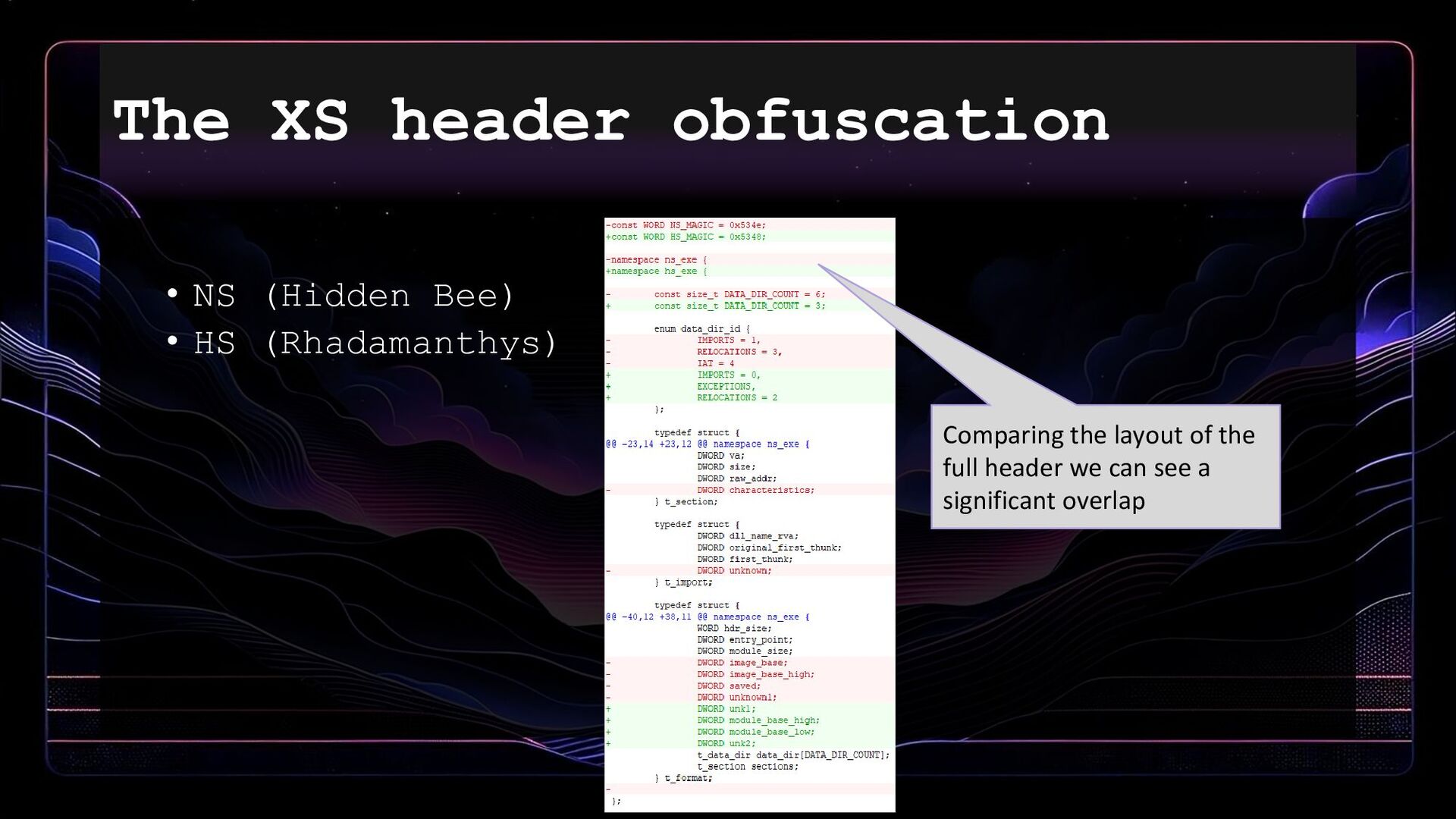
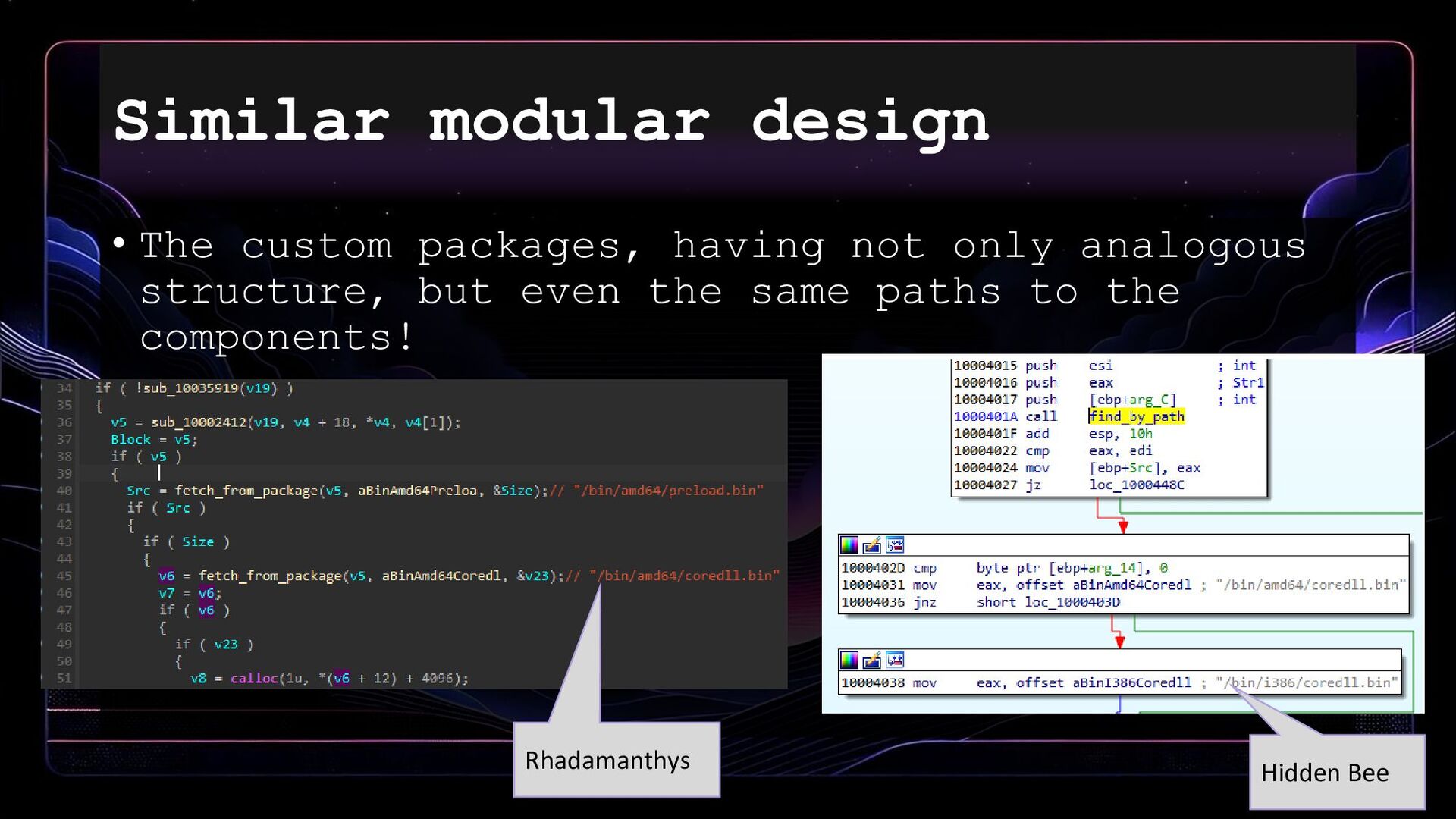
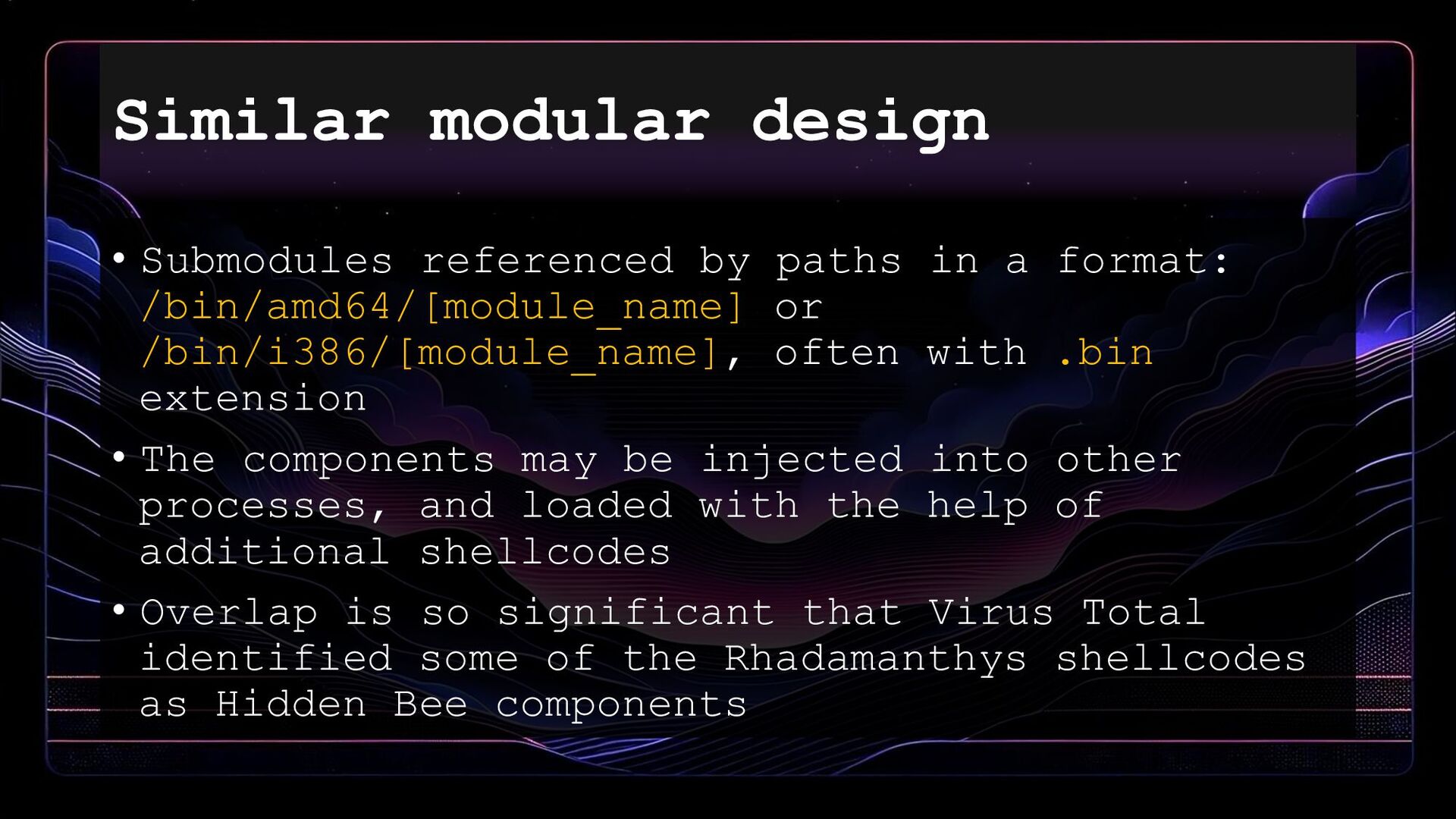
format: /bin/amd64/[module_name] or /bin/i386/[module_name], often with .bin extension • The components may be injected into other processes, and loaded with the help of additional shellcodes • Overlap is so significant that Virus Total identified some of the Rhadamanthys shellcodes as Hidden Bee components
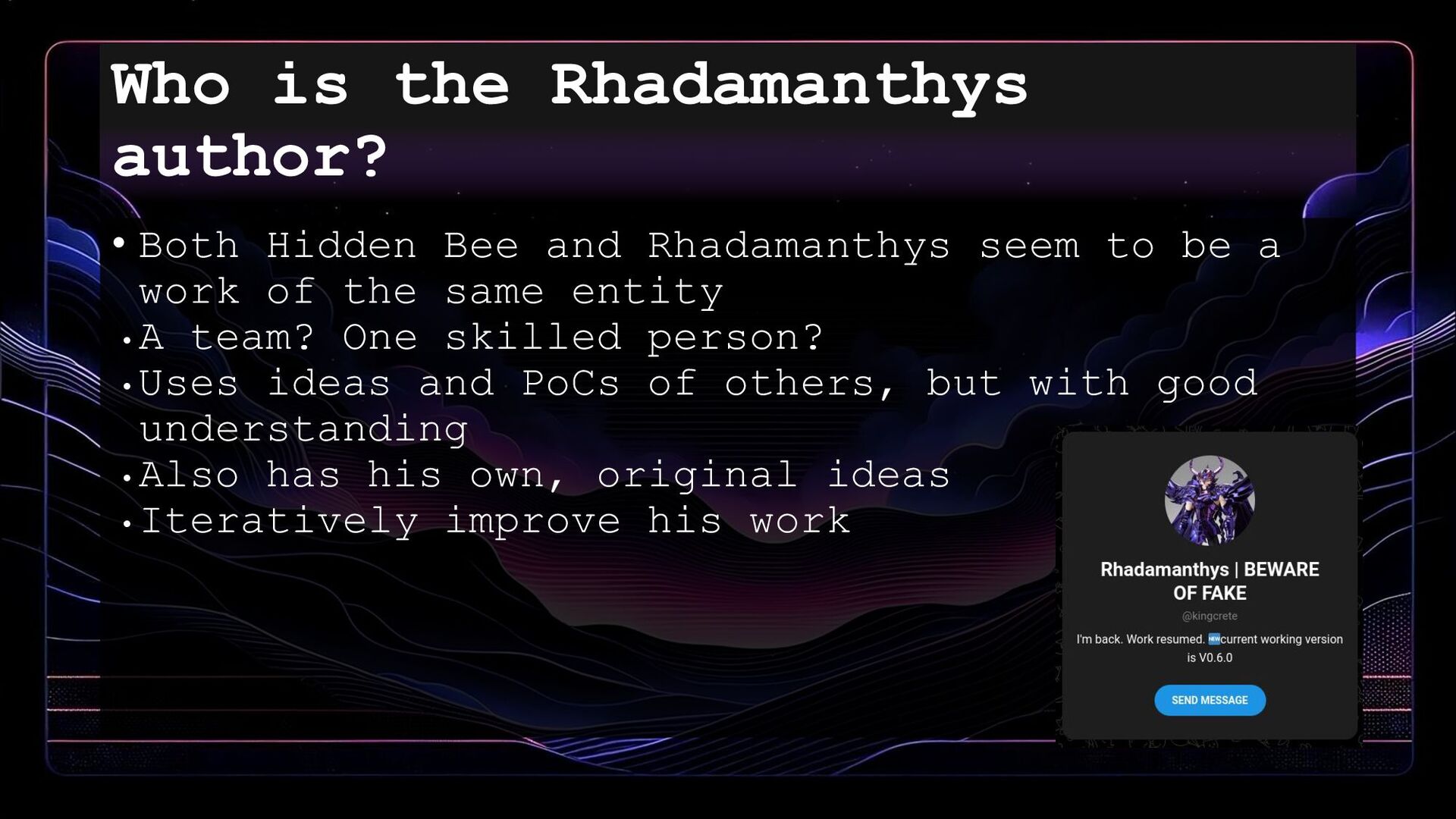
Rhadamanthys seem to be a work of the same entity •A team? One skilled person? •Uses ideas and PoCs of others, but with good understanding •Also has his own, original ideas •Iteratively improve his work
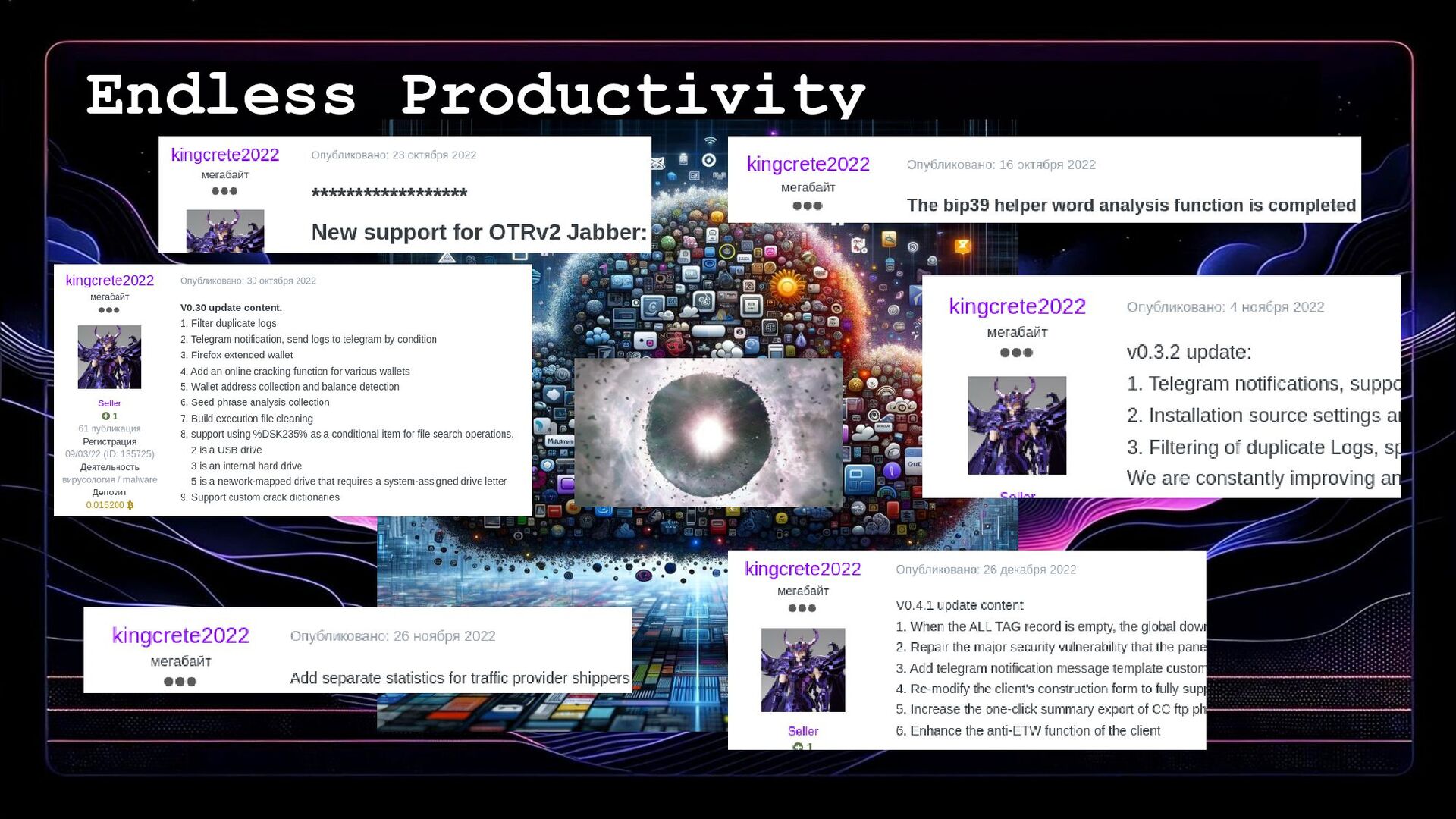
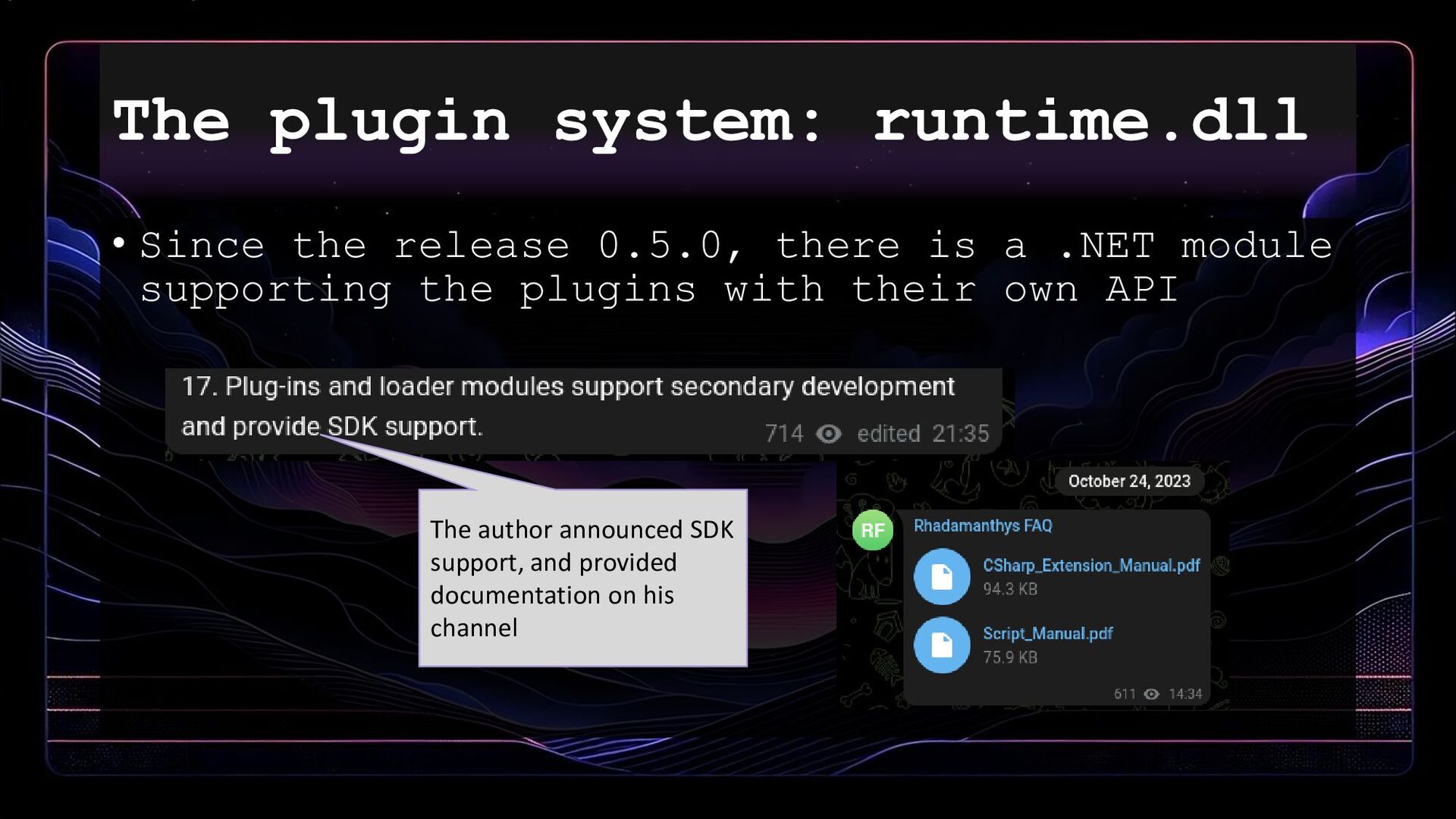
the package) • LUA scripts (package) • The Plugin system: extendibility by custom .NET modules, following API • The runners for: • Custom .NET modules • PowerShell scripts • VBS an JScripts • and more…
with a hardcoded set of stealers + allows to run submodules • Some modules are runners for other plugins and scripts: taskcore.bin, runtime.dll, loader.dll • communicates with the submodules over the named pipe, collects and sends the results • However: some modules can also speak directly to the C2
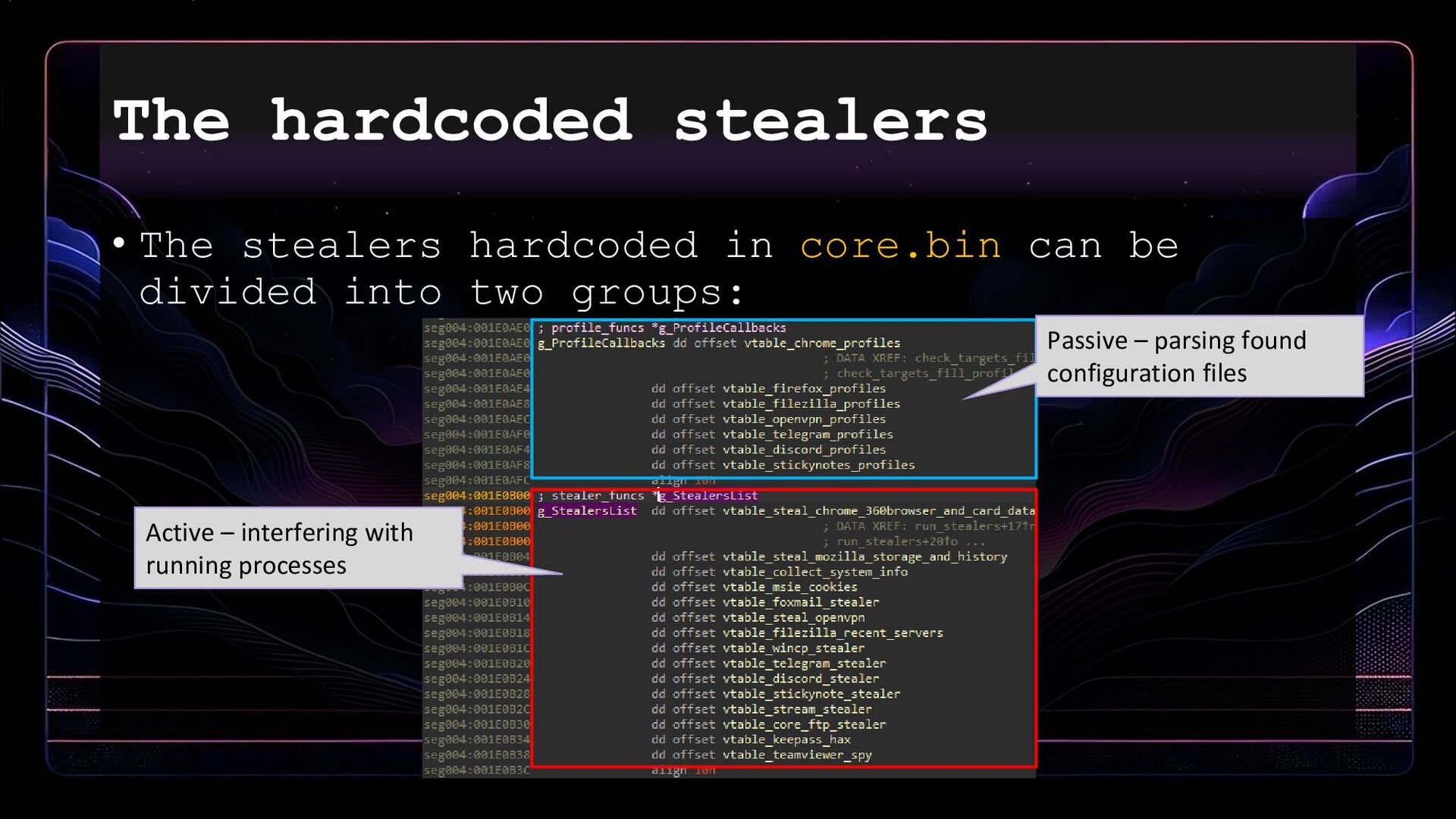
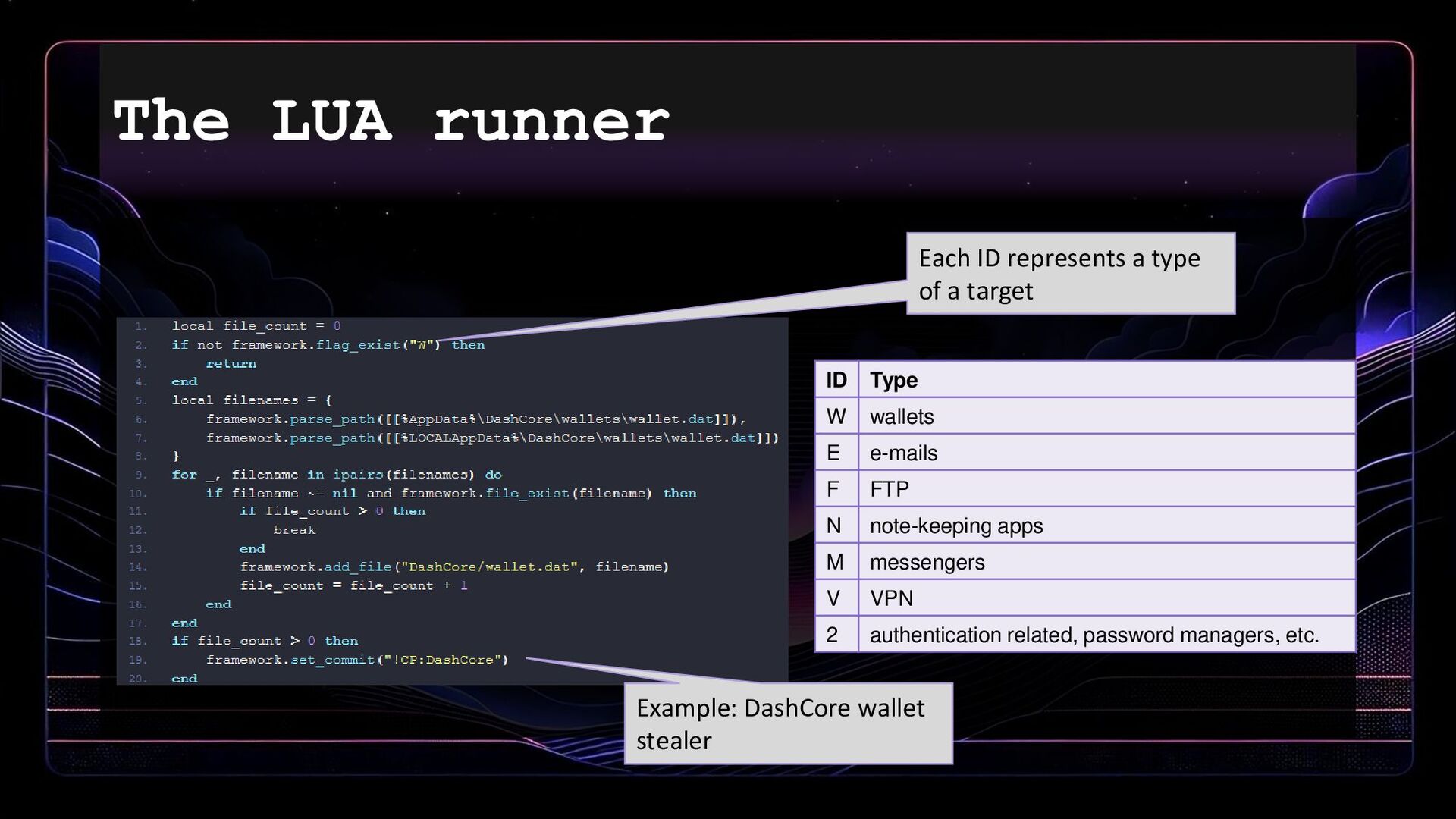
FTP N note-keeping apps M messengers V VPN 2 authentication related, password managers, etc. Example: DashCore wallet stealer Each ID represents a type of a target
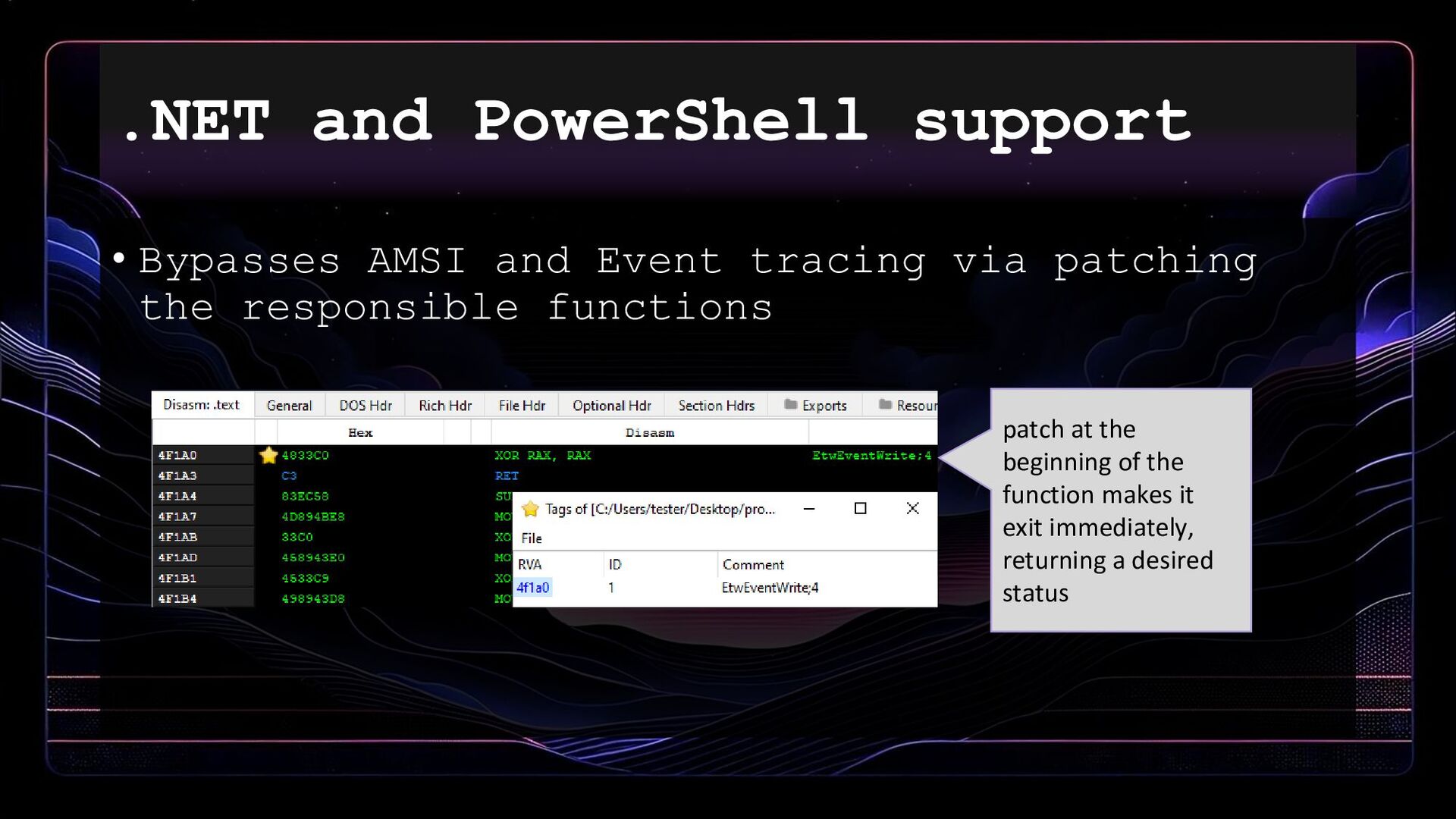
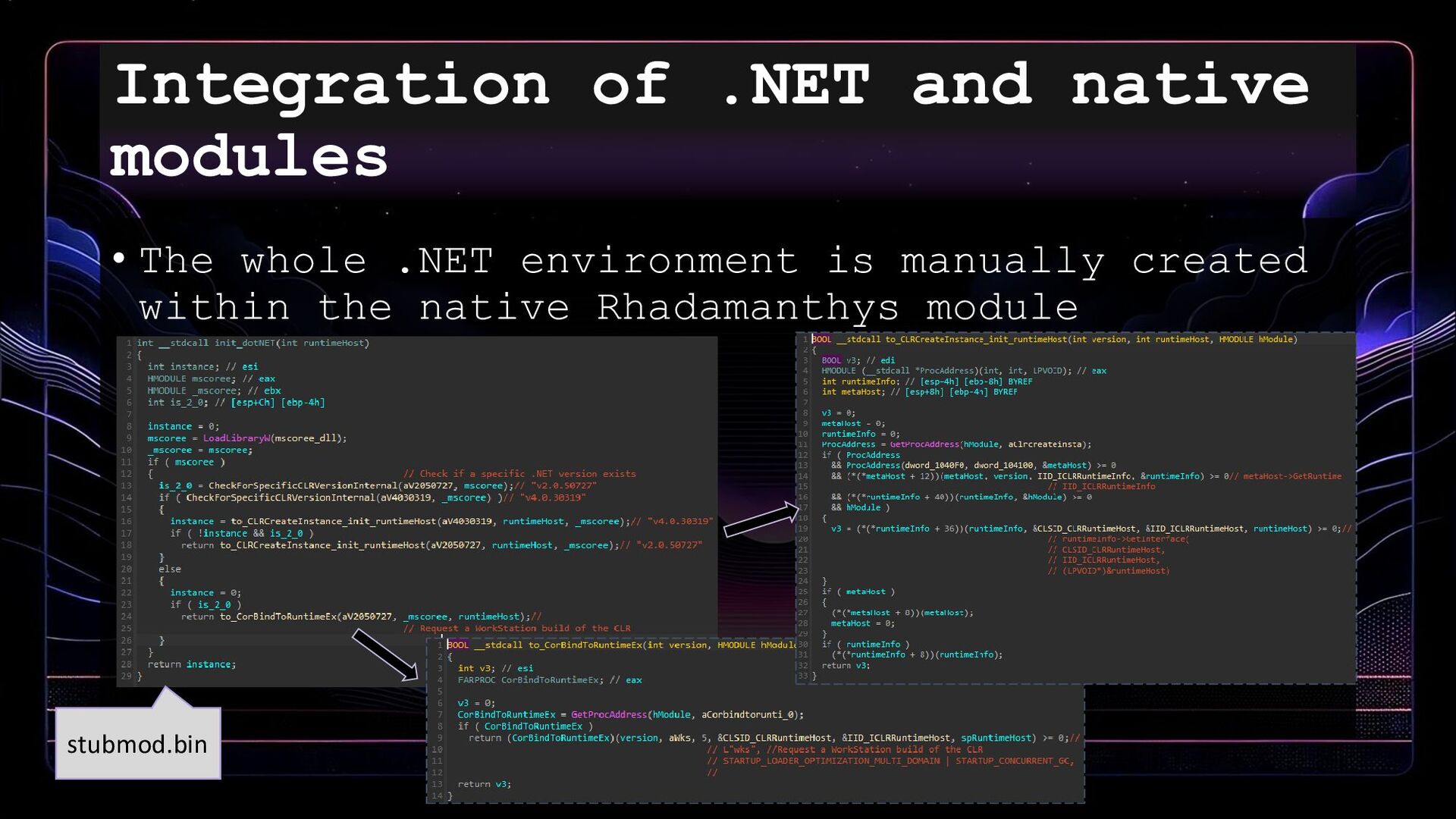
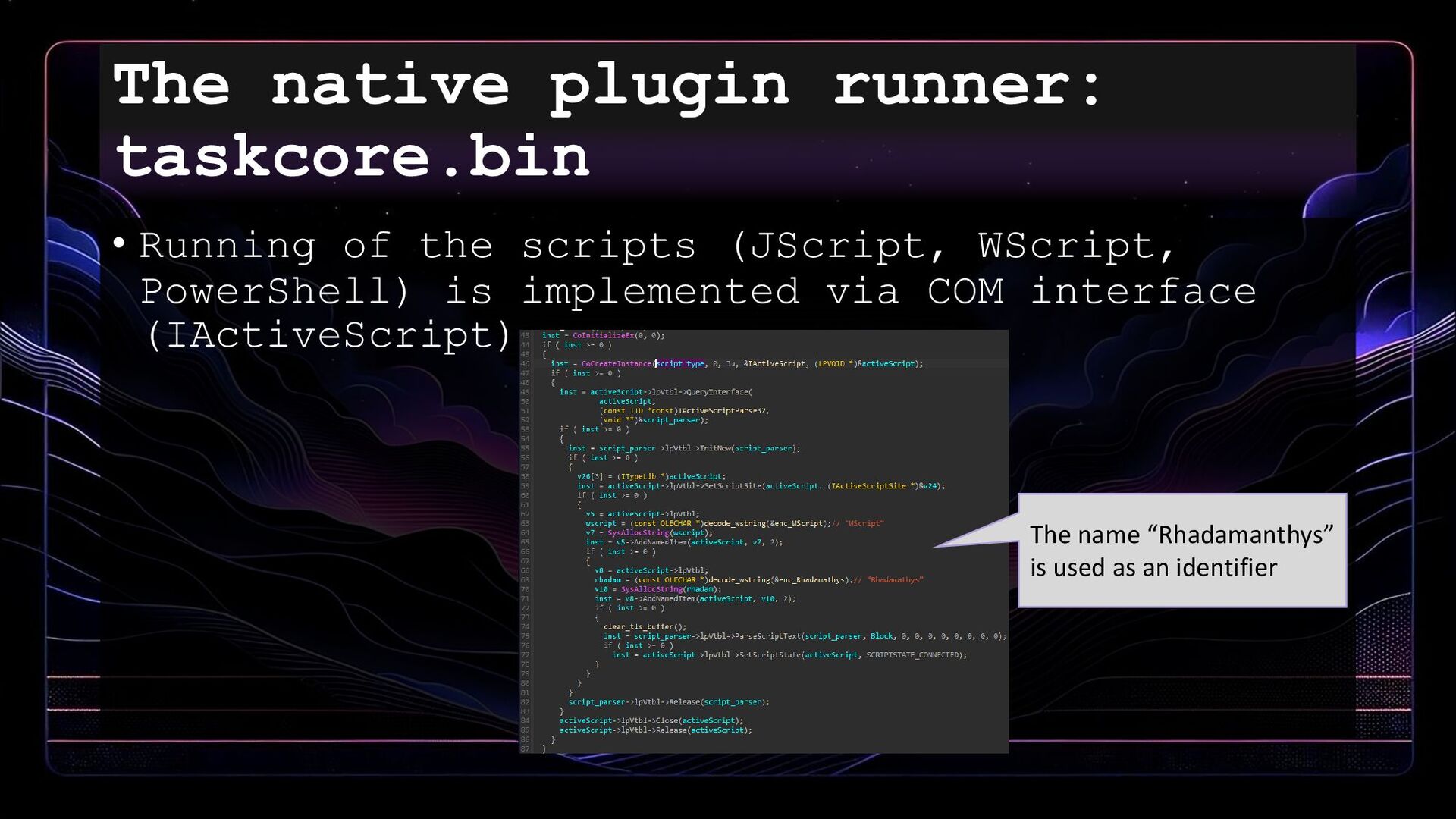
native code, Rhadamanthys puts a lot of emphasis on .NET and PowerShell • There are few different components that allow to run .NET and PowerShell plugins
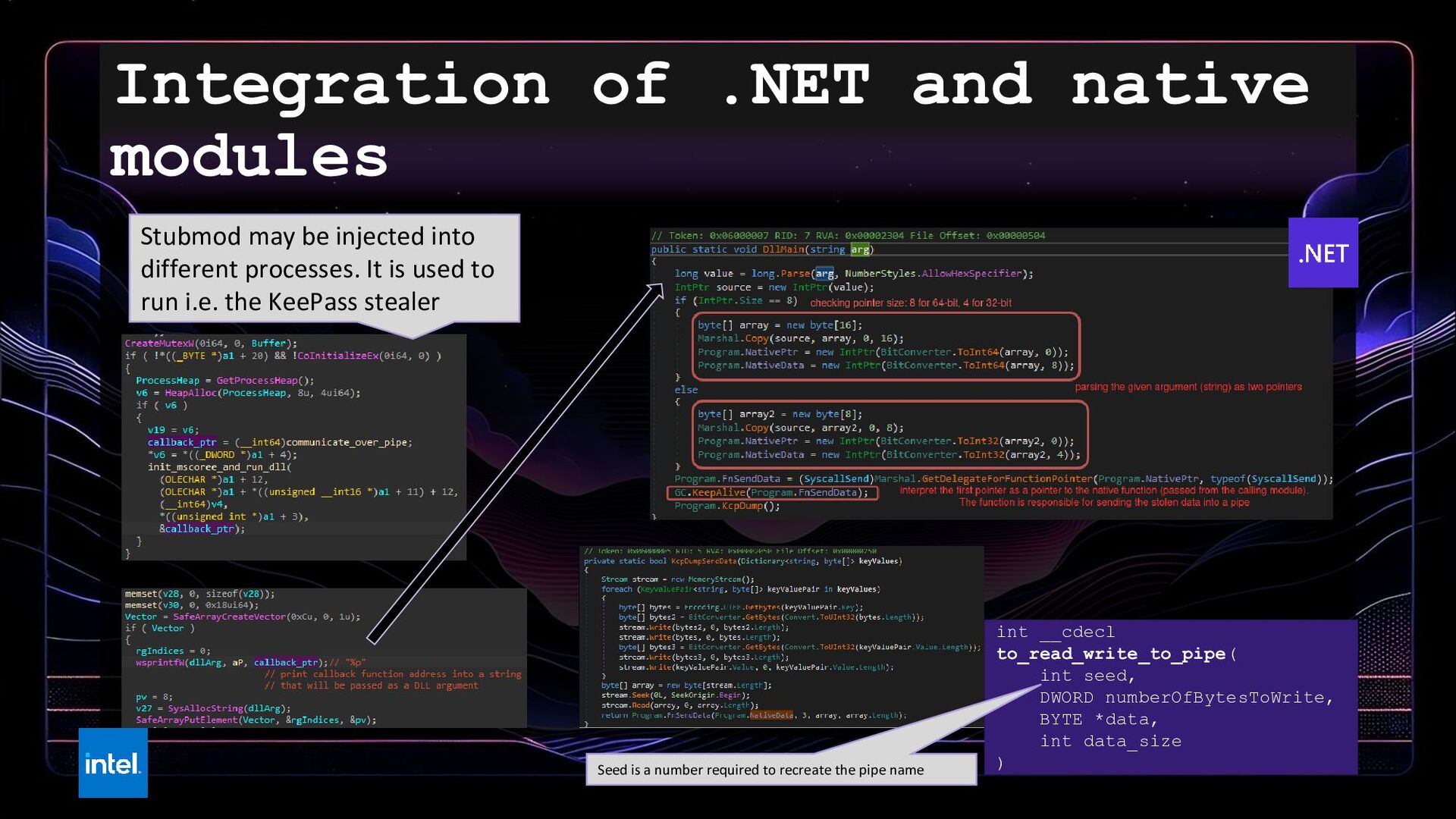
into different processes. It is used to run i.e. the KeePass stealer int __cdecl to_read_write_to_pipe( int seed, DWORD numberOfBytesToWrite, BYTE *data, int data_size ) Seed is a number required to recreate the pipe name
still didn’t cover it fully • Understanding the design helps reaching out parts that interest us the most •It’s easy to get lost in details: try to start with some concrete questions to answer

 SiteGround - Reliable hosting with speed, security, and support you can count on.


 hshrzd
 ssssota
 oga5
oga5
 riku_sakamoto
 ivargrimstad
 koic
koic
 s_shimotori
 seike460
 shoppingjaws
 tinykitten
 lx_t
lx_t
 otouto
 atsuki_seo
 ianozsvald
 maltzj
 jakevdp
 kimpetersen
 destraynor
 stuffmc
 geoffreycrofte
 chrislema
 danielanewman
 baasie
 csswizardry
 codingconduct