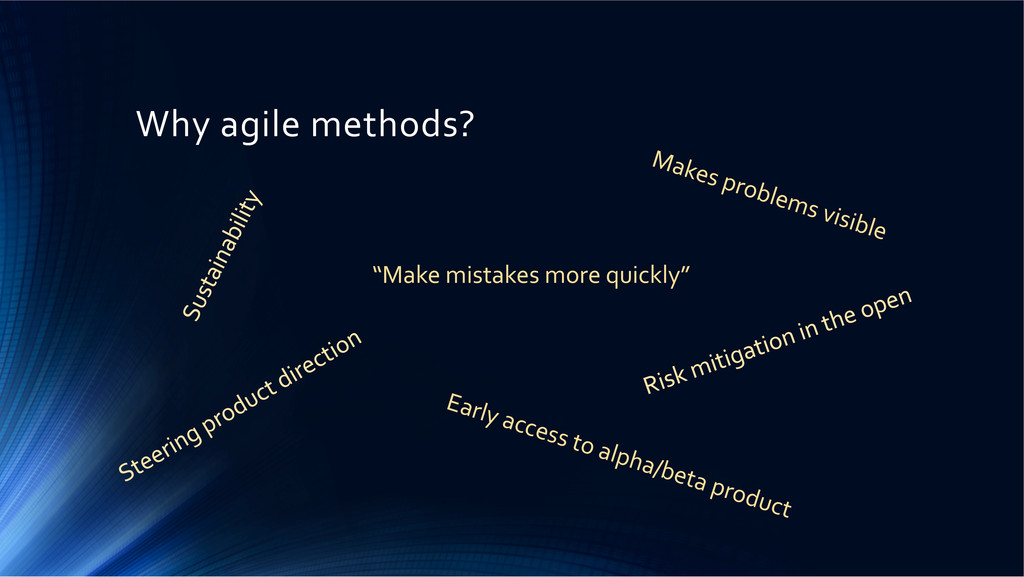
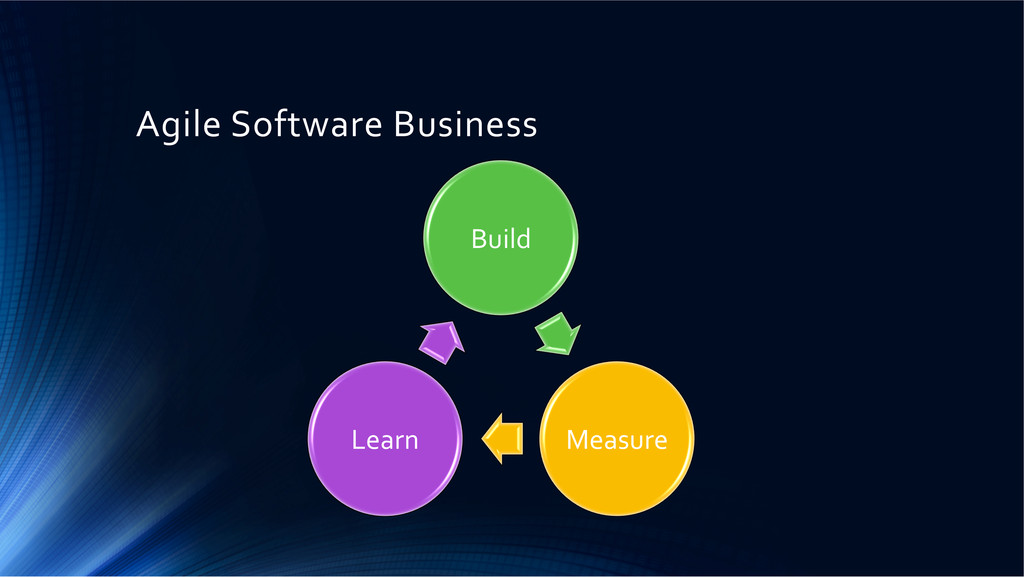
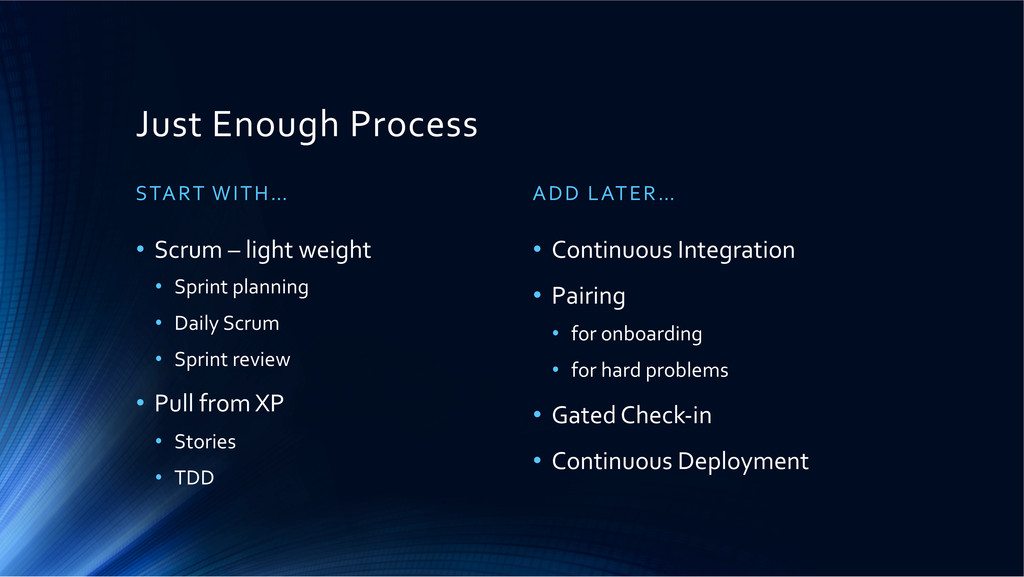
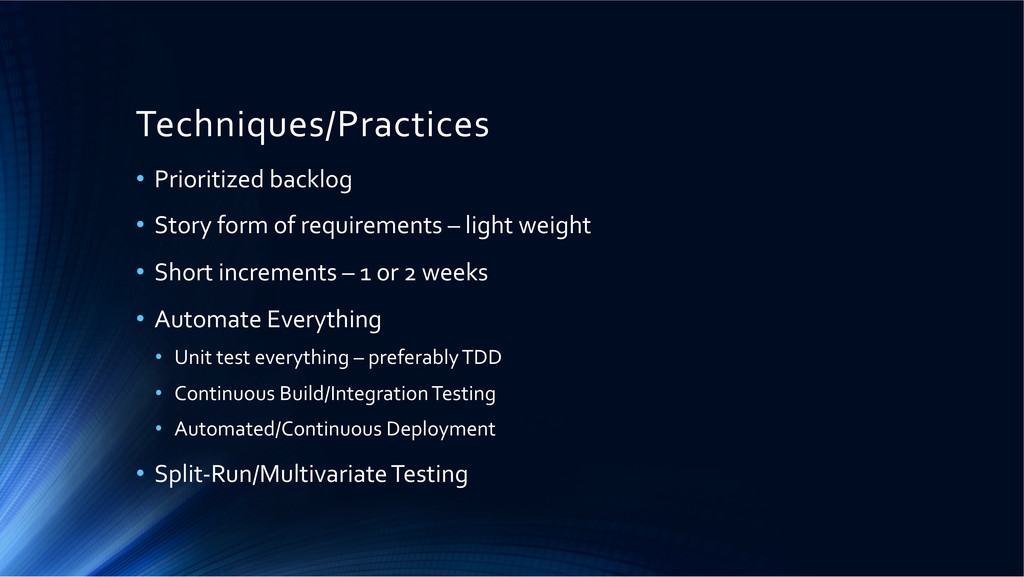
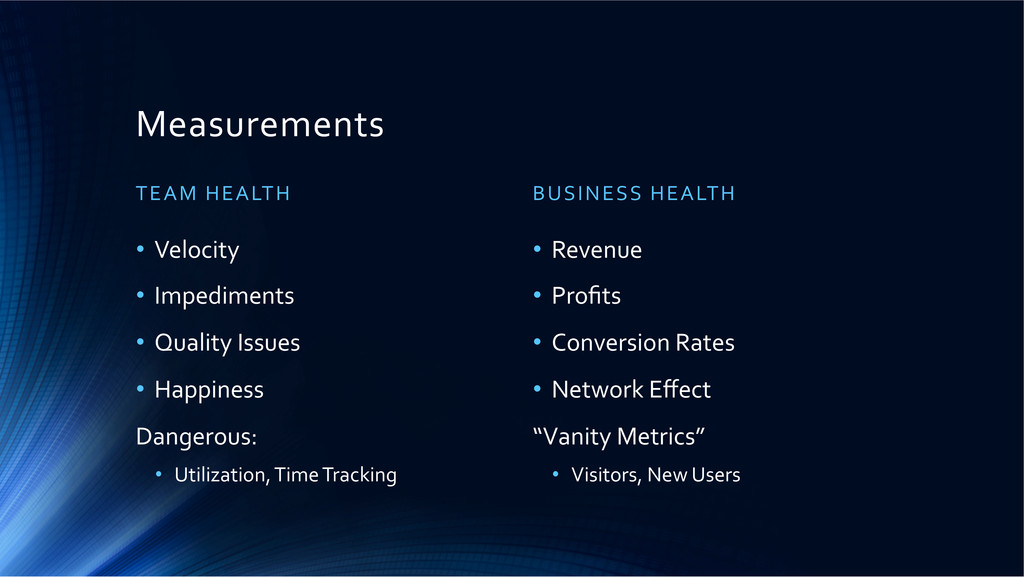
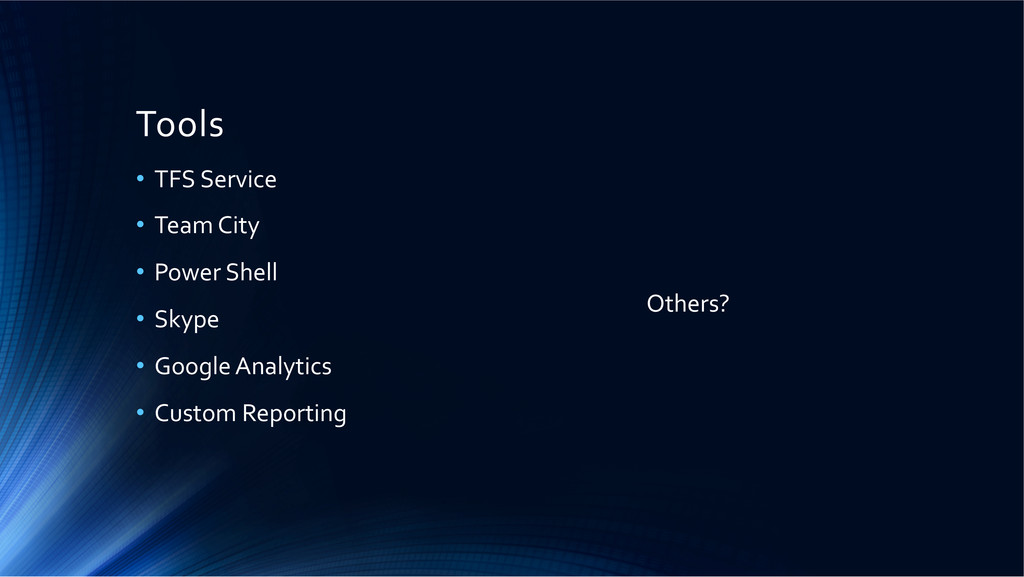
differently in the larger enterprises and established organizations than in small, lean startups. In this talk, I’ll share my experiences with the small, fast, agile development team that inspired us to start Improving. We’ll talk about how to run your business on the “build, measure, learn” mantra using agile product and project management techniques, as well as agile development and operations techniques. We’ll also discuss how much process is enough process, tight agile team formation, and pitfalls that keep your team from really performing and maturing as you get comfortable with your product, process, technologies, and organization. Concepts will apply to true start-‐up businesses, as well as lean innovation centers in more established companies.
SVP, Microsoft Technology Practice former Microsoft MVP for C# creator of the AgileDotNet conference @tmgirvin http://www.linkedin.com/in/tmgirvin http://tmgirvin.com
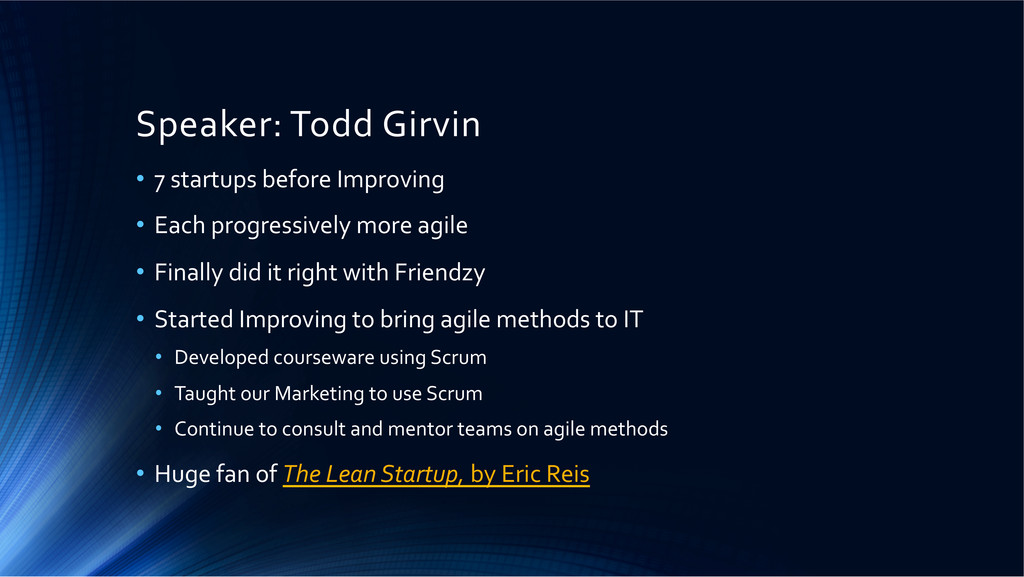
• Each progressively more agile • Finally did it right with Friendzy • Started Improving to bring agile methods to IT • Developed courseware using Scrum • Taught our Marketing to use Scrum • Continue to consult and mentor teams on agile methods • Huge fan of The Lean Startup, by Eric Reis
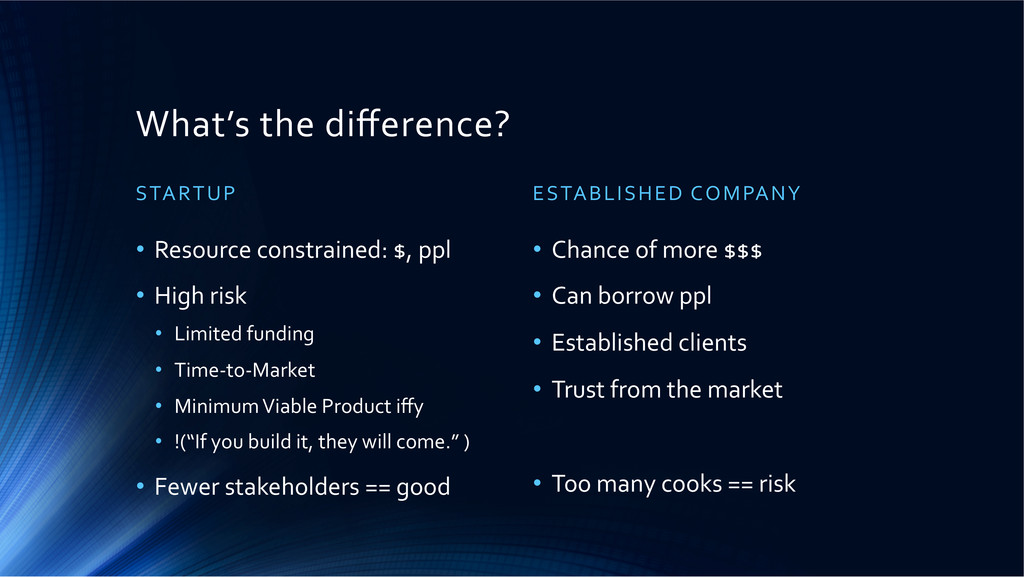
ppl • High risk • Limited funding • Time-‐to-‐Market • Minimum Viable Product iffy • !(“If you build it, they will come.” ) • Fewer stakeholders == good ESTABLISHED COMPANY • Chance of more $$$ • Can borrow ppl • Established clients • Trust from the market • Too many cooks == risk
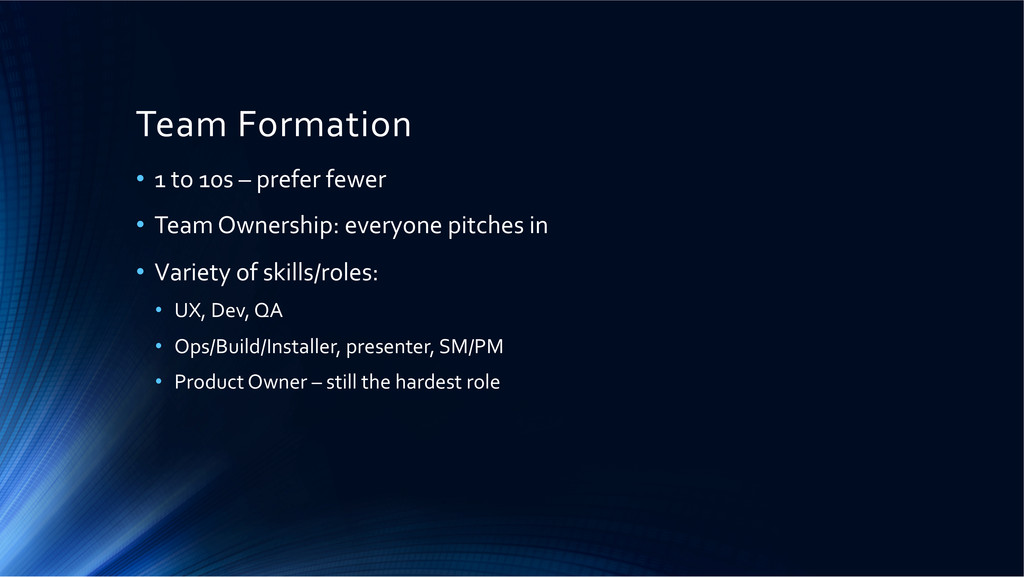
• Team Ownership: everyone pitches in • Variety of skills/roles: • UX, Dev, QA • Ops/Build/Installer, presenter, SM/PM • Product Owner – still the hardest role
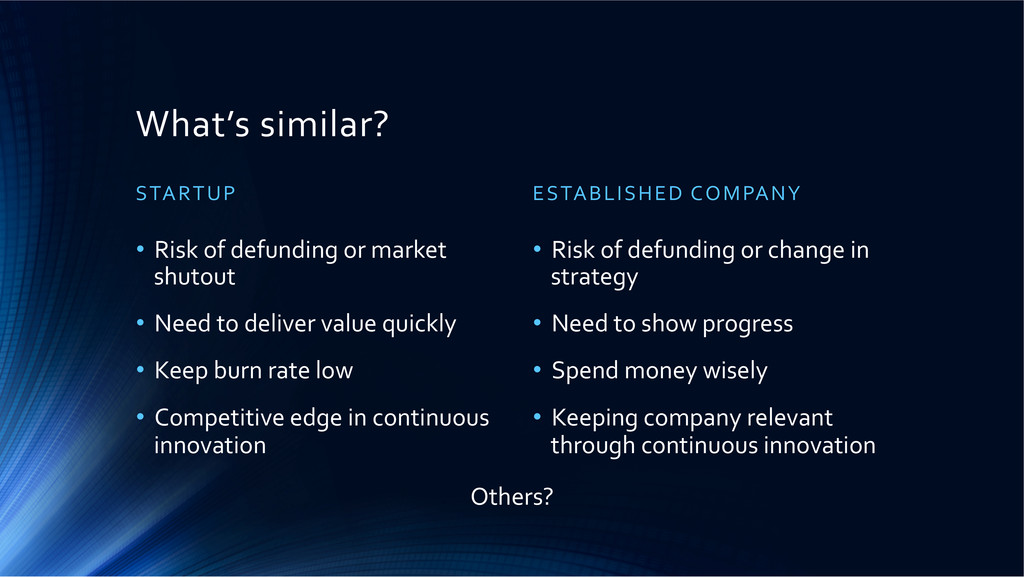
market shutout • Need to deliver value quickly • Keep burn rate low • Competitive edge in continuous innovation ESTABLISHED COMPANY • Risk of defunding or change in strategy • Need to show progress • Spend money wisely • Keeping company relevant through continuous innovation Others?


 improving
 aokiplayer
 ytapples613
 akiraasano
 soudai
 ainischool
 yoshimura_datam
 juanmartin2026
 matleenalaakso
 signer
 masakiokuda
 terasawat
 2720japanoke
 elsirapls
 akashhashmi
 wjessup
 tammyeverts
 auna
auna
 ryanjones
 axbom
axbom
 shlominoach
 smashingmag
 lfama
lfama
 lcolladotor
 aleyda

![Speaker: Todd Girvin [email protected] Cofounder, Improving Enterprises](https://files.speakerdeck.com/presentations/34931730eb4f013091294a0ad2fa1297/slide_2.jpg)