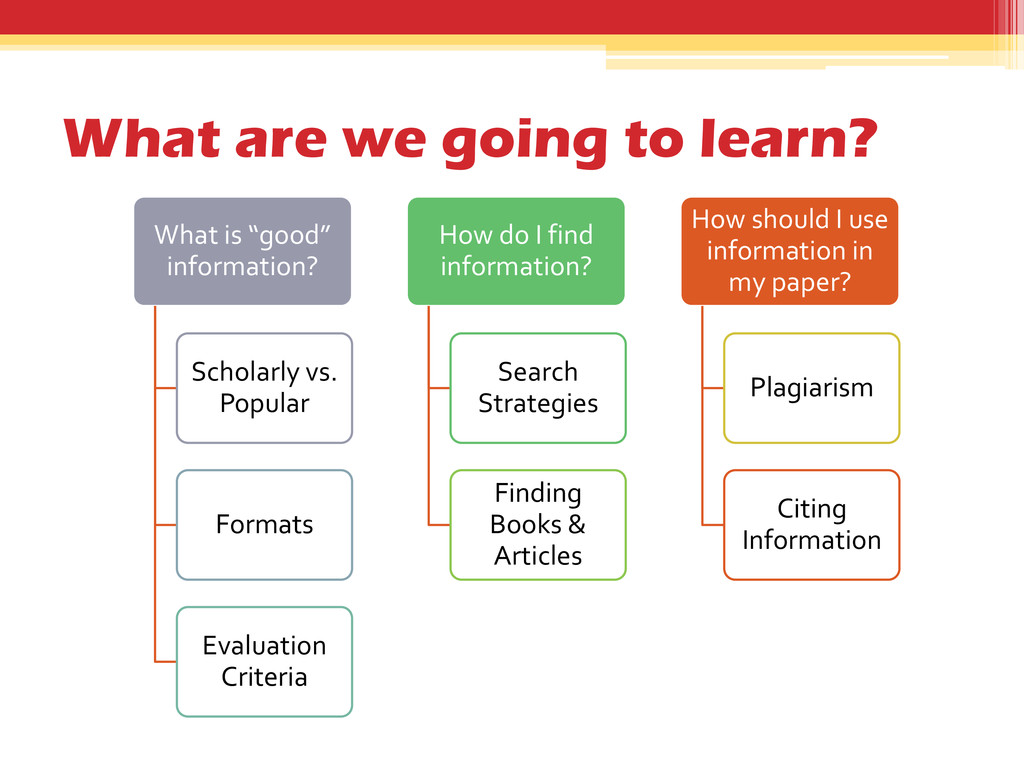
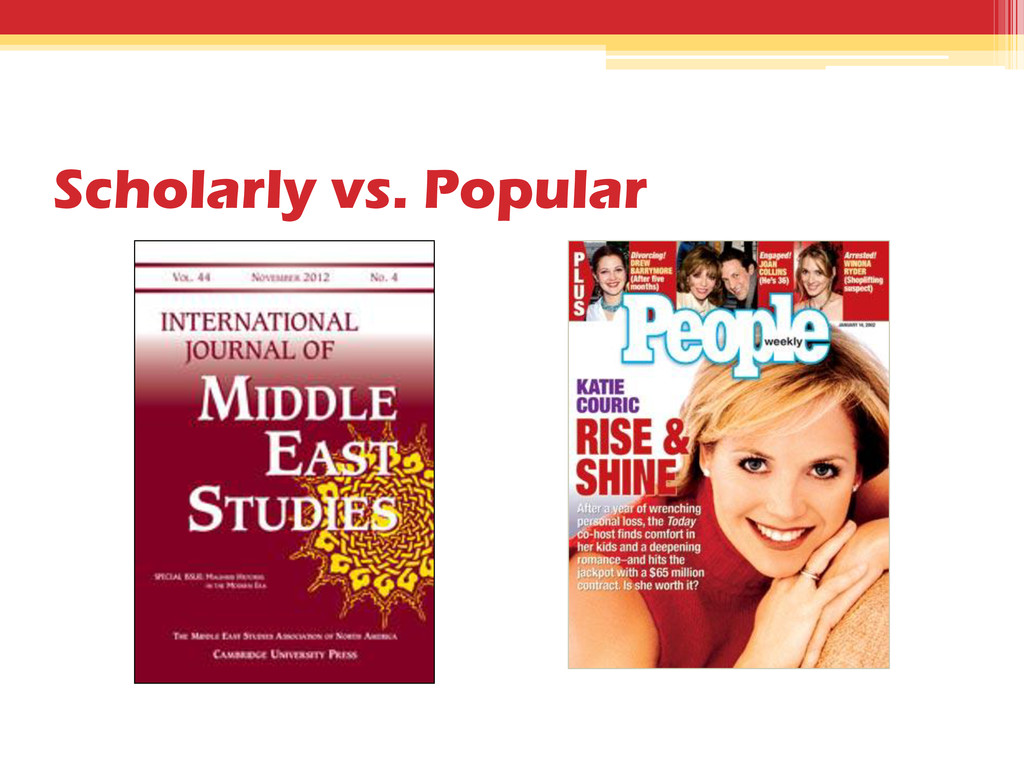
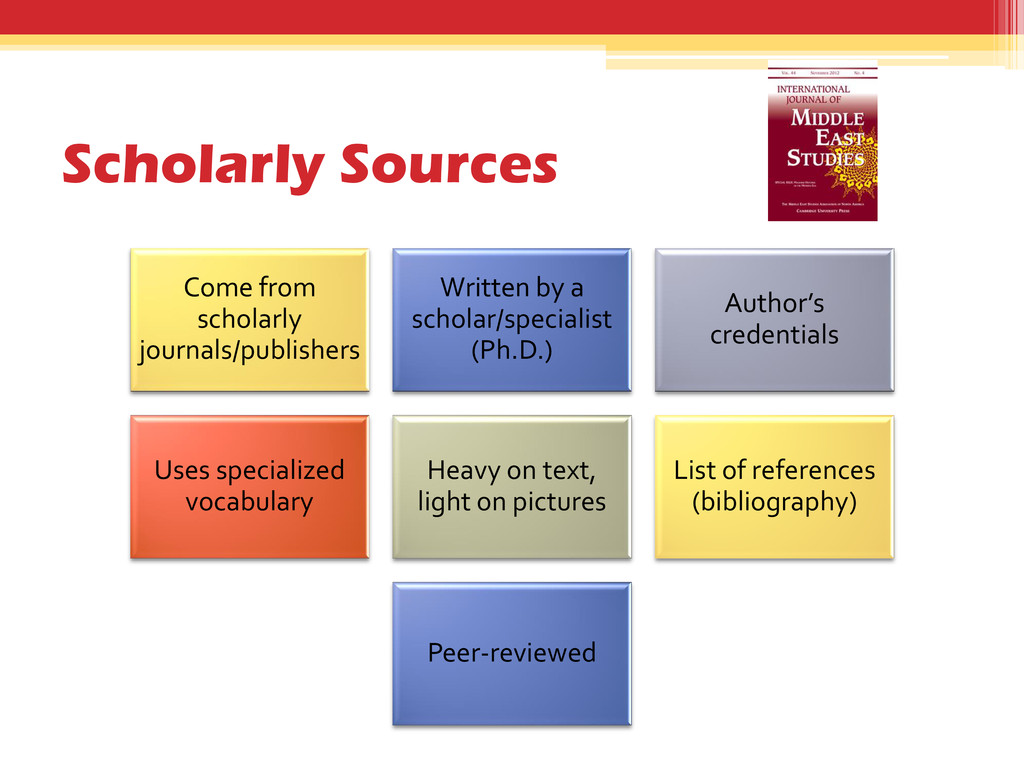
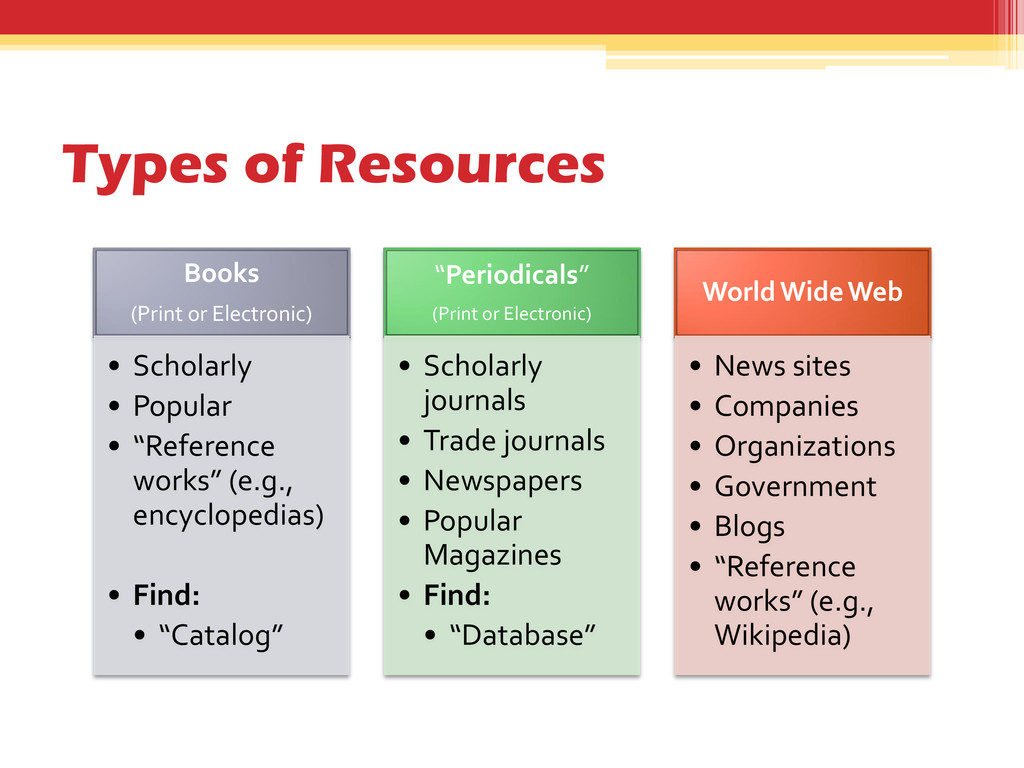
Scholarly vs. Popular Formats Evaluation Criteria How do I find information? Search Strategies Finding Books & Articles How should I use information in my paper? Plagiarism Citing Information
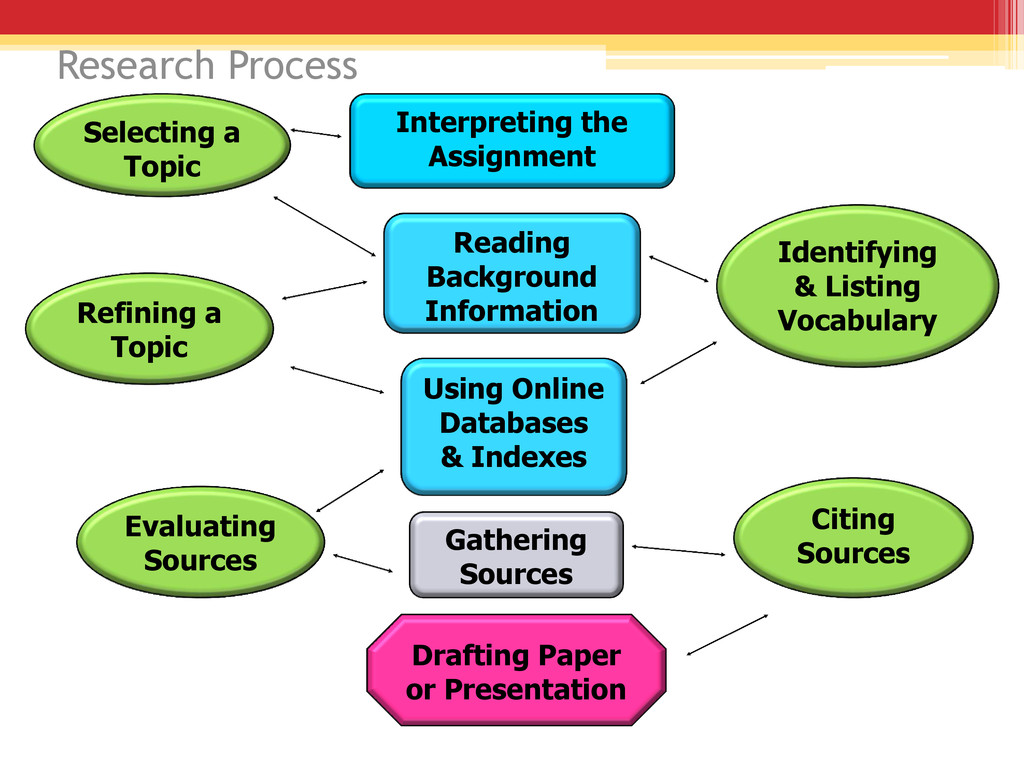
Indexes Gathering Sources Drafting Paper or Presentation Identifying & Listing Vocabulary Citing Sources Refining a Topic Evaluating Sources Selecting a Topic Research Process
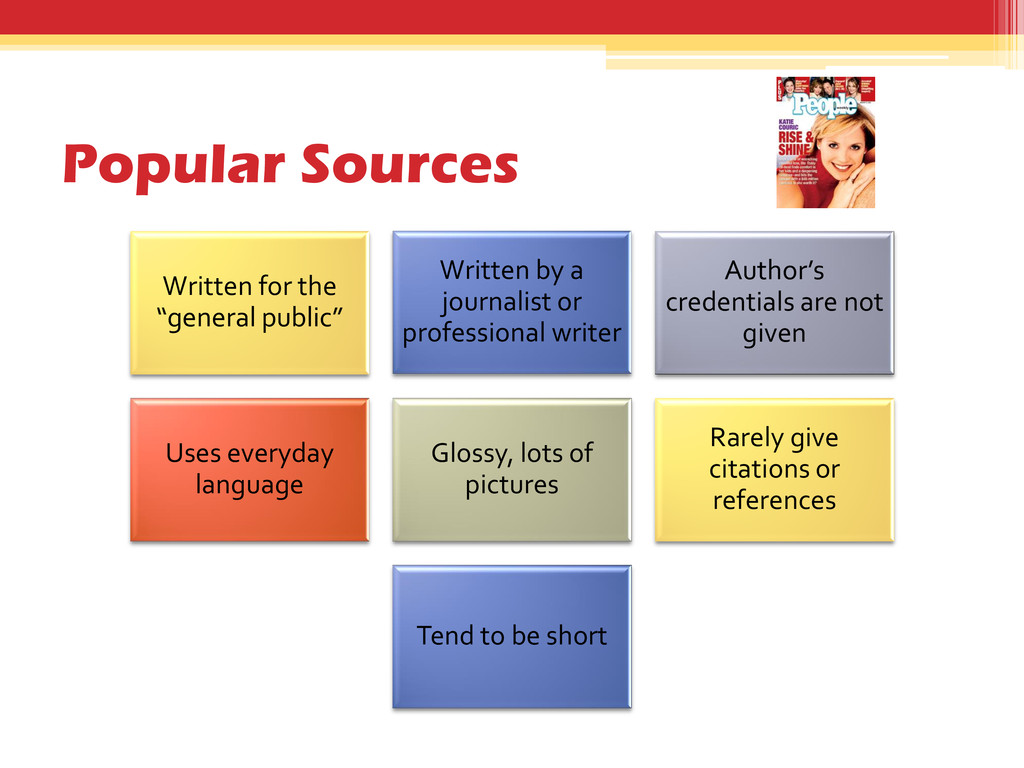
journalist or professional writer Author’s credentials are not given Uses everyday language Glossy, lots of pictures Rarely give citations or references Tend to be short
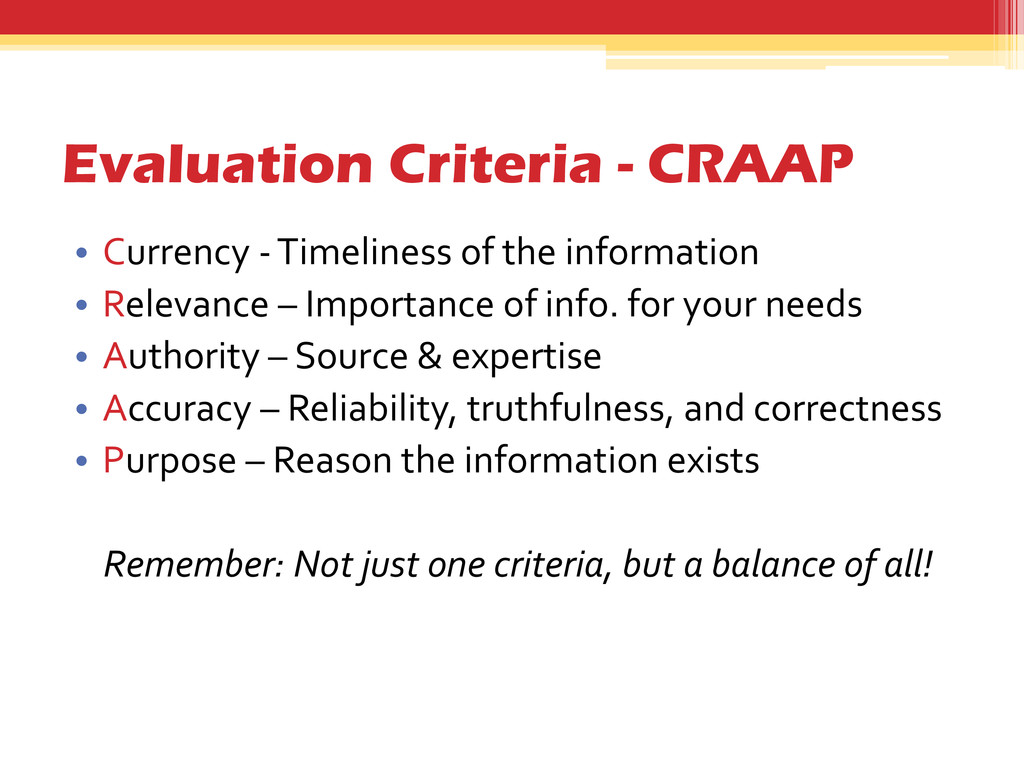
information • Relevance – Importance of info. for your needs • Authority – Source & expertise • Accuracy – Reliability, truthfulness, and correctness • Purpose – Reason the information exists Remember: Not just one criteria, but a balance of all!
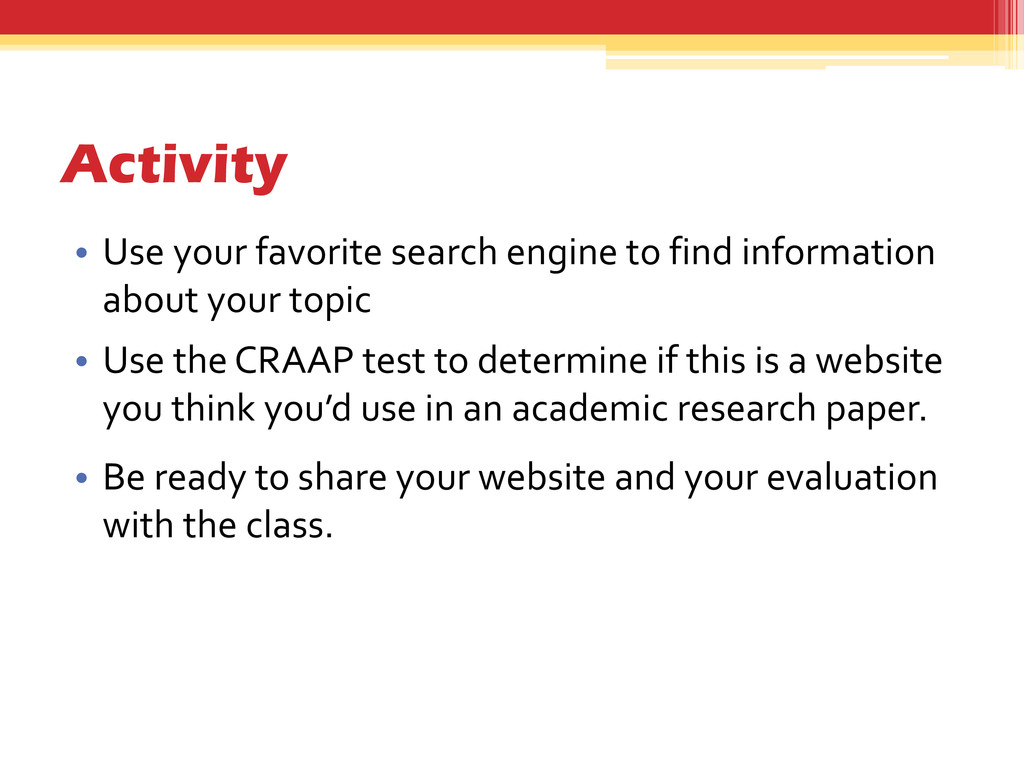
about your topic • Use the CRAAP test to determine if this is a website you think you’d use in an academic research paper. • Be ready to share your website and your evaluation with the class.
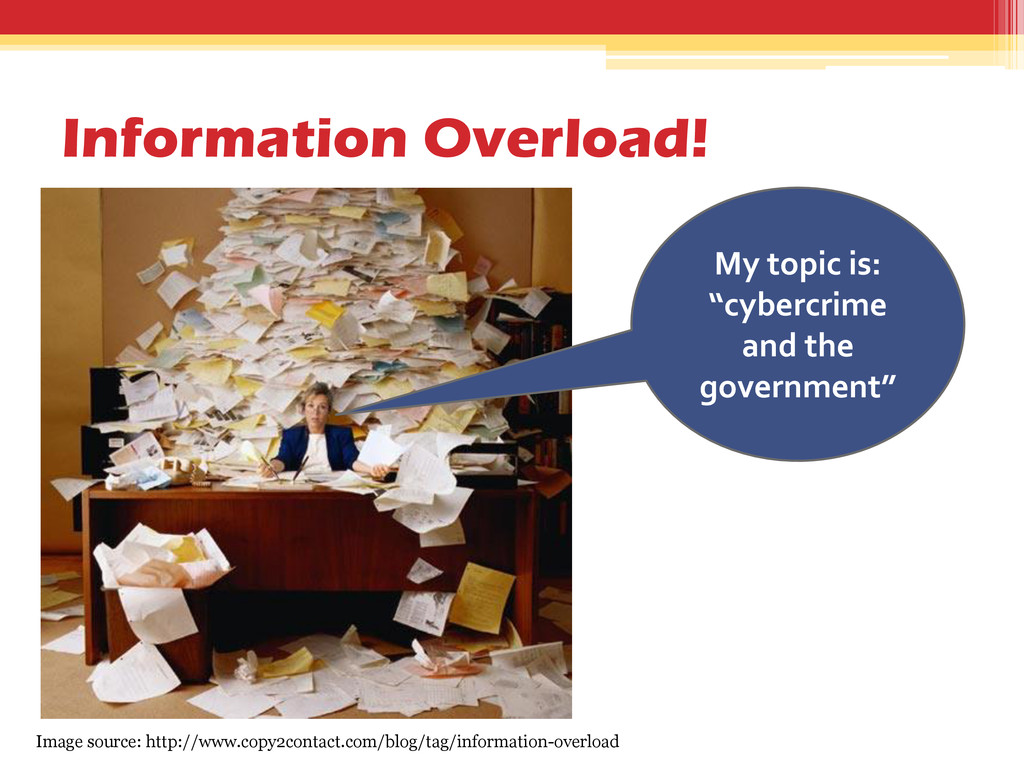
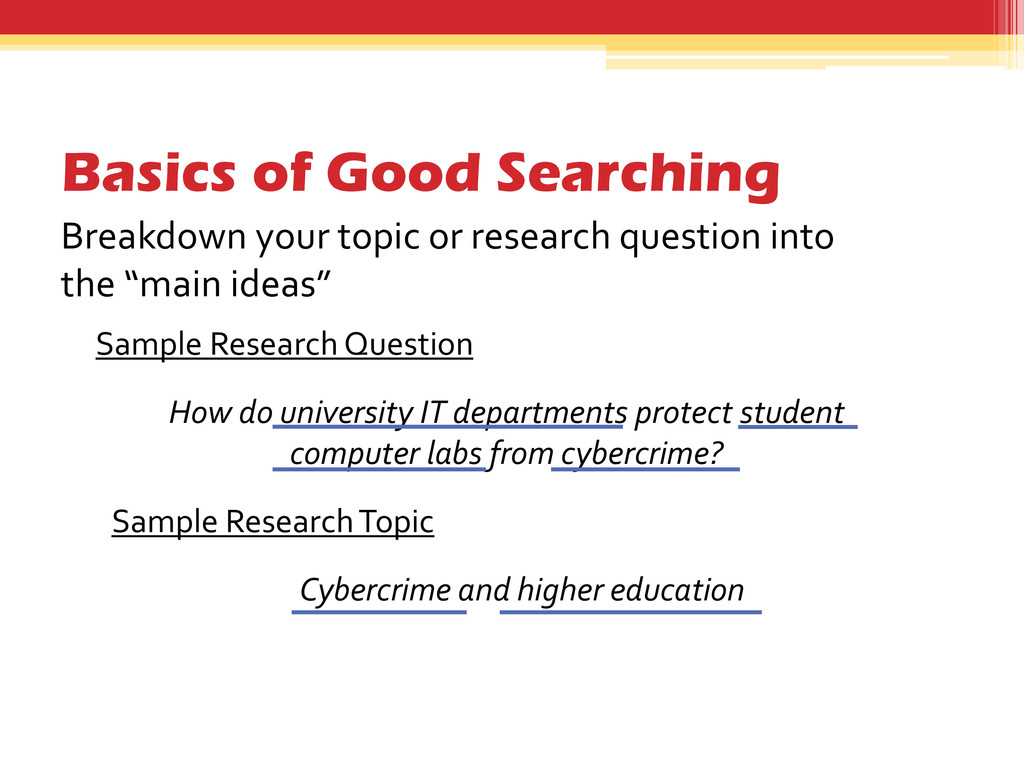
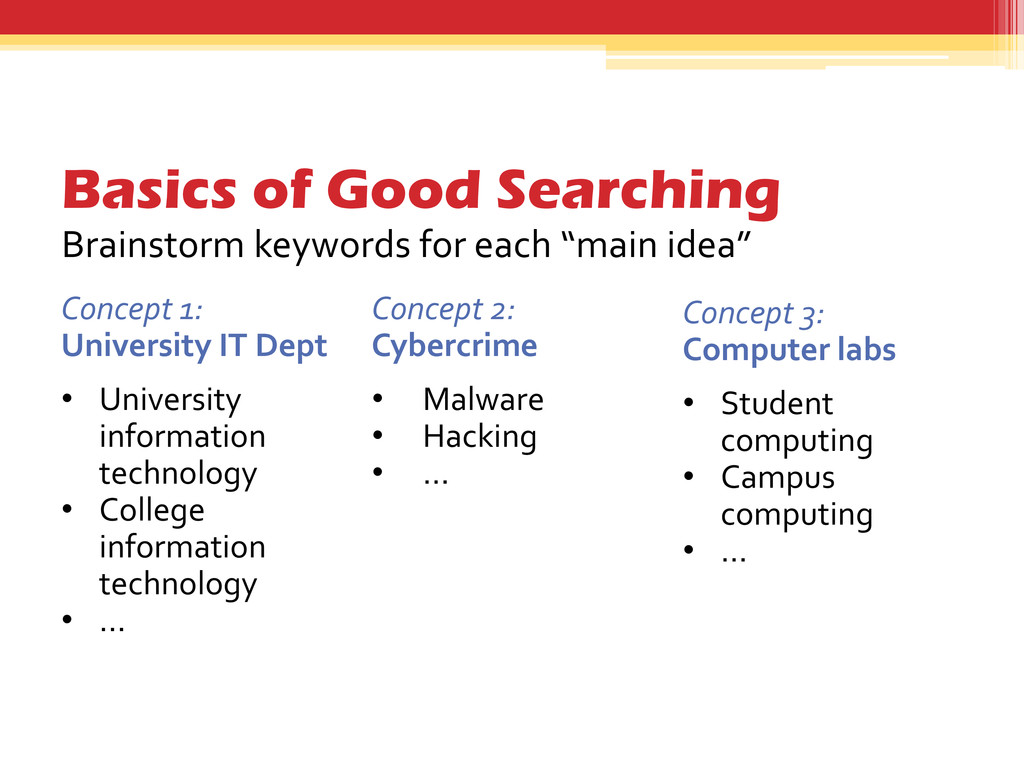
IT departments protect student computer labs from cybercrime? Breakdown your topic or research question into the “main ideas” Sample Research Topic Cybercrime and higher education
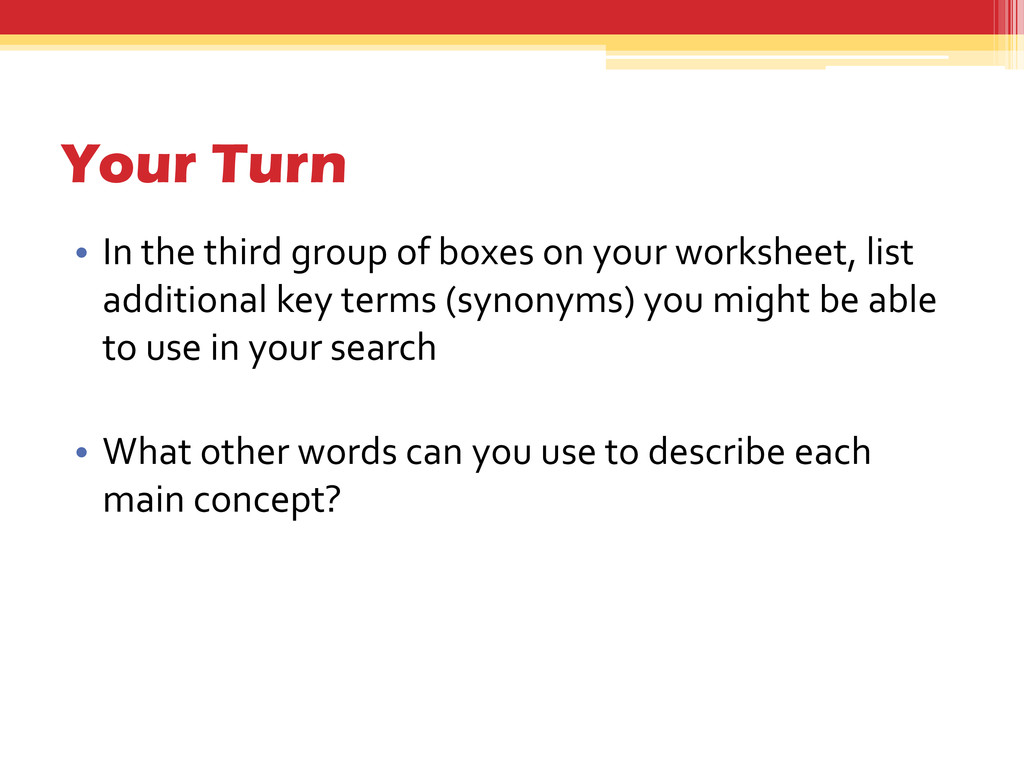
your worksheet, list additional key terms (synonyms) you might be able to use in your search • What other words can you use to describe each main concept?
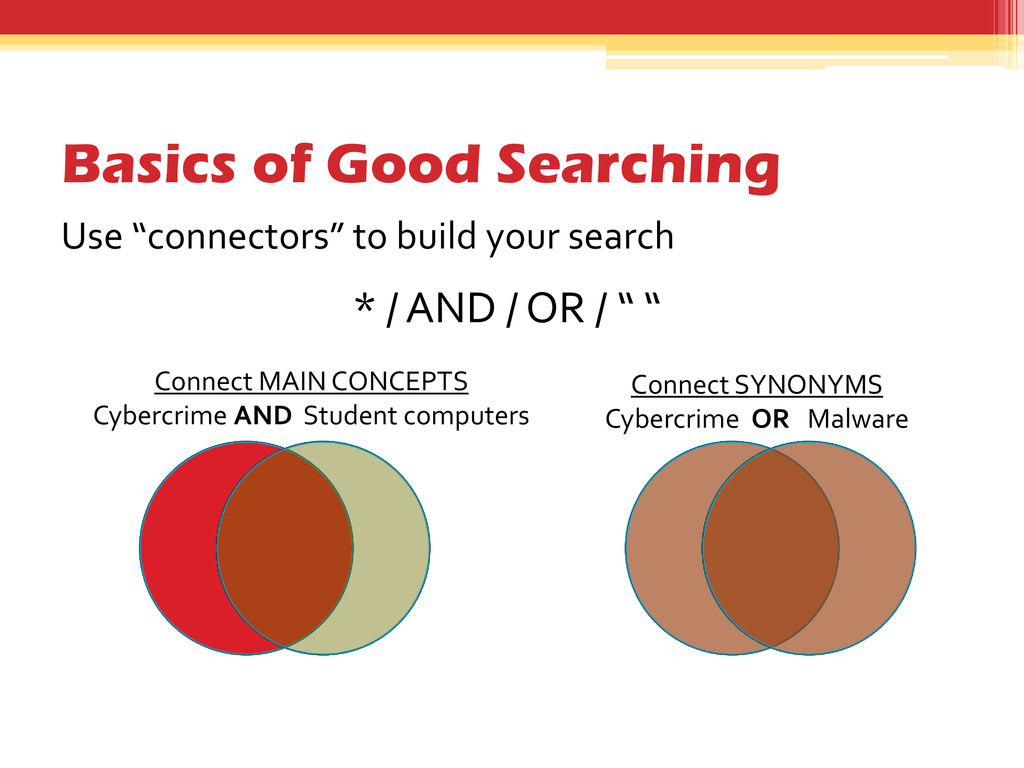
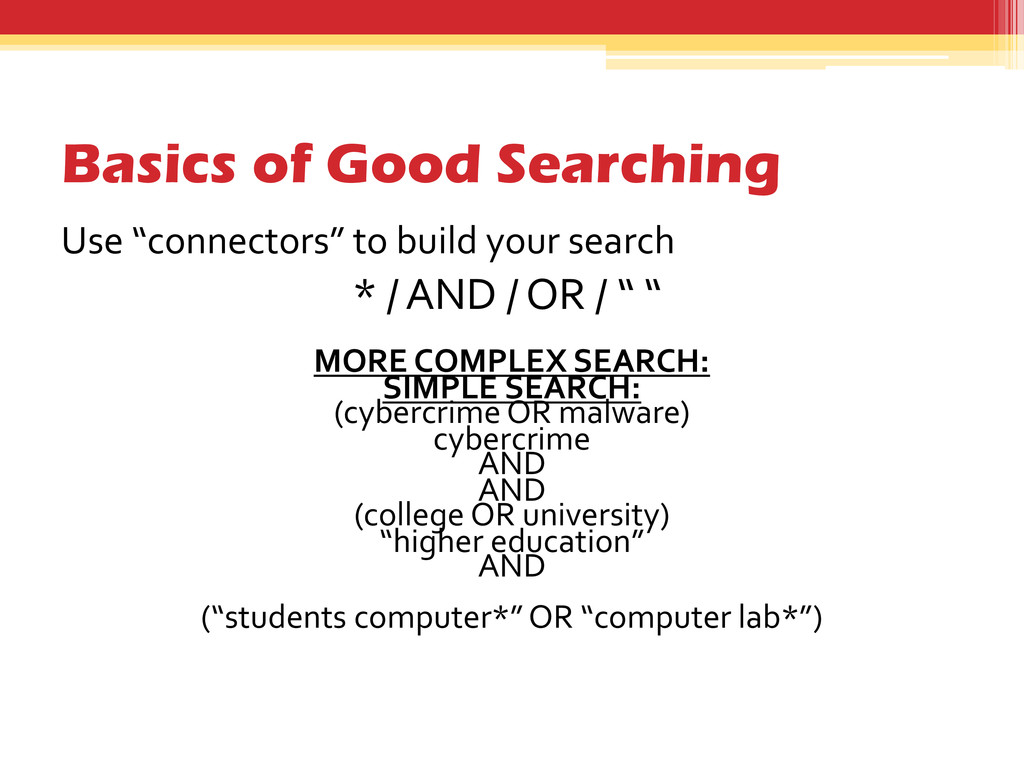
* / AND / OR / “ “ MORE COMPLEX SEARCH: (cybercrime OR malware) AND (college OR university) AND (“students computer*” OR “computer lab*”) SIMPLE SEARCH: cybercrime AND “higher education”
of the Library's resources at once. • Find books, articles, media, government information, and other library resources all in one place. • Search what Towson owns as well as resources at other USMAI Libraries. *but not ALL!!
– check for CRAAP! • “Library Research” – can mean a lot of things! • Practice good search techniques • NEXT TIME: ▫ Wrap-up searching ▫ Ethical use of information


 kimberlymiller3
 signer
 ytapples613
 drpoonamkc
 ainischool
 cbtlibrary
 hiragahh
 3l4l5
3l4l5
 ssmedikasda
 pawan_pharm
 uranoken
 gurzu
gurzu
 jcasabona
 tamaranovitovic
 aleyda
 ivargrimstad
 dougneiner
 tammyeverts
 tmiket
 eileencodes
 raygrieselhuber

![Ask a Librarian! • Kimberly Miller ▫ [email protected] ▫ 410-704-6324](https://files.speakerdeck.com/presentations/2b24e80018d70131565d2addd4022104/slide_1.jpg)