my project? Understanding your assignment “Pre- Searching” w/Background Information What is “good” information? Scholarly vs. Popular Formats Evaluation Considerations How do I use the library? Search Strategies Finding Books & Articles How should I use the information I find in my paper? Writing with Academic Honesty Citing Information
if you don’t know what you’re looking for? • Background Information – • Encyclopedias, Dictionaries, Handbooks, and (some) websites • Narrow or clarify your research topic • Find new terms to use in future searching • Find links and/or citations to other sources
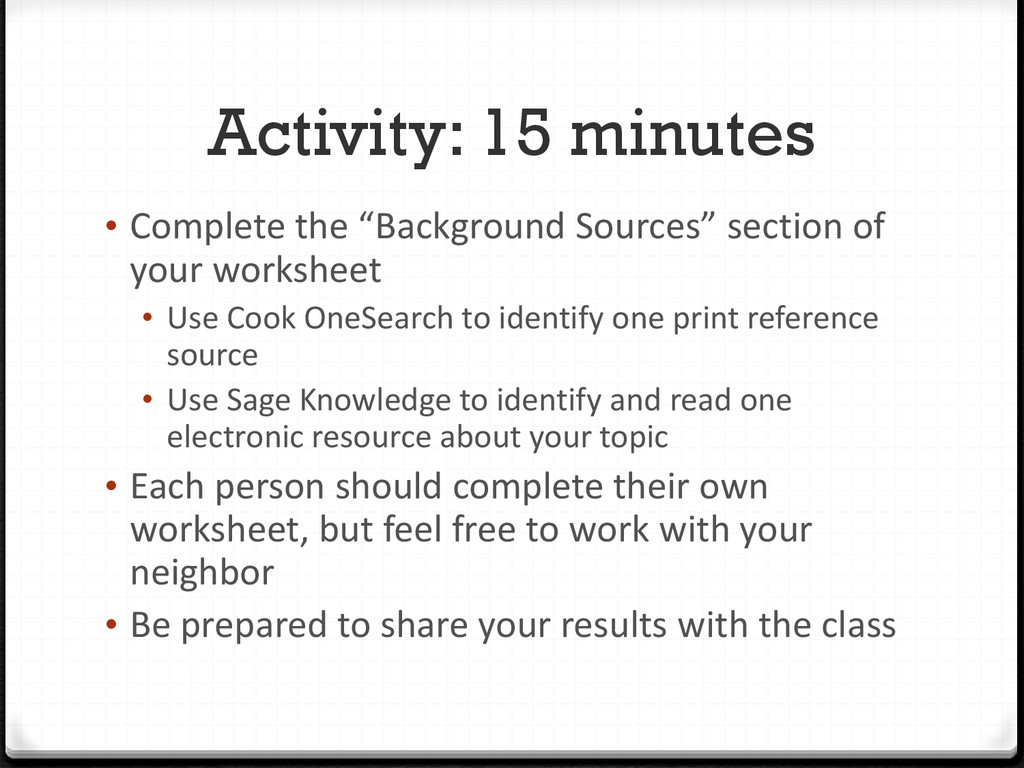
your worksheet • Use Cook OneSearch to identify one print reference source • Use Sage Knowledge to identify and read one electronic resource about your topic • Each person should complete their own worksheet, but feel free to work with your neighbor • Be prepared to share your results with the class
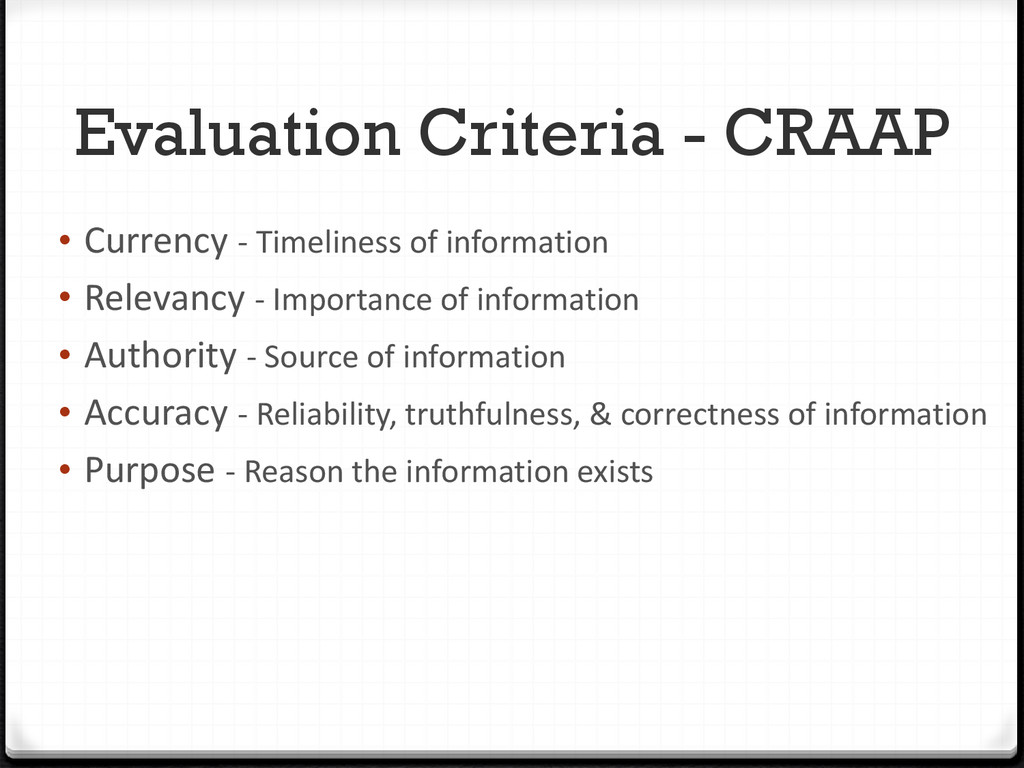
• Relevancy - Importance of information • Authority - Source of information • Accuracy - Reliability, truthfulness, & correctness of information • Purpose - Reason the information exists
scholarly articles • Goal: Figure out how to translate our research topic to a search that the computer/database understands • Subject-specific • SocINDEX • Communication and Mass Media Complete
as a question can help you find direction… the answer or argument you find will turn into your “thesis” • Considerations • Avoid simple “Yes” or “No” questions • “How” and “Why” questions work well • Is there evidence available to answer your question? • Can you access the sources needed to answer the question? • Can you research the topic within the given time frame and page limits?
your worksheet, list additional key terms (synonyms) you might be able to use in your search • What other words can you use to describe each main concept?
you might want to learn about your topic • “Library Research” can mean a lot of things • Evaluating information is important, even if you’re using library resources
apply what you’ve learned about searching for scholarly information • You’ll have time to search and locate resources – save your worksheet and bring it back! • Discussion about writing with academic honest, including citations


 kimberlymiller3
 auctria
 baltimoreniso
 rashwhitman
 hiola
 signer
 ak679839
 adeputra13
 akiraasano
 dougneiner
 jonoalderson
 inesmontani
 tmiket
 akashhashmi
 mza
 addyosmani
 aleyda
 afnizarnur
 holman
 swwweet