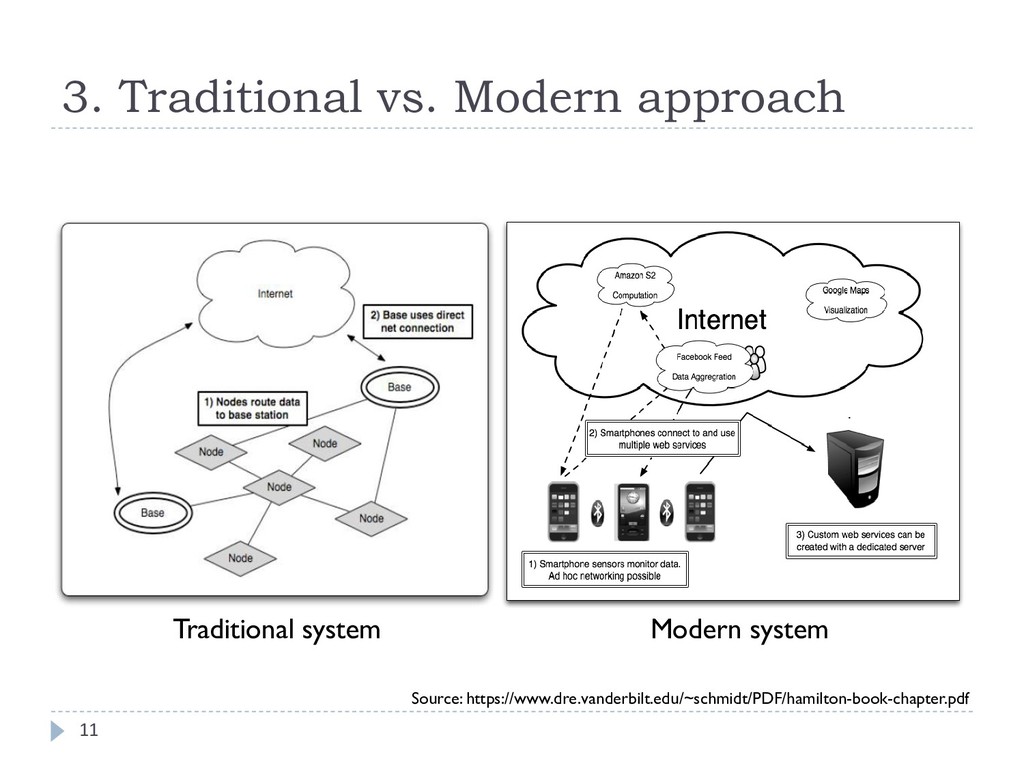
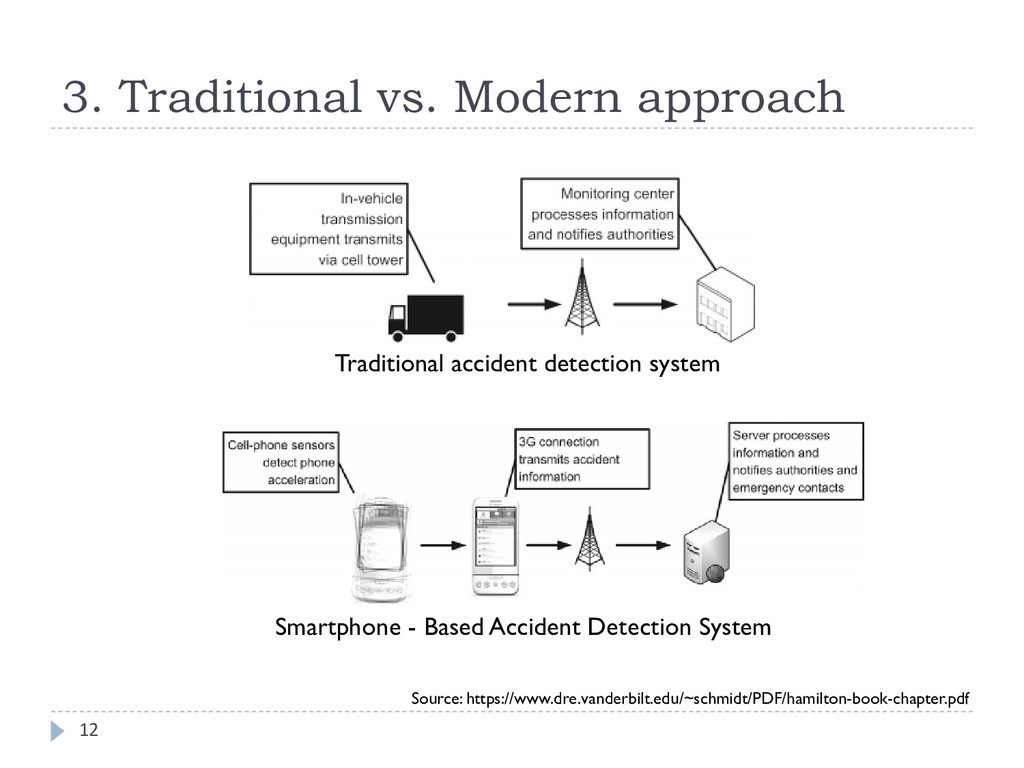
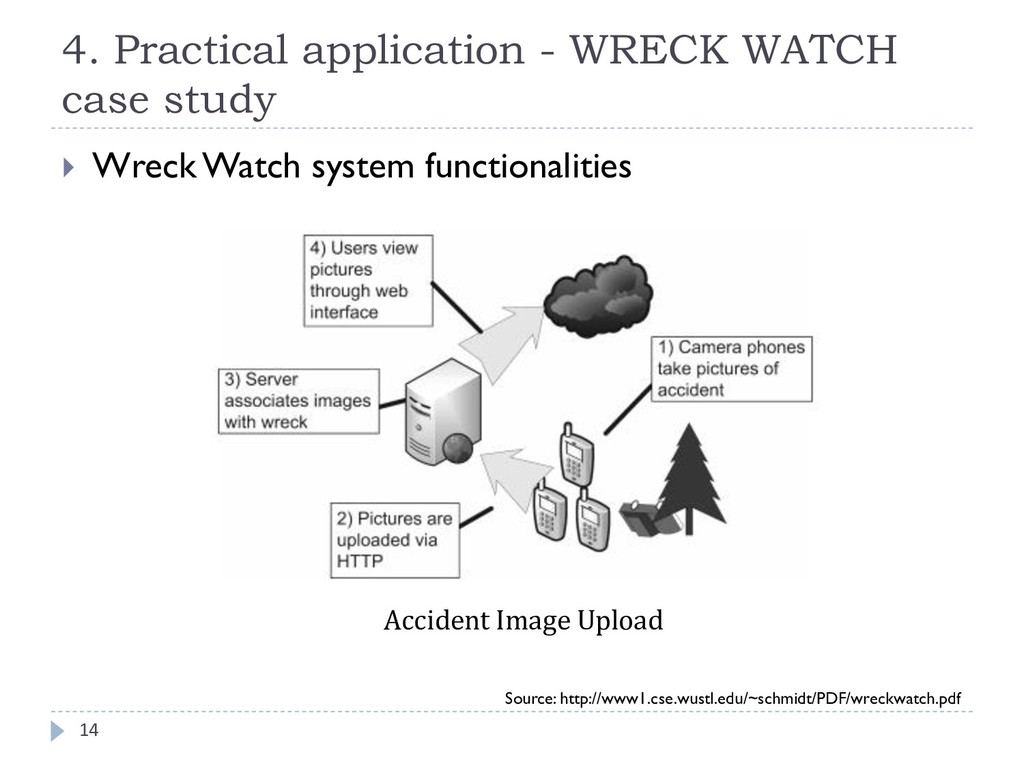
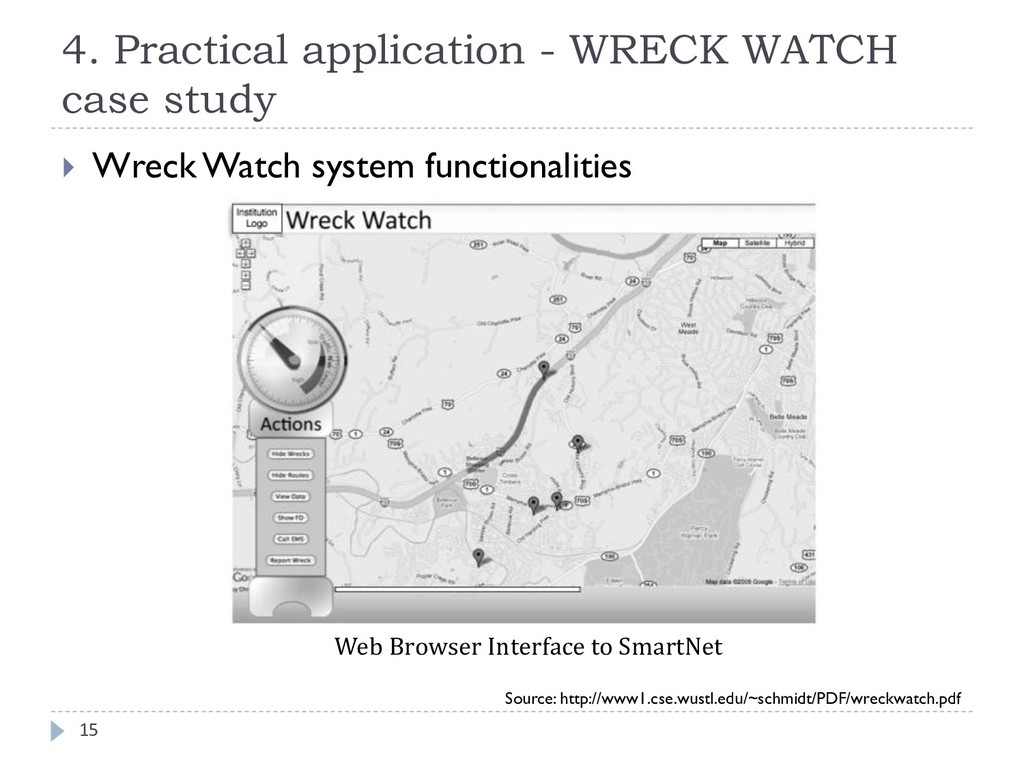
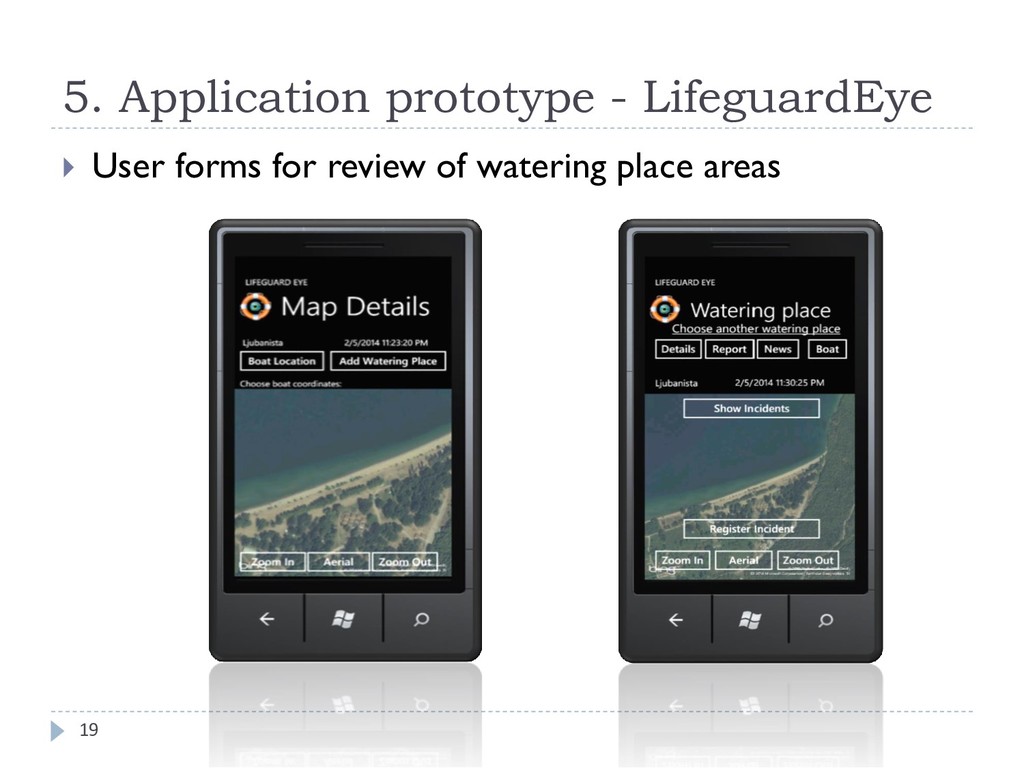
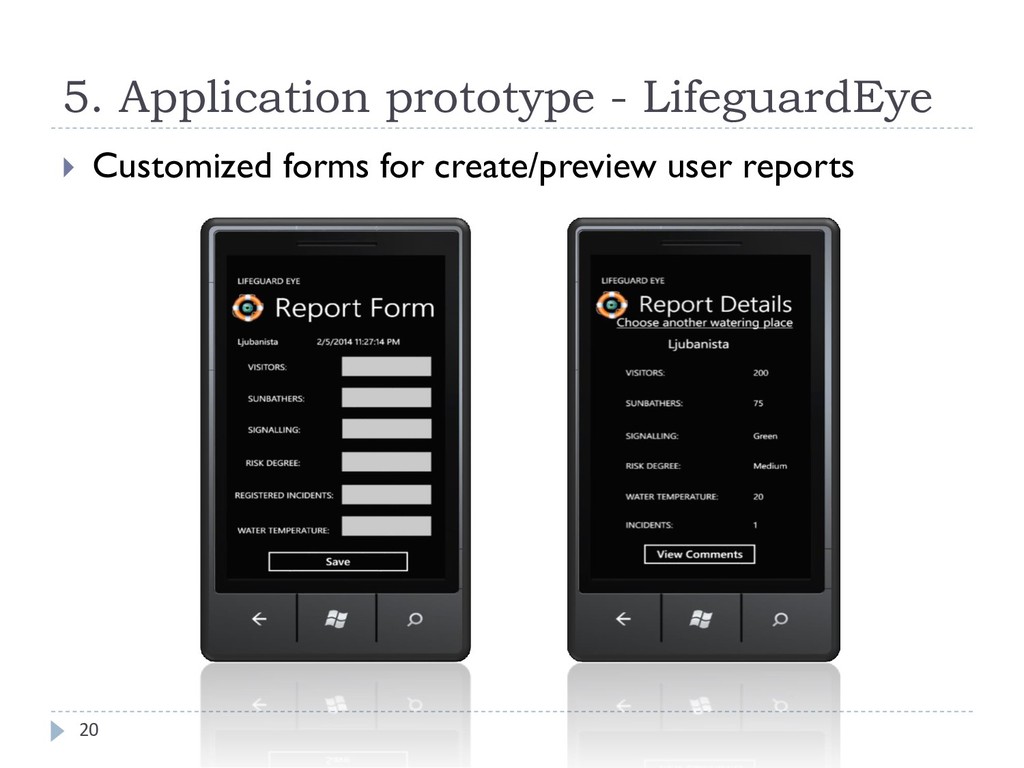
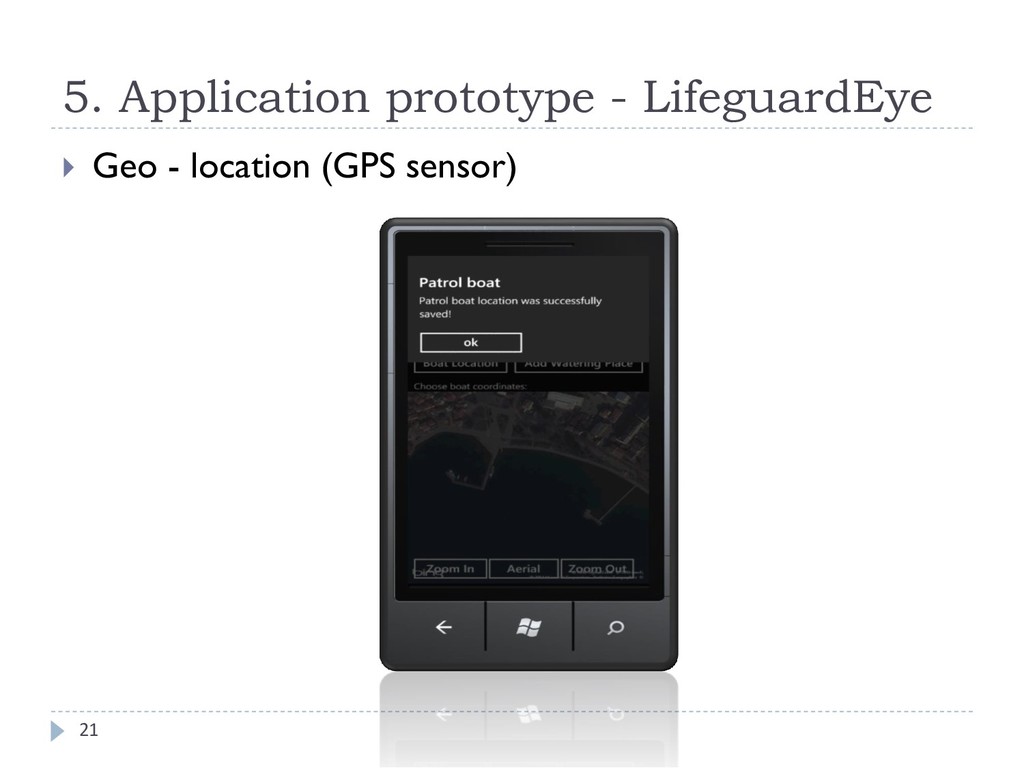
Mobile Phone as a Sensor Traditional vs. Modern approach Practical application - WRECK WATCH case study Application prototype - LifeguardEye Conclusion and further guidance
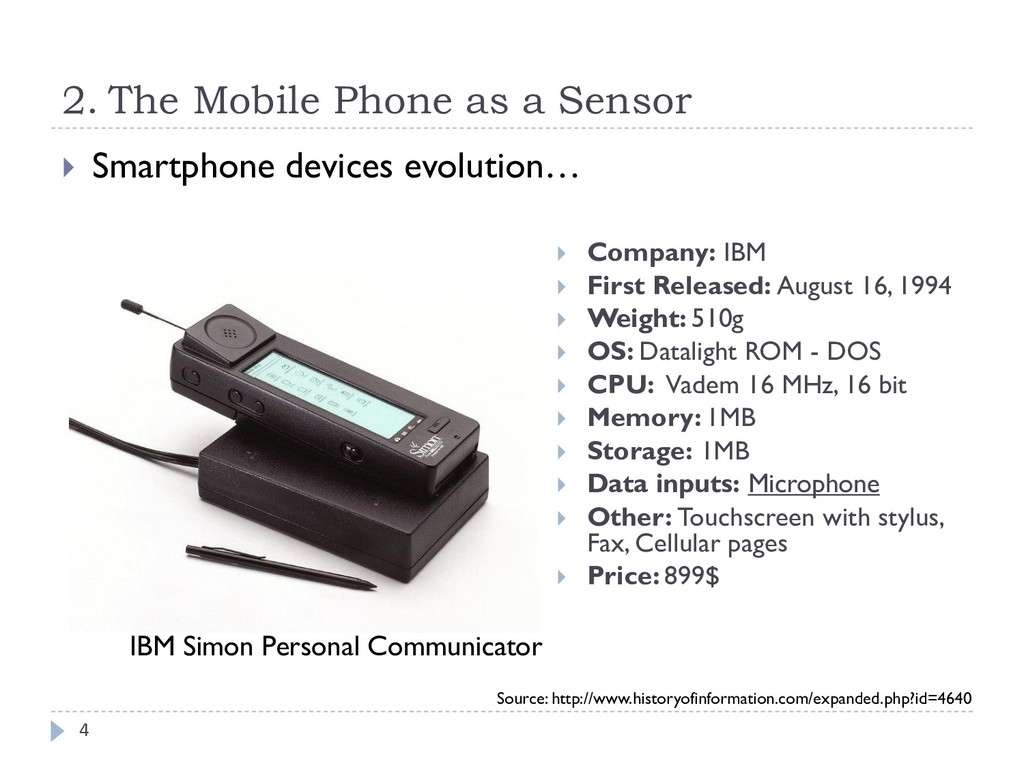
devices evolution… Company: IBM First Released: August 16, 1994 Weight: 510g OS: Datalight ROM - DOS CPU: Vadem 16 MHz, 16 bit Memory: 1MB Storage: 1MB Data inputs: Microphone Other: Touchscreen with stylus, Fax, Cellular pages Price: 899$ IBM Simon Personal Communicator Source: http://www.historyofinformation.com/expanded.php?id=4640
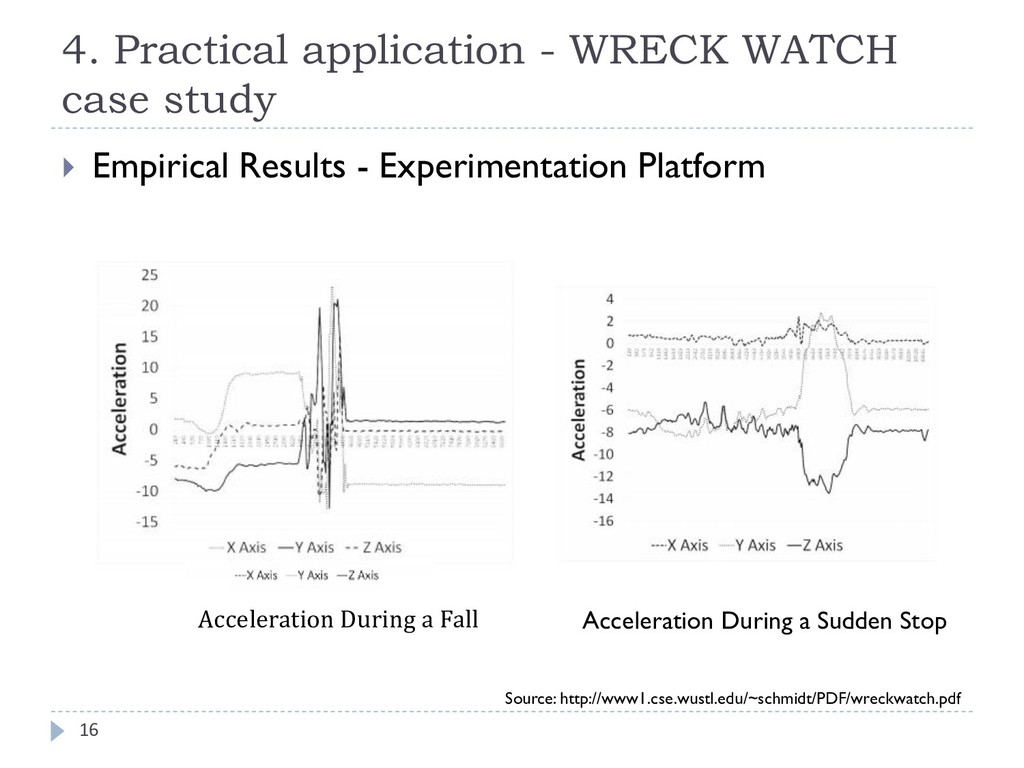
Empirical Results - Experimentation Platform Source: http://www1.cse.wustl.edu/~schmidt/PDF/wreckwatch.pdf Acceleration During a Fall Acceleration During a Sudden Stop
Empirical Results - Experimentation Platform Using Context Information to Eliminate False - positives GPS must be activated! Recording accelerometer information and looking for potential accidents above 15mph (15 mile/hour = 24.140 kilometer/hour) Ignores any acceleration events below 4G’s Source: http://www1.cse.wustl.edu/~schmidt/PDF/wreckwatch.pdf Airbag deployment is 60G’s Football helmet during play approximately 29.2 G’s
as a sensor" as a fundamental aspect within the evolution of traditional wireless sensor networks in modern wireless sensor networks "Human As A Sensor" as one of the challenges to determine the further research directions
of information technology is that it empowers people to do what they want to do. It lets people be creative. It lets people be productive. It lets people learn things they didn't think they could learn before, and so in a sense it is all about potential. ” Steve Ballmer


 mcekic
 koukihosaka
 teamlab
 recruitengineers
 taketakekaho
 usanchuu
 yahonda
 pfn
pfn
 kaminashi
 raspython3
 onk
onk
 yazm
yazm
 yamanoku
 ryanjones
 rkendrick25
 chriscoyier
 wayneb77
 katarinadahlin
 rmw
rmw
 lfama
lfama
 codingconduct
 katiecoart
 sarafernandez
 akademiya2063
 aleyda