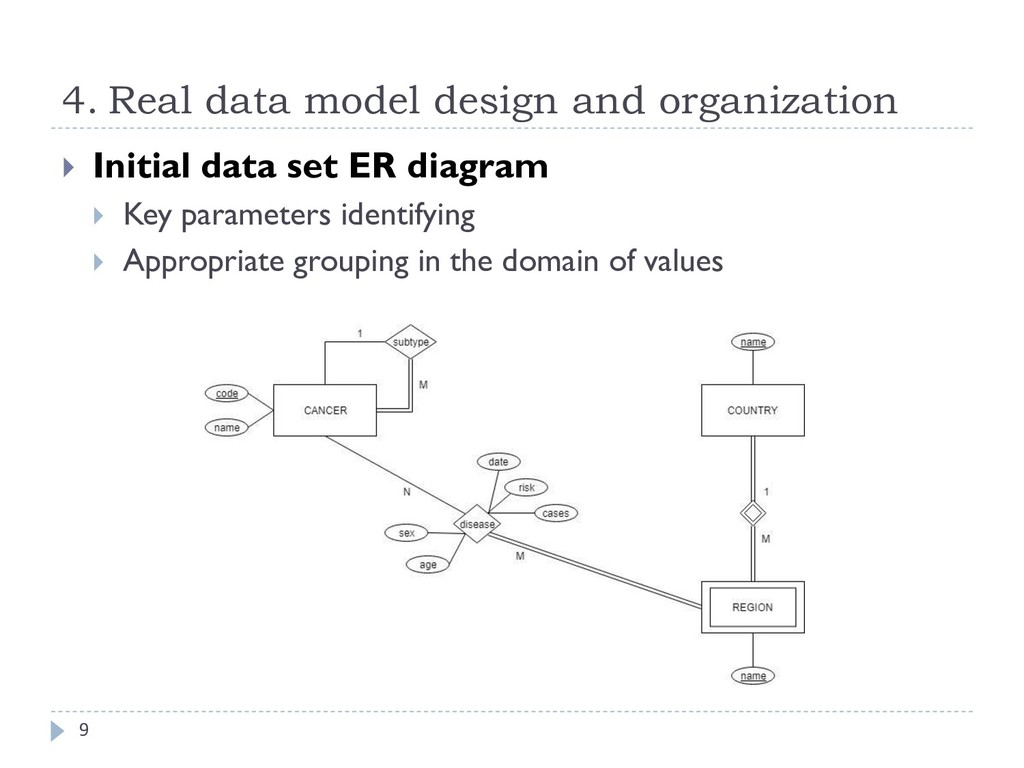
and expected results Pre - processing reference point Real data model design and organization Data visualization techniques implementation Conclusion and further guidance
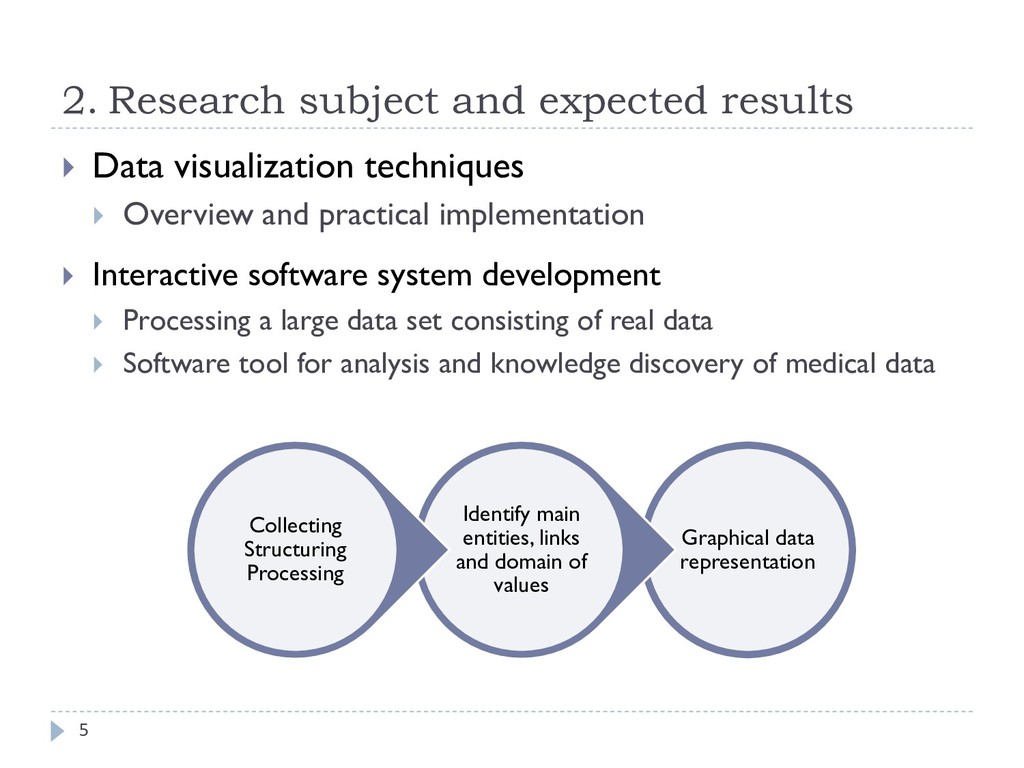
techniques Overview and practical implementation Interactive software system development Processing a large data set consisting of real data Software tool for analysis and knowledge discovery of medical data Graphical data representation Identify main entities, links and domain of values Collecting Structuring Processing
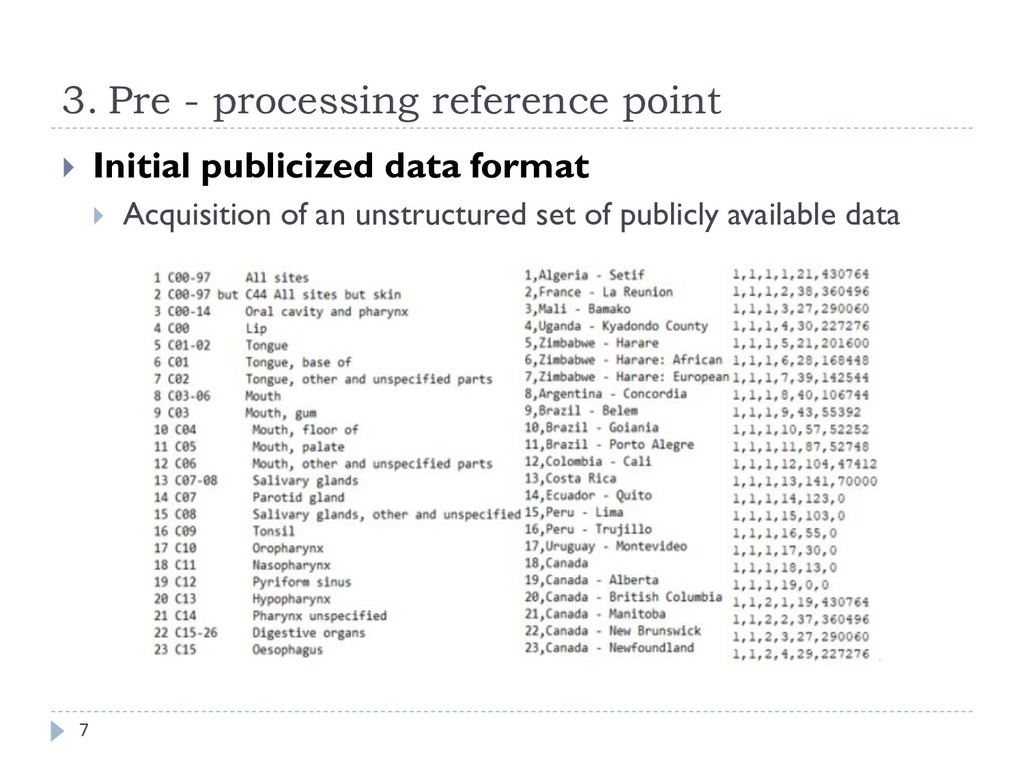
Cancer Incidence in five continents project International Agency for Research on Cancer and the International Association of Cancer Registries Data is collected and processed by a network of over 5 800 members of the National Cancer Registrar Association (NCRA) Source: http://www.ci5.iarc.fr/
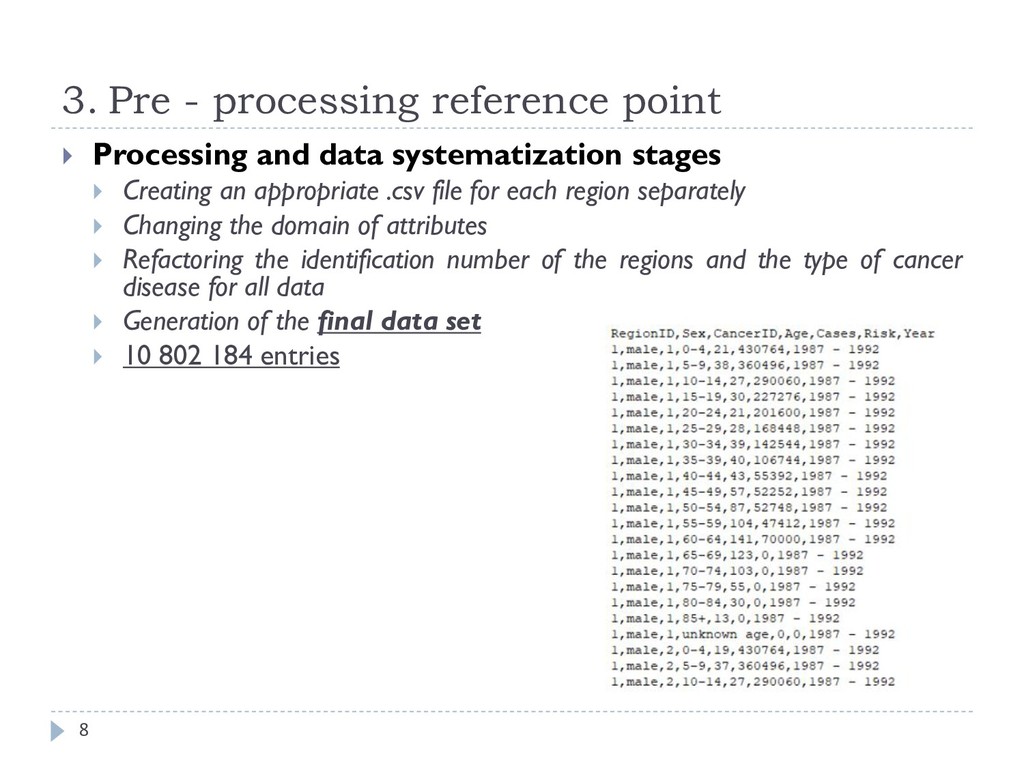
data systematization stages Creating an appropriate .csv file for each region separately Changing the domain of attributes Refactoring the identification number of the regions and the type of cancer disease for all data Generation of the final data set 10 802 184 entries
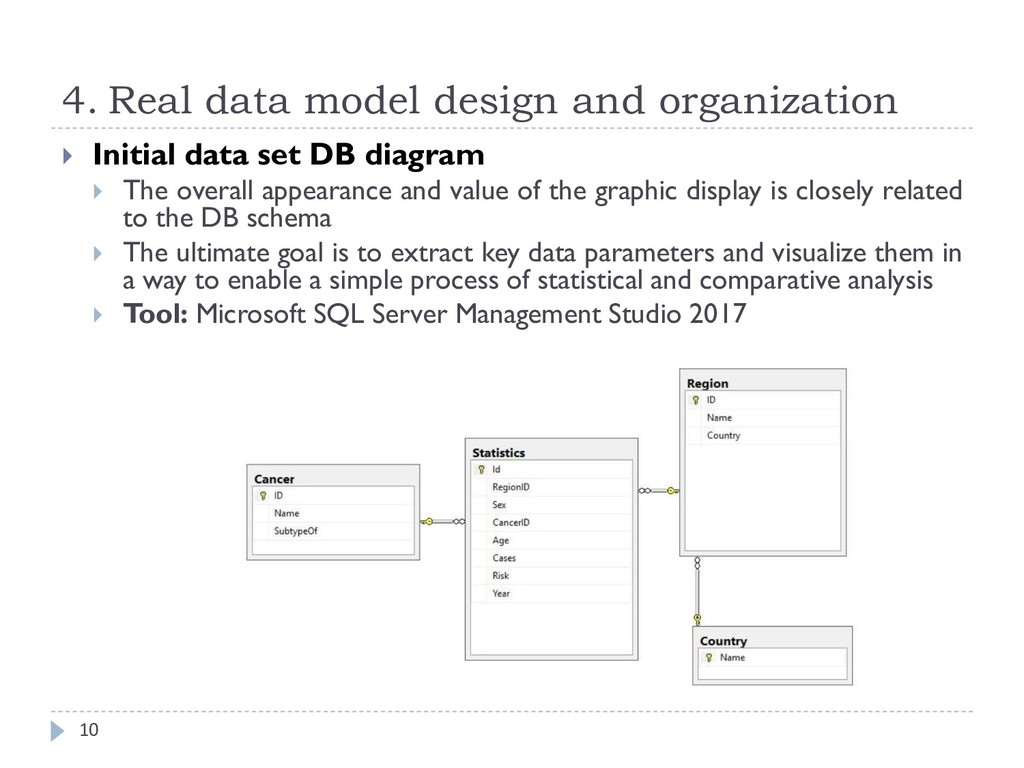
data set DB diagram The overall appearance and value of the graphic display is closely related to the DB schema The ultimate goal is to extract key data parameters and visualize them in a way to enable a simple process of statistical and comparative analysis Tool: Microsoft SQL Server Management Studio 2017
the data is an indispensable process when it comes to application of visual representation techniques Visual display is directly dependent on the format, structure, and constraints defined by the data attributes and their values Tool: amCharts as non-commercial and academically targeted JS library
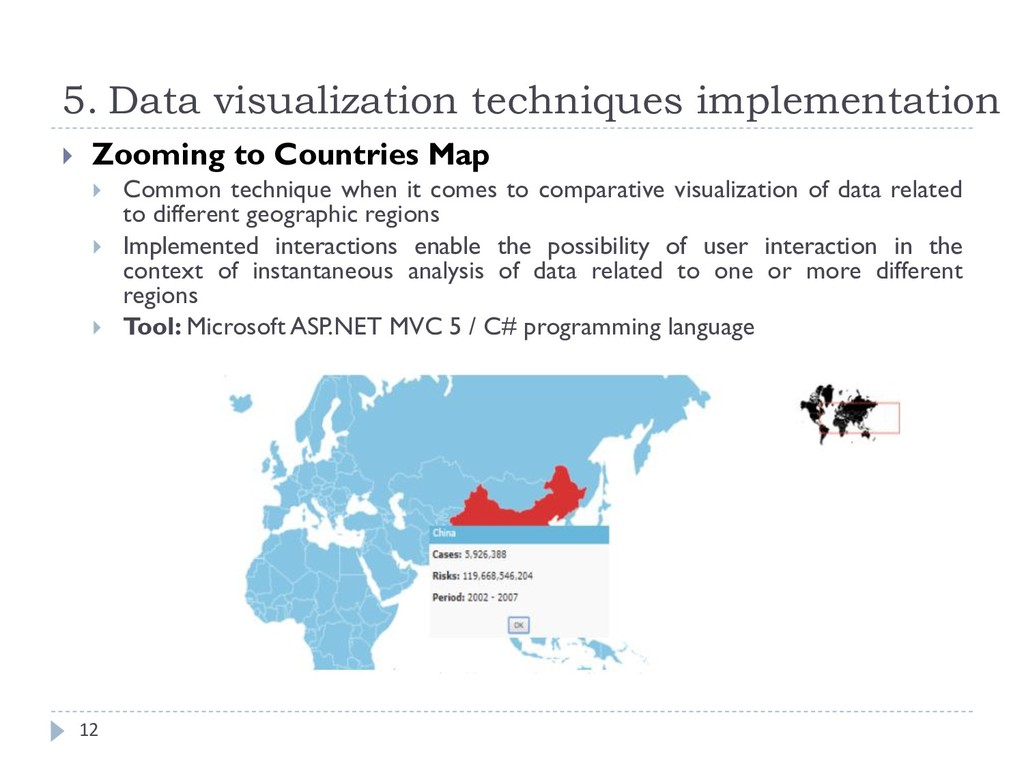
Map Common technique when it comes to comparative visualization of data related to different geographic regions Implemented interactions enable the possibility of user interaction in the context of instantaneous analysis of data related to one or more different regions Tool: Microsoft ASP.NET MVC 5 / C# programming language
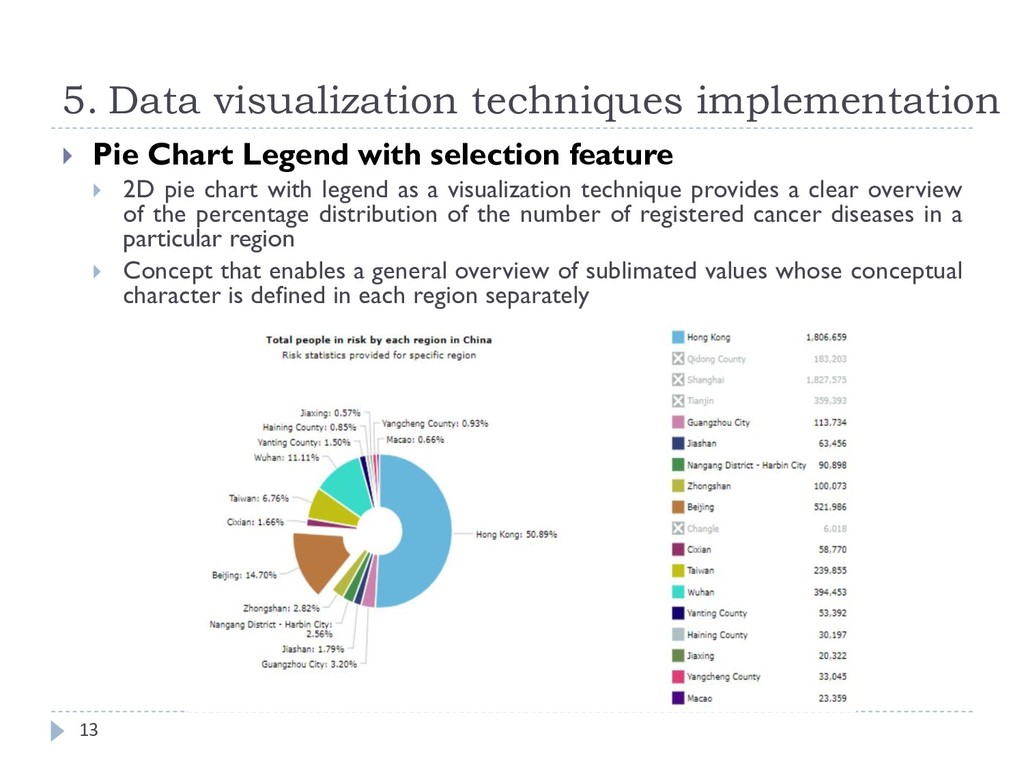
with selection feature 2D pie chart with legend as a visualization technique provides a clear overview of the percentage distribution of the number of registered cancer diseases in a particular region Concept that enables a general overview of sublimated values whose conceptual character is defined in each region separately
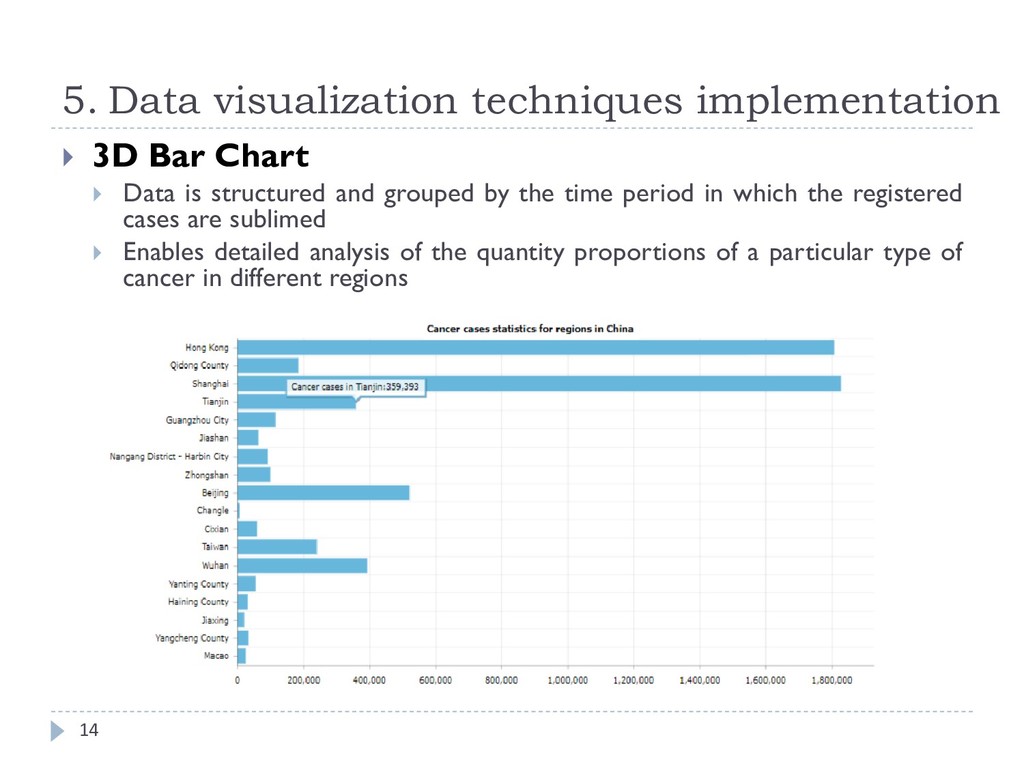
Data is structured and grouped by the time period in which the registered cases are sublimed Enables detailed analysis of the quantity proportions of a particular type of cancer in different regions
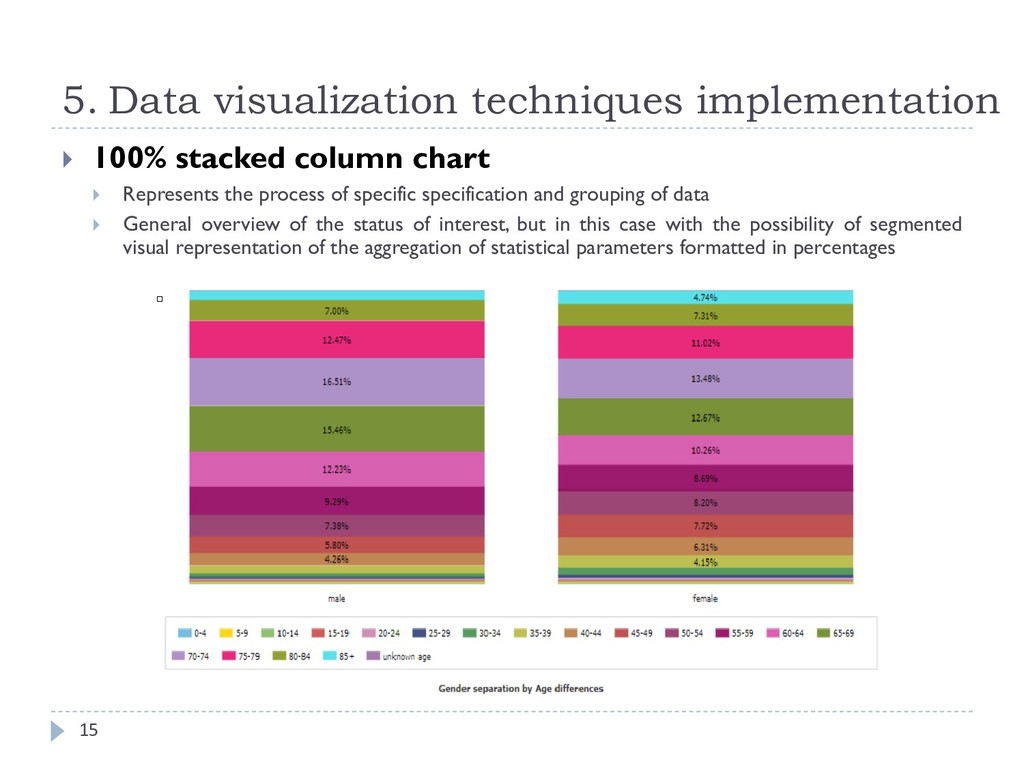
chart Represents the process of specific specification and grouping of data General overview of the status of interest, but in this case with the possibility of segmented visual representation of the aggregation of statistical parameters formatted in percentages
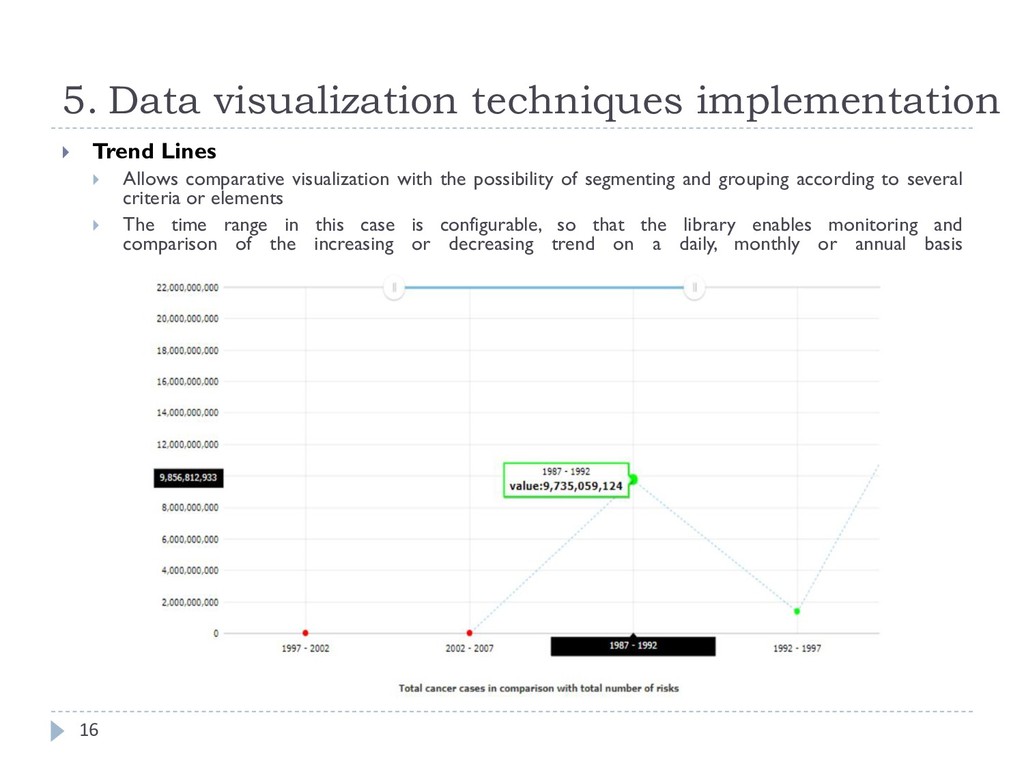
Allows comparative visualization with the possibility of segmenting and grouping according to several criteria or elements The time range in this case is configurable, so that the library enables monitoring and comparison of the increasing or decreasing trend on a daily, monthly or annual basis
representation of a given data set is the basis for a precise and consistent interpretation, analysis and adoption of empirical conclusions related to the semantic meaning of information. The software tool allows to emphasize the semantic value and significance of the data that are graphically presented, which enables a detailed and systematic review of the process of development of diseases of this type. Basis for further related scientific research where graphic interpretation and interdependence of larger data sets is of great importance.


 mcekic
 ykamit
 hanbao
 brainpadpr
 sshimizu2006
 ykiyota
 konakalab
 hayashiyus884
 trycycle
 institutdelelevage
 dugsong
 hatefulcrawdad
 raygrieselhuber
 inesmontani
 greggifford
 samlambert
 tamaranovitovic
 bkeepers
 gurzu
gurzu
 brad_frost
 aleyda