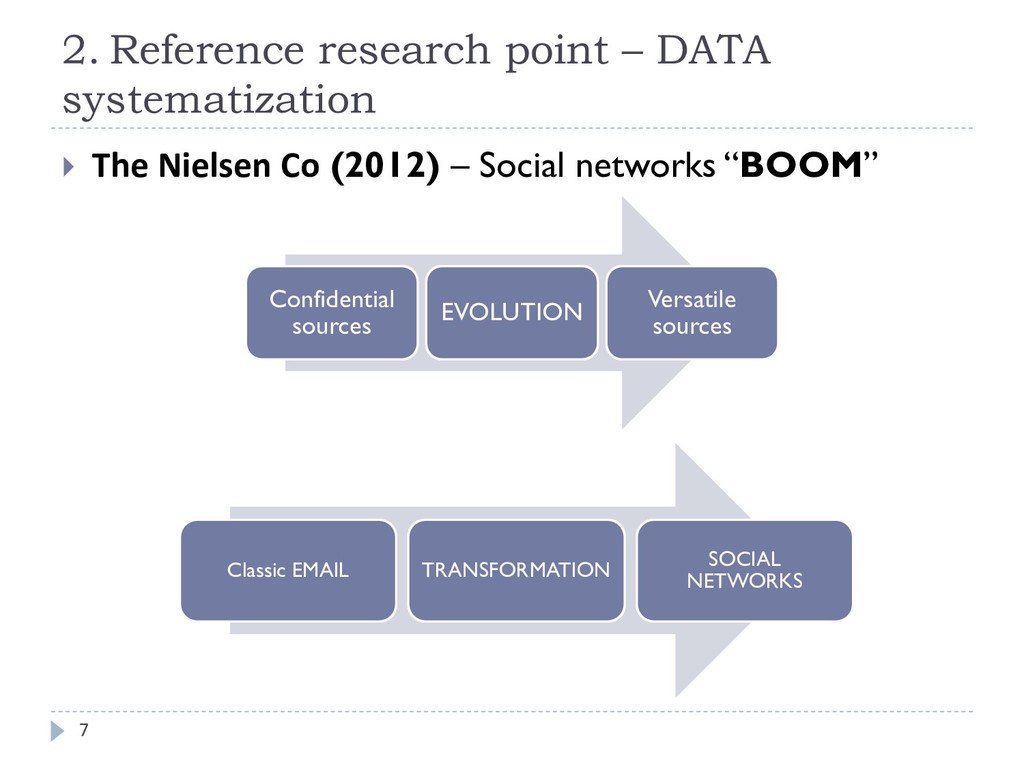
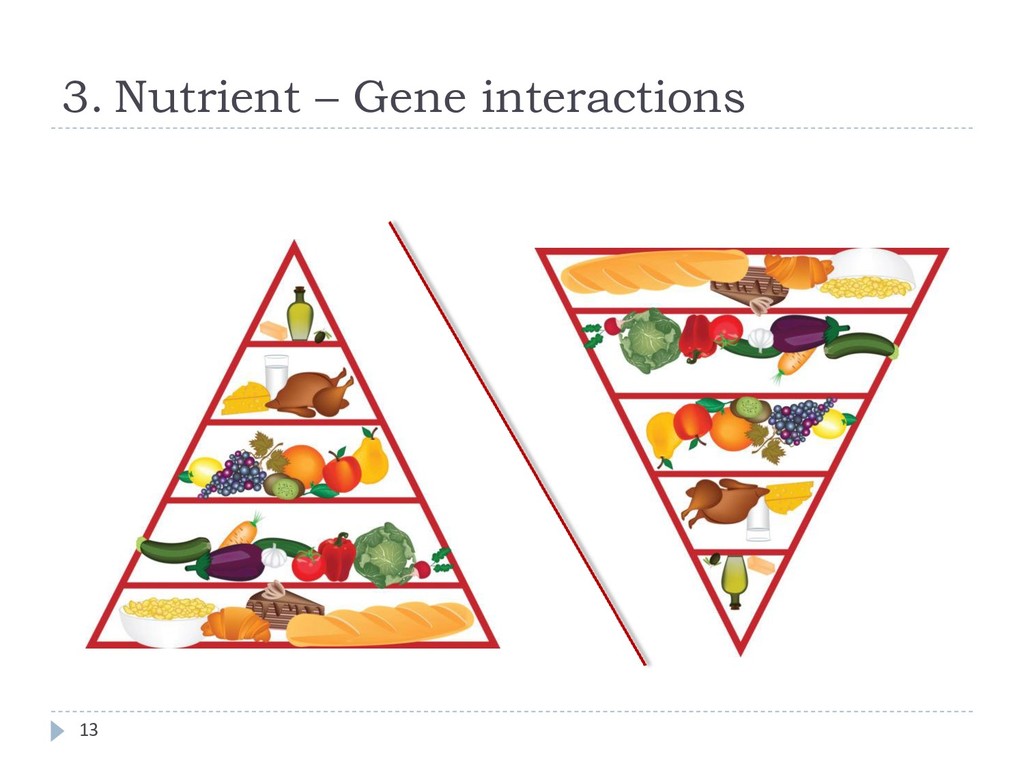
research point – DATA systematization Nutrient – Gene interactions Gene – Gene associations Gene – Disease dependencies Conclusion and further guidance
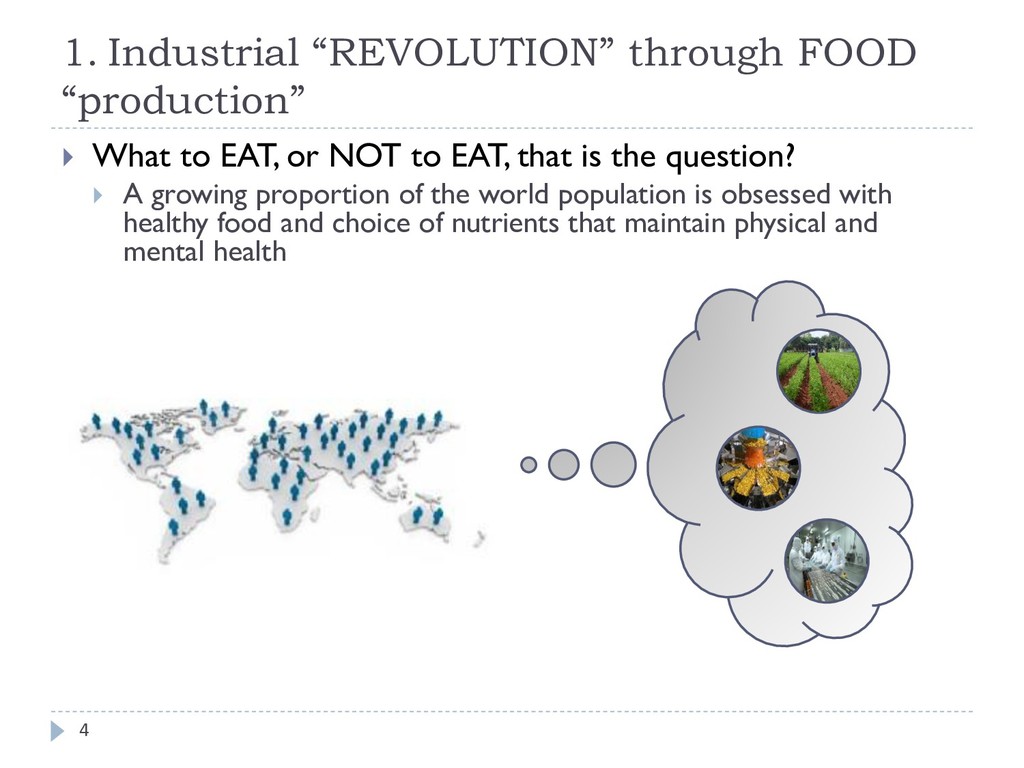
EAT, or NOT to EAT, that is the question? A growing proportion of the world population is obsessed with healthy food and choice of nutrients that maintain physical and mental health
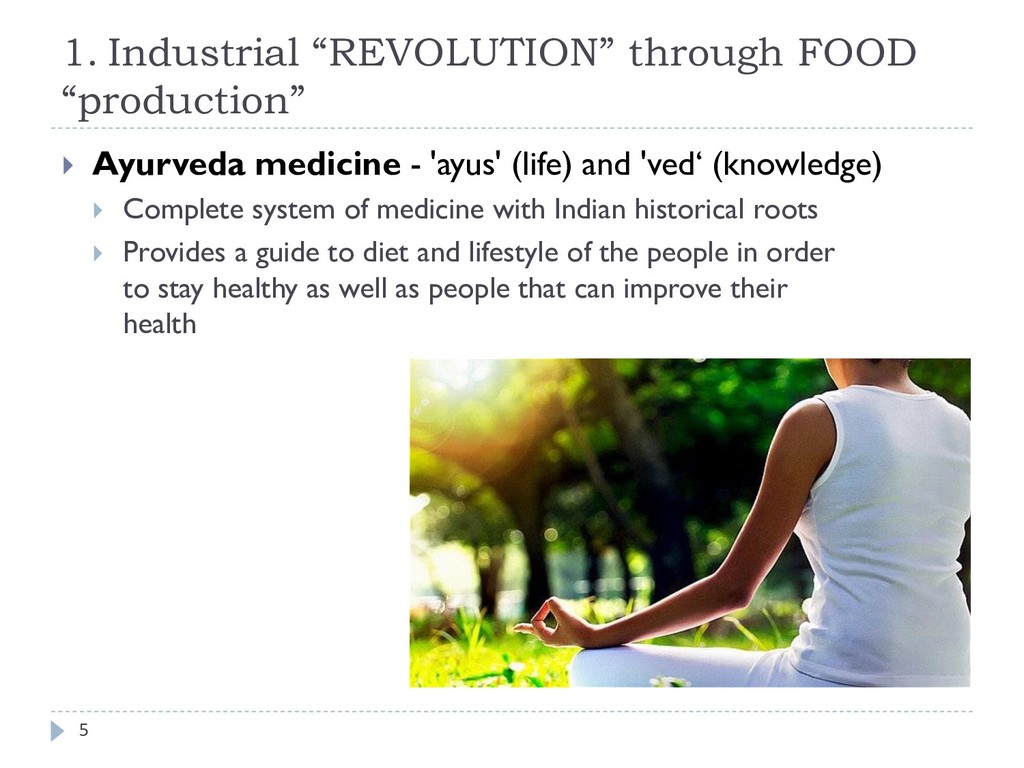
- 'ayus' (life) and 'ved‘ (knowledge) Complete system of medicine with Indian historical roots Provides a guide to diet and lifestyle of the people in order to stay healthy as well as people that can improve their health
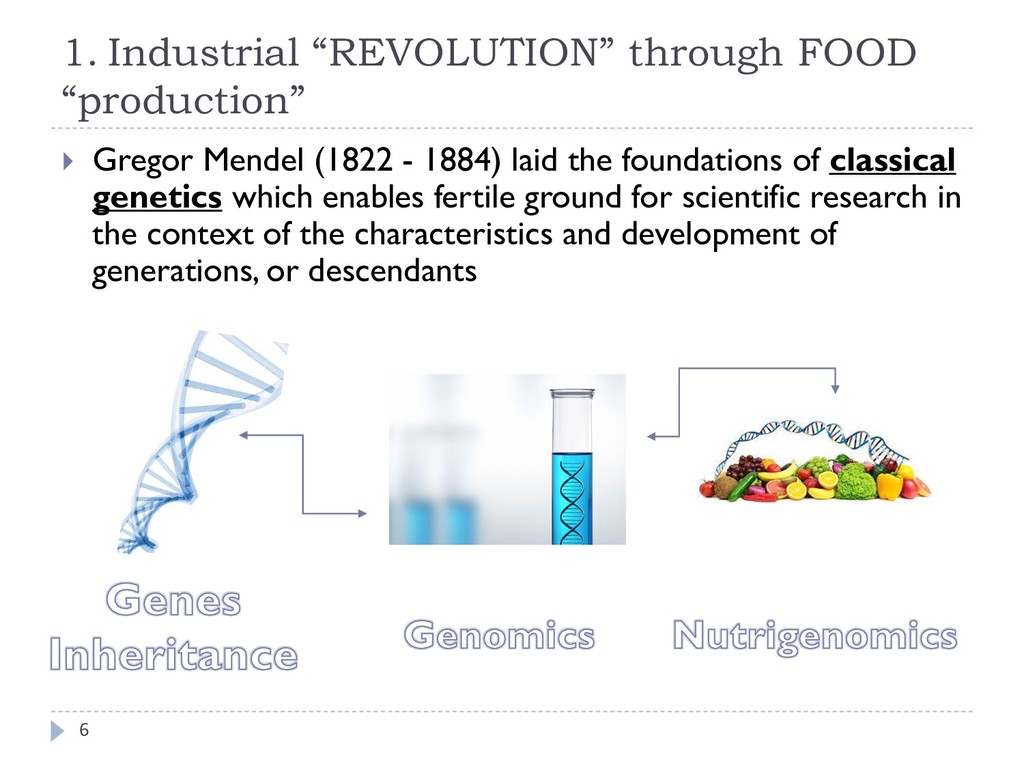
(1822 - 1884) laid the foundations of classical genetics which enables fertile ground for scientific research in the context of the characteristics and development of generations, or descendants
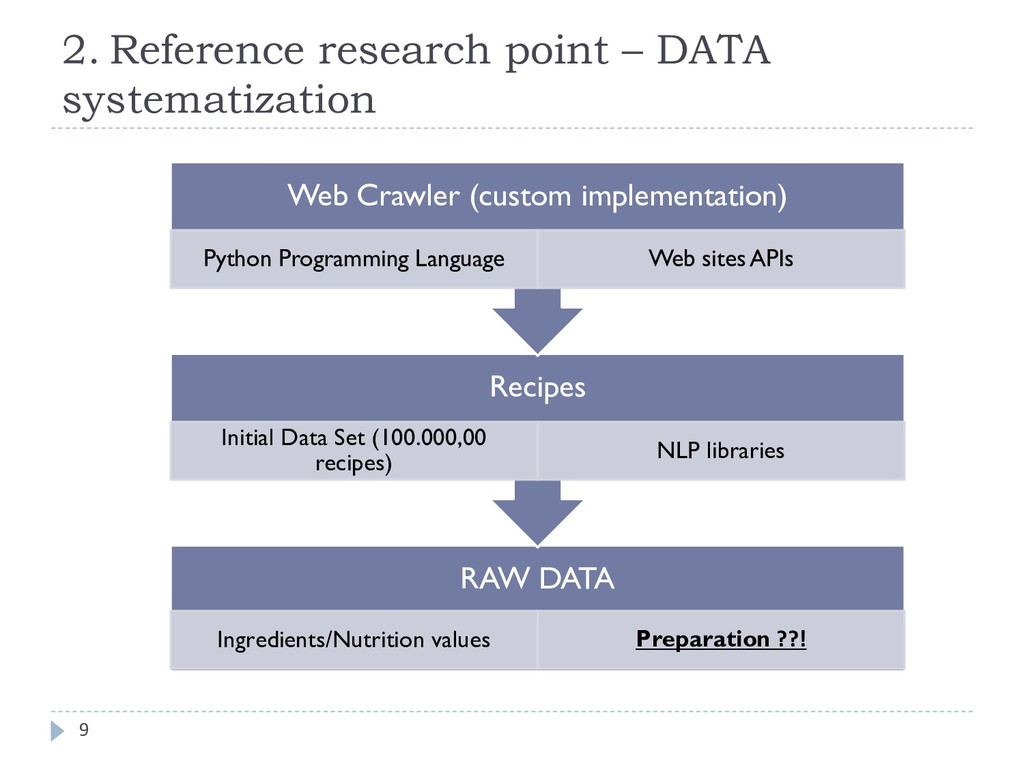
Ingredients/Nutrition values Preparation ??! Recipes Initial Data Set (100.000,00 recipes) NLP libraries Web Crawler (custom implementation) Python Programming Language Web sites APIs
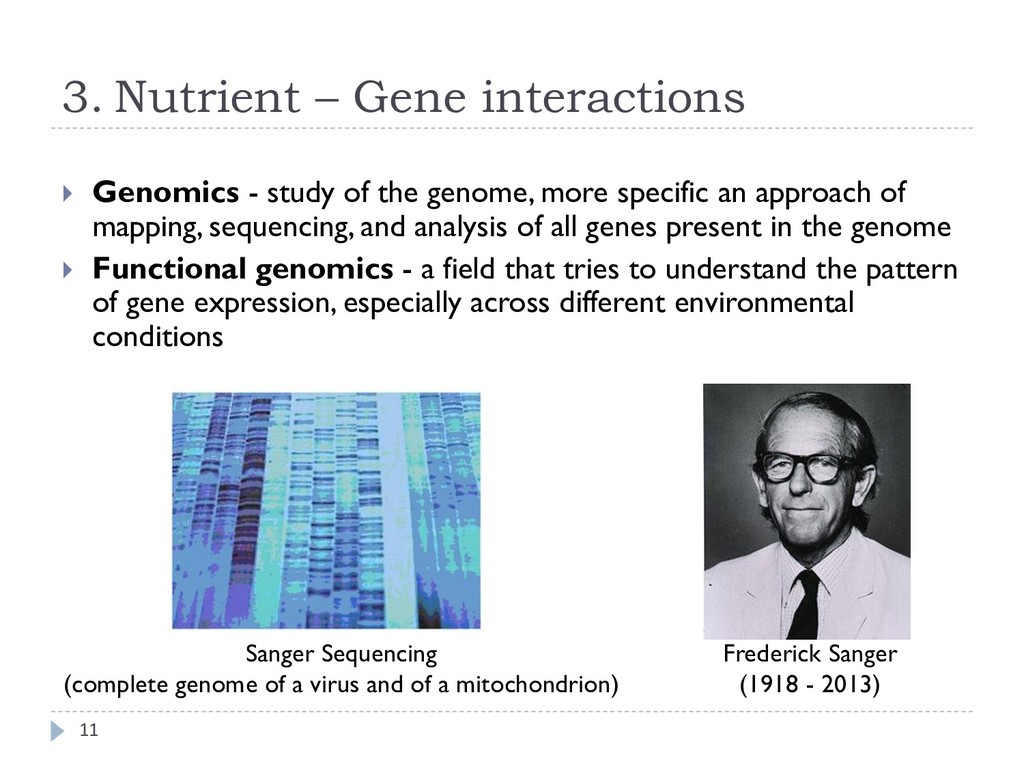
of the genome, more specific an approach of mapping, sequencing, and analysis of all genes present in the genome Functional genomics - a field that tries to understand the pattern of gene expression, especially across different environmental conditions Frederick Sanger (1918 - 2013) Sanger Sequencing (complete genome of a virus and of a mitochondrion)
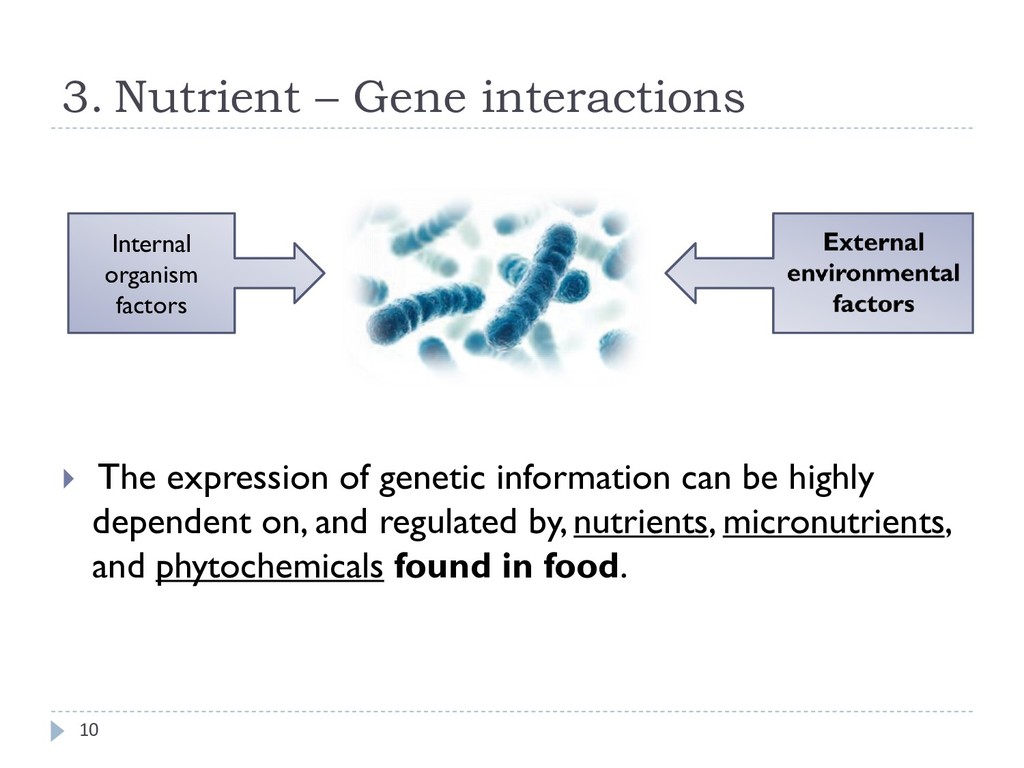
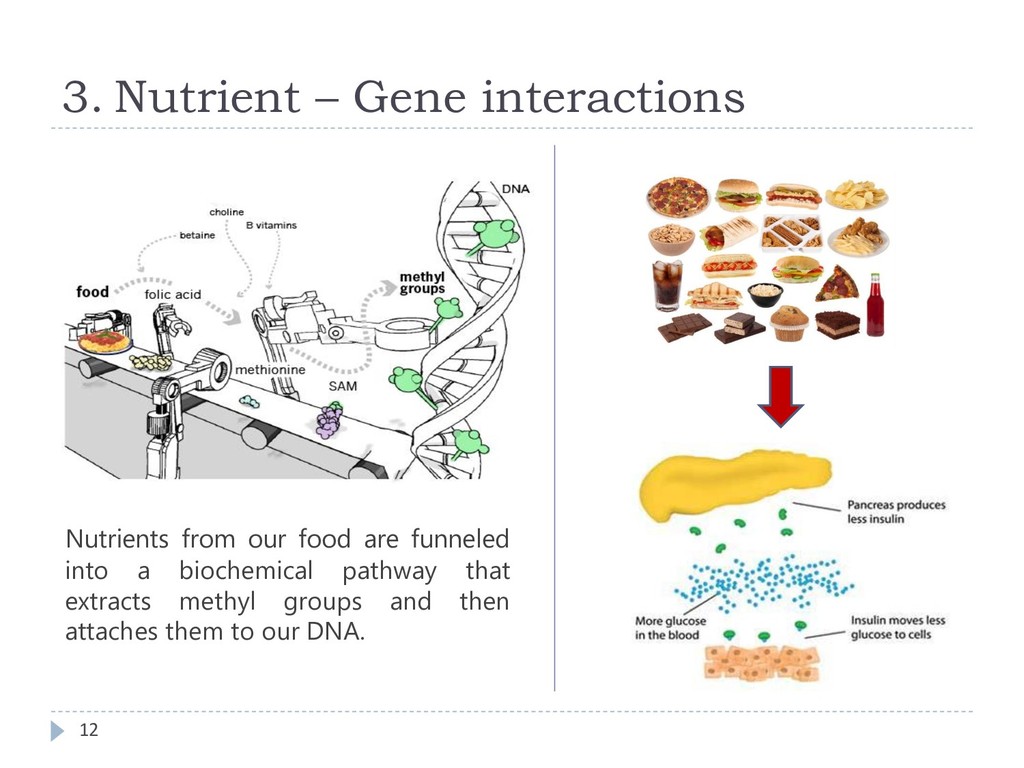
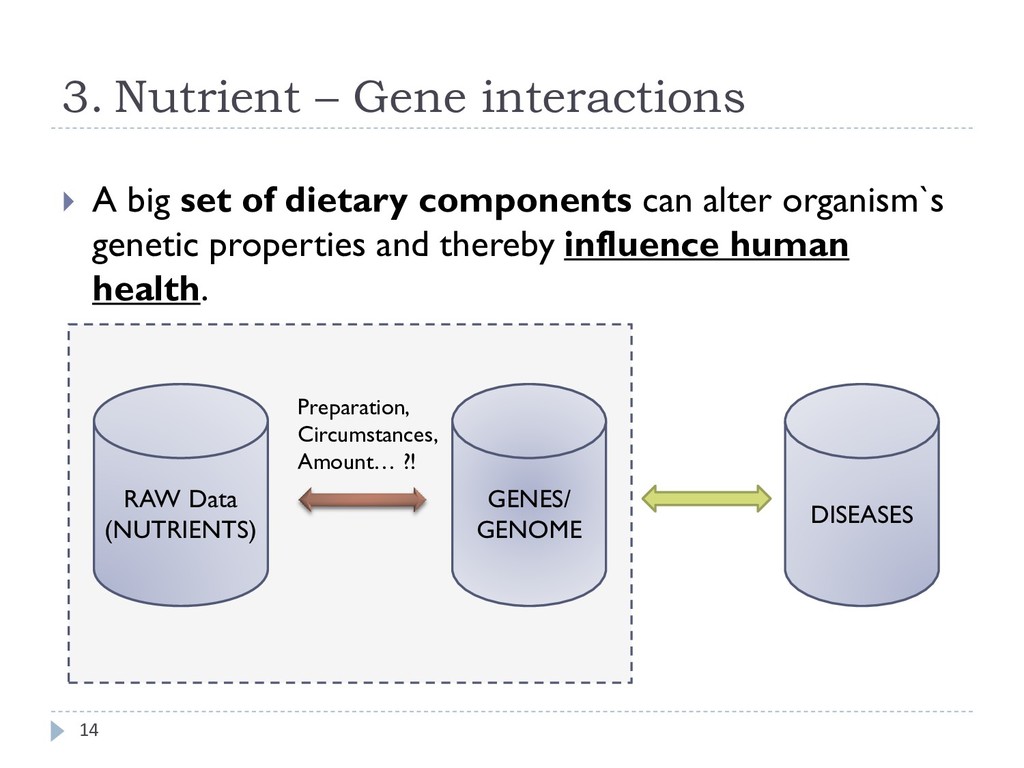
of dietary components can alter organism`s genetic properties and thereby influence human health. RAW Data (NUTRIENTS) GENES/ GENOME DISEASES Preparation, Circumstances, Amount… ?!
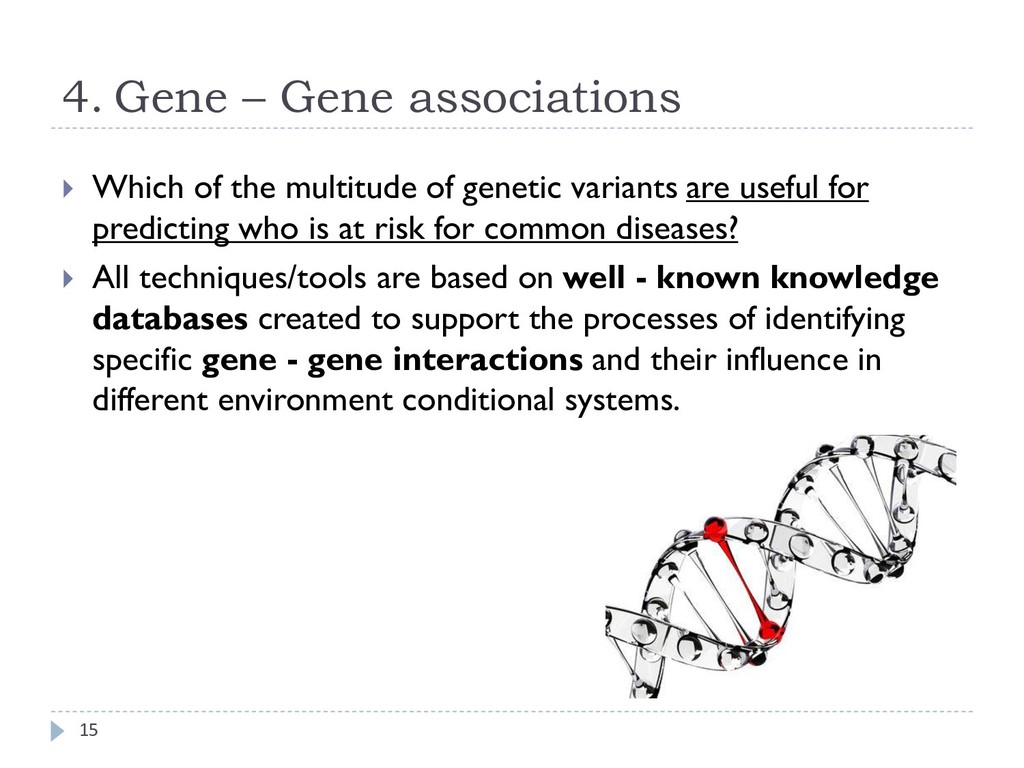
multitude of genetic variants are useful for predicting who is at risk for common diseases? All techniques/tools are based on well - known knowledge databases created to support the processes of identifying specific gene - gene interactions and their influence in different environment conditional systems.
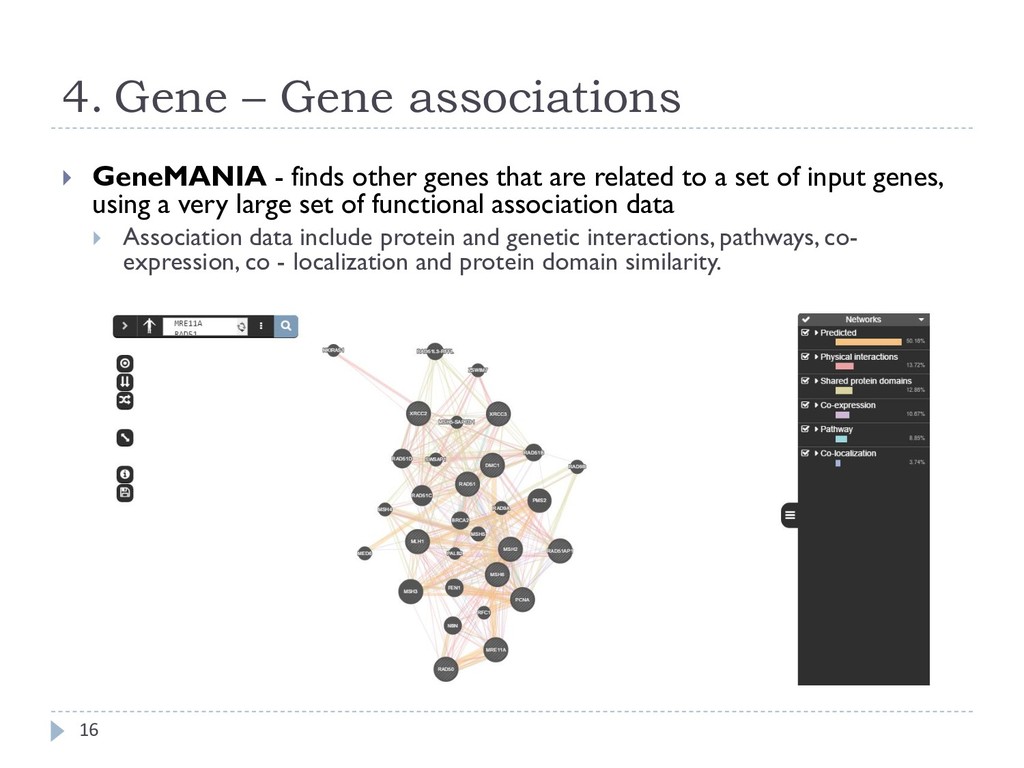
other genes that are related to a set of input genes, using a very large set of functional association data Association data include protein and genetic interactions, pathways, co- expression, co - localization and protein domain similarity.
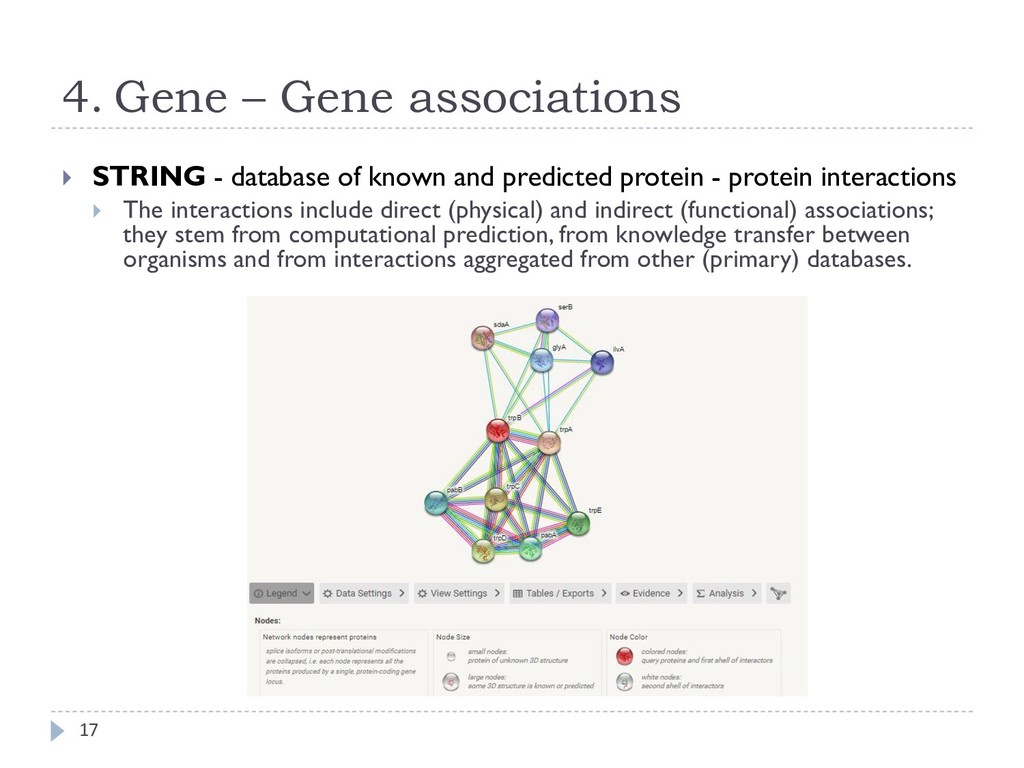
of known and predicted protein - protein interactions The interactions include direct (physical) and indirect (functional) associations; they stem from computational prediction, from knowledge transfer between organisms and from interactions aggregated from other (primary) databases.
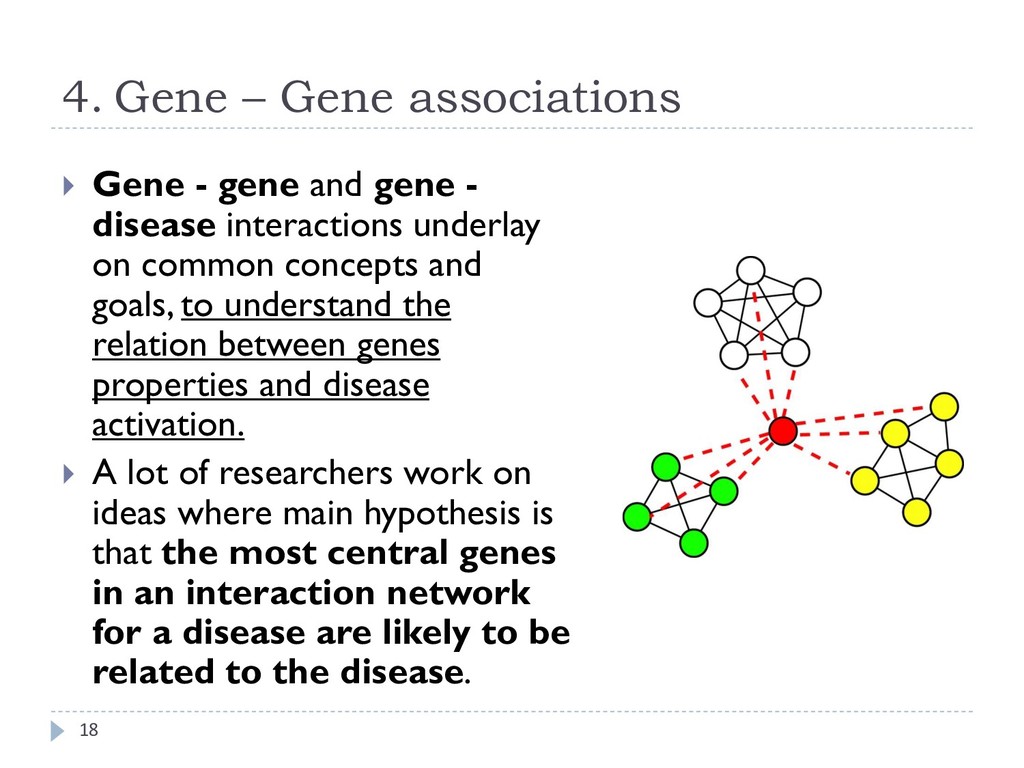
and gene - disease interactions underlay on common concepts and goals, to understand the relation between genes properties and disease activation. A lot of researchers work on ideas where main hypothesis is that the most central genes in an interaction network for a disease are likely to be related to the disease.
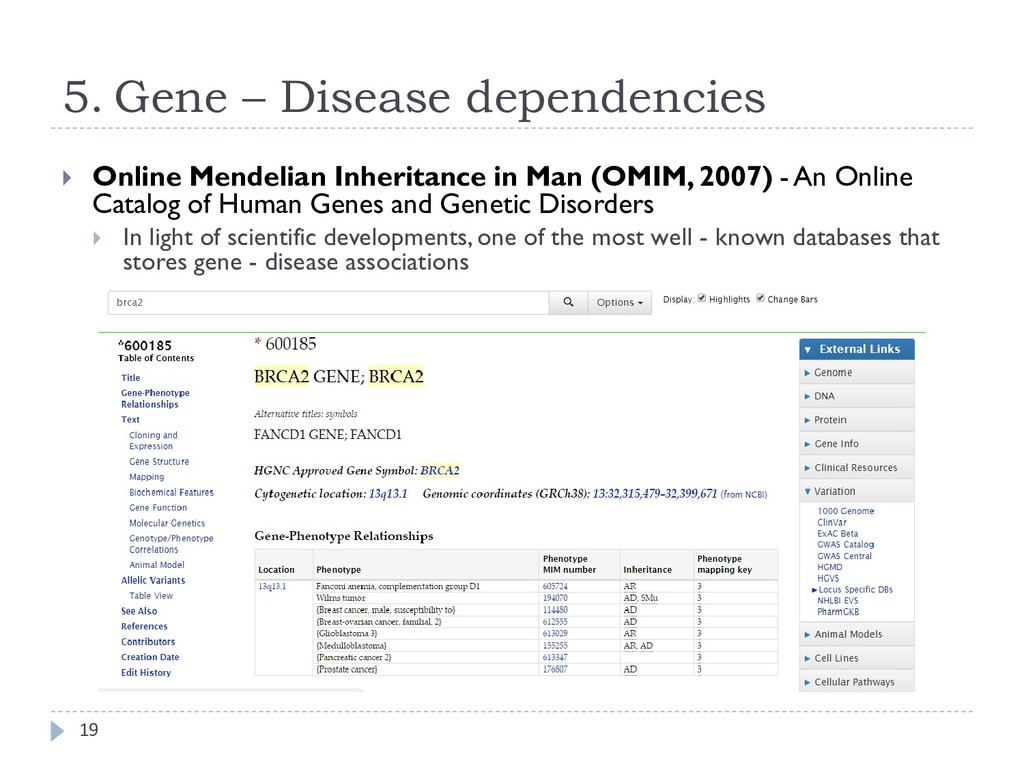
in Man (OMIM, 2007) - An Online Catalog of Human Genes and Genetic Disorders In light of scientific developments, one of the most well - known databases that stores gene - disease associations
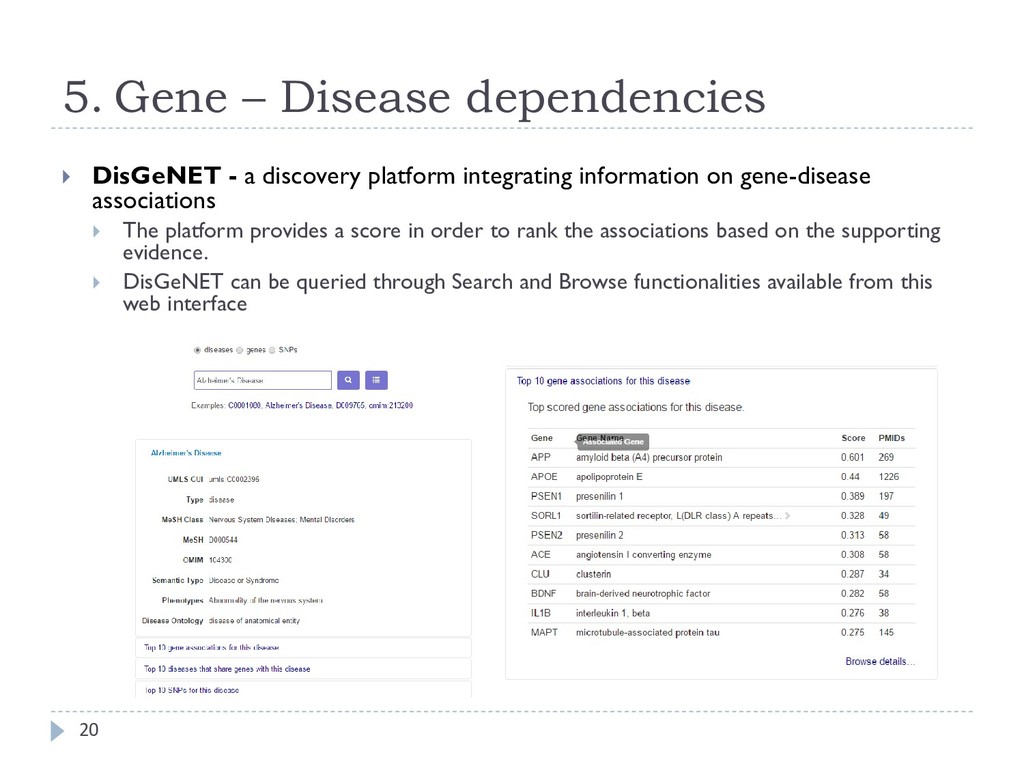
discovery platform integrating information on gene-disease associations The platform provides a score in order to rank the associations based on the supporting evidence. DisGeNET can be queried through Search and Browse functionalities available from this web interface
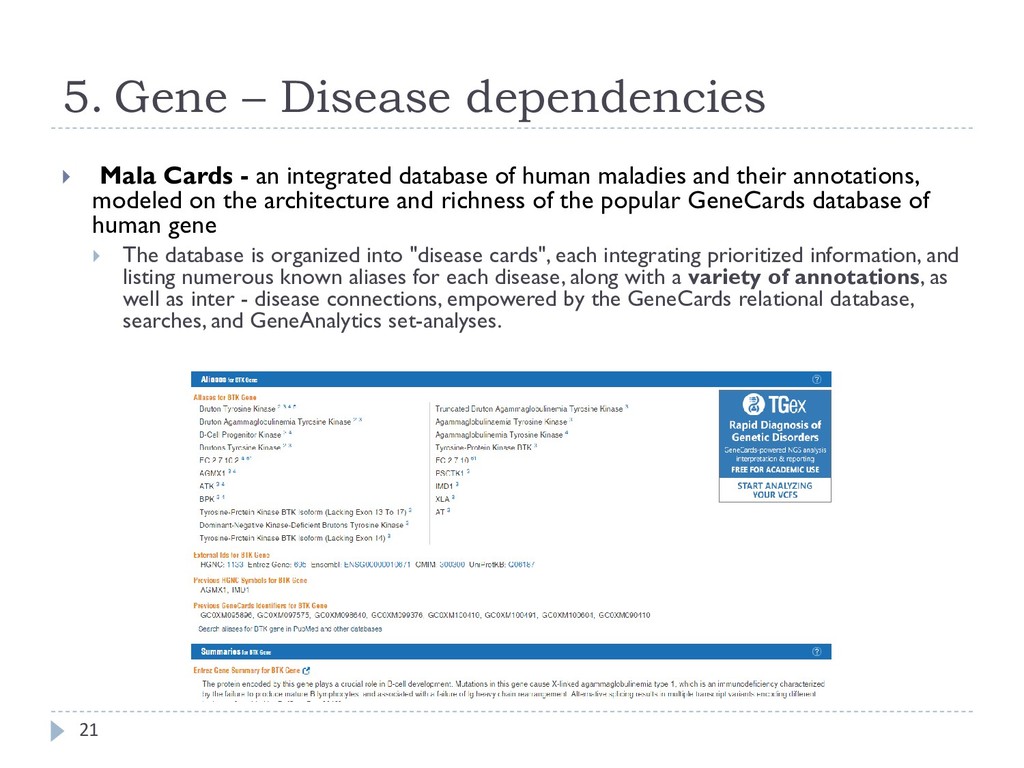
an integrated database of human maladies and their annotations, modeled on the architecture and richness of the popular GeneCards database of human gene The database is organized into "disease cards", each integrating prioritized information, and listing numerous known aliases for each disease, along with a variety of annotations, as well as inter - disease connections, empowered by the GeneCards relational database, searches, and GeneAnalytics set-analyses.
the most important external environment factor that is in direct correlation with genes processes. Various disciplines that solve relevant complex issues and conditions which are very closely related to the human health and further human survival.
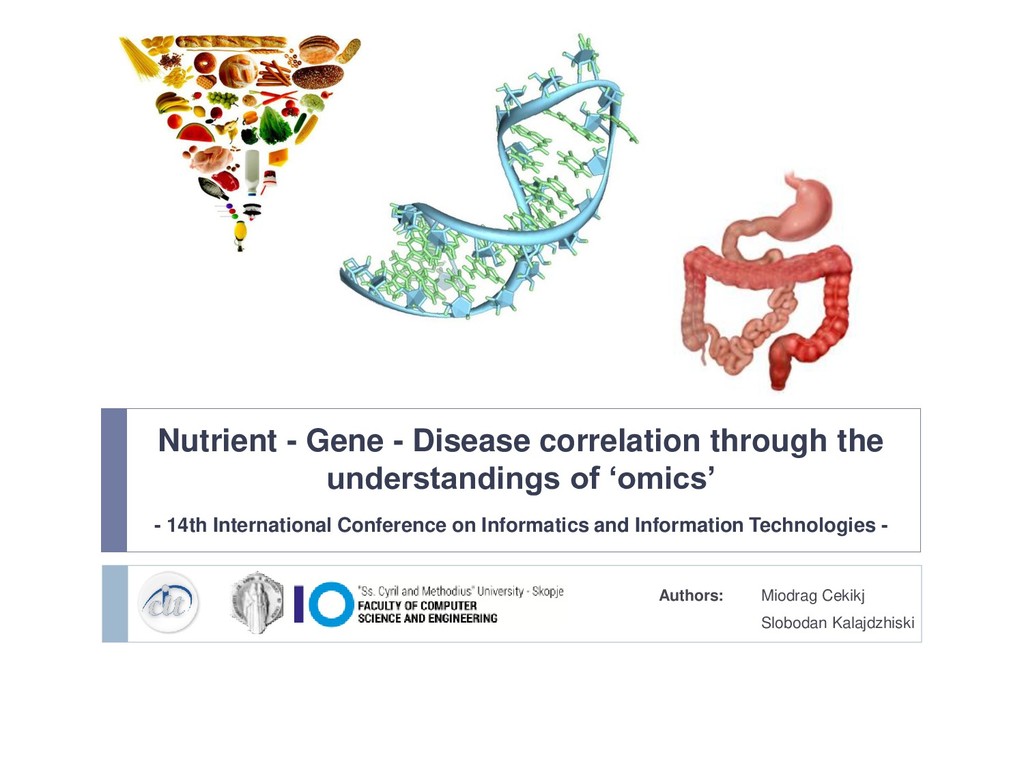
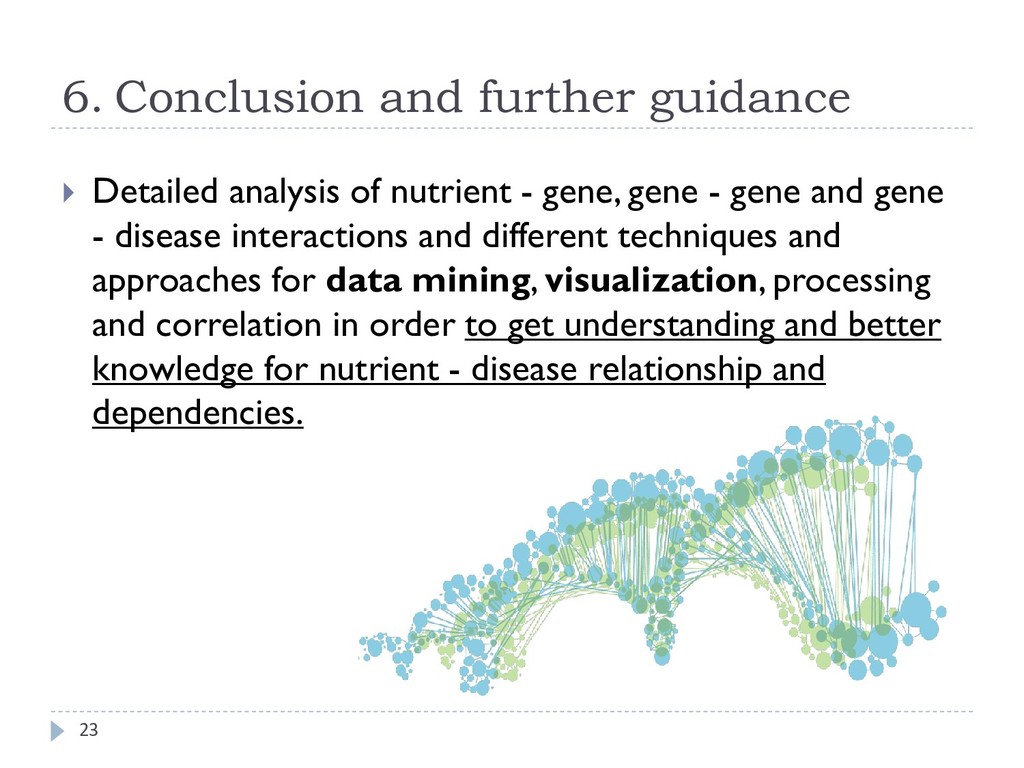
nutrient - gene, gene - gene and gene - disease interactions and different techniques and approaches for data mining, visualization, processing and correlation in order to get understanding and better knowledge for nutrient - disease relationship and dependencies.

 Your Podcast. Everywhere. Effortlessly.


 mcekic
 reokashiwa
 koide3
 ayaniwa
 ept
ept
 rikkabotan7
 analokmaus
 izumiyama_lab
 stktu
stktu
 nnchiba
 youten622
 enochan
 sokikatayama
 skoyamalab
 garrettdimon
 cassininazir
 reverentgeek
 marcoroth
 helmedeiros
 sergeychernyshev
 trishagee
 brad_frost
 rmw
rmw
 soudai
 trallard