Upgrade to Pro — share decks privately, control downloads, hide ads and more …

Energy Nexus: Next-Generation Solar Integration...

Sponsored · Your Podcast. Everywhere. Effortlessly. Share. Educate. Inspire. Entertain. You do you. We'll handle the rest.

Energy Nexus: Next-Generation Solar Integration for Urban and Rural Reliability (NYAS Junior Academy)

As artificial intelligence and new technologies emerge, there is a rapidly increasing global demand for electricity. However, many regions cannot handle large amounts of renewable energy due to the surface area limitations and the 33% theoretical efficiency cap of current solar models. This presentation outlines our proposed solution to these challenges, developed as part of the New York Academy of Sciences (NYAS) Junior Academy Innovation Challenge.

Our research hypothesis explores the integration of Building-Integrated Photovoltaics (BIPV) for urban environments and multi-layer floating solar systems for water bodies. By incorporating advanced materials—such as Luminescent Solar Concentrator (LSC) technology and wide-bandgap semiconductors—alongside thermochemical storage, our hybrid solar systems are designed to achieve significantly higher energy reliability and efficiency than conventional solar frameworks.

Key Highlights of Our Research:

1. AI-Driven Performance Modeling: We fine-tuned an AI model using weather, irradiance, and environmental datasets to predict prototype performance across diverse real-world climates without needing a physical prototype.

2. Technology Readiness Validation: Our solutions are backed by existing literature, with validated high Technology Readiness Levels (TRL) in LSC technology, floating solar operations (like Singapore's Tengeh reservoir), underwater wide-bandgap PVs, and Calcium Looping Storage.

3. IP and Patent Analysis: We utilized AI-assisted patent analysis to ensure our combinations of materials and technologies are feasible, unique, and do not overlap with existing intellectual property.

Team Acknowledgments:
This project was a highly collaborative effort by Team Energy Nexus (Group #6310). I am incredibly proud of the research, engineering analysis, and dedication contributed by every member of our international team:

- Kannan Murugapandian (Singapore) [Team Lead]
- Liz Rodrigues (New Jersey, USA)
- Anadita Singh (Delhi, India)
- Agnibha Sengupta (West Bengal, India)
- Kashvi Ruparelia (Gujarat, India)
- Sreeja Padmala (Michigan, USA)

To view our full project portfolio and team background, please visit our team profile at JoinLaunchPad: https://joinlaunchpad.com/#/projects/6310/solar-energy-team-1

Note: Photos of my team members in the presentation slides have been replaced with standardized icons to respect their privacy and adhere to digital ethics, as this deck has been uploaded to a public platform.

Avatar for Kannan Murugapandian

Kannan Murugapandian

April 14, 2026

More Decks by Kannan Murugapandian

Other Decks in Technology

Transcript

  1. Kannan Murugapandian Liz Rodrigues Anadita Singh 2 Our Team Singapore,

    Singapore New Jersey, United States Delhi,India
  2. Agnibha Sengupta Kashvi Ruparelia Gujarat, India Sreeja Padmala 3 Our

    Team West Bengal, India Michigan, United States
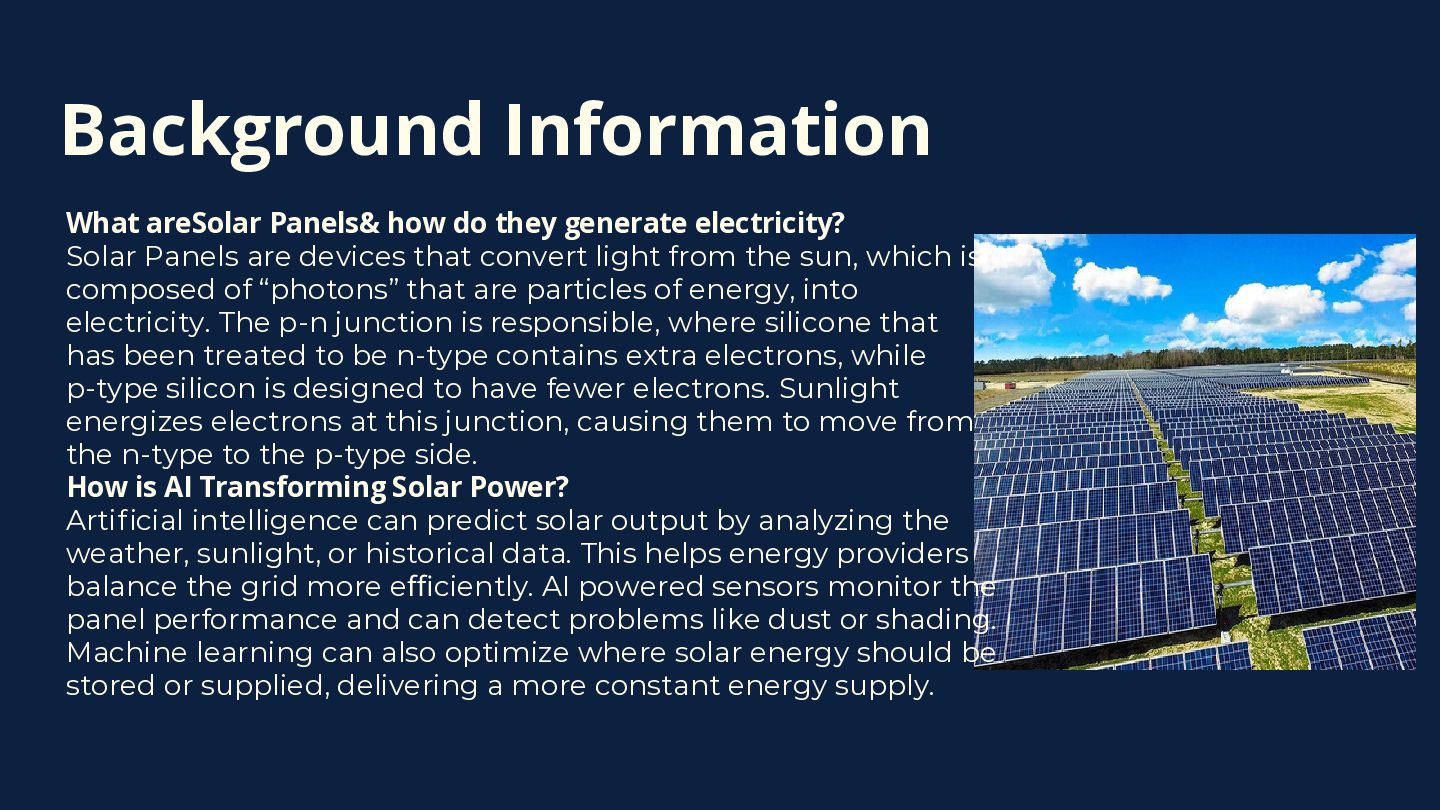
  3. Background Information What areSolar Panels& how do they generate electricity?

    Solar Panels are devices that convert light from the sun, which is composed of “photons” that are particles of energy, into electricity. The p-n junction is responsible, where silicone that has been treated to be n-type contains extra electrons, while p-type silicon is designed to have fewer electrons. Sunlight energizes electrons at this junction, causing them to move from the n-type to the p-type side. How is AI Transforming Solar Power? Artificial intelligence can predict solar output by analyzing the weather, sunlight, or historical data. This helps energy providers balance the grid more efficiently. AI powered sensors monitor the panel performance and can detect problems like dust or shading. Machine learning can also optimize where solar energy should be stored or supplied, delivering a more constant energy supply.
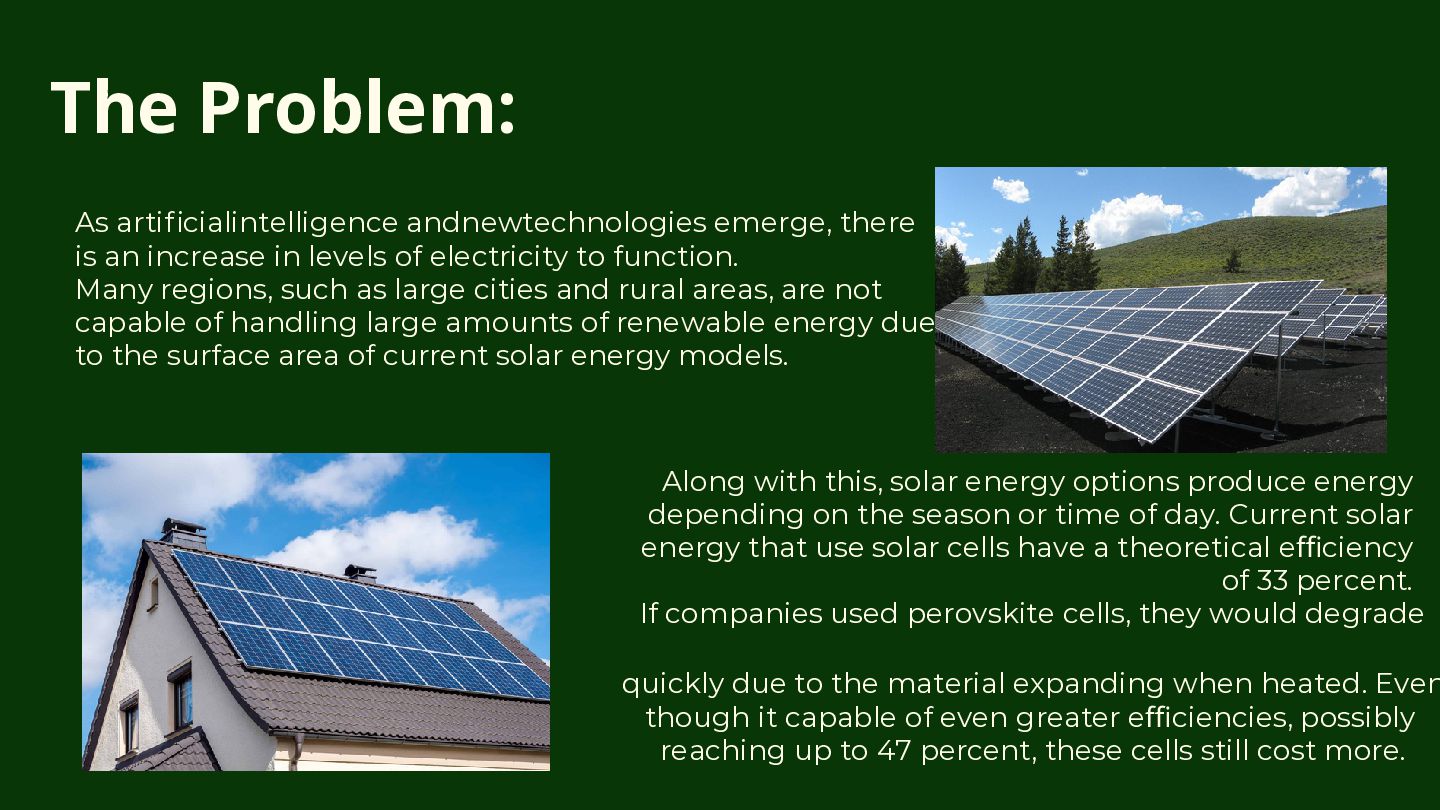
  4. The Problem: As artificialintelligence andnewtechnologies emerge, there is an increase

    in levels of electricity to function. Many regions, such as large cities and rural areas, are not capable of handling large amounts of renewable energy due to the surface area of current solar energy models. Along with this, solar energy options produce energy depending on the season or time of day. Current solar energy that use solar cells have a theoretical efficiency of 33 percent. If companies used perovskite cells, they would degrade quickly due to the material expanding when heated. Even though it capable of even greater efficiencies, possibly reaching up to 47 percent, these cells still cost more.
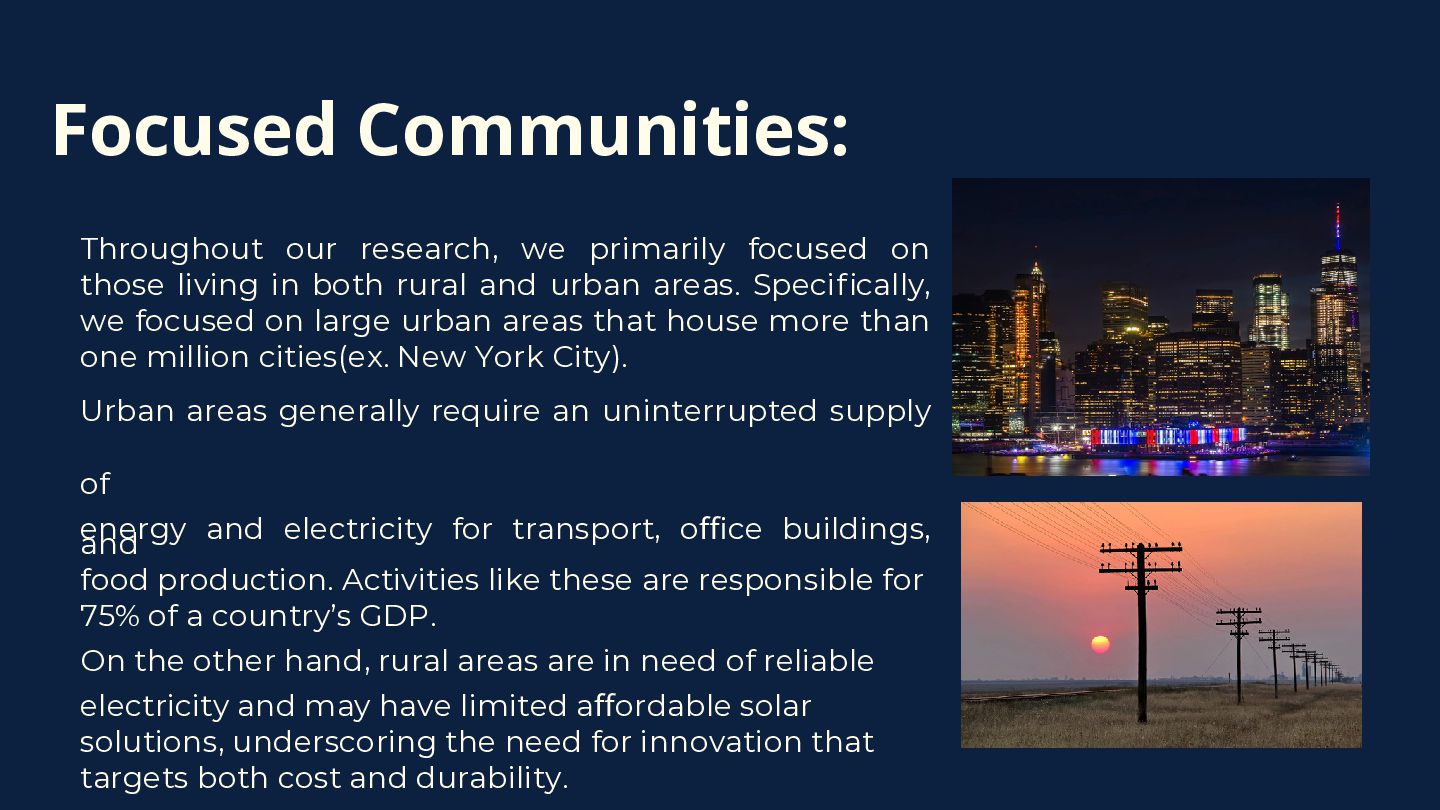
  5. Focused Communities: Throughout our research, we primarily focused on those

    living in both rural and urban areas. Specifically, we focused on large urban areas that house more than one million cities(ex. New York City). Urban areas generally require an uninterrupted supply of energy and electricity for transport, office buildings, and food production. Activities like these are responsible for 75% of a country’s GDP. On the other hand, rural areas are in need of reliable electricity and may have limited affordable solar solutions, underscoring the need for innovation that targets both cost and durability.
  6. If we integrate Building-Integrated Photovoltaics (BIPV) for urban environments and

    multi-layer floating solar systems for water bodies—both incorporating advanced materials (LSC technology, wide-bandgap semiconductors) and thermochemical storage—then we can achieve higher energy reliability and efficiency than conventional solar systems, as validated through existing pilot projects, AI-driven performance modeling across diverse climates, and patent landscape analysis. Our Testing Hypothesis:
  7. Research Methods • • • Reviewedscientific literature, patents, and government

    sustainability plans to understand existing solar technologies, efficiency limitations, and national renewable-energy priorities. This helped us identify gaps in current solutions and ensured our ideas were grounded in real engineering and policy needs. Fine-tuned an AI model using weather, irradiance, and environmental datasets to predict how efficiently our prototype would perform in different climates. This allowed us to test our design in a wide range of real-world scenarios without needing a physical prototype. Used AI-assisted patent analysis to evaluate whether our proposed solutions were unique, feasible, and non-overlapping with existing intellectual property. This step confirmed that our hybrid solar systems introduced new combinations of materials and technologies that are not present in current patents.
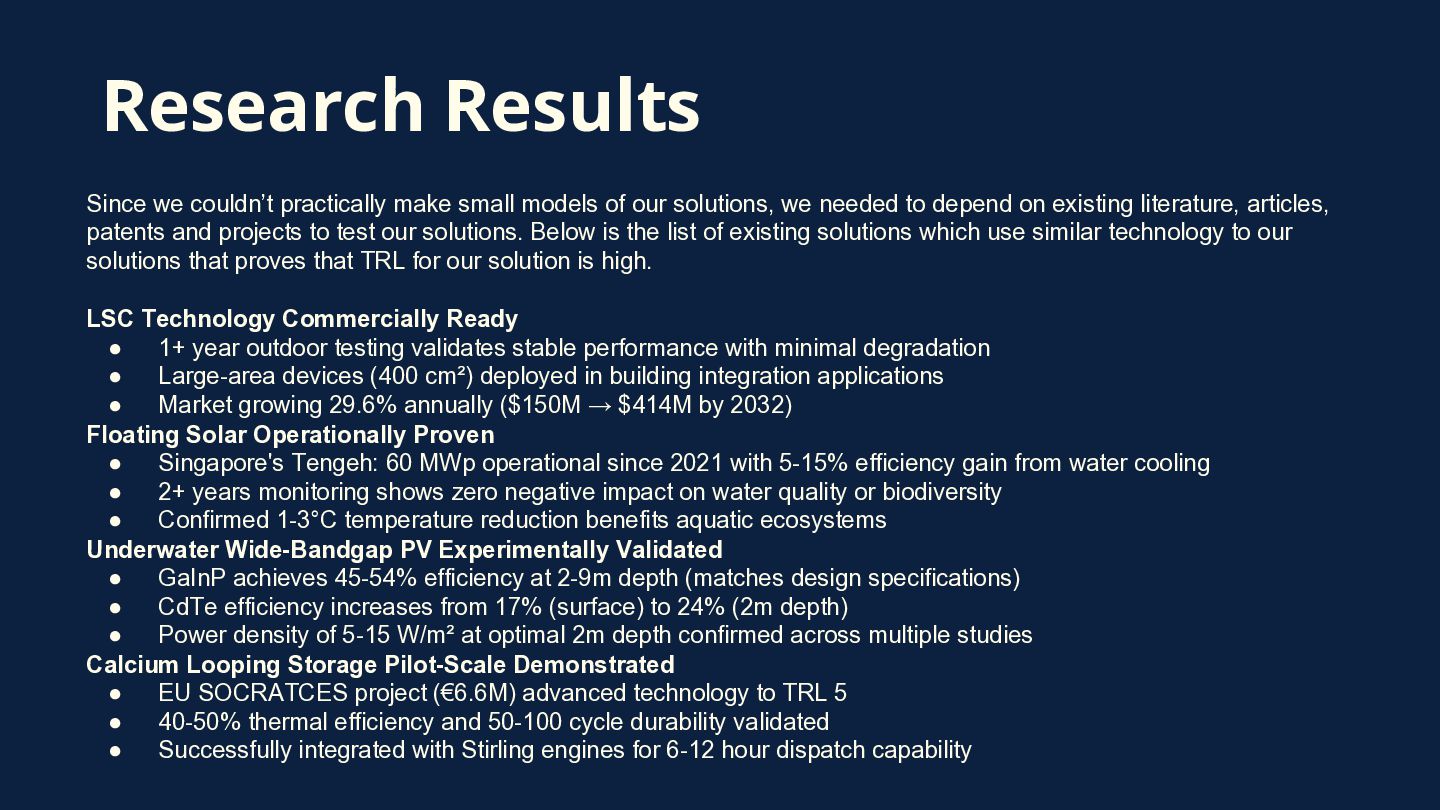
  8. • • • • • • • • • •

    • • 1+ year outdoor testing validates stable performance with minimal degradation Large-area devices (400 cm²) deployed in building integration applications Market growing 29.6% annually ($150M → $414M by 2032) Singapore's Tengeh: 60 MWp operational since 2021 with 5-15% efficiency gain from water cooling 2+ years monitoring shows zero negative impact on water quality or biodiversity Confirmed 1-3°C temperature reduction benefits aquatic ecosystems GaInP achieves 45-54% efficiency at 2-9m depth (matches design specifications) CdTe efficiency increases from 17% (surface) to 24% (2m depth) Power density of 5-15 W/m² at optimal 2m depth confirmed across multiple studies EU SOCRATCES project (€6.6M) advanced technology to TRL 5 40-50% thermal efficiency and 50-100 cycle durability validated Successfully integrated with Stirling engines for 6-12 hour dispatch capability Since we couldn’t practically make small models of our solutions, we needed to depend on existing literature, articles, patents and projects to test our solutions. Below is the list of existing solutions which use similar technology to our solutions that proves that TRL for our solution is high. Floating Solar Operationally Proven LSC Technology Commercially Ready Calcium Looping Storage Pilot-Scale Demonstrated Underwater Wide-Bandgap PV Experimentally Validated Research Results
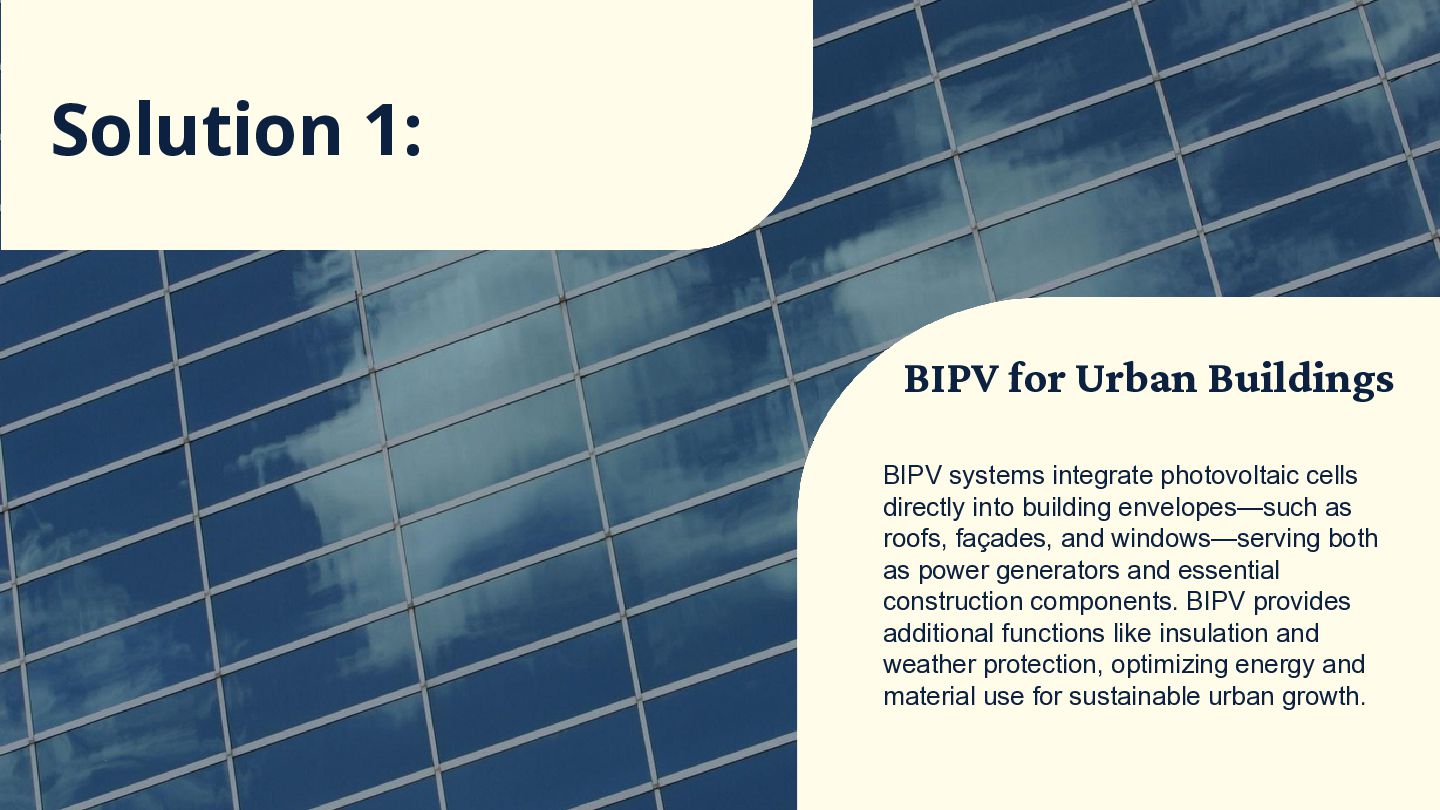
  9. Solution 1: BIPV for Urban Buildings BIPV systems integrate photovoltaic

    cells directly into building envelopes—such as roofs, façades, and windows—serving both as power generators and essential construction components. BIPV provides additional functions like insulation and weather protection, optimizing energy and material use for sustainable urban growth.
  10. 1. Top Glass (protective + aesthetic) This is the outermost

    layer facing the environment. It protects the solar cells from mechanical impact, weather, UV exposure, and moisture. In BIPV, this glass may also be tinted, patterned, or textured to meet architectural and aesthetic requirements, while still allowing adequate light transmission for energy generation. 2. Transparent Encapsulant (EVA/PVB) Ethylene-vinyl acetate (EVA) or polyvinyl butyral (PVB) acts as a clear adhesive layer bonding the glass to the photovoltaic cells. It cushions the cells, keeps them in place, and ensures optical clarity so sunlight passes through with minimal loss. PVB is often used in building-grade laminated glass because of its superior safety and structural properties. System Components of BIPV:
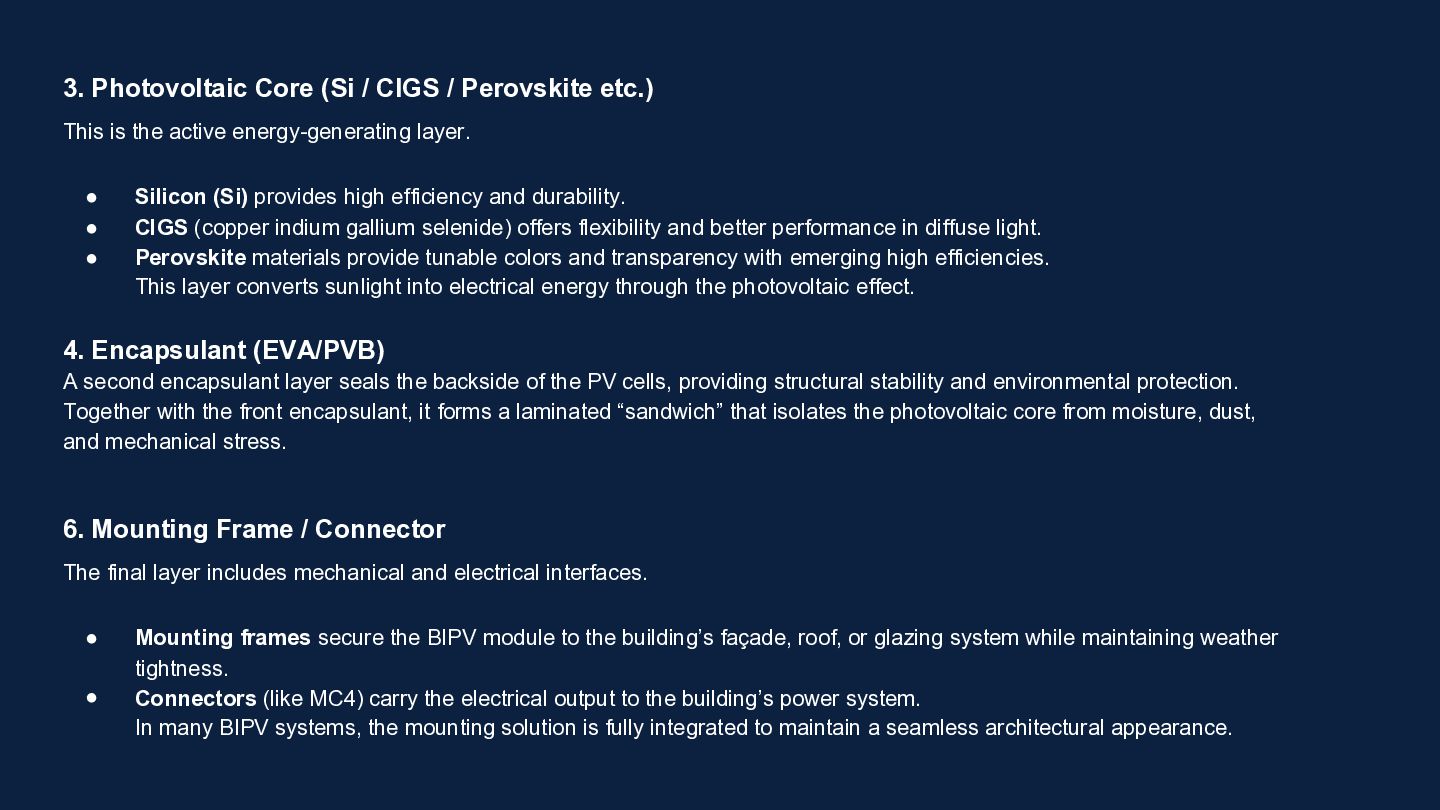
  11. 4. Encapsulant (EVA/PVB) A second encapsulant layer seals the backside

    of the PV cells, providing structural stability and environmental protection. Together with the front encapsulant, it forms a laminated “sandwich” that isolates the photovoltaic core from moisture, dust, and mechanical stress. 6. Mounting Frame / Connector The final layer includes mechanical and electrical interfaces. 3. Photovoltaic Core (Si / CIGS / Perovskite etc.) This is the active energy-generating layer. • • • Silicon (Si) provides high efficiency and durability. CIGS (copper indium gallium selenide) offers flexibility and better performance in diffuse light. Perovskite materials provide tunable colors and transparency with emerging high efficiencies. This layer converts sunlight into electrical energy through the photovoltaic effect. • Mounting frames secure the BIPV module to the building’s façade, roof, or glazing system while maintaining weather tightness. Connectors (like MC4) carry the electrical output to the building’s power system. In many BIPV systems, the mounting solution is fully integrated to maintain a seamless architectural appearance. •
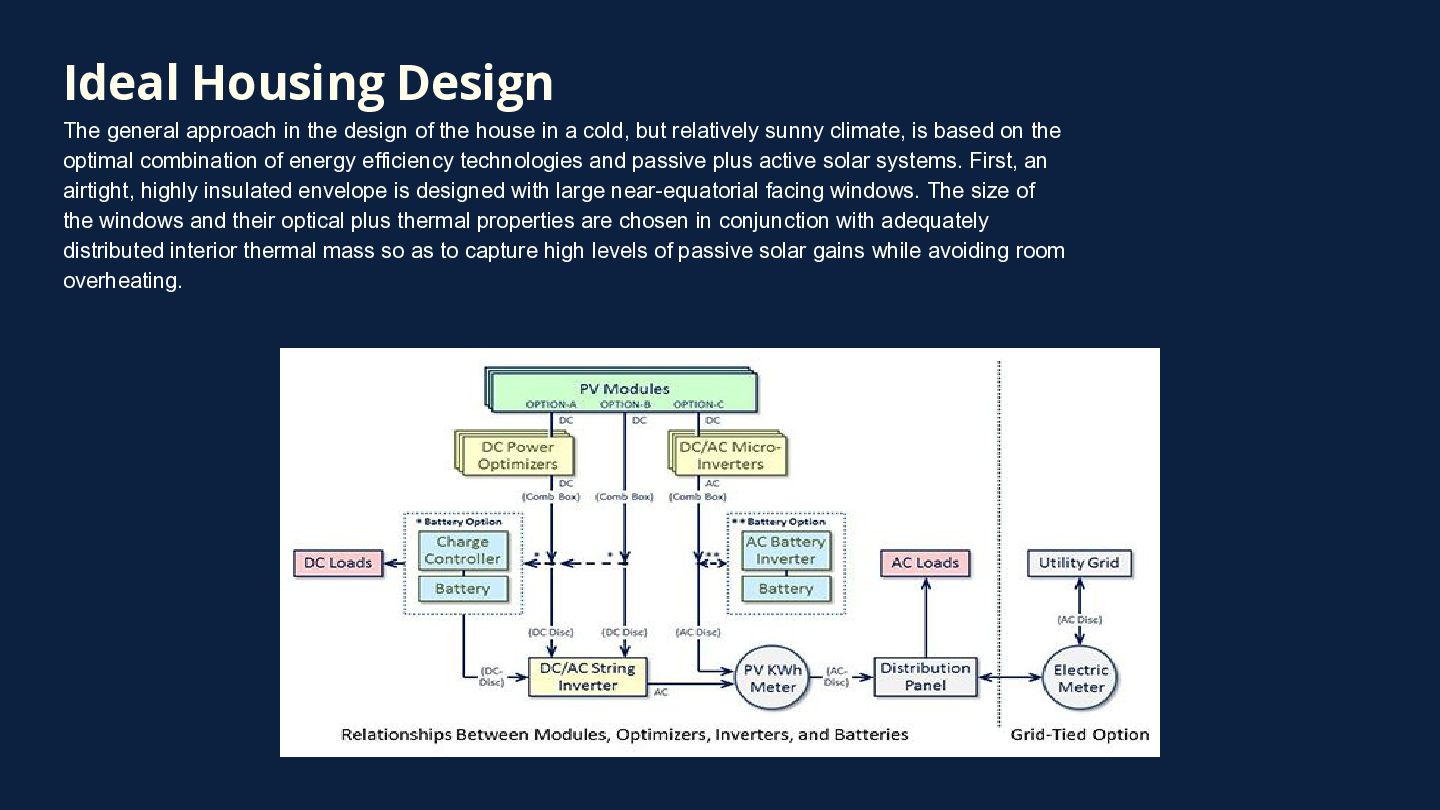
  12. Ideal Housing Design The general approach in the design of

    the house in a cold, but relatively sunny climate, is based on the optimal combination of energy efficiency technologies and passive plus active solar systems. First, an airtight, highly insulated envelope is designed with large near-equatorial facing windows. The size of the windows and their optical plus thermal properties are chosen in conjunction with adequately distributed interior thermal mass so as to capture high levels of passive solar gains while avoiding room overheating.
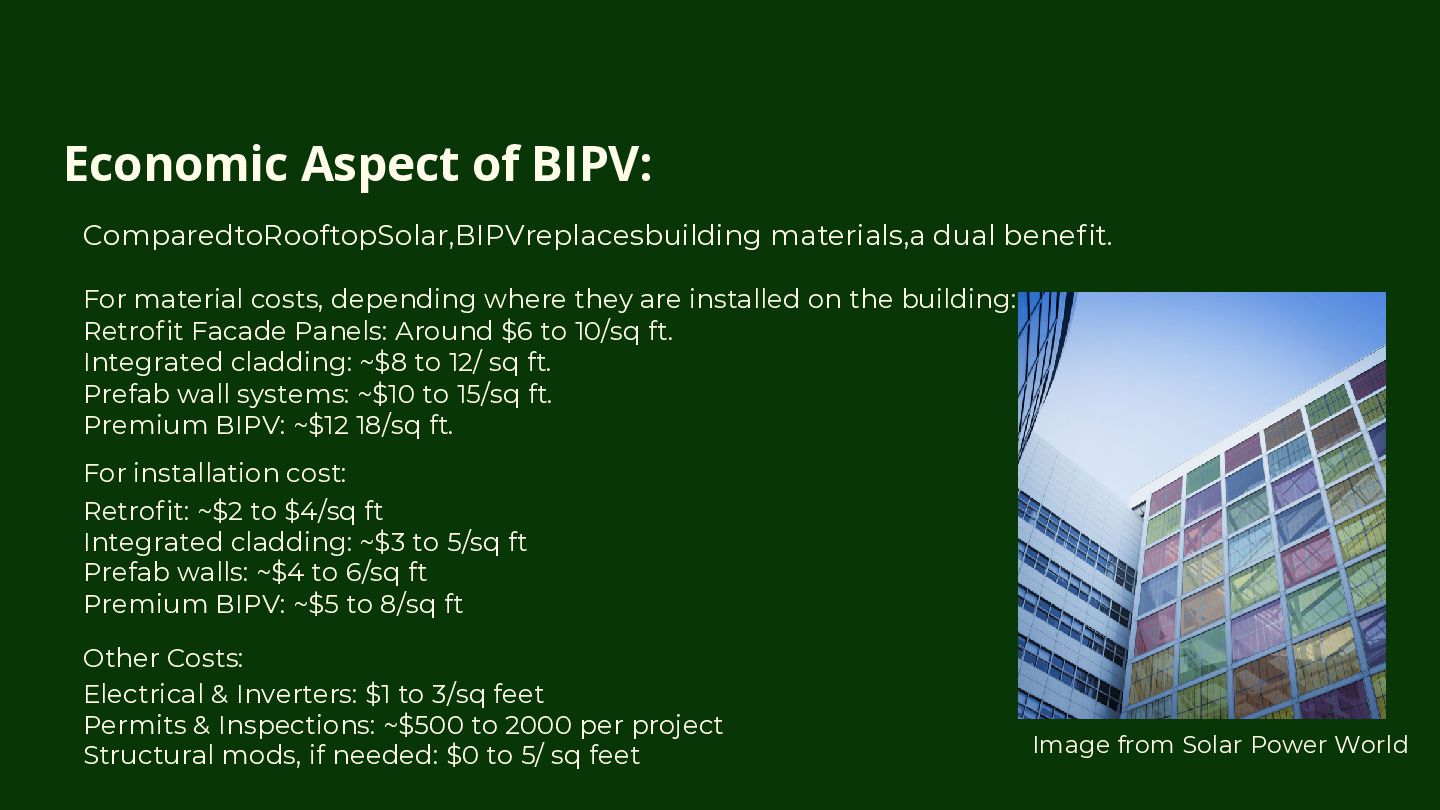
  13. Economic Aspect of BIPV: ComparedtoRooftopSolar,BIPVreplacesbuilding materials,a dual benefit. For material

    costs, depending where they are installed on the building: Retrofit Facade Panels: Around $6 to 10/sq ft. Integrated cladding: ~$8 to 12/ sq ft. Prefab wall systems: ~$10 to 15/sq ft. Premium BIPV: ~$12 18/sq ft. For installation cost: Retrofit: ~$2 to $4/sq ft Integrated cladding: ~$3 to 5/sq ft Prefab walls: ~$4 to 6/sq ft Premium BIPV: ~$5 to 8/sq ft Other Costs: Electrical & Inverters: $1 to 3/sq feet Permits & Inspections: ~$500 to 2000 per project Structural mods, if needed: $0 to 5/ sq feet Image from Solar Power World
  14. Durability of BIPV: • • • • To have a

    durable BIPV system, it should withstand environmental stressors, such as temperature variations, humidity, UV radiation, and chemical exposure, such as pollution. Using monocrystalline silicon or multicrystalline silicon for the photovoltaic cells will be used due to its high versatility and ability to have different sizes and shapes. ◦ These silicon cells will maintain the structure, which is needed since BIPV replacement is costly. To improve thermal insulation, low-emissivity coatings or vacuum insulating glass will be used. ◦ Using Artificial Intelligence to help with thermal management will prevent with overheating, which could slow down power degradation of the silicon PV cells. The back sheet, which will be made out of ceramics or metal. ◦ ◦ Ceramic backsheets resist high temperatures, while metal backsheets provide structural strength along with thermal stability. Both ceramics and metal enhance chemical resistance, especially in the polluted city environments.
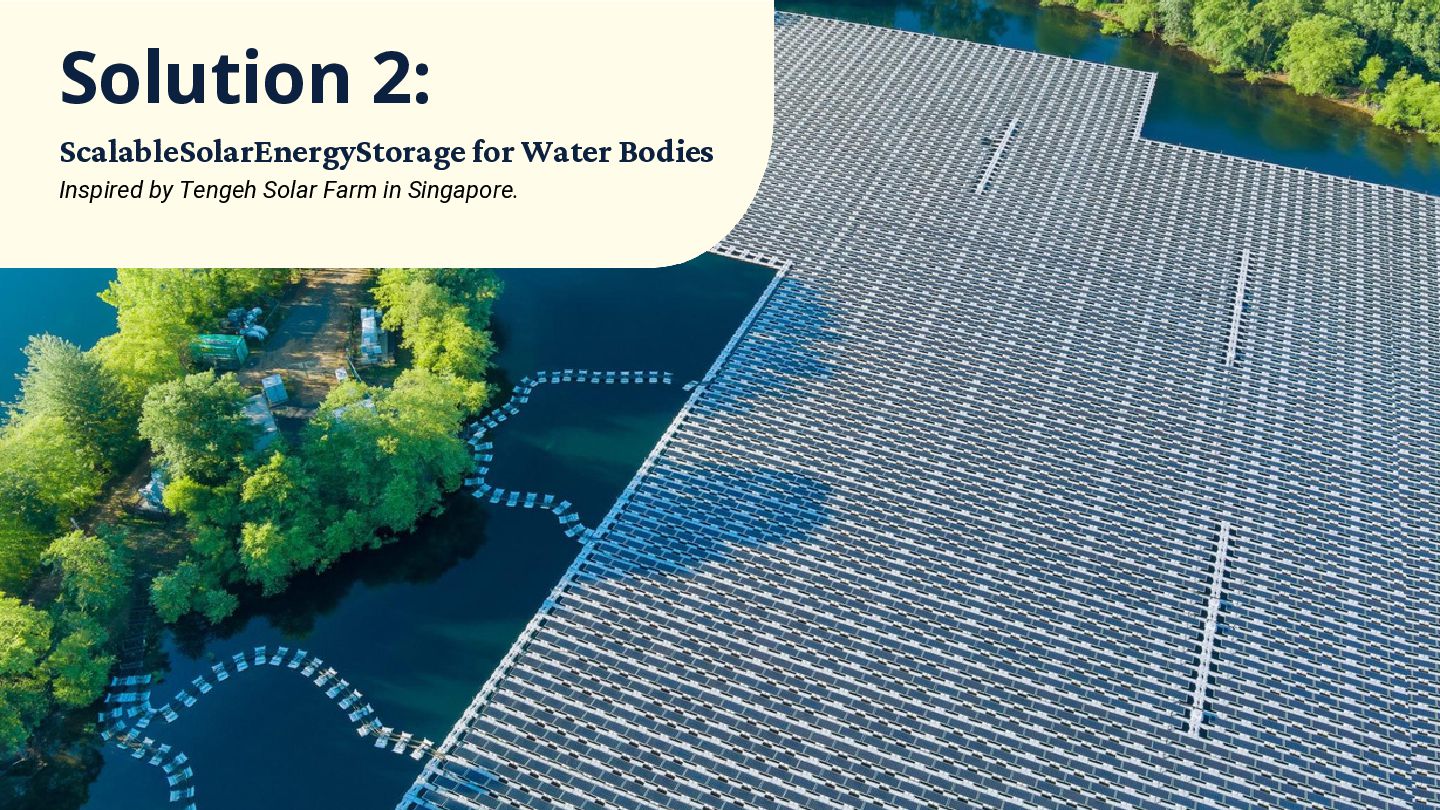
  15. Introduction Inspired by the operational success of Singapore's Sembcorp Tengeh

    Floating Solar Farm, this solution is a multi-layer platform designed for scalable clean energy generation and long-duration storage on water bodies such as reservoirs, lakes, and coastal areas. The system combines three integrated technologies: a semi-transparent solar canopy that captures UV and blue light while allowing sunlight to pass through for ecosystem health, water-cooled photovoltaic panels that leverage the natural cooling effect of water to boost efficiency by 5–15% (as demonstrated at Tengeh), and modular thermochemical storage capsules that store excess energy chemically and release it on demand to power the grid during low-sunlight periods. This modular design is scalable across different water body sizes, can be retrofitted to existing infrastructure, and supports future integration with AI-driven grid management and other renewable sources like wind or geothermal energy.
  16. Overview Abreakdown ofthe floating multi-layered solar panels: • • •

    Layer 1 (Top): Semi-transparent LSC canopy with edge-mounted PV cells Layer 2 (Submerged): Wide-bandgap photovoltaic panels at 2m depth Layer 3 (Integrated): Modular thermochemical storage capsules (CaCO₃/CaO) What’s new in this solution? • • • • First floating solar system combining spectrum-splitting photovoltaics with long-duration chemical energy storage Dual solar capture: UV/blue light (LSC) + blue-green underwater light (submerged PV) Water cooling provides passive thermal management (10-15°C reduction) Closed-loop CO₂ thermochemical storage enables 6-12 hour dispatchable power Benefits: • • • • Modular, scalable design (100 kW to 100+ MW) 40-70% reduction in water evaporation Zero agricultural land use Compatible with existing reservoir infrastructure
  17. Layer 1: Luminescent Solar Concentrators Technology & Materials: • •

    • • • Quantum dots (CuInS₂, CsPbBr₃) and perovskite nanocrystals embedded in transparent polymer matrix Photoluminescence quantum yield (PLQY): 90-100% Absorbs UV and blue light (300-450 nm), emits concentrated red/NIR light (650-980 nm) Large Stokes shift (>150 nm) minimizes reabsorption losses Edge-mounted silicon or GaAs PV cells capture concentrated light Ecosystem Compatibility: • • • • 65-80% average visible light transmission preserves photosynthetically active radiation (PAR) Sufficient light penetration for phytoplankton and aquatic plants Reduces water temperature by 1-3°C, mitigating thermal stress Selective UV absorption protects aquatic organisms Durability & Protection: • • Multi-layer UV-resistant encapsulation (EVA/POE with UV stabilizers) Anti-soiling hydrophobic nano-coatings maintain >95% transmission after 5+ years
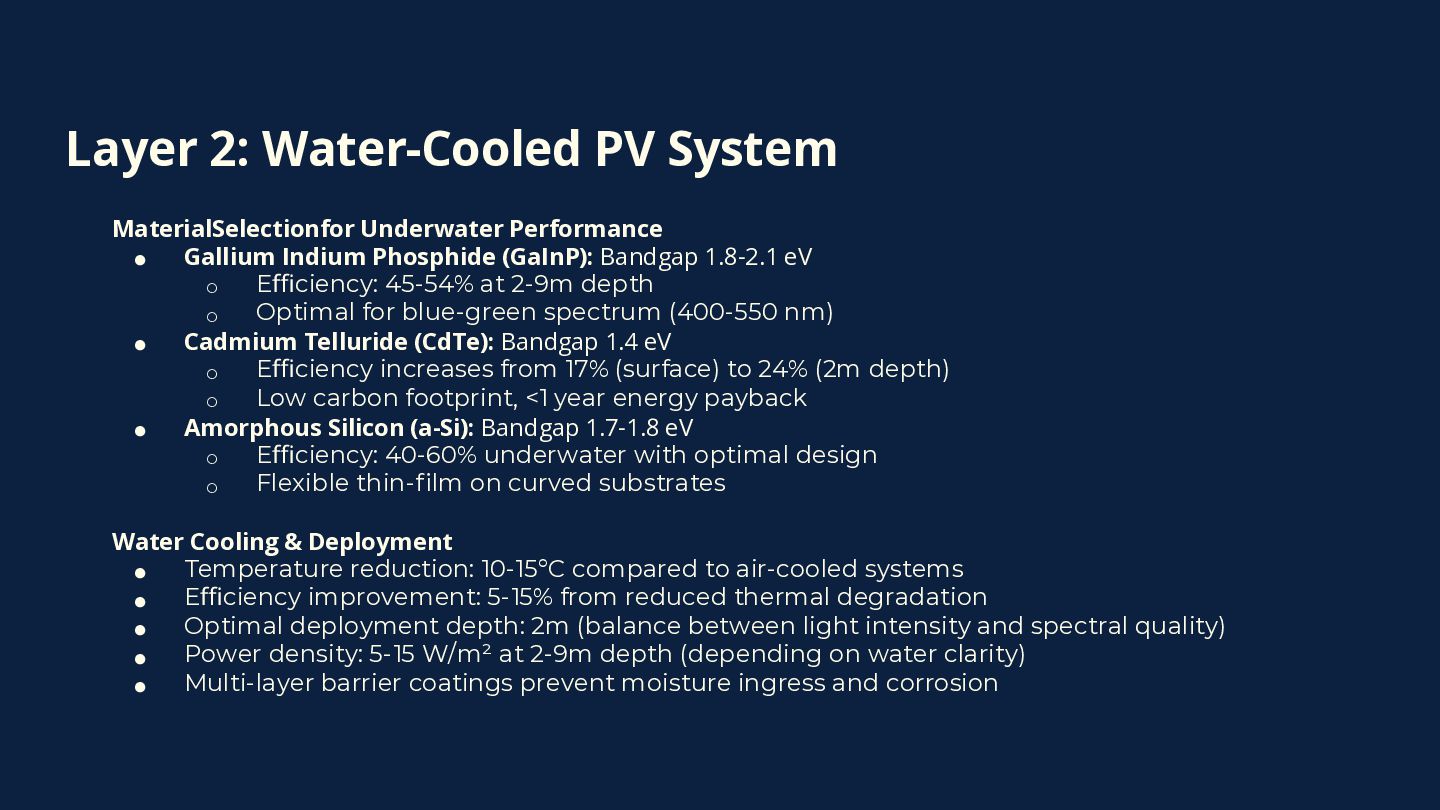
  18. Layer 2: Water-Cooled PV System MaterialSelectionfor Underwater Performance • Gallium

    Indium Phosphide (GaInP): Bandgap 1.8-2.1 eV ◦ ◦ Efficiency: 45-54% at 2-9m depth Optimal for blue-green spectrum (400-550 nm) • Cadmium Telluride (CdTe): Bandgap 1.4 eV ◦ ◦ Efficiency increases from 17% (surface) to 24% (2m depth) Low carbon footprint, <1 year energy payback • Amorphous Silicon (a-Si): Bandgap 1.7-1.8 eV ◦ ◦ Efficiency: 40-60% underwater with optimal design Flexible thin-film on curved substrates Water Cooling & Deployment • • • • • Temperature reduction: 10-15°C compared to air-cooled systems Efficiency improvement: 5-15% from reduced thermal degradation Optimal deployment depth: 2m (balance between light intensity and spectral quality) Power density: 5-15 W/m² at 2-9m depth (depending on water clarity) Multi-layer barrier coatings prevent moisture ingress and corrosion
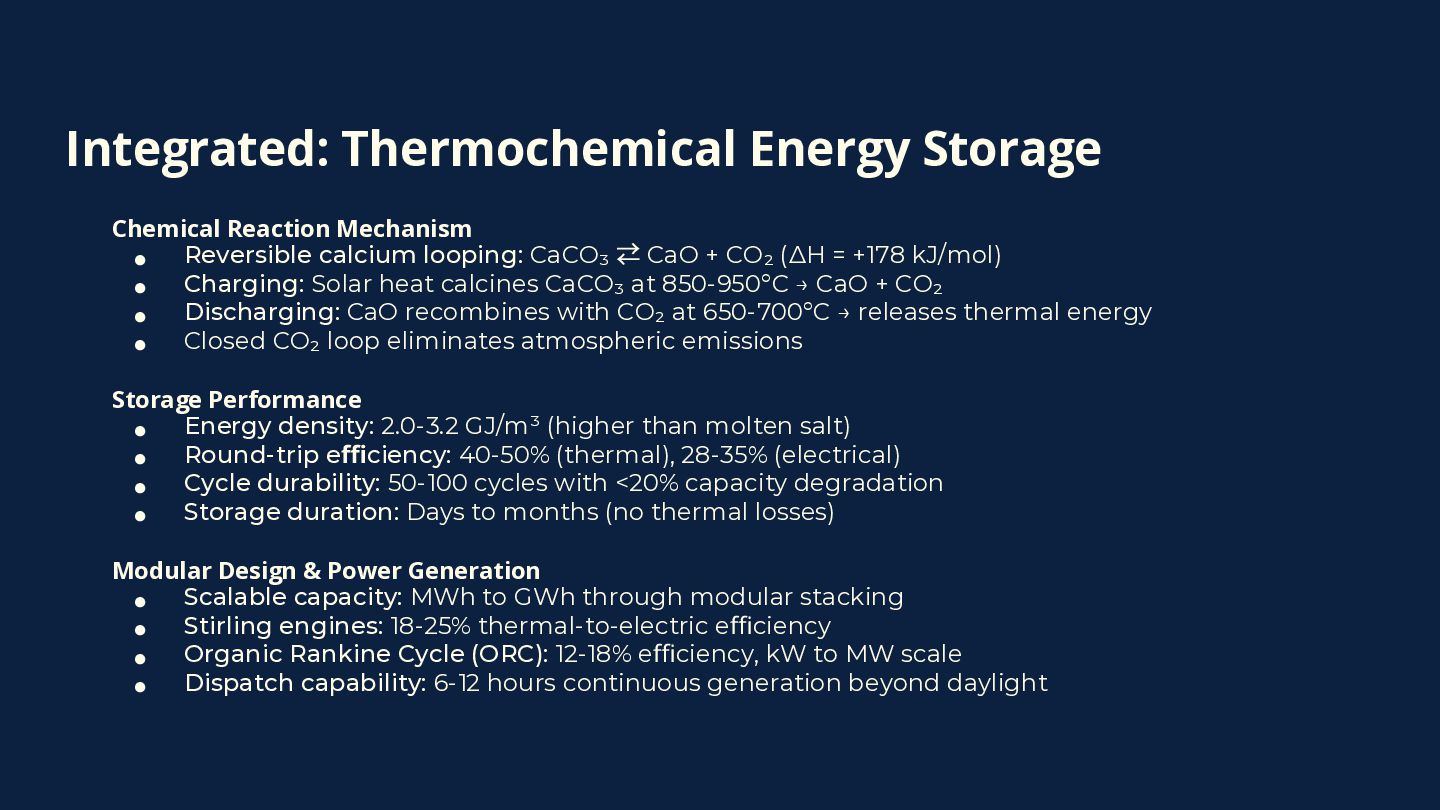
  19. Integrated: Thermochemical Energy Storage Chemical Reaction Mechanism • • •

    • Reversible calcium looping: CaCO₃ ⇄ CaO + CO₂ (ΔH = +178 kJ/mol) Charging: Solar heat calcines CaCO₃ at 850-950°C → CaO + CO₂ Discharging: CaO recombines with CO₂ at 650-700°C → releases thermal energy Closed CO₂ loop eliminates atmospheric emissions Storage Performance • • • • Energy density: 2.0-3.2 GJ/m³ (higher than molten salt) Round-trip efficiency: 40-50% (thermal), 28-35% (electrical) Cycle durability: 50-100 cycles with <20% capacity degradation Storage duration: Days to months (no thermal losses) Modular Design & Power Generation • • • • Scalable capacity: MWh to GWh through modular stacking Stirling engines: 18-25% thermal-to-electric efficiency Organic Rankine Cycle (ORC): 12-18% efficiency, kW to MW scale Dispatch capability: 6-12 hours continuous generation beyond daylight
  20. 3D Model As Google Slide does not support embedding an

    interactive version of our 3D model on TinkerCAD, to access it: https://www.tinkercad.com/things/7u2 LnAo2OW7-grand-crift/edit?returnTo= https%3A%2F%2Fwww.tinkercad.com% 2Fdashboard%2Fdesigns%2Fall&share code=FeXJ6jrKE0sNZtbNnkBByuVyiAi WeqdtFq-E7pbgaEE The link is comparable with chrome only!
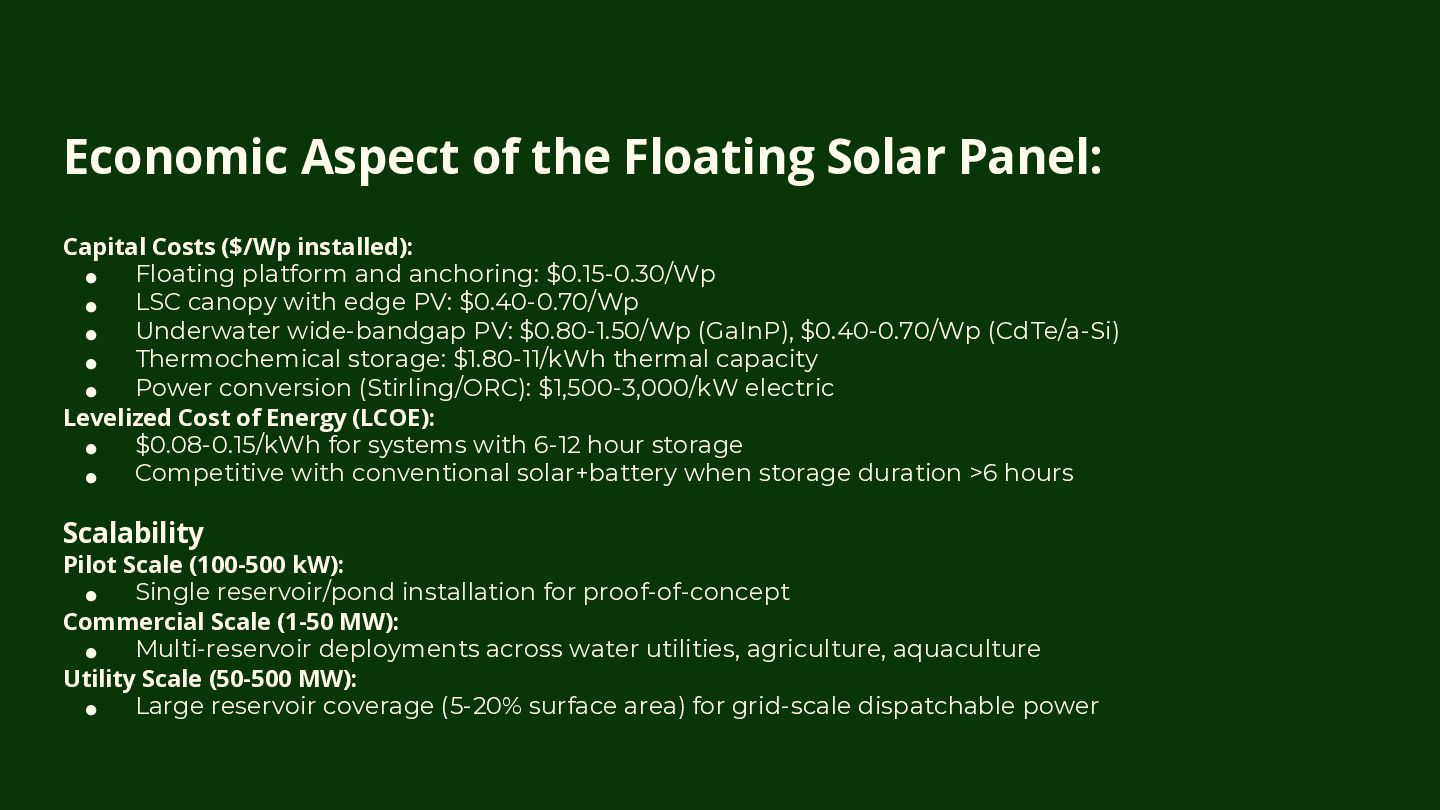
  21. Capital Costs ($/Wp installed): • • • • • Floating

    platform and anchoring: $0.15-0.30/Wp LSC canopy with edge PV: $0.40-0.70/Wp Underwater wide-bandgap PV: $0.80-1.50/Wp (GaInP), $0.40-0.70/Wp (CdTe/a-Si) Thermochemical storage: $1.80-11/kWh thermal capacity Power conversion (Stirling/ORC): $1,500-3,000/kW electric Levelized Cost of Energy (LCOE): • • $0.08-0.15/kWh for systems with 6-12 hour storage Competitive with conventional solar+battery when storage duration >6 hours Pilot Scale (100-500 kW): • Single reservoir/pond installation for proof-of-concept Commercial Scale (1-50 MW): • Multi-reservoir deployments across water utilities, agriculture, aquaculture Utility Scale (50-500 MW): • Large reservoir coverage (5-20% surface area) for grid-scale dispatchable power Scalability Economic Aspect of the Floating Solar Panel:
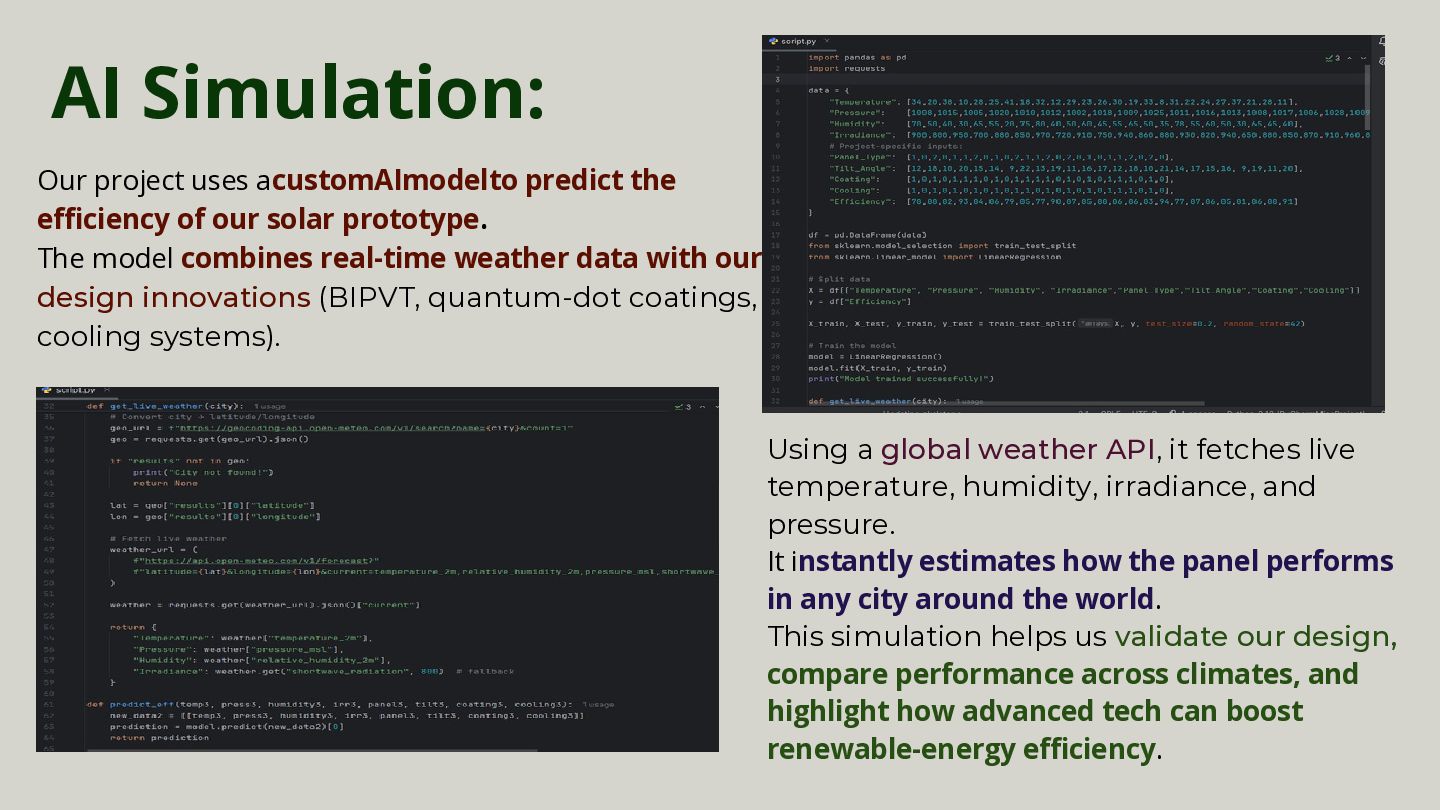
  22. AI Simulation: Our project uses acustomAImodelto predict the efficiency of

    our solar prototype. The model combines real-time weather data with our design innovations (BIPVT, quantum-dot coatings, cooling systems). Using a global weather API, it fetches live temperature, humidity, irradiance, and pressure. It instantly estimates how the panel performs in any city around the world. This simulation helps us validate our design, compare performance across climates, and highlight how advanced tech can boost renewable-energy efficiency.
  23. AI Simulation: Simulation for Manual Input Simulation for Live API

    Click here to view the graphs for the simulations Video: https://drive.google.com/file/d/1k4P dhgP-RBsDHVXIy7yIspO5WuIpLQ A0/view?usp=sharing Video: https://drive.google.com/file/d/12ux cHwRIk4mID2EY3-oB5kpbT0CIzSq V/view?usp=sharing
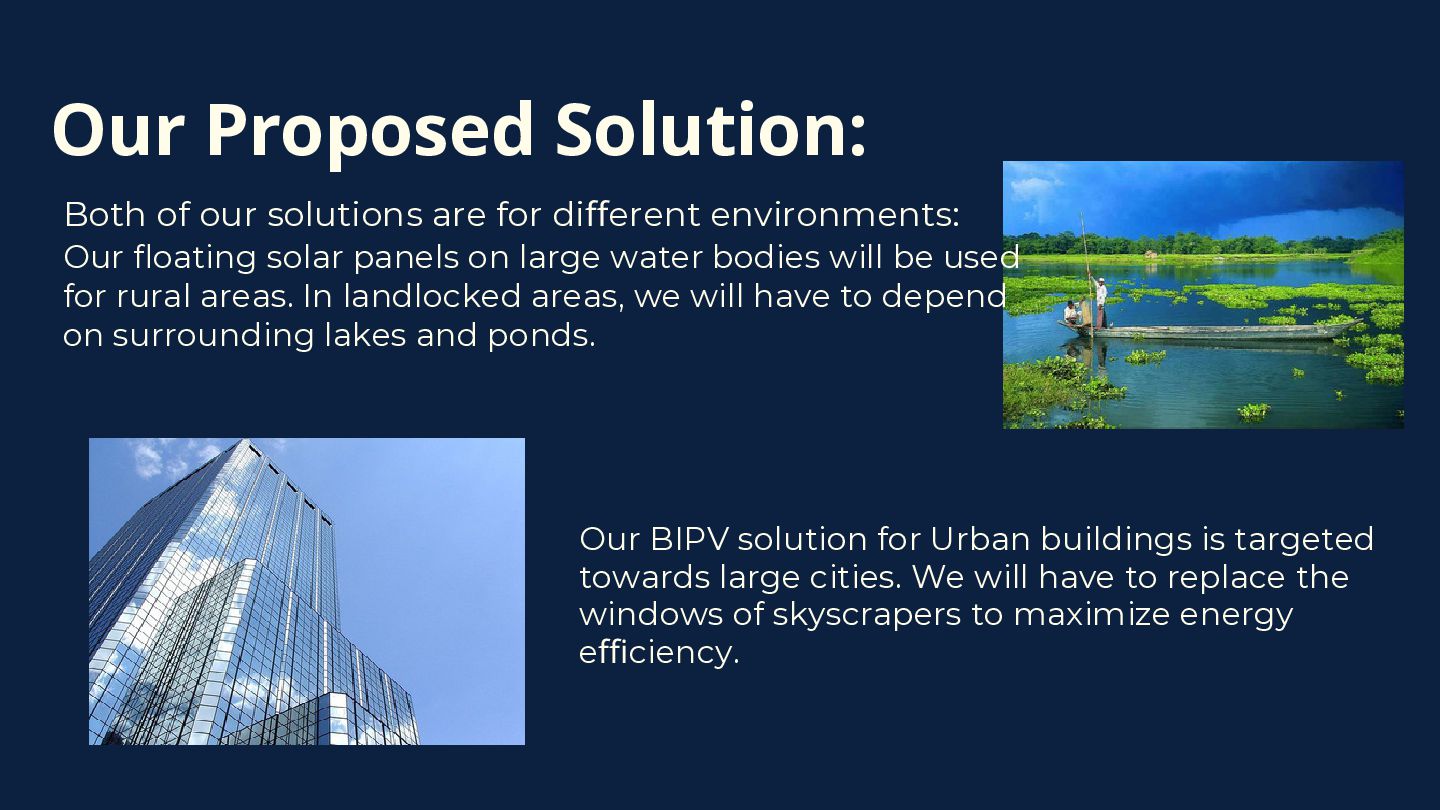
  24. Both of our solutions are for different environments: Our floating

    solar panels on large water bodies will be used for rural areas. In landlocked areas, we will have to depend on surrounding lakes and ponds. Our BIPV solution for Urban buildings is targeted towards large cities. We will have to replace the windows of skyscrapers to maximize energy efficiency. Our Proposed Solution:
  25. Citations https://unhabitat.org/topic/urban-energy https://www.mrsolar.com/what-is-a-solar-panel/ https://energy.sustainability-directory.com/area/bipv-performance-durability/ https://www.mdpi.com/1996-1073/12/6/1058# https://pmc.ncbi.nlm.nih.gov/articles/PMC12616784/ https://www.nature.com/articles/s41566-023-01366-y https://pubs.acs.org/doi/10.1021/jacsau.2c00504 https://pubs.rsc.org/en/content/articlepdf/2024/tc/d4tc01520g https://pmc.ncbi.nlm.nih.gov/articles/PMC9875231/

    https:// image-ppubs.uspto.gov/dirsearch-public/print/downloadPdf/20200235254 https://eureka.patsnap.com/report-research-on-anti-soiling-coatings-for-outdoor-lsc-installations https://pubs.aip.org/aip/app/article/6/12/120901/1064023/Perovskite-luminescent-solar-concentrators-f or https://onlinelibrary.wiley.com/doi/abs/10.1002/adom.202100754 https://pubs.aip.org/aip/apl/article/119/1/011905/40236/Optical-characterization-and-photo-electrical https://www.nature.com/articles/ncomms1318 https://onlinelibrary.wiley.com/doi/full/10.1002/aenm.202402375 https://physicsworld.com/a/wide-band-gap-semiconductors-could-harvest-sunlight-underwater/
  26. Citations https://research-hub.nrel.gov/en/publications/identifying-optimal-photovoltaic-technologies-for-under water-appl-2 https://pubs.aip.org/aip/jrse/article/12/5/053502/1017520/An-improved-cooling-system-design-to-enhan ce https://pubs.aip.org/aip/acp/article-split/3307/1/030003/3344466/Assessing-cooling-effects-on-floating -solar-PV-and https://ieeexplore.ieee.org/document/9775352/ https://eureka.patsnap.com/article/floating-solar-lcoe-how-water-cooling-lowers-costs-vs-rooftop-pv https://www.sciencedirect.com/science/article/pii/S0038092X20310847

    https://sinovoltaics.com/learning-center/solar-cells/cdte-cells-efficiency/ https://www.sciencedirect.com/science/article/abs/pii/S0038092X15002273 https:// image-ppubs.uspto.gov/dirsearch-public/print/downloadPdf/20160006391 https://image-ppubs.uspto.gov/dirsearch-public/print/downloadPdf/9712108 https://pubs.acs.org/doi/10.1021/acs.energyfuels.3c02652 https://www.sciencedirect.com/science/article/abs/pii/S1364032119304526 https://www.frontiersin.org/journals/sustainability/articles/10.3389/frsus.2021.740105/full https://pubs.rsc.org/en/content/articlelanding/2024/cp/d4cp01144a https://www.sciencedirect.com/science/article/pii/S0038092X2400865X
  27. Citations https:// image-ppubs.uspto.gov/dirsearch-public/print/downloadPdf/20190331364 https://image-ppubs.uspto.gov/dirsearch-public/print/downloadPdf/11047601 https://onlinelibrary.wiley.com/doi/full/10.1002/ente.202300544 https://elib.dlr.de/138584/1/2020%20-%20Bauer%20-%20Chapter%201%20TES%20in%20UHTES.pdf https://pubs.aip.org/aip/jrse/article/14/4/043705/2848692/Solar-organic-Rankine-cycle-Parametric-analy sis https:// image-ppubs.uspto.gov/dirsearch-public/print/downloadPdf/20080256952

    https://image-ppubs.uspto.gov/dirsearch-public/print/downloadPdf/10801756 https://www.eurekalert.org/news-releases/528702 https://www.globalwaterforum.org/2024/10/24/floating-solar-does-this-new-energy-technology-affect- aquatic-life/ https://www.energie.sachsen.de/download/The_environmental_impacts_of_floating_solar_BayWa_re_W hite_paper.pdf https://laketricity-fpv.com/does-floating-solar-have-an-impact-on-biodiversity/ https://ecoaim.co.uk/floating-solar-a-sustainable-boost-for-aquatic-environments/ https://8msolar.com/the-rise-of-floatovoltaics/ https://www.accusolar.com/blog/floating-solar-farm-construction/ https://ciel-et-terre.net/anchoring-key-success-factors-floating-solar/