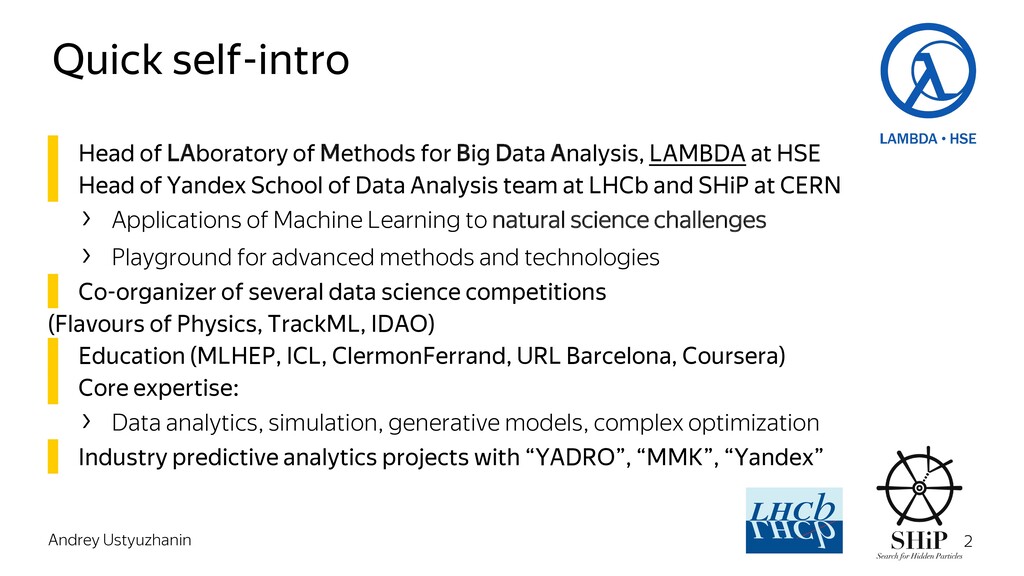
Methods for Big Data Analysis, LAMBDA at HSE ▌ Head of Yandex School of Data Analysis team at LHCb and SHiP at CERN › Applications of Machine Learning to natural science challenges › Playground for advanced methods and technologies ▌ Co-organizer of several data science competitions (Flavours of Physics, TrackML, IDAO) ▌ Education (MLHEP, ICL, ClermonFerrand, URL Barcelona, Coursera) ▌ Core expertise: › Data analytics, simulation, generative models, complex optimization ▌ Industry predictive analytics projects with “YADRO”, “MMK”, “Yandex”
› IOT – data abundance › Dataism – mindset, developed by significance of Big Data (flows) ▌ Global AI race › AI technologies transit from ‘nice to have’ to ‘must have’ for companies and governments › Changing nature of power ▌ Sustainable solutions, service personalization › From offline to real-time › “What-if … “ analytics, process-oriented analytics Andrey Ustyuzhanin 6
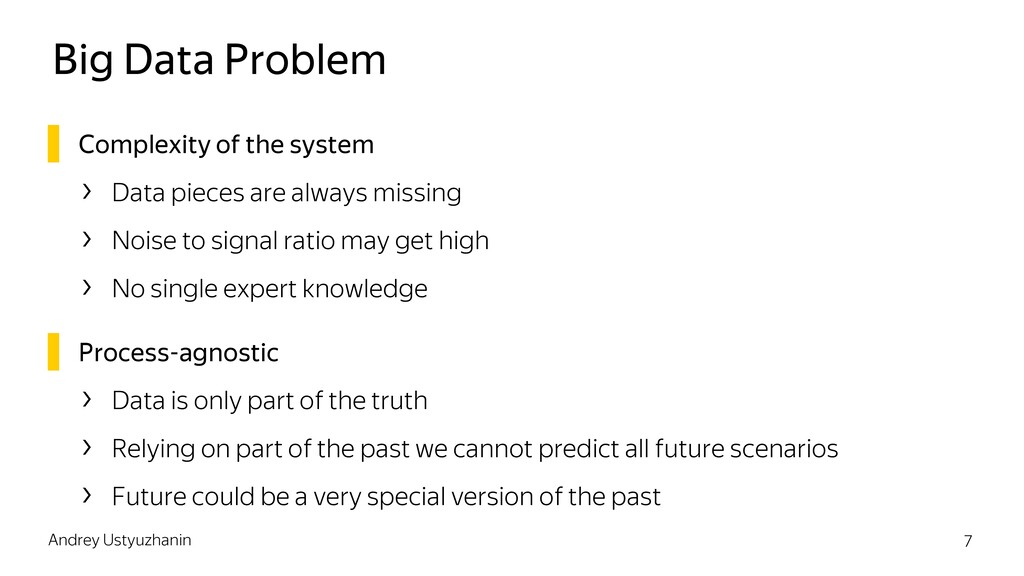
pieces are always missing › Noise to signal ratio may get high › No single expert knowledge ▌ Process-agnostic › Data is only part of the truth › Relying on part of the past we cannot predict all future scenarios › Future could be a very special version of the past Andrey Ustyuzhanin 7
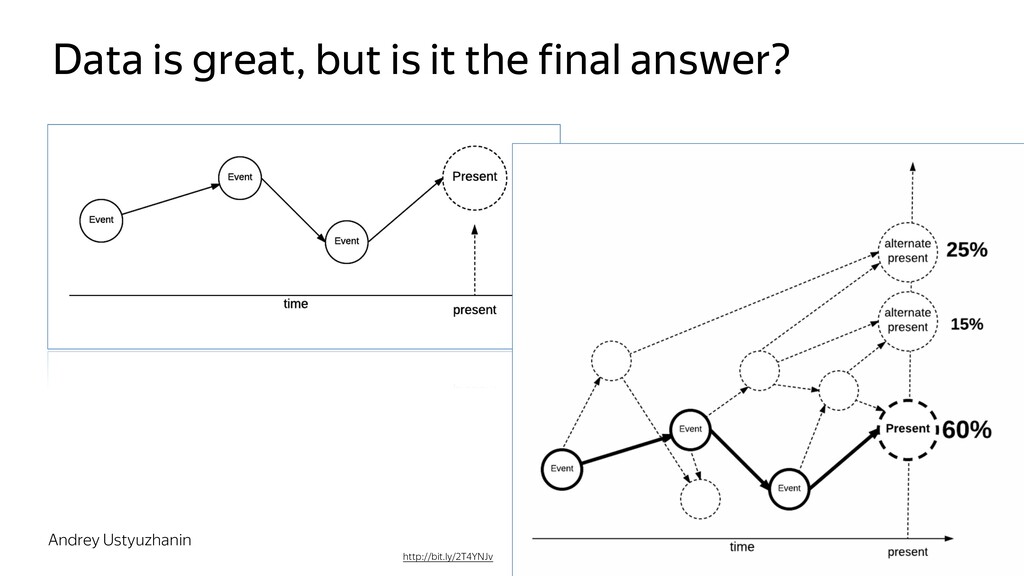
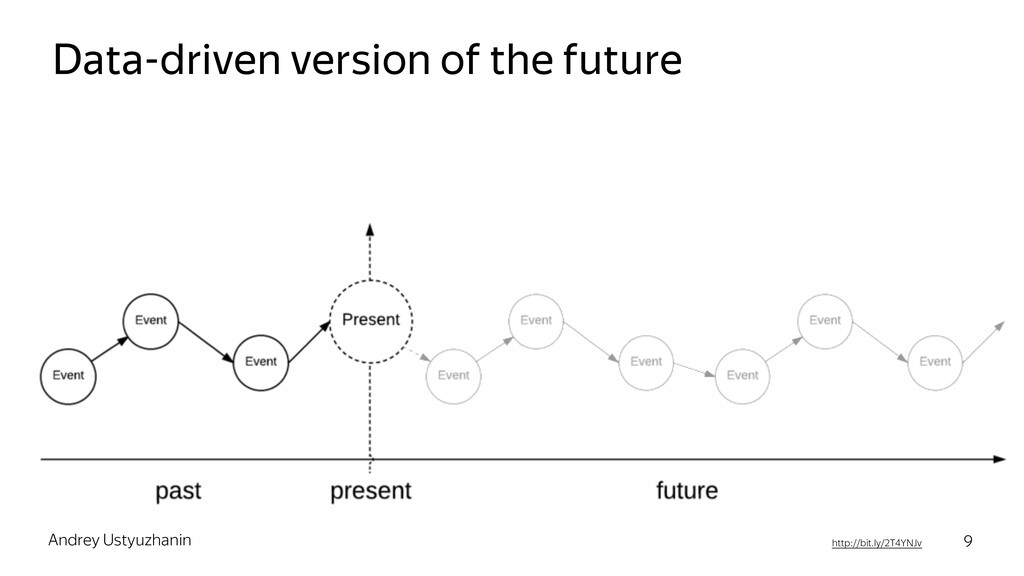
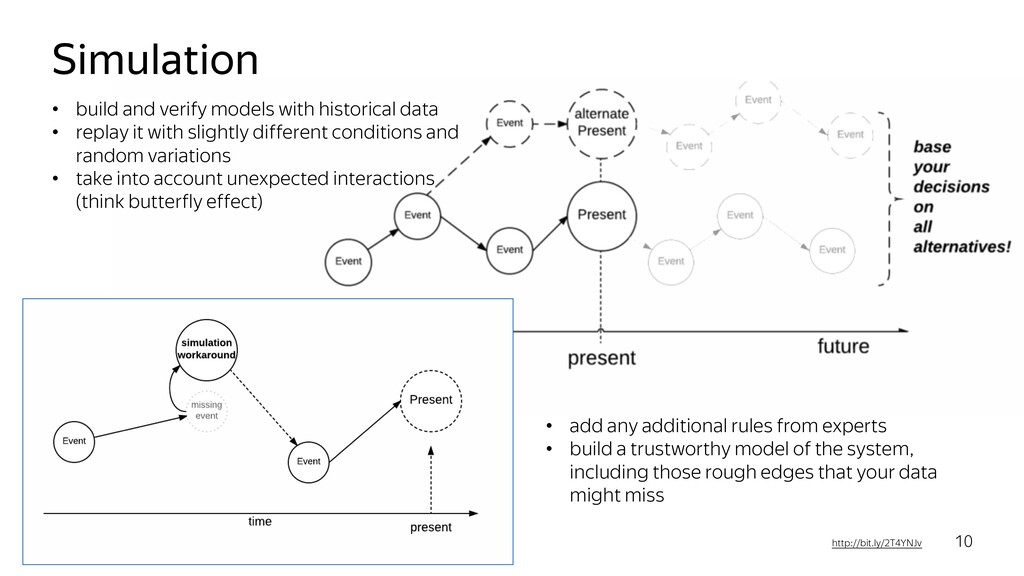
experts • build a trustworthy model of the system, including those rough edges that your data might miss • build and verify models with historical data • replay it with slightly different conditions and random variations • take into account unexpected interactions (think butterfly effect) http://bit.ly/2T4YNJv
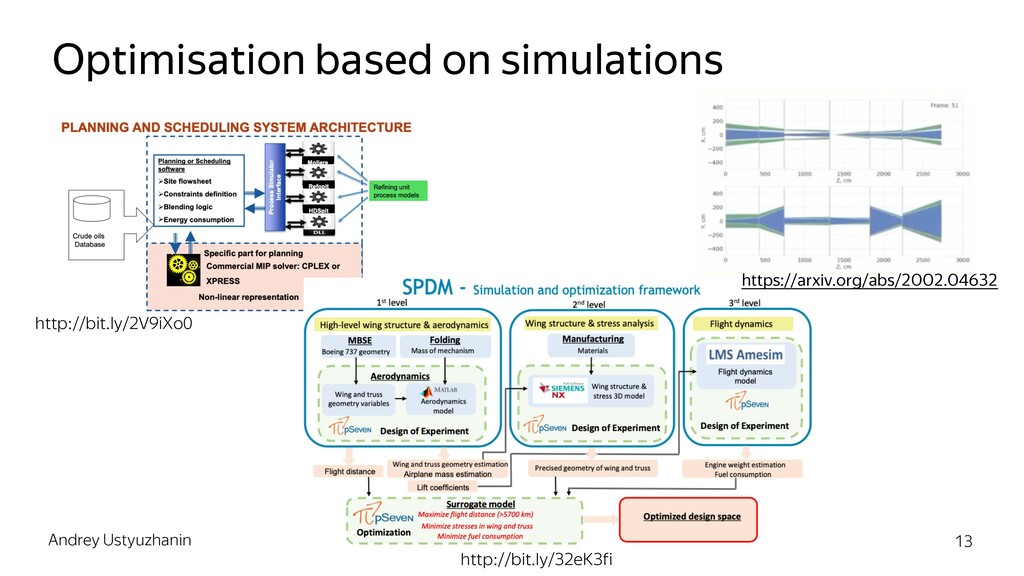
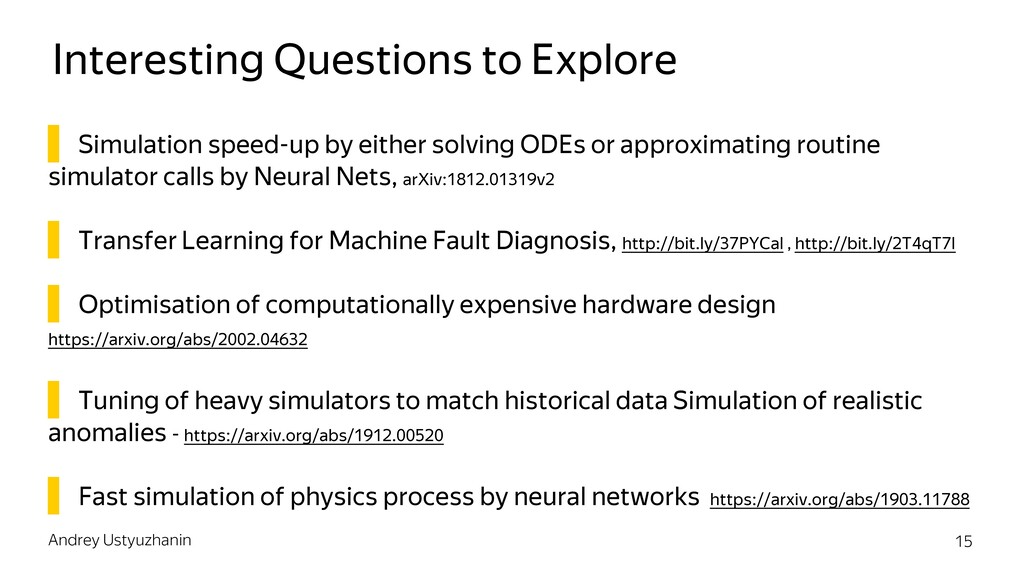
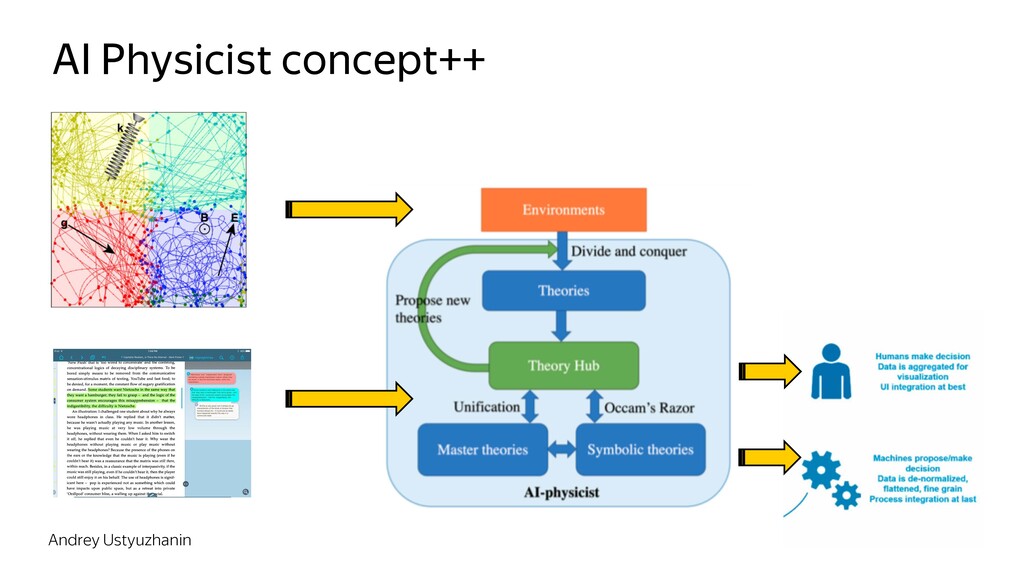
ODEs or approximating routine simulator calls by Neural Nets, arXiv:1812.01319v2 ▌ Transfer Learning for Machine Fault Diagnosis, http://bit.ly/37PYCal , http://bit.ly/2T4qT7l ▌ Optimisation of computationally expensive hardware design https://arxiv.org/abs/2002.04632 ▌ Tuning of heavy simulators to match historical data Simulation of realistic anomalies - https://arxiv.org/abs/1912.00520 ▌ Fast simulation of physics process by neural networks https://arxiv.org/abs/1903.11788 Andrey Ustyuzhanin 15
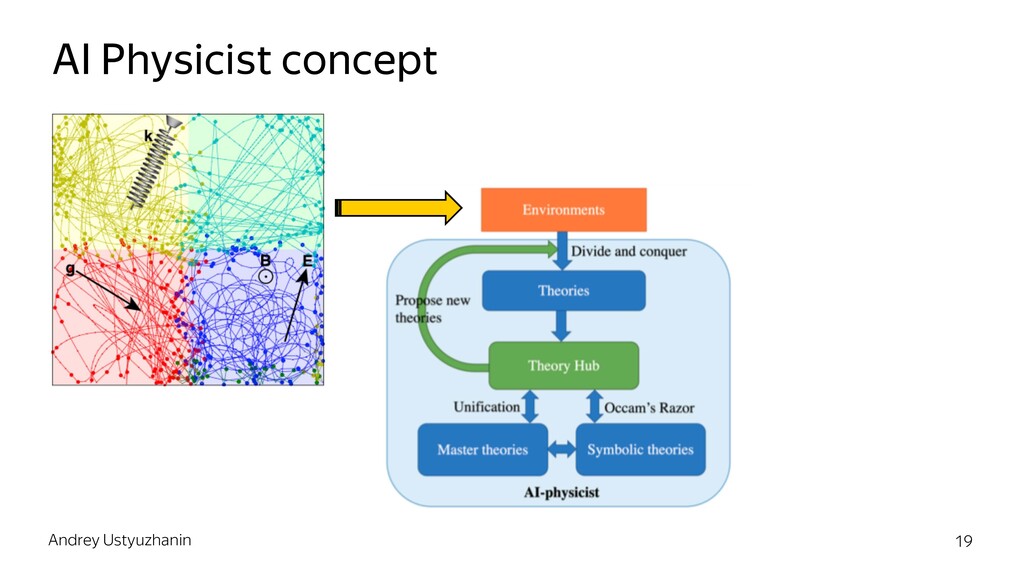
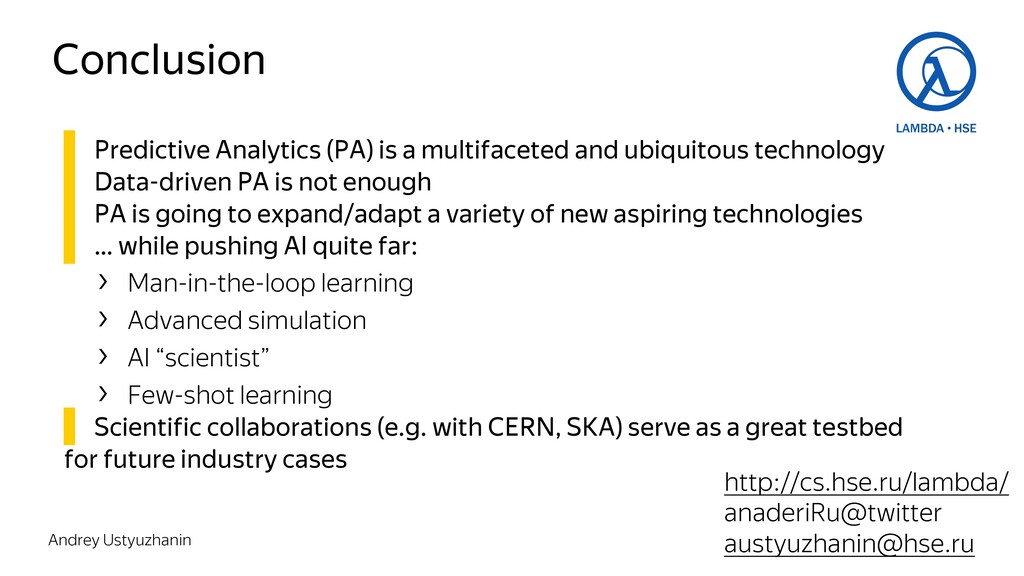
technology ▌ Data-driven PA is not enough ▌ PA is going to expand/adapt a variety of new aspiring technologies ▌ … while pushing AI quite far: › Man-in-the-loop learning › Advanced simulation › AI “scientist” › Few-shot learning ▌ Scientific collaborations (e.g. with CERN, SKA) serve as a great testbed for future industry cases Andrey Ustyuzhanin 22 http://cs.hse.ru/lambda/ anaderiRu@twitter [email protected]


 opentalks
 institutdelelevage
 sshimizu2006
 trycycle
 michielstock
 aikinohara
 hiroakihamada
 signer
 ykiyota
 rlifchitz
 ryanjones
 pauljervisheath
 jnunemaker
 gr2m
gr2m
 sabderemane
 sergeychernyshev
 katiecoart
 reverentgeek
 aleyda
 maltzj
 tammyeverts
 cassininazir