Share
Embed
KC with Maven Overlays: Best Practices, Caveats, and Anti-Patterns
Slides I'm going to discuss at the upcoming 2013 Kuali Days
Przybylski 중광
November 05, 2013
Transcript
23 slides
-
Si Vis Bellum Para Bellum KC with Maven Overlays: Best
Practices, Caveats, and Anti-Patterns Leo Przybylski November 5, 2013 . . . ... . ... . .. . . . ... . ... . ... . .. . . . ... . ... . ... . .. . . . ... . ... . ... . .. . . . . .. . . . . . . ... . ... . .. -
. . . .. . . . .. . .
. .. . . . . .. . . . .. . . . .. . . . .. . . . . .. . . . .. . . . .. . . . .. . . . . .. . . . .. . . . .. . . . .. . . . . .. . . . .. . . . . .. . . . .. . . . .. . Overview • Welcome & Colophon. • About Presenters. • Maven Overlays. • Using Rice Modules. • Appserver Plugins. • Institutional Modification Best Practices. • Tips and Tricks. • Proposal: Contributing a Modification as a Maven Dependency. • Rice DataDictionary Reloading vs. JRebel. • Multi-module vs. Regular Webapp Project. -
. . . .. . . . .. . .
. .. . . . . .. . . . .. . . . .. . . . .. . . . . .. . . . .. . . . .. . . . .. . . . . .. . . . .. . . . .. . . . .. . . . . .. . . . .. . . . . .. . . . .. . . . .. . Welcome and Colophon • Hi! • “Si Vis Bellum Para Bellum” is a play on “Si Vis Pacem Para Bellum” and Web Archive (WAR) files. It means “If you wish for war, prepare for war.” WAR being a web archive rather than turning your project into a battlefield. -
. . . .. . . . .. . .
. .. . . . . .. . . . .. . . . .. . . . .. . . . . .. . . . .. . . . .. . . . .. . . . . .. . . . .. . . . .. . . . .. . . . . .. . . . .. . . . . .. . . . .. . . . .. . About Presenters -
. . . .. . . . .. . .
. .. . . . . .. . . . .. . . . .. . . . .. . . . . .. . . . .. . . . .. . . . .. . . . . .. . . . .. . . . .. . . . .. . . . . .. . . . .. . . . . .. . . . .. . . . .. . Overlay Basics • How Overlays work. • What overlays are not. • First Overlay. -
. . . .. . . . .. . .
. .. . . . . .. . . . .. . . . .. . . . .. . . . . .. . . . .. . . . .. . . . .. . . . . .. . . . .. . . . .. . . . .. . . . . .. . . . .. . . . . .. . . . .. . . . .. . How Overlays Work • A fileset or maven project copied over a webapp. • Webapp does not have to be a maven project. • The overlay does not have to be a complete webapp. • An overlay does not even have to be very different at all. -
. . . .. . . . .. . .
. .. . . . . .. . . . .. . . . .. . . . .. . . . . .. . . . .. . . . .. . . . .. . . . . .. . . . .. . . . .. . . . .. . . . . .. . . . .. . . . . .. . . . .. . . . .. . What Overlays are Not • Project Inheritence. • A replacement/alternative for multi-module projects. • A silver-bullet for all webapp projects. • Change management pattern. -
. . . .. . . . .. . .
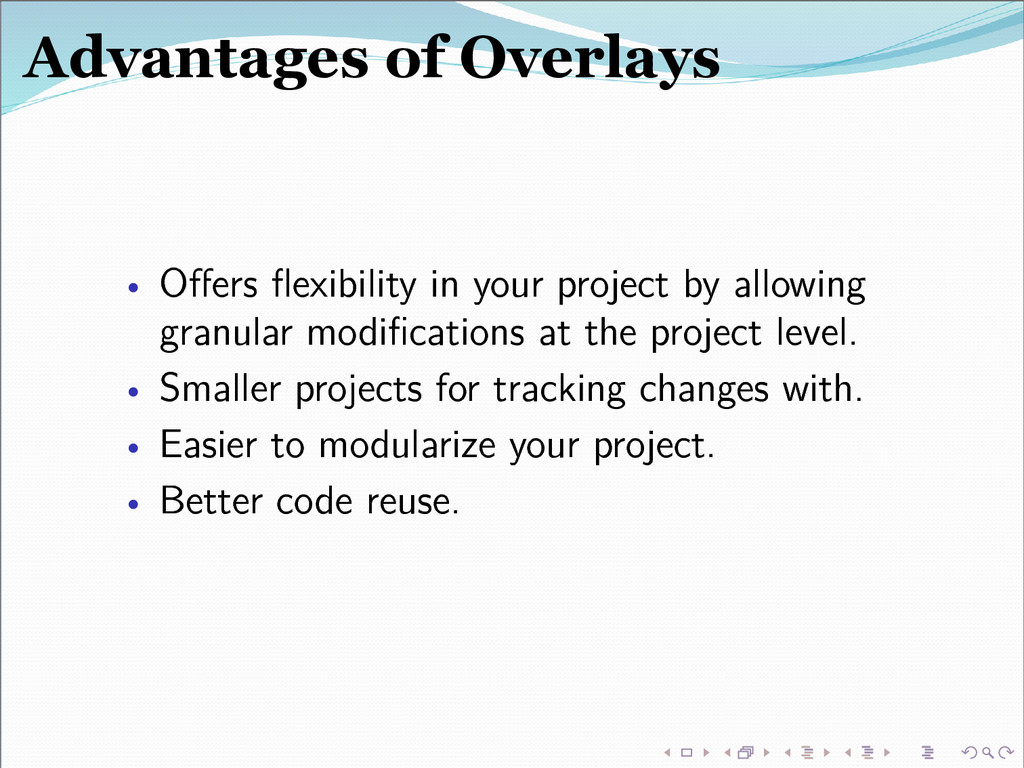
. .. . . . . .. . . . .. . . . .. . . . .. . . . . .. . . . .. . . . .. . . . .. . . . . .. . . . .. . . . .. . . . .. . . . . .. . . . .. . . . . .. . . . .. . . . .. . Advantages of Overlays • Offers flexibility in your project by allowing granular modifications at the project level. • Smaller projects for tracking changes with. • Easier to modularize your project. • Better code reuse. -
. . . .. . . . .. . .
. .. . . . . .. . . . .. . . . .. . . . .. . . . . .. . . . .. . . . .. . . . .. . . . . .. . . . .. . . . .. . . . .. . . . . .. . . . .. . . . . .. . . . .. . . . .. . First Overlay Using KC as an Example to switch out CAS support for the login dummy 1. Package KC. 2. Install as a prototype. 3. Setup prototype jar. 4. Create overlay project. 5. Add CAS dependency. 6. Add dependencies for KC. 7. Configure war plugin for overlay. -
. . . .. . . . .. . .
. .. . . . . .. . . . .. . . . .. . . . .. . . . . .. . . . .. . . . .. . . . .. . . . . .. . . . .. . . . .. . . . .. . . . . .. . . . .. . . . . .. . . . .. . . . .. . Package and Install KC as a prototype 1. Do install mvn install 2. Create a and Install Prototype Jar mvn jar:jar mvn install:install-file \ -DgroupId=org.kuali.kra \ -DarchetypeId=kc_project \ -Dversion=5.1 \ -Dpackaging=jar \ -Dfile=target/kc_project-5.0.1.jar \ -DpomFile=pom.xml ... or ... mvn deploy:deploy-file \ -DgroupId=org.kuali.kra \ -DarchetypeId=kc_project \ -Dversion=5.1 \ -Dpackaging=jar \ -Dfile=target/kc_project-5.0.1.jar \ -DpomFile=pom.xml -
. . . .. . . . .. . .
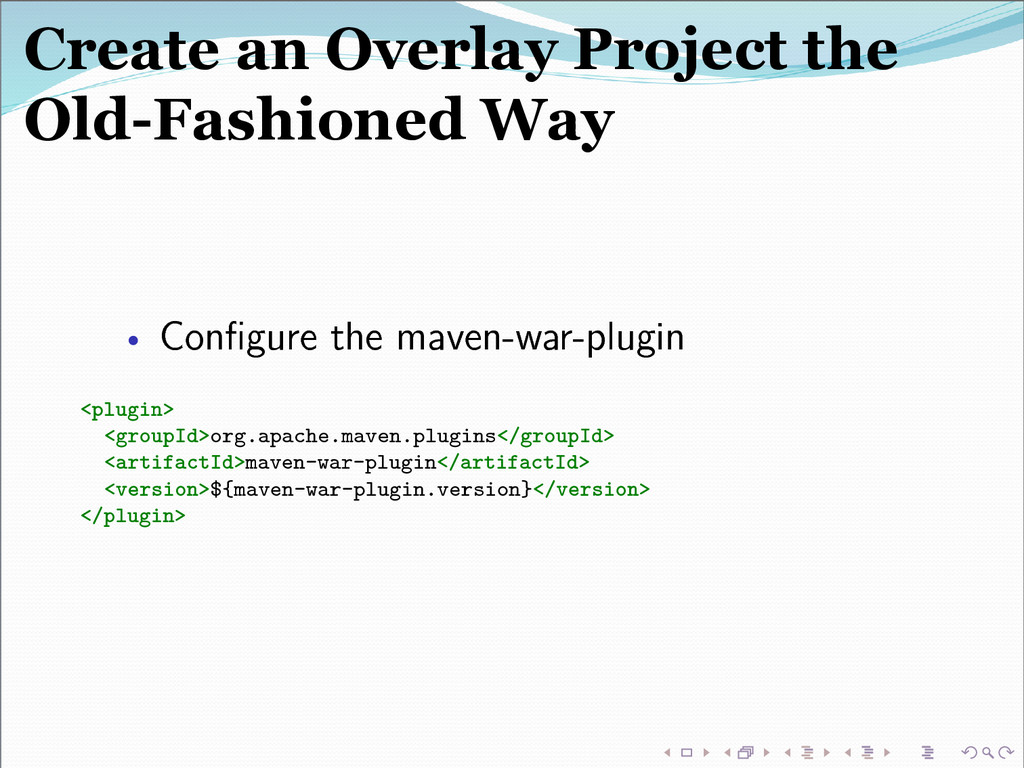
. .. . . . . .. . . . .. . . . .. . . . .. . . . . .. . . . .. . . . .. . . . .. . . . . .. . . . .. . . . .. . . . .. . . . . .. . . . .. . . . . .. . . . .. . . . .. . Create an Overlay Project the Old-Fashioned Way • Configure the maven-war-plugin <plugin> <groupId>org.apache.maven.plugins</groupId> <artifactId>maven-war-plugin</artifactId> <version>${maven-war-plugin.version}</version> </plugin> -
. . . .. . . . .. . .
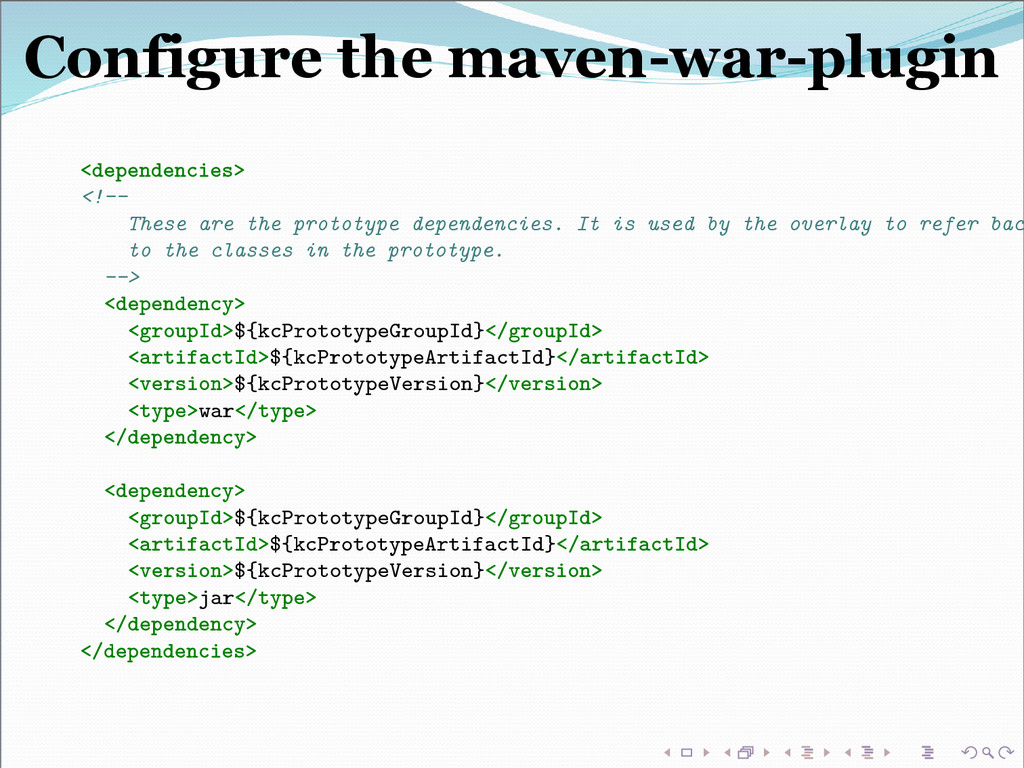
. .. . . . . .. . . . .. . . . .. . . . .. . . . . .. . . . .. . . . .. . . . .. . . . . .. . . . .. . . . .. . . . .. . . . . .. . . . .. . . . . .. . . . .. . . . .. . Configure the maven-war-plugin <dependencies> <!-- These are the prototype dependencies. It is used by the overlay to refer bac to the classes in the prototype. --> <dependency> <groupId>${kcPrototypeGroupId}</groupId> <artifactId>${kcPrototypeArtifactId}</artifactId> <version>${kcPrototypeVersion}</version> <type>war</type> </dependency> <dependency> <groupId>${kcPrototypeGroupId}</groupId> <artifactId>${kcPrototypeArtifactId}</artifactId> <version>${kcPrototypeVersion}</version> <type>jar</type> </dependency> </dependencies> -
. . . .. . . . .. . .
. .. . . . . .. . . . .. . . . .. . . . .. . . . . .. . . . .. . . . .. . . . .. . . . . .. . . . .. . . . .. . . . .. . . . . .. . . . .. . . . . .. . . . .. . . . .. . Overlay Archetypes • Leo has developed an archetype for creating and overlay KC project. • https://github.com/r351574nc3/kualigan- maven-plugins/tree/master/kc-maven-plugin • To create an Overlay Project from Archetype mvn -Dkc:create-overlay \ -DgroupId=com.rsmart.kuali.kra \ -DartifactId=kc -Dversion=5.1 -
. . . .. . . . .. . .
. .. . . . . .. . . . .. . . . .. . . . .. . . . . .. . . . .. . . . .. . . . .. . . . . .. . . . .. . . . .. . . . .. . . . . .. . . . .. . . . . .. . . . .. . . . .. . Overlay Patterns • Overlaying configuration modifications. • Overlay to activate a module. • Overlay theming for UX/UI. • Filtering overlay resources. -
. . . .. . . . .. . .
. .. . . . . .. . . . .. . . . .. . . . .. . . . . .. . . . .. . . . .. . . . .. . . . . .. . . . .. . . . .. . . . .. . . . . .. . . . .. . . . . .. . . . .. . . . .. . Institutional Modification Best Practices • Use Rice Modules whenever possible. • Use institution packages and namespaces instead of Kuali ones. For example, • com/rsmart/kuali/kra instead of org/kuali/kra • com/rsmart/kuali/rice org/kuali/rice • Use rice.kr.additionalSpringFiles, et al to override spring configuration. -
. . . .. . . . .. . .
. .. . . . . .. . . . .. . . . .. . . . .. . . . . .. . . . .. . . . .. . . . .. . . . . .. . . . .. . . . .. . . . .. . . . . .. . . . .. . . . . .. . . . .. . . . .. . Tips and Tricks • Use JRebel! It’s free! • Take advantage of the default classpath for runtime spring overrides. • -
. . . .. . . . .. . .
. .. . . . . .. . . . .. . . . .. . . . .. . . . . .. . . . .. . . . .. . . . .. . . . . .. . . . .. . . . .. . . . .. . . . . .. . . . .. . . . . .. . . . .. . . . .. . Proposal: Contributing a Modification as a Maven Dependency • Develop modifications as a separate maven project or module. • Include the modifications as dependencies in your Maven Overlay project. • Distribute modifications with documentation to a Maven Repository. -
. . . .. . . . .. . .
. .. . . . . .. . . . .. . . . .. . . . .. . . . . .. . . . .. . . . .. . . . .. . . . . .. . . . .. . . . .. . . . .. . . . . .. . . . .. . . . . .. . . . .. . . . .. . Rice DataDictionary Reloading vs. JRebel. -
. . . .. . . . .. . .
. .. . . . . .. . . . .. . . . .. . . . .. . . . . .. . . . .. . . . .. . . . .. . . . . .. . . . .. . . . .. . . . .. . . . . .. . . . .. . . . . .. . . . .. . . . .. . Multi-module vs. Regular Webapp Project • Always difficult to build/manage multi-module webapp projects. • Module artifacts are jars. This is adds problems for plugins that run on unassembled projects. -
. . . .. . . . .. . .
. .. . . . . .. . . . .. . . . .. . . . .. . . . . .. . . . .. . . . .. . . . .. . . . . .. . . . .. . . . .. . . . .. . . . . .. . . . .. . . . . .. . . . .. . . . .. . Solutions to Multi-module Issues • Build classes into webtargetclasses • Requires a profile to only do this for developers • Not appropriate for production at all • JRebel will watch multiple src folders for changes • Jetty will also watch multiple src folders -
. . . .. . . . .. . .
. .. . . . . .. . . . .. . . . .. . . . .. . . . . .. . . . .. . . . .. . . . .. . . . . .. . . . .. . . . .. . . . .. . . . . .. . . . .. . . . . .. . . . .. . . . .. . Configuring JRebel <plugin> <groupId>org.zeroturnaround</groupId> <artifactId>jrebel-maven-plugin</artifactId> <configuration> <alwaysGenerate>true</alwaysGenerate> <addResourcesDirToRebelXml>true</addResourcesDirToRebelXml> <!-- root is 2 directories away from jar/war modules --> <relativePath>../../</relativePath> <!-- use a system property for specifing root directory (note the double $) start your application with -Drebel.root=c:/projects/ --> <rootPath>${rebel.root}</rootPath> </configuration> </plugin> -
. . . .. . . . .. . .
. .. . . . . .. . . . .. . . . .. . . . .. . . . . .. . . . .. . . . .. . . . .. . . . . .. . . . .. . . . .. . . . .. . . . . .. . . . .. . . . . .. . . . .. . . . .. . JRebel and the KC Archetype • The KC Archetype automatically configures your overlay as a multi-module project • Comes with JRebel configuration already -
. . . .. . . . .. . .
. .. . . . . .. . . . .. . . . .. . . . .. . . . . .. . . . .. . . . .. . . . .. . . . . .. . . . .. . . . .. . . . .. . . . . .. . . . .. . . . . .. . . . .. . . . .. . The end Thanks