Upgrade to Pro — share decks privately, control downloads, hide ads and more …

Omega-3 Dosage in the UK: How Much to Take & Wh...

Sponsored · Your Podcast. Everywhere. Effortlessly. Share. Educate. Inspire. Entertain. You do you. We'll handle the rest. →

Omega-3 Dosage in the UK: How Much to Take & What Guidance Says.

Learn the basics of omega-3 dosage in the UK, including the differences between EPA, DHA and ALA, how to compare supplement labels, UK dietary guidance, and important safety considerations.

This educational presentation is from Rested Health, a resource covering sleep, supplements and healthy ageing.

Read the full guide: https://www.restedhealth.co.uk/longevity-guides/omega-3-dosage-uk-how-much-to-take-what-guidance-says/

Website: https://www.restedhealth.co.uk/

Avatar for Rested Health

Rested Health

October 14, 2026

Other Decks in Education

Transcript

  1. OMEGA-3 DOSAGE IN THE UK How much to take, what

    labels mean, and what UK guidance says A practical, evidence-aware guide from Rested Health
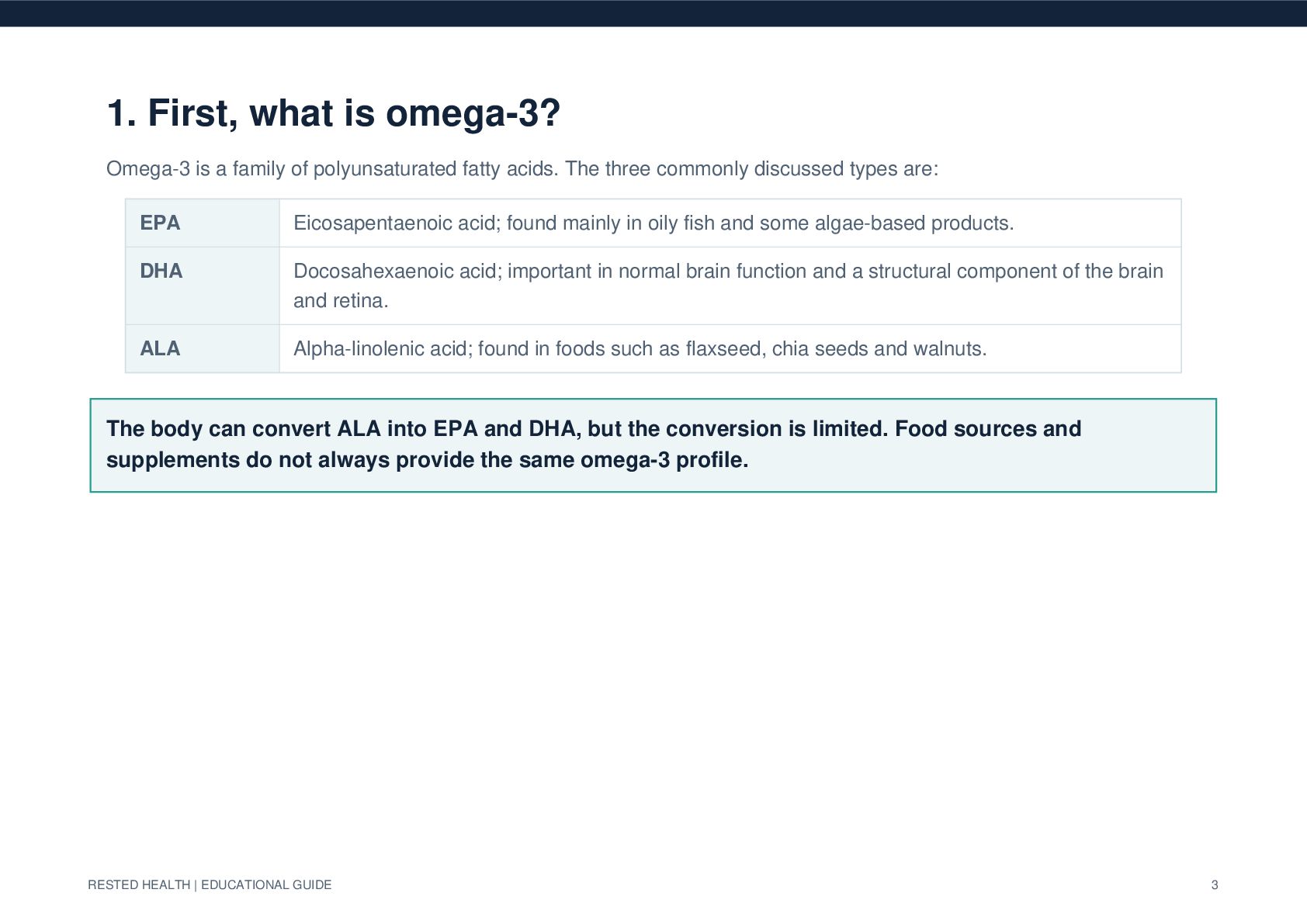
  2. 1. First, what is omega-3? Omega-3 is a family of

    polyunsaturated fatty acids. The three commonly discussed types are: EPA Eicosapentaenoic acid; found mainly in oily fish and some algae-based products. DHA Docosahexaenoic acid; important in normal brain function and a structural component of the brain and retina. ALA Alpha-linolenic acid; found in foods such as flaxseed, chia seeds and walnuts. The body can convert ALA into EPA and DHA, but the conversion is limited. Food sources and supplements do not always provide the same omega-3 profile. RESTED HEALTH | EDUCATIONAL GUIDE 3
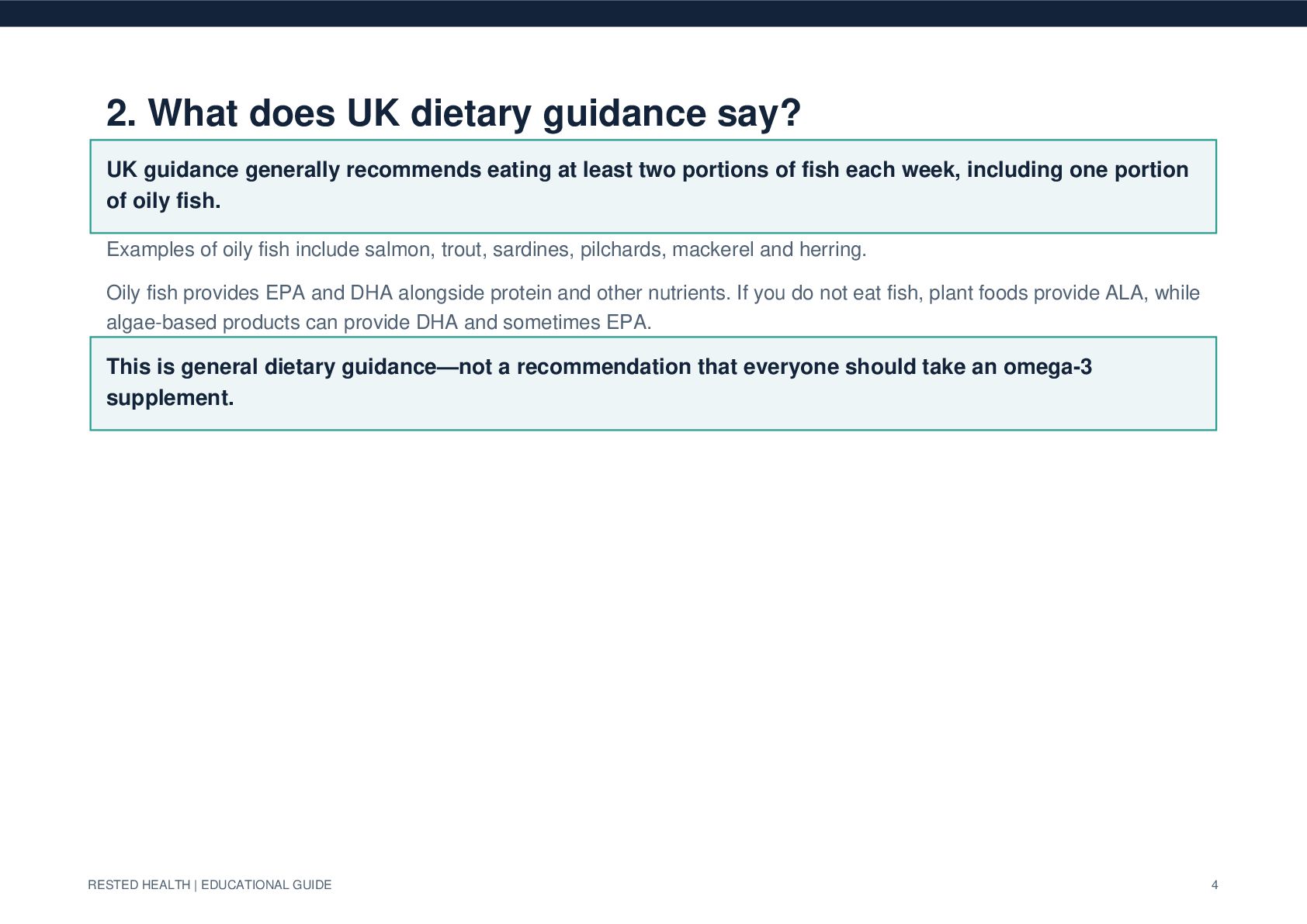
  3. 2. What does UK dietary guidance say? UK guidance generally

    recommends eating at least two portions of fish each week, including one portion of oily fish. Examples of oily fish include salmon, trout, sardines, pilchards, mackerel and herring. Oily fish provides EPA and DHA alongside protein and other nutrients. If you do not eat fish, plant foods provide ALA, while algae-based products can provide DHA and sometimes EPA. This is general dietary guidance—not a recommendation that everyone should take an omega-3 supplement. RESTED HEALTH | EDUCATIONAL GUIDE 4
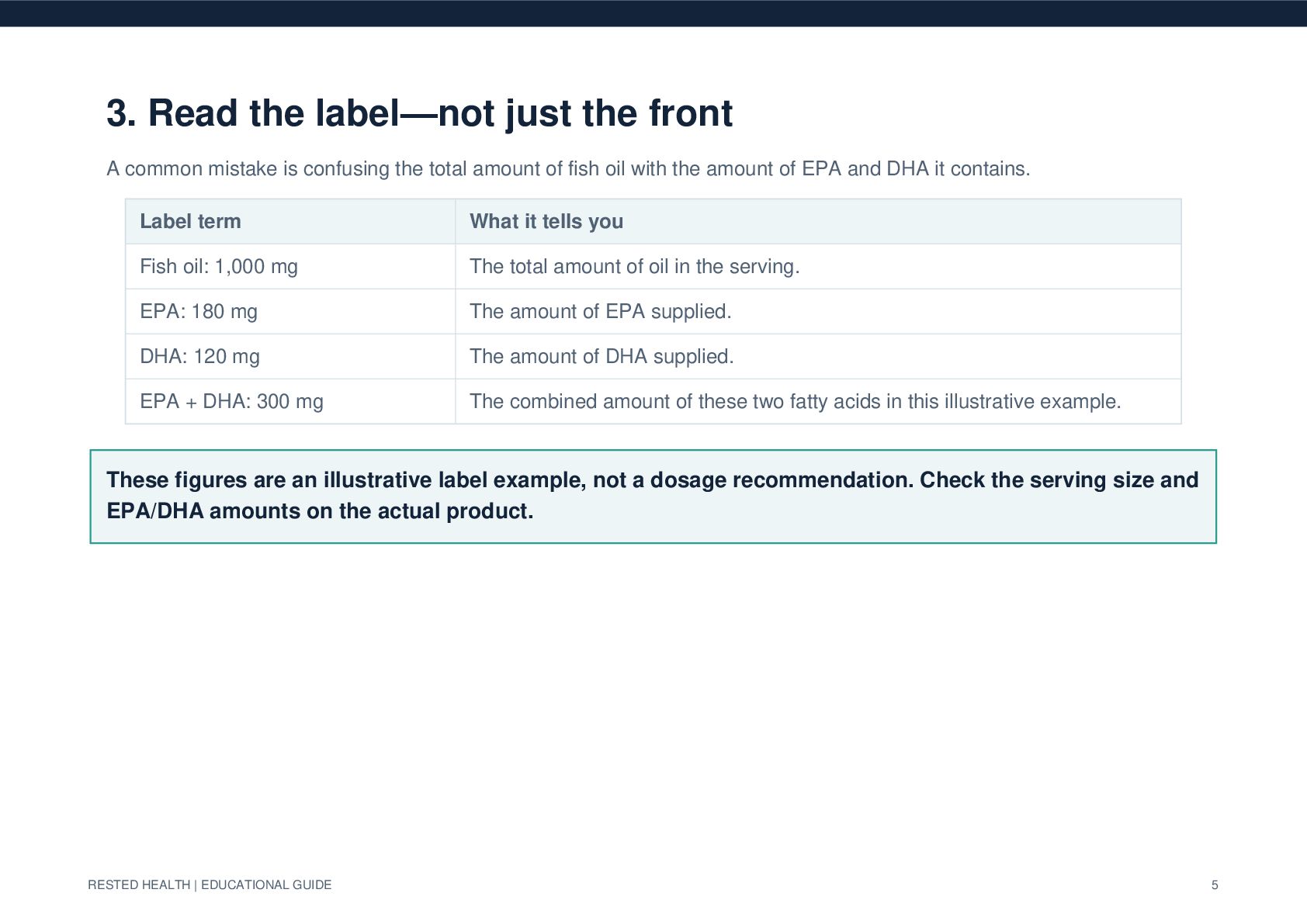
  4. 3. Read the label—not just the front A common mistake

    is confusing the total amount of fish oil with the amount of EPA and DHA it contains. Label term What it tells you Fish oil: 1,000 mg The total amount of oil in the serving. EPA: 180 mg The amount of EPA supplied. DHA: 120 mg The amount of DHA supplied. EPA + DHA: 300 mg The combined amount of these two fatty acids in this illustrative example. These figures are an illustrative label example, not a dosage recommendation. Check the serving size and EPA/DHA amounts on the actual product. RESTED HEALTH | EDUCATIONAL GUIDE 5
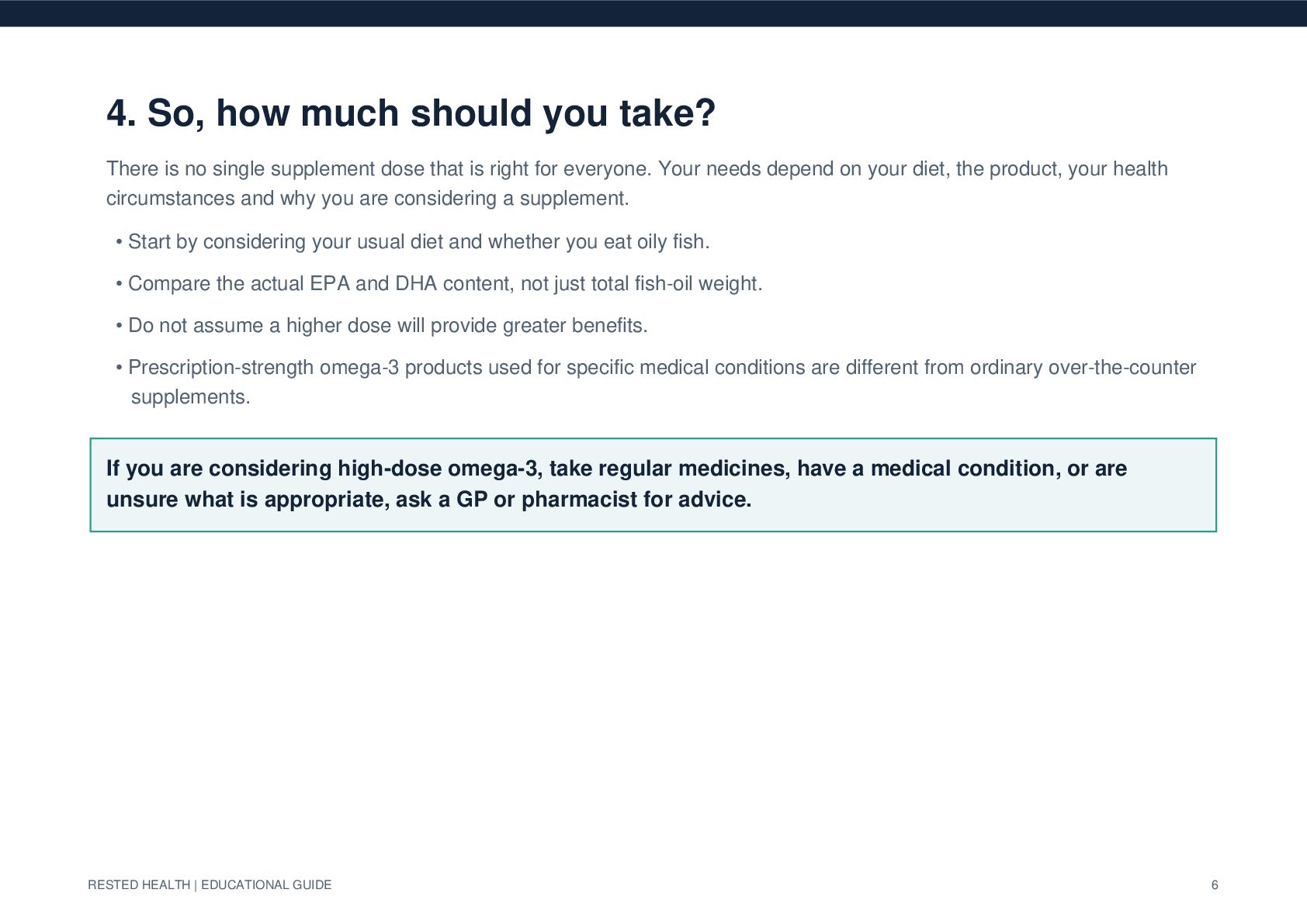
  5. 4. So, how much should you take? There is no

    single supplement dose that is right for everyone. Your needs depend on your diet, the product, your health circumstances and why you are considering a supplement. • Start by considering your usual diet and whether you eat oily fish. • Compare the actual EPA and DHA content, not just total fish-oil weight. • Do not assume a higher dose will provide greater benefits. • Prescription-strength omega-3 products used for specific medical conditions are different from ordinary over-the-counter supplements. If you are considering high-dose omega-3, take regular medicines, have a medical condition, or are unsure what is appropriate, ask a GP or pharmacist for advice. RESTED HEALTH | EDUCATIONAL GUIDE 6
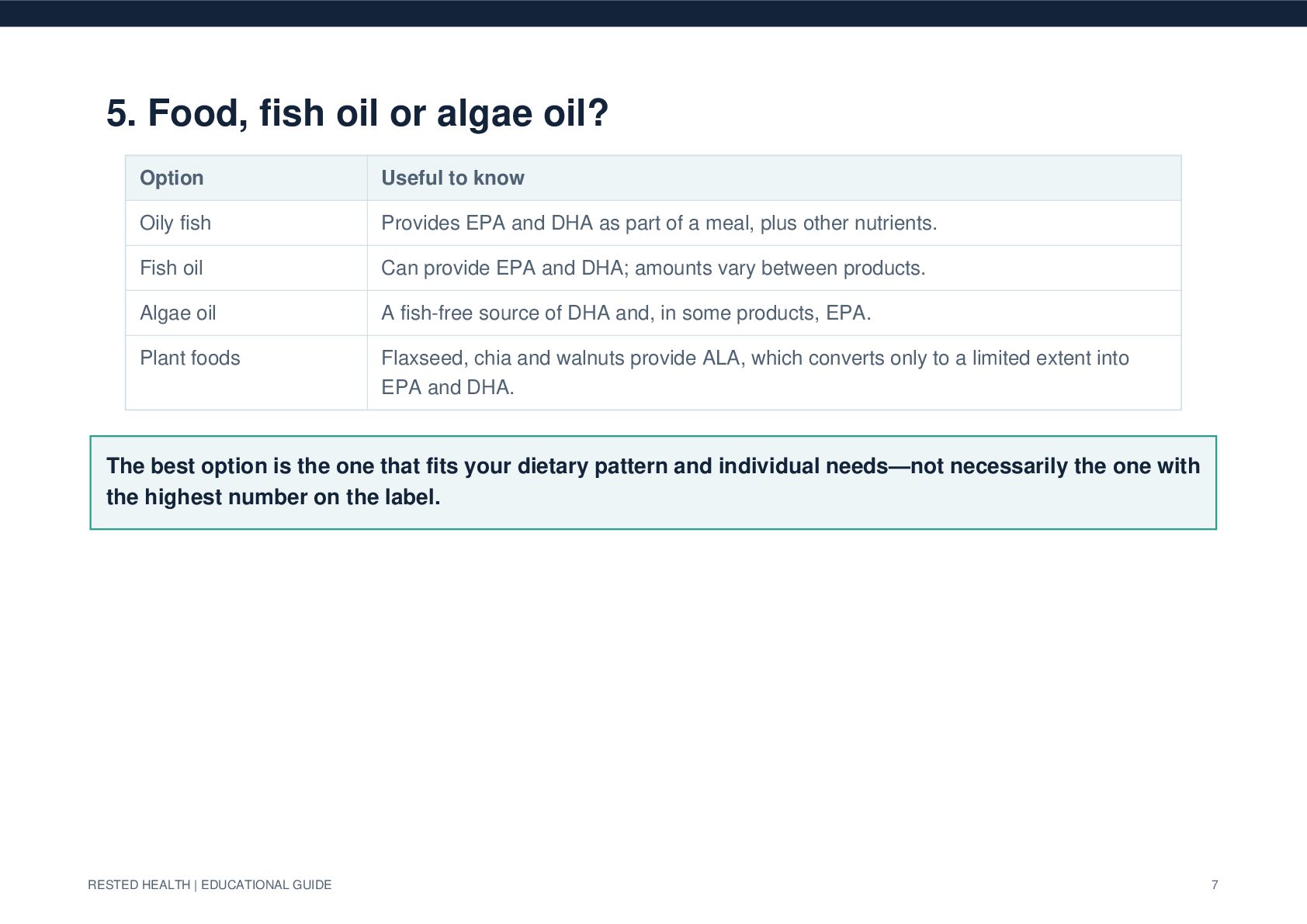
  6. 5. Food, fish oil or algae oil? Option Useful to

    know Oily fish Provides EPA and DHA as part of a meal, plus other nutrients. Fish oil Can provide EPA and DHA; amounts vary between products. Algae oil A fish-free source of DHA and, in some products, EPA. Plant foods Flaxseed, chia and walnuts provide ALA, which converts only to a limited extent into EPA and DHA. The best option is the one that fits your dietary pattern and individual needs—not necessarily the one with the highest number on the label. RESTED HEALTH | EDUCATIONAL GUIDE 7
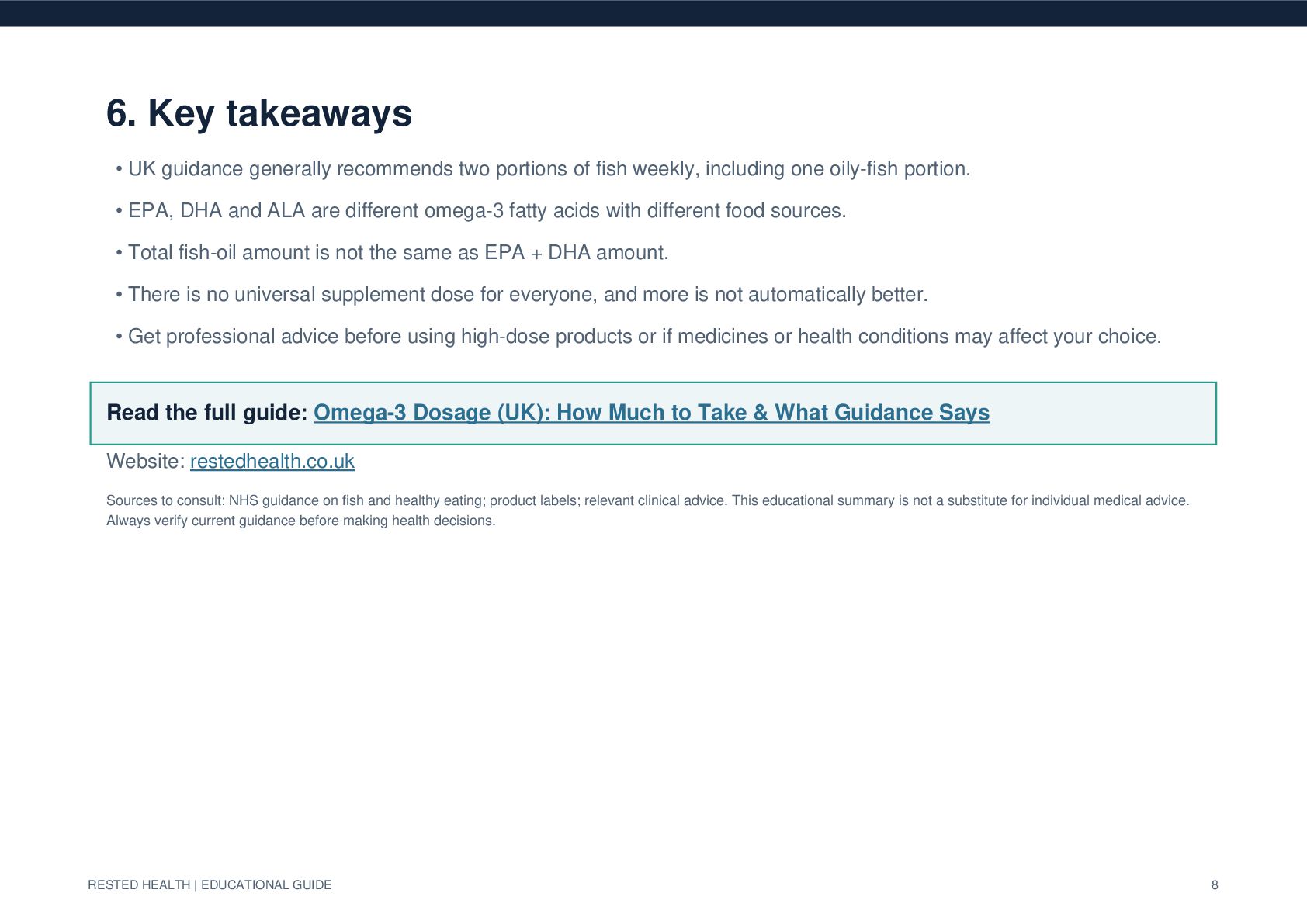
  7. 6. Key takeaways • UK guidance generally recommends two portions

    of fish weekly, including one oily-fish portion. • EPA, DHA and ALA are different omega-3 fatty acids with different food sources. • Total fish-oil amount is not the same as EPA + DHA amount. • There is no universal supplement dose for everyone, and more is not automatically better. • Get professional advice before using high-dose products or if medicines or health conditions may affect your choice. Read the full guide: Omega-3 Dosage (UK): How Much to Take & What Guidance Says Website: restedhealth.co.uk Sources to consult: NHS guidance on fish and healthy eating; product labels; relevant clinical advice. This educational summary is not a substitute for individual medical advice. Always verify current guidance before making health decisions. RESTED HEALTH | EDUCATIONAL GUIDE 8