Upgrade to Pro — share decks privately, control downloads, hide ads and more …

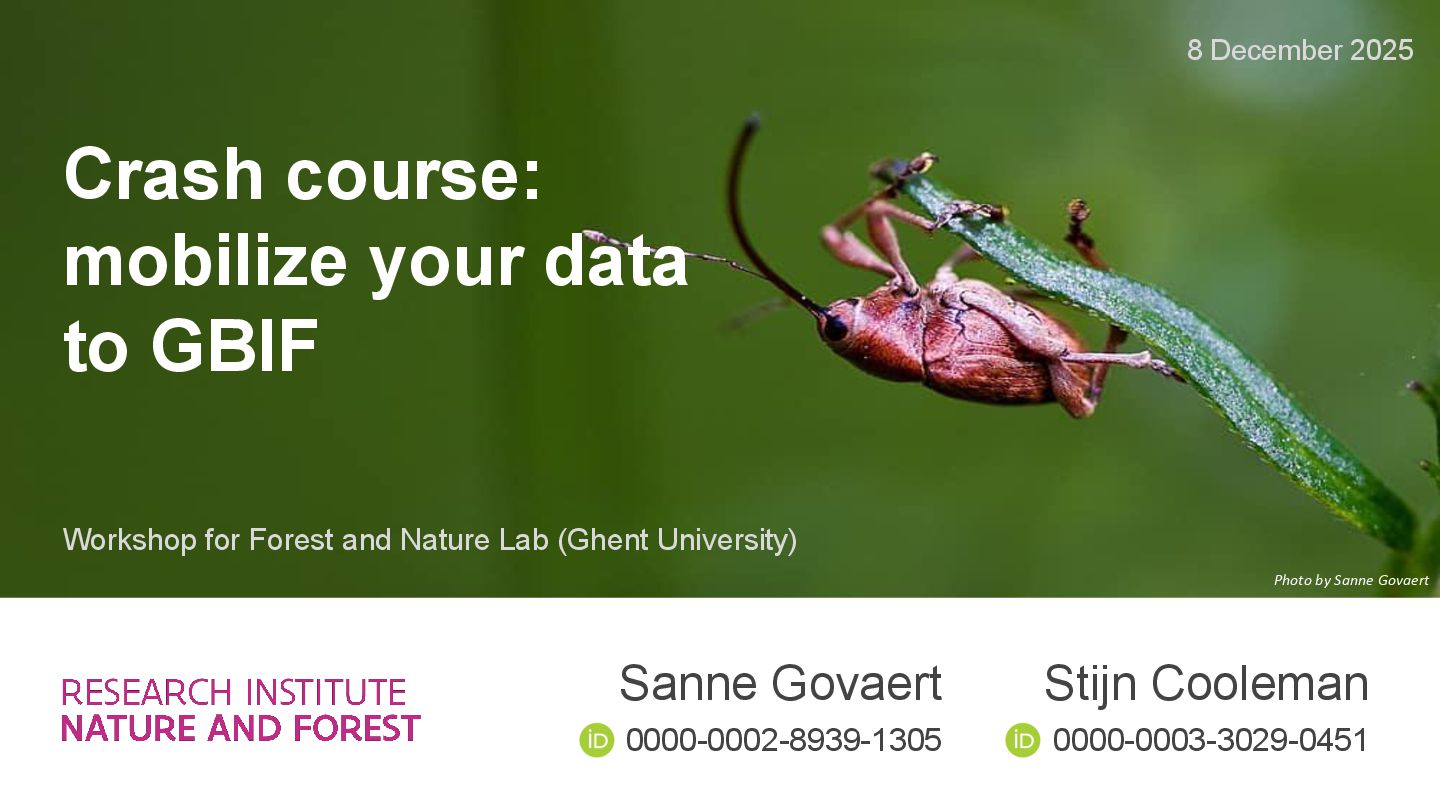
Crash course: mobilize your data to GBIF
Avatar for Sanne Govaert Sanne Govaert
December 08, 2025

Crash course: mobilize your data to GBIF

Workshop given to Forest & Nature Lab on December 8th 2025.

Avatar for Sanne Govaert

Sanne Govaert

December 08, 2025

More Decks by Sanne Govaert

Other Decks in Science

Transcript

  1. Stijn Cooleman 0000-0003-3029-0451 Sanne Govaert 0000-0002-8939-1305 Crash course: mobilize your

    data to GBIF Workshop for Forest and Nature Lab (Ghent University) 8 December 2025 Photo by Sanne Govaert
  2. Overview • DwC-A: Understanding the core required terms. • Data

    transformation: Mapping data using R scripts. • Creating metadata • Best Practices: Using GitHub for version control and reproducibility. • Publishing
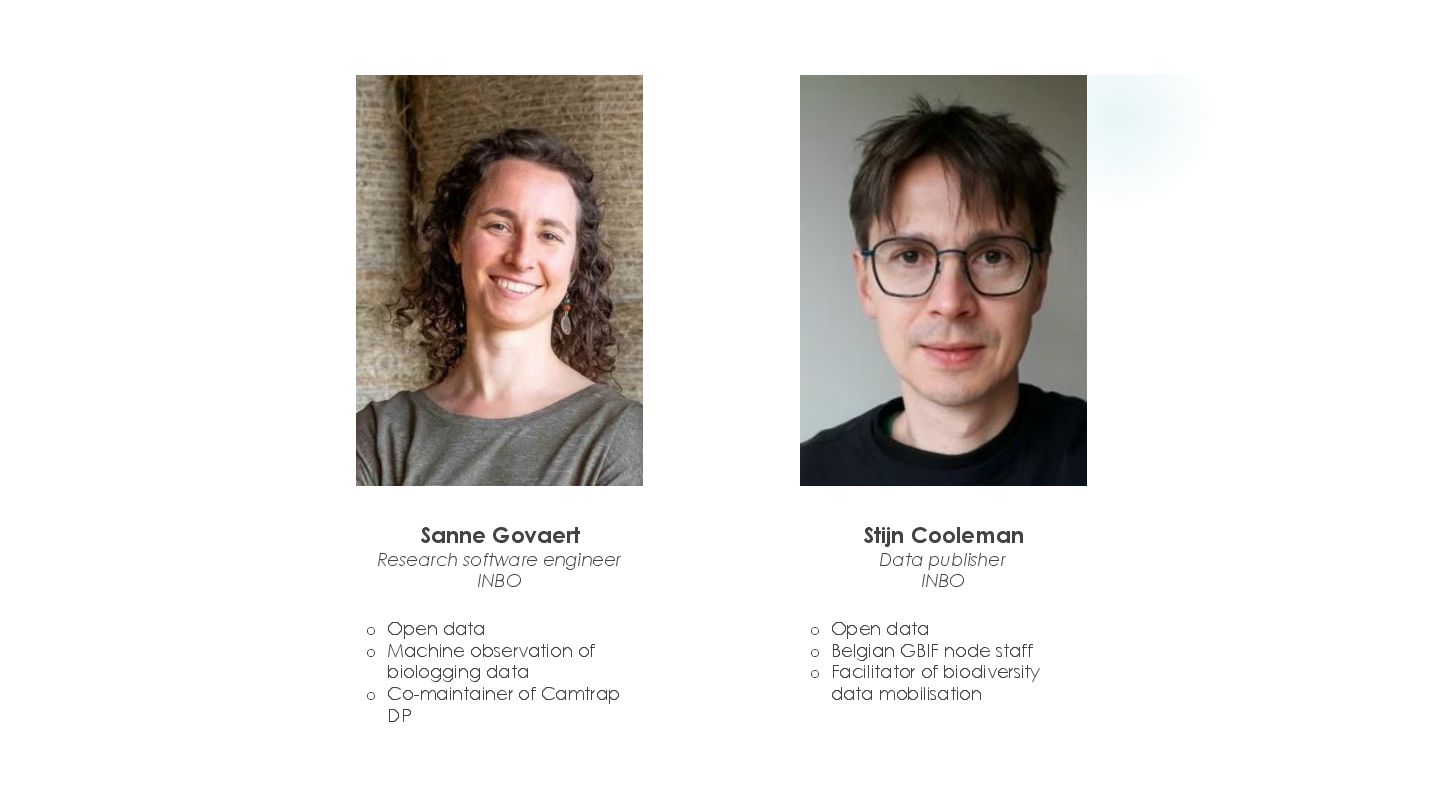
  3. Sanne Govaert Research software engineer INBO o Open data o

    Machine observation of biologging data o Co-maintainer of Camtrap DP Stijn Cooleman Data publisher INBO o Open data o Belgian GBIF node staff o Facilitator of biodiversity data mobilisation
  4. Open science lab for biodiversity At the Research Institute for

    Nature and Forest (INBO) in Belgium. We offer technical support to researchers in the projects we collaborate in. Our support is mainly focused on open data publication and research software development. https://oscibio.inbo.be/
  5. Belgian Biodiversity Platform This science-policy interface provides services to the

    Belgian scientific community engaged in biodiversity research and to policy-makers as well as to practitioners. Within the data team, we offer science support services related to Biodiversity Informatics Tools and Standards, if you want to publish data or use data from GBIF. https://www.biodiversity.be/
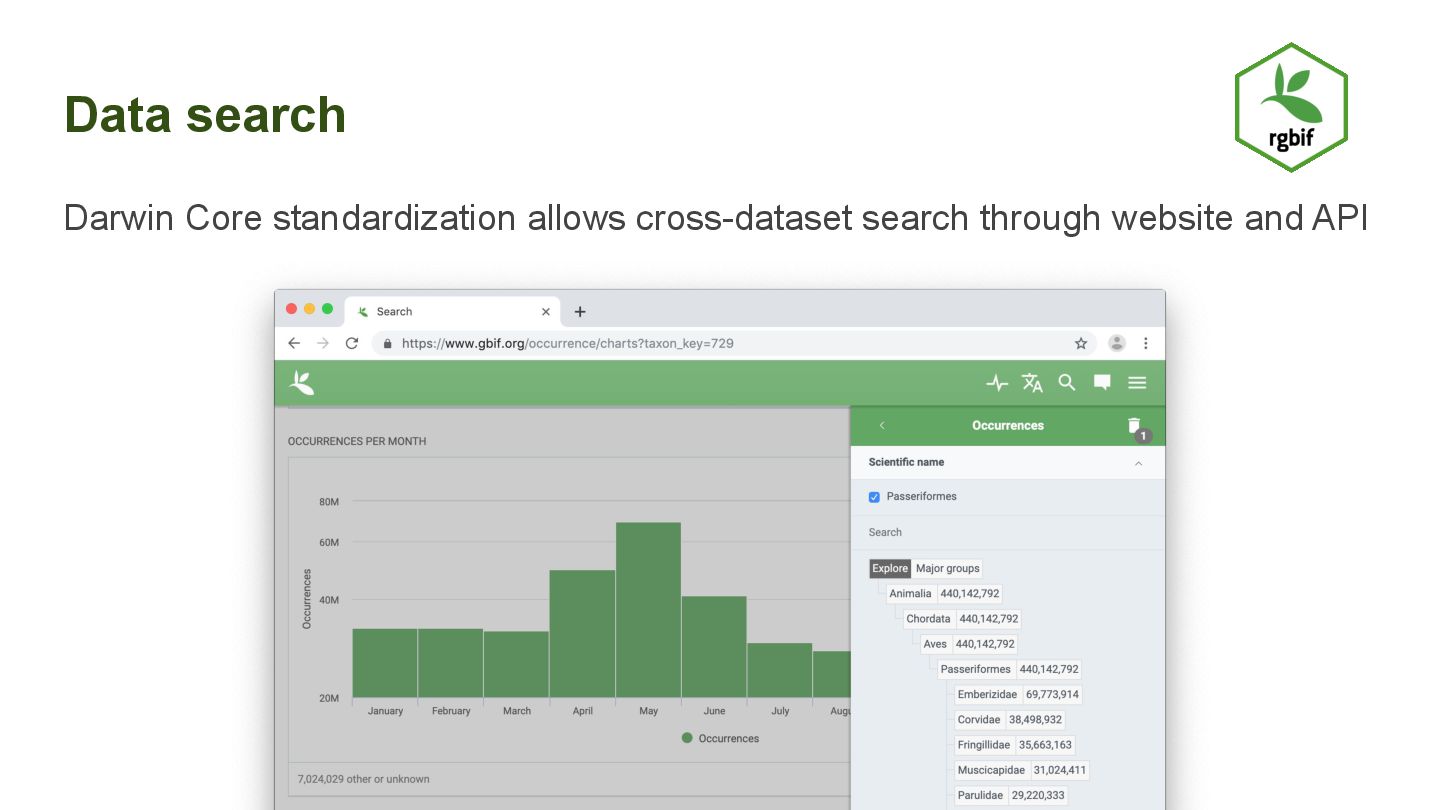
  6. Registered datasets get a DOI, are findable through GBIF website

    and API, and citations are tracked Discoverability
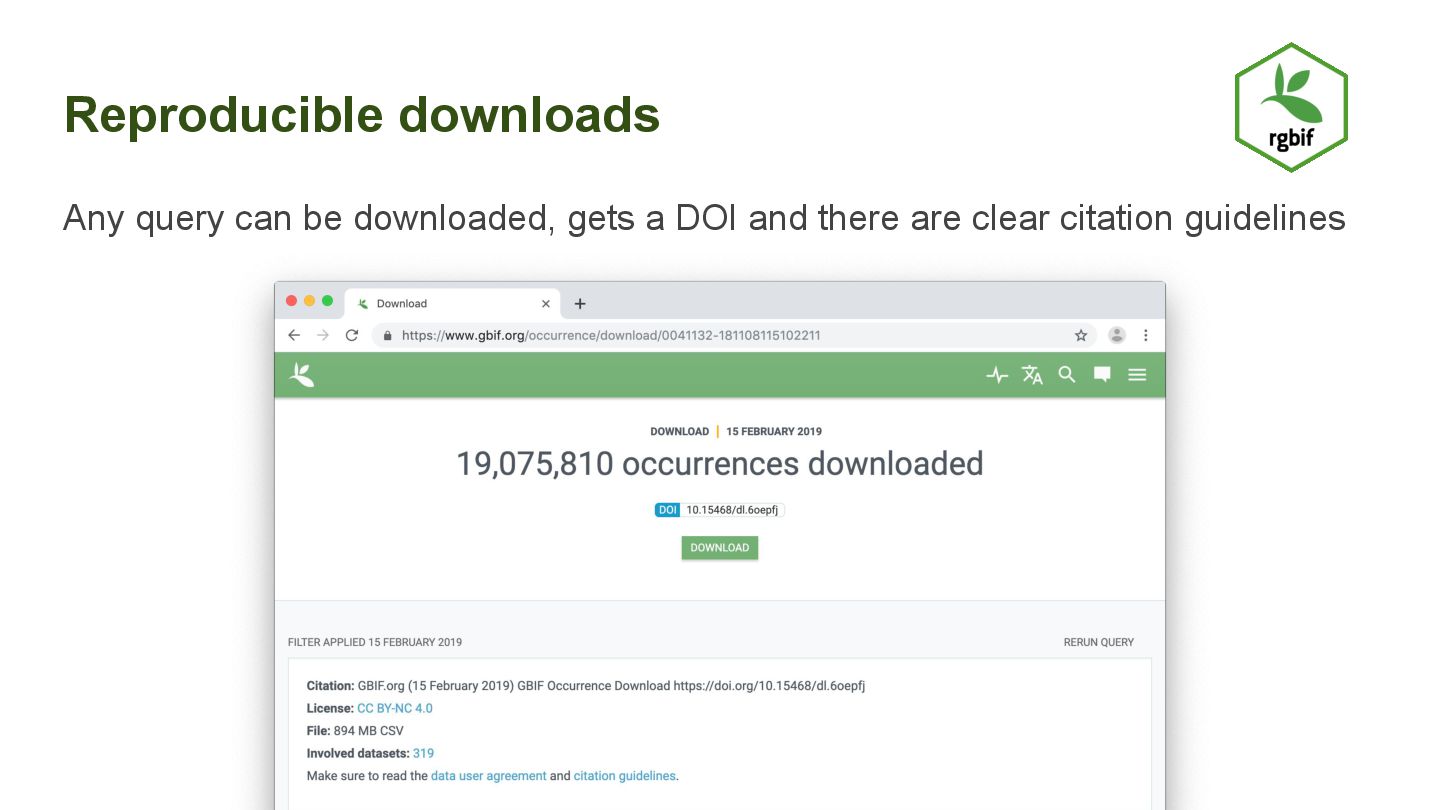
  7. Reproducible downloads Any query can be downloaded, gets a DOI

    and there are clear citation guidelines
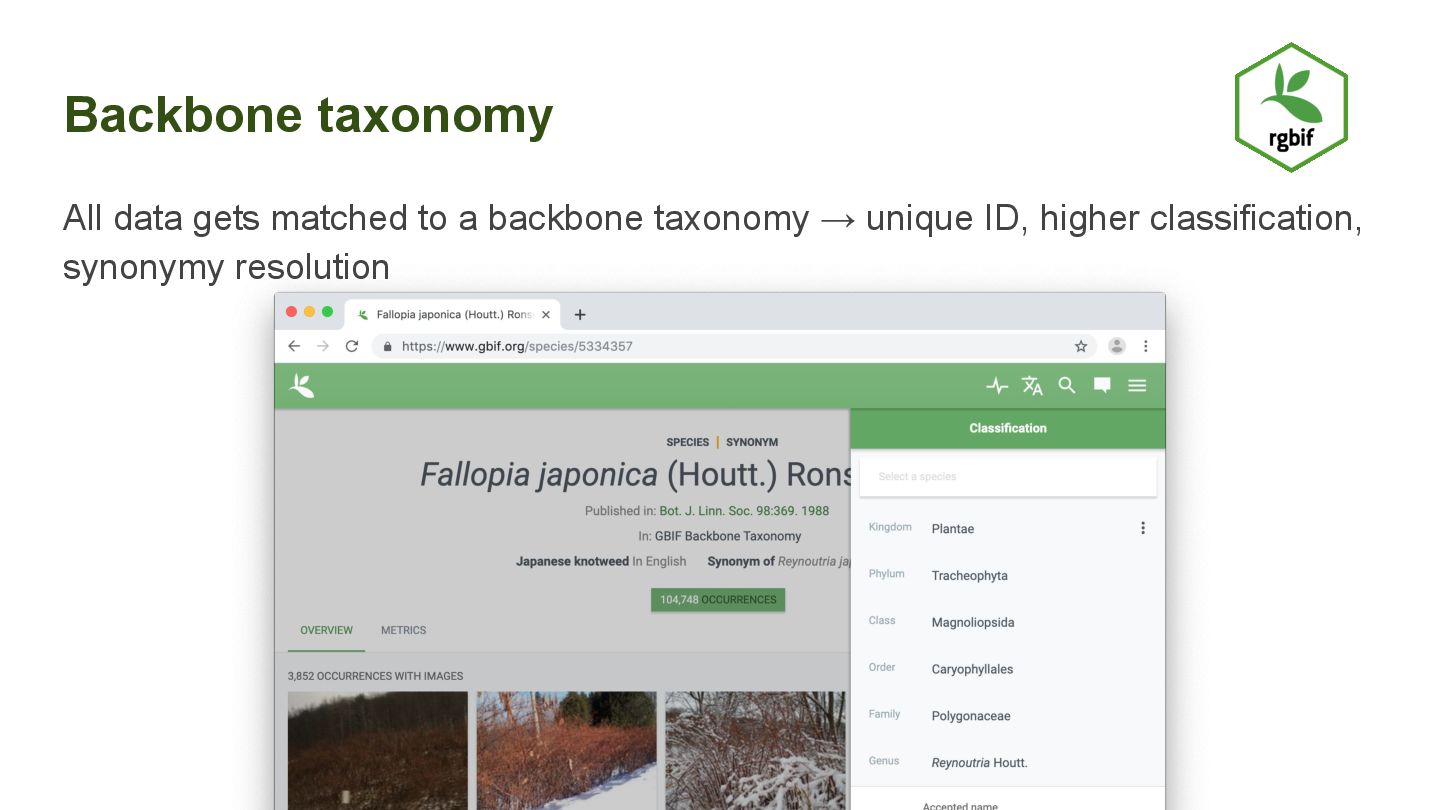
  8. Backbone taxonomy All data gets matched to a backbone taxonomy

    → unique ID, higher classification, synonymy resolution
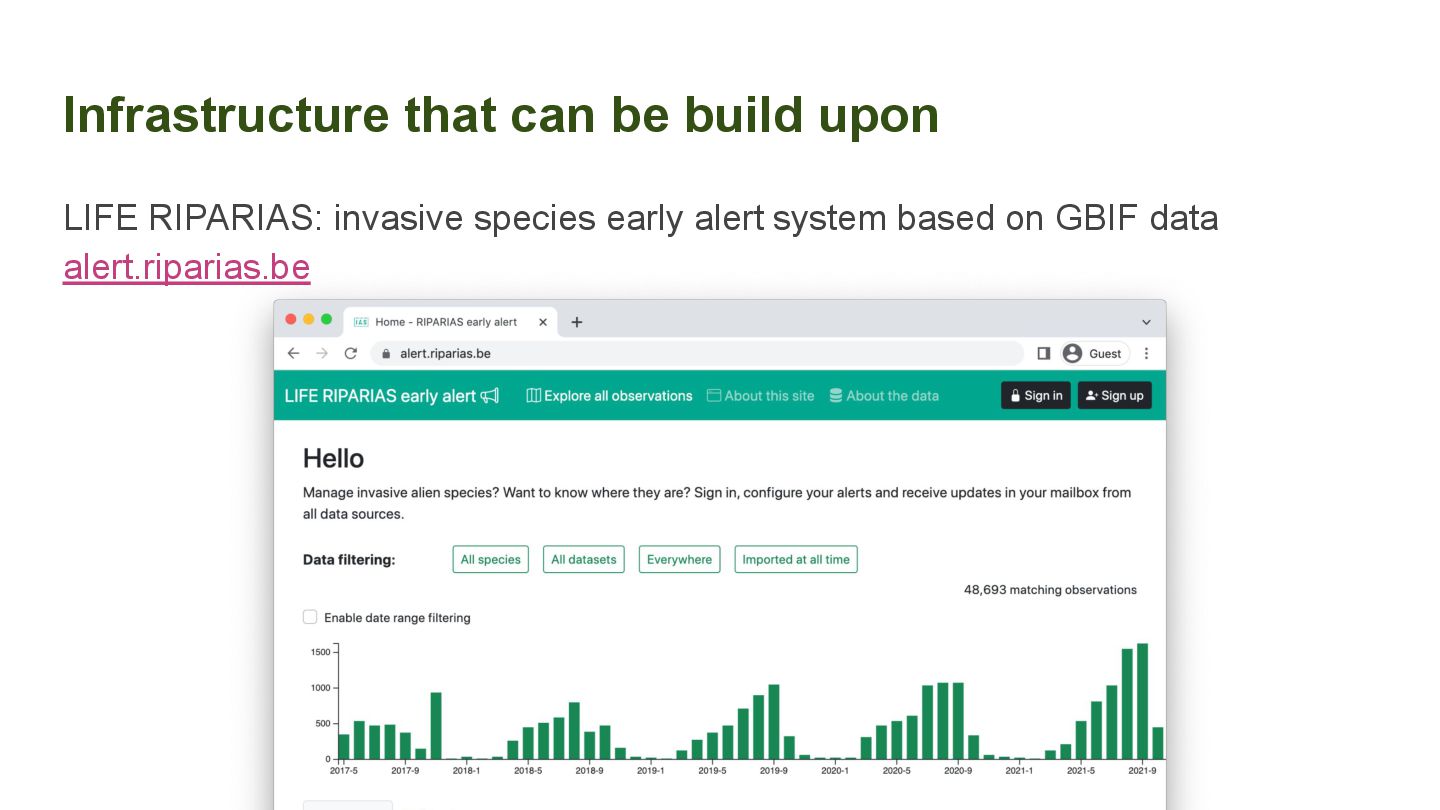
  9. LIFE RIPARIAS: invasive species early alert system based on GBIF

    data alert.riparias.be Infrastructure that can be build upon
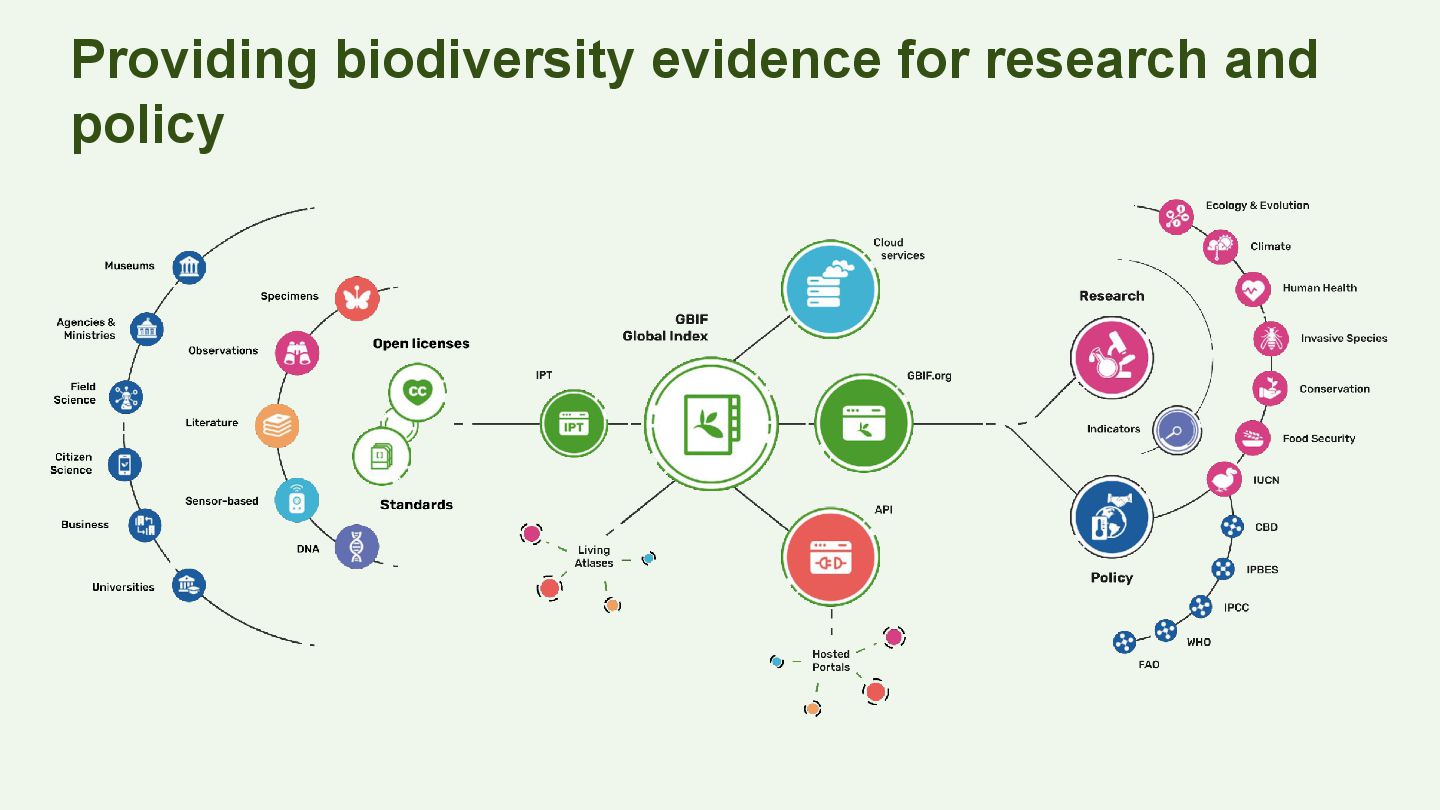
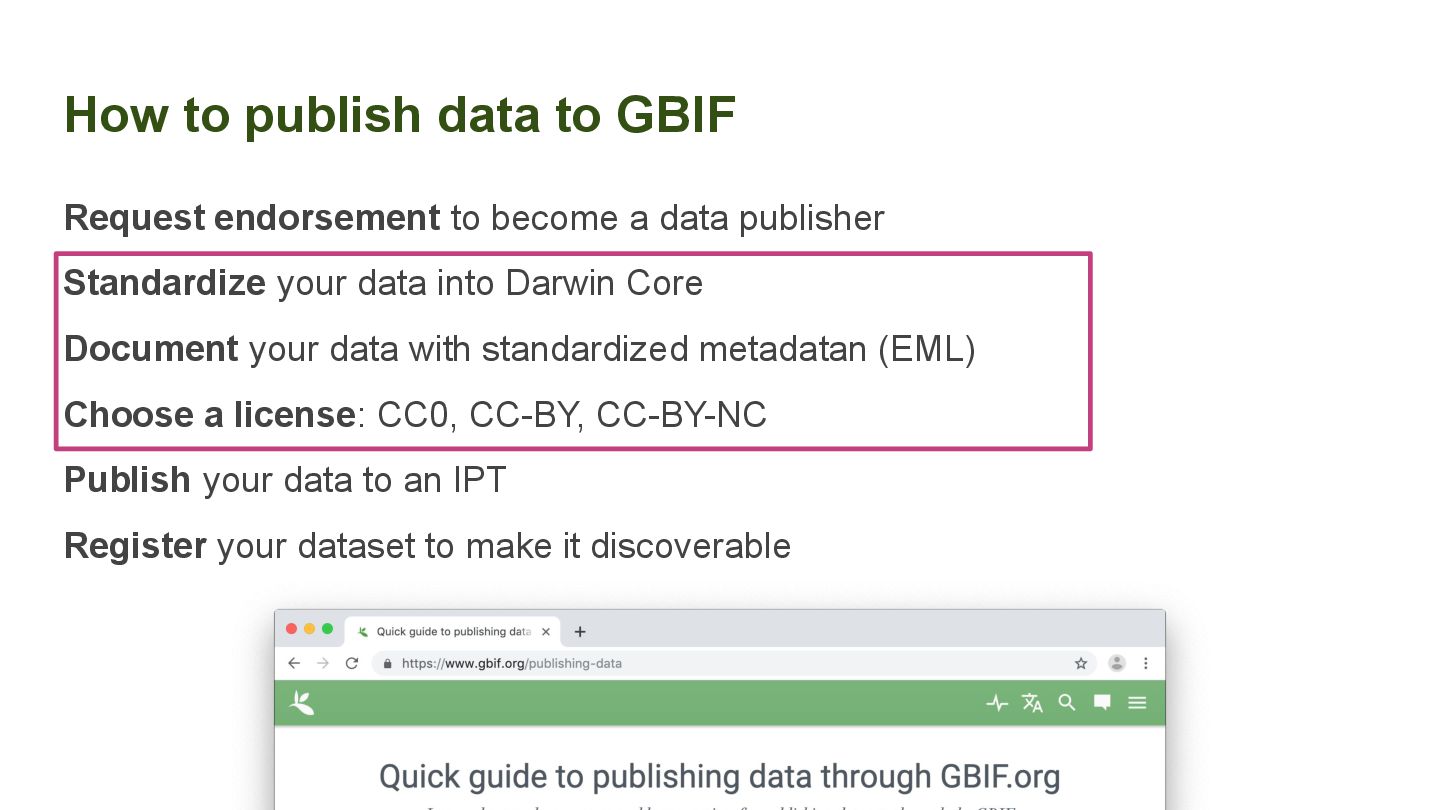
  10. Request endorsement to become a data publisher Standardize your data

    into Darwin Core Document your data with standardized metadatan (EML) Choose a license: CC0, CC-BY, CC-BY-NC Publish your data to an IPT Register your dataset to make it discoverable How to publish data to GBIF
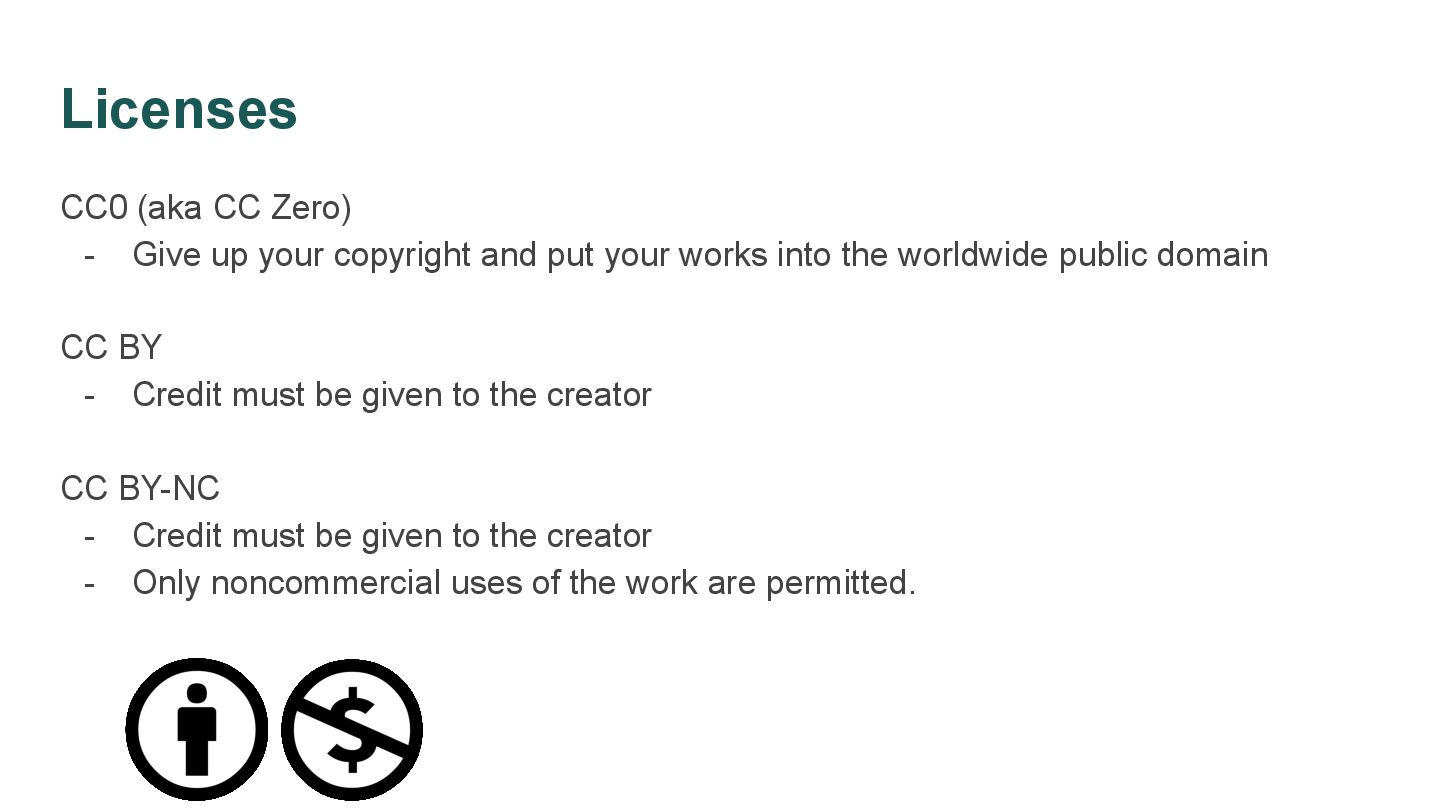
  11. Licenses CC0 (aka CC Zero) - Give up your copyright

    and put your works into the worldwide public domain CC BY - Credit must be given to the creator CC BY-NC - Credit must be given to the creator - Only noncommercial uses of the work are permitted.
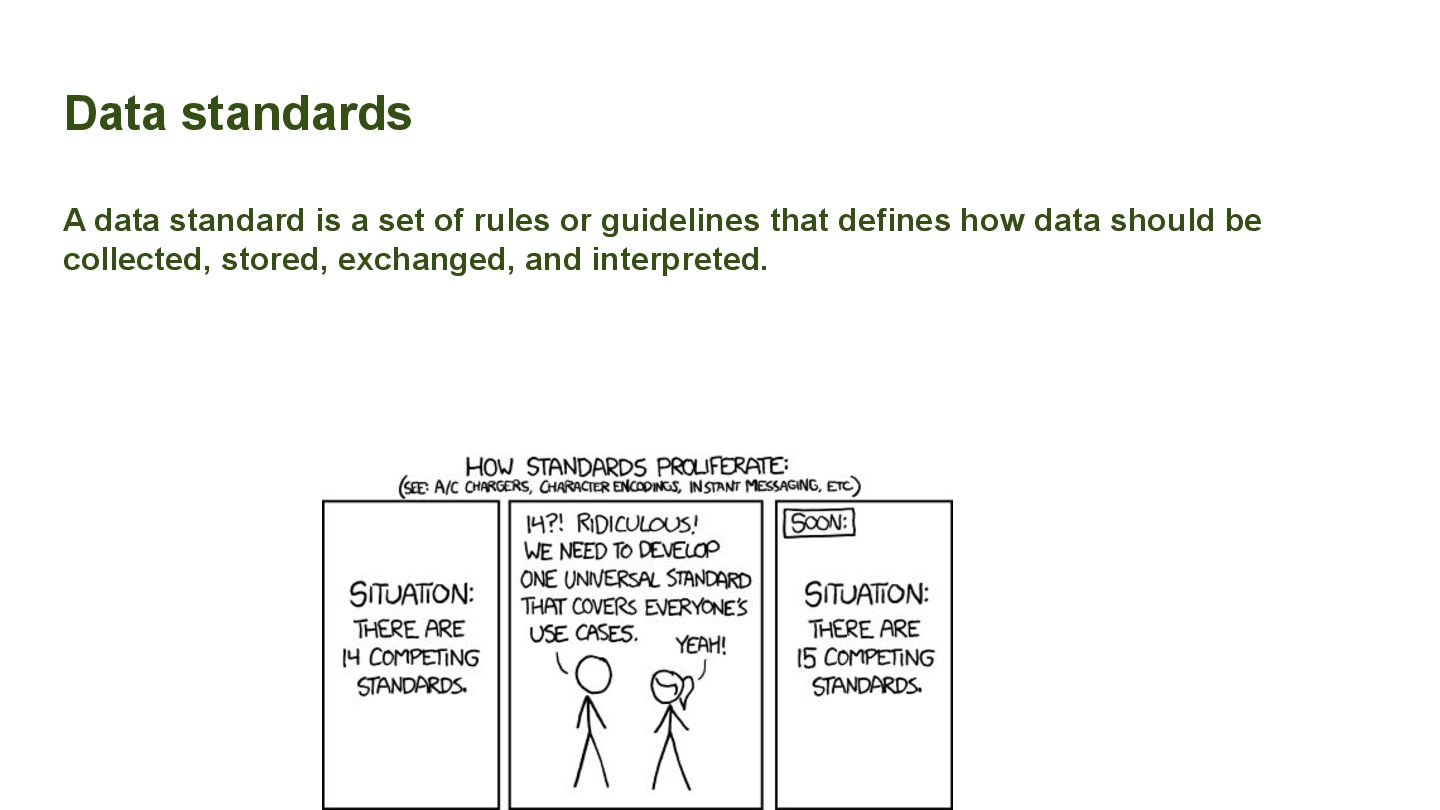
  12. Data standards A data standard is a set of rules

    or guidelines that defines how data should be collected, stored, exchanged, and interpreted.
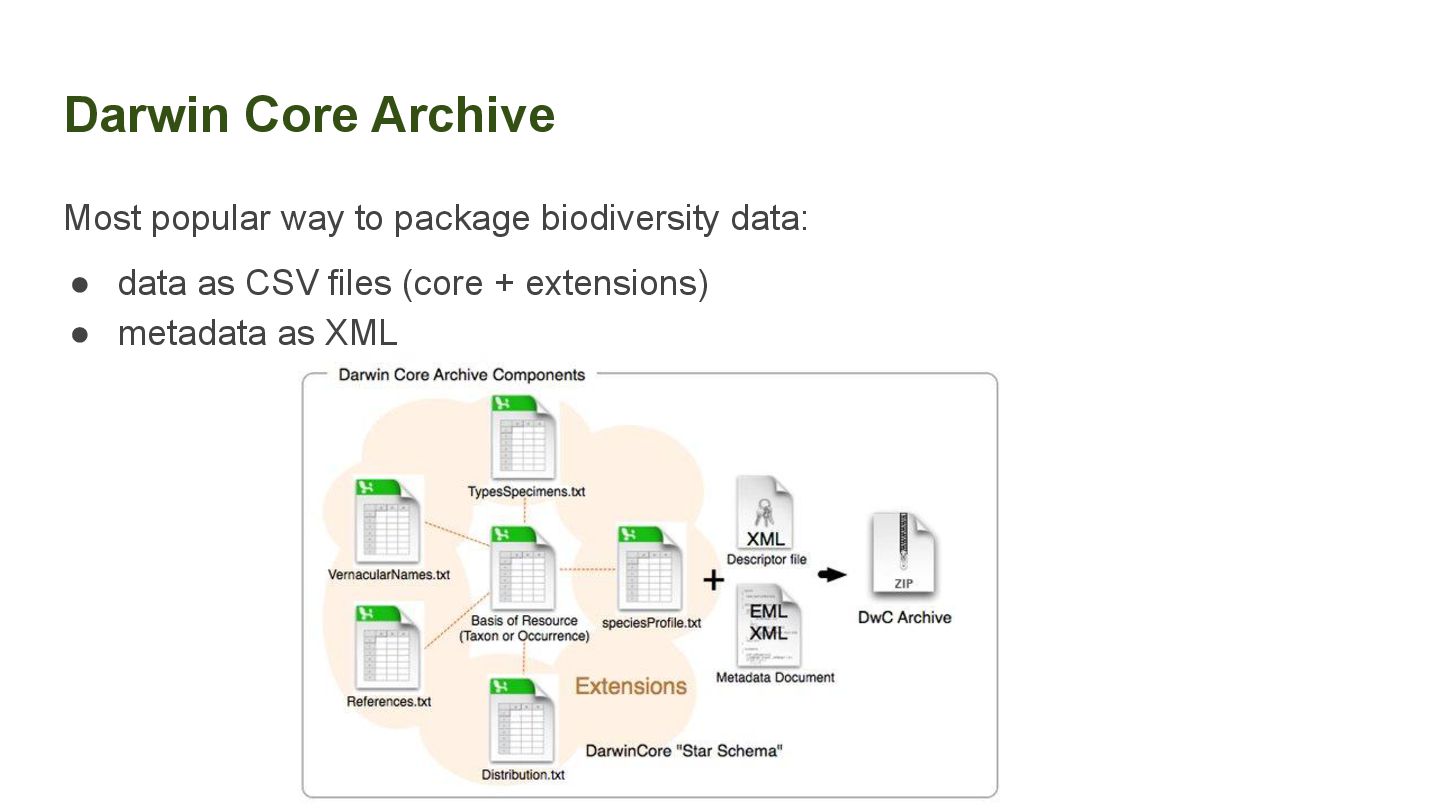
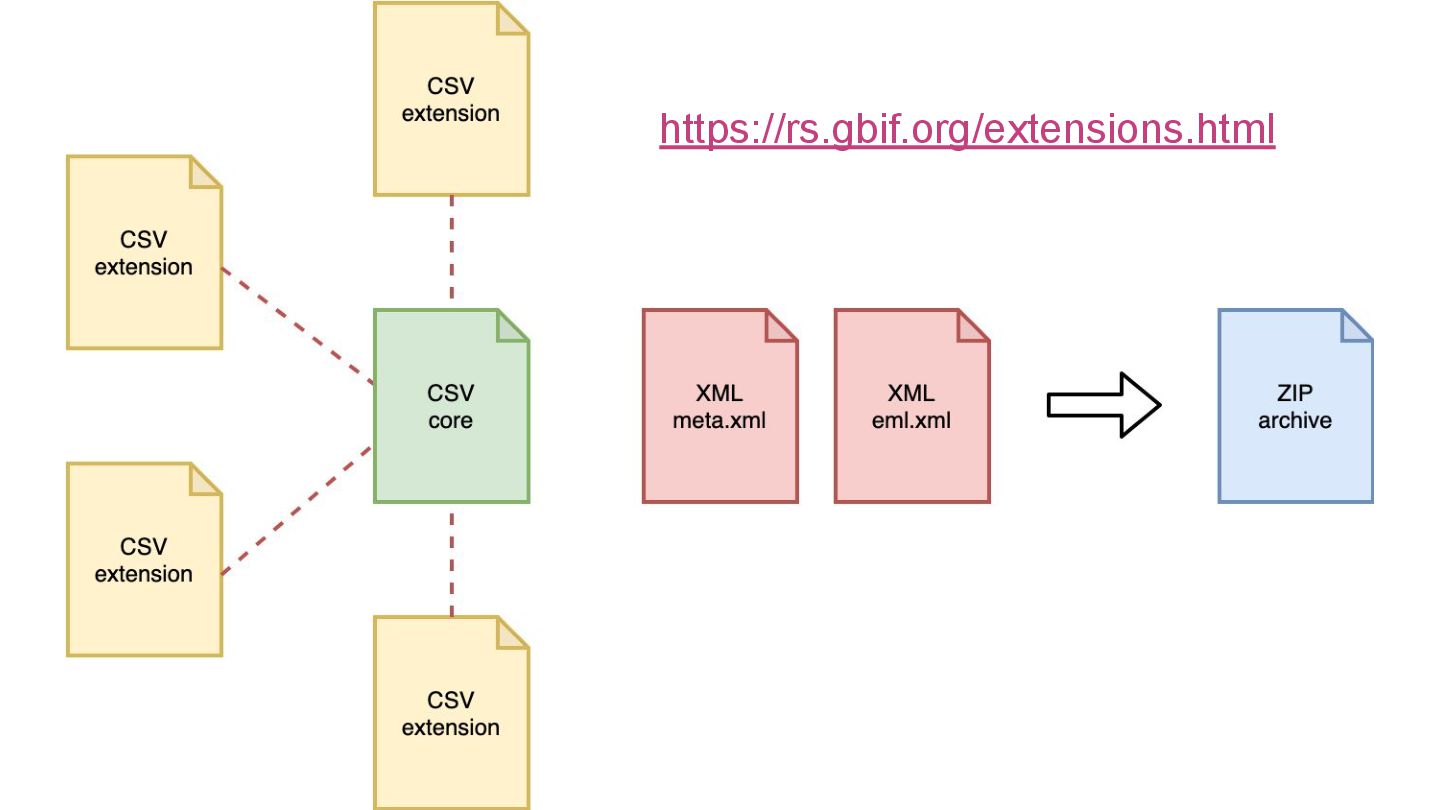
  13. Most popular way to package biodiversity data: • data as

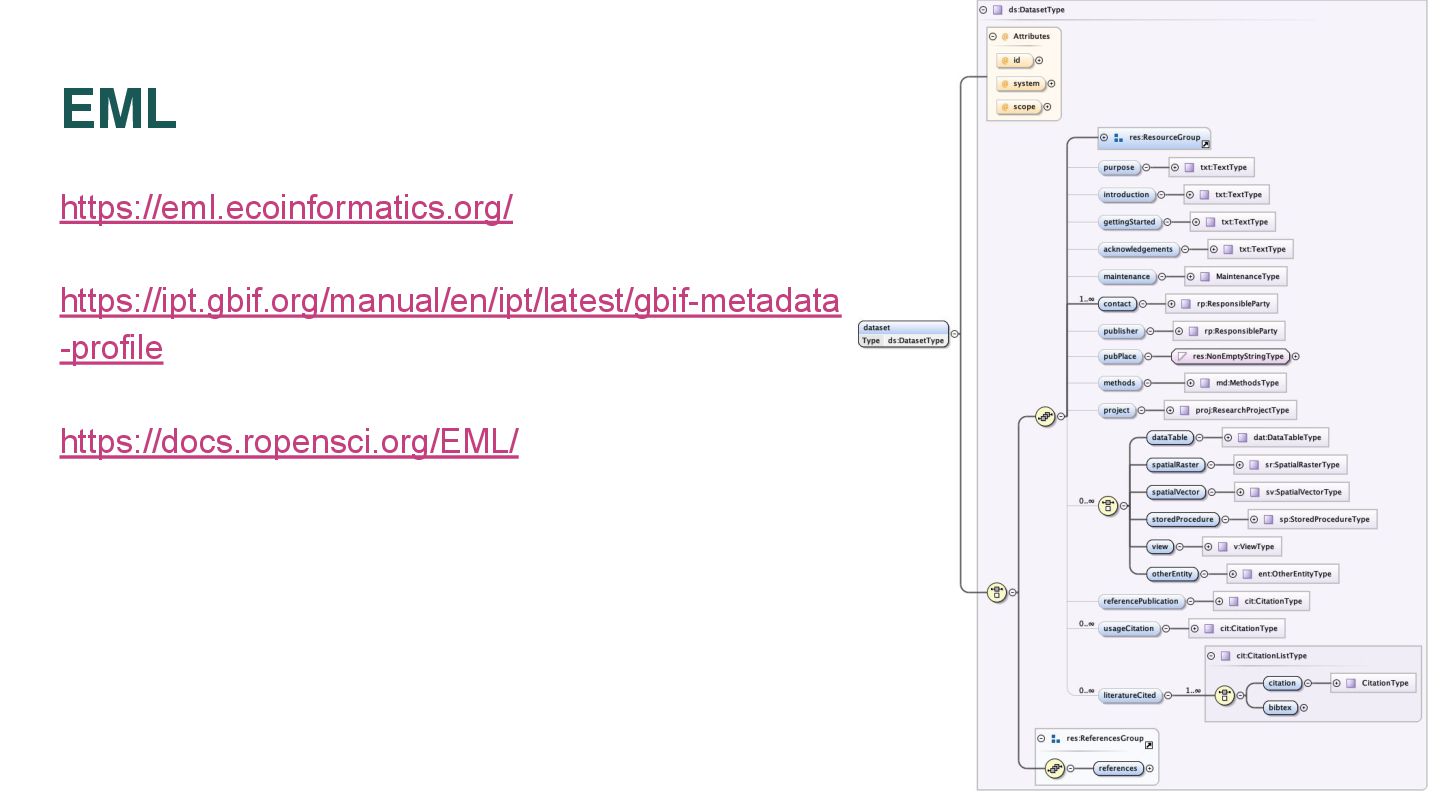
    CSV files (core + extensions) • metadata as XML Darwin Core Archive
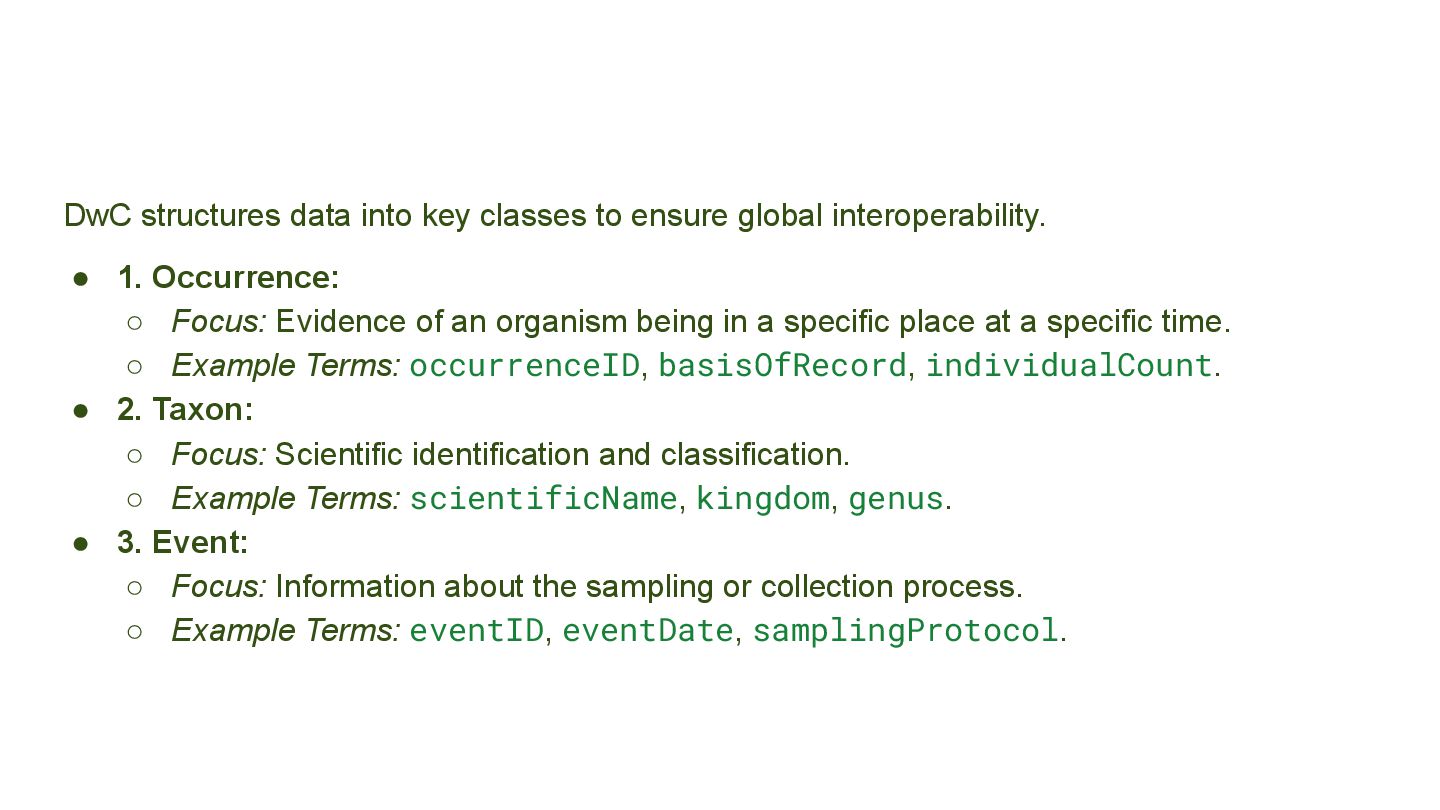
  14. DwC structures data into key classes to ensure global interoperability.

    • 1. Occurrence: ◦ Focus: Evidence of an organism being in a specific place at a specific time. ◦ Example Terms: occurrenceID, basisOfRecord, individualCount. • 2. Taxon: ◦ Focus: Scientific identification and classification. ◦ Example Terms: scientificName, kingdom, genus. • 3. Event: ◦ Focus: Information about the sampling or collection process. ◦ Example Terms: eventID, eventDate, samplingProtocol.
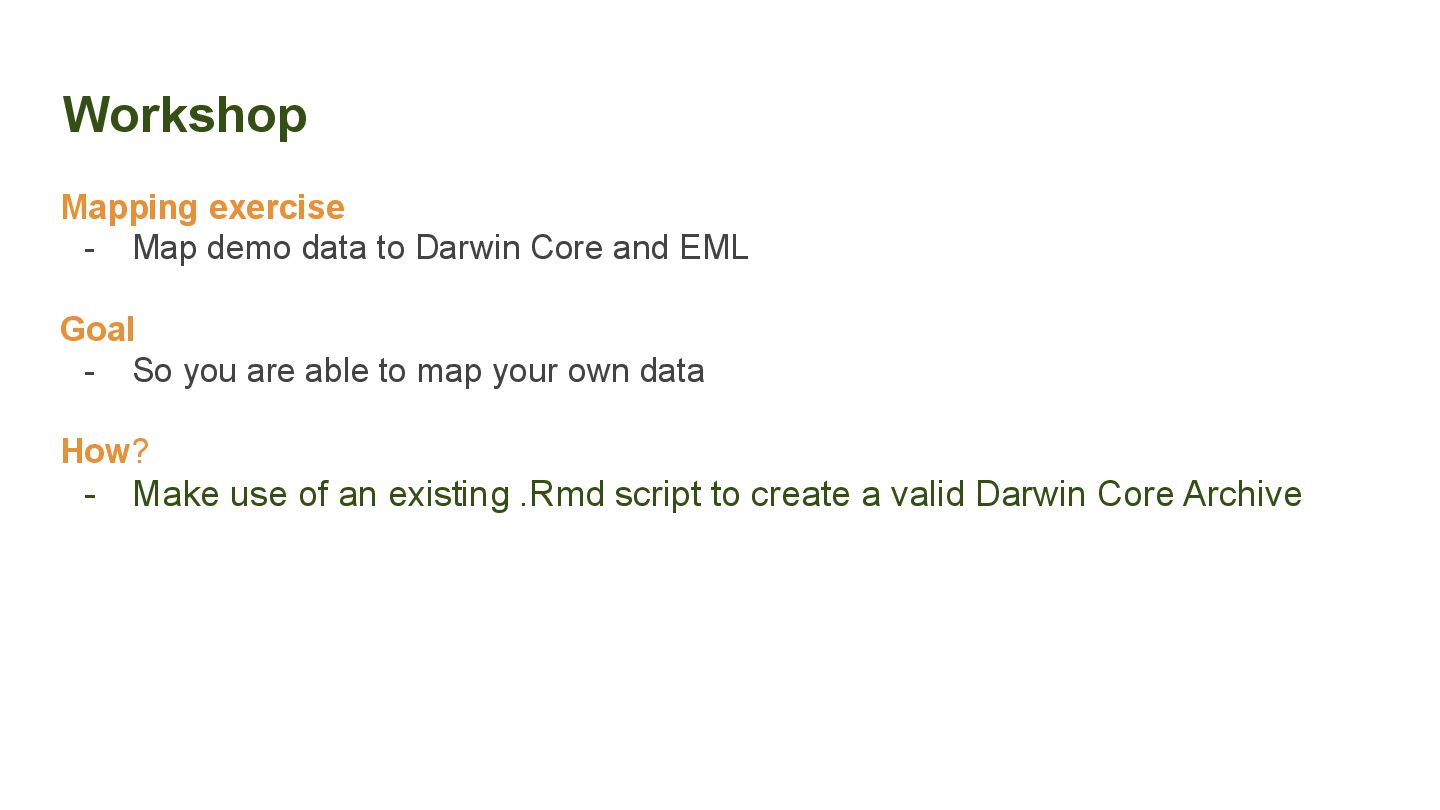
  15. Mapping exercise - Map demo data to Darwin Core and

    EML Goal - So you are able to map your own data How? - Make use of an existing .Rmd script to create a valid Darwin Core Archive Workshop
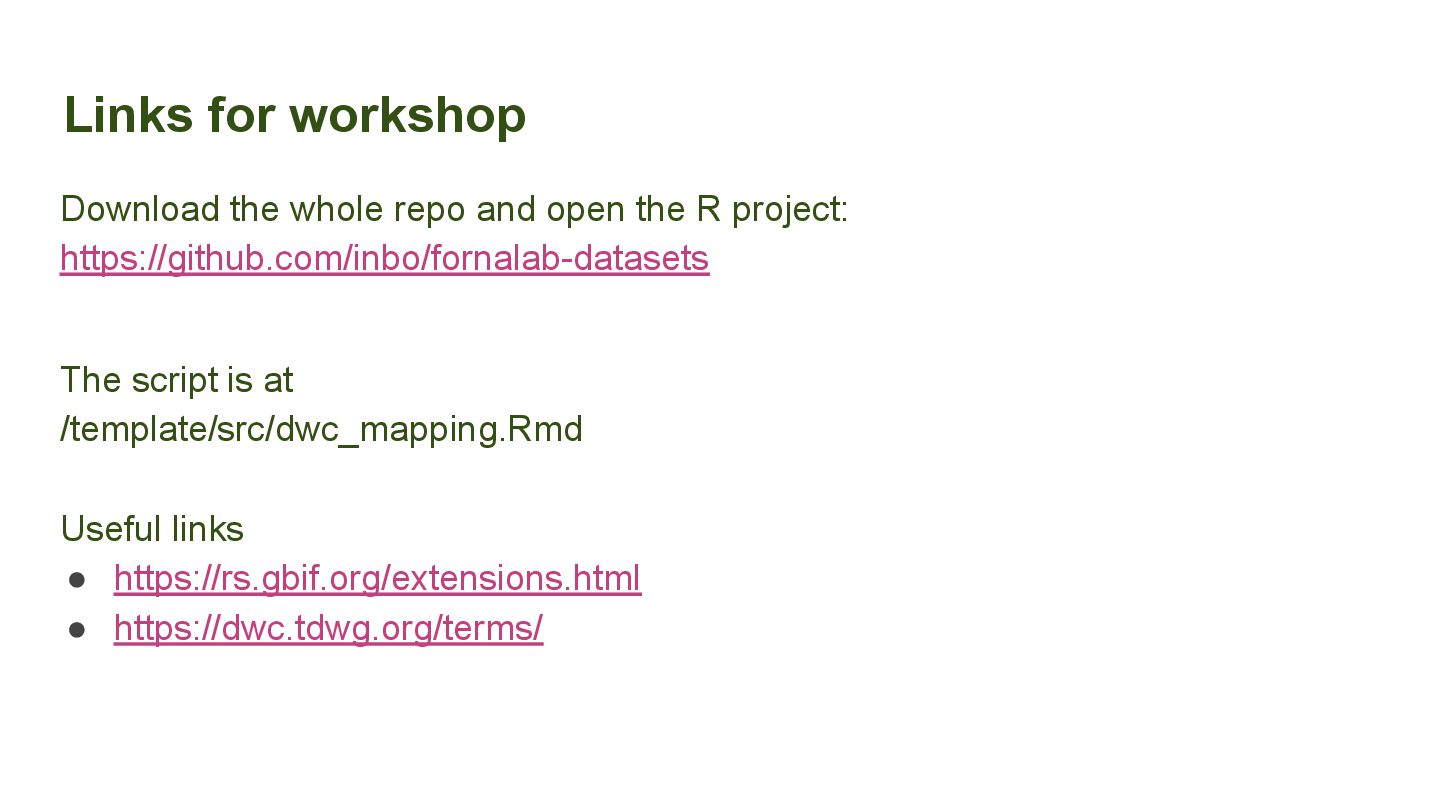
  16. Download the whole repo and open the R project: https://github.com/inbo/fornalab-datasets

    The script is at /template/src/dwc_mapping.Rmd Useful links • https://rs.gbif.org/extensions.html • https://dwc.tdwg.org/terms/ Links for workshop
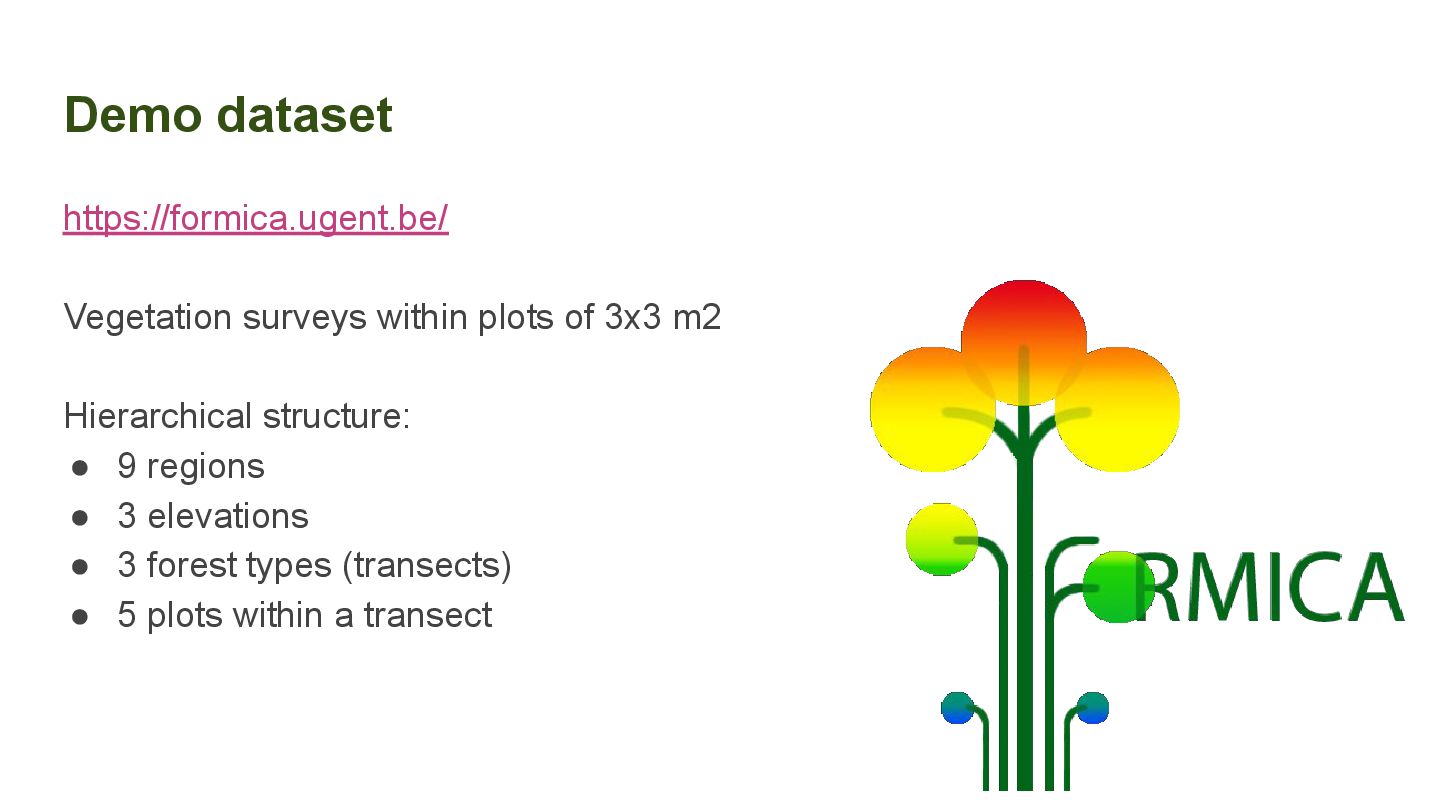
  17. Demo dataset https://formica.ugent.be/ Vegetation surveys within plots of 3x3 m2

    Hierarchical structure: • 9 regions • 3 elevations • 3 forest types (transects) • 5 plots within a transect
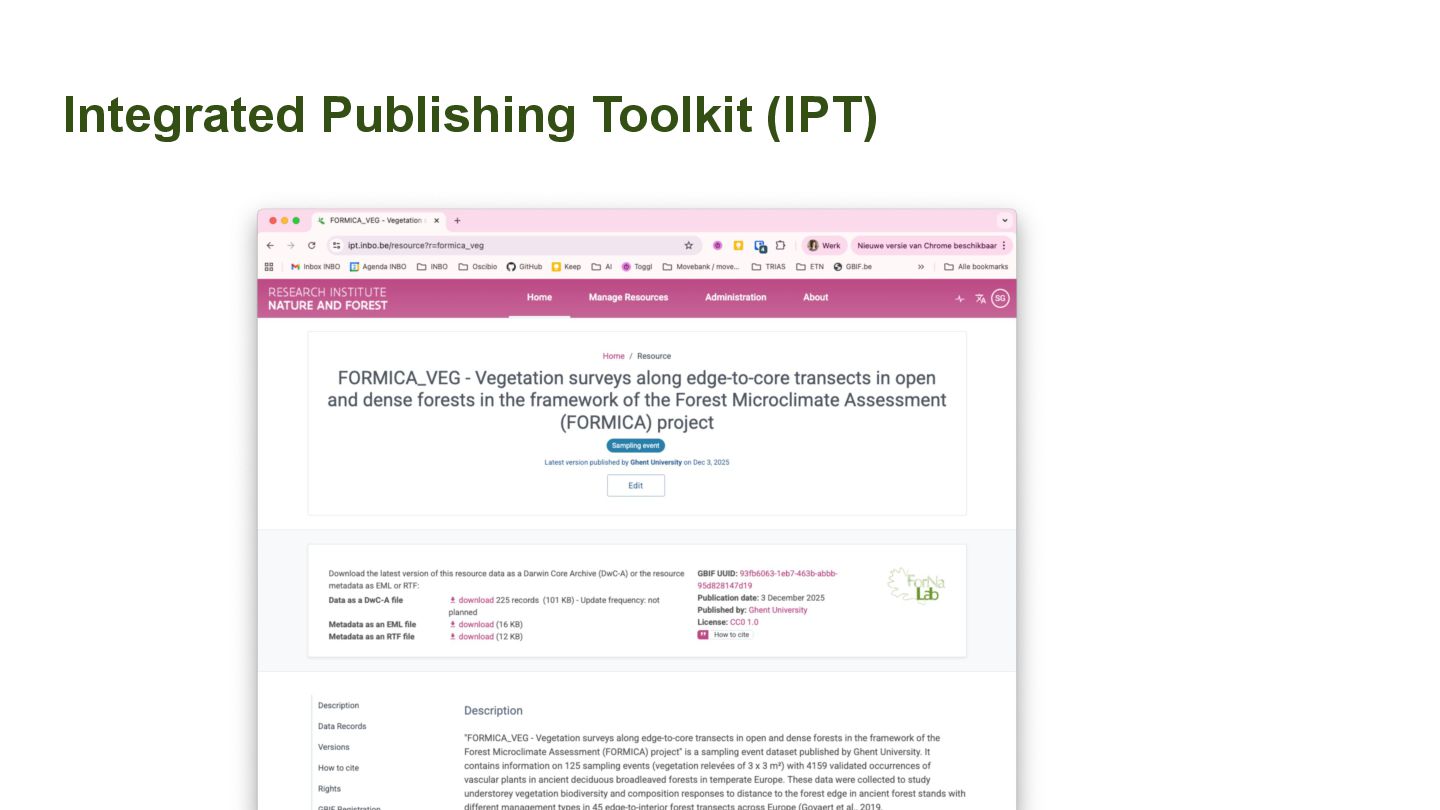
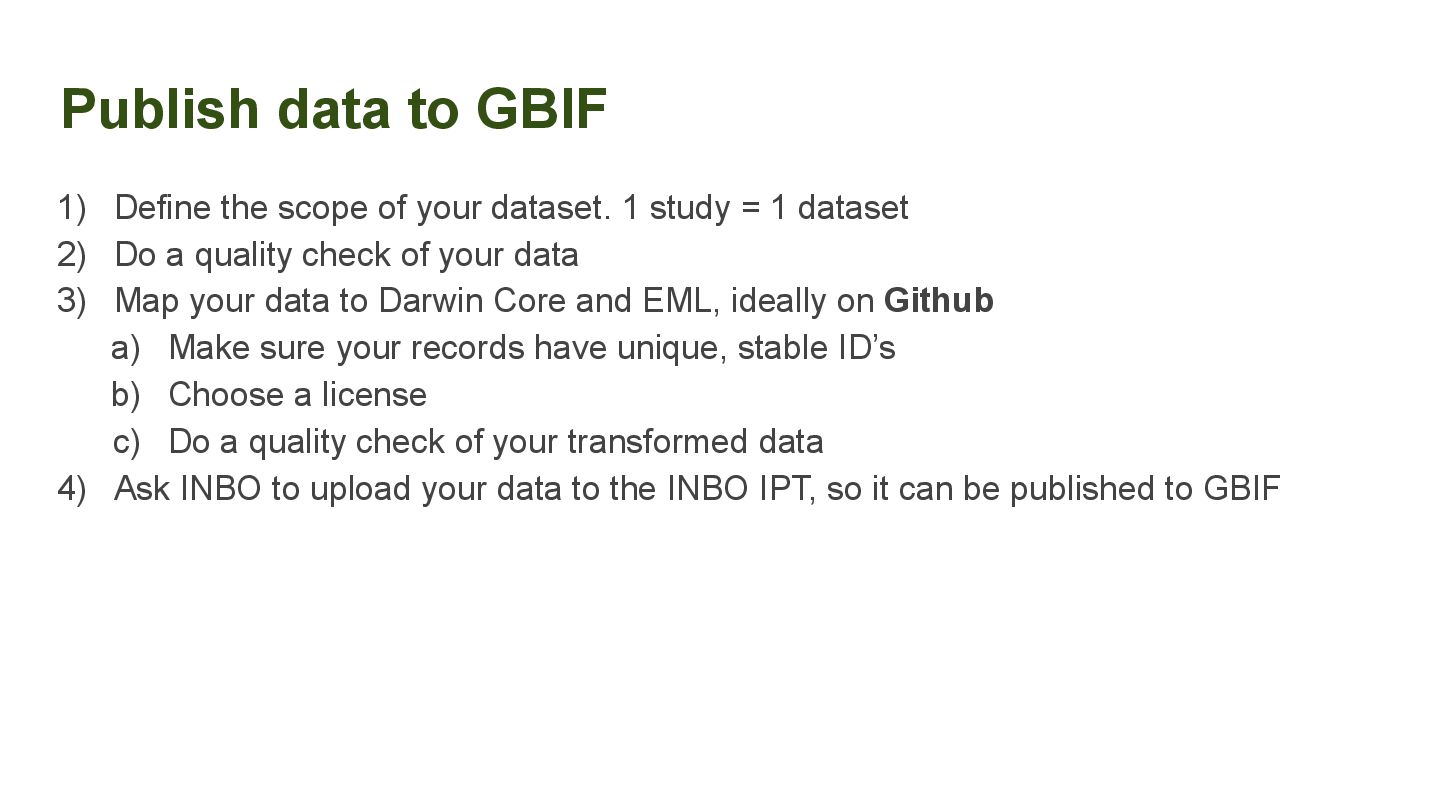
  18. Publish data to GBIF 1) Define the scope of your

    dataset. 1 study = 1 dataset 2) Do a quality check of your data 3) Map your data to Darwin Core and EML, ideally on Github a) Make sure your records have unique, stable ID’s b) Choose a license c) Do a quality check of your transformed data 4) Ask INBO to upload your data to the INBO IPT, so it can be published to GBIF