• Based in Milan since 2015 • Event Stream Processing products and solutions We are focussed on the design and development of Event Stream Processing products and solutions, combining streaming technologies with Machine Learning and A.I.
Motivations • Have a deep technical ownership of the solution • Too many licensing and pricing issues exploring third-party OEM solutions • Third-party solutions don’t completely fit our requirements
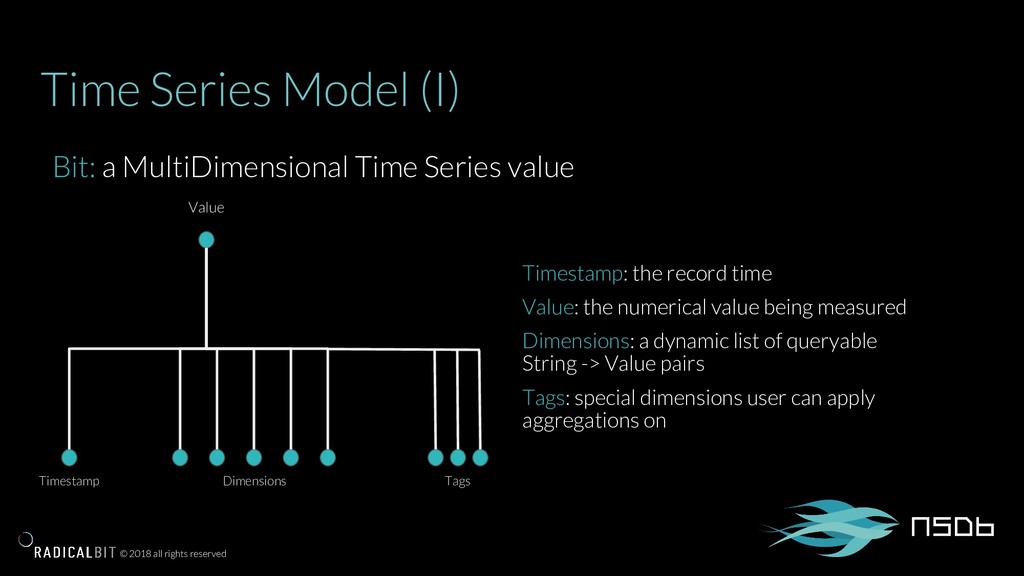
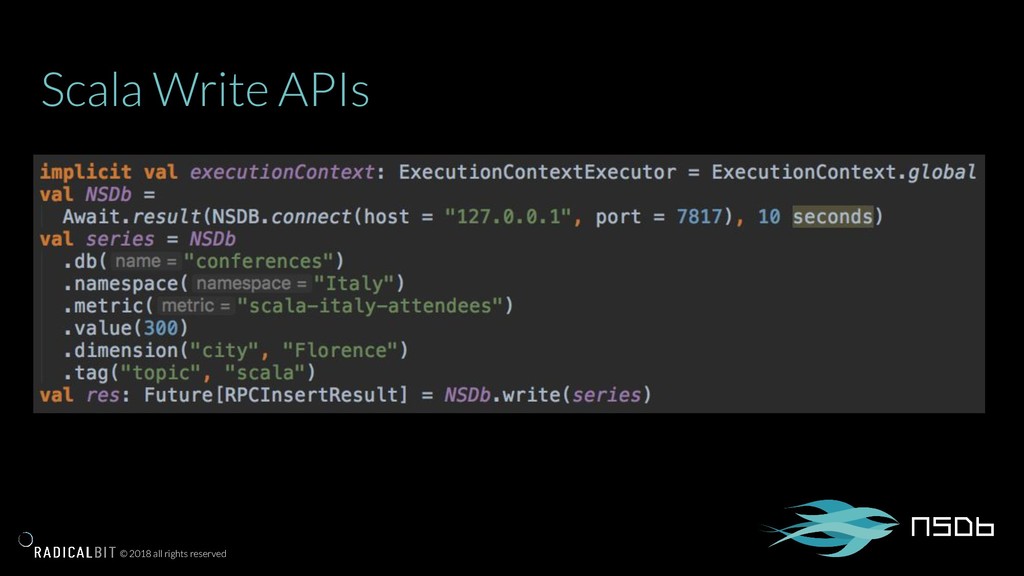
Time Series Model (I) Bit: a MultiDimensional Time Series value Value Timestamp Dimensions Tags Timestamp: the record time Value: the numerical value being measured Dimensions: a dynamic list of queryable String -> Value pairs Tags: special dimensions user can apply aggregations on
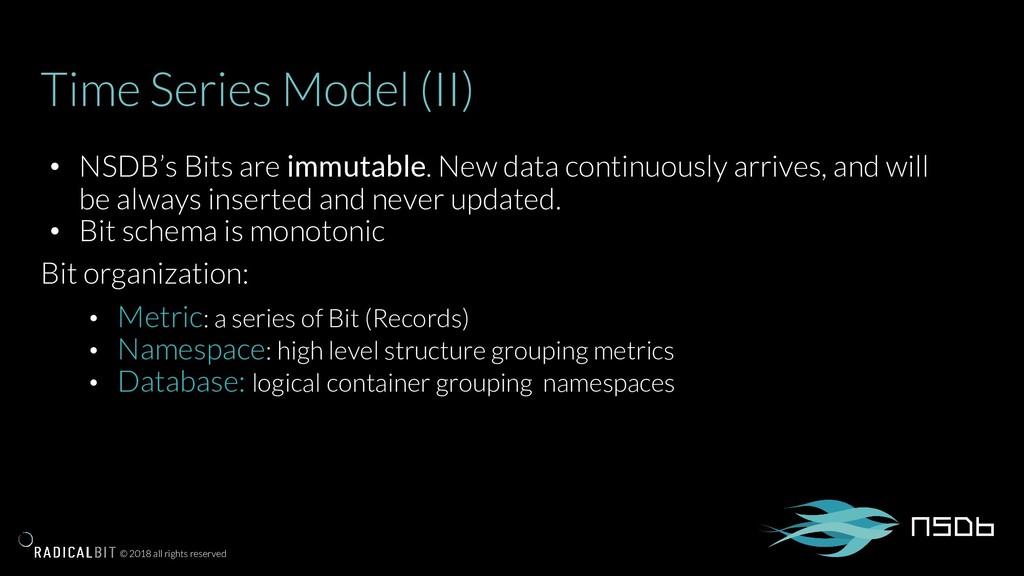
Time Series Model (II) • NSDB’s Bits are immutable. New data continuously arrives, and will be always inserted and never updated. • Bit schema is monotonic Bit organization: • Metric: a series of Bit (Records) • Namespace: high level structure grouping metrics • Database: logical container grouping namespaces
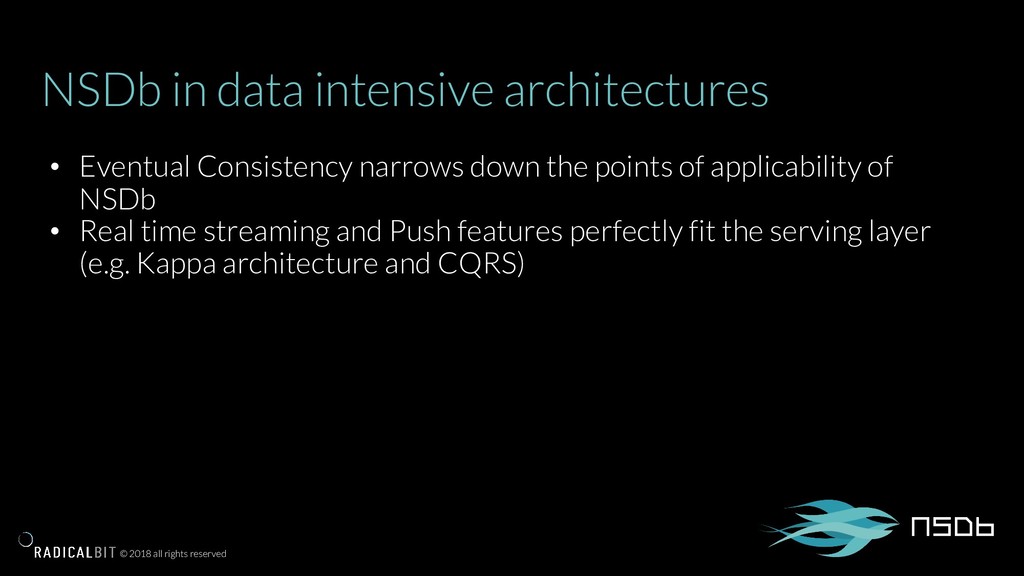
NSDb in data intensive architectures • Eventual Consistency narrows down the points of applicability of NSDb • Real time streaming and Push features perfectly fit the serving layer (e.g. Kappa architecture and CQRS)
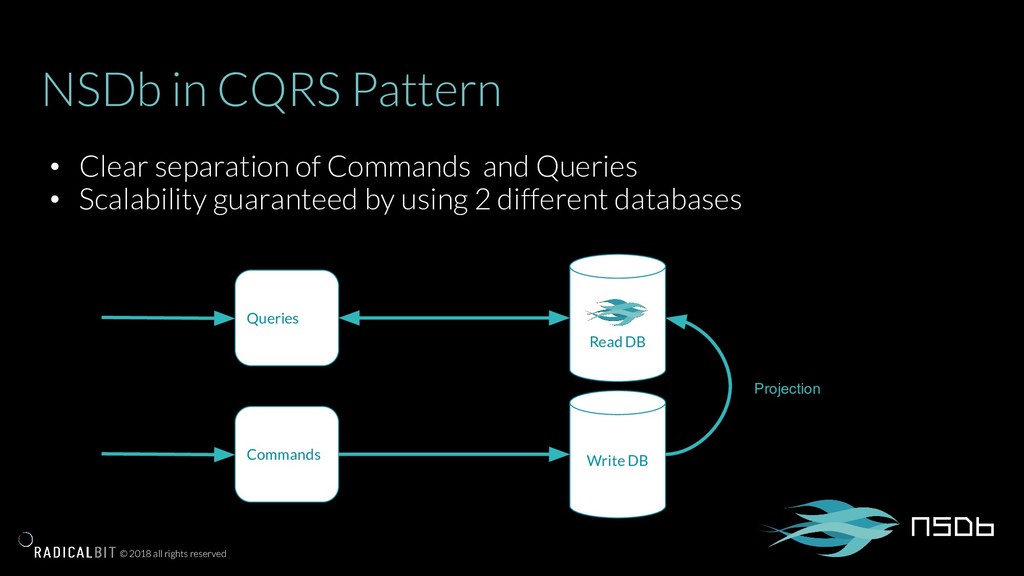
NSDb in CQRS Pattern Queries Commands Write DB Read DB Projection • Clear separation of Commands and Queries • Scalability guaranteed by using 2 different databases
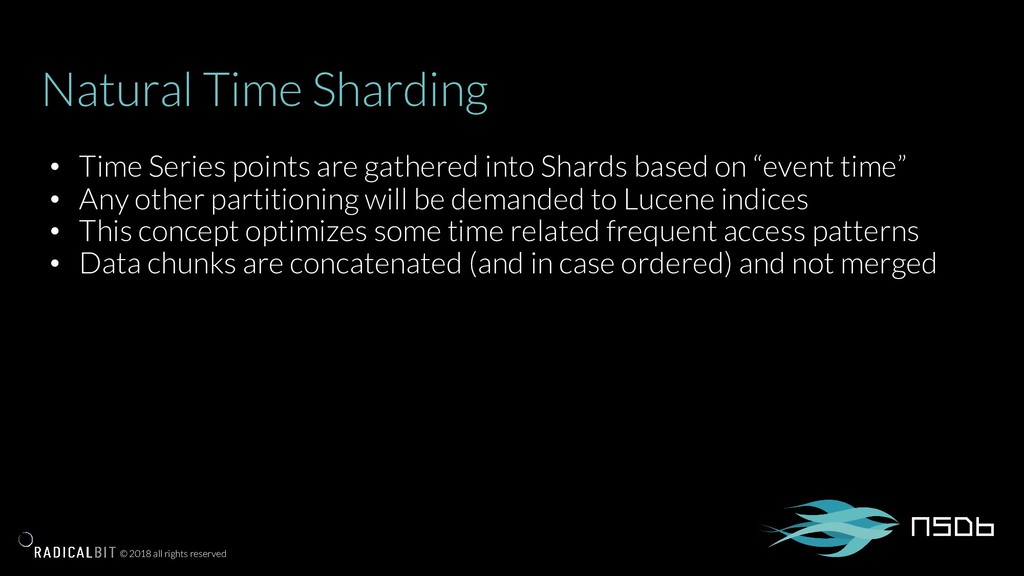
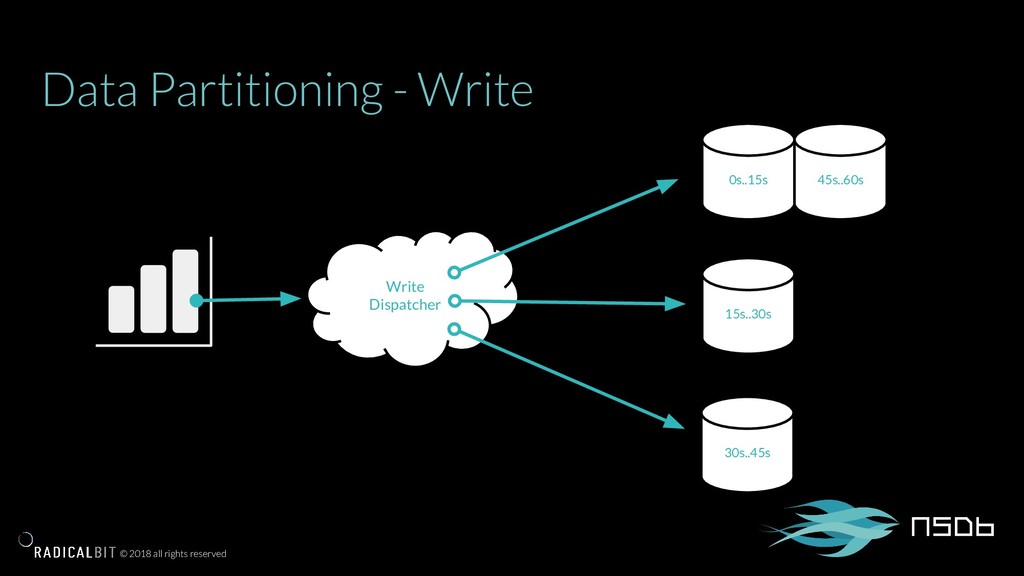
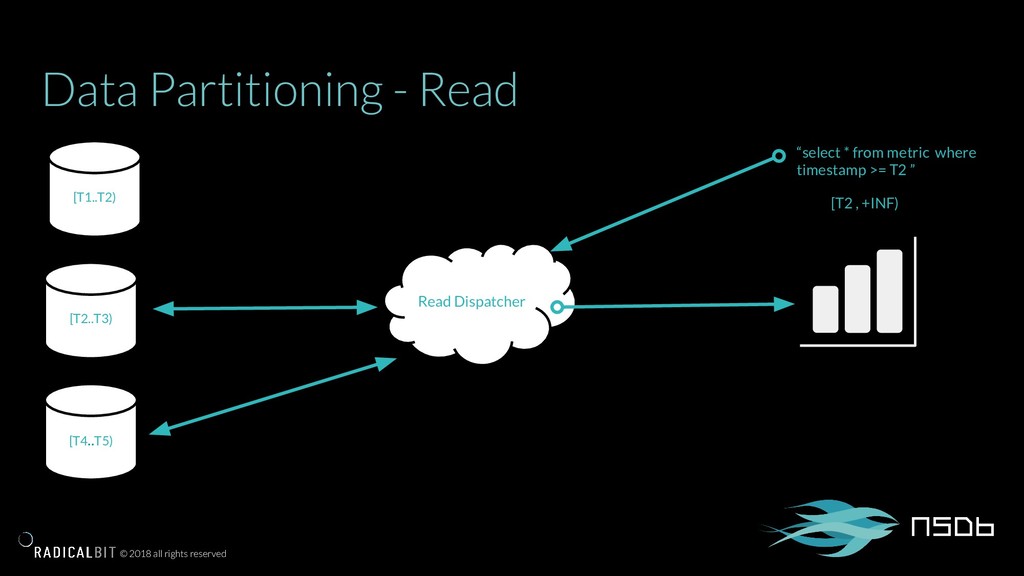
Natural Time Sharding • Time Series points are gathered into Shards based on “event time” • Any other partitioning will be demanded to Lucene indices • This concept optimizes some time related frequent access patterns • Data chunks are concatenated (and in case ordered) and not merged
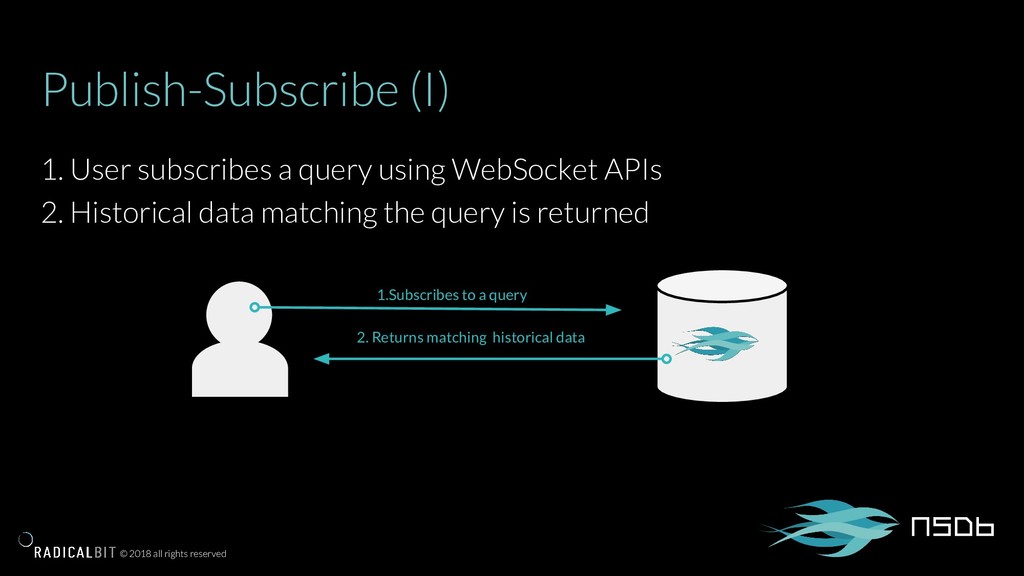
Publish-Subscribe (I) 1. User subscribes a query using WebSocket APIs 2. Historical data matching the query is returned 2. Returns matching historical data 1.Subscribes to a query
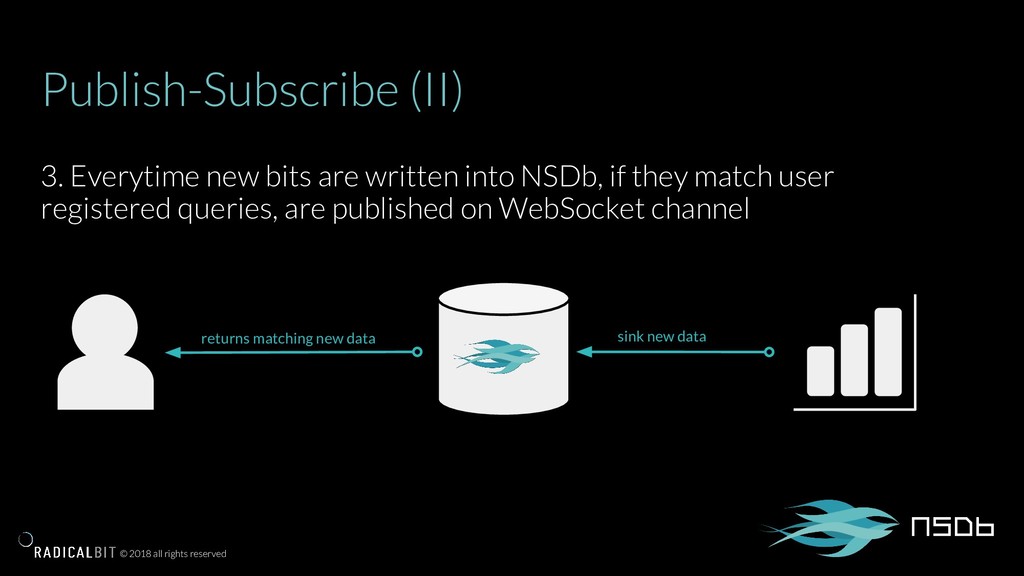
Publish-Subscribe (II) scri 3. Everytime new bits are written into NSDb, if they match user registered queries, are published on WebSocket channel sink new data returns matching new data
Lucene as Storage Layer (I) “Apache Lucene is an open source project implementing full-featured text search engine library written entirely in Java.” • Ad Hoc indices management according to time-series handling
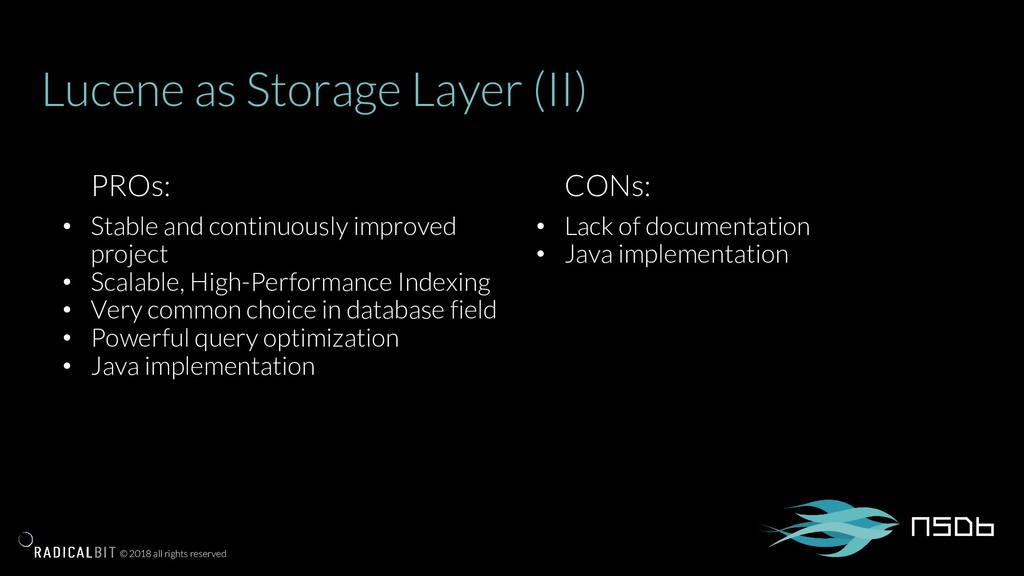
Lucene as Storage Layer (II) PROs: • Stable and continuously improved project • Scalable, High-Performance Indexing • Very common choice in database field • Powerful query optimization • Java implementation CONs: • Lack of documentation • Java implementation
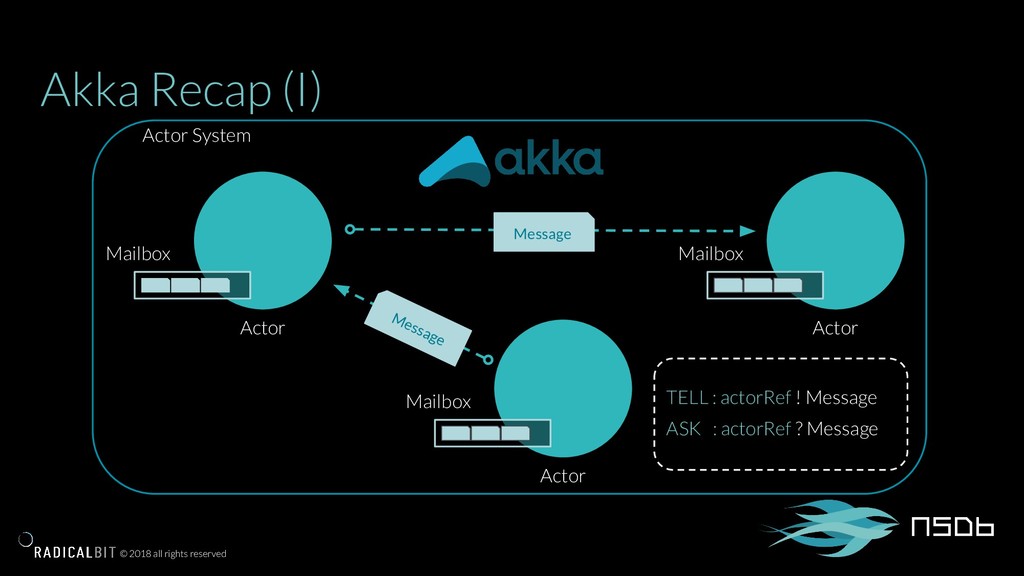
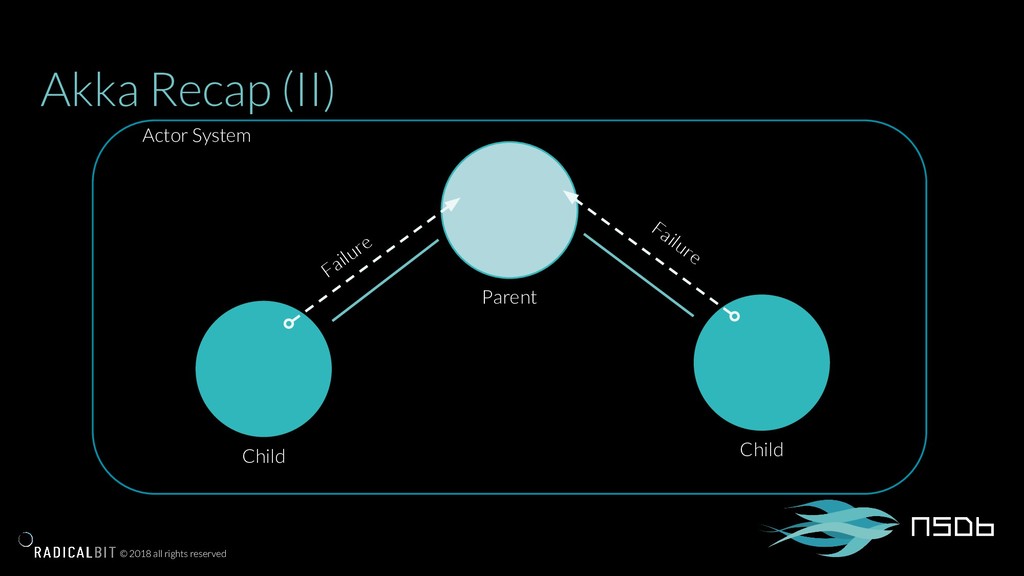
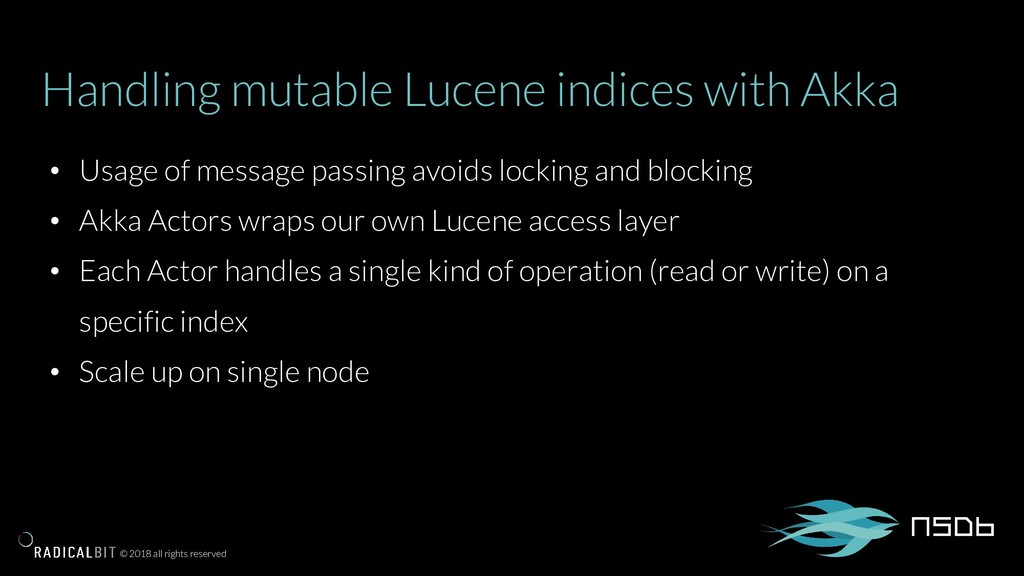
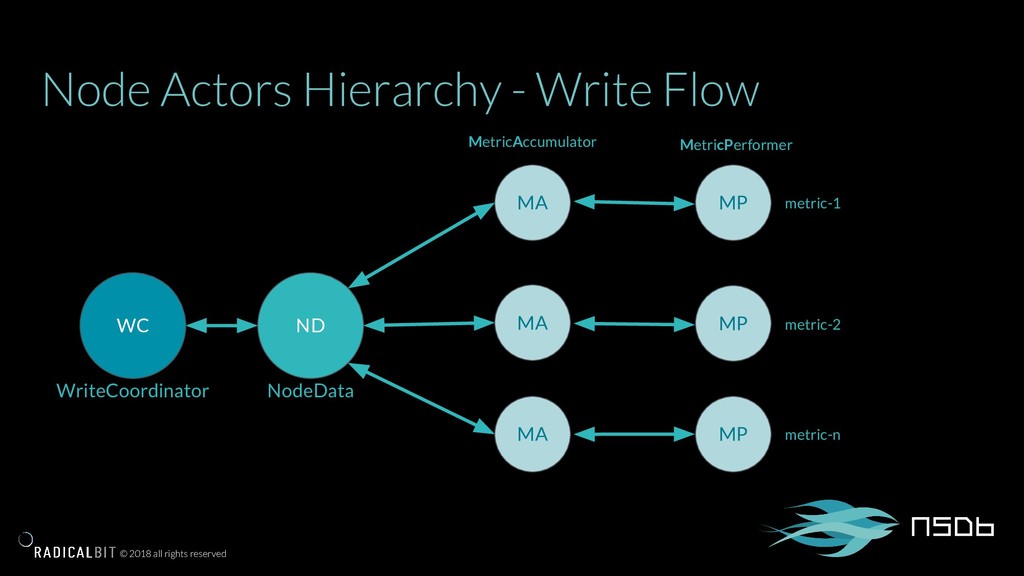
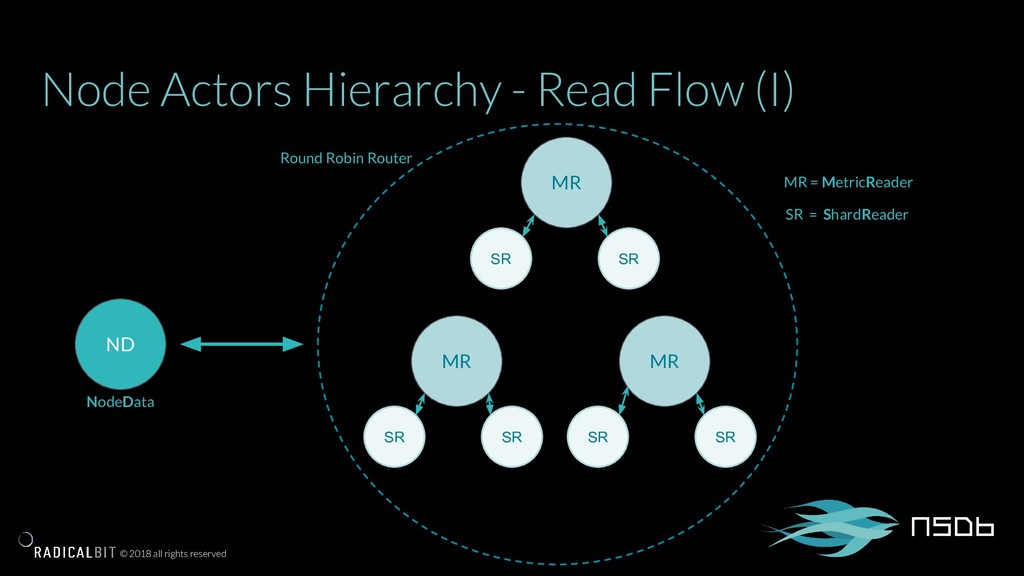
Handling mutable Lucene indices with Akka • Usage of message passing avoids locking and blocking • Akka Actors wraps our own Lucene access layer • Each Actor handles a single kind of operation (read or write) on a specific index • Scale up on single node
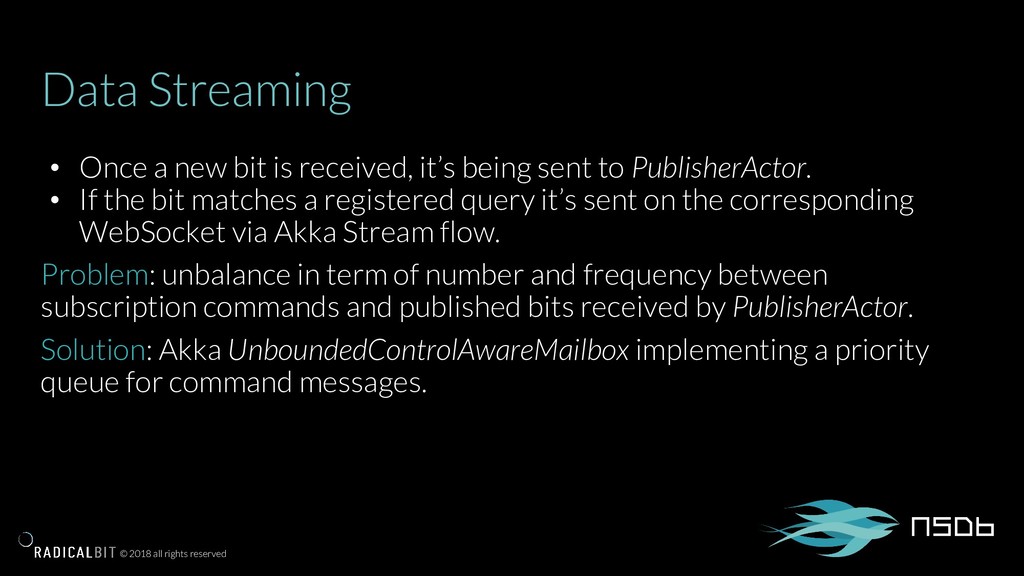
Data Streaming • Once a new bit is received, it’s being sent to PublisherActor. • If the bit matches a registered query it’s sent on the corresponding WebSocket via Akka Stream flow. Problem: unbalance in term of number and frequency between subscription commands and published bits received by PublisherActor. Solution: Akka UnboundedControlAwareMailbox implementing a priority queue for command messages.
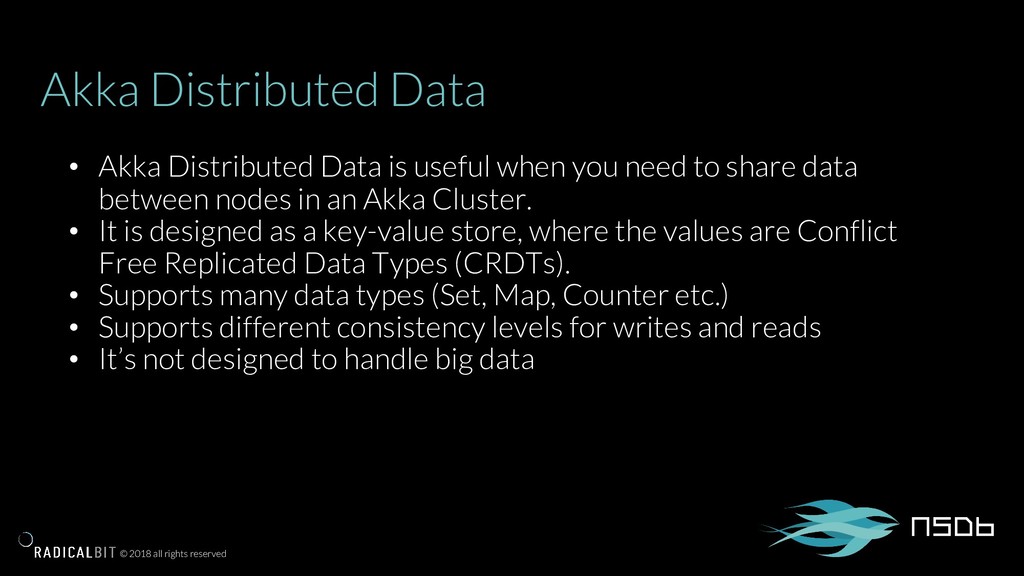
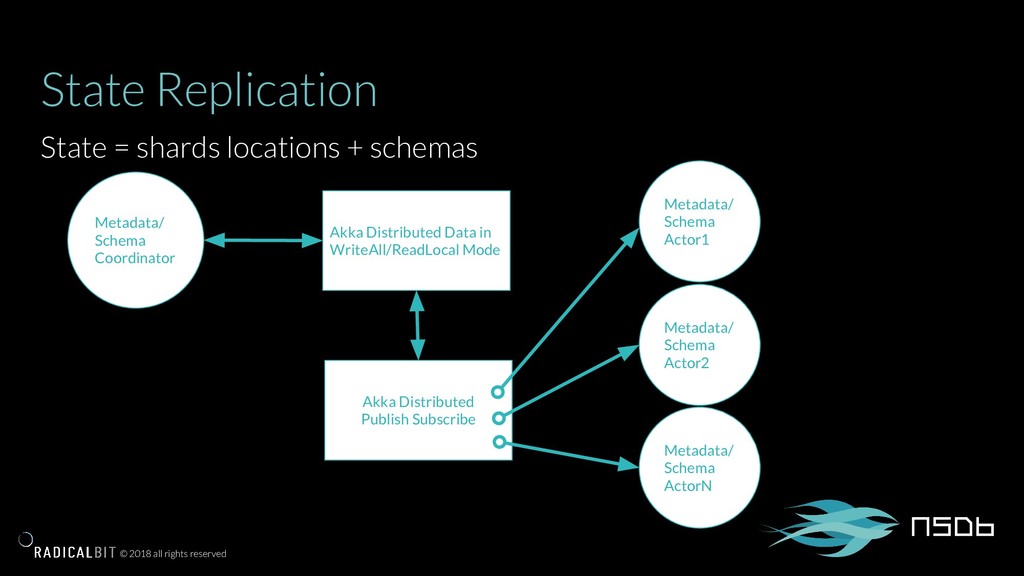
Akka Distributed Data • Akka Distributed Data is useful when you need to share data between nodes in an Akka Cluster. • It is designed as a key-value store, where the values are Conflict Free Replicated Data Types (CRDTs). • Supports many data types (Set, Map, Counter etc.) • Supports different consistency levels for writes and reads • It’s not designed to handle big data
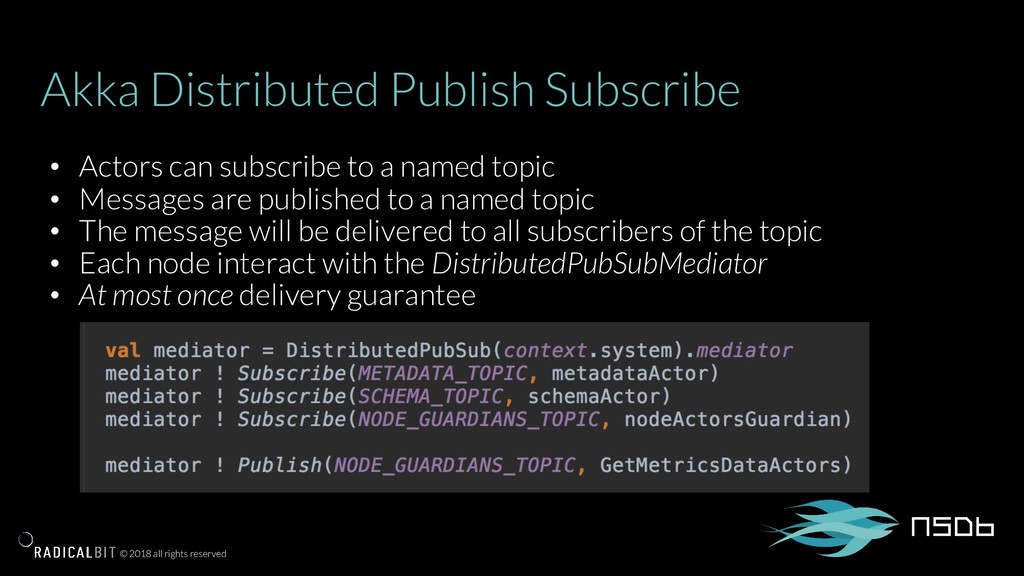
Akka Distributed Publish Subscribe • Actors can subscribe to a named topic • Messages are published to a named topic • The message will be delivered to all subscribers of the topic • Each node interact with the DistributedPubSubMediator • At most once delivery guarantee
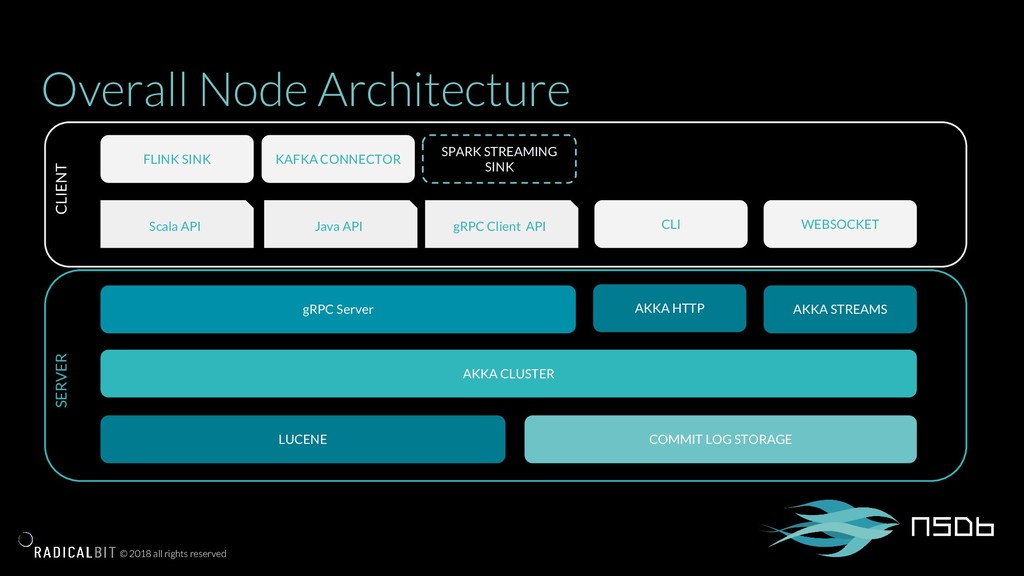
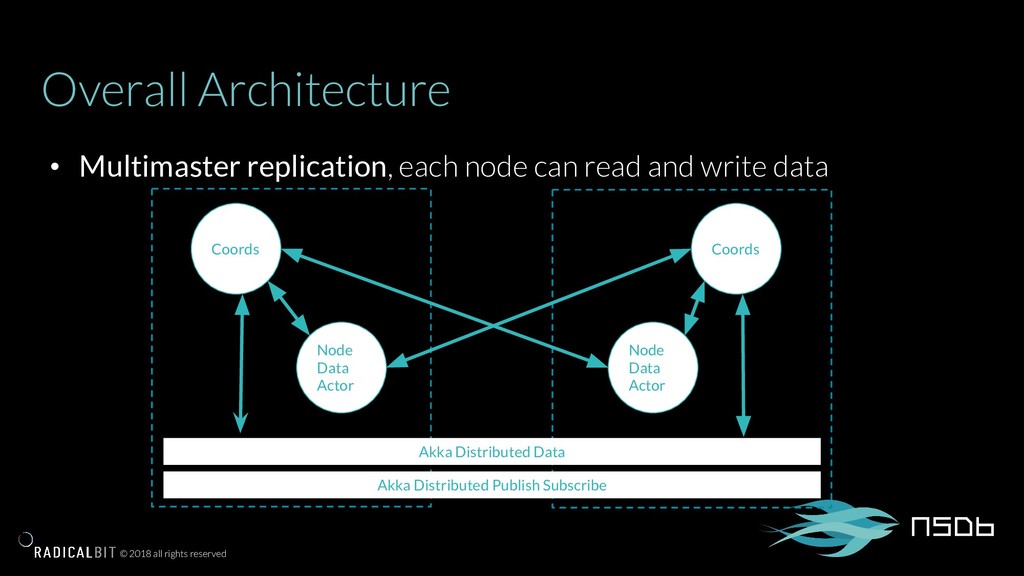
Overall Architecture Coords Node Data Actor Akka Distributed Data Akka Distributed Publish Subscribe Coords Node Data Actor • Multimaster replication, each node can read and write data
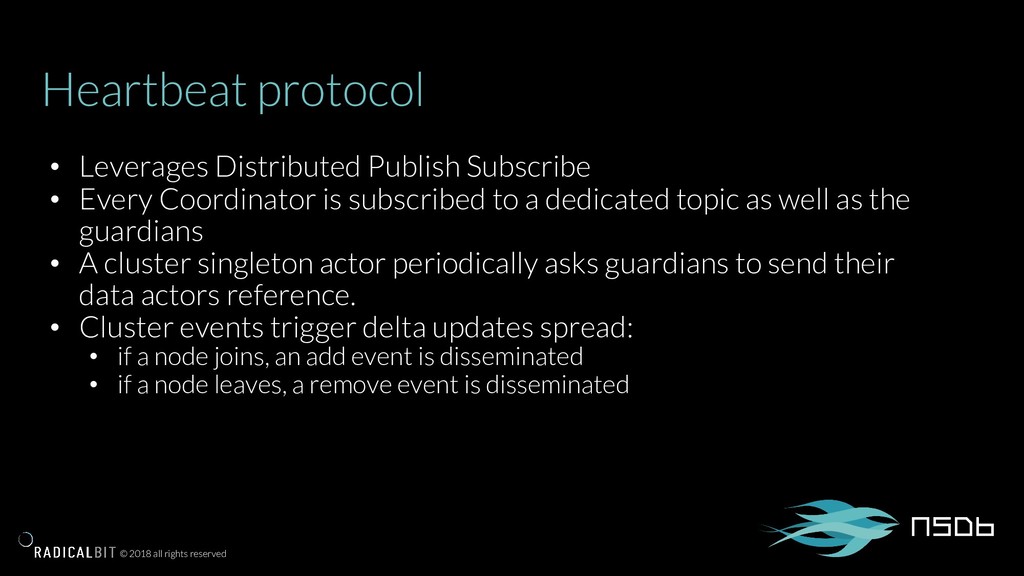
Heartbeat protocol • Leverages Distributed Publish Subscribe • Every Coordinator is subscribed to a dedicated topic as well as the guardians • A cluster singleton actor periodically asks guardians to send their data actors reference. • Cluster events trigger delta updates spread: • if a node joins, an add event is disseminated • if a node leaves, a remove event is disseminated
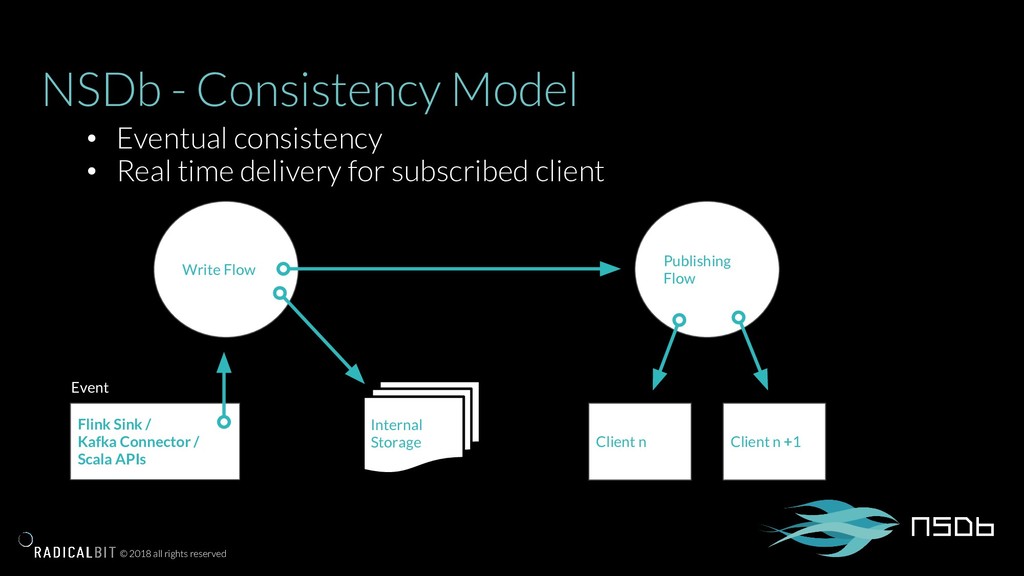
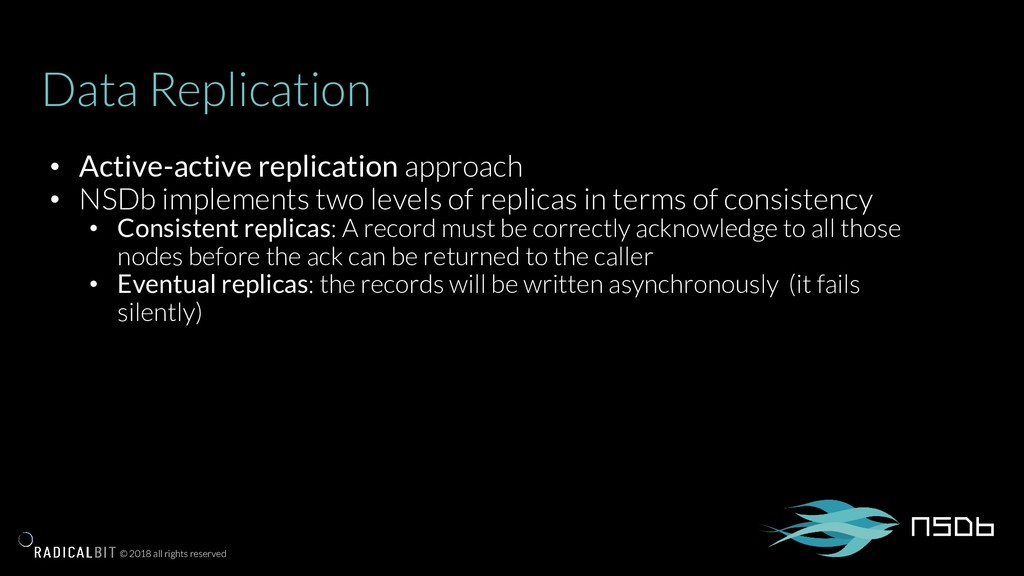
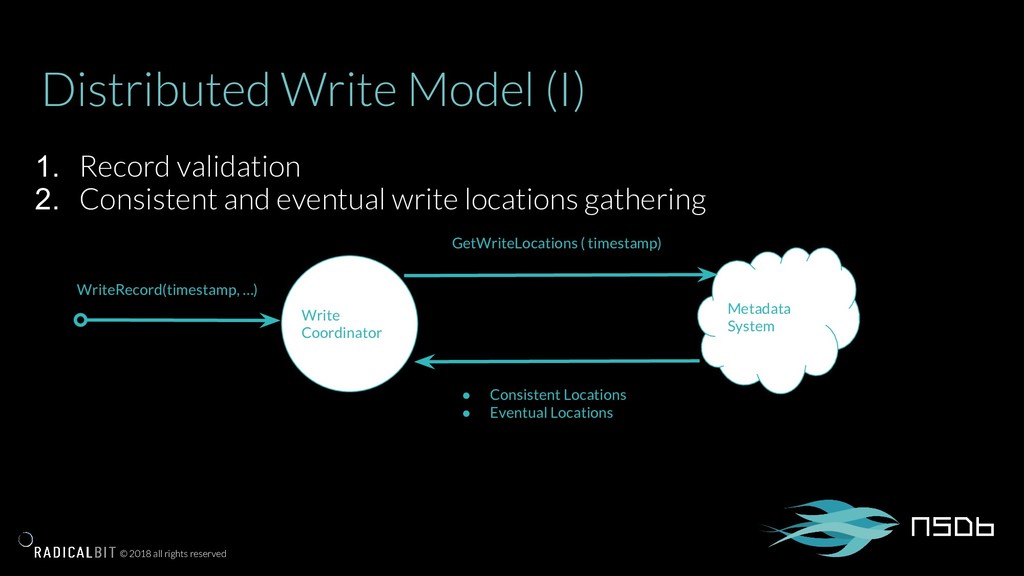
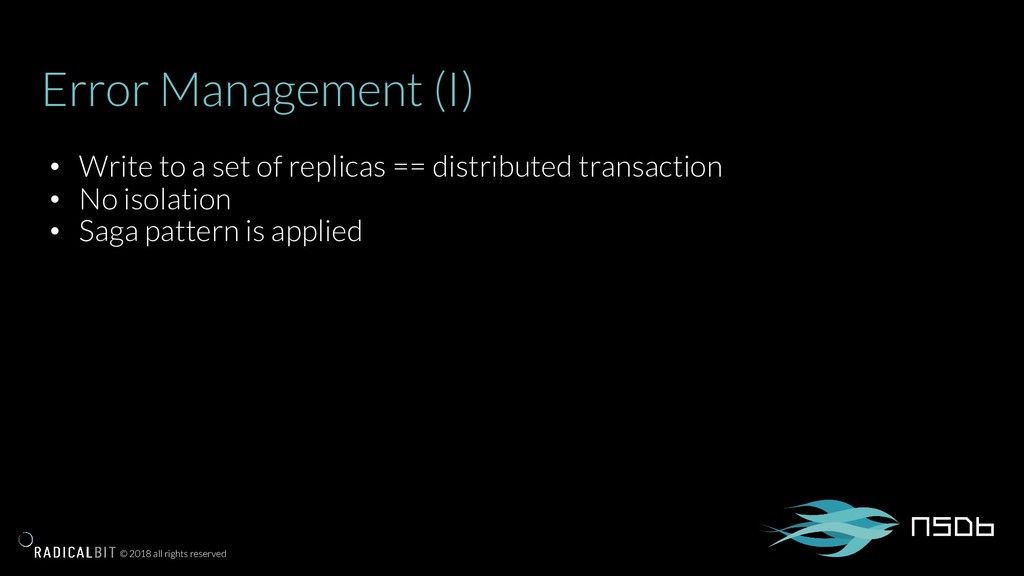
Data Replication • Active-active replication approach • NSDb implements two levels of replicas in terms of consistency • Consistent replicas: A record must be correctly acknowledge to all those nodes before the ack can be returned to the caller • Eventual replicas: the records will be written asynchronously (it fails silently)
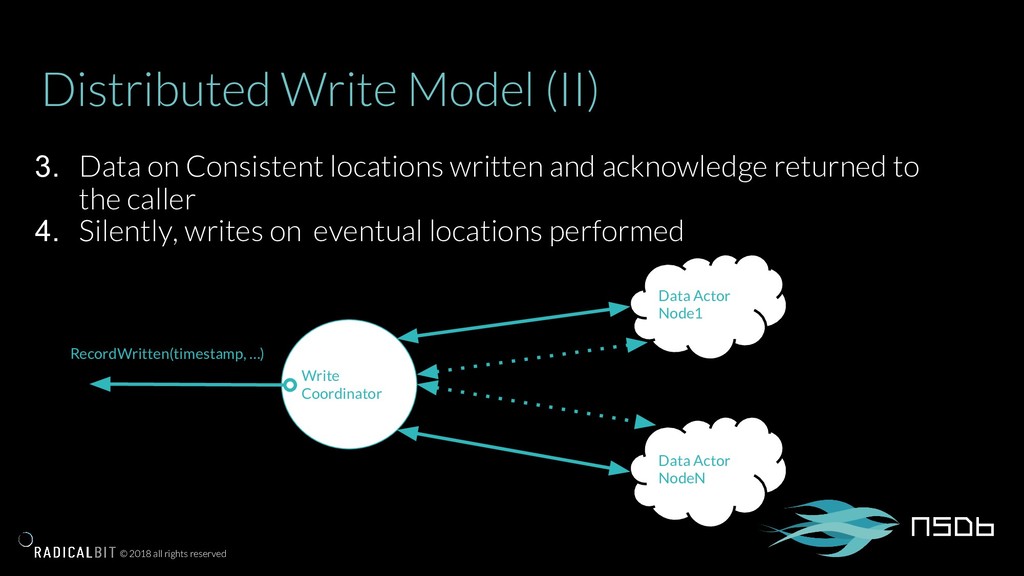
Distributed Write Model (II) 3. Data on Consistent locations written and acknowledge returned to the caller 4. Silently, writes on eventual locations performed Data Actor Node1 Write Coordinator RecordWritten(timestamp, …) Data Actor NodeN
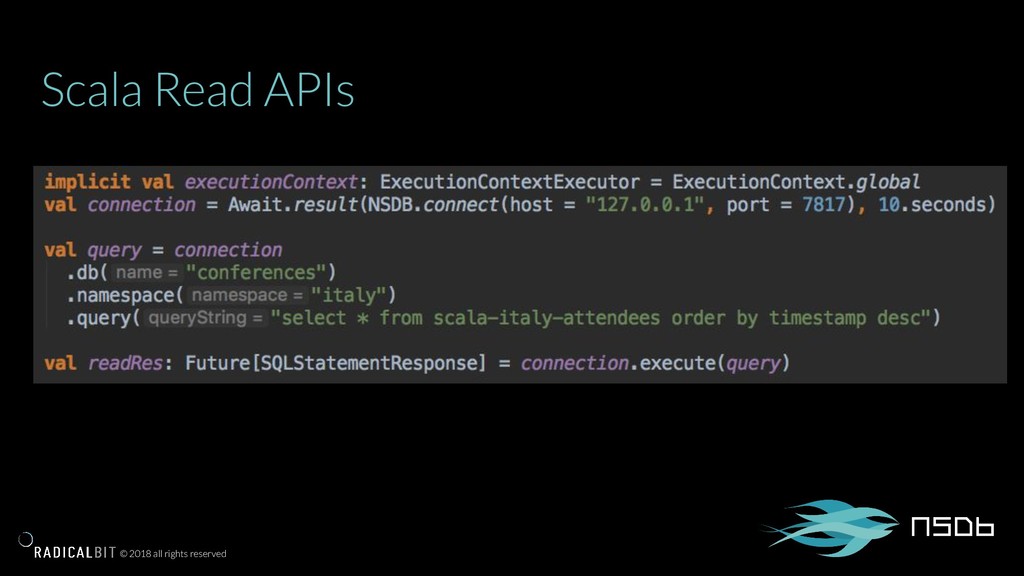
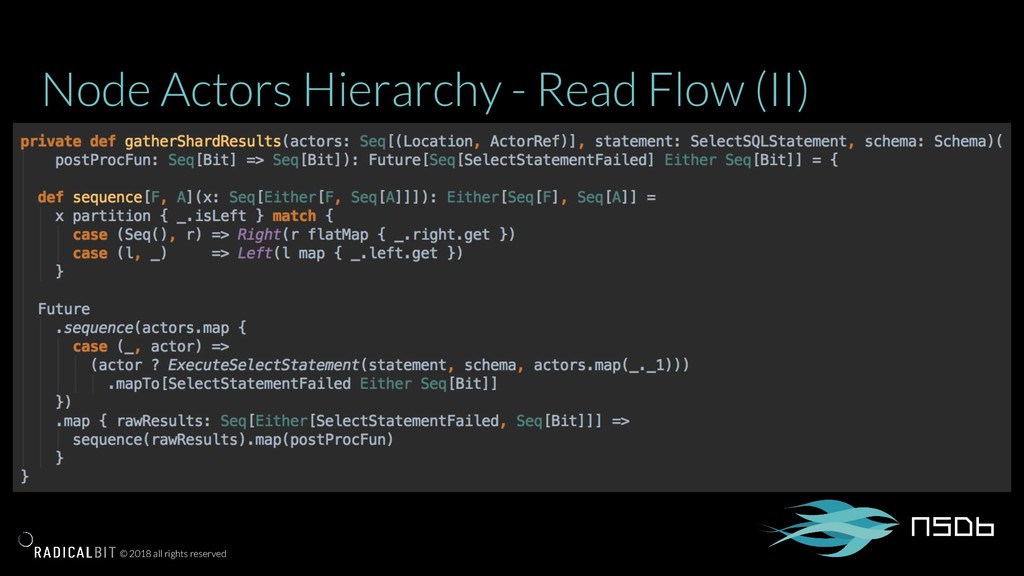
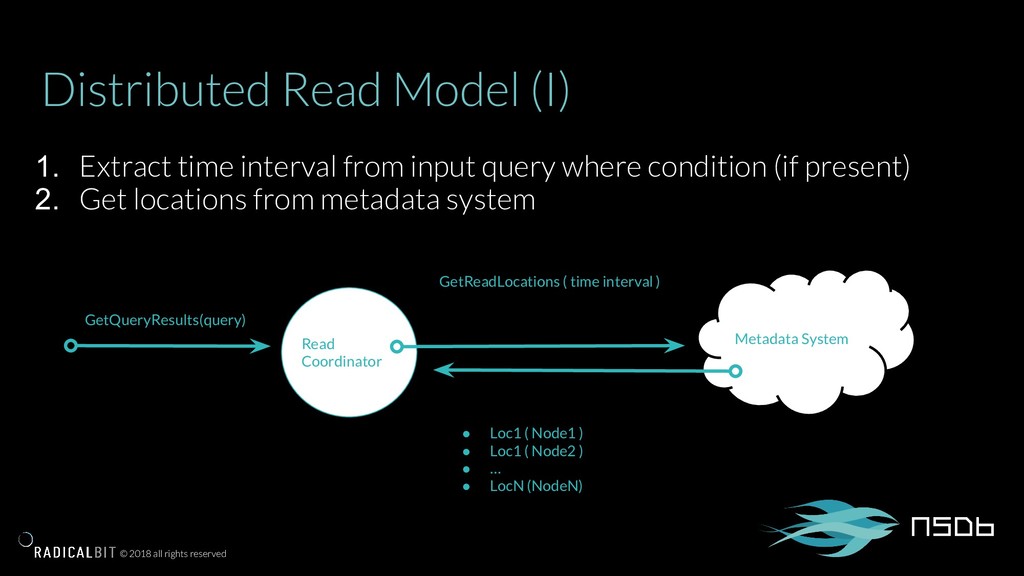
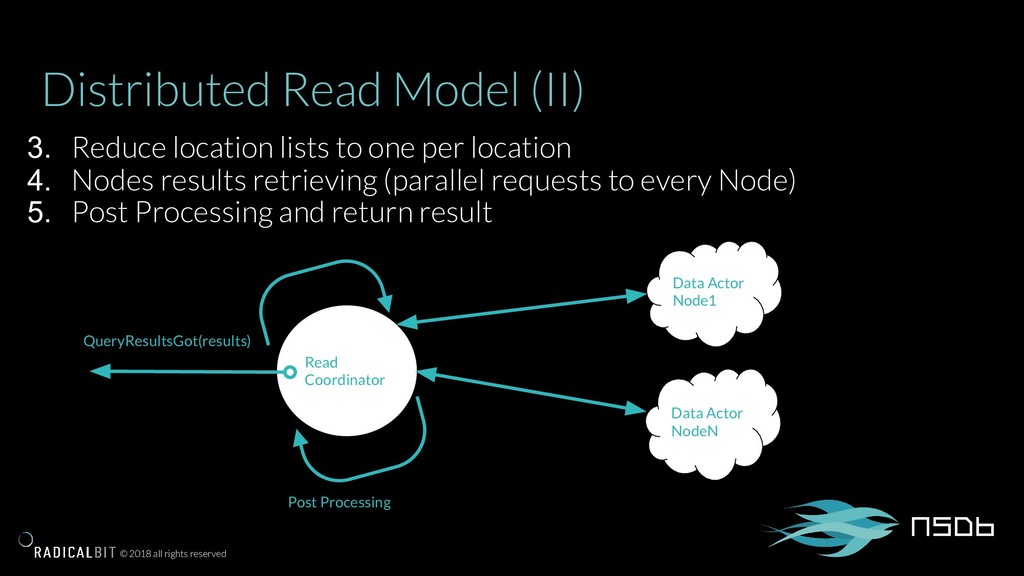
Distributed Read Model (II) 3. Reduce location lists to one per location 4. Nodes results retrieving (parallel requests to every Node) 5. Post Processing and return result Data Actor Node1 Read Coordinator QueryResultsGot(results) Data Actor NodeN Post Processing


 yahonda
 yu23ki14
 pfn
 mohab1
 jtakeda
 syuchimu
 hiracky16
 techtekt
 teamlab
 akhino
 tetsuya28
 aemeredith
 marktimemedia
 scottboms
 gurzu
 mza
 smashingmag
 helmedeiros
 cargoodrich
 skipperchong
 axbom
 codingconduct
 tmiket