Upgrade to Pro — share decks privately, control downloads, hide ads and more …

The Ultimate Guide to Waterproofing

The Ultimate Guide to Waterproofing

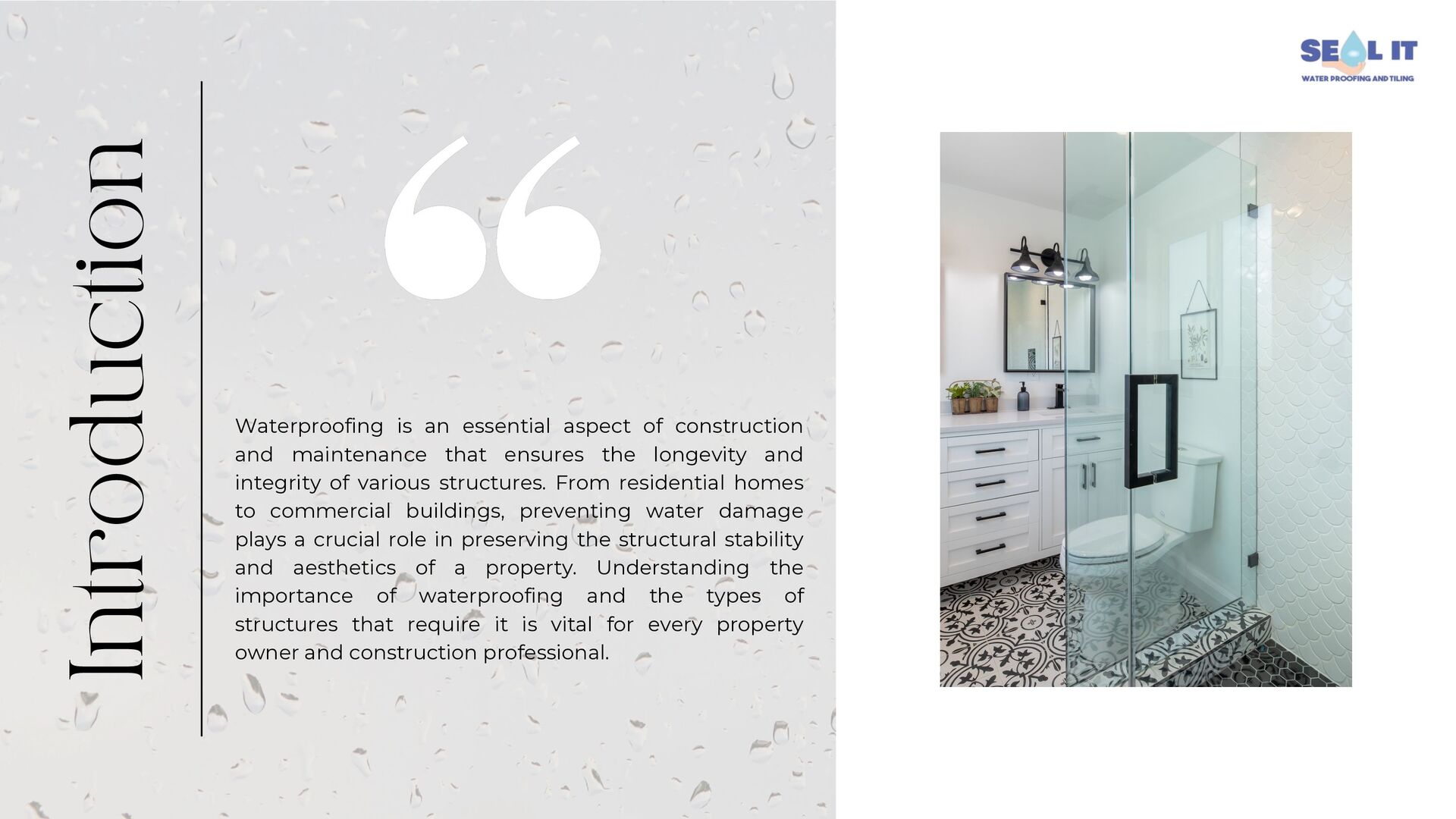
Waterproofing is an essential aspect of construction and maintenance that ensures the longevity and integrity of various structures. From residential homes to commercial buildings, preventing water damage plays a crucial role in preserving the structural stability and aesthetics of a property. Understanding the importance of waterproofing and the types of structures that require it is vital for every property owner and construction professional.

Avatar for Sealitwaterproofing

Sealitwaterproofing

September 20, 2023

Other Decks in Business

Transcript

  1. contents 01 02 03 05 06 07 introduction understanding waterproofing

    common waterproofing issues DIY Waterproofing vs. Professional Waterproofing Services Maintenance and Repairs Waterproofing Costs and Budgeting 04 Waterproofing for Different Areas
  2. Introduction Waterproofing is an essential aspect of construction and maintenance

    that ensures the longevity and integrity of various structures. From residential homes to commercial buildings, preventing water damage plays a crucial role in preserving the structural stability and aesthetics of a property. Understanding the importance of waterproofing and the types of structures that require it is vital for every property owner and construction professional.
  3. The Importance of Waterproofing Waterproofing is vital because it safeguards

    structures against the detrimental effects of water infiltration. When water seeps into a building, it can cause a range of problems such as mold growth, rotting of wood, corrosion of metal, deteriorating concrete, and compromising the overall structural integrity. By implementing proper waterproofing measures, property owners can prevent these issues, leading to long-term savings on maintenance and repair costs. Types of Structures that Require Waterproofing Waterproofing is necessary for various structures, including: • Residential Homes: Whether it's the foundation, roof, or basement, homeowners must waterproof their properties to keep them safe and dry. • Commercial Buildings: Office spaces, retail stores, warehouses, and industrial facilities all require effective waterproofing to protect valuable assets and maintain a healthy environment. • Infrastructure Projects: Bridges, tunnels, dams, and other infrastructure projects need robust waterproofing solutions to avoid expensive repairs caused by water damage.
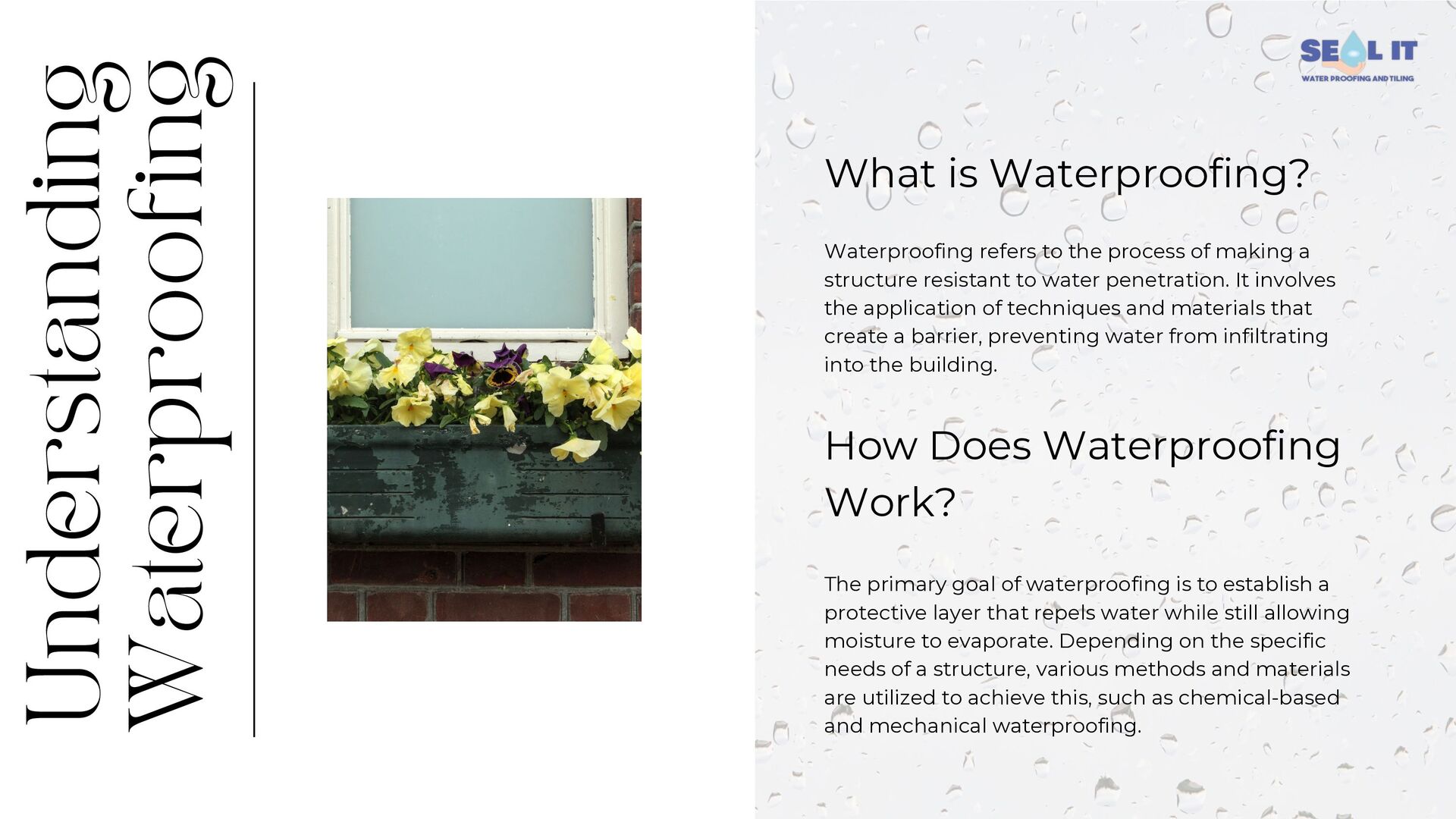
  4. Understanding Waterproofing Waterproofing refers to the process of making a

    structure resistant to water penetration. It involves the application of techniques and materials that create a barrier, preventing water from infiltrating into the building. What is Waterproofing? The primary goal of waterproofing is to establish a protective layer that repels water while still allowing moisture to evaporate. Depending on the specific needs of a structure, various methods and materials are utilized to achieve this, such as chemical-based and mechanical waterproofing. How Does Waterproofing Work?
  5. Exterior Waterproofing Identifying Foundation Leaks Detecting foundation leaks is crucial

    to address waterproofing issues promptly. Signs of foundation leaks include dampness or standing water in the basement, cracks on walls or floors, musty odors, and mold or mildew growth. Causes of Foundation Leaks Foundation leaks are commonly caused by inadequate drainage, poor exterior grading, cracked foundation walls, hydrostatic pressure, and heavy rain or flooding. Foundation Waterproofing Detecting Roof Leaks Detecting roof leaks early is crucial to prevent extensive damage. Signs of roof leaks include water stains on ceilings or walls, missing or damaged shingles, clogged gutters, and visible cracks or gaps on the roof. Types of Roofing Materials for Waterproofing There are various roofing materials available for waterproofing, including asphalt shingles, metal roofing, clay tiles, and synthetic membranes like EPDM or TPO. Roof Waterproofing Signs of Wall Water Infiltration Signs of wall water infiltration include peeling paint, damp or discolored walls, efflorescence (white powdery substance), and the presence of mold or mildew. Effective Wall Waterproofing Methods To waterproof walls, techniques such as exterior waterproofing barriers, sealants, and waterproof membranes can be employed to prevent water from penetrating the structure. Wall Waterproofing
  6. Waterproofing for Different Areas Bathrooms are vulnerable to water damage,

    making proper waterproofing essential for preventing leaks and other related issues. Common Bathroom Leakage Points Common leakage points in bathrooms include shower areas, bathtub junctions, toilet connections, and around sinks and faucets. Essential Bathroom Waterproofing Techniques Bathroom waterproofing techniques include applying waterproof membranes, sealing joints and connections, using waterproof coatings or paints, and ensuring proper sloping in shower areas. Swimming pools require effective waterproofing to avoid structural damage and water loss. Challenges with Pool Waterproofing Pools face challenges such as hydrostatic pressure, chemical exposure, ground movement, and constant water immersion, necessitating robust waterproofing solutions. Key Pool Waterproofing Methods Pool waterproofing methods include using water-stop construction joints, applying high-quality waterproofing membranes or coatings, and utilizing specialized sealants for critical areas such as tiles and expansion joints. Swimming Pool Waterproofing Bathroom Waterproofing
  7. Waterproofing for Different Areas Balconies and terraces are frequently exposed

    to the elements, requiring proper waterproofing to prevent water penetration and subsequent damage. Balcony and Terrace Waterproofing Problems Common problems associated with balcony and terrace waterproofing include cracks, inadequate drainage, and improper application of waterproofing materials. Appropriate Waterproofing Approaches Appropriate approaches for balcony and terrace waterproofing include surface preparation, applying suitable membranes or coatings, installing proper slopes, and ensuring effective drainage systems. Terrace and Balcony Waterproofing
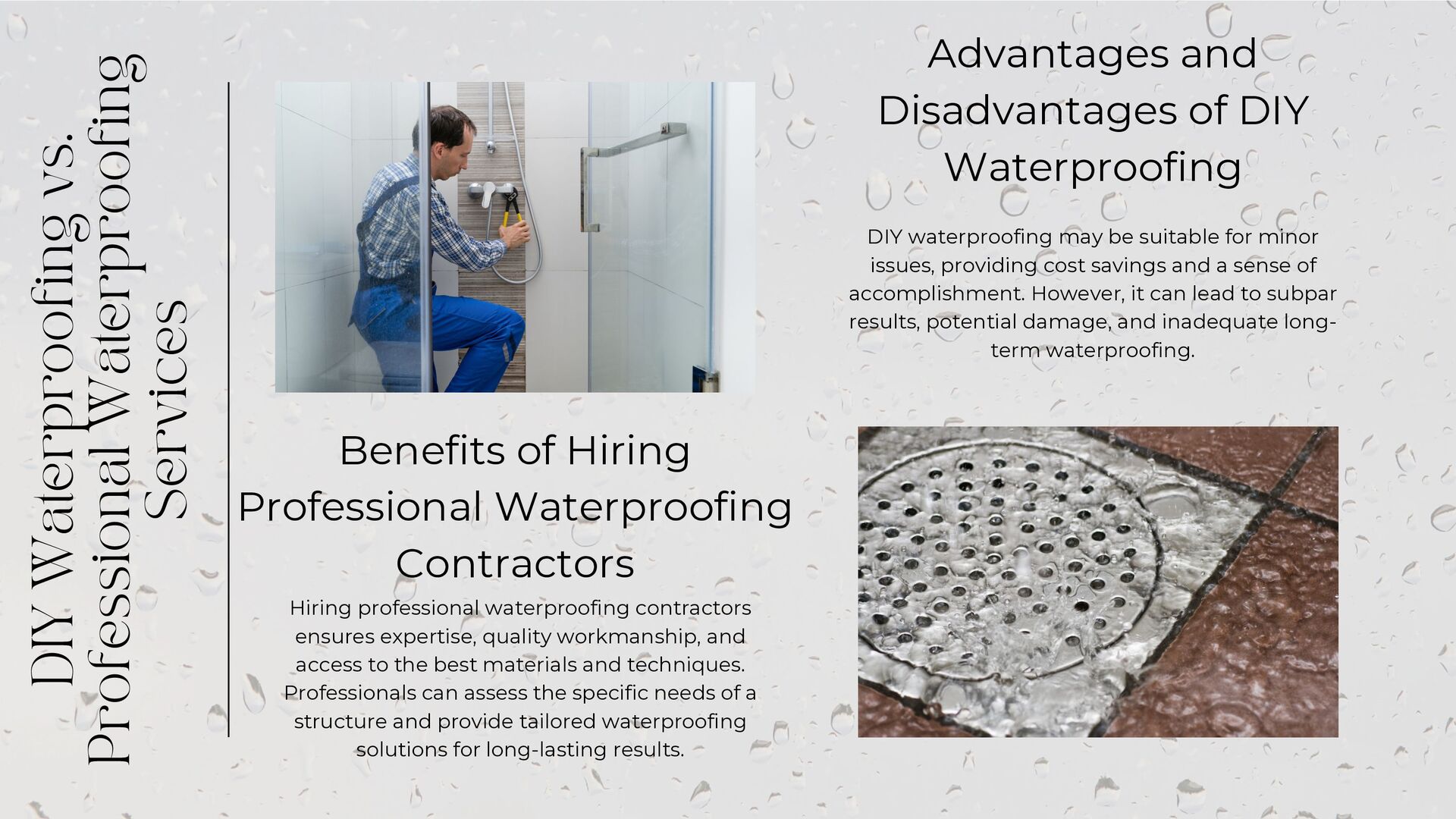
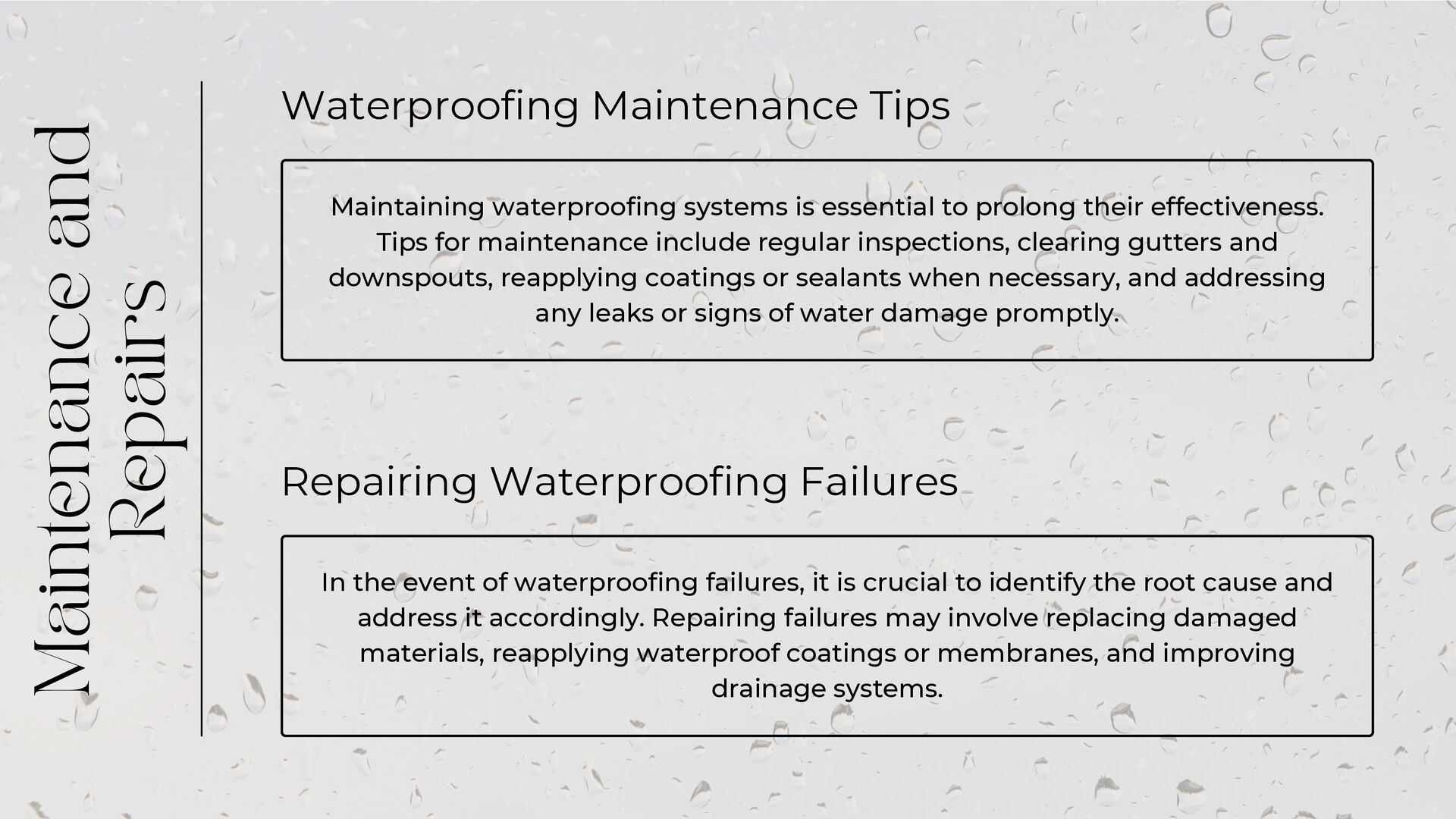
  8. DIY Waterproofing vs. Professional Waterproofing Services DIY waterproofing may be

    suitable for minor issues, providing cost savings and a sense of accomplishment. However, it can lead to subpar results, potential damage, and inadequate long- term waterproofing. Hiring professional waterproofing contractors ensures expertise, quality workmanship, and access to the best materials and techniques. Professionals can assess the specific needs of a structure and provide tailored waterproofing solutions for long-lasting results. Advantages and Disadvantages of DIY Waterproofing Benefits of Hiring Professional Waterproofing Contractors
  9. Maintenance and Repairs Waterproofing Maintenance Tips Maintaining waterproofing systems is

    essential to prolong their effectiveness. Tips for maintenance include regular inspections, clearing gutters and downspouts, reapplying coatings or sealants when necessary, and addressing any leaks or signs of water damage promptly. Repairing Waterproofing Failures In the event of waterproofing failures, it is crucial to identify the root cause and address it accordingly. Repairing failures may involve replacing damaged materials, reapplying waterproof coatings or membranes, and improving drainage systems.
  10. Waterproofing Costs and Budgeting Factors Affecting Waterproofing Costs Several factors

    impact waterproofing costs, including the size of the structure, the extent of damage, the type of waterproofing method/material, and the complexity of the project. Preparing a Waterproofing Budget For effective budgeting, property owners should consider the specific requirements of their structure, seek professional guidance, compare quotes from reputable contractors, and prioritize long-term durability over short-term cost savings.