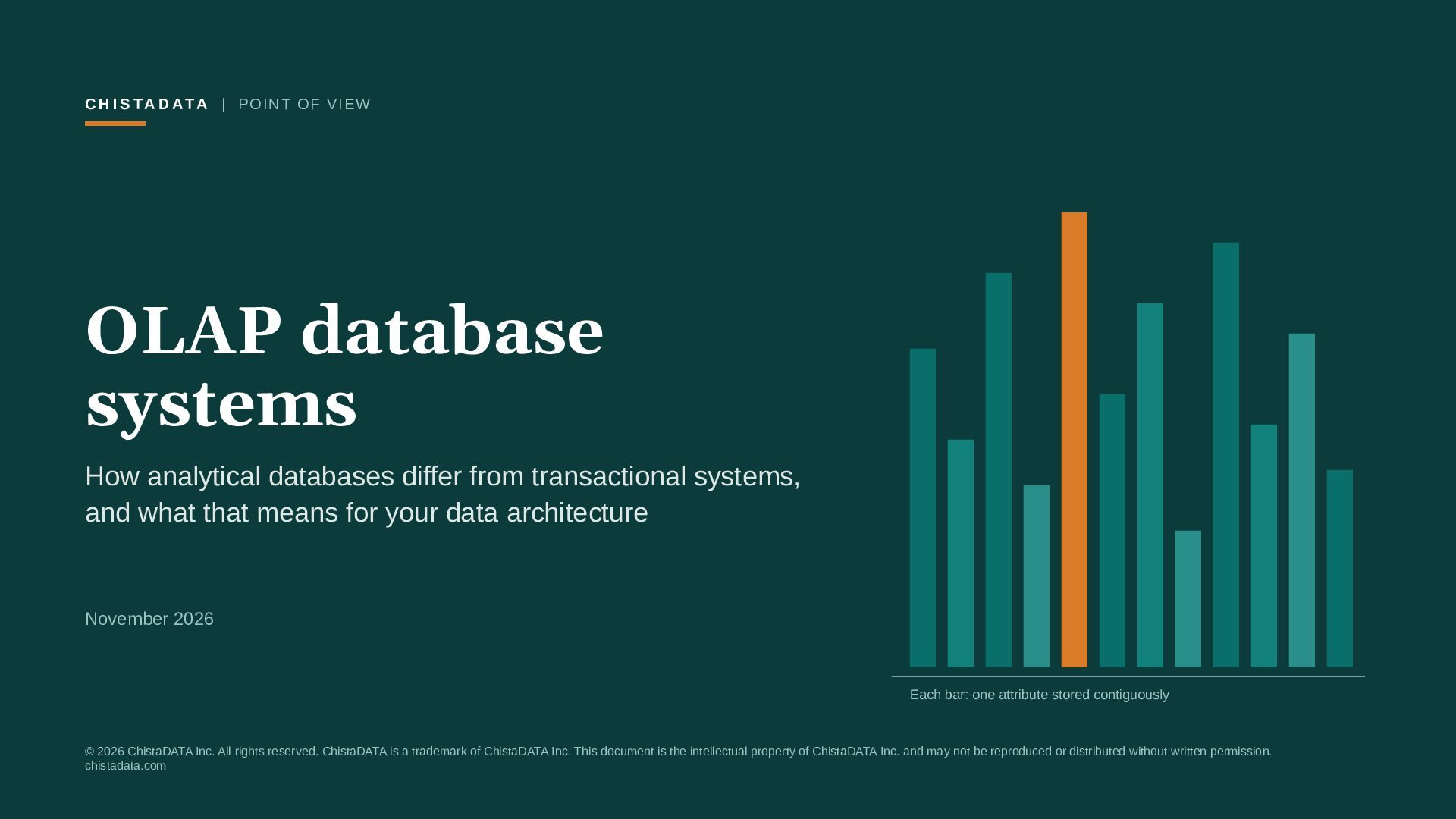
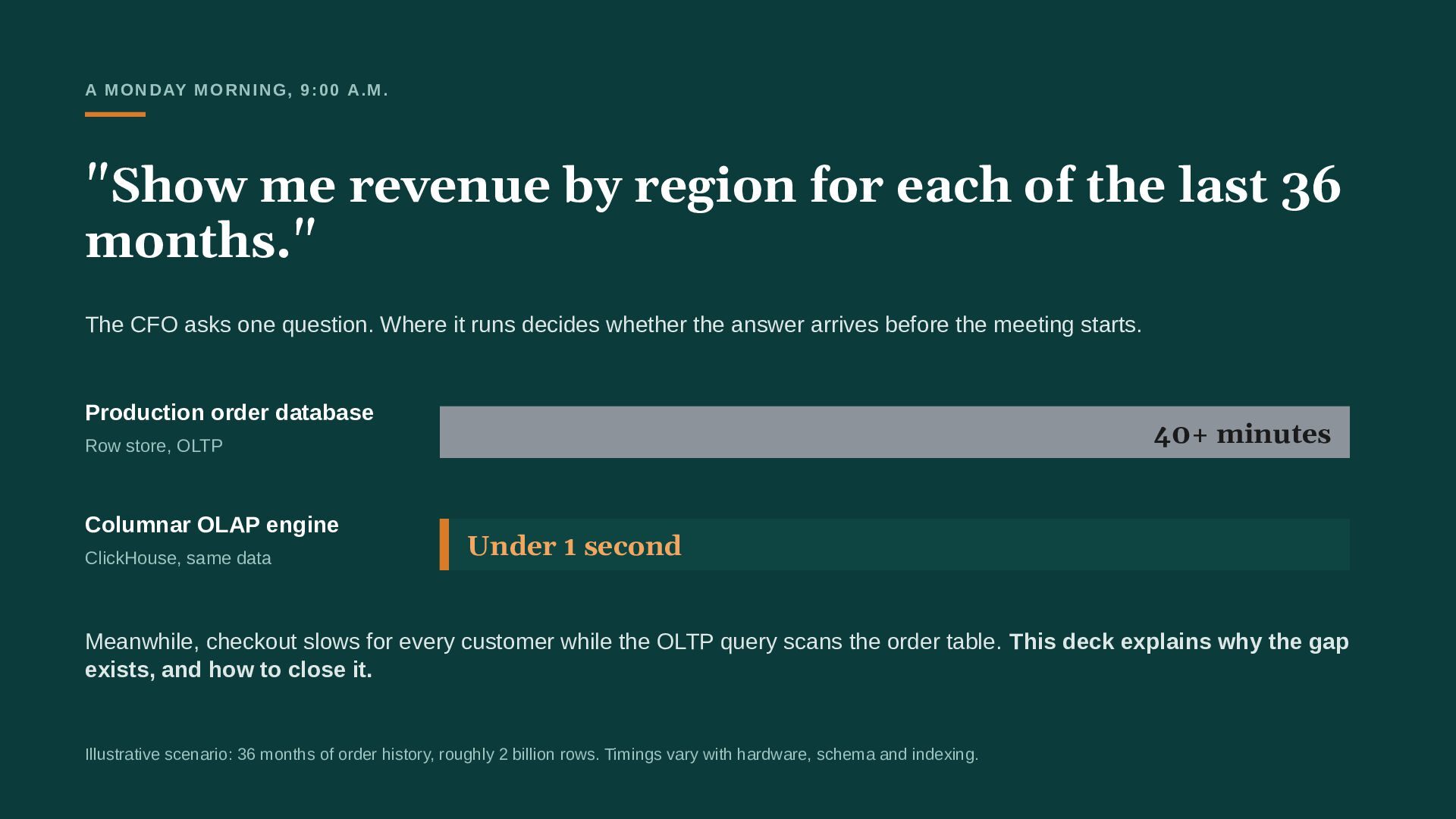
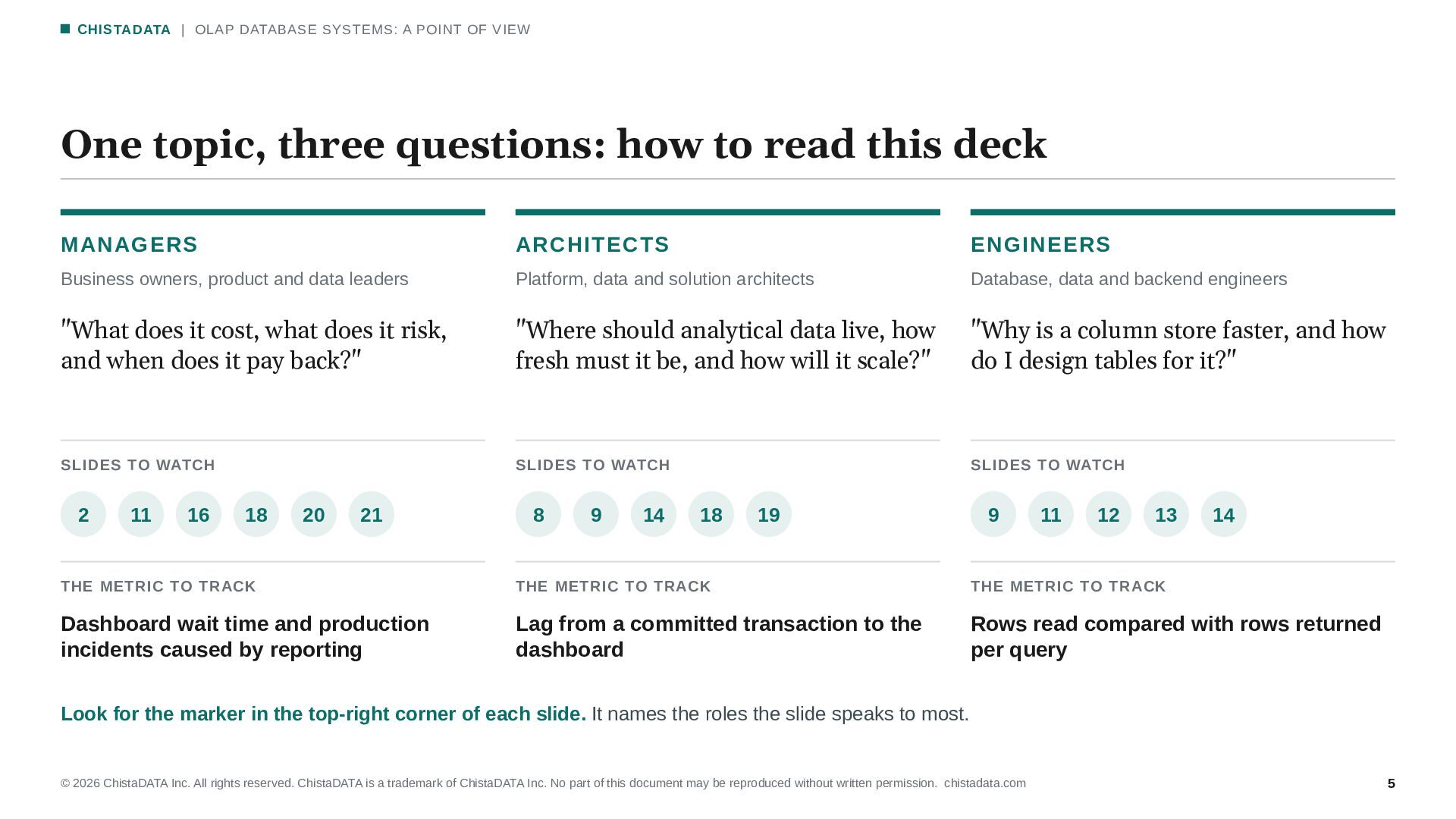
What is an OLAP database, and why does an analytical query that takes 40 minutes on a transactional database finish in under a second on a columnar OLAP engine? This deck answers that for managers, architects and engineers, in that order of depth.
What the deck covers:
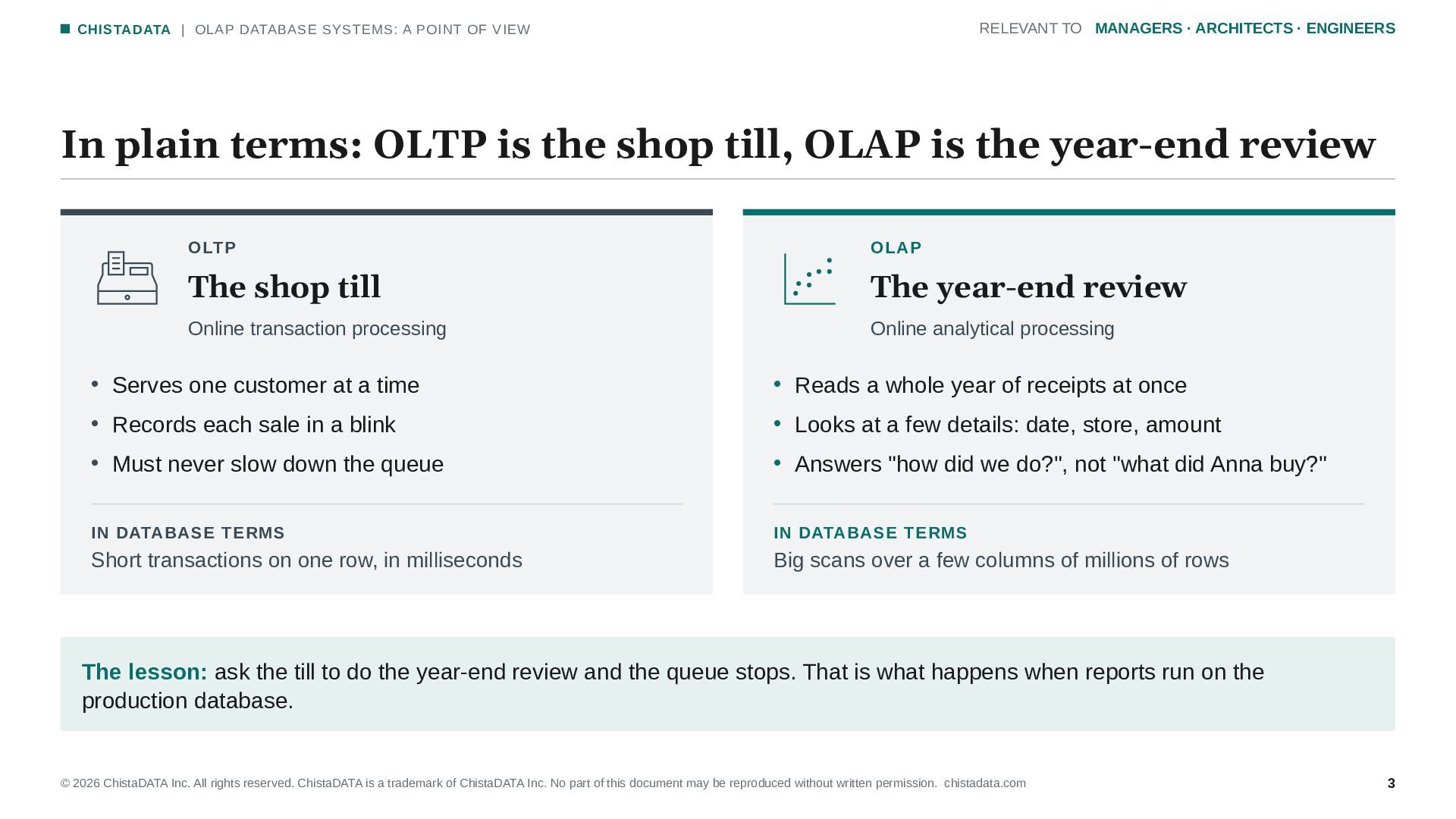
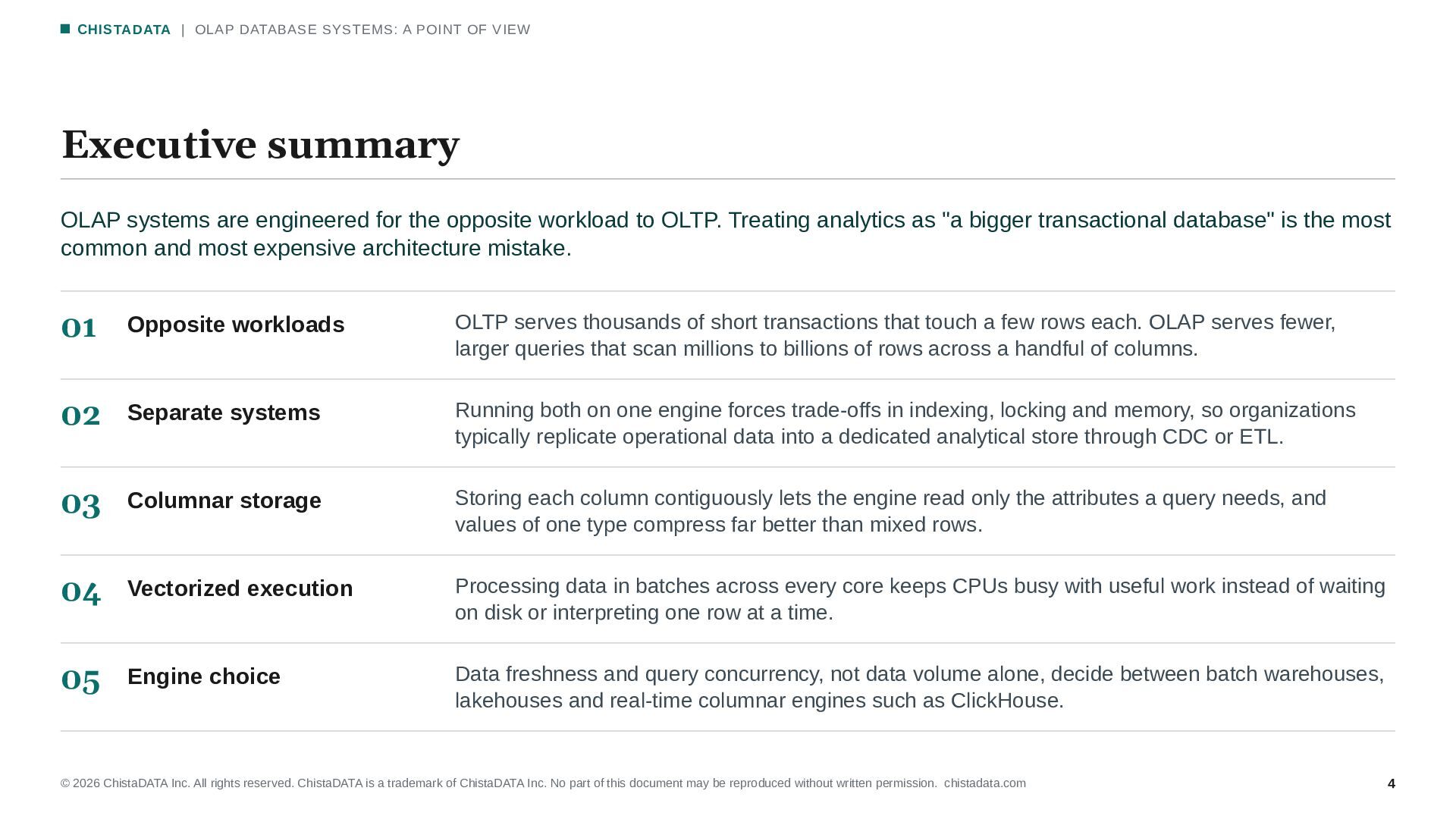
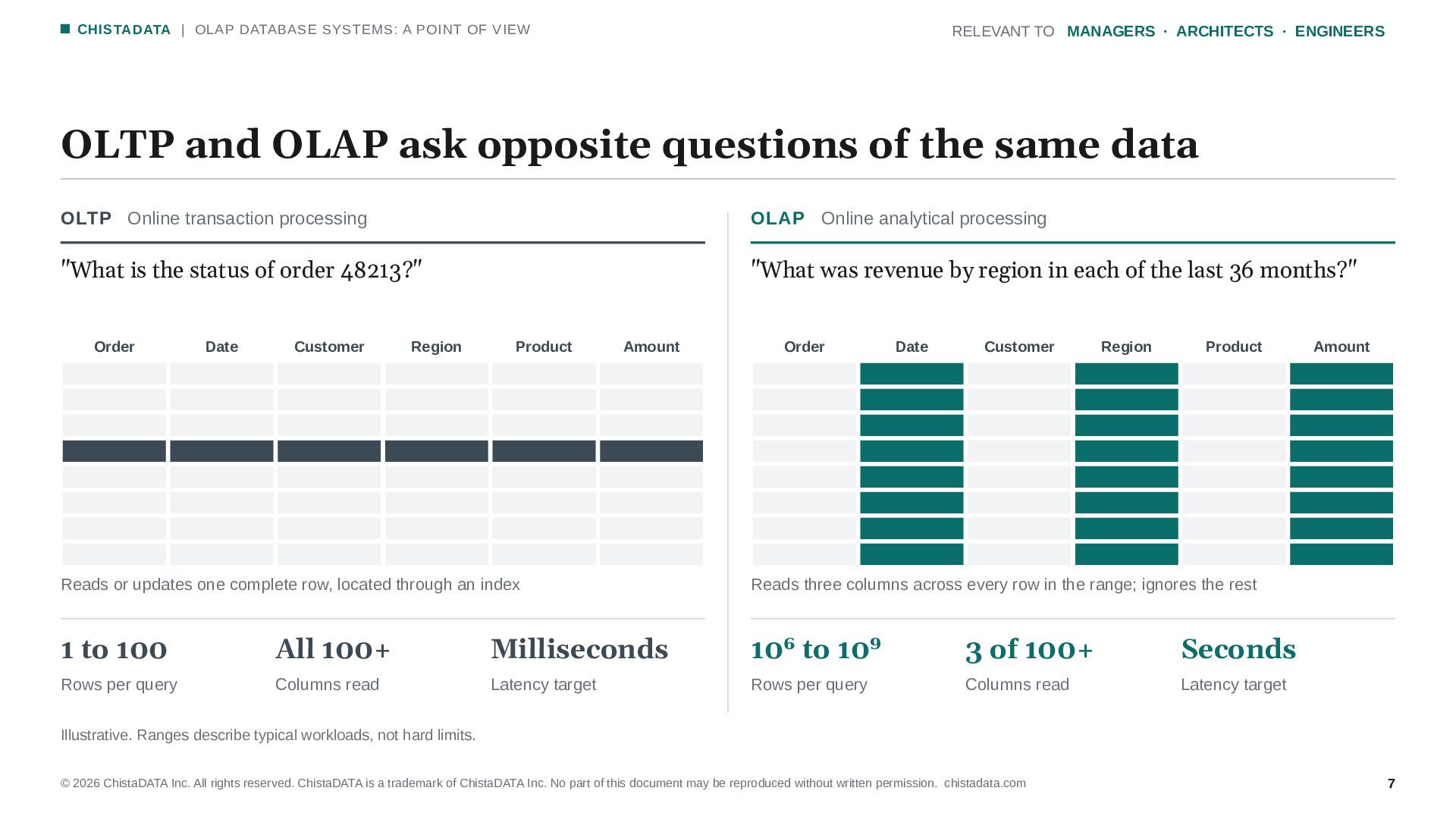
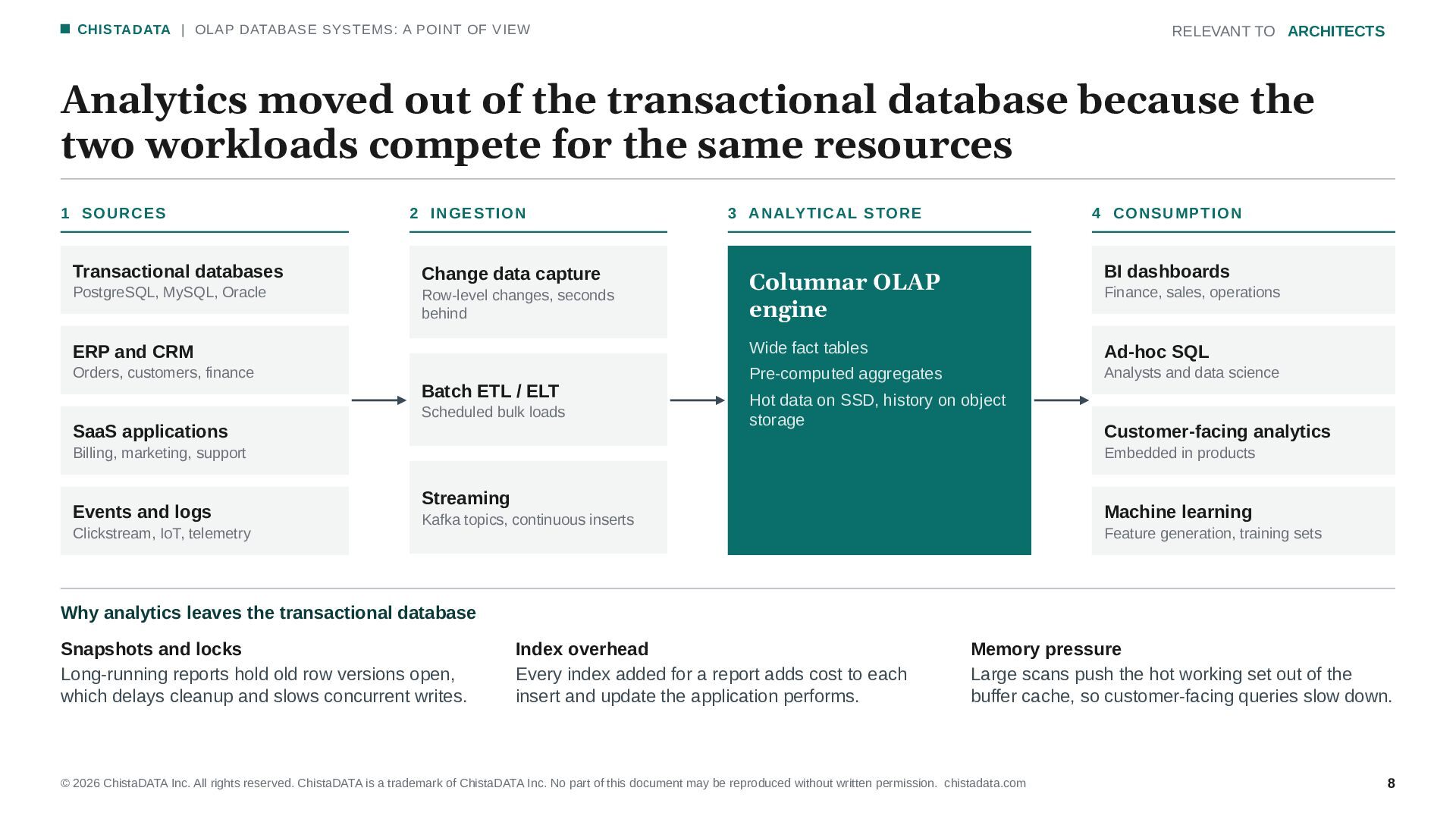
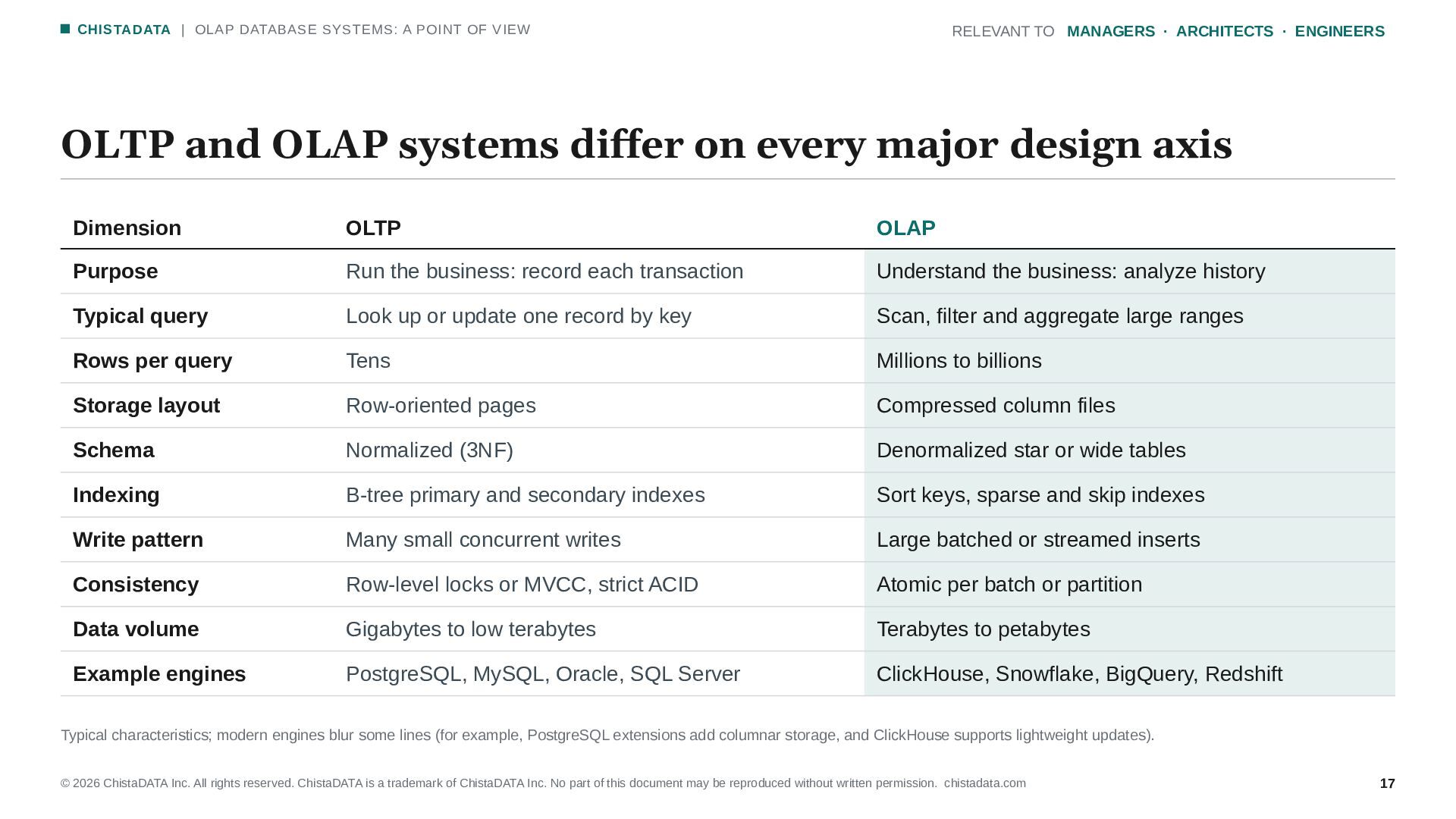
OLAP vs OLTP: two opposite workloads on the same data, and why running analytics on the production database slows checkout for every customer.
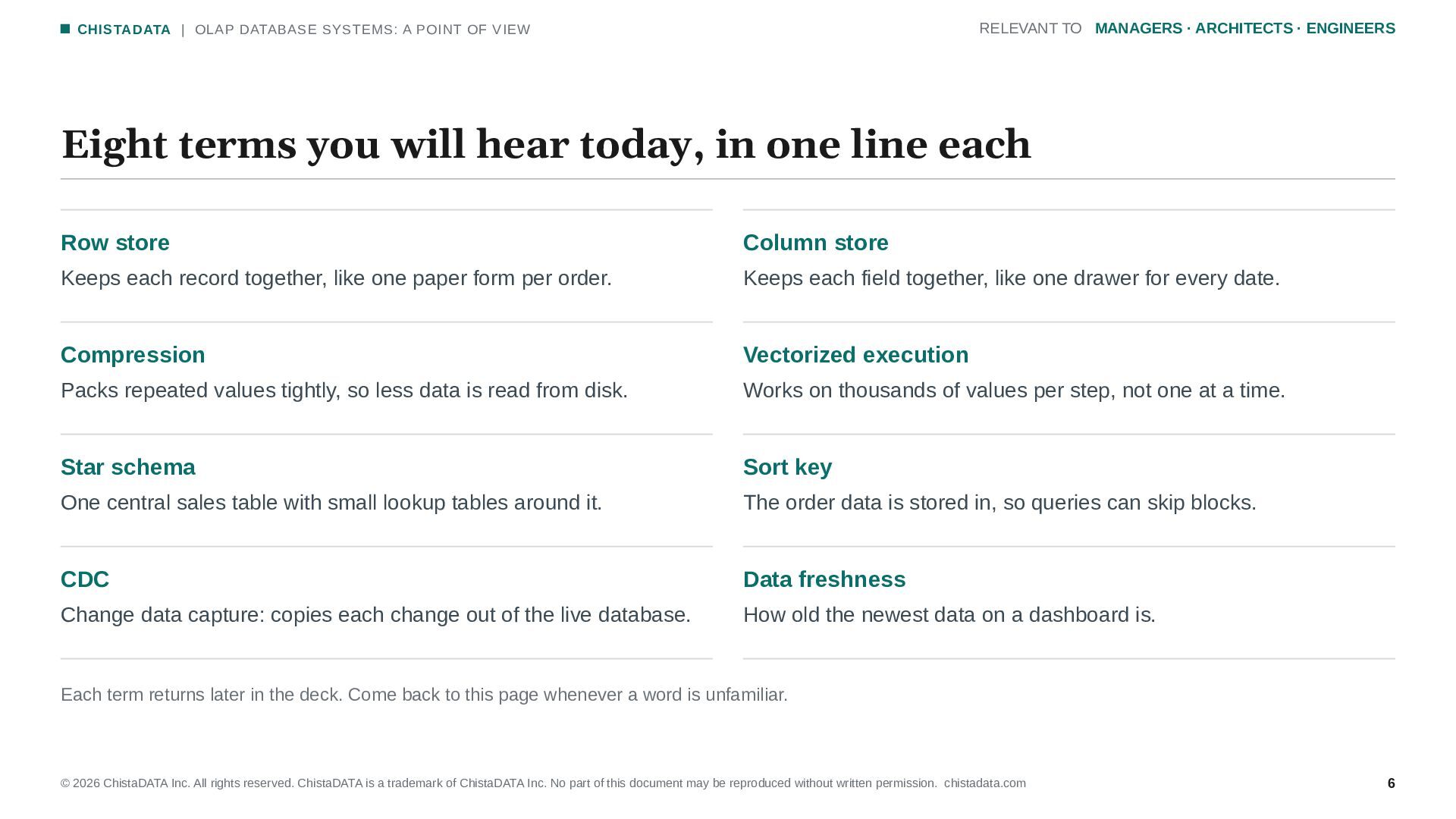
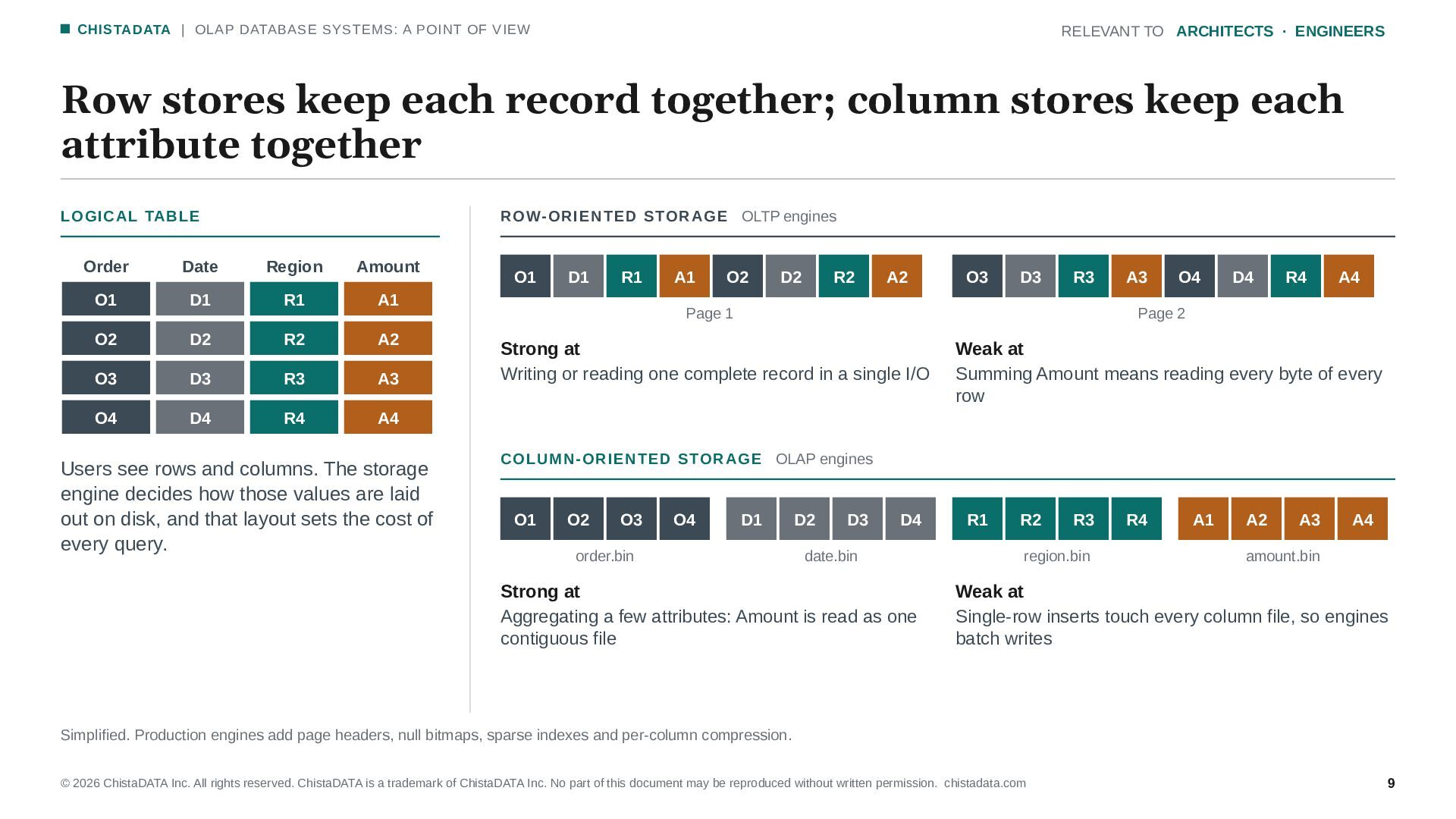
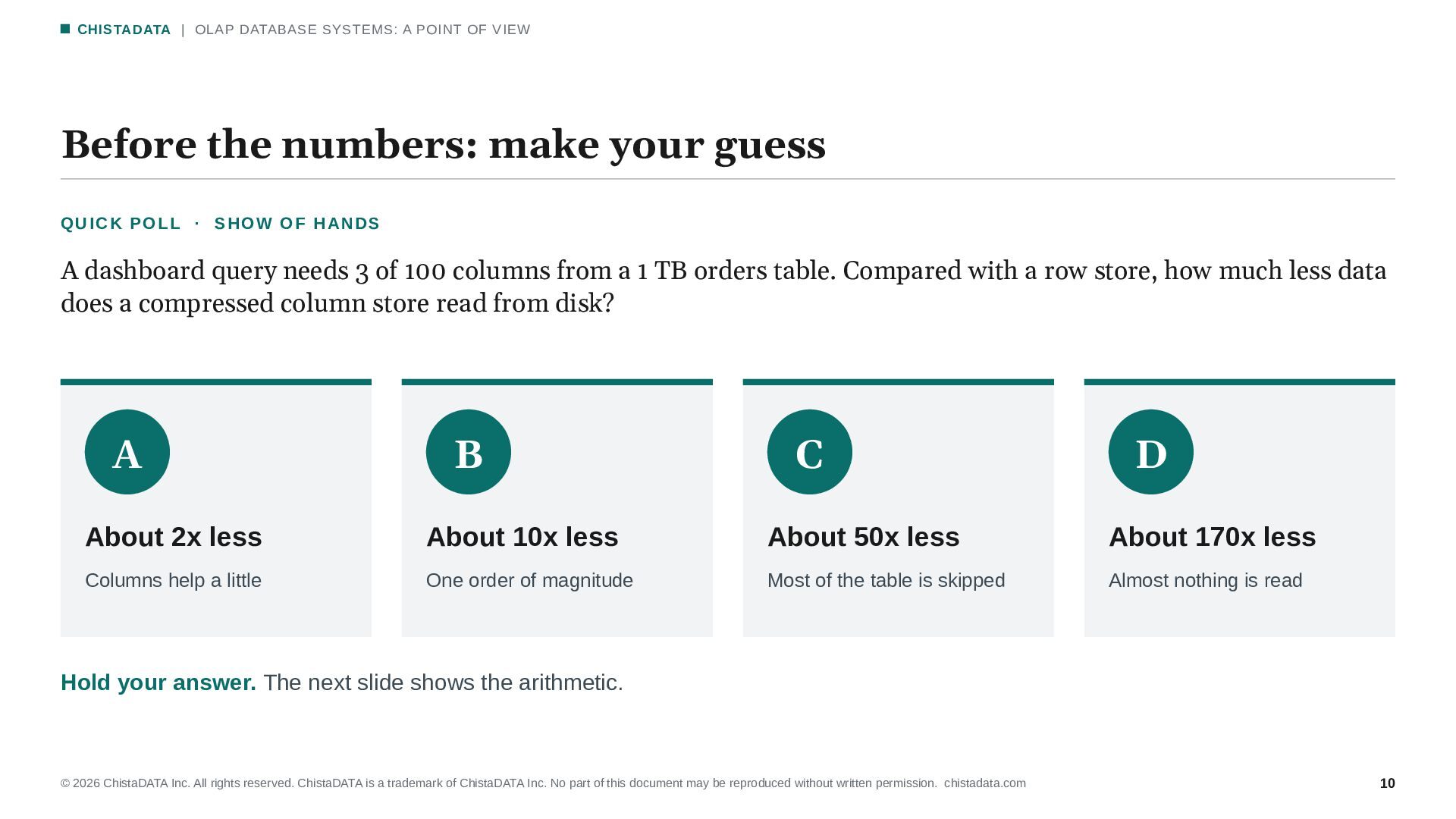
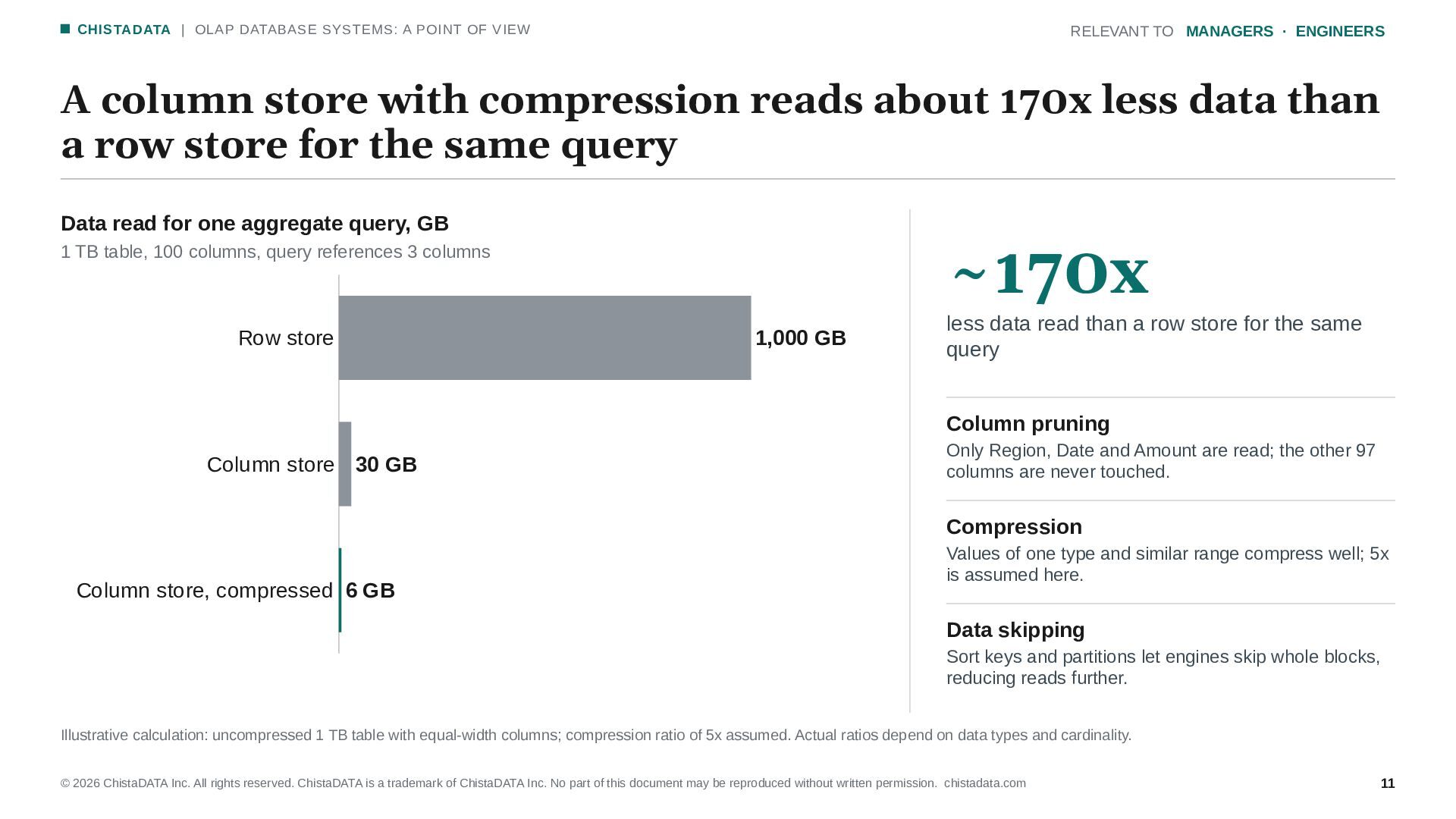
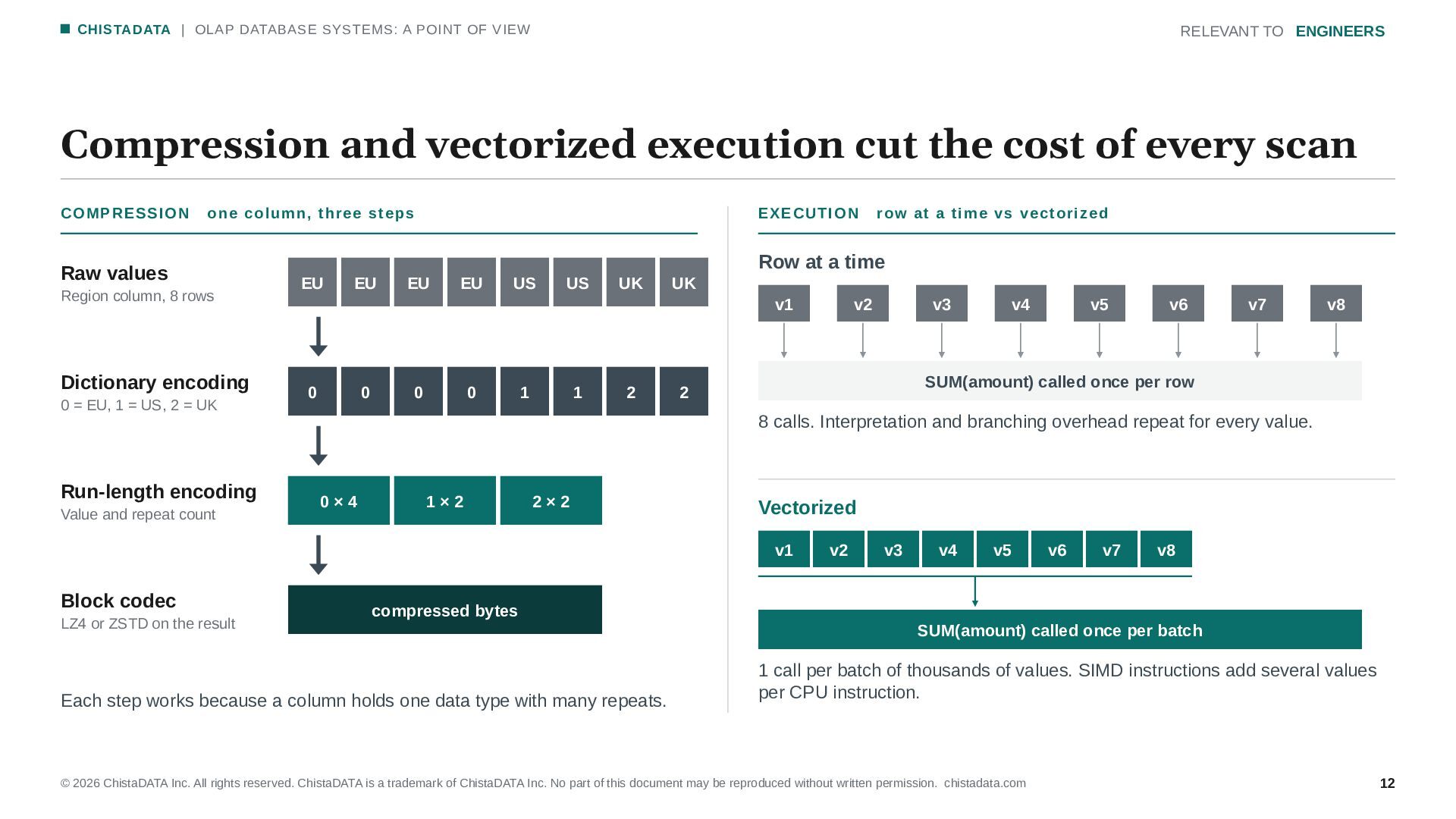
Row stores vs column stores: how columnar storage, column pruning, dictionary and run-length encoding, LZ4/ZSTD compression and vectorized (SIMD) execution let an OLAP query read roughly 170x less data than a row store (worked, illustrative arithmetic on a 1 TB, 100-column table).
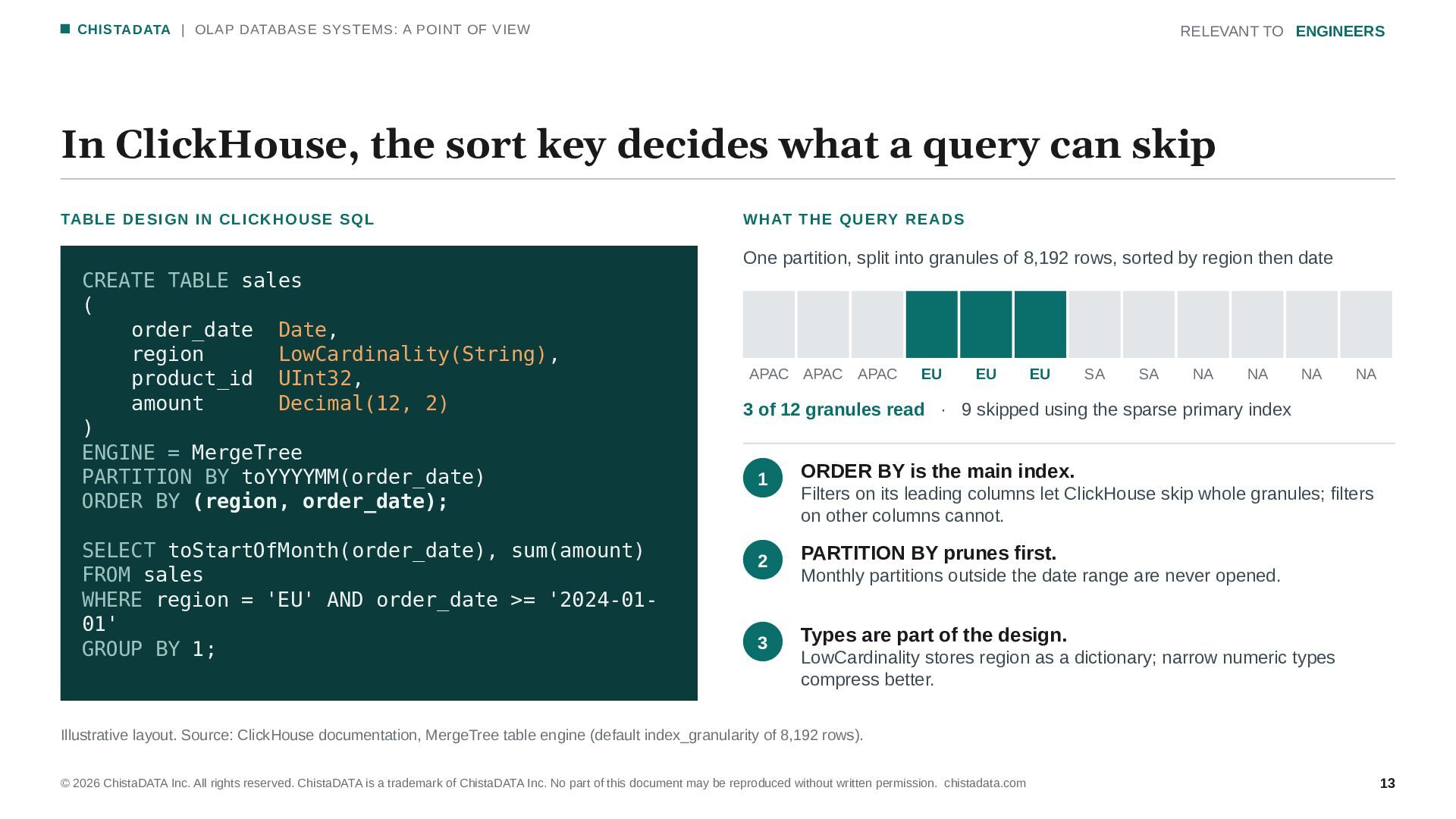
ClickHouse table design: MergeTree engine, ORDER BY sort keys, PARTITION BY, granules and the sparse primary index, and how the sort key decides what a query can skip.
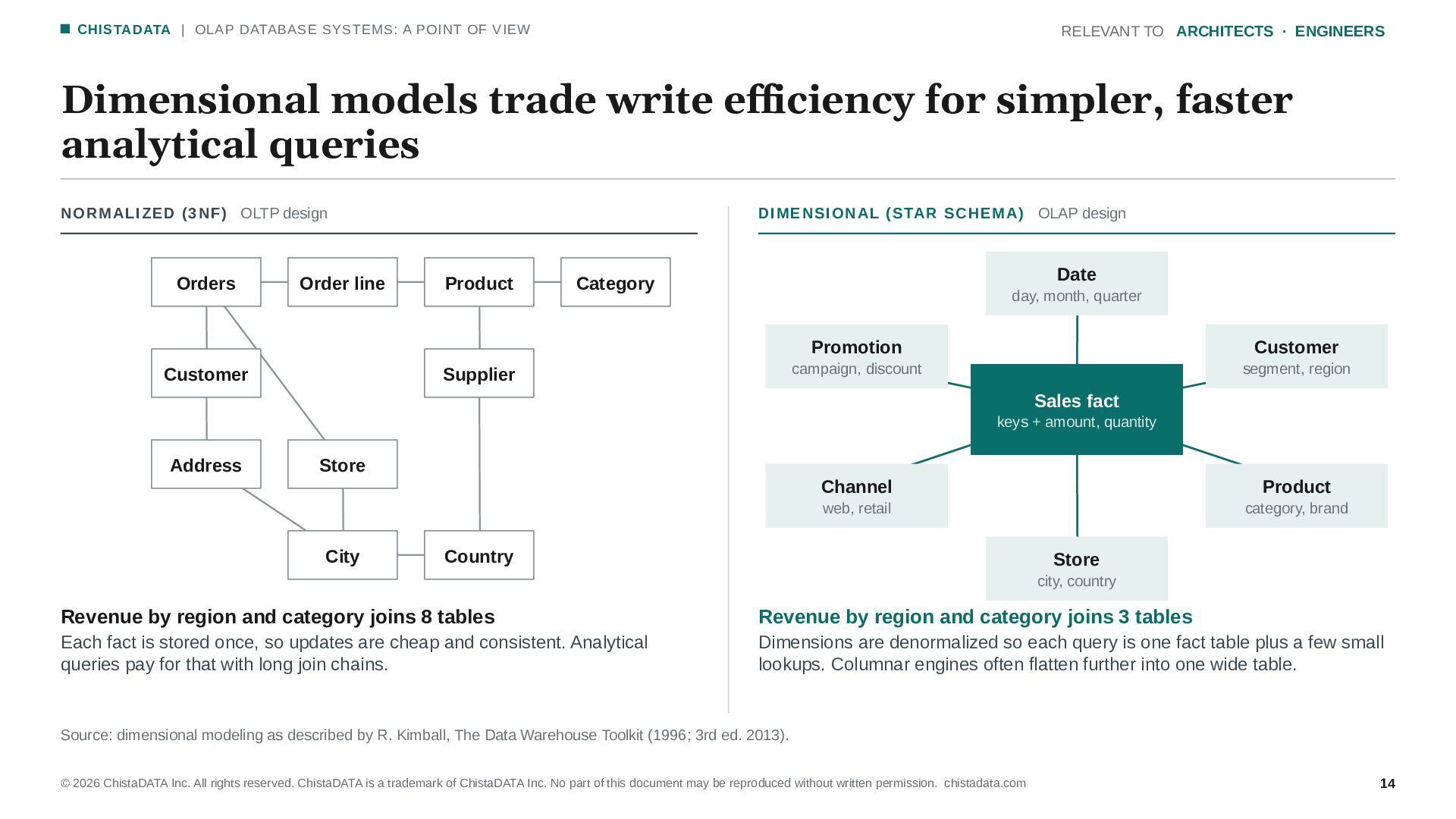
Data modeling for analytics: normalized 3NF vs dimensional star schema (Kimball), fact and dimension tables.
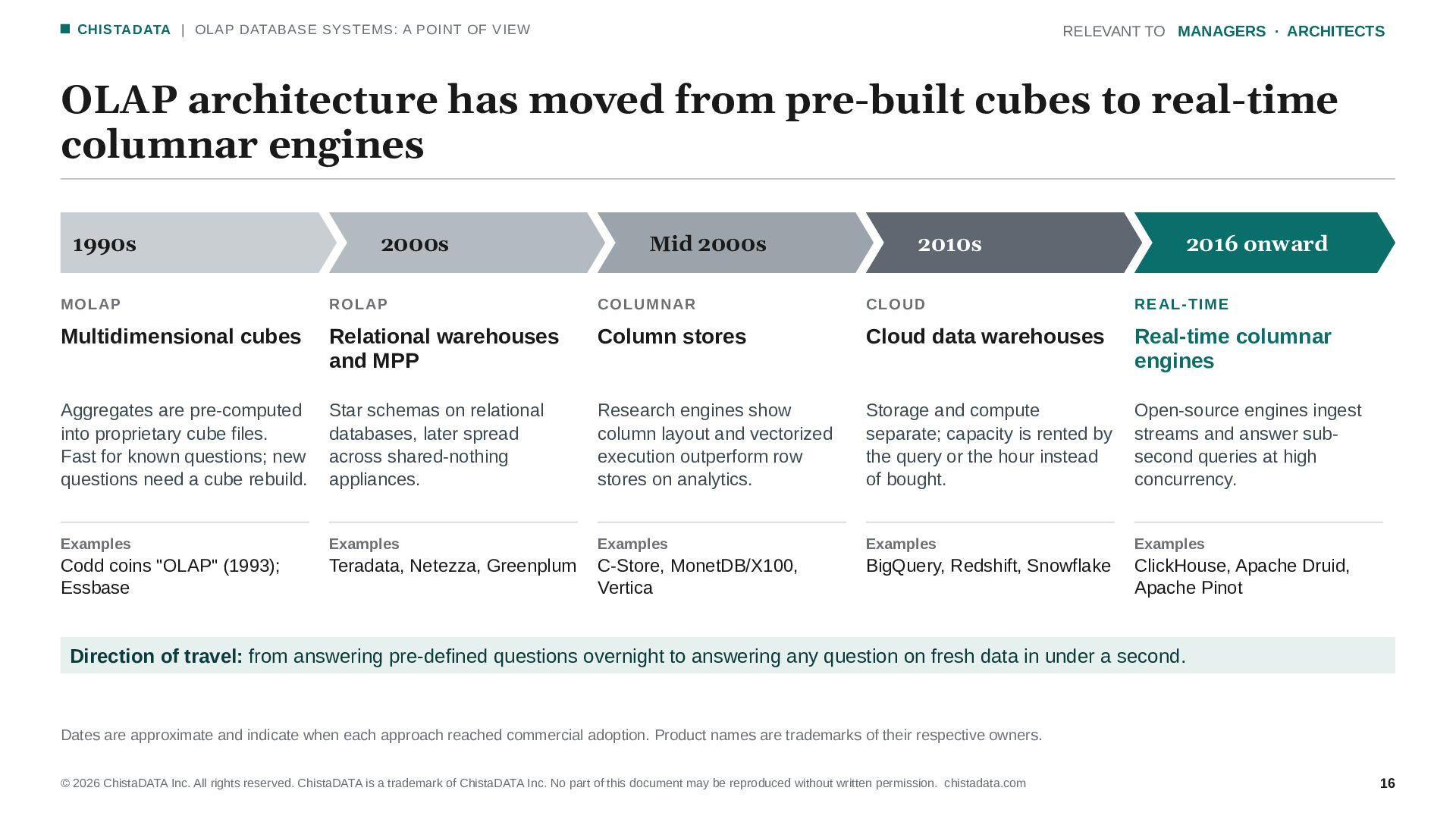
Five eras of OLAP: MOLAP cubes (Essbase), ROLAP and MPP warehouses (Teradata, Netezza, Greenplum), column stores (C-Store, MonetDB, Vertica), cloud data warehouses (Redshift, BigQuery, Snowflake) and real-time columnar engines (ClickHouse, Apache Druid, Apache Pinot).
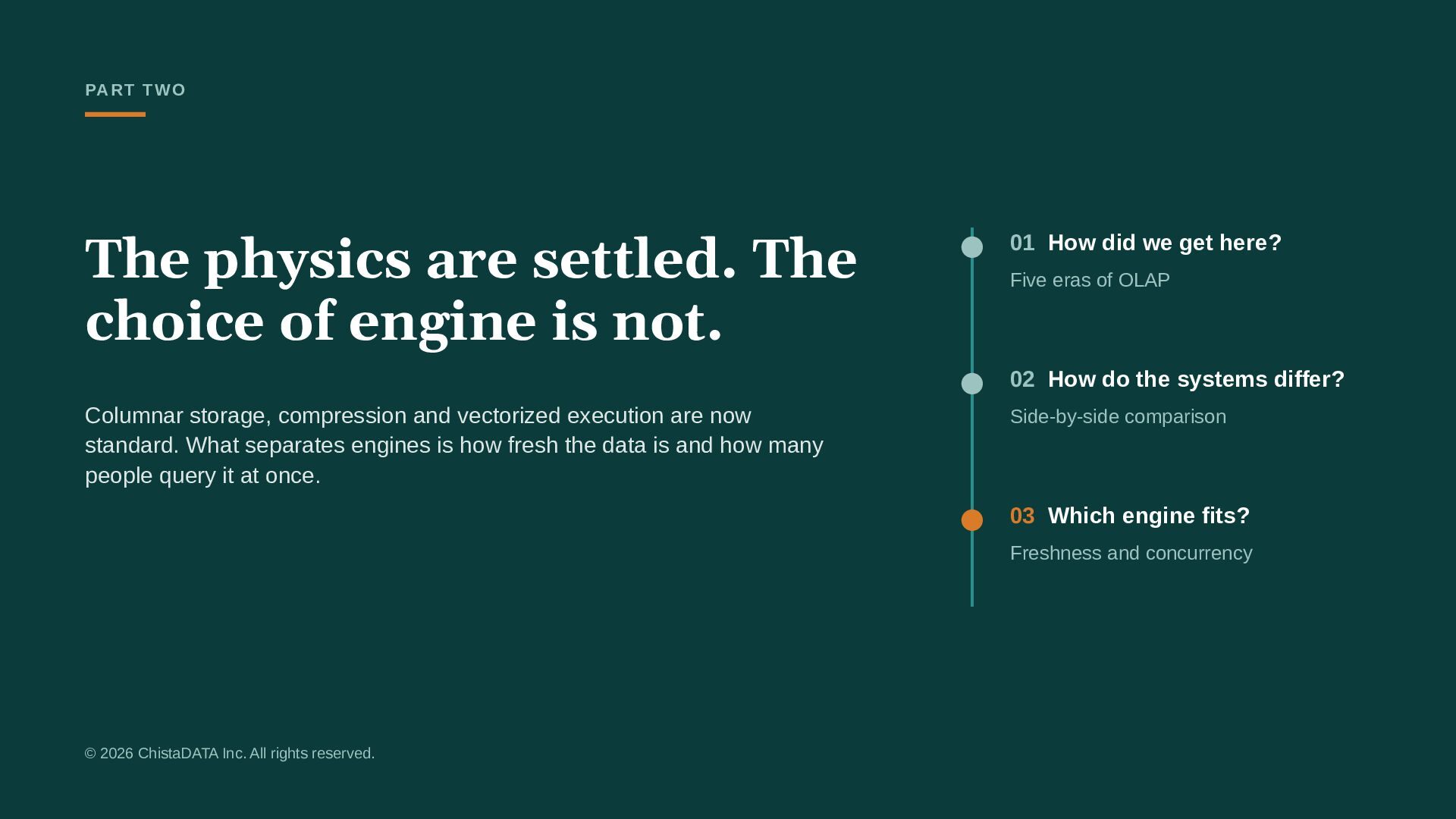
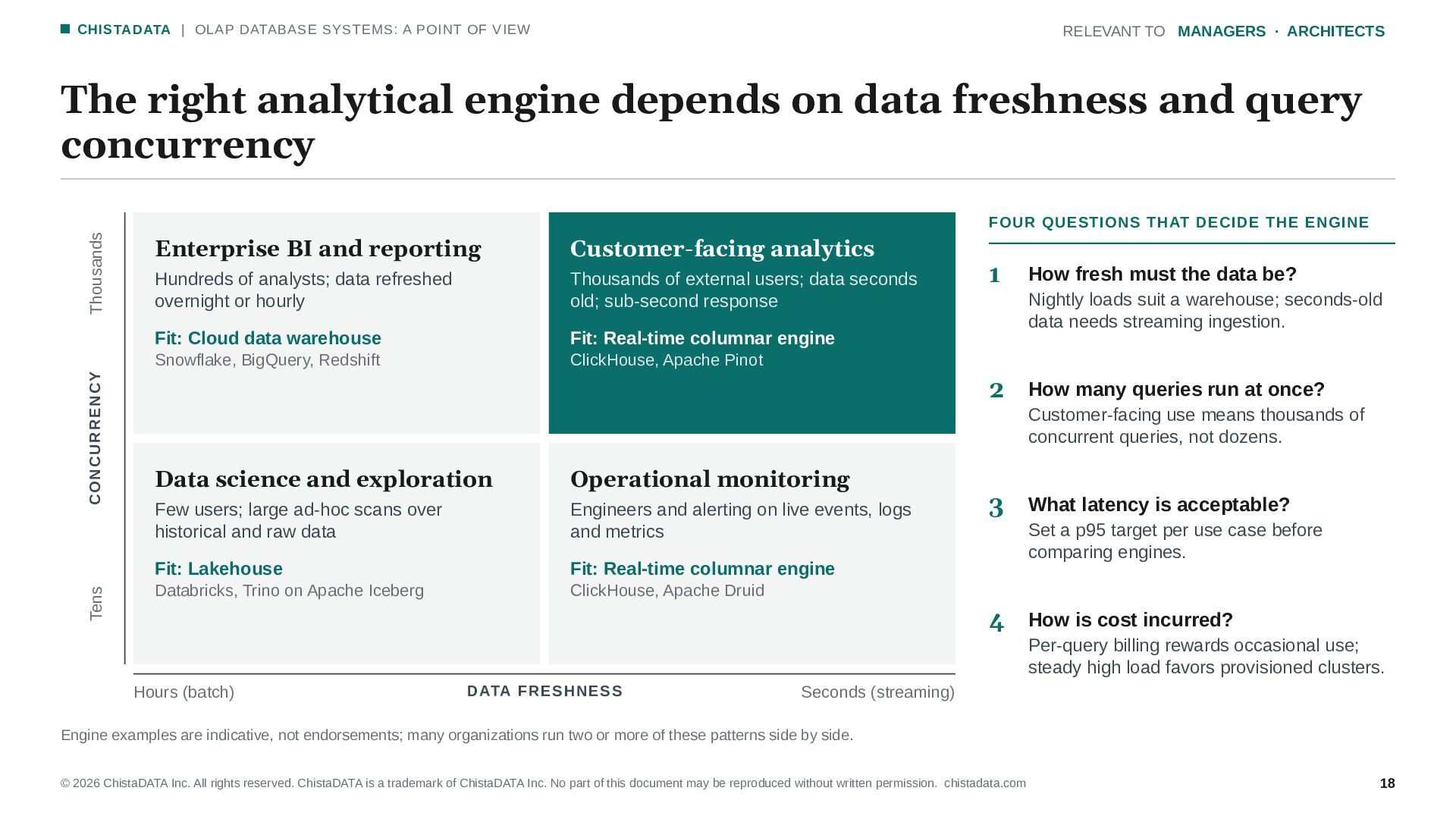
Choosing an OLAP engine by data freshness and query concurrency: enterprise BI, customer-facing analytics, data science on a lakehouse (Databricks, Trino, Apache Iceberg) and operational monitoring.
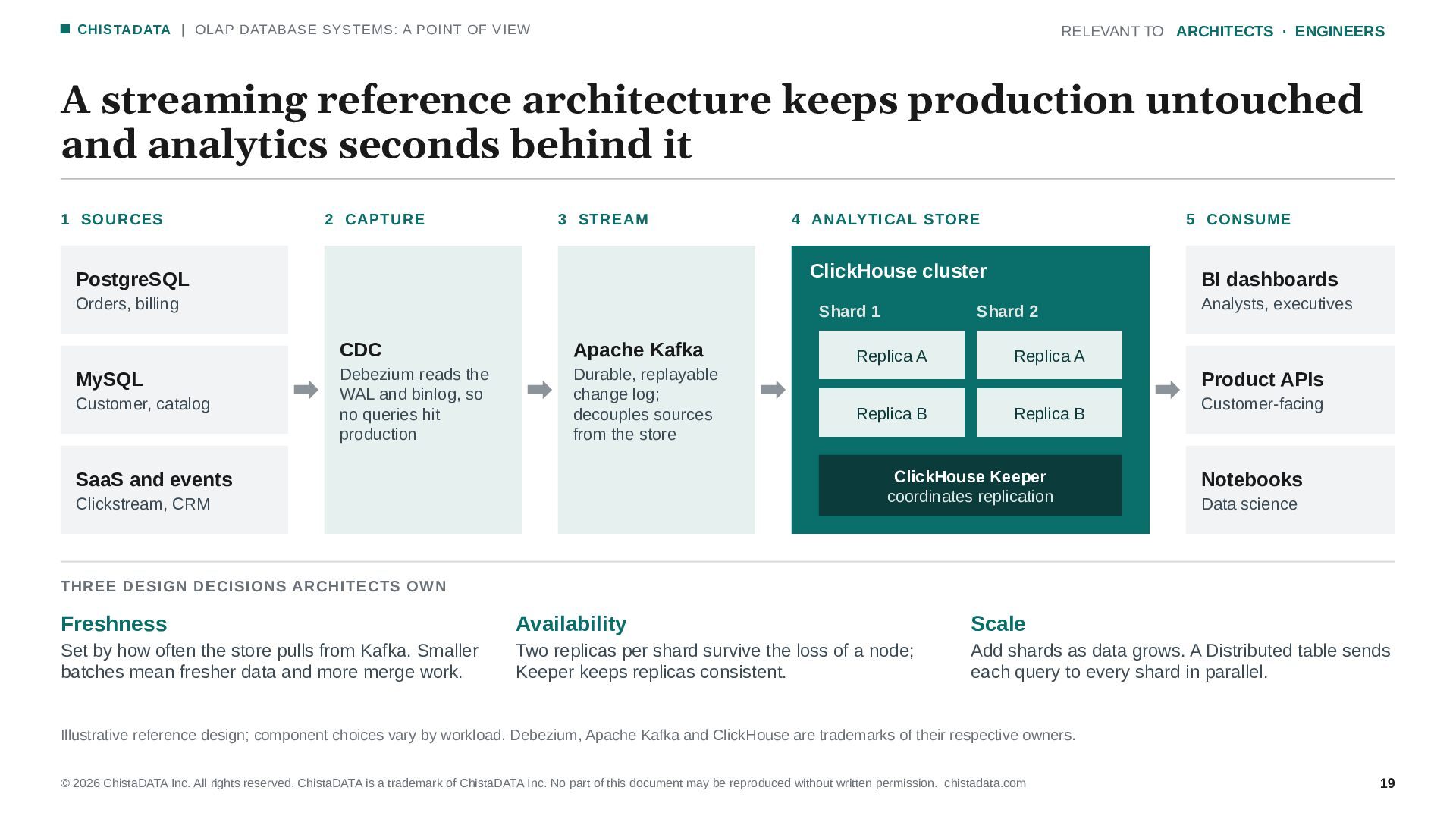
A streaming real-time analytics reference architecture: CDC with Debezium from PostgreSQL and MySQL, Apache Kafka, a sharded and replicated ClickHouse cluster with ClickHouse Keeper.
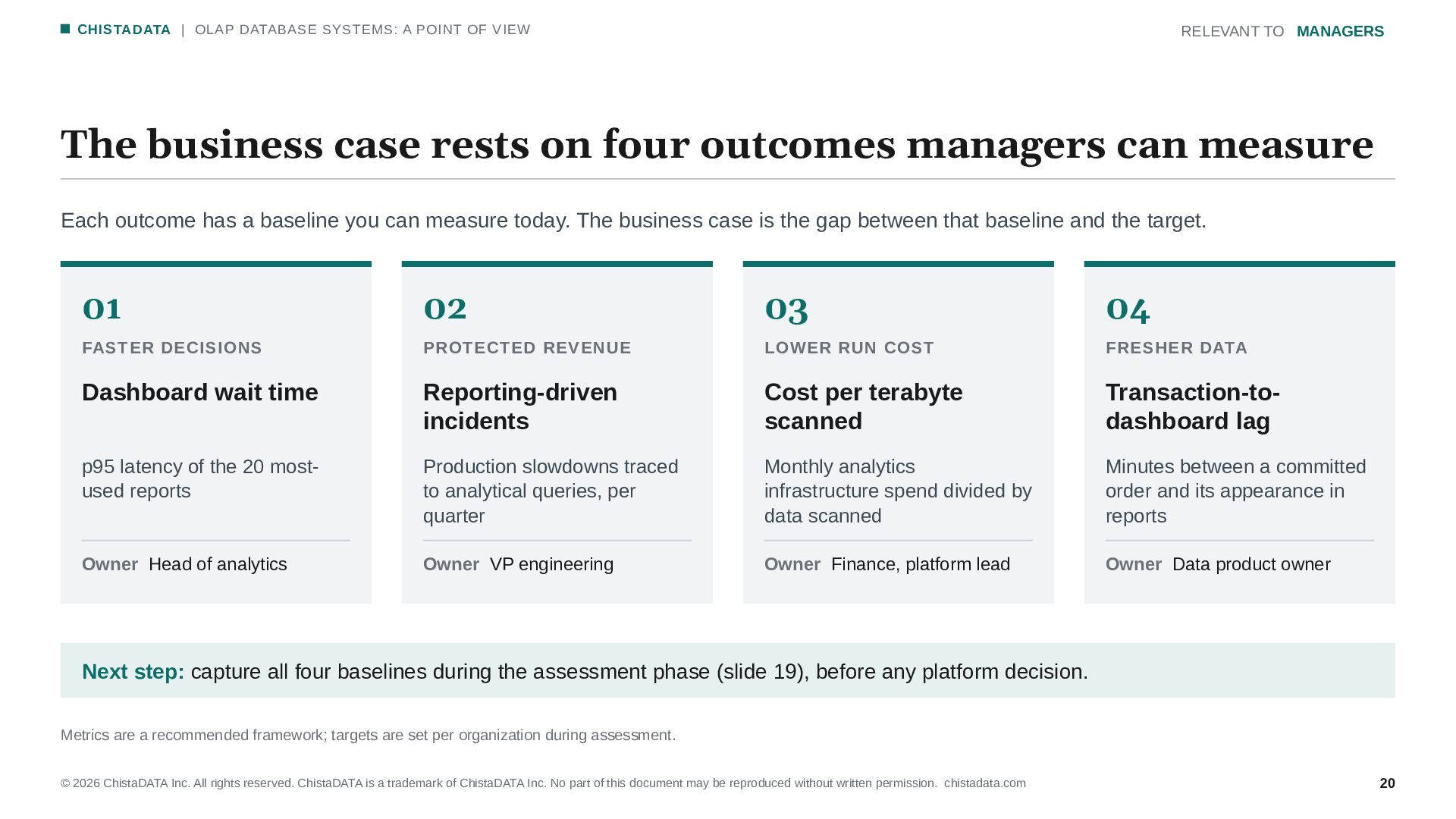
The business case: dashboard p95 latency, reporting-driven incidents, cost per terabyte scanned and transaction-to-dashboard lag.
Presented by Shiv Iyer, Founder and CEO of ChistaDATA Inc. (24x7 ClickHouse consulting, support and managed services on 100% open-source ClickHouse) and MinervaDB Inc. Figures marked illustrative are worked examples, not benchmarks; test on your own workload.


 shiviyer007
 ryo_kawamata
 sishi2026
 katayamatg
 eluwing
 konifar
 oikon48
 subroh0508
 joere
 legalontechnologies
 myohei
 kintotechdev
 takanao
 mayatellez
 sstephenson
 axbom
 geshan
 wayneb77
 rmw
 bkeepers
 brettharned
 vanstee
 deanohume
 kimpetersen
 elsirapls