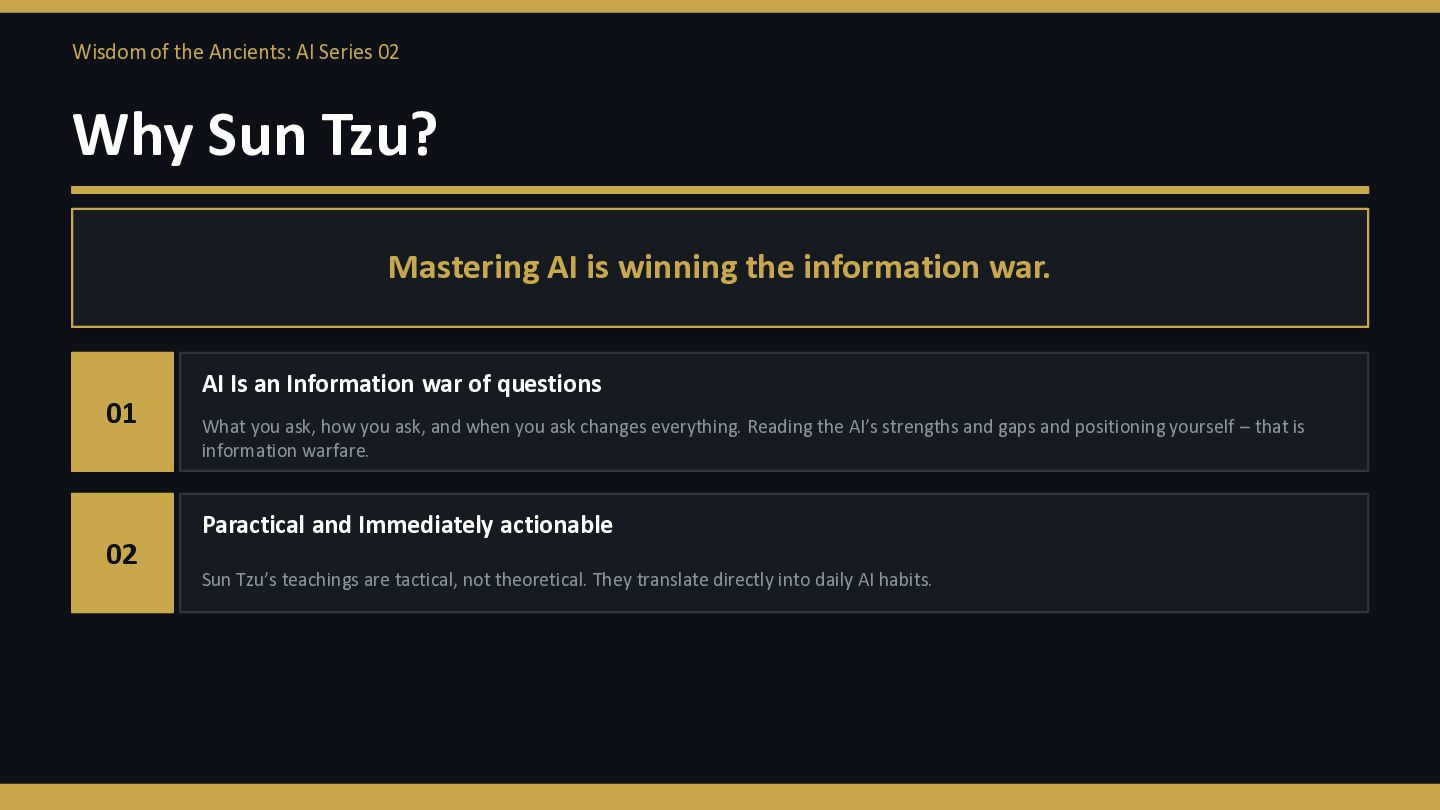
Mastering AI is winning the information war. 01 AI Is an Information war of questions What you ask, how you ask, and when you ask changes everything. Reading the AI’s strengths and gaps and positioning yourself – that is information warfare. 02 Paractical and Immediately actionable Sun Tzu’s teachings are tactical, not theoretical. They translate directly into daily AI habits.
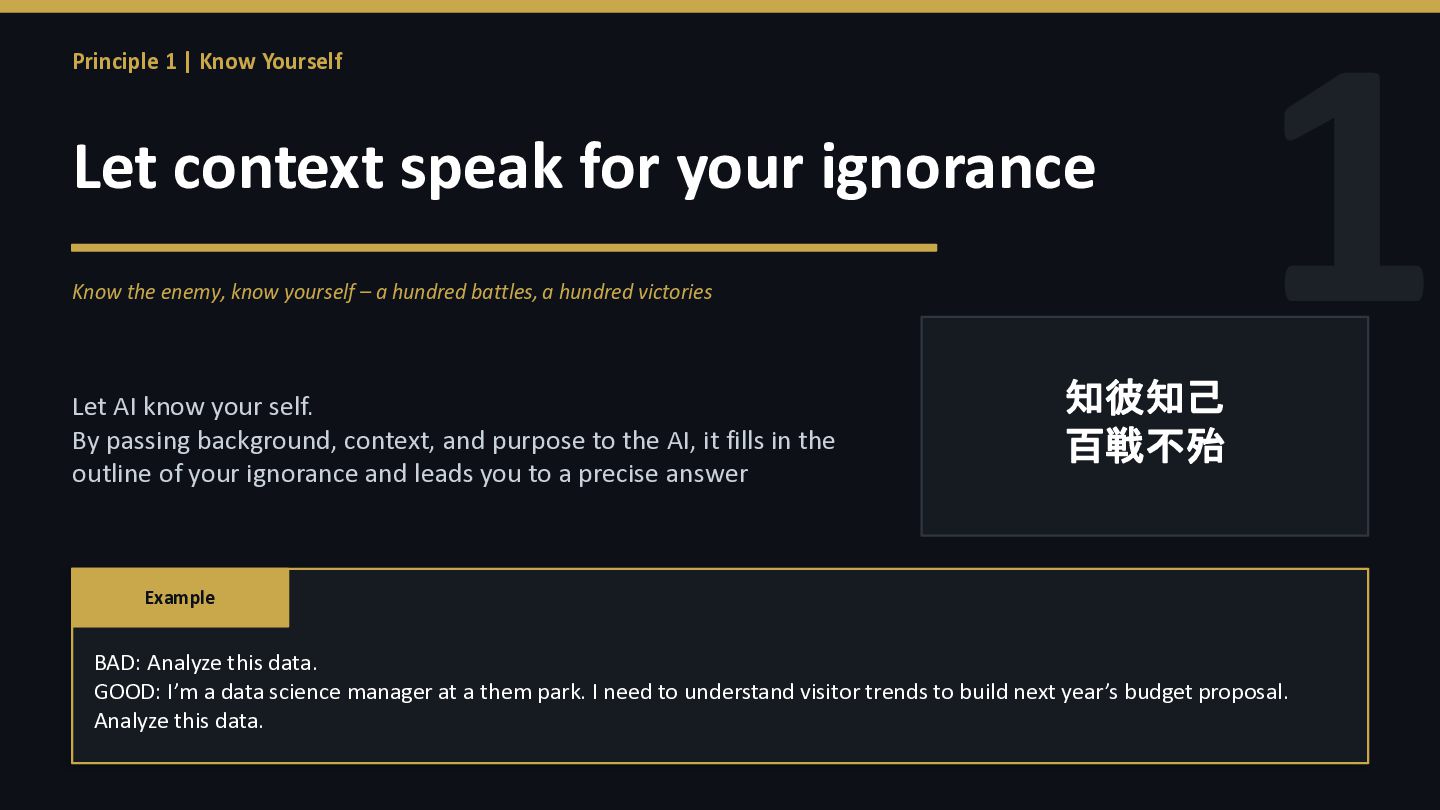
your ignorance Know the enemy, know yourself – a hundred battles, a hundred victories Let AI know your self. By passing background, context, and purpose to the AI, it fills in the outline of your ignorance and leads you to a precise answer 知彼知己 百戦不殆 Example BAD: Analyze this data. GOOD: I’m a data science manager at a them park. I need to understand visitor trends to build next year’s budget proposal. Analyze this data.
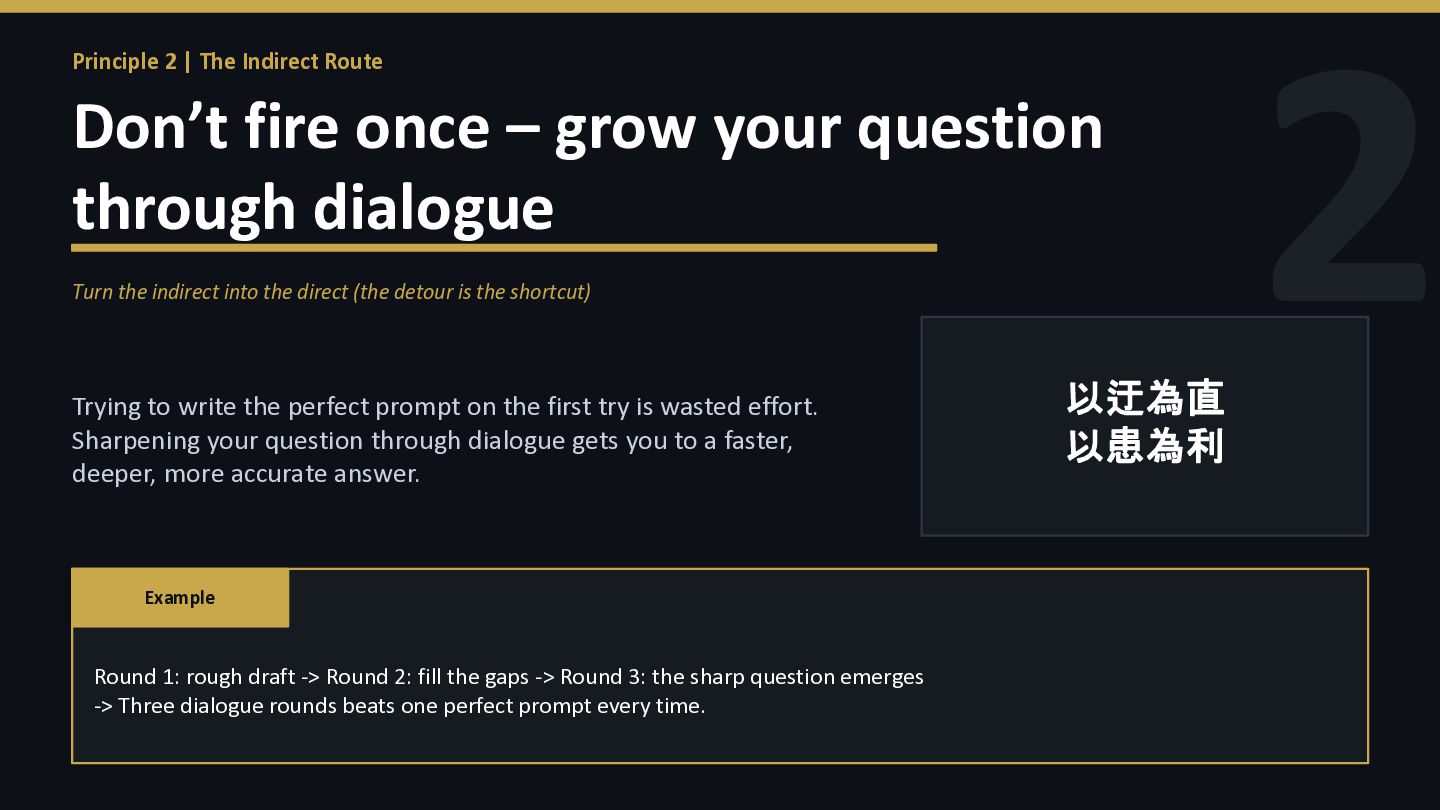
– grow your question through dialogue Turn the indirect into the direct (the detour is the shortcut) Trying to write the perfect prompt on the first try is wasted effort. Sharpening your question through dialogue gets you to a faster, deeper, more accurate answer. 以迂為直 以患為利 Example Round 1: rough draft -> Round 2: fill the gaps -> Round 3: the sharp question emerges -> Three dialogue rounds beats one perfect prompt every time.
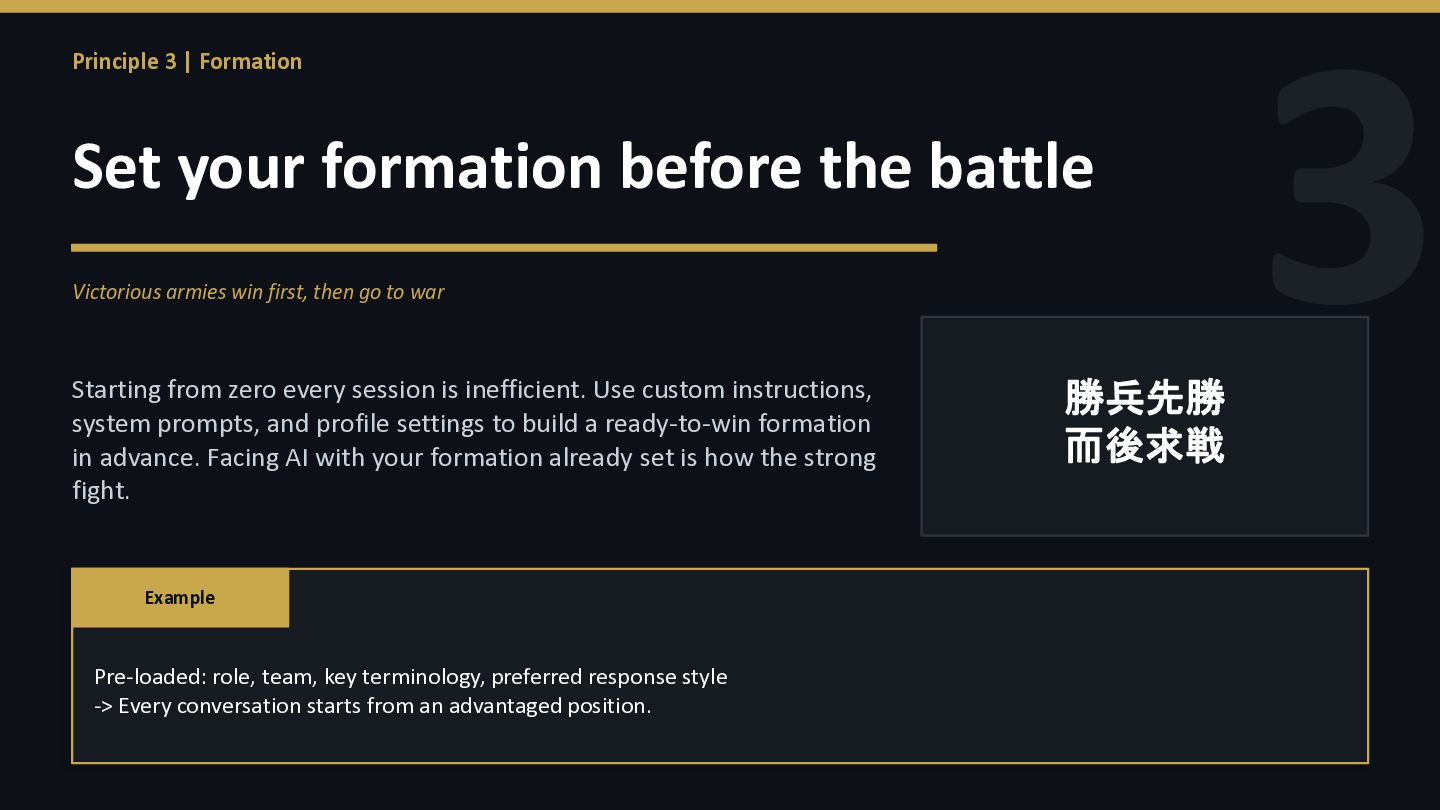
battle Victorious armies win first, then go to war Starting from zero every session is inefficient. Use custom instructions, system prompts, and profile settings to build a ready-to-win formation in advance. Facing AI with your formation already set is how the strong fight. 勝兵先勝 而後求戦 Example Pre-loaded: role, team, key terminology, preferred response style -> Every conversation starts from an advantaged position.
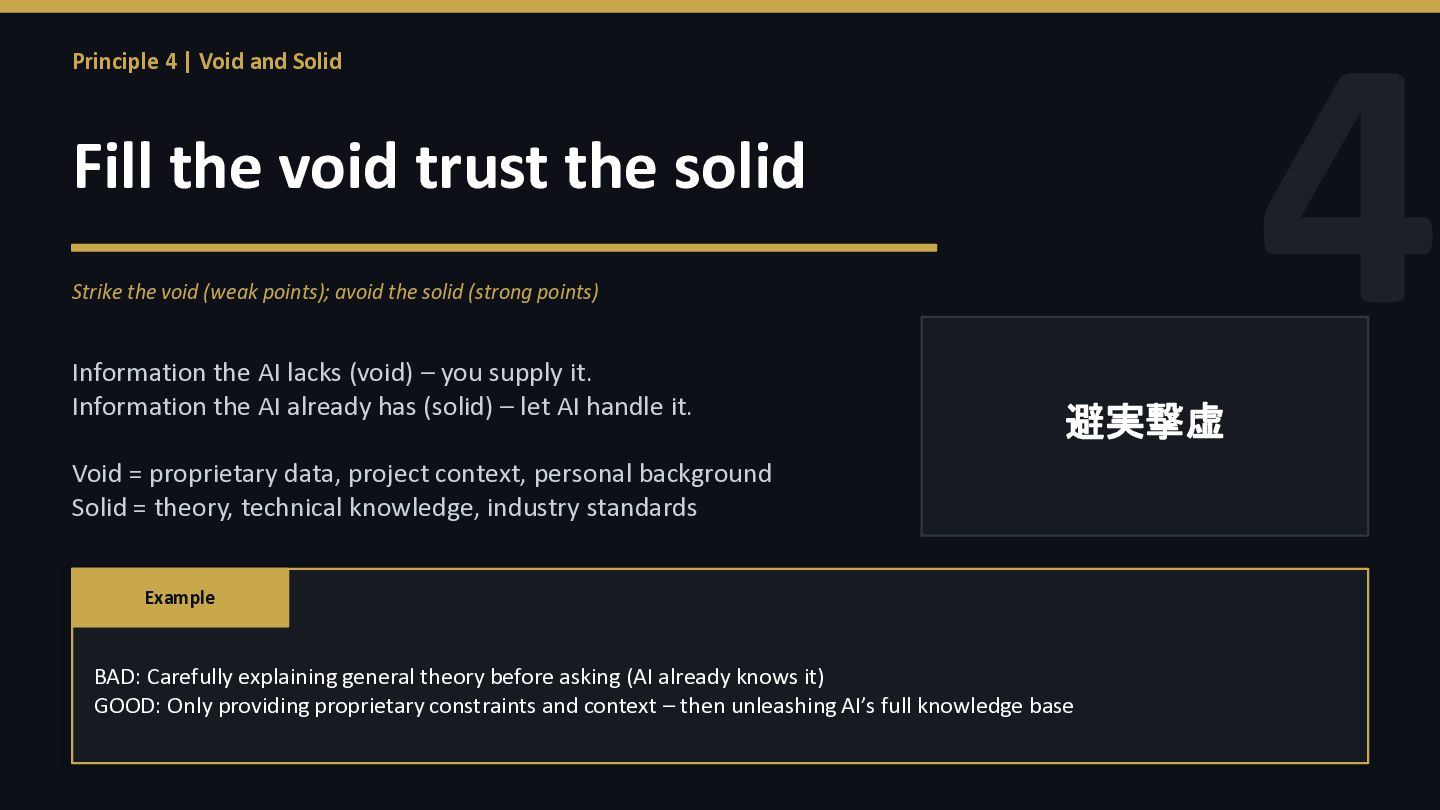
trust the solid Strike the void (weak points); avoid the solid (strong points) Information the AI lacks (void) – you supply it. Information the AI already has (solid) – let AI handle it. Void = proprietary data, project context, personal background Solid = theory, technical knowledge, industry standards 避実撃虚 Example BAD: Carefully explaining general theory before asking (AI already knows it) GOOD: Only providing proprietary constraints and context – then unleashing AI’s full knowledge base
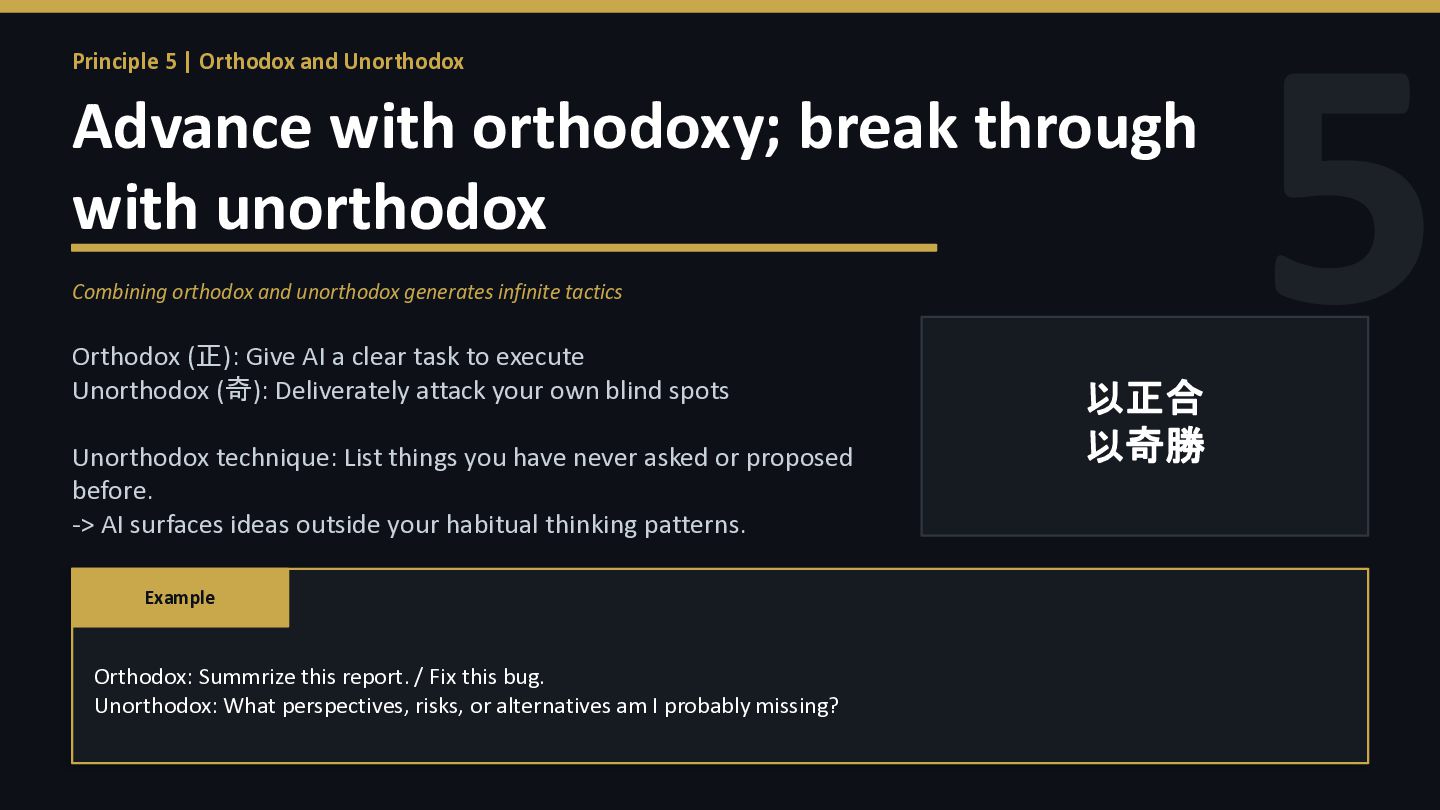
break through with unorthodox Combining orthodox and unorthodox generates infinite tactics Orthodox (正): Give AI a clear task to execute Unorthodox (奇): Deliverately attack your own blind spots Unorthodox technique: List things you have never asked or proposed before. -> AI surfaces ideas outside your habitual thinking patterns. 以正合 以奇勝 Example Orthodox: Summrize this report. / Fix this bug. Unorthodox: What perspectives, risks, or alternatives am I probably missing?
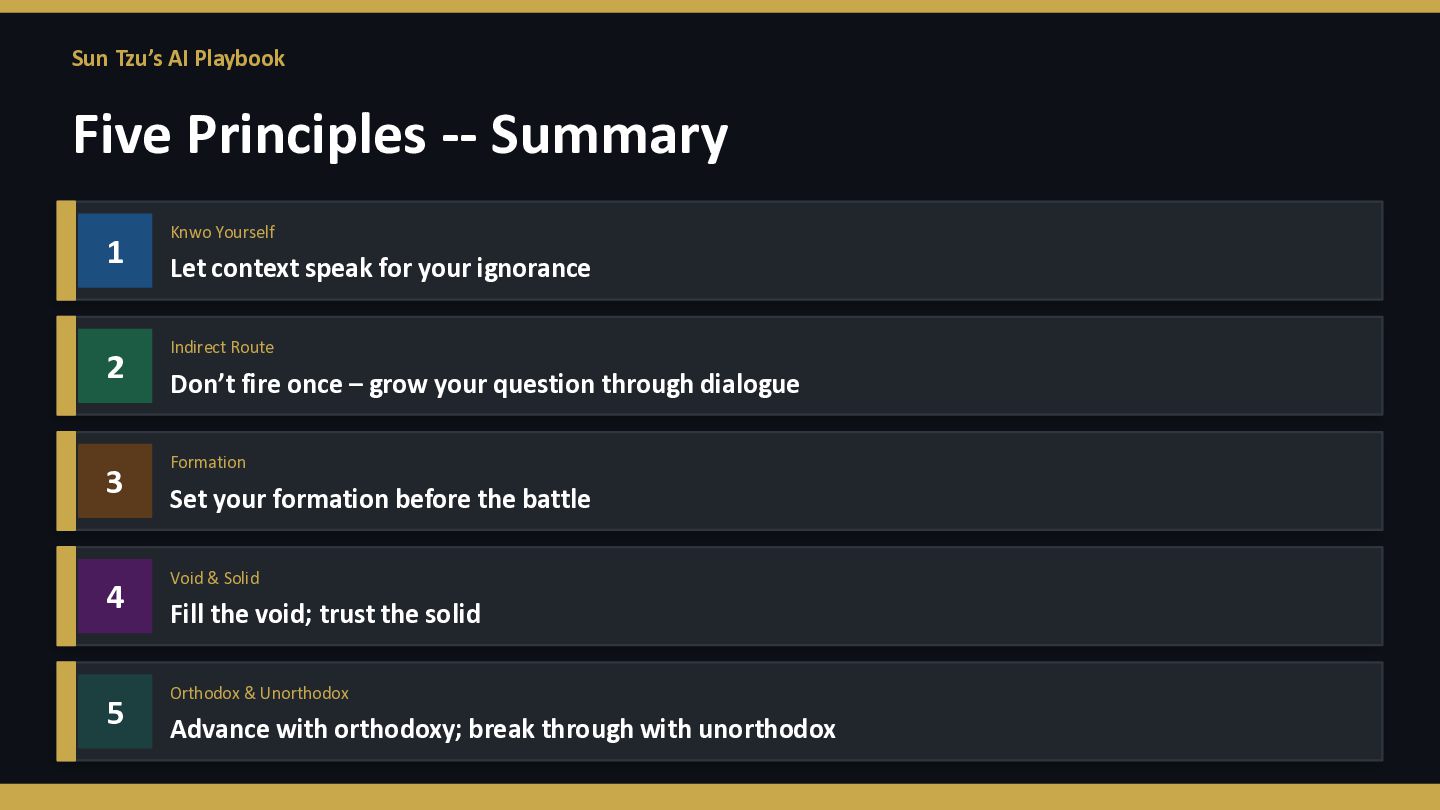
Yourself Let context speak for your ignorance 2 Indirect Route Don’t fire once – grow your question through dialogue 3 Formation Set your formation before the battle 4 Void & Solid Fill the void; trust the solid 5 Orthodox & Unorthodox Advance with orthodoxy; break through with unorthodox


 tomfook
 stomk
stomk
 techtekt
 gionn
gionn
 gree_tech
 yama3133
.jpg) lamaglama39
lamaglama39
 bitkey
 mohab1
 odashi
 yamaguchitk333
 recruitengineers
 taka_aki
 moore
moore
 sergeychernyshev
 mza
mza
 aleyda
 irinanazarova
 axbom
axbom
 tmiket
 marcoroth
 greggifford
 shpigford
 palkan
 codingconduct