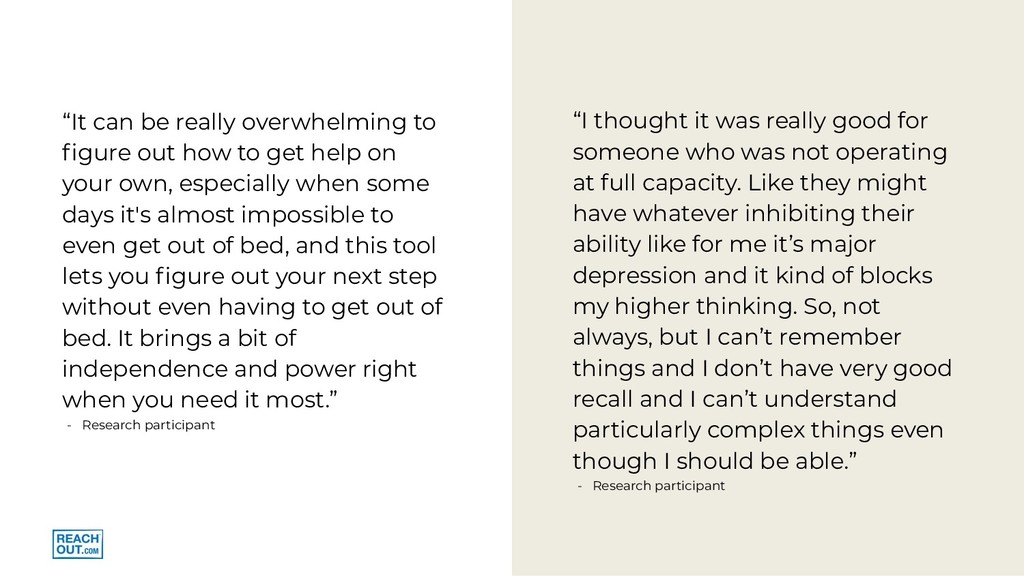
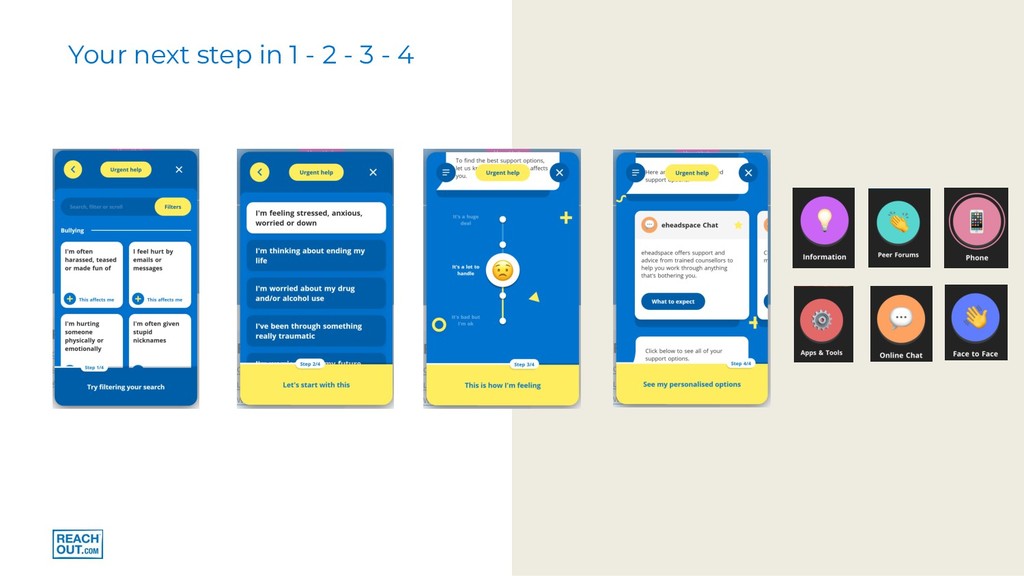
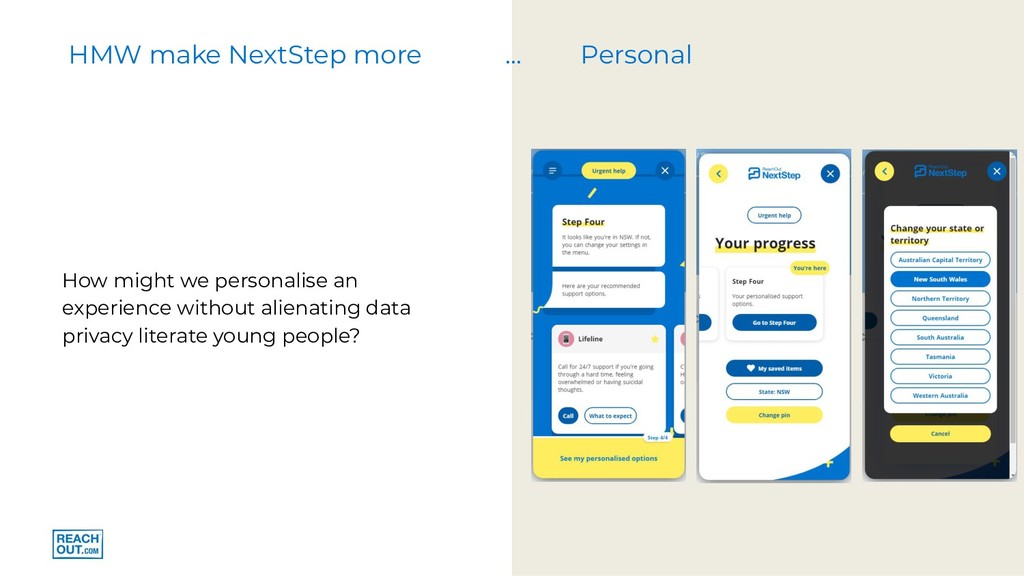
get help on your own, especially when some days it's almost impossible to even get out of bed, and this tool lets you figure out your next step without even having to get out of bed. It brings a bit of independence and power right when you need it most.” - Research participant “I thought it was really good for someone who was not operating at full capacity. Like they might have whatever inhibiting their ability like for me it’s major depression and it kind of blocks my higher thinking. So, not always, but I can’t remember things and I don’t have very good recall and I can’t understand particularly complex things even though I should be able.” - Research participant
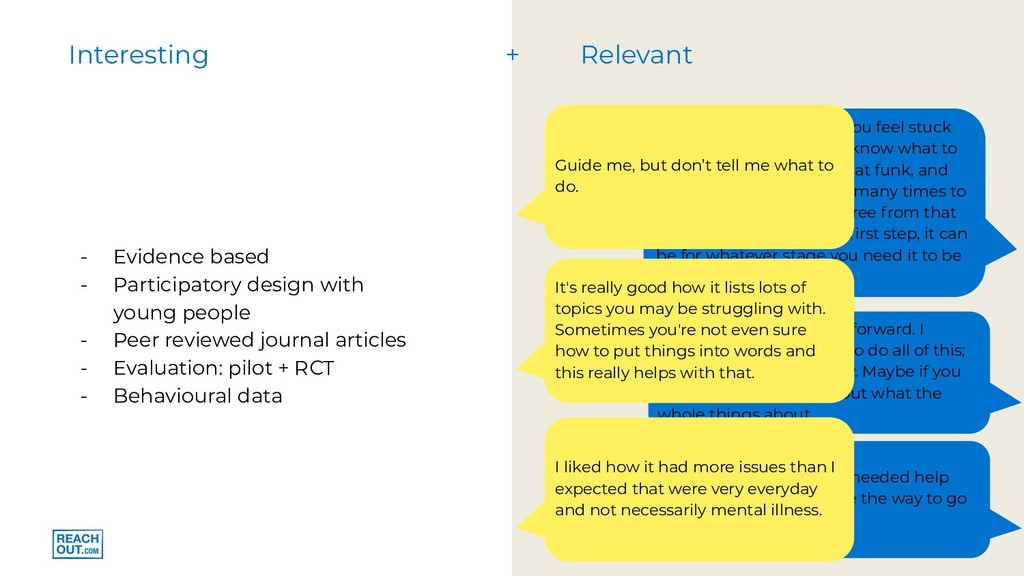
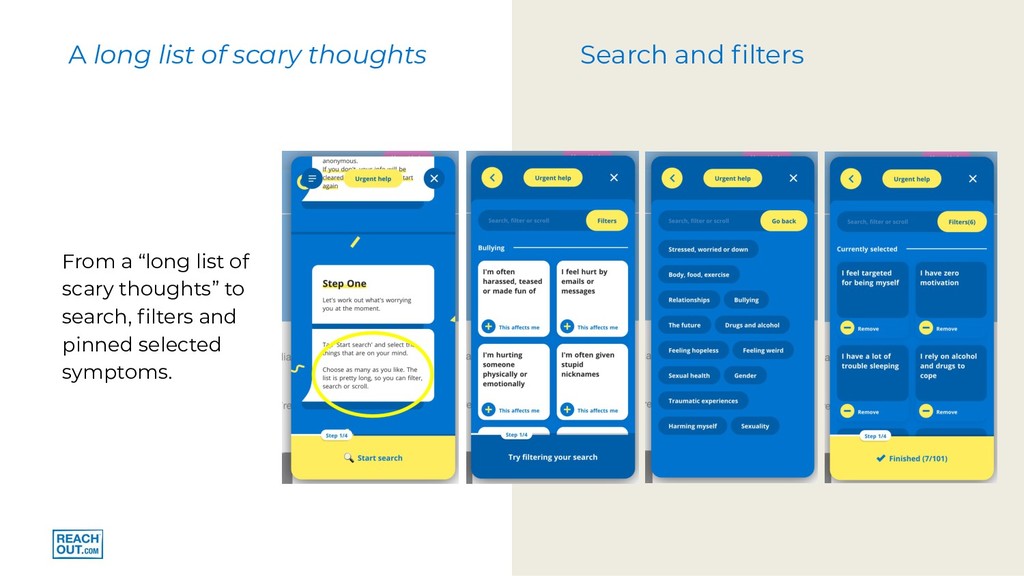
Peer reviewed journal articles - Evaluation: pilot + RCT - Behavioural data Sometimes in recovery you feel stuck where you are and don't know what to do next to break out of that funk, and NextStep has helped me many times to figure out how to break free from that cycle. It's not just for the first step, it can be for whatever stage you need it to be for. It wasn’t exactly straight forward. I probably wouldn’t want to do all of this; I’d probably be a bit edgy. Maybe if you give more of an idea about what the whole things about. If I was freaking out and needed help quickly, this might not be the way to go as the list is quite long. Guide me, but don’t tell me what to do. It's really good how it lists lots of topics you may be struggling with. Sometimes you're not even sure how to put things into words and this really helps with that. I liked how it had more issues than I expected that were very everyday and not necessarily mental illness. Interesting + Relevant
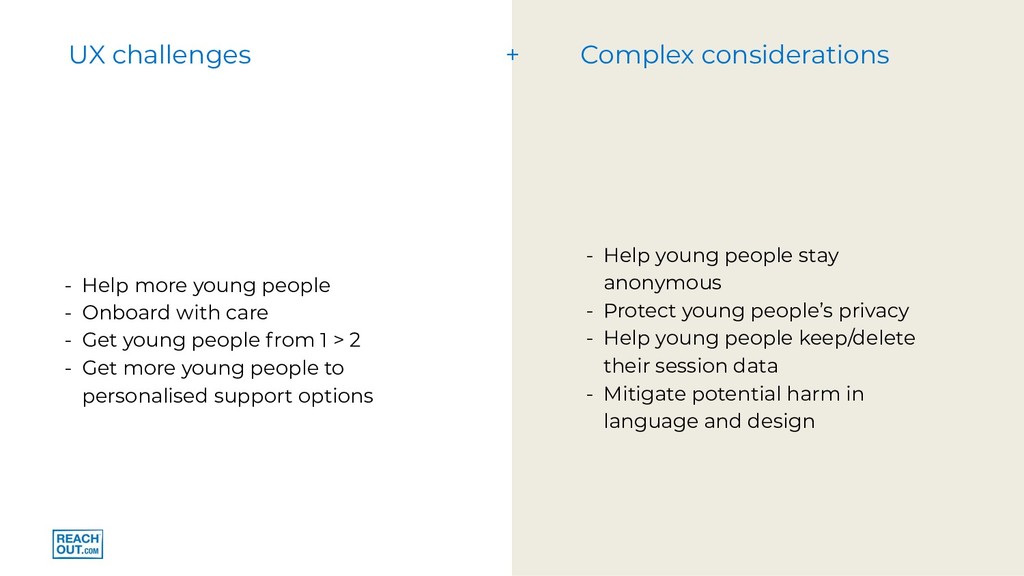
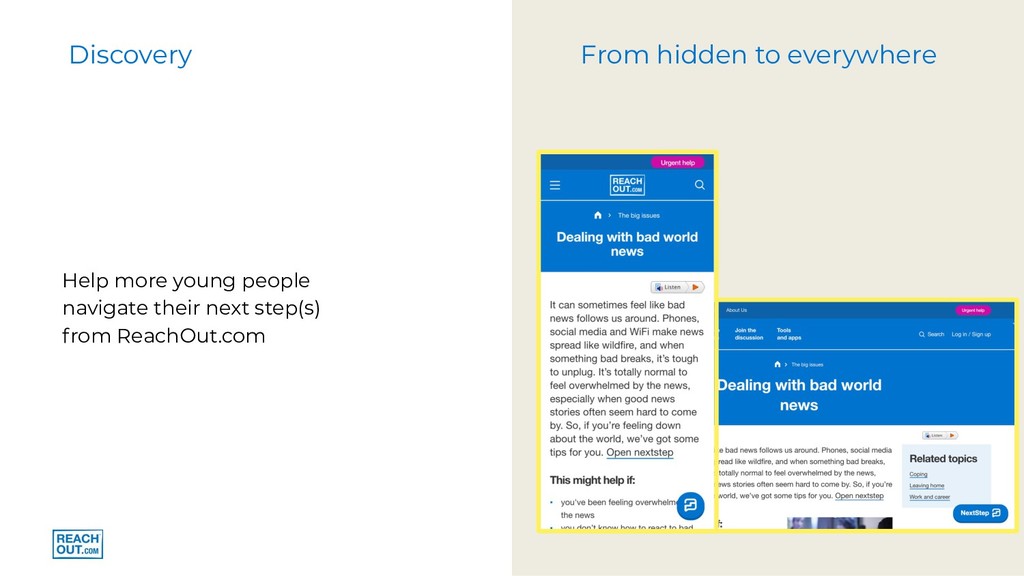
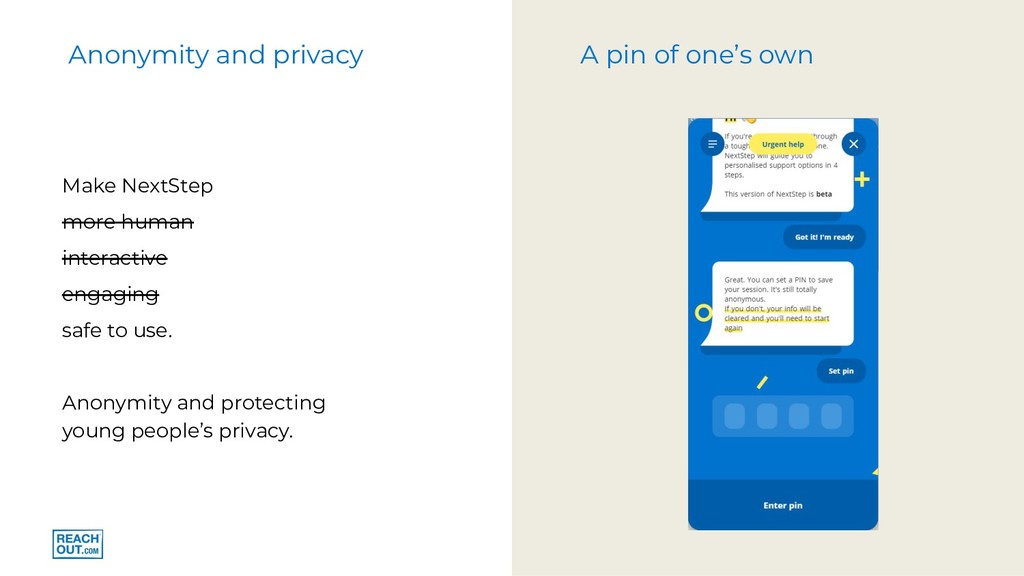
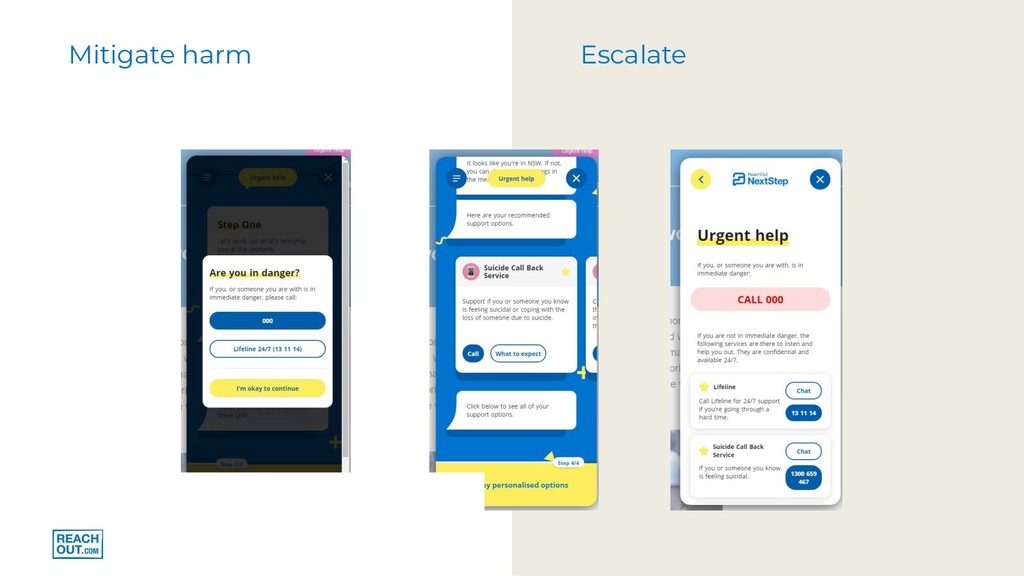
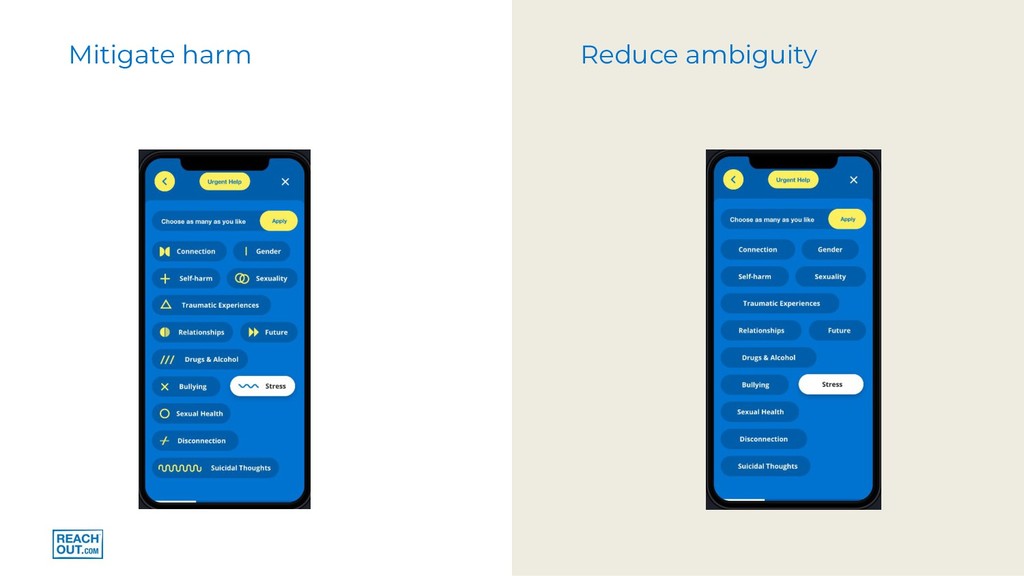
Get young people from 1 > 2 - Get more young people to personalised support options UX challenges + Complex considerations - Help young people stay anonymous - Protect young people’s privacy - Help young people keep/delete their session data - Mitigate potential harm in language and design


 uxevents
 mela_dayo
 terencebasart
 taitotnk
 ottatto
 keita_yoshikawa
 a2k
a2k
 akirafukuoka
 assuredjp
 accessinnovations
 kgsi
kgsi
 ayumidesign
 jonrohan
 thoeni
 bkeepers
 akademiya2063
 tammyeverts
 pedronauck
 jacobtomlinson
 malarkey
 inesmontani
 jmmastey
 marcduiker
 sferik