Share
Embed
Proposal Jam | VizChitra
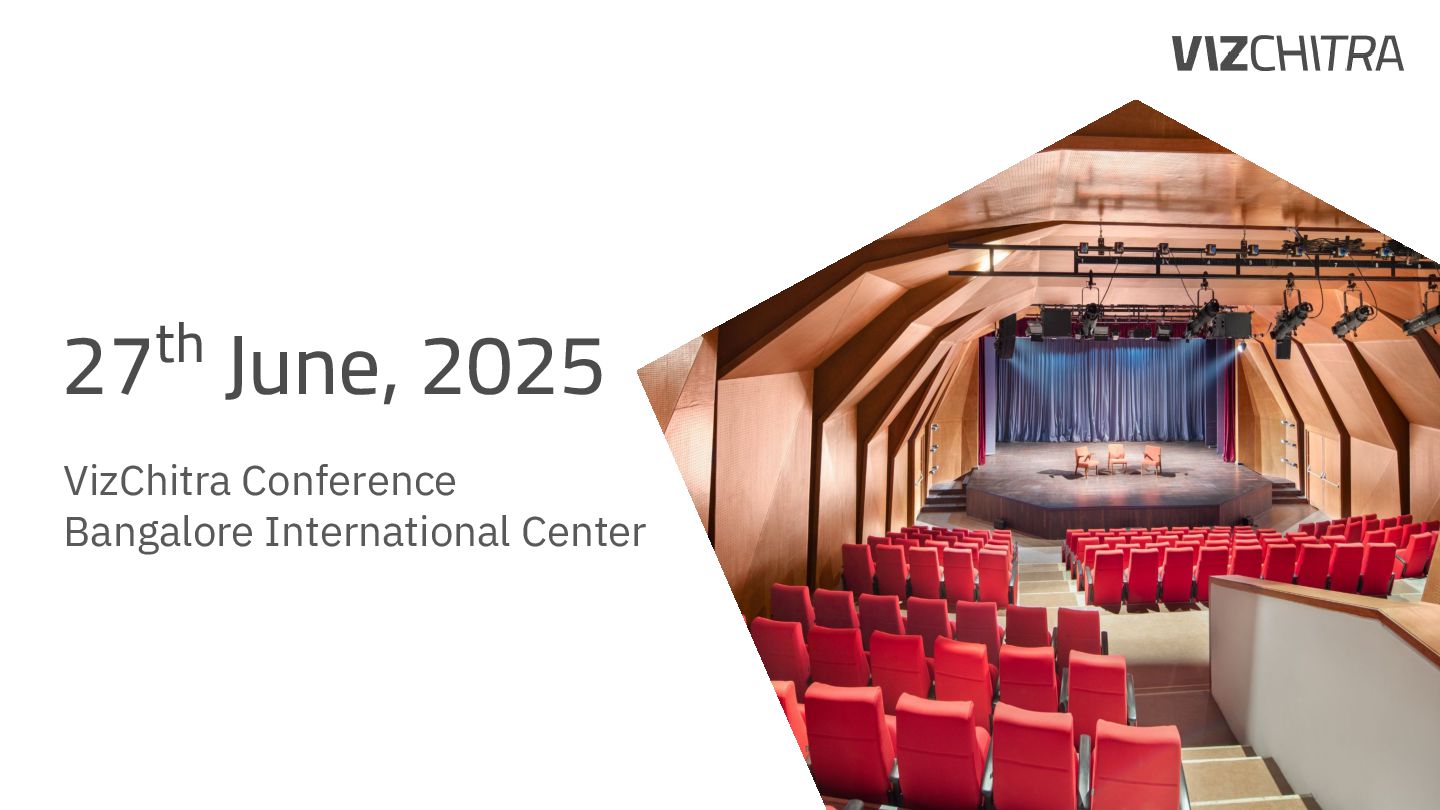
Our annual conference - VizChitra 2025 is set to take place on June 27-28 in Bangalore and the Call for Proposals is open until April 15. To help everyone craft a strong proposal and make a submission, or address any queries around submissions, we hosted a Proposal Jam!
Whether it was a designer, journalist, analyst, coder, or artist, this was a chance to:
🗣 Understand different kind of talks & workshops
💡 Learn what makes a compelling proposal
❓ Ask all your CFP-related questions
🛠 Refine your submission ideas
🤝 Connect with fellow dataviz enthusiasts
VizChitra
March 22, 2025
Transcript
40 slides
-
🎉 Welcome to the proposal jam 🎉 While we wait,
tell us where you are joining from in the chat! -
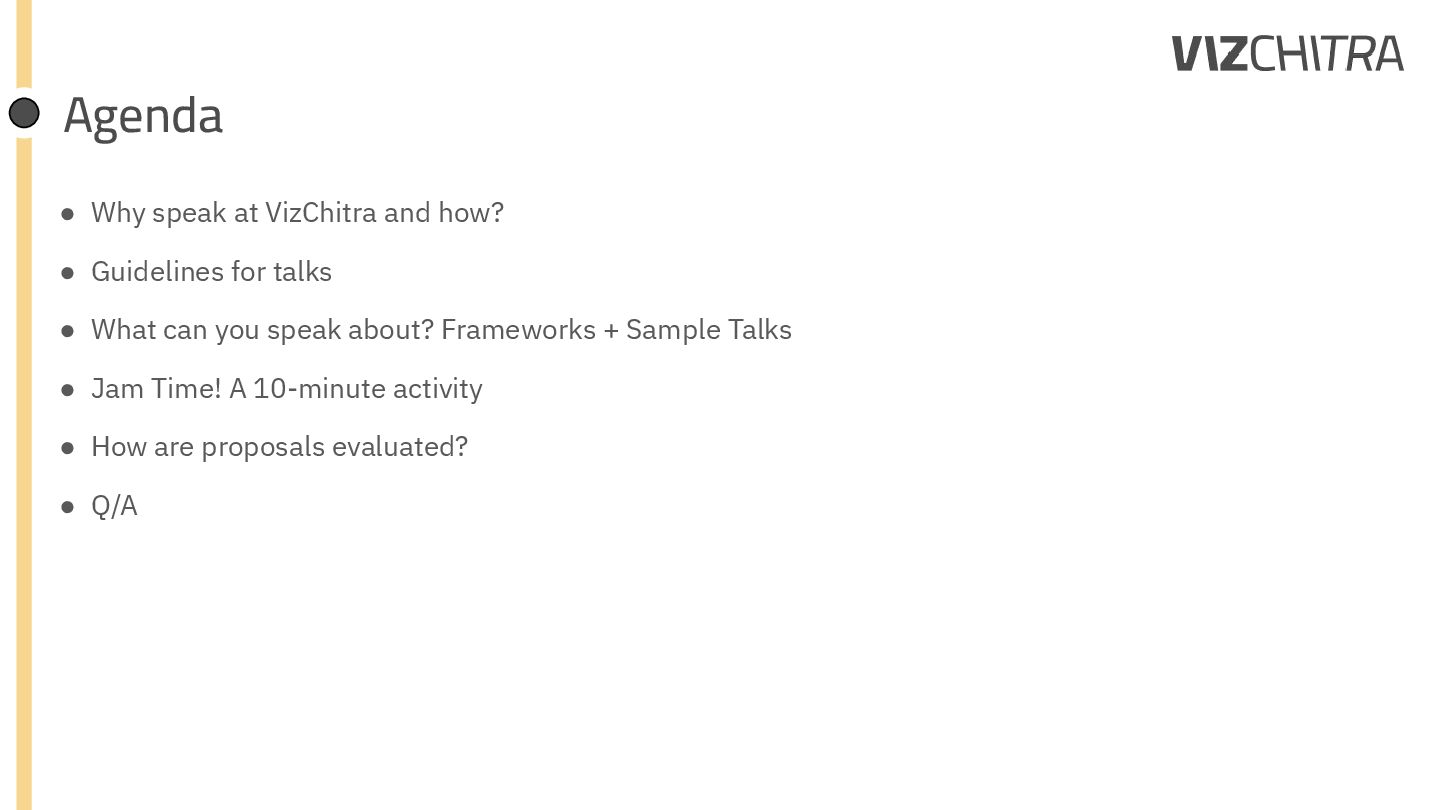
Agenda • Why speak at VizChitra and how? • Guidelines
for talks • What can you speak about? Frameworks + Sample Talks • Jam Time! A 10-minute activity • How are proposals evaluated? • Q/A -
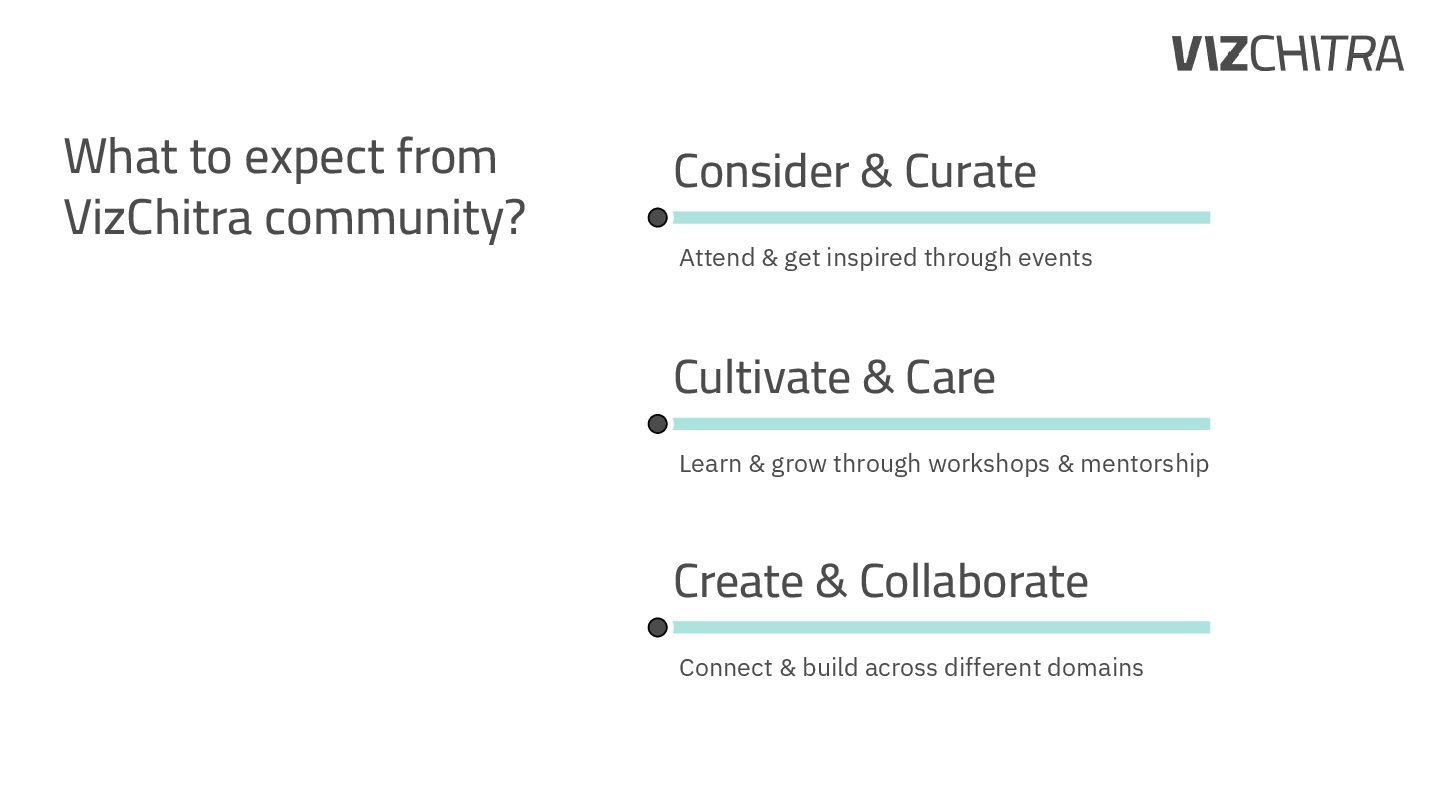
What to expect from VizChitra community? Consider & Curate Attend
& get inspired through events Cultivate & Care Learn & grow through workshops & mentorship Create & Collaborate Connect & build across different domains -
“To build a strong community of interdisciplinary individuals with a
shared interest in the practice of data visualisation across India.” -
Why Speak at VizChitra? Your everyday work might be someone
else’s aha! moment. -
• Share your insights with a curious, engaged audience. •
Grow as a storyteller and contribute to a thriving community. • Diverse perspectives matter in dataviz. We welcome voices from underrepresented communities. Why Speak at VizChitra? -
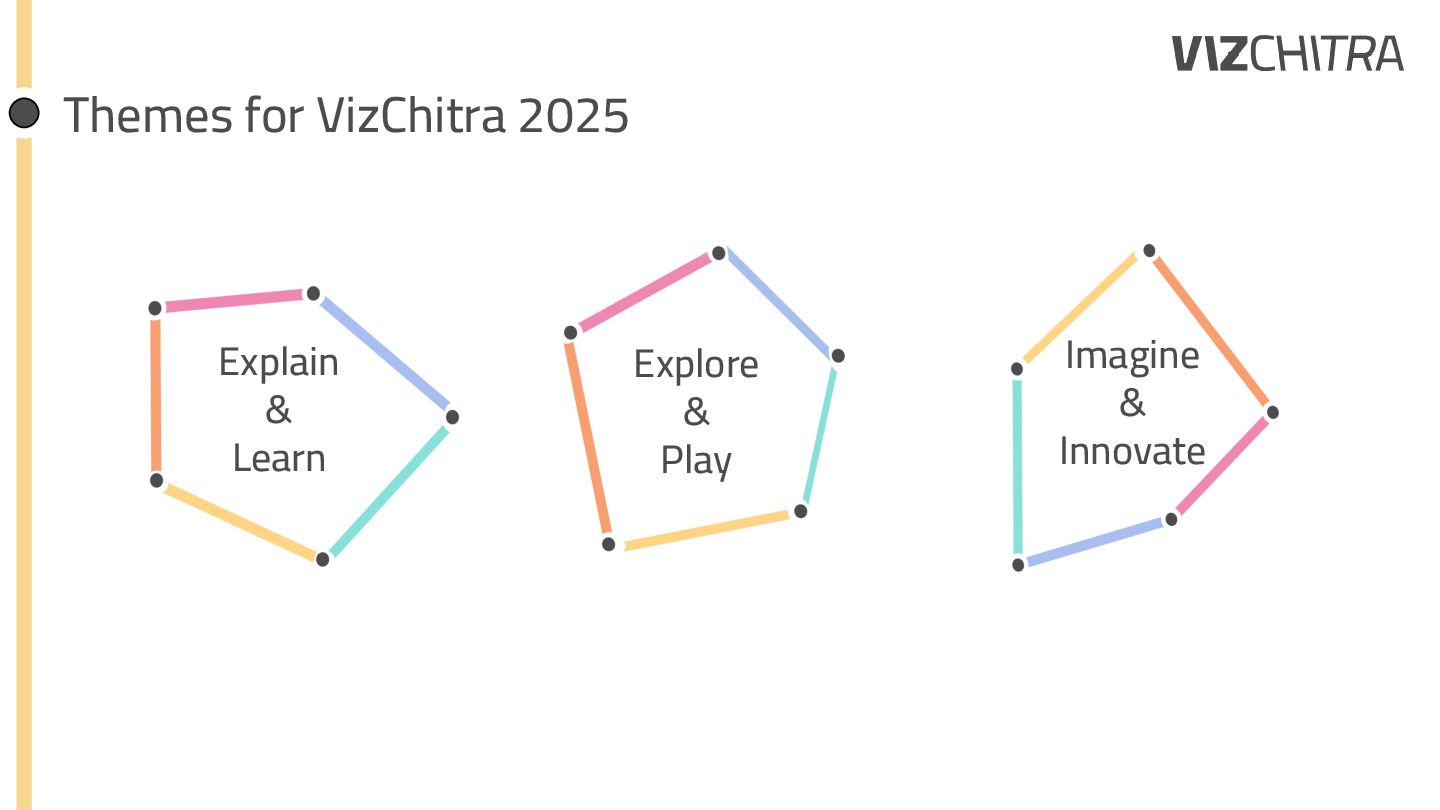
Themes for VizChitra 2025 Explain & Learn Explore & Play
Imagine & Innovate -
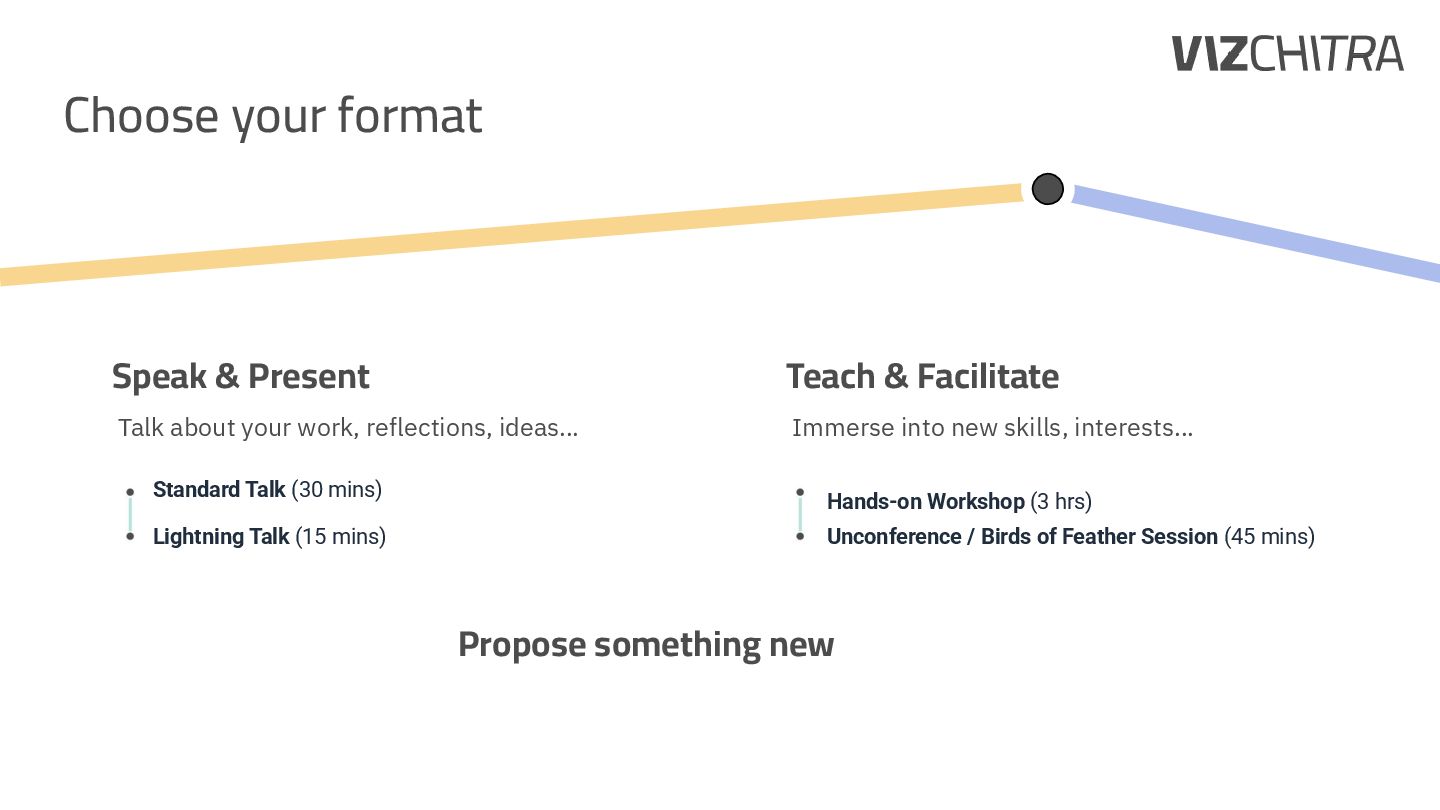
Speak & Present Talk about your work, reflections, ideas… Standard
Talk (30 mins) Lightning Talk (15 mins) Teach & Facilitate Immerse into new skills, interests… Hands-on Workshop (3 hrs) Unconference / Birds of Feather Session (45 mins) Choose your format Propose something new -
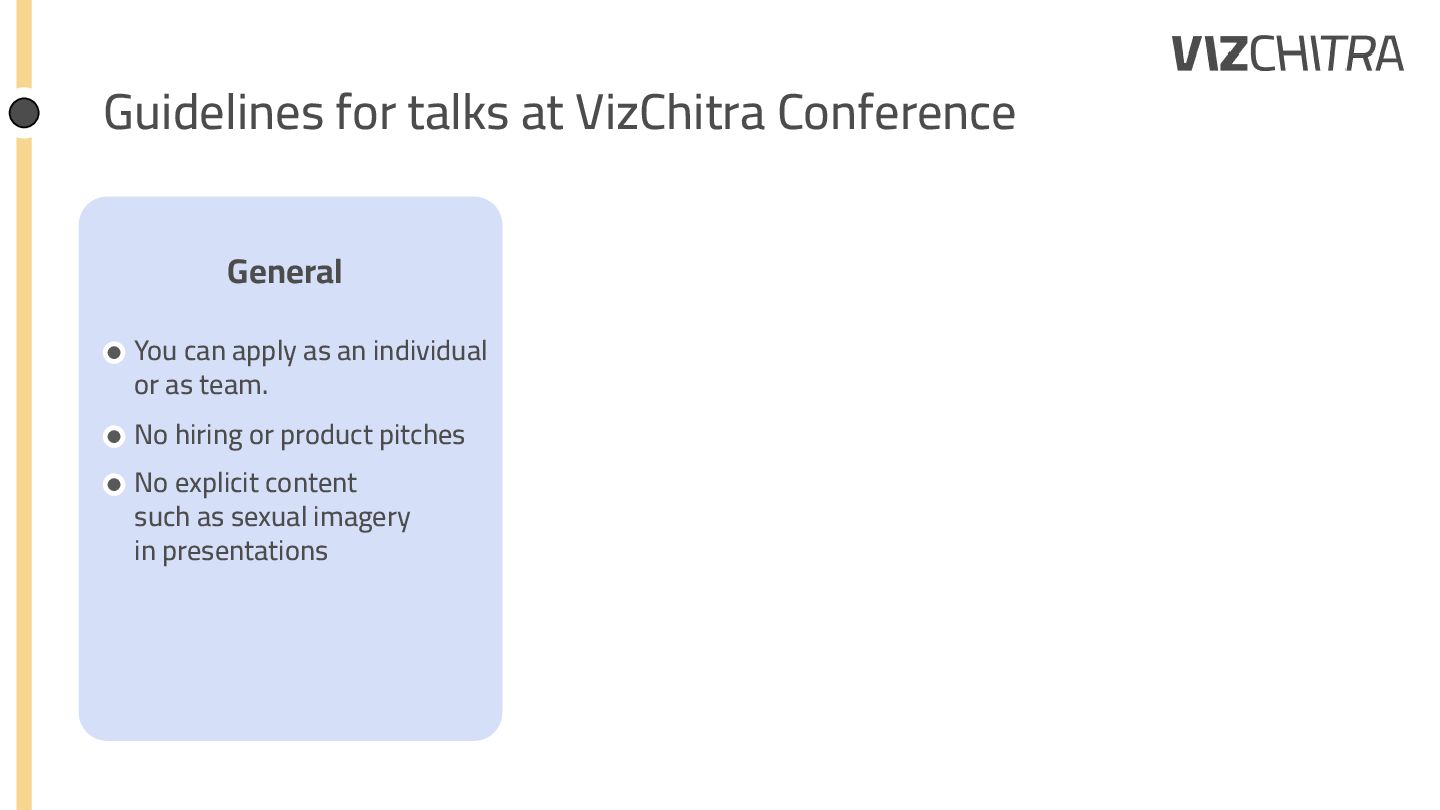
Guidelines for talks at VizChitra Conference General You can
apply as an individual or as team. No hiring or product pitches No explicit content such as sexual imagery in presentations -
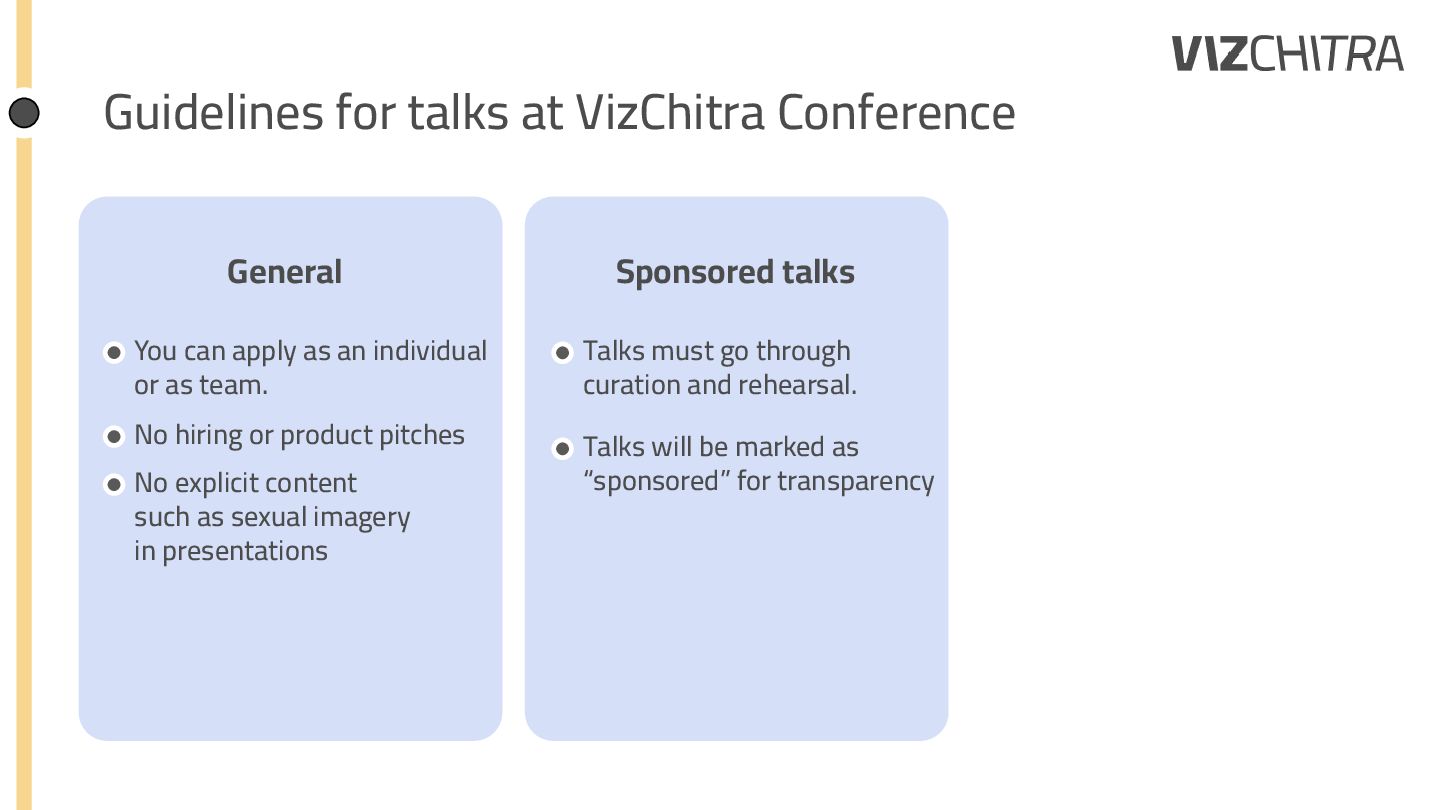
Guidelines for talks at VizChitra Conference General Sponsored talks
You can apply as an individual or as team. No hiring or product pitches No explicit content such as sexual imagery in presentations Talks must go through curation and rehearsal. Talks will be marked as “sponsored” for transparency -
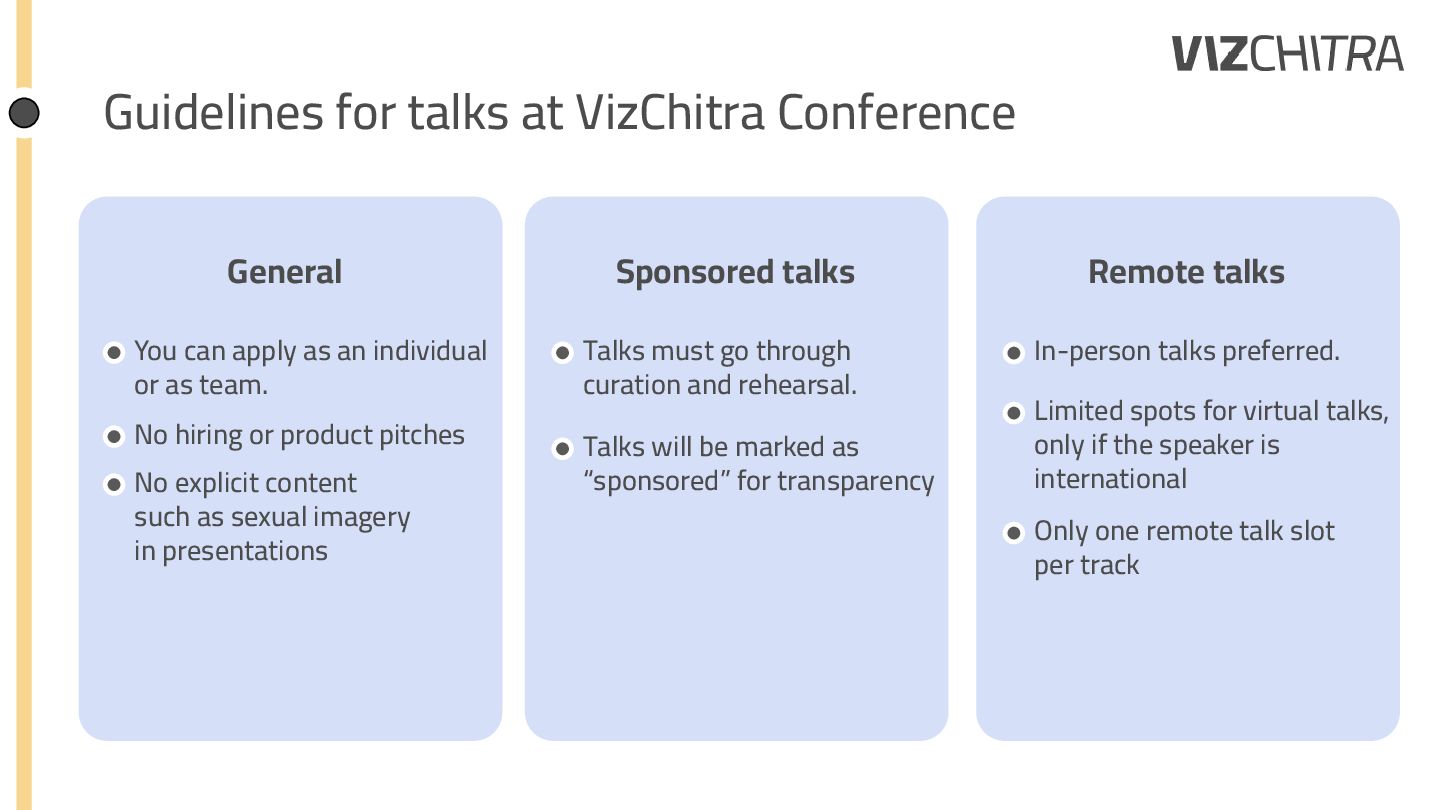
Guidelines for talks at VizChitra Conference General Sponsored talks
Remote talks You can apply as an individual or as team. No hiring or product pitches No explicit content such as sexual imagery in presentations Talks must go through curation and rehearsal. Talks will be marked as “sponsored” for transparency In-person talks preferred. Limited spots for virtual talks, only if the speaker is international Only one remote talk slot per track -
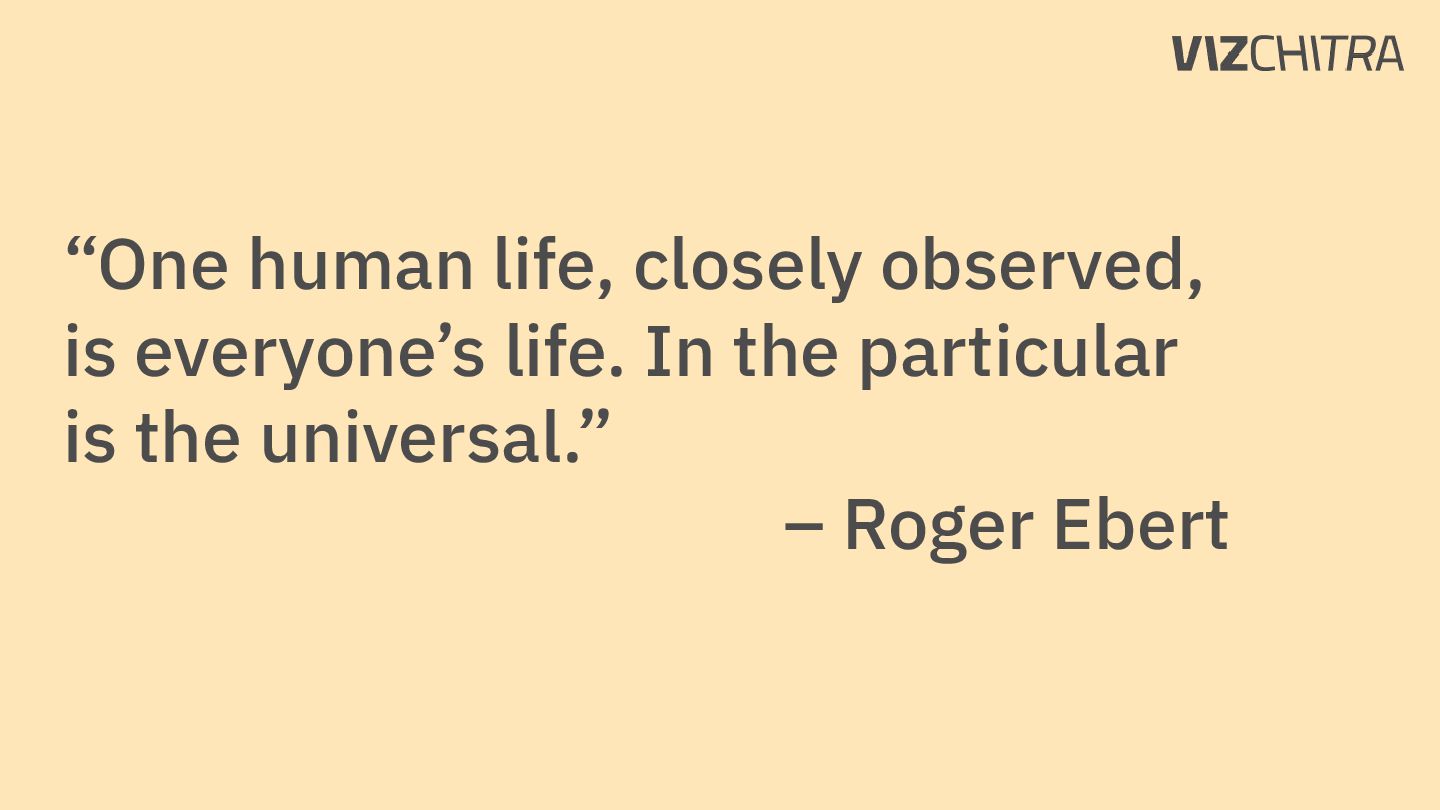
“One human life, closely observed, is everyone’s life. In the
particular is the universal.” – Roger Ebert -
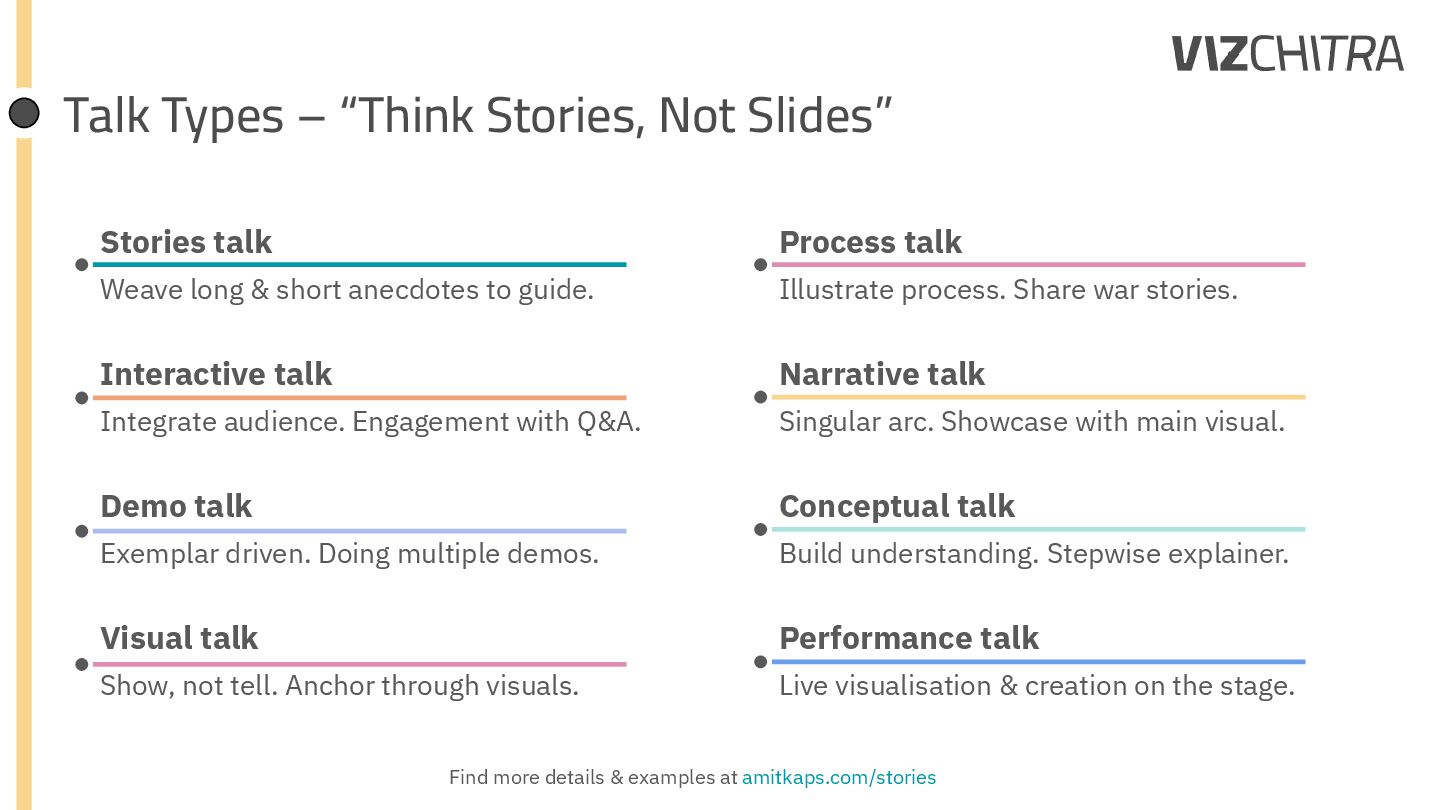
Talk Types – “Think Stories, Not Slides” Stories talk Weave
long & short anecdotes to guide. Interactive talk Integrate audience. Engagement with Q&A. Demo talk Exemplar driven. Doing multiple demos. Visual talk Show, not tell. Anchor through visuals. Process talk Illustrate process. Share war stories. Narrative talk Singular arc. Showcase with main visual. Performance talk Live visualisation & creation on the stage. Find more details & examples at amitkaps.com/stories Conceptual talk Build understanding. Stepwise explainer. -
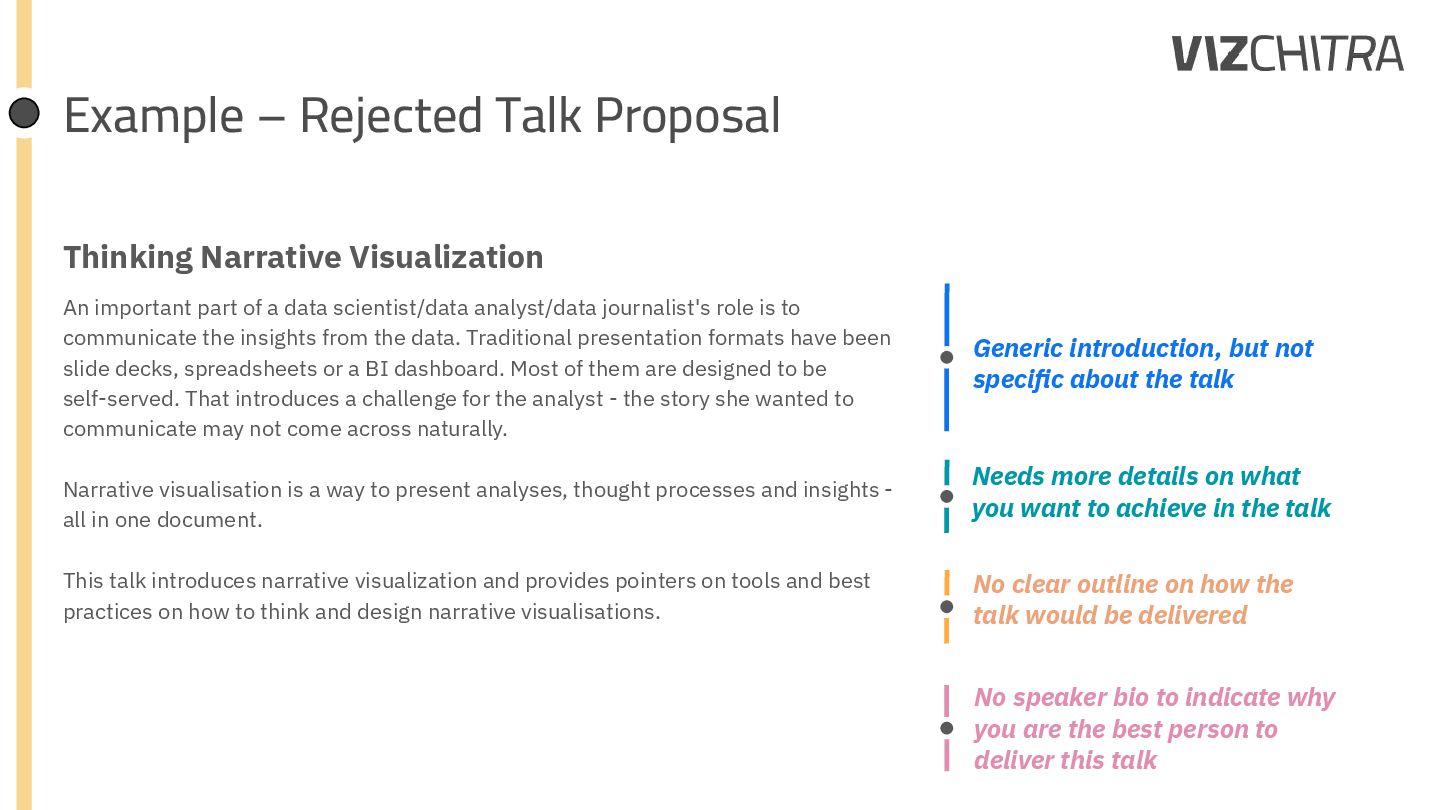
Example – Rejected Talk Proposal Thinking Narrative Visualization An important
part of a data scientist/data analyst/data journalist's role is to communicate the insights from the data. Traditional presentation formats have been slide decks, spreadsheets or a BI dashboard. Most of them are designed to be self-served. That introduces a challenge for the analyst - the story she wanted to communicate may not come across naturally. Narrative visualisation is a way to present analyses, thought processes and insights - all in one document. This talk introduces narrative visualization and provides pointers on tools and best practices on how to think and design narrative visualisations. Generic introduction, but not specific about the talk Needs more details on what you want to achieve in the talk No clear outline on how the talk would be delivered No speaker bio to indicate why you are the best person to deliver this talk -
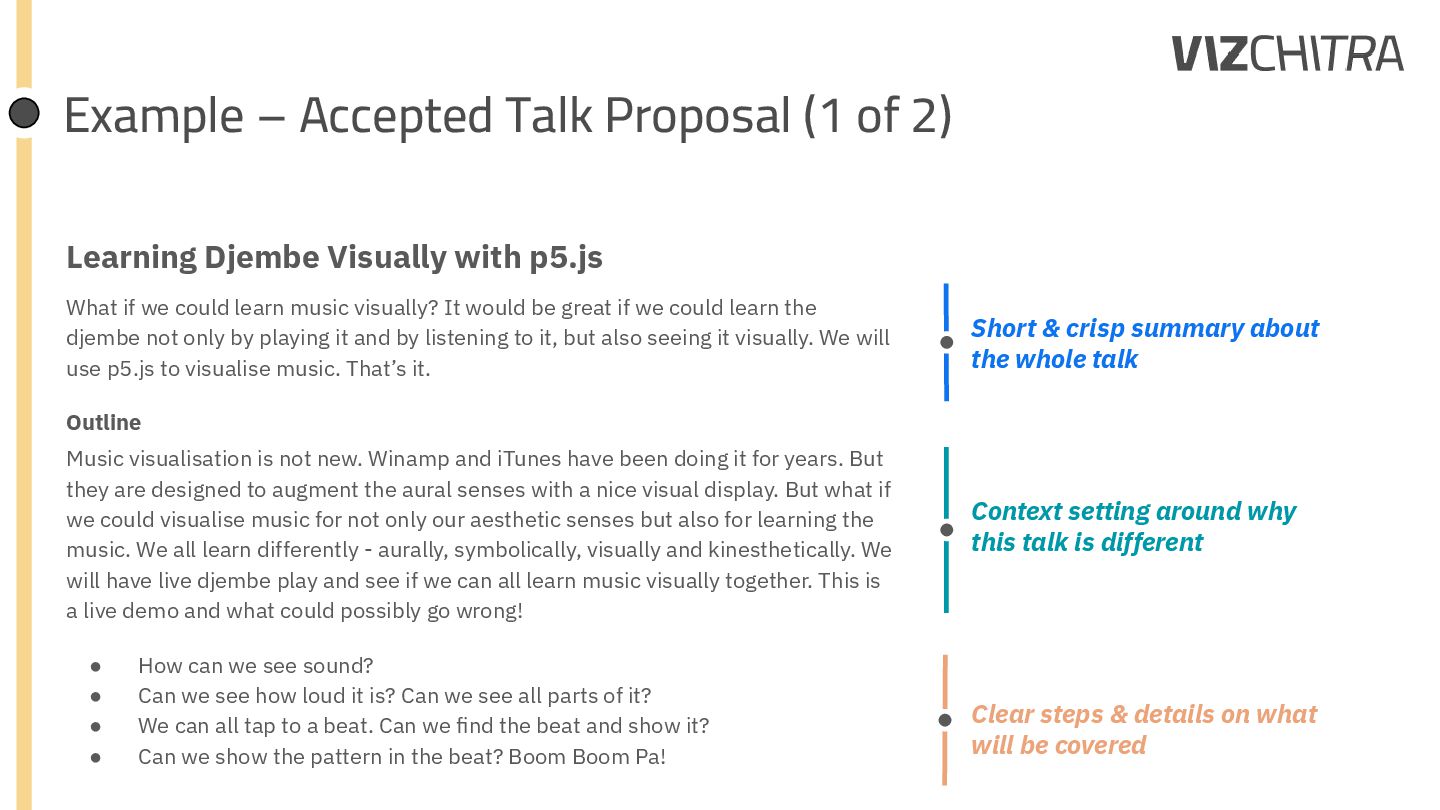
Example – Accepted Talk Proposal (1 of 2) Learning Djembe
Visually with p5.js What if we could learn music visually? It would be great if we could learn the djembe not only by playing it and by listening to it, but also seeing it visually. We will use p5.js to visualise music. That’s it. Outline Music visualisation is not new. Winamp and iTunes have been doing it for years. But they are designed to augment the aural senses with a nice visual display. But what if we could visualise music for not only our aesthetic senses but also for learning the music. We all learn differently - aurally, symbolically, visually and kinesthetically. We will have live djembe play and see if we can all learn music visually together. This is a live demo and what could possibly go wrong! • How can we see sound? • Can we see how loud it is? Can we see all parts of it? • We can all tap to a beat. Can we find the beat and show it? • Can we show the pattern in the beat? Boom Boom Pa! Short & crisp summary about the whole talk Clear steps & details on what will be covered Context setting around why this talk is different -
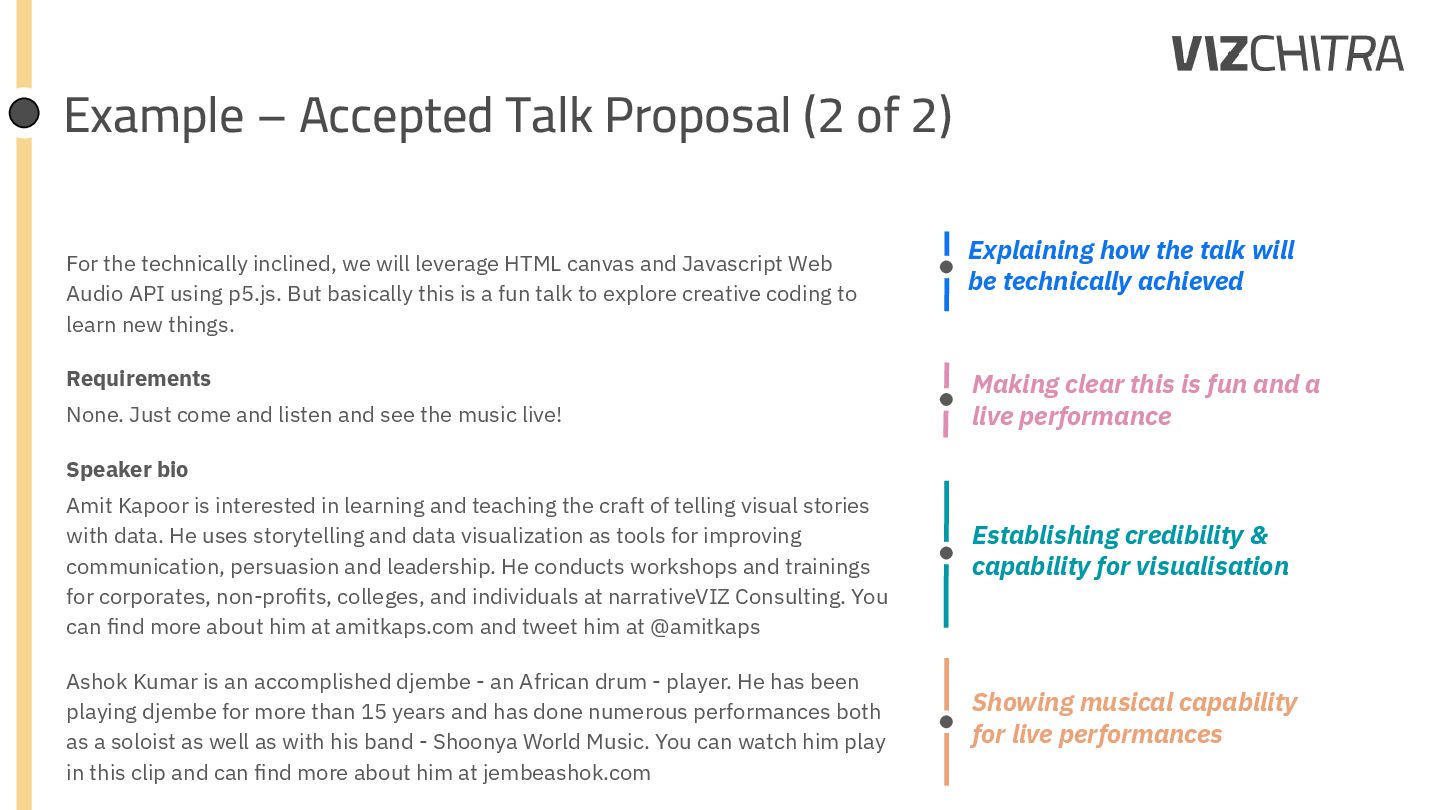
Example – Accepted Talk Proposal (2 of 2) For the
technically inclined, we will leverage HTML canvas and Javascript Web Audio API using p5.js. But basically this is a fun talk to explore creative coding to learn new things. Requirements None. Just come and listen and see the music live! Speaker bio Amit Kapoor is interested in learning and teaching the craft of telling visual stories with data. He uses storytelling and data visualization as tools for improving communication, persuasion and leadership. He conducts workshops and trainings for corporates, non-profits, colleges, and individuals at narrativeVIZ Consulting. You can find more about him at amitkaps.com and tweet him at @amitkaps Ashok Kumar is an accomplished djembe - an African drum - player. He has been playing djembe for more than 15 years and has done numerous performances both as a soloist as well as with his band - Shoonya World Music. You can watch him play in this clip and can find more about him at jembeashok.com Making clear this is fun and a live performance Showing musical capability for live performances Establishing credibility & capability for visualisation Explaining how the talk will be technically achieved -
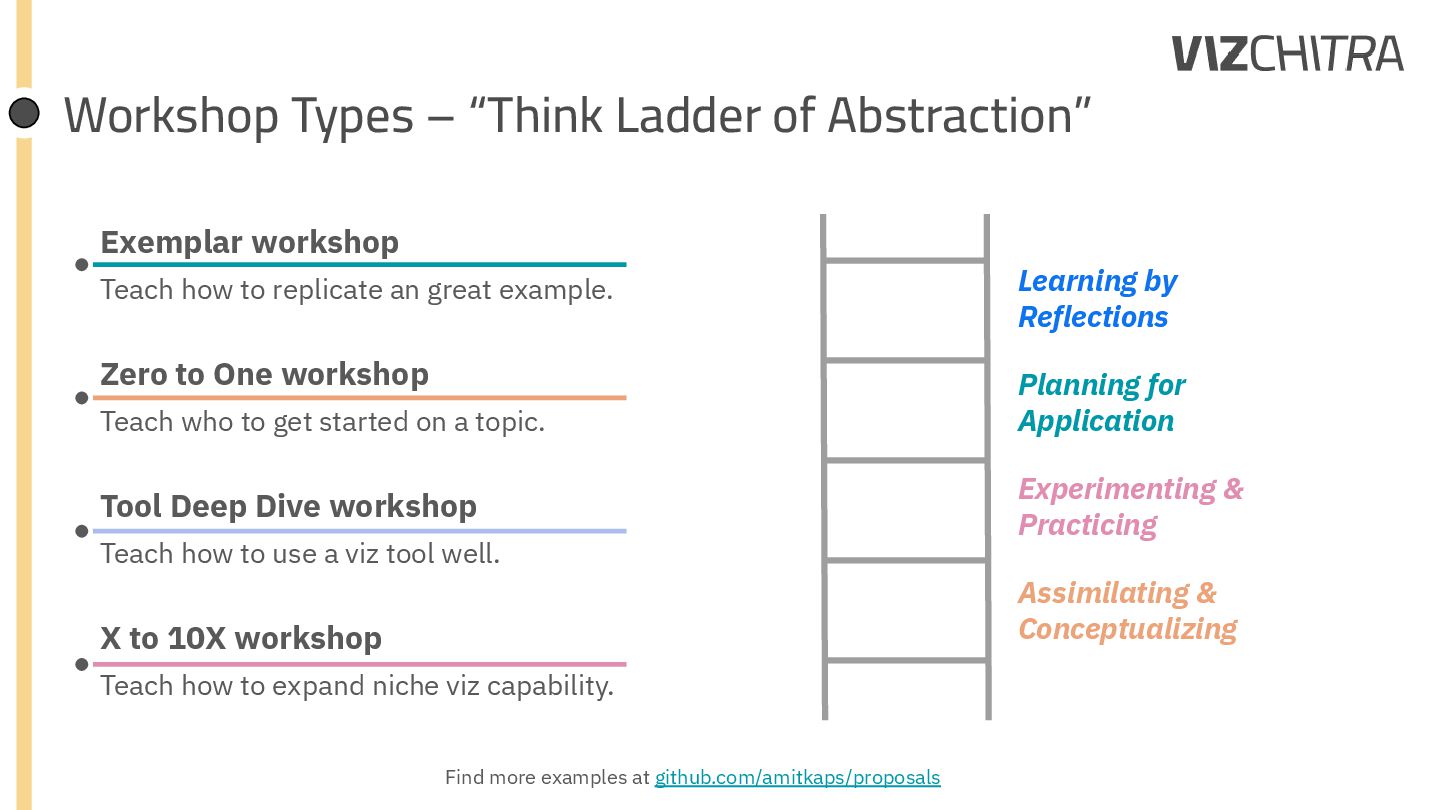
Workshop Types – “Think Ladder of Abstraction” Exemplar workshop Teach
how to replicate an great example. Zero to One workshop Teach who to get started on a topic. Tool Deep Dive workshop Teach how to use a viz tool well. X to 10X workshop Teach how to expand niche viz capability. Find more examples at github.com/amitkaps/proposals Learning by Reflections Planning for Application Experimenting & Practicing Assimilating & Conceptualizing -
Strong Accept ✔ Maybe ? Reject ❌ 1. Proposal Outline
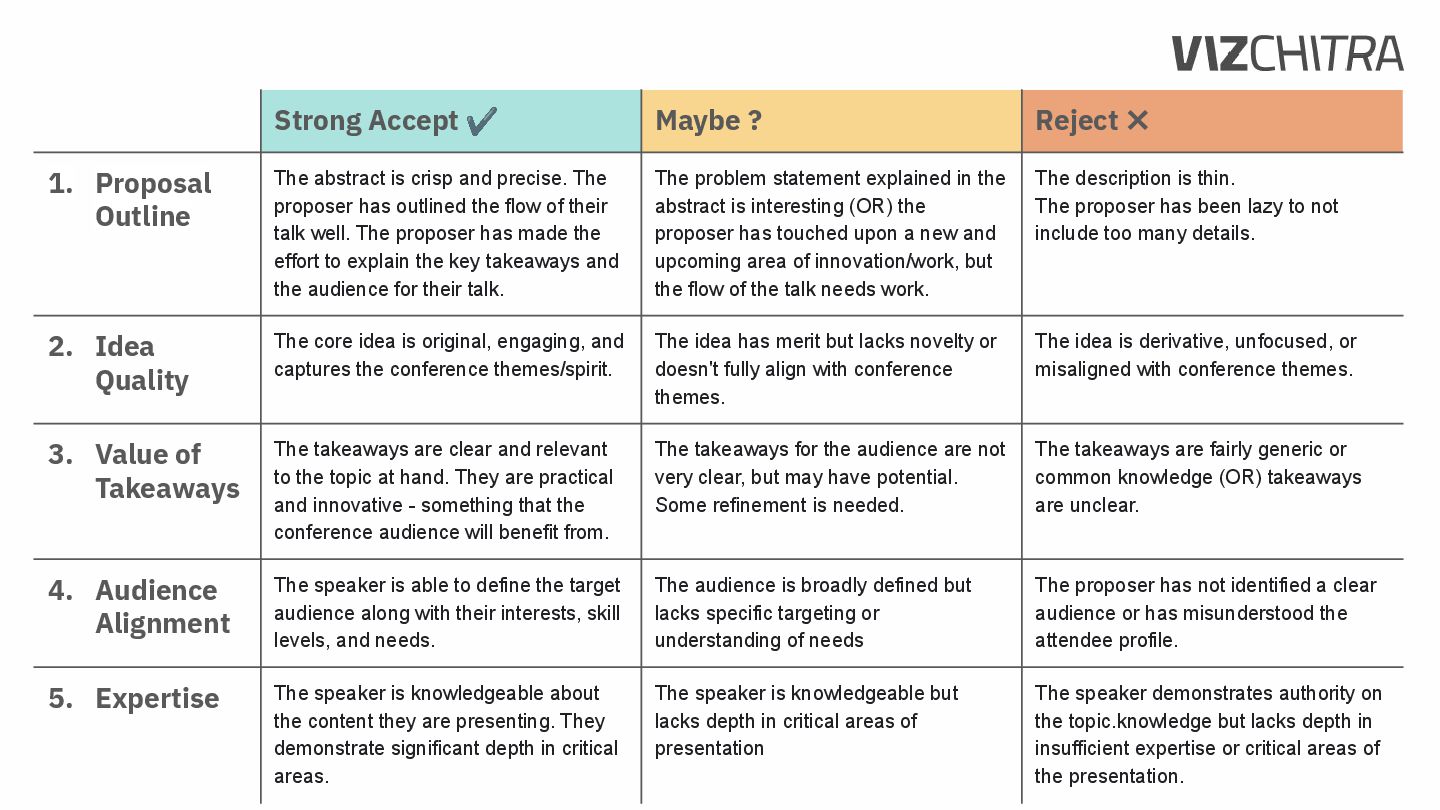
The abstract is crisp and precise. The proposer has outlined the flow of their talk well. The proposer has made the effort to explain the key takeaways and the audience for their talk. The problem statement explained in the abstract is interesting (OR) the proposer has touched upon a new and upcoming area of innovation/work, but the flow of the talk needs work. The description is thin. The proposer has been lazy to not include too many details. 2. Idea Quality The core idea is original, engaging, and captures the conference themes/spirit. The idea has merit but lacks novelty or doesn't fully align with conference themes. The idea is derivative, unfocused, or misaligned with conference themes. 3. Value of Takeaways The takeaways are clear and relevant to the topic at hand. They are practical and innovative - something that the conference audience will benefit from. The takeaways for the audience are not very clear, but may have potential. Some refinement is needed. The takeaways are fairly generic or common knowledge (OR) takeaways are unclear. 4. Audience Alignment The speaker is able to define the target audience along with their interests, skill levels, and needs. The audience is broadly defined but lacks specific targeting or understanding of needs The proposer has not identified a clear audience or has misunderstood the attendee profile. 5. Expertise The speaker is knowledgeable about the content they are presenting. They demonstrate significant depth in critical areas. The speaker is knowledgeable but lacks depth in critical areas of presentation The speaker demonstrates authority on the topic.knowledge but lacks depth in insufficient expertise or critical areas of the presentation. -
• Communicate with the proposer • Proposer to prepare draft
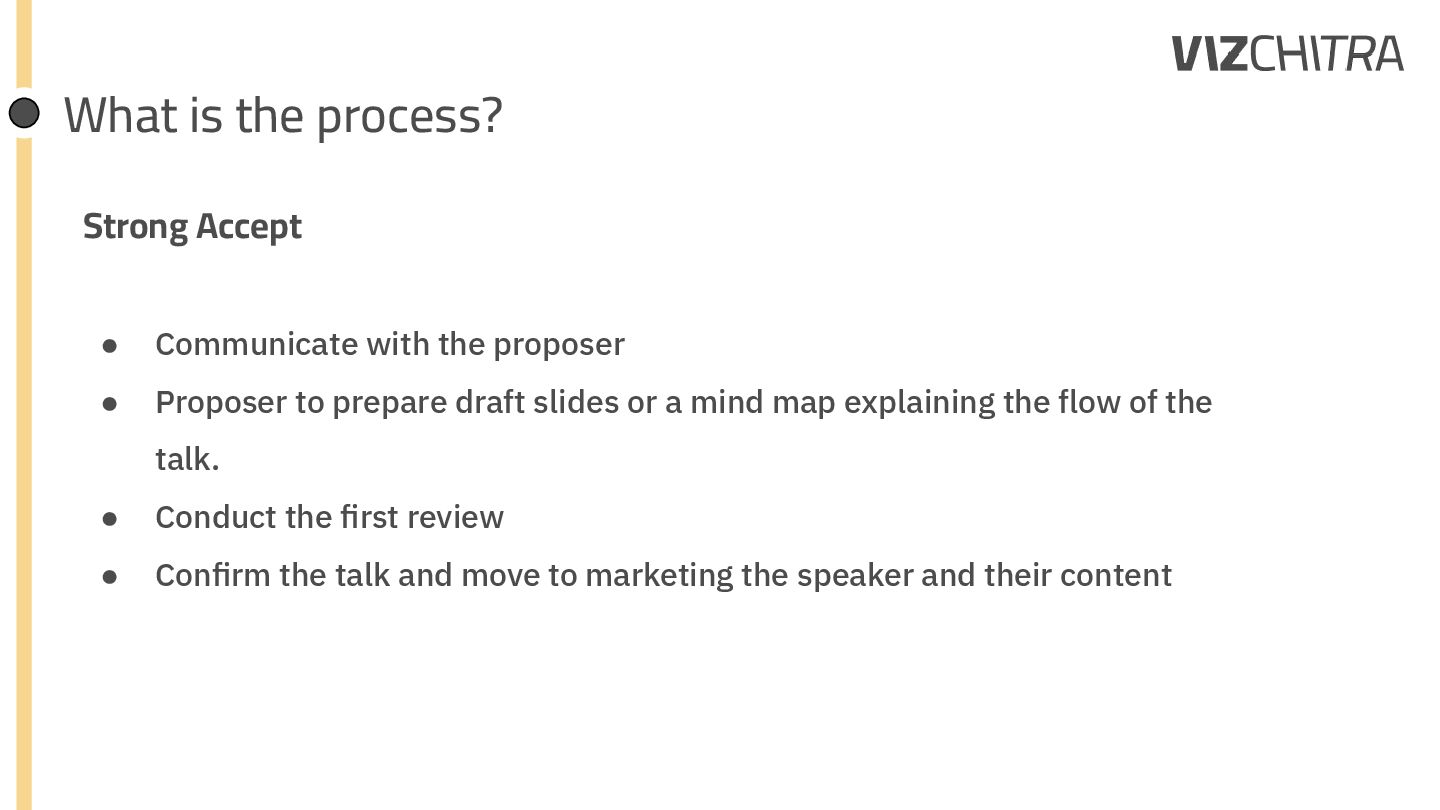
slides or a mind map explaining the flow of the talk. • Conduct the first review • Confirm the talk and move to marketing the speaker and their content What is the process? Strong Accept -

• Communicate with the proposer • Conduct the first review

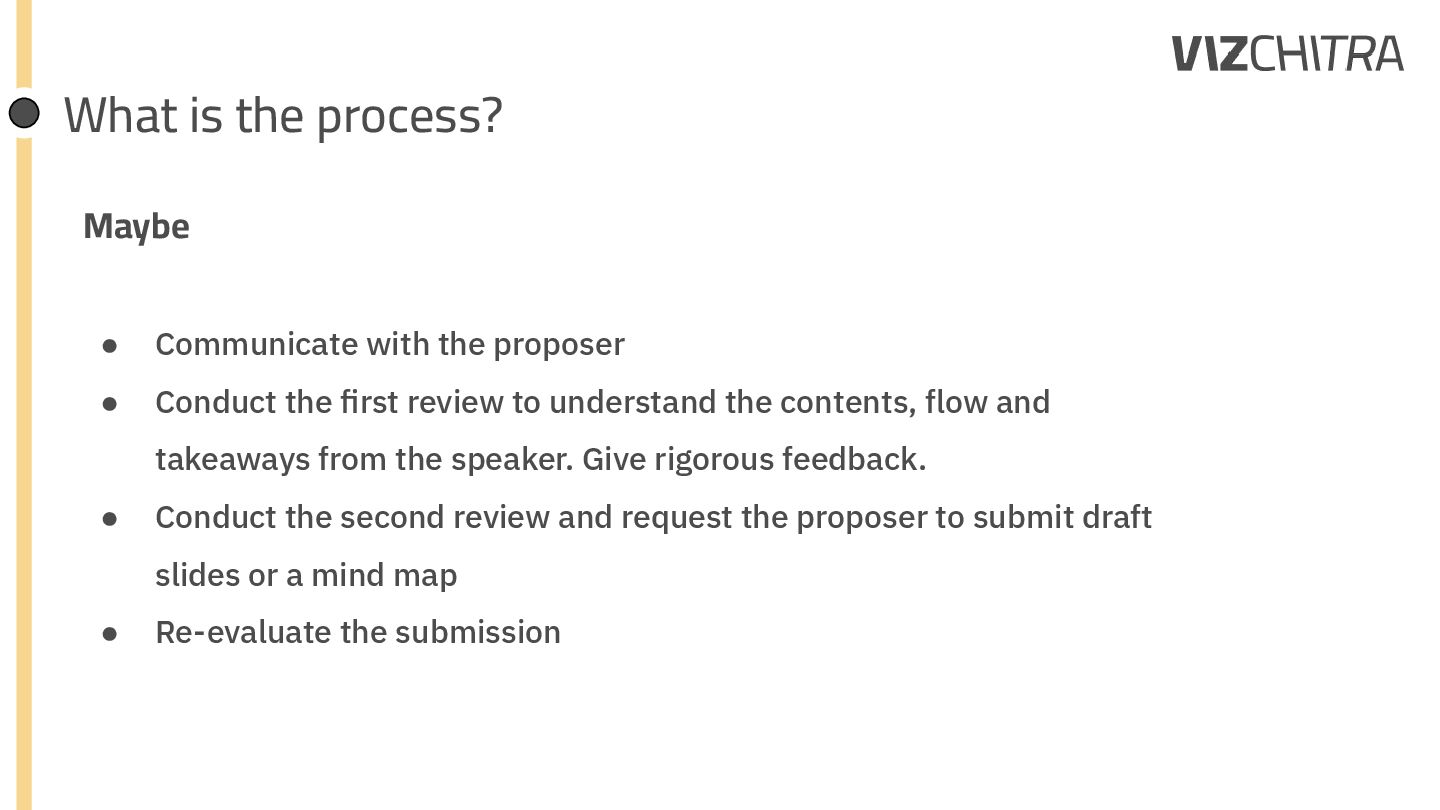
to understand the contents, flow and takeaways from the speaker. Give rigorous feedback. • Conduct the second review and request the proposer to submit draft slides or a mind map • Re-evaluate the submission What is the process? Maybe -
• Communicate with the proposer • Constructive comments will be
left for the proposer to add more details to the submission • Proposer to consider feedback and submit a refined proposal • Re-evaluate the submission What is the process? Reject -
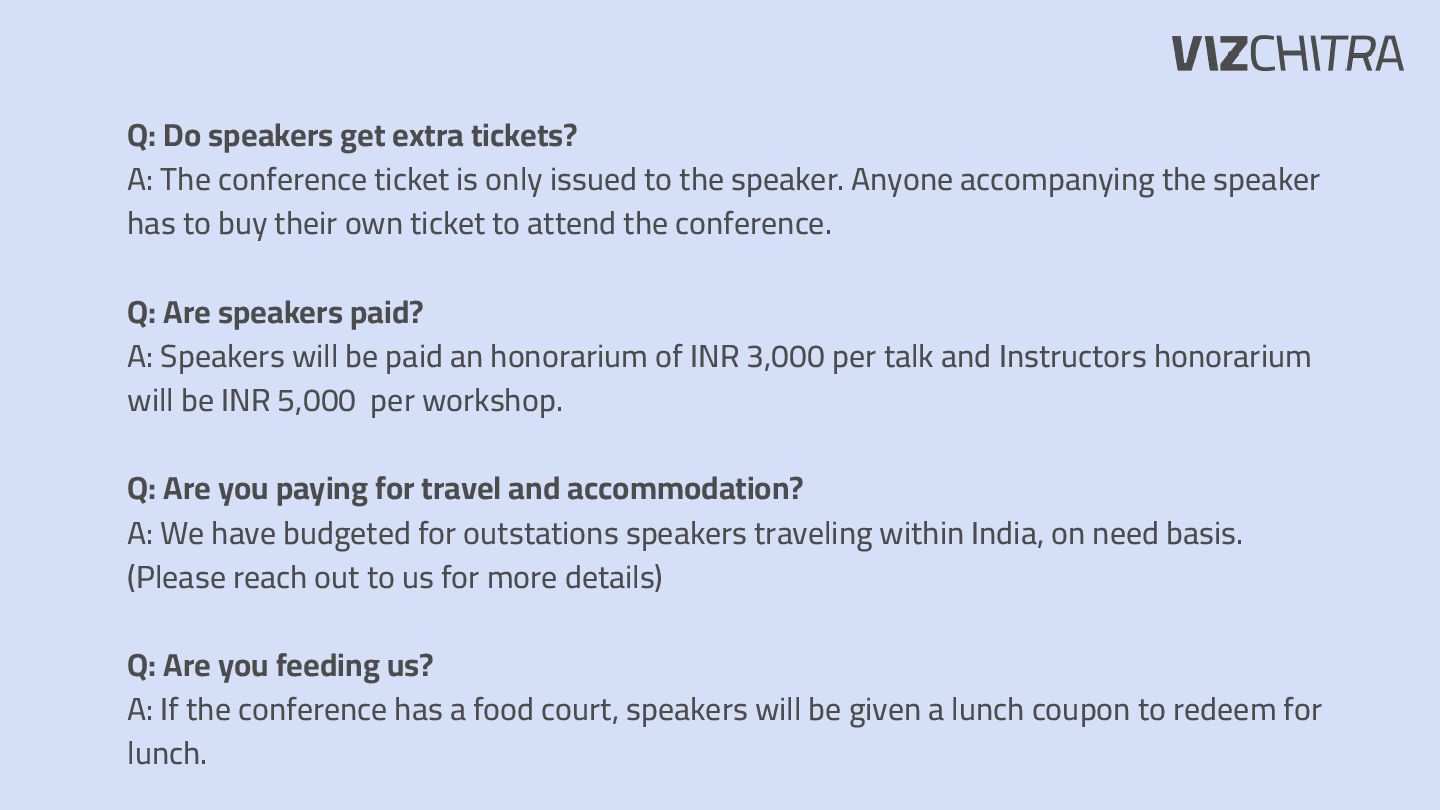
Q: Do speakers get extra tickets? A: The conference ticket
is only issued to the speaker. Anyone accompanying the speaker has to buy their own ticket to attend the conference. Q: Are speakers paid? A: Speakers will be paid an honorarium of INR 3,000 per talk and Instructors honorarium will be INR 5,000 per workshop. Q: Are you paying for travel and accommodation? A: We have budgeted for outstations speakers traveling within India, on need basis. (Please reach out to us for more details) Q: Are you feeding us? A: If the conference has a food court, speakers will be given a lunch coupon to redeem for lunch.