Story Mapping Example Mapping Scenario: Playlist without name is auto-numbered Given existing Playlists | My Playlist #1 | | My Playlist #2 | When a new playlist without name is added Then that new playlist is given the name ‘My Playlist #3’ Scenario: Playlist without name gets next available slot Given existing Playlists | My Playlist #1 | | My Playlist #3 | When a new playlist without name is added Then that new playlist is given the name ‘My Playlist #2’ Scenario writing
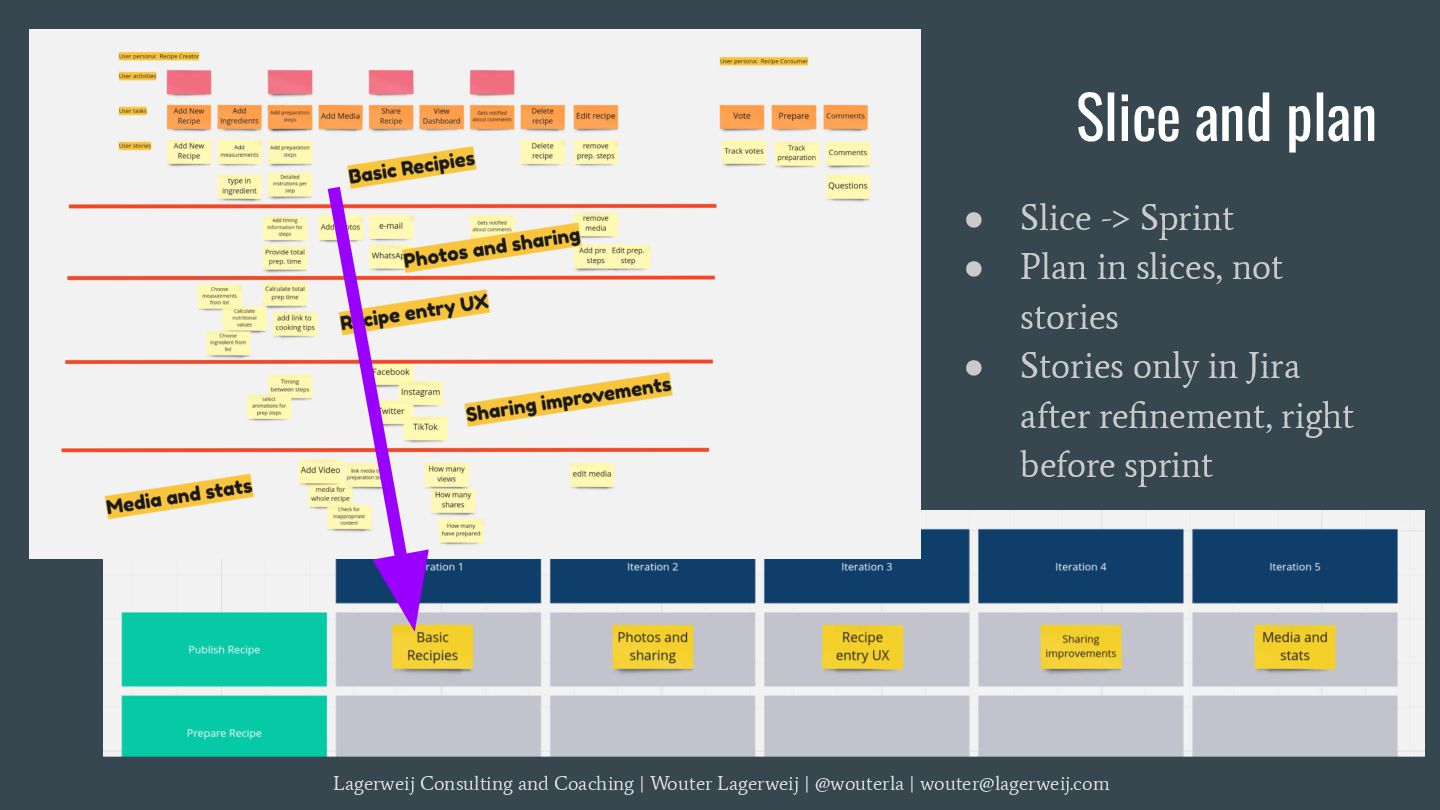
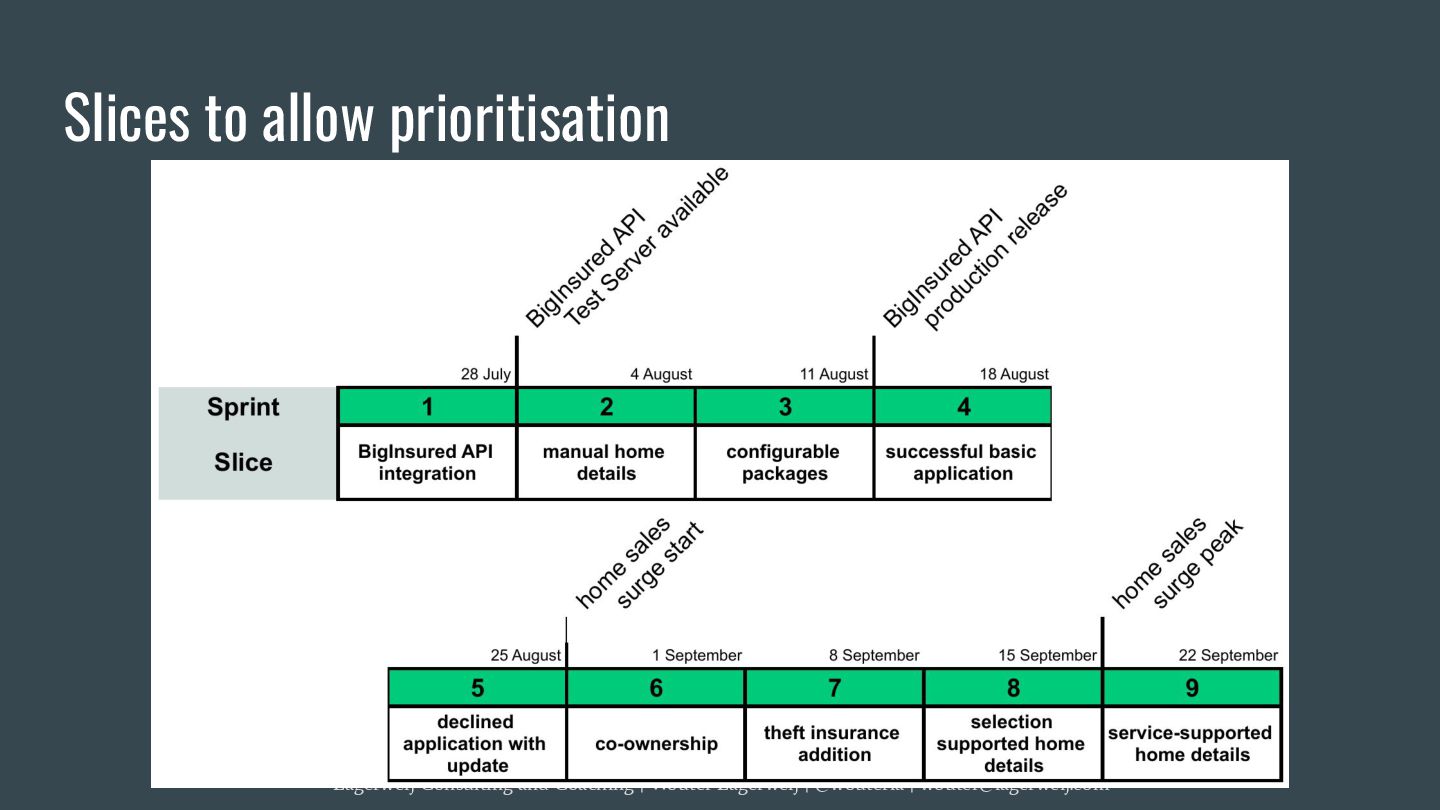
Mapping To break a big feature/project into smaller parts while keeping the big picture in sight, and defining the slices in which we can split delivery.
Mapping To discover together, and agree unambiguously what the expected result will be when we've implemented a story by generating examples of how it will behave.
Writing To apply some rigour to our examples, to ensure we use the same language, and verify our understanding, while also allowing us to turn these specifications into executable tests. Scenario: Playlist without name is auto-numbered Given existing Playlists | My Playlist #1 | | My Playlist #2 | When a new playlist without name is added Then that new playlist is given the name ‘My Playlist #3’ Scenario: Playlist without name gets next available slot Given existing Playlists | My Playlist #1 | | My Playlist #3 | When a new playlist without name is added Then that new playlist is given the name ‘My Playlist #2’
Mapping “The flat backlog is poor explanation of what a system does” - Jeff Patton https://www.jpattonassociates.com/the-new-backlog/ https://www.jpattonassociates.com/wp-content/uploads/2015/01/how_you_slice_it.pdf
of Story Mapping • Structured way of breaking down something big • Always clear how the parts fit into the whole • Always clear how what we do relates to the user’s needs • Done together, creates common understanding • Focused on creating small deliverable increments • Brings more structure and meaning to the portfolio
ready for work Write down everything you have/had to do to to get out the door on your way to work.... “Shut off alarm” “Get into the shower” “Wash hair” “Make coffee” ...
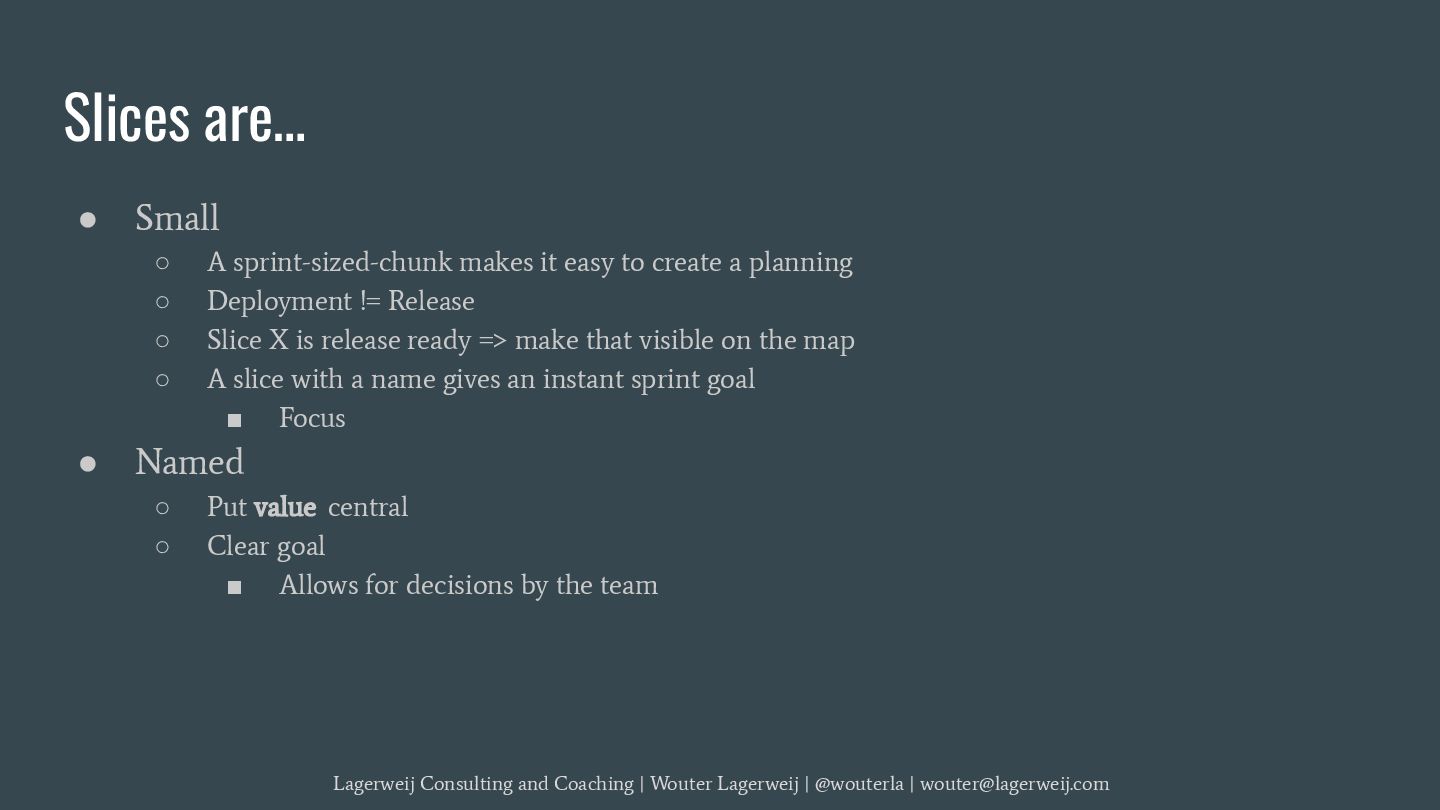
[email protected] Slices are… • Small ◦ A sprint-sized-chunk makes it easy to create a planning ◦ Deployment != Release ◦ Slice X is release ready => make that visible on the map ◦ A slice with a name gives an instant sprint goal ▪ Focus • Named ◦ Put value central ◦ Clear goal ▪ Allows for decisions by the team


 wouterla
 progmat
 hiyoriyamakankou
 tamosan01
 recruitengineers
 layerx
 kamadamakoto
 todatomohiro
 kimpachi_d
 tkt42u19421
 kaonavi
 ryu1013
 openwork
 wayneb77
 rasagy
 aleyda
 morganepeng
 rkaga
rkaga
 letsgokoyo
 rocio
rocio
 greggifford
 jonoalderson
 tammyeverts
 katarinadahlin
 portentint
![Lagerweij Consulting and Coaching | Wouter Lagerweij | [email protected] Quick](https://files.speakerdeck.com/presentations/ce915ca5dc2247cb8e8ea88e4e165398/slide_0.jpg)
![Lagerweij Consulting and Coaching | Wouter Lagerweij | [email protected] Practices](https://files.speakerdeck.com/presentations/ce915ca5dc2247cb8e8ea88e4e165398/slide_1.jpg)
![Lagerweij Consulting and Coaching | Wouter Lagerweij | [email protected] Story](https://files.speakerdeck.com/presentations/ce915ca5dc2247cb8e8ea88e4e165398/slide_2.jpg)
![Lagerweij Consulting and Coaching | Wouter Lagerweij | [email protected] Example](https://files.speakerdeck.com/presentations/ce915ca5dc2247cb8e8ea88e4e165398/slide_3.jpg)
![Lagerweij Consulting and Coaching | Wouter Lagerweij | [email protected] Scenario](https://files.speakerdeck.com/presentations/ce915ca5dc2247cb8e8ea88e4e165398/slide_4.jpg)
![Lagerweij Consulting and Coaching | Wouter Lagerweij | [email protected] Geek](https://files.speakerdeck.com/presentations/ce915ca5dc2247cb8e8ea88e4e165398/slide_5.jpg)
![Lagerweij Consulting and Coaching | Wouter Lagerweij | [email protected] Story](https://files.speakerdeck.com/presentations/ce915ca5dc2247cb8e8ea88e4e165398/slide_6.jpg)
![Lagerweij Consulting and Coaching | Wouter Lagerweij | [email protected] Benefits](https://files.speakerdeck.com/presentations/ce915ca5dc2247cb8e8ea88e4e165398/slide_7.jpg)
![Lagerweij Consulting and Coaching | Wouter Lagerweij | [email protected] Structure,](https://files.speakerdeck.com/presentations/ce915ca5dc2247cb8e8ea88e4e165398/slide_8.jpg)
![Lagerweij Consulting and Coaching | Wouter Lagerweij | [email protected] Structure,](https://files.speakerdeck.com/presentations/ce915ca5dc2247cb8e8ea88e4e165398/slide_9.jpg)
![Lagerweij Consulting and Coaching | Wouter Lagerweij | [email protected] Elements](https://files.speakerdeck.com/presentations/ce915ca5dc2247cb8e8ea88e4e165398/slide_10.jpg)
![Lagerweij Consulting and Coaching | Wouter Lagerweij | [email protected] Elements](https://files.speakerdeck.com/presentations/ce915ca5dc2247cb8e8ea88e4e165398/slide_11.jpg)
![Lagerweij Consulting and Coaching | Wouter Lagerweij | [email protected] Process](https://files.speakerdeck.com/presentations/ce915ca5dc2247cb8e8ea88e4e165398/slide_12.jpg)
![Lagerweij Consulting and Coaching | Wouter Lagerweij | [email protected] Getting](https://files.speakerdeck.com/presentations/ce915ca5dc2247cb8e8ea88e4e165398/slide_13.jpg)
![Lagerweij Consulting and Coaching | Wouter Lagerweij | [email protected] Big](https://files.speakerdeck.com/presentations/ce915ca5dc2247cb8e8ea88e4e165398/slide_14.jpg)
![Lagerweij Consulting and Coaching | Wouter Lagerweij | [email protected] Technical](https://files.speakerdeck.com/presentations/ce915ca5dc2247cb8e8ea88e4e165398/slide_15.jpg)
![Lagerweij Consulting and Coaching | Wouter Lagerweij | [email protected] Slicing](https://files.speakerdeck.com/presentations/ce915ca5dc2247cb8e8ea88e4e165398/slide_17.jpg)