Upgrade to Pro — share decks privately, control downloads, hide ads and more …

How Do You Prevent a Small Roof Issue From Beco...

How Do You Prevent a Small Roof Issue From Becoming a Major Repair?

Preventing small roof issues from turning into major repairs requires consistent attention, early detection, and timely action before damage spreads beyond control. Many homeowners underestimate how quickly a minor leak, missing shingle, or cracked flashing can escalate into structural deterioration affecting ceilings, insulation, and even the home’s foundation. Water infiltration is especially dangerous because it often travels unseen, silently weakening roofing layers over time. Regular roof inspections, ideally twice a year and after severe weather, help identify these early warning signs before they become costly problems. Keeping gutters clean is equally important, as clogged drainage systems can force water back onto the roof and accelerate damage. Trimming nearby trees also reduces the risk of falling branches and excess debris buildup that traps moisture. Proper attic ventilation plays a major role in extending roof lifespan by preventing heat and moisture accumulation that can warp materials. Homeowners should also stay alert to interior signs like ceiling stains, musty odors, or sudden temperature changes, as these often indicate hidden roof issues. Addressing repairs immediately rather than delaying them ensures that damage does not spread into surrounding structures. While DIY maintenance can help with basic upkeep, professional inspections are essential for identifying hidden vulnerabilities that are not easily visible. Trusted roofing specialists, such as Covenant Roofing & Restoration, can evaluate roof conditions thoroughly and recommend preventive solutions before small issues escalate. Investing in quality materials during repairs also contributes to long-term durability and weather resistance. Seasonal weather changes, including storms, heat, and freezing conditions, further emphasize the need for proactive maintenance. Ultimately, a well-maintained roof not only protects the home but also preserves property value and reduces long-term repair costs significantly.

Avatar for Aiden Ochoa

Aiden Ochoa

May 11, 2026

Other Decks in Business

Transcript

  1. How Do You Prevent a Small Roof Issue From Becoming

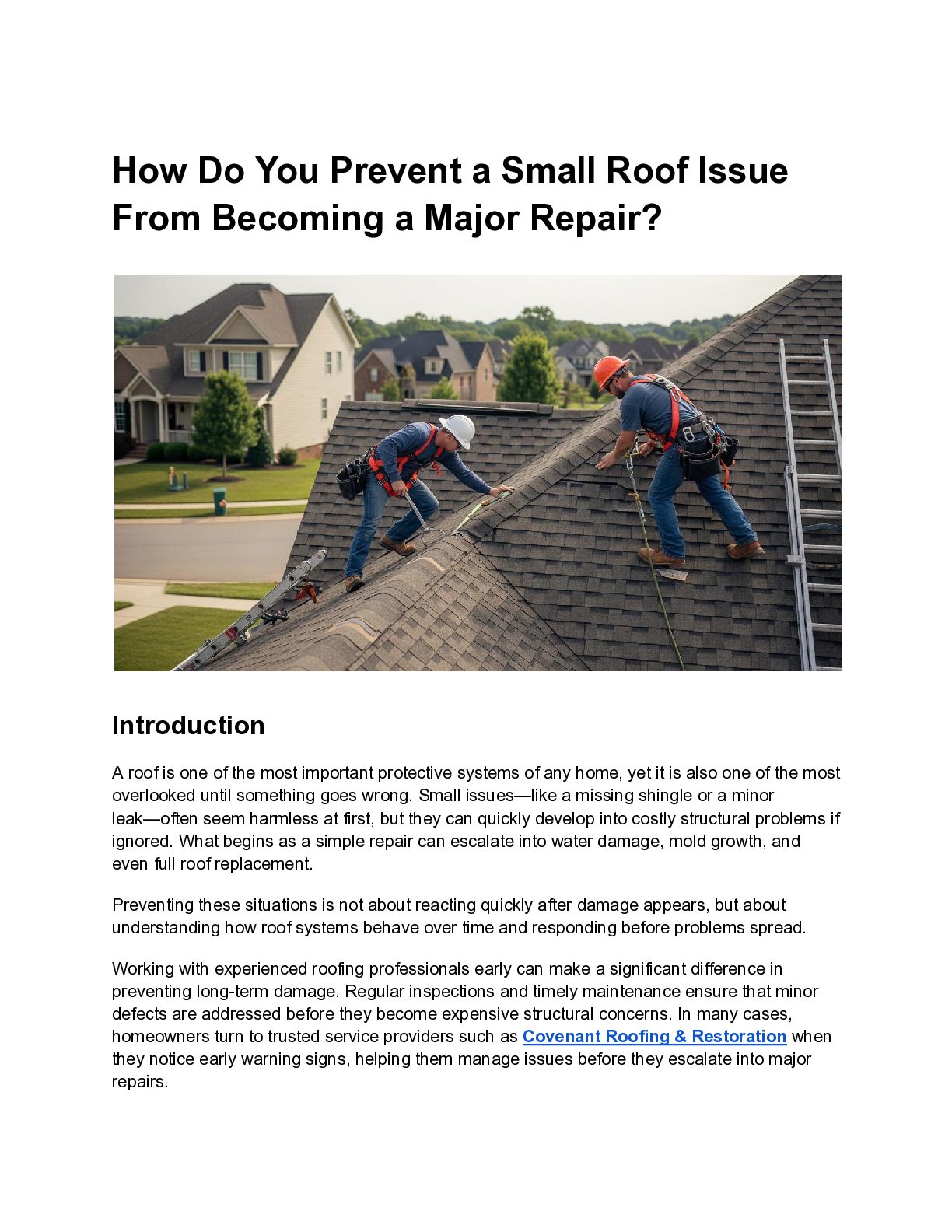
    a Major Repair? Introduction A roof is one of the most important protective systems of any home, yet it is also one of the most overlooked until something goes wrong. Small issues—like a missing shingle or a minor leak—often seem harmless at first, but they can quickly develop into costly structural problems if ignored. What begins as a simple repair can escalate into water damage, mold growth, and even full roof replacement. Preventing these situations is not about reacting quickly after damage appears, but about understanding how roof systems behave over time and responding before problems spread. Working with experienced roofing professionals early can make a significant difference in preventing long-term damage. Regular inspections and timely maintenance ensure that minor defects are addressed before they become expensive structural concerns. In many cases, homeowners turn to trusted service providers such as Covenant Roofing & Restoration when they notice early warning signs, helping them manage issues before they escalate into major repairs.
  2. This article explains how small roof issues develop into serious

    damage and what practical steps homeowners can take to stop that process early. Understanding How Roof Damage Escalates Roof systems are designed to withstand years of exposure, but they are constantly under stress from weather, temperature changes, and aging materials. Small vulnerabilities tend to expand over time if not corrected. Common Reasons Small Roof Problems Become Major Repairs Water infiltration and moisture spread Water is the most destructive force for roofing systems. Even a tiny opening allows moisture to seep beneath shingles and into underlying layers. Once inside, water spreads laterally, affecting areas far beyond the original entry point. Weather exposure and seasonal changes Heat, rain, wind, and freezing temperatures all weaken roofing materials. Expansion and contraction cycles gradually loosen fasteners and crack protective layers. Neglected maintenance habits Ignoring minor issues such as debris buildup or small leaks allows damage to accumulate silently over time. Aging roofing materials As roofing materials age, they lose flexibility and protective coatings. This makes them more vulnerable to cracking and breakage. Poor installation workmanship Improper installation can create weak points that fail long before the roof reaches its expected lifespan. The True Cost of Waiting Too Long Delaying repairs often leads to consequences that extend beyond the roof itself. •​ Interior ceiling and wall damage
  3. •​ Mold and mildew growth in hidden areas •​ Compromised

    insulation reducing energy efficiency •​ Structural wood rot in rafters and decking •​ Higher heating and cooling costs •​ Full roof replacement instead of minor repair What could have been a small repair may turn into a major financial burden if left unresolved. The Most Common Small Roof Issues Homeowners Ignore Many serious roof problems start with subtle warning signs that are easy to dismiss. Missing or Damaged Shingles Shingles act as the first line of defense against rain and sunlight. When a few go missing or become damaged: •​ The underlayment is exposed •​ Water penetration becomes more likely •​ Surrounding shingles weaken faster Even a single missing shingle can compromise nearby sections of the roof. Small Roof Leaks Leaks often start small and go unnoticed for months. Common early signs include: •​ Slight discoloration on ceilings •​ Occasional drips during heavy rain •​ Damp attic insulation By the time leaks become visible indoors, water has often traveled far from the original entry point. Cracked Flashing
  4. Flashing seals roof joints around chimneys, skylights, and vents. When

    it cracks or loosens: •​ Water enters vulnerable joints •​ Hidden structural damage begins •​ Interior staining may appear weeks later Clogged Gutters and Downspouts While not part of the roof surface itself, gutters play a major role in roof health. Blocked gutters cause: •​ Water overflow onto roof edges •​ Fascia and soffit damage •​ Foundation moisture issues Ponding Water Flat or low-slope roofs may develop standing water if drainage is poor. This leads to: •​ Membrane weakening •​ Increased leak risk •​ Accelerated material deterioration Damaged Roof Ventilation Proper airflow is essential for roof longevity. Poor ventilation results in: •​ Heat buildup in the attic •​ Moisture condensation •​ Premature shingle aging •​ Higher energy bills
  5. Early Warning Signs That Should Never Be Ignored Identifying problems

    early is the key to preventing expensive repairs. Exterior Warning Signs •​ Curling or buckling shingles •​ Excessive granule loss in gutters •​ Uneven or sagging roof sections •​ Rusted or separated flashing •​ Moss, algae, or dark streaks Interior Warning Signs •​ Yellow or brown ceiling stains •​ Peeling paint near rooflines •​ Persistent musty odors •​ Damp attic insulation •​ Unusual indoor temperature changes Why Regular Roof Inspections Matter Routine inspections are one of the most effective ways to prevent minor issues from becoming major repairs. Benefits of Preventive Roof Maintenance •​ Early detection of hidden issues •​ Extended roof lifespan •​ Reduced long-term repair costs •​ Improved home value and safety •​ Better insurance claim outcomes How Often Should a Roof Be Inspected? •​ Twice a year (spring and fall recommended) •​ After severe storms or hail events •​ Before and after winter seasons
  6. •​ When purchasing or selling a home Professional inspections are

    especially important because trained eyes can detect problems that homeowners may overlook. Simple Maintenance Steps That Prevent Major Repairs Routine care significantly reduces roof deterioration. Keep Gutters Clean •​ Clean at least twice per year •​ Remove leaves, twigs, and debris •​ Ensure proper water flow away from roof edges Trim Nearby Trees Overhanging branches can: •​ Scratch shingles •​ Drop debris onto the roof •​ Increase moisture retention •​ Invite pests onto the roof surface Check the Attic Regularly The attic often reveals early roof issues. Look for: •​ Damp insulation •​ Water stains on rafters •​ Poor airflow or heat buildup Remove Debris Promptly Leaves and branches trap moisture, leading to:
  7. •​ Mold growth •​ Material decay •​ Blocked drainage paths

    Address Repairs Immediately Even small issues should never be delayed. Quick repairs: •​ Prevent structural spread •​ Reduce long-term costs •​ Protect interior spaces The Role of Weather in Roof Damage Weather is one of the strongest factors influencing roof lifespan. Storm Damage Risks •​ Strong winds lift shingles •​ Hail causes surface fractures •​ Heavy rain exposes weak points Seasonal Roof Challenges •​ Winter: ice dams and freezing expansion •​ Spring: heavy rain and moisture buildup •​ Summer: heat stress and material expansion •​ Autumn: leaf and debris accumulation Why DIY Roof Repairs Can Sometimes Make Things Worse While minor maintenance tasks are manageable, roof repairs require caution.
  8. Safety Risks •​ Risk of falls from heights •​ Hidden

    structural weaknesses •​ Slippery or unstable surfaces Incorrect Repair Techniques •​ Improper sealing methods •​ Mismatched replacement materials •​ Failure to address underlying damage When DIY Is Acceptable •​ Clearing gutters safely from the ground •​ Removing visible debris •​ Conducting basic visual inspections Anything beyond that often requires professional expertise. Choosing the Right Roofing Professional Selecting the right contractor is essential for long-term roof protection. What to Look For •​ Proper licensing and insurance •​ Proven repair experience •​ Transparent inspection reports •​ Clear pricing and warranties •​ Strong reputation for reliability Importance of Professional Preventive Maintenance Professionals provide: •​ Detailed roof assessments
  9. •​ Early detection of hidden damage •​ Long-term maintenance planning

    •​ Repair solutions tailored to roof type Preventive Roofing Strategies for Long-Term Protection Investing in Quality Roofing Materials Higher-quality materials resist: •​ UV damage •​ Moisture penetration •​ Wind uplift Improving Roof Ventilation Balanced ventilation helps: •​ Reduce attic heat buildup •​ Prevent moisture accumulation •​ Extend material lifespan Scheduling Routine Maintenance Plans Regular maintenance ensures: •​ Consistent roof monitoring •​ Early repair scheduling •​ Reduced emergency repair costs The Connection Between Roof Health and Home Value A well-maintained roof significantly impacts property value. Curb Appeal Benefits
  10. •​ Clean, uniform appearance •​ No visible damage or discoloration

    •​ Strong first impression for buyers Insurance and Financial Protection •​ Easier claim approvals •​ Lower risk of coverage disputes •​ Reduced long-term insurance costs How Professional Roofing Support Helps Prevent Major Damage Preventing small roof issues from becoming major repairs ultimately depends on early action and expert evaluation. Professional roofing support helps identify hidden vulnerabilities before they become visible problems. Skilled inspectors understand how moisture travels, how materials degrade, and how structural weaknesses develop over time. By addressing minor issues early—such as small leaks, loose flashing, or aging shingles—homeowners can avoid the cascading damage that leads to costly restoration work. Consistent inspections and timely intervention create a proactive approach to roof care, ensuring that small concerns never evolve into major structural failures. Conclusion Small roof issues are rarely just “small” once they are ignored. What begins as a minor defect can quickly expand into widespread damage affecting insulation, structure, and interior living spaces. The key to preventing this progression lies in early detection, routine maintenance, and timely repairs. By understanding warning signs, performing regular inspections, and addressing problems as soon as they appear, homeowners can significantly extend the life of their roof and avoid unnecessary expenses. A proactive approach ensures that the roof continues to perform its protective role effectively, safeguarding the entire home for years to come.