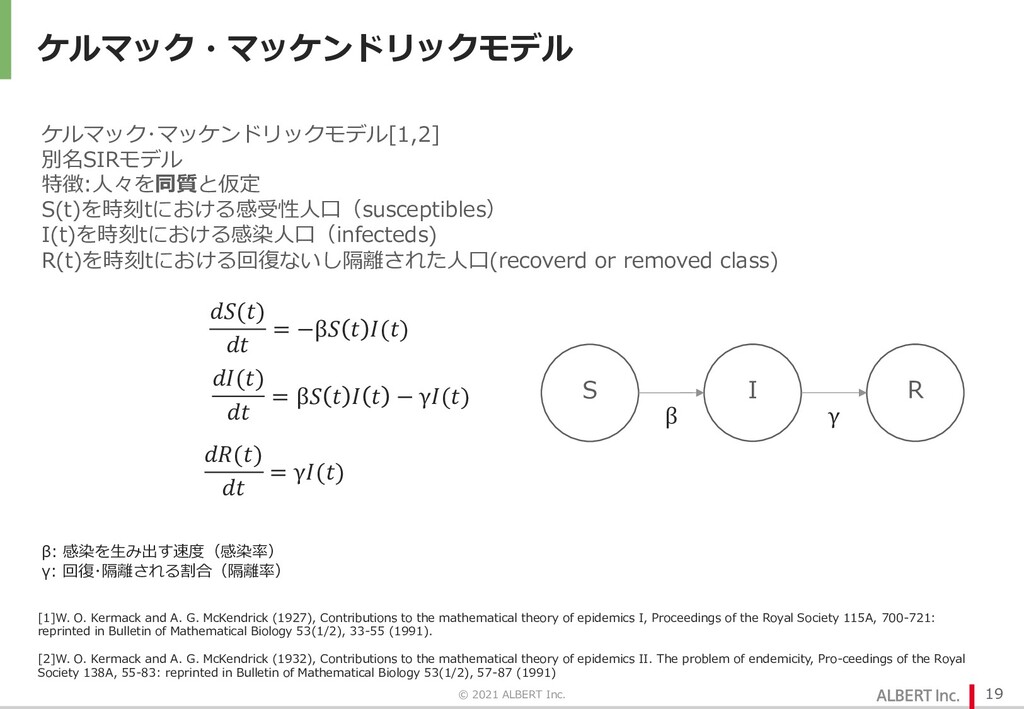
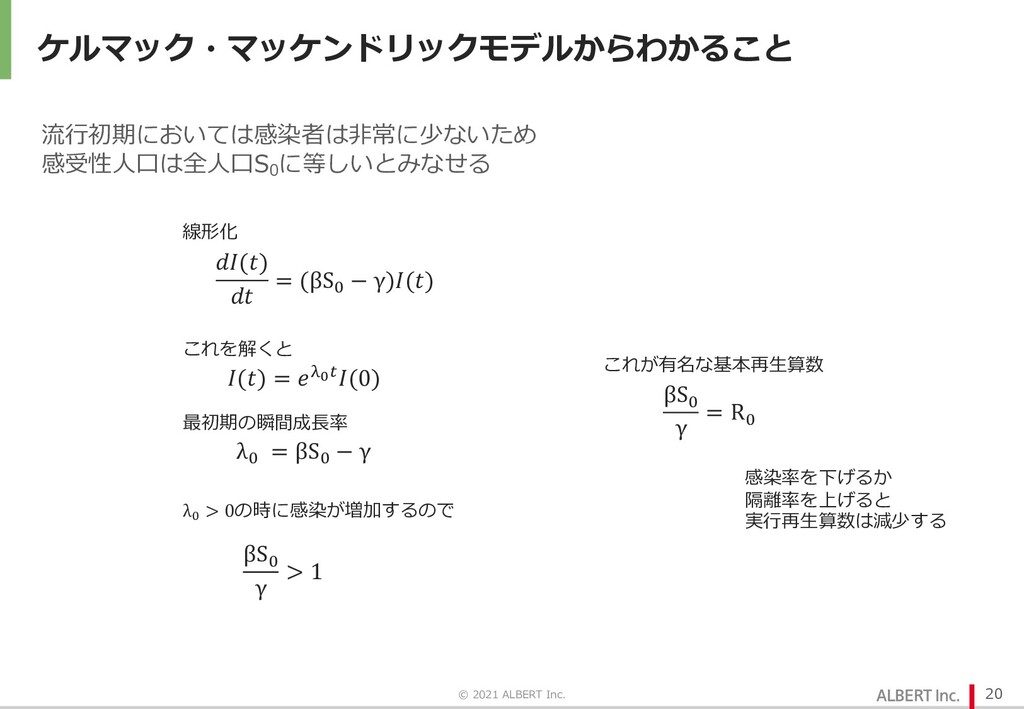
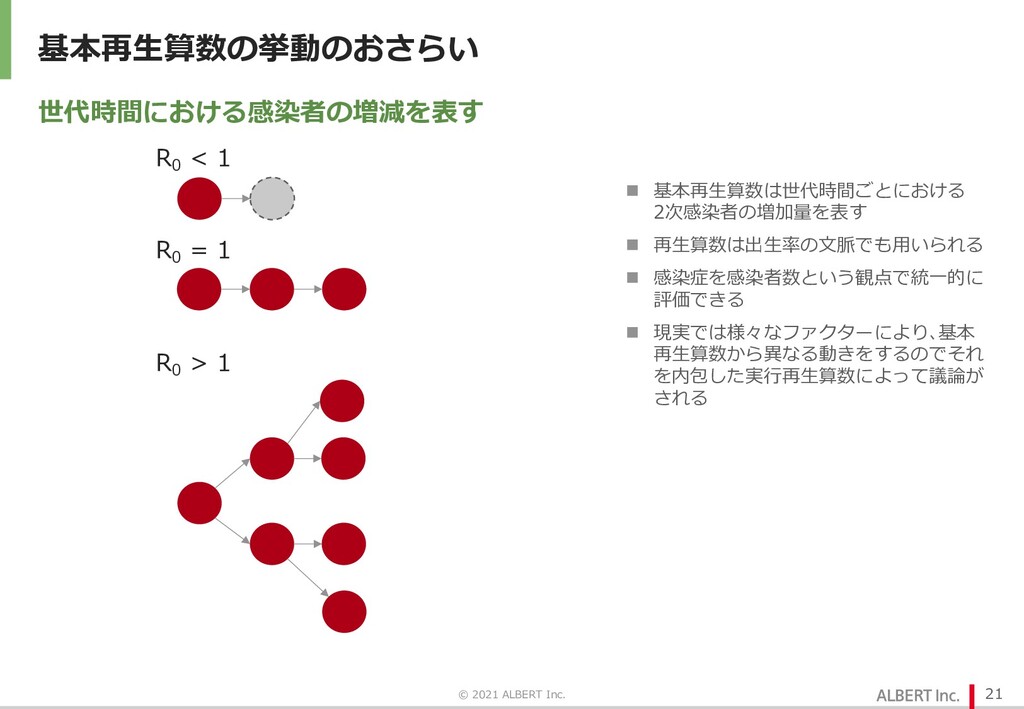
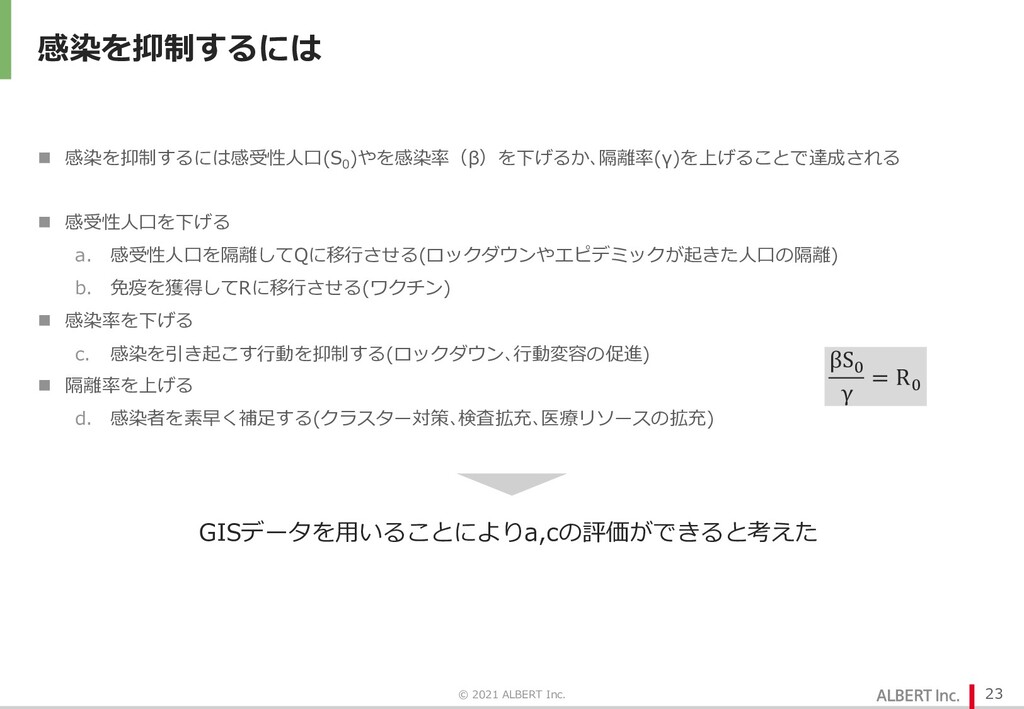
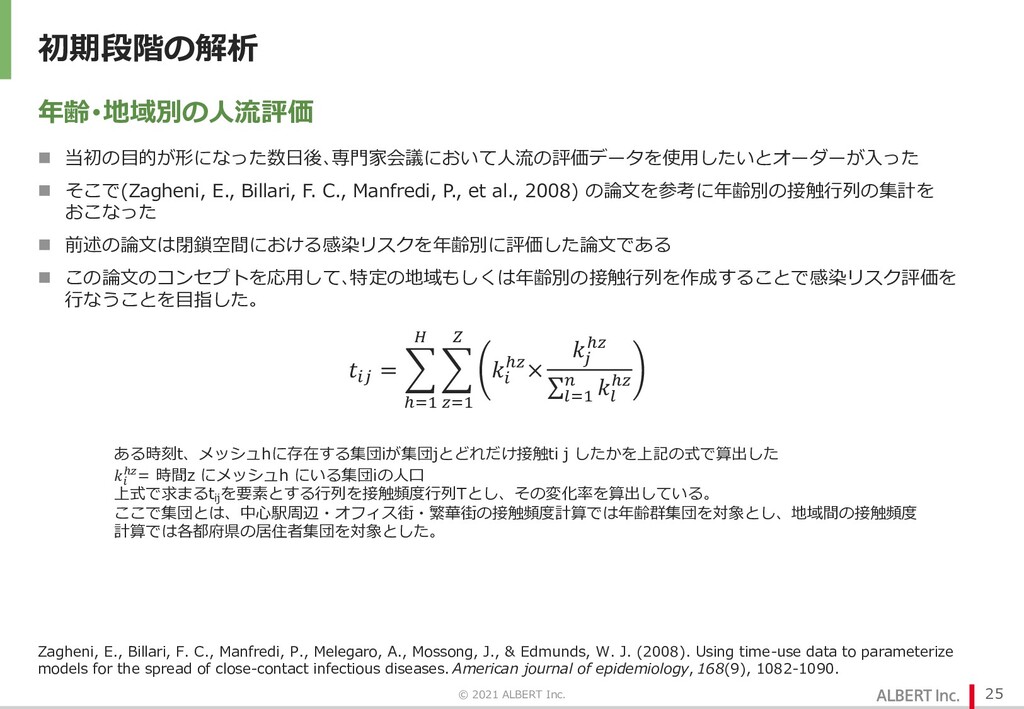
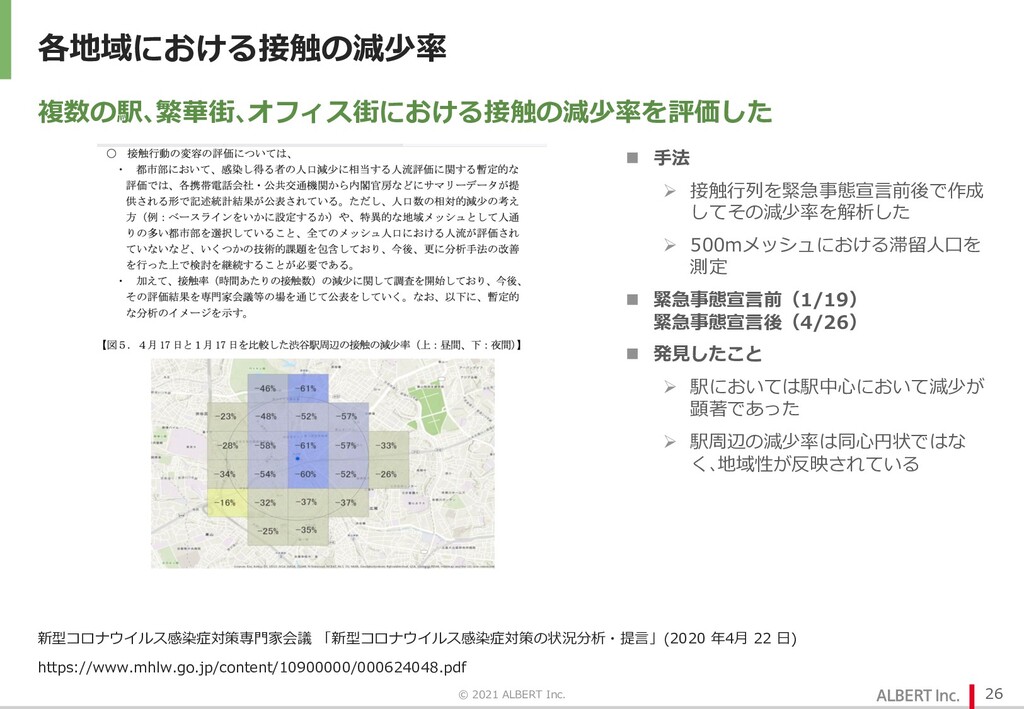
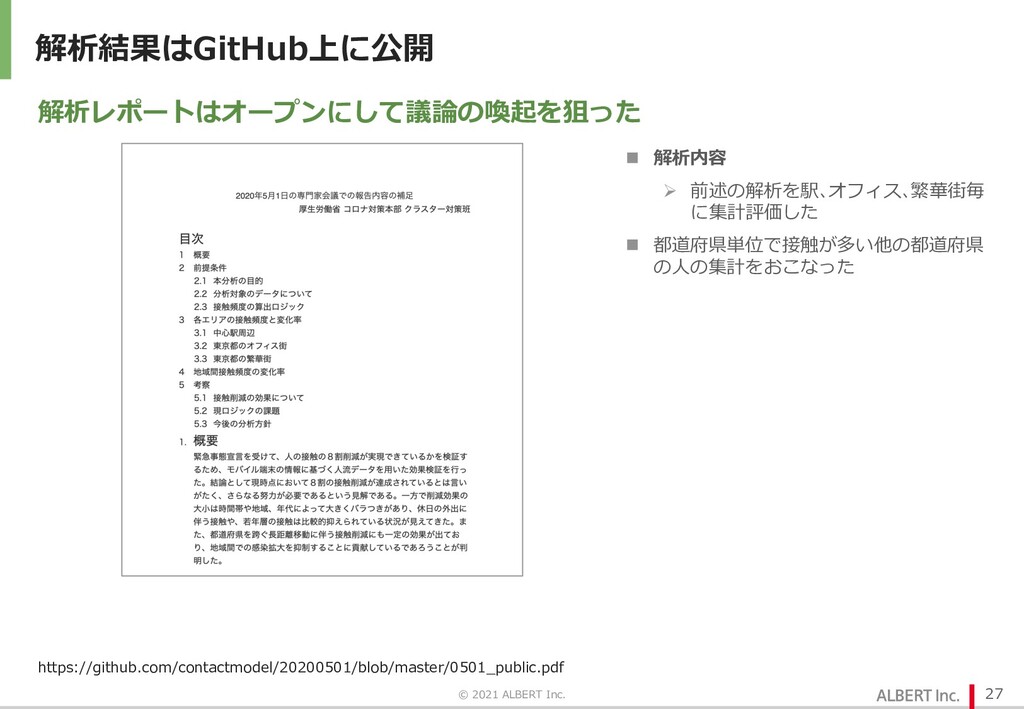
𝑡 𝐼(𝑡) 𝑑𝐼(𝑡) 𝑑𝑡 = β𝑆 𝑡 𝐼 𝑡 − γ𝐼(𝑡) 𝑑𝑅(𝑡) 𝑑𝑡 = γ𝐼(𝑡) ケルマック・マッケンドリックモデル[1,2] 別名SIRモデル 特徴:⼈々を同質と仮定 S(t)を時刻tにおける感受性⼈⼝(susceptibles) I(t)を時刻tにおける感染⼈⼝(infecteds) R(t)を時刻tにおける回復ないし隔離された⼈⼝(recoverd or removed class) β: 感染を⽣み出す速度(感染率) γ: 回復・隔離される割合(隔離率) S I R β γ [1]W. O. Kermack and A. G. McKendrick (1927), Contributions to the mathematical theory of epidemics I, Proceedings of the Royal Society 115A, 700-721: reprinted in Bulletin of Mathematical Biology 53(1/2), 33-55 (1991). [2]W. O. Kermack and A. G. McKendrick (1932), Contributions to the mathematical theory of epidemics II. The problem of endemicity, Pro-ceedings of the Royal Society 138A, 55-83: reprinted in Bulletin of Mathematical Biology 53(1/2), 57-87 (1991)


 albert_study
 rfdnxbro
 jyouryuusui
 raspython3
 akitoshiga
 y0hgi
y0hgi
 greenmidori
.png) yamad
yamad
 takahashim
 keeg
keeg
 willnet
 daidaidai
 riyaamemiya
 nikkihalliwell
 mojombo
 trallard
 inesmontani
 khoart
 marketingsoph
 csswizardry
 codingconduct
 michaelherold
 takai
takai