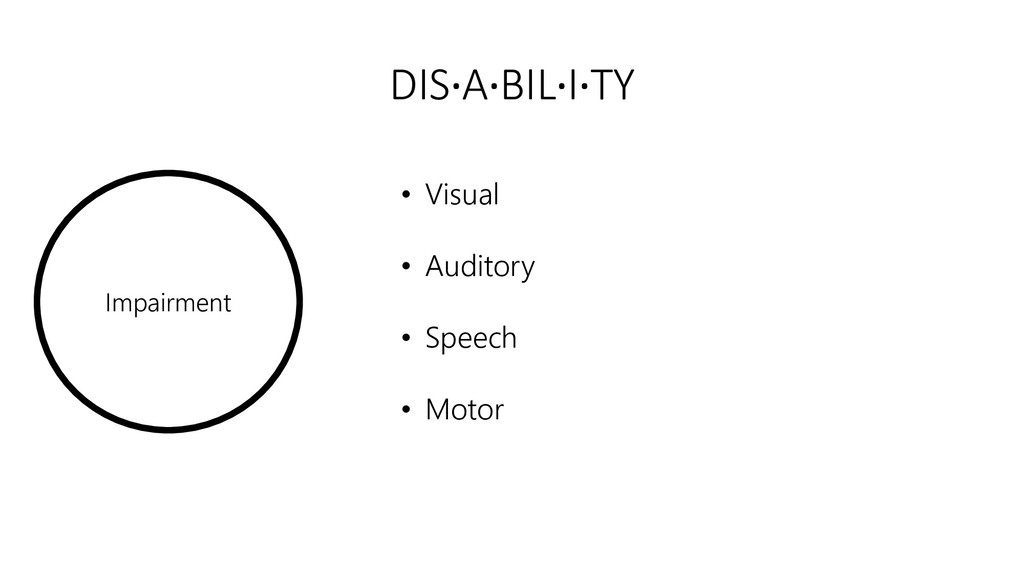
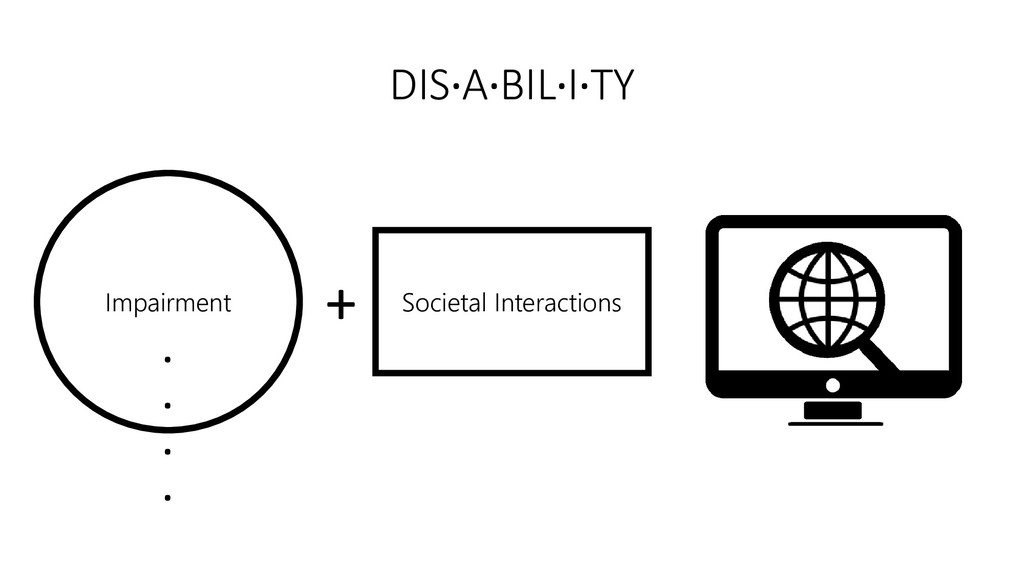
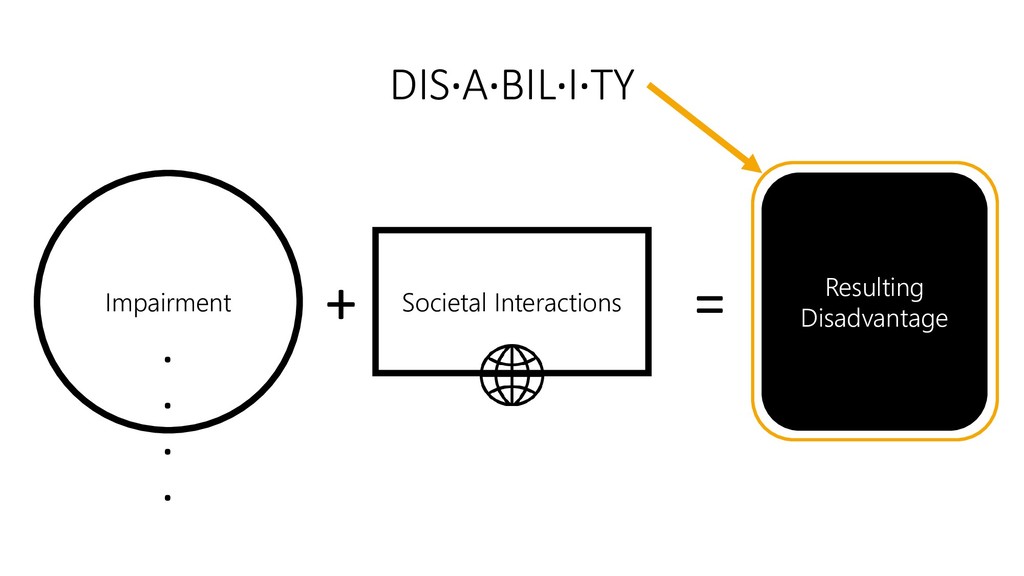
barriers that prevent interaction with, or access to, websites When sites are correctly designed, developed and edited, generally all users have equal access to information and functionality
barriers that prevent interaction with, or access to, websites When sites are correctly designed, developed and edited, generally all users have equal access to information and functionality Access to information and communications technologies is defined as a basic human right in the United Nations Convention on the Rights of Persons with Disabilities (UN CRPD)
user color to convey meaning • Descriptive links • Graphics • No embedded text • Use alt text <img src="/lizzo.jpg" alt="Savior of Modern Humanity"> Visual Recommendations
user color to convey meaning • Descriptive links • Graphics • Use alt text • No embedded text • Configurable text & layouts • Color, size • Percentages vs. absolute units (pixels) Visual Recommendations
Let users skip over long content/menus • Don’t use <iframes> for core content • Make tables friendly • Data tables • Layout tables Row by row Left to right Use headers Provide summaries Visual Recommendations
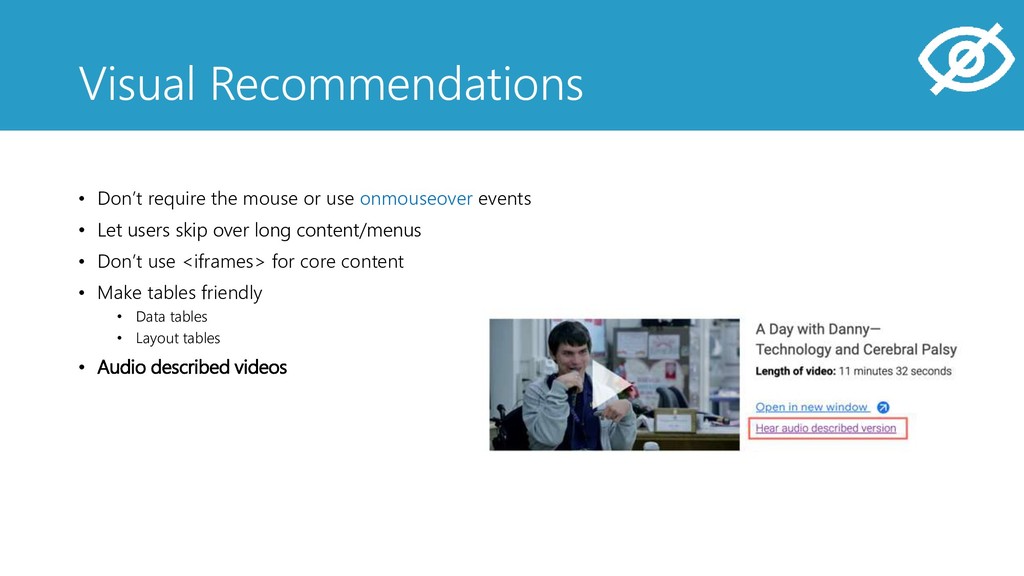
Let users skip over long content/menus • Don’t use <iframes> for core content • Make tables friendly • Data tables • Layout tables • Audio described videos Visual Recommendations
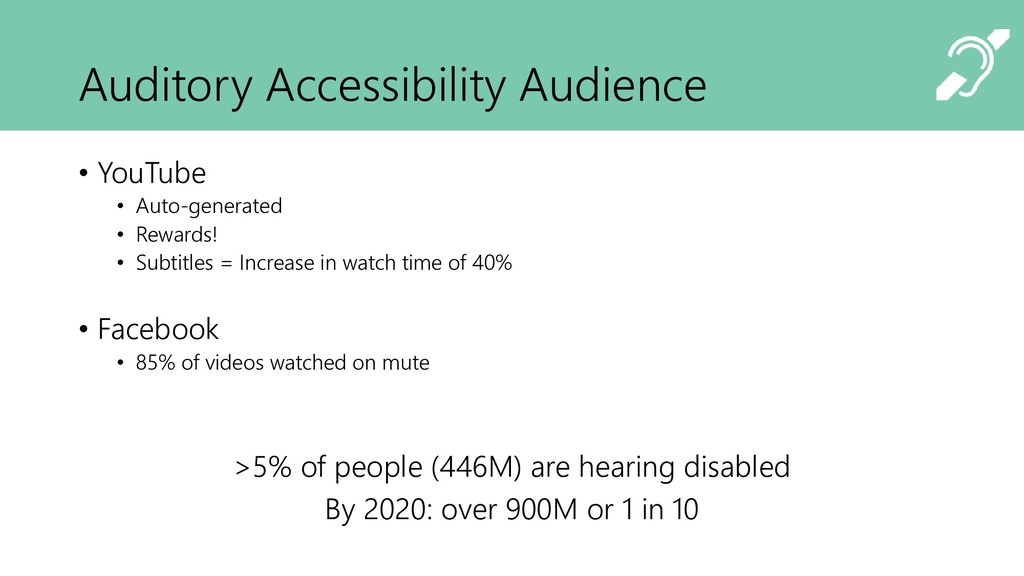
Subtitles = Increase in watch time of 40% • Facebook • 85% of videos watched on mute >5% of people (446M) are hearing disabled By 2020: over 900M or 1 in 10
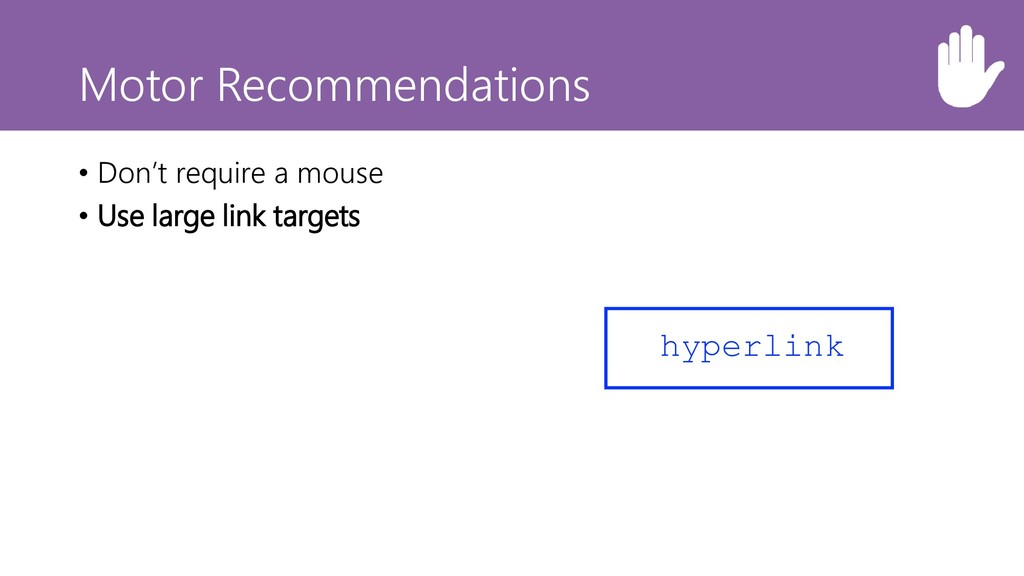
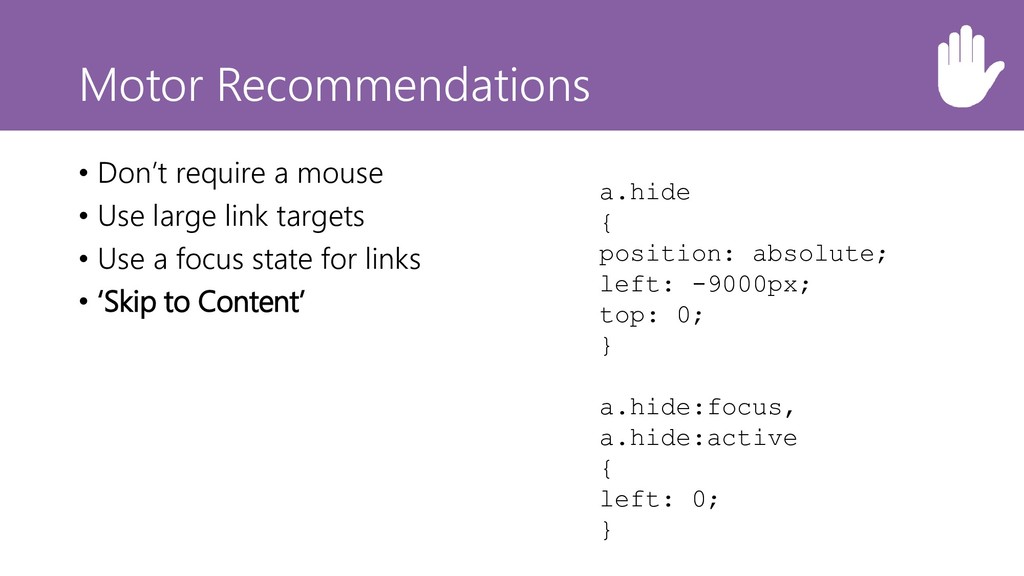
link targets • Use a focus state for links • ‘Skip to Content’ a.hide { position: absolute; left: -9000px; top: 0; } a.hide:focus, a.hide:active { left: 0; }
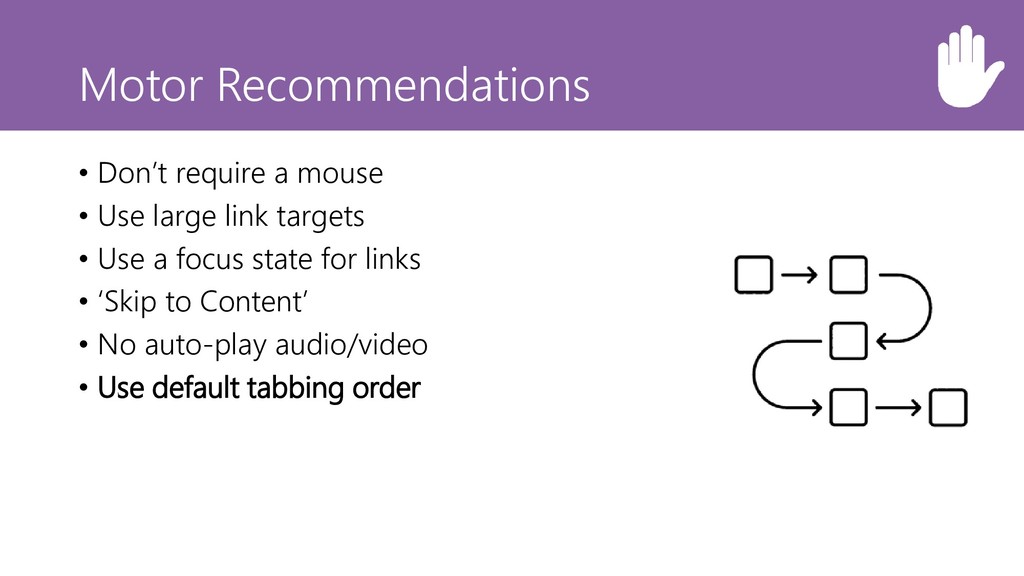
link targets • Use a focus state for links • ‘Skip to Content’ • No auto-play audio/video • Use default tabbing order • Don’t use shortcut keys • Extend session timeouts


 artikshaman
 sansantech
 gionn
gionn
 willnet
 takahashim
 koukihosaka
 jtakeda
 finengine
 kakehashi
 masa_my
 shisyu_gaku
 occhi
occhi
 lauravandoore
 paigeccino
 tammyeverts
 skipperchong
 akademiya2063
 eileencodes
 khoart
 morganepeng
 productmarketing
 inesmontani
 tmiket